 View larger
Immigration vocabulary poster for 3rd grade
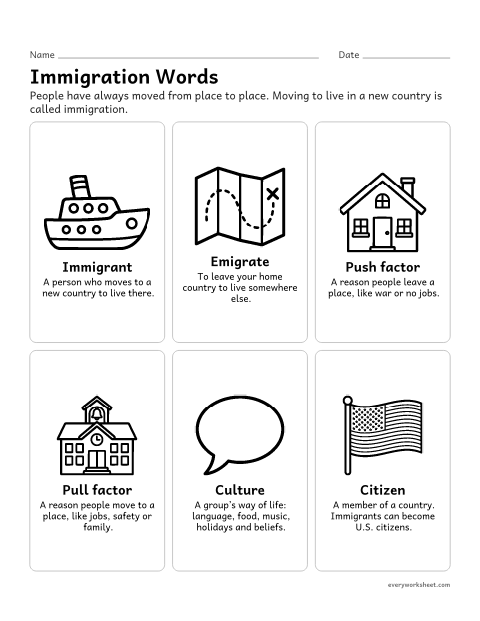
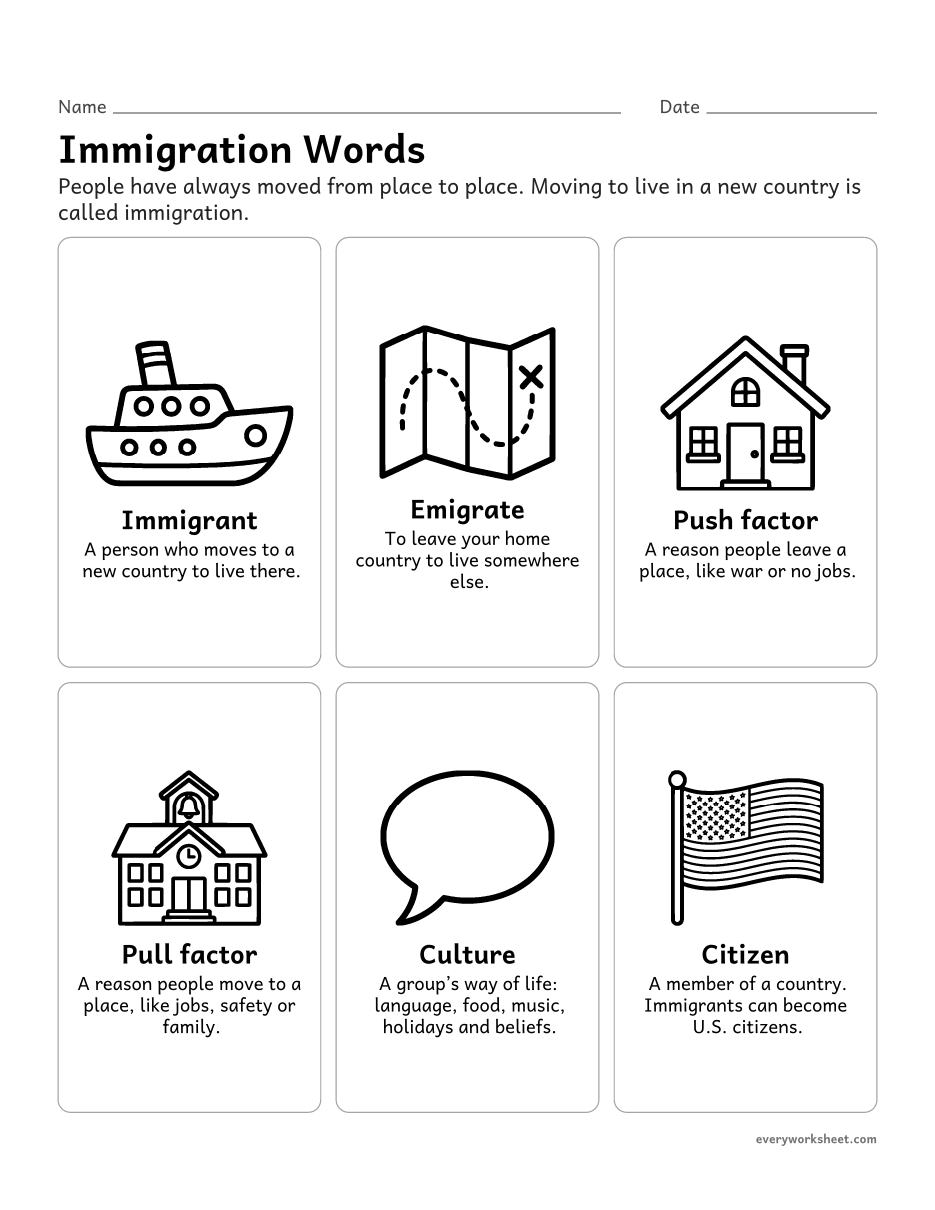
Defining immigration vocabulary: immigrant, push and pull factors, culture and citizen
1 page132 KB
Why people move to a new country, push and pull factors, the story of Ellis Island, and interviewing someone who moved.
View largerDefining immigration vocabulary: immigrant, push and pull factors, culture and citizen
1 page132 KB
 View all 2 pages
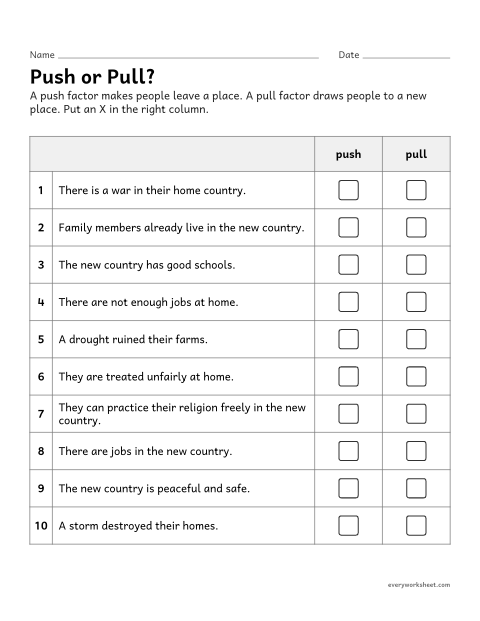
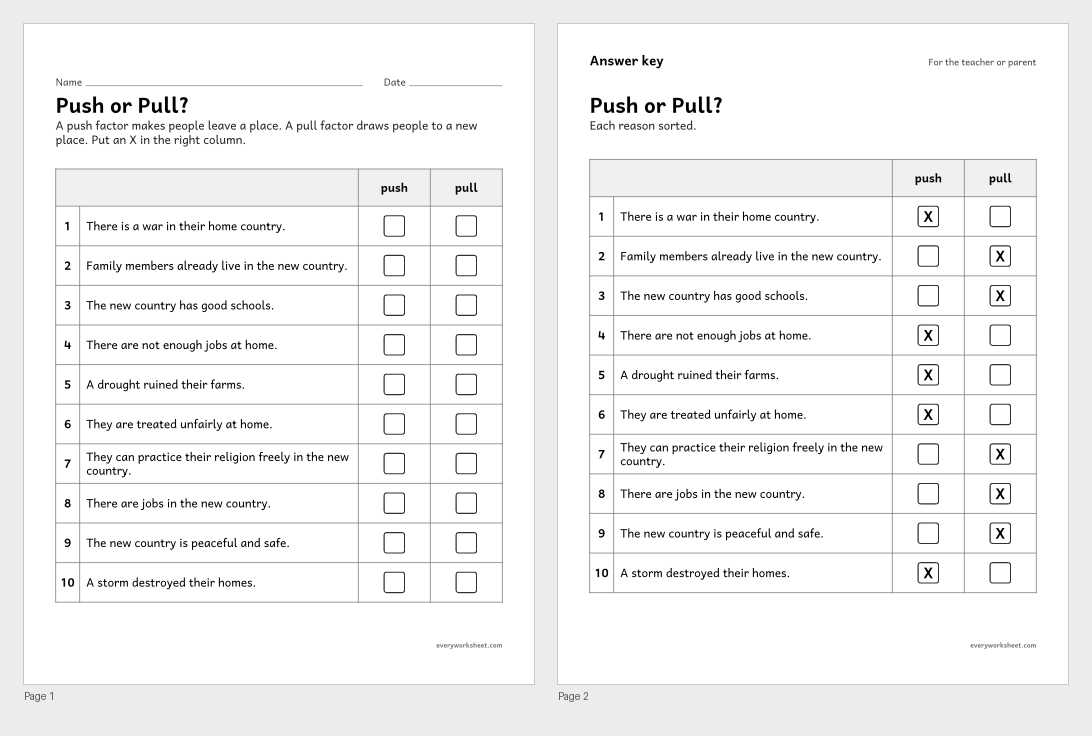
Sorting reasons people move into push factors and pull factors
Answer key on page 2
2 pages45 KB
 View all 2 pages
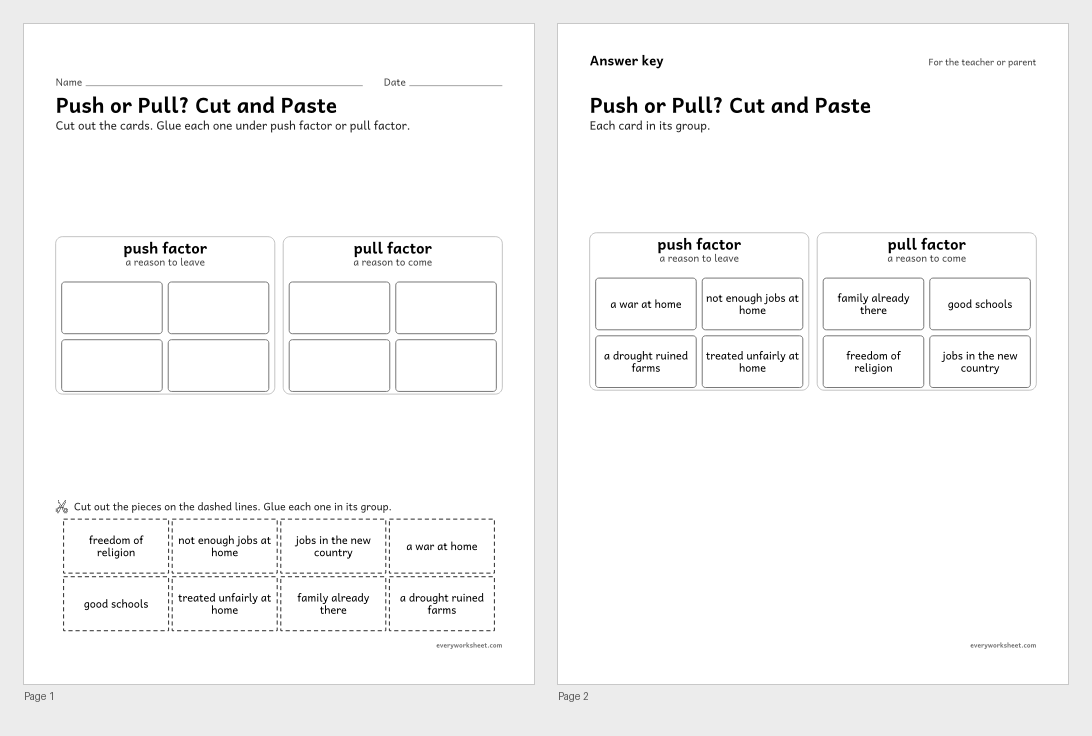
Sorting reasons people move into push factors and pull factors
Answer key on page 2
2 pages60 KB
 View all 2 pages
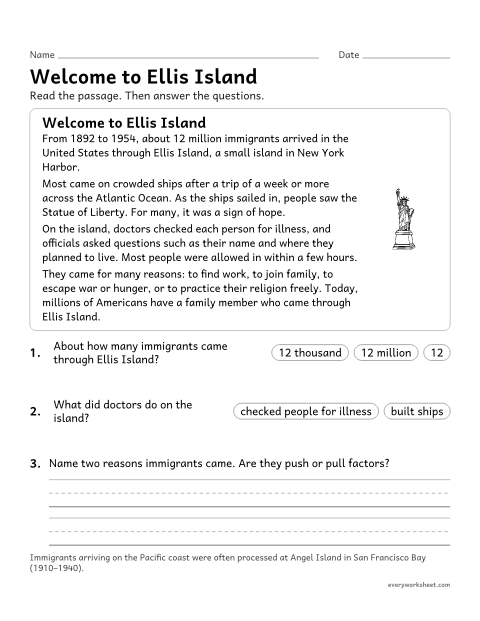
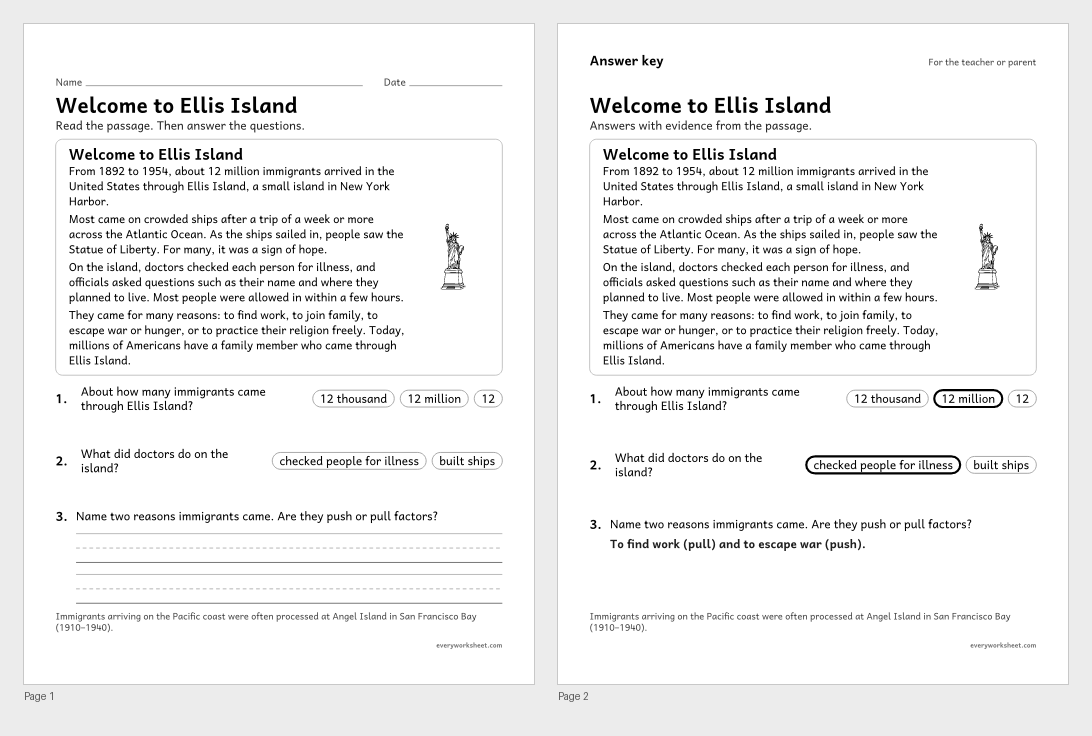
Reading about immigrants arriving at Ellis Island and why they came
Answer key on page 2
2 pages80 KB
 View larger
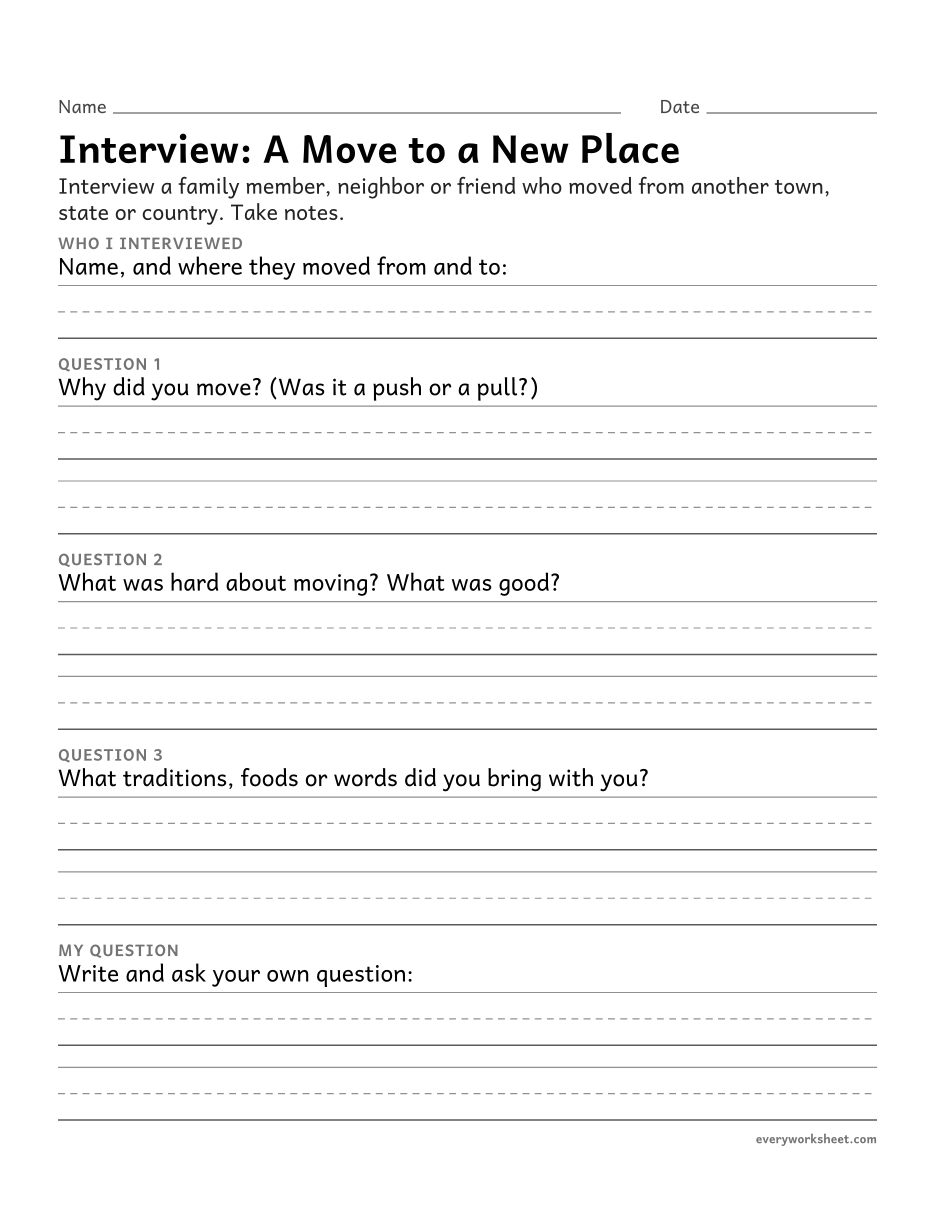
Gathering information about why and how people move by interviewing someone
1 page28 KB
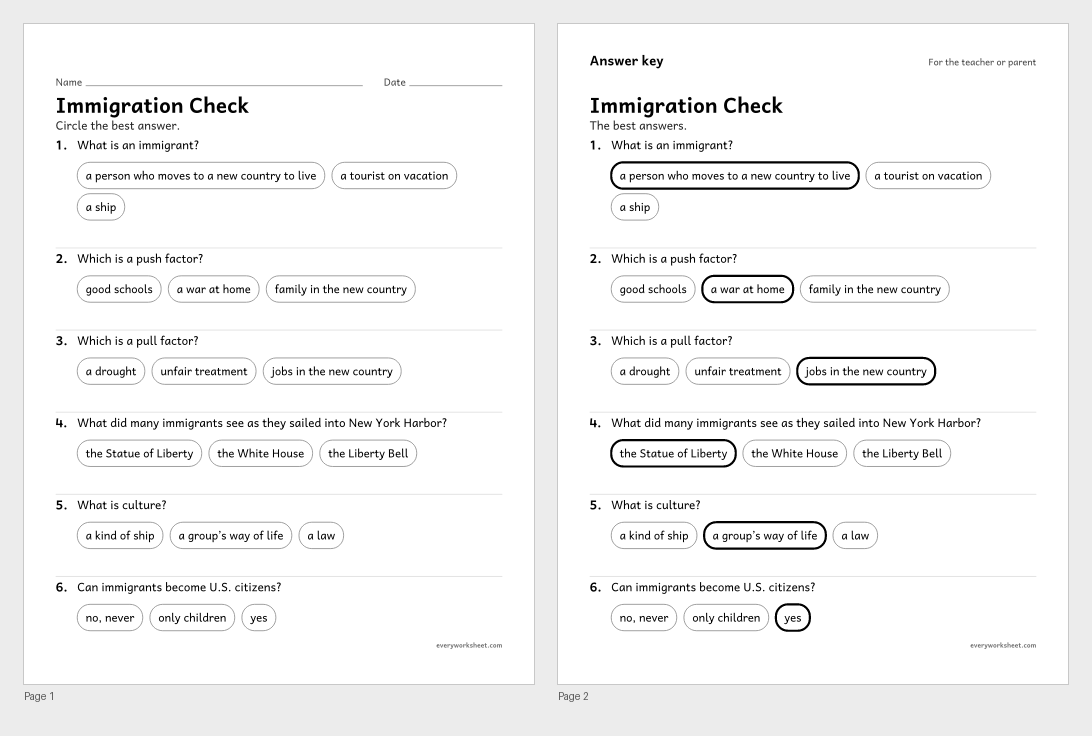 View all 2 pages
Reviewing immigration vocabulary, push and pull factors and Ellis Island
Answer key on page 2
2 pages39 KB
Print at 100% (actual size) for the cleanest tracing lines.
People have always moved from place to place. Third graders learn why: push factors, like war or a lack of jobs, make people leave, and pull factors, like work, safety or family, draw them to a new place. They read about the millions of immigrants who arrived through Ellis Island and talk with someone who has moved.
These immigration worksheets include a vocabulary poster, a push or pull sort with its cut and paste twin, an Ellis Island reading passage, an interview page and a quiz.
Every page is black and white, prints on US Letter or A4, and every page with right answers has an answer key on page 2.
C3 D2.Geo.7.3-5Explain how cultural and environmental characteristics affect the distribution and movement of people, goods, and ideas.C3 D2.His.2.3-5Compare life in specific historical time periods to life today.CCSS.ELA-LITERACY.W.3.8Recall information from experiences or gather information from print and digital sources; take brief notes on sources and sort evidence into provided categories.Push factors are reasons people leave a place, like war, drought or a lack of jobs. Pull factors are reasons people move to a new place, like jobs, safety, schools or family.
Ellis Island, in New York Harbor, was the main entry point for immigrants to the United States from 1892 to 1954. About 12 million people arrived there.
Yes, with care. The pages are factual and positive, and the interview page lets any child talk with someone who moved, from another town, state or country.