 View larger
Life cycles poster for 3rd grade
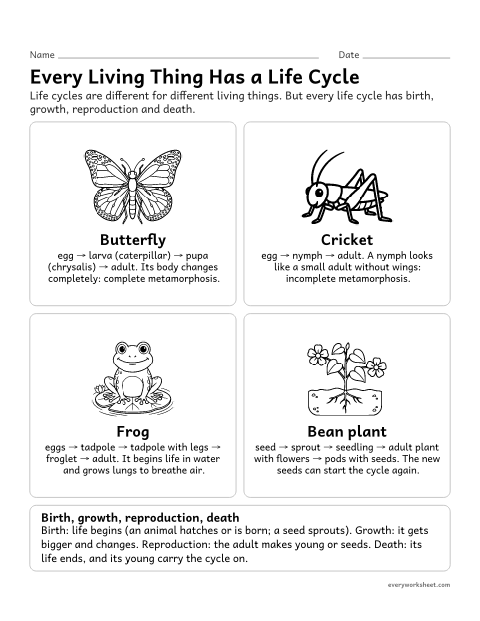
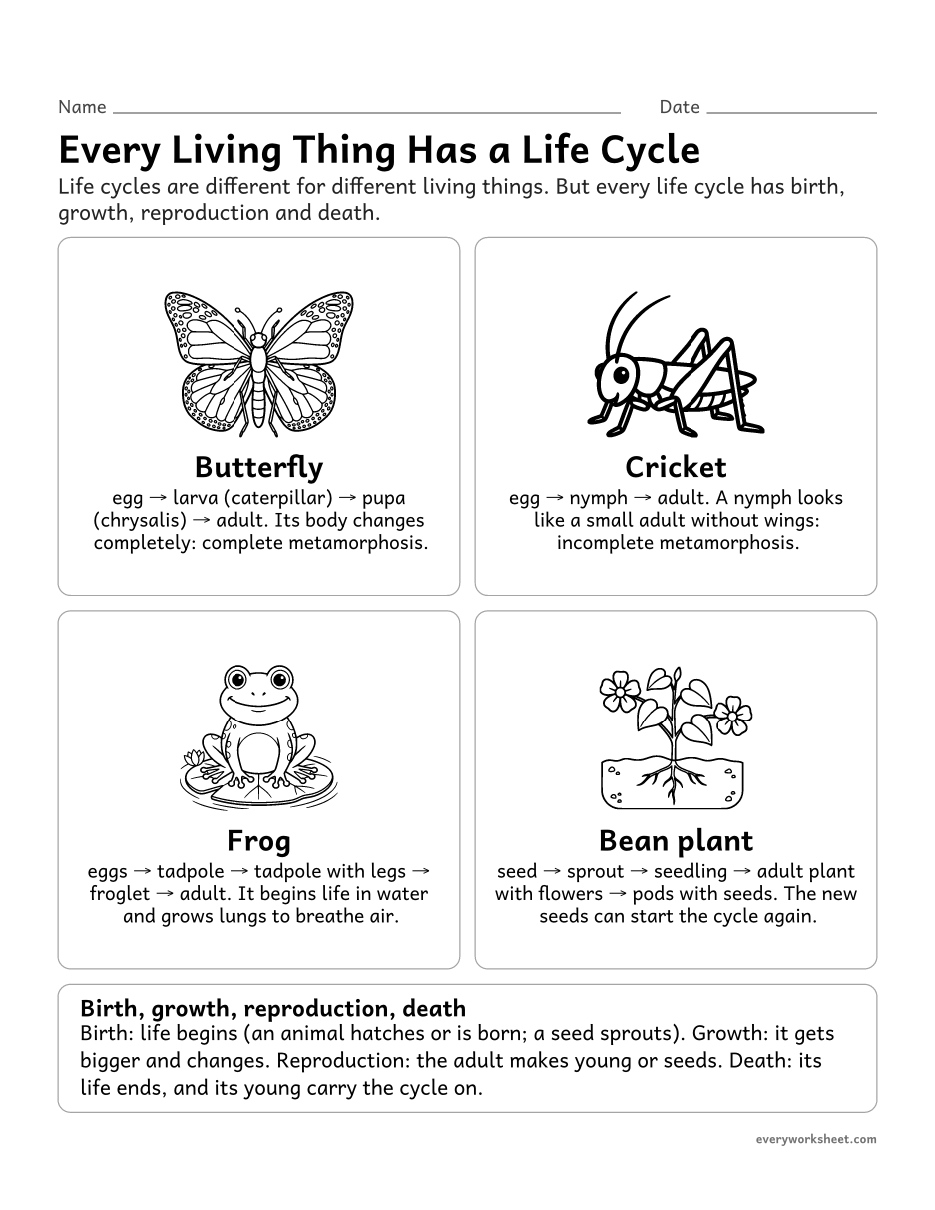
Describing the life cycle stages all living things share: birth, growth, reproduction and death
1 page113 KB
Order the stages of butterfly, frog and bean plant life cycles, compare complete and incomplete metamorphosis, and see what all life cycles share.
View largerDescribing the life cycle stages all living things share: birth, growth, reproduction and death
1 page113 KB
 View all 2 pages
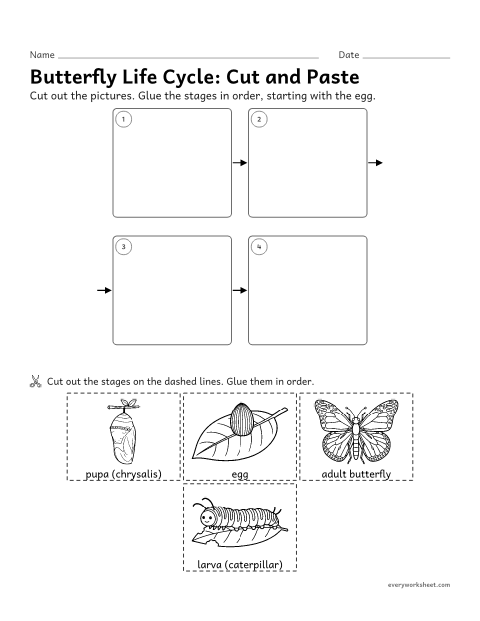
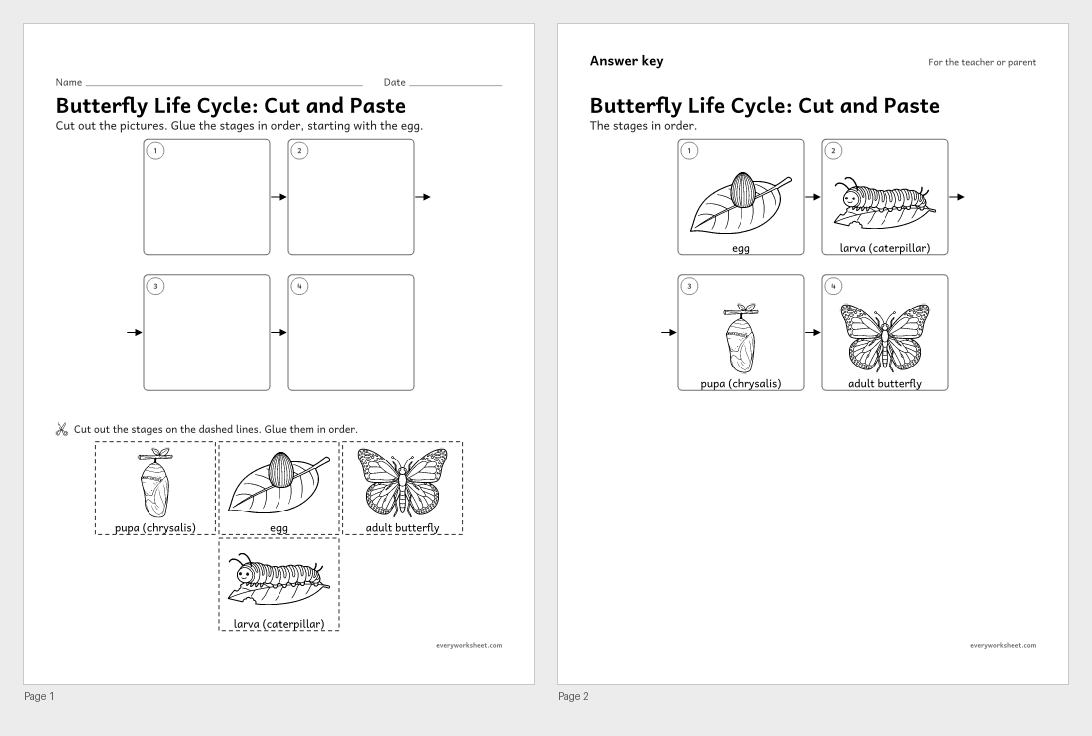
Sequencing the four stages of complete metamorphosis
Answer key on page 2
2 pages188 KB
 View all 2 pages
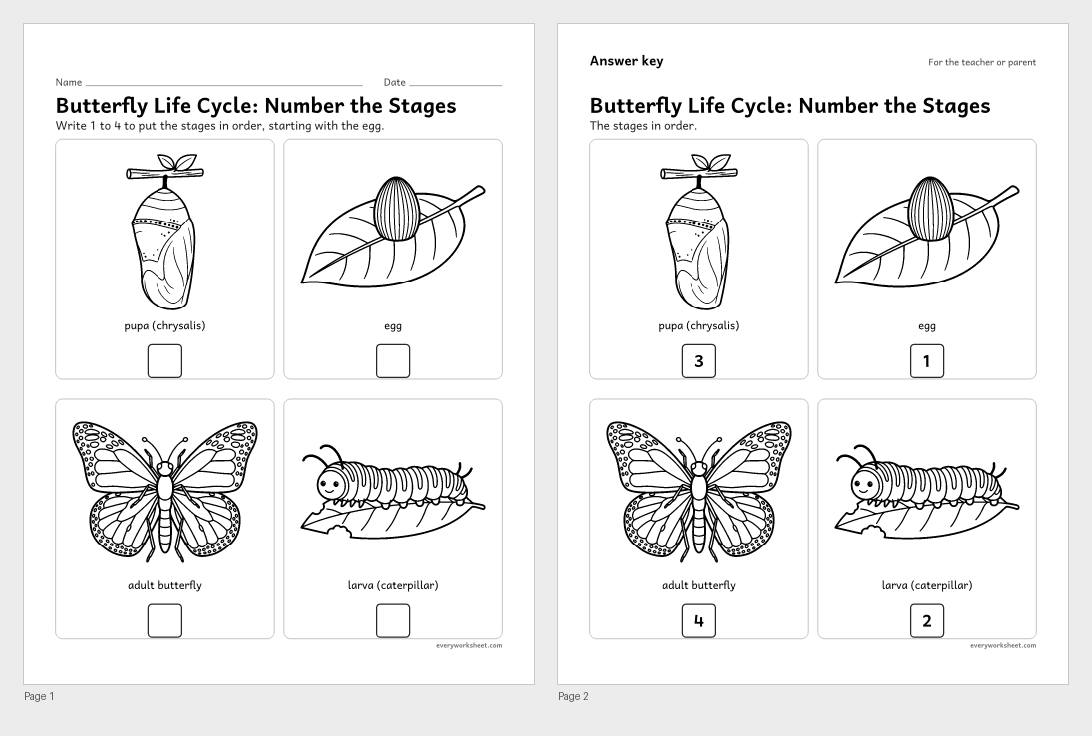
Sequencing the four stages of complete metamorphosis
Answer key on page 2
2 pages158 KB
 View all 2 pages
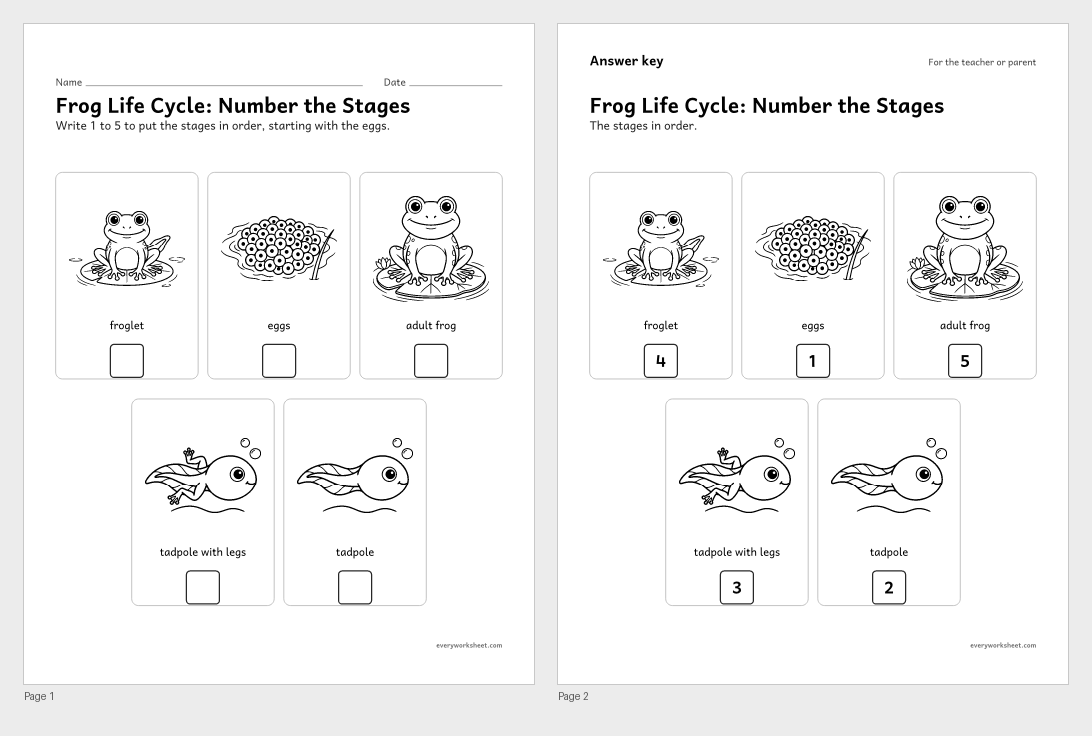
Sequencing the stages of a frog’s life cycle
Answer key on page 2
2 pages143 KB
 View all 2 pages
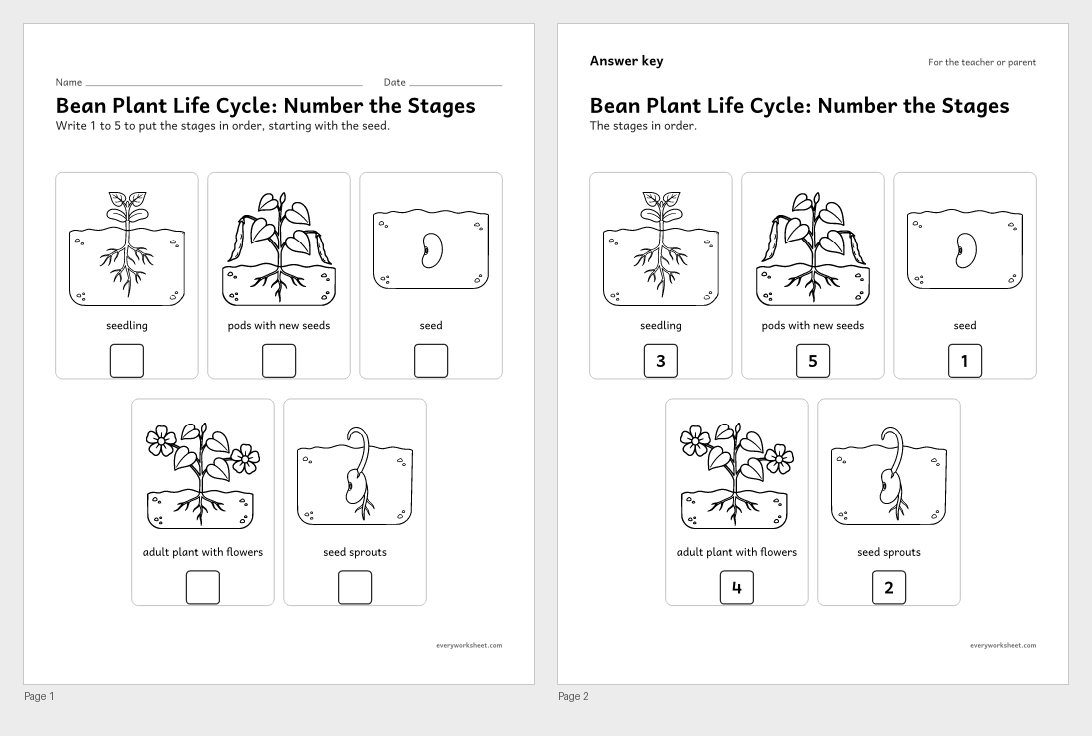
Sequencing the stages of a flowering plant’s life cycle
Answer key on page 2
2 pages111 KB
 View all 2 pages
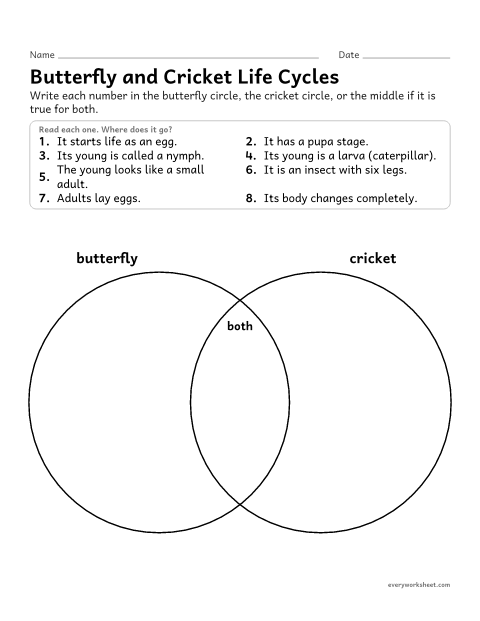
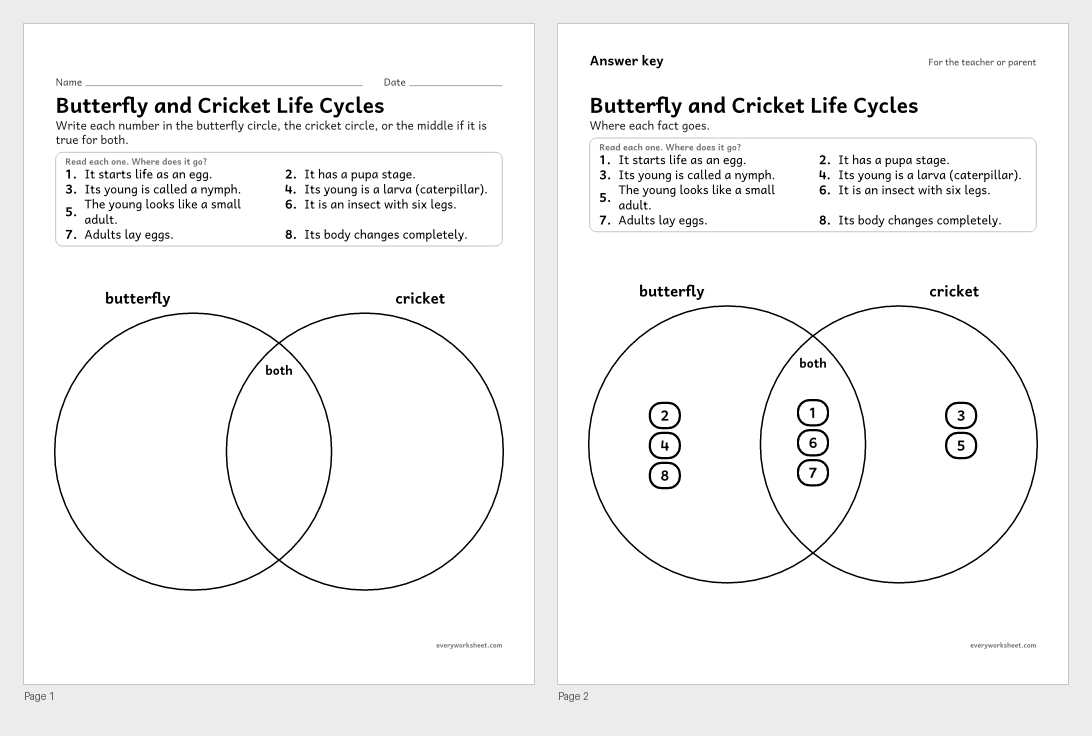
Comparing complete metamorphosis (butterfly) with incomplete metamorphosis (cricket)
Answer key on page 2
2 pages41 KB
 View all 2 pages
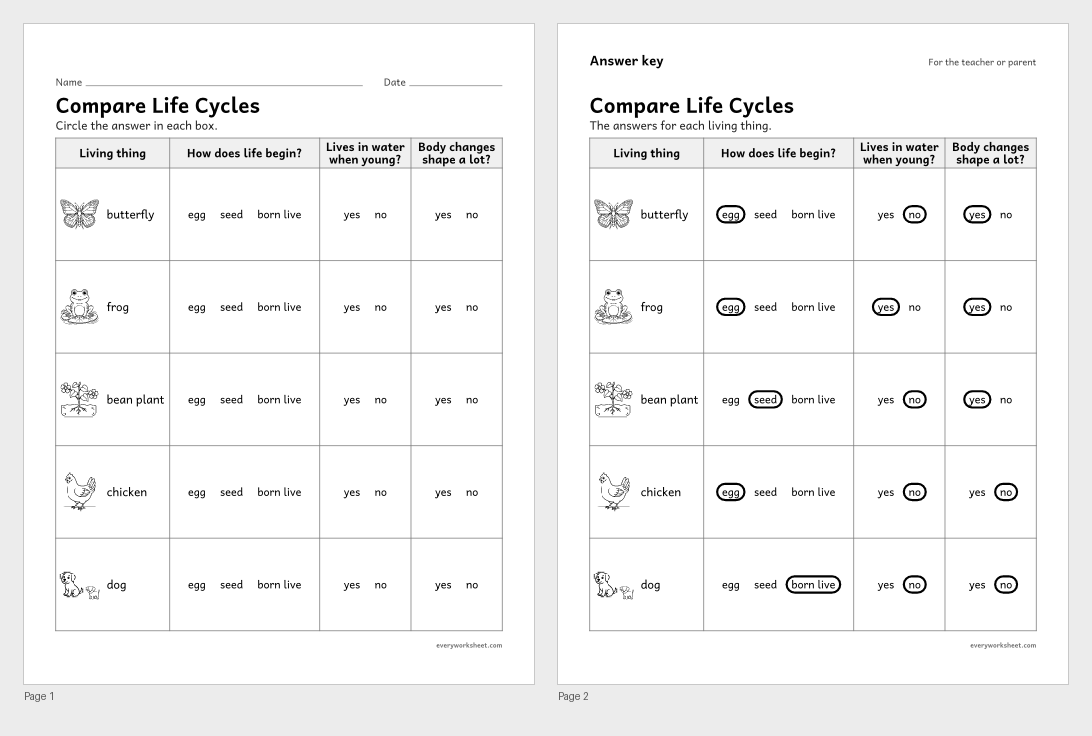
Comparing the life cycles of different plants and animals
Answer key on page 2
2 pages263 KB
 View all 2 pages
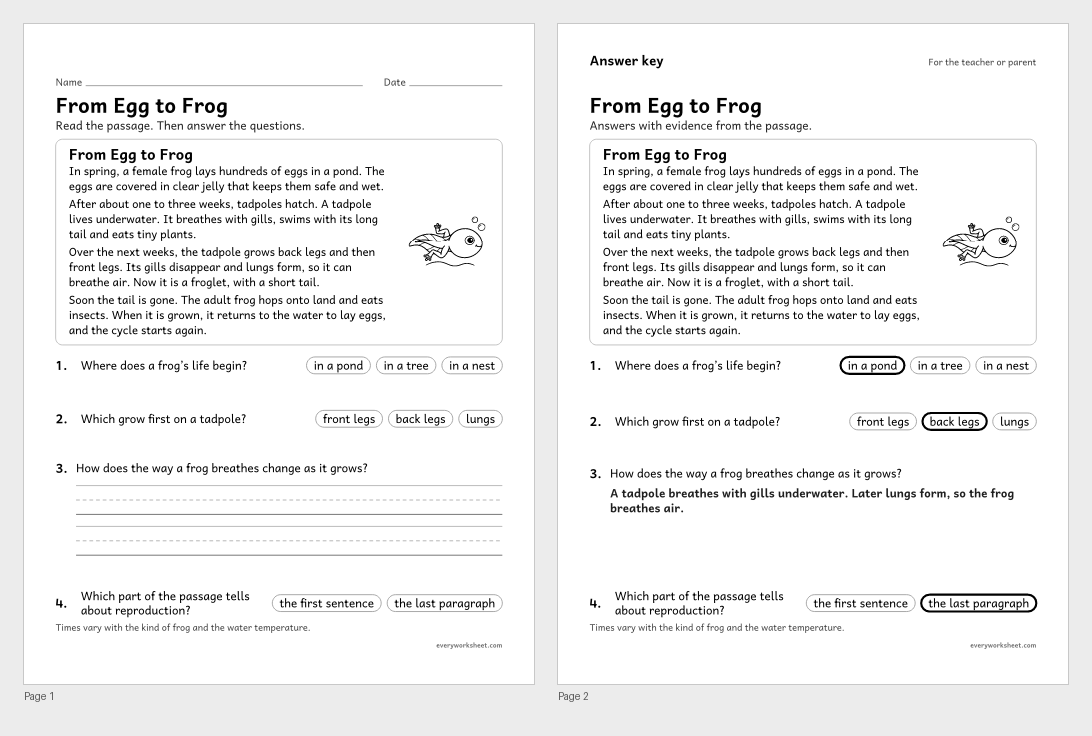
Reading an informational passage about the stages of a frog’s life cycle
Answer key on page 2
2 pages55 KB
 View all 2 pages
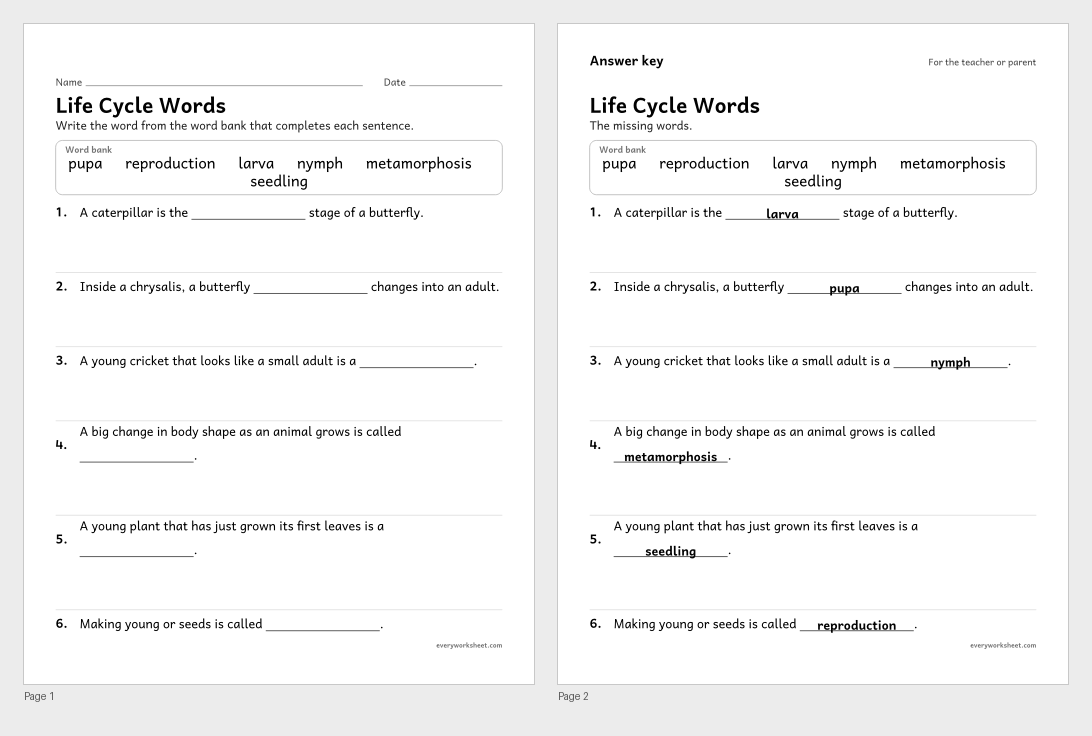
Using the vocabulary of life cycles
Answer key on page 2
2 pages37 KB
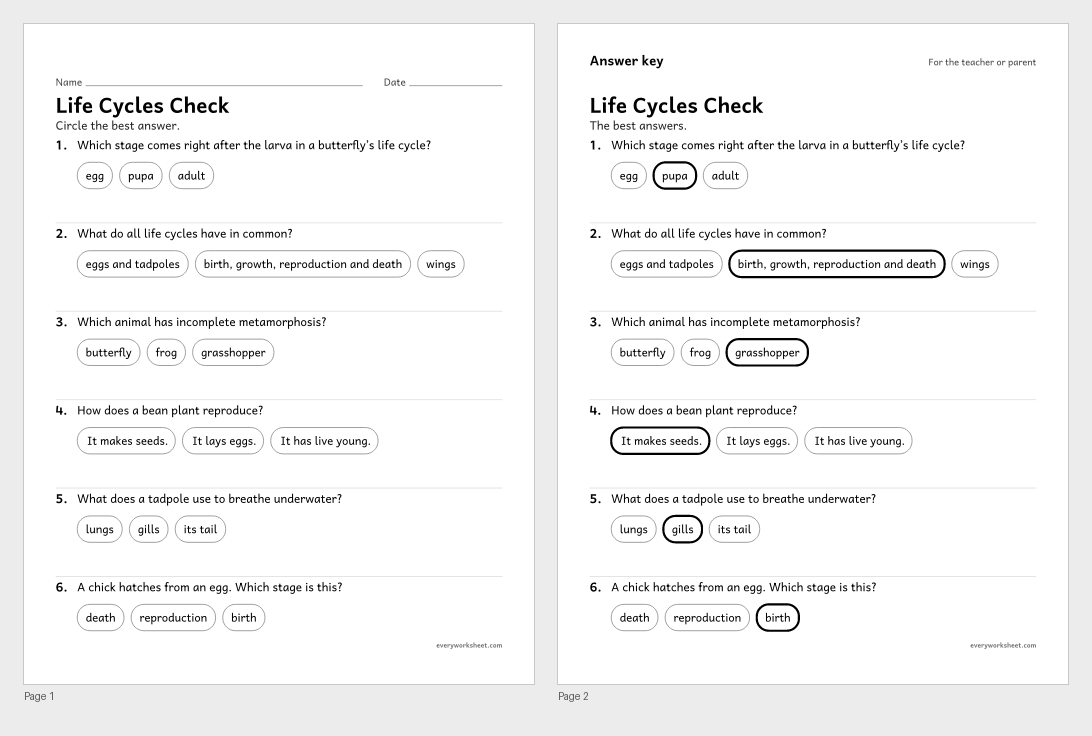 View all 2 pages
Reviewing the life cycles of plants and animals
Answer key on page 2
2 pages38 KB
Print at 100% (actual size) for the cleanest tracing lines.
Every living thing has a life cycle, and no two are quite the same. A butterfly changes completely, a cricket grows up looking like a small adult, a frog starts life in water and a bean plant makes seeds that start the cycle again. Yet all of them are born, grow, reproduce and die.
These 3rd grade life cycle worksheets use clear line pictures to order the stages of butterfly, frog and bean plant life cycles, compare complete and incomplete metamorphosis on a Venn diagram, and chart how different plants and animals begin life and change as they grow.
Every page is black and white, prints on US Letter or A4, and every page with right answers has an answer key on page 2.
NGSS 3-LS1-1Develop models to describe that organisms have unique and diverse life cycles but all have in common birth, growth, reproduction, and death.CCSS.ELA-LITERACY.RI.3.3Describe the relationship between a series of historical events, scientific ideas or concepts, or steps in technical procedures in a text, using language that pertains to time, sequence, and cause/effect.CCSS.ELA-LITERACY.RI.3.4Determine the meaning of general academic and domain-specific words and phrases in a text relevant to a grade 3 topic or subject area.Every plant and animal life cycle includes birth (or a seed sprouting), growth, reproduction and death.
In complete metamorphosis (butterflies, beetles) the young look very different from the adult and go through a pupa stage. In incomplete metamorphosis (crickets, grasshoppers) the young, called nymphs, look like small adults without wings.
Yes. Simpler pages for younger children are on the butterfly, frog, plant, pumpkin, apple and chicken life cycle pages.