 View all 2 pages
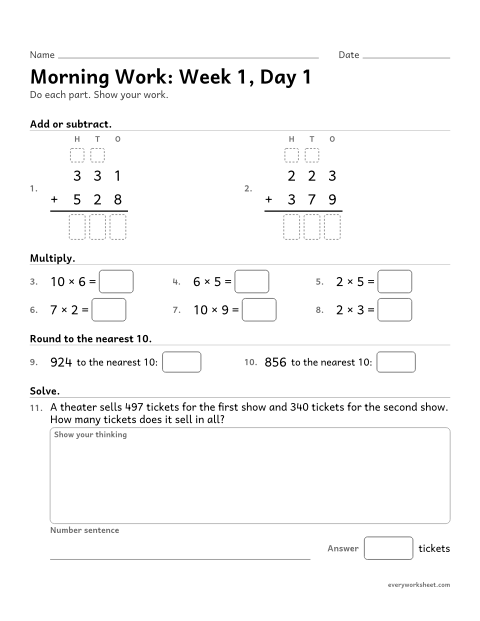
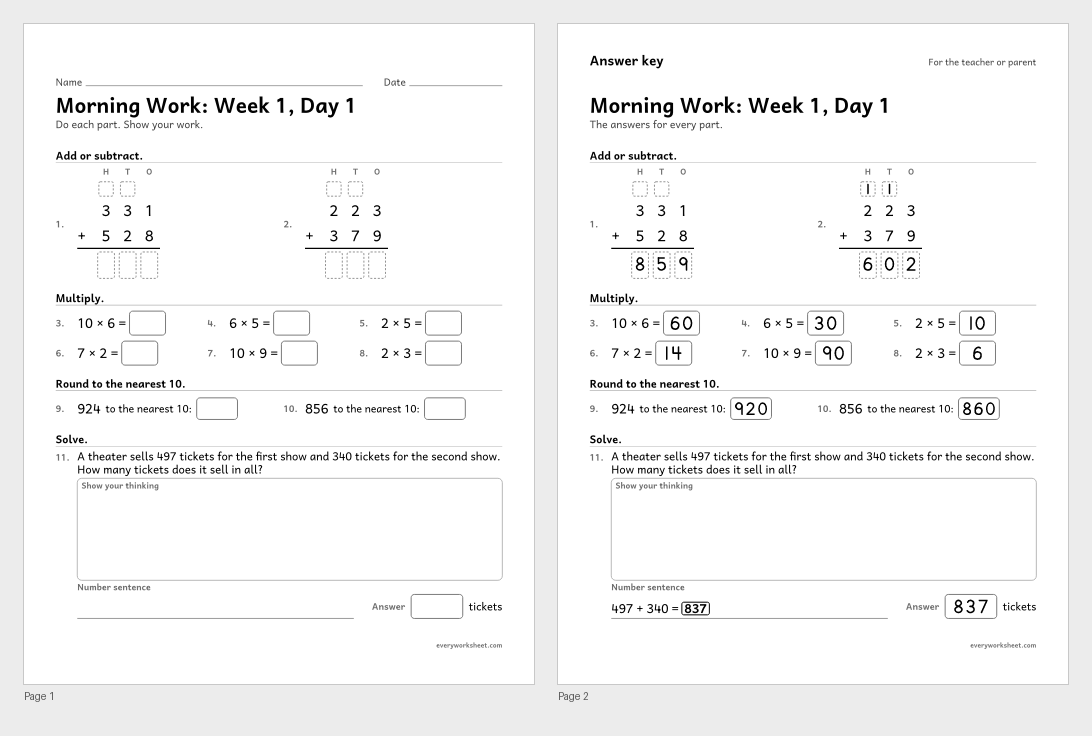
Morning Work: week 1, day 1
Mixed 3rd grade math review
Answer key on page 2
2 pages69 KB
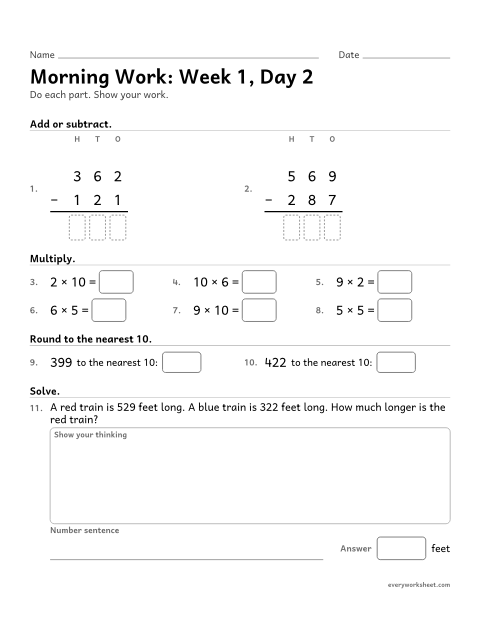
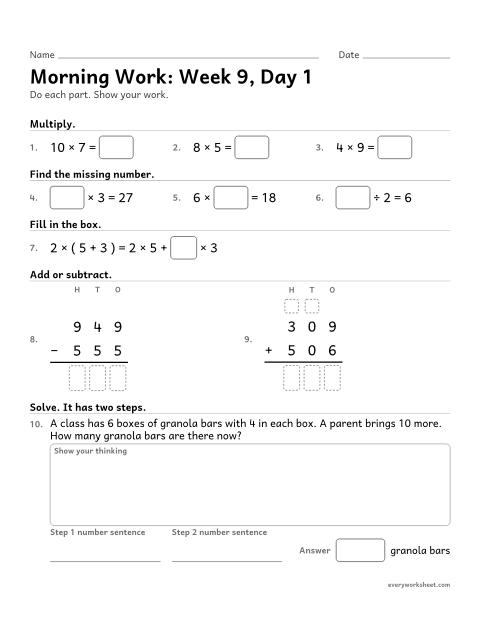
80 short daily math review pages, one for every school day of 16 weeks: facts, 3-digit adding and subtracting, rounding, multiples of 10, properties and a word problem.
View all 2 pagesMixed 3rd grade math review
Answer key on page 2
2 pages69 KB
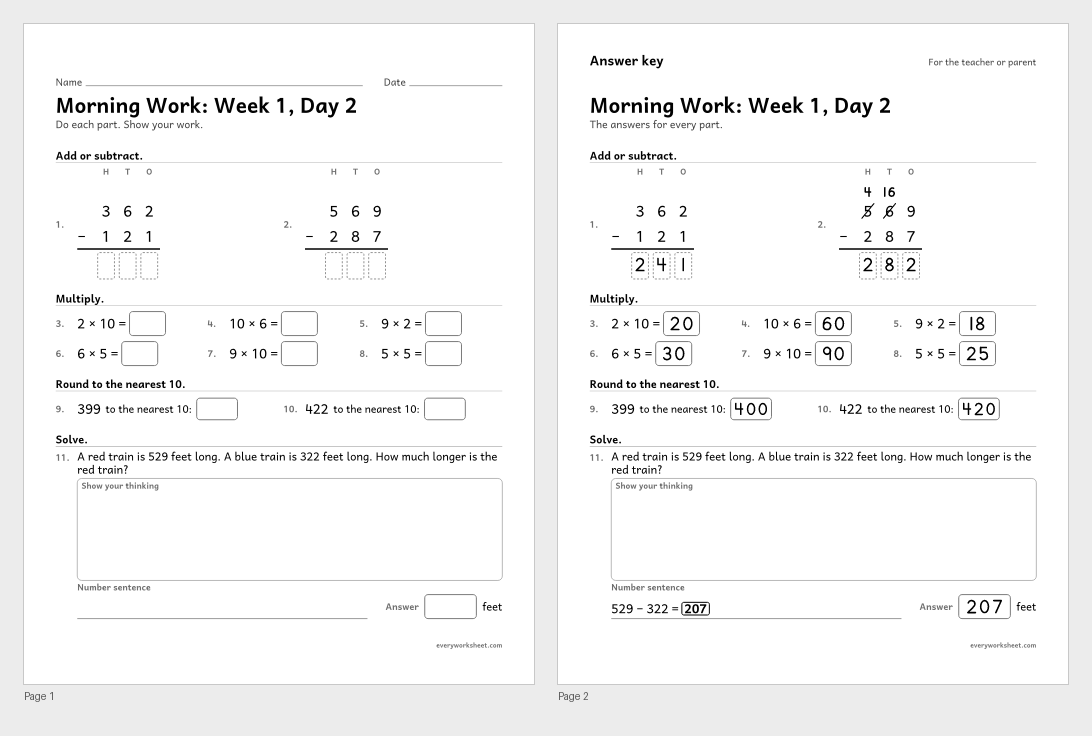 View all 2 pages
Mixed 3rd grade math review
Answer key on page 2
2 pages68 KB
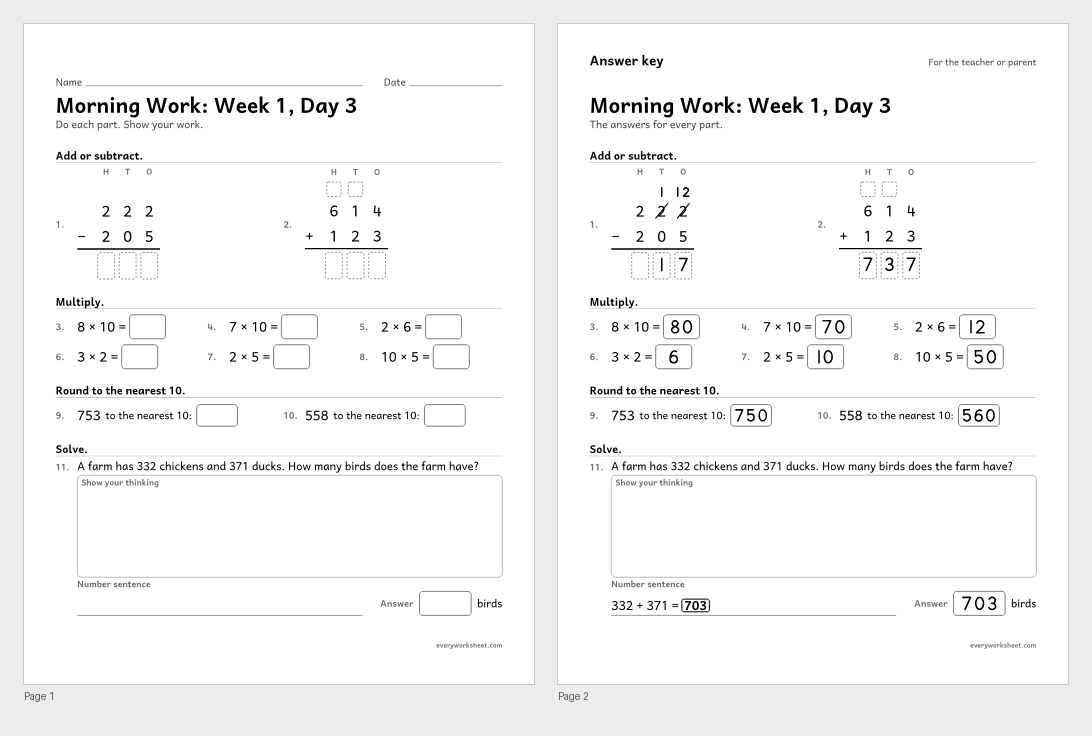 View all 2 pages
Mixed 3rd grade math review
Answer key on page 2
2 pages68 KB
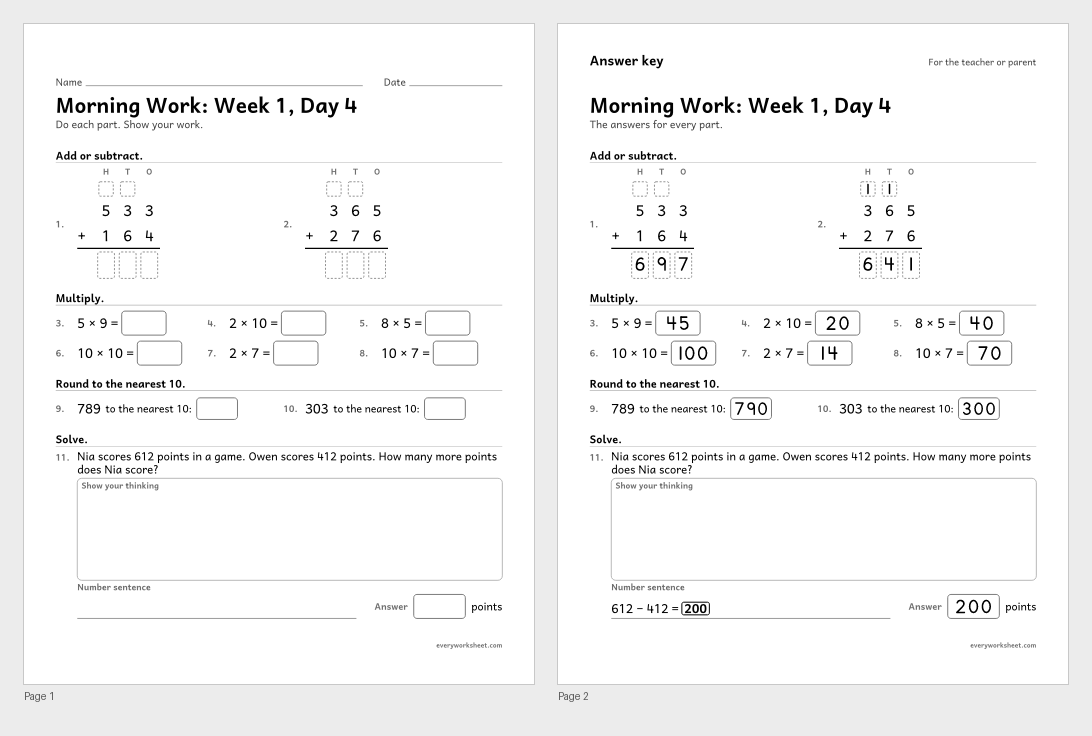 View all 2 pages
Mixed 3rd grade math review
Answer key on page 2
2 pages68 KB
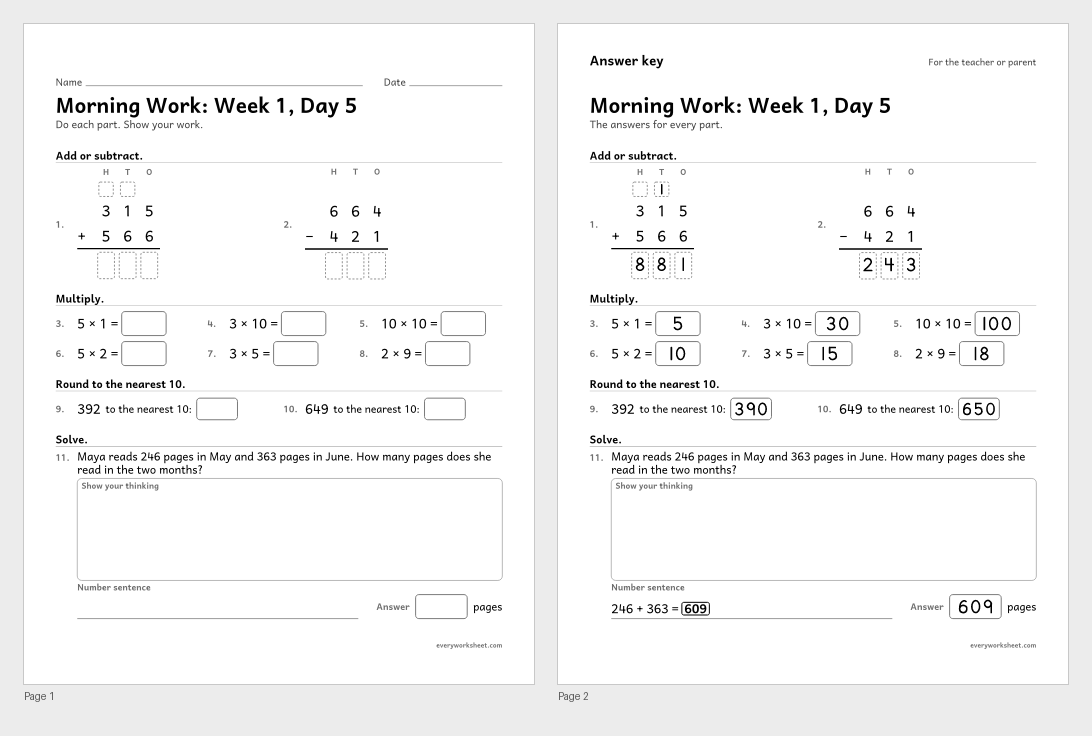 View all 2 pages
Mixed 3rd grade math review
Answer key on page 2
2 pages68 KB
 View all 2 pages
Mixed 3rd grade math review
Answer key on page 2
2 pages68 KB
 View all 2 pages
Mixed 3rd grade math review
Answer key on page 2
2 pages68 KB
 View all 2 pages
Mixed 3rd grade math review
Answer key on page 2
2 pages68 KB
 View all 2 pages
Mixed 3rd grade math review
Answer key on page 2
2 pages69 KB
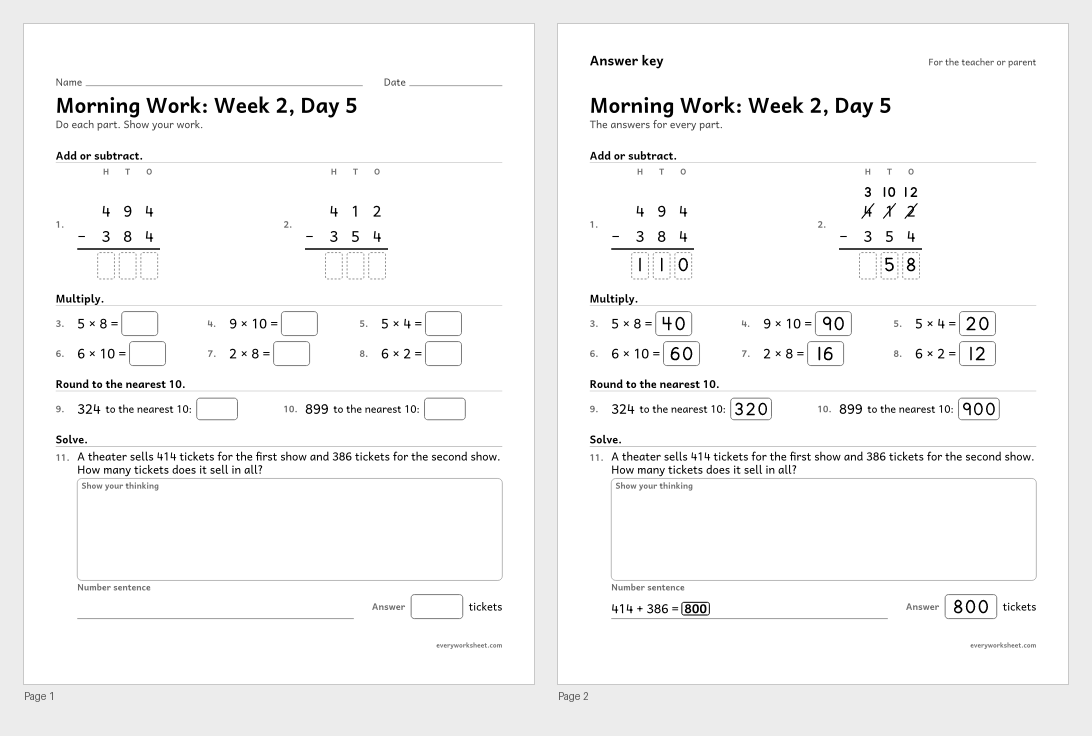 View all 2 pages
Mixed 3rd grade math review
Answer key on page 2
2 pages68 KB
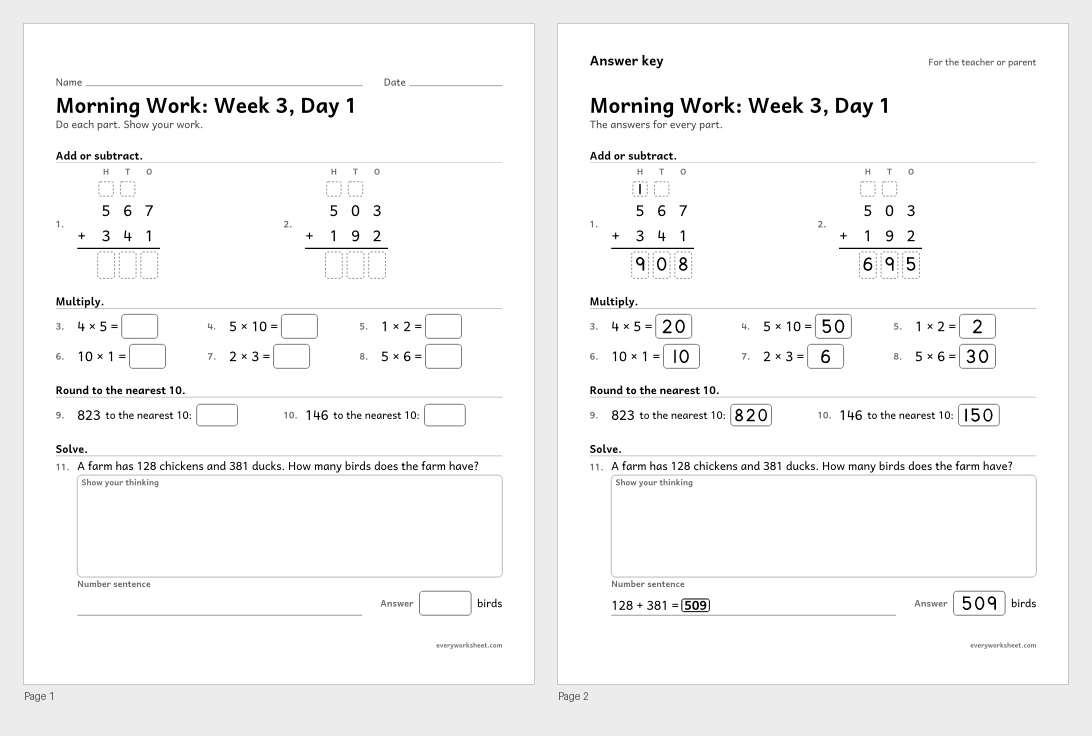 View all 2 pages
Mixed 3rd grade math review
Answer key on page 2
2 pages68 KB
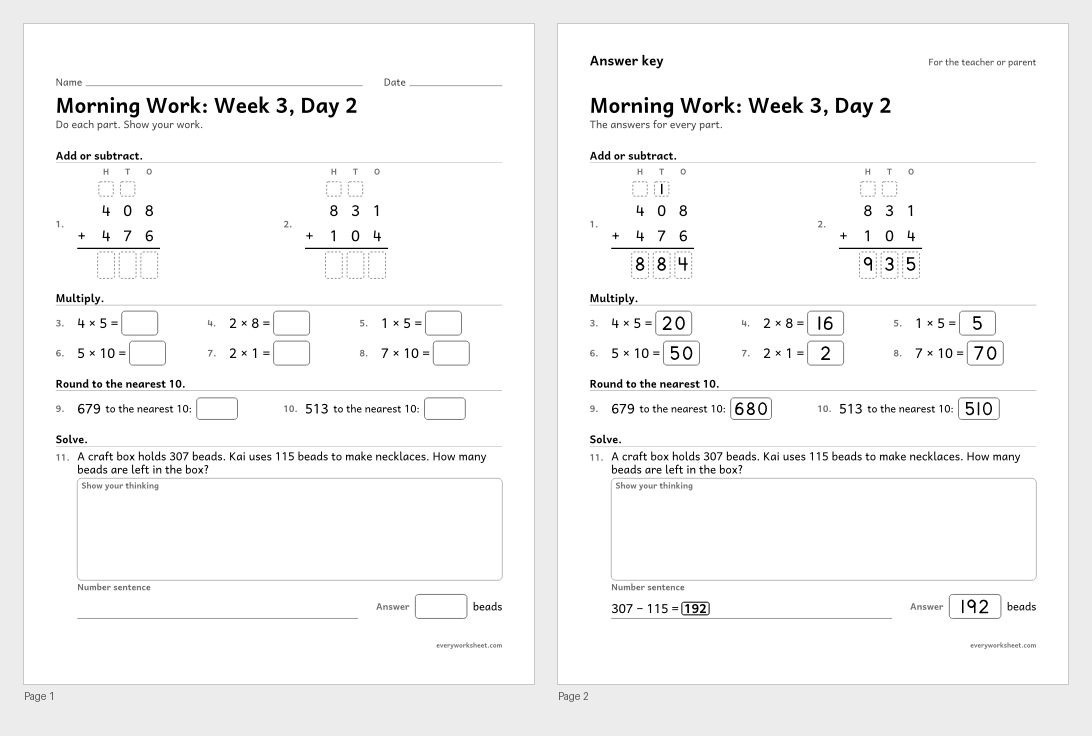 View all 2 pages
Mixed 3rd grade math review
Answer key on page 2
2 pages69 KB
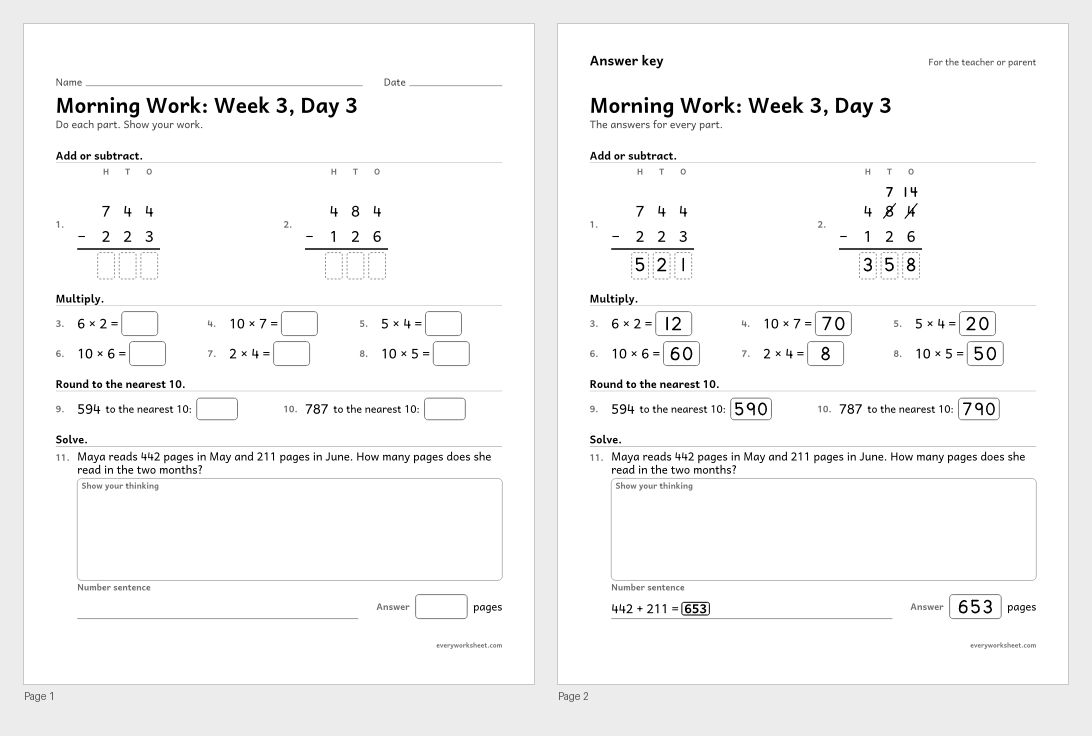 View all 2 pages
Mixed 3rd grade math review
Answer key on page 2
2 pages68 KB
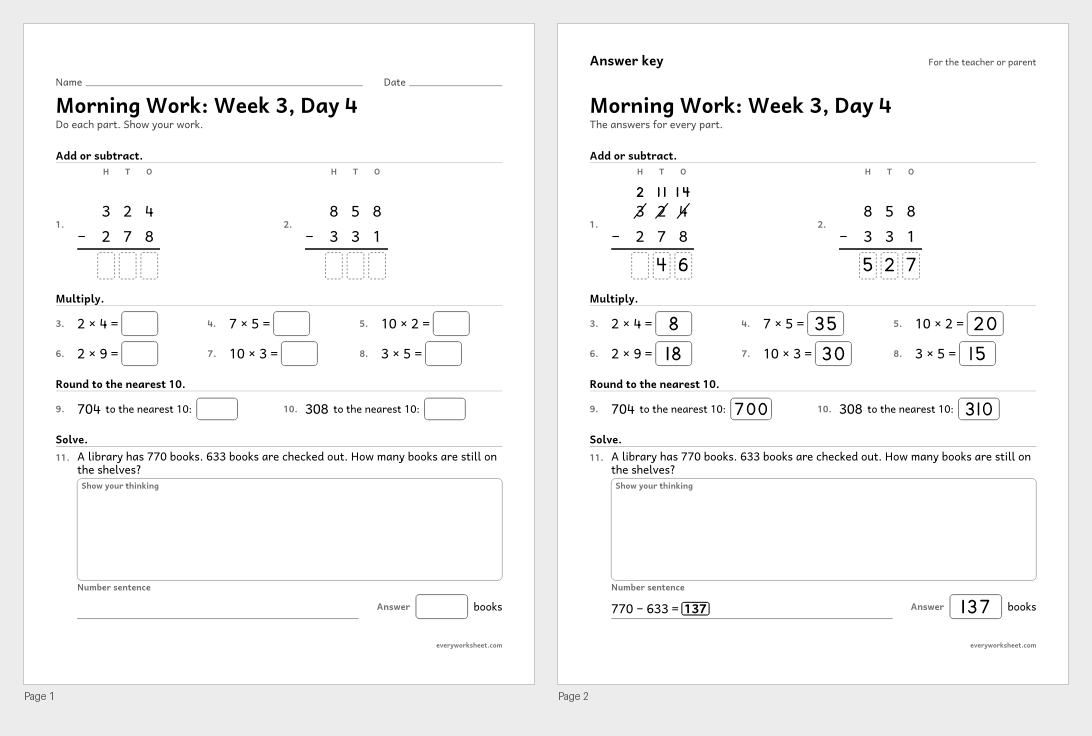 View all 2 pages
Mixed 3rd grade math review
Answer key on page 2
2 pages68 KB
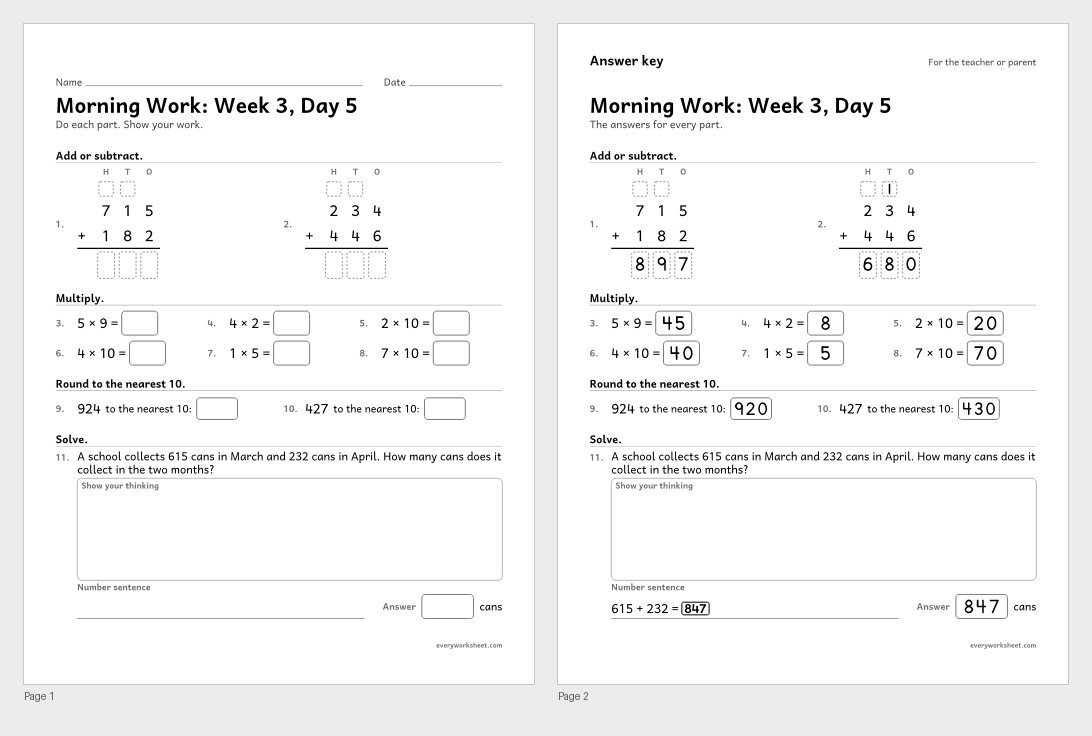 View all 2 pages
Mixed 3rd grade math review
Answer key on page 2
2 pages68 KB
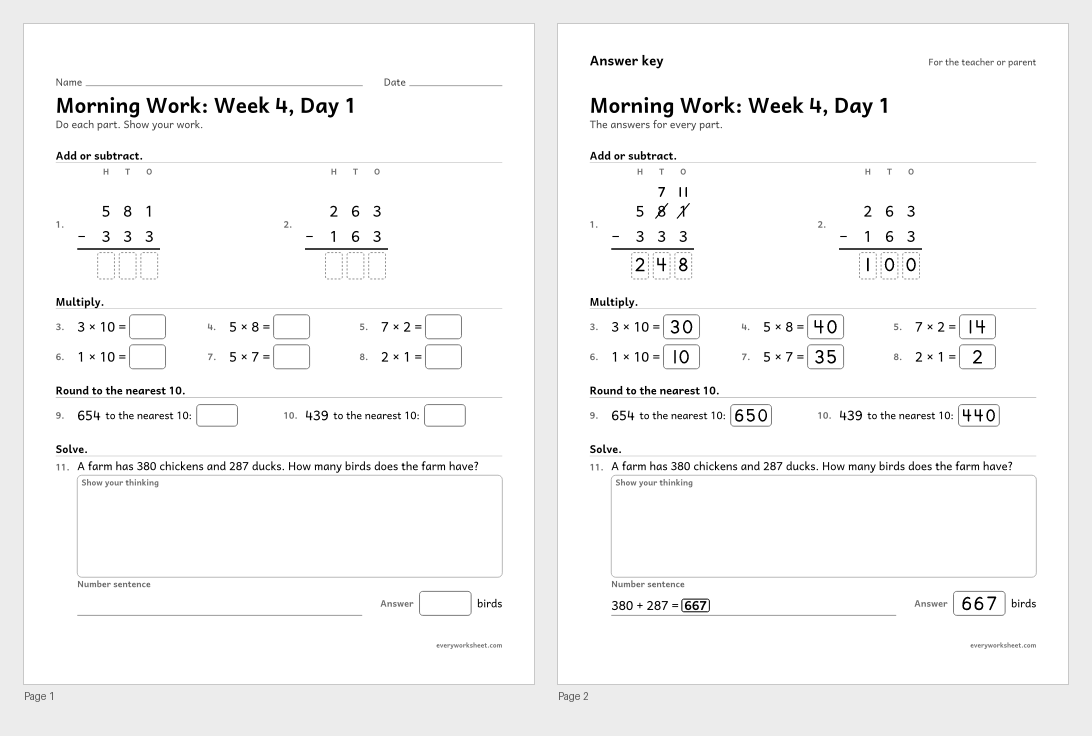 View all 2 pages
Mixed 3rd grade math review
Answer key on page 2
2 pages68 KB
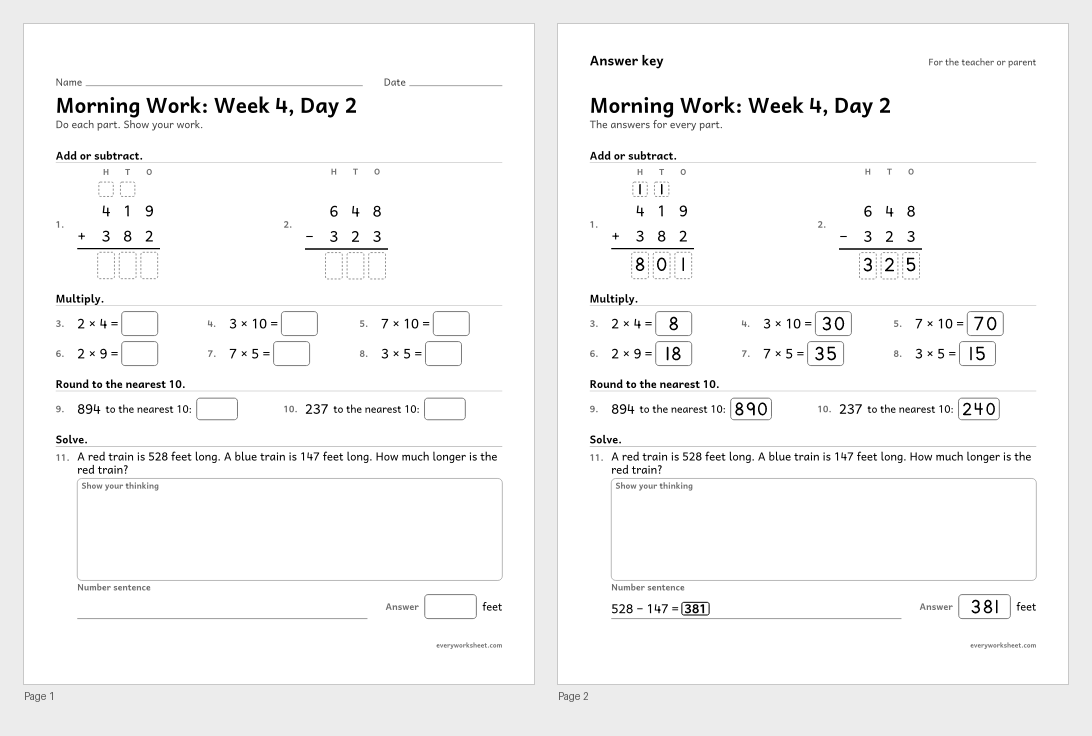 View all 2 pages
Mixed 3rd grade math review
Answer key on page 2
2 pages68 KB
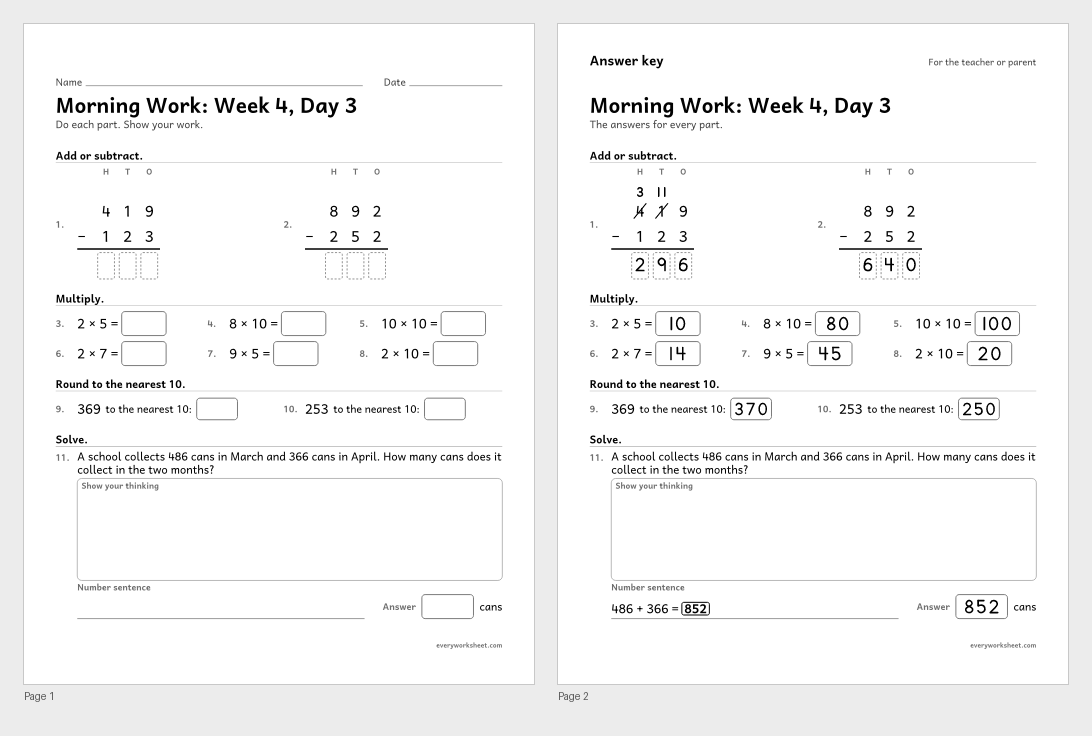 View all 2 pages
Mixed 3rd grade math review
Answer key on page 2
2 pages68 KB
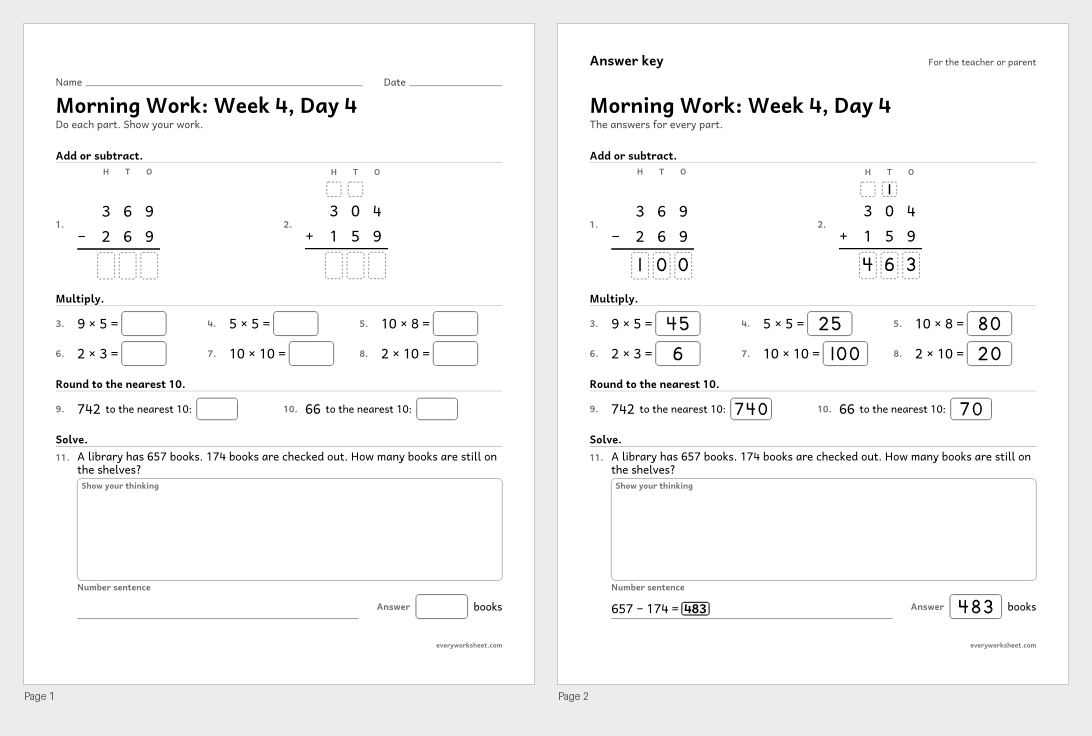 View all 2 pages
Mixed 3rd grade math review
Answer key on page 2
2 pages68 KB
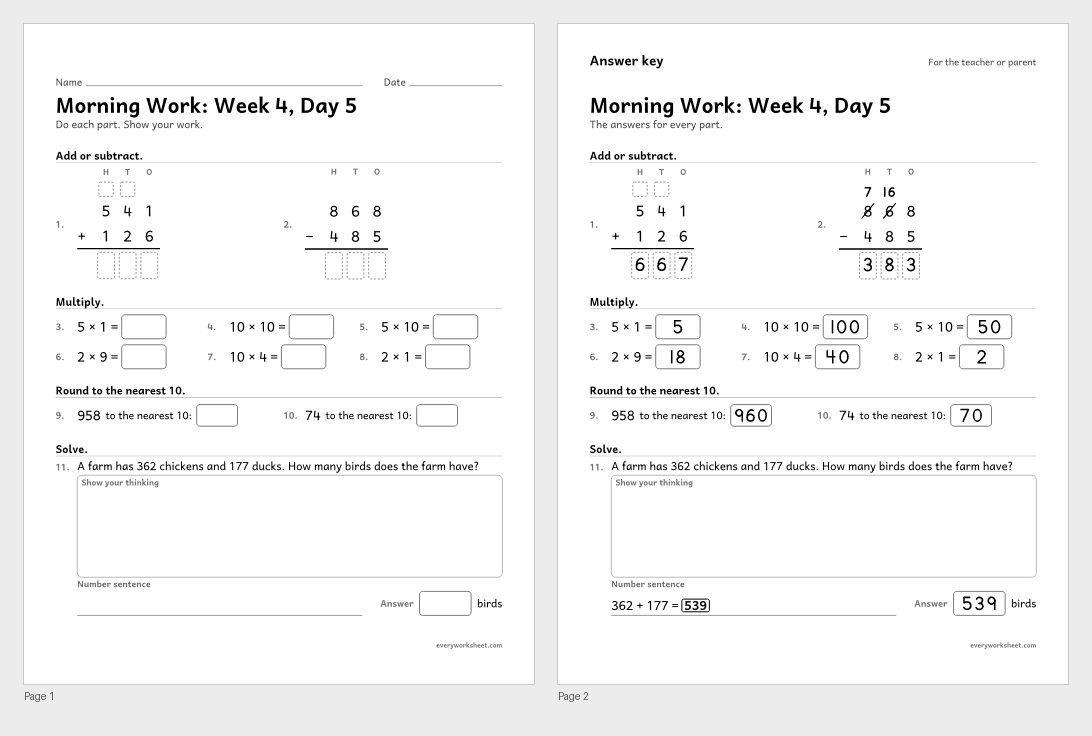 View all 2 pages
Mixed 3rd grade math review
Answer key on page 2
2 pages68 KB
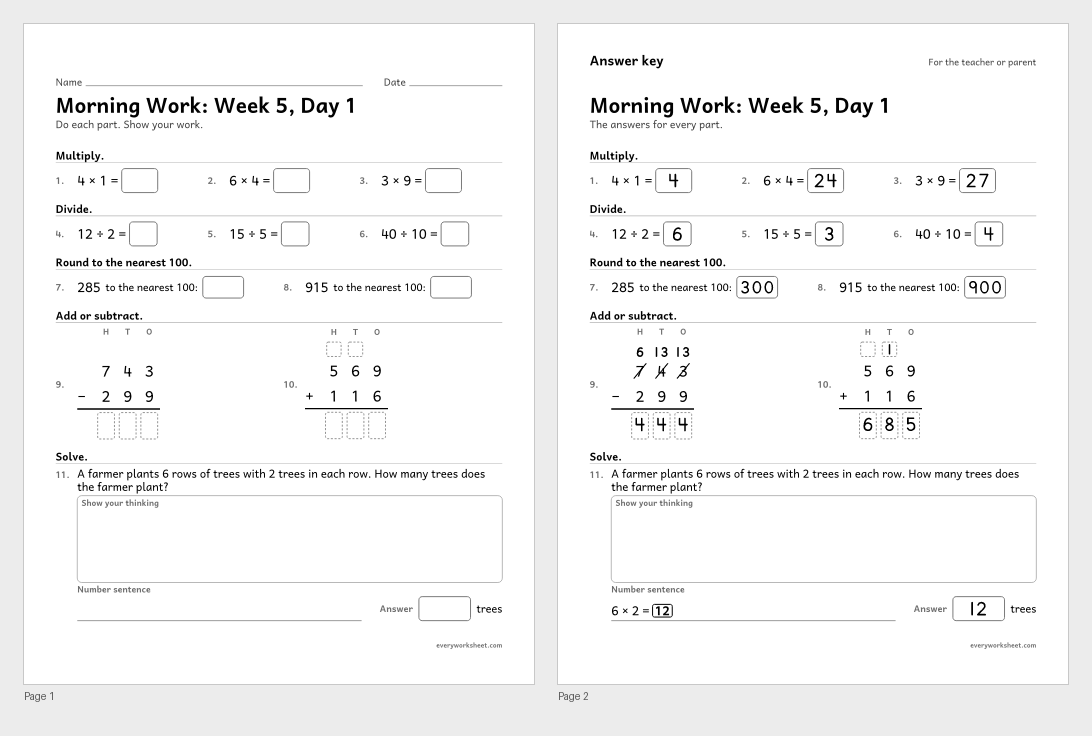 View all 2 pages
Mixed 3rd grade math review
Answer key on page 2
2 pages69 KB
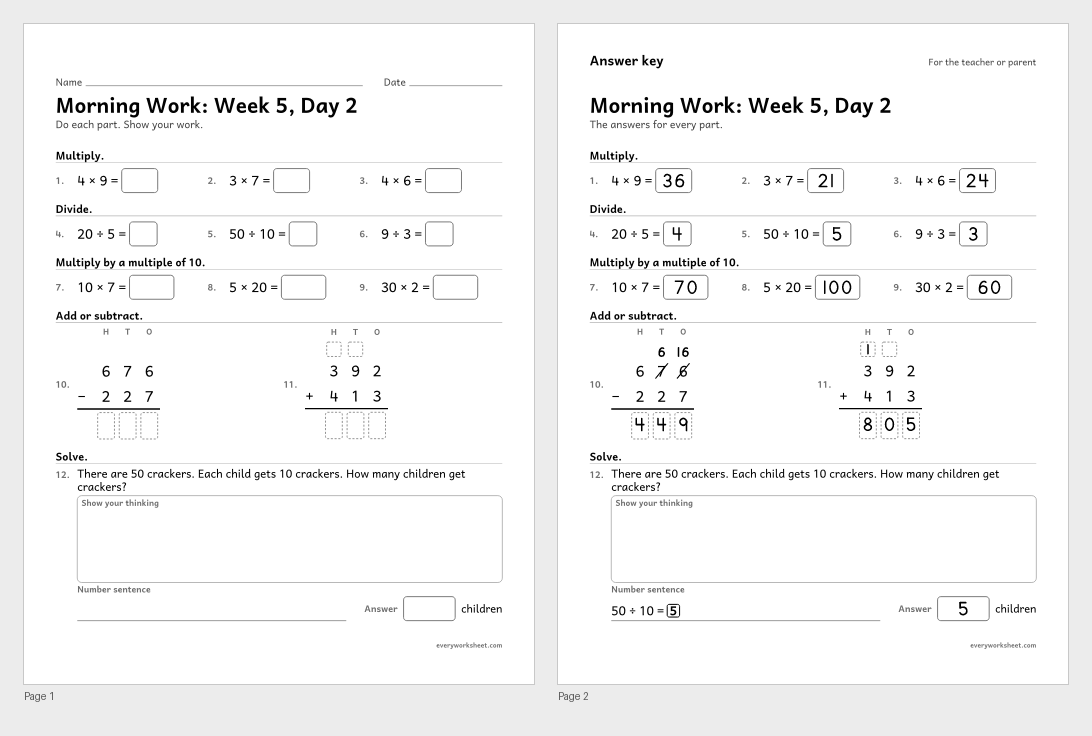 View all 2 pages
Mixed 3rd grade math review
Answer key on page 2
2 pages73 KB
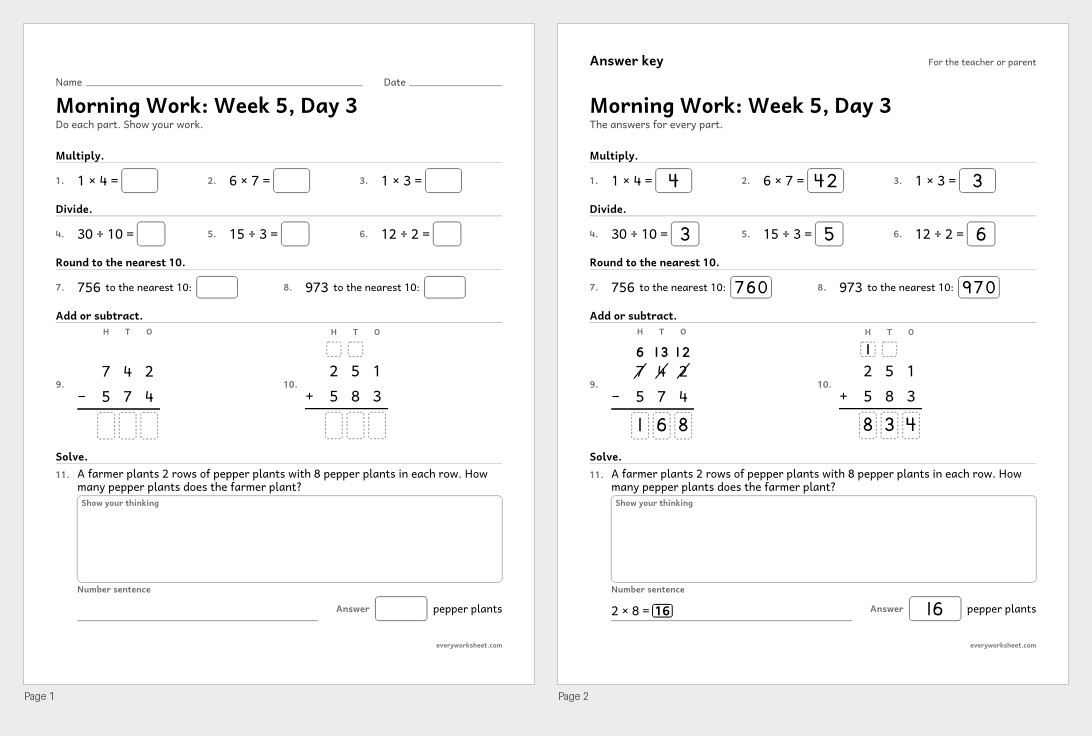 View all 2 pages
Mixed 3rd grade math review
Answer key on page 2
2 pages69 KB
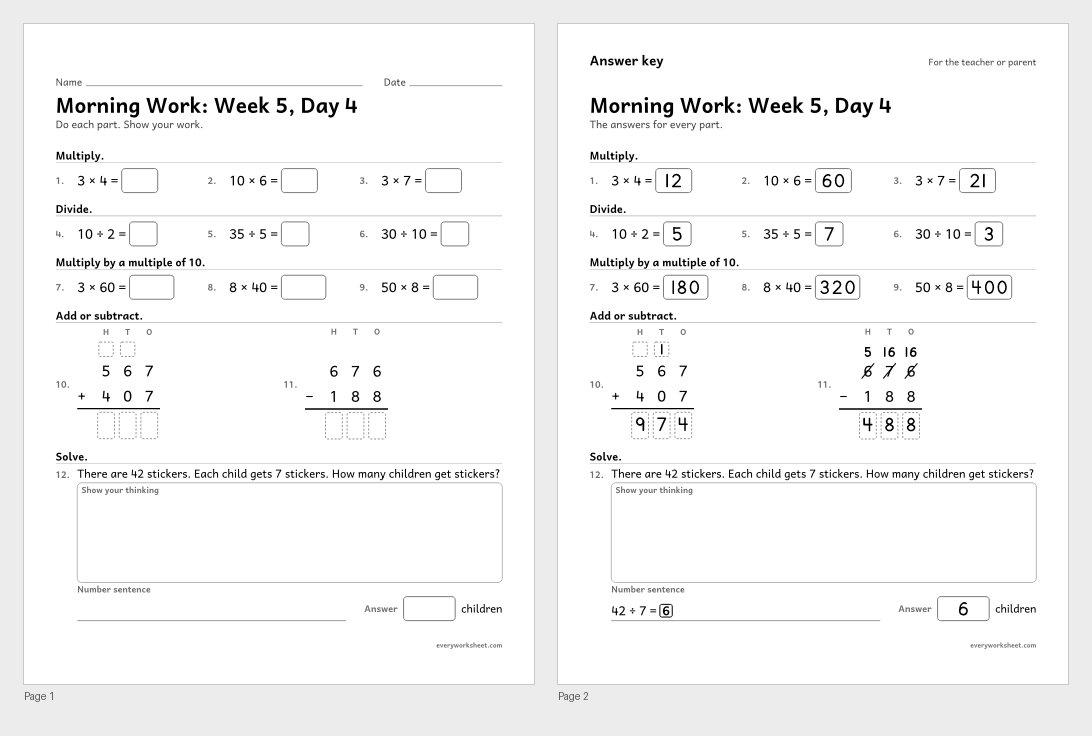 View all 2 pages
Mixed 3rd grade math review
Answer key on page 2
2 pages73 KB
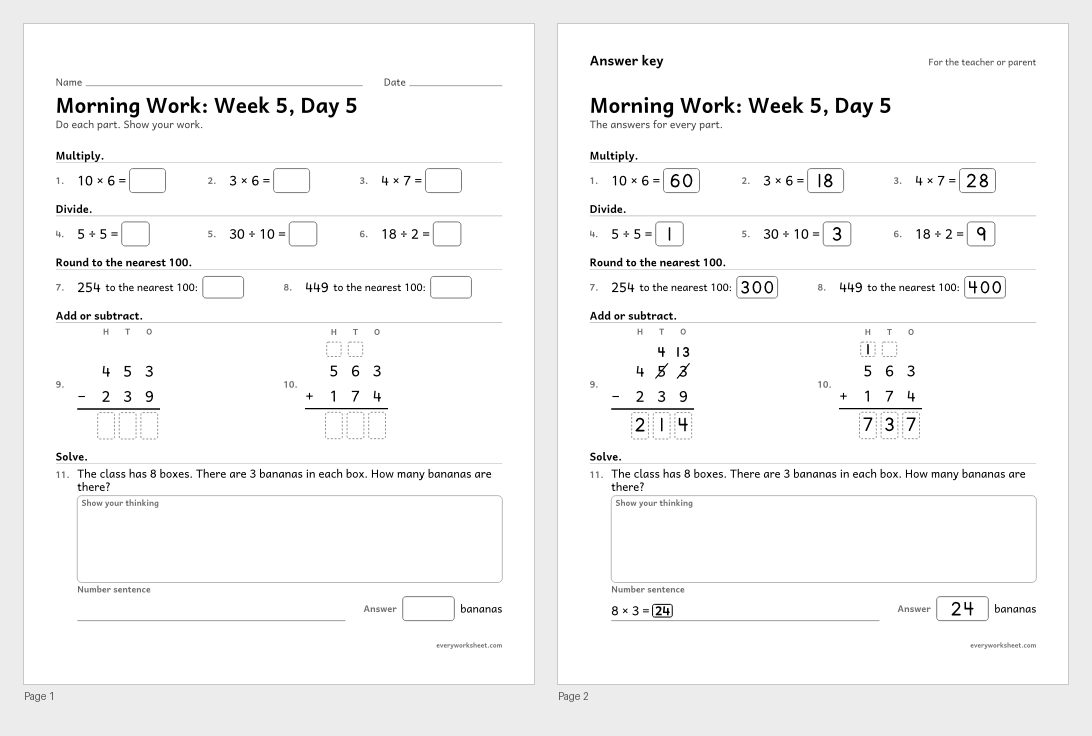 View all 2 pages
Mixed 3rd grade math review
Answer key on page 2
2 pages69 KB
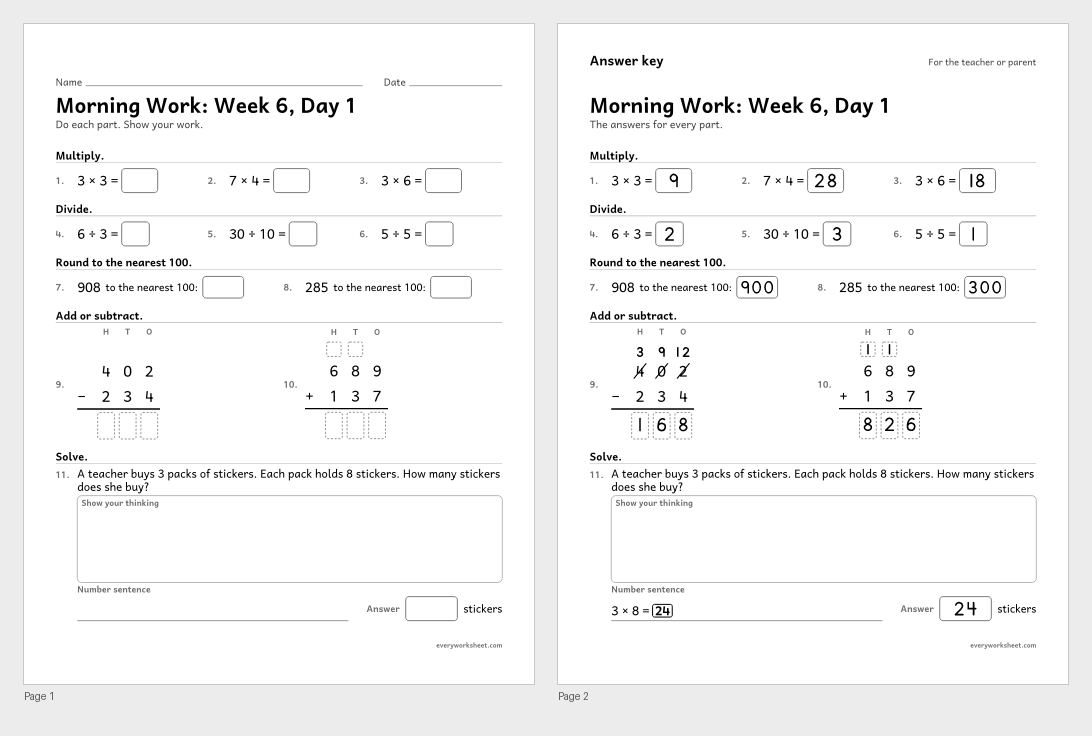 View all 2 pages
Mixed 3rd grade math review
Answer key on page 2
2 pages69 KB
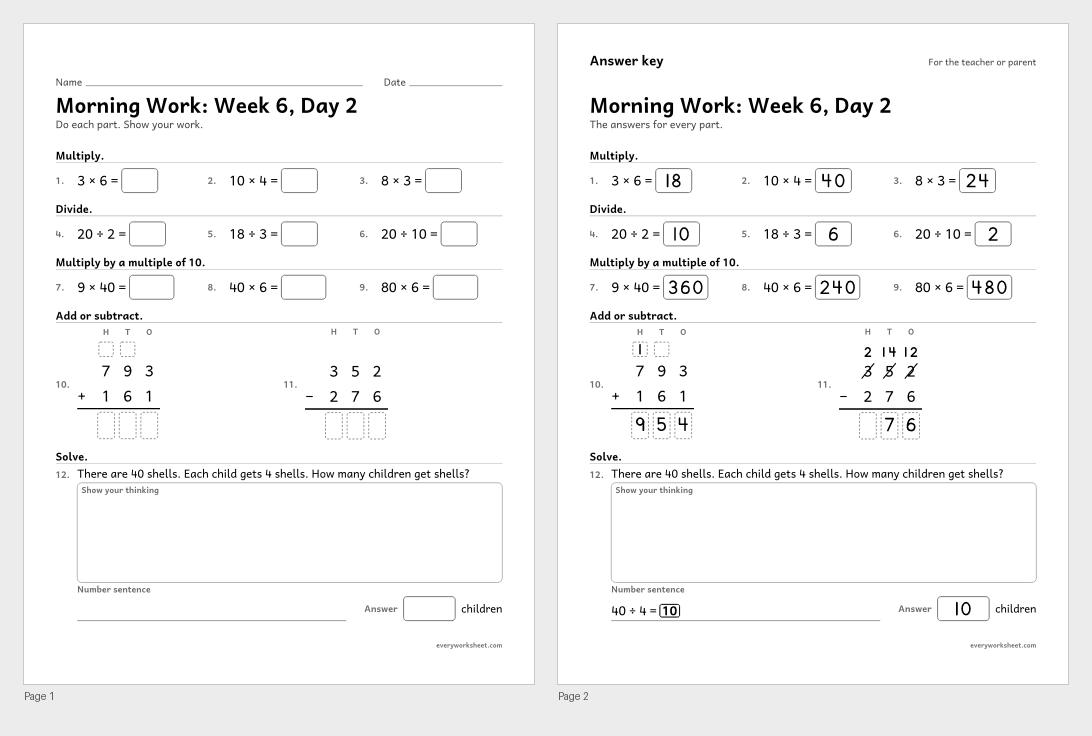 View all 2 pages
Mixed 3rd grade math review
Answer key on page 2
2 pages74 KB
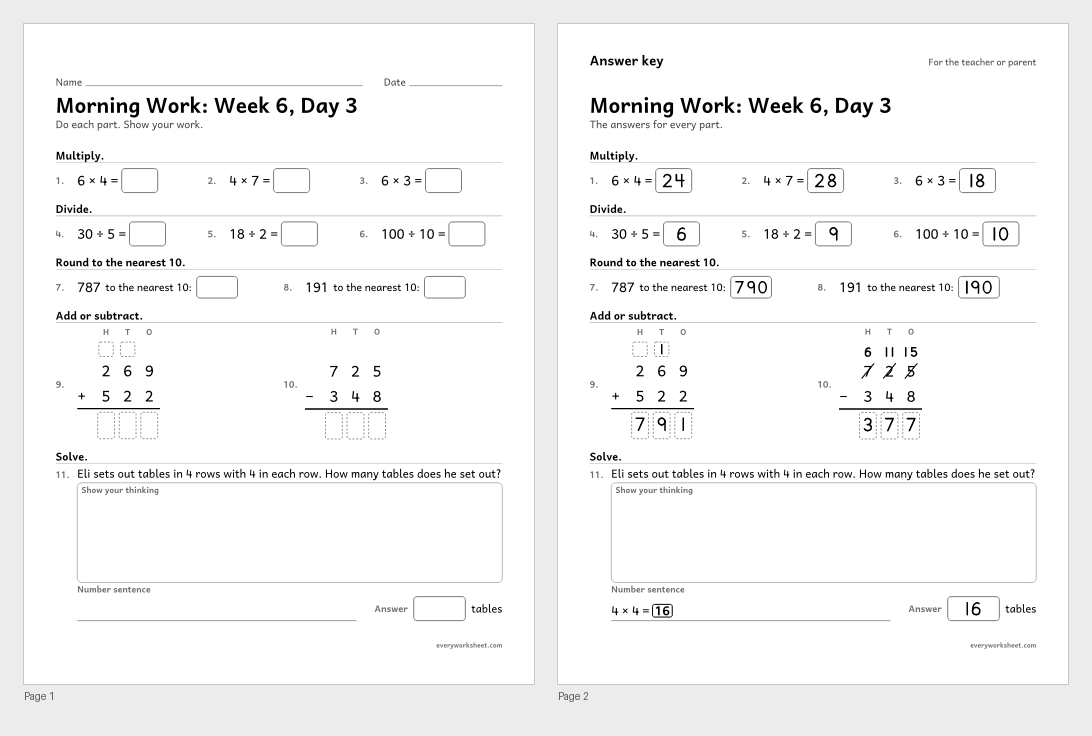 View all 2 pages
Mixed 3rd grade math review
Answer key on page 2
2 pages69 KB
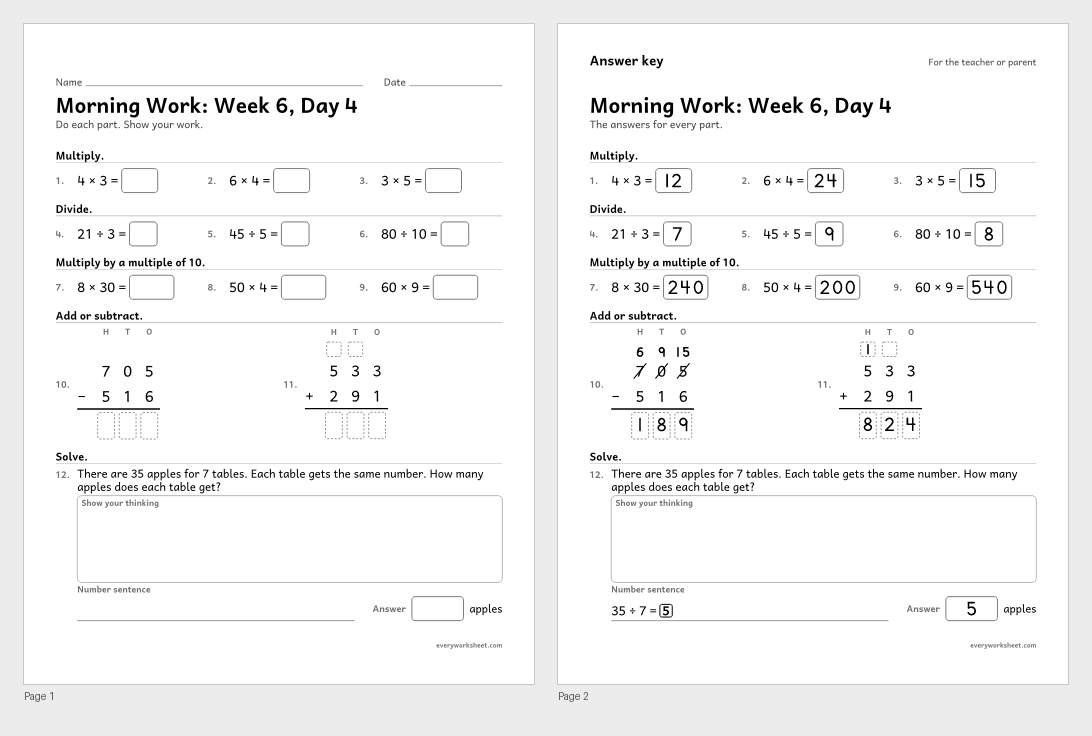 View all 2 pages
Mixed 3rd grade math review
Answer key on page 2
2 pages74 KB
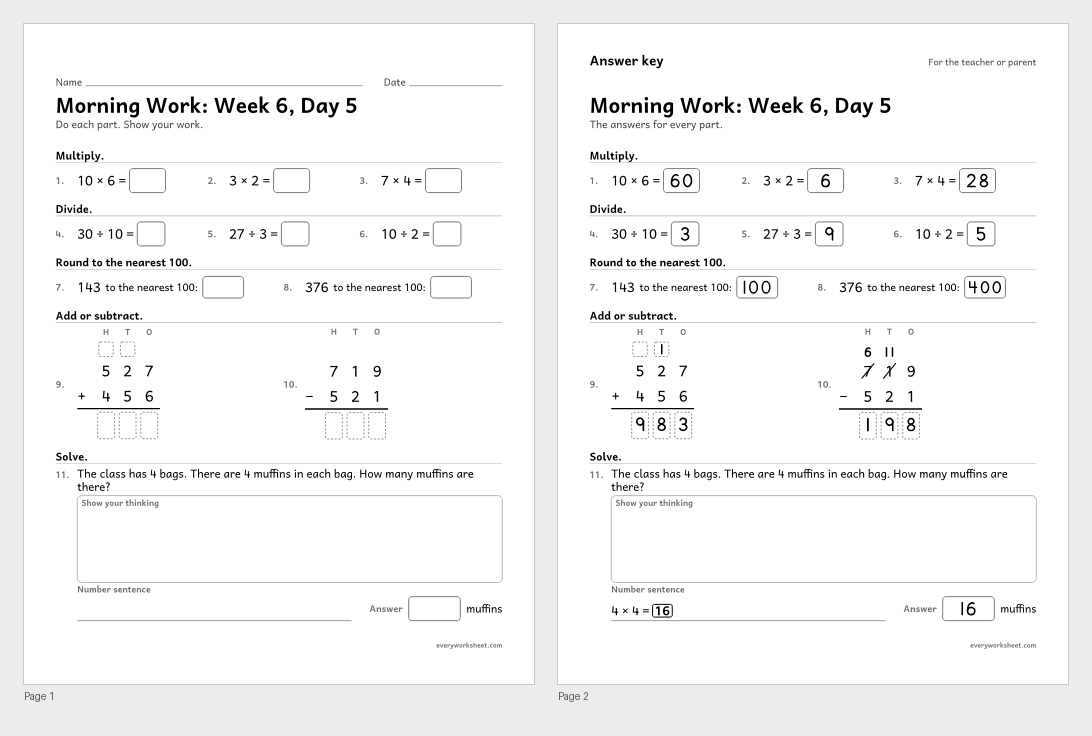 View all 2 pages
Mixed 3rd grade math review
Answer key on page 2
2 pages69 KB
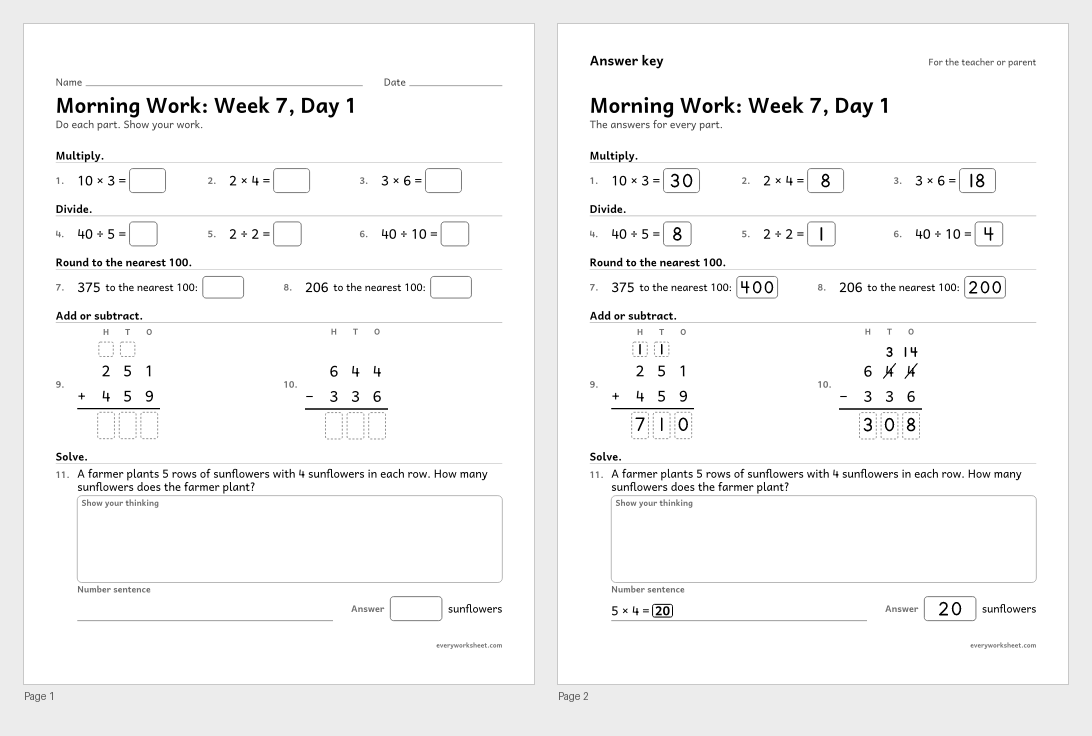 View all 2 pages
Mixed 3rd grade math review
Answer key on page 2
2 pages68 KB
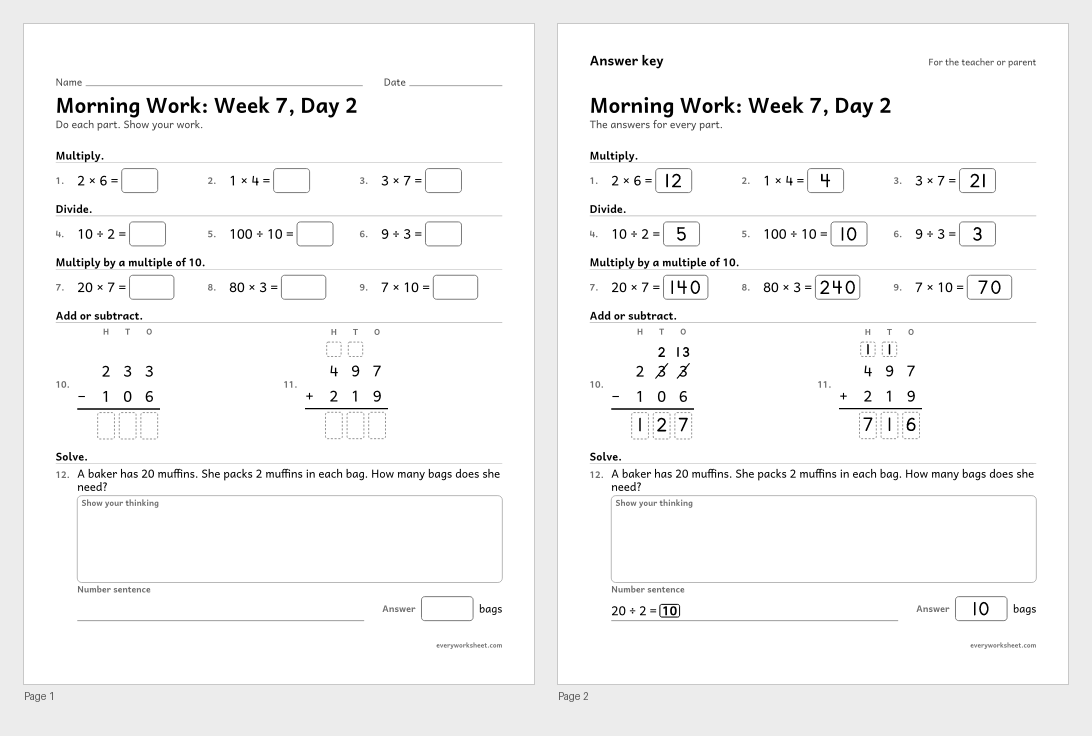 View all 2 pages
Mixed 3rd grade math review
Answer key on page 2
2 pages74 KB
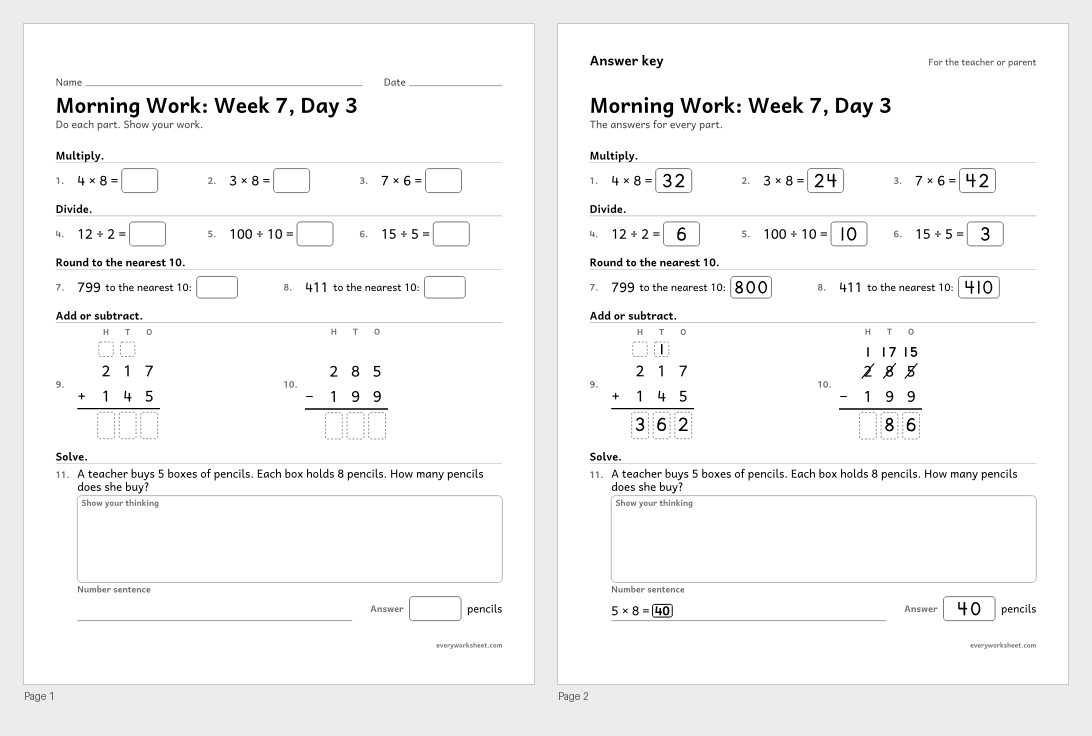 View all 2 pages
Mixed 3rd grade math review
Answer key on page 2
2 pages69 KB
 View all 2 pages
Mixed 3rd grade math review
Answer key on page 2
2 pages73 KB
 View all 2 pages
Mixed 3rd grade math review
Answer key on page 2
2 pages69 KB
 View all 2 pages
Mixed 3rd grade math review
Answer key on page 2
2 pages69 KB
 View all 2 pages
Mixed 3rd grade math review
Answer key on page 2
2 pages73 KB
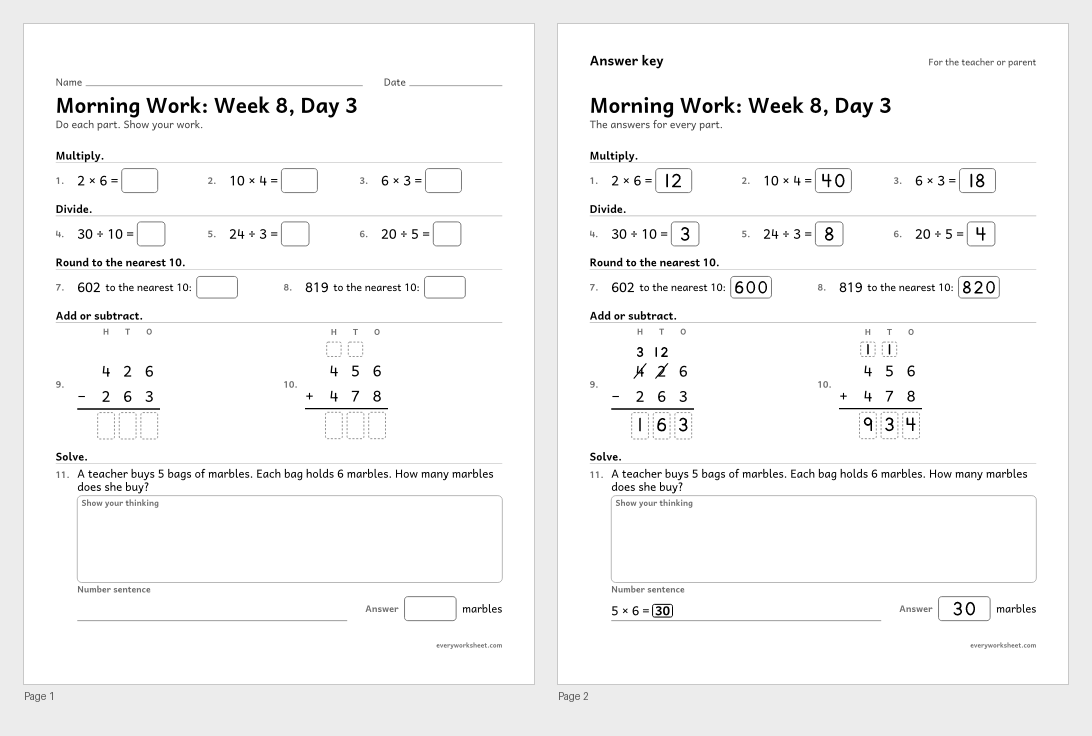 View all 2 pages
Mixed 3rd grade math review
Answer key on page 2
2 pages69 KB
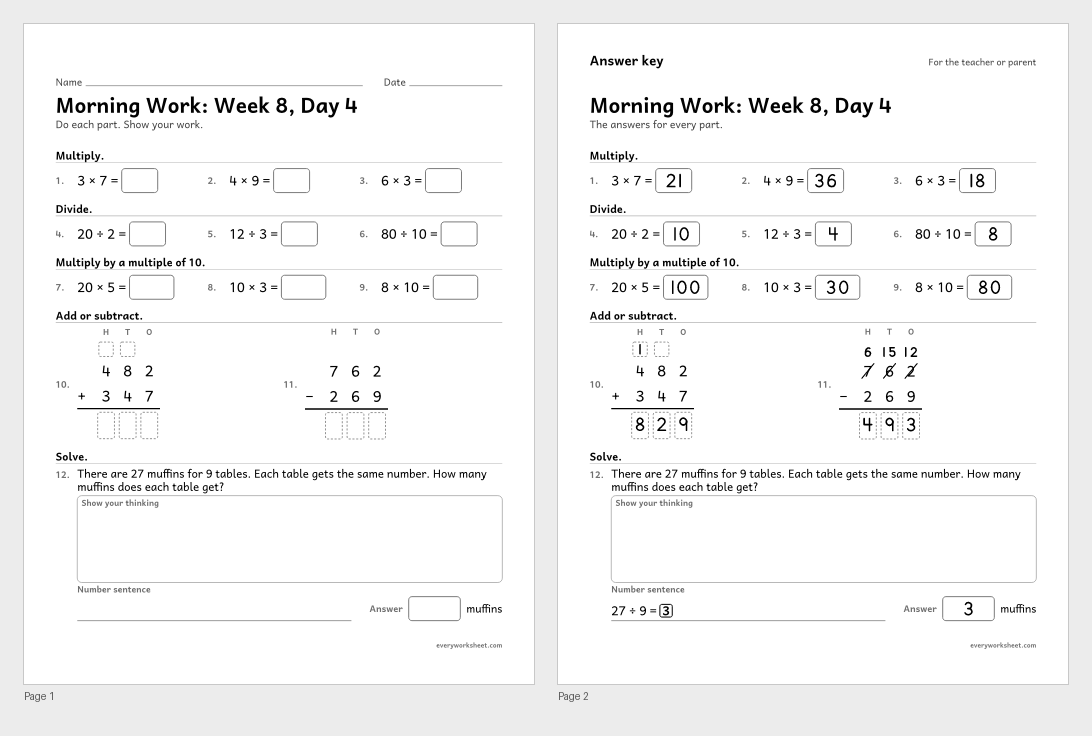 View all 2 pages
Mixed 3rd grade math review
Answer key on page 2
2 pages74 KB
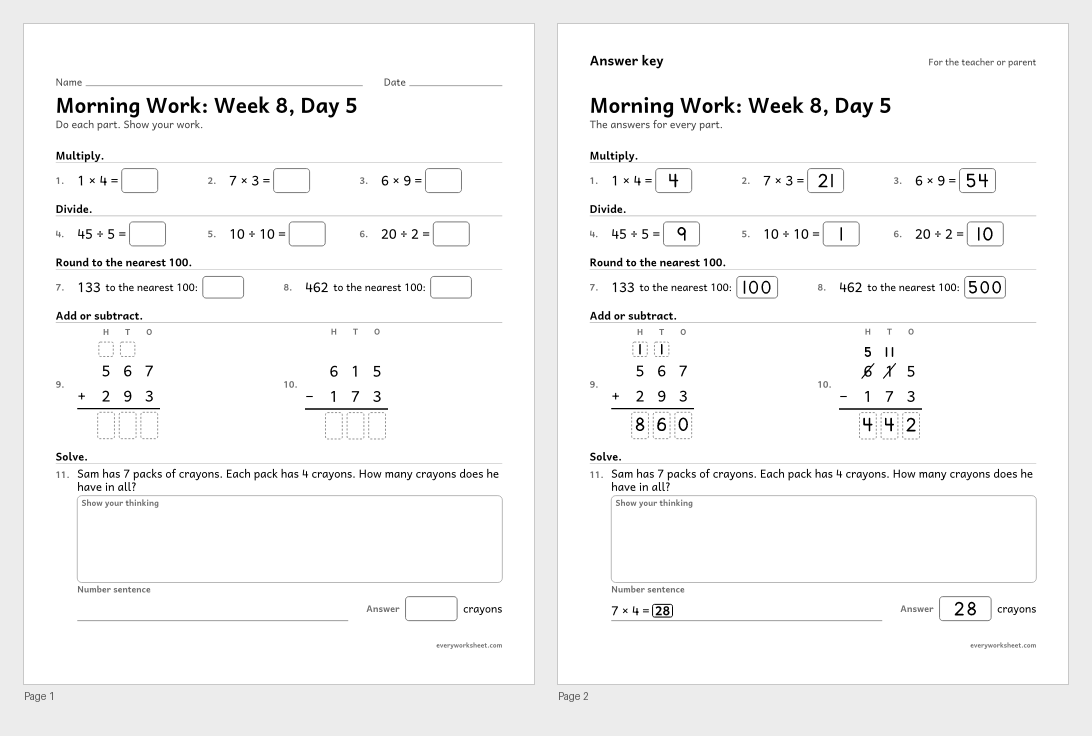 View all 2 pages
Mixed 3rd grade math review
Answer key on page 2
2 pages68 KB
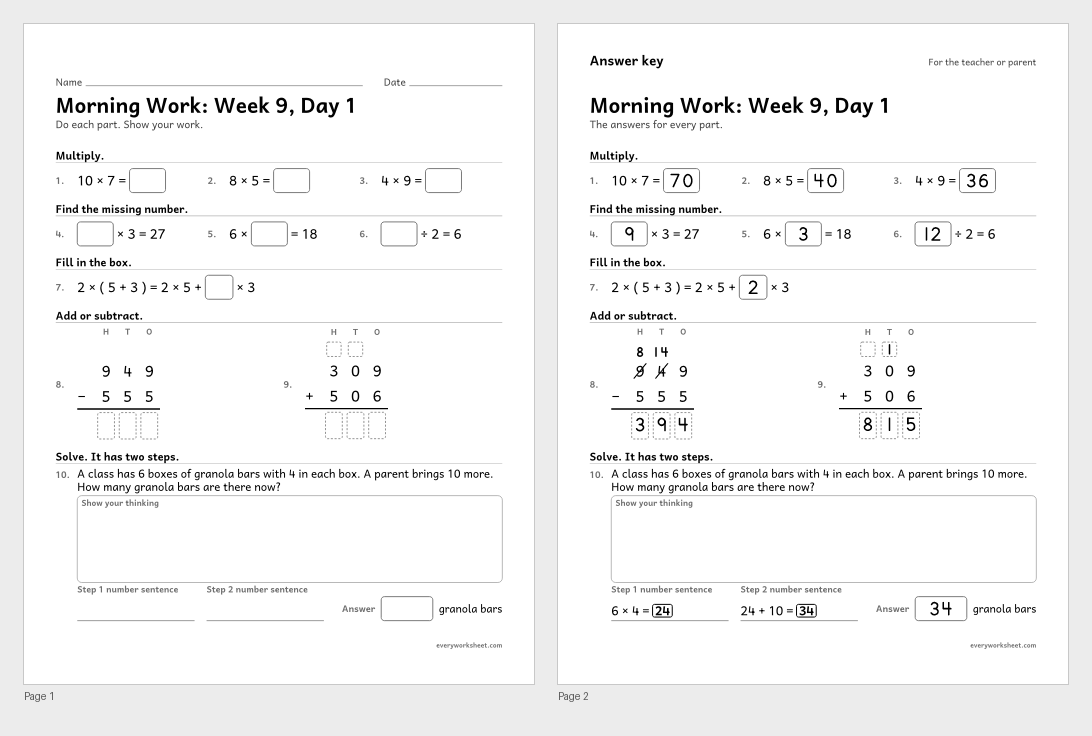 View all 2 pages
Mixed 3rd grade math review
Answer key on page 2
2 pages74 KB
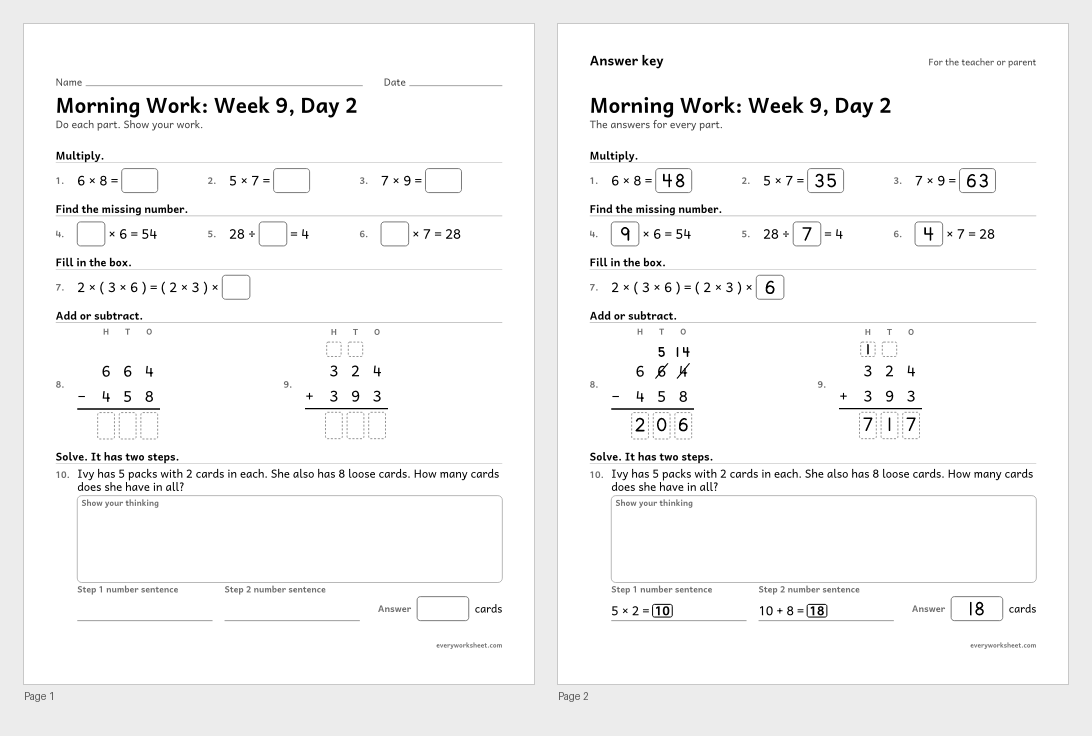 View all 2 pages
Mixed 3rd grade math review
Answer key on page 2
2 pages74 KB
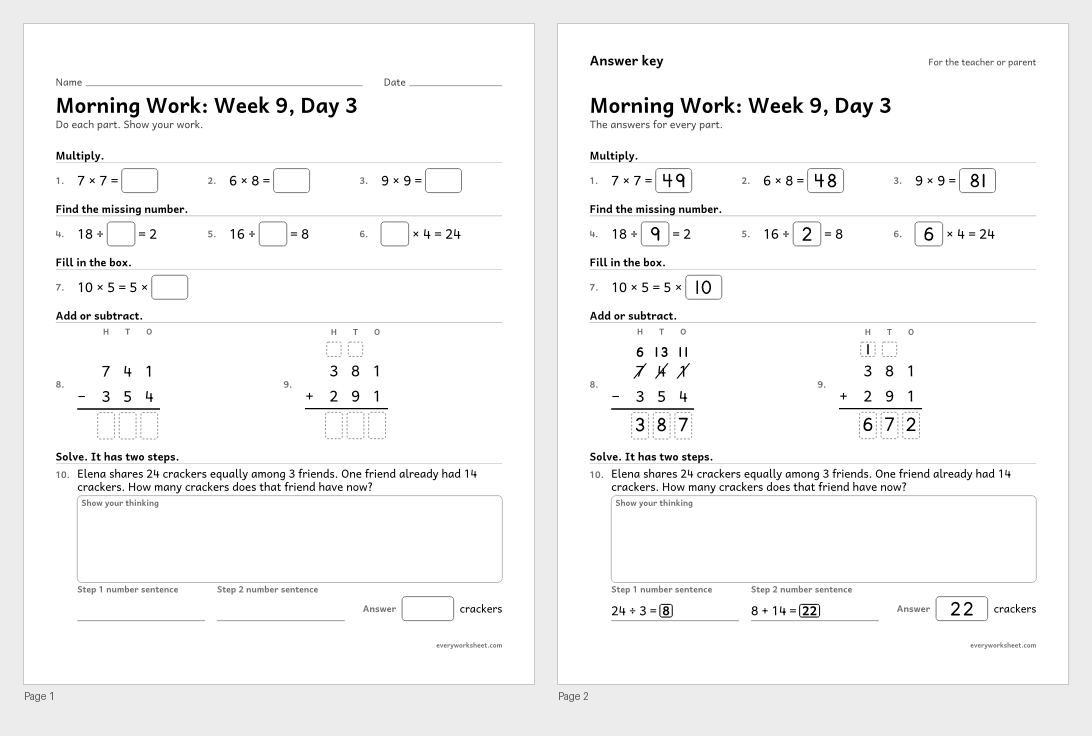 View all 2 pages
Mixed 3rd grade math review
Answer key on page 2
2 pages71 KB
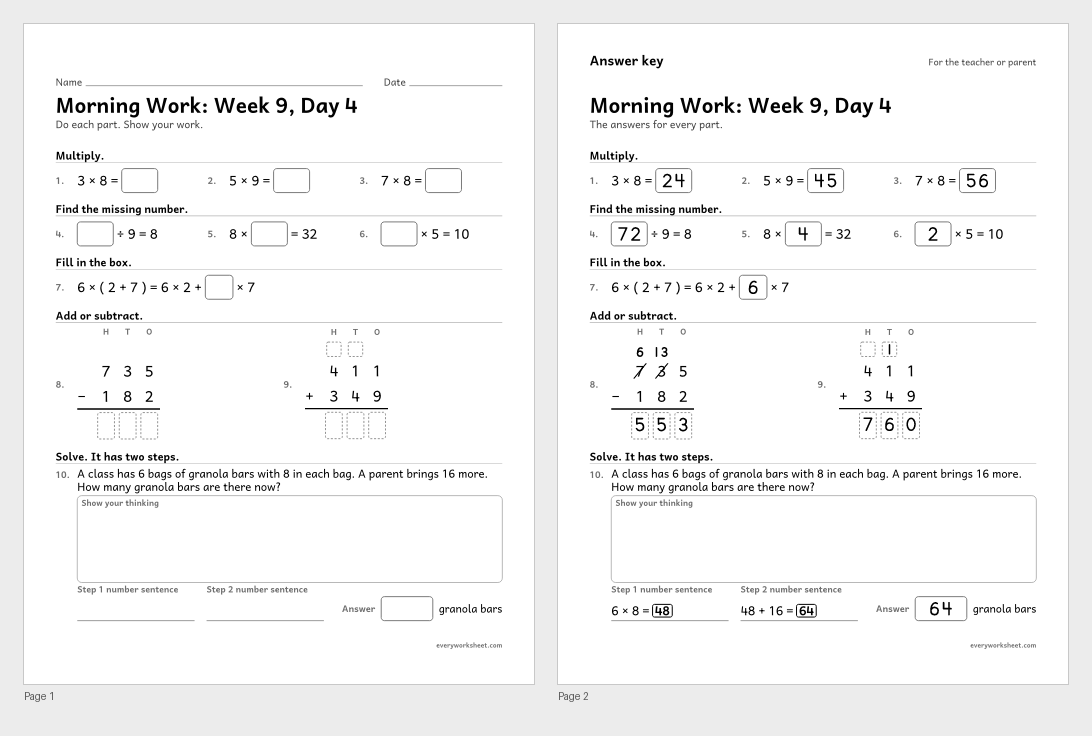 View all 2 pages
Mixed 3rd grade math review
Answer key on page 2
2 pages74 KB
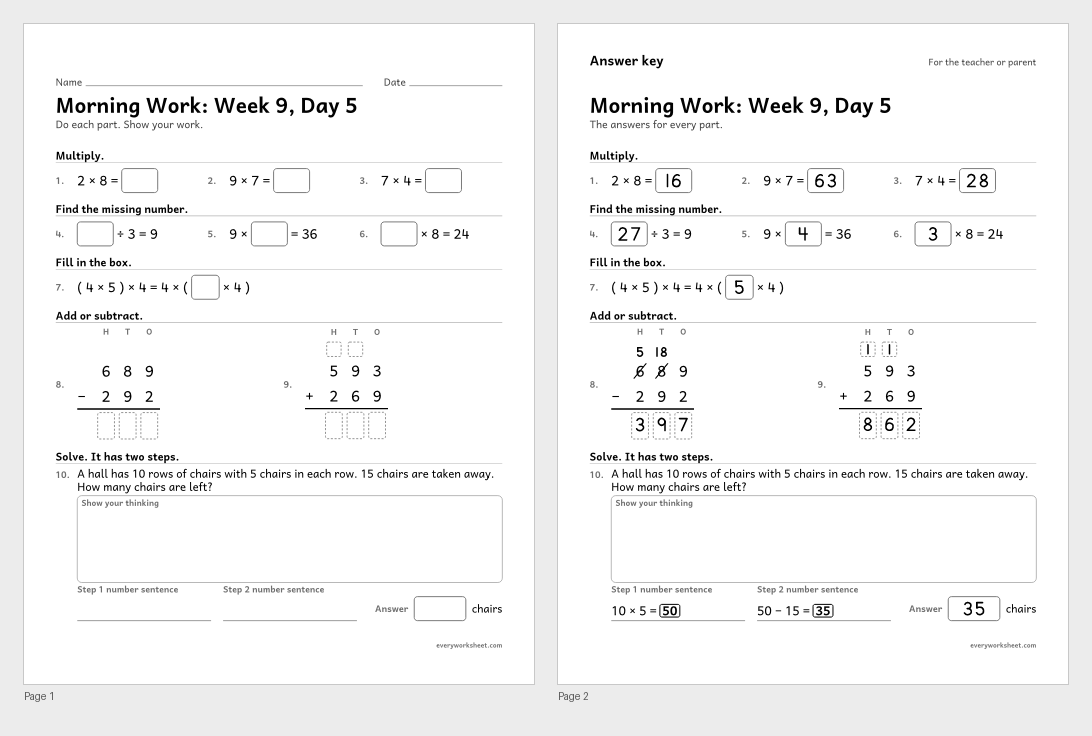 View all 2 pages
Mixed 3rd grade math review
Answer key on page 2
2 pages74 KB
 View all 2 pages
Mixed 3rd grade math review
Answer key on page 2
2 pages72 KB
 View all 2 pages
Mixed 3rd grade math review
Answer key on page 2
2 pages74 KB
 View all 2 pages
Mixed 3rd grade math review
Answer key on page 2
2 pages70 KB
 View all 2 pages
Mixed 3rd grade math review
Answer key on page 2
2 pages74 KB
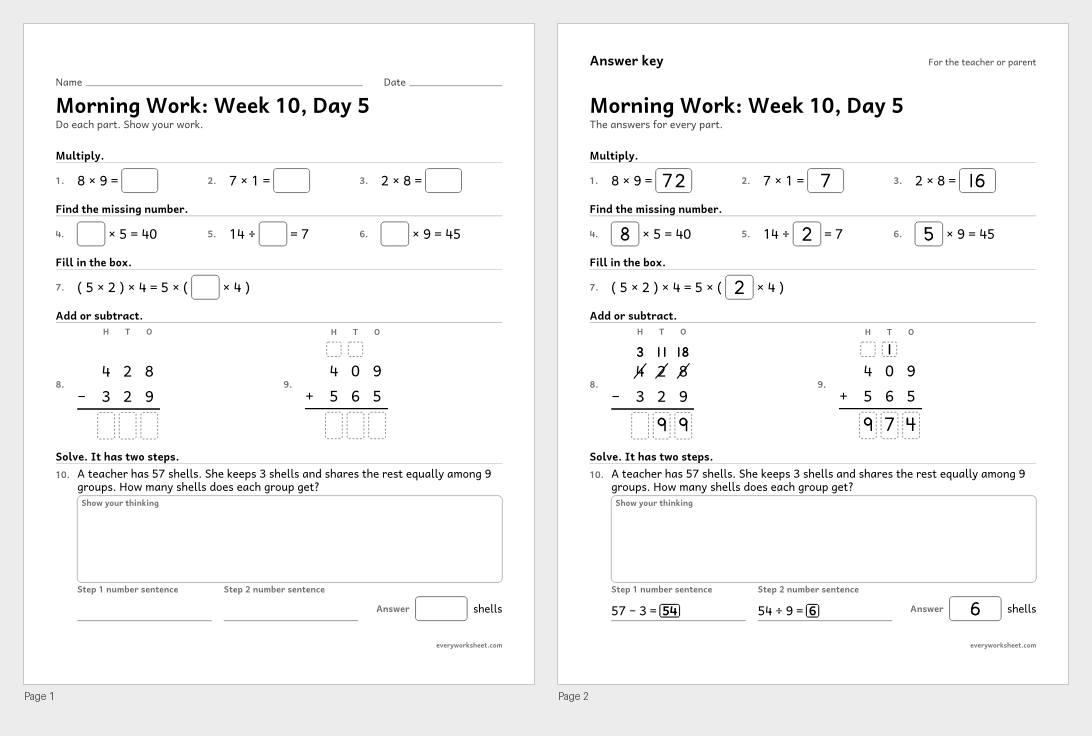 View all 2 pages
Mixed 3rd grade math review
Answer key on page 2
2 pages74 KB
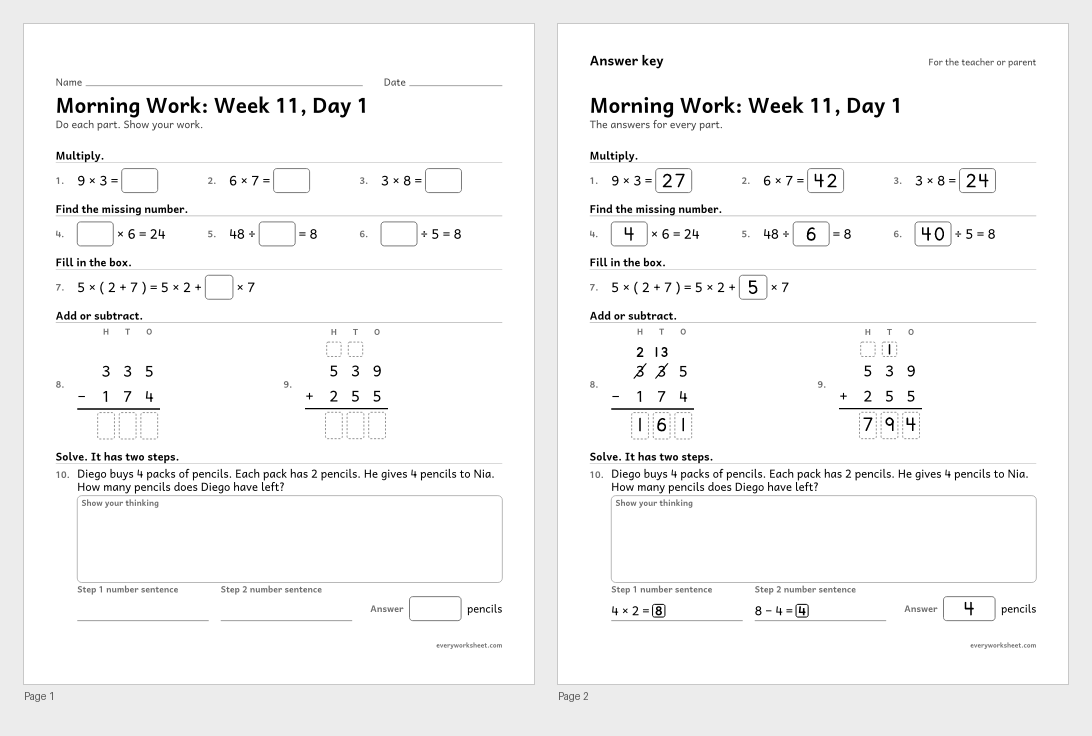 View all 2 pages
Mixed 3rd grade math review
Answer key on page 2
2 pages74 KB
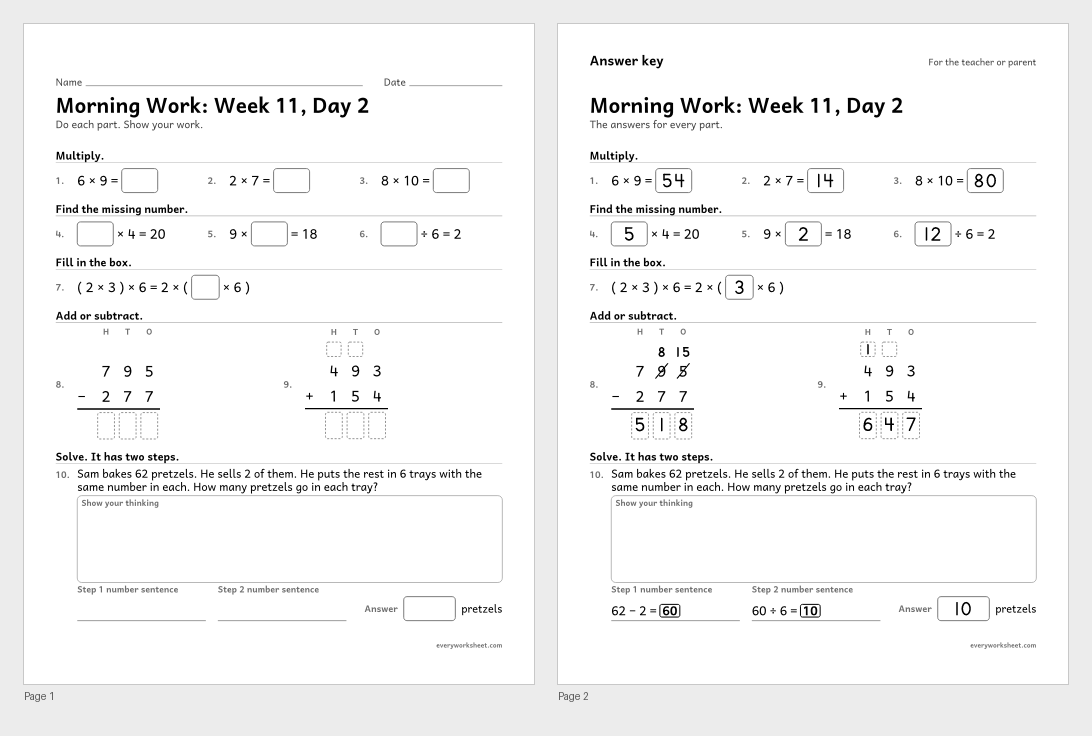 View all 2 pages
Mixed 3rd grade math review
Answer key on page 2
2 pages74 KB
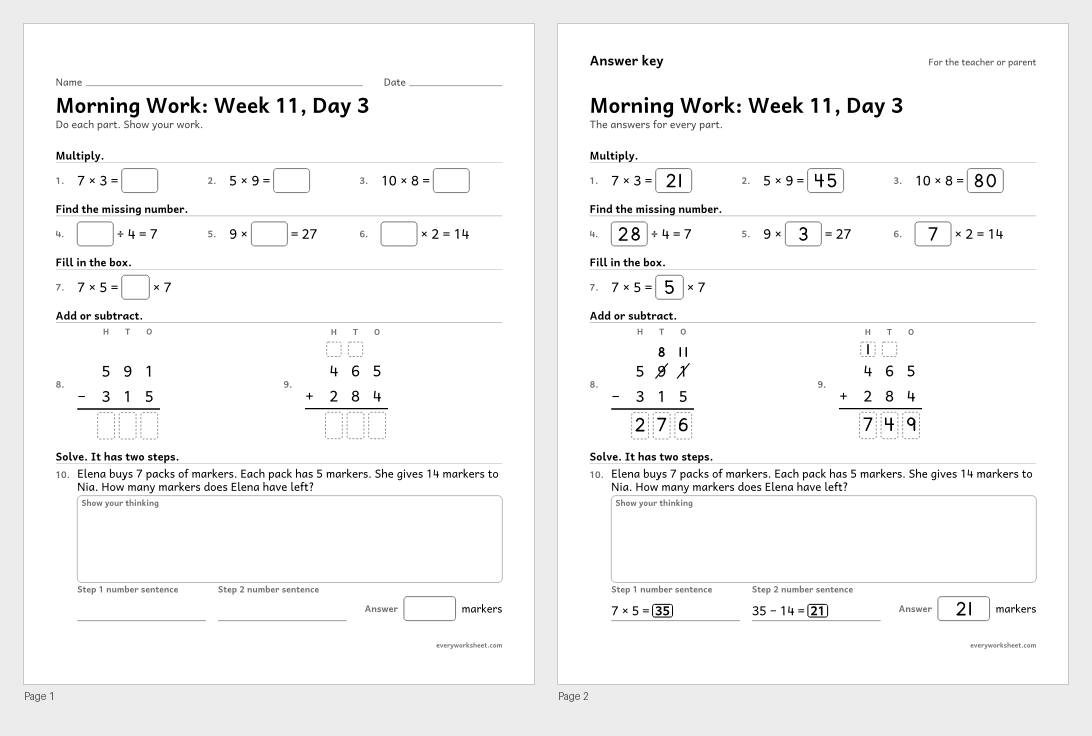 View all 2 pages
Mixed 3rd grade math review
Answer key on page 2
2 pages70 KB
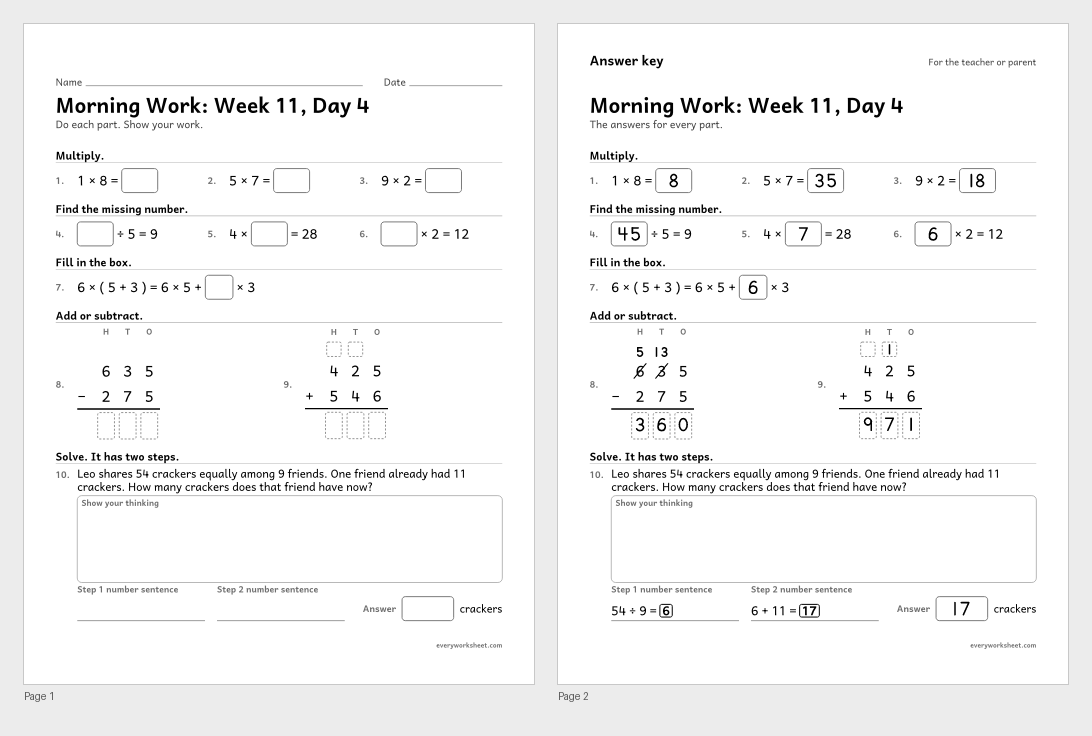 View all 2 pages
Mixed 3rd grade math review
Answer key on page 2
2 pages75 KB
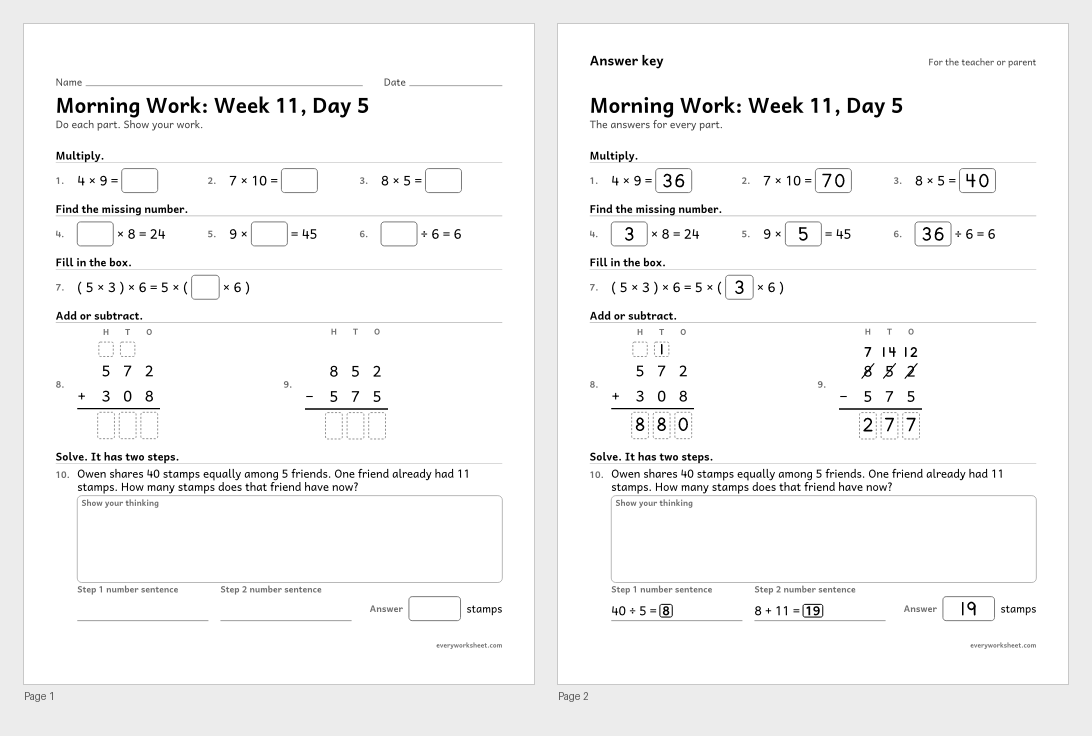 View all 2 pages
Mixed 3rd grade math review
Answer key on page 2
2 pages75 KB
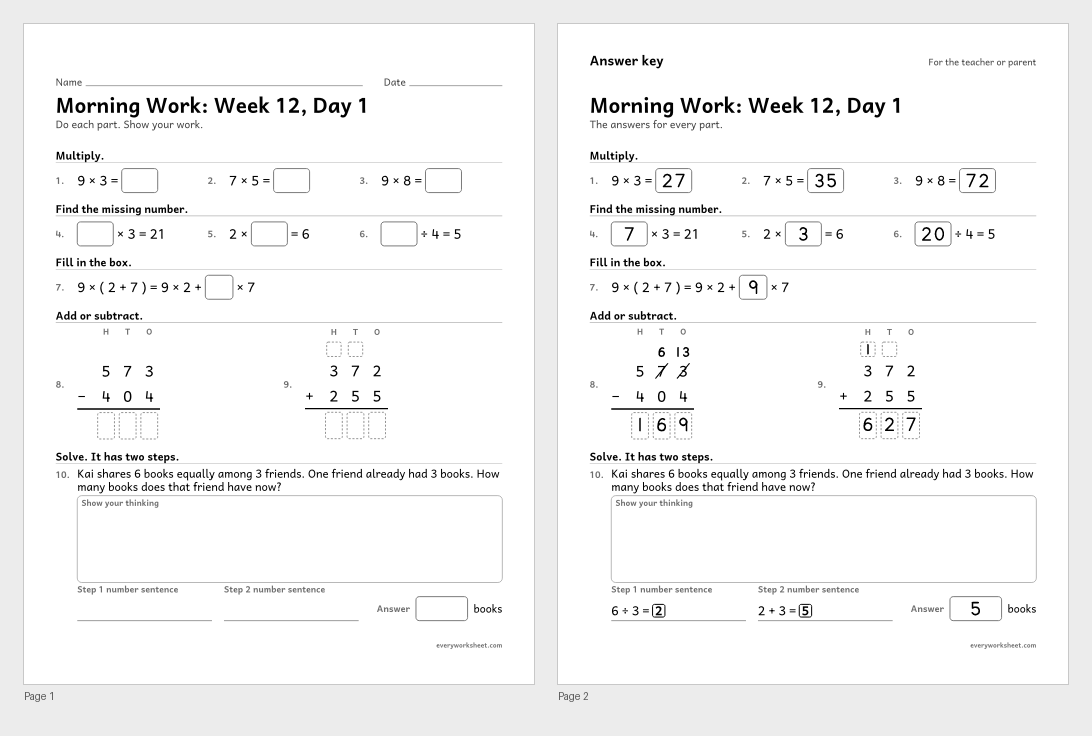 View all 2 pages
Mixed 3rd grade math review
Answer key on page 2
2 pages75 KB
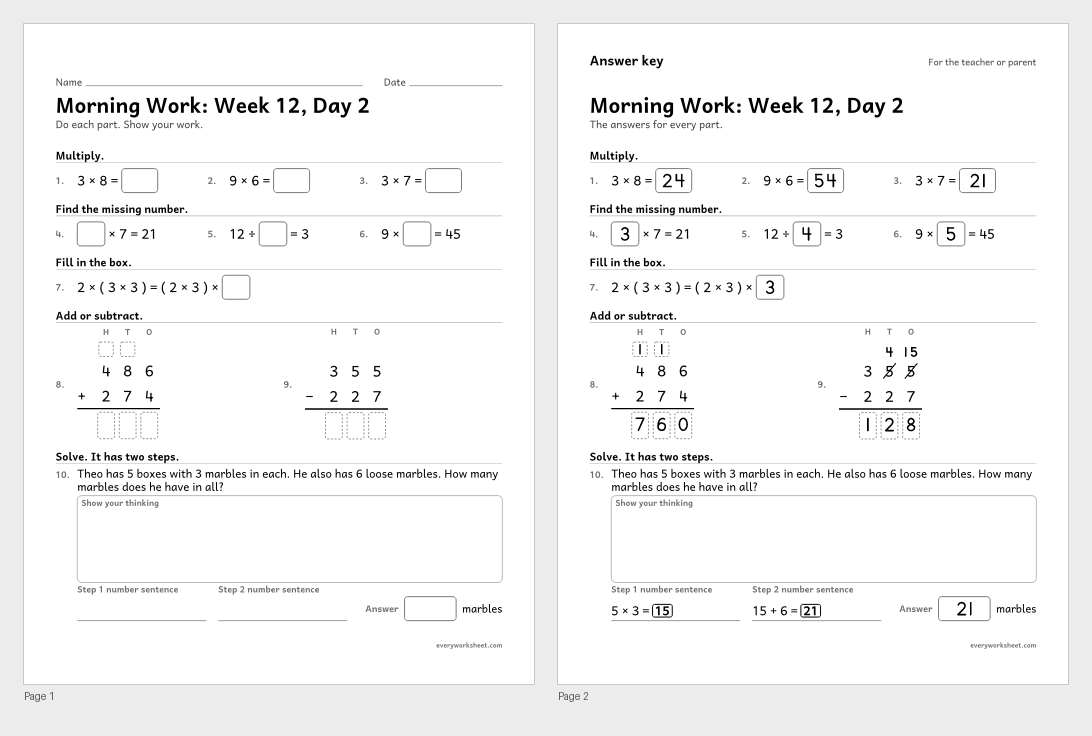 View all 2 pages
Mixed 3rd grade math review
Answer key on page 2
2 pages74 KB
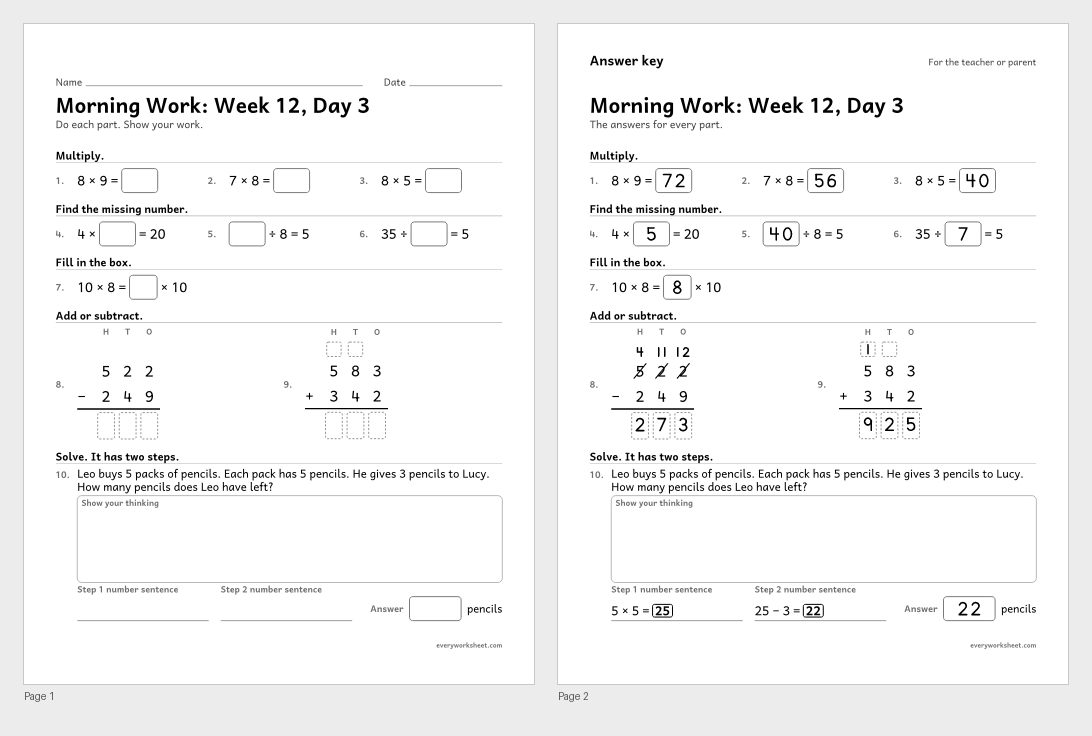 View all 2 pages
Mixed 3rd grade math review
Answer key on page 2
2 pages70 KB
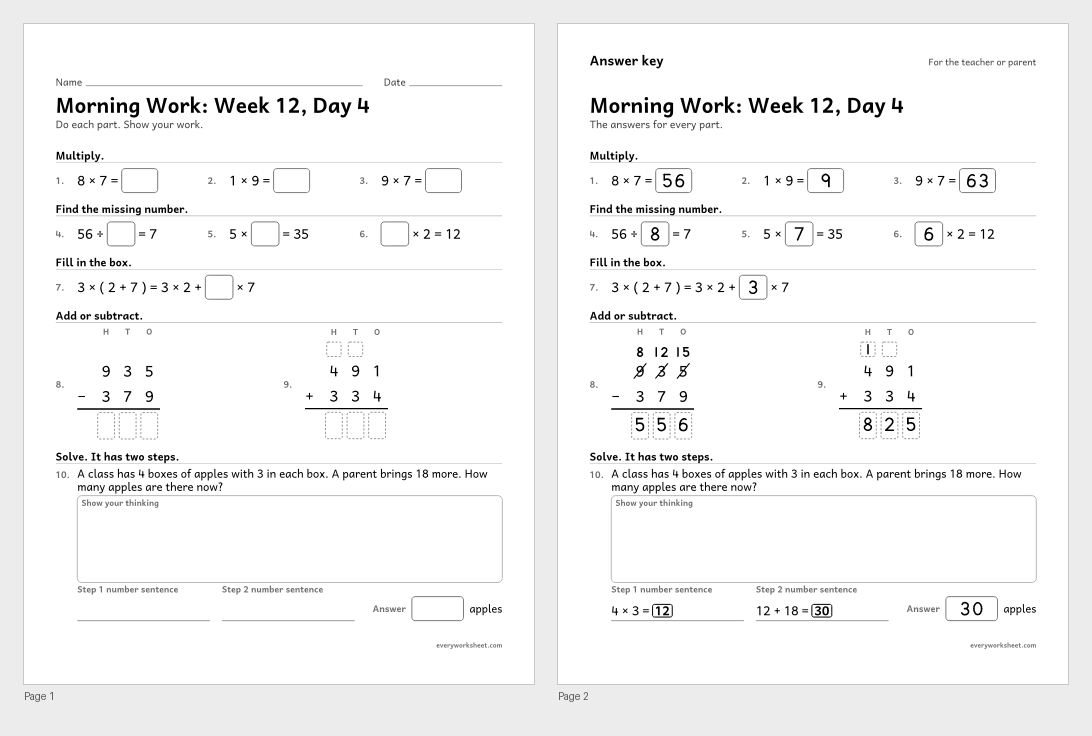 View all 2 pages
Mixed 3rd grade math review
Answer key on page 2
2 pages75 KB
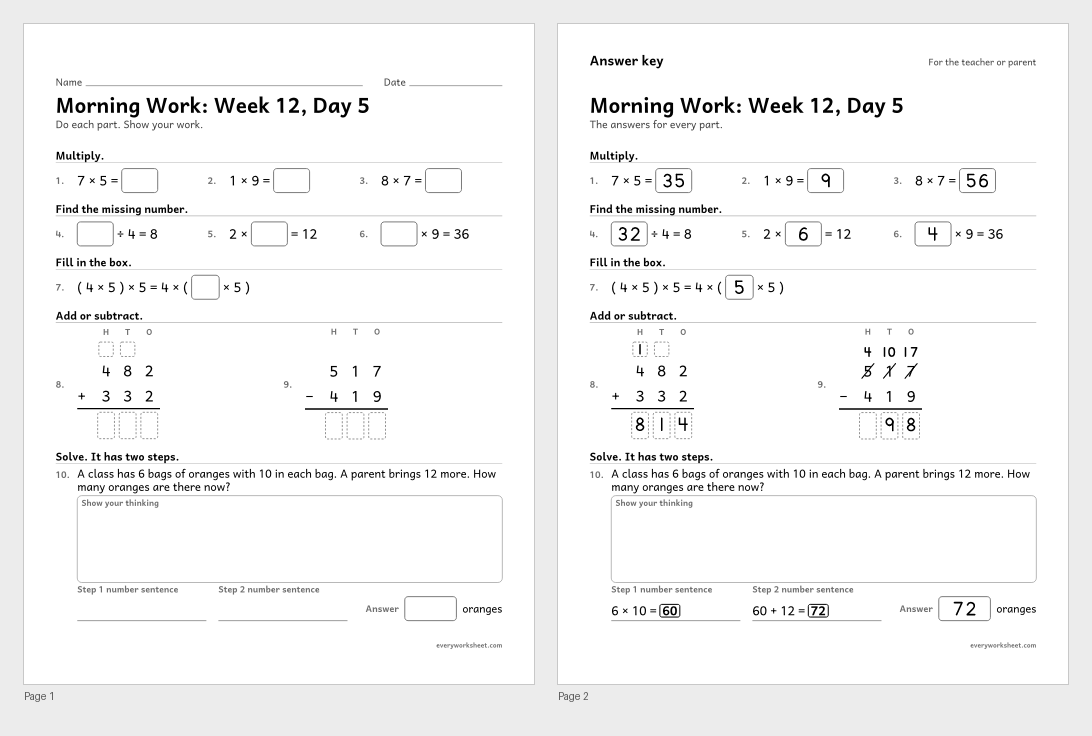 View all 2 pages
Mixed 3rd grade math review
Answer key on page 2
2 pages74 KB
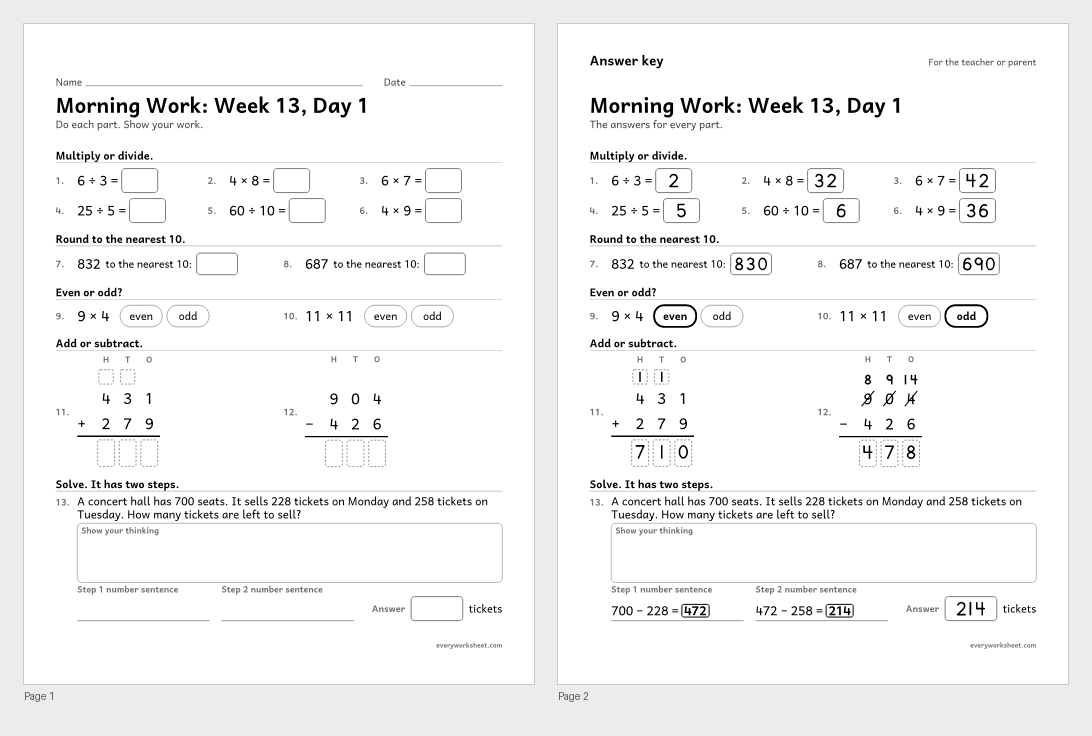 View all 2 pages
Mixed 3rd grade math review
Answer key on page 2
2 pages79 KB
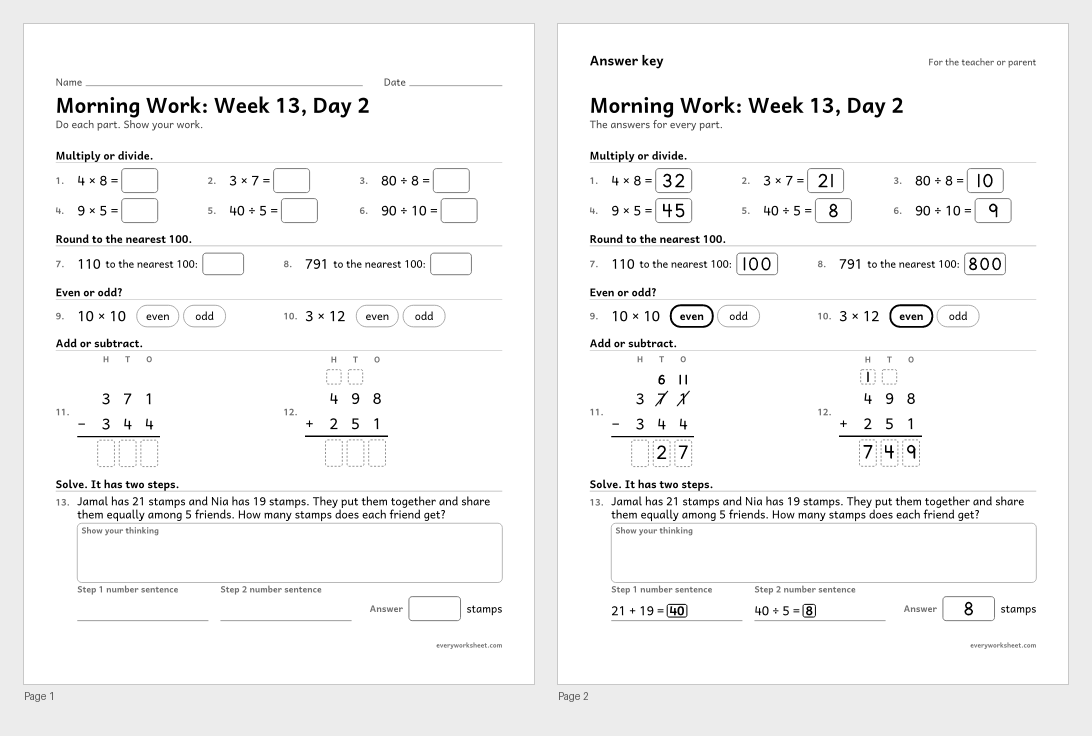 View all 2 pages
Mixed 3rd grade math review
Answer key on page 2
2 pages79 KB
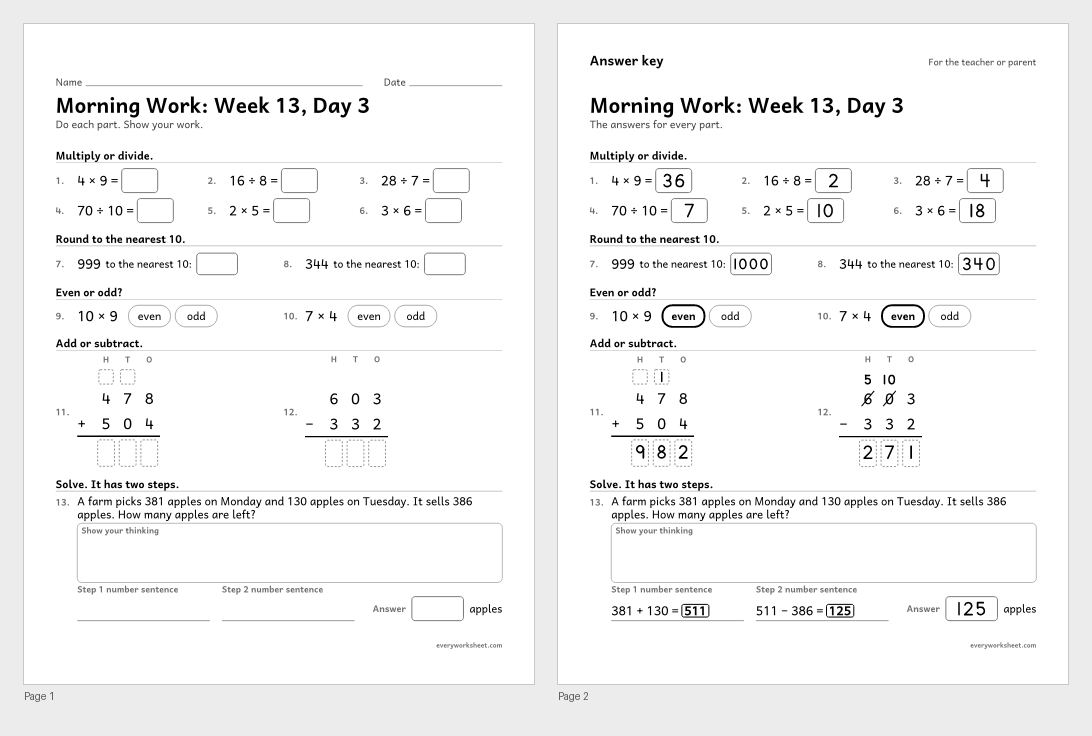 View all 2 pages
Mixed 3rd grade math review
Answer key on page 2
2 pages79 KB
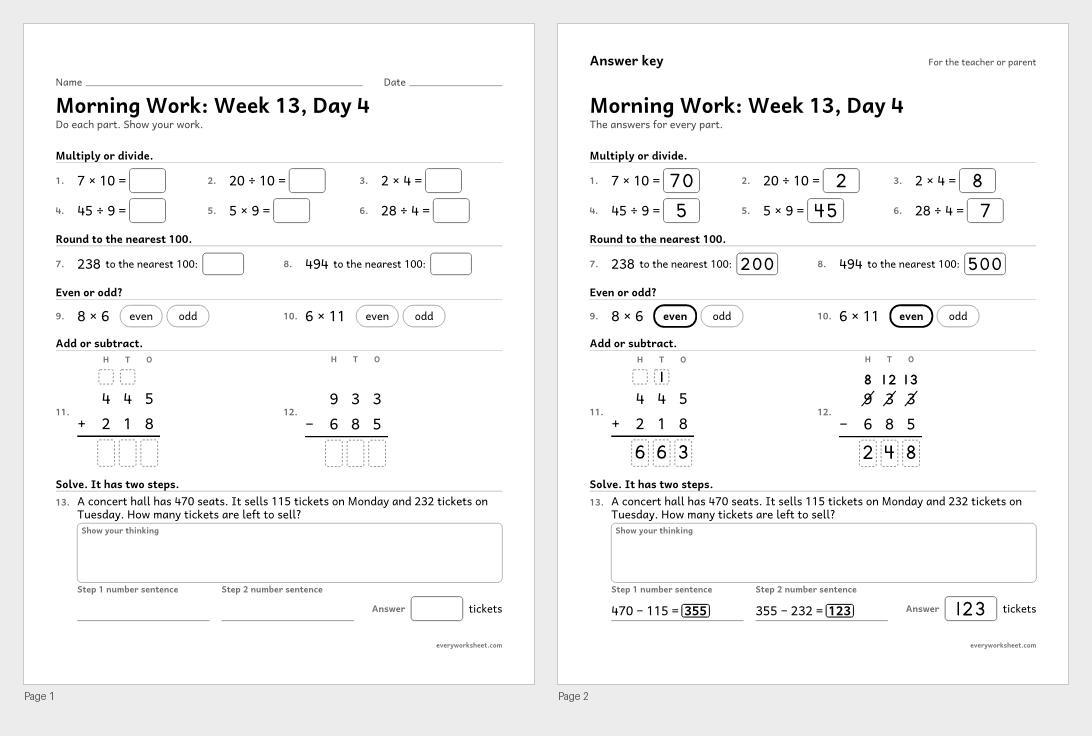 View all 2 pages
Mixed 3rd grade math review
Answer key on page 2
2 pages79 KB
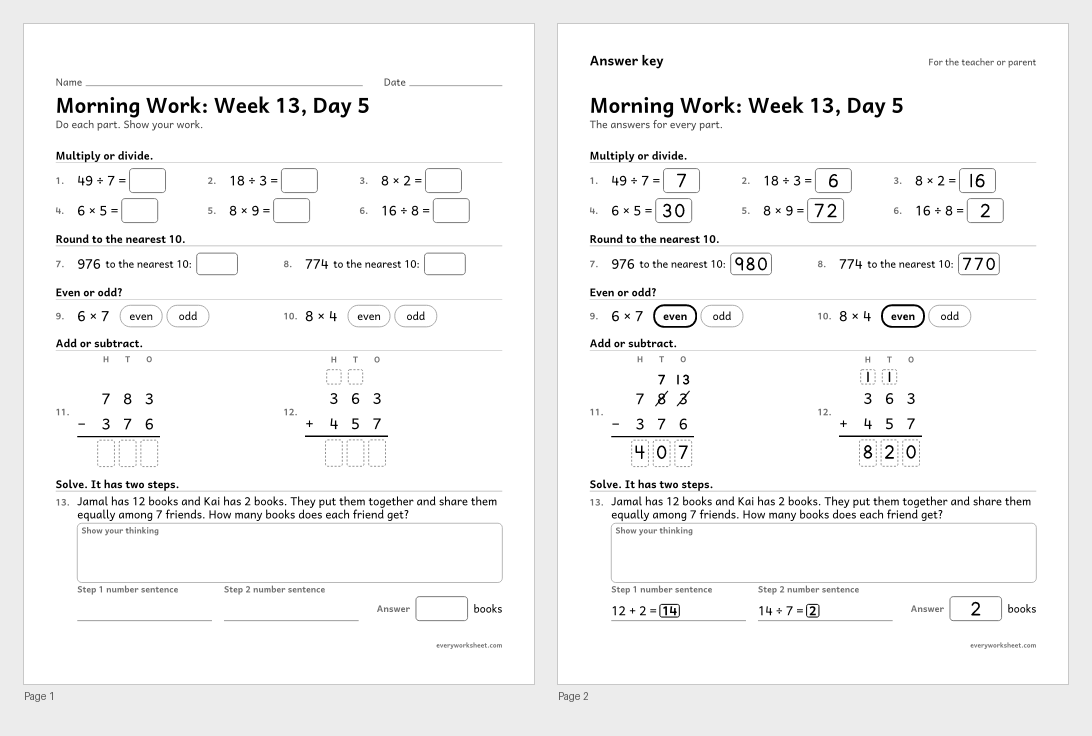 View all 2 pages
Mixed 3rd grade math review
Answer key on page 2
2 pages79 KB
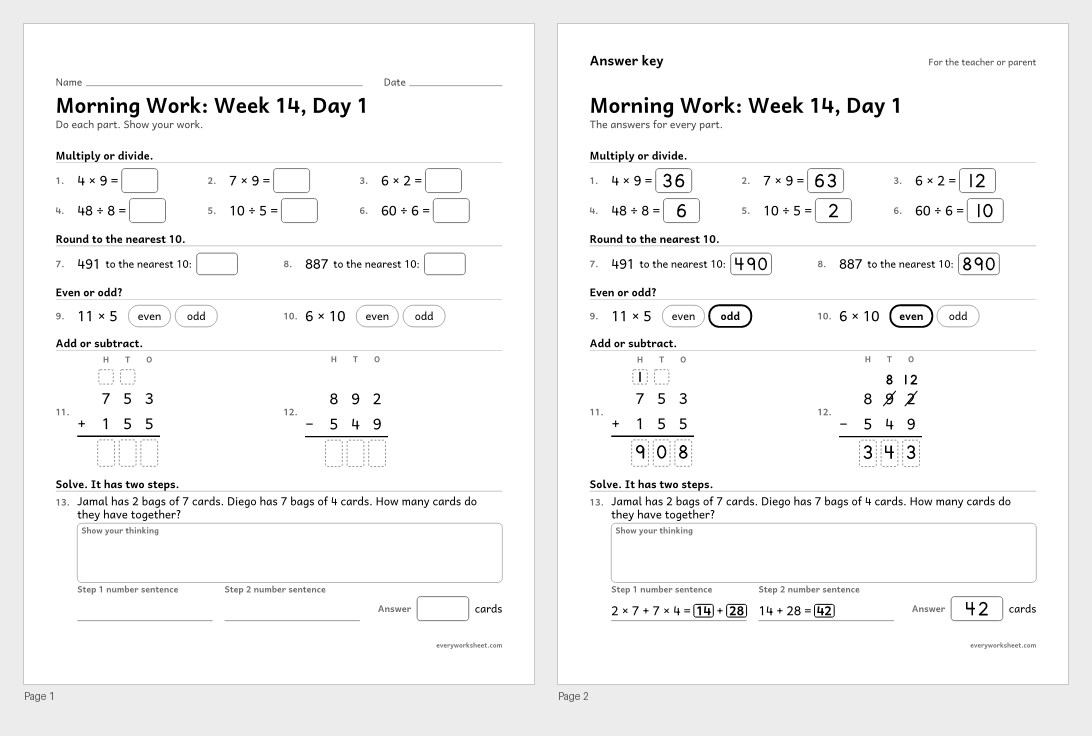 View all 2 pages
Mixed 3rd grade math review
Answer key on page 2
2 pages81 KB
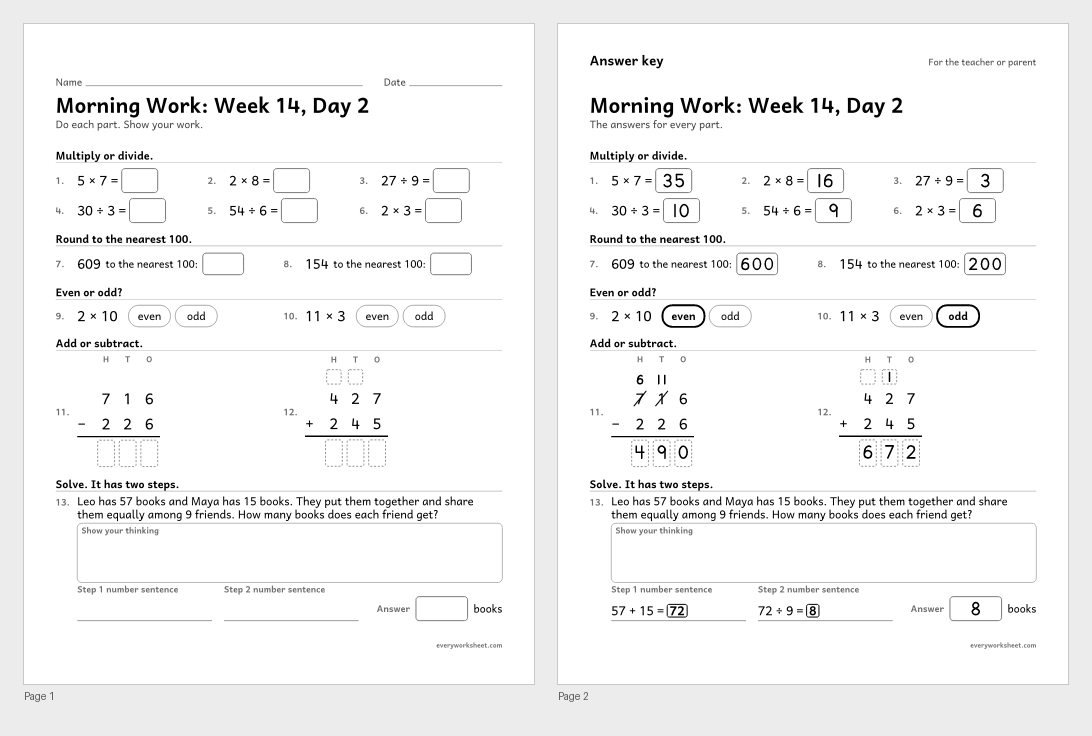 View all 2 pages
Mixed 3rd grade math review
Answer key on page 2
2 pages79 KB
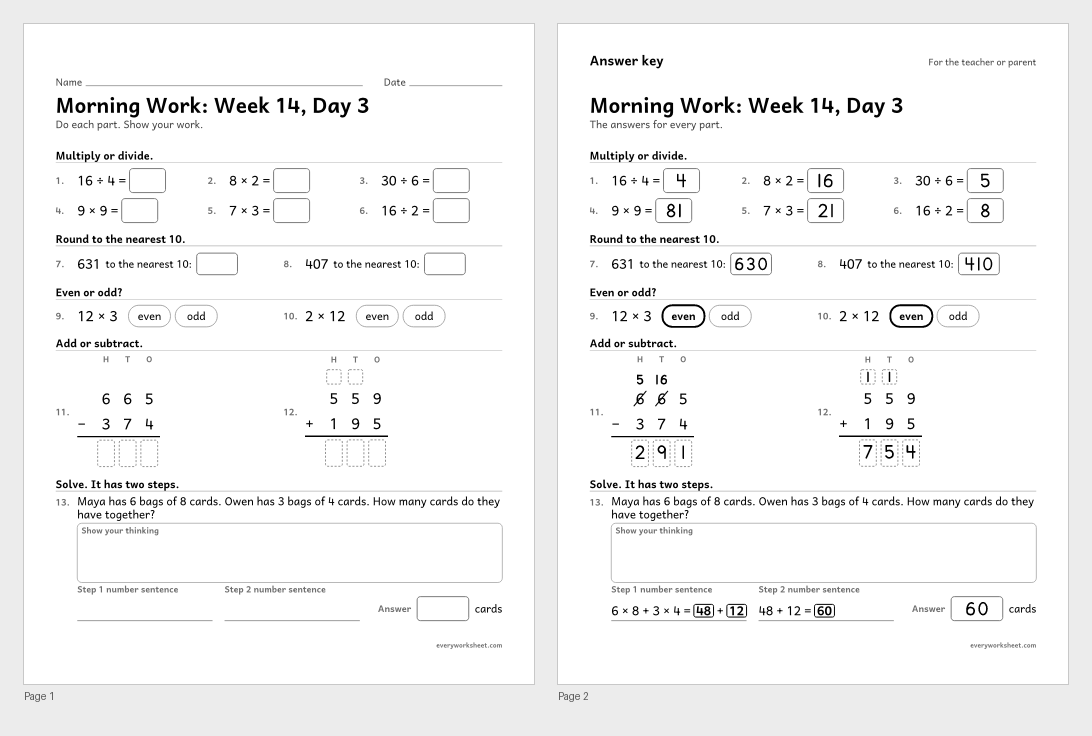 View all 2 pages
Mixed 3rd grade math review
Answer key on page 2
2 pages80 KB
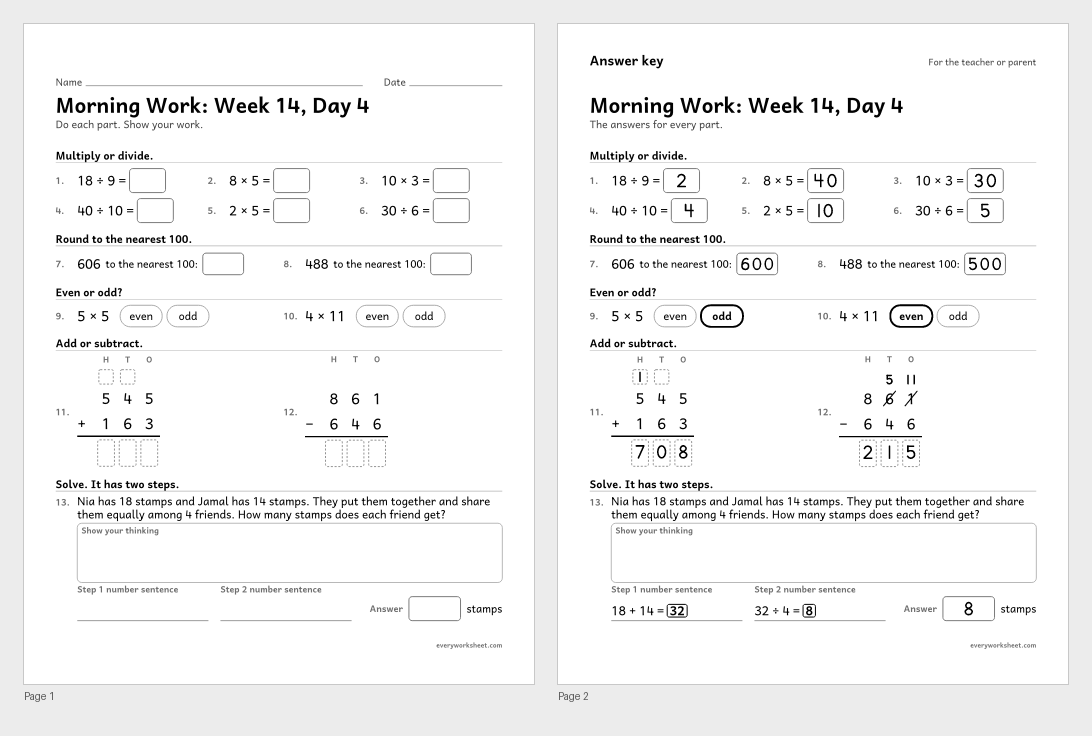 View all 2 pages
Mixed 3rd grade math review
Answer key on page 2
2 pages79 KB
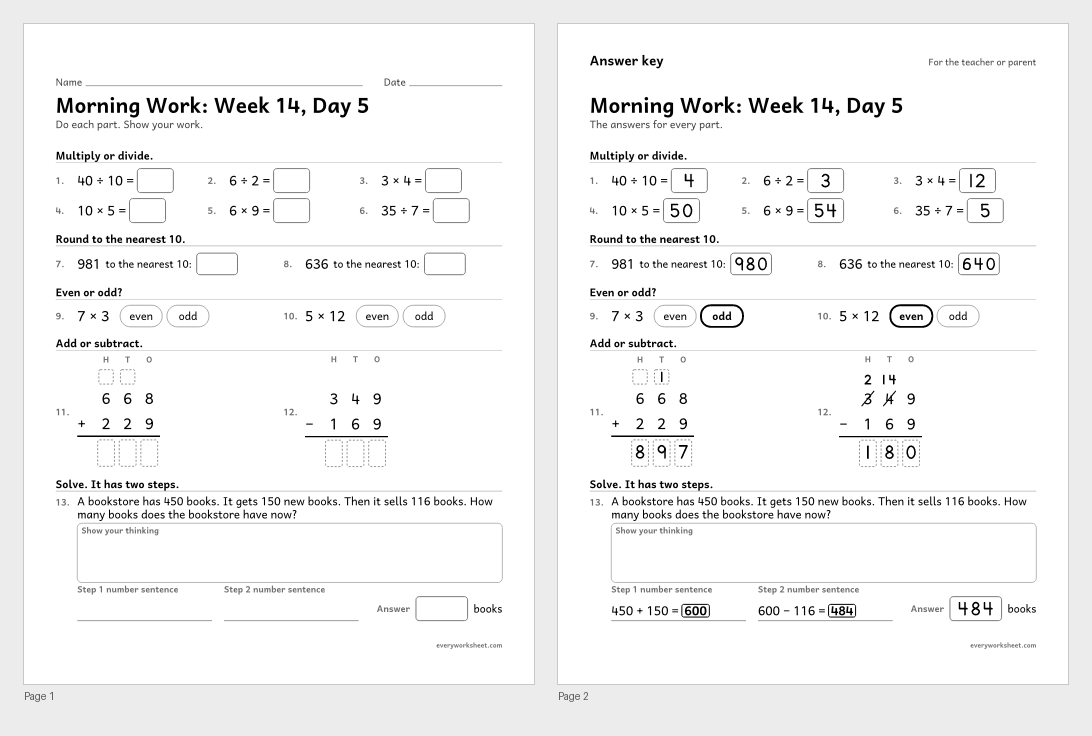 View all 2 pages
Mixed 3rd grade math review
Answer key on page 2
2 pages79 KB
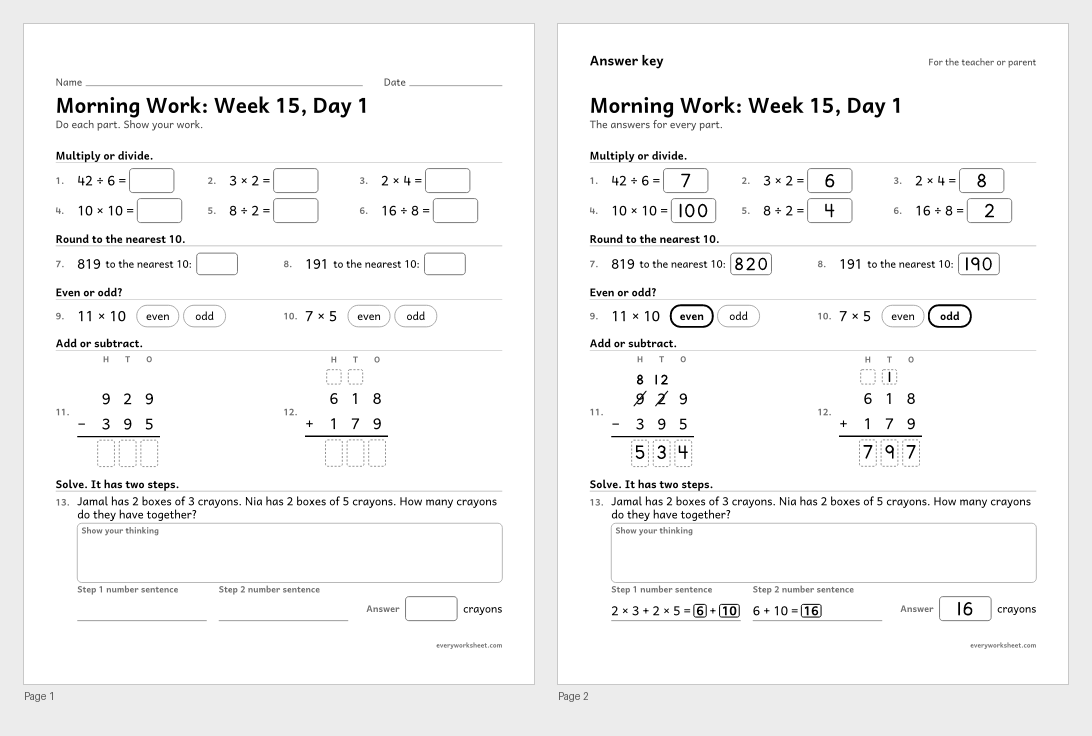 View all 2 pages
Mixed 3rd grade math review
Answer key on page 2
2 pages81 KB
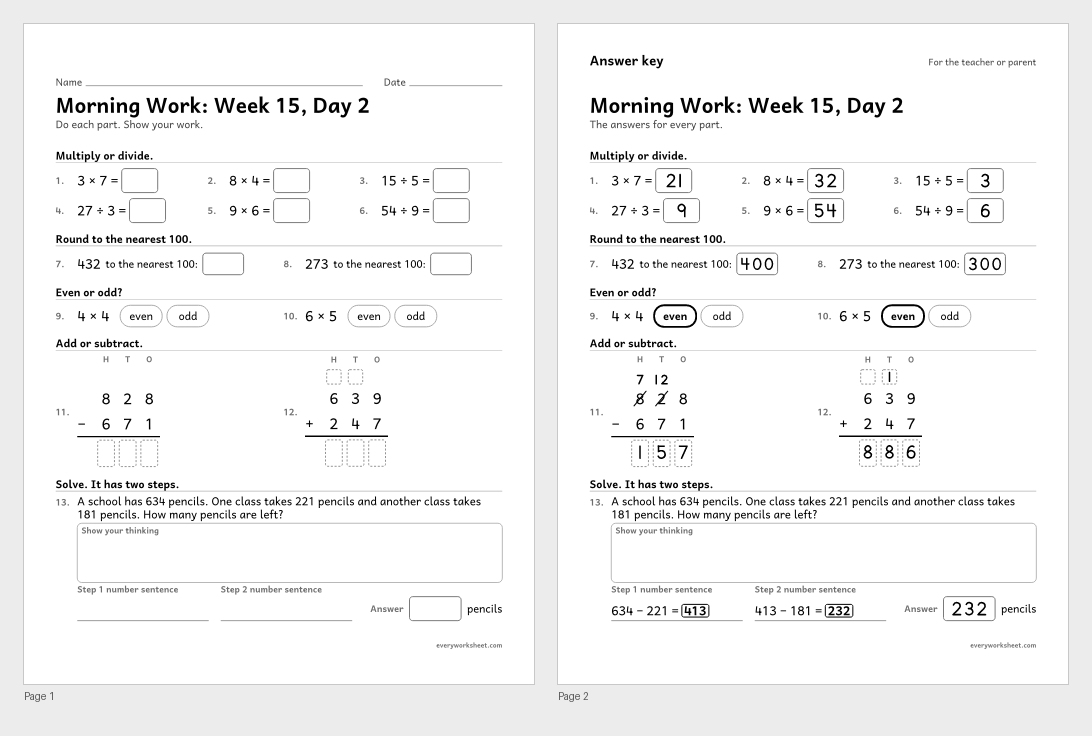 View all 2 pages
Mixed 3rd grade math review
Answer key on page 2
2 pages79 KB
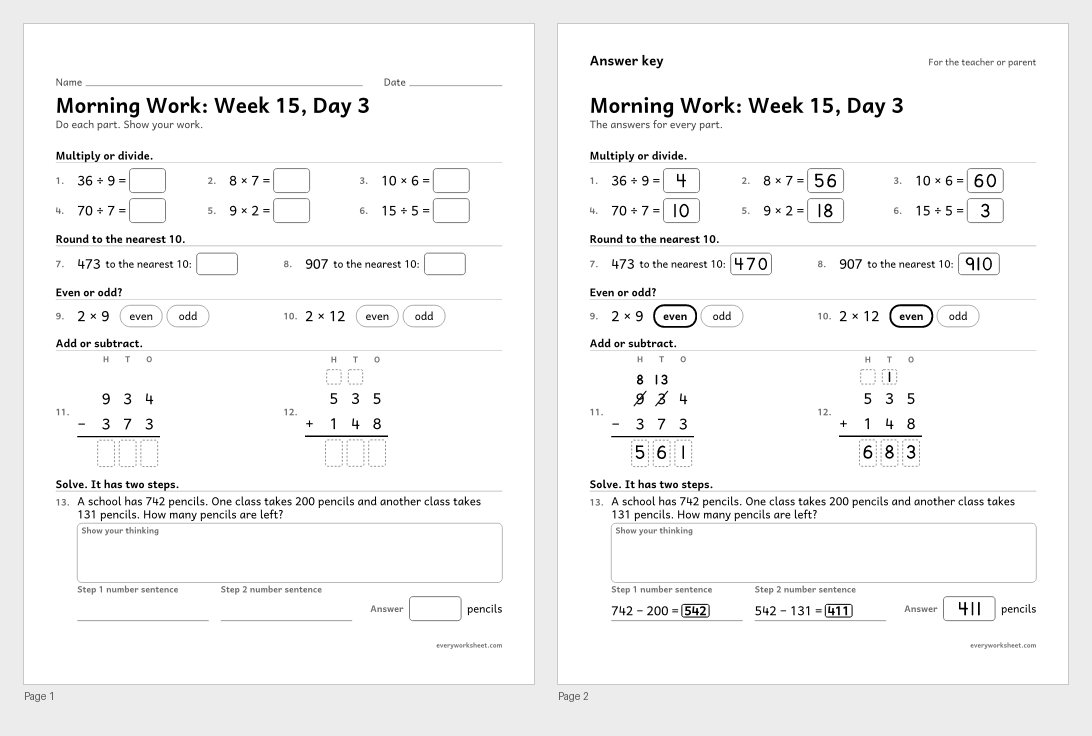 View all 2 pages
Mixed 3rd grade math review
Answer key on page 2
2 pages79 KB
 View all 2 pages
Mixed 3rd grade math review
Answer key on page 2
2 pages79 KB
 View all 2 pages
Mixed 3rd grade math review
Answer key on page 2
2 pages79 KB
 View all 2 pages
Mixed 3rd grade math review
Answer key on page 2
2 pages79 KB
 View all 2 pages
Mixed 3rd grade math review
Answer key on page 2
2 pages79 KB
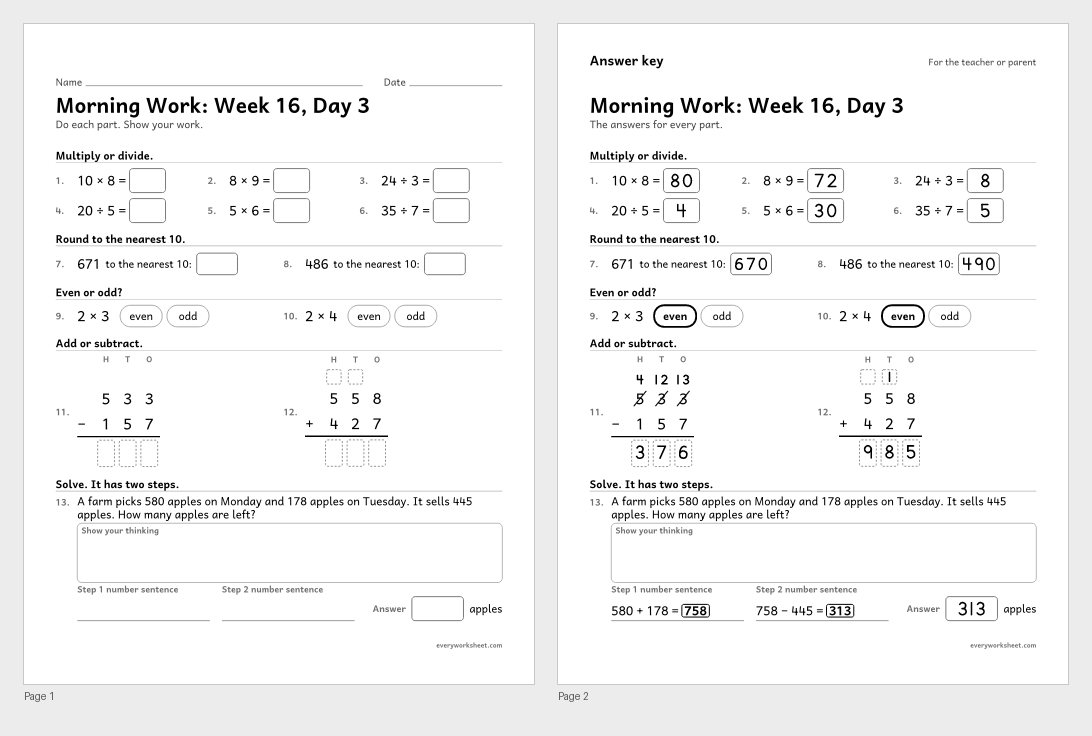 View all 2 pages
Mixed 3rd grade math review
Answer key on page 2
2 pages79 KB
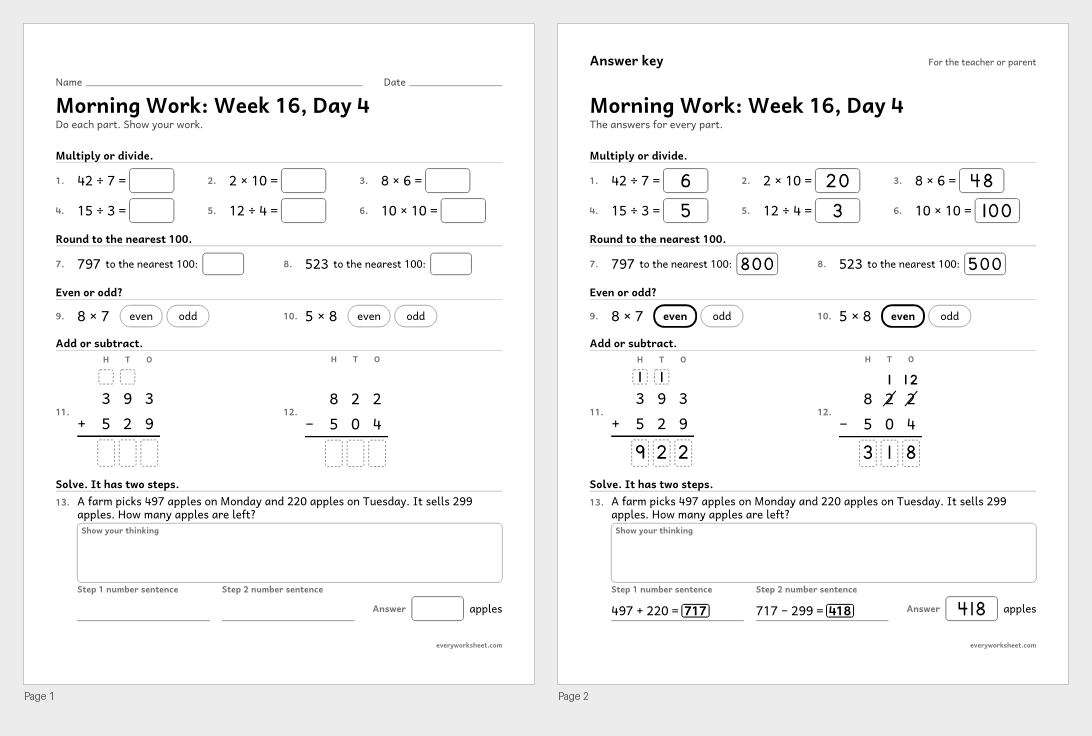 View all 2 pages
Mixed 3rd grade math review
Answer key on page 2
2 pages79 KB
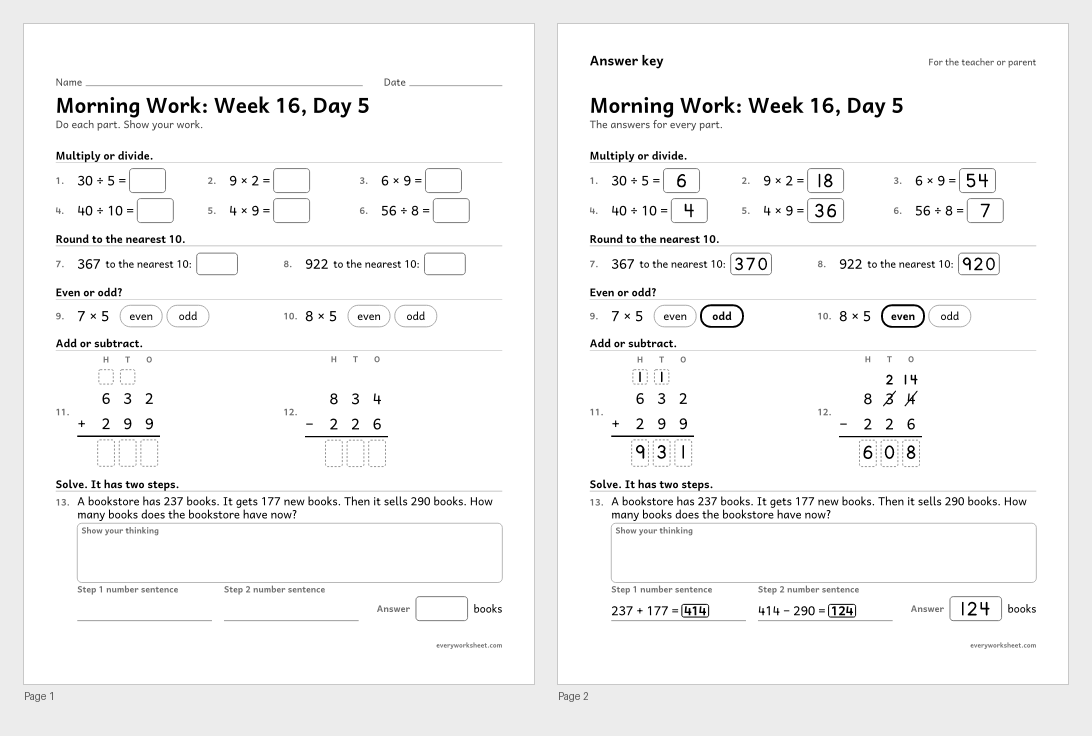 View all 2 pages
Mixed 3rd grade math review
Answer key on page 2
2 pages79 KB
Print at 100% (actual size) for the cleanest tracing lines.
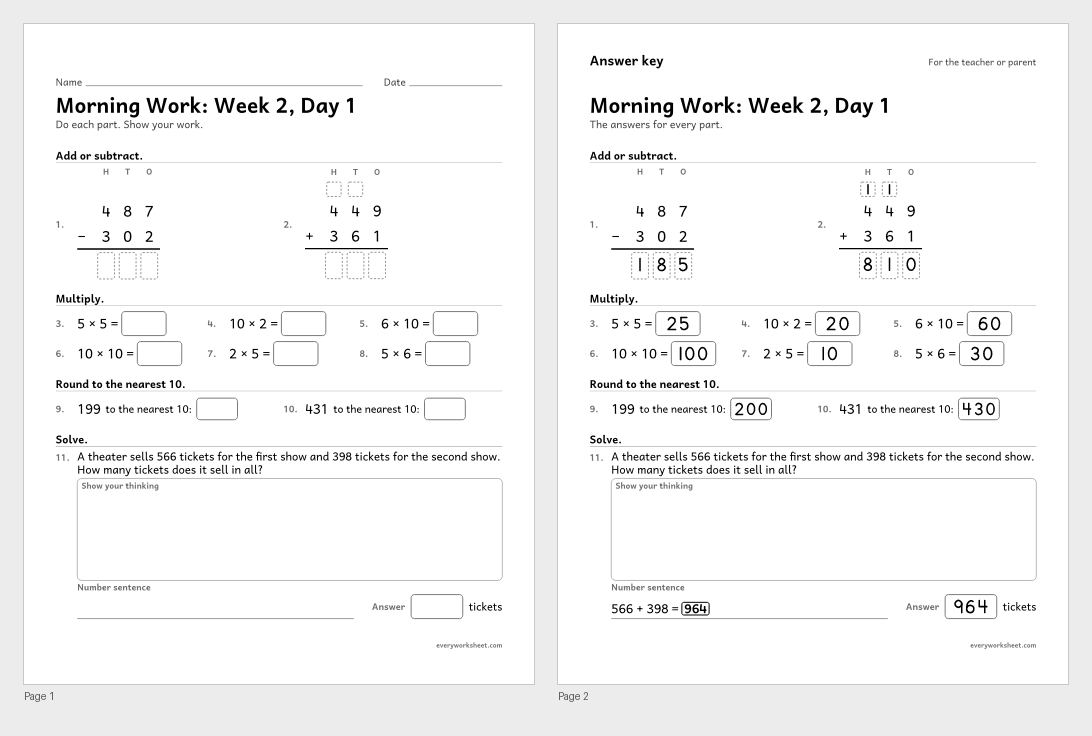
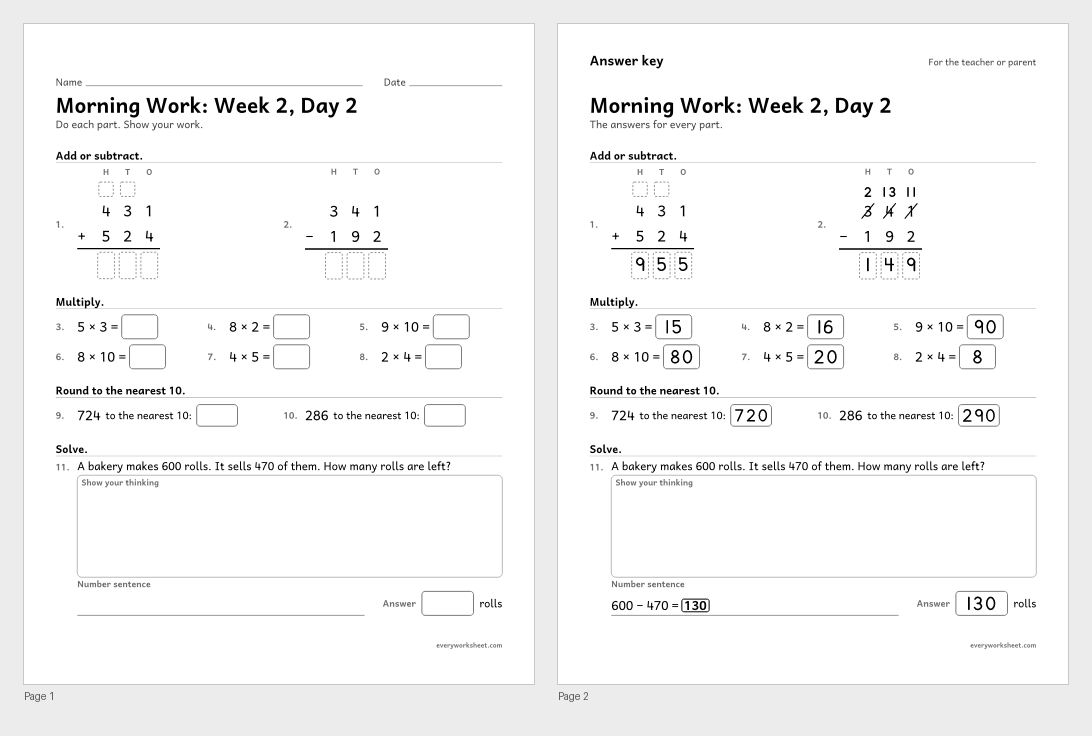
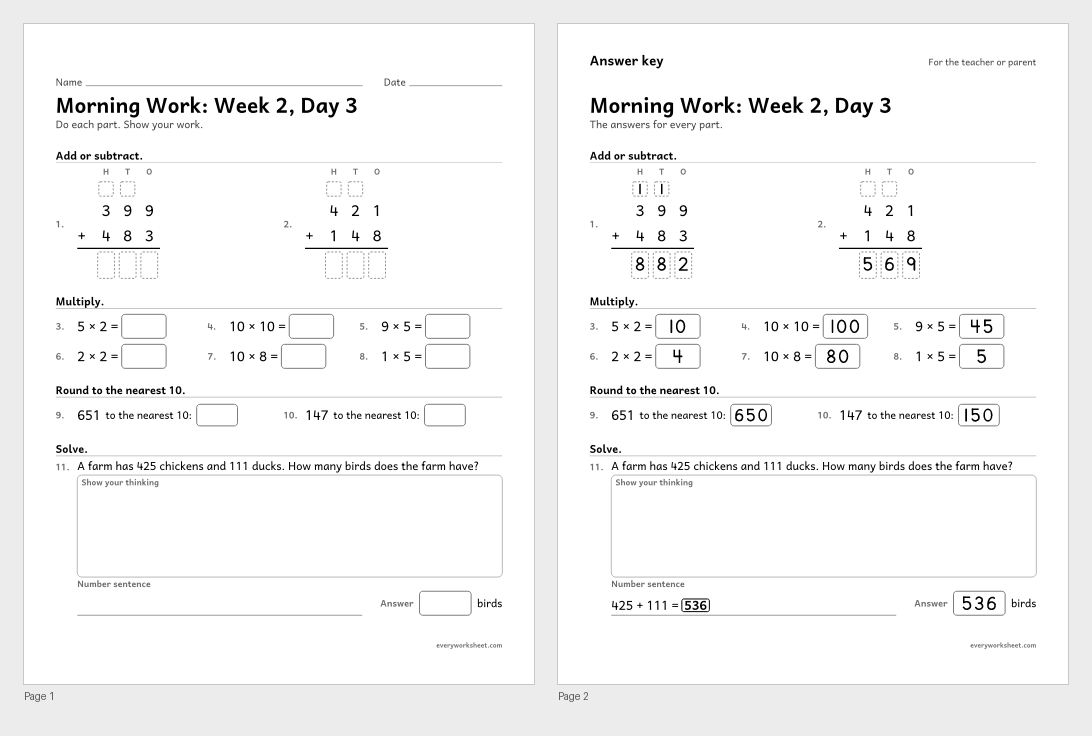
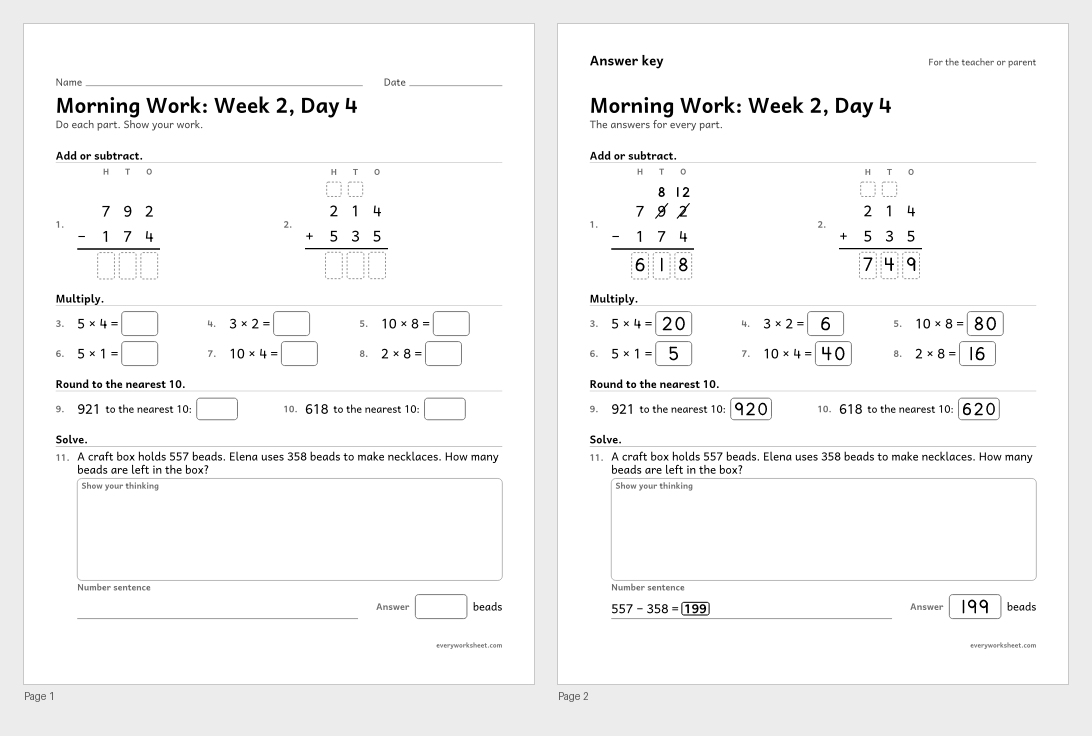
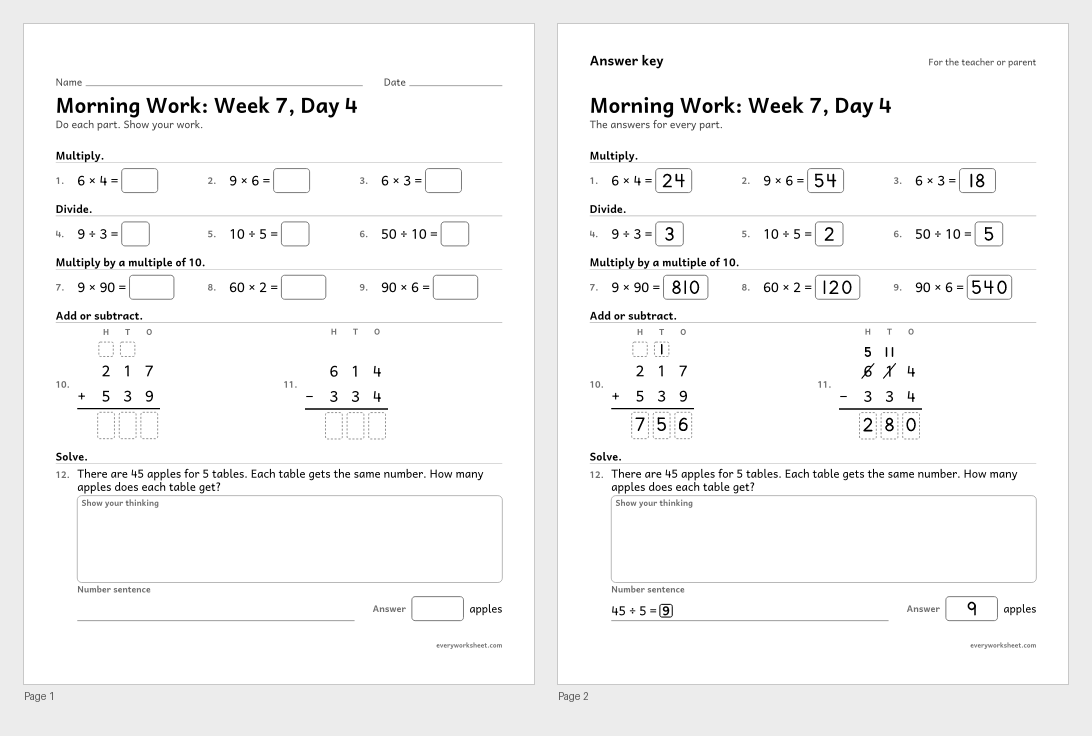
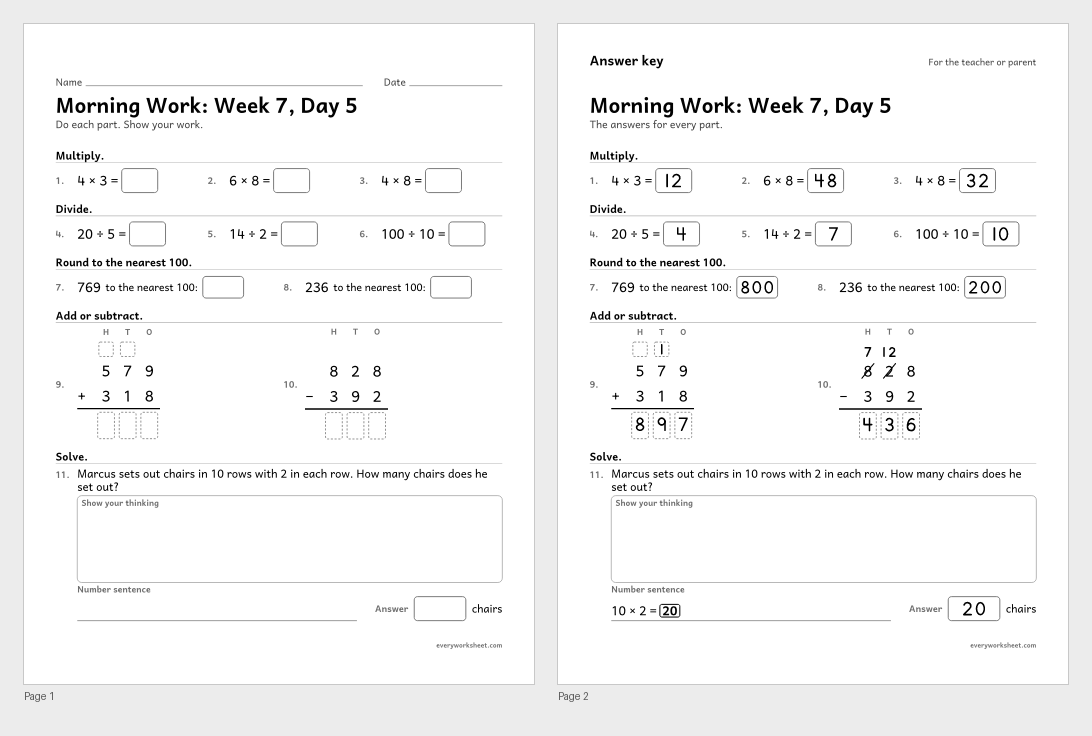
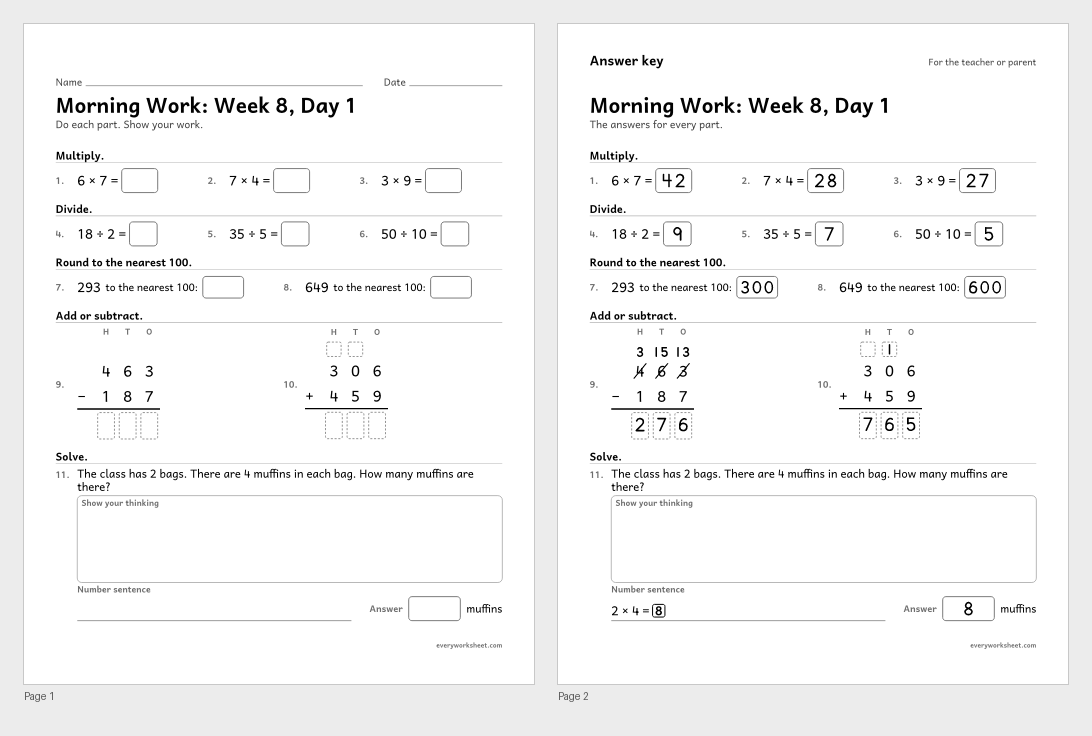
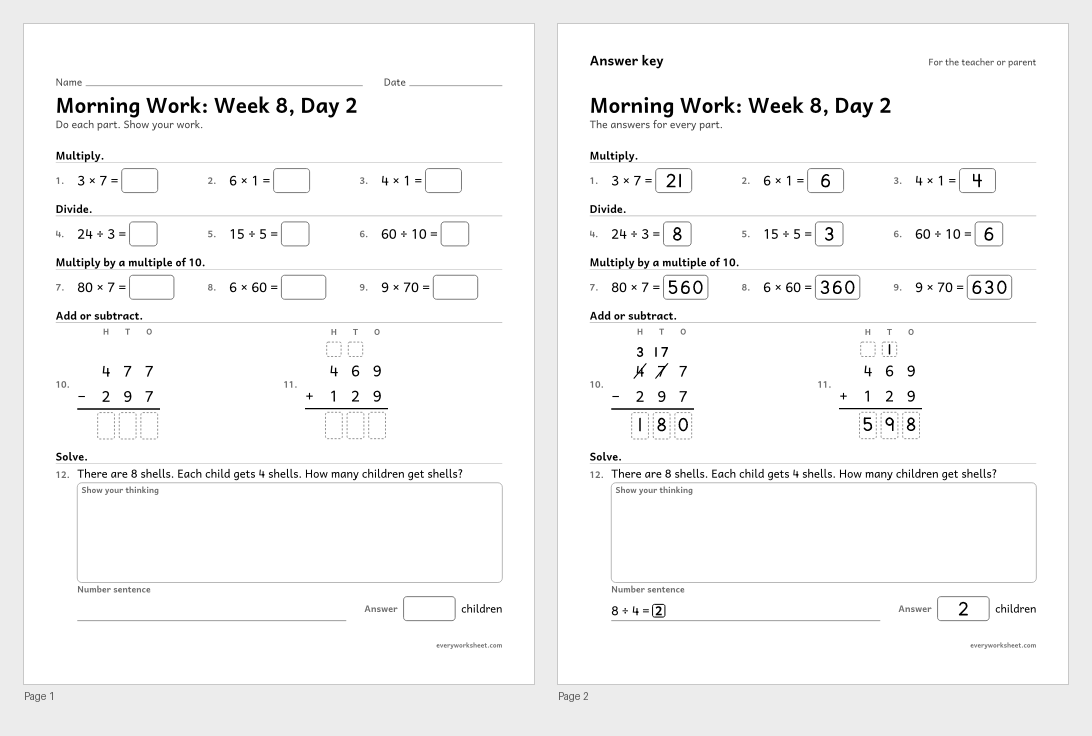
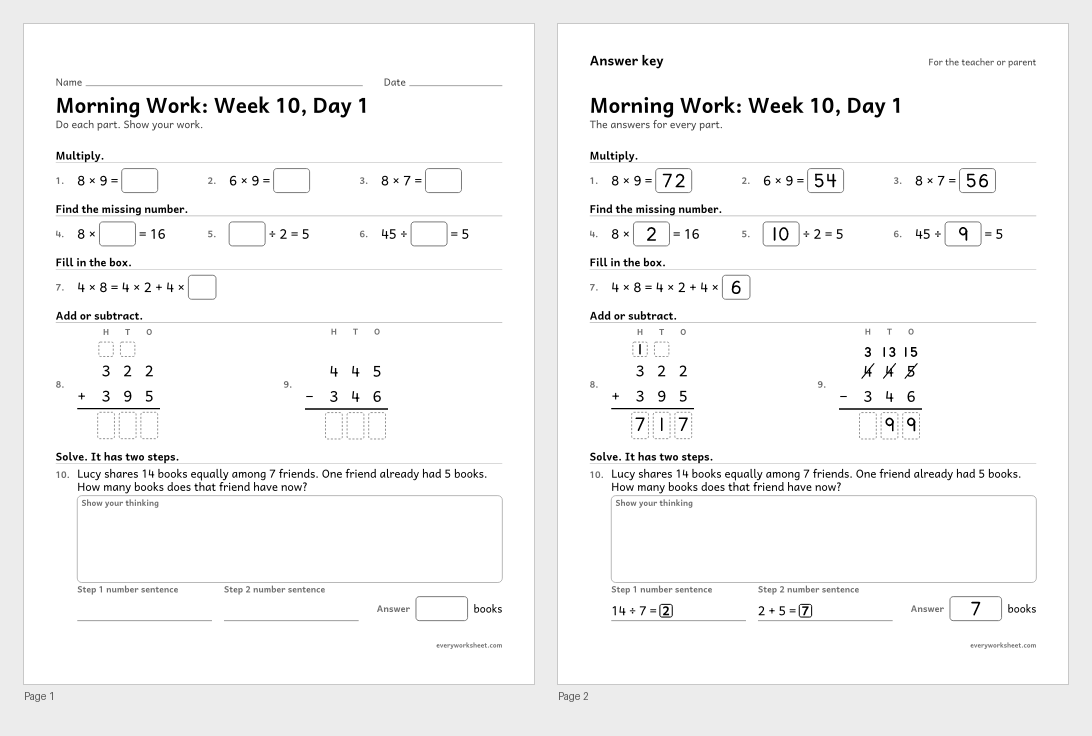
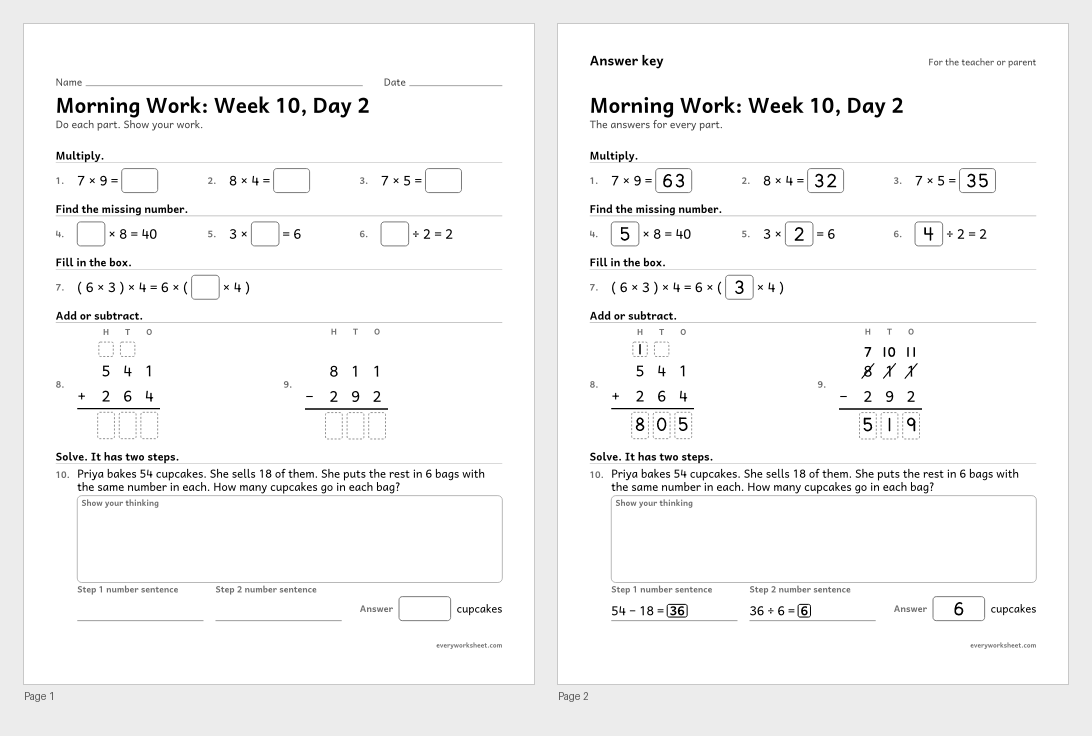
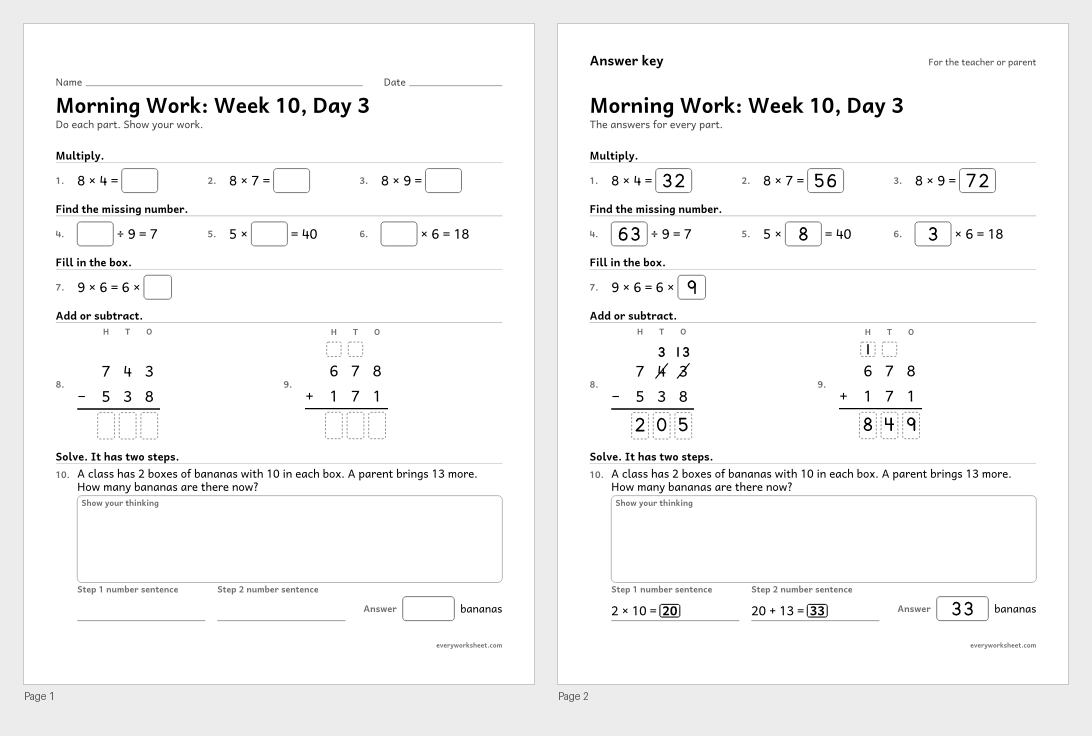
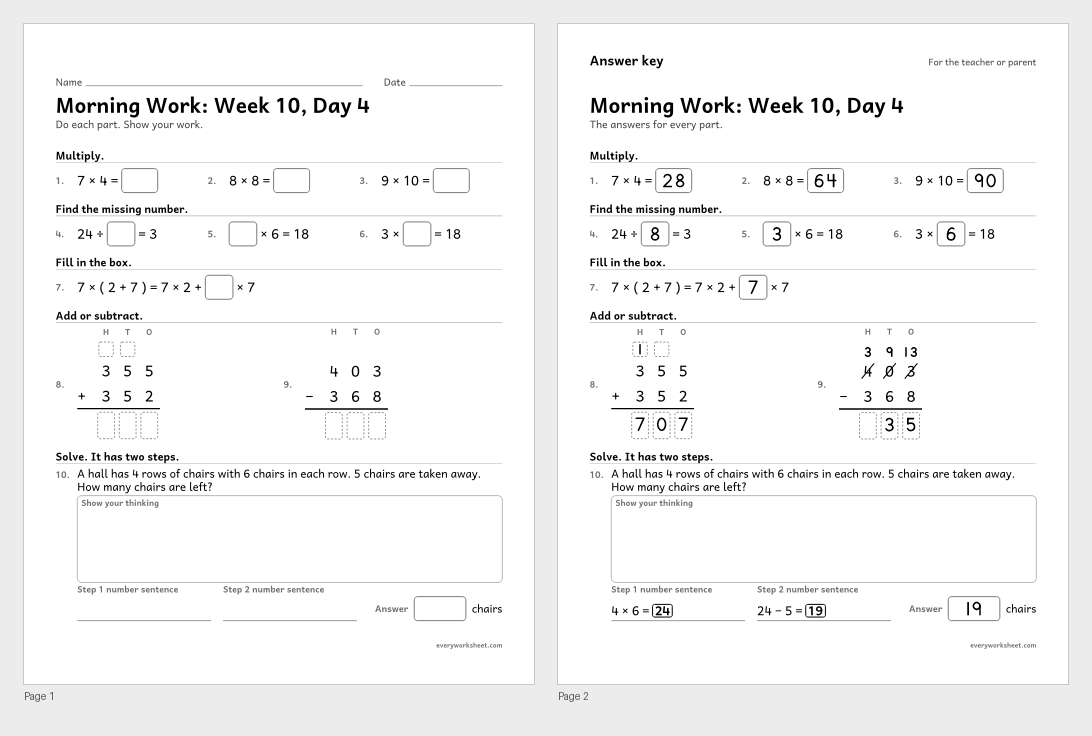
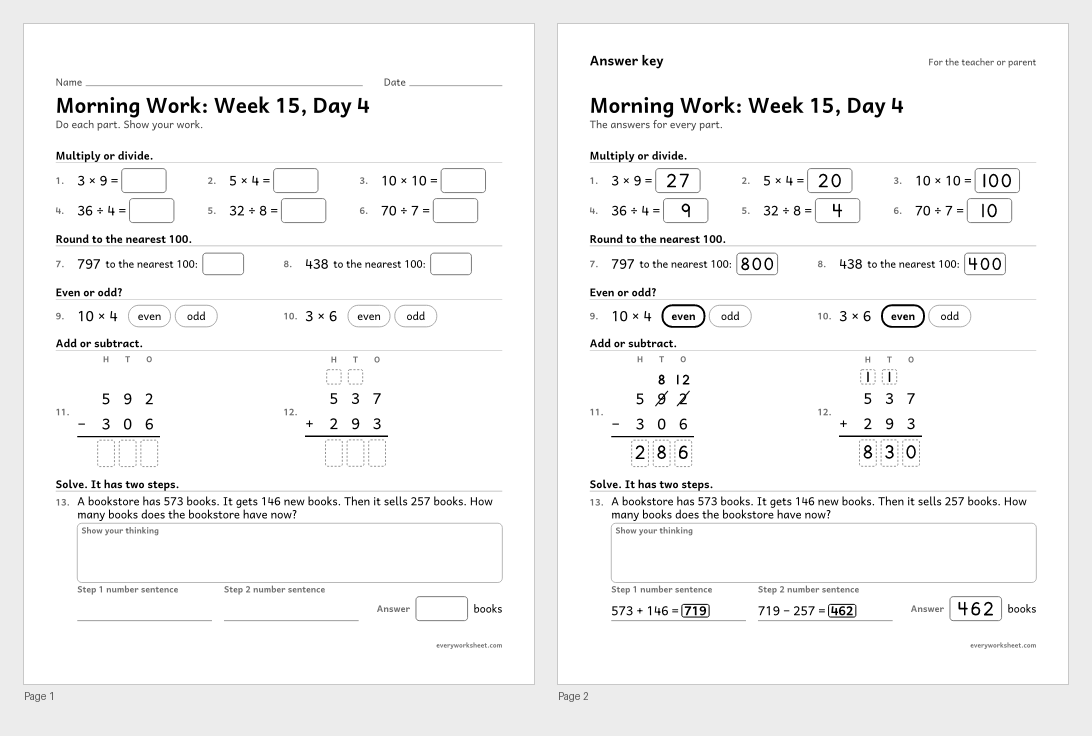
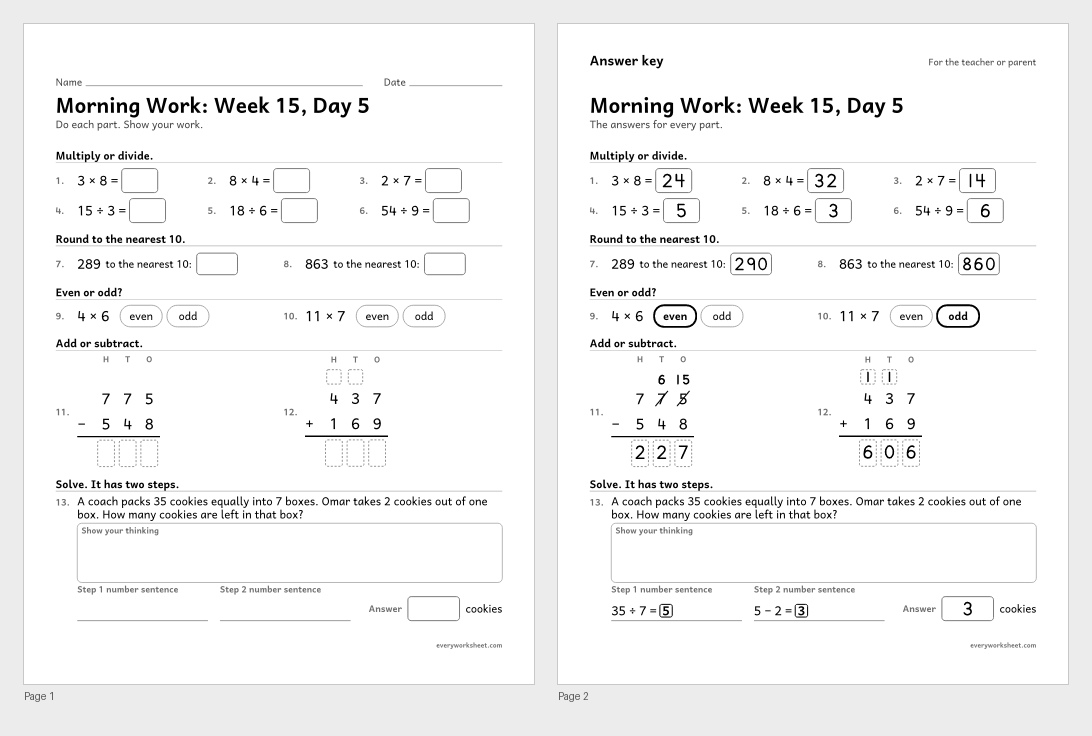
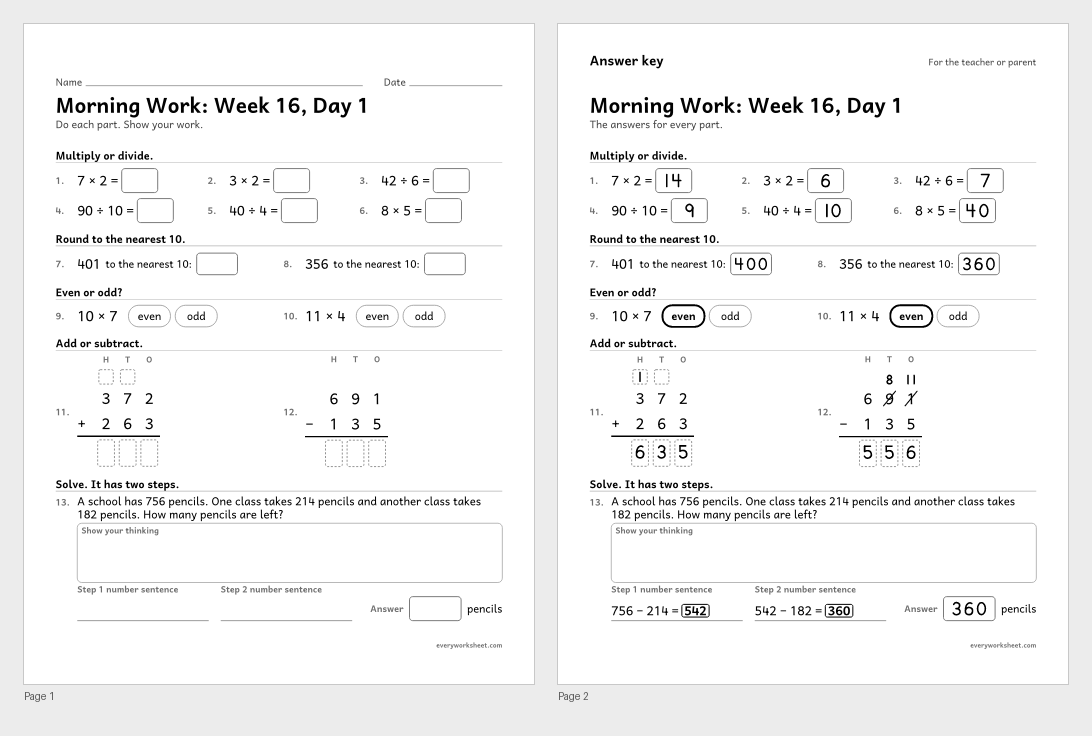
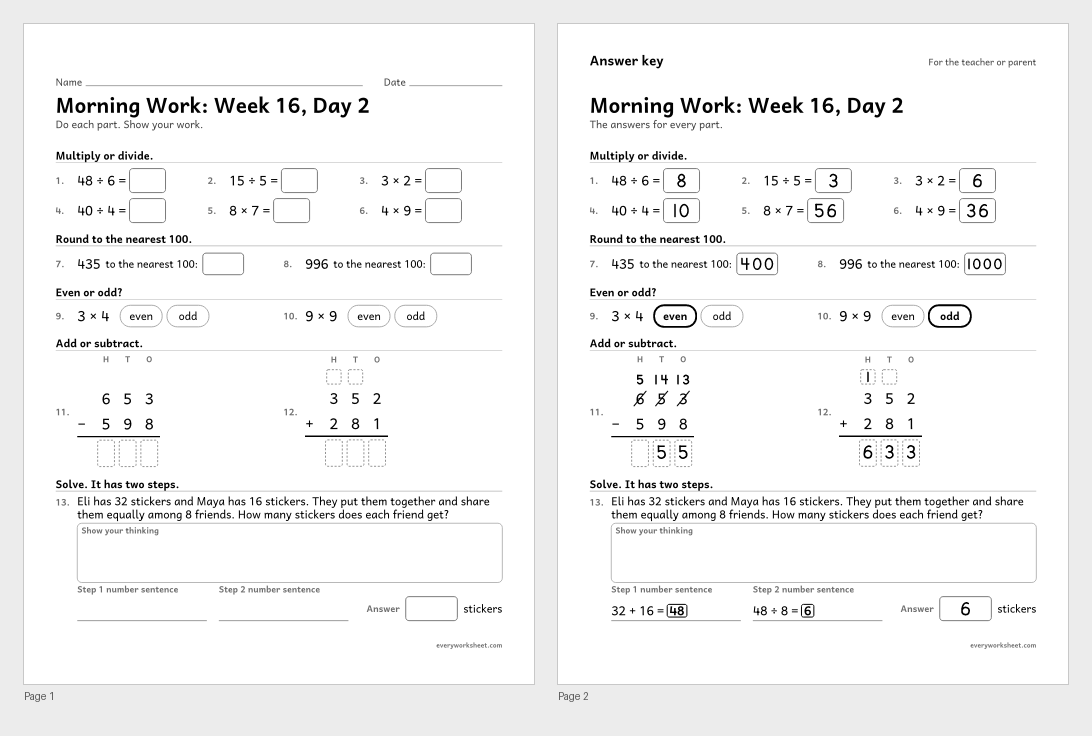
Morning work is a short page children do on their own at the start of the day. These pages review 3rd grade math a little at a time: multiplication and division facts, adding and subtracting within 1000, rounding, multiplying by multiples of 10, the properties of multiplication and one word problem with room to show the thinking.
The 16 weeks follow the order most classes teach. Weeks 1 to 4 start with 3-digit adding and subtracting and the 2s, 5s and 10s. Weeks 5 to 8 add the 3s, 4s and 6s, division and rounding to 100. Weeks 9 to 12 bring the 7s, 8s and 9s, missing factors and two-step problems, and weeks 13 to 16 mix everything.
Each page takes about 10 minutes and has an answer key on page 2. All pages print in black and white on US Letter or A4.
CCSS.MATH.CONTENT.3.OA.A.3Use multiplication and division within 100 to solve word problems in situations involving equal groups, arrays, and measurement quantities, e.g., by using drawings and equations with a symbol for the unknown number to represent the problem.CCSS.MATH.CONTENT.3.OA.A.4Determine the unknown whole number in a multiplication or division equation relating three whole numbers. For example, determine the unknown number that makes the equation true in each of the equations 8 × ? = 48, 5 = _ ÷ 3, 6 × 6 = ?CCSS.MATH.CONTENT.3.OA.B.5Apply properties of operations as strategies to multiply and divide. Examples: If 6 × 4 = 24 is known, then 4 × 6 = 24 is also known. (Commutative property of multiplication.) 3 × 5 × 2 can be found by 3 × 5 = 15, then 15 × 2 = 30, or by 5 × 2 = 10, then 3 × 10 = 30. (Associative property of multiplication.) Knowing that 8 × 5 = 40 and 8 × 2 = 16, one can find 8 × 7 as 8 × (5 + 2) = (8 × 5) + (8 × 2) = 40 + 16 = 56. (Distributive property.)CCSS.MATH.CONTENT.3.OA.C.7Fluently multiply and divide within 100, using strategies such as the relationship between multiplication and division (e.g., knowing that 8 × 5 = 40, one knows 40 ÷ 5 = 8) or properties of operations. By the end of Grade 3, know from memory all products of two one-digit numbers.CCSS.MATH.CONTENT.3.OA.D.8Solve two-step word problems using the four operations. Represent these problems using equations with a letter standing for the unknown quantity. Assess the reasonableness of answers using mental computation and estimation strategies including rounding.CCSS.MATH.CONTENT.3.OA.D.9Identify arithmetic patterns (including patterns in the addition table or multiplication table), and explain them using properties of operations. For example, observe that 4 times a number is always even, and explain why 4 times a number can be decomposed into two equal addends.CCSS.MATH.CONTENT.3.NBT.A.1Use place value understanding to round whole numbers to the nearest 10 or 100.CCSS.MATH.CONTENT.3.NBT.A.2Fluently add and subtract within 1000 using strategies and algorithms based on place value, properties of operations, and/or the relationship between addition and subtraction.CCSS.MATH.CONTENT.3.NBT.A.3Multiply one-digit whole numbers by multiples of 10 in the range 10–90 (e.g., 9 × 80, 5 × 60) using strategies based on place value and properties of operations.A short independent page children do at the start of the school day. It reviews skills they have already learned so they stay fresh, while the teacher takes attendance and settles the class.
About 10 minutes for most 3rd graders. Each page has five or six short parts and a word problem.
No. These pages are made by our math generator and cover number and operation skills. Fractions, time, measurement and geometry are on their own pages in the 3rd grade math hub.
Yes. Every page has an answer key on page 2 of the PDF.