 View all 2 pages
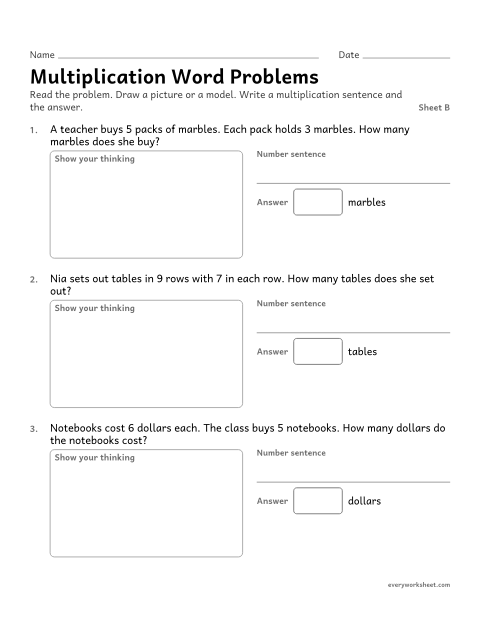
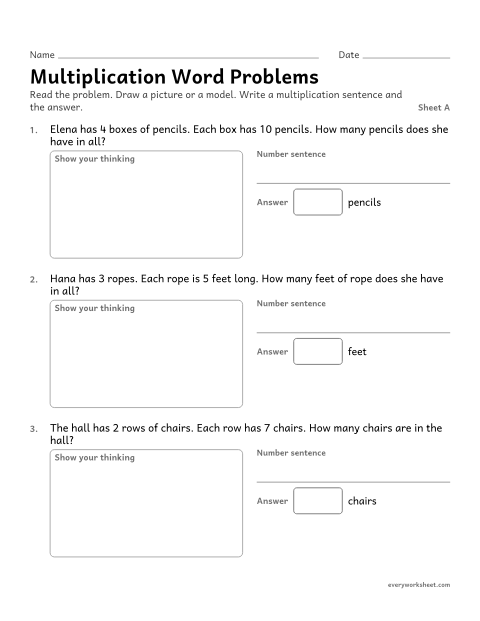
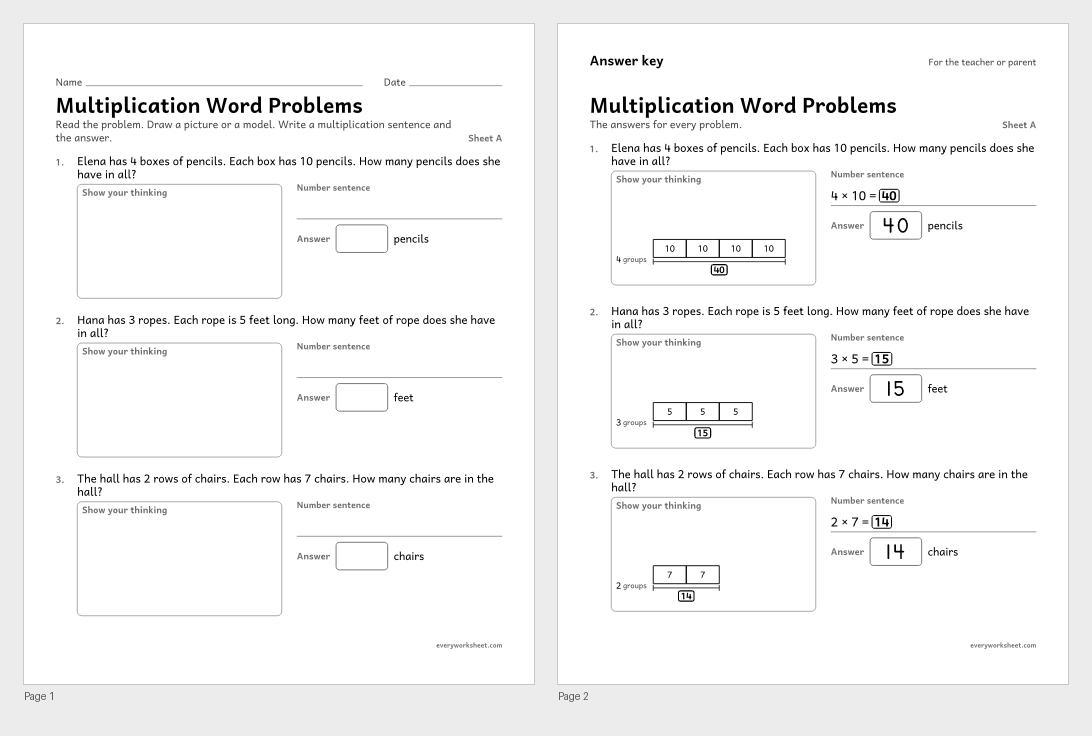
Multiplication word Problems, sheet A
Solving multiplication word problems within 100
Answer key on page 2
2 pages48 KB
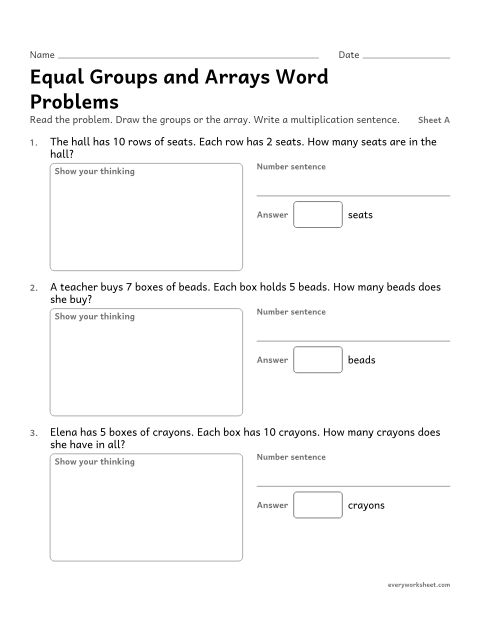
Equal groups, arrays, measures and money stories within 100, with room to draw and a number sentence line. Every key shows a bar model and the answer.
View all 2 pagesSolving multiplication word problems within 100
Answer key on page 2
2 pages48 KB
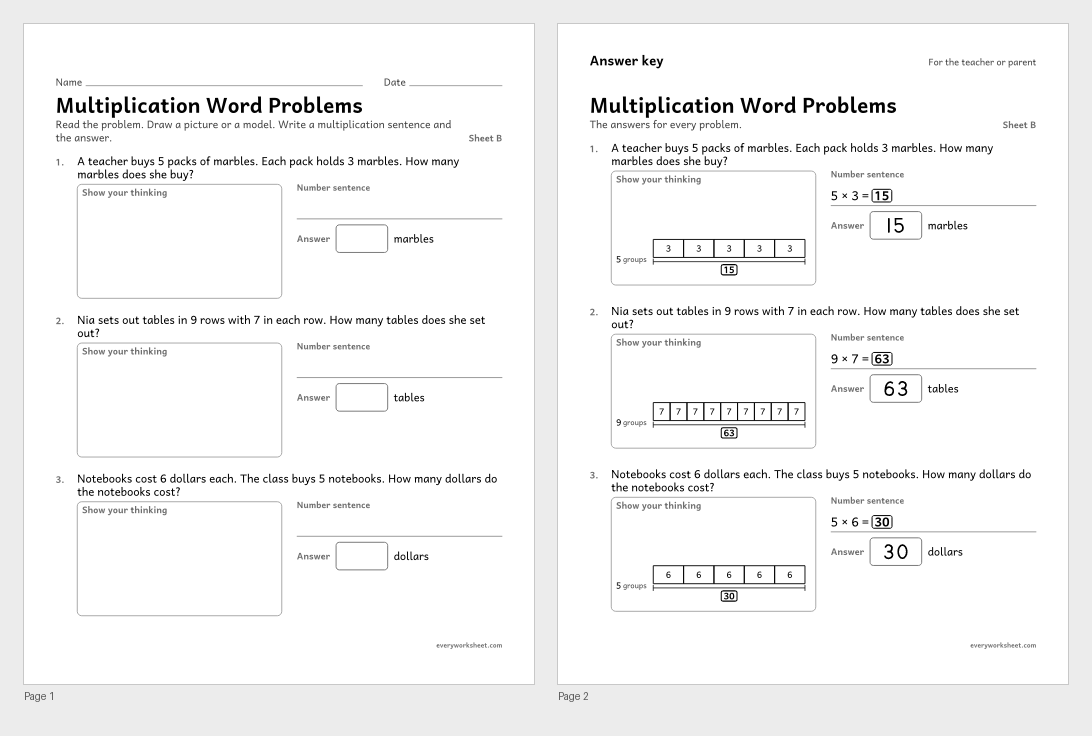 View all 2 pages
Solving multiplication word problems within 100
Answer key on page 2
2 pages48 KB
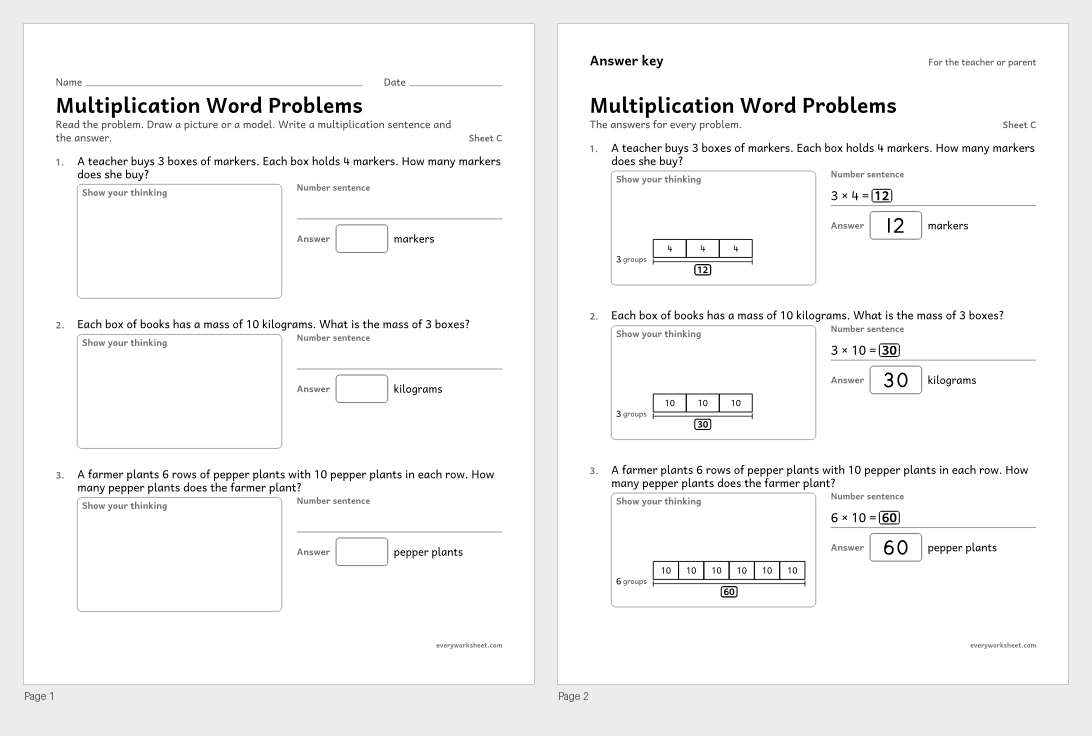 View all 2 pages
Solving multiplication word problems within 100
Answer key on page 2
2 pages48 KB
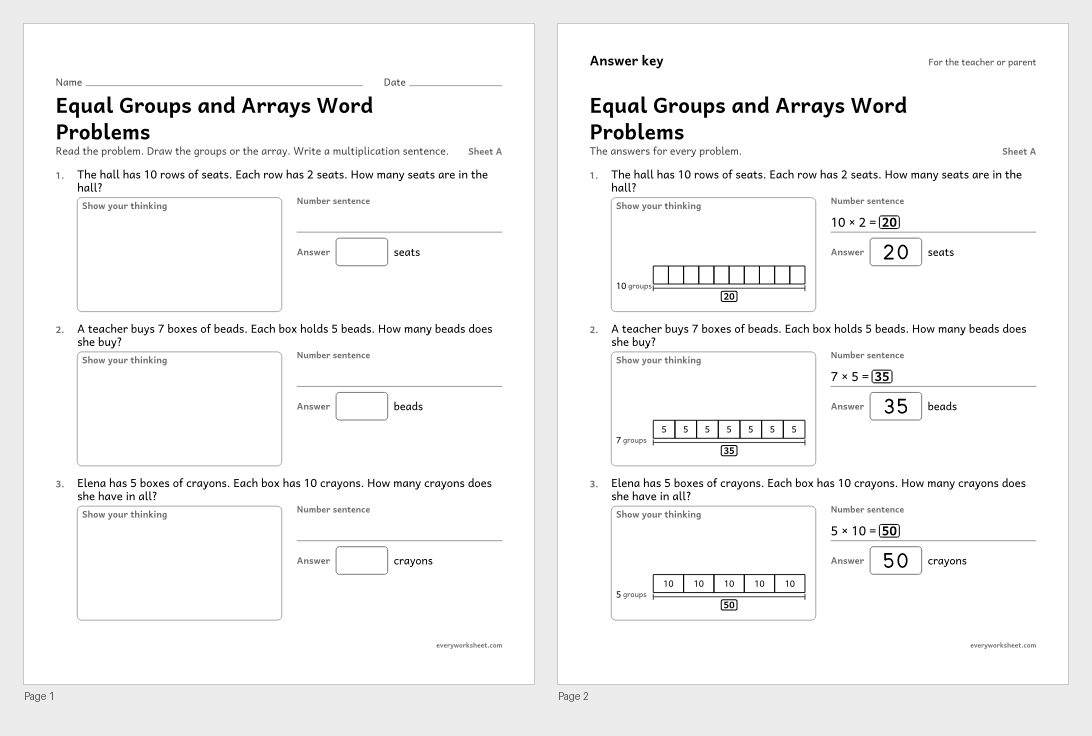 View all 2 pages
Solving equal groups and array word problems
Answer key on page 2
2 pages48 KB
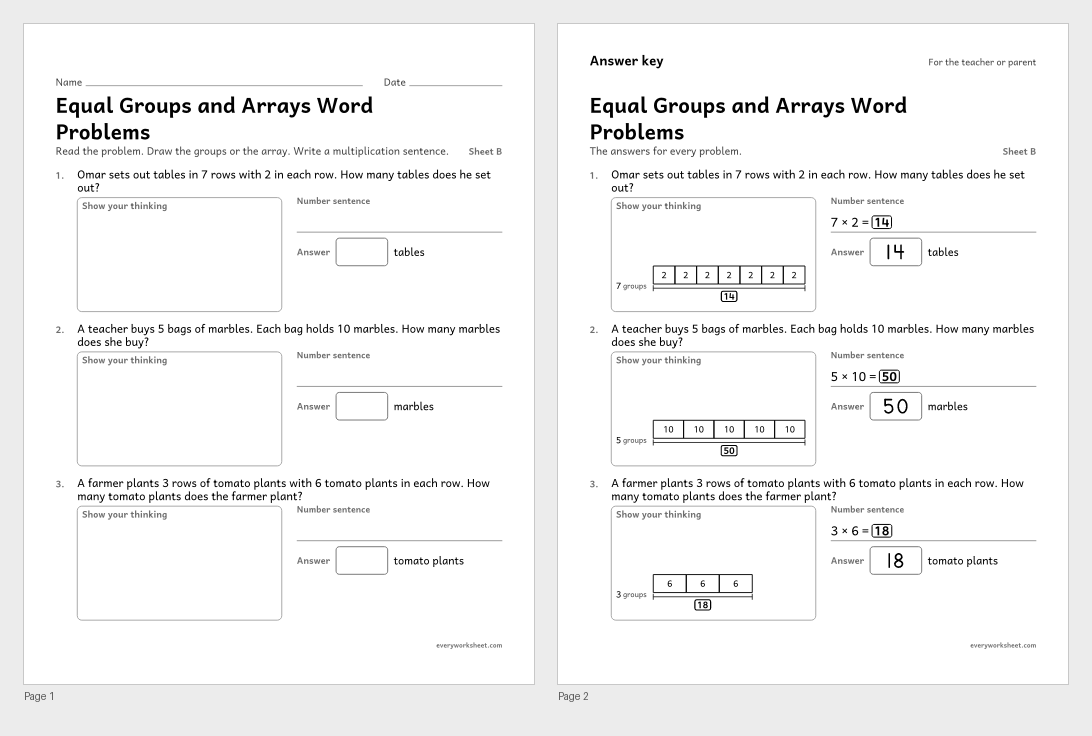 View all 2 pages
Solving equal groups and array word problems
Answer key on page 2
2 pages49 KB
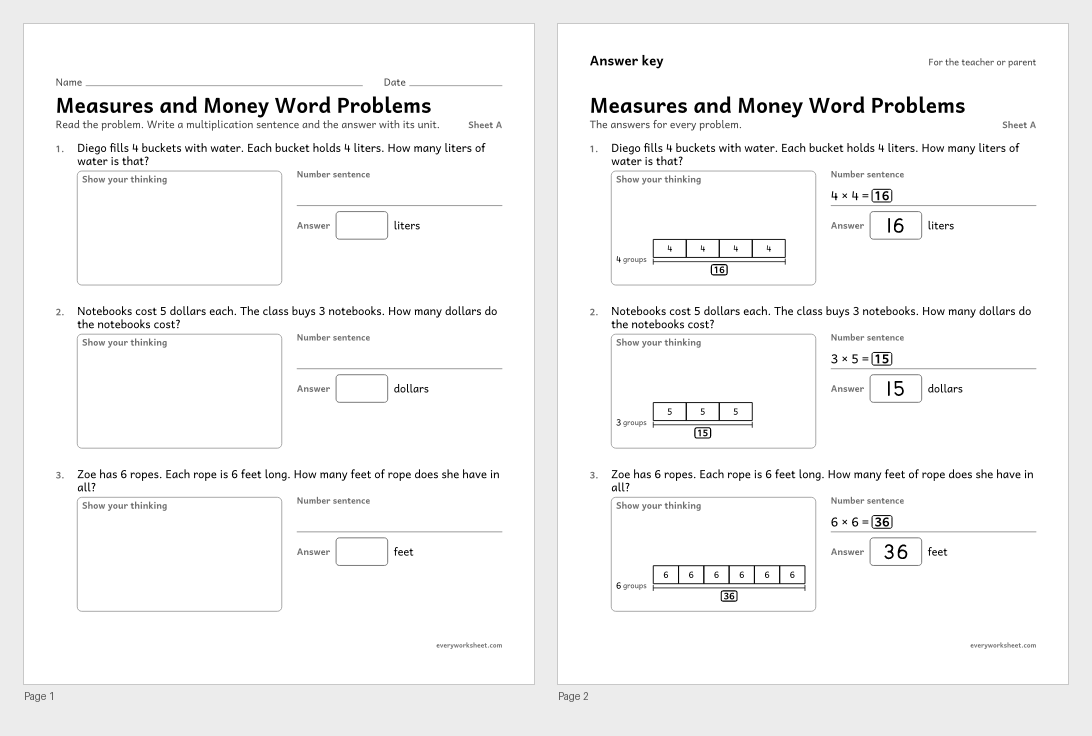 View all 2 pages
Solving multiplication word problems with measures and money
Answer key on page 2
2 pages48 KB
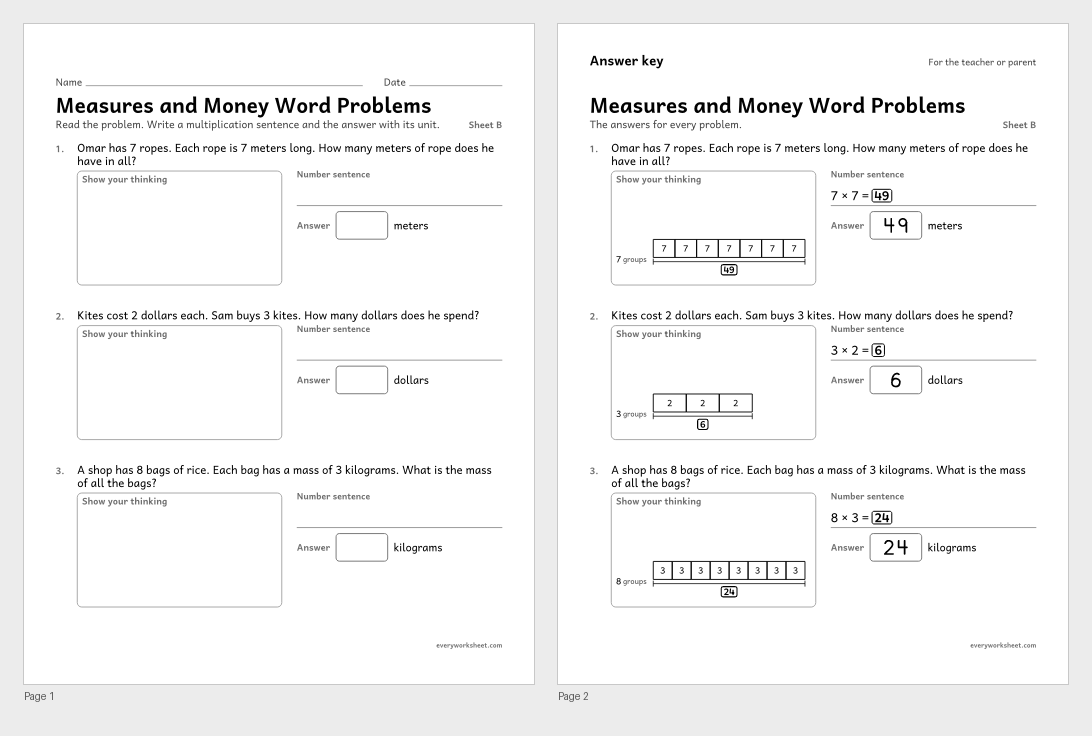 View all 2 pages
Solving multiplication word problems with measures and money
Answer key on page 2
2 pages48 KB
Print at 100% (actual size) for the cleanest tracing lines.
Multiplication word problems in 3rd grade come in three kinds: equal groups (5 packs with 6 markers in each), arrays (4 rows of 7 chairs) and measures (3 ropes that are each 8 feet long). The child has to see the equal groups in the story, then write a multiplication sentence.
Each problem has a box to draw a picture or a model, a line for the number sentence and an answer box with the unit. The answer keys draw a bar model of equal parts with the total, so a parent or teacher can show one clear way to think about the story.
All products stay within 100. Every page has an answer key on page 2 and prints in black and white on US Letter or A4.
CCSS.MATH.CONTENT.3.OA.A.3Use multiplication and division within 100 to solve word problems in situations involving equal groups, arrays, and measurement quantities, e.g., by using drawings and equations with a symbol for the unknown number to represent the problem.CCSS.MATH.CONTENT.3.OA.A.1Interpret products of whole numbers, e.g., interpret 5 × 7 as the total number of objects in 5 groups of 7 objects each. For example, describe a context in which a total number of objects can be expressed as 5 × 7.Find the equal groups. Count how many groups there are and how many are in each group, draw them, then multiply. For "6 boxes with 4 crayons in each," write 6 × 4 = 24 crayons.
A bar model draws each equal group as a box of the same size, with the total under a bracket. It shows at a glance what is known and what is missing.
Yes. Page 2 of every PDF shows the number sentence, a bar model and the answer with its unit.