 View larger
Pronouns Worksheets
A pronouns chart plus circling, replacing nouns, subject or object pronouns, possessive pronouns, and pronoun agreement, with answer keys.
Download the pronouns worksheets
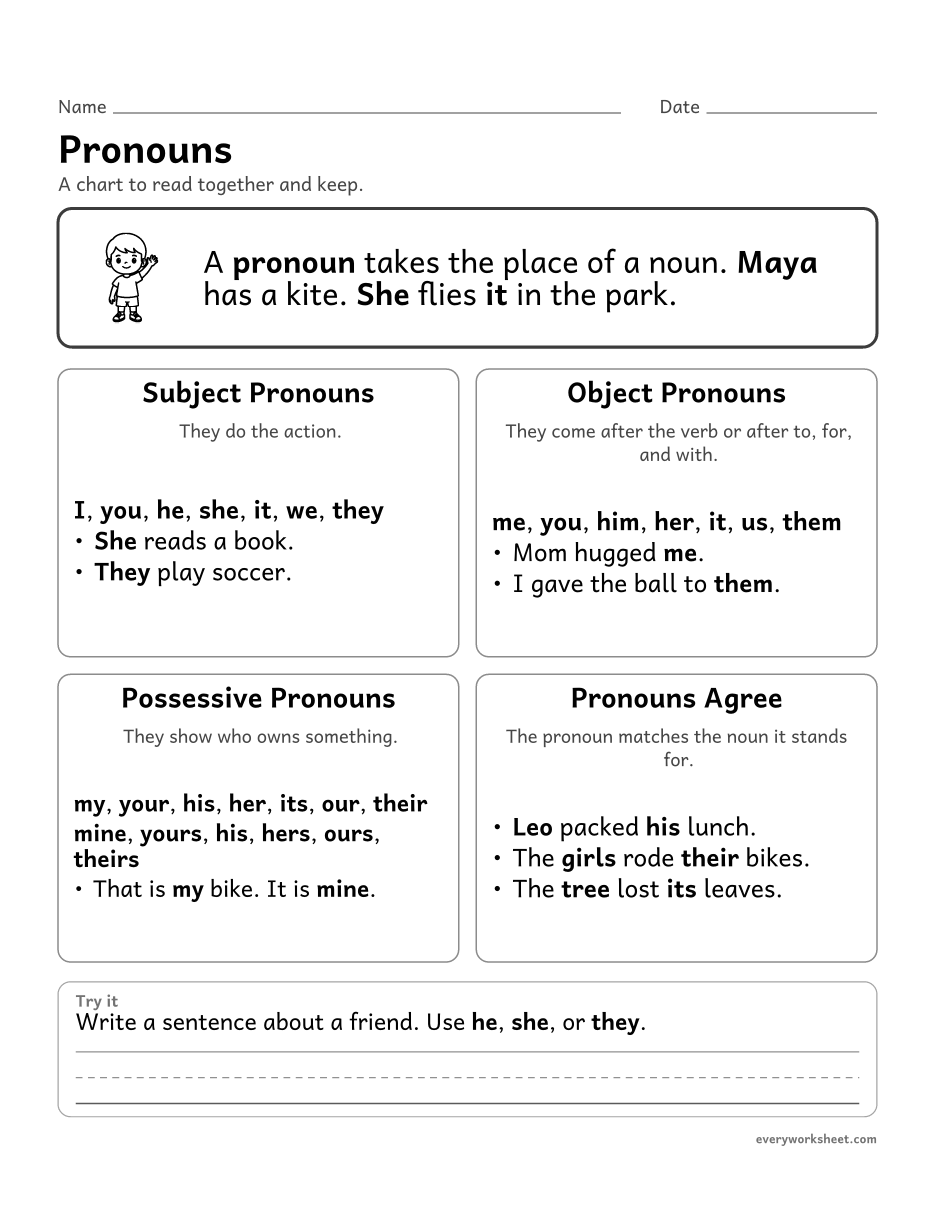
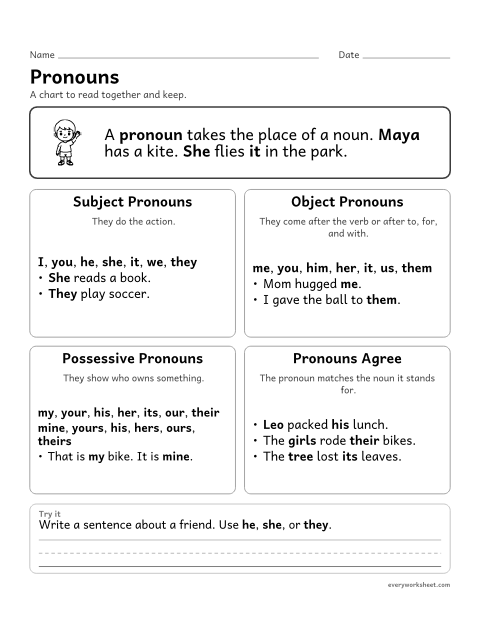
Pronouns chart
 View larger
Pronoun practice
 View all 2 pages
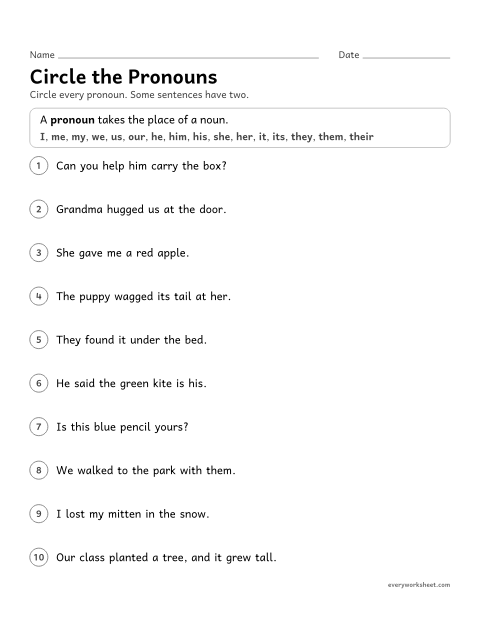
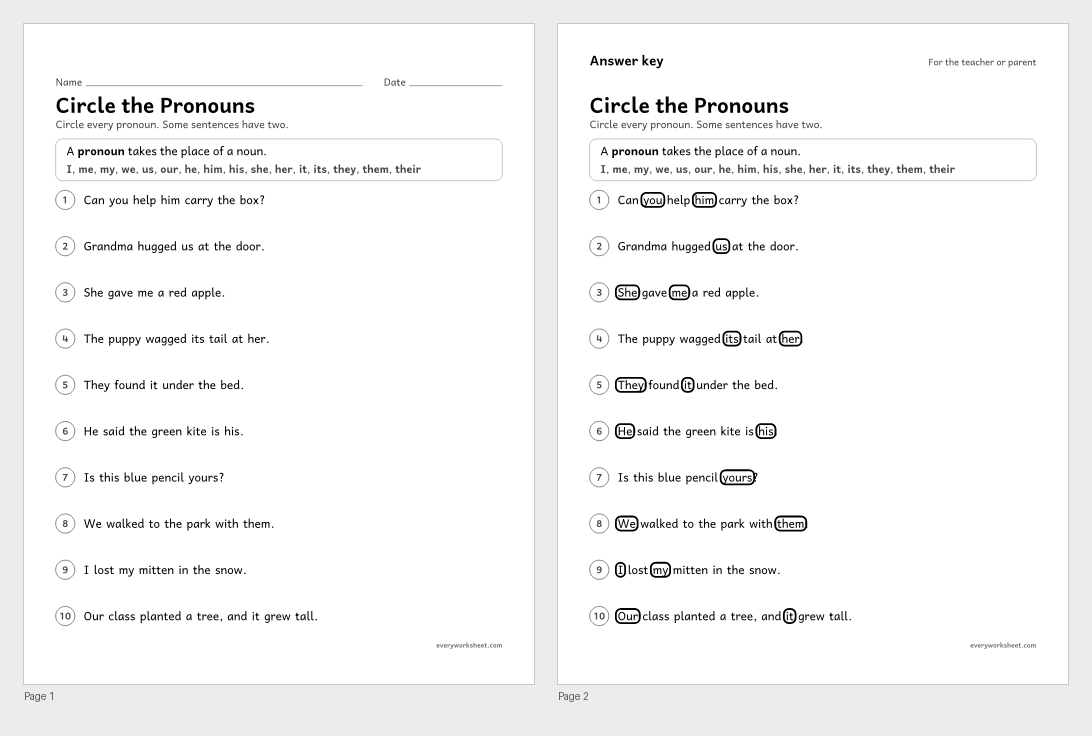
Circle the pronouns
Finding subject, object, and possessive pronouns in sentences
Answer key on page 2
2 pages53 KB
 View all 2 pages
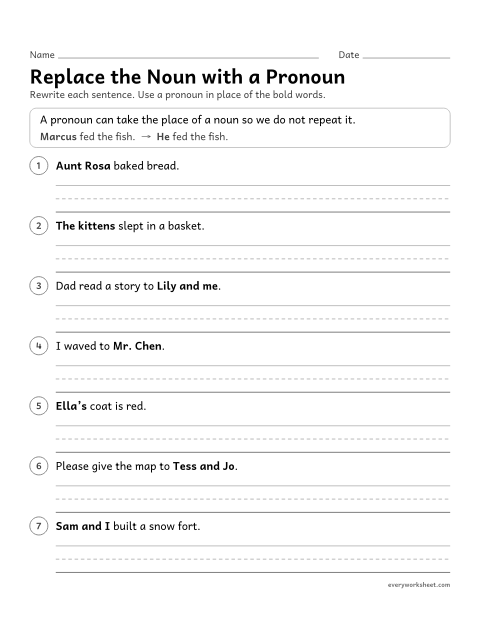
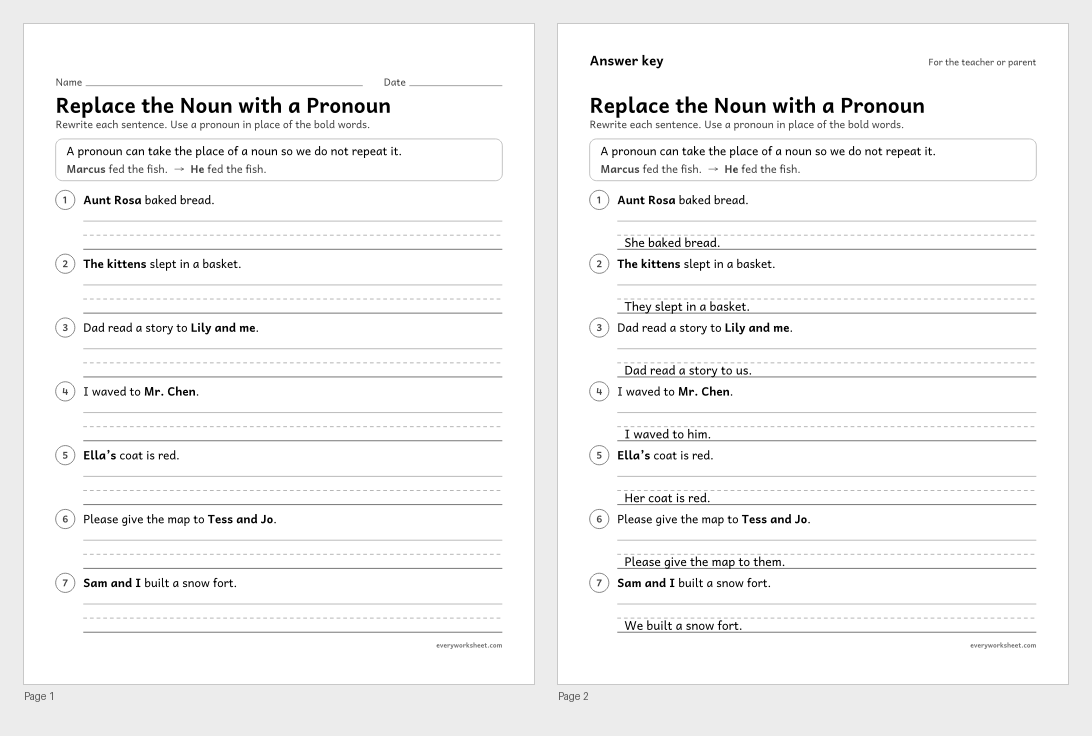
Replace the noun with a pronoun
Replacing nouns with subject, object, and possessive pronouns
Answer key on page 2
2 pages44 KB
 View all 2 pages
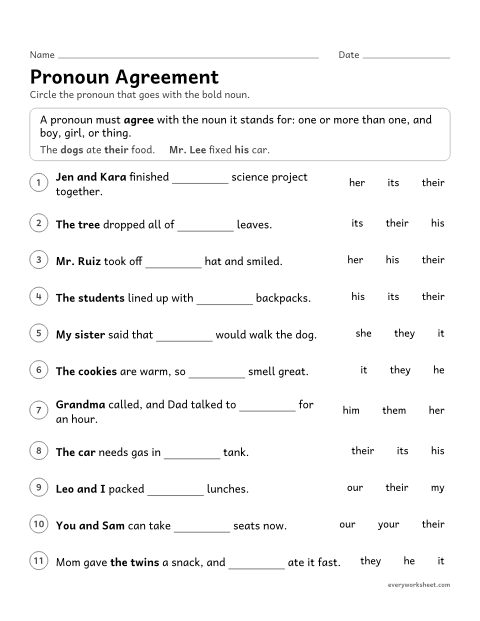
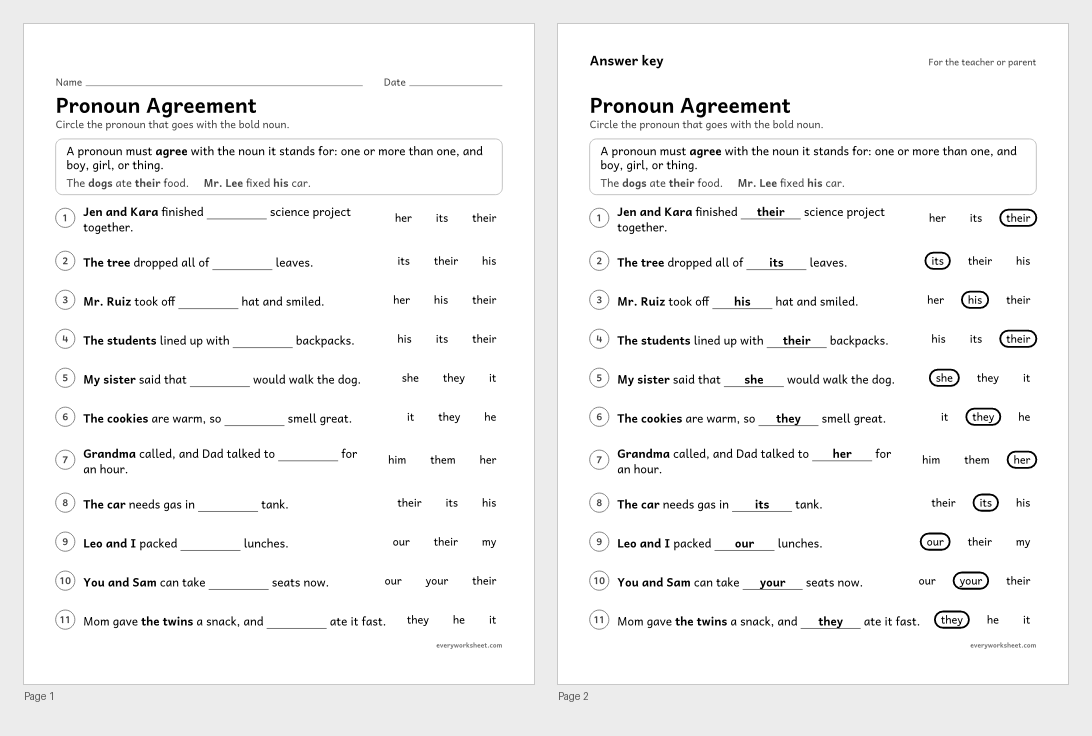
Pronoun agreement
Choosing a pronoun that agrees with its antecedent
Answer key on page 2
2 pages59 KB
 View all 2 pages
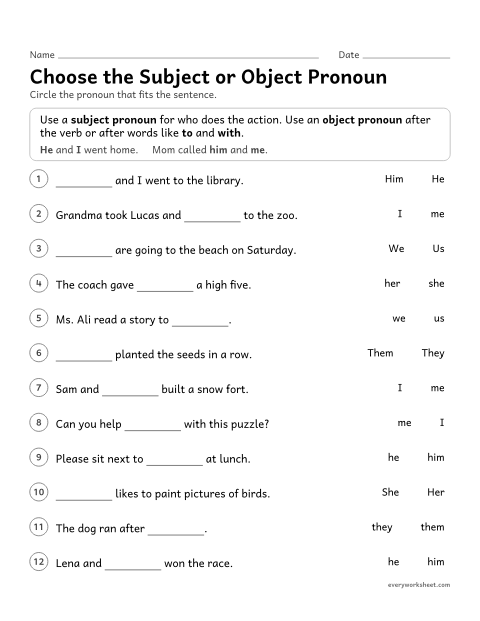
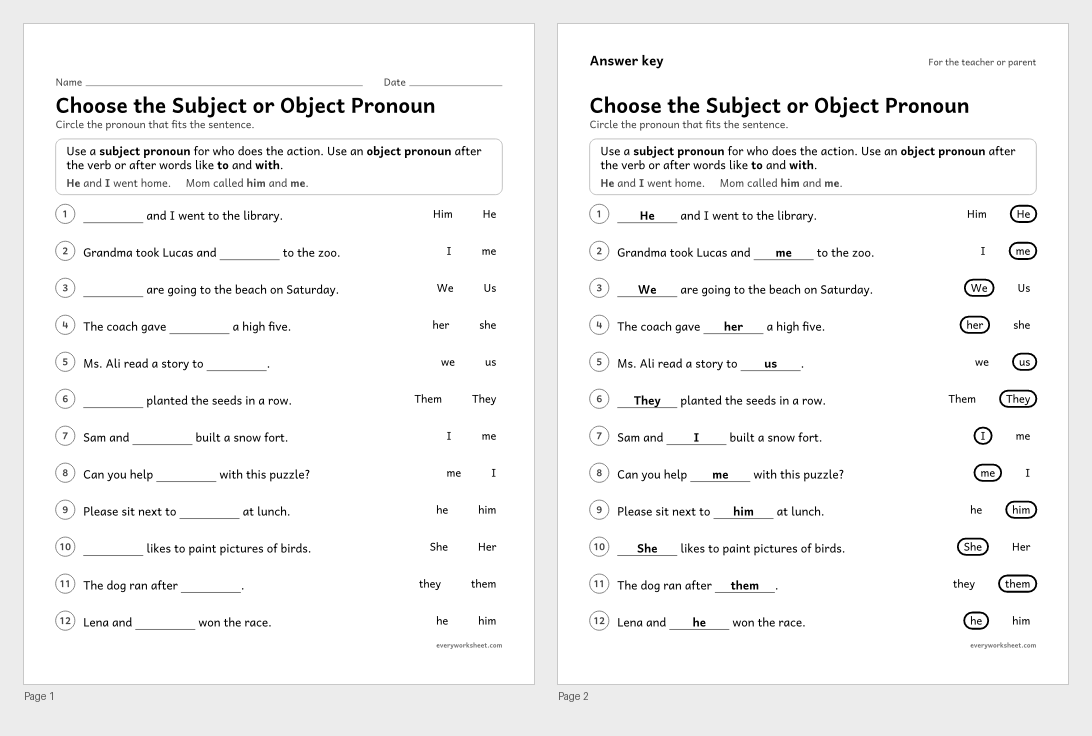
Choose the subject or object pronoun
Choosing between subject and object pronouns
Answer key on page 2
2 pages59 KB
 View all 2 pages
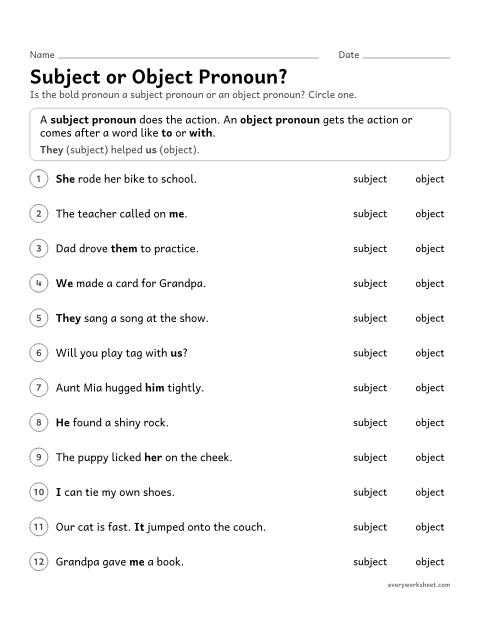
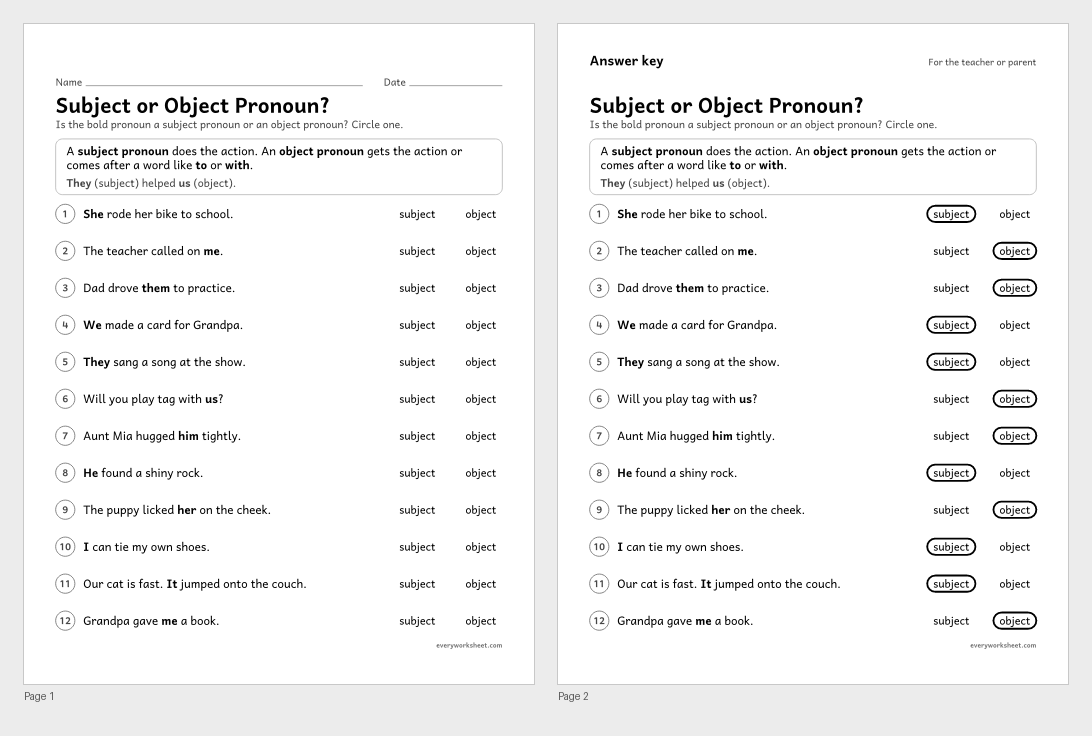
Subject or object Pronoun?
Explaining the job of a pronoun: subject or object
Answer key on page 2
2 pages59 KB
 View all 2 pages
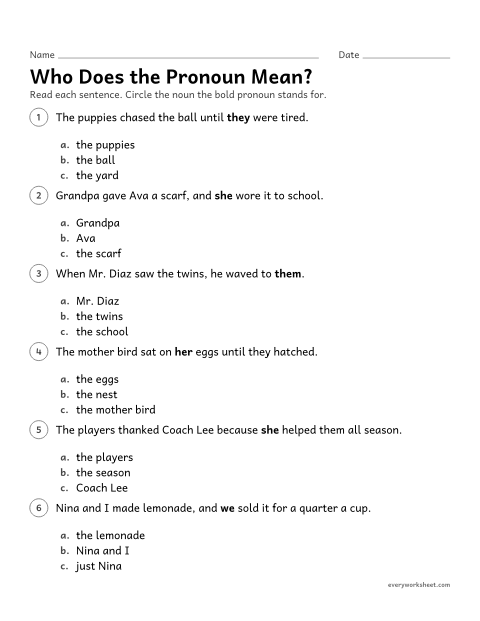
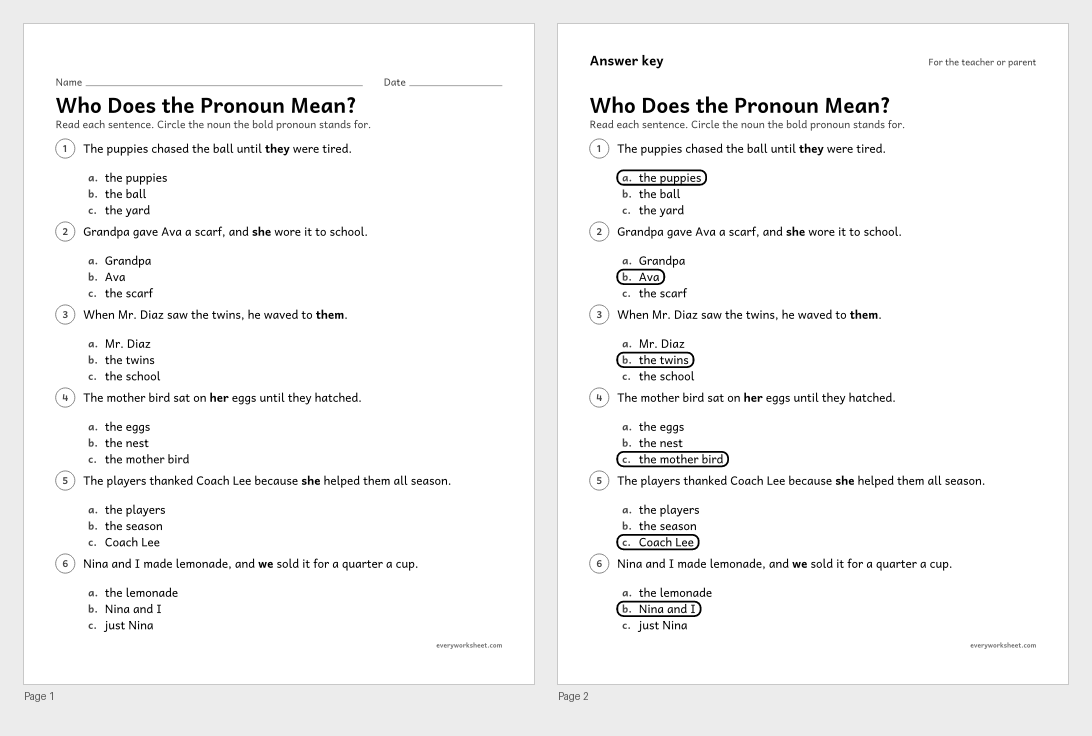
Who does the pronoun Mean?
Finding the antecedent of a pronoun
Answer key on page 2
2 pages60 KB
 View all 2 pages
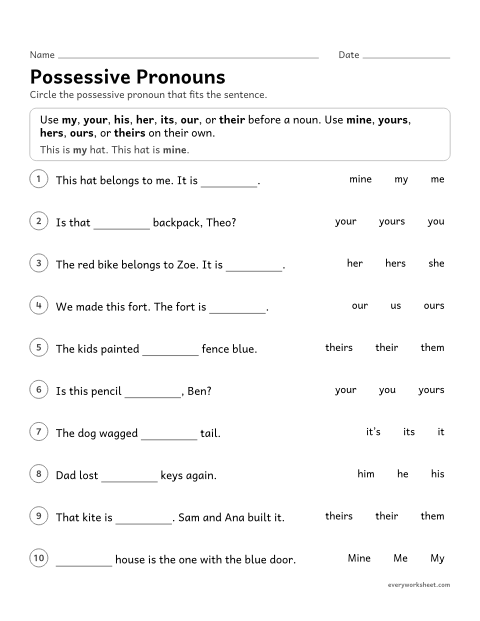
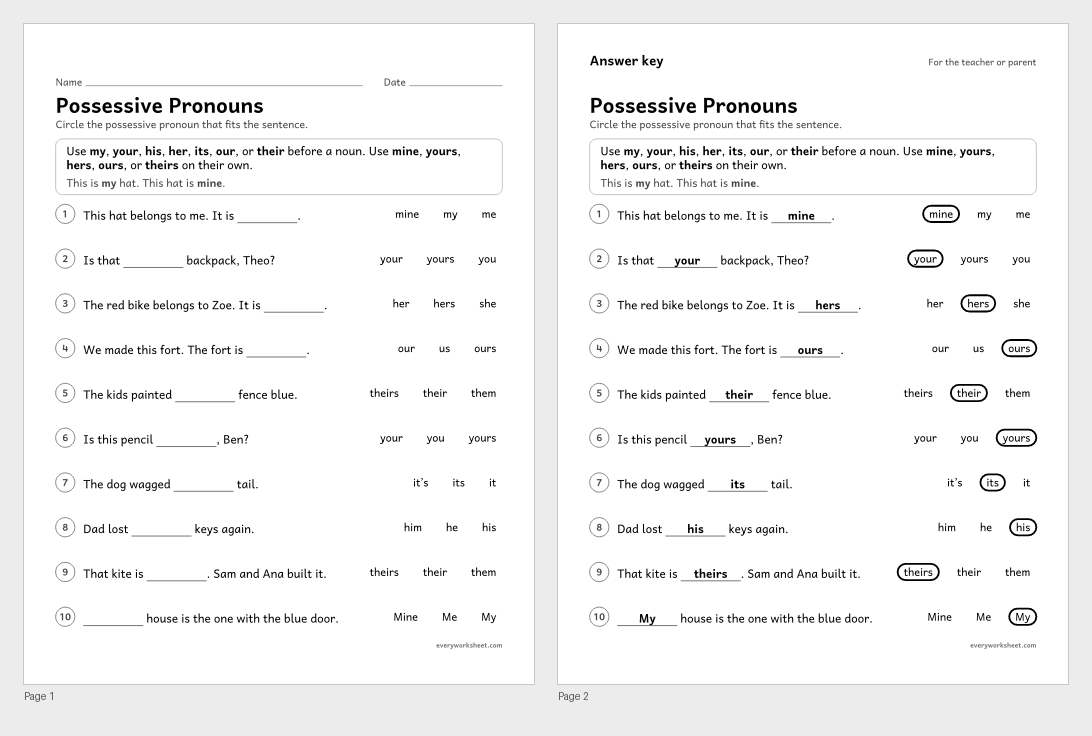
Possessive pronouns
Using possessive pronouns such as my, mine, their, and theirs
Answer key on page 2
2 pages55 KB
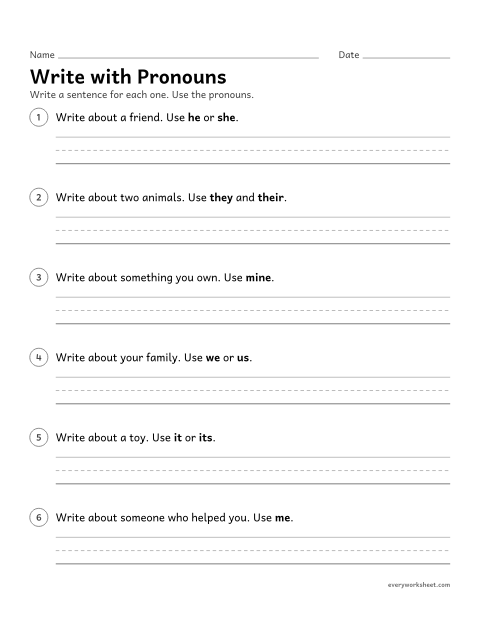
Write with pronouns
 View all 2 pages
Write with pronouns
Writing sentences with subject, object, and possessive pronouns
Answer key on page 2
2 pages42 KB
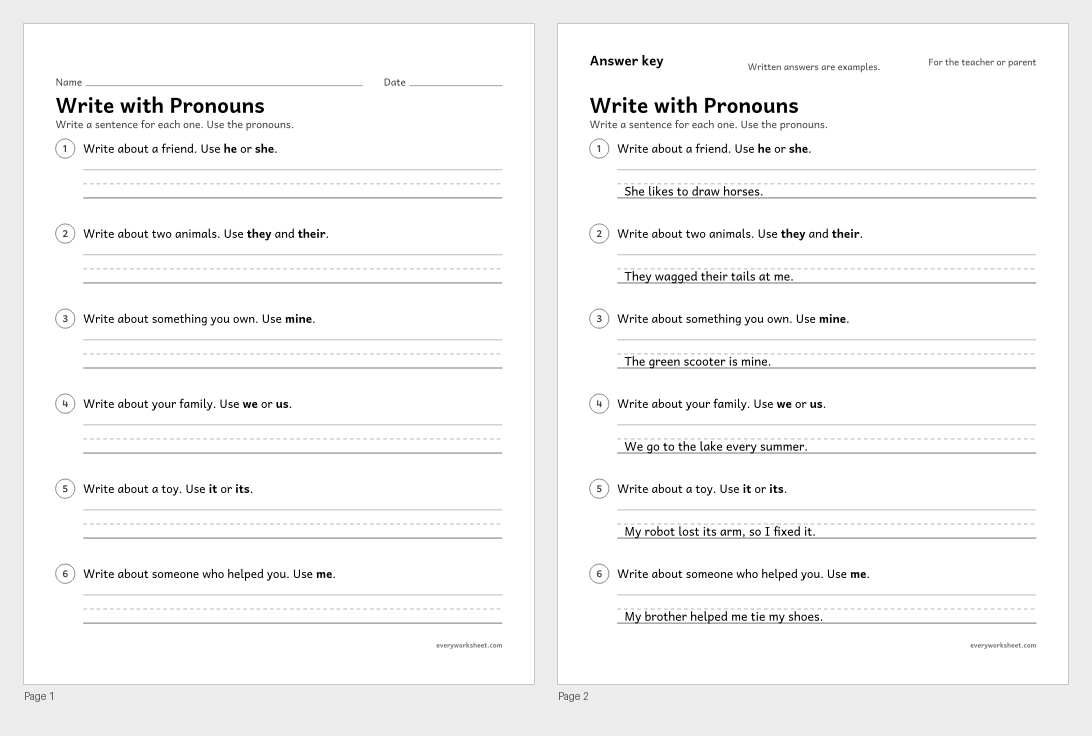
Print at 100% (actual size) for the cleanest tracing lines.
About these pronouns worksheets
A pronoun takes the place of a noun so we do not repeat it: "Marcus fed the fish" becomes "He fed the fish." Subject pronouns (I, you, he, she, it, we, they) do the action. Object pronouns (me, you, him, her, it, us, them) receive it. Possessive pronouns (mine, yours, his, hers, ours, theirs) show who owns something.
Third graders also learn that a pronoun must agree with the noun it stands for: one girl is she, two girls are they. These pronouns worksheets start with a chart, then ask children to circle pronouns, replace nouns with pronouns, choose subject or object pronouns, use possessive pronouns, make pronouns agree, and tell who a pronoun refers to. Every page with right answers has an answer key.
Standards
CCSS.ELA-LITERACY.L.3.1.AExplain the function of nouns, pronouns, verbs, adjectives, and adverbs in general and their functions in particular sentences.CCSS.ELA-LITERACY.L.3.1.FEnsure subject-verb and pronoun-antecedent agreement.
How to use them
- Start with the chart and swap nouns for pronouns in a few spoken sentences.
- Do the circle and replace pages next.
- Use subject or object: try the sentence with each choice and listen.
- Finish with agreement and who does it mean.
Teaching tips
- For "Sam and I" or "Sam and me", take Sam out and see which sounds right: "I built a fort" or "Give it to me."
- A pronoun should match its noun in number: one is he, she, or it; more than one is they.
- If it is not clear who a pronoun means, use the noun again.
- Possessive pronouns never have an apostrophe: hers, ours, theirs.
Questions teachers and parents ask
What are pronouns?
Words that take the place of nouns, like I, you, he, she, it, we, they, me, him, her, us, and them.
What is pronoun agreement?
A pronoun must match the noun it stands for: one noun takes a singular pronoun (she), more than one takes a plural pronoun (they).
Do the worksheets have answer keys?
Yes. Every page with right answers has an answer key on page 2. Written answers show an example.