 View all 2 pages
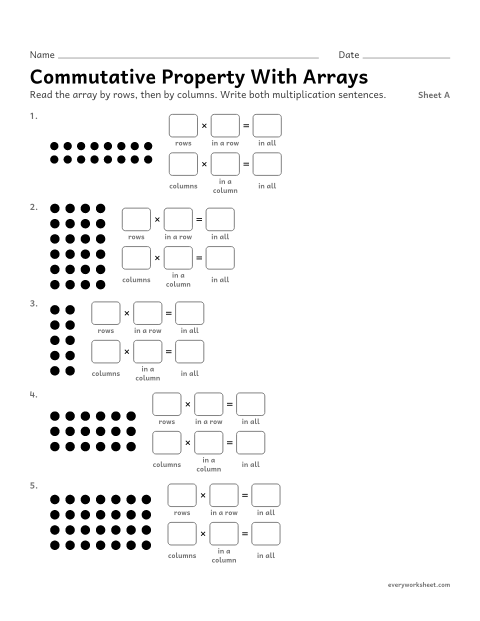
Commutative property with Arrays, sheet A
The commutative property with arrays
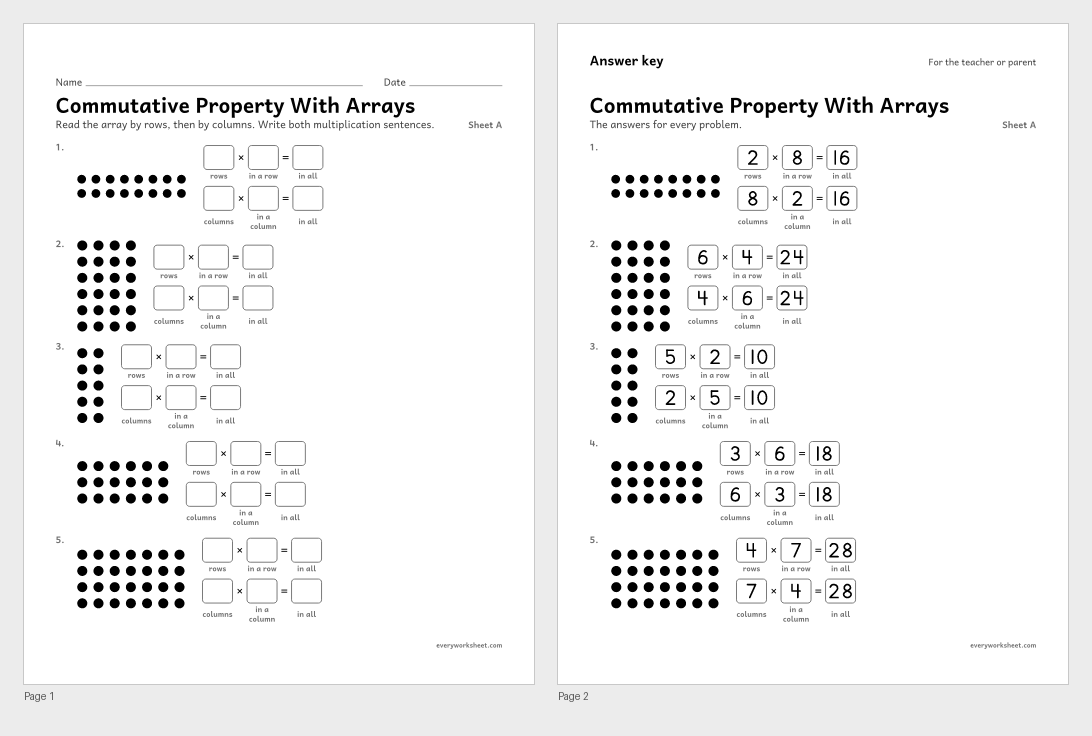
Answer key on page 2
2 pages75 KB
The commutative, associative and distributive properties with arrays and numbers, multiplying by 0 and 1, and naming the property. Every page has an answer key.
View all 2 pagesThe commutative property with arrays
Answer key on page 2
2 pages75 KB
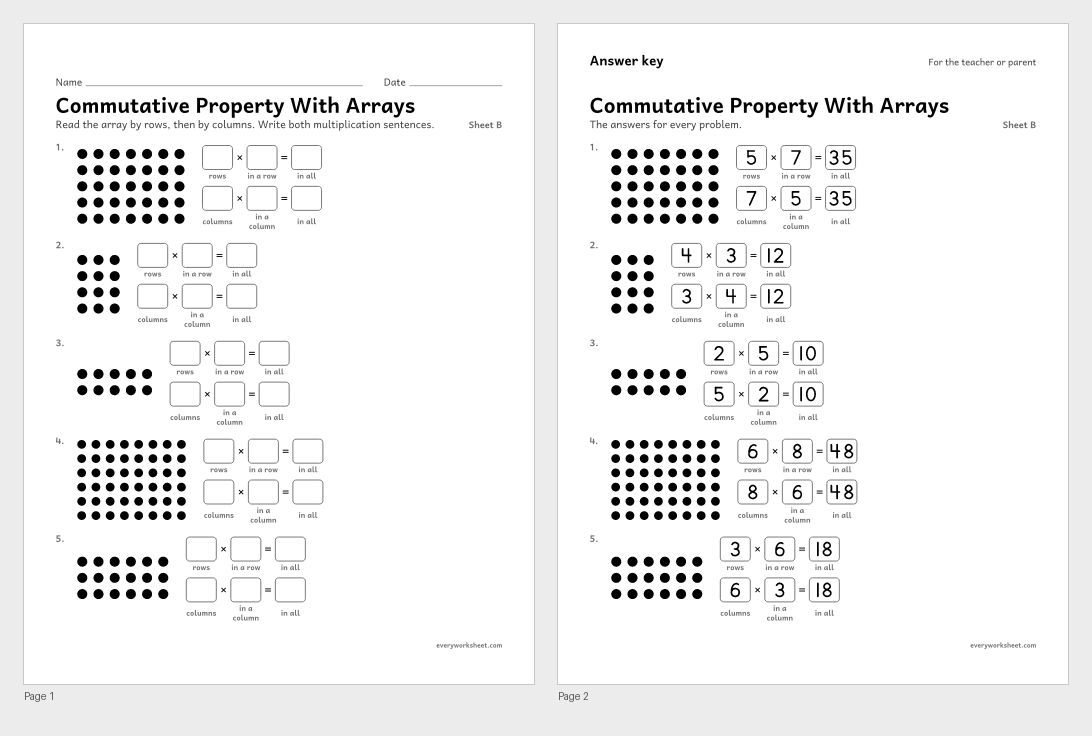 View all 2 pages
The commutative property with arrays
Answer key on page 2
2 pages75 KB
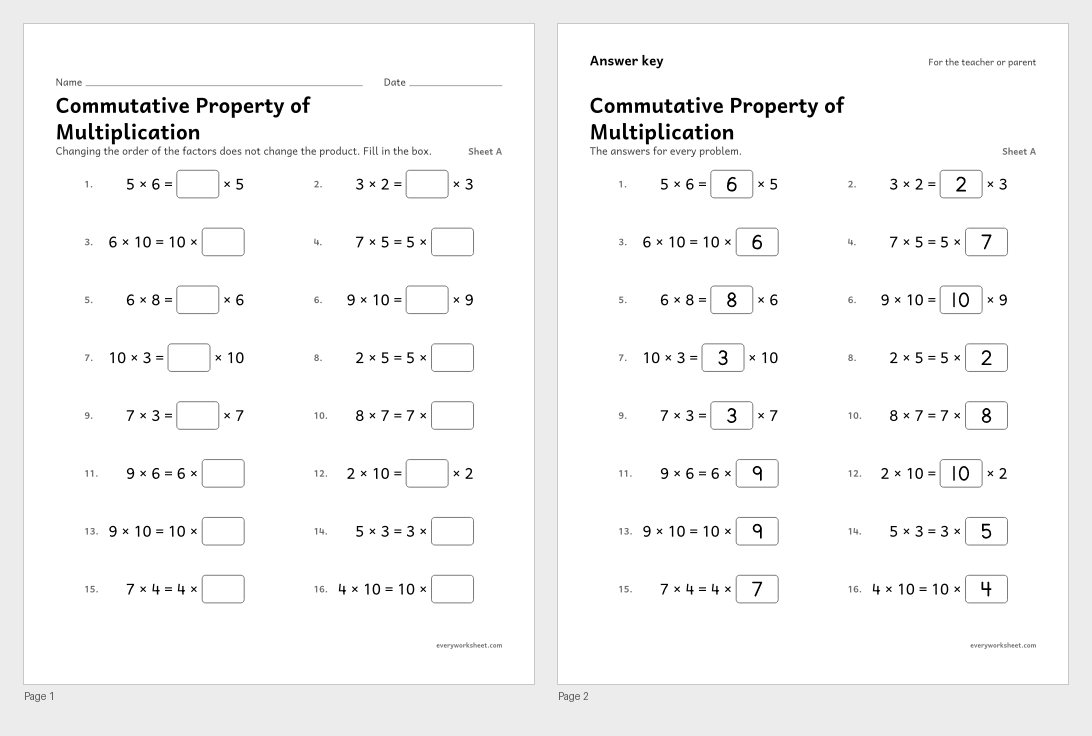 View all 2 pages
Using the commutative property of multiplication
Answer key on page 2
2 pages98 KB
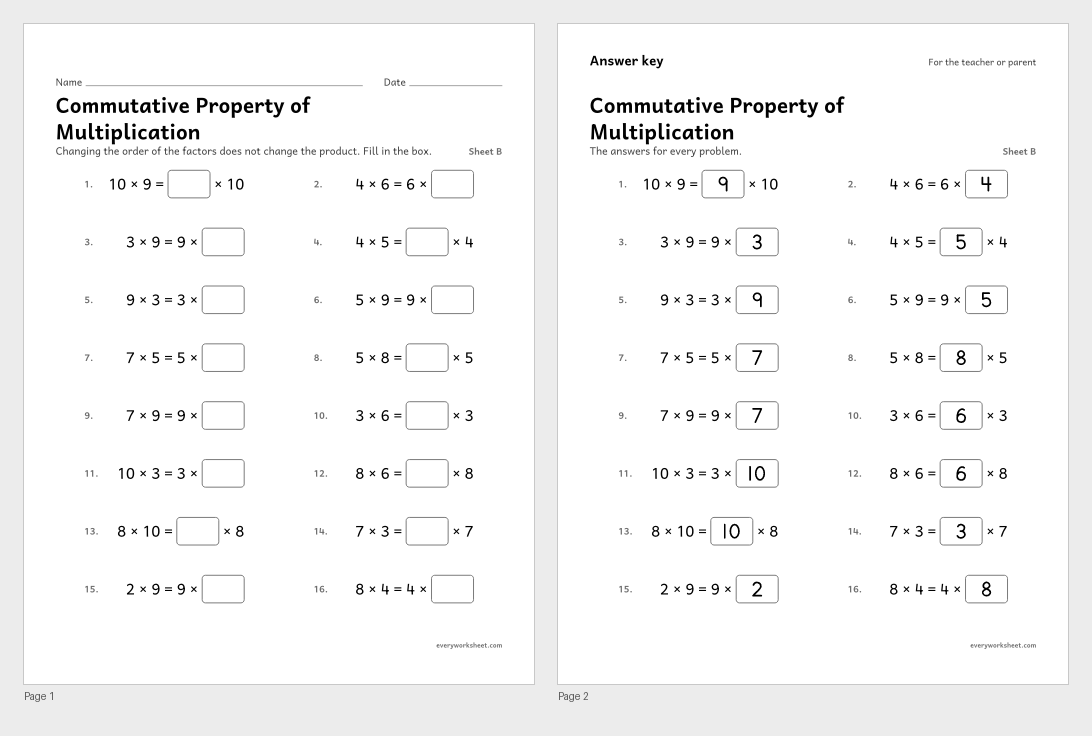 View all 2 pages
Using the commutative property of multiplication
Answer key on page 2
2 pages98 KB
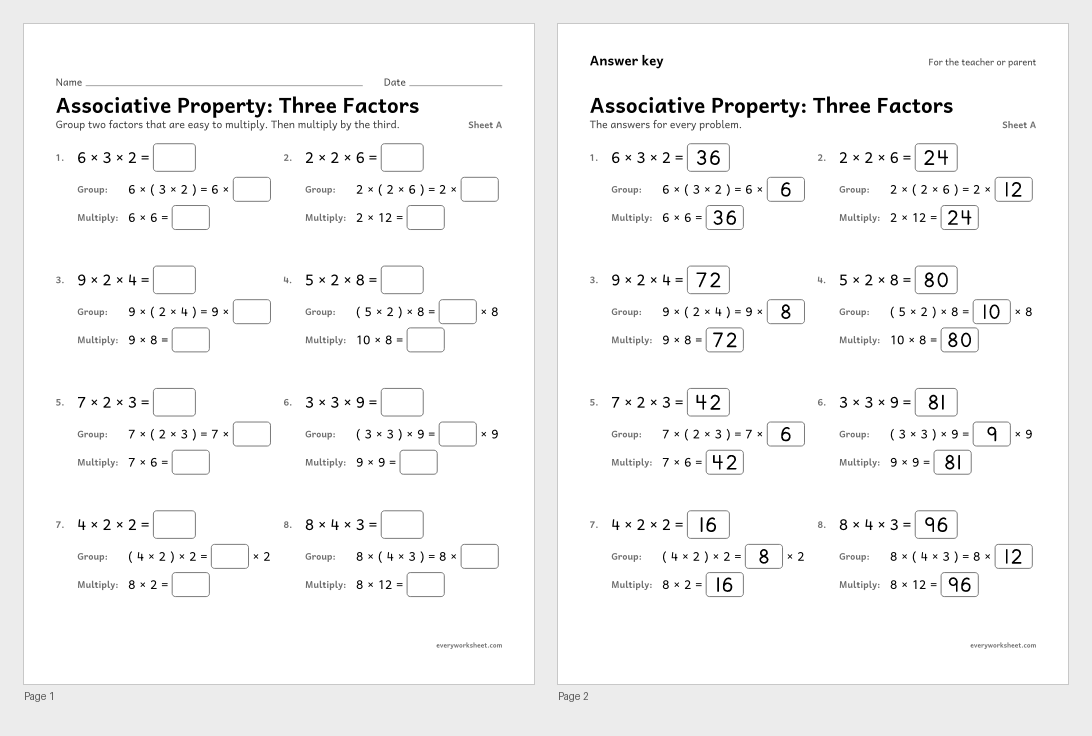 View all 2 pages
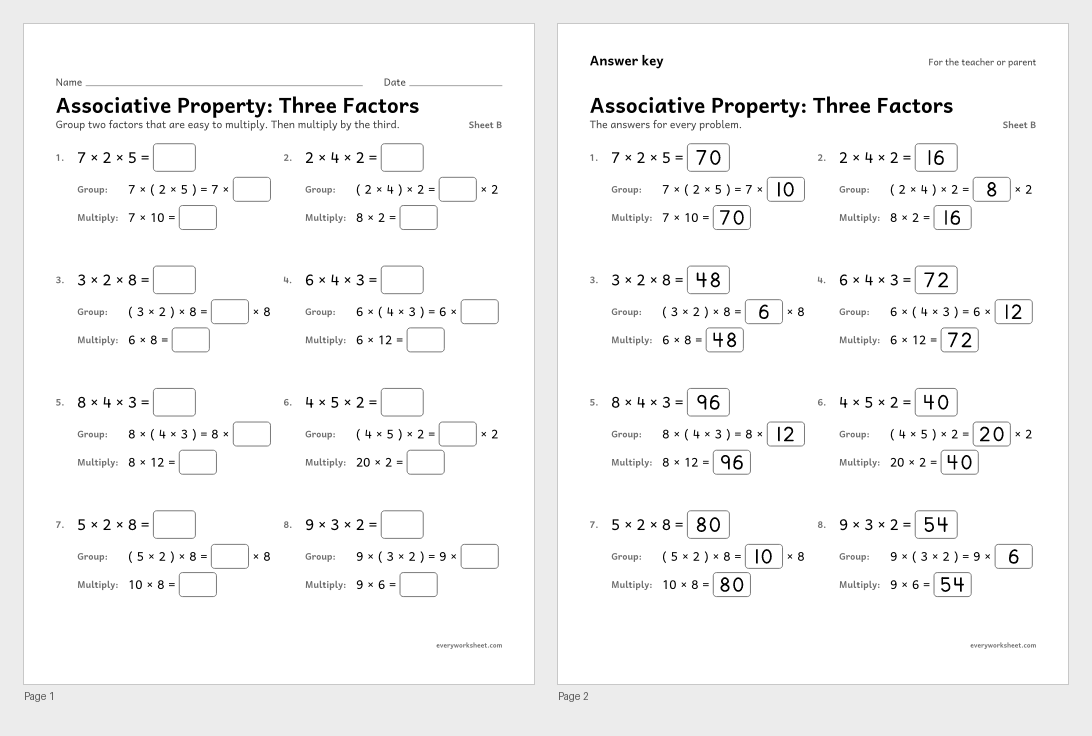
Using the associative property to multiply three numbers
Answer key on page 2
2 pages139 KB
 View all 2 pages
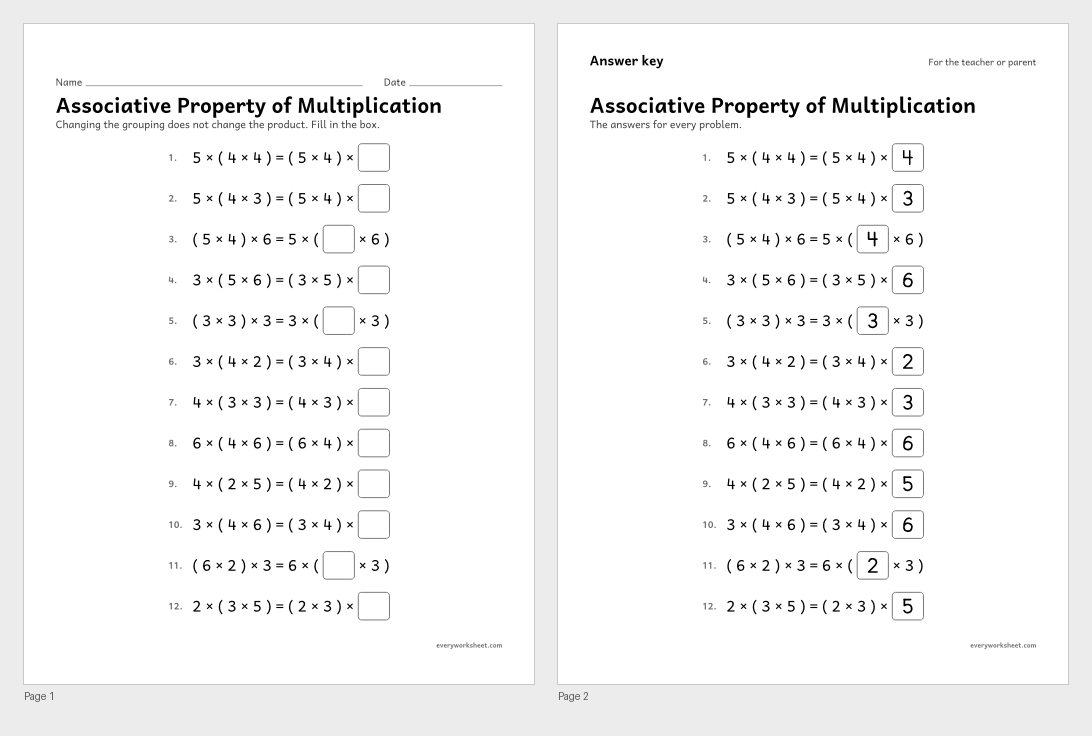
Using the associative property to multiply three numbers
Answer key on page 2
2 pages139 KB
 View all 2 pages
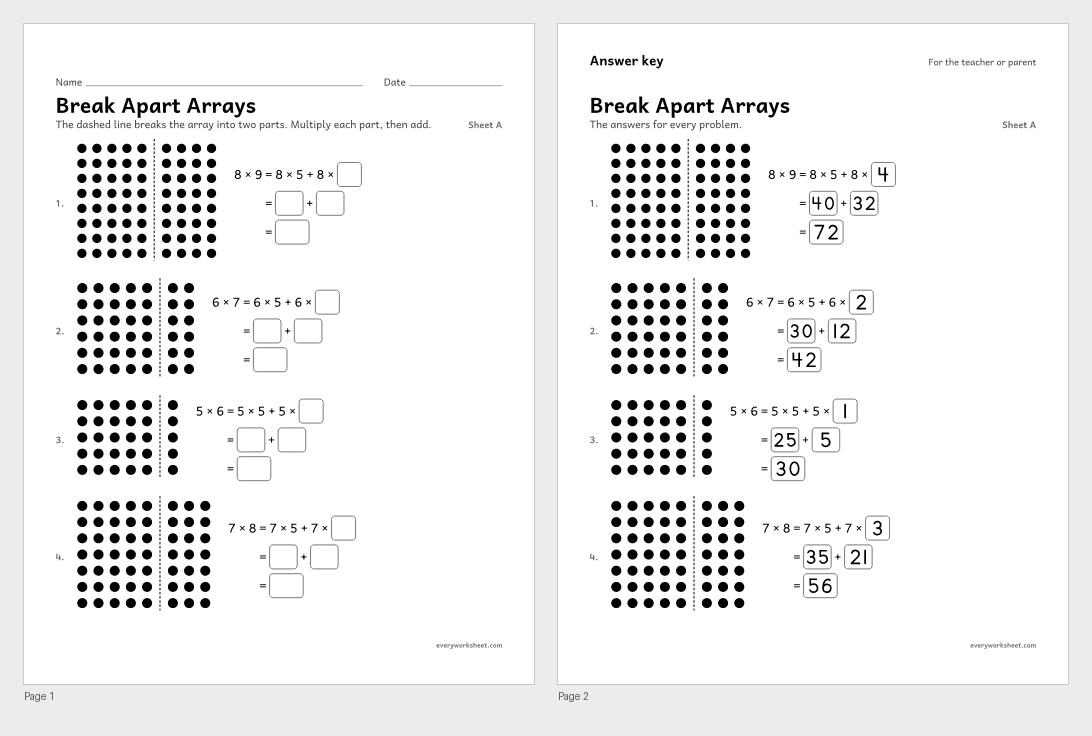
Recognizing the associative property of multiplication
Answer key on page 2
2 pages124 KB
 View all 2 pages
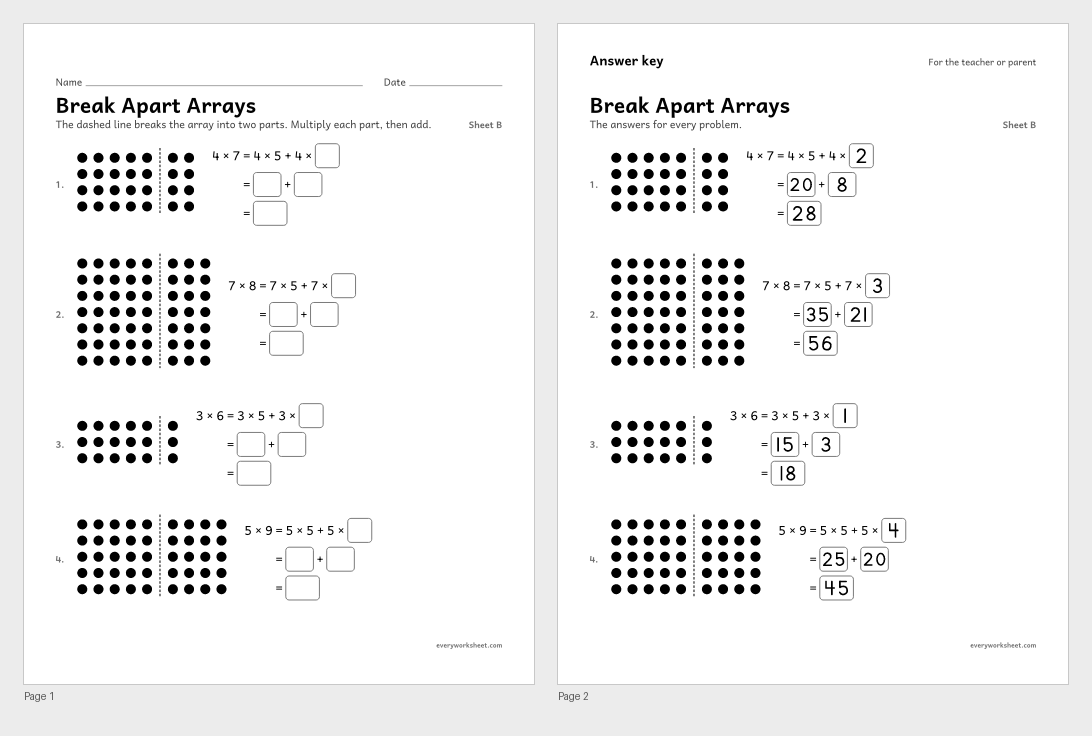
Using the distributive property with arrays
Answer key on page 2
2 pages68 KB
 View all 2 pages
Using the distributive property with arrays
Answer key on page 2
2 pages68 KB
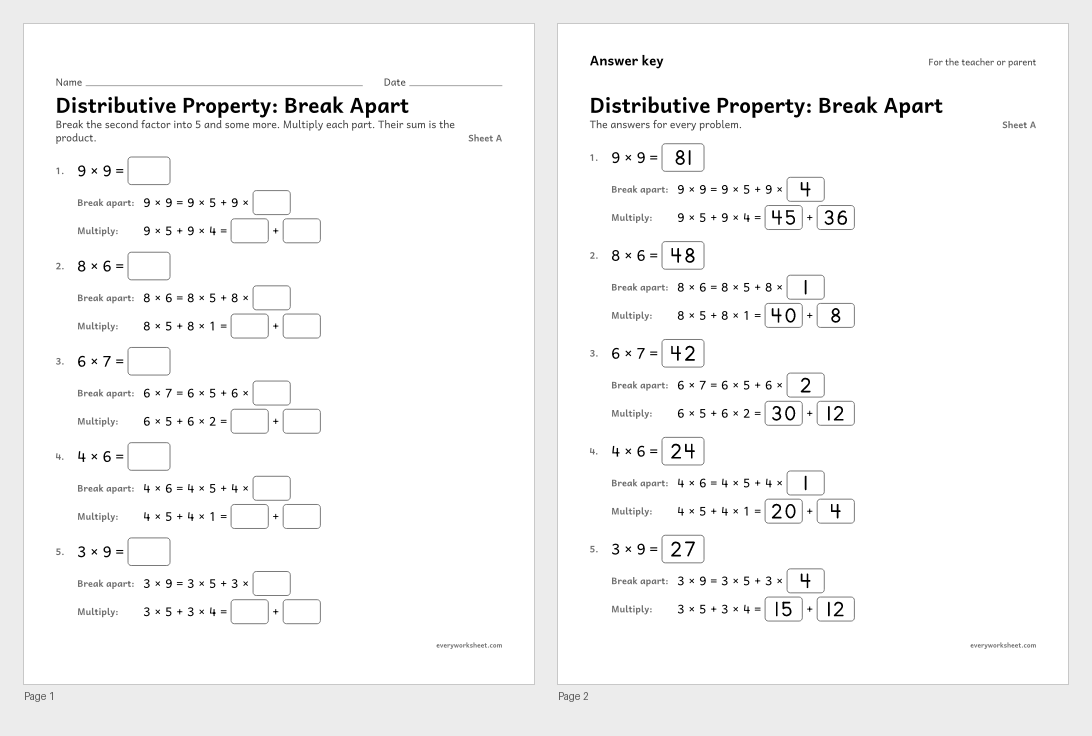 View all 2 pages
Using the distributive property to multiply
Answer key on page 2
2 pages106 KB
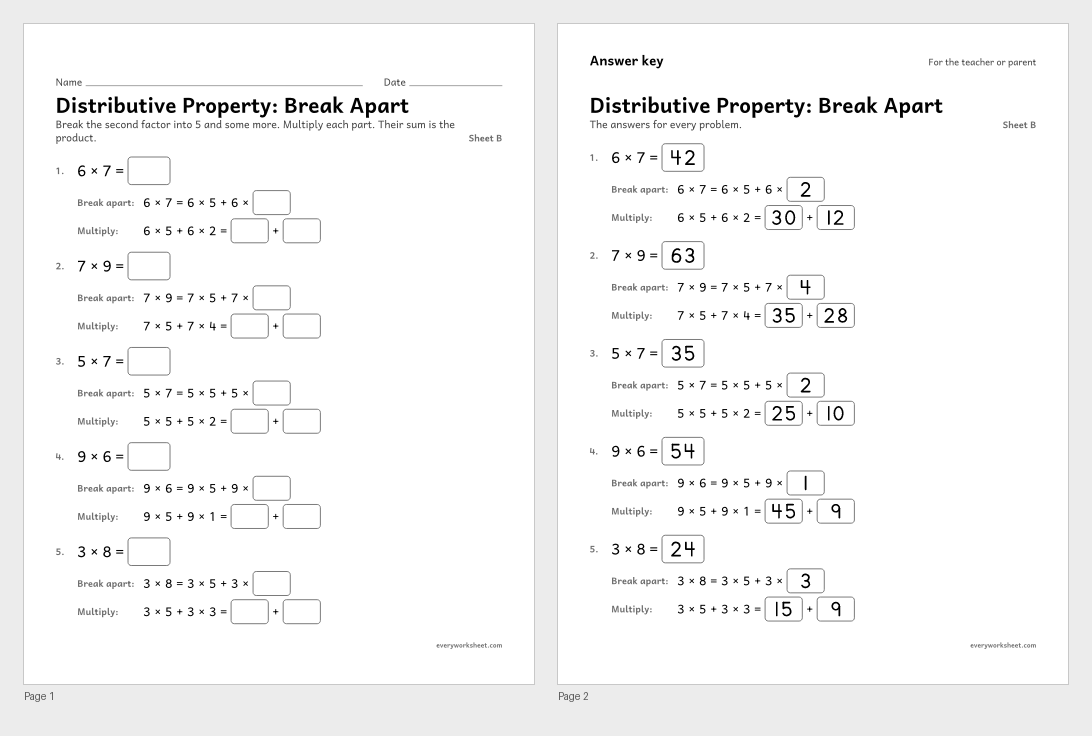 View all 2 pages
Using the distributive property to multiply
Answer key on page 2
2 pages106 KB
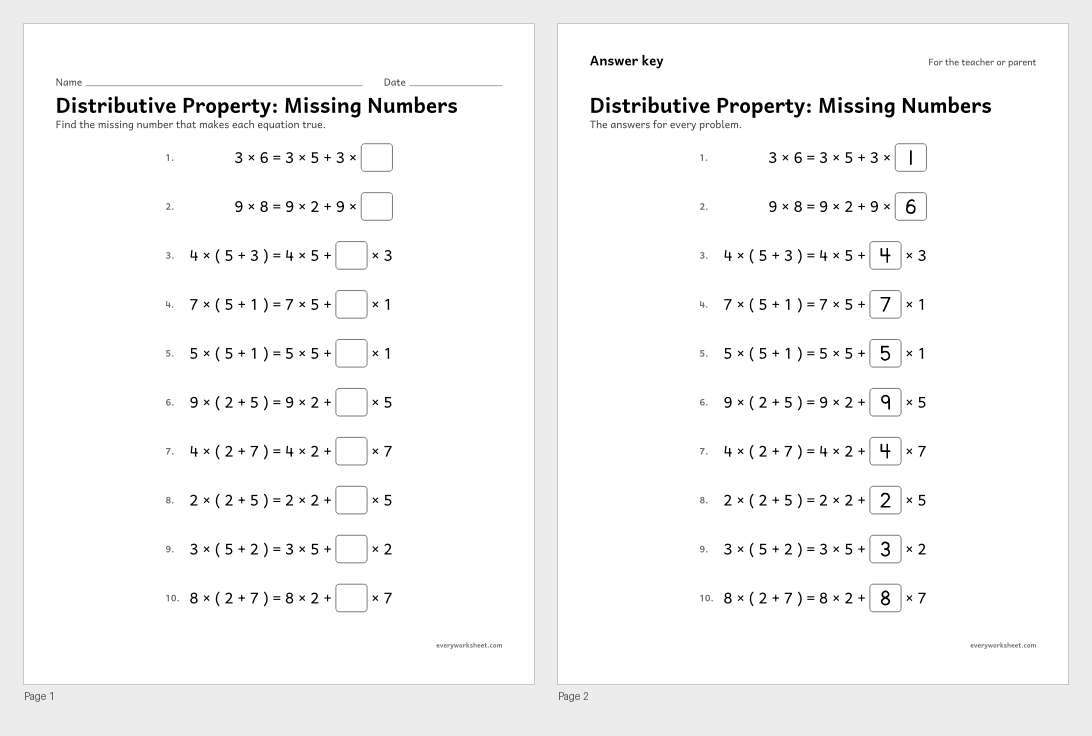 View all 2 pages
Recognizing the distributive property
Answer key on page 2
2 pages106 KB
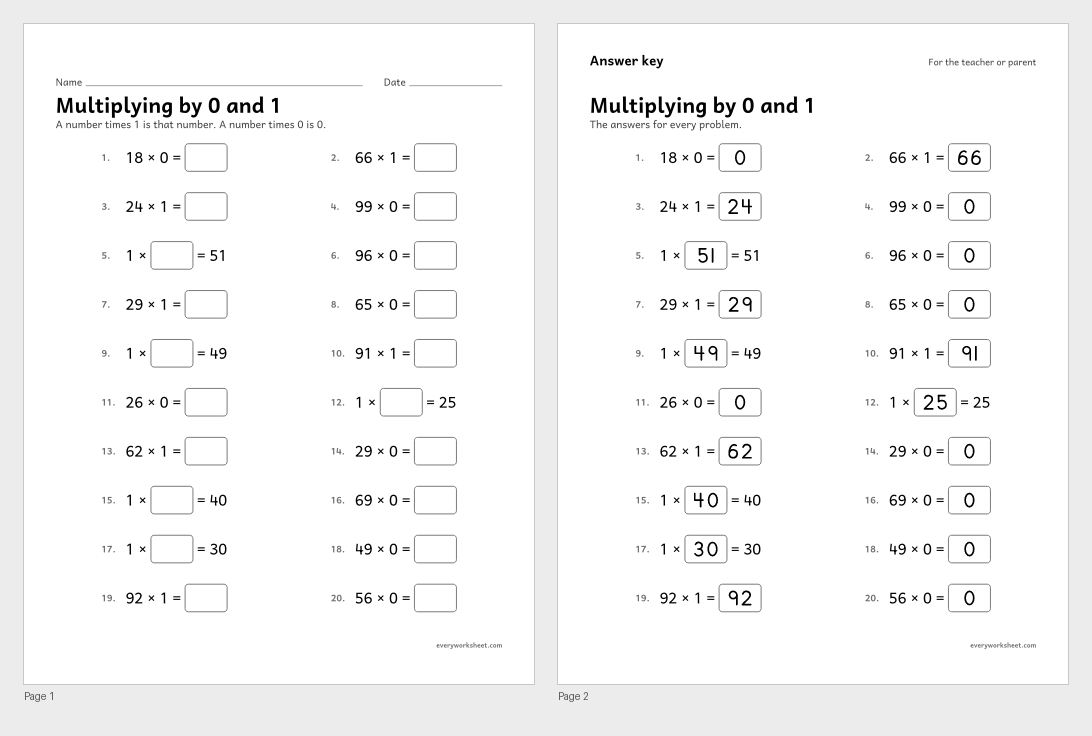 View all 2 pages
The identity and zero properties of multiplication
Answer key on page 2
2 pages95 KB
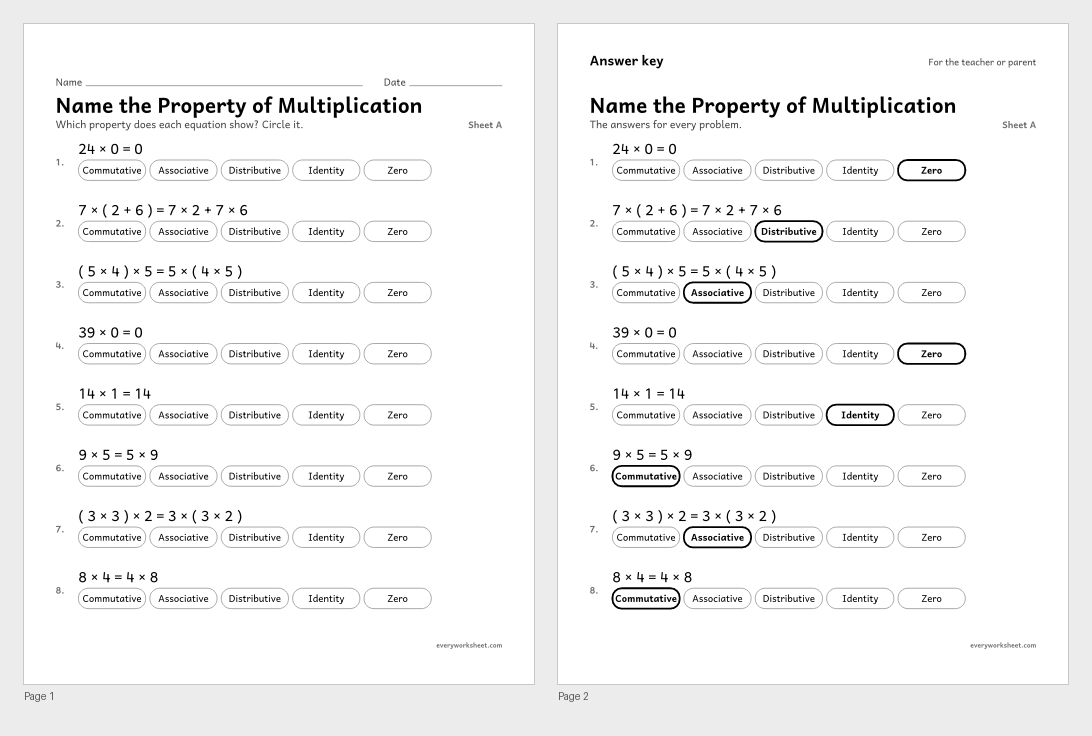 View all 2 pages
Naming the properties of multiplication
Answer key on page 2
2 pages80 KB
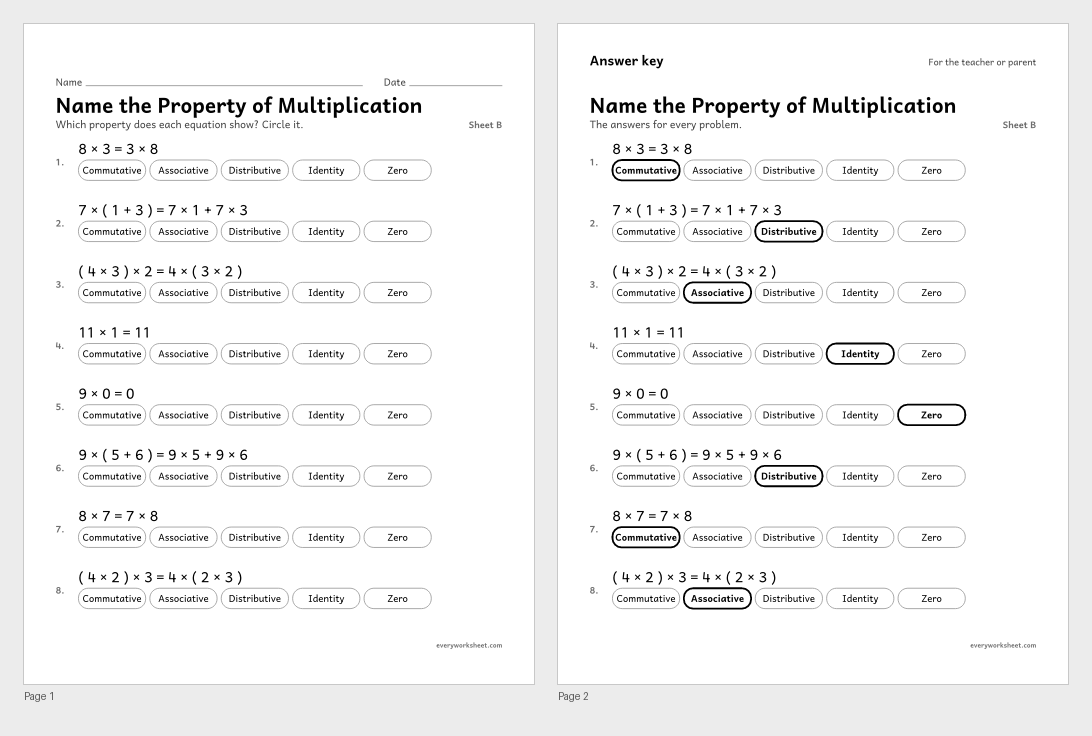 View all 2 pages
Naming the properties of multiplication
Answer key on page 2
2 pages85 KB
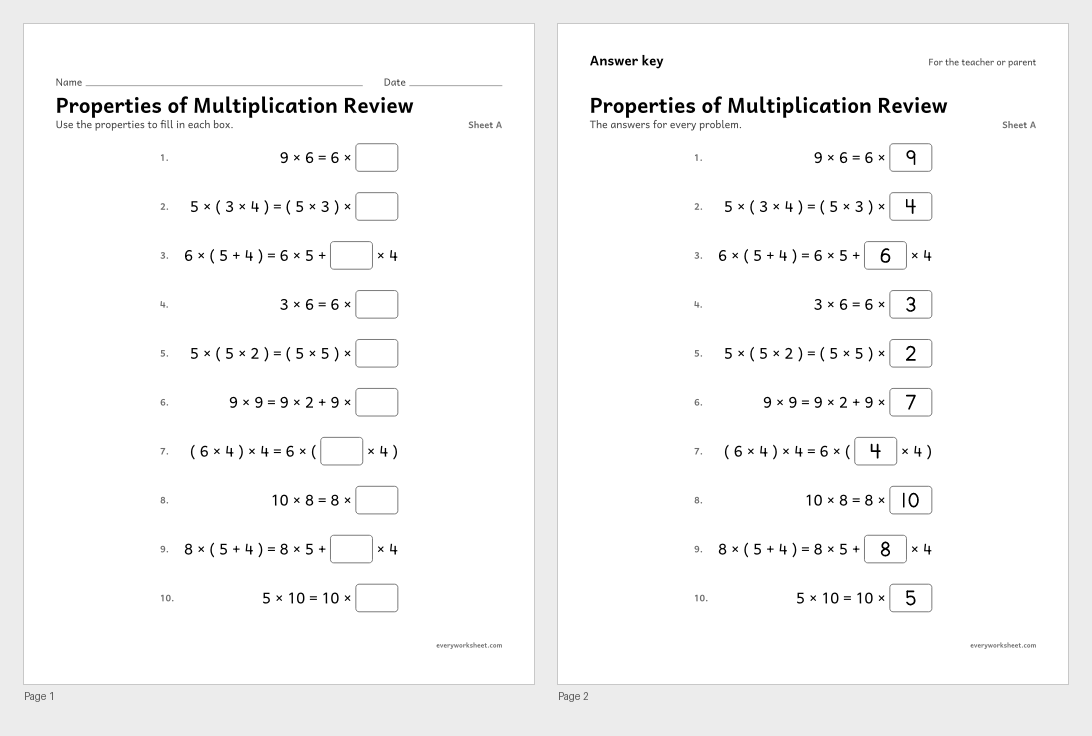 View all 2 pages
Applying the properties of multiplication
Answer key on page 2
2 pages94 KB
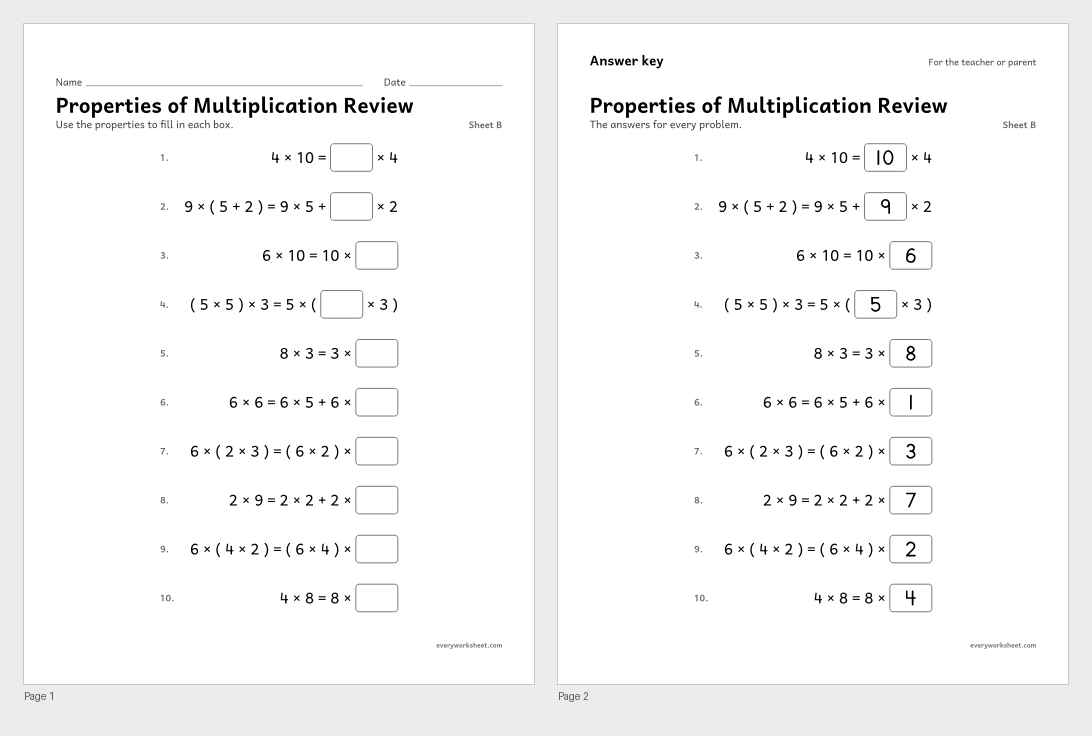 View all 2 pages
Applying the properties of multiplication
Answer key on page 2
2 pages92 KB
Print at 100% (actual size) for the cleanest tracing lines.
The properties of multiplication are the rules that make multiplying easier. The commutative property says the order doesn't matter: 3 × 8 = 8 × 3. The associative property says you can group three factors any way: (2 × 5) × 7 = 2 × (5 × 7). The distributive property lets you break a hard fact into two easy ones: 7 × 8 = 7 × 5 + 7 × 3.
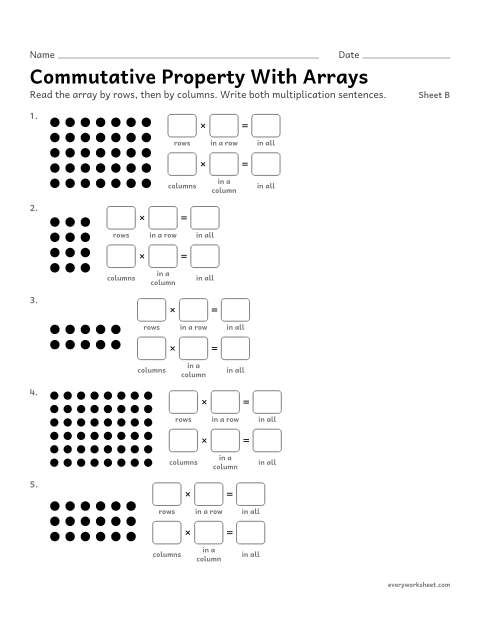
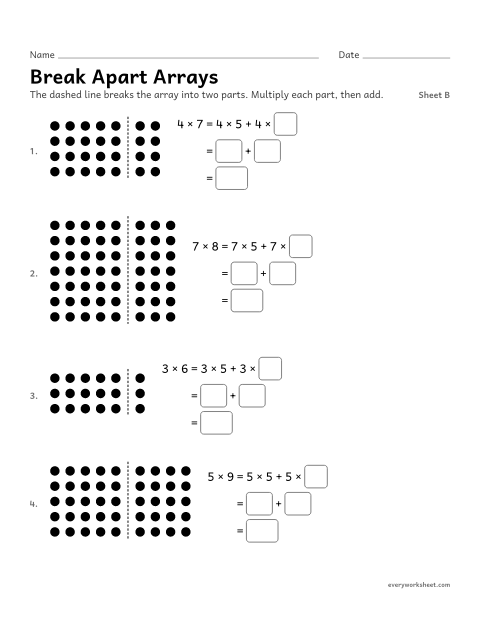
Third graders don't need the names to use the ideas, but the names help them talk about their thinking. These worksheets show each property with arrays first, then with numbers, so children see why it works. Break Apart Arrays draws a dashed line through an array and asks for the two smaller products.
Every page has an answer key on page 2. Pages print in black and white on US Letter or A4.
CCSS.MATH.CONTENT.3.OA.B.5Apply properties of operations as strategies to multiply and divide. Examples: If 6 × 4 = 24 is known, then 4 × 6 = 24 is also known. (Commutative property of multiplication.) 3 × 5 × 2 can be found by 3 × 5 = 15, then 15 × 2 = 30, or by 5 × 2 = 10, then 3 × 10 = 30. (Associative property of multiplication.) Knowing that 8 × 5 = 40 and 8 × 2 = 16, one can find 8 × 7 as 8 × (5 + 2) = (8 × 5) + (8 × 2) = 40 + 16 = 56. (Distributive property.)CCSS.MATH.CONTENT.3.OA.D.9Identify arithmetic patterns (including patterns in the addition table or multiplication table), and explain them using properties of operations. For example, observe that 4 times a number is always even, and explain why 4 times a number can be decomposed into two equal addends.The commutative property (a × b = b × a), the associative property ((a × b) × c = a × (b × c)), the distributive property (a × (b + c) = a × b + a × c), the identity property (a × 1 = a) and the zero property (a × 0 = 0).
It means breaking a fact into two smaller facts and adding them. To find 6 × 7, think 6 × 5 = 30 and 6 × 2 = 12, then 30 + 12 = 42. An array split by a line shows why it works.
The standard asks children to use the properties as strategies. Many classes also learn the names, so we include a Name the Property page.
Yes. Every page has an answer key on page 2 of the PDF.