 View larger
Quotation Marks Worksheets
A quotation marks chart plus practice finding spoken words, adding quotation marks and commas, fixing dialogue, and writing a conversation.
Download the quotation marks worksheets
Learn quotation marks
 View larger
 View all 2 pages
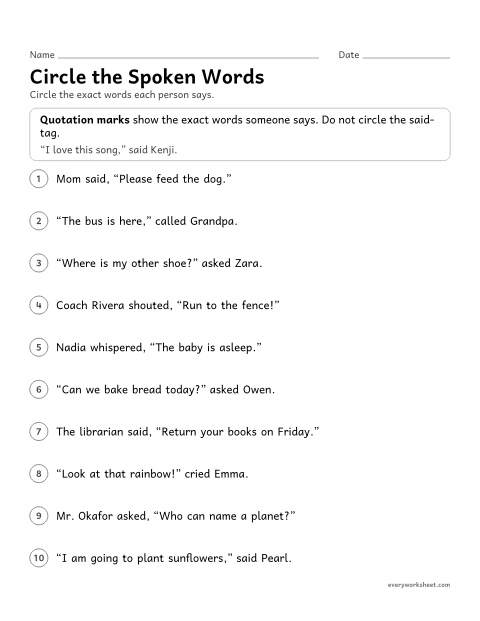
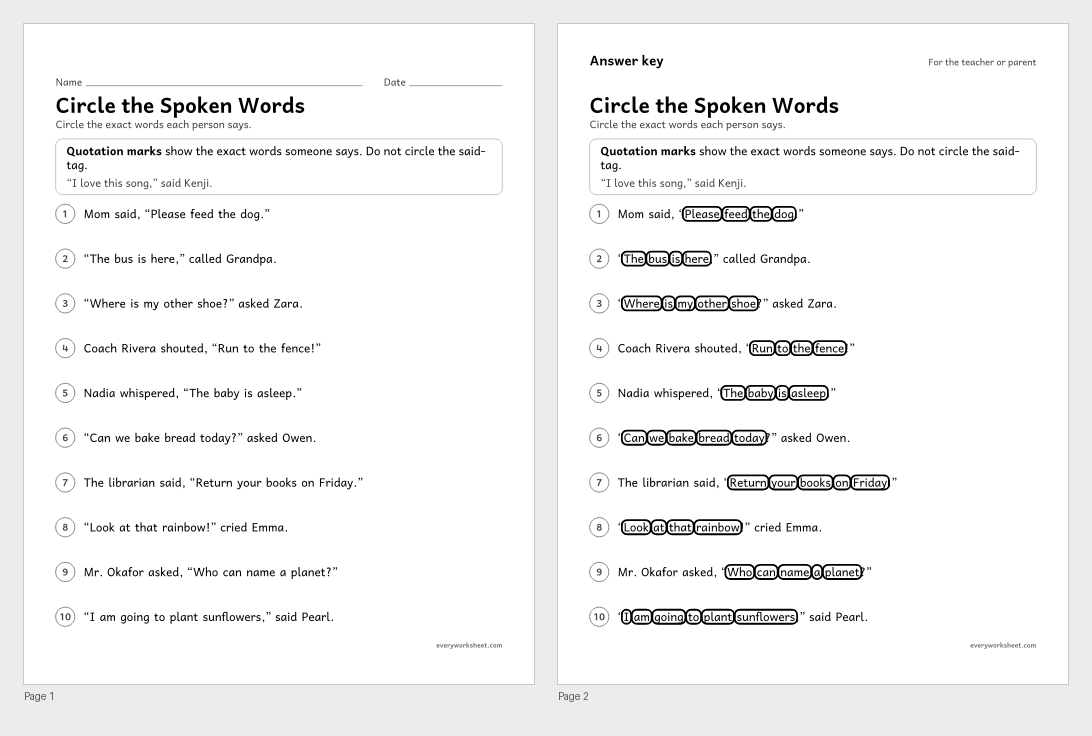
Circle the spoken words
Finding the spoken words inside quotation marks
Answer key on page 2
2 pages53 KB
 View all 2 pages
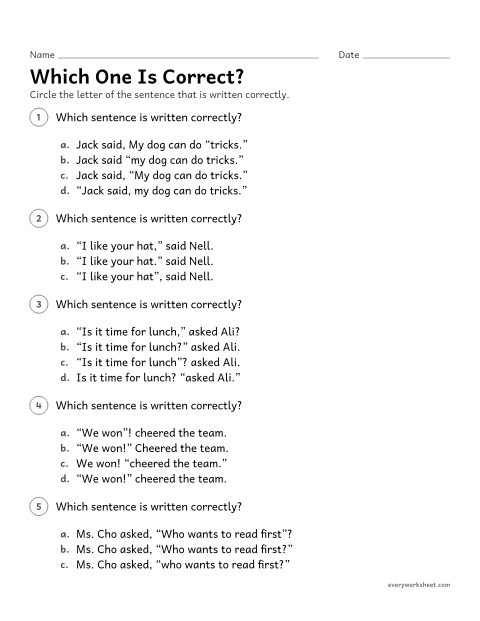
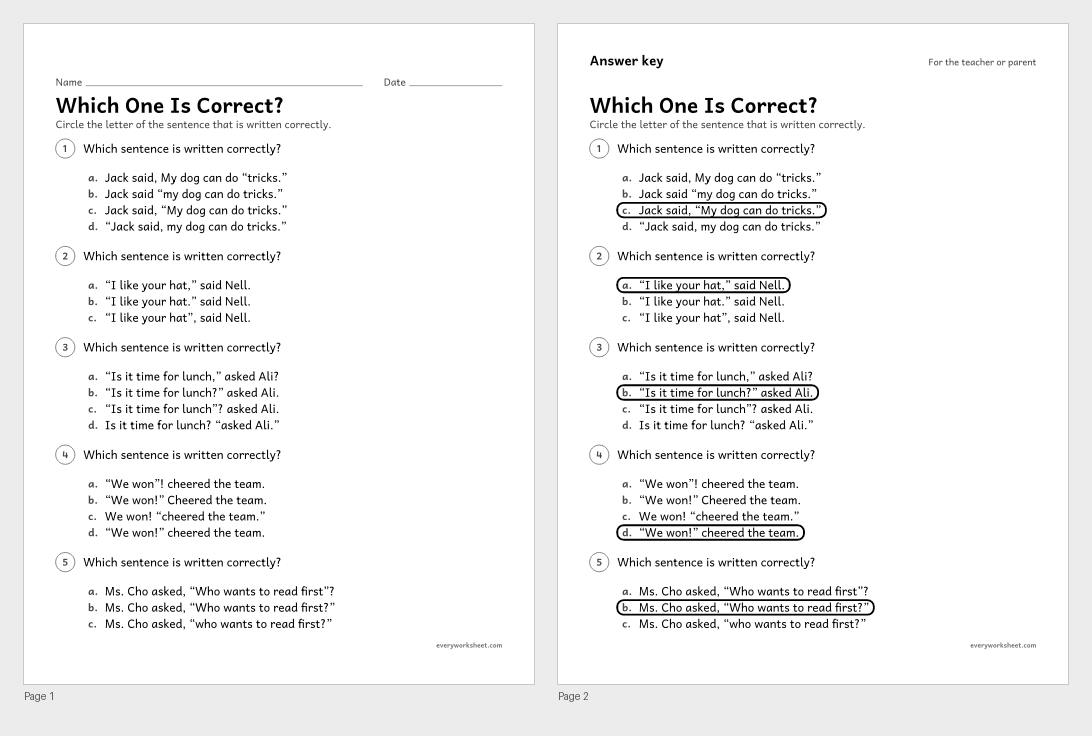
Which one is Correct?
Choosing correctly punctuated dialogue
Answer key on page 2
2 pages54 KB
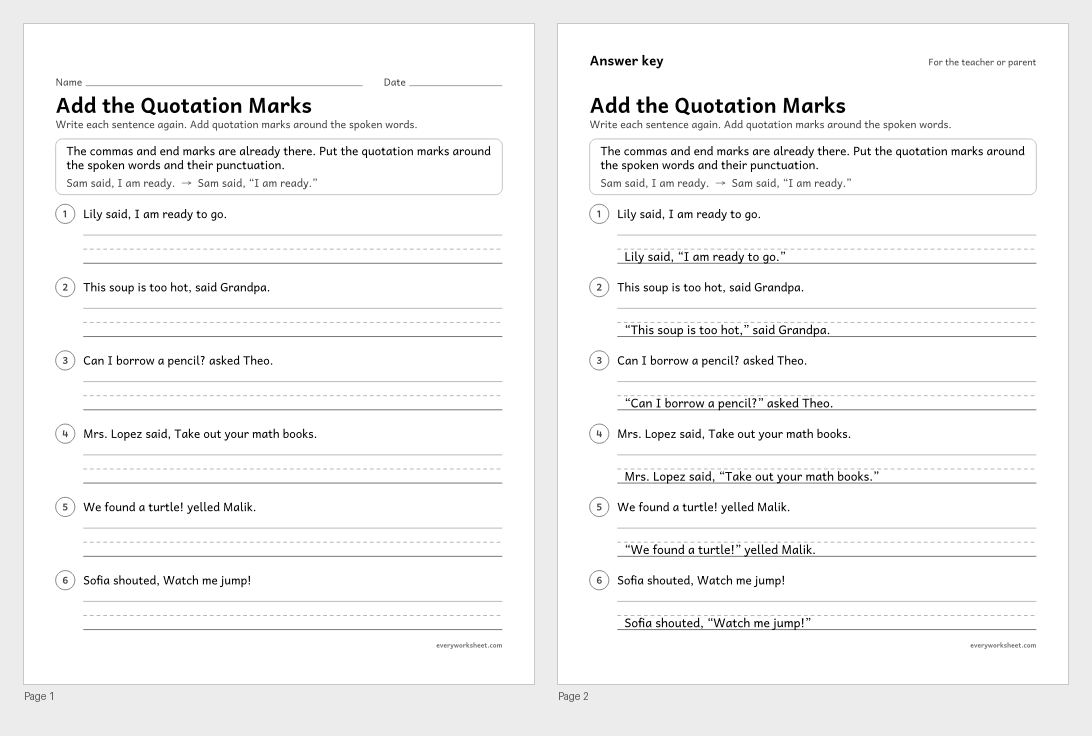
Punctuate dialogue
 View all 2 pages
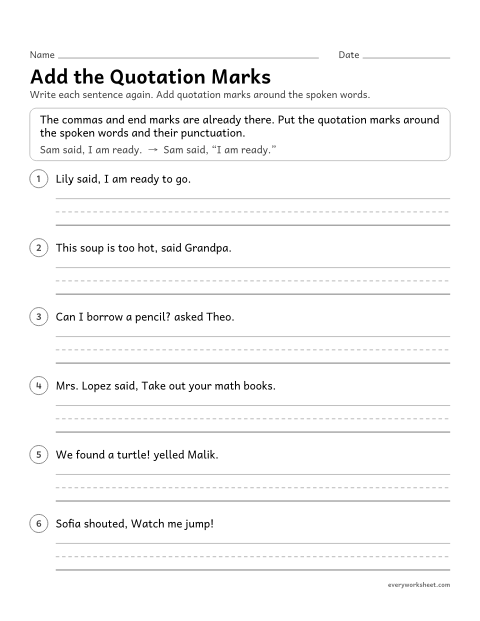
Add the quotation marks
Adding quotation marks around a speaker's exact words
Answer key on page 2
2 pages39 KB
 View all 2 pages
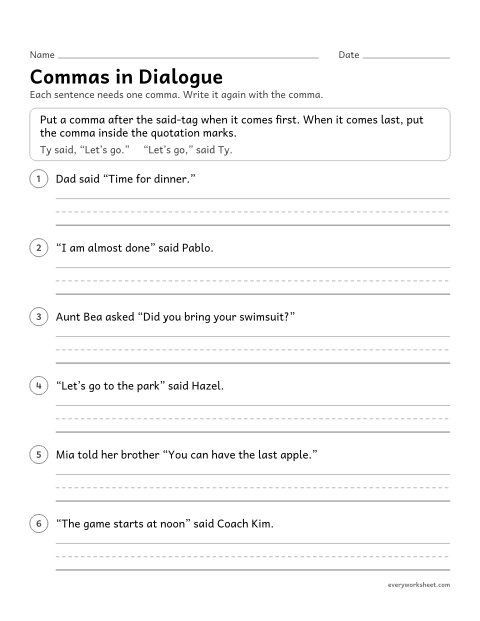
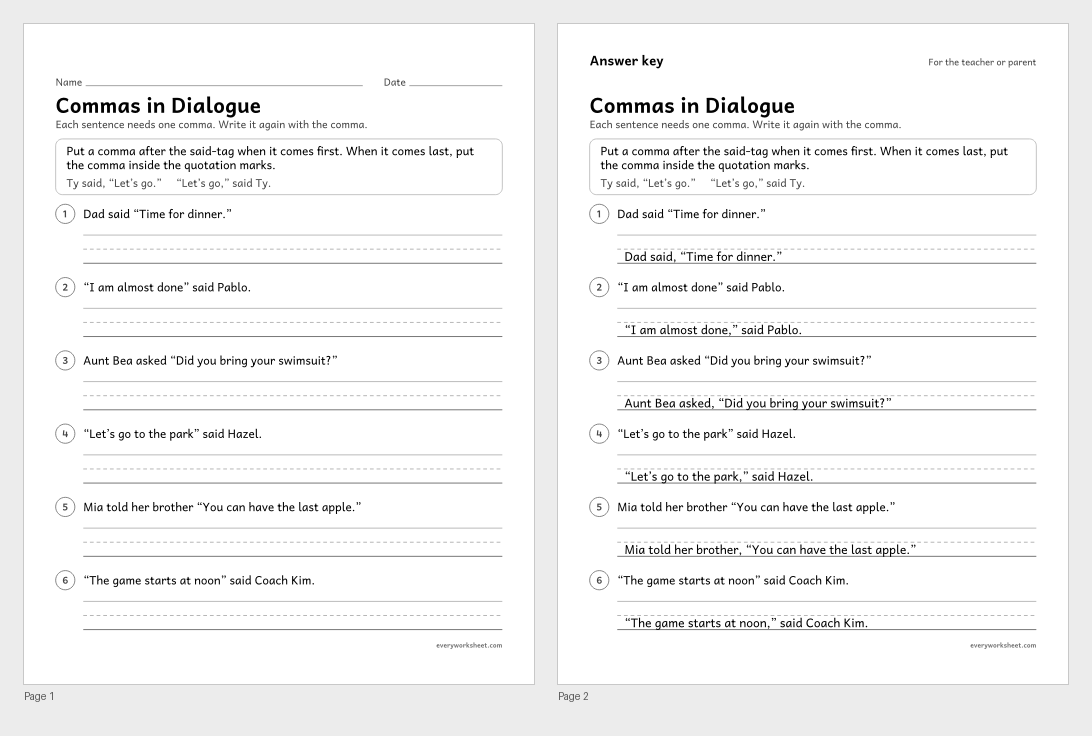
Commas in dialogue
Using a comma between the said-tag and the spoken words
Answer key on page 2
2 pages39 KB
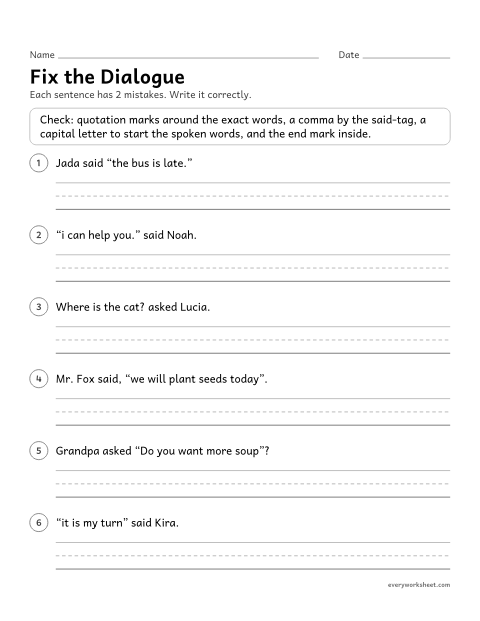 View all 2 pages
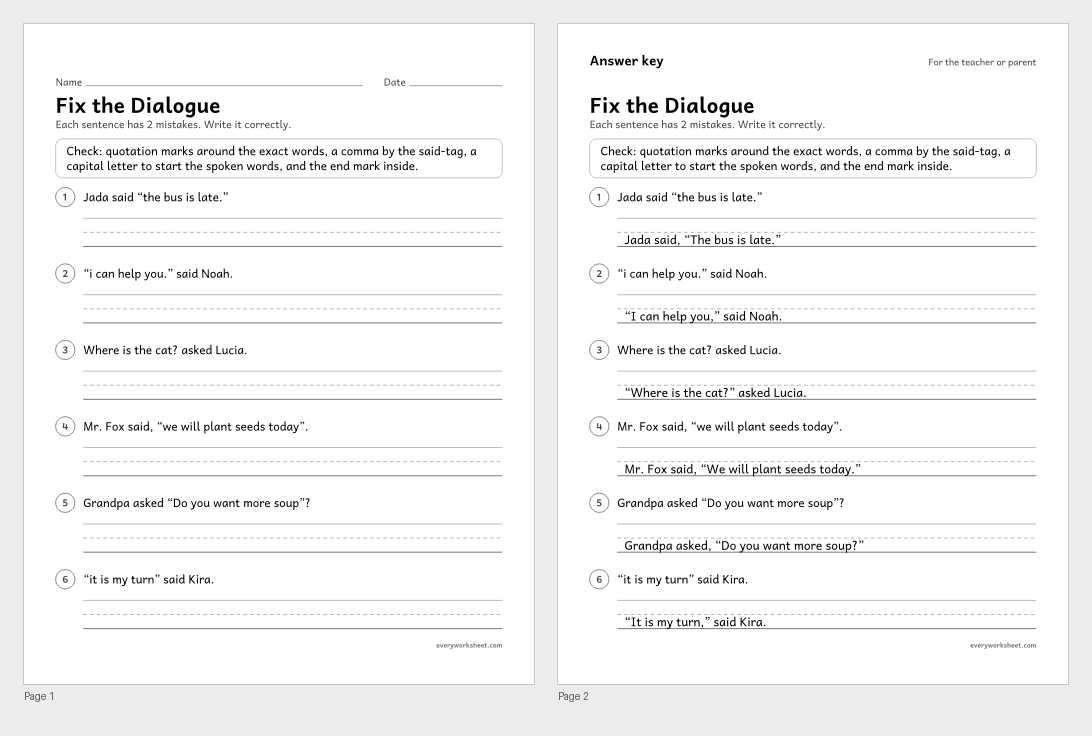
Fix the dialogue
Correcting quotation marks, commas, capitals, and end marks in dialogue
Answer key on page 2
2 pages38 KB
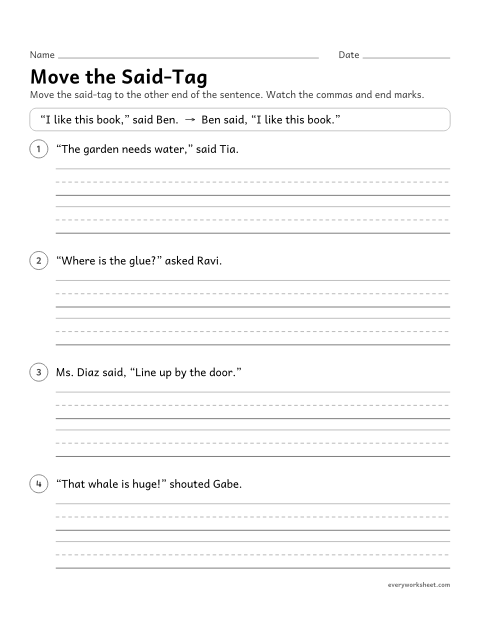 View all 2 pages
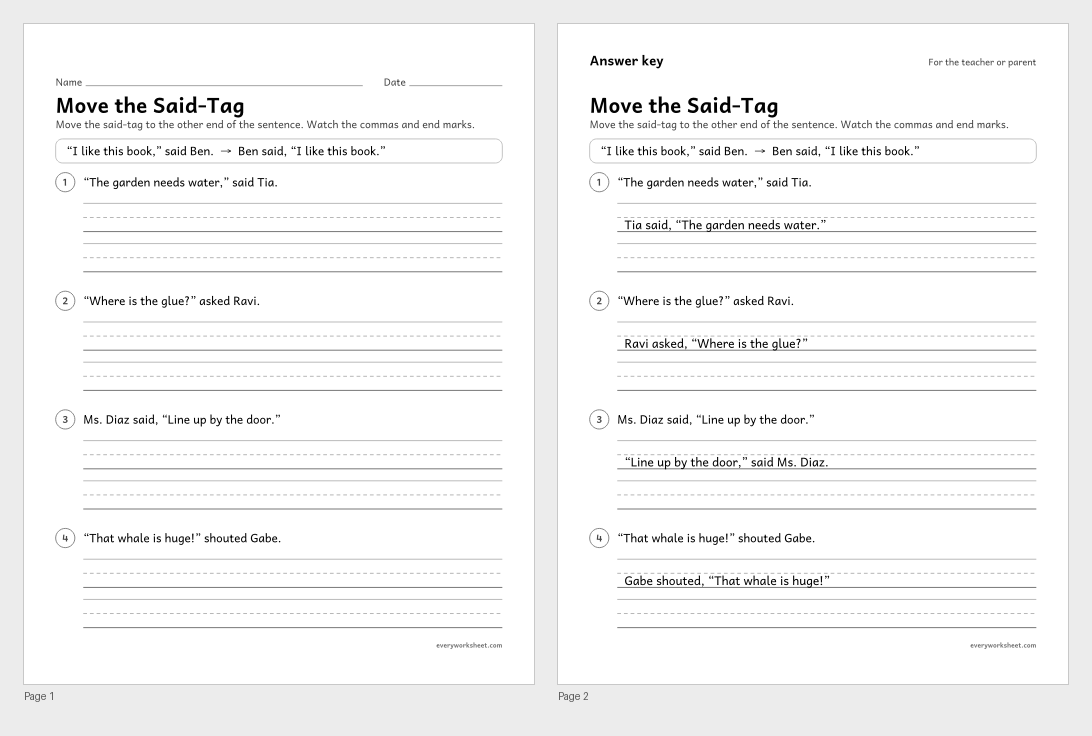
Move the Said-Tag
Writing dialogue with the said-tag before or after the spoken words
Answer key on page 2
2 pages35 KB
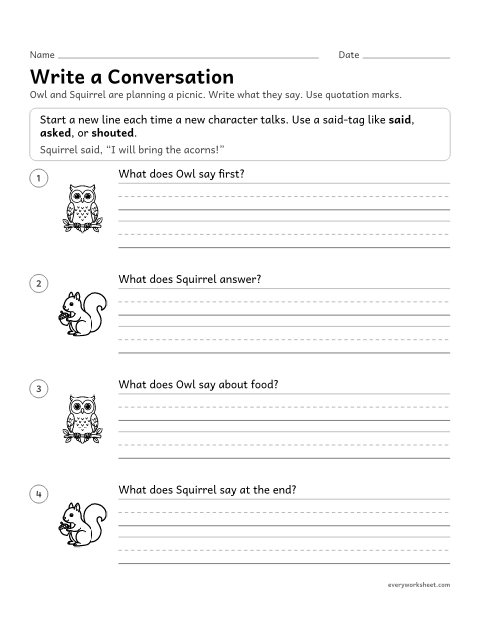 View all 2 pages
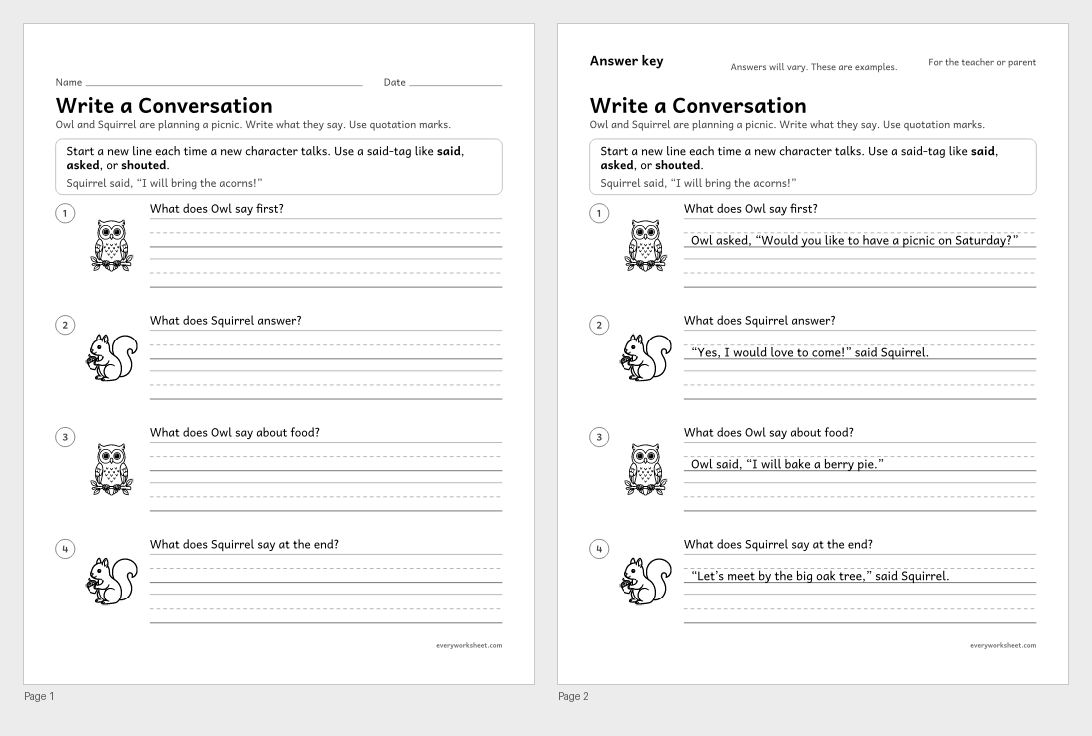
Write a conversation
Writing a short conversation with quotation marks and said-tags
Answer key on page 2
2 pages200 KB
Print at 100% (actual size) for the cleanest tracing lines.
About these quotation marks worksheets
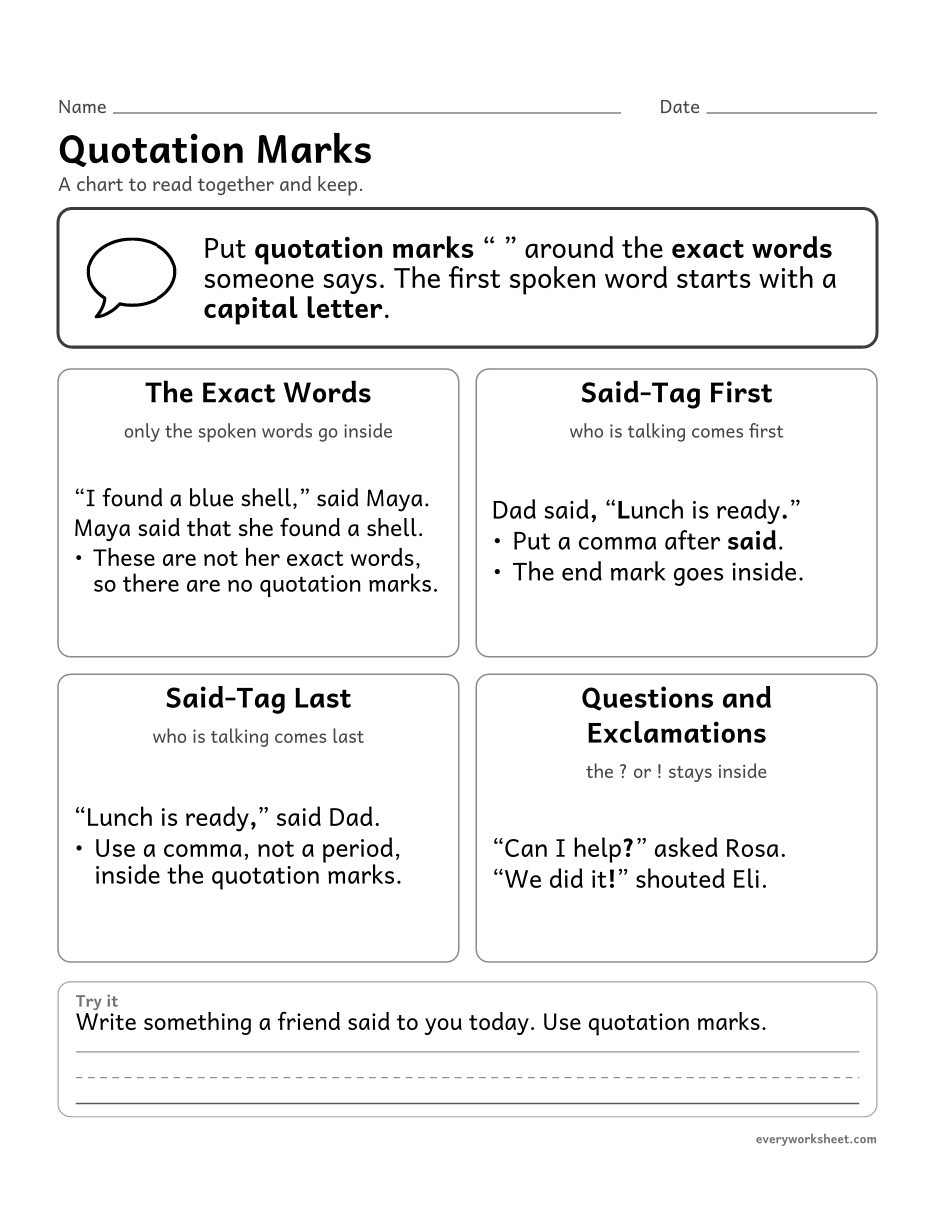
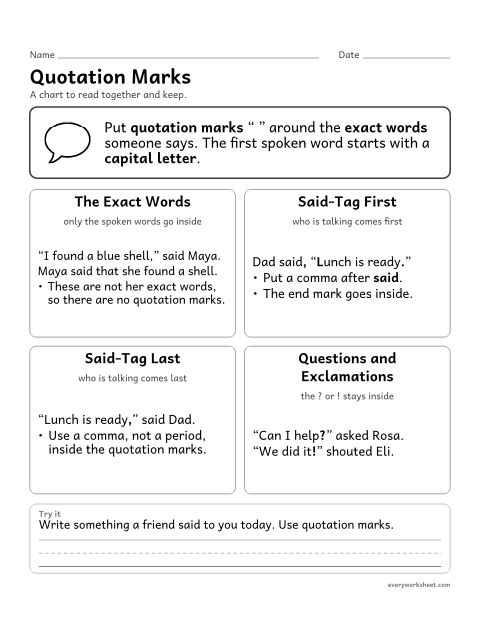
Quotation marks go around the exact words someone says. The first spoken word starts with a capital letter. When the said-tag comes first, put a comma after it: Dad said, "Lunch is ready." When the said-tag comes last, put a comma (not a period) inside the quotation marks: "Lunch is ready," said Dad. Question marks and exclamation points also go inside.
These quotation marks worksheets start with a chart of those rules. Practice pages ask children to circle the words that are spoken, choose the sentence that is written correctly, add quotation marks, add the missing commas, fix dialogue with two mistakes, move the said-tag to the other end of the sentence, and write a short conversation between two characters. Every page with right answers has an answer key.
Standards
CCSS.ELA-LITERACY.L.3.2.CUse commas and quotation marks in dialogue.
How to use them
- Start with the chart and act out a short conversation, then write it down together.
- Do the circle page next: what words did the person actually say?
- Use the add, comma, and fix pages.
- Finish by writing a conversation.
Teaching tips
- If the words are not the exact words someone said (Maya said that she found a shell), there are no quotation marks.
- End marks and commas go inside the closing quotation mark.
- Start a new line each time a new person speaks.
- Try the said-tag in different places to see how the punctuation changes.
Questions teachers and parents ask
Where do commas go with quotation marks?
After the said-tag when it comes first (Mom said, "Go."), and inside the closing quotation mark when the said-tag comes last ("Go," said Mom).
When do 3rd graders learn quotation marks?
Third graders learn to use commas and quotation marks in dialogue.
Do the worksheets have answer keys?
Yes. Every page with right answers has an answer key on page 2. Written answers show an example.