 View all 2 pages
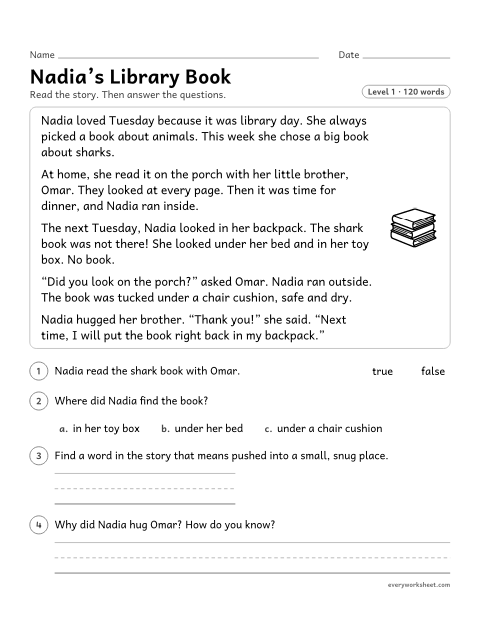
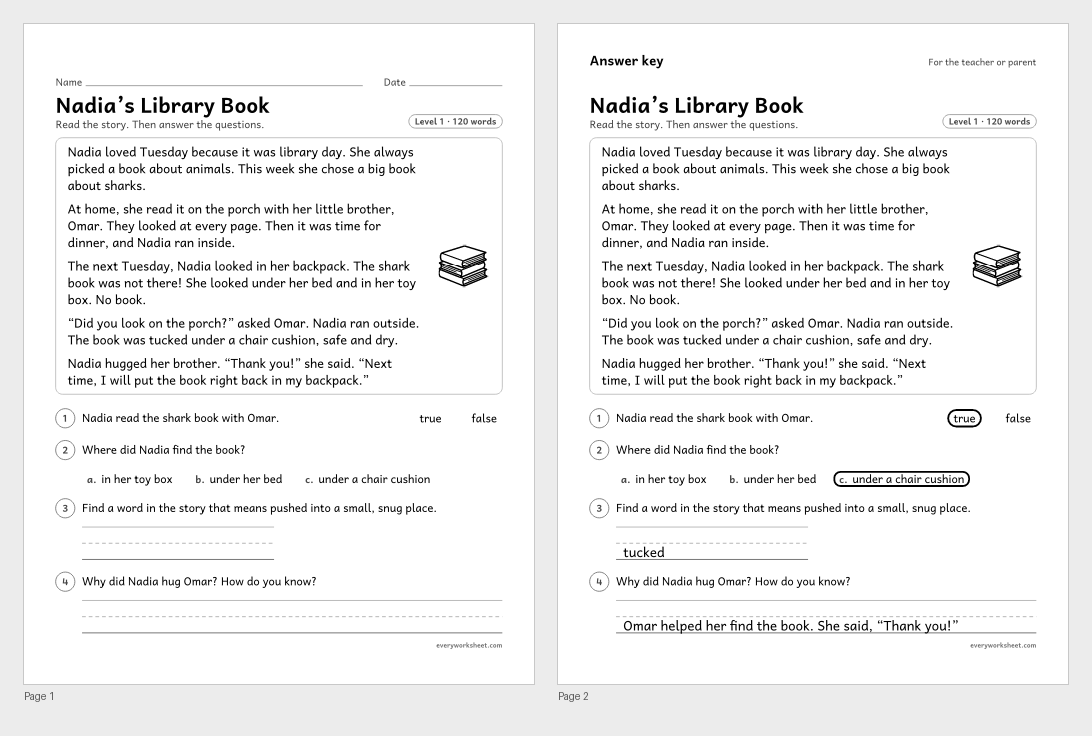
Nadia's library book
Answering who, what, where and why questions about key details in a story
Answer key on page 2
2 pages132 KB
Original stories and nonfiction passages at three reading levels, each with questions and an answer key, plus a poem, a read-aloud and organizers for any book.
View all 2 pagesAnswering who, what, where and why questions about key details in a story
Answer key on page 2
2 pages132 KB
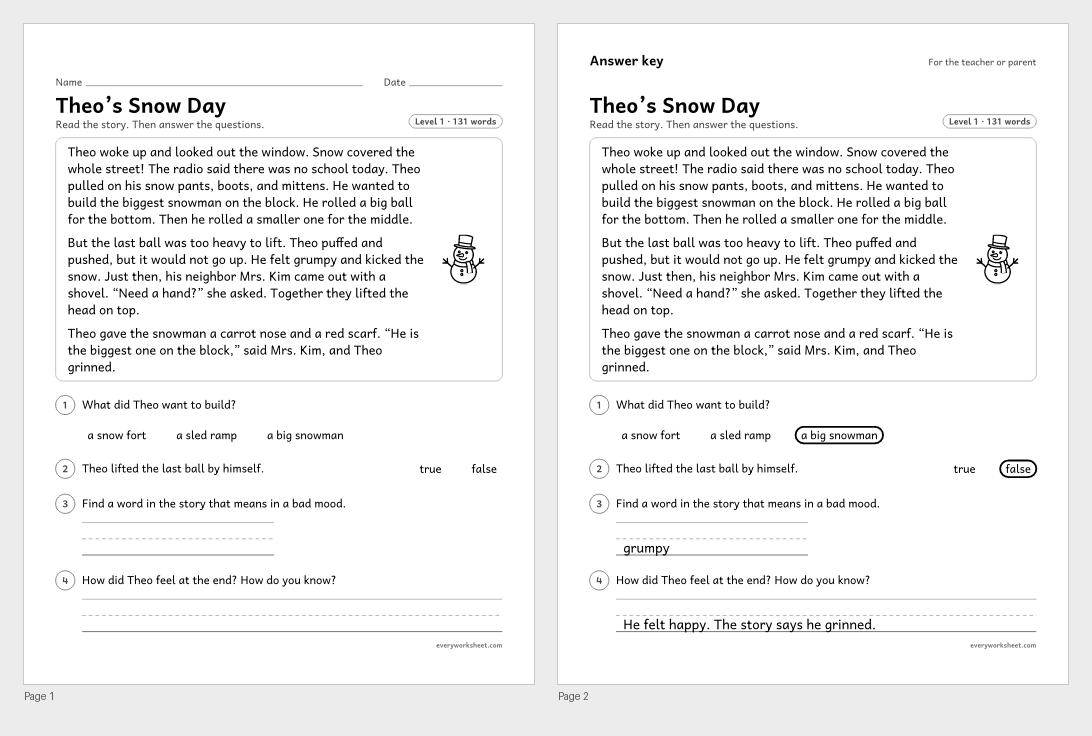 View all 2 pages
Describing how a character responds to a problem in a story
Answer key on page 2
2 pages76 KB
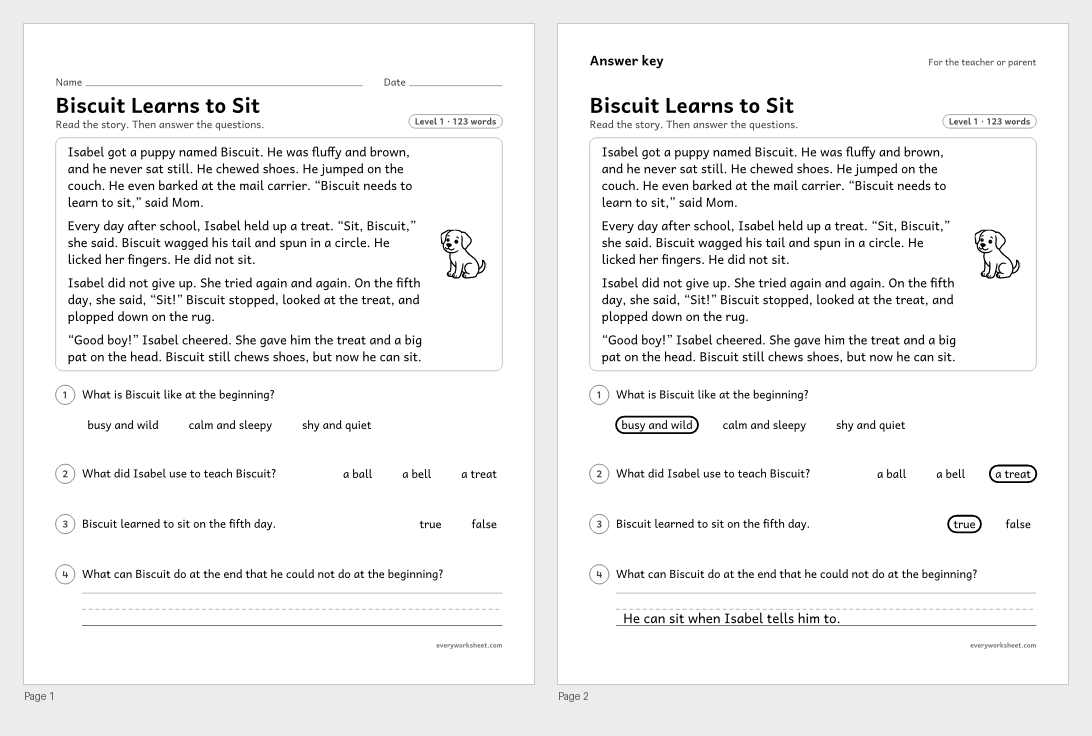 View all 2 pages
Telling how the beginning and the ending of a story fit together
Answer key on page 2
2 pages67 KB
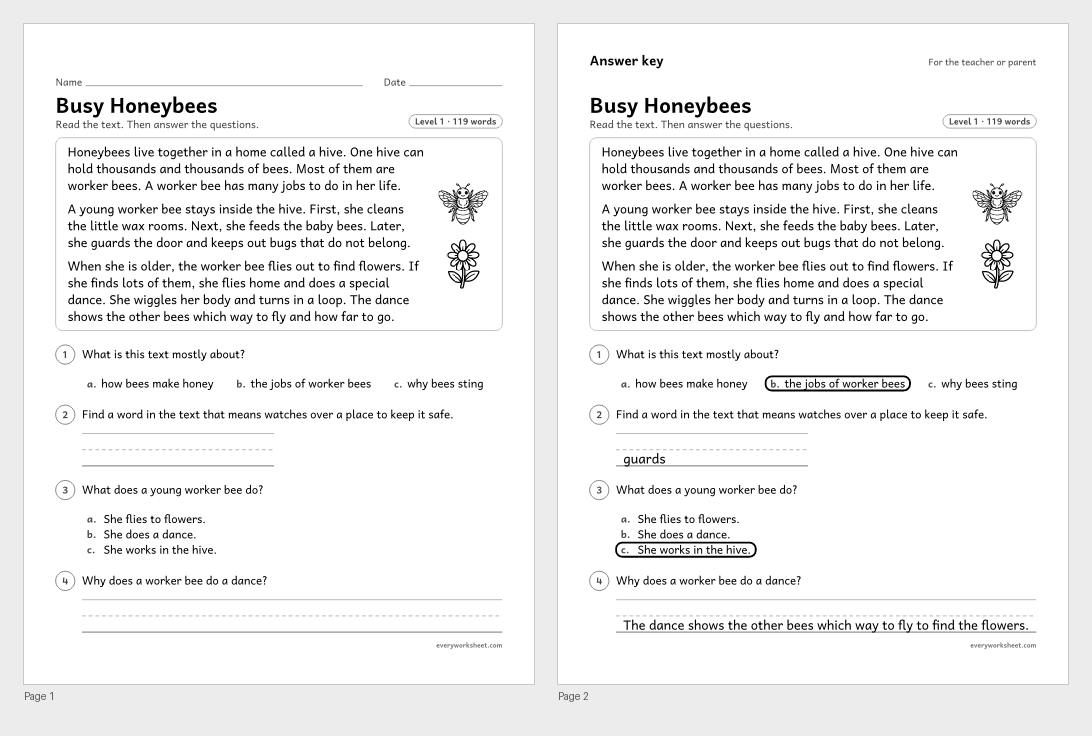 View all 2 pages
Telling the main topic of a short nonfiction text
Answer key on page 2
2 pages95 KB
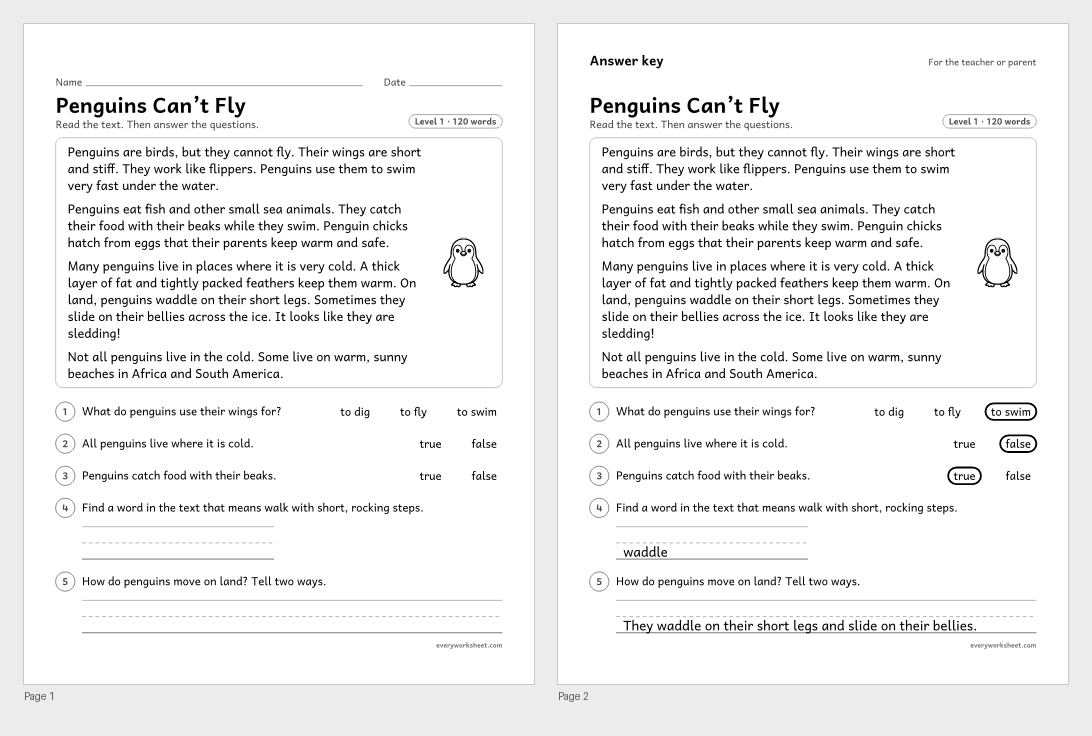 View all 2 pages
Answering questions about key details in a nonfiction text
Answer key on page 2
2 pages86 KB
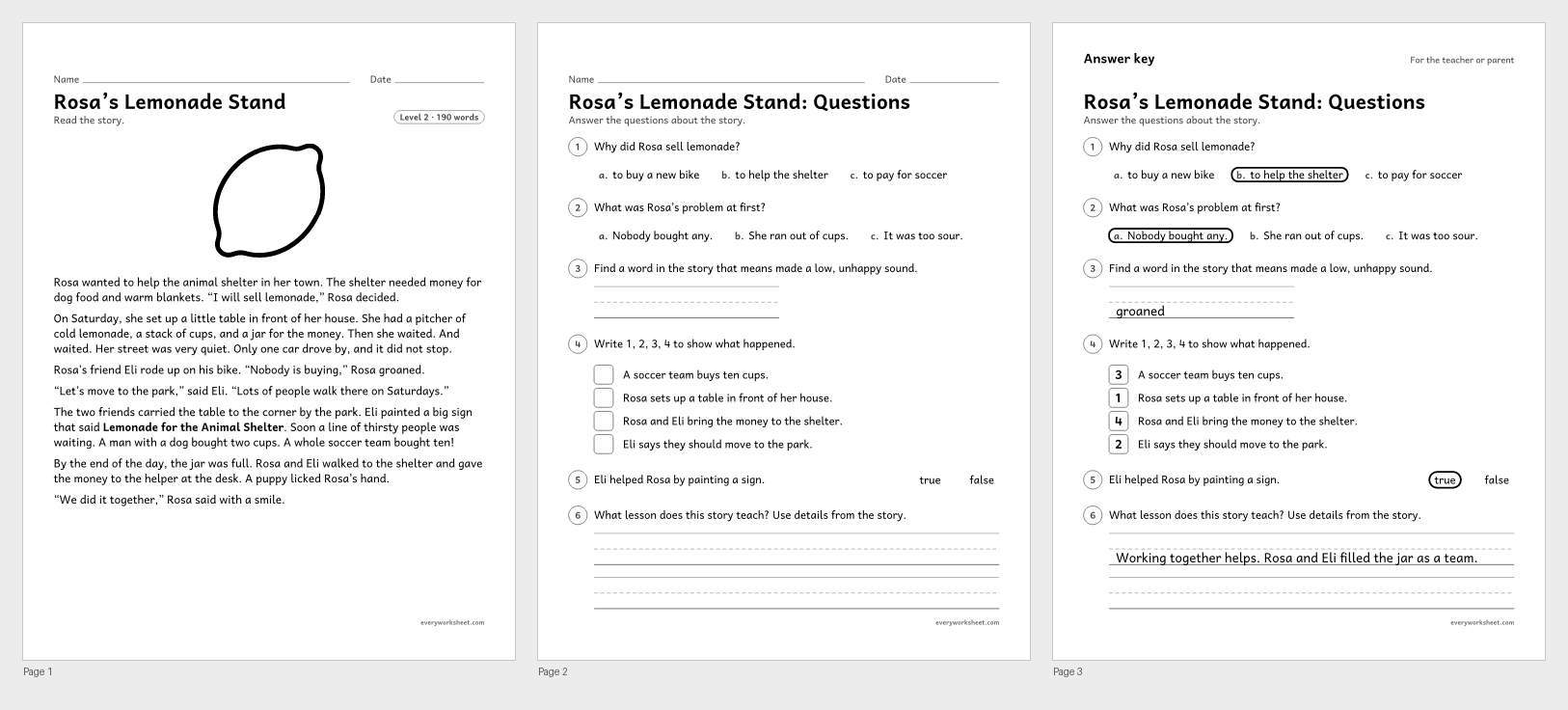 3 pagesView all 3 pages
Finding the central message of a story and the details that show it
Answer key on page 3
3 pages58 KB
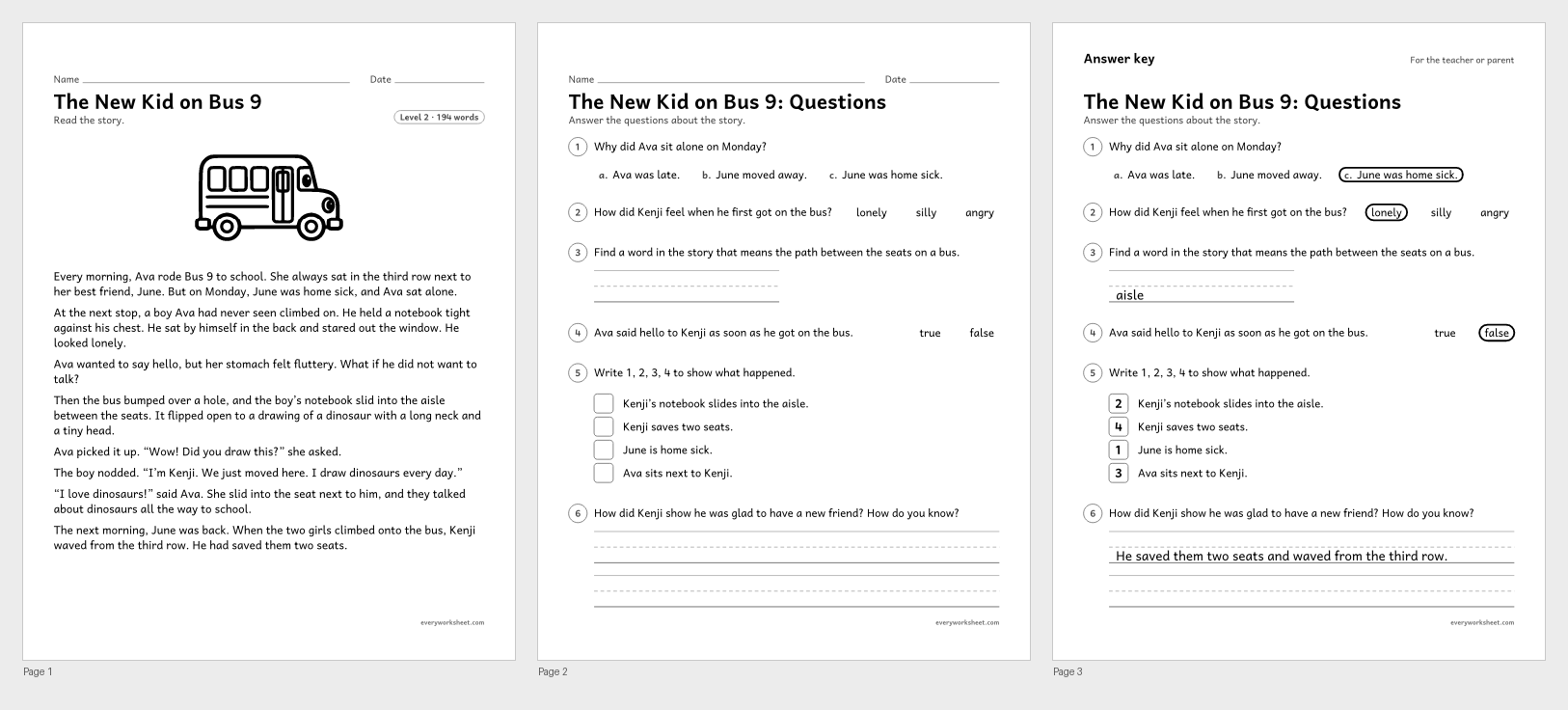 3 pagesView all 3 pages
Describing how characters respond to a new challenge
Answer key on page 3
3 pages61 KB
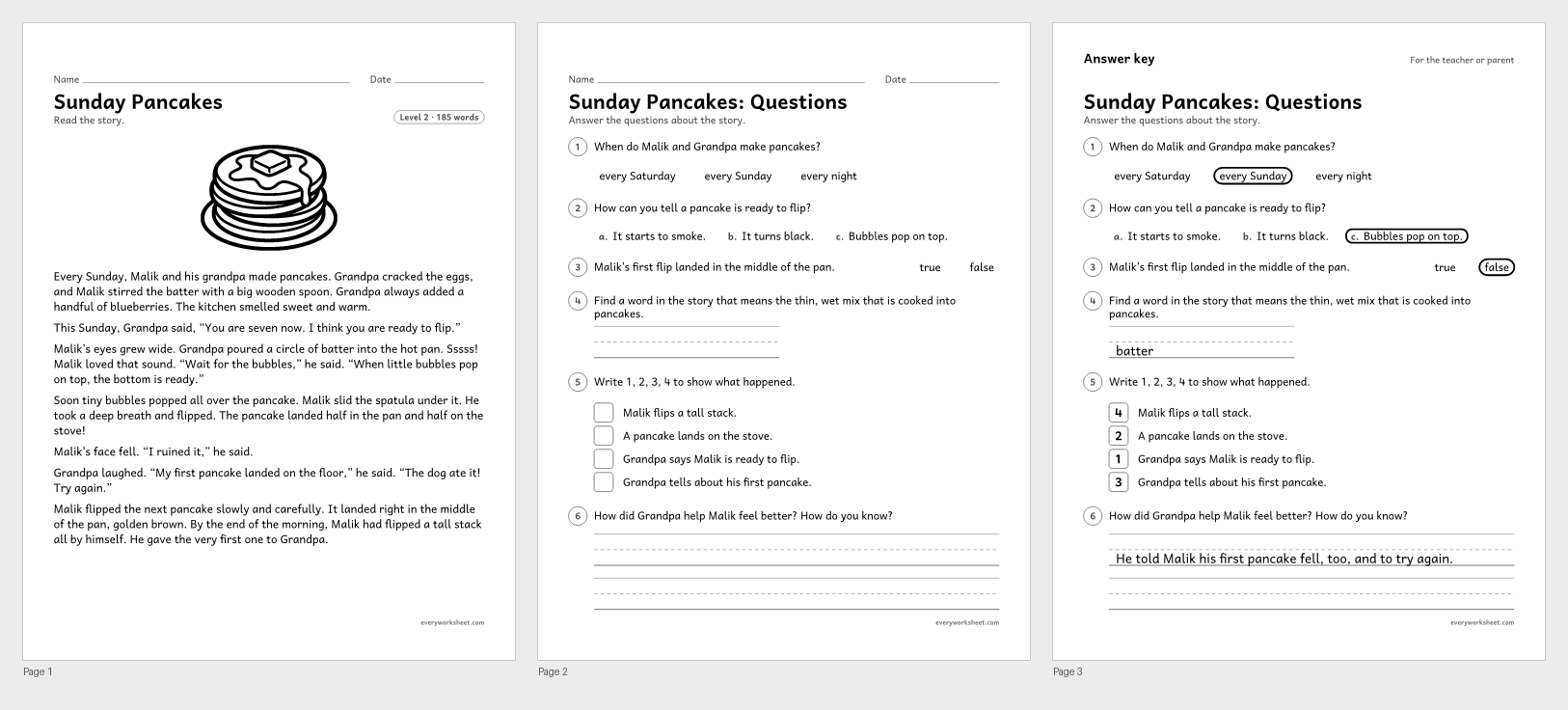 3 pagesView all 3 pages
Asking and answering questions about the details of a story
Answer key on page 3
3 pages85 KB
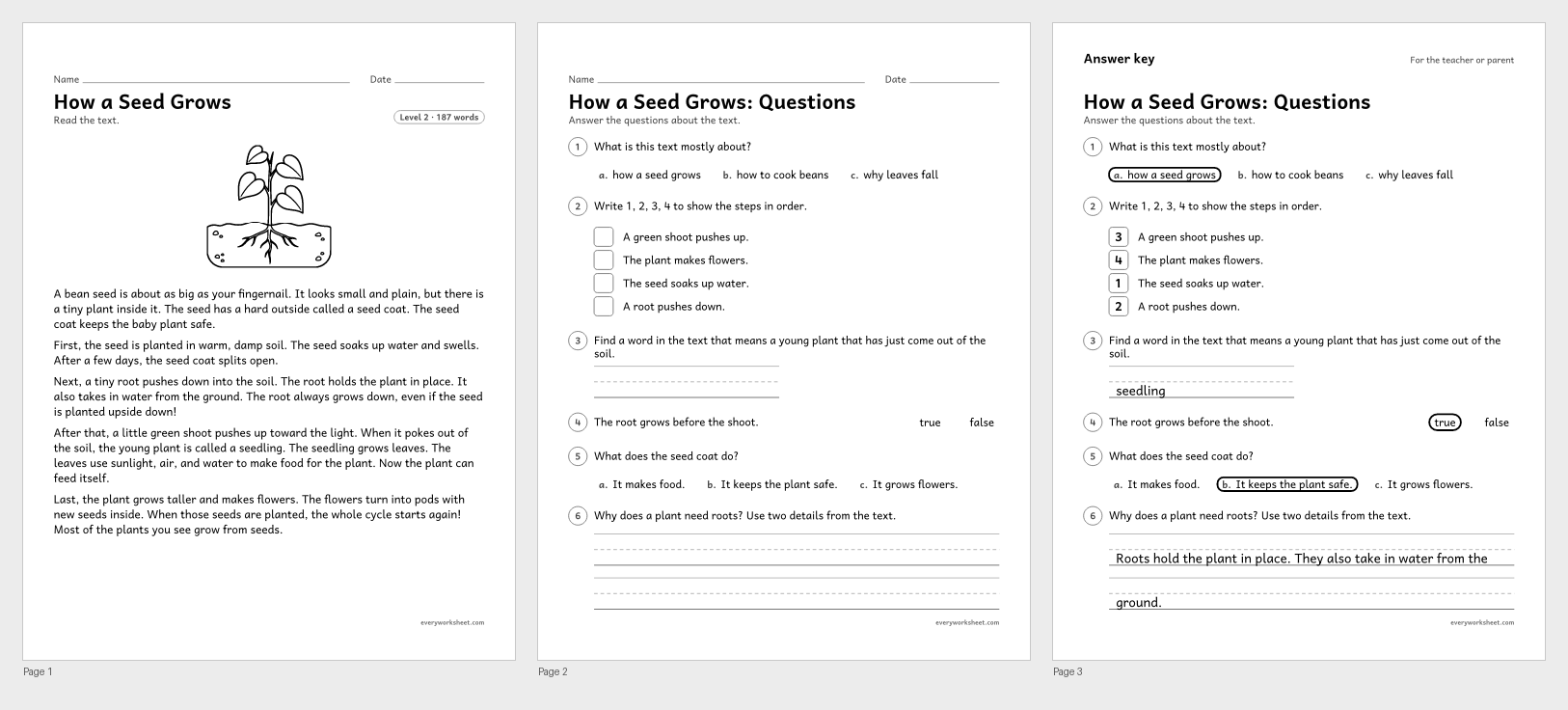 3 pagesView all 3 pages
Describing the connection between the steps in a process
Answer key on page 3
3 pages54 KB
 3 pagesView all 3 pages
Telling what the author wants to explain in a nonfiction text
Answer key on page 3
3 pages55 KB
 3 pagesView all 3 pages
Answering who, what, when, why and how questions about a history text
Answer key on page 3
3 pages72 KB
 3 pagesView all 3 pages
Using the text to work out the meaning of science words
Answer key on page 3
3 pages74 KB
 3 pagesView all 3 pages
Finding the main topic of a text and of its paragraphs
Answer key on page 3
3 pages88 KB
 3 pagesView all 3 pages
Describing how the beginning of a story sets up the problem and the ending solves it
Answer key on page 3
3 pages48 KB
 3 pagesView all 3 pages
Finding the central message of a story and the details that show it
Answer key on page 3
3 pages49 KB
 3 pagesView all 3 pages
Telling how rhyme, rhythm and repeated sounds give a poem its meaning
Answer key on page 3
3 pages61 KB
 3 pagesView all 3 pages
Listening to a history text read aloud and answering questions about key details
Answer key on page 3
3 pages70 KB
 View larger
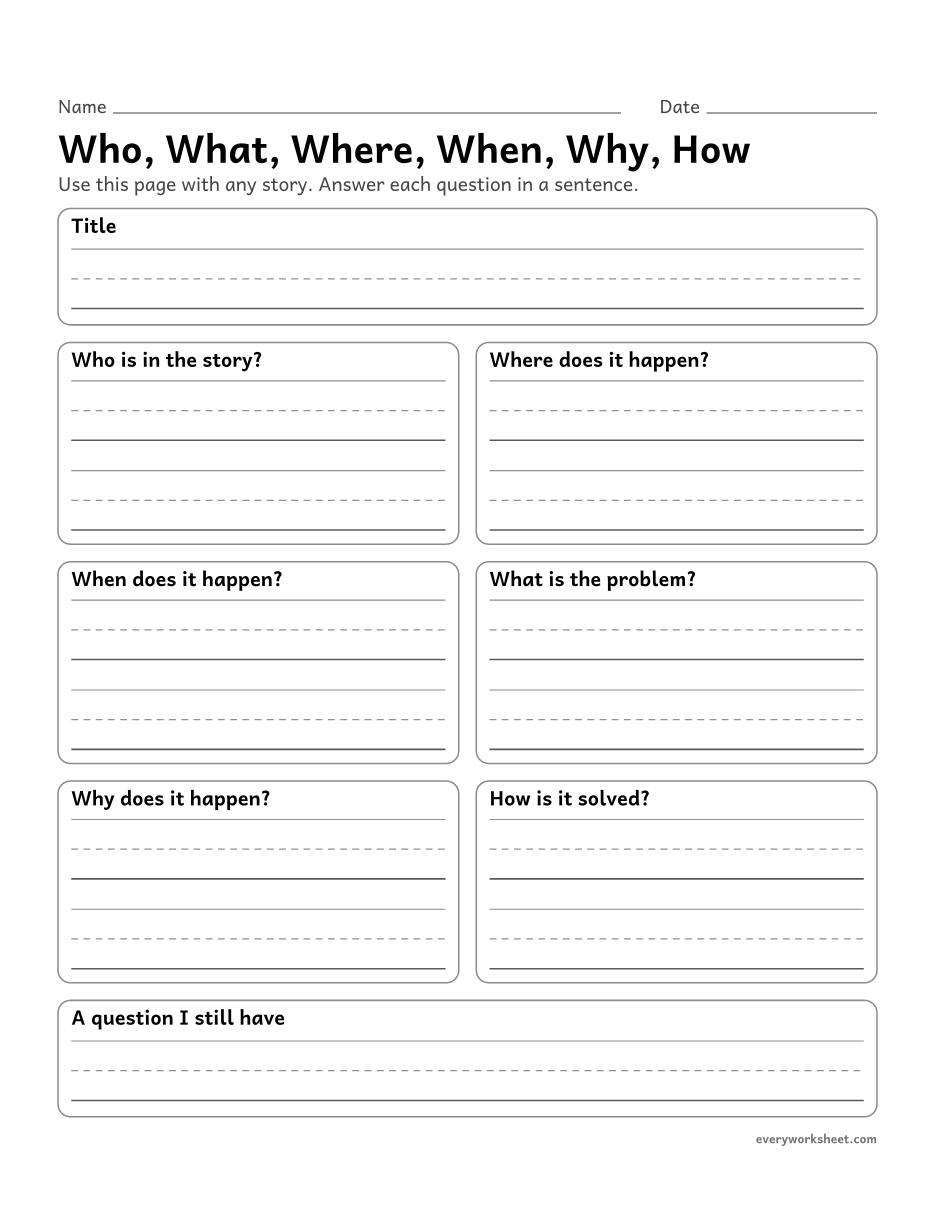
Asking and answering who, what, where, when, why and how questions about any story
1 page28 KB
 View larger
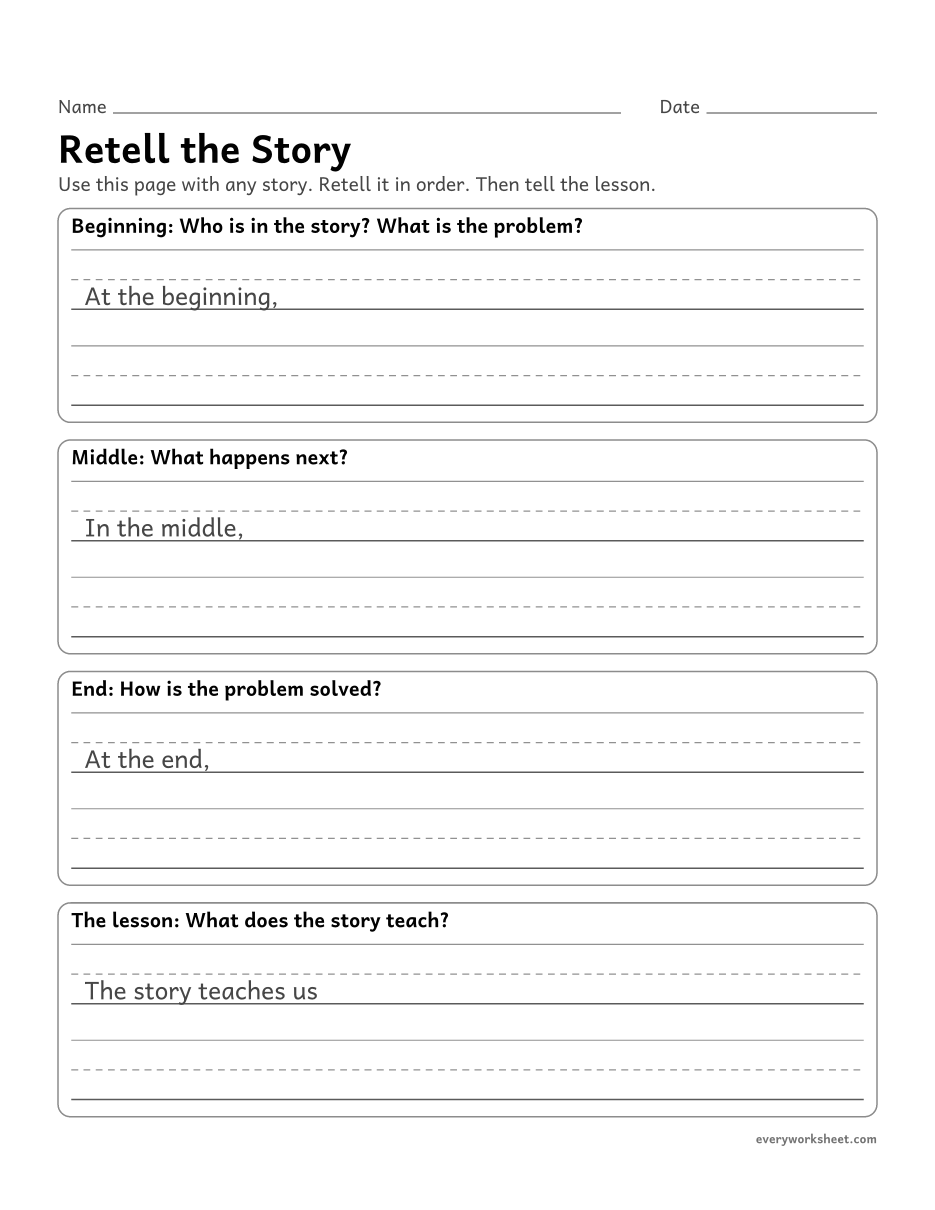
Retelling a story's beginning, middle and end and telling its lesson
1 page28 KB
Print at 100% (actual size) for the cleanest tracing lines.
In second grade, children read longer texts on their own: stories with several paragraphs and dialogue, and nonfiction about animals, science and history. Comprehension now means more than remembering details. Second graders explain why things happen, describe how characters respond, find the main topic of a text and figure out new words from the words around them.
These reading comprehension passages for 2nd graders are all original and come in three levels. Level 1 passages are about 120 to 130 words with the questions on the same page. Level 2 passages are about 180 to 260 words, and Level 3 passages are 260 to 360 words, each with the text on one page and six questions on the next. Every level mixes made-up stories with true nonfiction, from honeybees and the water cycle to the Statue of Liberty and the monarch butterfly migration.
Each passage mixes question types: multiple choice, true or false, put events in order, find a word that means something, and short written answers that ask children to explain how they know. Every page with right answers has an answer key.
CCSS.ELA-LITERACY.RL.2.1Ask and answer such questions as who, what, where, when, why, and how to demonstrate understanding of key details in a text.CCSS.ELA-LITERACY.RL.2.2Recount stories, including fables and folktales from diverse cultures, and determine their central message, lesson, or moral.CCSS.ELA-LITERACY.RL.2.3Describe how characters in a story respond to major events and challenges.CCSS.ELA-LITERACY.RL.2.4Describe how words and phrases (e.g., regular beats, alliteration, rhymes, repeated lines) supply rhythm and meaning in a story, poem, or song.CCSS.ELA-LITERACY.RL.2.5Describe the overall structure of a story, including describing how the beginning introduces the story and the ending concludes the action.CCSS.ELA-LITERACY.RL.2.10By the end of the year, read and comprehend literature, including stories and poetry, in the grades 2–3 text complexity band proficiently, with scaffolding as needed at the high end of the range.CCSS.ELA-LITERACY.RI.2.1Ask and answer such questions as who, what, where, when, why, and how to demonstrate understanding of key details in a text.CCSS.ELA-LITERACY.RI.2.2Identify the main topic of a multiparagraph text as well as the focus of specific paragraphs within the text.CCSS.ELA-LITERACY.RI.2.3Describe the connection between a series of historical events, scientific ideas or concepts, or steps in technical procedures in a text.CCSS.ELA-LITERACY.RI.2.4Determine the meaning of words and phrases in a text relevant to a grade 2 topic or subject area.CCSS.ELA-LITERACY.RI.2.6Identify the main purpose of a text, including what the author wants to answer, explain, or describe.CCSS.ELA-LITERACY.RI.2.10By the end of year, read and comprehend informational texts, including history/social studies, science, and technical texts, in the grades 2–3 text complexity band proficiently, with scaffolding as needed at the high end of the range.CCSS.ELA-LITERACY.SL.2.2Recount or describe key ideas or details from a text read aloud or information presented orally or through other media.They come in three levels for the start, middle and end of second grade. Each page shows its level and word count, so you can match the passage to your reader.
Yes. Every story, poem and nonfiction text was written for this site, so you can print and copy them freely for your class or family.
Yes. Every passage has an answer key on its last page. Written answers show an example answer.
Yes. Each level mixes stories with true texts about animals, science and history, so children practice both kinds of reading.