 View all 2 pages
Round to the nearest 10: number Lines, sheet A
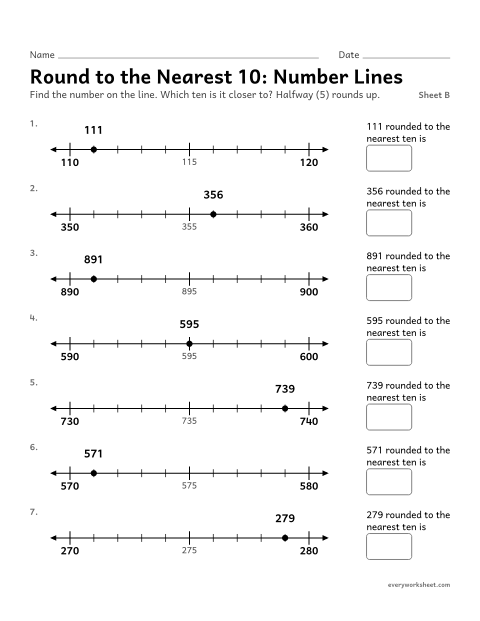
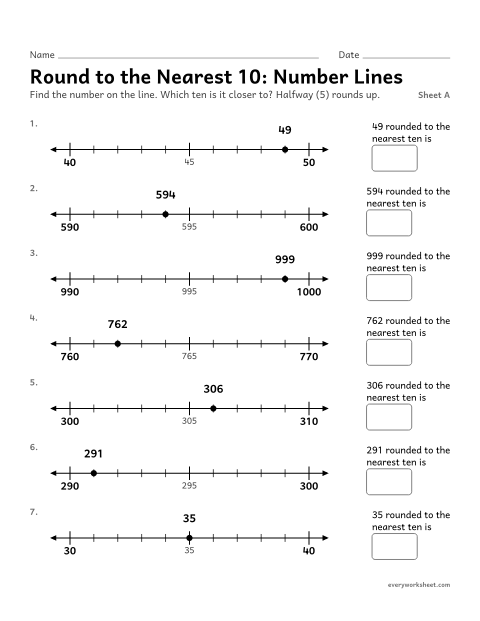
Rounding to the nearest 10 on a number line
Answer key on page 2
2 pages48 KB
Round to the nearest 10 and 100 on number lines and with the place value rule, round the same number both ways, and estimate sums and differences.
View all 2 pagesRounding to the nearest 10 on a number line
Answer key on page 2
2 pages48 KB
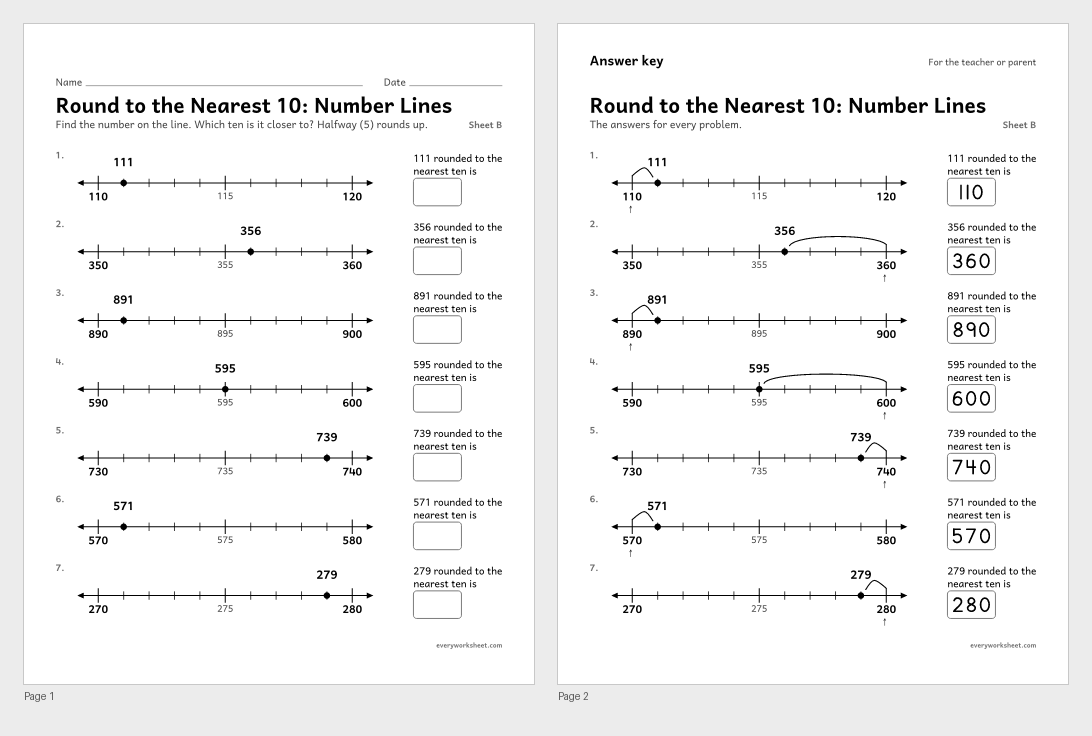 View all 2 pages
Rounding to the nearest 10 on a number line
Answer key on page 2
2 pages48 KB
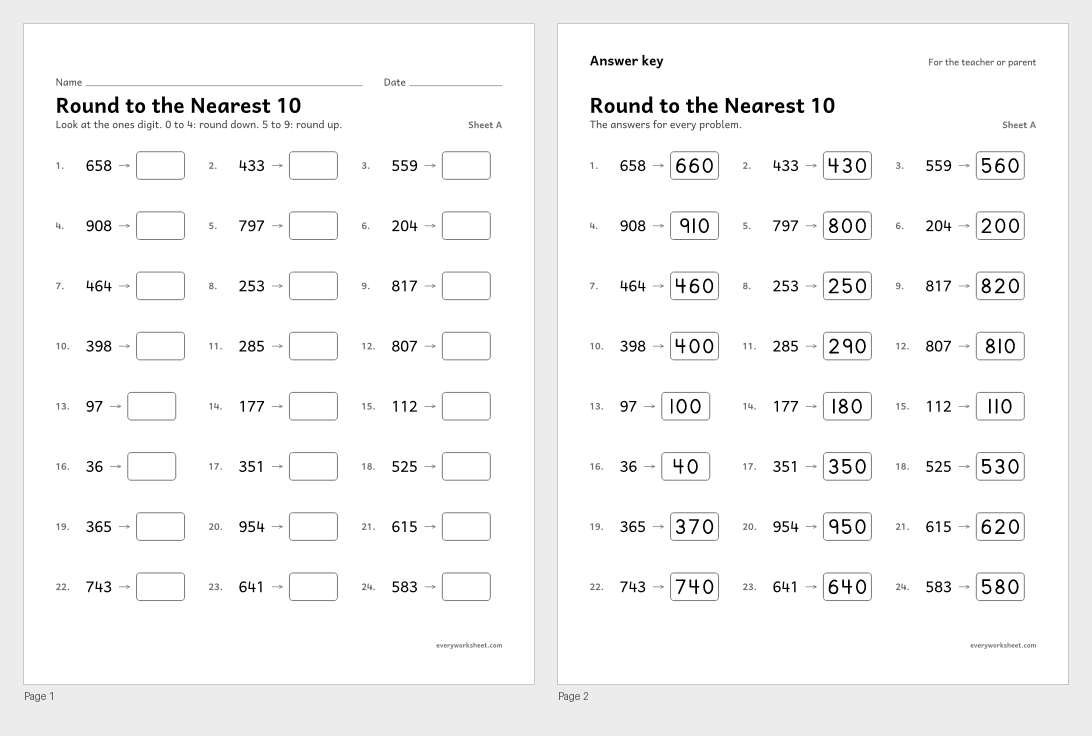 View all 2 pages
Rounding to the nearest 10
Answer key on page 2
2 pages79 KB
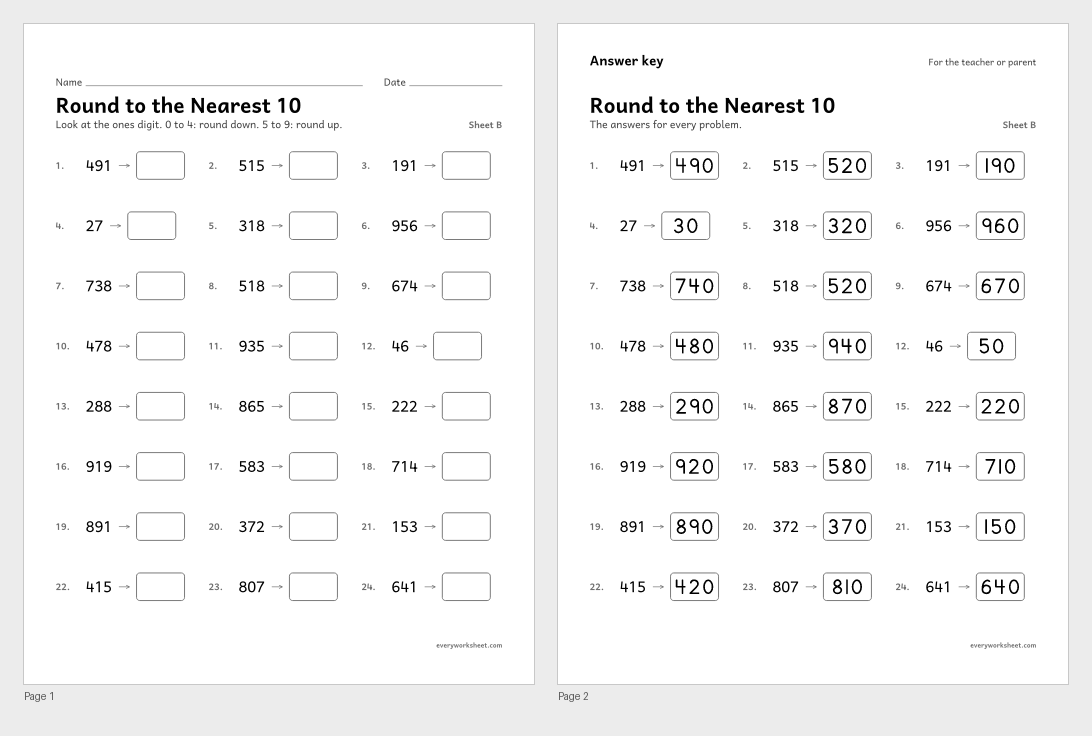 View all 2 pages
Rounding to the nearest 10
Answer key on page 2
2 pages79 KB
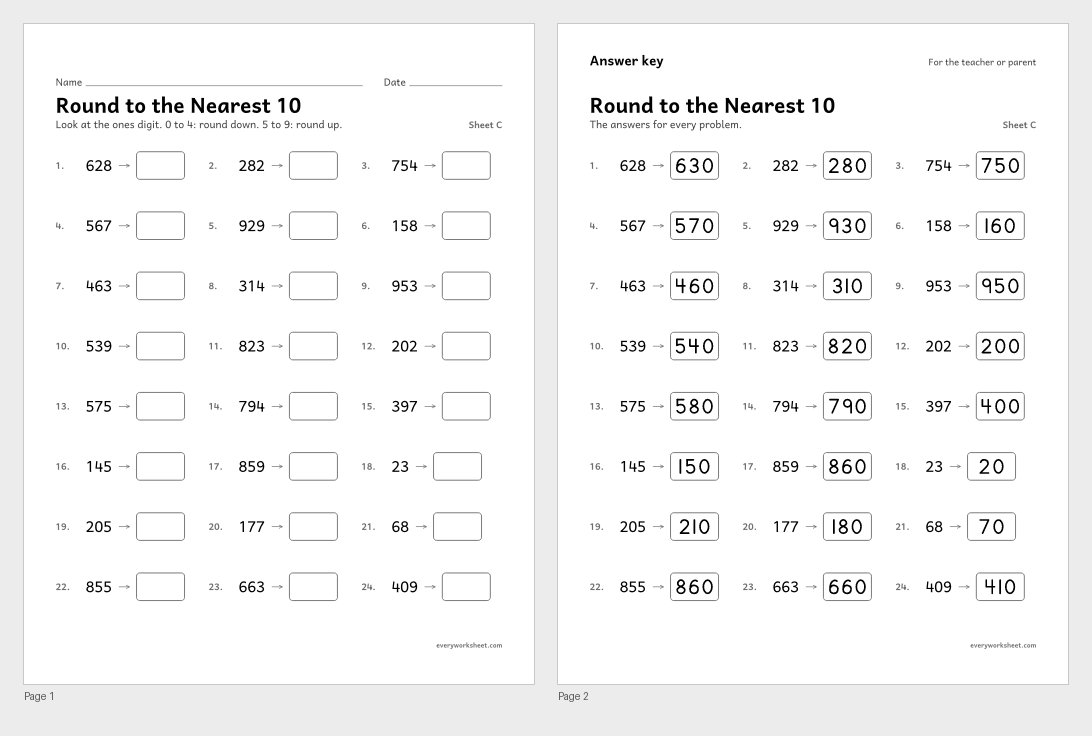 View all 2 pages
Rounding to the nearest 10
Answer key on page 2
2 pages79 KB
 View all 2 pages
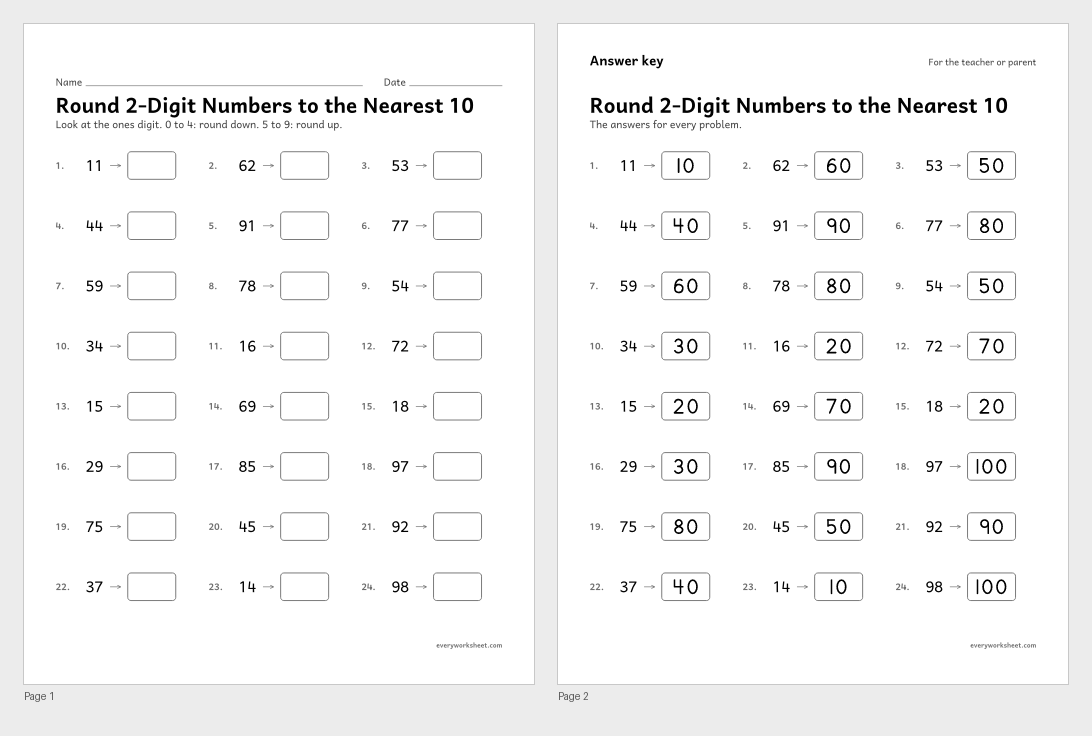
Rounding two-digit numbers to the nearest 10
Answer key on page 2
2 pages78 KB
 View all 2 pages
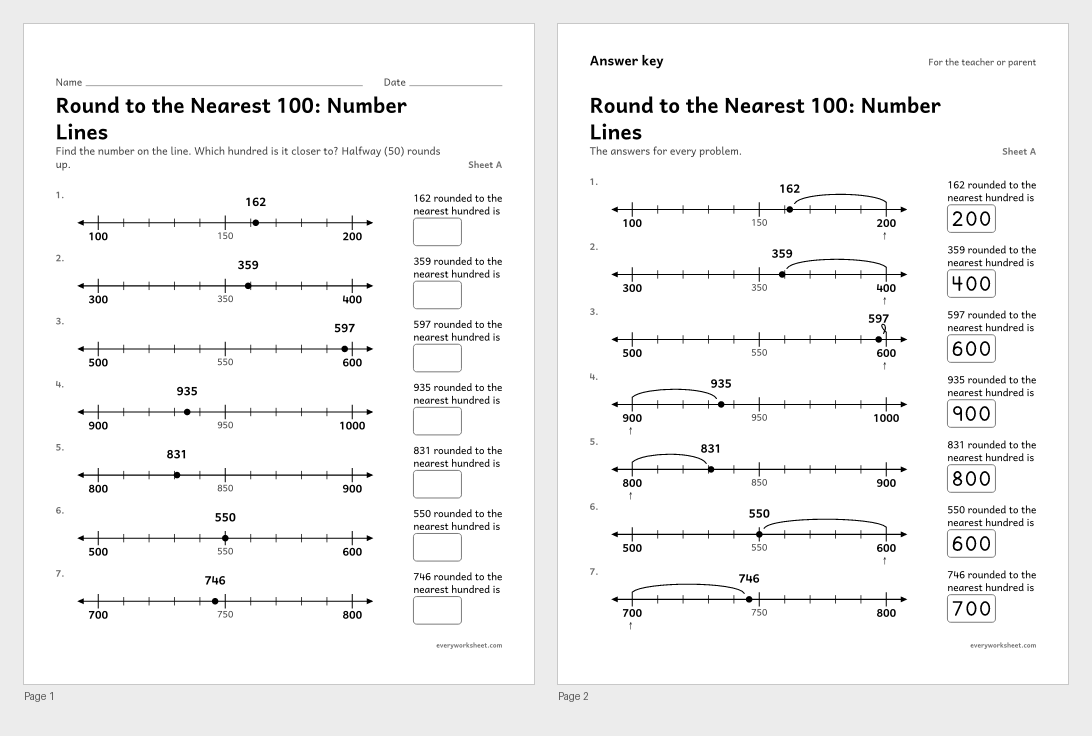
Rounding to the nearest 100 on a number line
Answer key on page 2
2 pages48 KB
 View all 2 pages
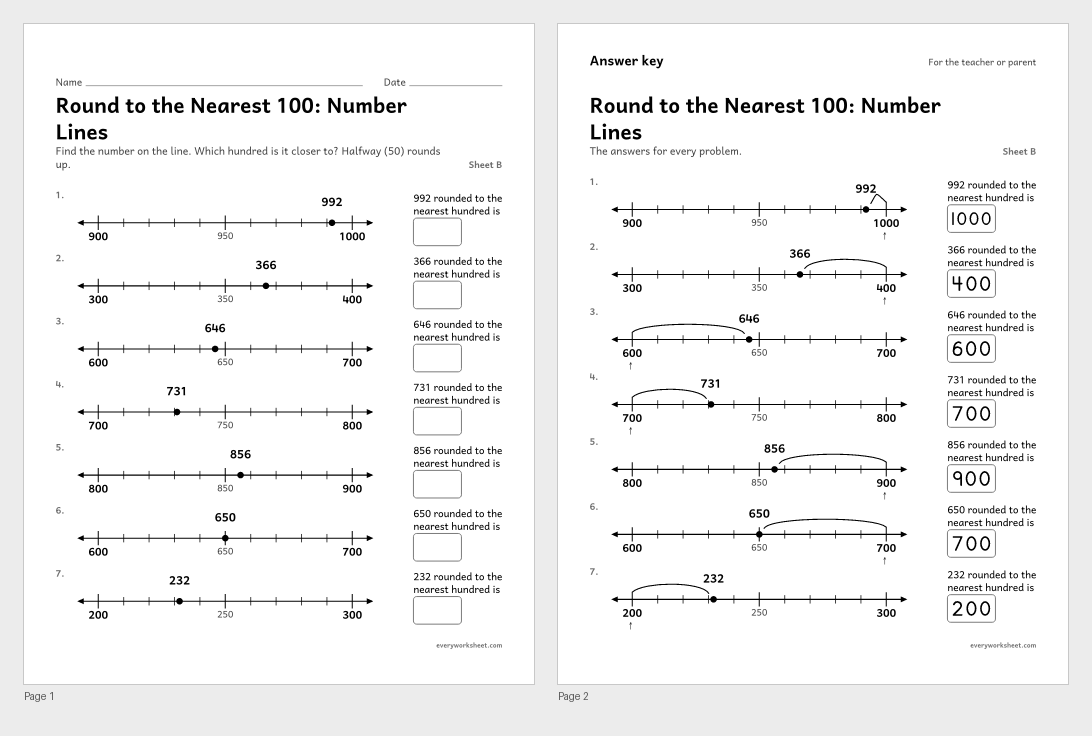
Rounding to the nearest 100 on a number line
Answer key on page 2
2 pages48 KB
 View all 2 pages
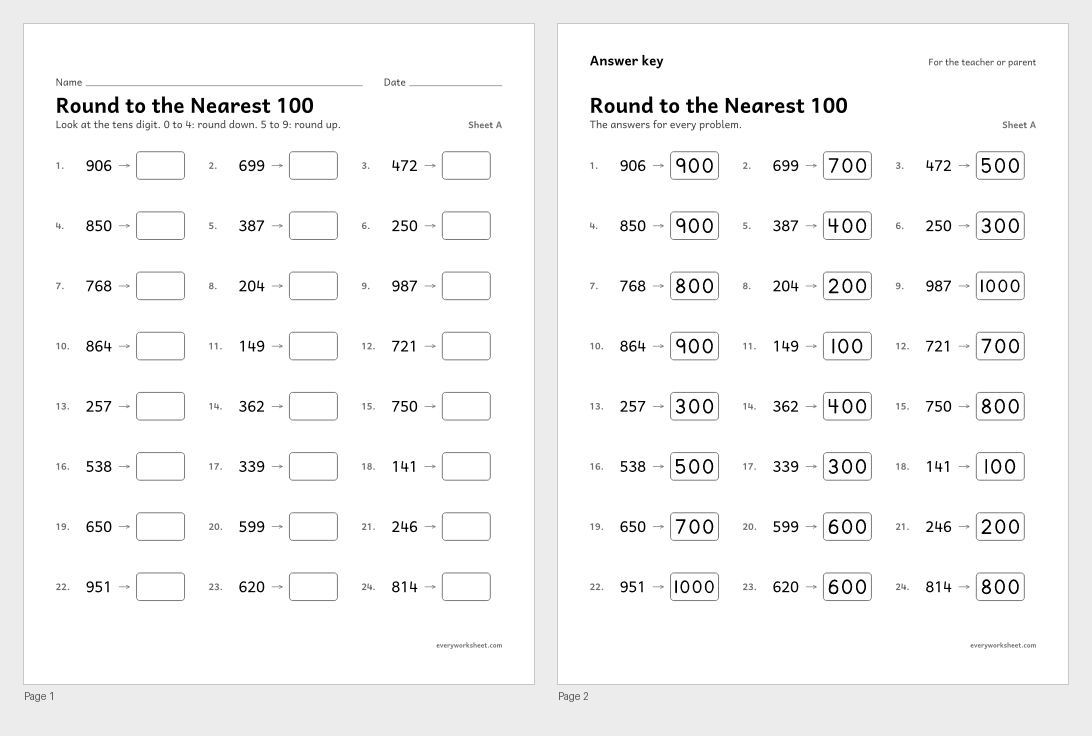
Rounding to the nearest 100
Answer key on page 2
2 pages78 KB
 View all 2 pages
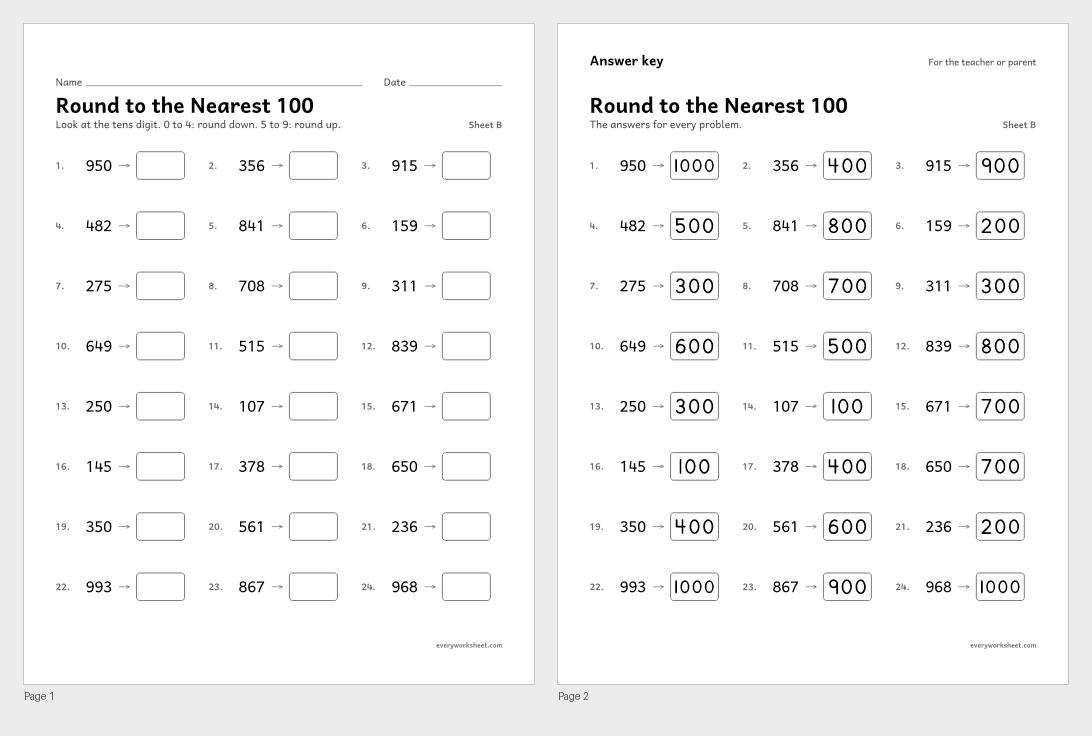
Rounding to the nearest 100
Answer key on page 2
2 pages79 KB
 View all 2 pages
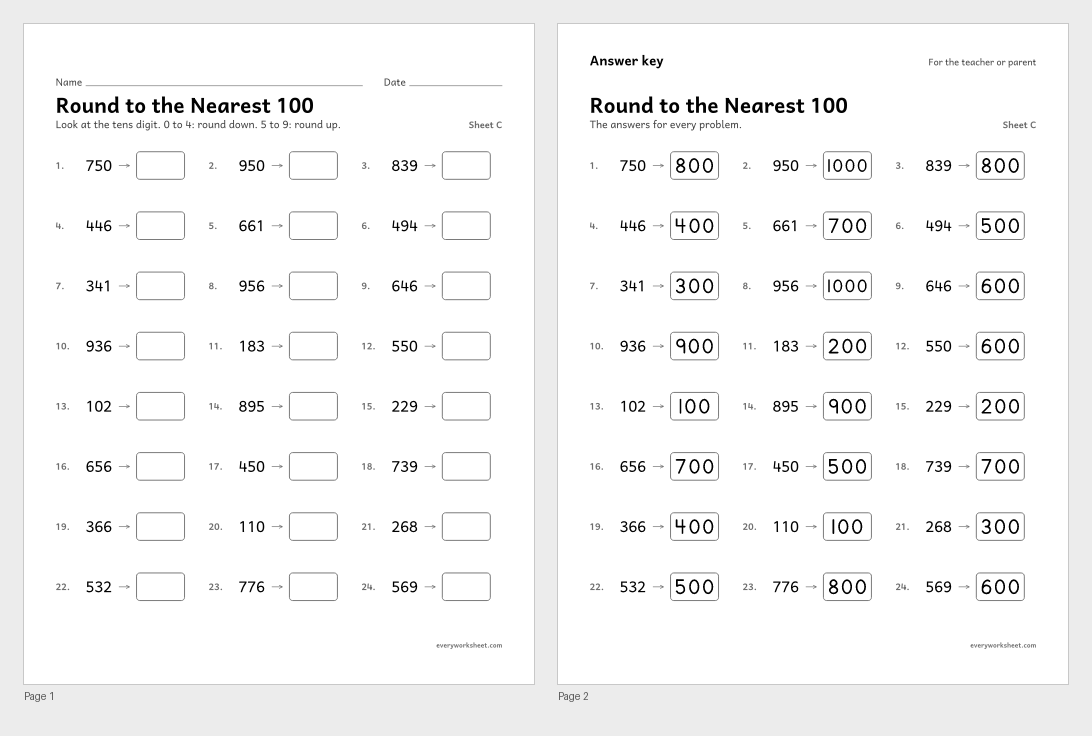
Rounding to the nearest 100
Answer key on page 2
2 pages78 KB
 View all 2 pages
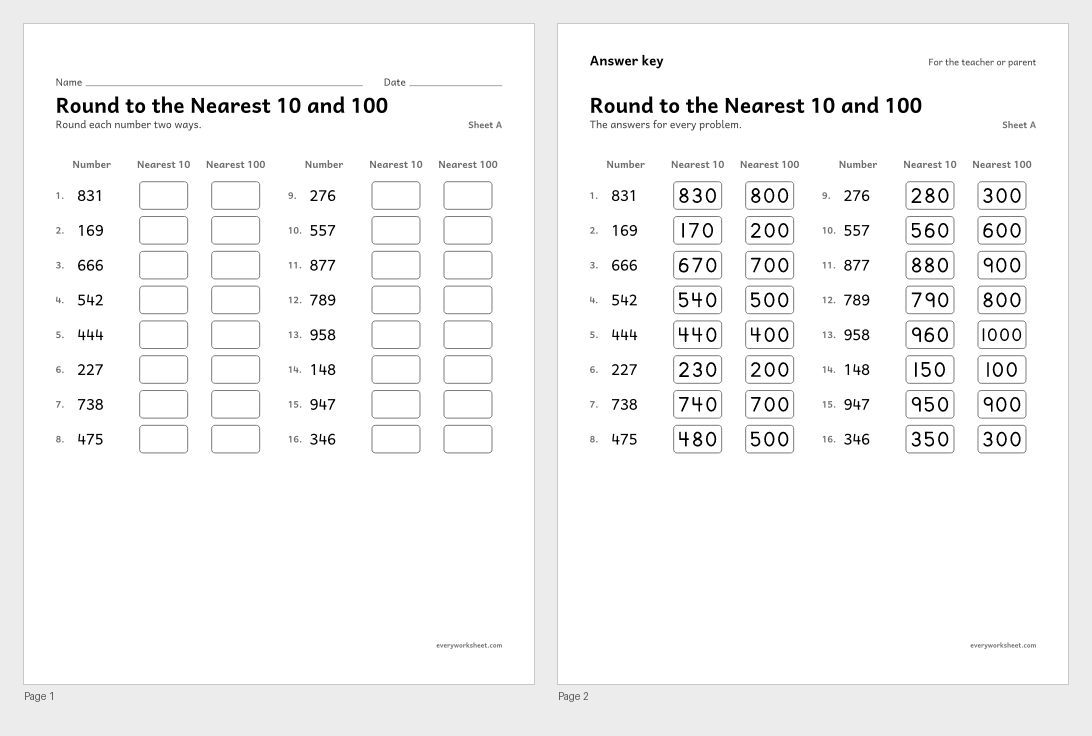
Rounding the same number to the nearest 10 and 100
Answer key on page 2
2 pages61 KB
 View all 2 pages
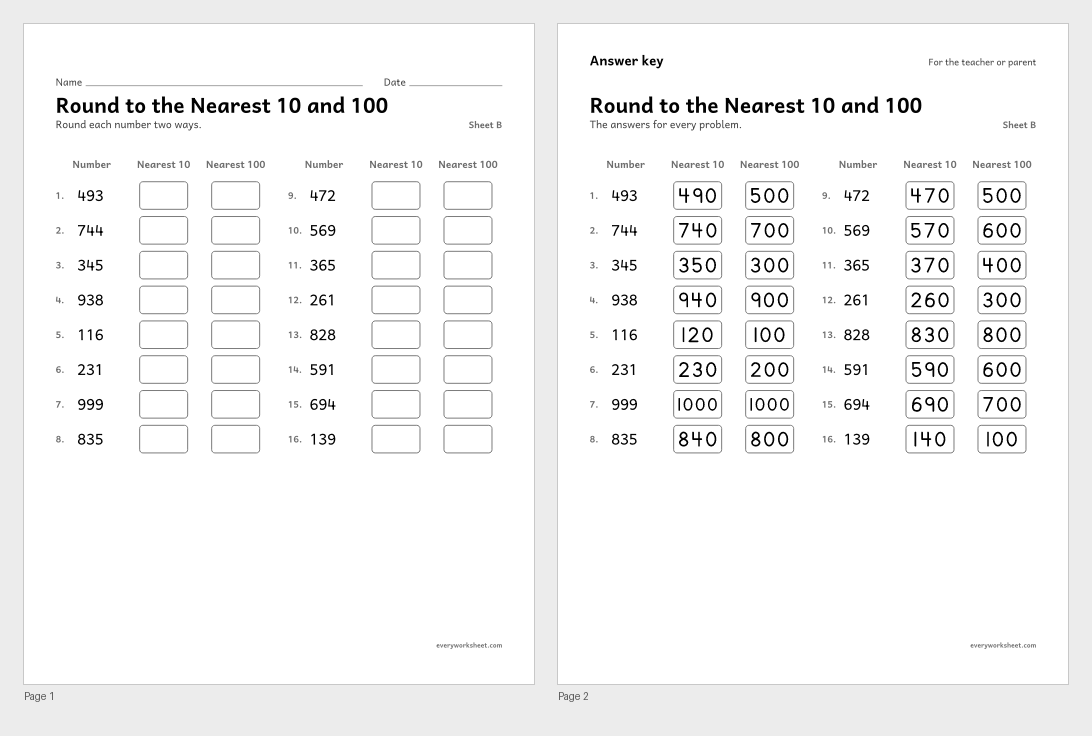
Rounding the same number to the nearest 10 and 100
Answer key on page 2
2 pages61 KB
 View all 2 pages
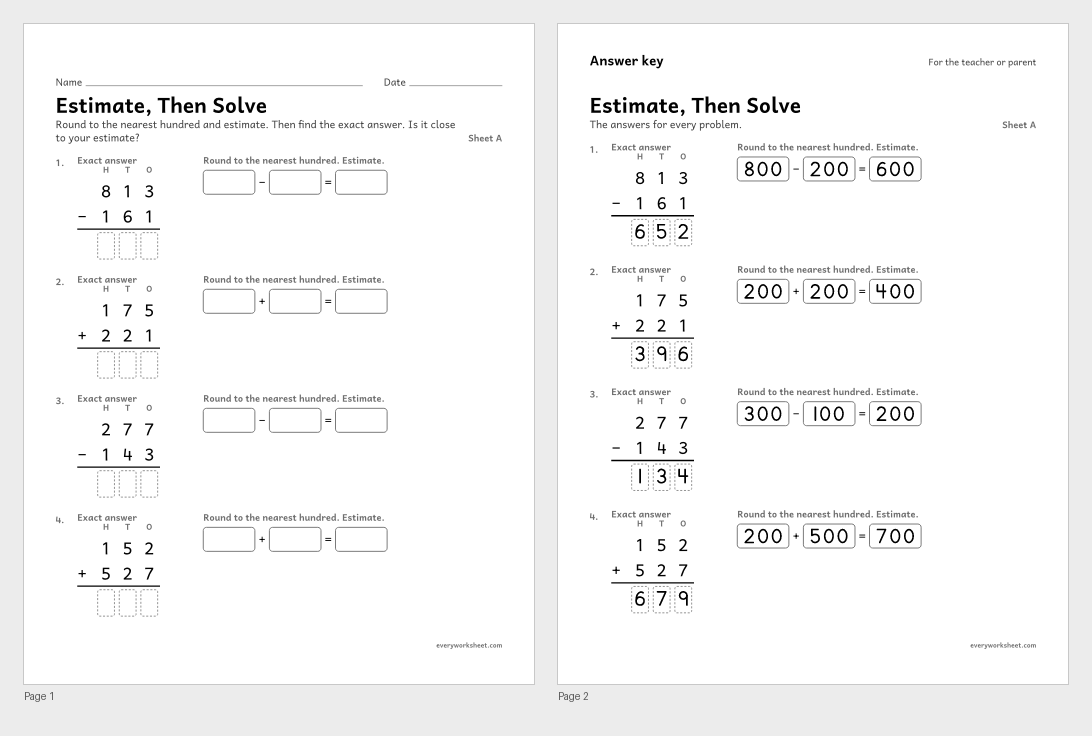
Estimating sums and differences by rounding to check an answer
Answer key on page 2
2 pages49 KB
 View all 2 pages
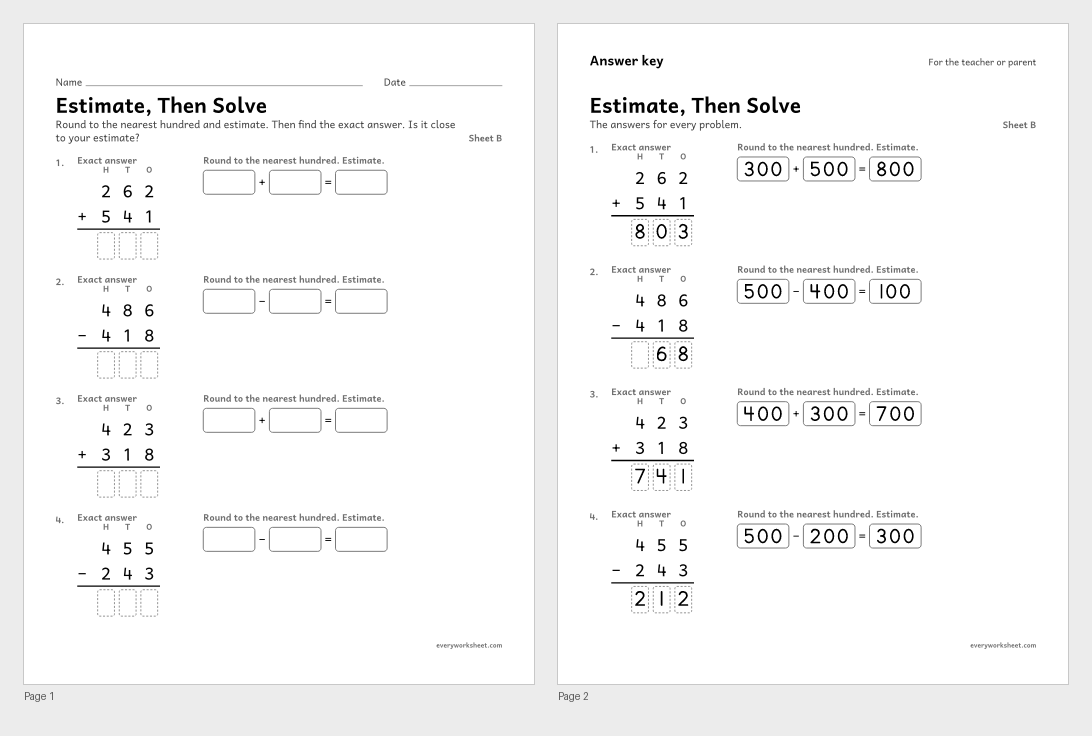
Estimating sums and differences by rounding to check an answer
Answer key on page 2
2 pages49 KB
 View all 2 pages
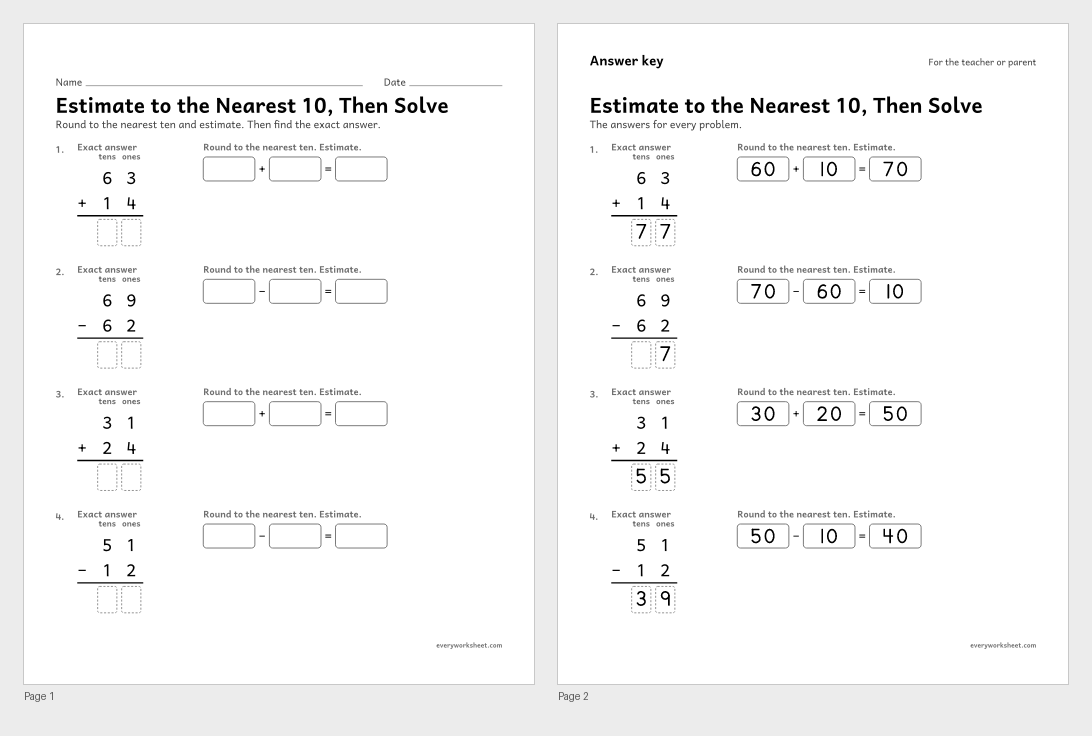
Estimating two-digit sums and differences by rounding to 10
Answer key on page 2
2 pages47 KB
Print at 100% (actual size) for the cleanest tracing lines.
Rounding means finding the nearest ten or hundred. 47 is between 40 and 50, and it is closer to 50, so 47 rounds to 50. 347 is between 300 and 400, closer to 300, so it rounds to 300 to the nearest hundred. Halfway numbers like 45 and 350 round up.
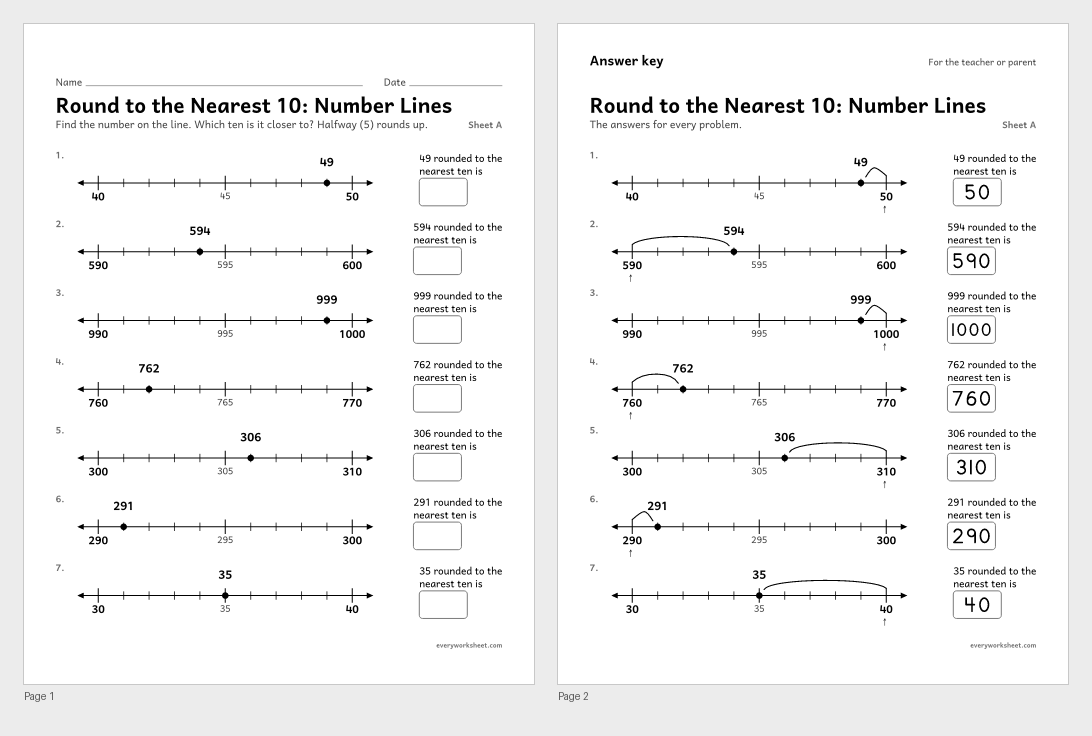
The number line pages show why: the number sits on a line between two tens (or hundreds) with the halfway point marked, and children decide which end is closer. Then the place value pages practice the quick rule: look at the digit to the right. 0 to 4, round down; 5 to 9, round up.
The estimation pages put rounding to work: estimate a sum or difference, then find the exact answer and see if it is close. Every page has an answer key on page 2 and prints in black and white on US Letter or A4.
CCSS.MATH.CONTENT.3.NBT.A.1Use place value understanding to round whole numbers to the nearest 10 or 100.CCSS.MATH.CONTENT.3.OA.D.8Solve two-step word problems using the four operations. Represent these problems using equations with a letter standing for the unknown quantity. Assess the reasonableness of answers using mental computation and estimation strategies including rounding.Look at the ones digit. If it is 0 to 4, keep the tens digit and make the ones 0 (73 rounds to 70). If it is 5 to 9, add one ten (75 and 78 round to 80).
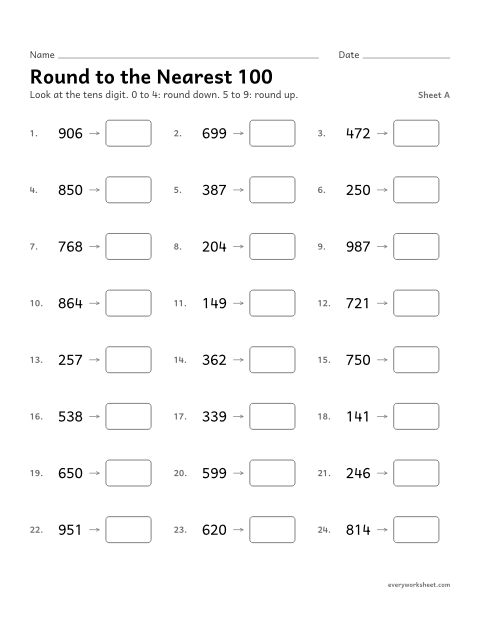
Look at the tens digit. If it is 0 to 4, round down (432 rounds to 400). If it is 5 to 9, round up (452 rounds to 500).
A number like 45 is exactly halfway between 40 and 50. Mathematicians agree to round halfway numbers up so everyone gets the same answer.
Yes. Every page has an answer key on page 2. The number line keys show which end the number is closer to.