 View larger
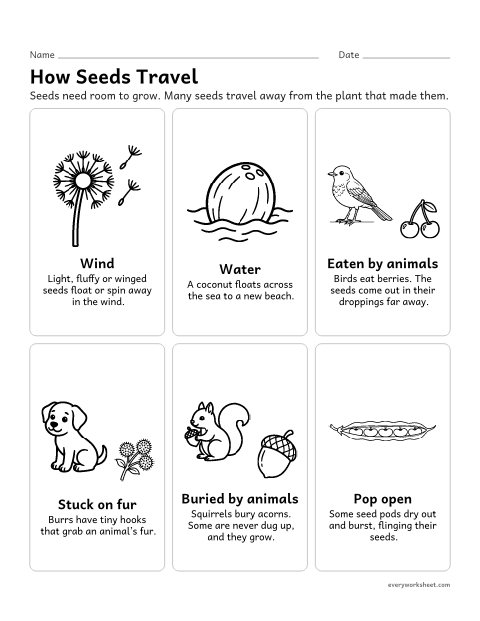
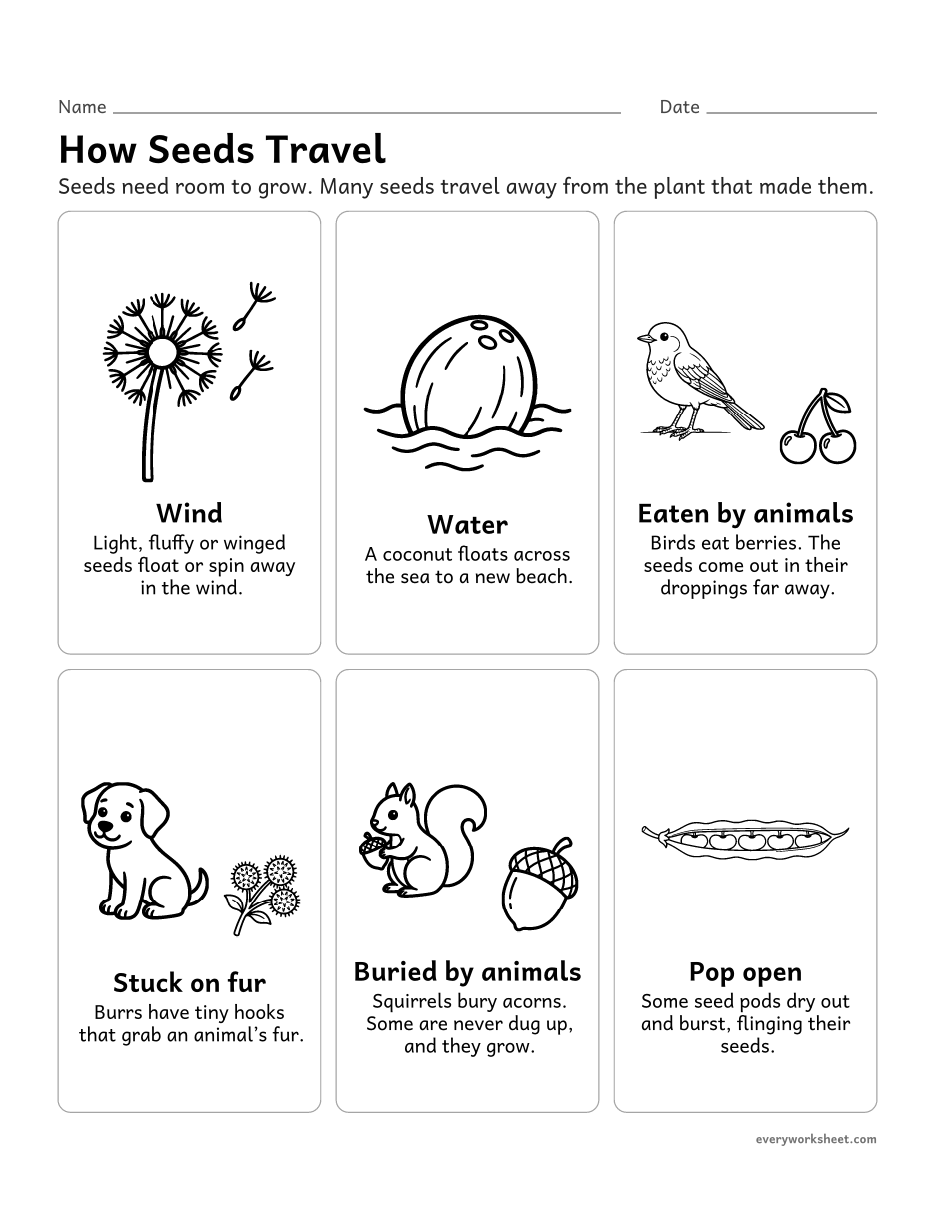
Seed dispersal Poster: how seeds travel
Describing the ways seeds are carried away from the parent plant
1 page233 KB
How seeds travel by wind, water and animals, seed models to build and test, and how animals pollinate flowers.
View largerDescribing the ways seeds are carried away from the parent plant
1 page233 KB
 View all 2 pages
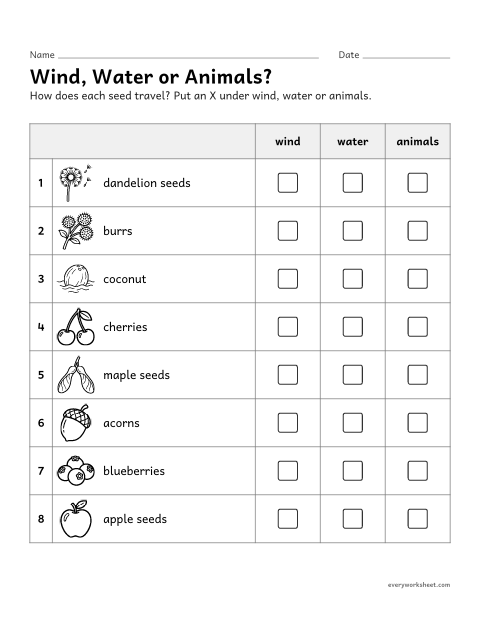
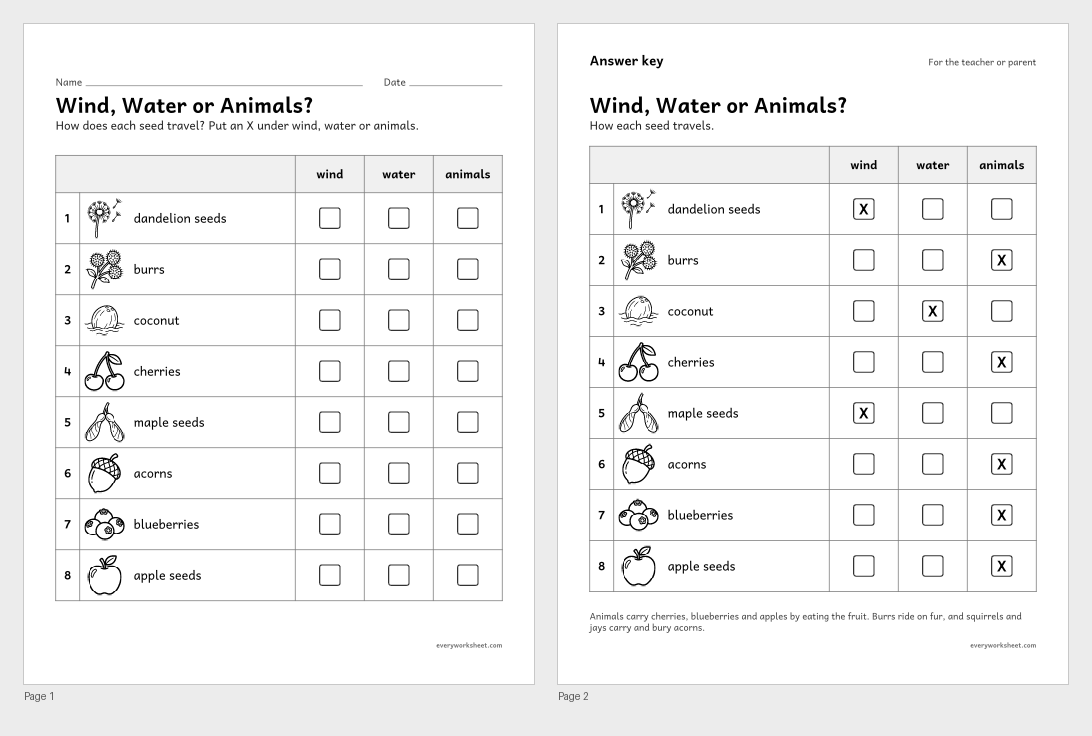
Sorting seeds by how they are dispersed
Answer key on page 2
2 pages467 KB
 View all 2 pages
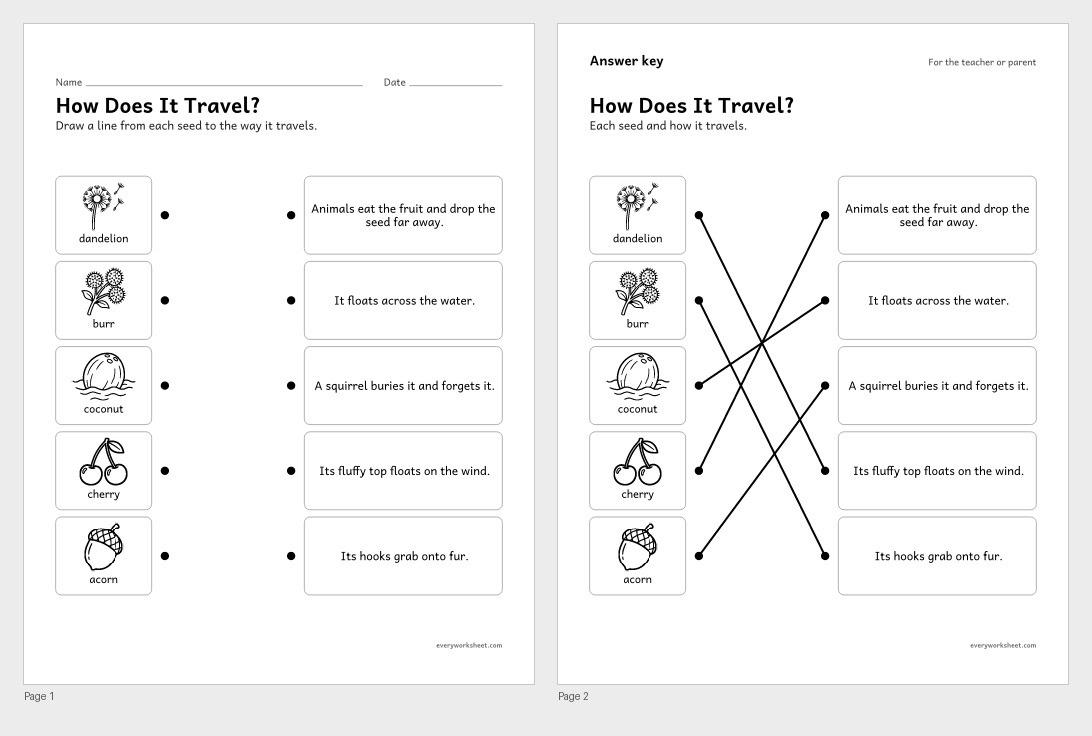
Matching seeds to the way they are dispersed
Answer key on page 2
2 pages318 KB
 View all 2 pages
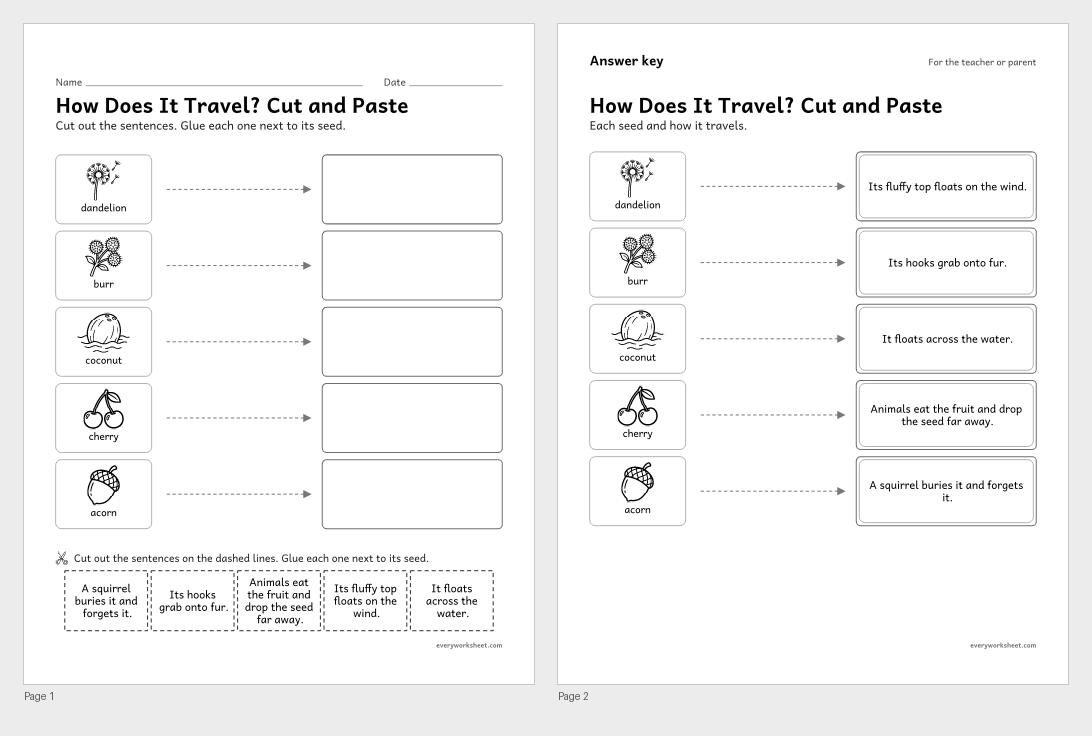
Matching seeds to the way they are dispersed
Answer key on page 2
2 pages348 KB
 View all 2 pages
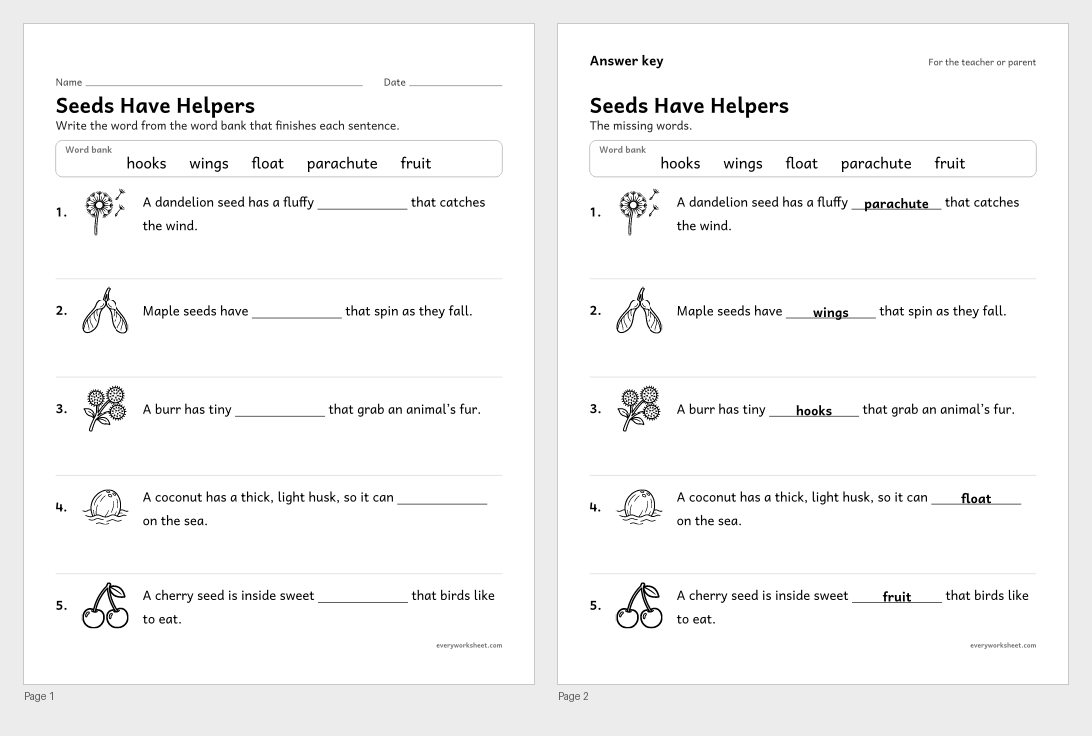
Explaining how a seed’s shape helps it travel
Answer key on page 2
2 pages336 KB
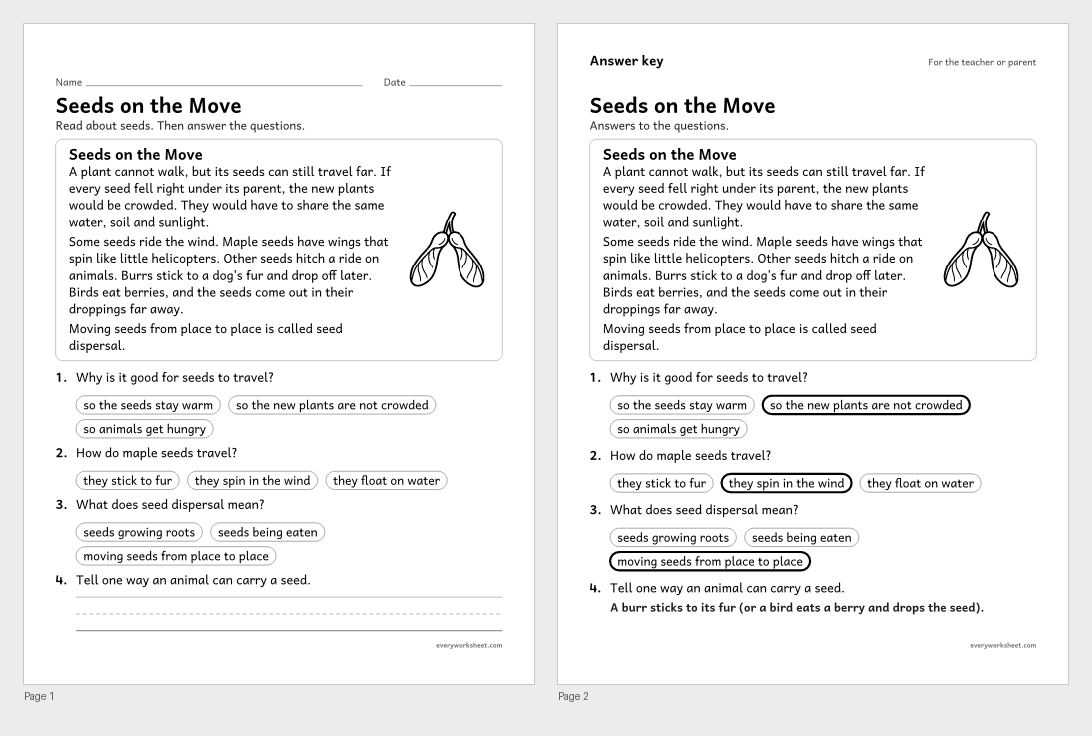 View all 2 pages
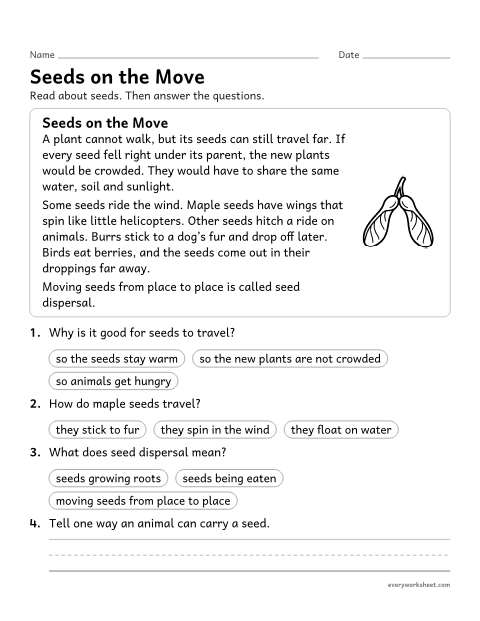
Reading about seed dispersal and answering questions
Answer key on page 2
2 pages98 KB
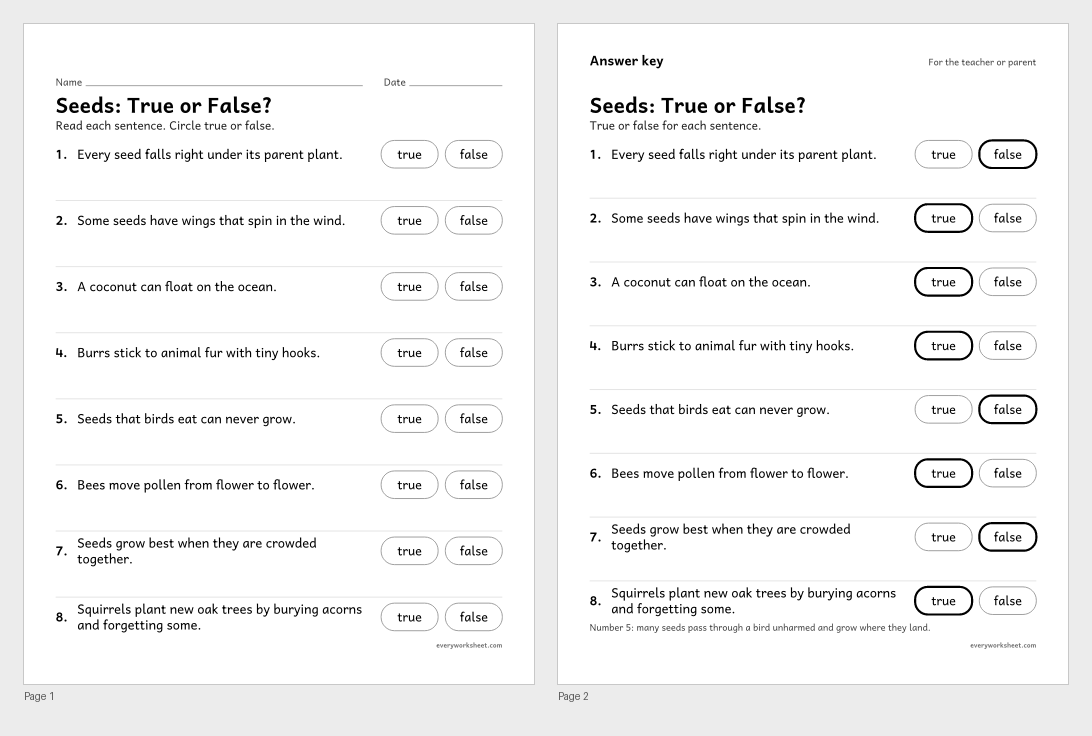 View all 2 pages
Checking facts about seed dispersal and pollination
Answer key on page 2
2 pages45 KB
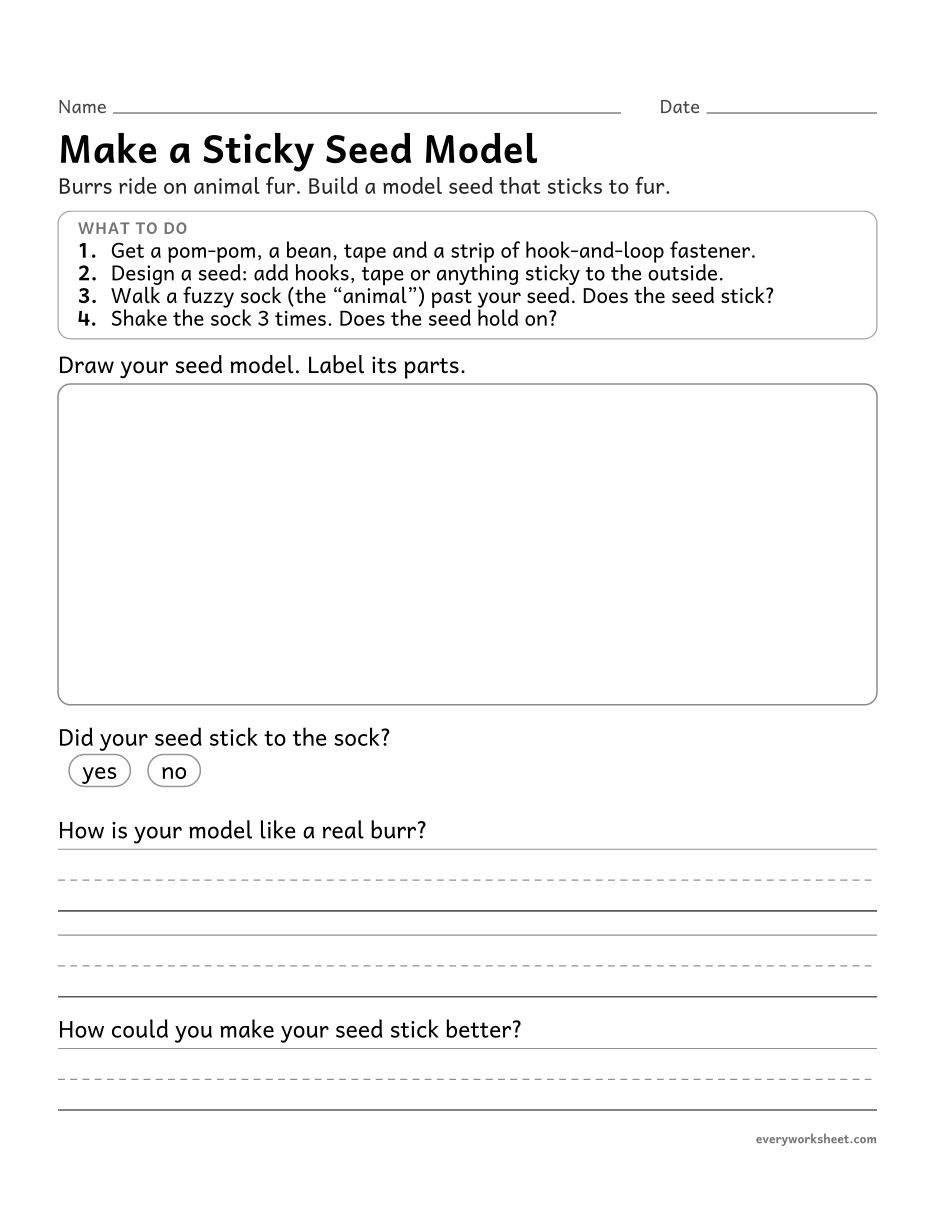 View larger
Building a model that shows how animals carry seeds on their fur
1 page30 KB
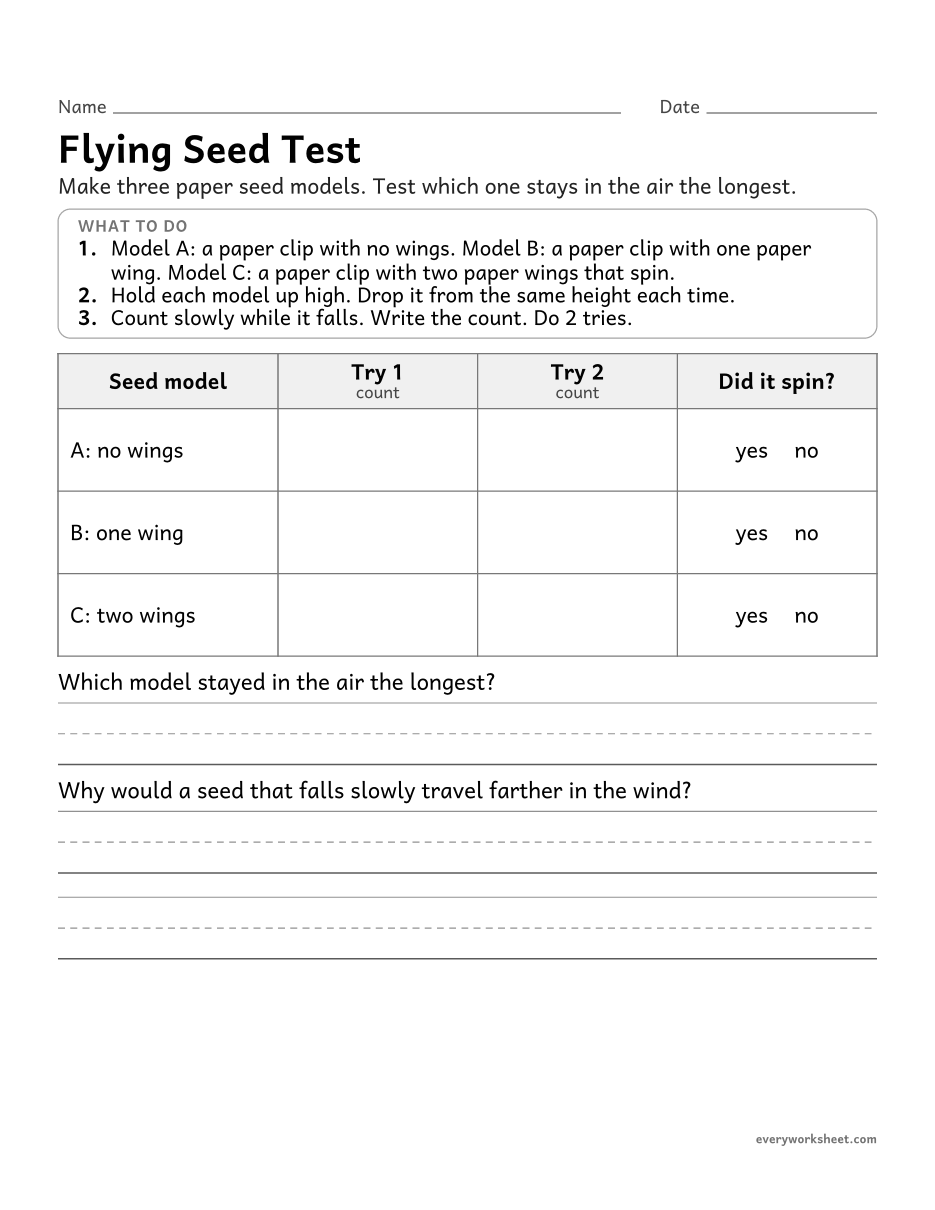 View larger
Testing models of wind-dispersed seeds and comparing how they perform
1 page32 KB
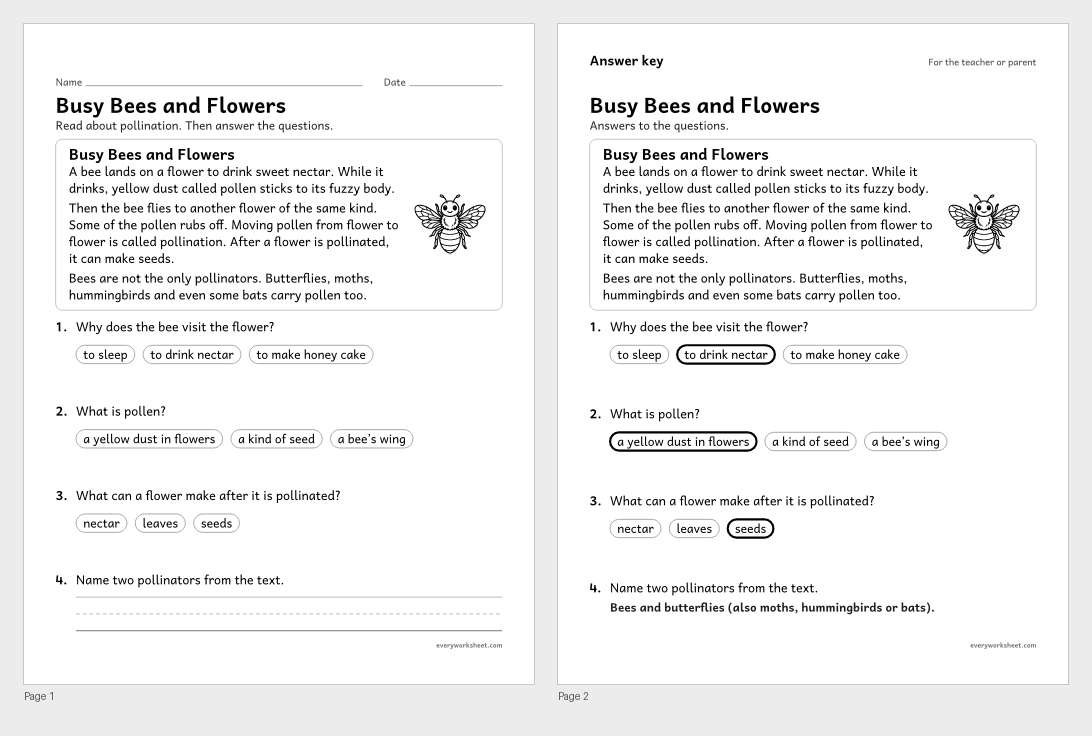 View all 2 pages
Reading about how animals pollinate flowers and answering questions
Answer key on page 2
2 pages68 KB
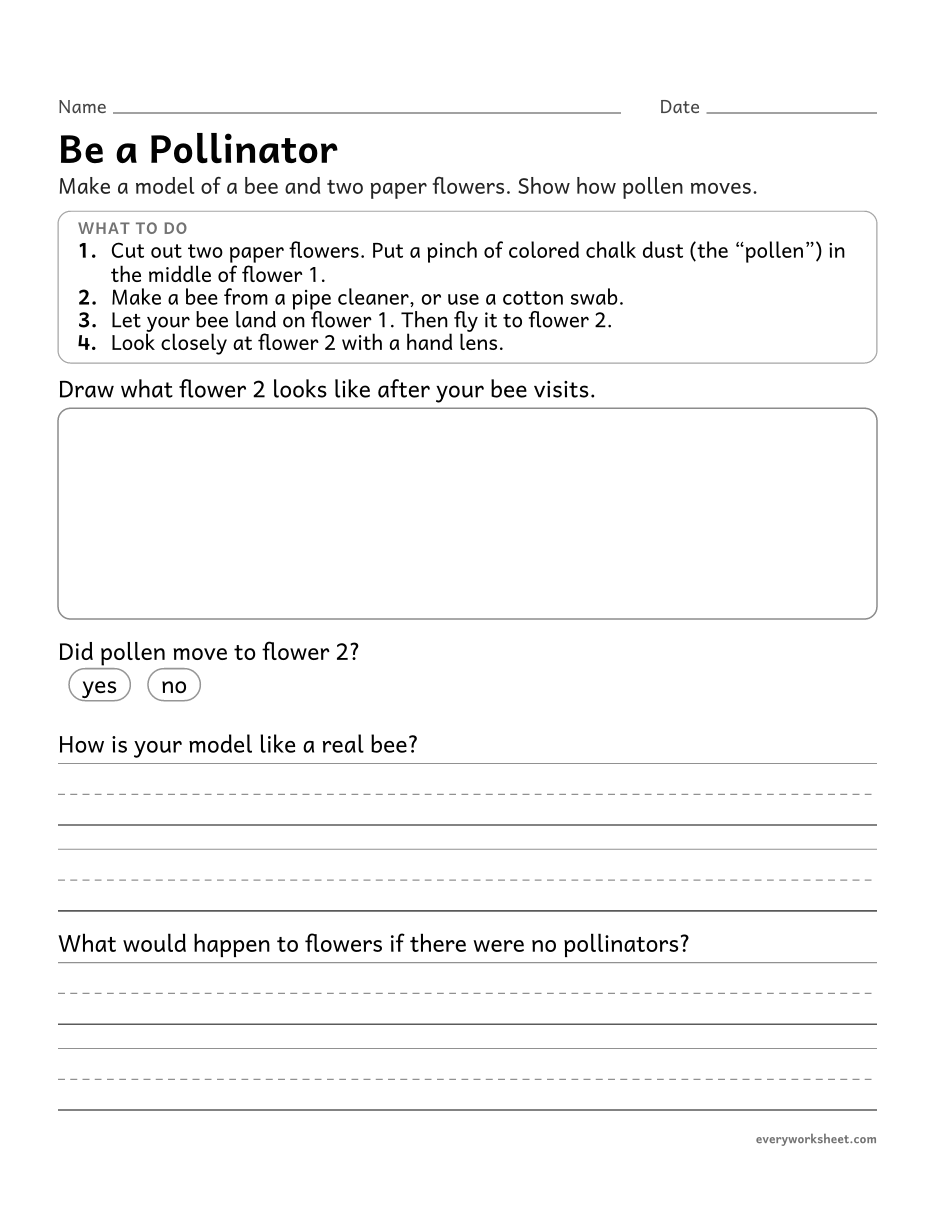 View larger
Using a model to show how an animal moves pollen between flowers
1 page30 KB
Print at 100% (actual size) for the cleanest tracing lines.
Plants cannot walk, yet their seeds end up far away. In 2nd grade, children find out how: some seeds float or spin on the wind, a coconut can float across the sea, burrs hitch a ride on fur, and birds and squirrels carry seeds in their stomachs and their mouths.
These seed dispersal worksheets pair simple sorts and matching pages with hands-on models. Children build a sticky seed and test it on a fuzzy sock, drop paper seed models to see which stays in the air longest, and play the part of a bee to move “pollen” from flower to flower.
Pages are black and white with short directions a 2nd grader can read. Each prints on US Letter or A4, and every page with right answers has a key on page 2.
NGSS 2-LS2-2Develop a simple model that mimics the function of an animal in dispersing seeds or pollinating plants.CCSS.ELA-LITERACY.RI.2.1Ask and answer such questions as who, what, where, when, why, and how to demonstrate understanding of key details in a text.NGSS K-2-ETS1-3Analyze data from tests of two objects designed to solve the same problem to compare the strengths and weaknesses of how each performs.Seed dispersal is how seeds move away from the plant that made them. Seeds travel by wind, by water, by sticking to animal fur, inside animals that eat fruit, by animals that bury them, and by pods that burst open.
If every seed fell under its parent plant, the young plants would be crowded and would have to share the same water, soil and sunlight. Seeds that travel can find room to grow.
Many flowers need pollen from another flower of the same kind before they can make seeds. Bees, butterflies, moths, hummingbirds and some bats carry pollen from flower to flower.
Yes. Sorts, matching, fill in the blank, reading passages and true or false pages have keys on page 2. Model and test pages are open-ended.