 3 pagesView all 3 pages
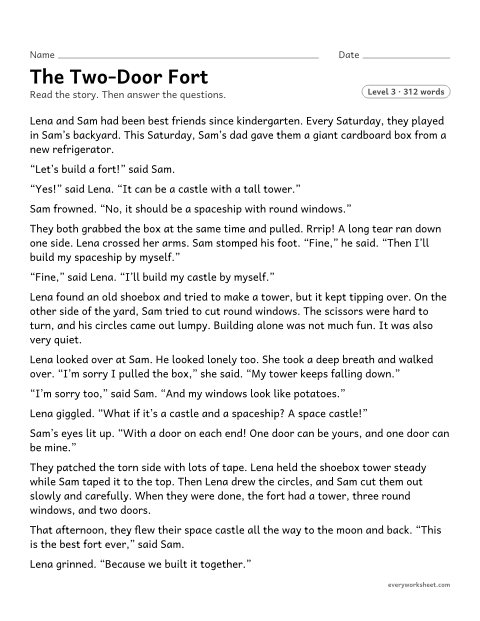
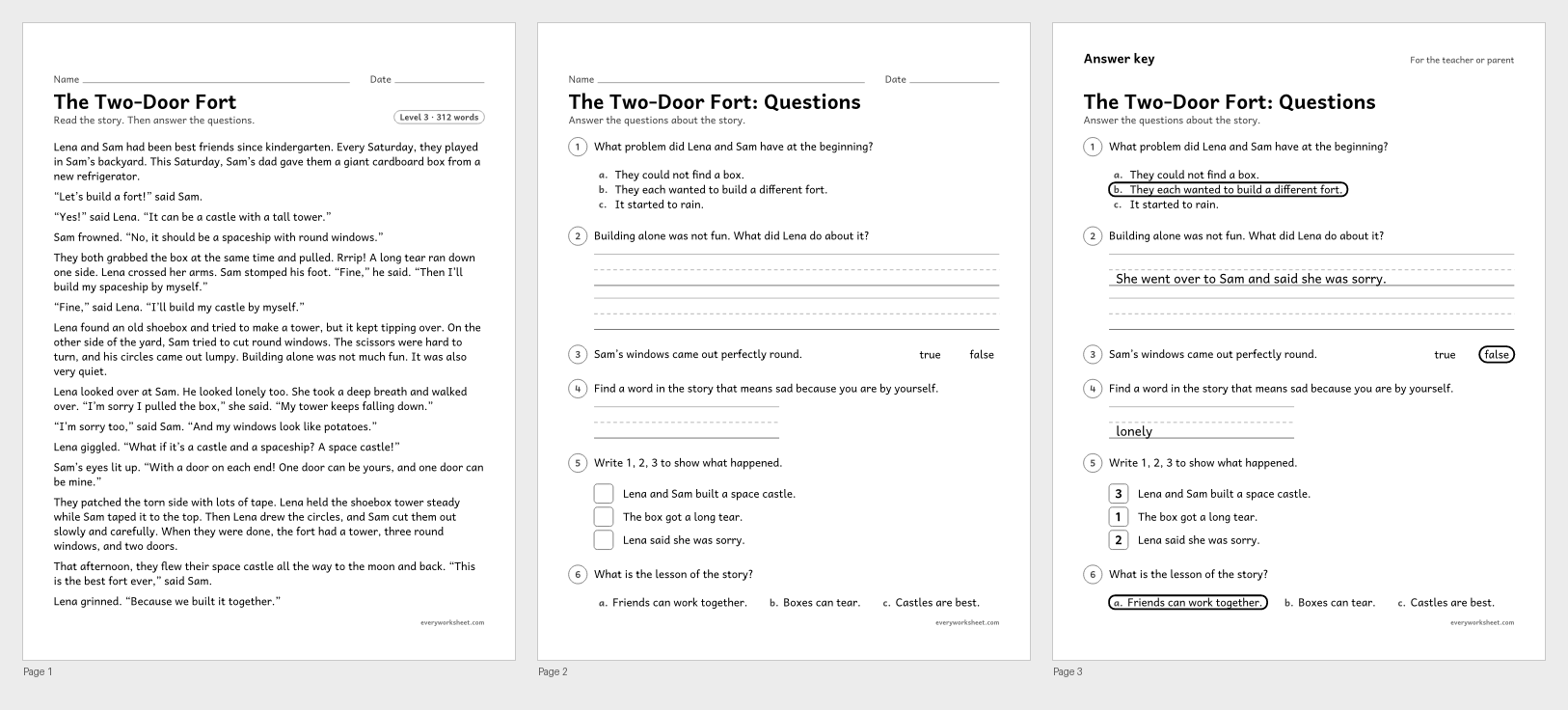
The Two-Door fort
Describing how two friends respond to a disagreement and solve it
Answer key on page 3
3 pages51 KB
Original short stories and fables with questions about characters, problems, lessons and word meanings, each with an answer key.
3 pagesView all 3 pagesDescribing how two friends respond to a disagreement and solve it
Answer key on page 3
3 pages51 KB
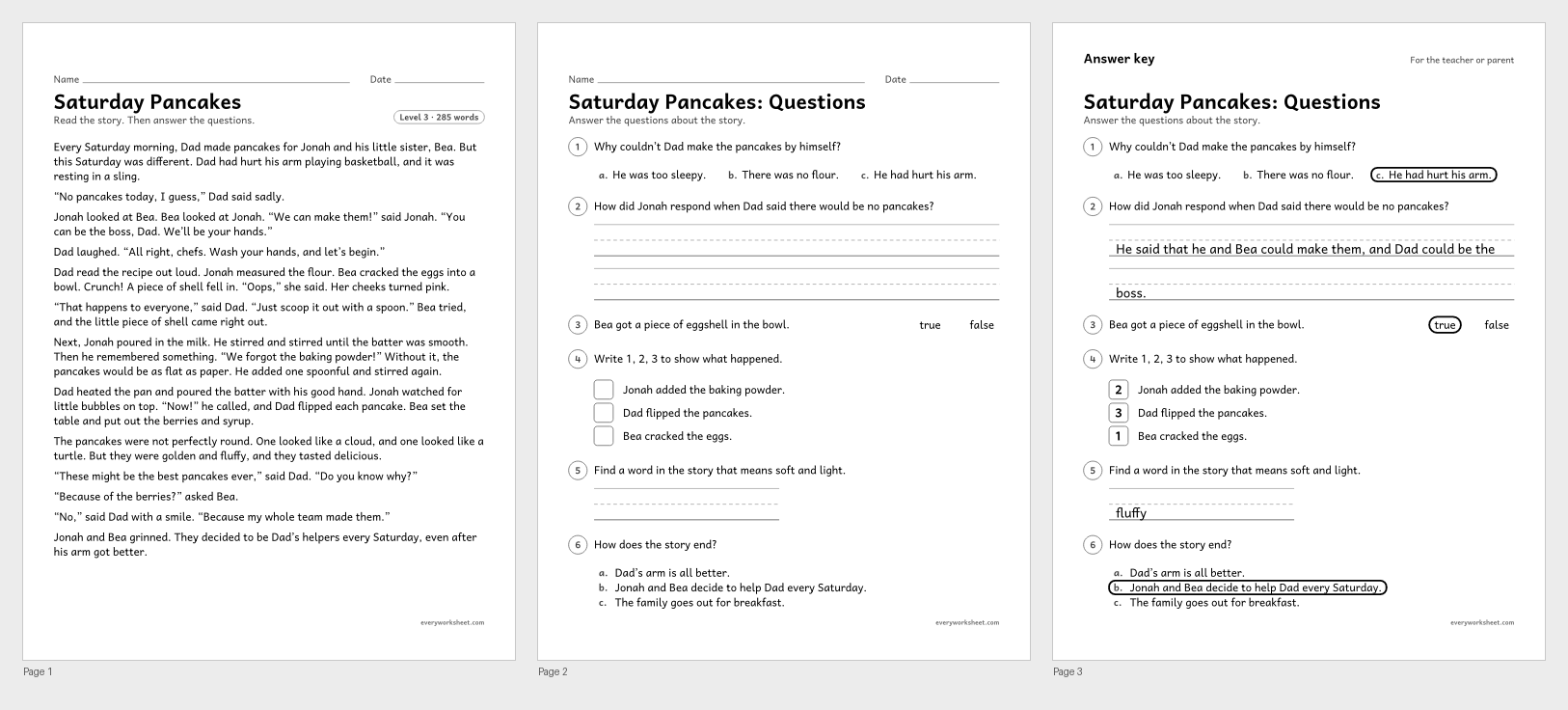 3 pagesView all 3 pages
Describing how characters respond to a problem in a family story
Answer key on page 3
3 pages51 KB
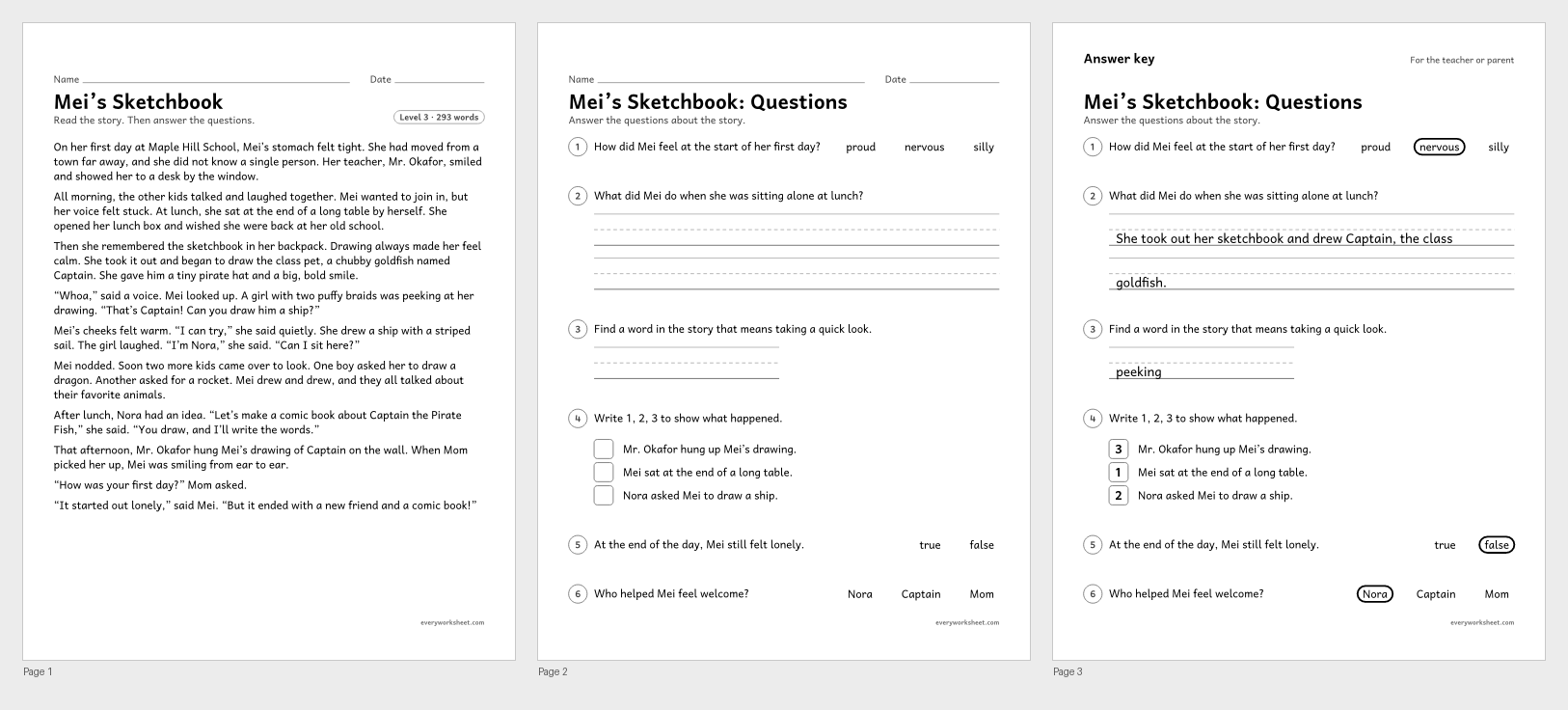 3 pagesView all 3 pages
Describing how a character responds to the challenge of a new school
Answer key on page 3
3 pages49 KB
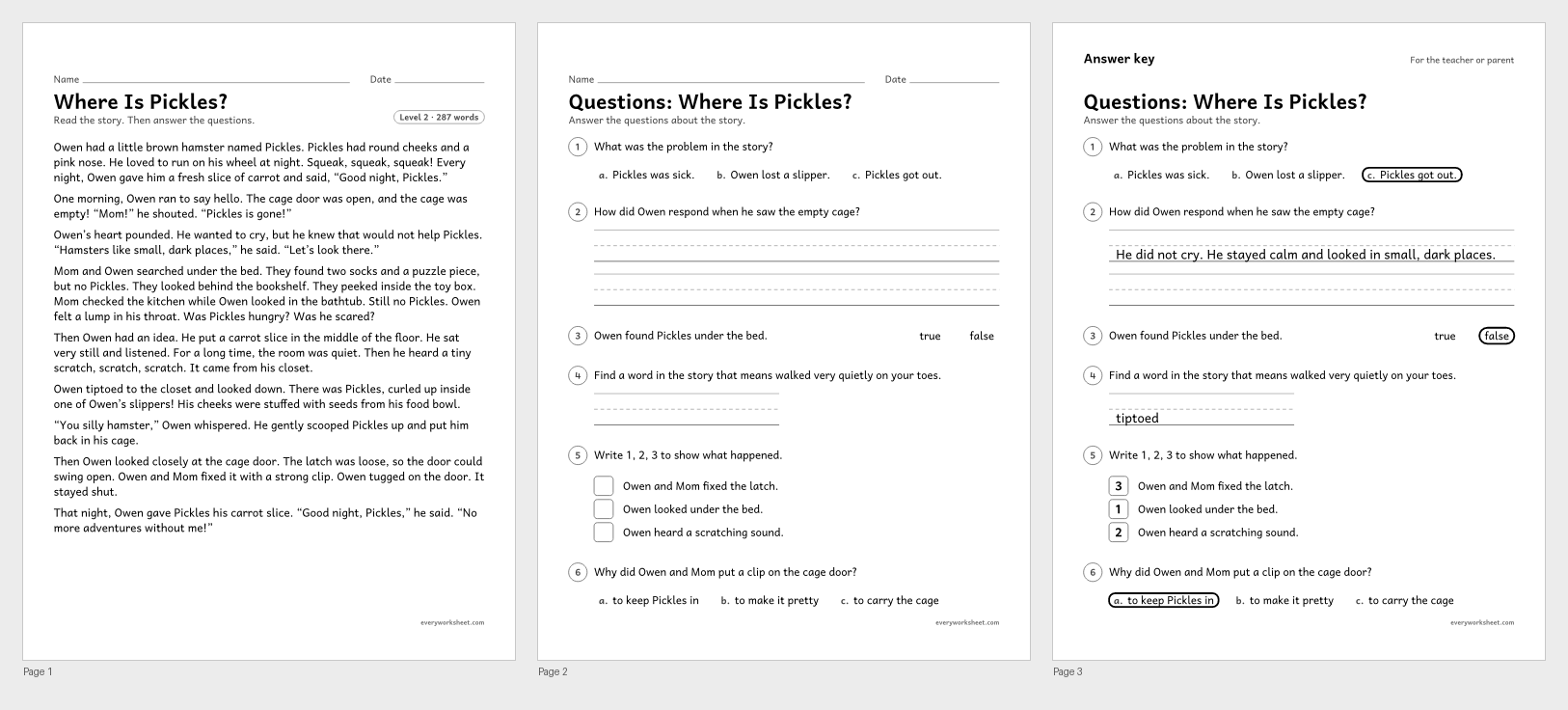 3 pagesView all 3 pages
Describing how a character stays calm and solves a problem with his pet
Answer key on page 3
3 pages48 KB
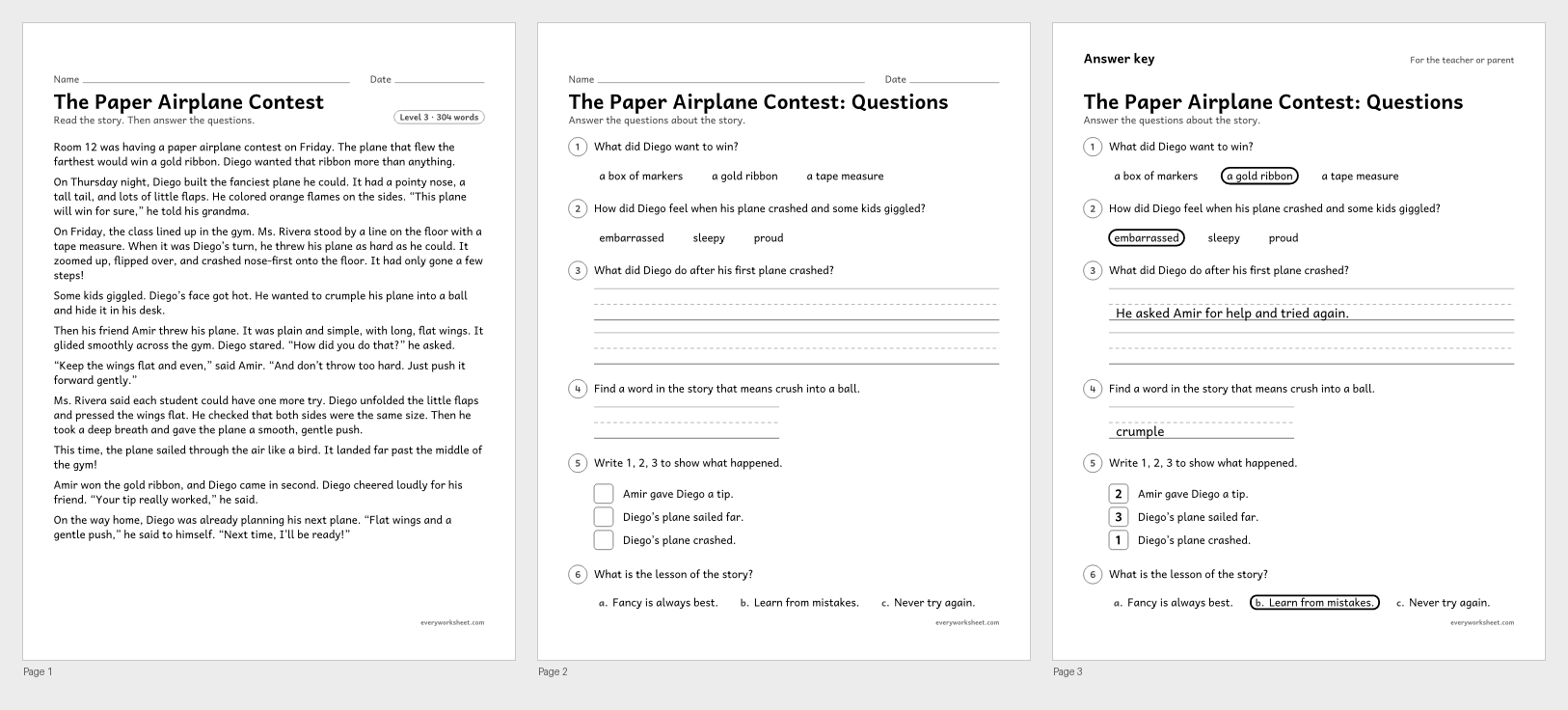 3 pagesView all 3 pages
Finding the lesson of a story about a contest
Answer key on page 3
3 pages47 KB
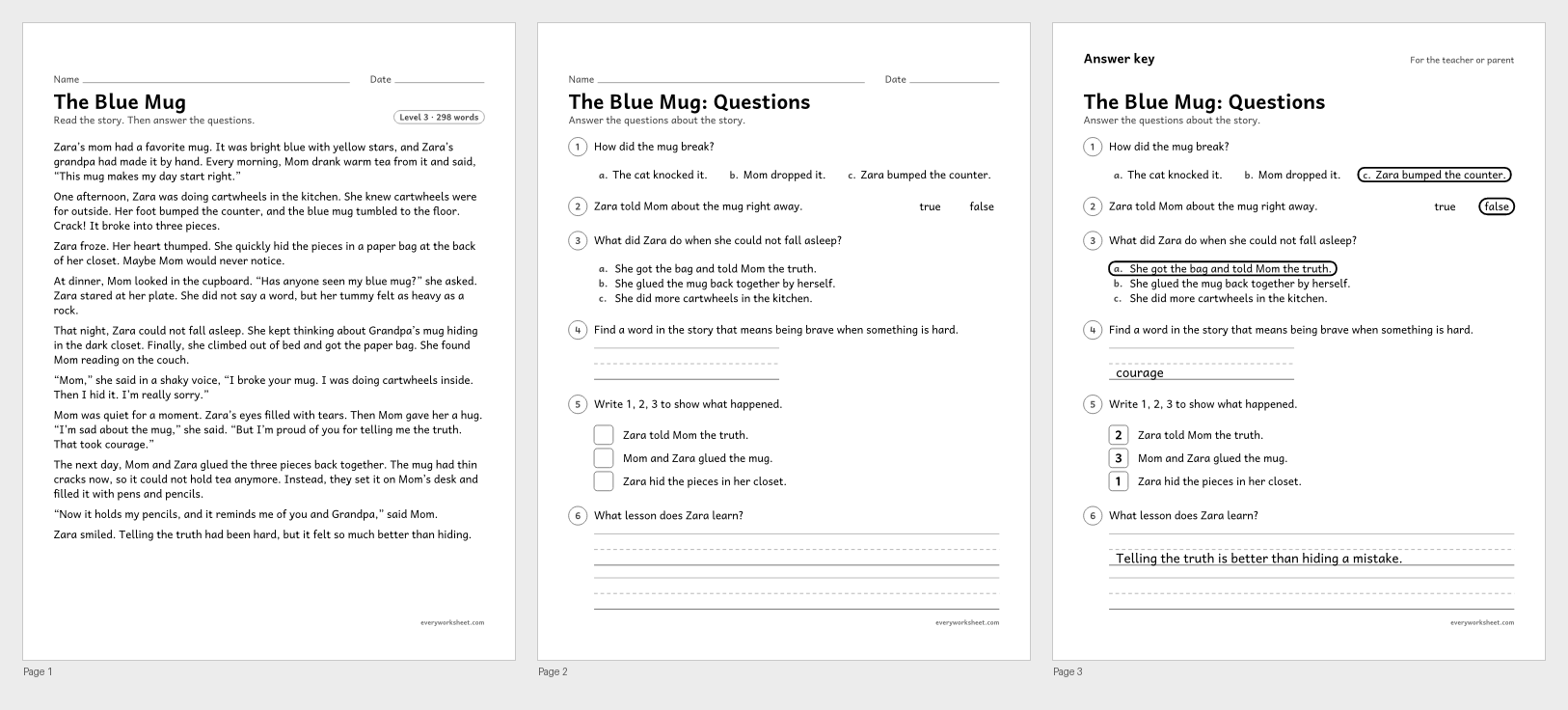 3 pagesView all 3 pages
Finding the lesson of a story about owning up to a mistake
Answer key on page 3
3 pages51 KB
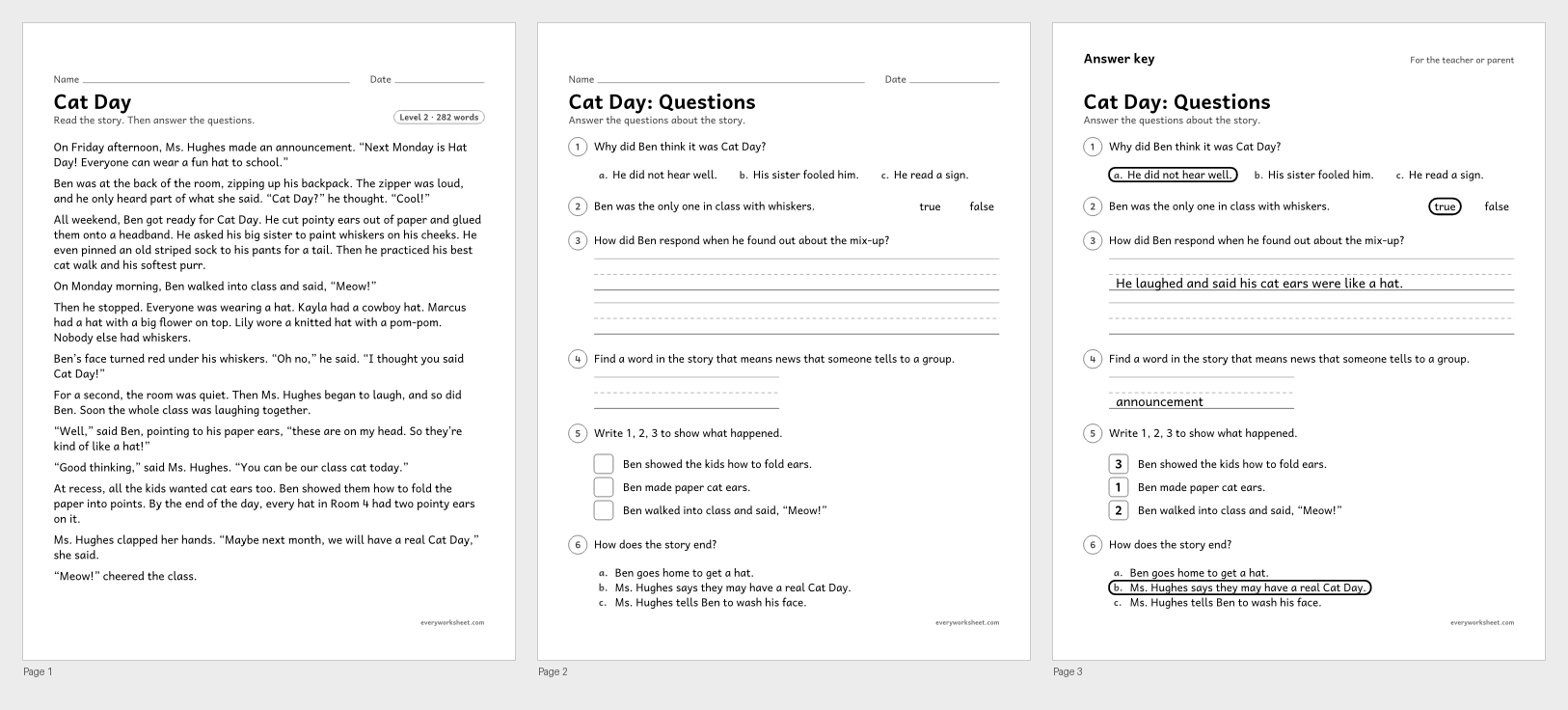 3 pagesView all 3 pages
Describing how a character responds to a funny mix-up
Answer key on page 3
3 pages51 KB
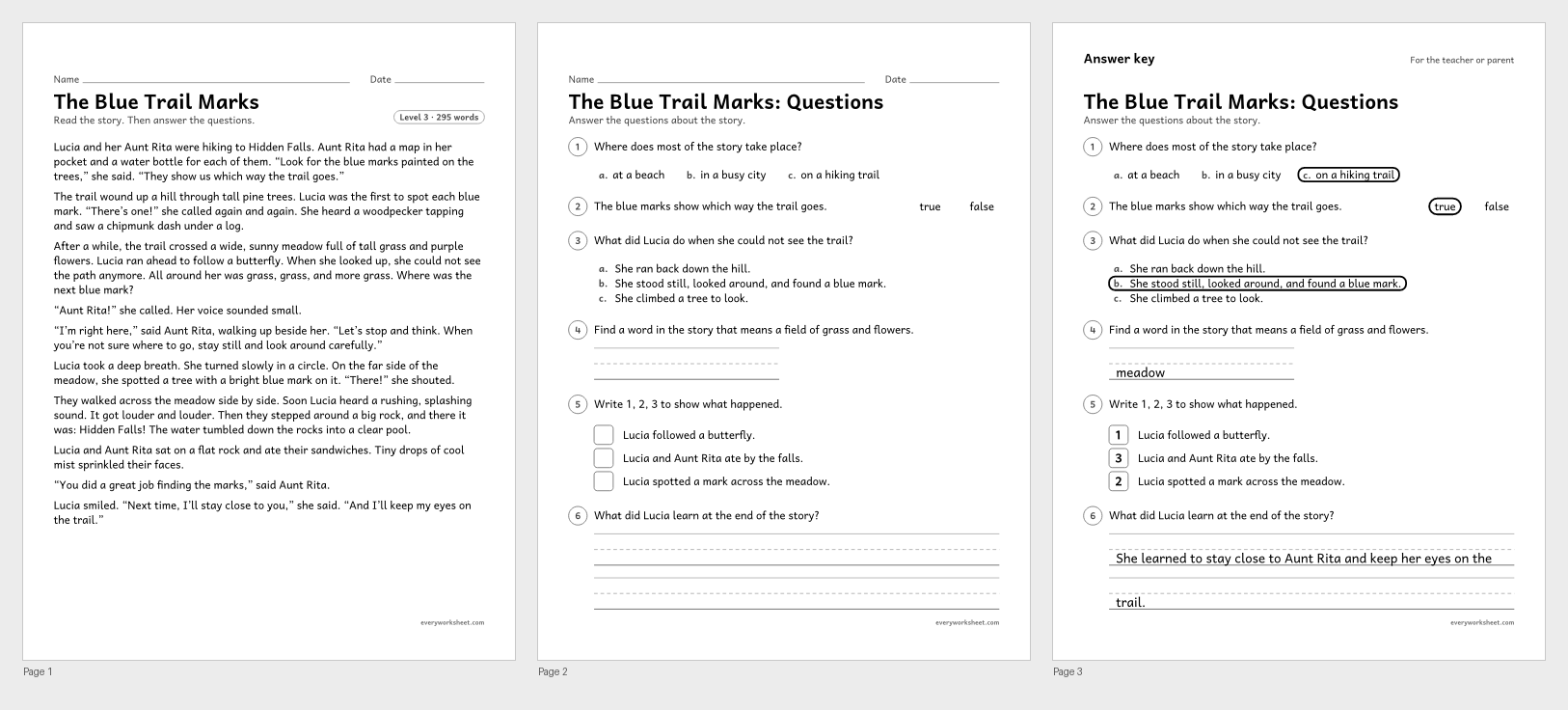 3 pagesView all 3 pages
Describing how a character responds to a challenge on a hike
Answer key on page 3
3 pages51 KB
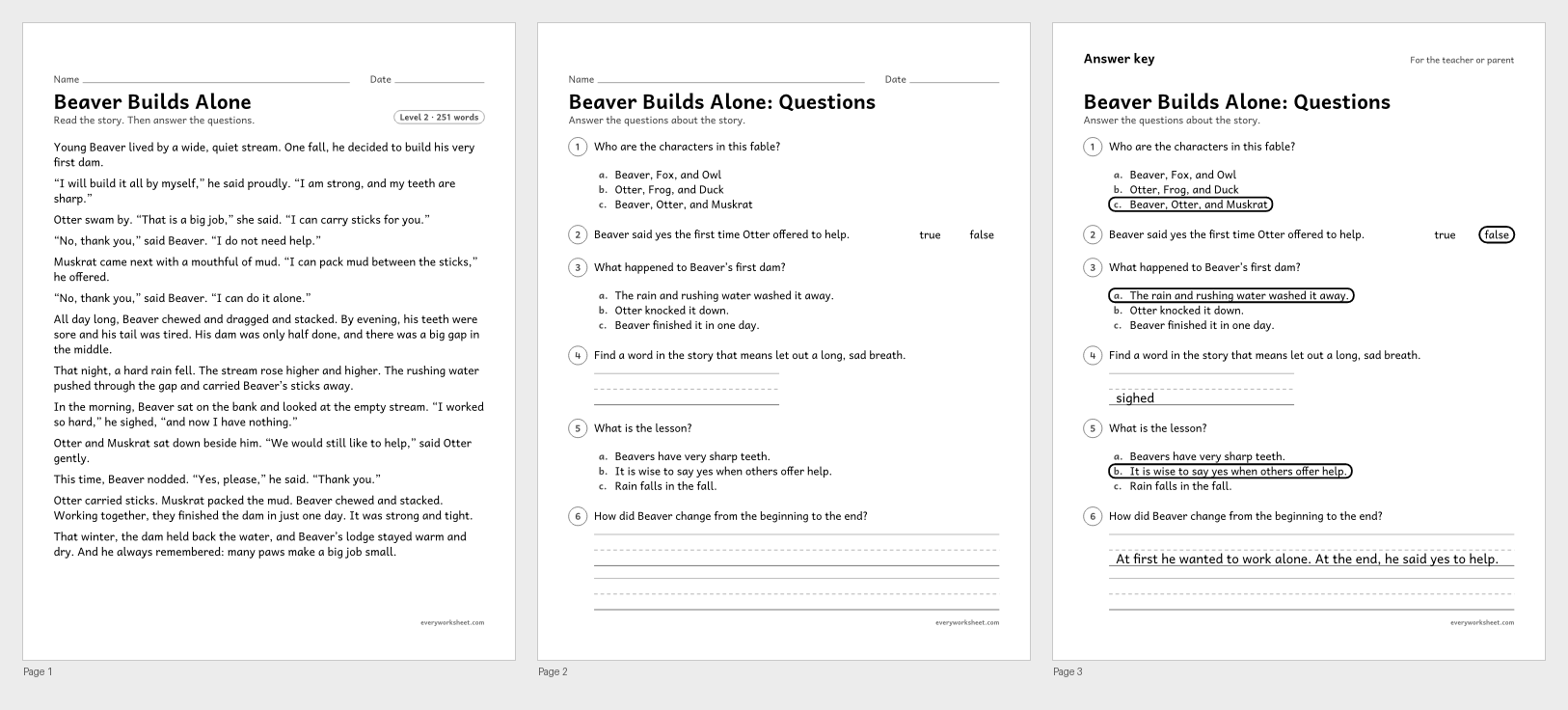 3 pagesView all 3 pages
Finding the lesson of an original fable
Answer key on page 3
3 pages53 KB
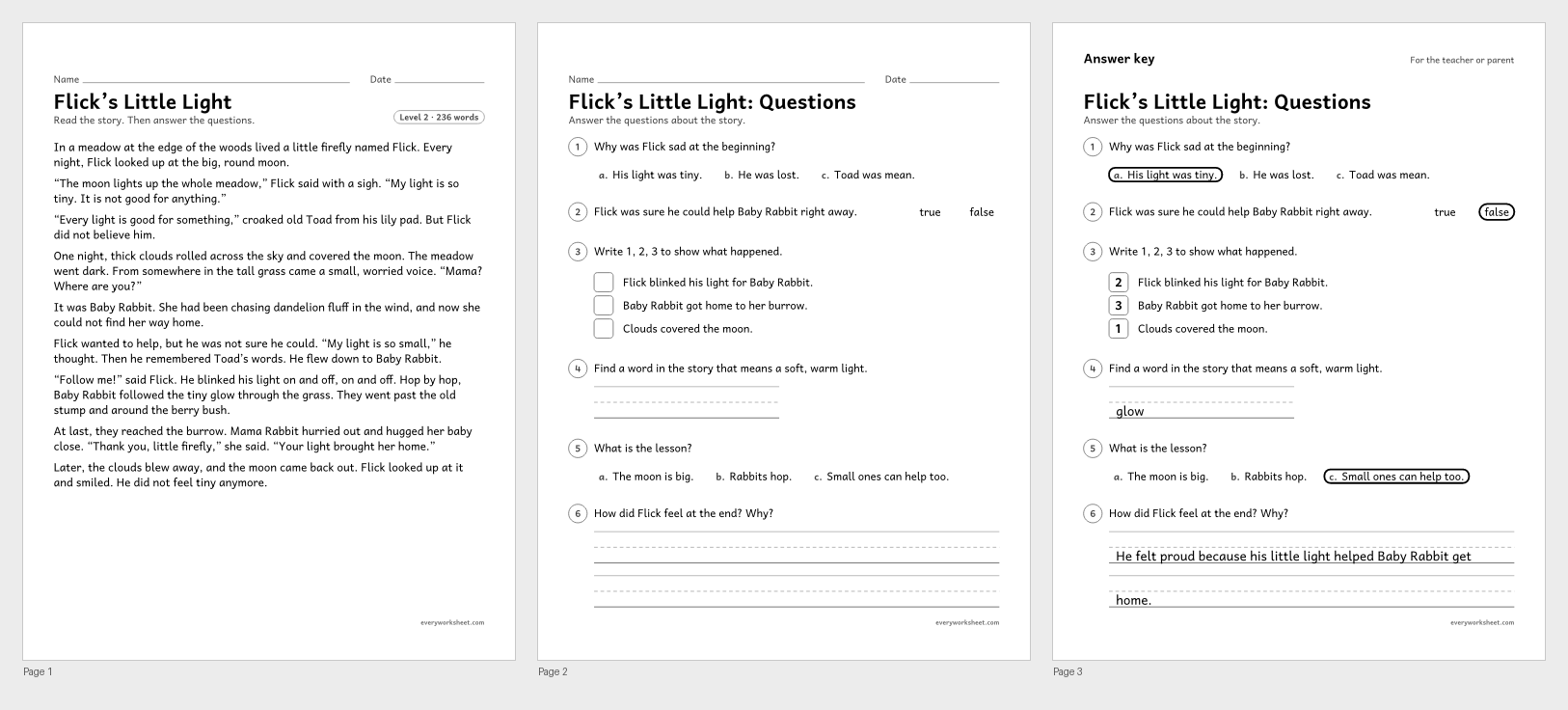 3 pagesView all 3 pages
Finding the lesson of an original fable
Answer key on page 3
3 pages47 KB
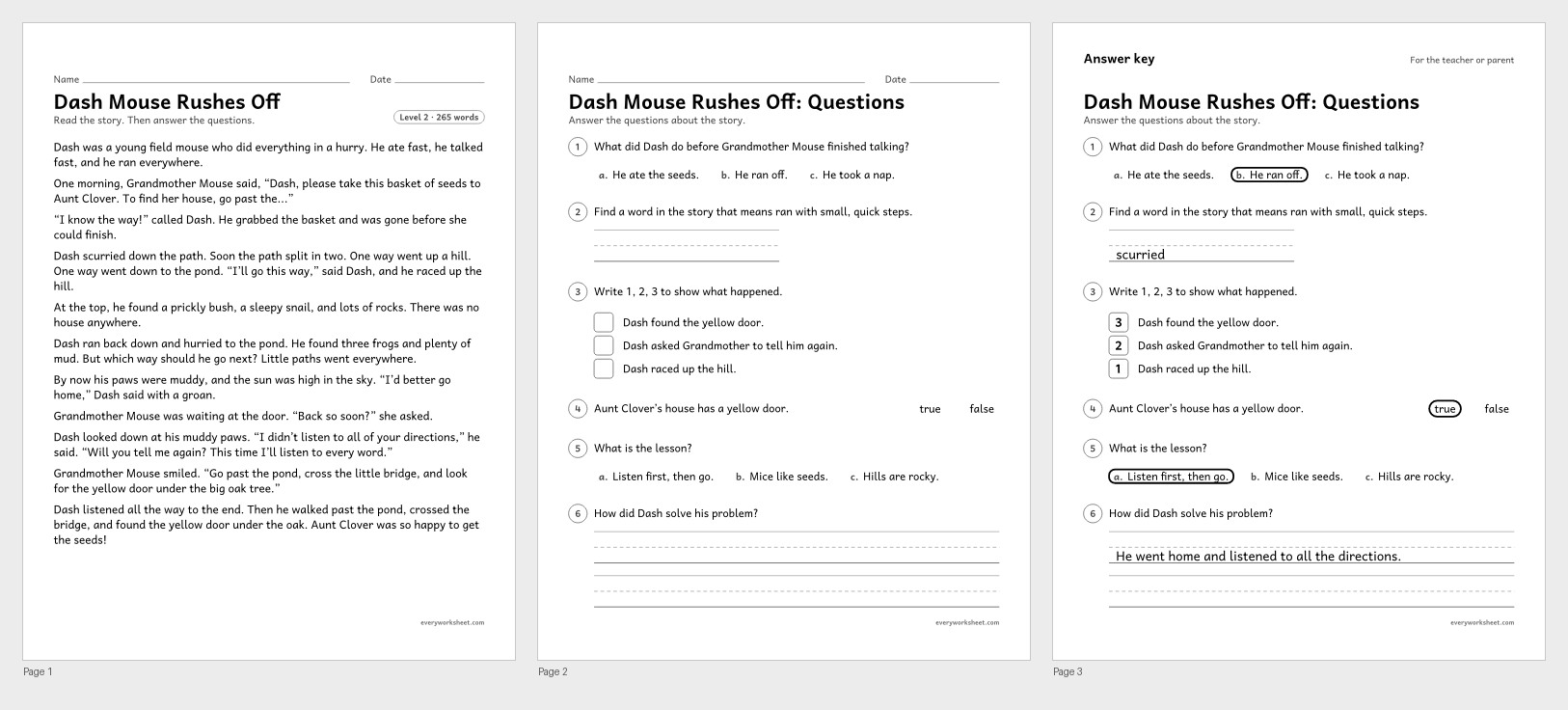 3 pagesView all 3 pages
Finding the lesson of an original fable
Answer key on page 3
3 pages48 KB
Print at 100% (actual size) for the cleanest tracing lines.
Second graders are ready for real stories: a character with a problem, events that build, and an ending that solves it. Reading whole stories helps children describe how characters respond to challenges, retell the important events in order and work out the lesson a story teaches.
These short stories for 2nd graders are all original. Eight stories are about everyday things children know: building a fort with a friend, a first day at a new school, a lost hamster, a paper airplane contest, a broken mug and a hiking trail. Three fables use animal characters to teach a lesson. Each story is one page, with six questions on the next page and an answer key after that.
CCSS.ELA-LITERACY.RL.2.1Ask and answer such questions as who, what, where, when, why, and how to demonstrate understanding of key details in a text.CCSS.ELA-LITERACY.RL.2.2Recount stories, including fables and folktales from diverse cultures, and determine their central message, lesson, or moral.CCSS.ELA-LITERACY.RL.2.3Describe how characters in a story respond to major events and challenges.CCSS.ELA-LITERACY.RL.2.5Describe the overall structure of a story, including describing how the beginning introduces the story and the ending concludes the action.CCSS.ELA-LITERACY.RL.2.10By the end of the year, read and comprehend literature, including stories and poetry, in the grades 2–3 text complexity band proficiently, with scaffolding as needed at the high end of the range.Most are about 240 to 310 words, which fits on one printed page for a second grader.
Yes. Every story and fable was written for this site and is free to print.
Yes. Each story has six questions on the second page and an answer key on the third page.