 View larger
Similes and metaphors
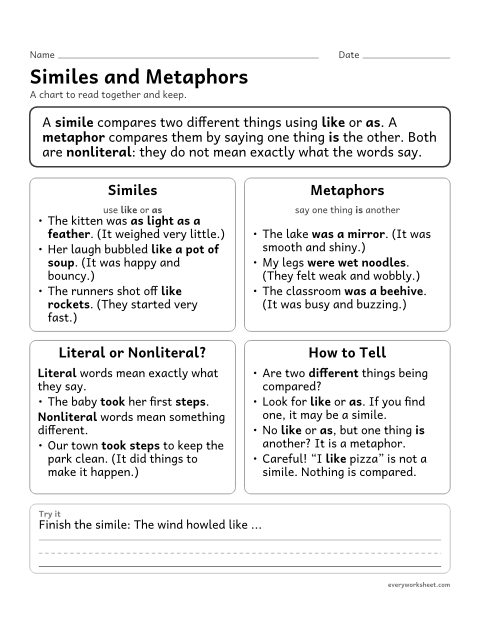
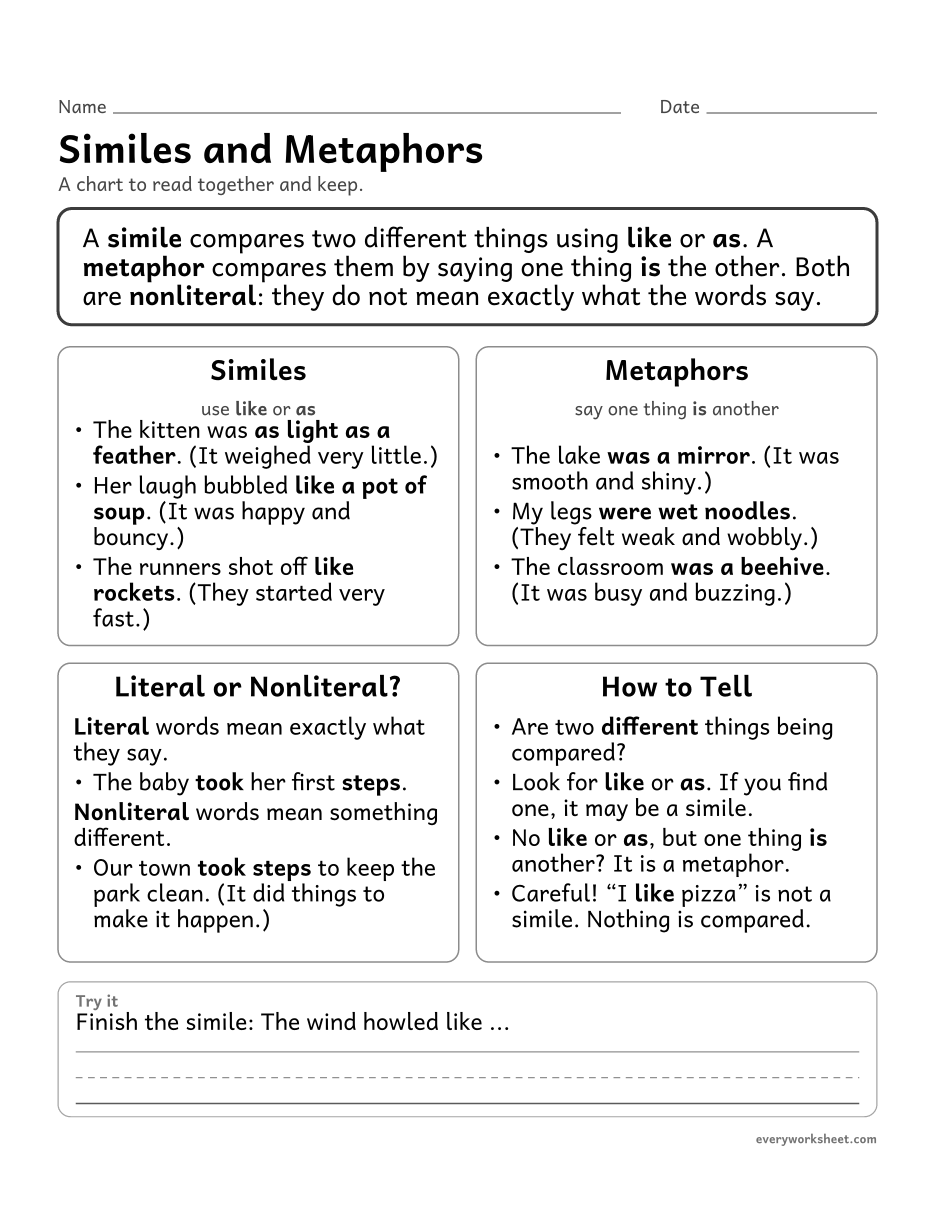
Knowing that similes and metaphors compare two different things and are nonliteral
1 page41 KB
A similes and metaphors chart plus identifying, sorting, explaining meanings, literal and nonliteral phrases, and writing, with answer keys.
View largerKnowing that similes and metaphors compare two different things and are nonliteral
1 page41 KB
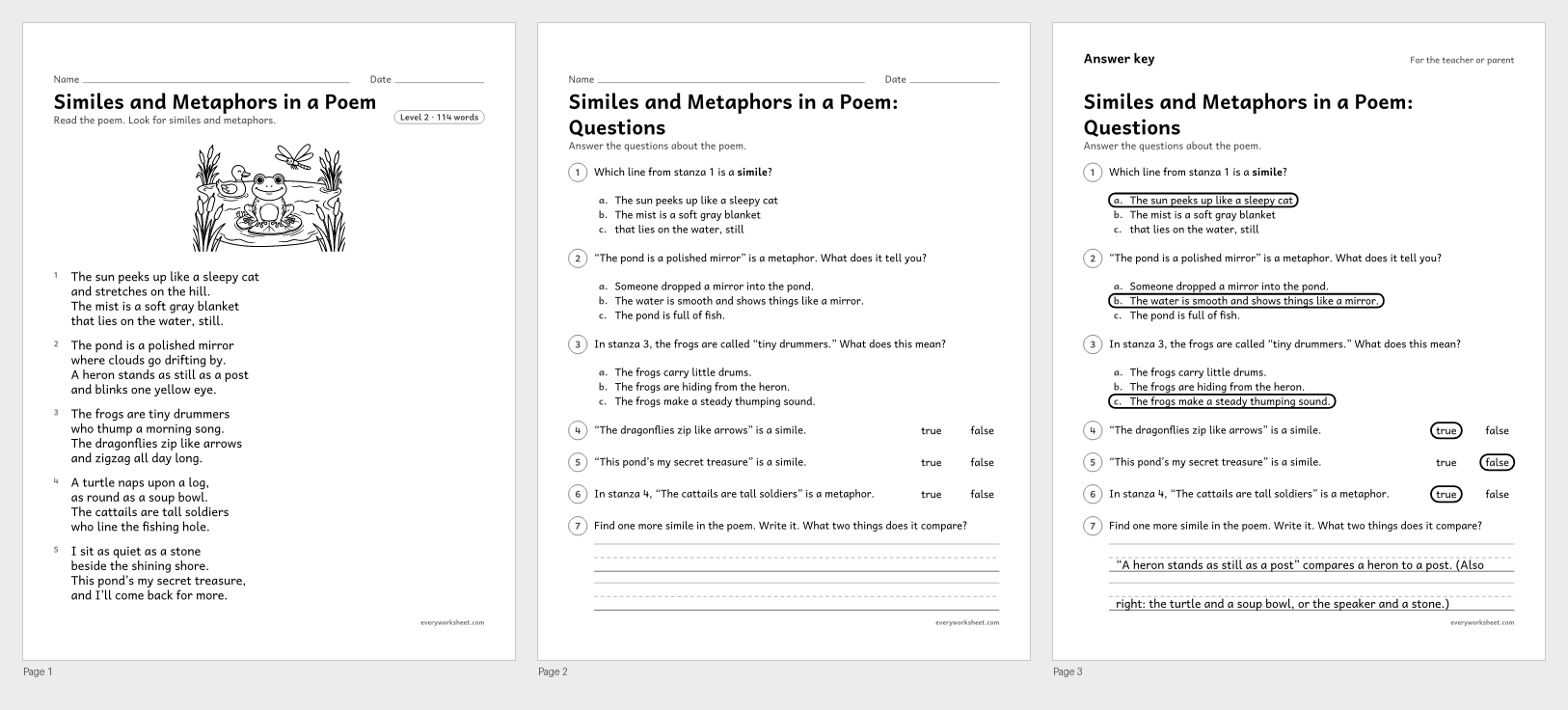 3 pagesView all 3 pages
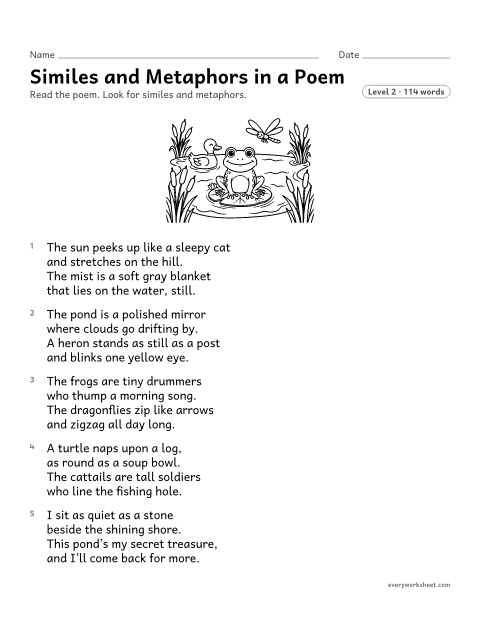
Finding similes and metaphors in a poem and telling what they mean
Answer key on page 3
3 pages90 KB
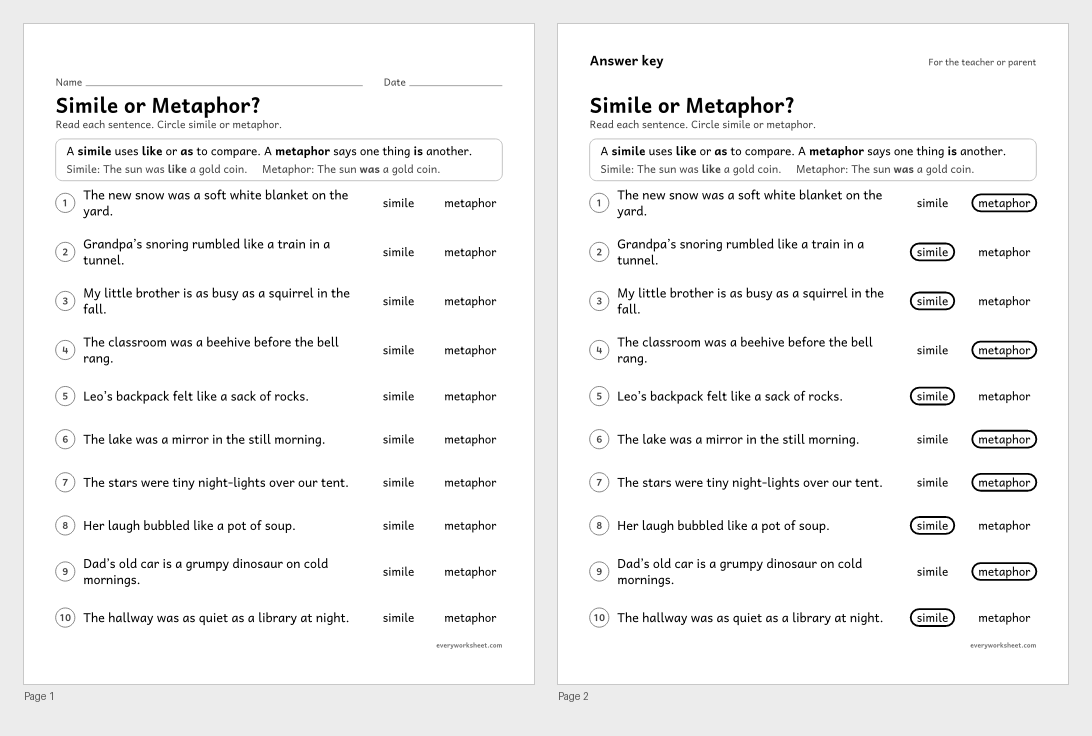 View all 2 pages
Telling similes (like, as) from metaphors (is, was)
Answer key on page 2
2 pages52 KB
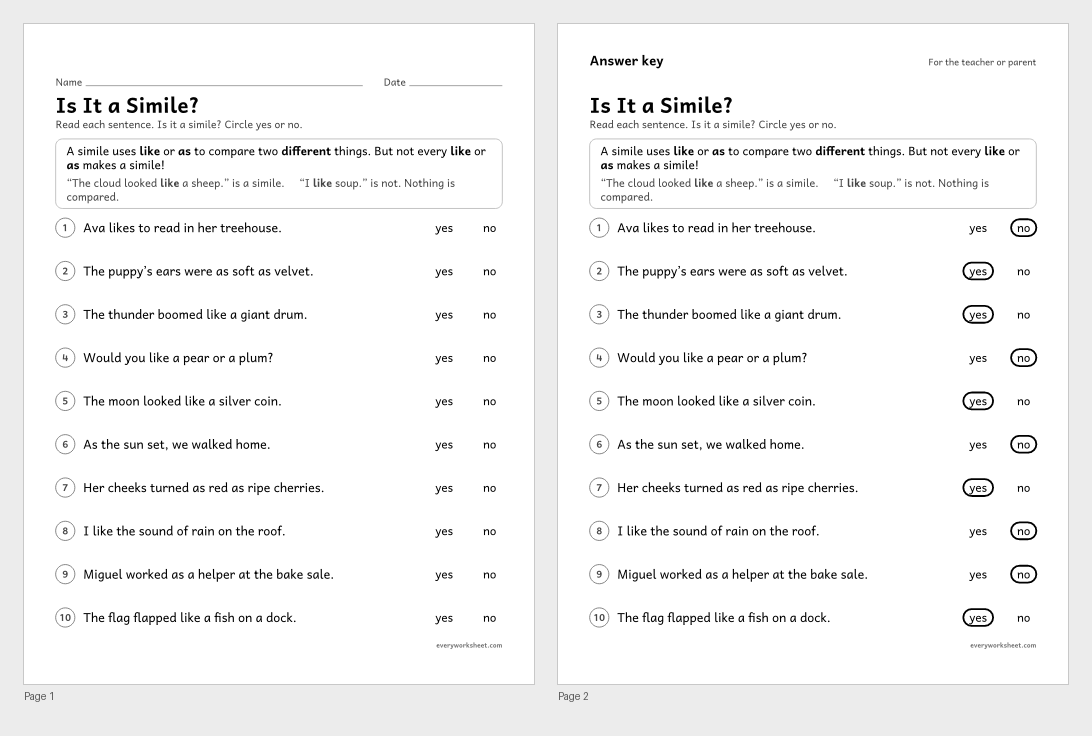 View all 2 pages
Telling similes from sentences that use like or as in other ways
Answer key on page 2
2 pages53 KB
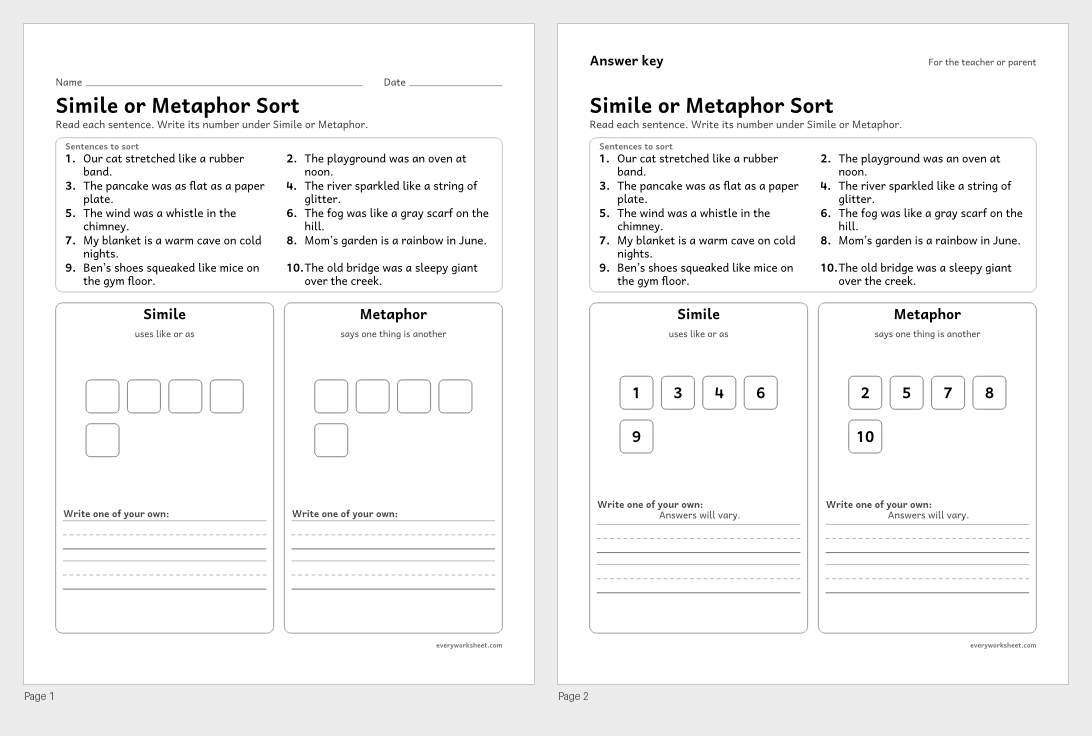 View all 2 pages
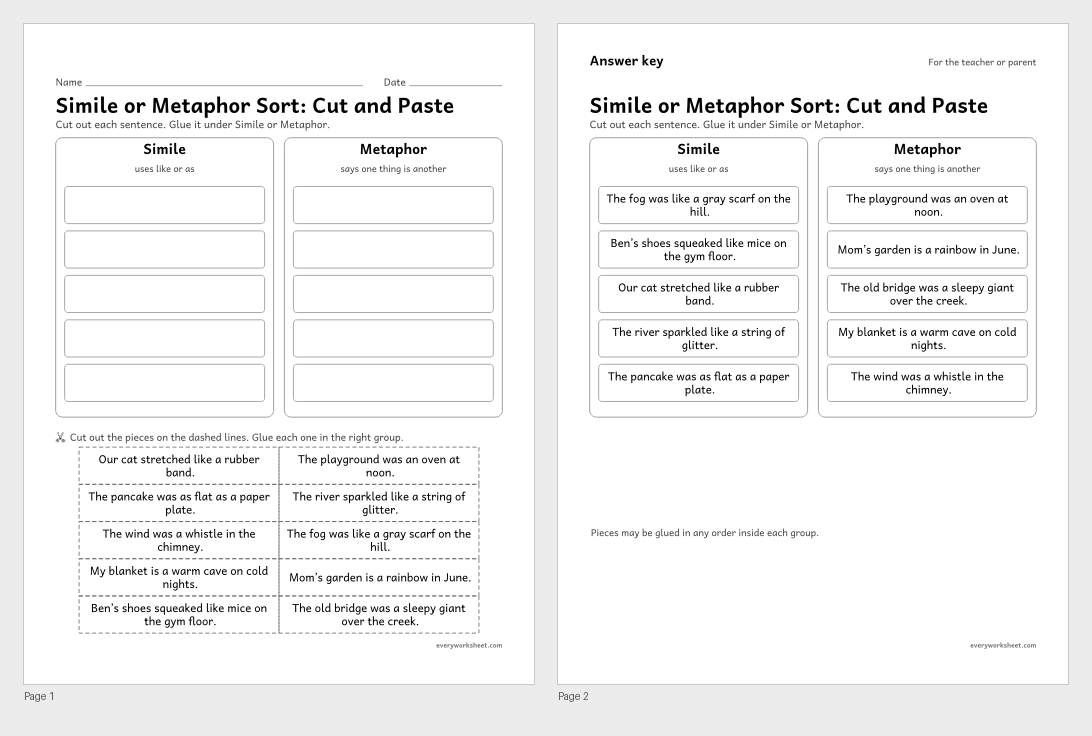
Sorting sentences into similes and metaphors
Answer key on page 2
2 pages51 KB
 View all 2 pages
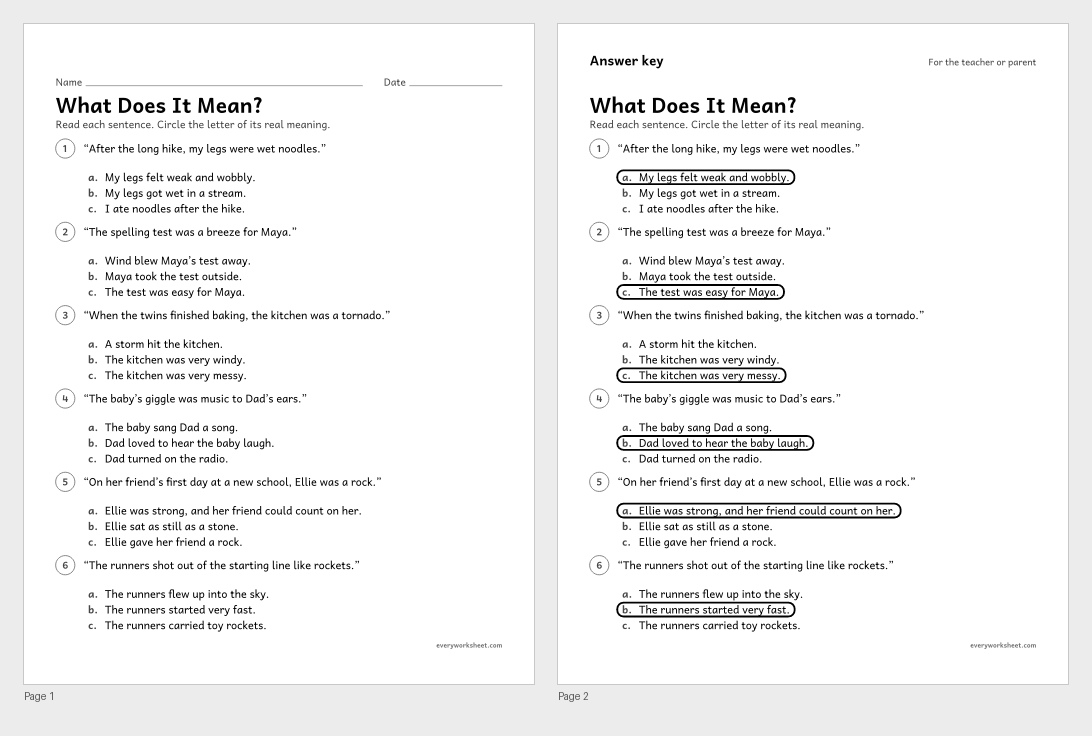
Sorting sentences into similes and metaphors
Answer key on page 2
2 pages67 KB
 View all 2 pages
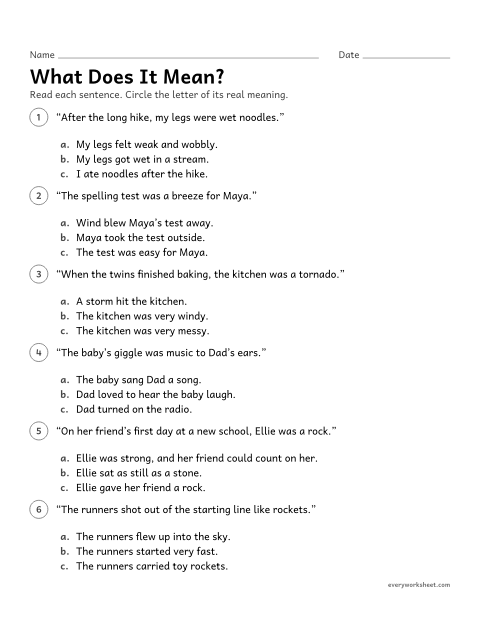
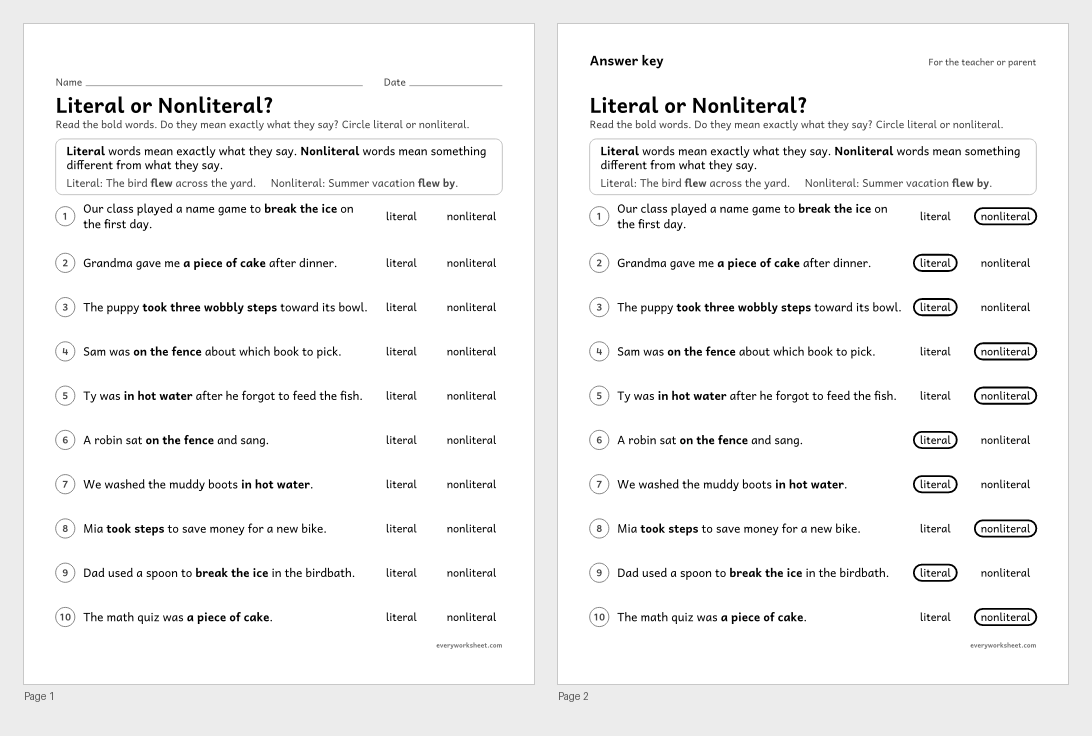
Telling the real (nonliteral) meaning of similes and metaphors from the literal one
Answer key on page 2
2 pages57 KB
 View all 2 pages
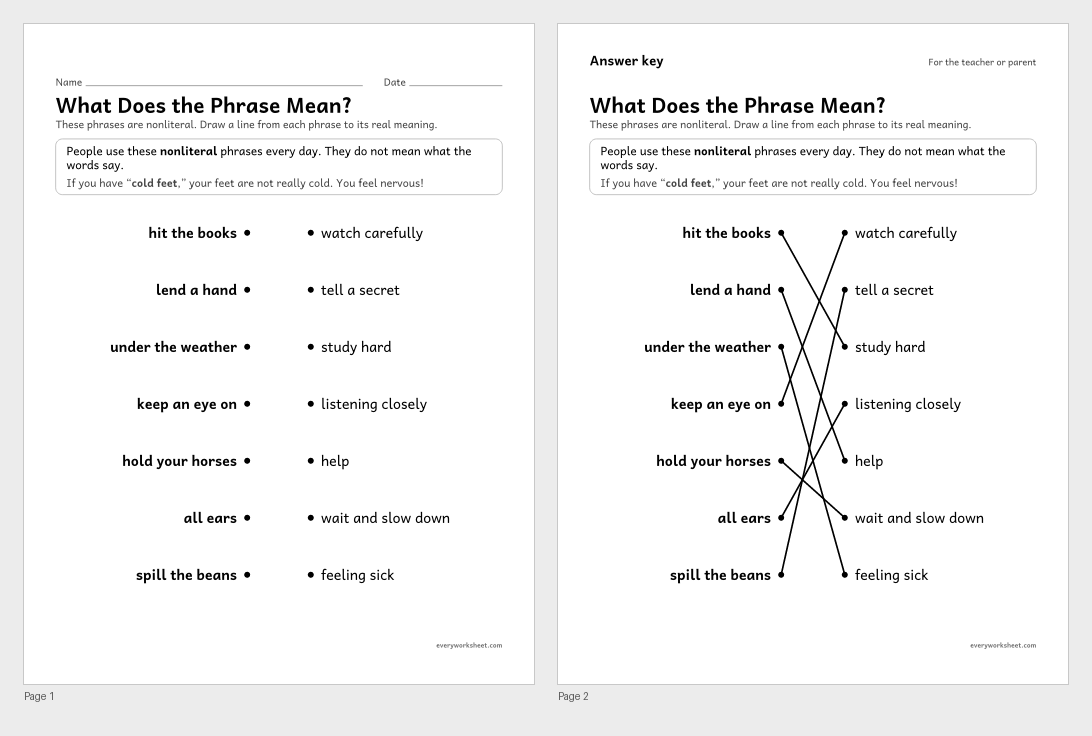
Telling literal from nonliteral meanings of the same phrase in context
Answer key on page 2
2 pages55 KB
 View all 2 pages
Matching common nonliteral phrases to their meanings
Answer key on page 2
2 pages39 KB
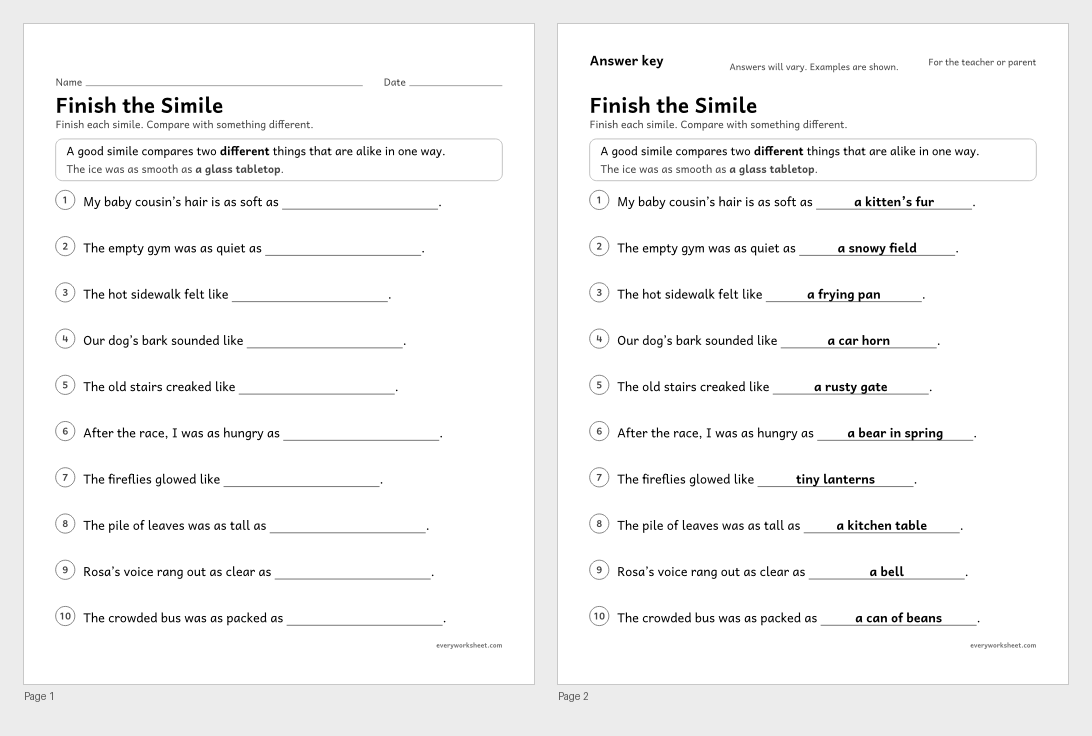 View all 2 pages
Completing similes with fresh comparisons
Answer key on page 2
2 pages48 KB
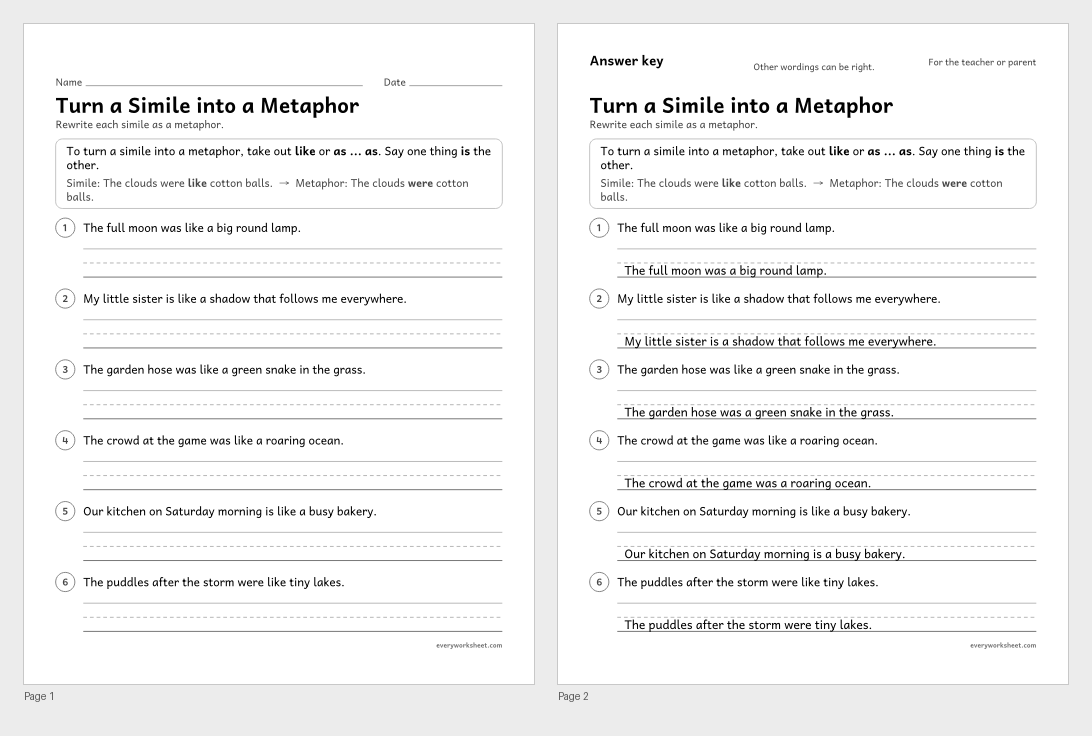 View all 2 pages
Rewriting similes as metaphors
Answer key on page 2
2 pages39 KB
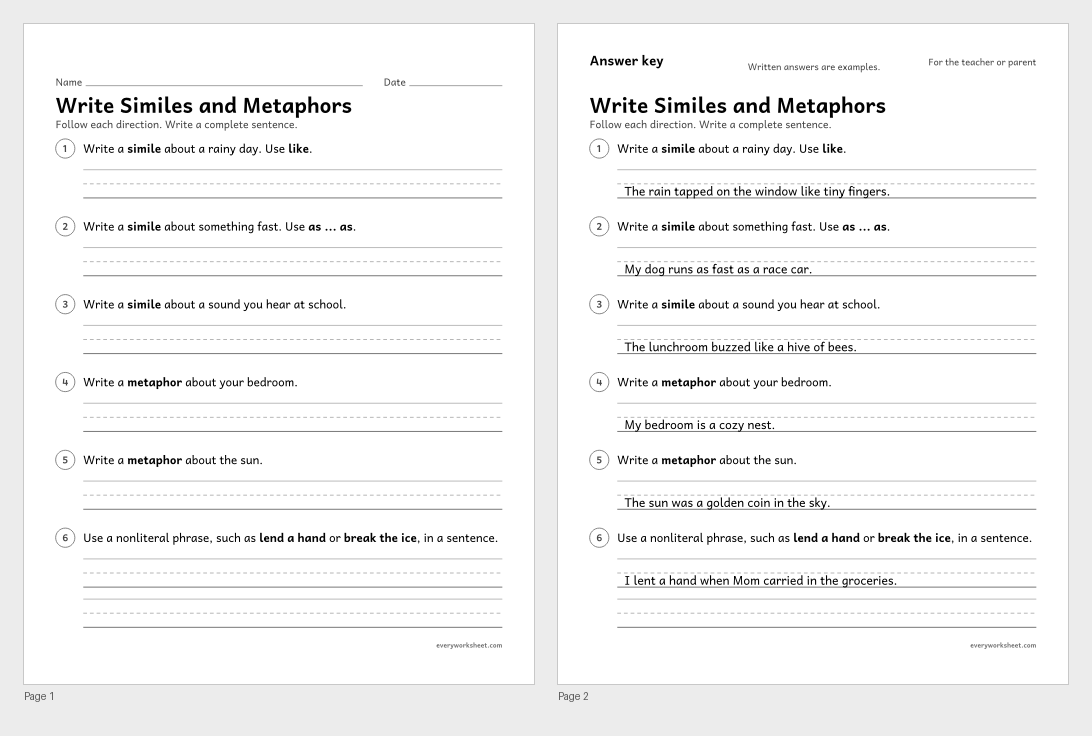 View all 2 pages
Writing original similes, metaphors, and nonliteral phrases
Answer key on page 2
2 pages42 KB
Print at 100% (actual size) for the cleanest tracing lines.
Similes and metaphors compare two different things to help the reader picture something. A simile uses like or as: "The snow was like a soft white blanket." A metaphor says one thing is another: "The classroom was a beehive." Both are nonliteral language: the words do not mean exactly what they say. The classroom is not really a beehive; it is busy and buzzing with noise.
These similes and metaphors worksheets start with a chart of examples and what they really mean. Practice pages ask children to decide simile or metaphor, spot sentences where like or as is not a simile ("Ava likes to read"), sort comparisons (cut and paste or write), find similes and metaphors in an original poem, choose what a comparison really means, tell literal from nonliteral uses of phrases like break the ice, and match everyday sayings to their meanings. Writing pages ask children to finish similes, turn similes into metaphors, and write their own. Every page with right answers has an answer key.
CCSS.ELA-LITERACY.RL.3.4Determine the meaning of words and phrases as they are used in a text, distinguishing literal from nonliteral language.CCSS.ELA-LITERACY.L.3.5.ADistinguish the literal and nonliteral meanings of words and phrases in context (e.g., take steps).A simile compares with like or as (fast like a rocket). A metaphor says one thing is another (he was a rocket).
Words that do not mean exactly what they say. "Break the ice" means help people feel comfortable, not break real ice.
Third graders learn to tell literal from nonliteral language. Similes and metaphors are taught in grades 3 to 5.
Yes. Every page with right answers has an answer key on page 2. Written answers show an example.