 View all 2 pages
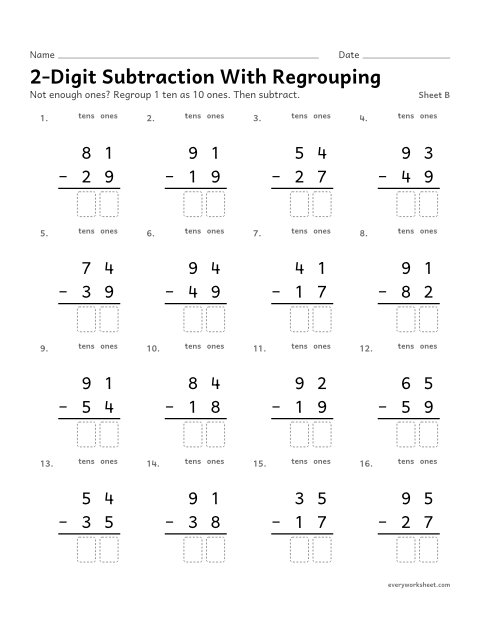
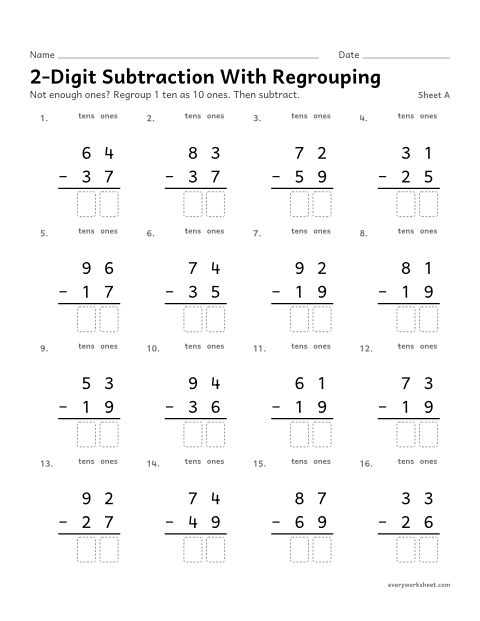
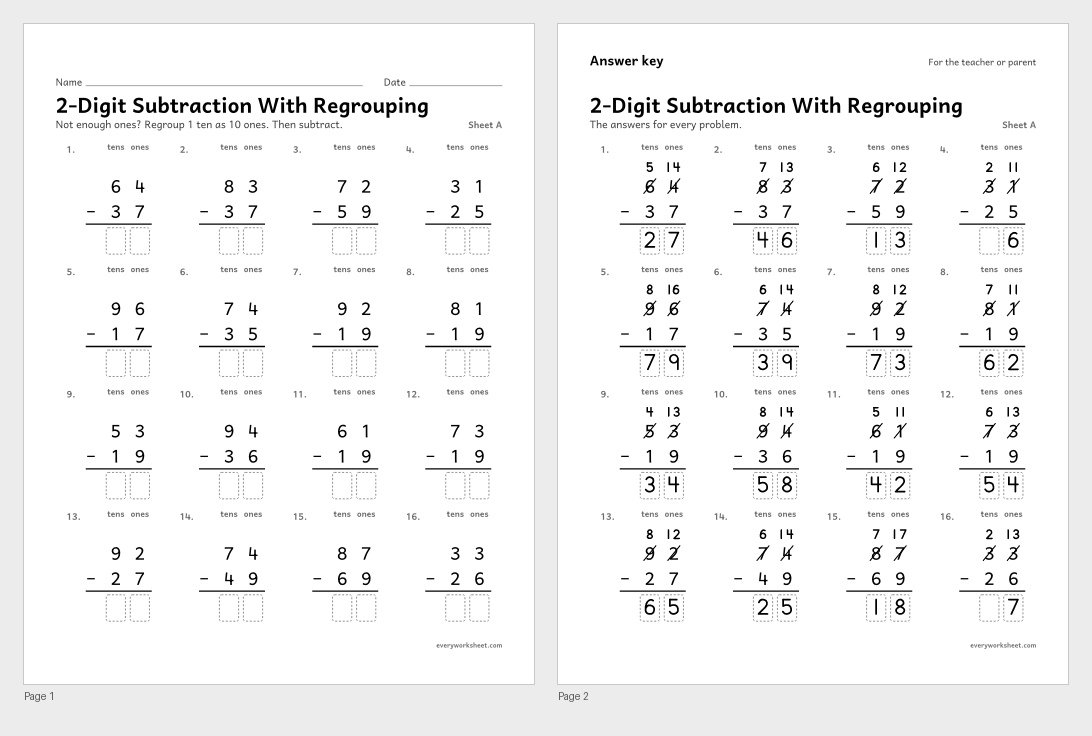
2-Digit subtraction with Regrouping, sheet A
Subtracting two-digit numbers with regrouping
Answer key on page 2
2 pages58 KB
2-digit subtraction with regrouping in columns, subtracting from tens and from 100, tens-then-ones and number line strategies, checking with addition, and find the mistake.
View all 2 pagesSubtracting two-digit numbers with regrouping
Answer key on page 2
2 pages58 KB
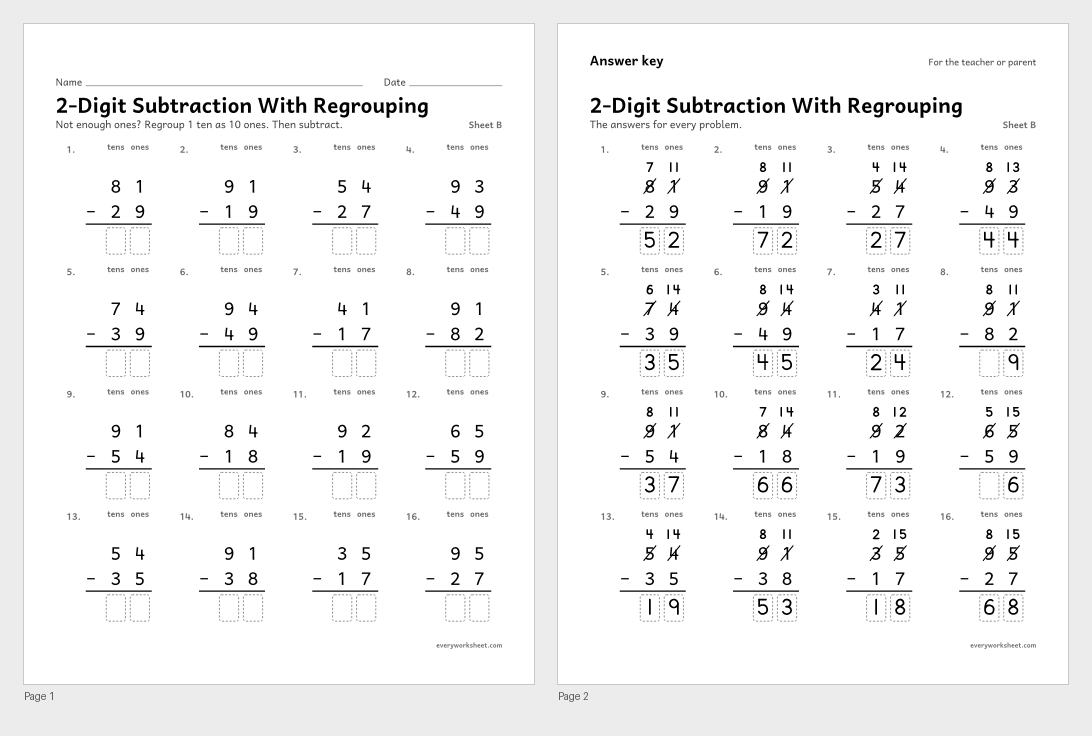 View all 2 pages
Subtracting two-digit numbers with regrouping
Answer key on page 2
2 pages58 KB
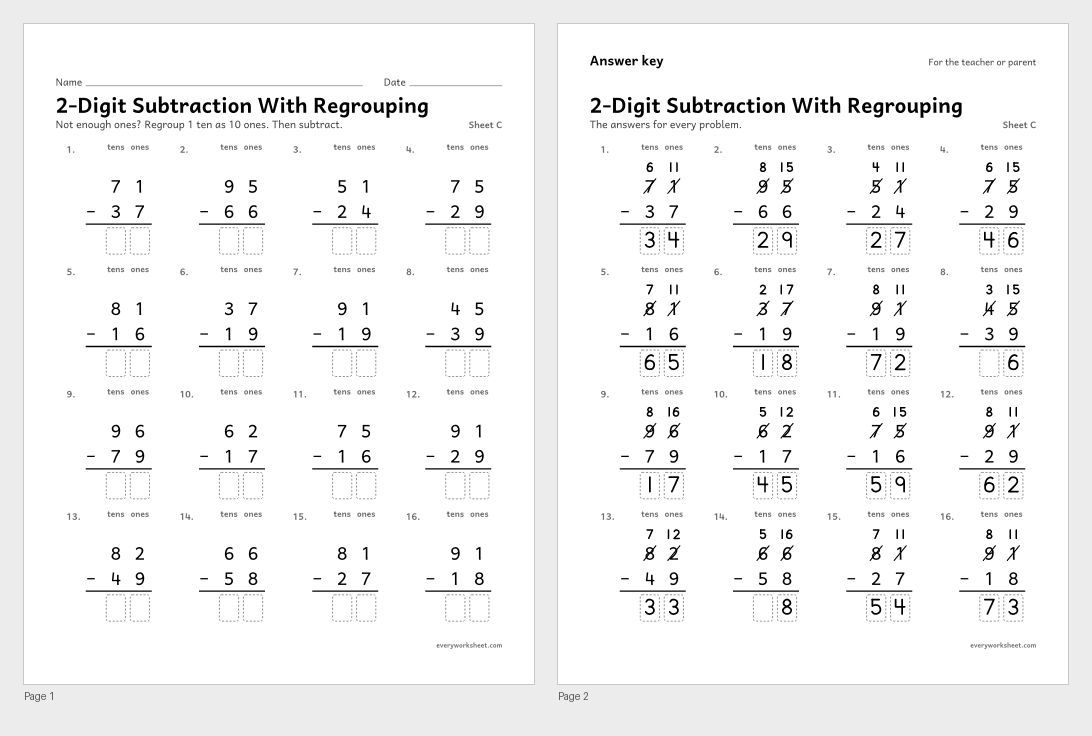 View all 2 pages
Subtracting two-digit numbers with regrouping
Answer key on page 2
2 pages58 KB
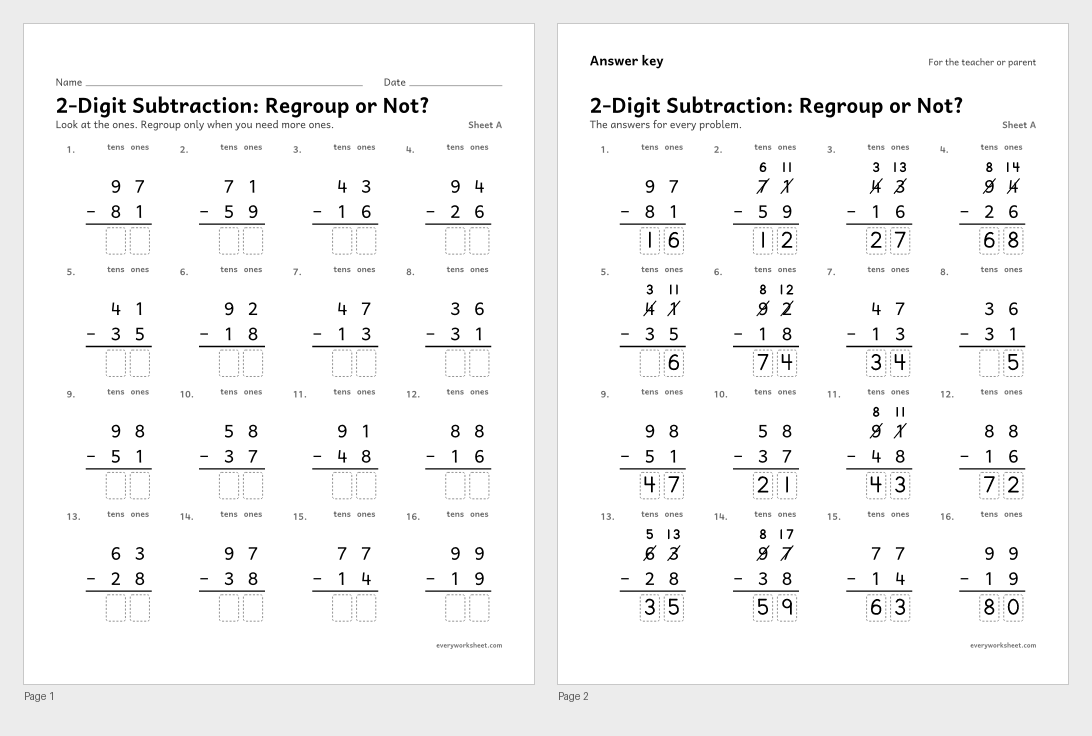 View all 2 pages
Deciding when to regroup in two-digit subtraction
Answer key on page 2
2 pages58 KB
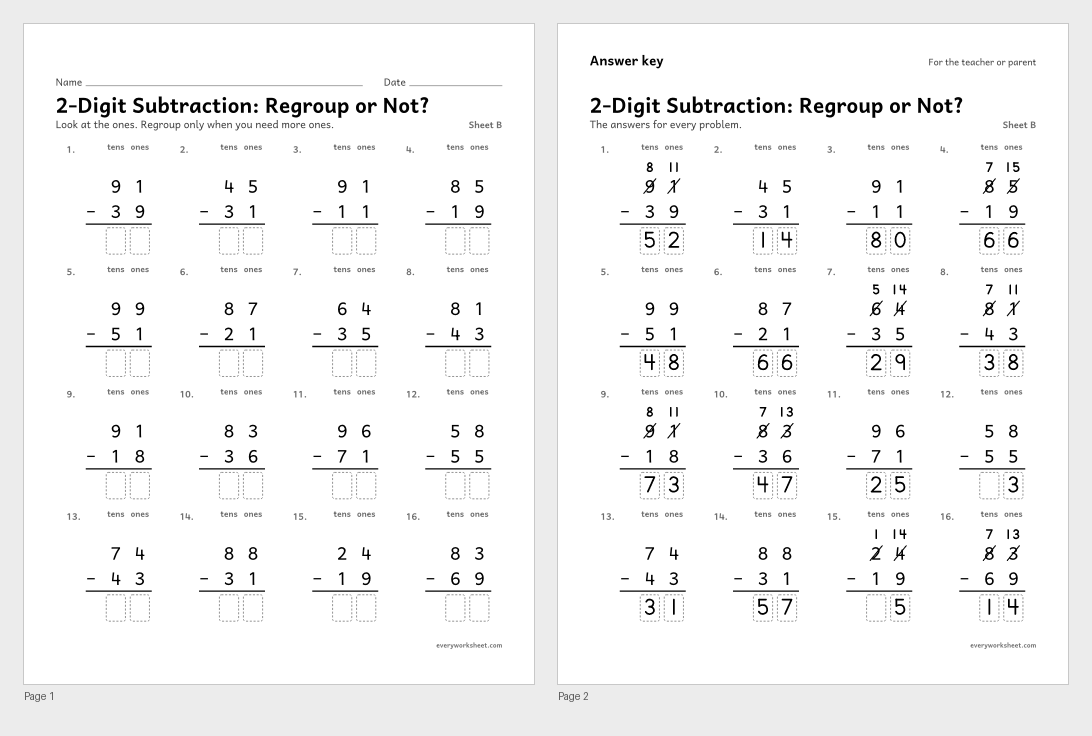 View all 2 pages
Deciding when to regroup in two-digit subtraction
Answer key on page 2
2 pages57 KB
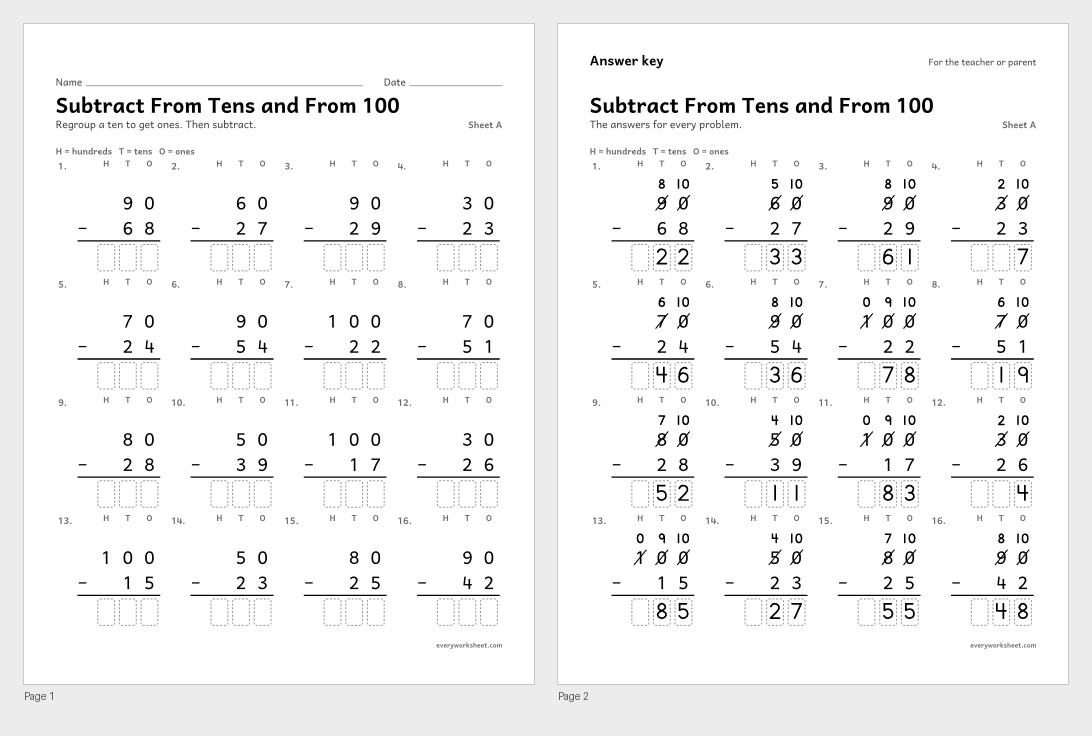 View all 2 pages
Subtracting from multiples of 10 and from 100
Answer key on page 2
2 pages58 KB
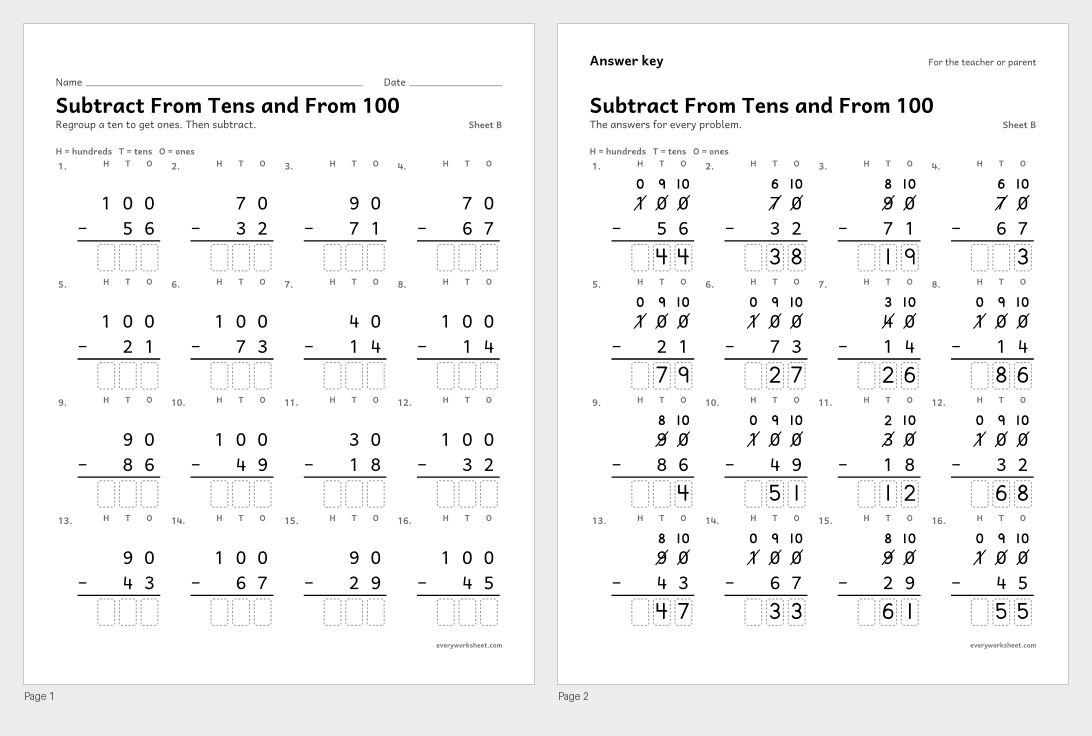 View all 2 pages
Subtracting from multiples of 10 and from 100
Answer key on page 2
2 pages59 KB
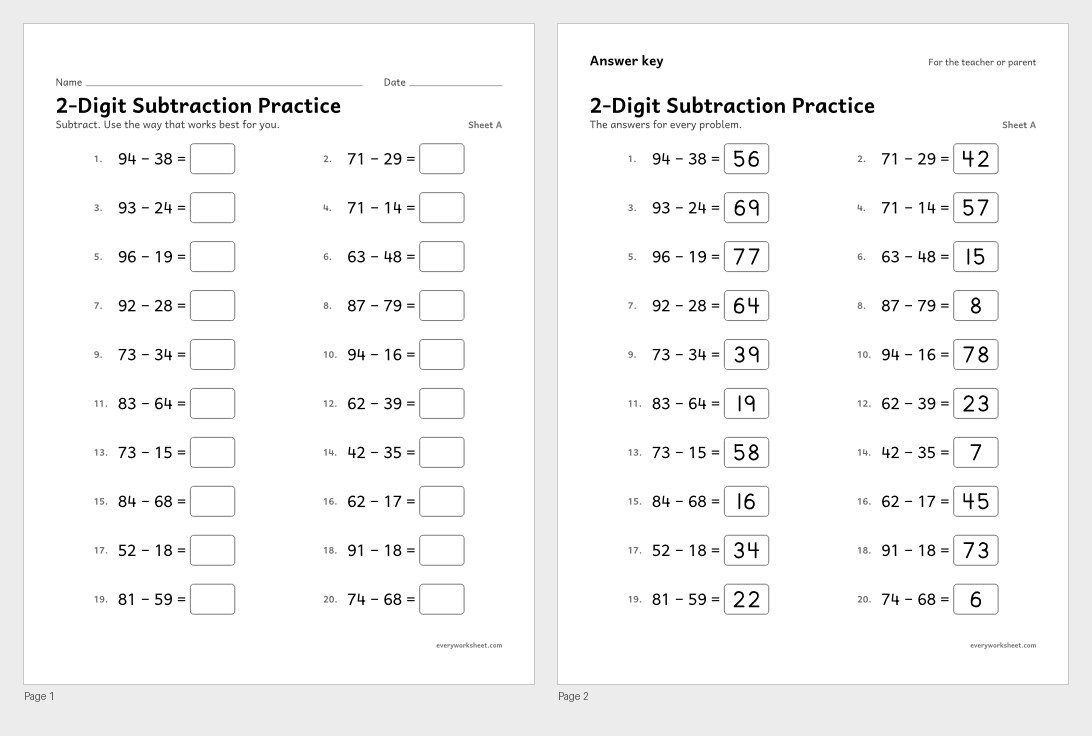 View all 2 pages
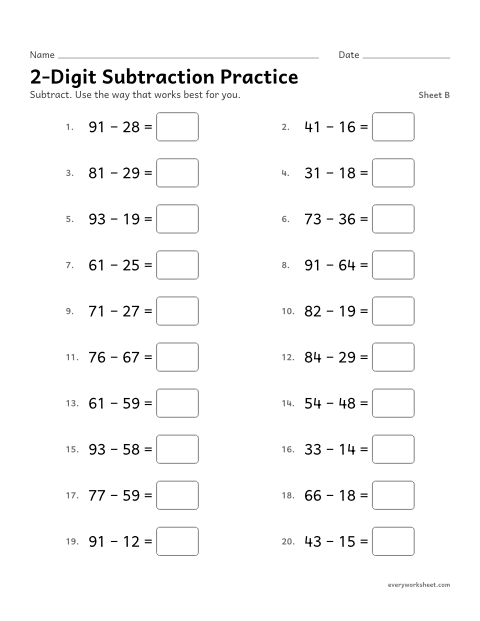
Subtracting within 100 fluently
Answer key on page 2
2 pages95 KB
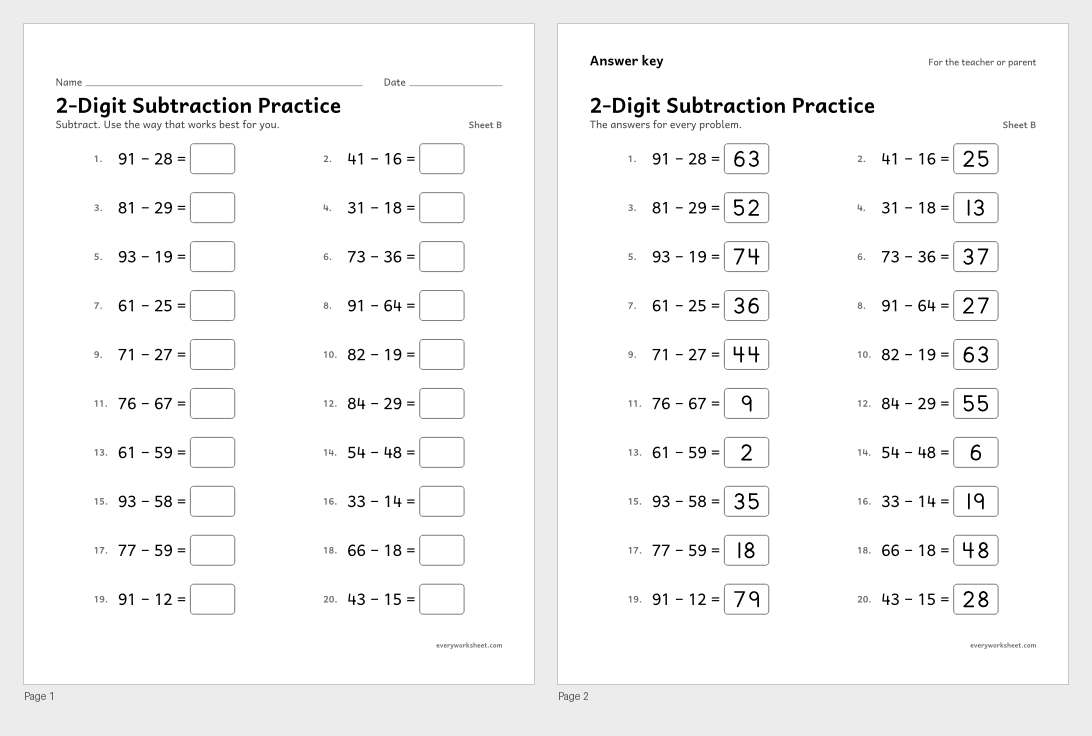 View all 2 pages
Subtracting within 100 fluently
Answer key on page 2
2 pages95 KB
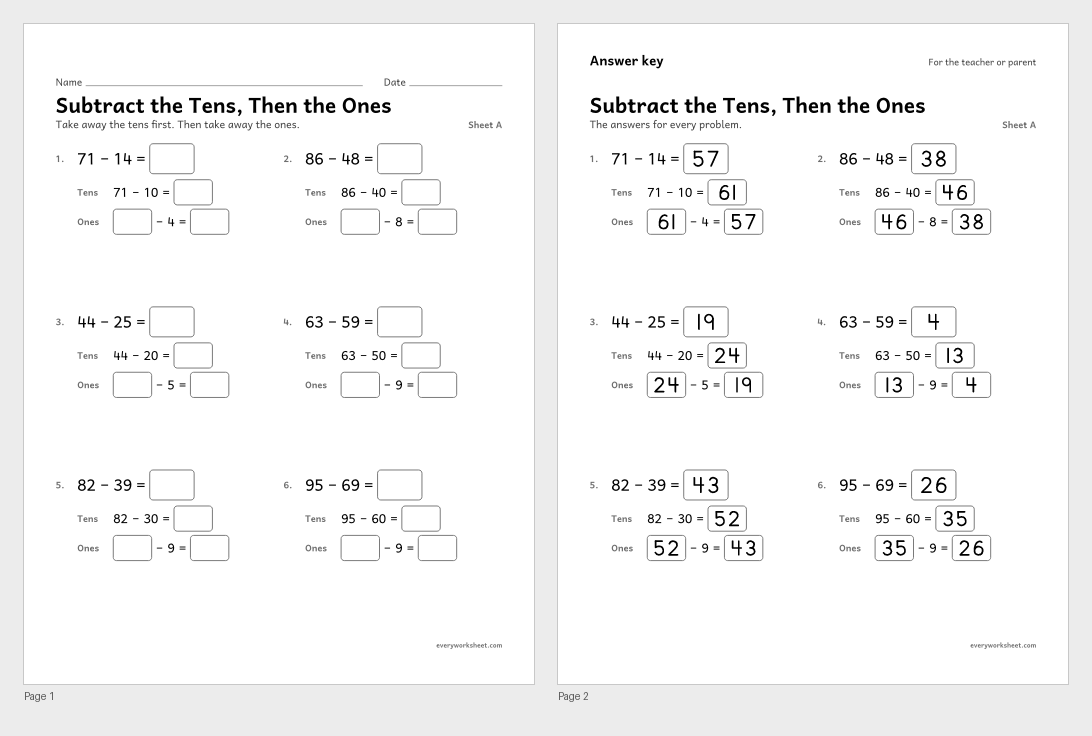 View all 2 pages
Subtracting two-digit numbers by place value (tens, then ones)
Answer key on page 2
2 pages86 KB
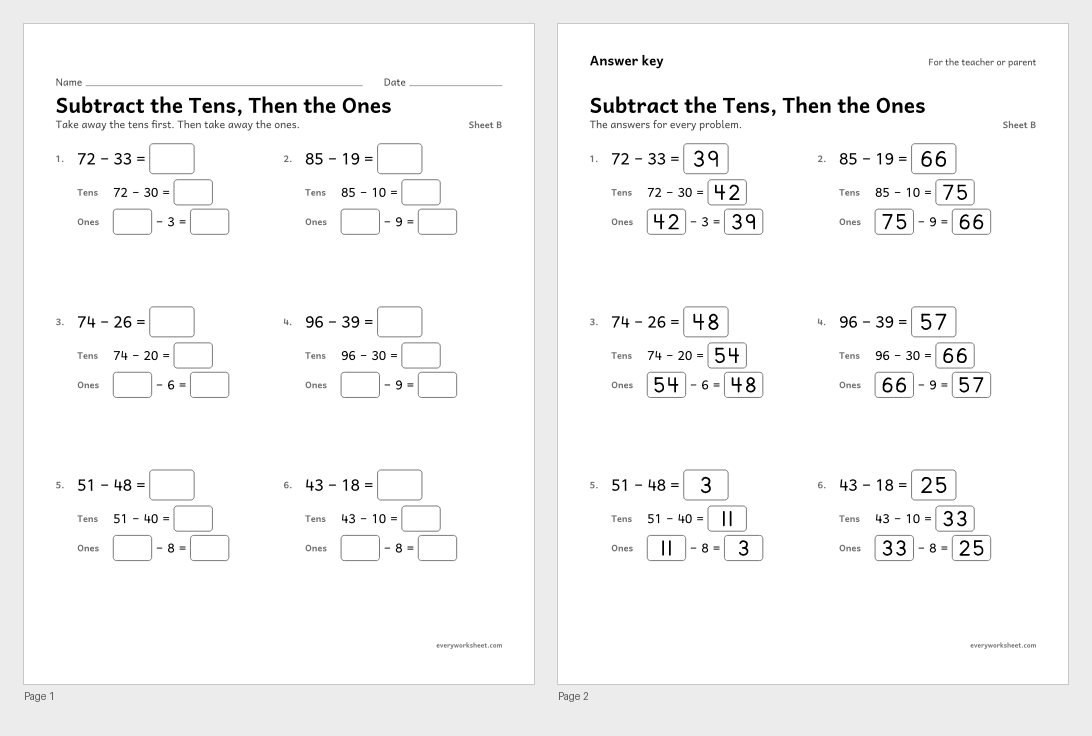 View all 2 pages
Subtracting two-digit numbers by place value (tens, then ones)
Answer key on page 2
2 pages86 KB
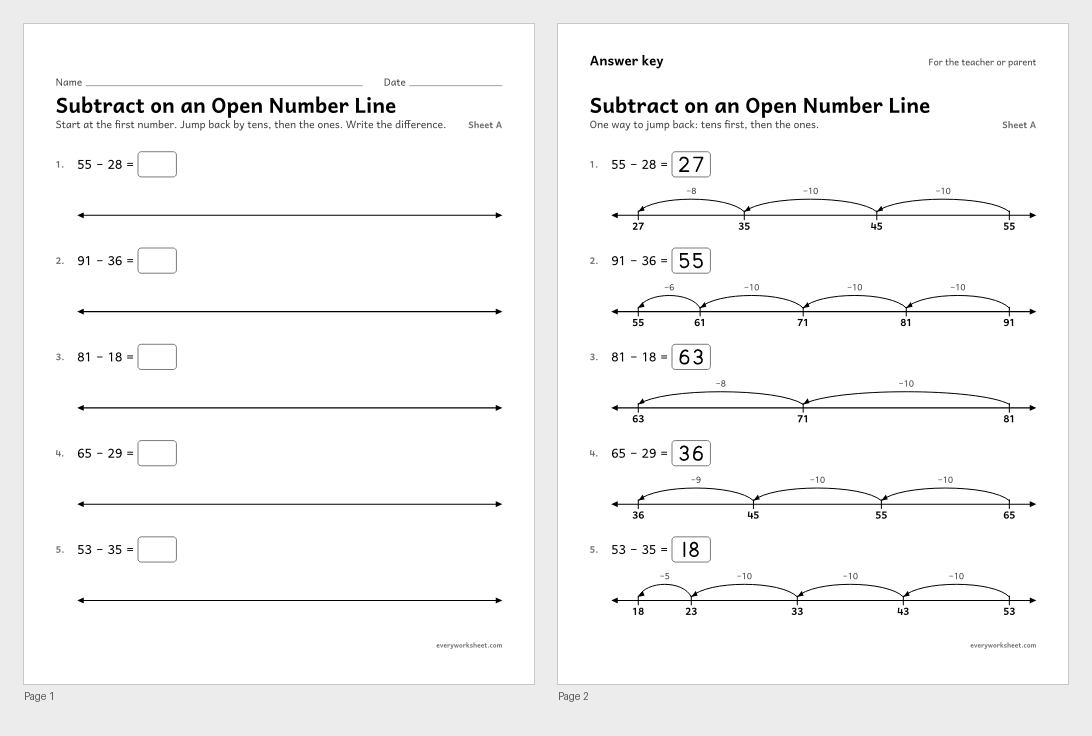 View all 2 pages
Showing two-digit differences on a number line
Answer key on page 2
2 pages48 KB
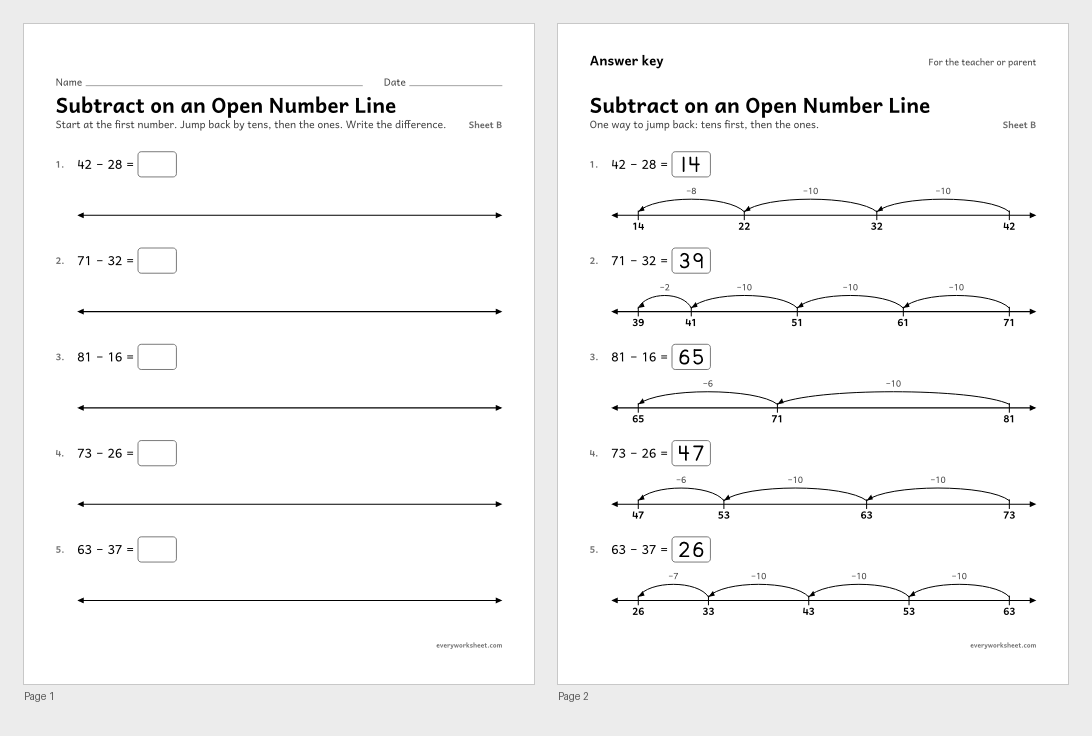 View all 2 pages
Showing two-digit differences on a number line
Answer key on page 2
2 pages48 KB
 View all 2 pages
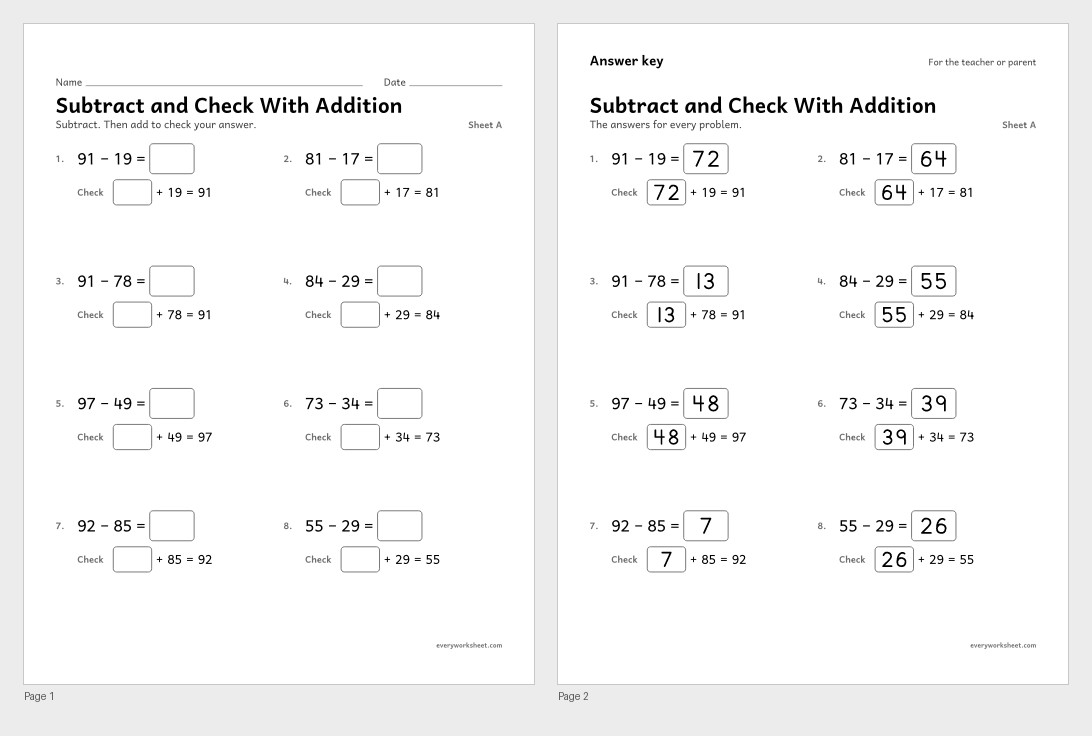
Using addition to check subtraction
Answer key on page 2
2 pages83 KB
 View all 2 pages
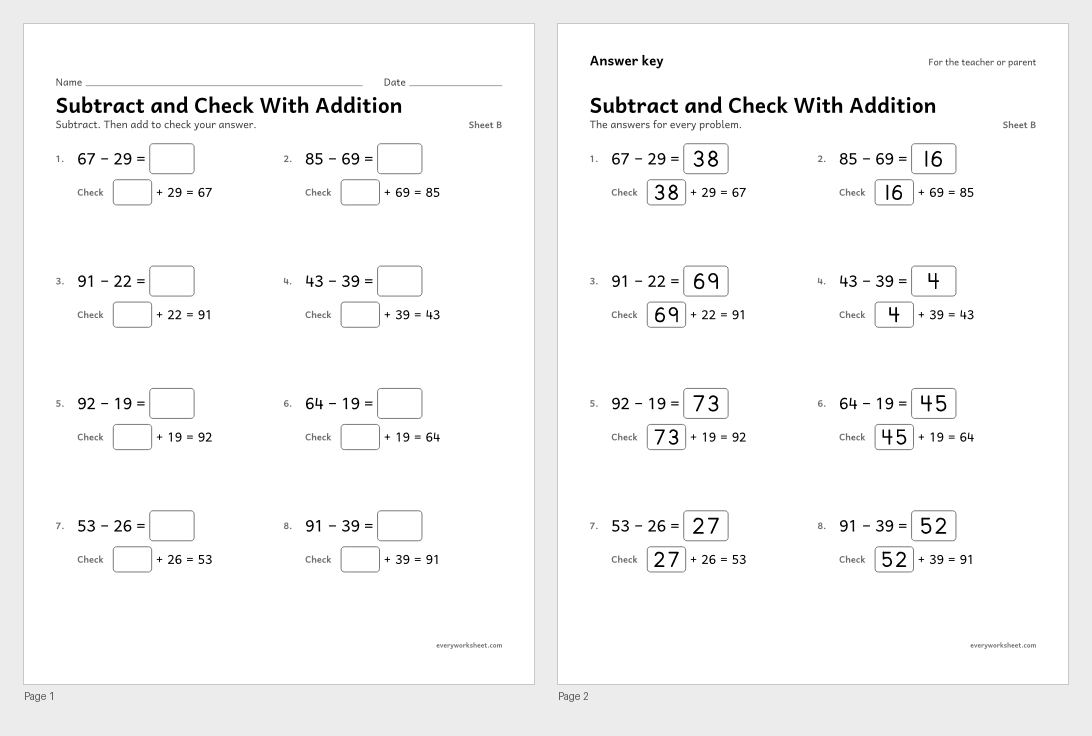
Using addition to check subtraction
Answer key on page 2
2 pages84 KB
 View all 2 pages
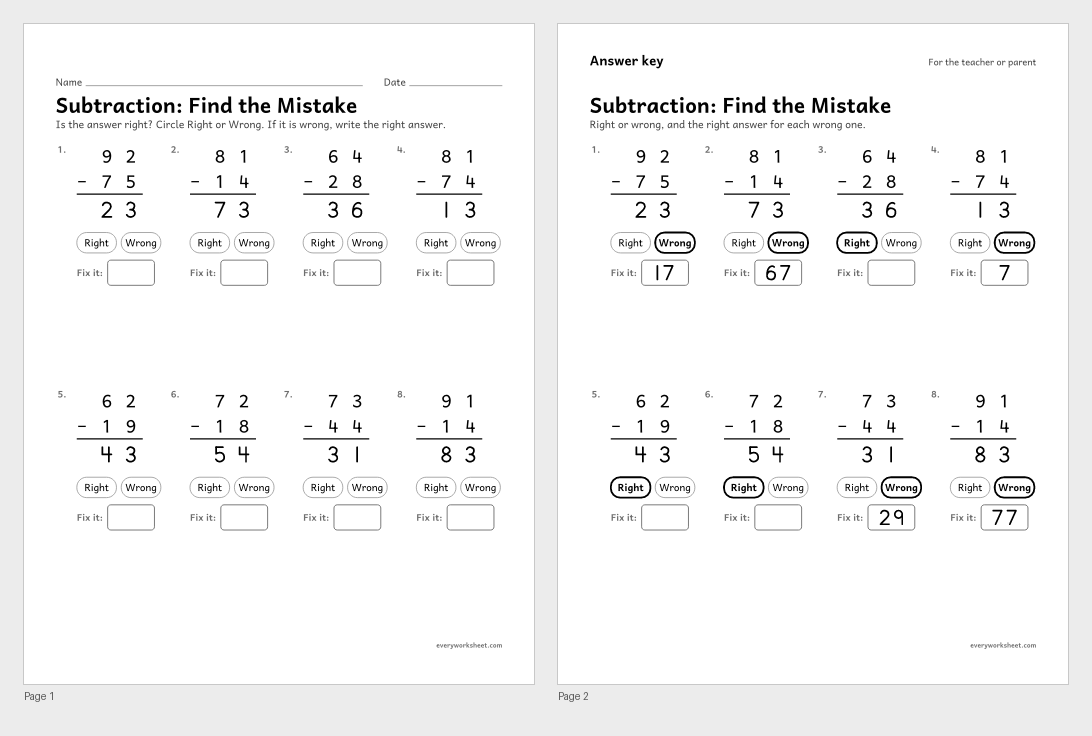
Explaining two-digit subtraction with regrouping by finding a mistake
Answer key on page 2
2 pages51 KB
Print at 100% (actual size) for the cleanest tracing lines.
Subtraction with regrouping (some say borrowing) is usually the hardest new skill of 2nd grade. When there are not enough ones to take away, the child trades 1 ten for 10 ones. These worksheets build that step with room to cross out and rewrite the digits, then mix in problems that do not need it.
Strategy pages show the same subtraction a second way: take away the tens and then the ones, jump back on an open number line, or check the answer with addition. Find the Mistake pages show the most common slip, taking the smaller digit from the bigger one, so children learn to spot it.
Most pages come as Sheet A, B and C. Every page has an answer key on page 2, and the column keys show the regrouping: the crossed-out digits and the new ones written above. Pages print in black and white on US Letter or A4.
CCSS.MATH.CONTENT.2.NBT.B.5Fluently add and subtract within 100 using strategies based on place value, properties of operations, and/or the relationship between addition and subtraction.CCSS.MATH.CONTENT.2.NBT.B.9Explain why addition and subtraction strategies work, using place value and the properties of operations.CCSS.MATH.CONTENT.2.MD.B.6Represent whole numbers as lengths from 0 on a number line diagram with equally spaced points corresponding to the numbers 0, 1, 2, ..., and represent whole-number sums and differences within 100 on a number line diagram.When the top digit in a column is smaller than the bottom digit, you trade 1 ten for 10 ones (or 1 hundred for 10 tens). For 52 − 27, 2 ones is not enough, so 52 becomes 4 tens and 12 ones, and 12 − 7 = 5, 4 − 2 = 2, so the answer is 25.
Yes. Borrowing is an older name for the same step. Regrouping is clearer, because nothing is paid back: the ten is just broken into ones.
Taking the smaller digit from the bigger one, so 52 − 27 comes out as 35. The Find the Mistake pages show this slip on purpose so children learn to catch it.
Yes. Every page has an answer key on page 2. The column keys show the crossed-out digits and the regrouped digits written above them.