 View larger
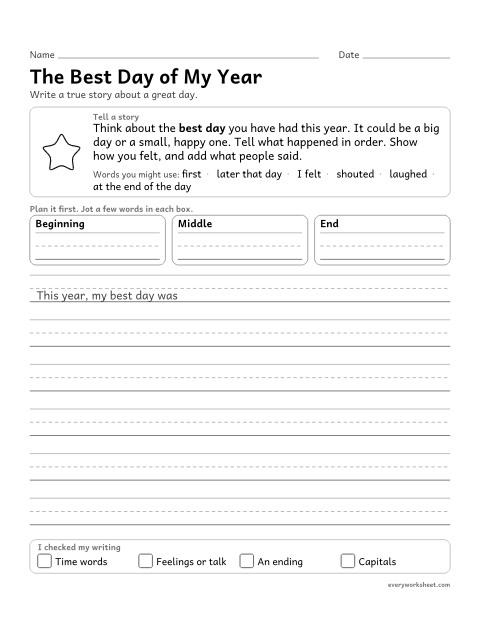
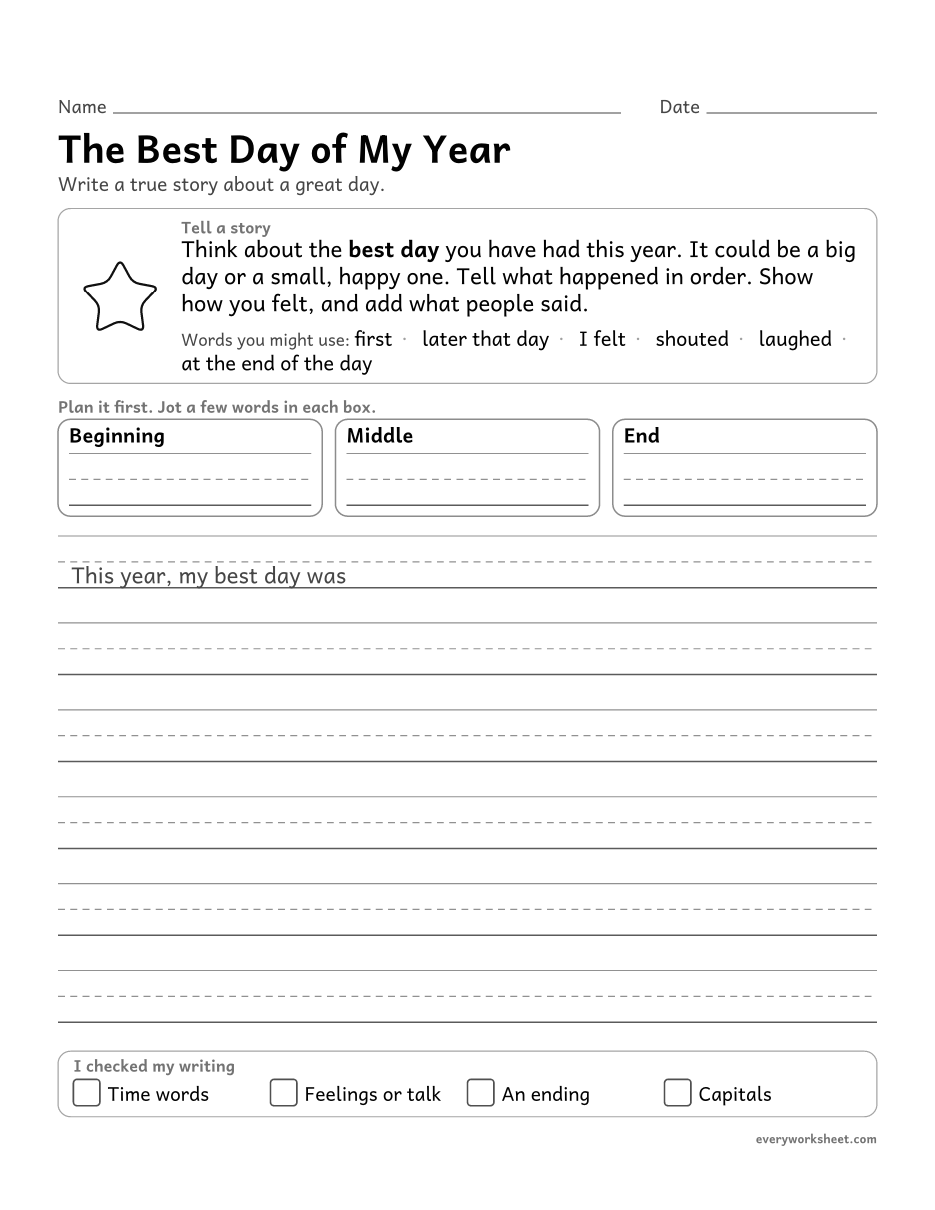
The best day of my year
Writing a true narrative with events in order, feelings, and an ending
1 page31 KB
Story, informative, and opinion writing prompts with a plan and a full page of lines, plus planners and a revise-and-edit page.
View largerWriting a true narrative with events in order, feelings, and an ending
1 page31 KB
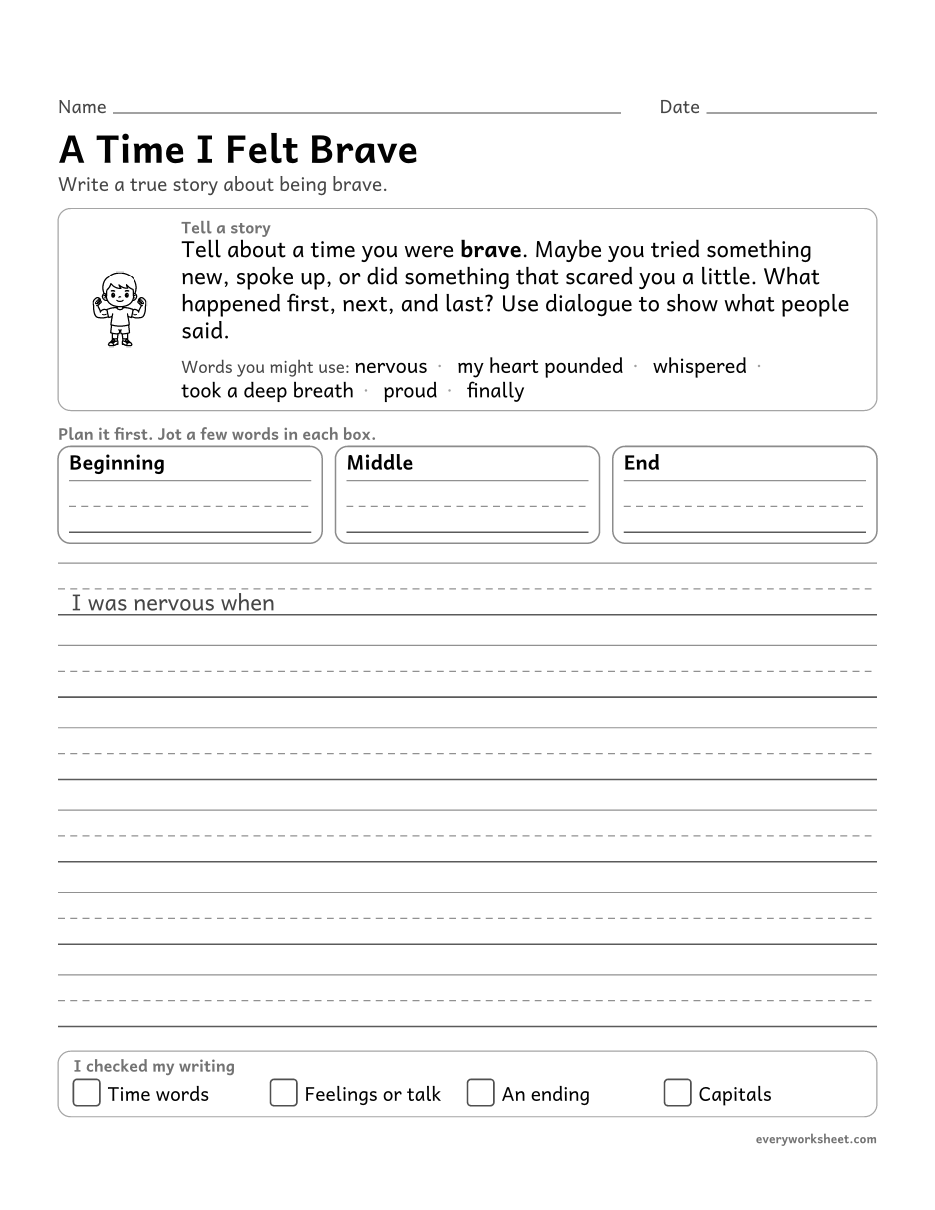 View larger
Using dialogue and feelings to show how a character responds in a true story
1 page55 KB
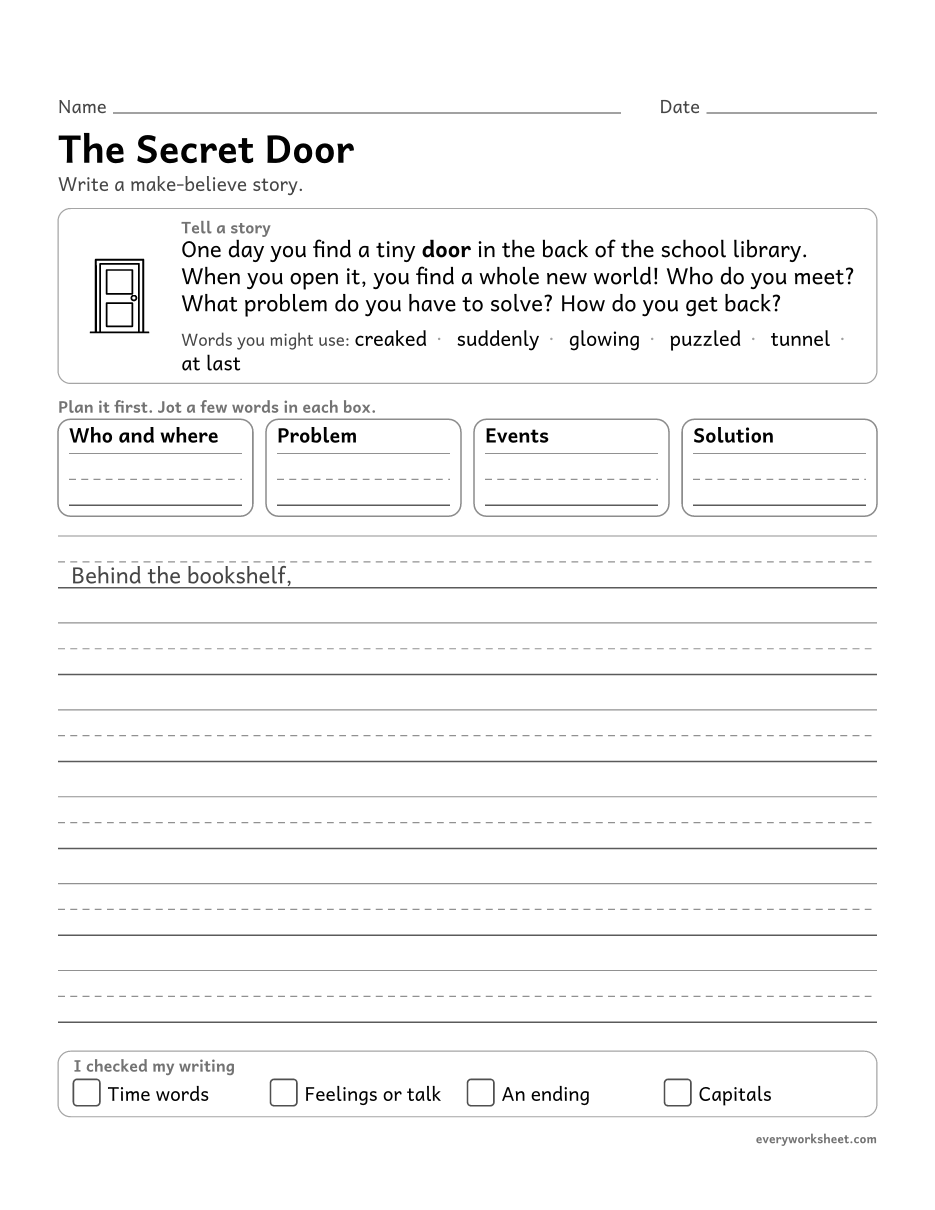 View larger
Planning an imagined story with characters, a setting, a problem, and a solution
1 page34 KB
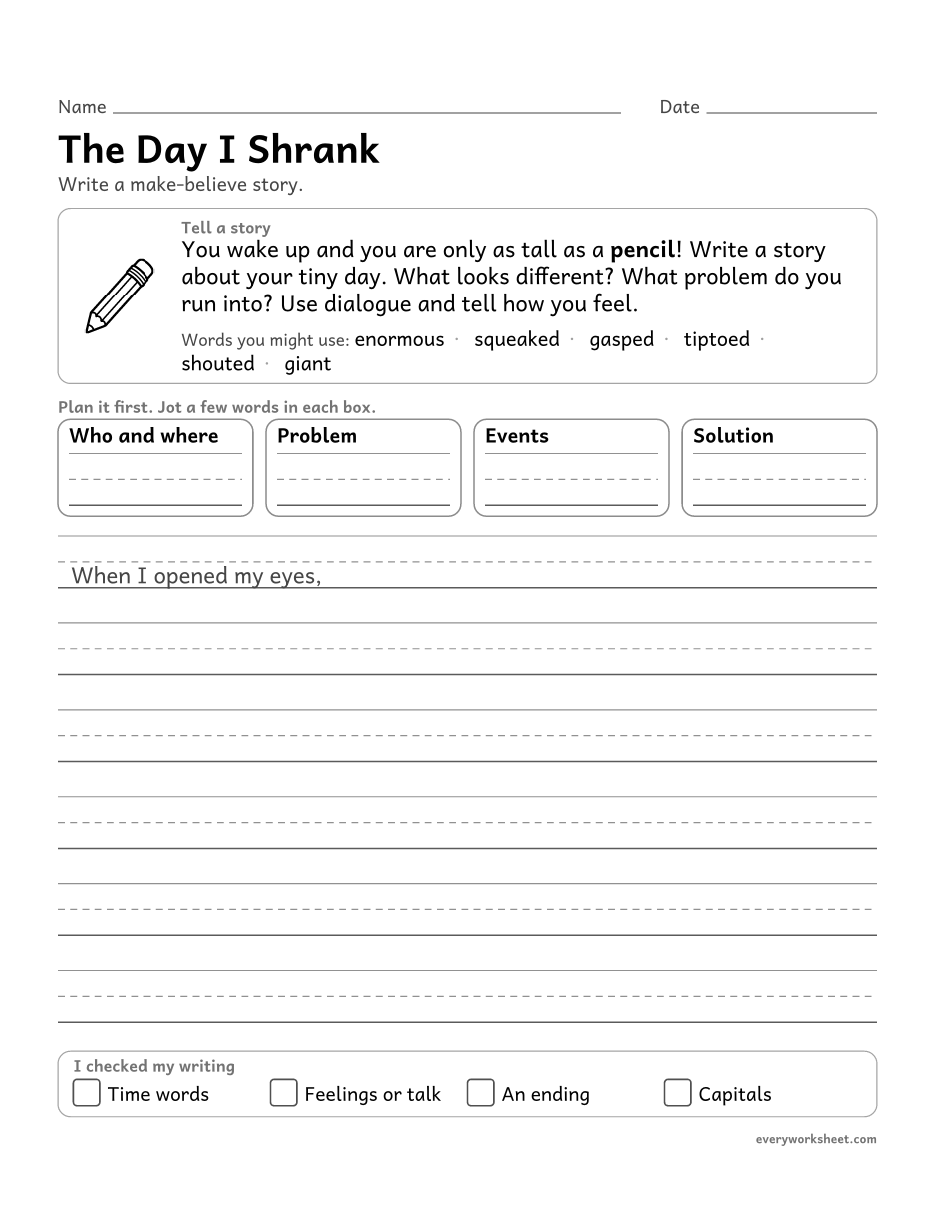 View larger
Using dialogue, description, and feelings in an imagined story
1 page42 KB
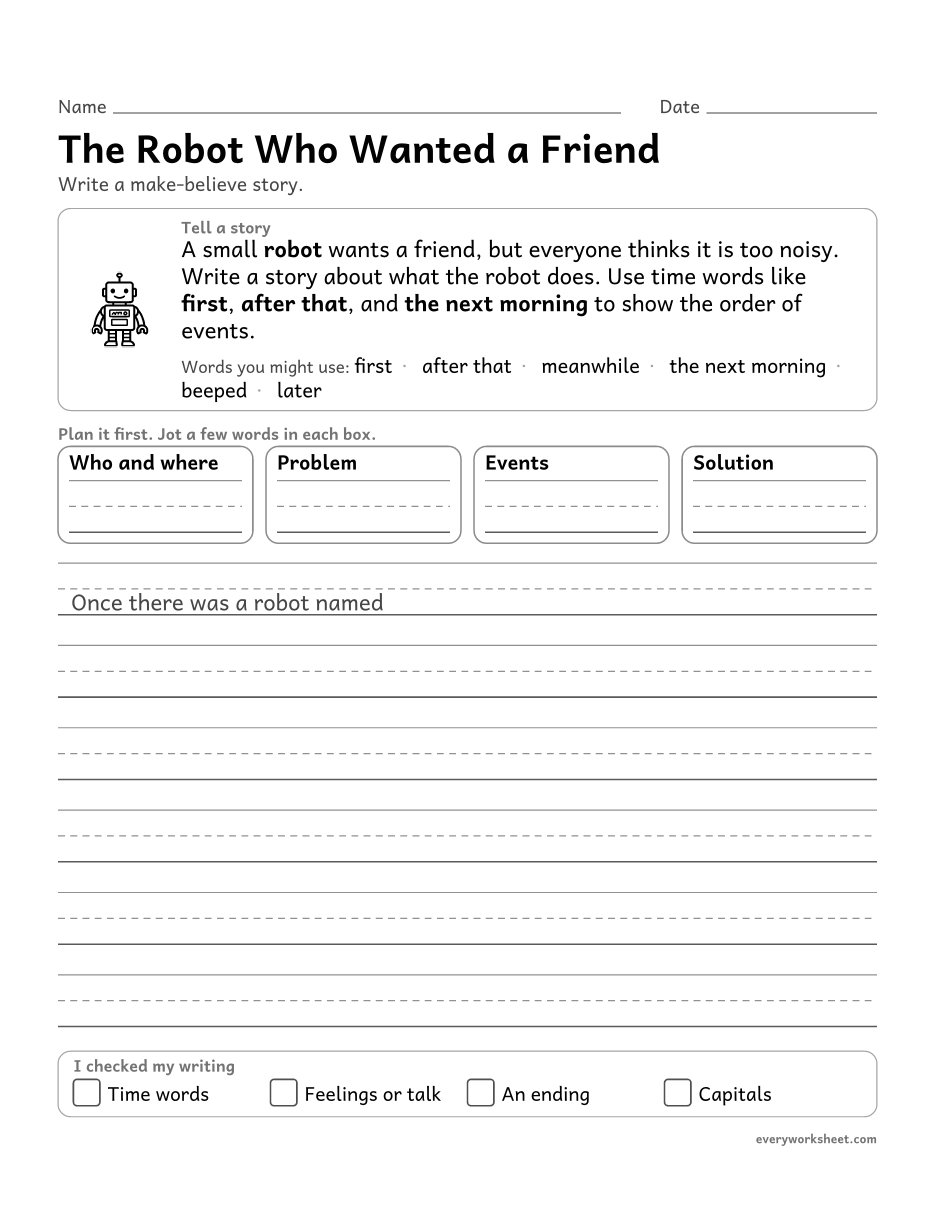 View larger
Using time words to show the order of events in an imagined story
1 page46 KB
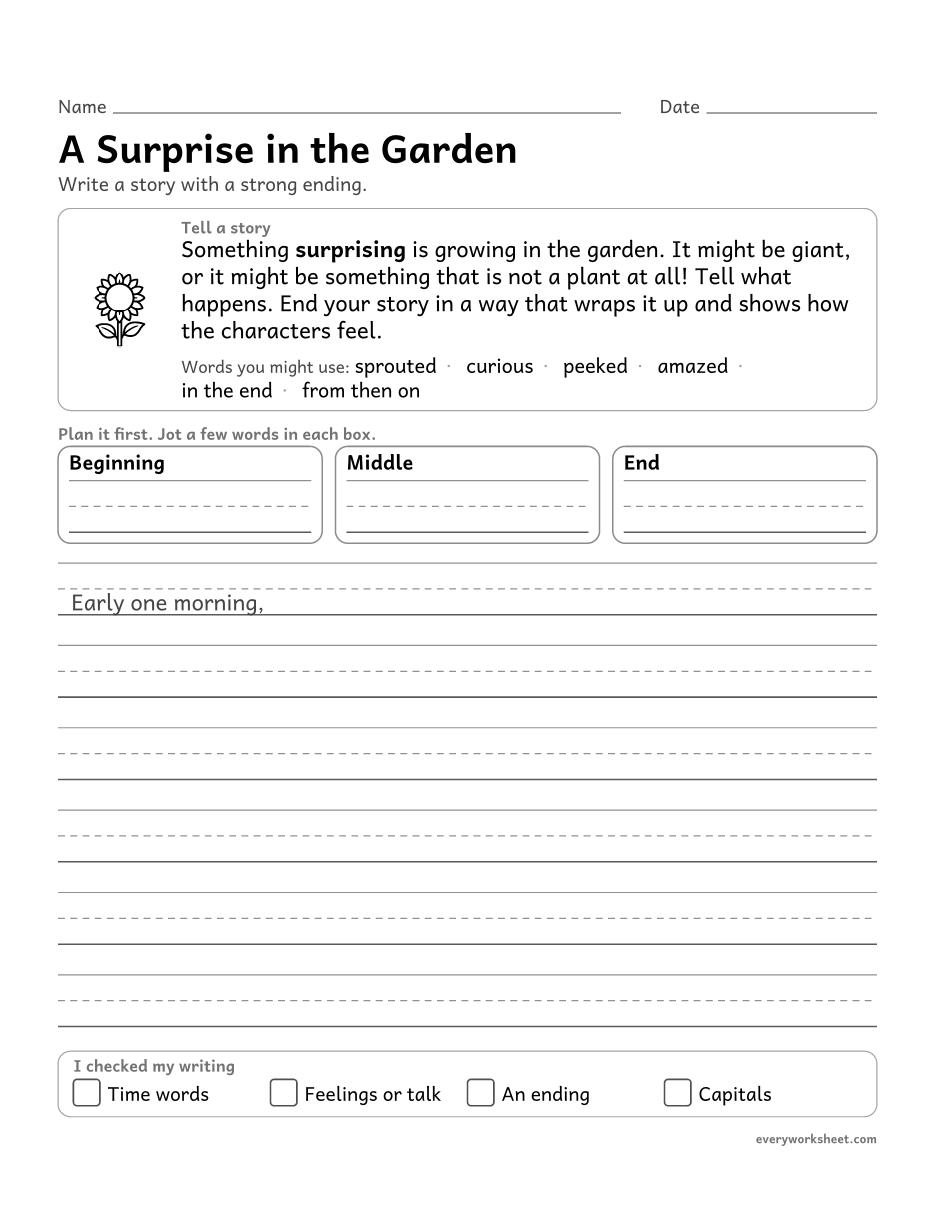 View larger
Writing an imagined story that ends with a clear sense of closure
1 page44 KB
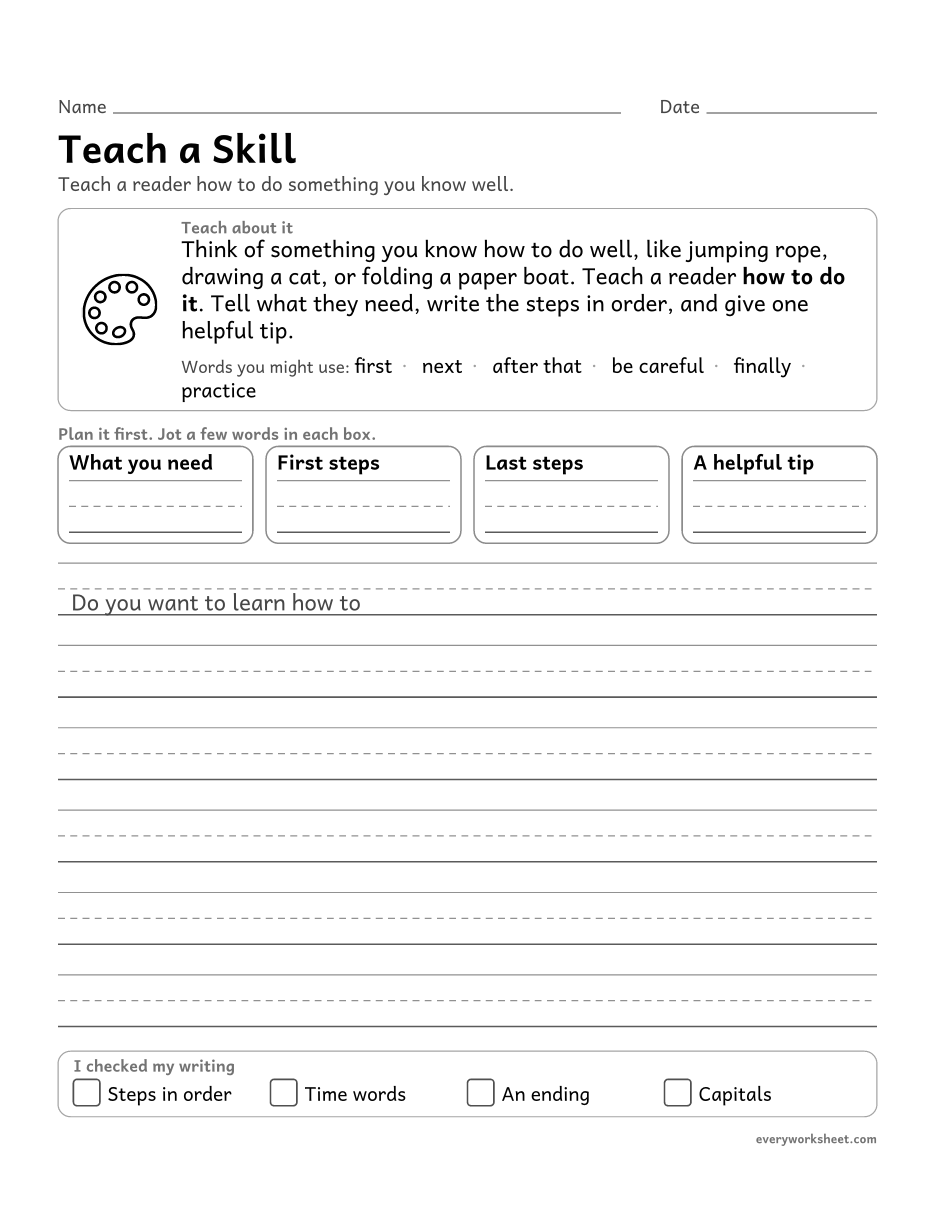 View larger
Writing a how-to piece with materials, steps in order, and a closing tip
1 page52 KB
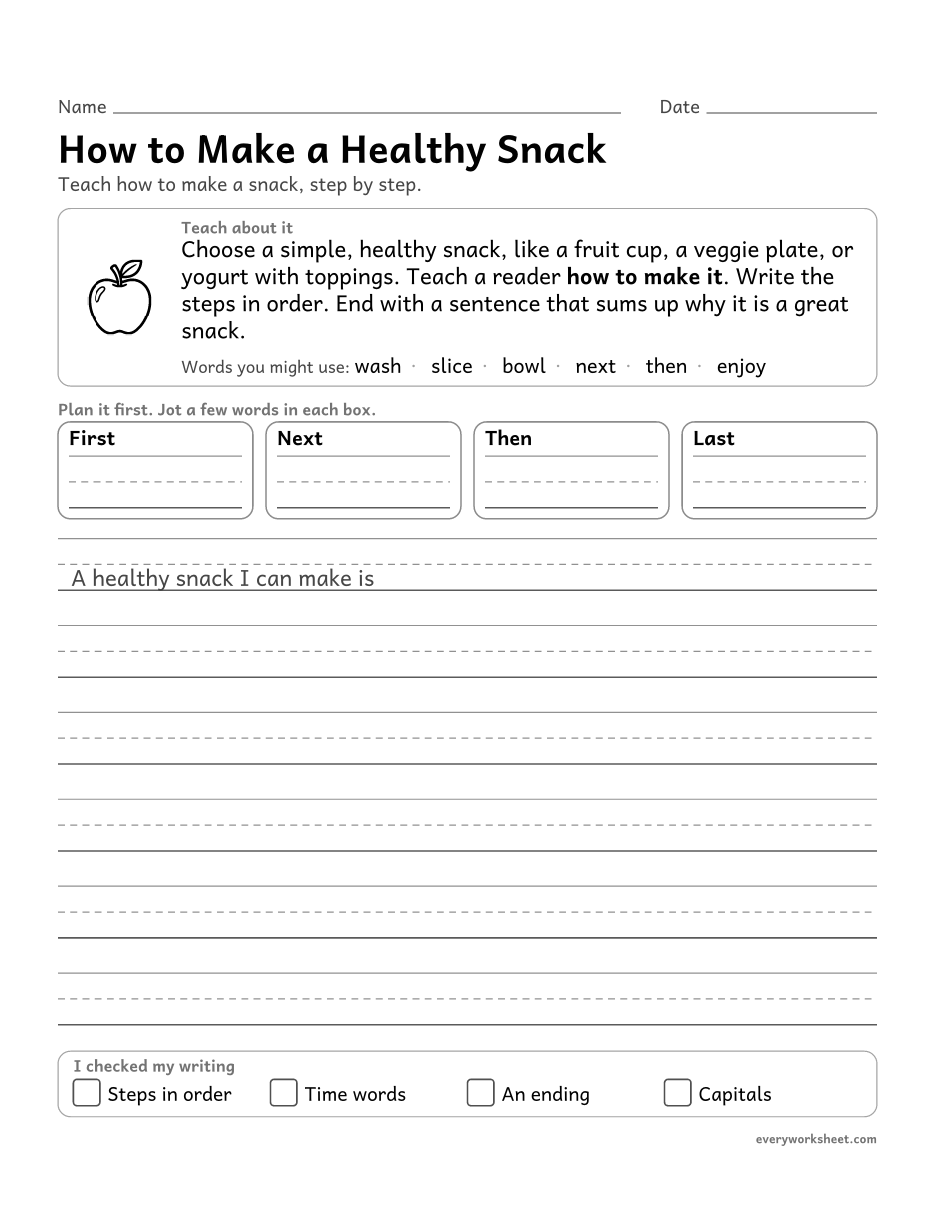 View larger
Writing a how-to piece with steps in order and a concluding statement
1 page48 KB
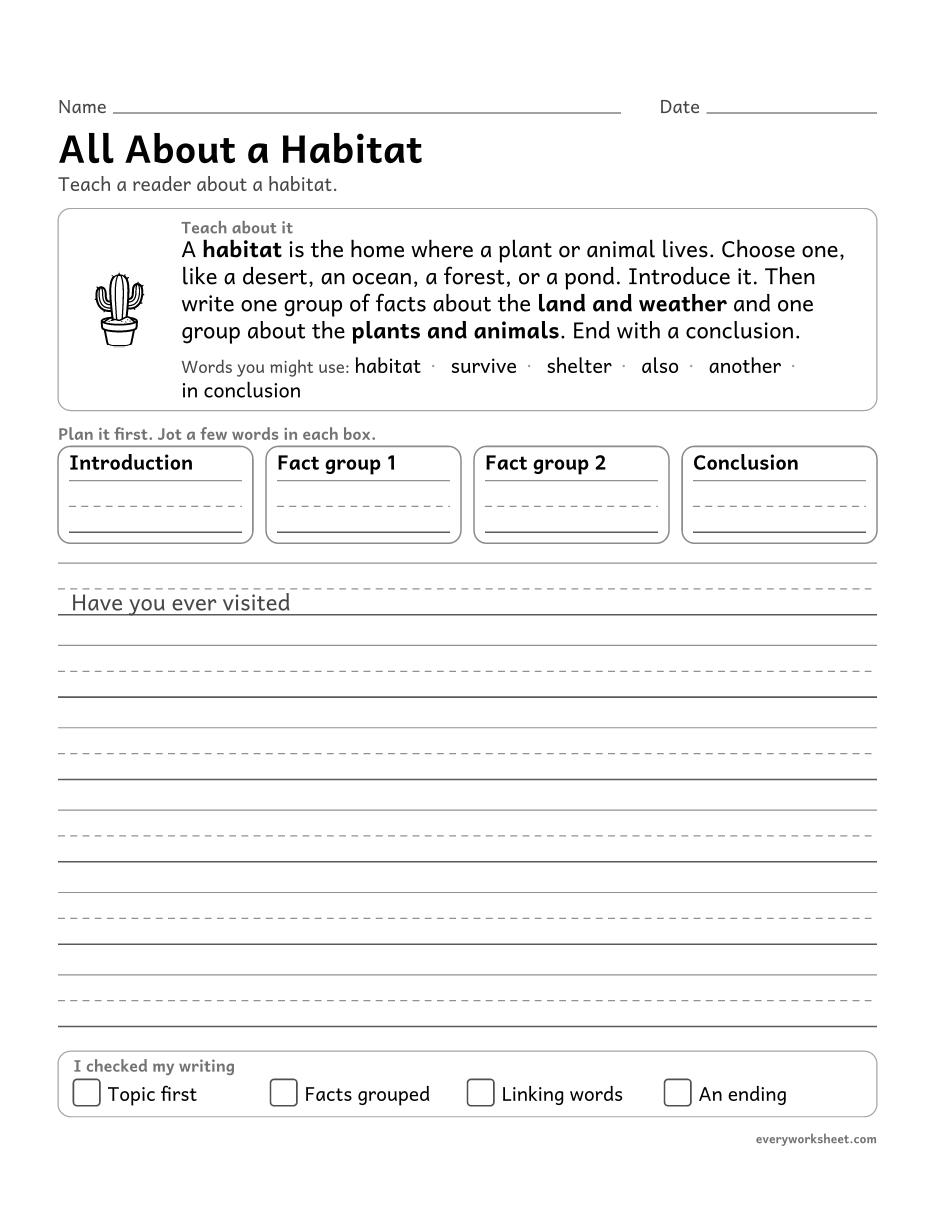 View larger
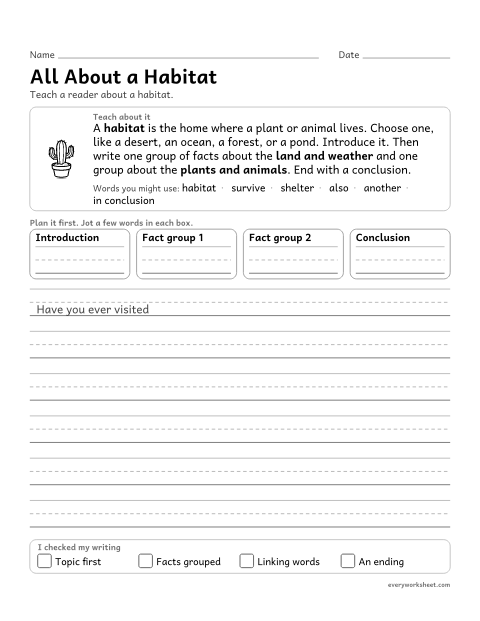
Introducing a topic and grouping related facts together in an informative piece
1 page47 KB
 View larger
Using linking words to connect facts in an informative piece
1 page37 KB
 View larger
 View larger
 View larger
Introducing the topic, stating an opinion, and listing reasons in order
1 page60 KB
 View larger
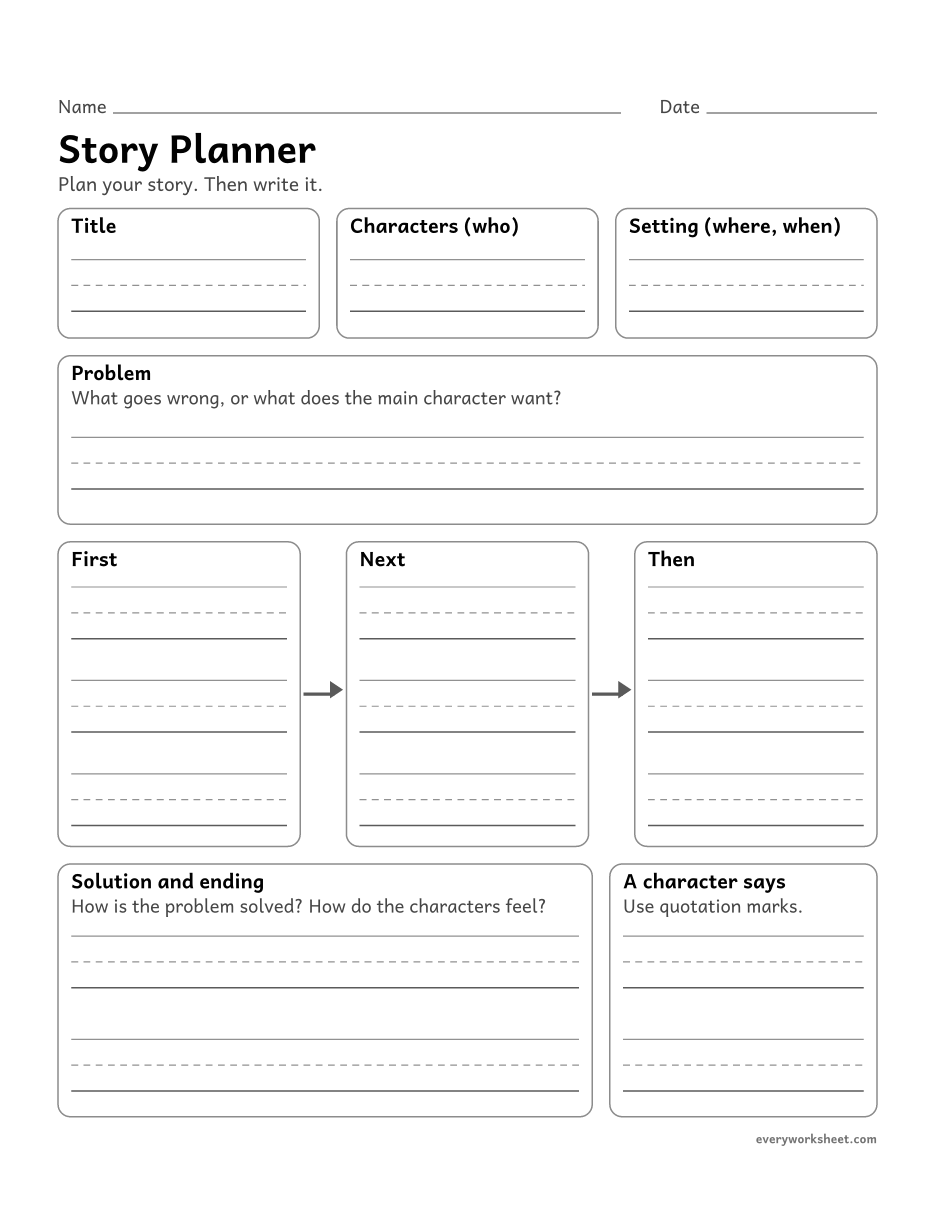
Planning a story with characters, a setting, a problem, events in order, and a solution
1 page30 KB
 View larger
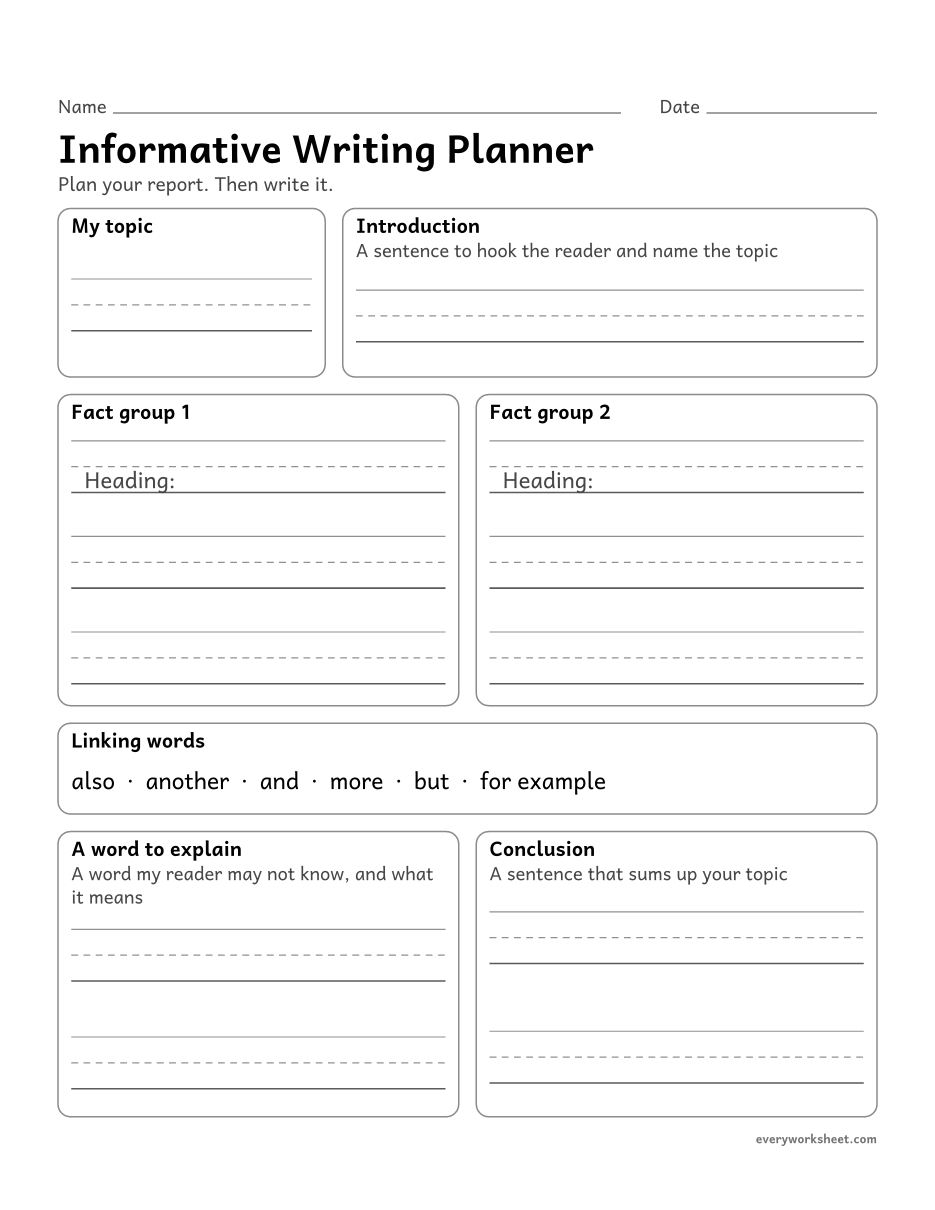
Planning an informative piece: a topic, groups of related facts, and a conclusion
1 page29 KB
 View all 2 pages
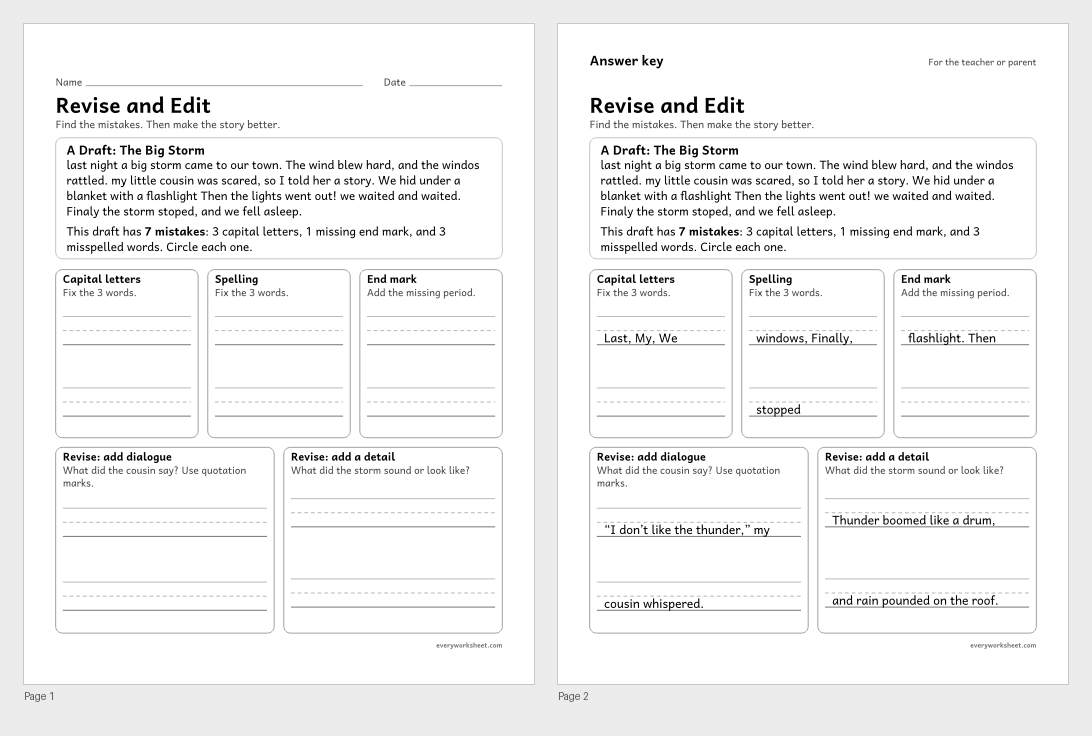
Editing a draft for capitals, end marks, and spelling, then revising it with dialogue and details
Answer key on page 2
2 pages37 KB
 View larger
Print at 100% (actual size) for the cleanest tracing lines.
Third graders write longer pieces with a clear structure: stories with dialogue, feelings, and a real ending; informative pieces that group facts and end with a conclusion; and opinions backed by several reasons. These writing prompts for 3rd graders give each child a clear prompt, a short plan to fill in first, and a full page of third grade writing lines.
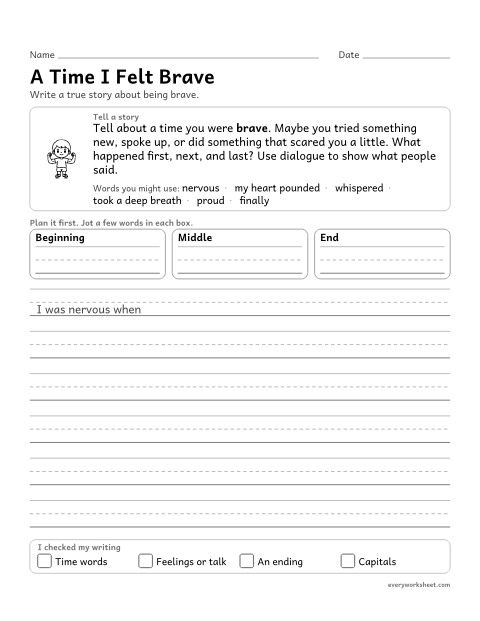
Narrative prompts mix true stories (a time you felt brave, the best day of your year) with make-believe ones (a secret door in the library, a robot who wants a friend). Informative prompts ask children to teach a skill, explain a healthy snack, or tell all about a habitat or a job. Opinion prompts ask children to take a side and give reasons. Each page has a word bank and a short checklist for checking the writing.
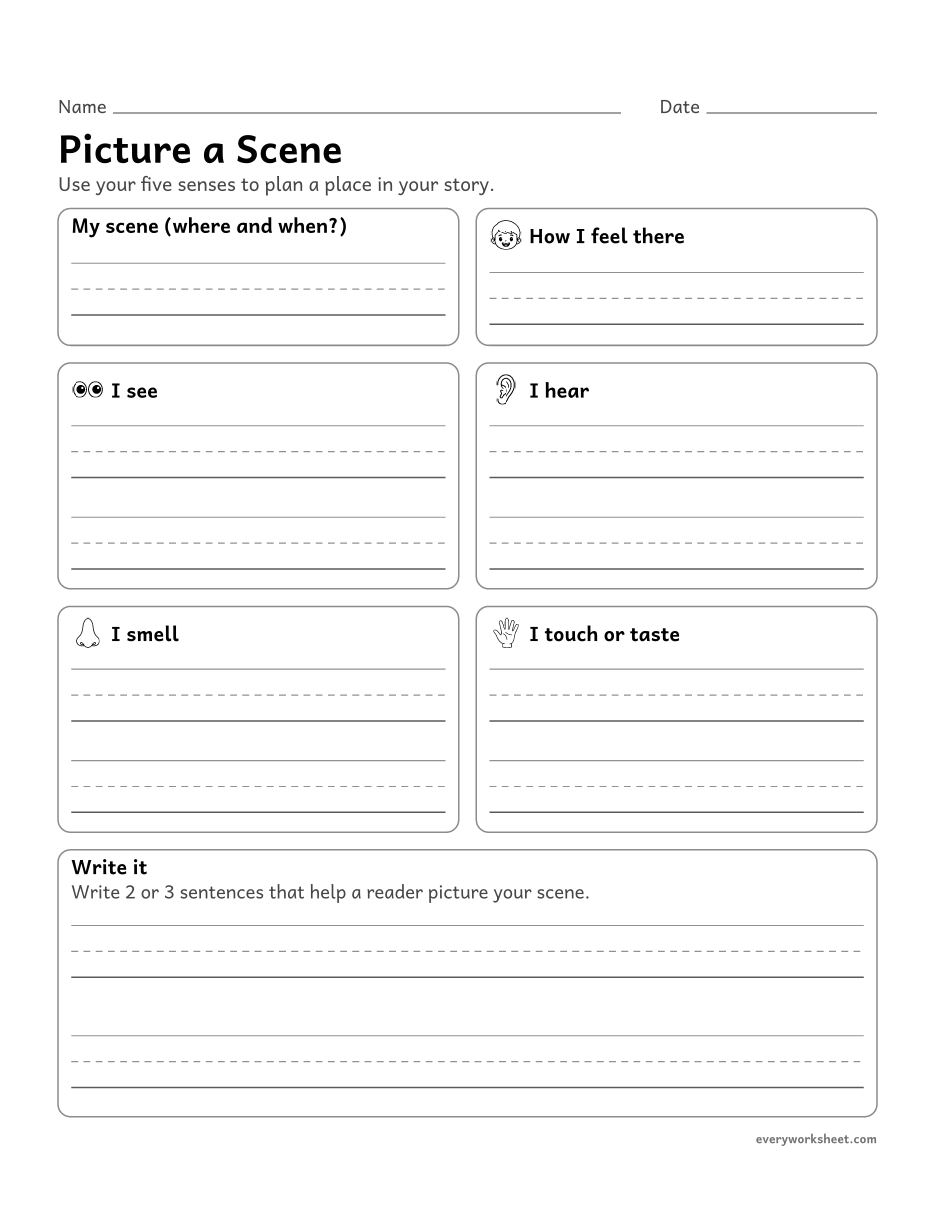
Planners for stories and reports, a five-senses planner, and a revise-and-edit page help children plan before they write and fix their work after.
CCSS.ELA-LITERACY.W.3.1Write opinion pieces on topics or texts, supporting a point of view with reasons.CCSS.ELA-LITERACY.W.3.1.AIntroduce the topic or text they are writing about, state an opinion, and create an organizational structure that lists reasons.CCSS.ELA-LITERACY.W.3.1.BProvide reasons that support the opinion.CCSS.ELA-LITERACY.W.3.2Write informative/explanatory texts to examine a topic and convey ideas and information clearly.CCSS.ELA-LITERACY.W.3.2.AIntroduce a topic and group related information together; include illustrations when useful to aiding comprehension.CCSS.ELA-LITERACY.W.3.2.CUse linking words and phrases (e.g., also, another, and, more, but) to connect ideas within categories of information.CCSS.ELA-LITERACY.W.3.2.DProvide a concluding statement or section.CCSS.ELA-LITERACY.W.3.3Write narratives to develop real or imagined experiences or events using effective technique, descriptive details, and clear event sequences.CCSS.ELA-LITERACY.W.3.3.AEstablish a situation and introduce a narrator and/or characters; organize an event sequence that unfolds naturally.CCSS.ELA-LITERACY.W.3.3.BUse dialogue and descriptions of actions, thoughts, and feelings to develop experiences and events or show the response of characters to situations.CCSS.ELA-LITERACY.W.3.3.CUse temporal words and phrases to signal event order.CCSS.ELA-LITERACY.W.3.3.DProvide a sense of closure.CCSS.ELA-LITERACY.W.3.5With guidance and support from peers and adults, develop and strengthen writing as needed by planning, revising, and editing.Most third graders can write a page or more: one long paragraph or two to three shorter ones. The lines on these pages are sized for third grade.
No. Answers vary, so prompt pages have no key. The revise-and-edit page has a key.
Third grade lines: just under half an inch from the top line to the baseline, with a dashed midline.