 View larger
Adding and subtracting fractions
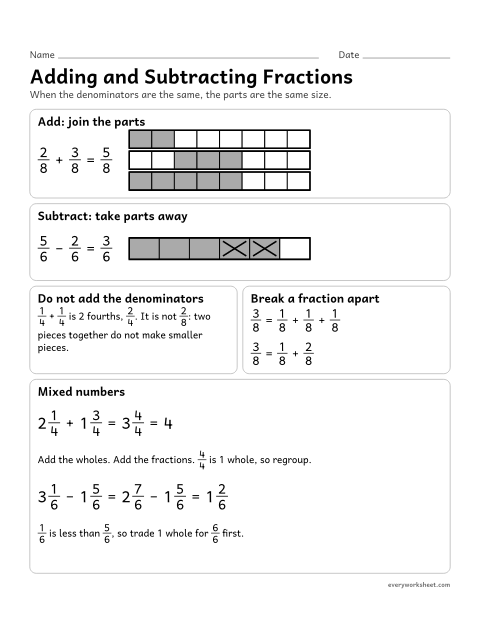
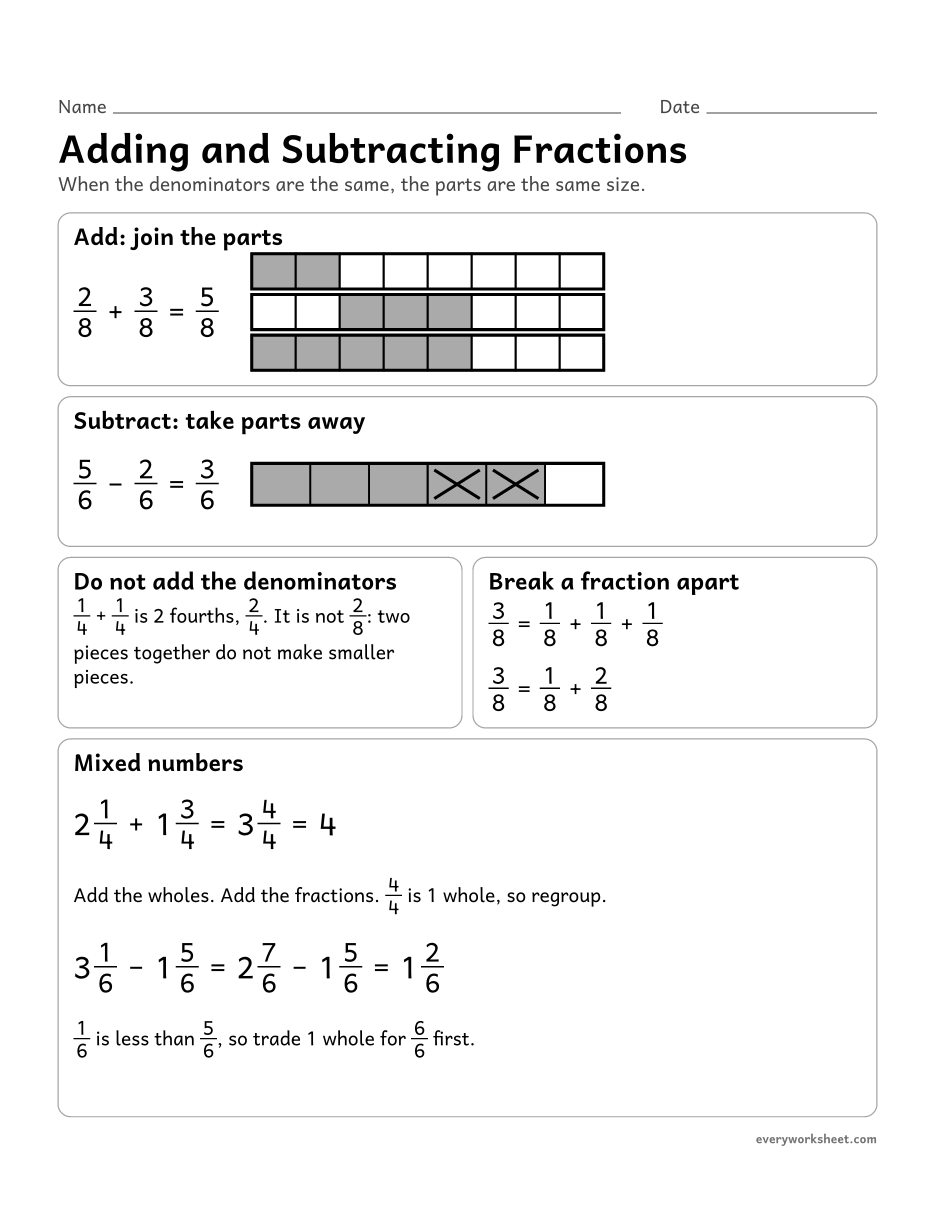
How to add and subtract fractions with like denominators, with fraction bars and mixed numbers
1 page32 KB
Add and subtract fractions with like denominators: a chart, bar models, number lines, mixed numbers with regrouping and word problems. With keys.
View largerHow to add and subtract fractions with like denominators, with fraction bars and mixed numbers
1 page32 KB
 View all 2 pages
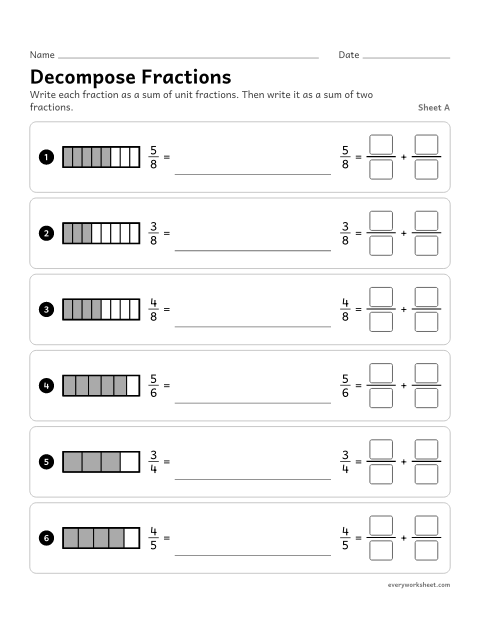
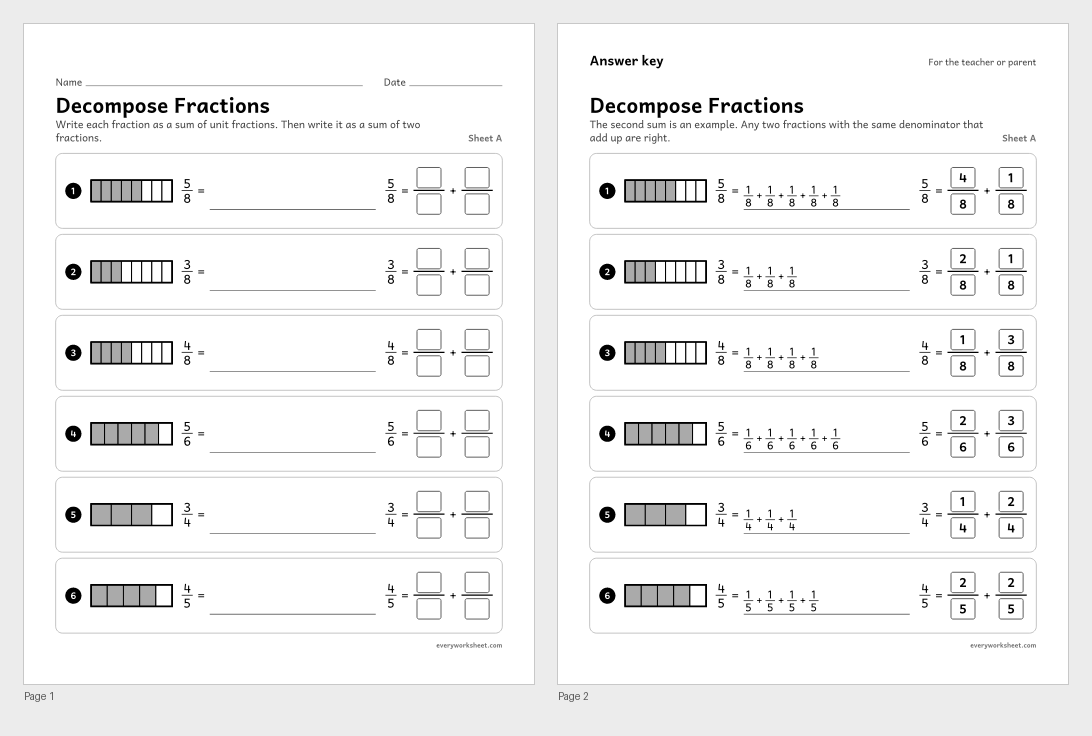
Writing a fraction as a sum of unit fractions and as a sum of two fractions with the same denominator
Answer key on page 2
2 pages50 KB
 View all 2 pages
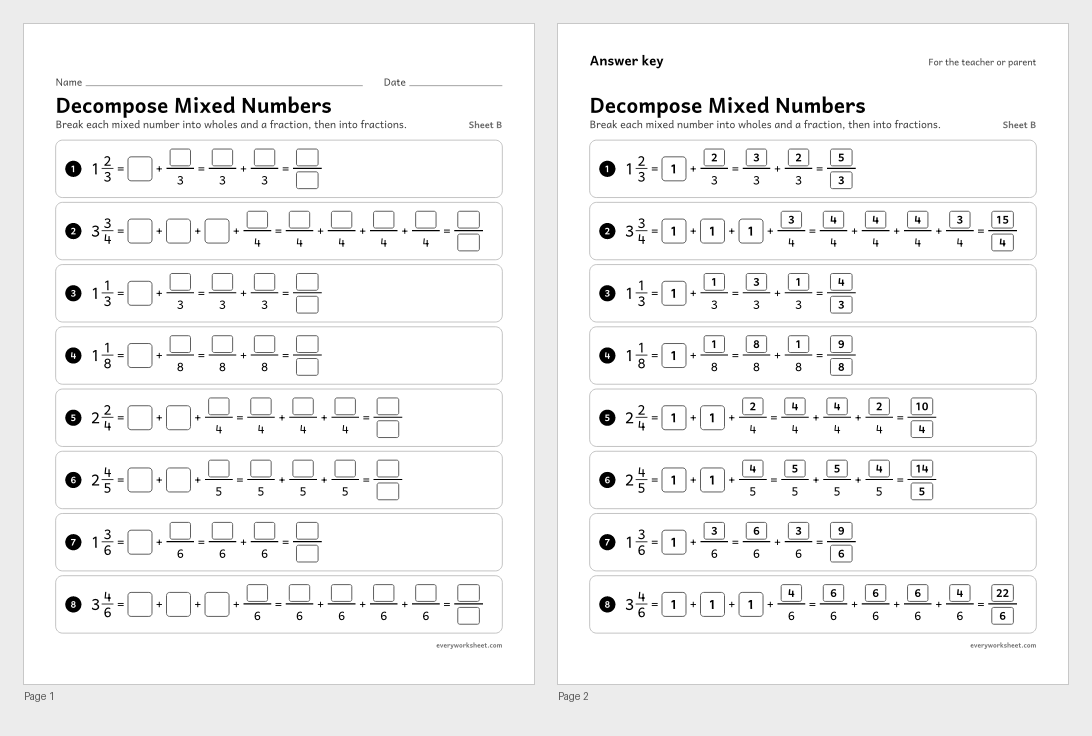
Decomposing mixed numbers into wholes and a fraction: 2 1/8 = 1 + 1 + 1/8 = 8/8 + 8/8 + 1/8
Answer key on page 2
2 pages46 KB
 View all 2 pages
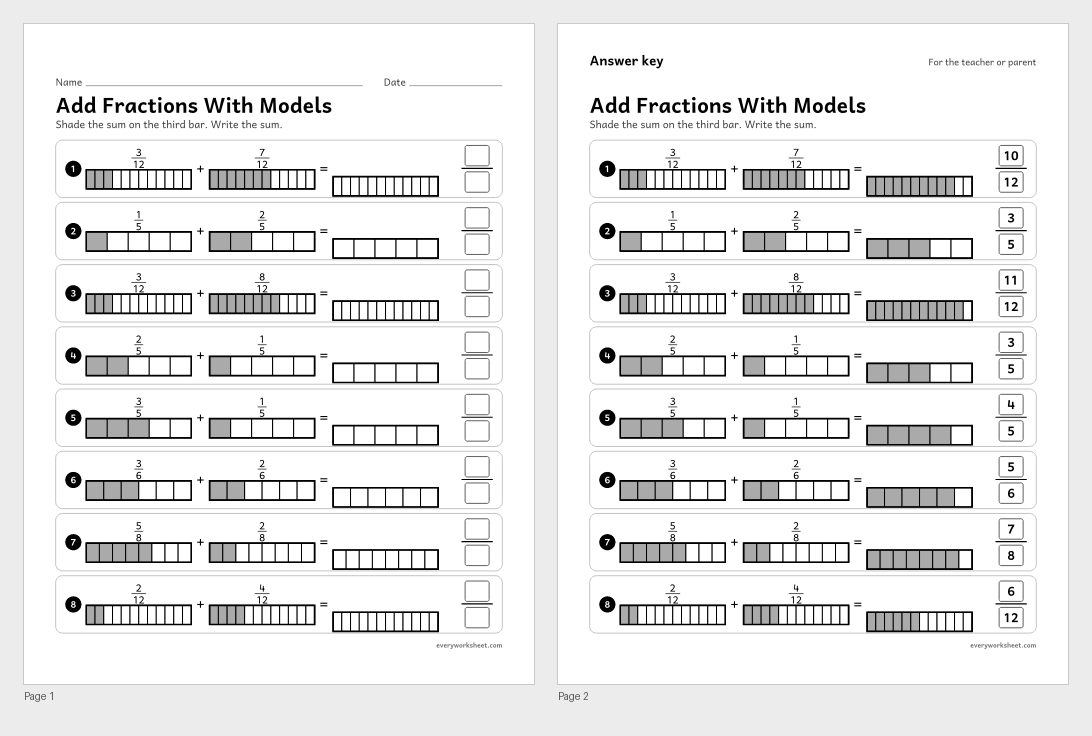
Adding fractions with like denominators by joining shaded parts of the same whole
Answer key on page 2
2 pages56 KB
 View all 2 pages
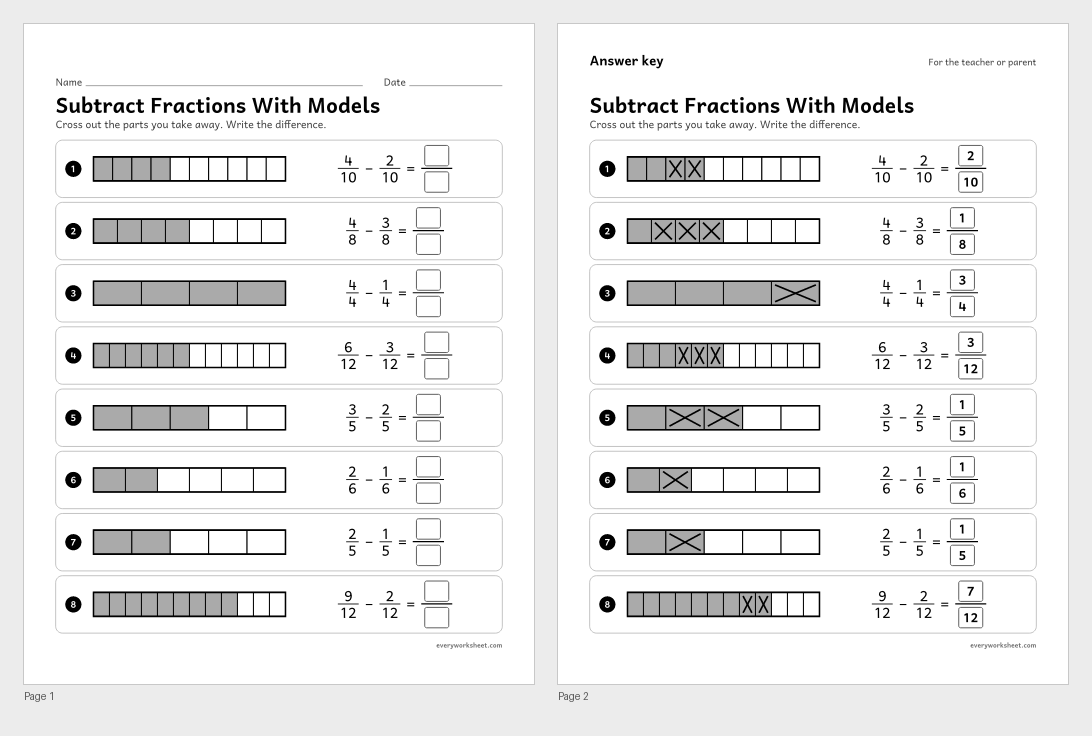
Subtracting fractions with like denominators by crossing out parts of the same whole
Answer key on page 2
2 pages44 KB
 View all 2 pages
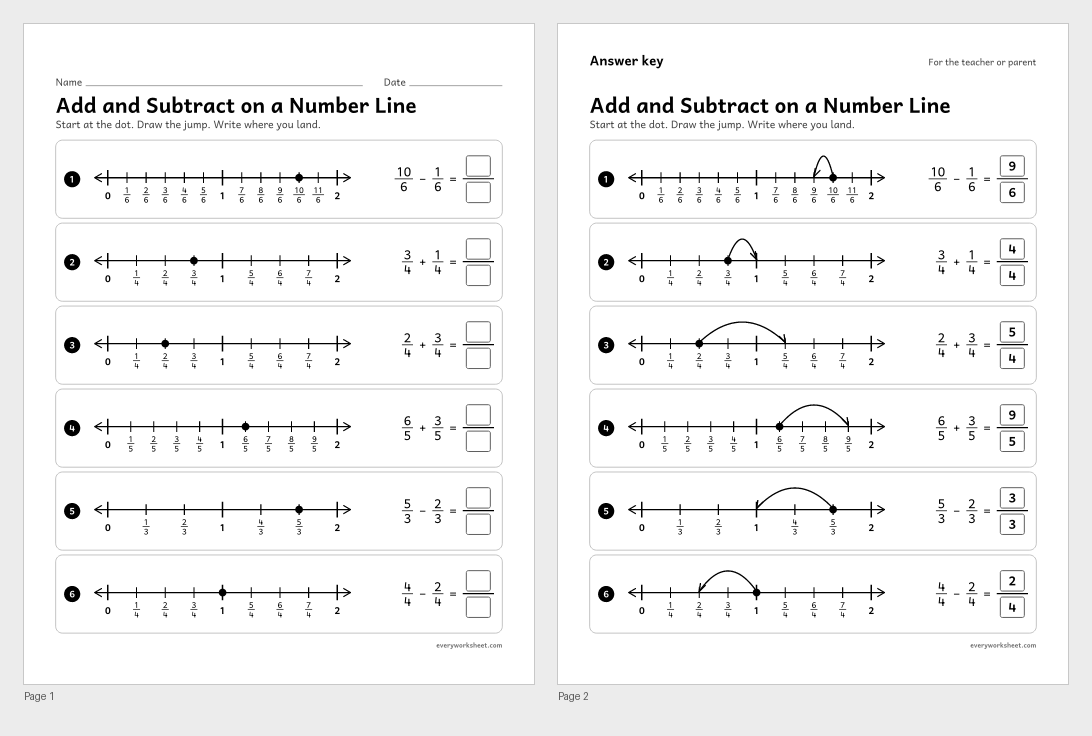
Adding and subtracting fractions with like denominators as jumps on a number line from 0 to 2
Answer key on page 2
2 pages47 KB
 View all 2 pages
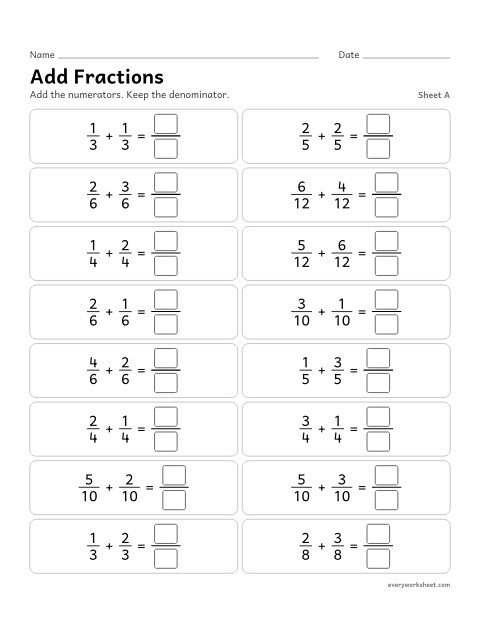
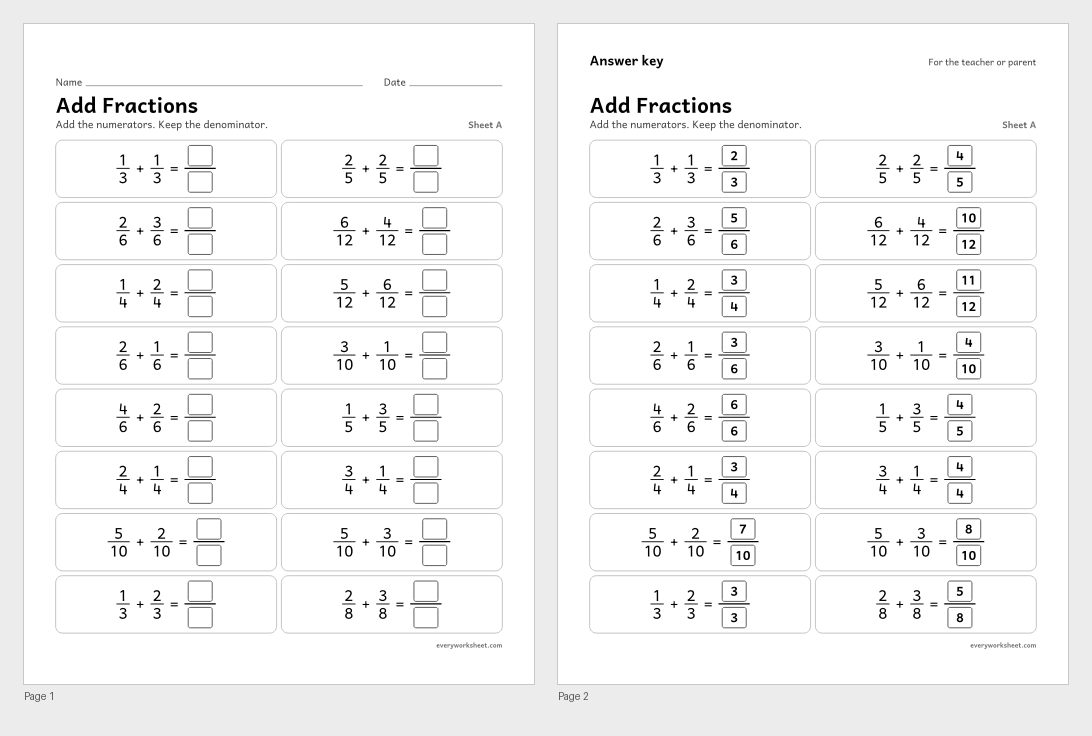
Adding fractions with like denominators with sums up to 1
Answer key on page 2
2 pages40 KB
 View all 2 pages
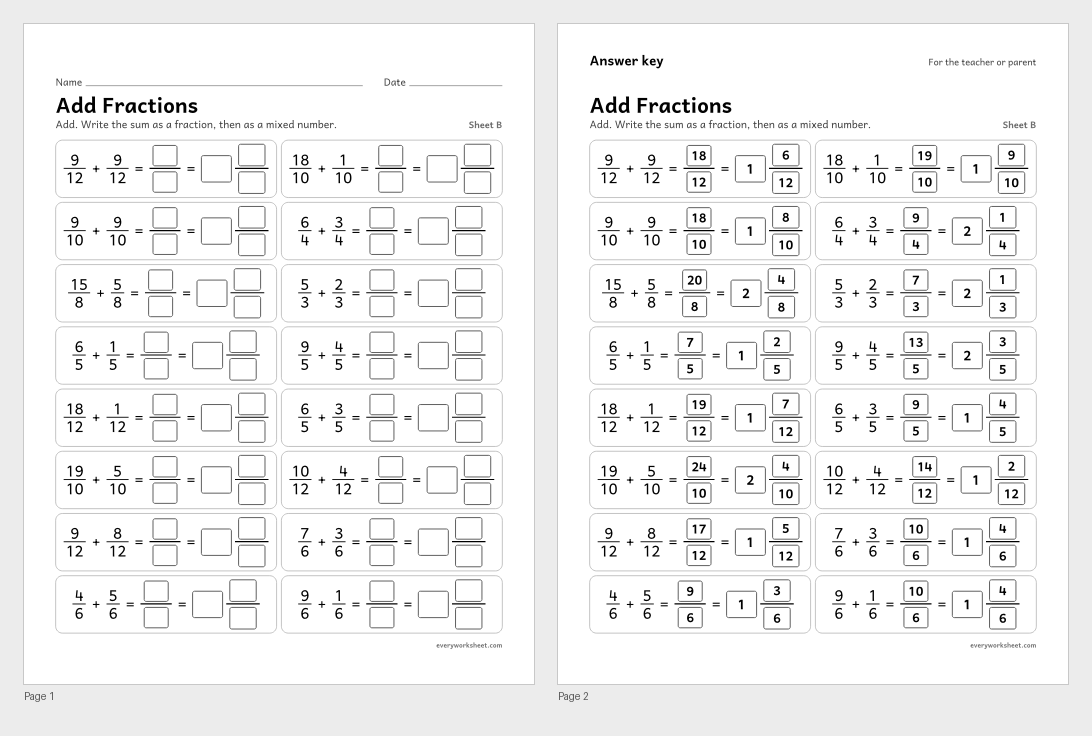
Adding fractions with like denominators when the sum is more than 1, and writing it as a mixed number
Answer key on page 2
2 pages45 KB
 View all 2 pages
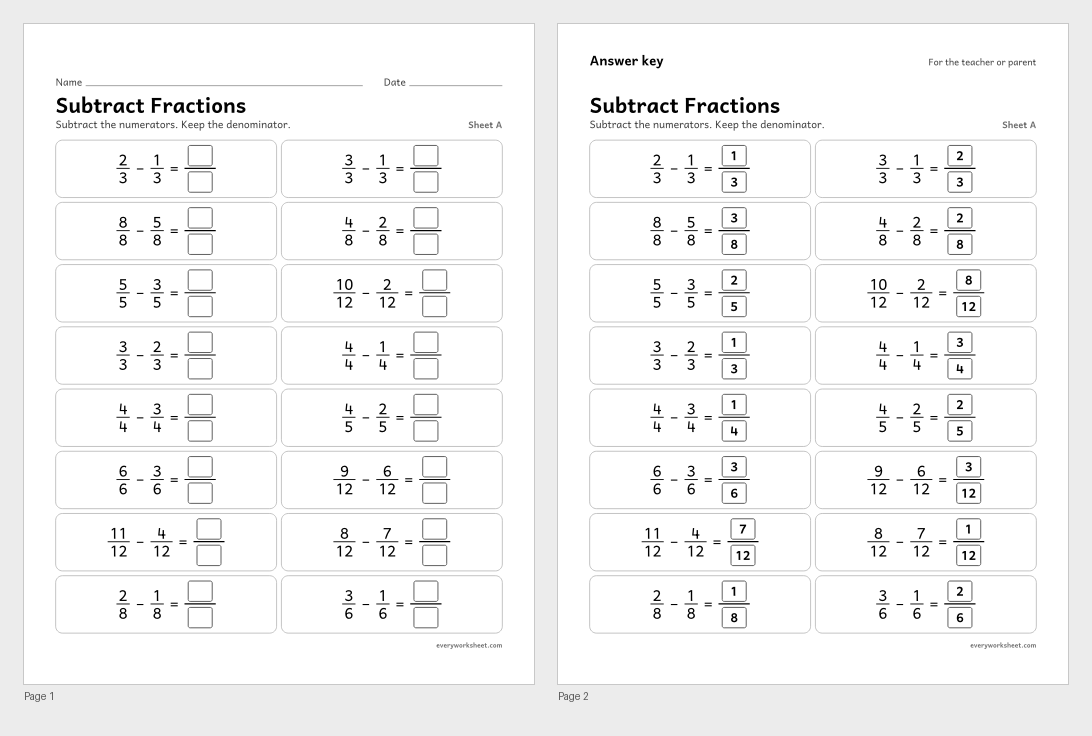
Subtracting fractions with like denominators less than or equal to 1
Answer key on page 2
2 pages41 KB
 View all 2 pages
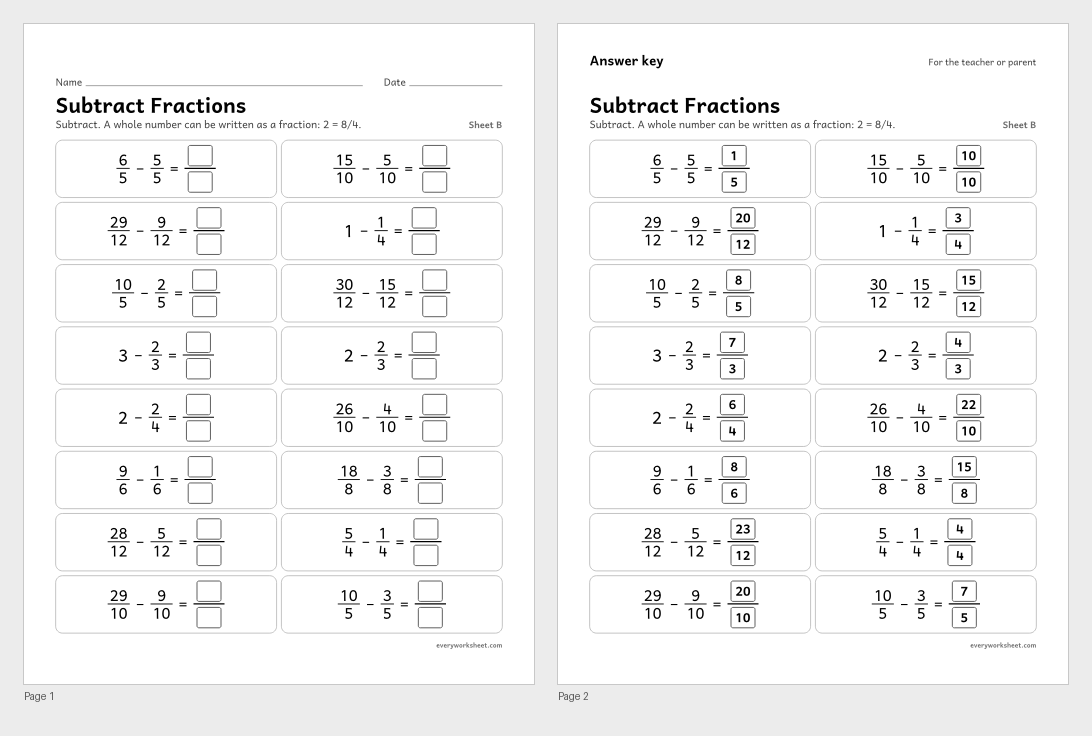
Subtracting fractions with like denominators from fractions greater than 1 and from whole numbers
Answer key on page 2
2 pages42 KB
 View all 2 pages
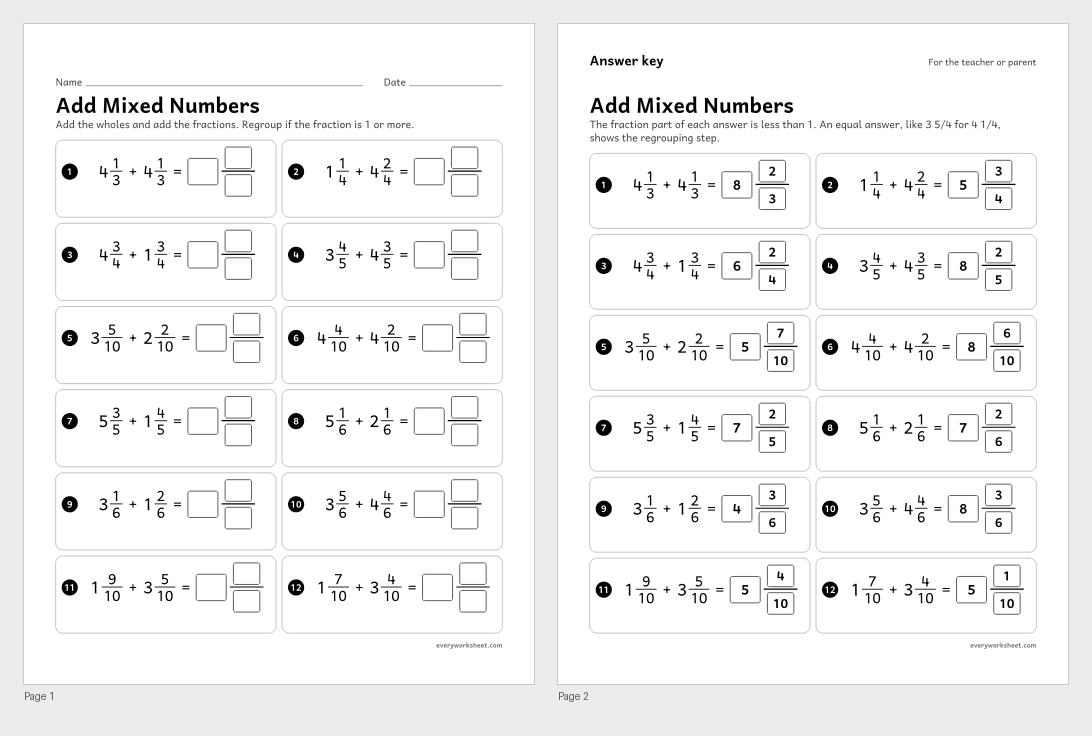
Adding mixed numbers with like denominators, regrouping when the fractions make more than 1
Answer key on page 2
2 pages50 KB
 View all 2 pages
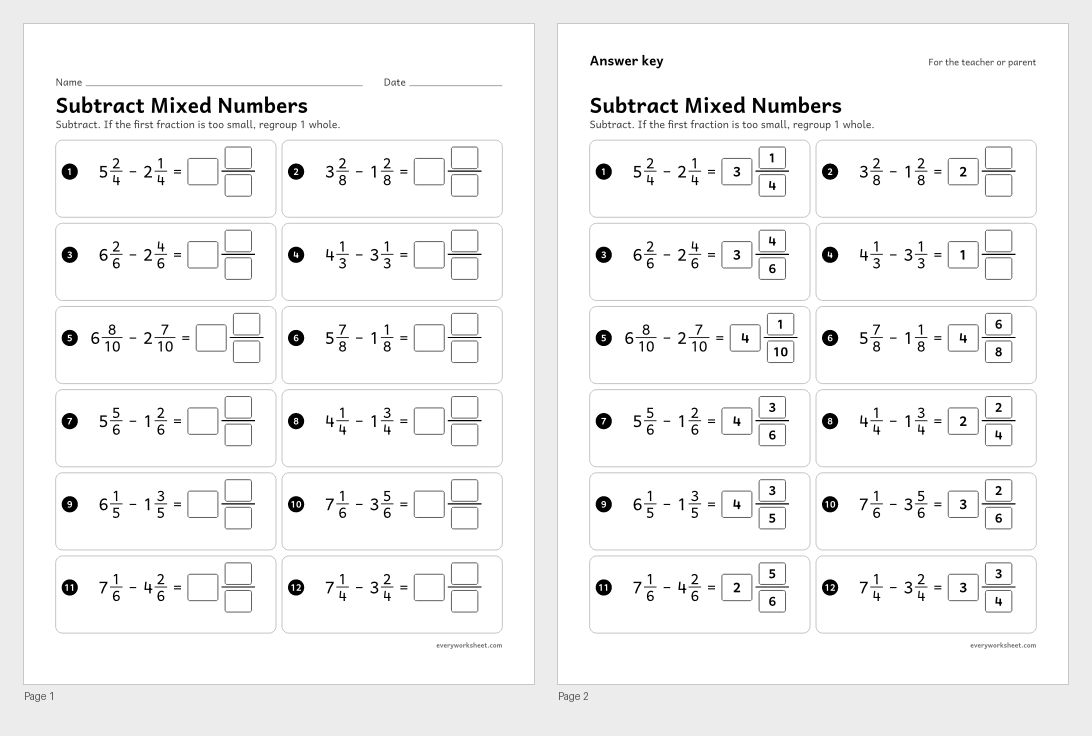
Subtracting mixed numbers with like denominators, regrouping a whole when the first fraction is smaller
Answer key on page 2
2 pages50 KB
 View all 2 pages
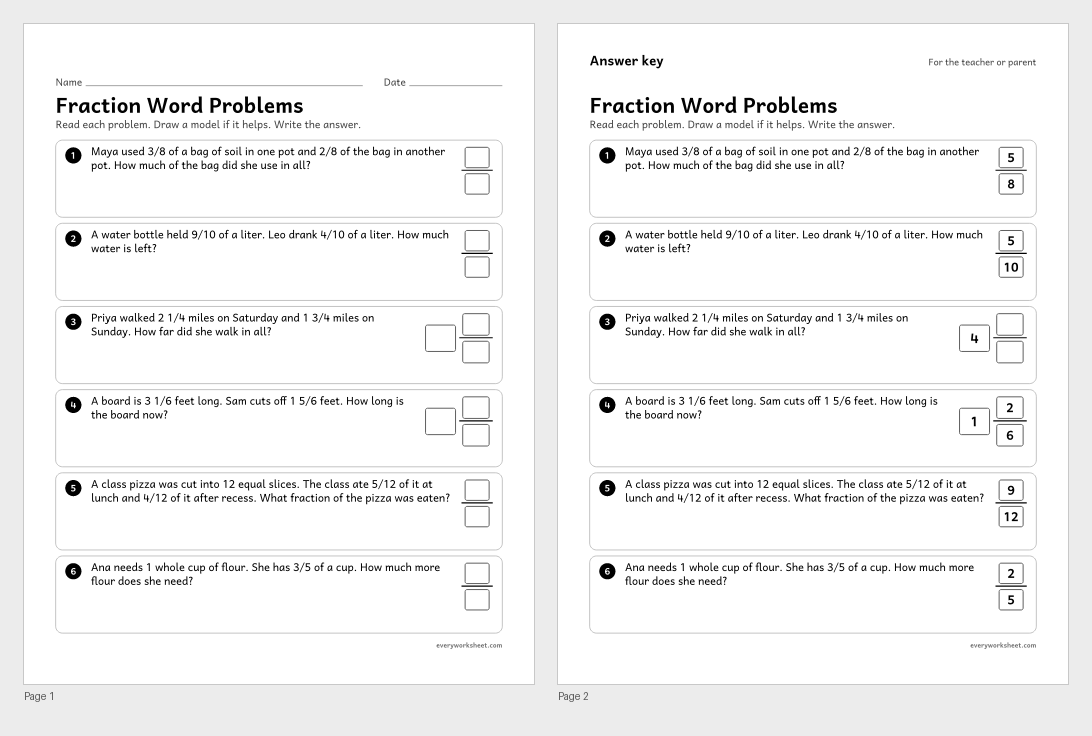
Solving word problems by adding and subtracting fractions and mixed numbers with like denominators
Answer key on page 2
2 pages42 KB
Print at 100% (actual size) for the cleanest tracing lines.
To add fractions with the same denominator, add the numerators and keep the denominator: 2/8 + 3/8 = 5/8. The denominator tells the size of the parts, and joining parts does not change their size. Subtracting works the same way: 5/6 − 2/6 = 3/6.
A common mistake is adding the denominators too, so 1/4 + 1/4 becomes 2/8. Two fourths is 2/4, and 2/8 is smaller than either part. The chart and the bar model pages show why.
These worksheets start with breaking fractions into unit fractions (3/8 = 1/8 + 1/8 + 1/8), then fraction bars and number lines, then plain practice. Later pages add and subtract mixed numbers, including regrouping a whole, and finish with word problems. Every practice page has an answer key.
CCSS.MATH.CONTENT.4.NF.B.3.AUnderstand addition and subtraction of fractions as joining and separating parts referring to the same whole.CCSS.MATH.CONTENT.4.NF.B.3.BDecompose a fraction into a sum of fractions with the same denominator in more than one way, recording each decomposition by an equation. Justify decompositions, e.g., by using a visual fraction model. Examples: 3/8 = 1/8 + 1/8 + 1/8 ; 3/8 = 1/8 + 2/8 ; 2 1/8 = 1 + 1 + 1/8 = 8/8 + 8/8 + 1/8.CCSS.MATH.CONTENT.4.NF.B.3.CAdd and subtract mixed numbers with like denominators, e.g., by replacing each mixed number with an equivalent fraction, and/or by using properties of operations and the relationship between addition and subtraction.CCSS.MATH.CONTENT.4.NF.B.3.DSolve word problems involving addition and subtraction of fractions referring to the same whole and having like denominators, e.g., by using visual fraction models and equations to represent the problem.Add the numerators and keep the denominator. 3/10 + 4/10 = 7/10. If the sum is more than 1, it can be written as a mixed number: 7/8 + 3/8 = 10/8 = 1 2/8.
Subtract the wholes and subtract the fractions. If the first fraction is smaller, regroup 1 whole into the fraction first: 4 1/4 − 1 3/4 = 3 5/4 − 1 3/4 = 2 2/4.
The denominator names the size of the parts. 1/4 + 1/4 is two parts of size one fourth, which is 2/4, not 2/8.