 View all 2 pages
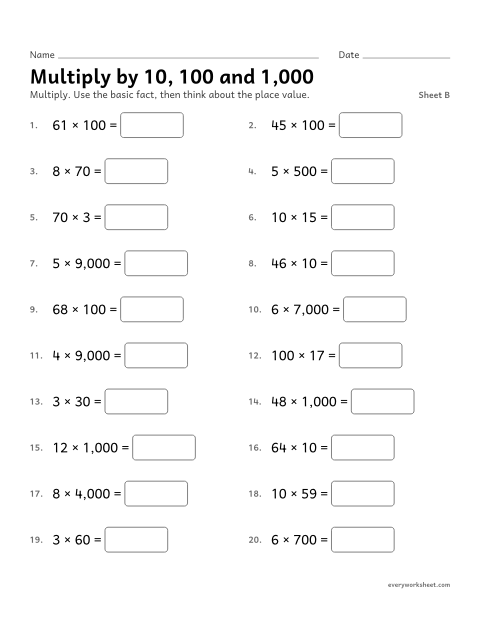
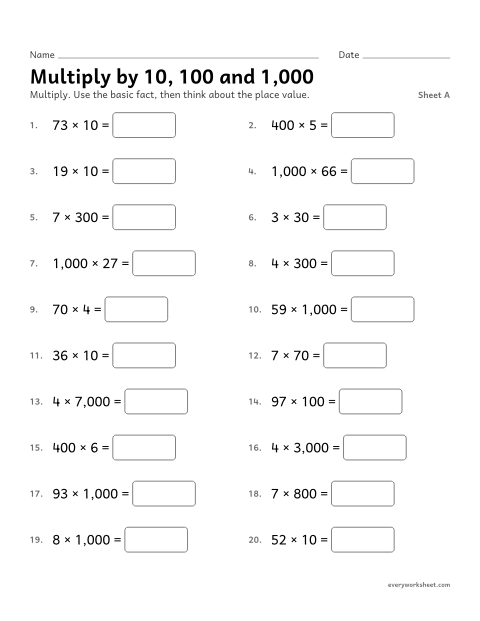
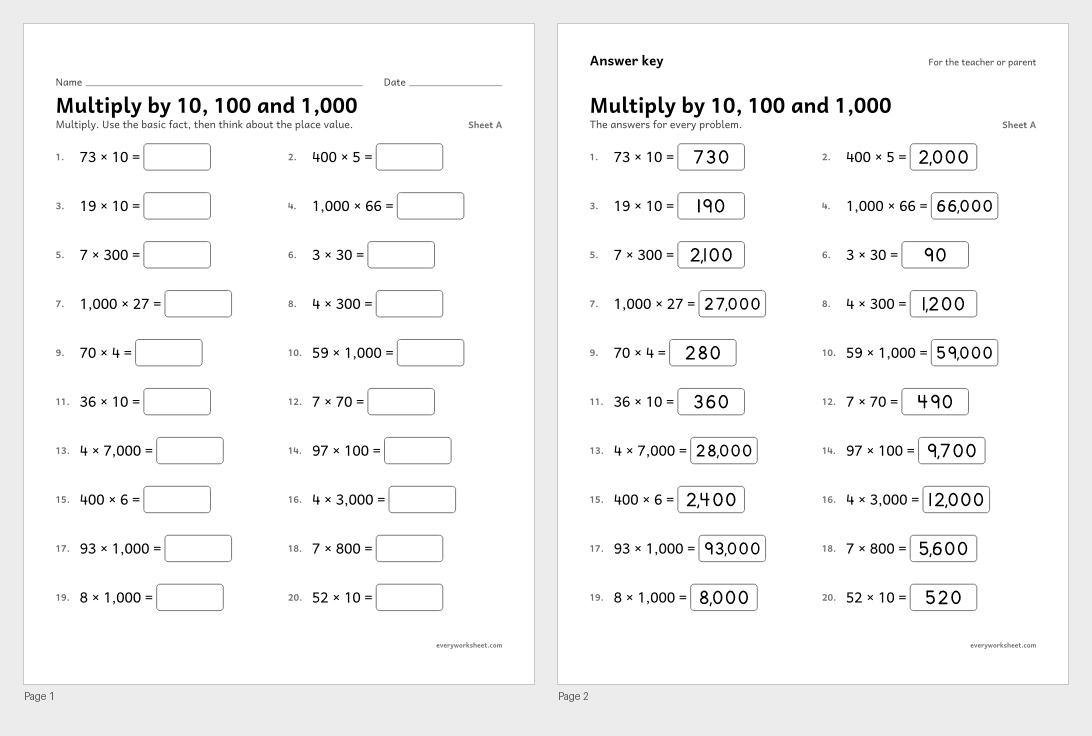
Multiply by 10, 100 and 1,000, sheet A
Multiplying by 10, 100, 1,000 and their multiples
Answer key on page 2
2 pages98 KB
Multiply by 10, 100 and 1,000, then 2-, 3- and 4-digit numbers by 1 digit and 2-digit by 2-digit, with area models, partial products and estimates.
View all 2 pagesMultiplying by 10, 100, 1,000 and their multiples
Answer key on page 2
2 pages98 KB
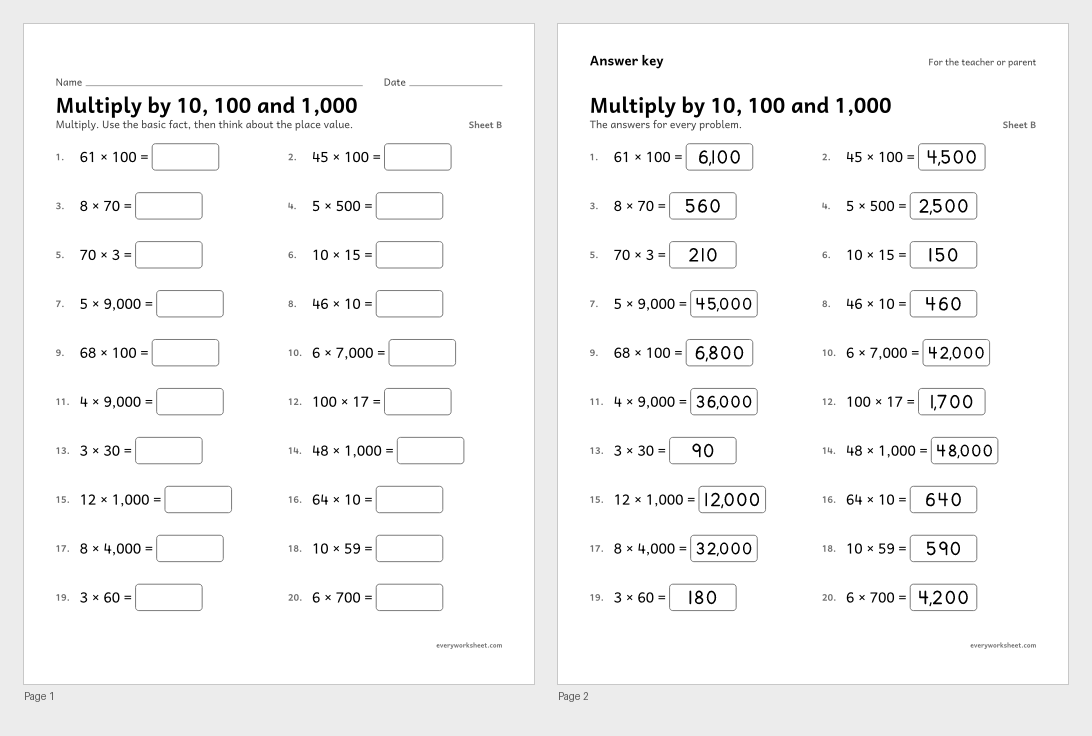 View all 2 pages
Multiplying by 10, 100, 1,000 and their multiples
Answer key on page 2
2 pages98 KB
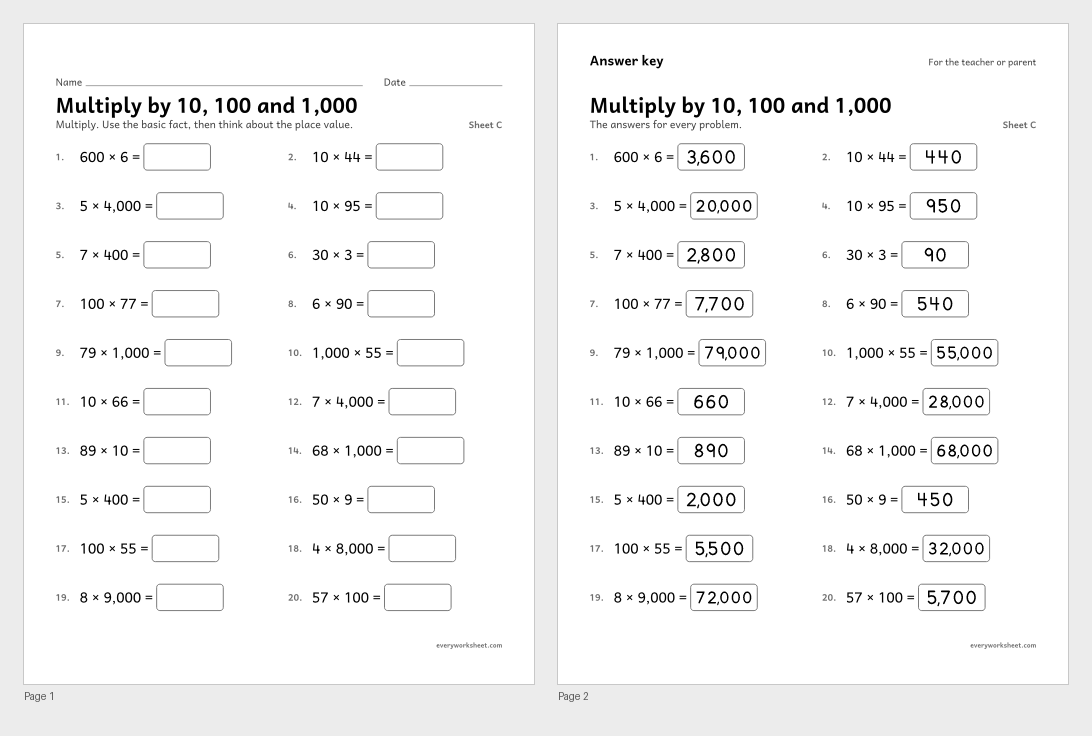 View all 2 pages
Multiplying by 10, 100, 1,000 and their multiples
Answer key on page 2
2 pages99 KB
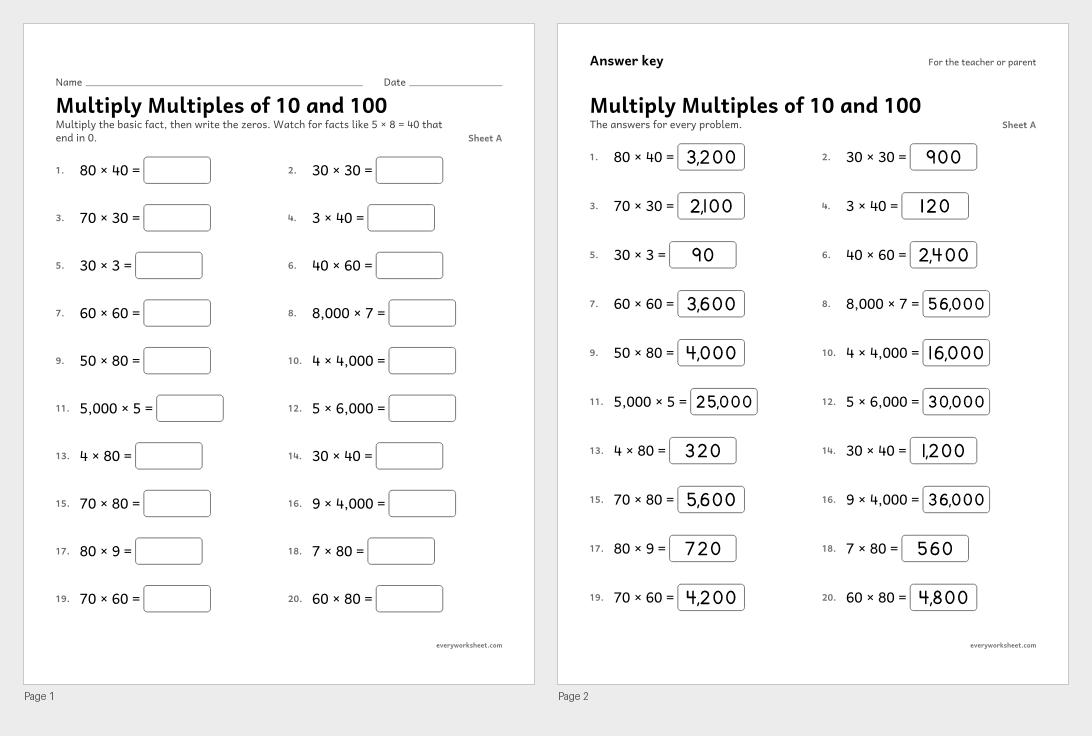 View all 2 pages
Multiplying multiples of 10 and 100
Answer key on page 2
2 pages98 KB
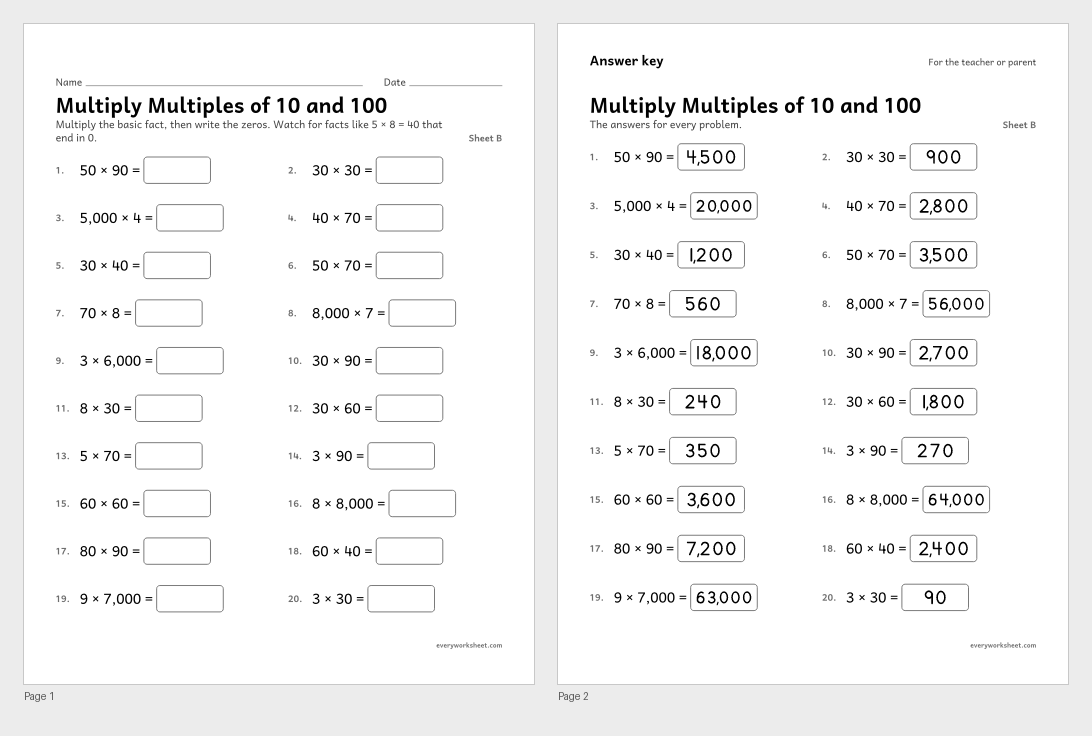 View all 2 pages
Multiplying multiples of 10 and 100
Answer key on page 2
2 pages98 KB
 View all 2 pages
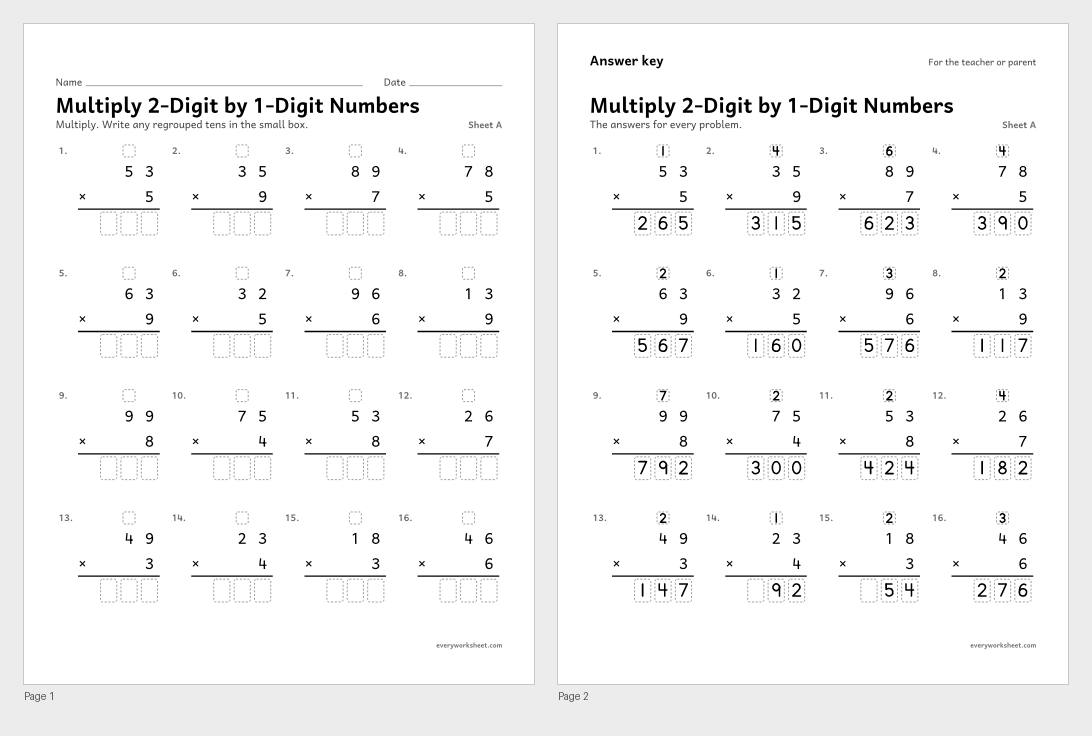
Multiplying a 2-digit number by a 1-digit number
Answer key on page 2
2 pages56 KB
 View all 2 pages
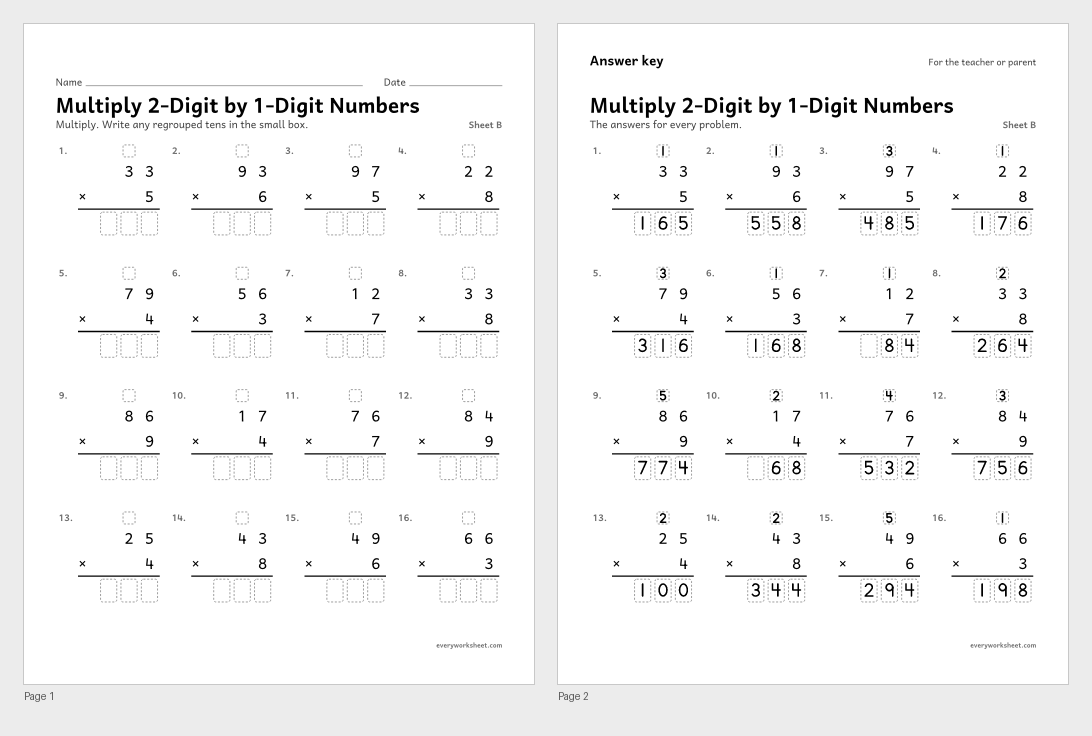
Multiplying a 2-digit number by a 1-digit number
Answer key on page 2
2 pages56 KB
 View all 2 pages
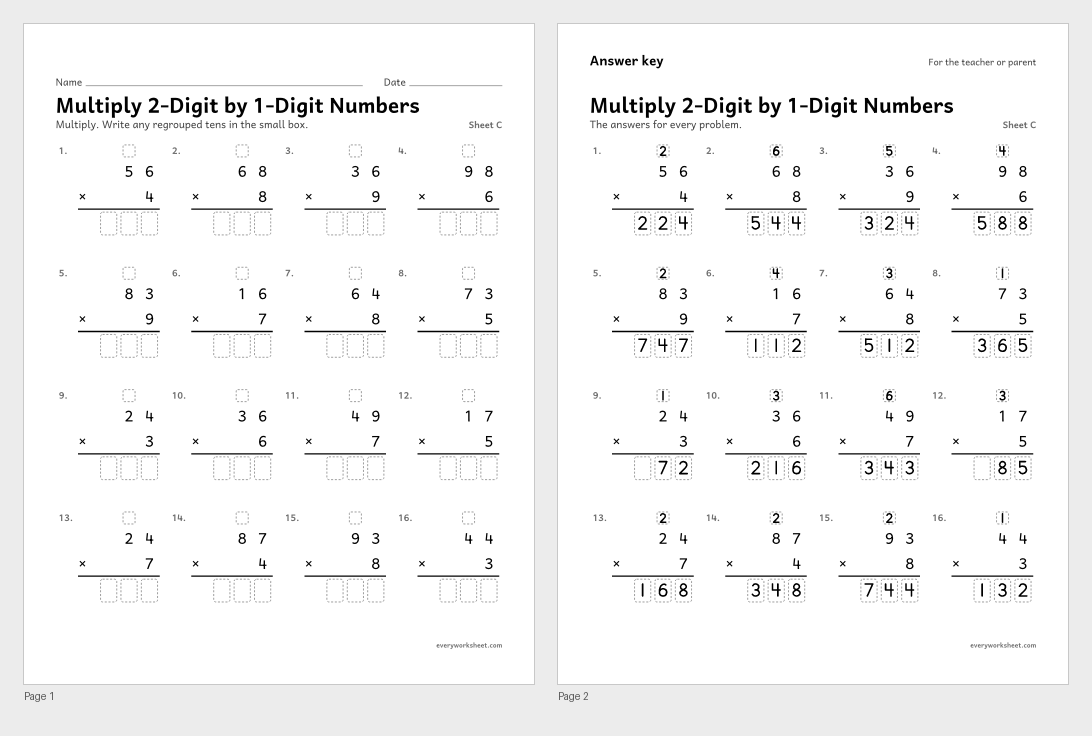
Multiplying a 2-digit number by a 1-digit number
Answer key on page 2
2 pages56 KB
 View all 2 pages
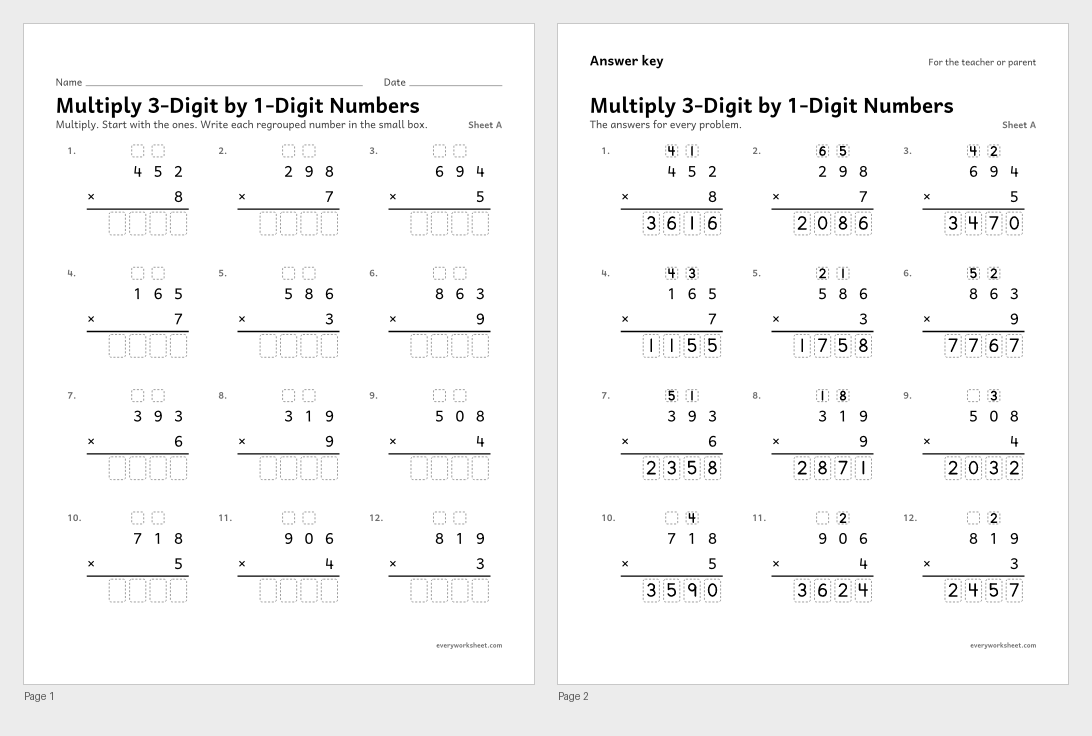
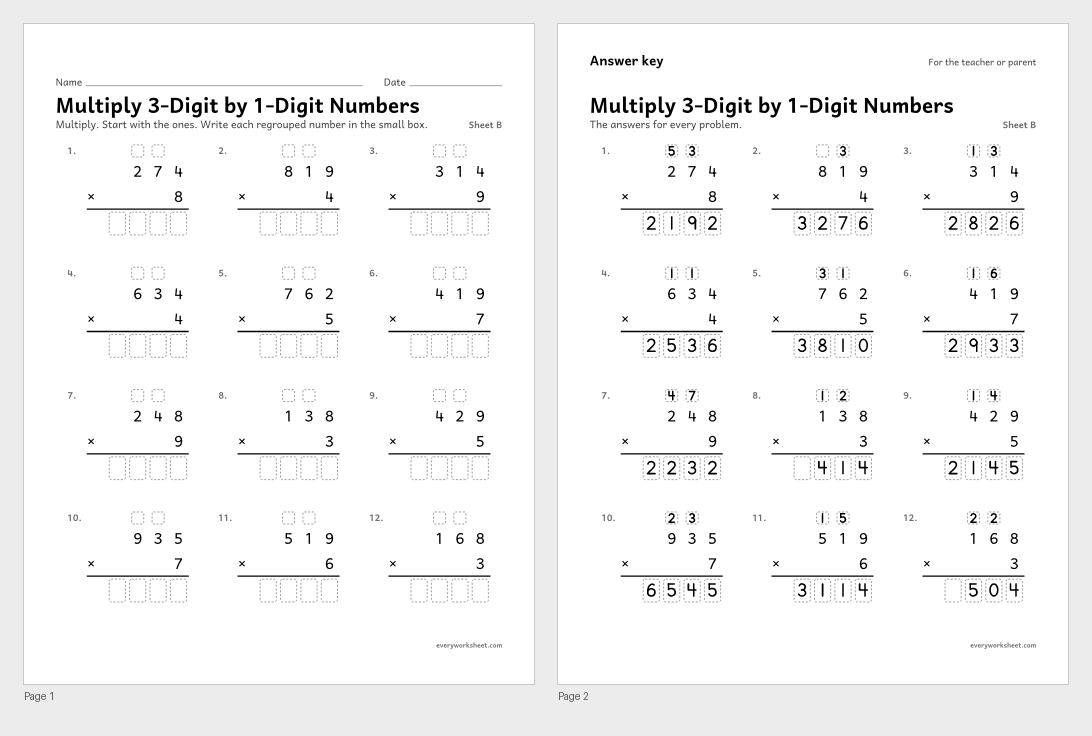
Multiplying a 3-digit number by a 1-digit number
Answer key on page 2
2 pages52 KB
 View all 2 pages
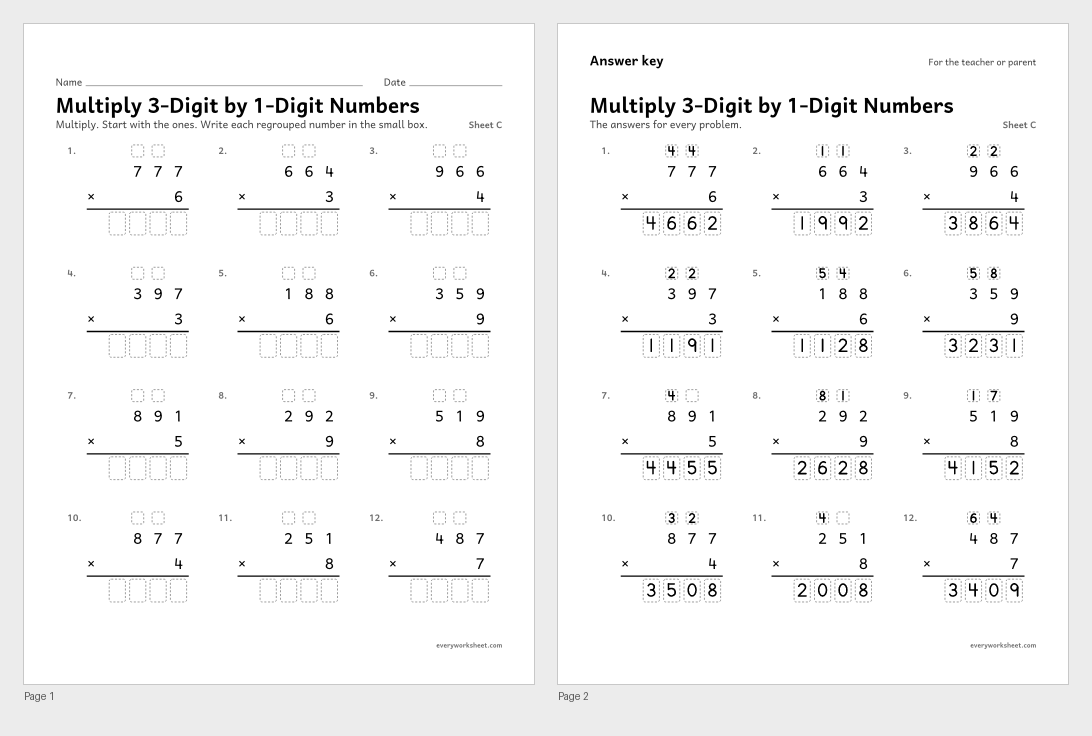
Multiplying a 3-digit number by a 1-digit number
Answer key on page 2
2 pages52 KB
 View all 2 pages
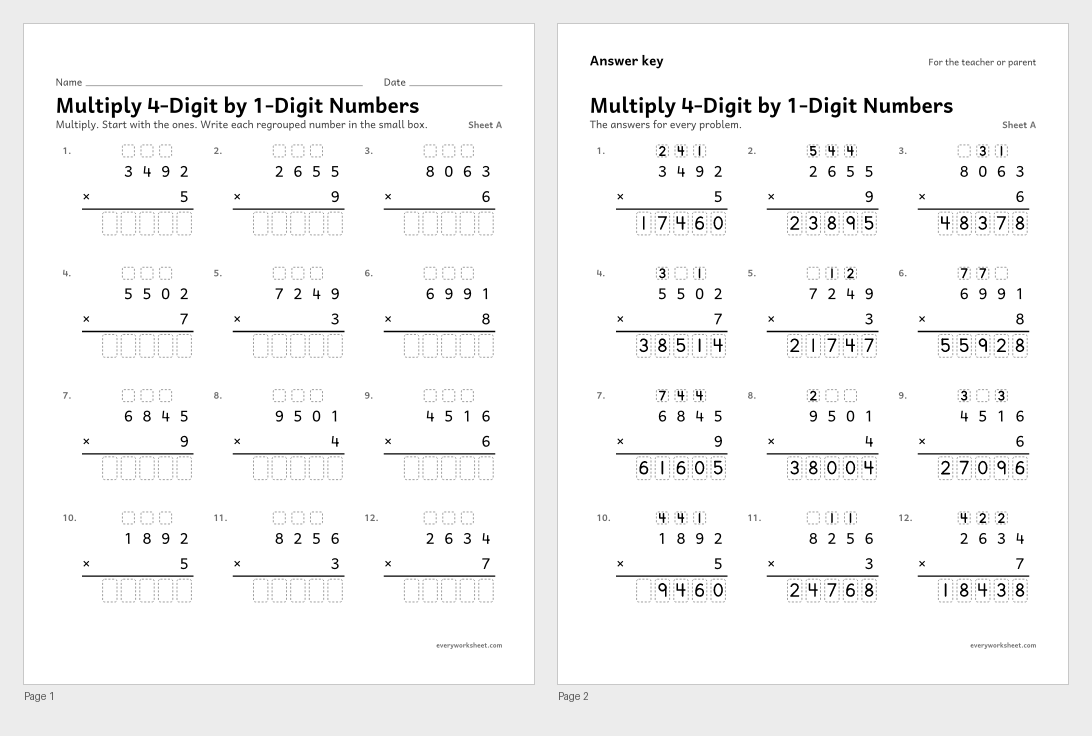
Multiplying a 3-digit number by a 1-digit number
Answer key on page 2
2 pages52 KB
 View all 2 pages
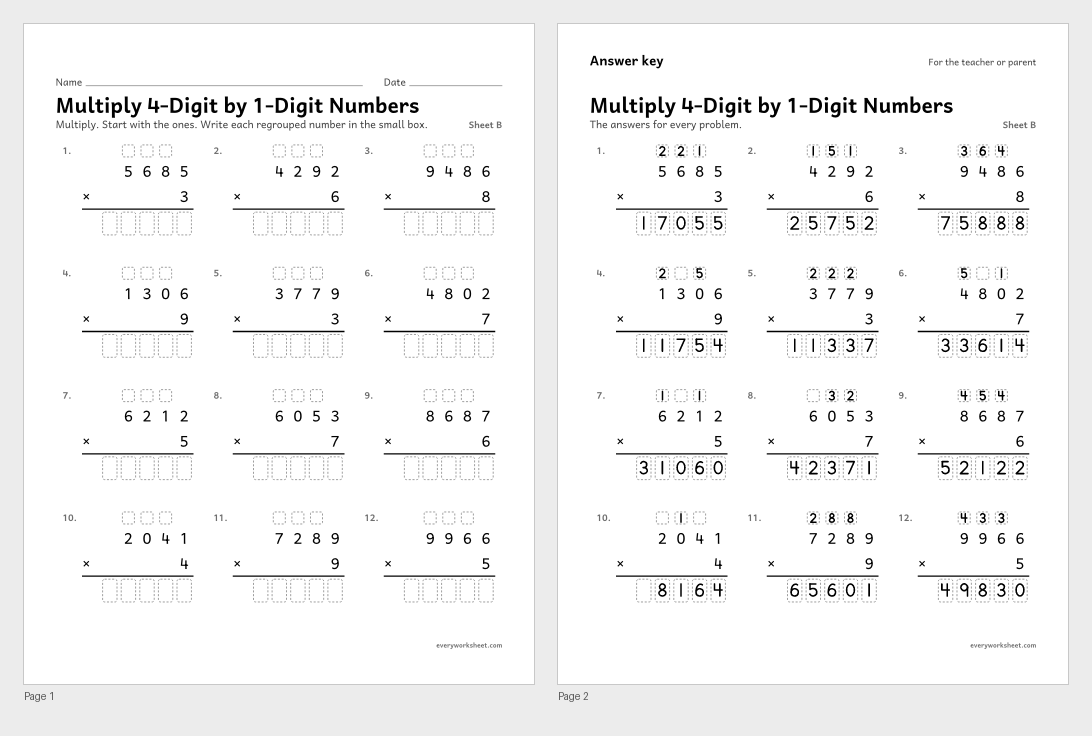
Multiplying a 4-digit number by a 1-digit number
Answer key on page 2
2 pages52 KB
 View all 2 pages
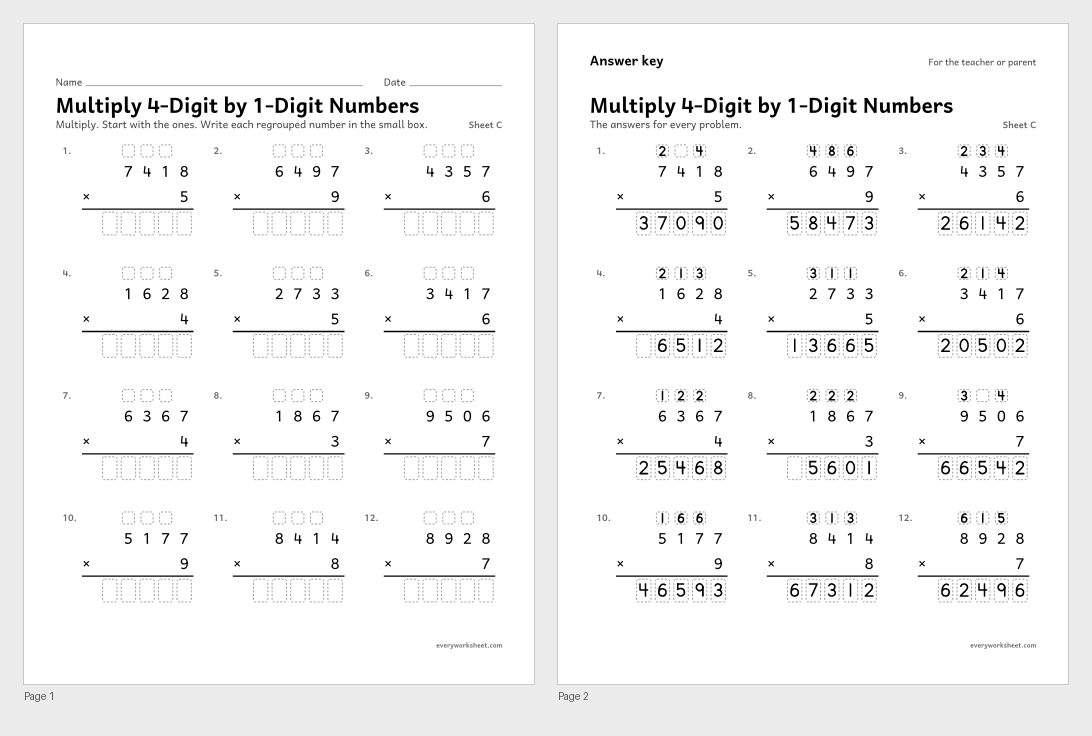
Multiplying a 4-digit number by a 1-digit number
Answer key on page 2
2 pages53 KB
 View all 2 pages
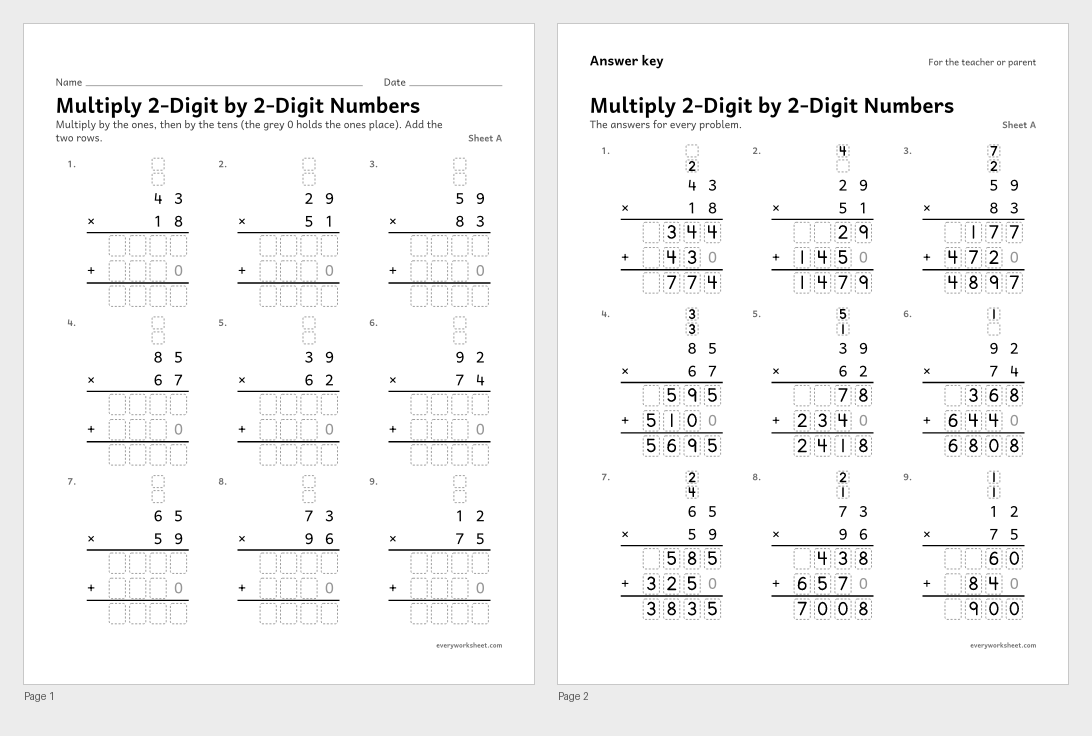
Multiplying a 4-digit number by a 1-digit number
Answer key on page 2
2 pages53 KB
 View all 2 pages
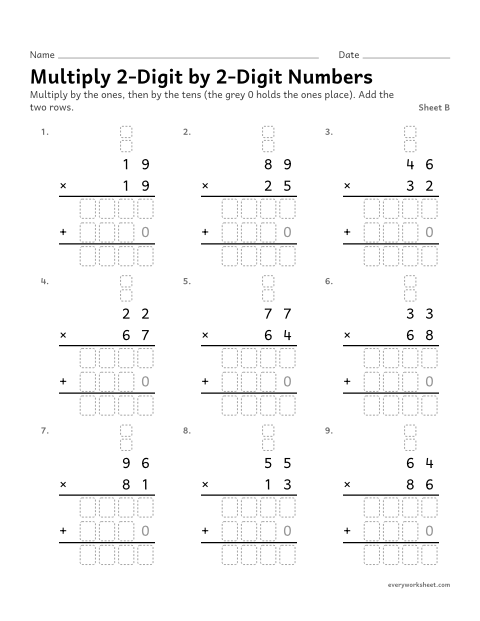
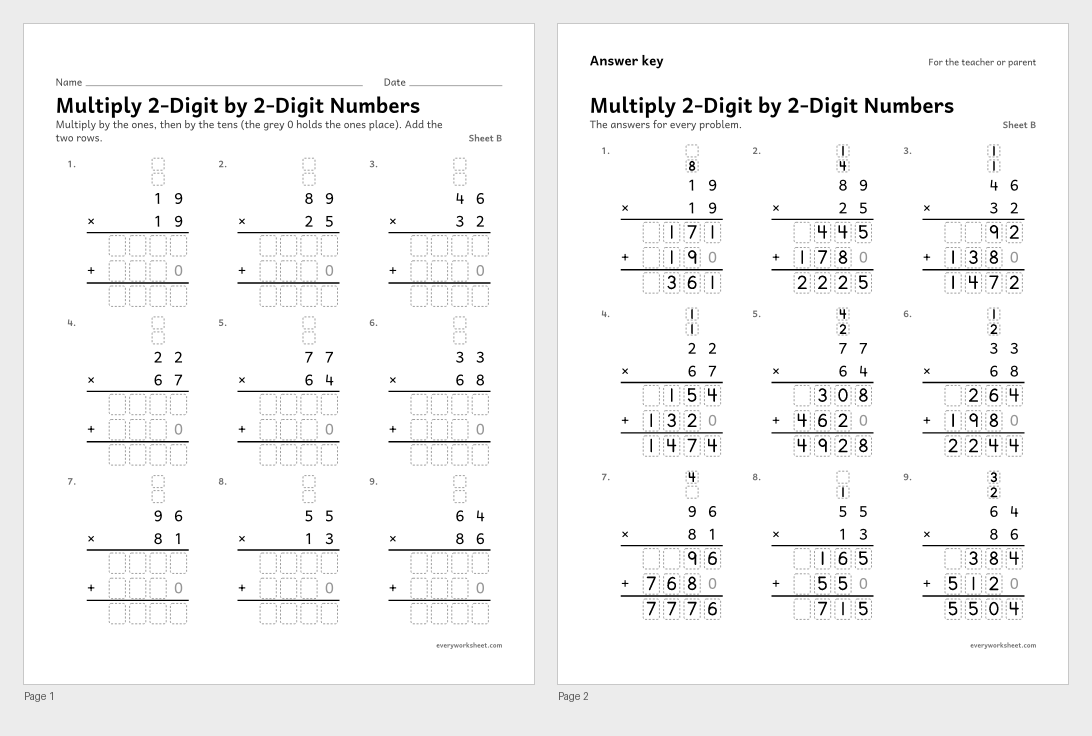
Multiplying two 2-digit numbers
Answer key on page 2
2 pages49 KB
 View all 2 pages
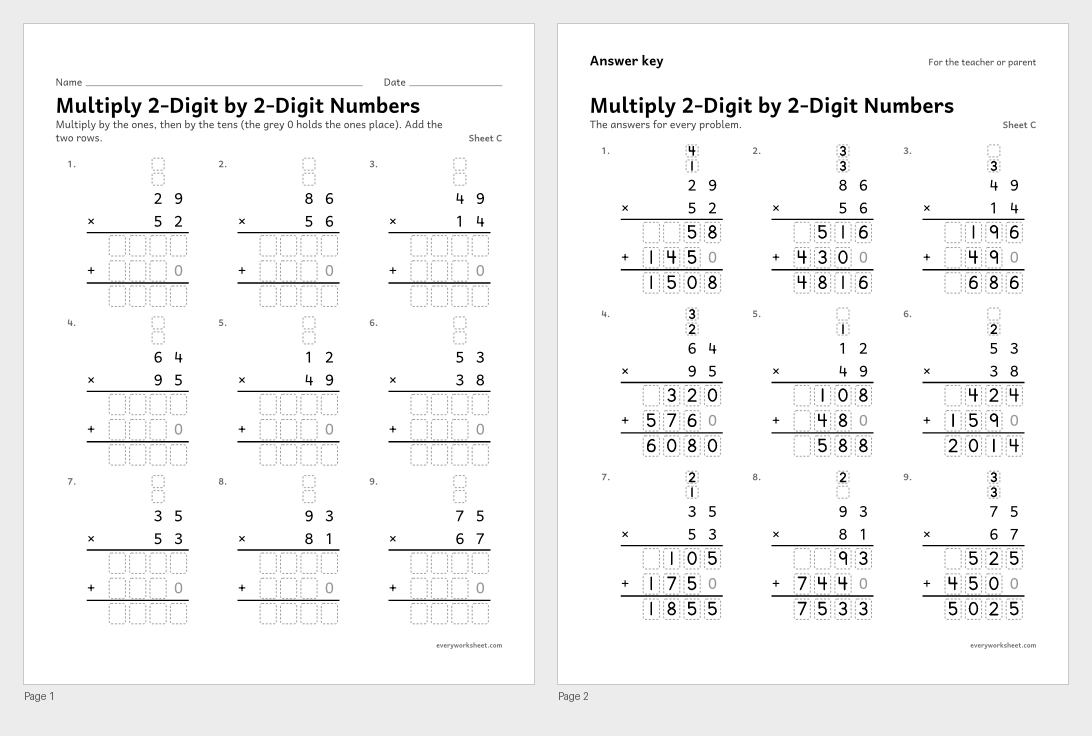
Multiplying two 2-digit numbers
Answer key on page 2
2 pages49 KB
 View all 2 pages
Multiplying two 2-digit numbers
Answer key on page 2
2 pages49 KB
 View all 2 pages
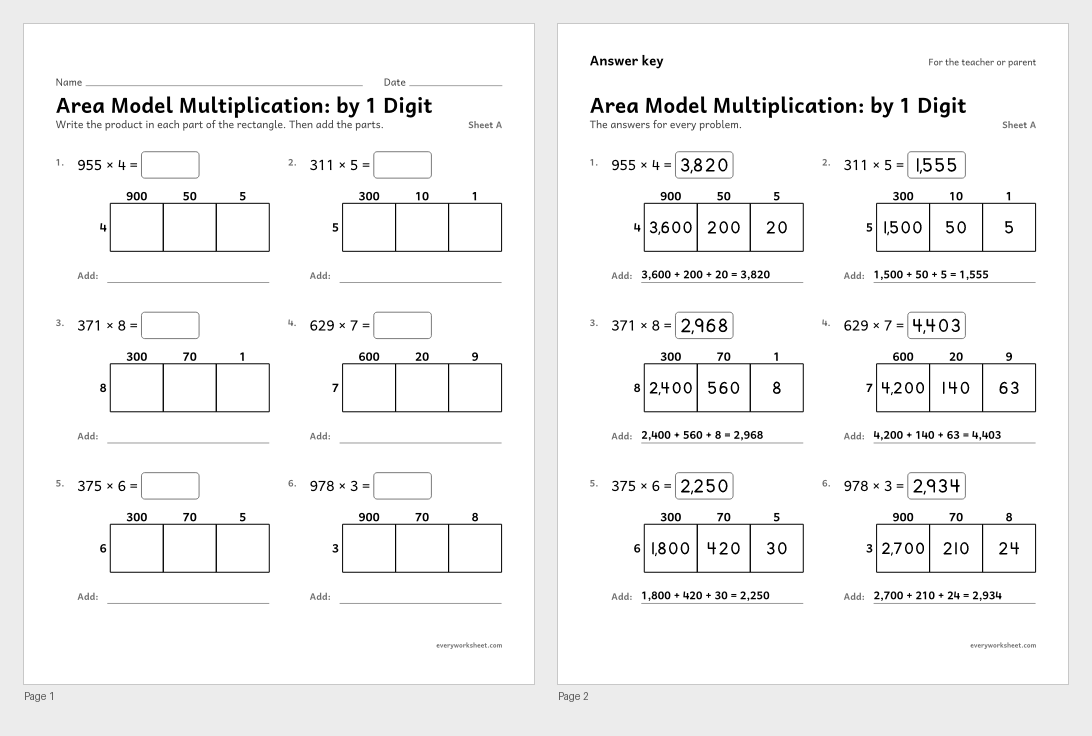
Multiplying with an area model (by a 1-digit number)
Answer key on page 2
2 pages63 KB
 View all 2 pages
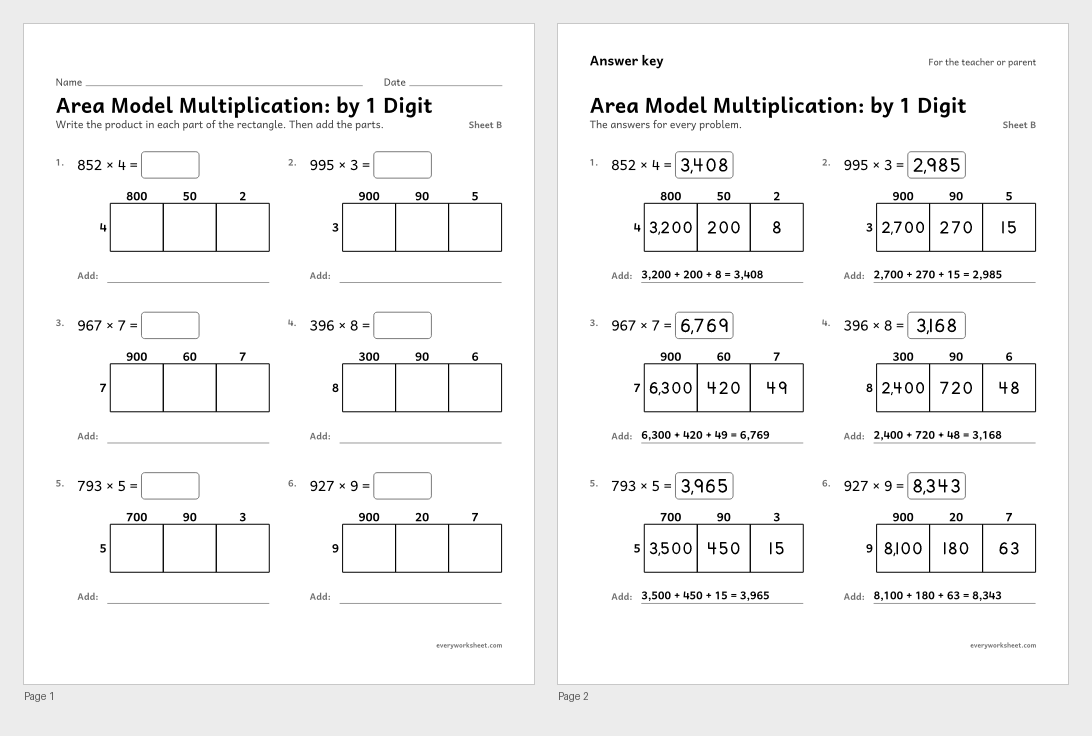
Multiplying with an area model (by a 1-digit number)
Answer key on page 2
2 pages64 KB
 View all 2 pages
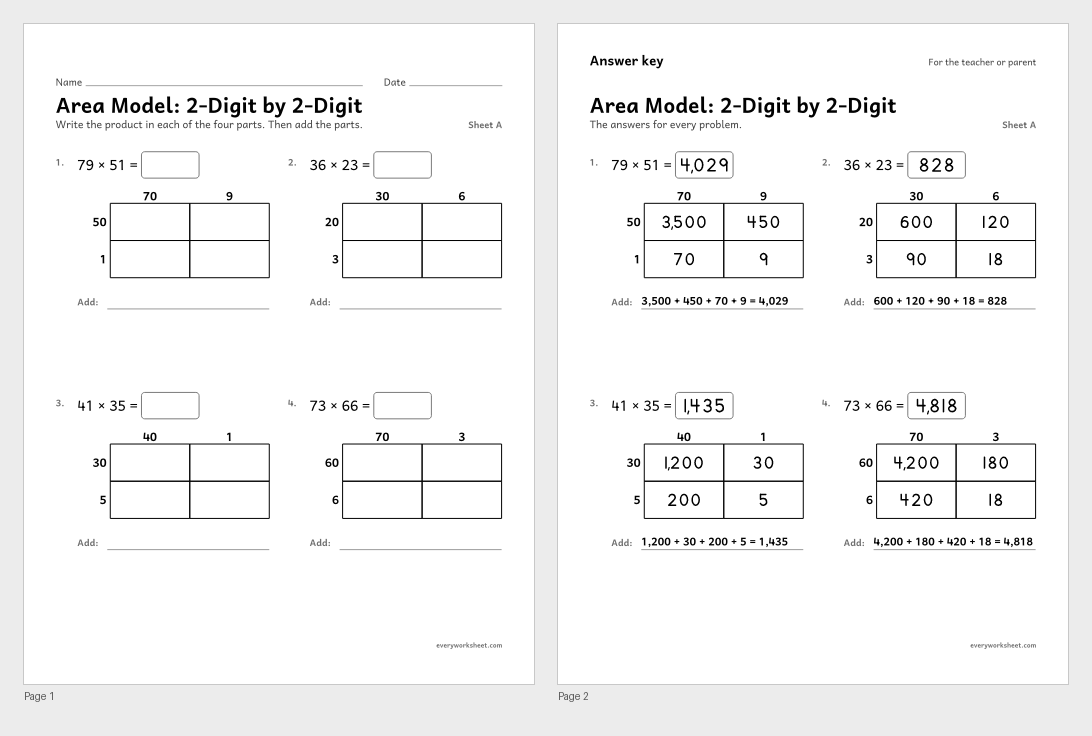
Multiplying two 2-digit numbers with an area model
Answer key on page 2
2 pages51 KB
 View all 2 pages
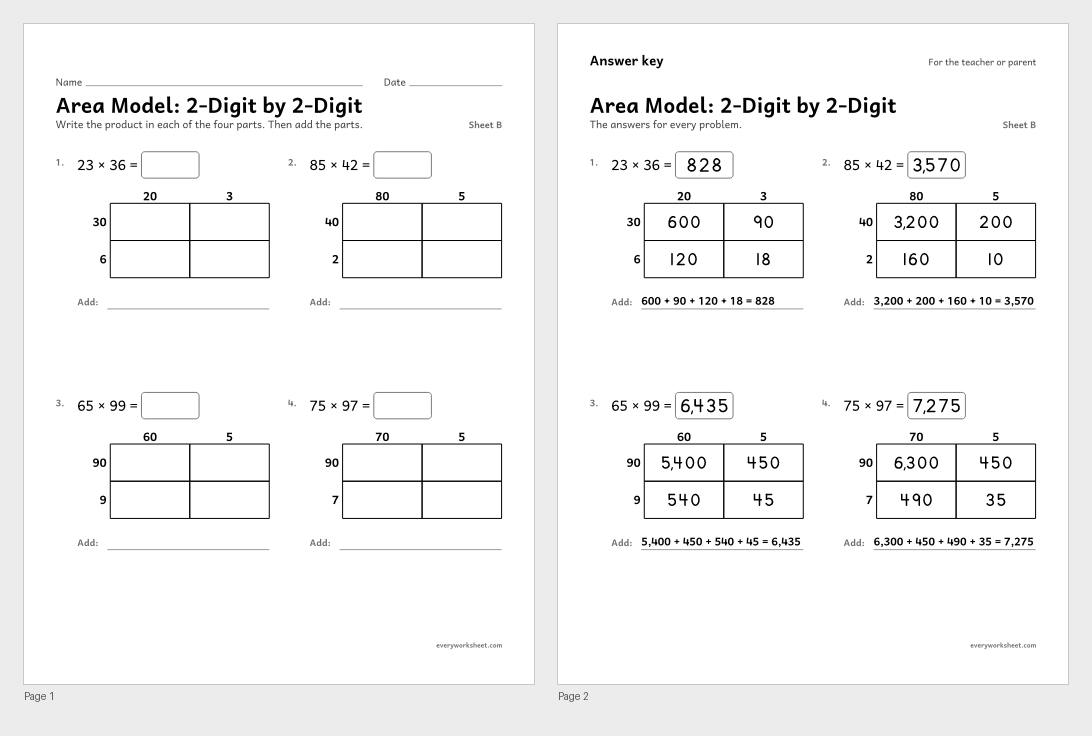
Multiplying two 2-digit numbers with an area model
Answer key on page 2
2 pages52 KB
 View all 2 pages
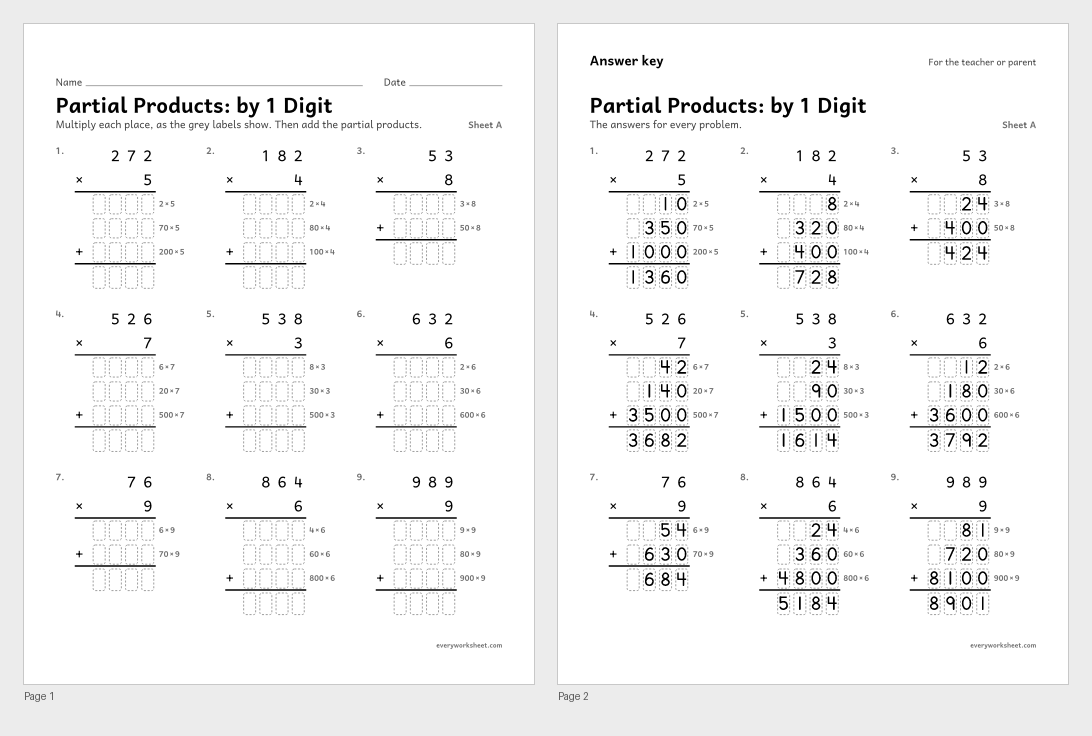
Multiplying with partial products (by a 1-digit number)
Answer key on page 2
2 pages72 KB
 View all 2 pages
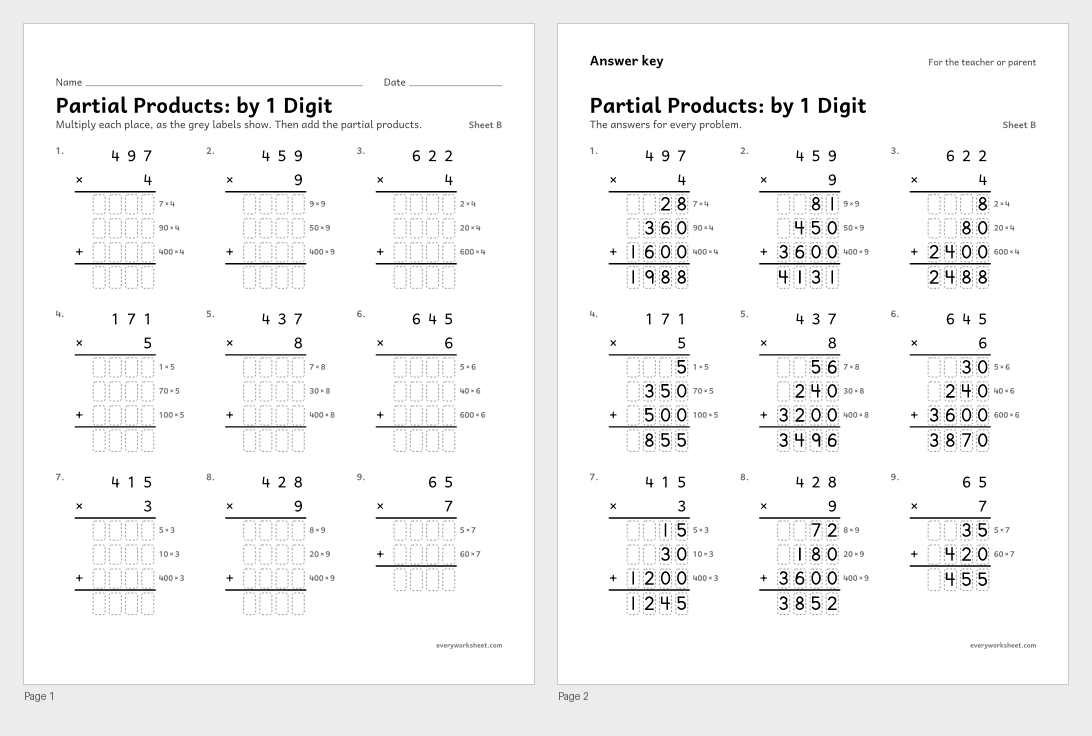
Multiplying with partial products (by a 1-digit number)
Answer key on page 2
2 pages73 KB
 View all 2 pages
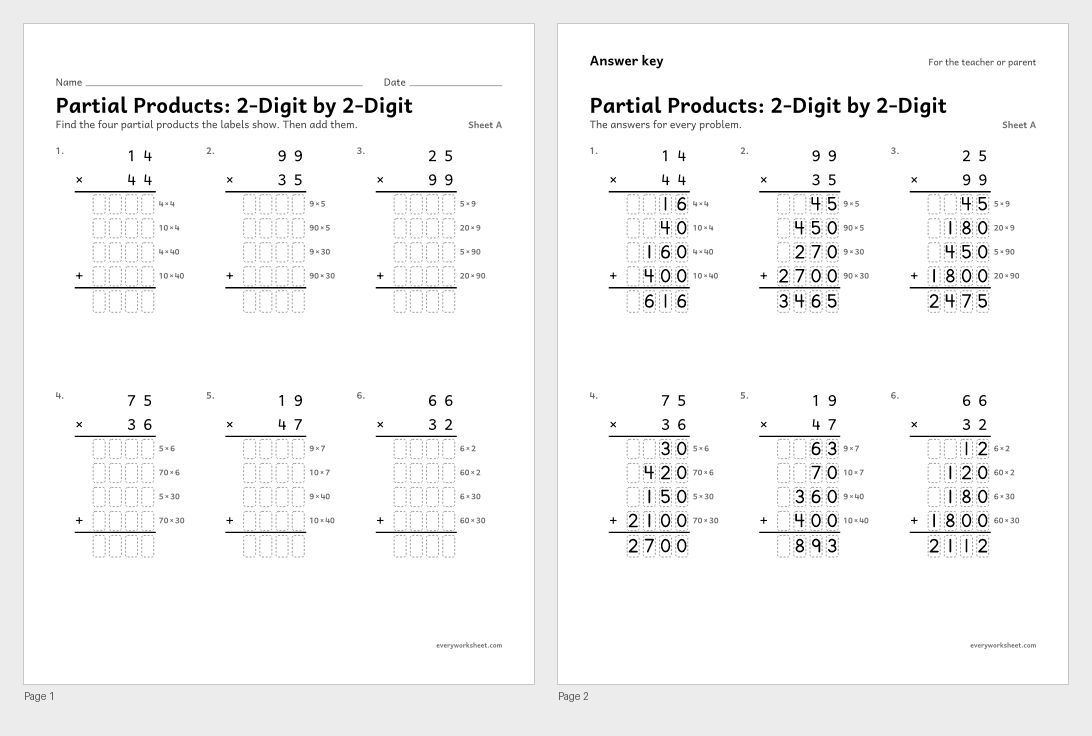
Multiplying two 2-digit numbers with partial products
Answer key on page 2
2 pages64 KB
 View all 2 pages
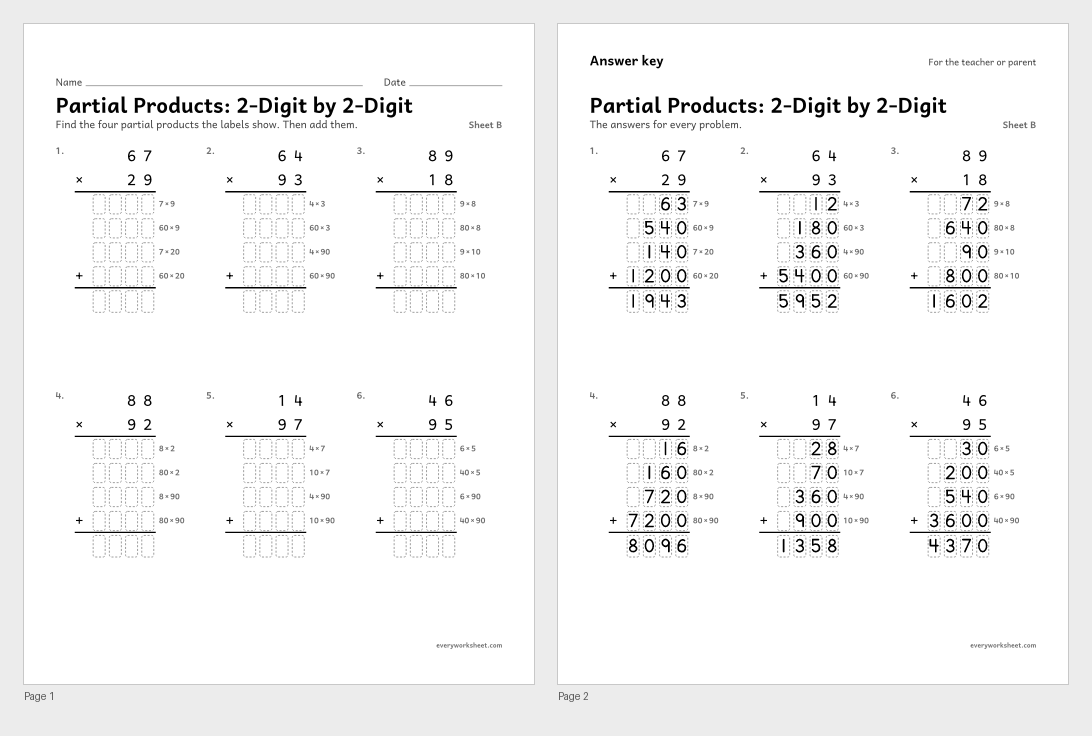
Multiplying two 2-digit numbers with partial products
Answer key on page 2
2 pages65 KB
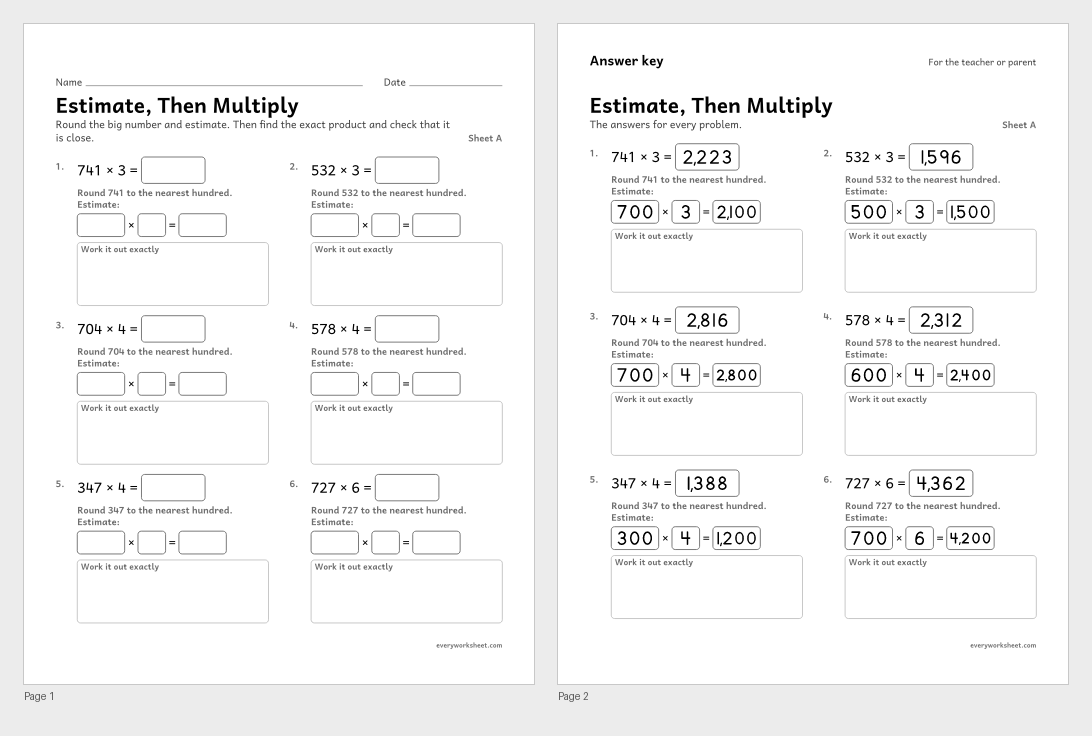 View all 2 pages
Estimating a product, then multiplying
Answer key on page 2
2 pages67 KB
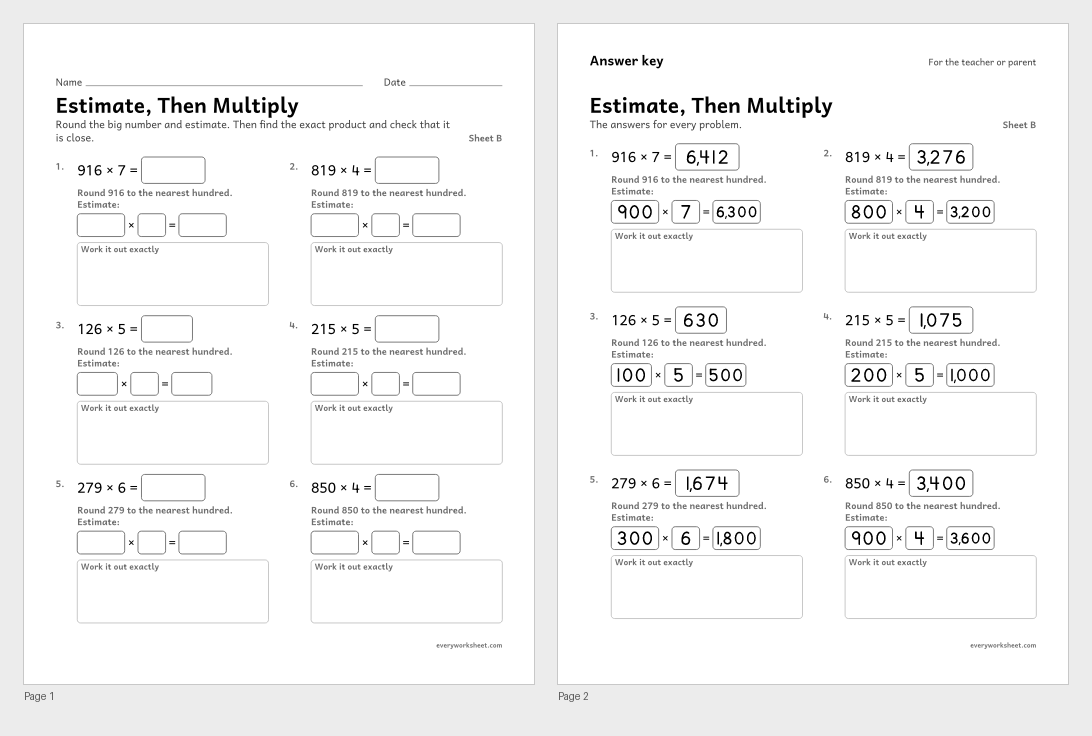 View all 2 pages
Estimating a product, then multiplying
Answer key on page 2
2 pages69 KB
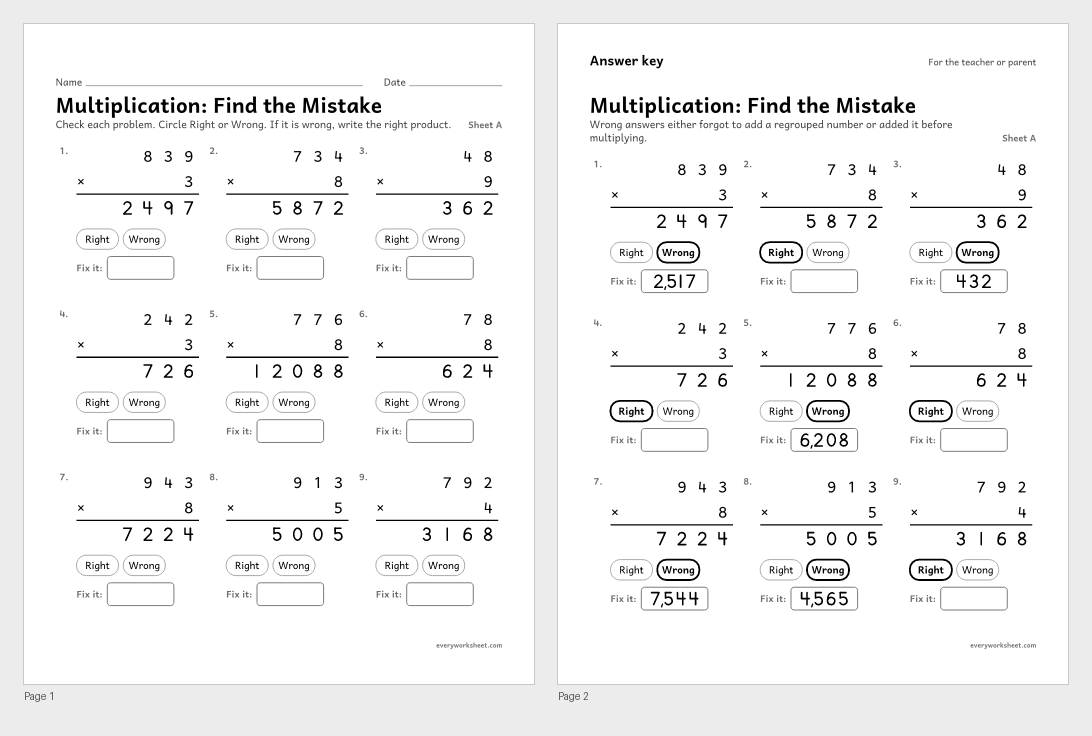 View all 2 pages
Finding mistakes in multi-digit multiplication
Answer key on page 2
2 pages55 KB
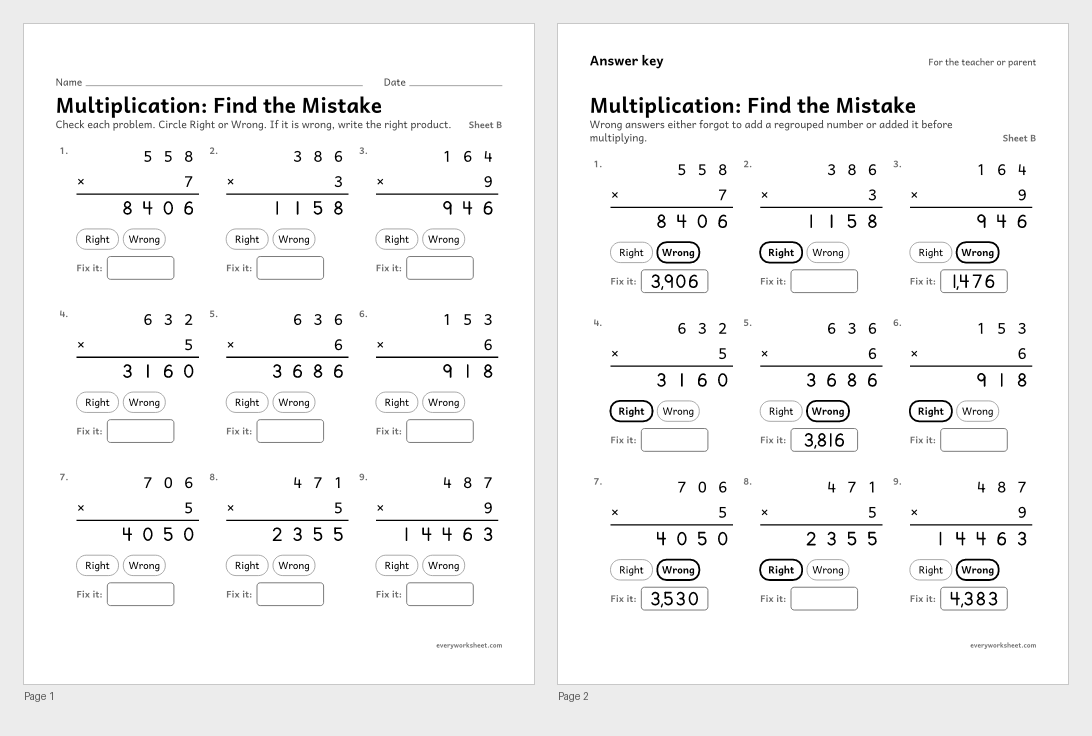 View all 2 pages
Finding mistakes in multi-digit multiplication
Answer key on page 2
2 pages56 KB
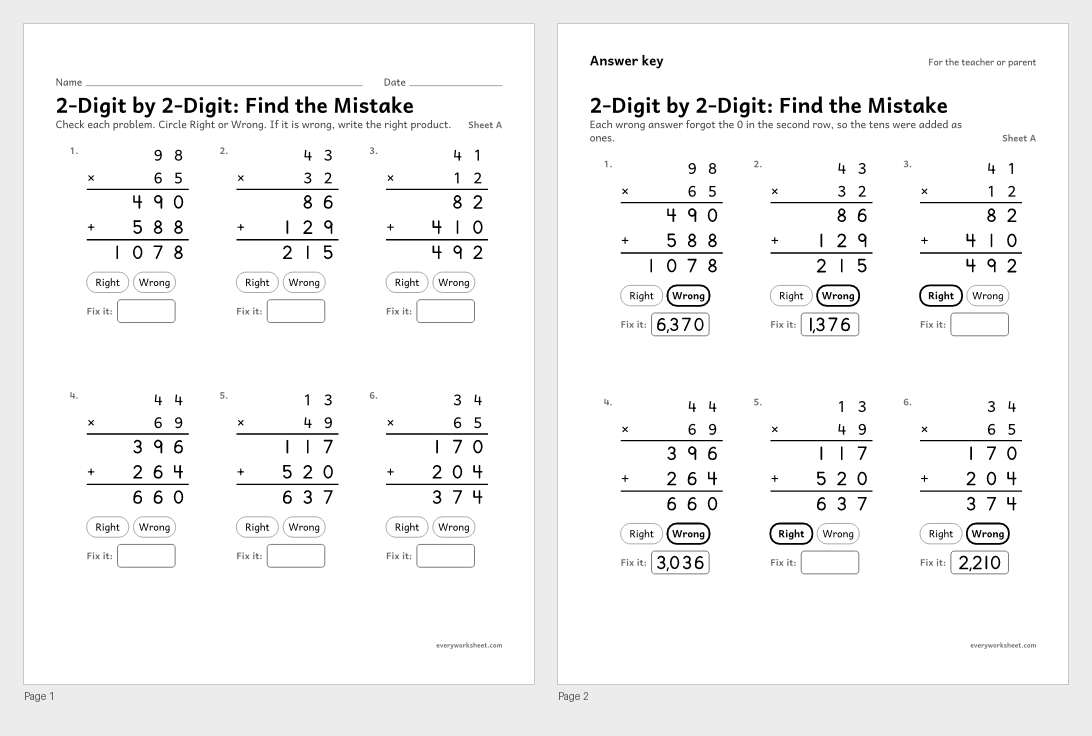 View all 2 pages
Finding mistakes in 2-digit by 2-digit multiplication
Answer key on page 2
2 pages49 KB
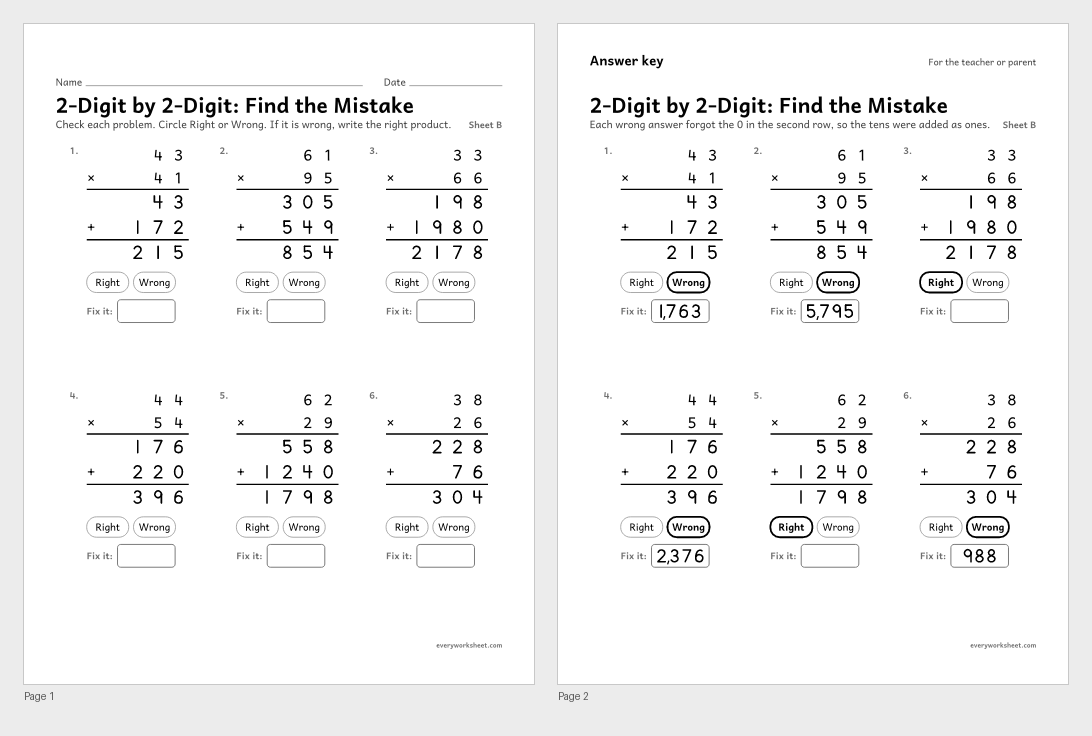 View all 2 pages
Finding mistakes in 2-digit by 2-digit multiplication
Answer key on page 2
2 pages49 KB
Print at 100% (actual size) for the cleanest tracing lines.
In 4th grade, multiplication grows from facts to big numbers: up to four digits times one digit (4,286 × 7) and two digits times two digits (46 × 38). Every method rests on place value. 46 × 38 is really 40 × 30, 40 × 8, 6 × 30 and 6 × 8 added together, and once a child sees that, the written method stops being a list of rules.
These pages build the skill in the order it makes sense. First multiply by 10, 100 and 1,000 and by multiples of them (6 × 300 = 1,800). Then show the place value parts with an area model, write them as partial products, and finally use the column method, with small boxes for the regrouped digits and a grey 0 to hold the ones place in the second row of 2-digit by 2-digit problems.
Most pages come as Sheet A, B and C with new problems at the same level. Every page has an answer key on page 2 that shows the regrouped digits and both rows of the work, so you can see exactly where a mistake happened. The estimate and find-the-mistake pages teach children to check their own answers.
CCSS.MATH.CONTENT.4.NBT.B.5Multiply a whole number of up to four digits by a one-digit whole number, and multiply two two-digit numbers, using strategies based on place value and the properties of operations. Illustrate and explain the calculation by using equations, rectangular arrays, and/or area models.CCSS.MATH.CONTENT.4.NBT.A.1Recognize that in a multi-digit whole number, a digit in one place represents ten times what it represents in the place to its right. For example, recognize that 700 ÷ 70 = 10 by applying concepts of place value and division.Fourth graders multiply up to a 4-digit number by a 1-digit number and multiply two 2-digit numbers, using place value strategies such as area models and partial products, and explain their work.
It is a rectangle split into parts by place value. For 23 × 6, one part is 20 × 6 = 120 and the other is 3 × 6 = 18, and the product is 120 + 18 = 138.
Partial products are the products of each place value part. For 34 × 12 they are 4 × 2, 30 × 2, 4 × 10 and 30 × 10, which add up to 408.
In 2-digit by 2-digit multiplication, the second row multiplies by the tens digit, so its answer is tens. The 0 keeps the ones place empty.