 View all 2 pages
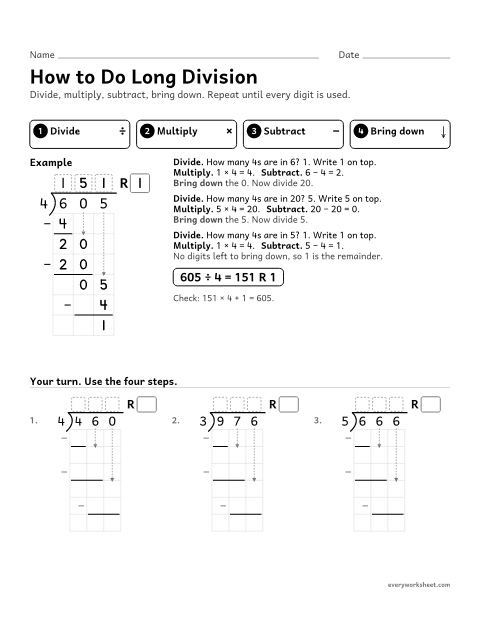
How to do long division
The steps of long division with a 1-digit divisor
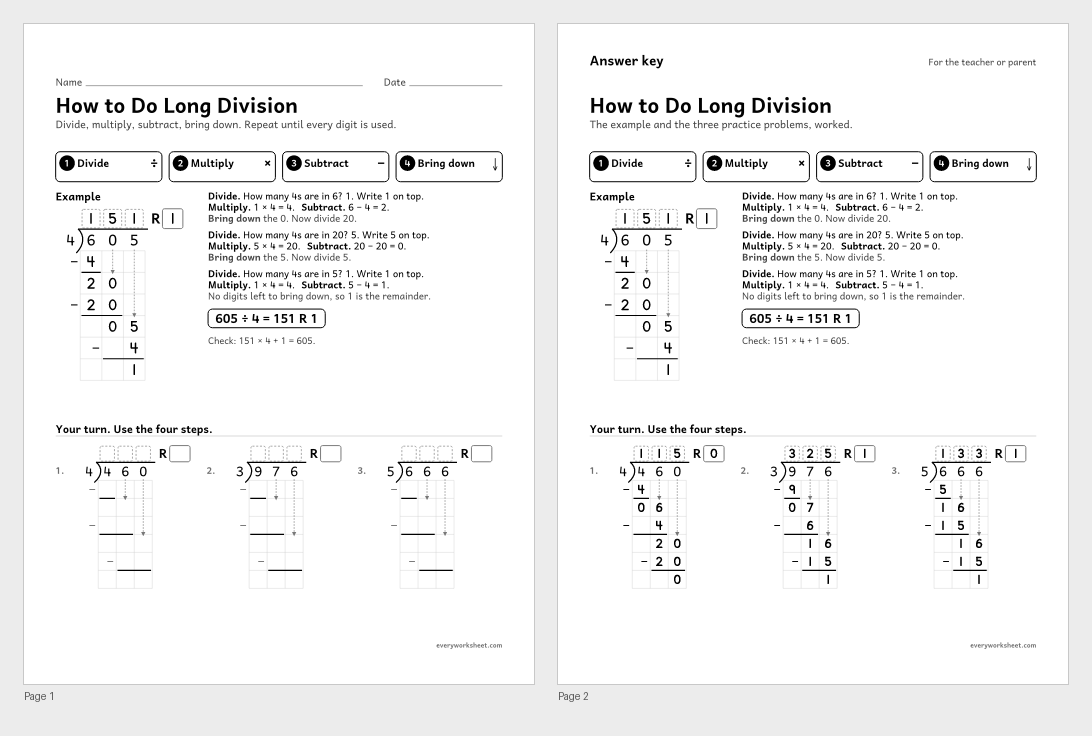
Answer key on page 2
2 pages57 KB
Long division with 1-digit divisors: a step-by-step guide, guided pages with bring-down arrows, remainders, zeros in the quotient, area models and checks.
View all 2 pagesThe steps of long division with a 1-digit divisor
Answer key on page 2
2 pages57 KB
 View all 2 pages
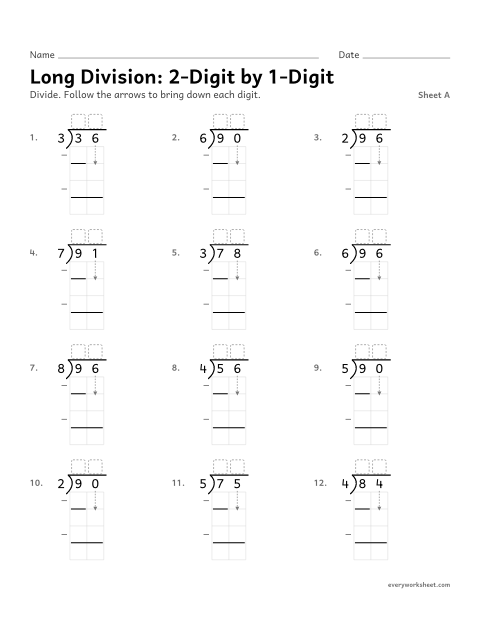
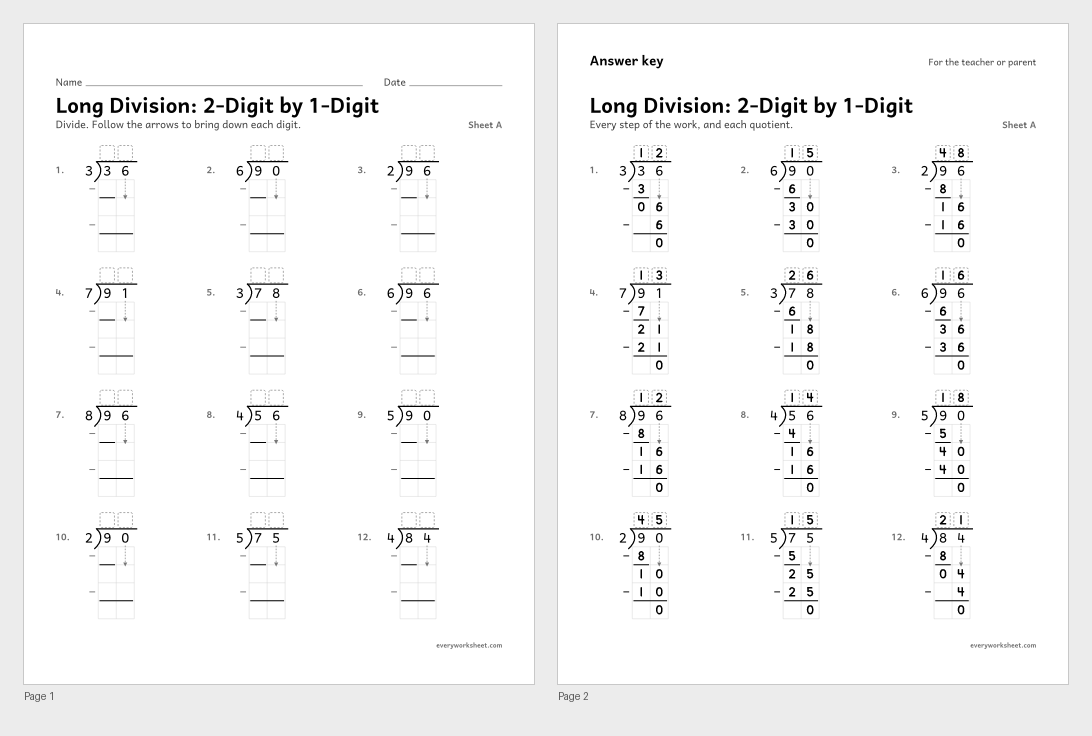
Dividing a 2-digit number by a 1-digit number
Answer key on page 2
2 pages51 KB
 View all 2 pages
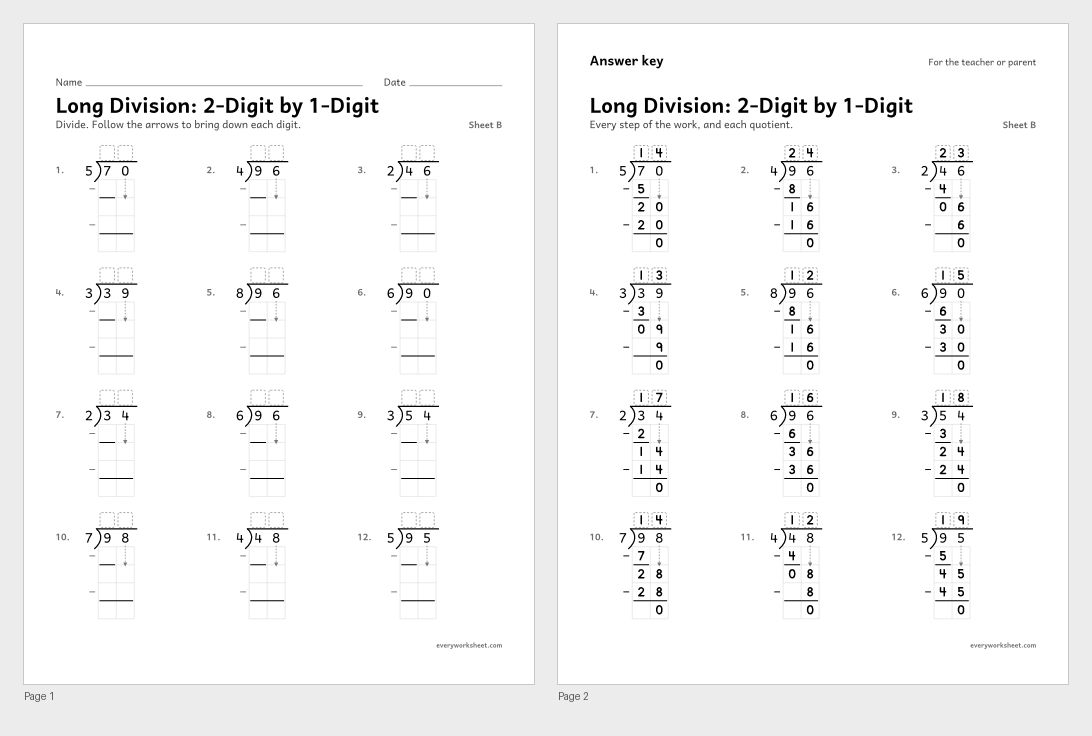
Dividing a 2-digit number by a 1-digit number
Answer key on page 2
2 pages51 KB
 View all 2 pages
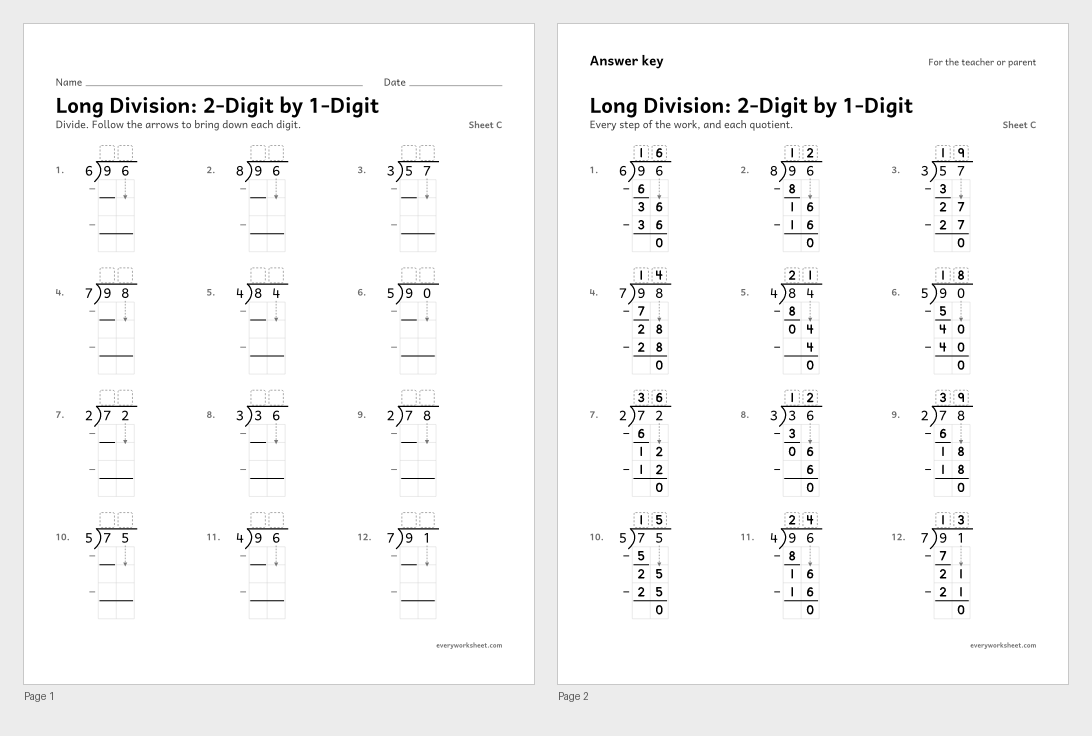
Dividing a 2-digit number by a 1-digit number
Answer key on page 2
2 pages51 KB
 View all 2 pages
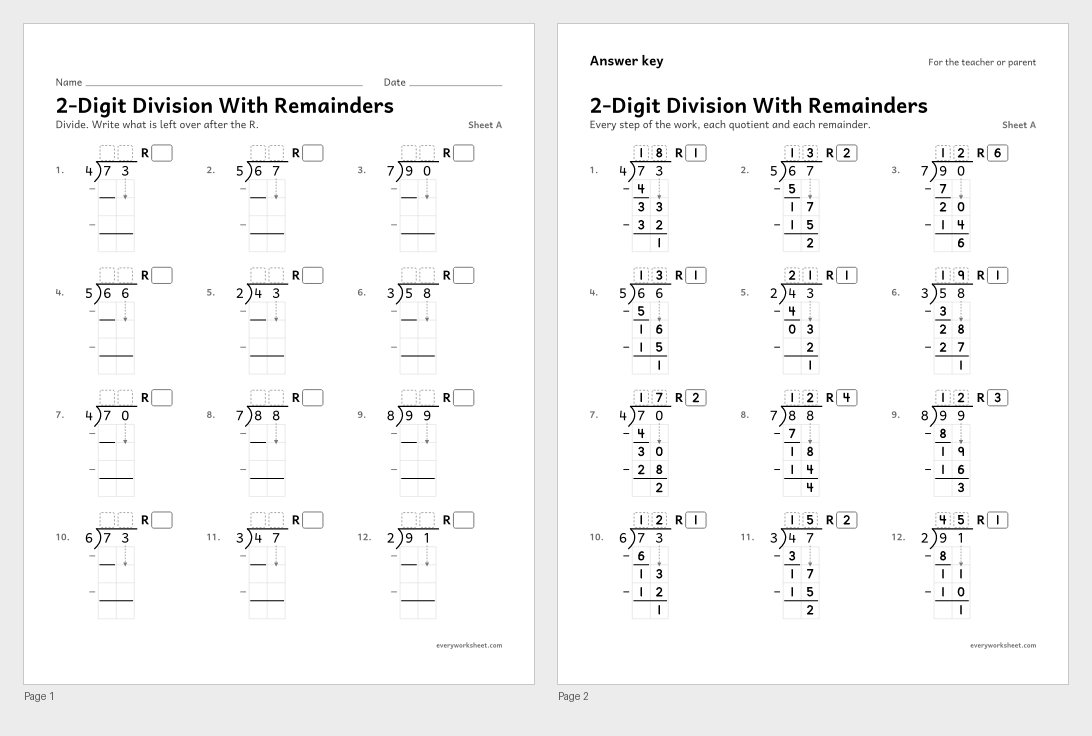
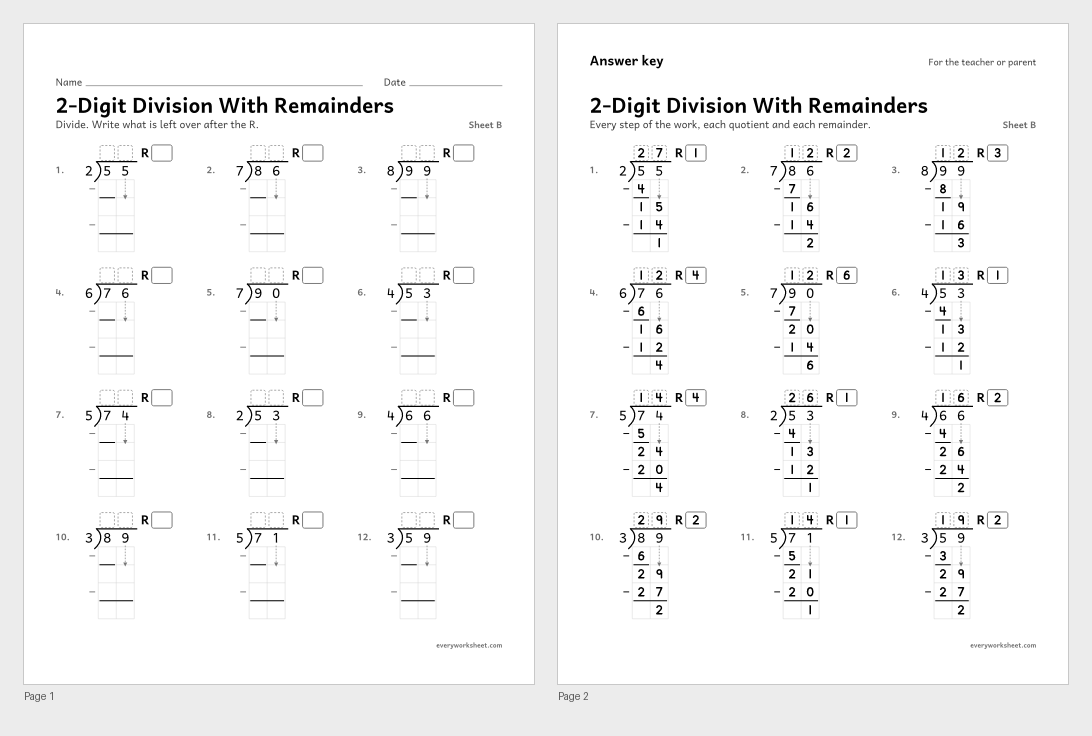
Dividing a 2-digit number by a 1-digit number with a remainder
Answer key on page 2
2 pages53 KB
 View all 2 pages
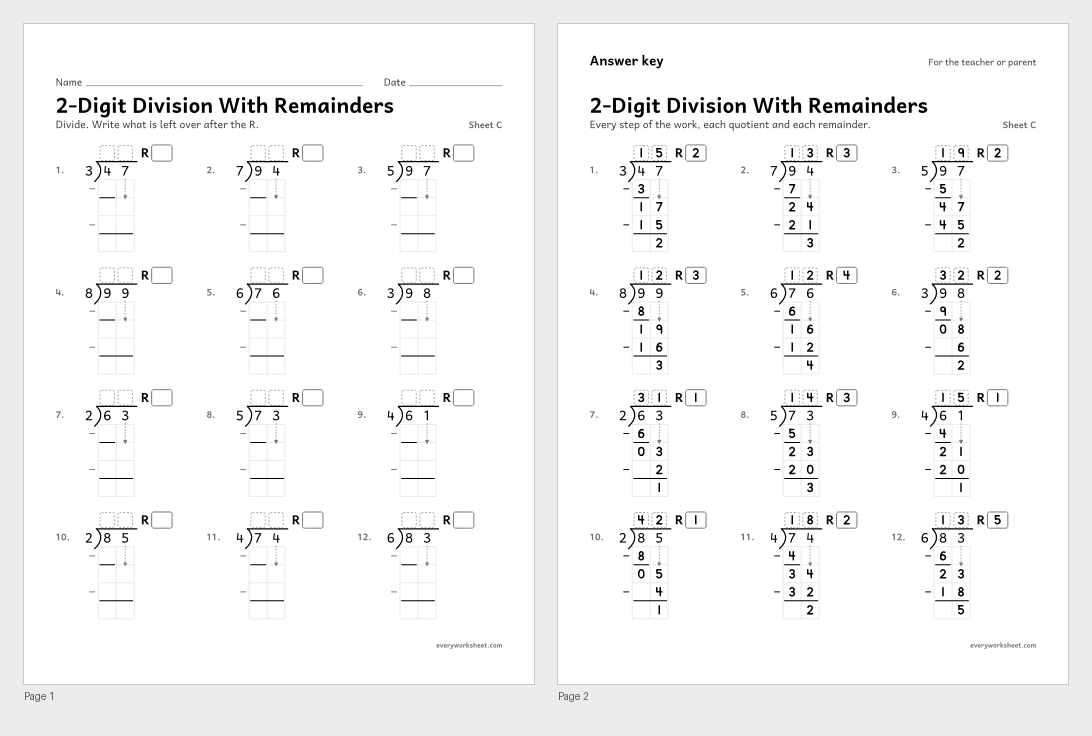
Dividing a 2-digit number by a 1-digit number with a remainder
Answer key on page 2
2 pages53 KB
 View all 2 pages
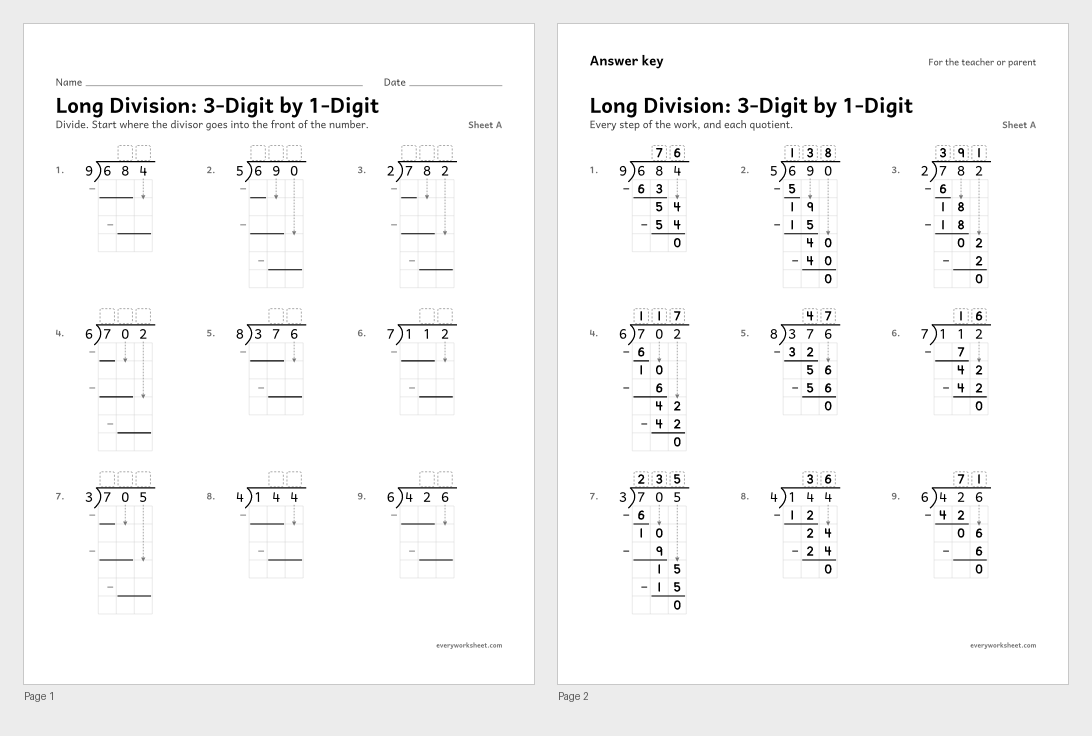
Dividing a 2-digit number by a 1-digit number with a remainder
Answer key on page 2
2 pages53 KB
 View all 2 pages
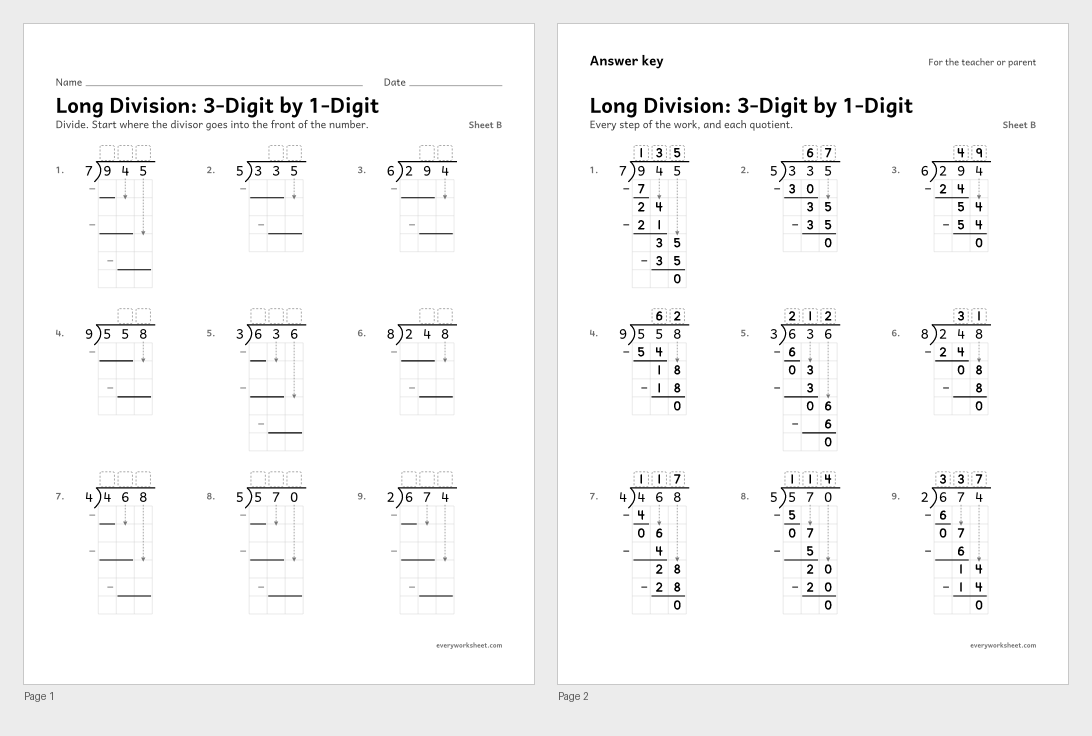
Dividing a 3-digit number by a 1-digit number
Answer key on page 2
2 pages47 KB
 View all 2 pages
Dividing a 3-digit number by a 1-digit number
Answer key on page 2
2 pages48 KB
 View all 2 pages
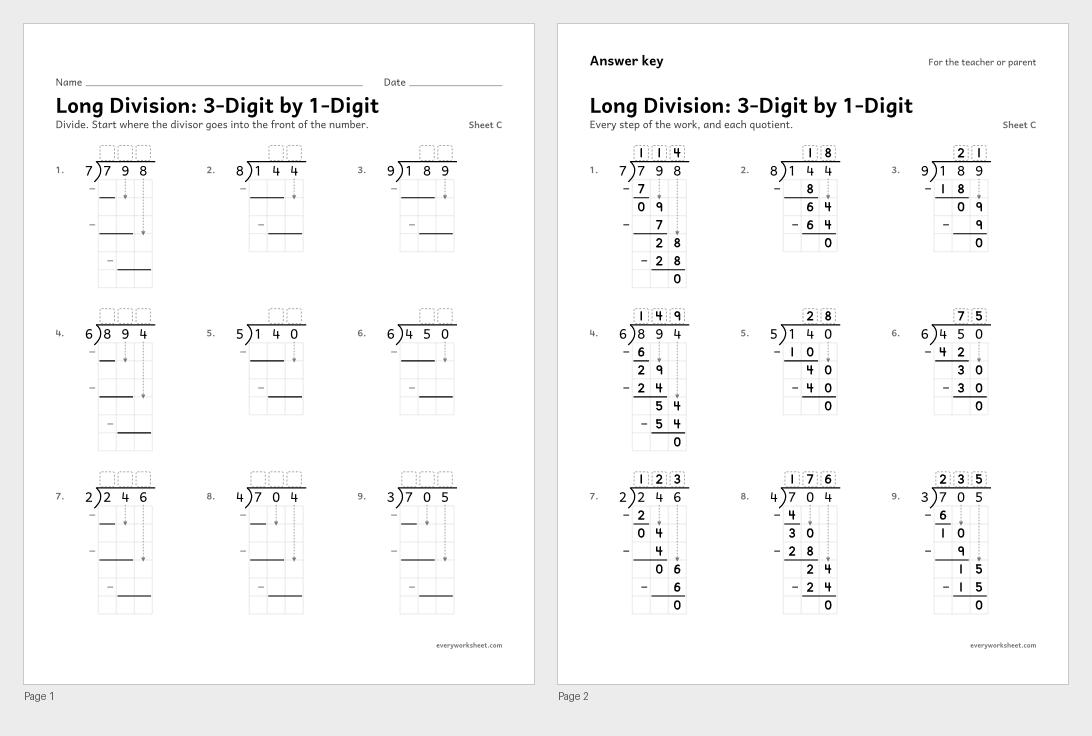
Dividing a 3-digit number by a 1-digit number
Answer key on page 2
2 pages48 KB
 View all 2 pages
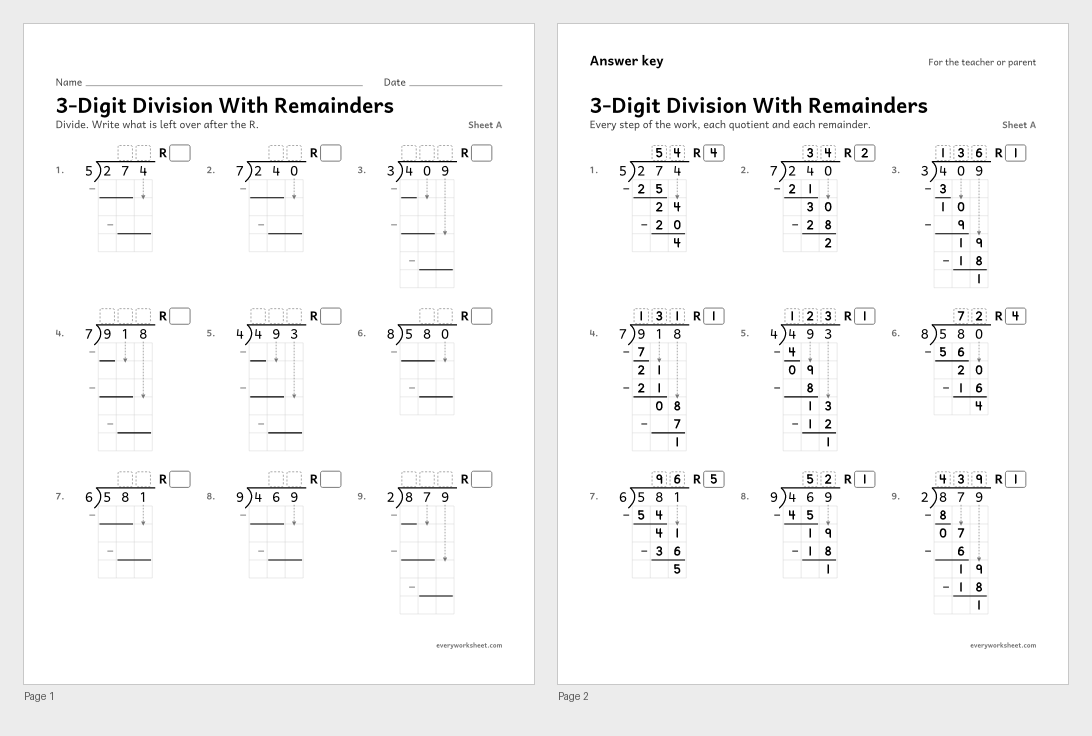
Dividing a 3-digit number by a 1-digit number with a remainder
Answer key on page 2
2 pages49 KB
 View all 2 pages
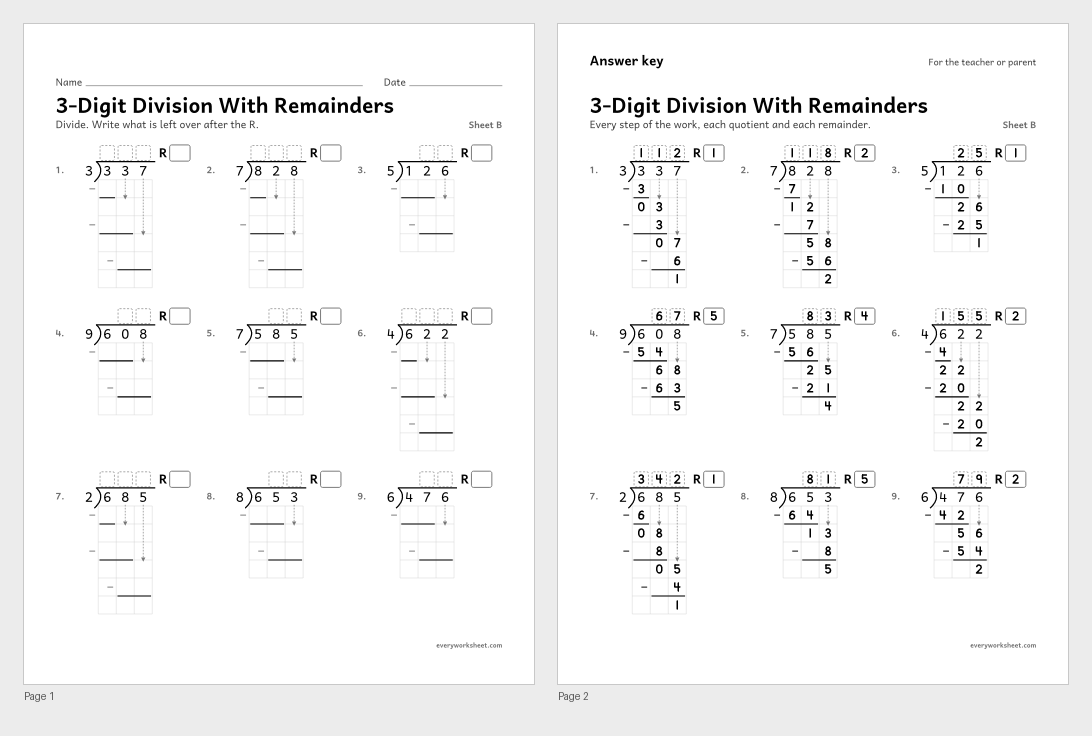
Dividing a 3-digit number by a 1-digit number with a remainder
Answer key on page 2
2 pages49 KB
 View all 2 pages
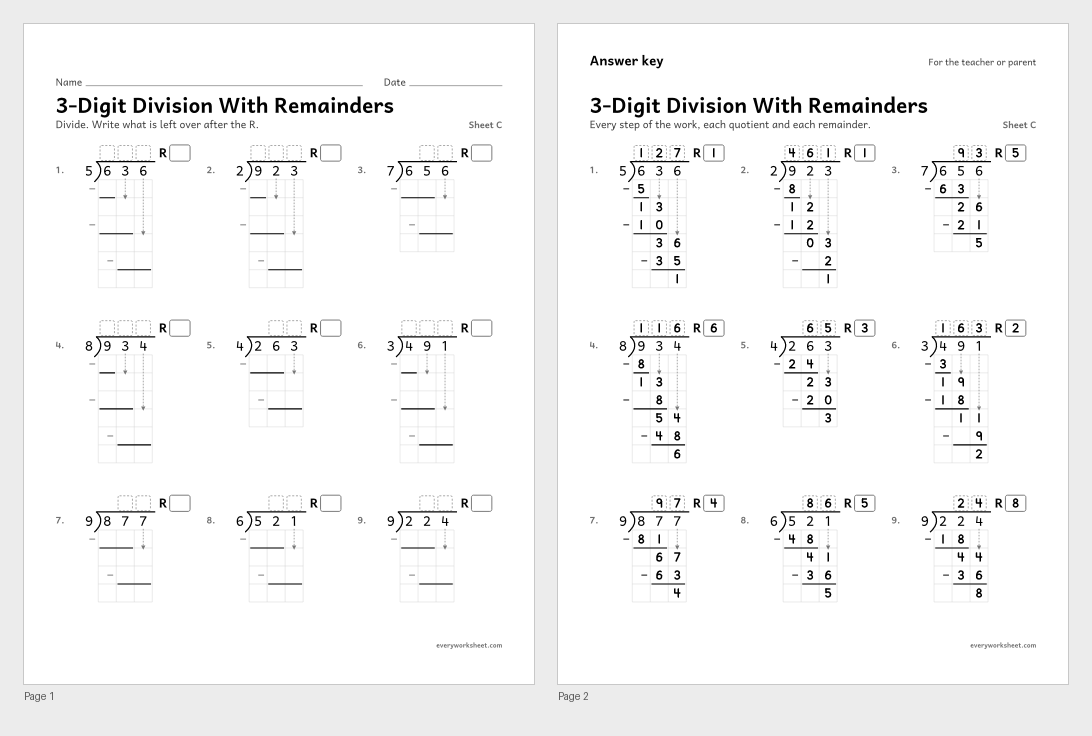
Dividing a 3-digit number by a 1-digit number with a remainder
Answer key on page 2
2 pages49 KB
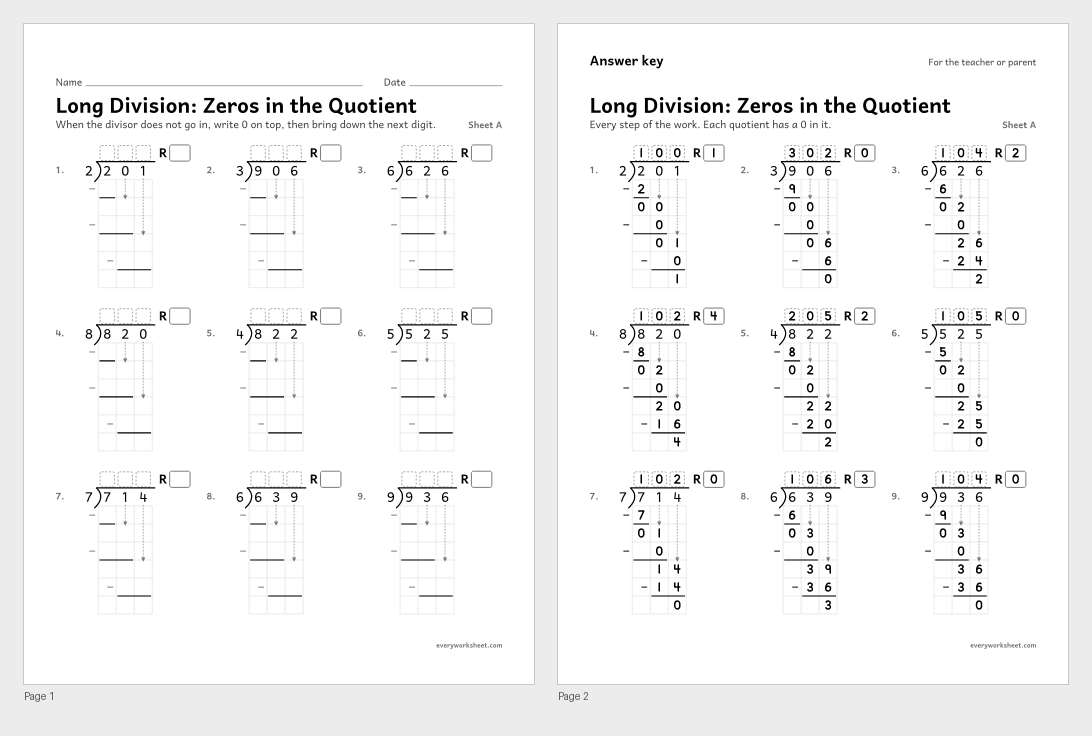 View all 2 pages
Long division with a zero in the quotient
Answer key on page 2
2 pages50 KB
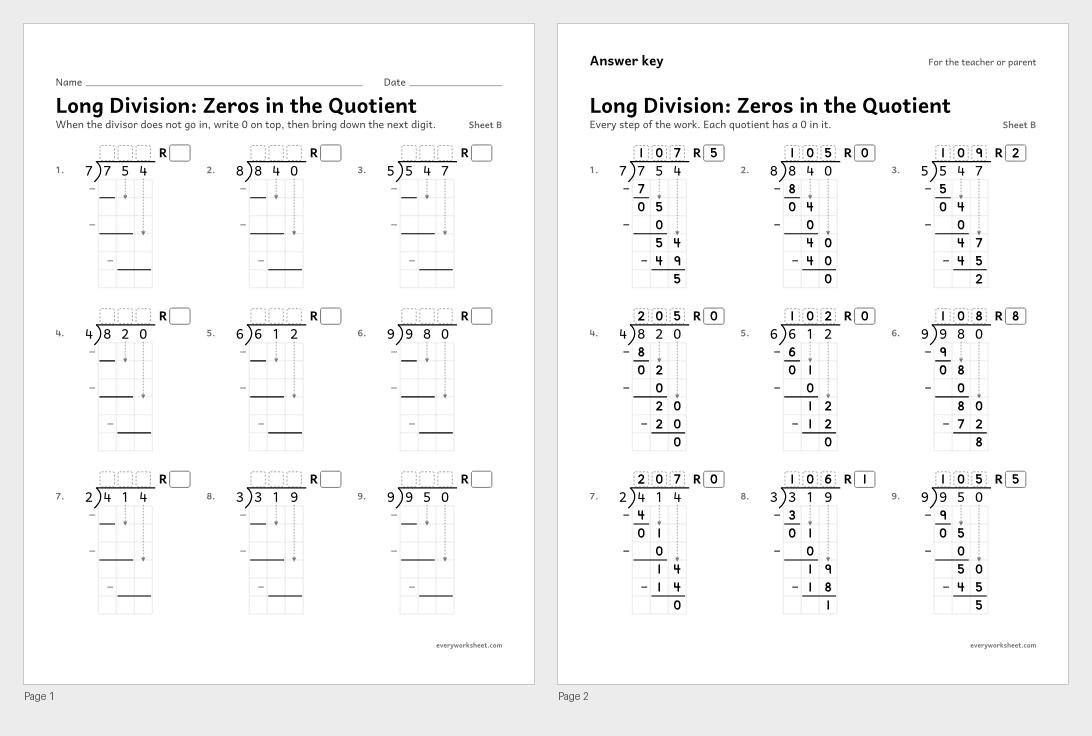 View all 2 pages
Long division with a zero in the quotient
Answer key on page 2
2 pages50 KB
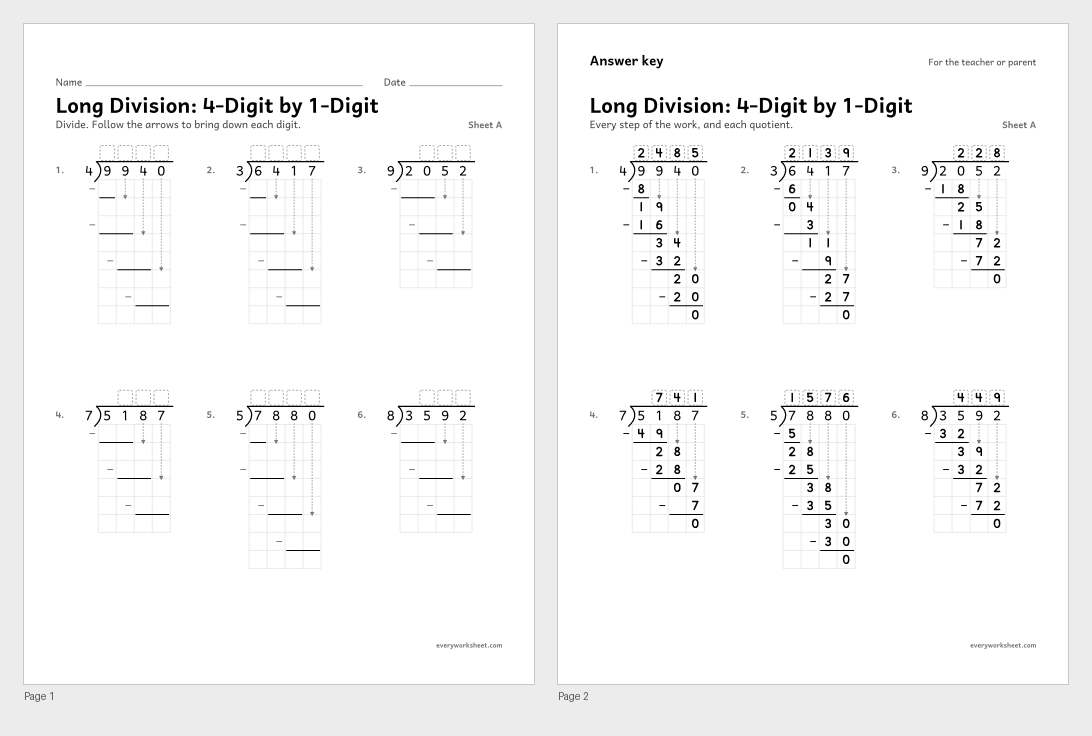 View all 2 pages
Dividing a 4-digit number by a 1-digit number
Answer key on page 2
2 pages43 KB
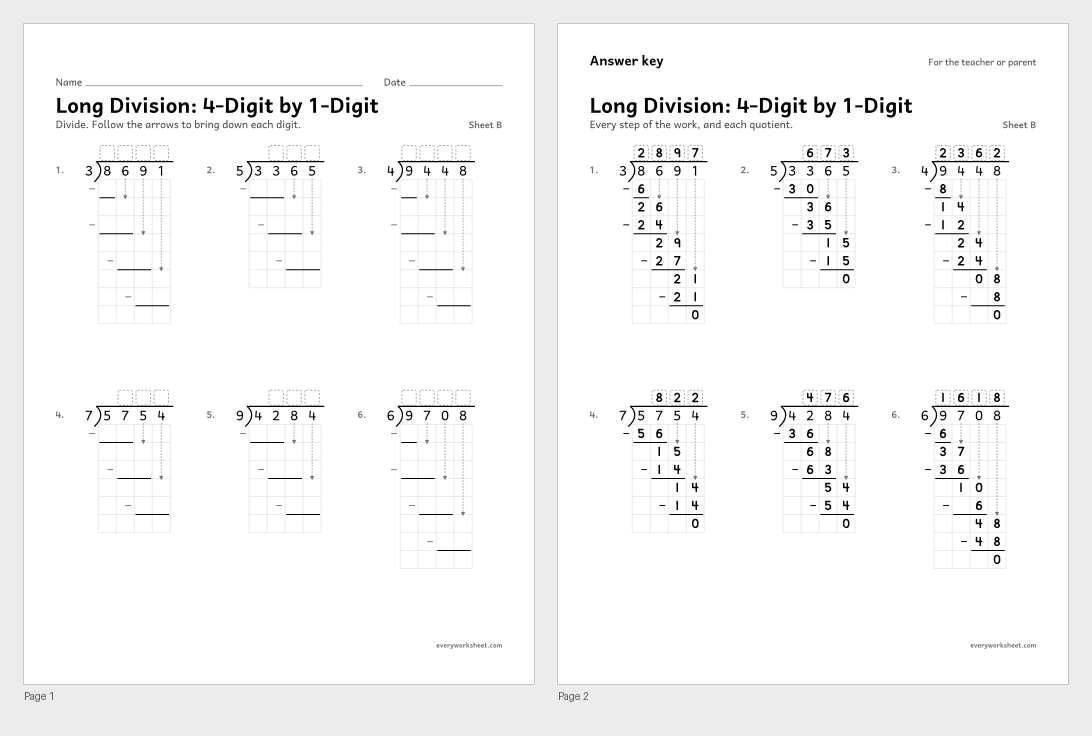 View all 2 pages
Dividing a 4-digit number by a 1-digit number
Answer key on page 2
2 pages43 KB
 View all 2 pages
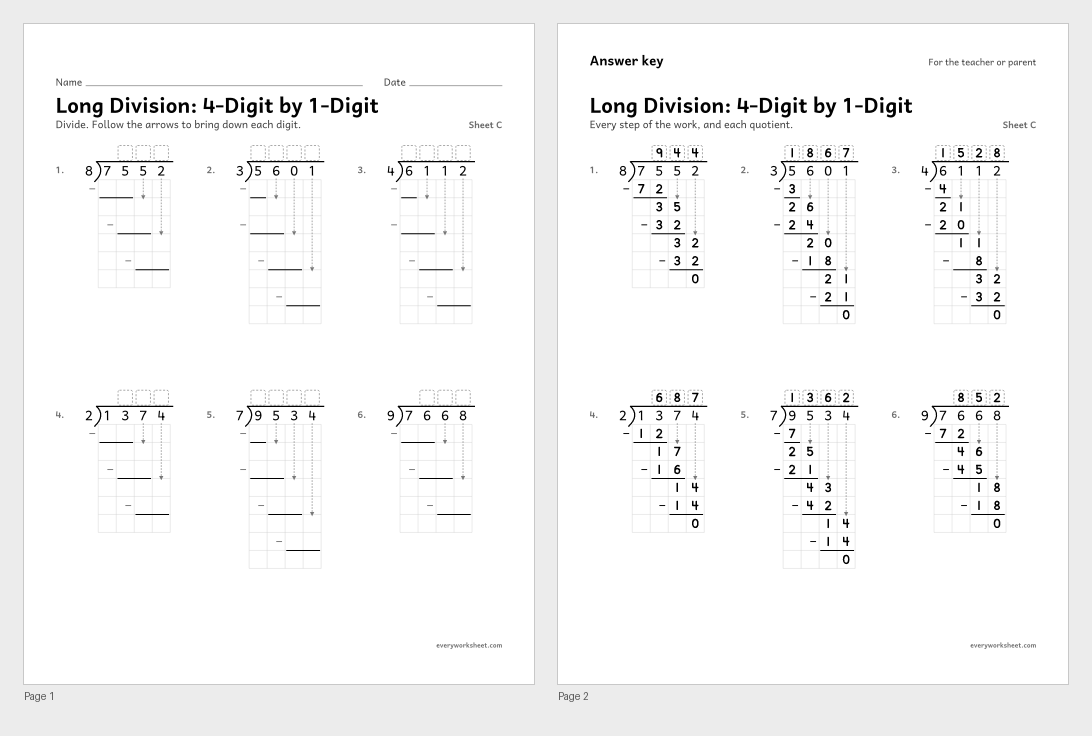
Dividing a 4-digit number by a 1-digit number
Answer key on page 2
2 pages43 KB
 View all 2 pages
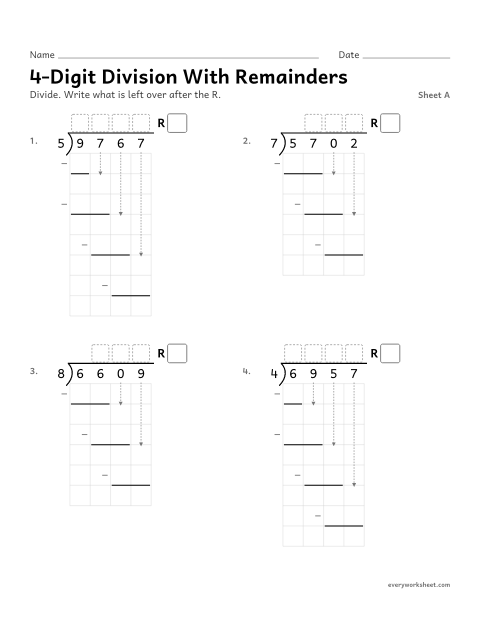
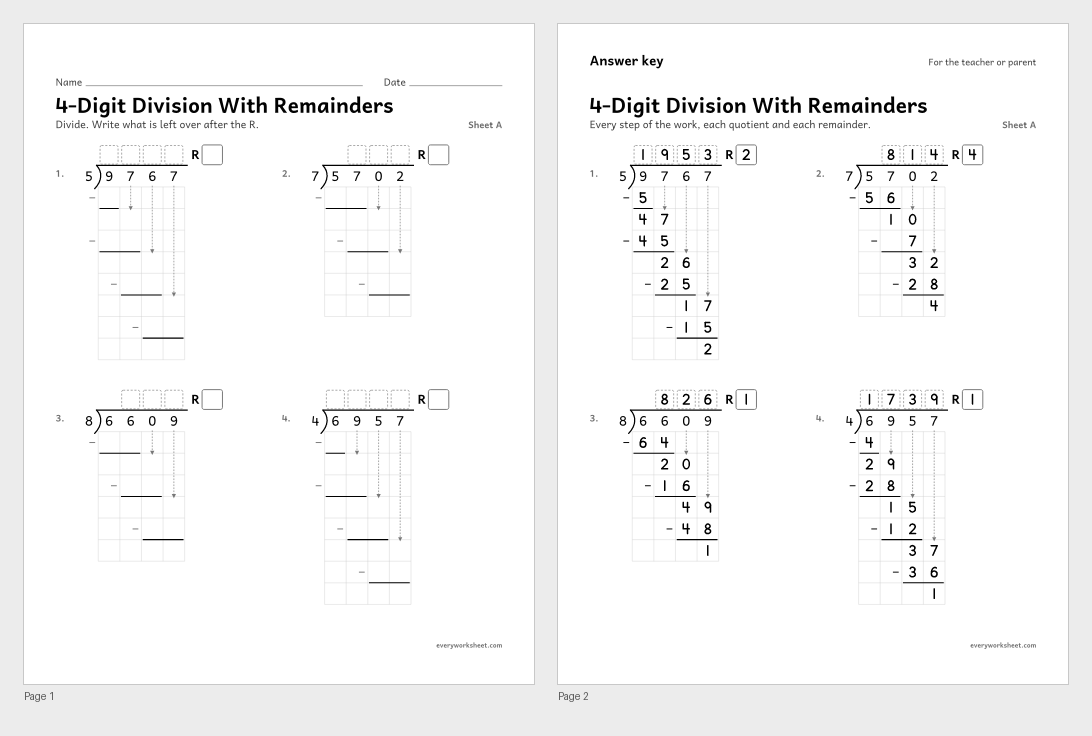
Dividing a 4-digit number by a 1-digit number with a remainder
Answer key on page 2
2 pages39 KB
 View all 2 pages
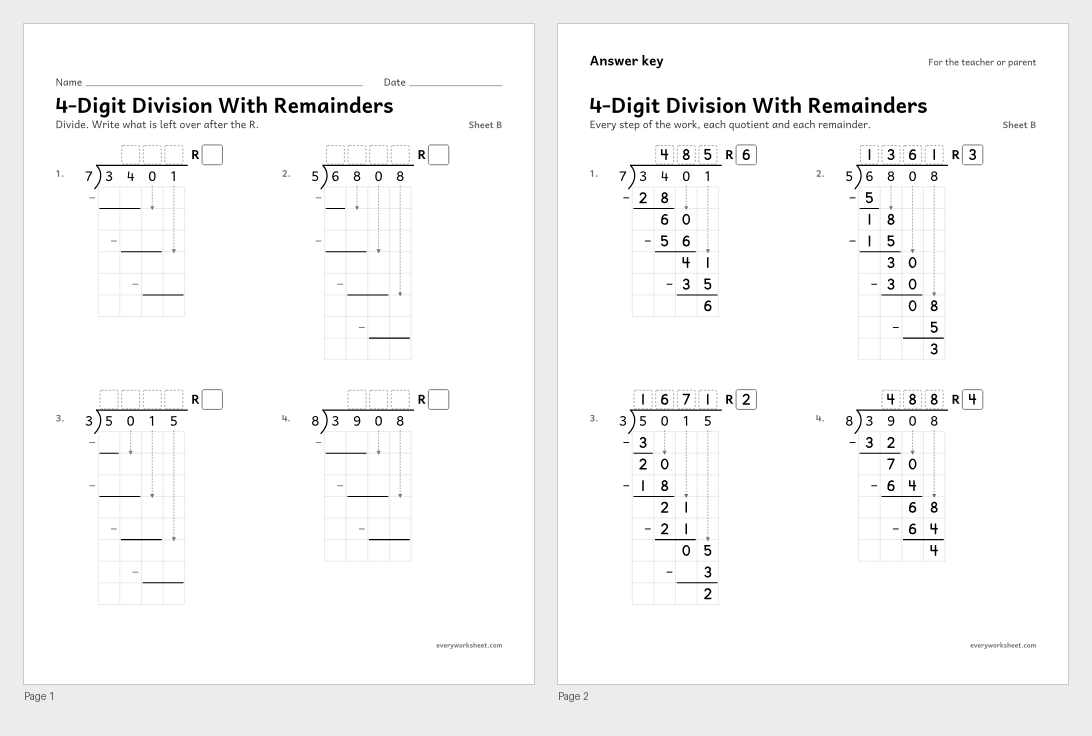
Dividing a 4-digit number by a 1-digit number with a remainder
Answer key on page 2
2 pages39 KB
 View all 2 pages
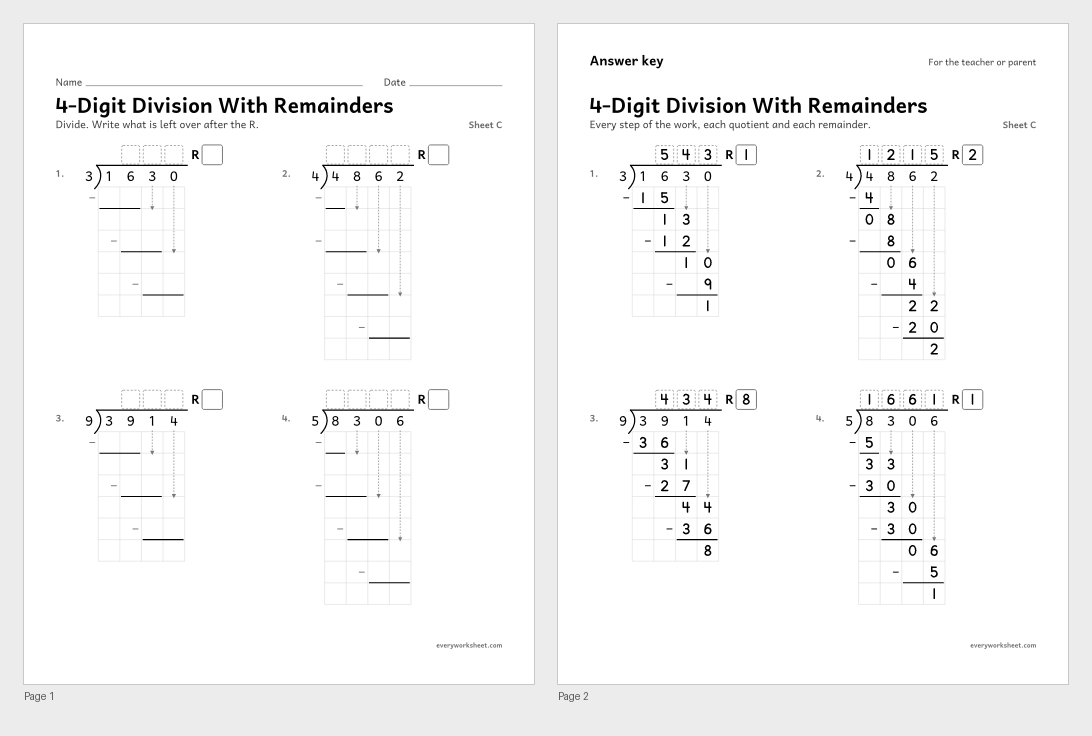
Dividing a 4-digit number by a 1-digit number with a remainder
Answer key on page 2
2 pages39 KB
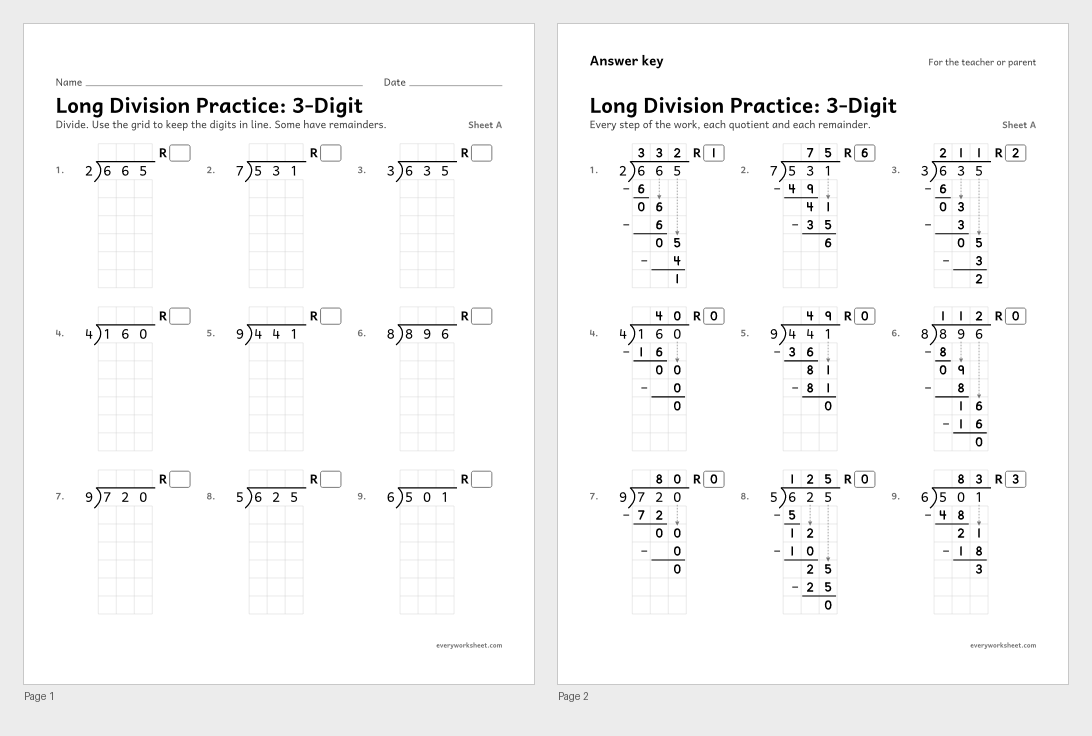 View all 2 pages
Long division practice with 3-digit dividends
Answer key on page 2
2 pages48 KB
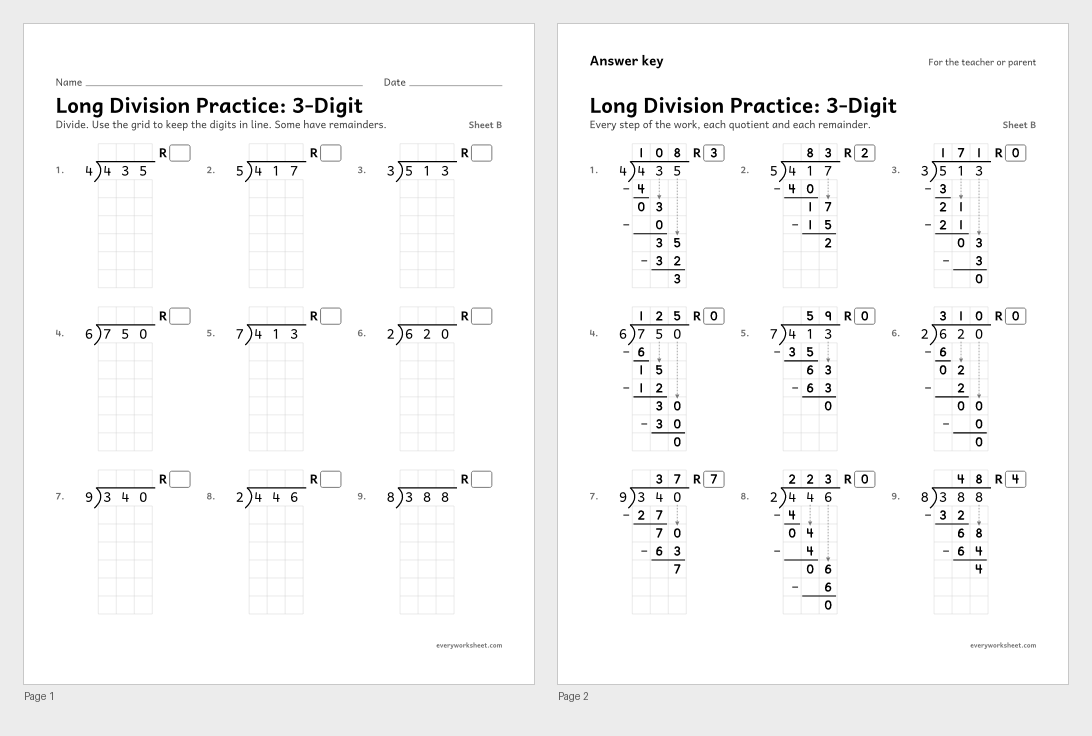 View all 2 pages
Long division practice with 3-digit dividends
Answer key on page 2
2 pages48 KB
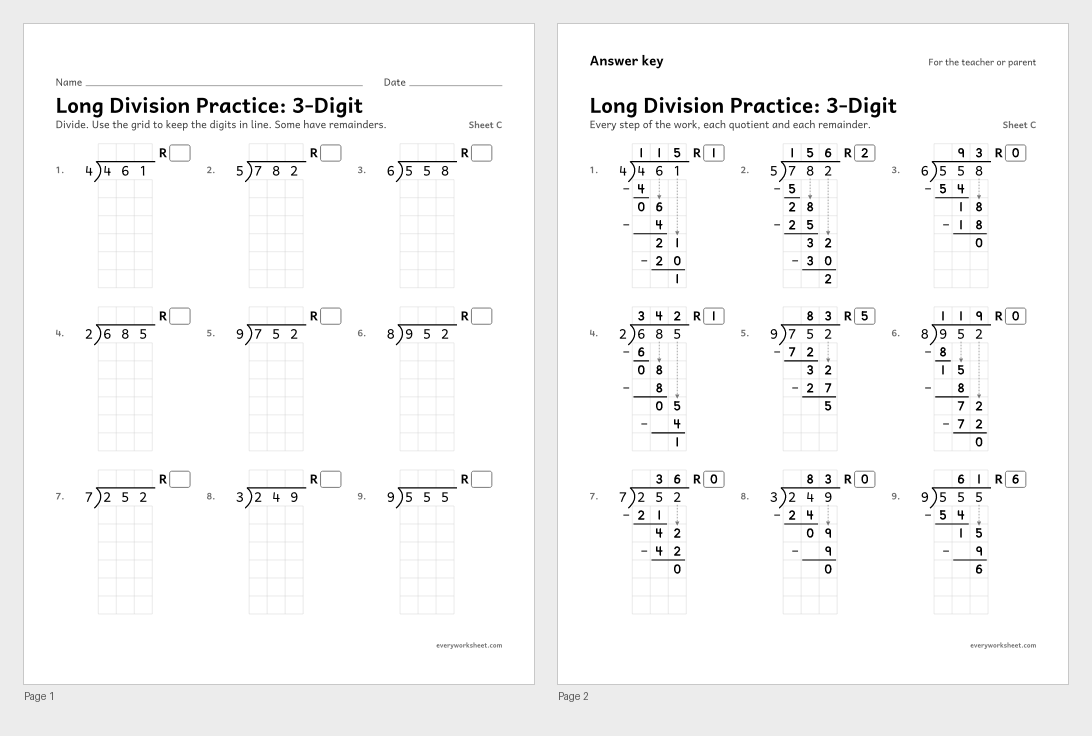 View all 2 pages
Long division practice with 3-digit dividends
Answer key on page 2
2 pages48 KB
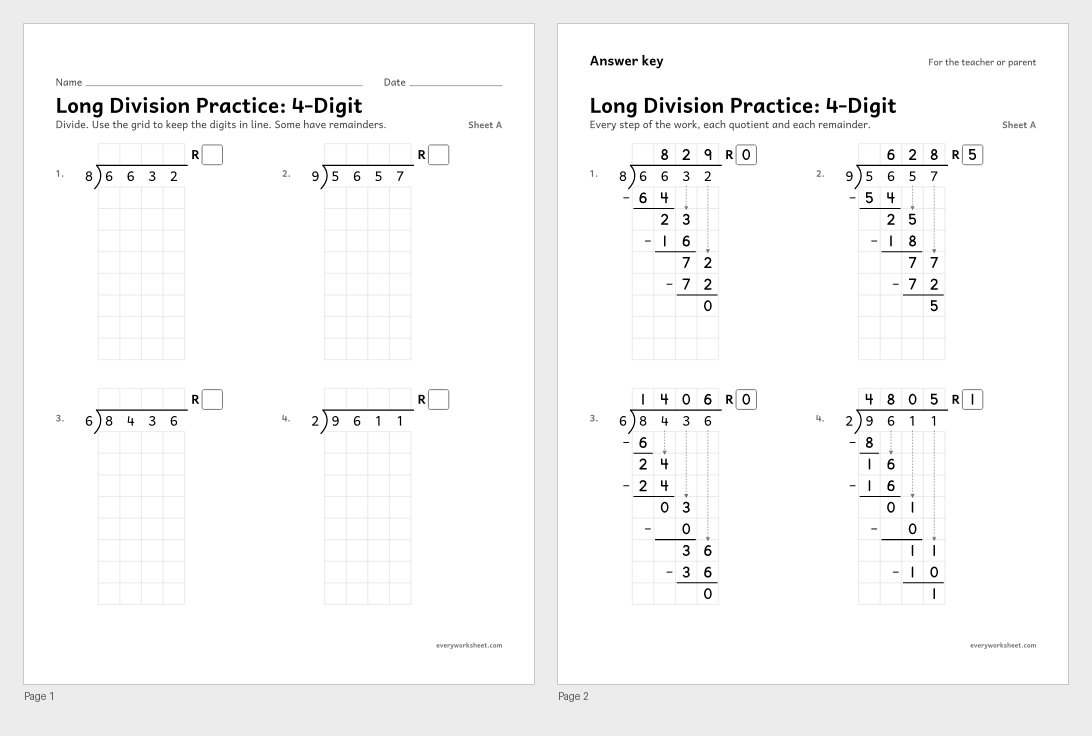 View all 2 pages
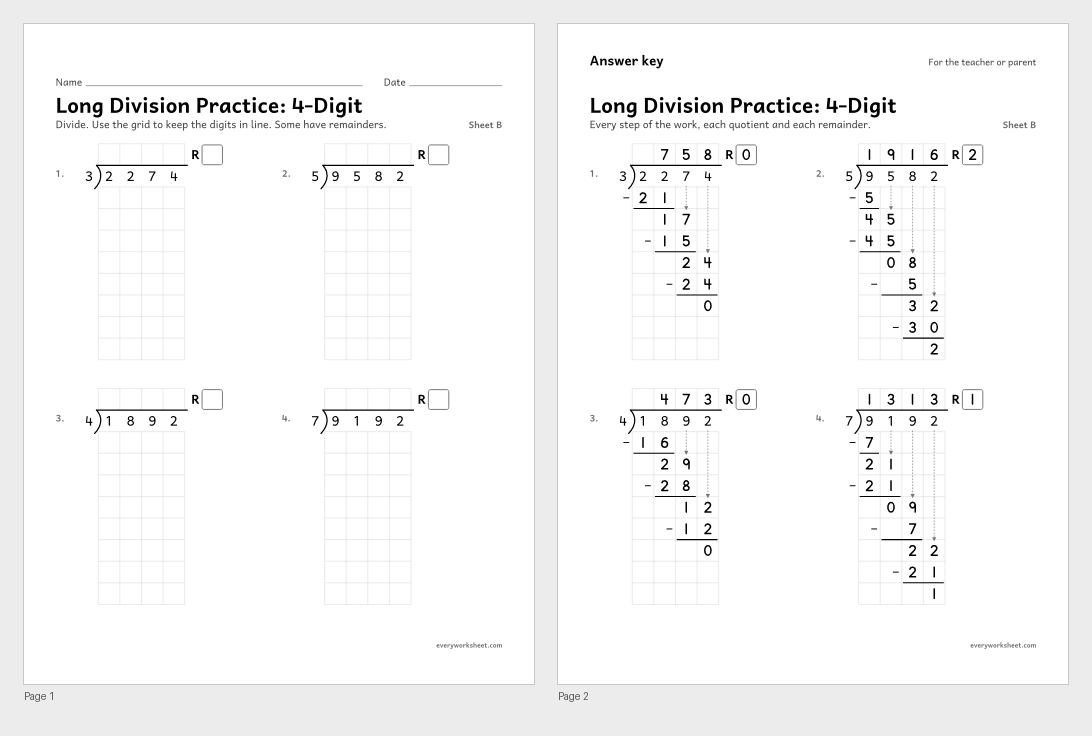
Long division practice with 4-digit dividends
Answer key on page 2
2 pages38 KB
 View all 2 pages
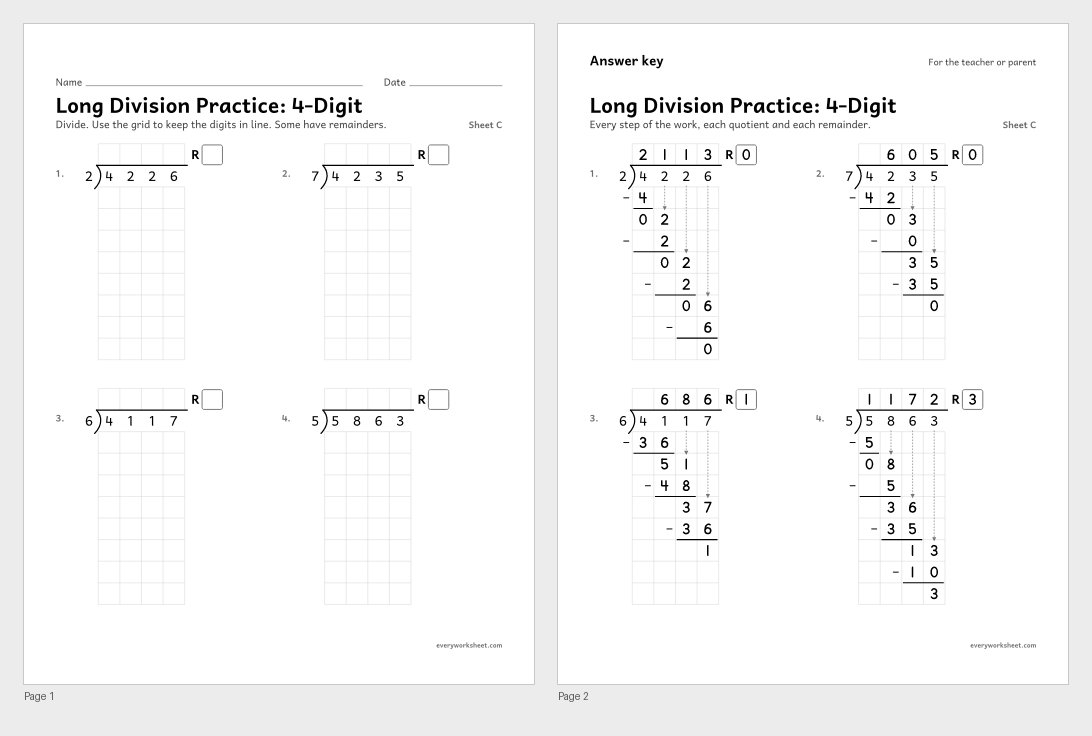
Long division practice with 4-digit dividends
Answer key on page 2
2 pages38 KB
 View all 2 pages
Long division practice with 4-digit dividends
Answer key on page 2
2 pages38 KB
 View all 2 pages
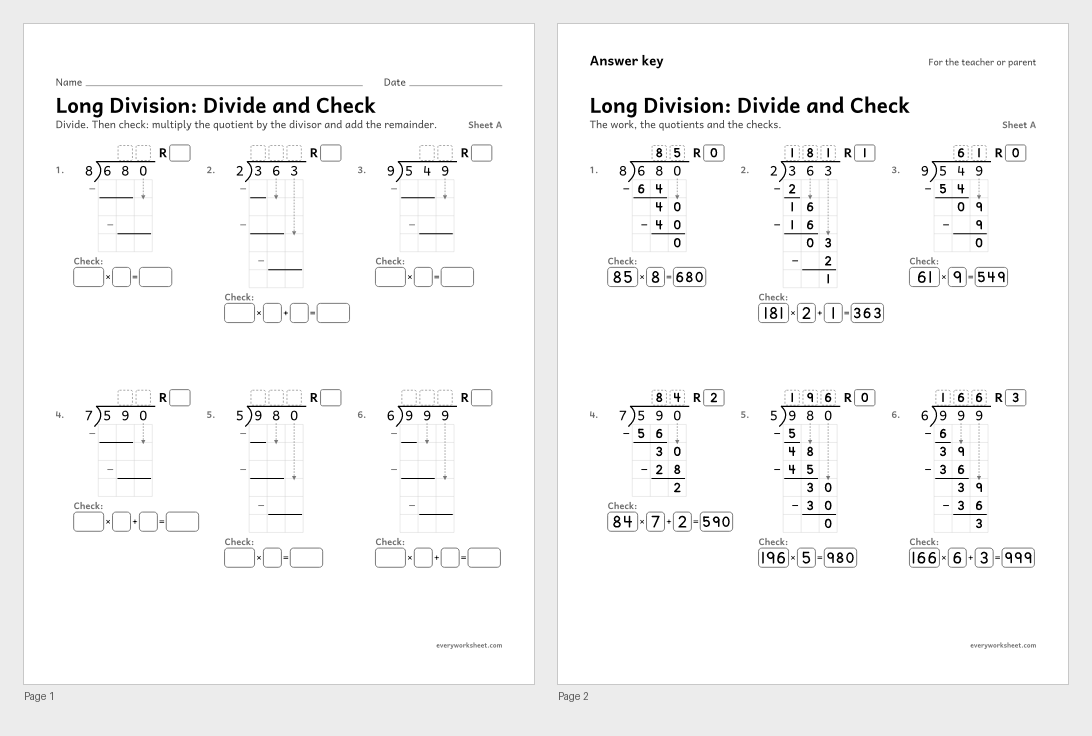
Checking long division with multiplication
Answer key on page 2
2 pages58 KB
 View all 2 pages
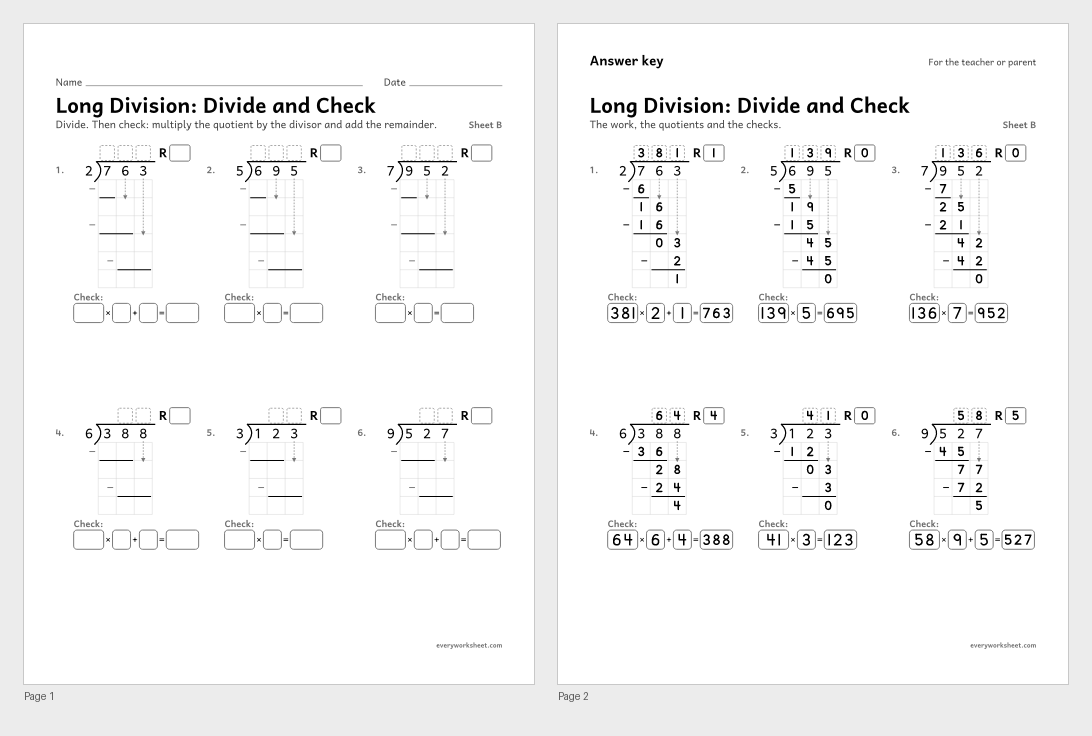
Checking long division with multiplication
Answer key on page 2
2 pages59 KB
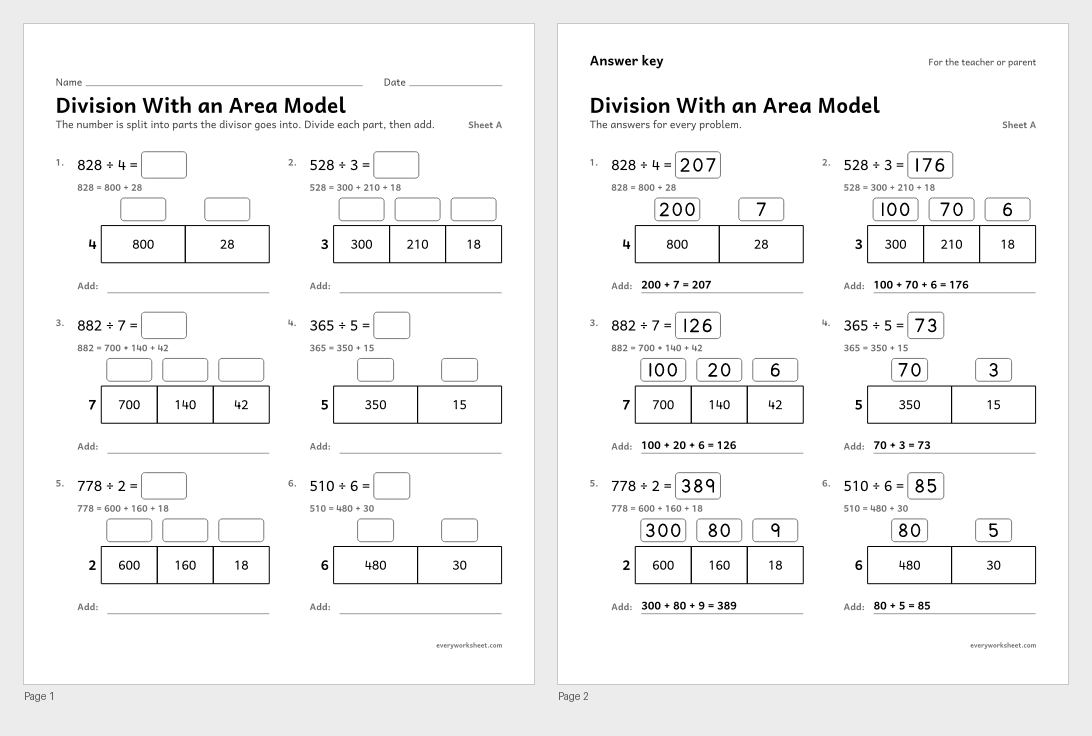 View all 2 pages
Dividing with an area model
Answer key on page 2
2 pages60 KB
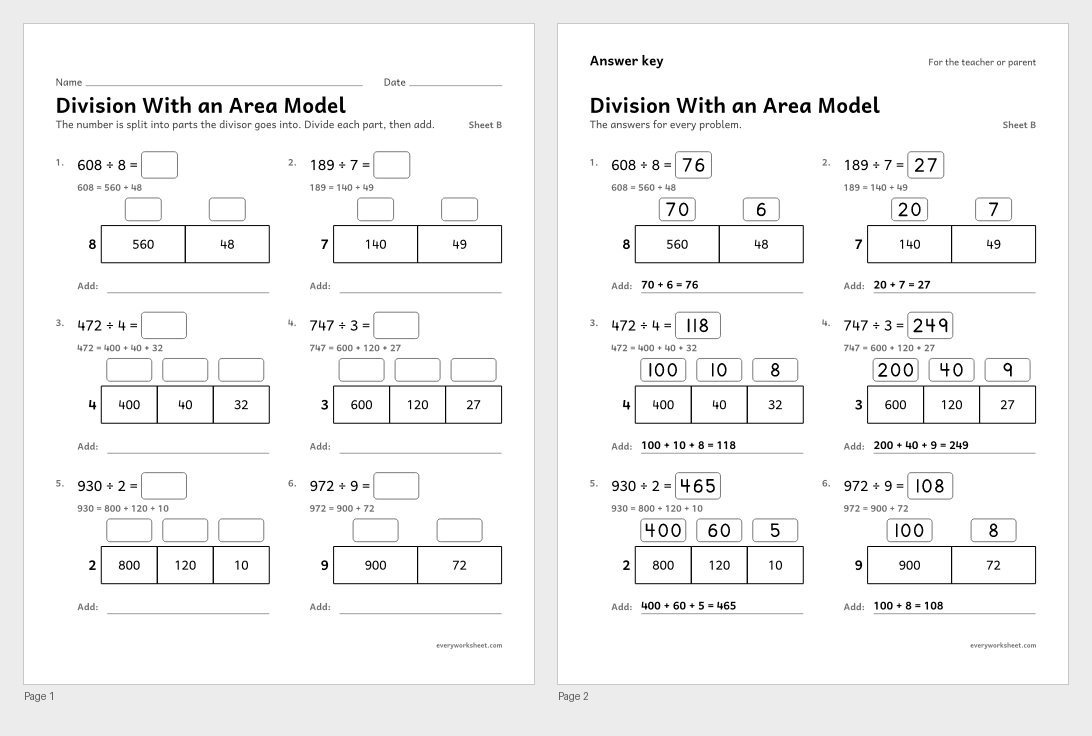 View all 2 pages
Dividing with an area model
Answer key on page 2
2 pages60 KB
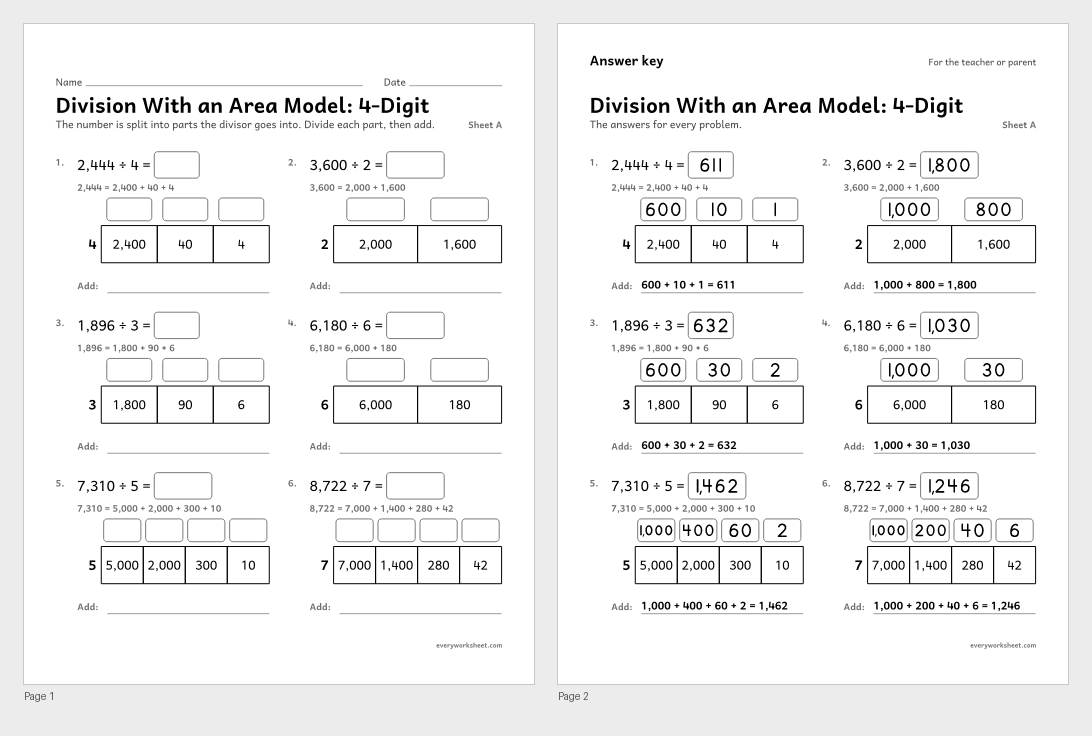 View all 2 pages
Dividing 4-digit numbers with an area model
Answer key on page 2
2 pages61 KB
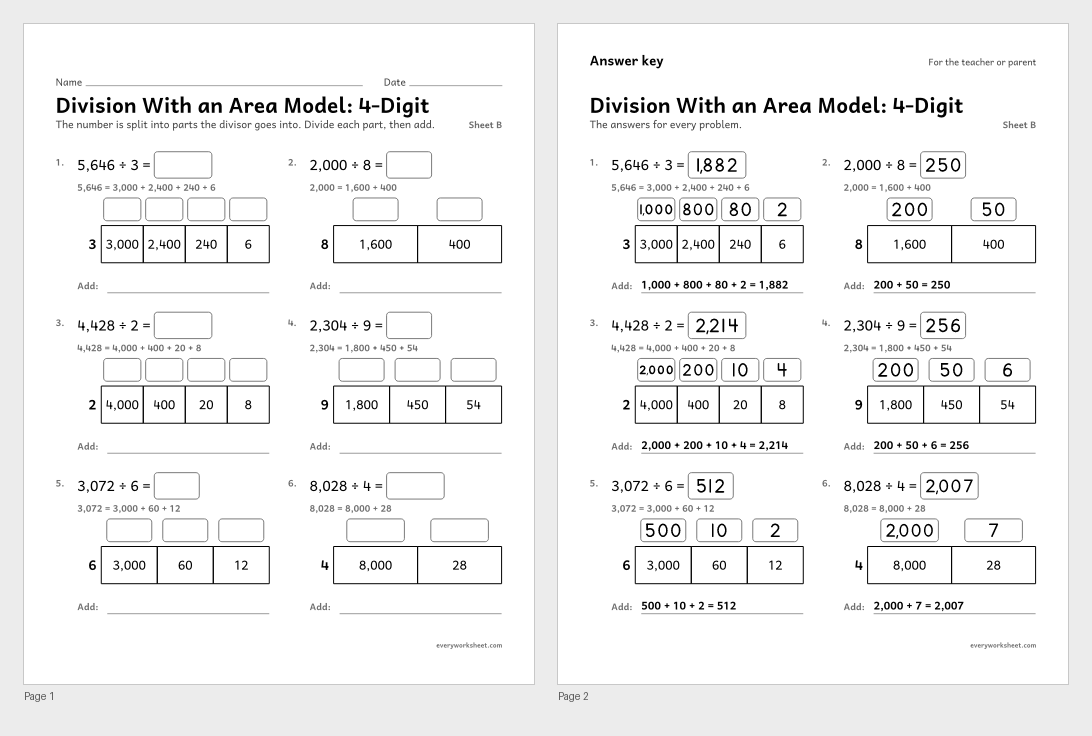 View all 2 pages
Dividing 4-digit numbers with an area model
Answer key on page 2
2 pages62 KB
 View all 2 pages
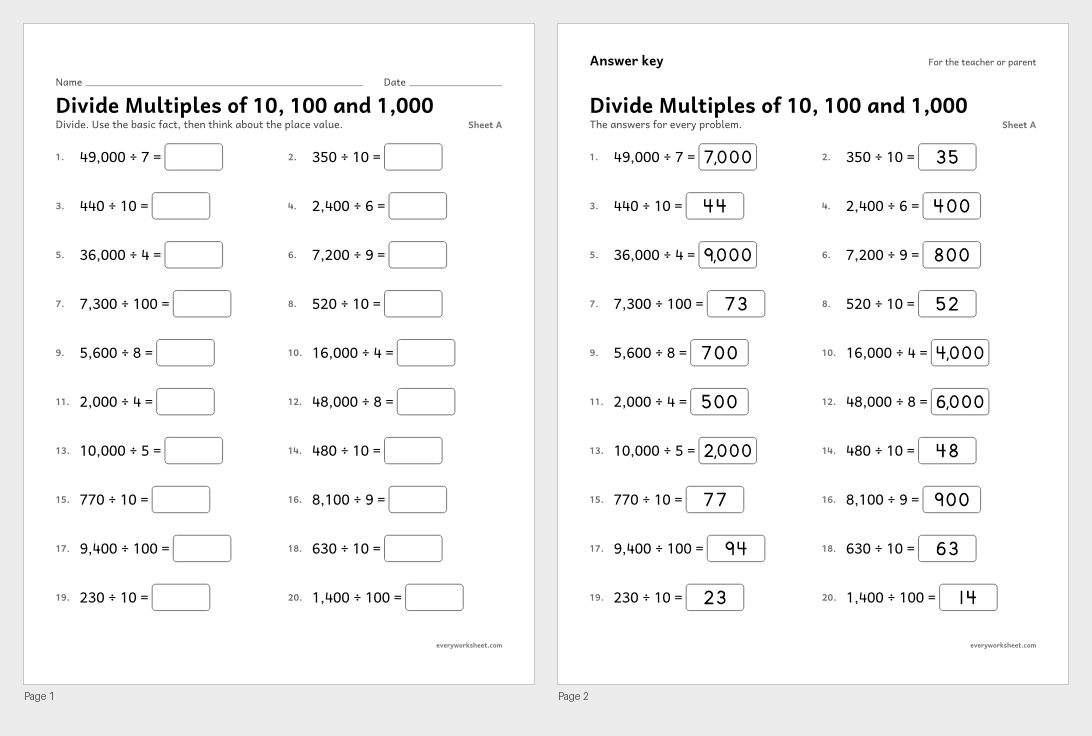
Dividing multiples of 10, 100 and 1,000
Answer key on page 2
2 pages97 KB
 View all 2 pages
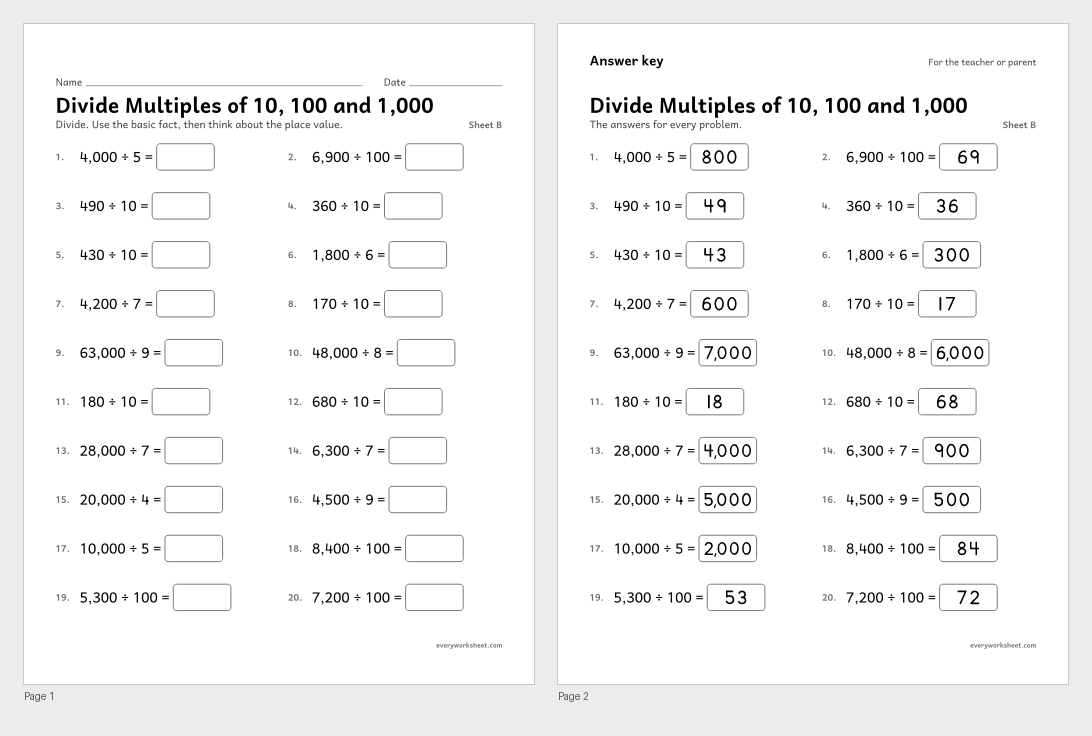
Dividing multiples of 10, 100 and 1,000
Answer key on page 2
2 pages97 KB
 View all 2 pages
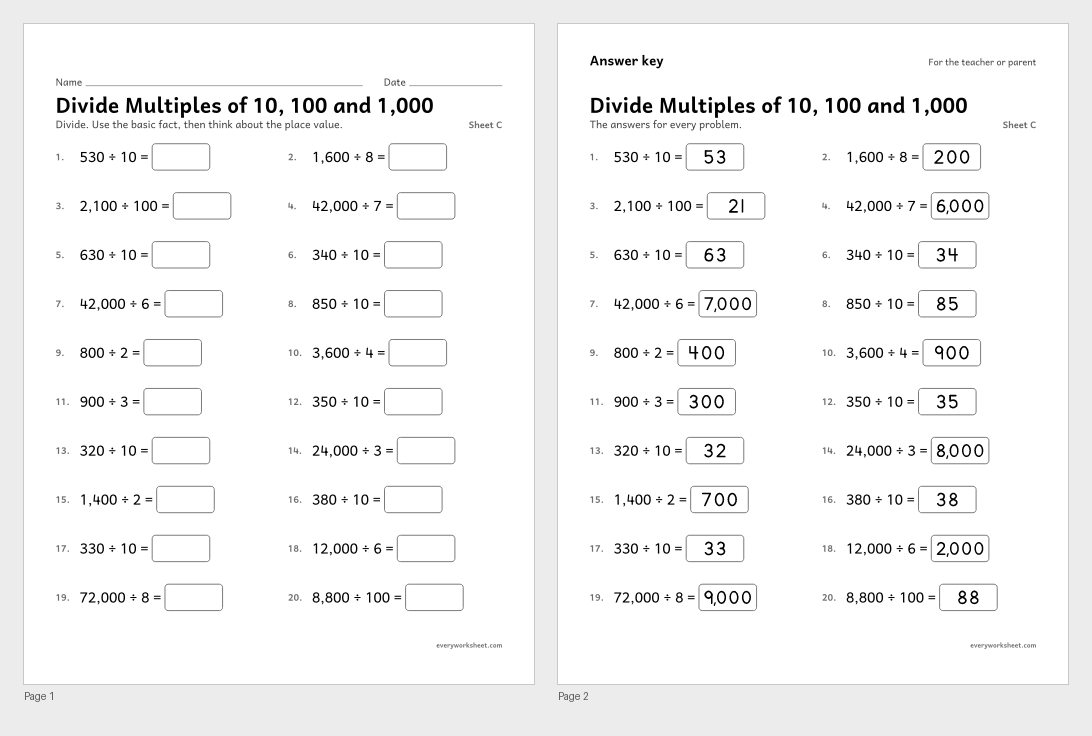
Dividing multiples of 10, 100 and 1,000
Answer key on page 2
2 pages98 KB
Print at 100% (actual size) for the cleanest tracing lines.
Long division breaks a big division into small ones. To divide 745 by 3, you divide the hundreds first (7 ÷ 3 = 2 with 1 left), bring down the next digit to make 14 tens, divide again, and keep going until every digit is used. The same four steps repeat each time: divide, multiply, subtract, bring down. What is left at the end is the remainder.
The guided pages print the steps for the child: a box over each digit of the quotient, a minus sign and a line for every subtraction, and a dotted arrow for every digit that is brought down, all on light grid lines so the columns stay straight. Once that works, the practice pages give the same problems on a plain grid, and the divide-and-check page closes the loop by multiplying back.
There are pages for 2-digit, 3-digit and 4-digit dividends, with and without remainders, a page of quotients with zeros in them (the classic trap), and an area model page that shows what long division really does. Every answer key shows every step of the work, not just the quotient.
CCSS.MATH.CONTENT.4.NBT.B.6Find whole-number quotients and remainders with up to four-digit dividends and one-digit divisors, using strategies based on place value, the properties of operations, and/or the relationship between multiplication and division. Illustrate and explain the calculation by using equations, rectangular arrays, and/or area models.CCSS.MATH.CONTENT.4.OA.A.3Solve multistep word problems posed with whole numbers and having whole-number answers using the four operations, including problems in which remainders must be interpreted. Represent these problems using equations with a letter standing for the unknown quantity. Assess the reasonableness of answers using mental computation and estimation strategies including rounding.Divide, multiply, subtract, bring down, and repeat until every digit has been brought down. Whatever is left at the end is the remainder.
In 4th grade, children divide up to 4-digit numbers by 1-digit numbers, with remainders. Dividing by 2-digit numbers comes in 5th grade.
Write 0 in the quotient above that digit, then bring down the next digit. Forgetting the 0 is the most common long division mistake.
Multiply the quotient by the divisor and add the remainder. The result should be the number you started with.