 View larger
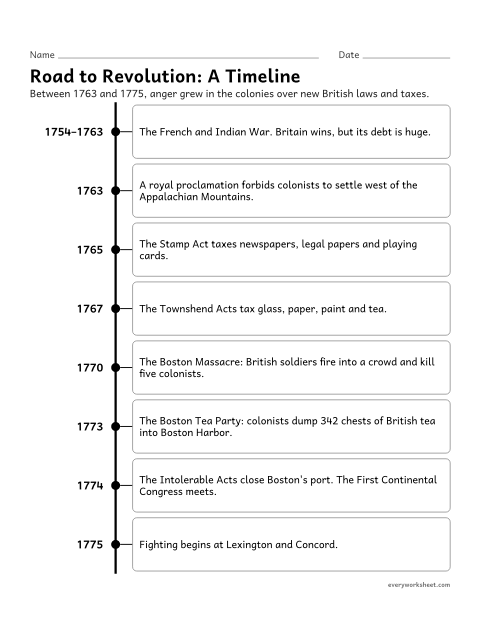
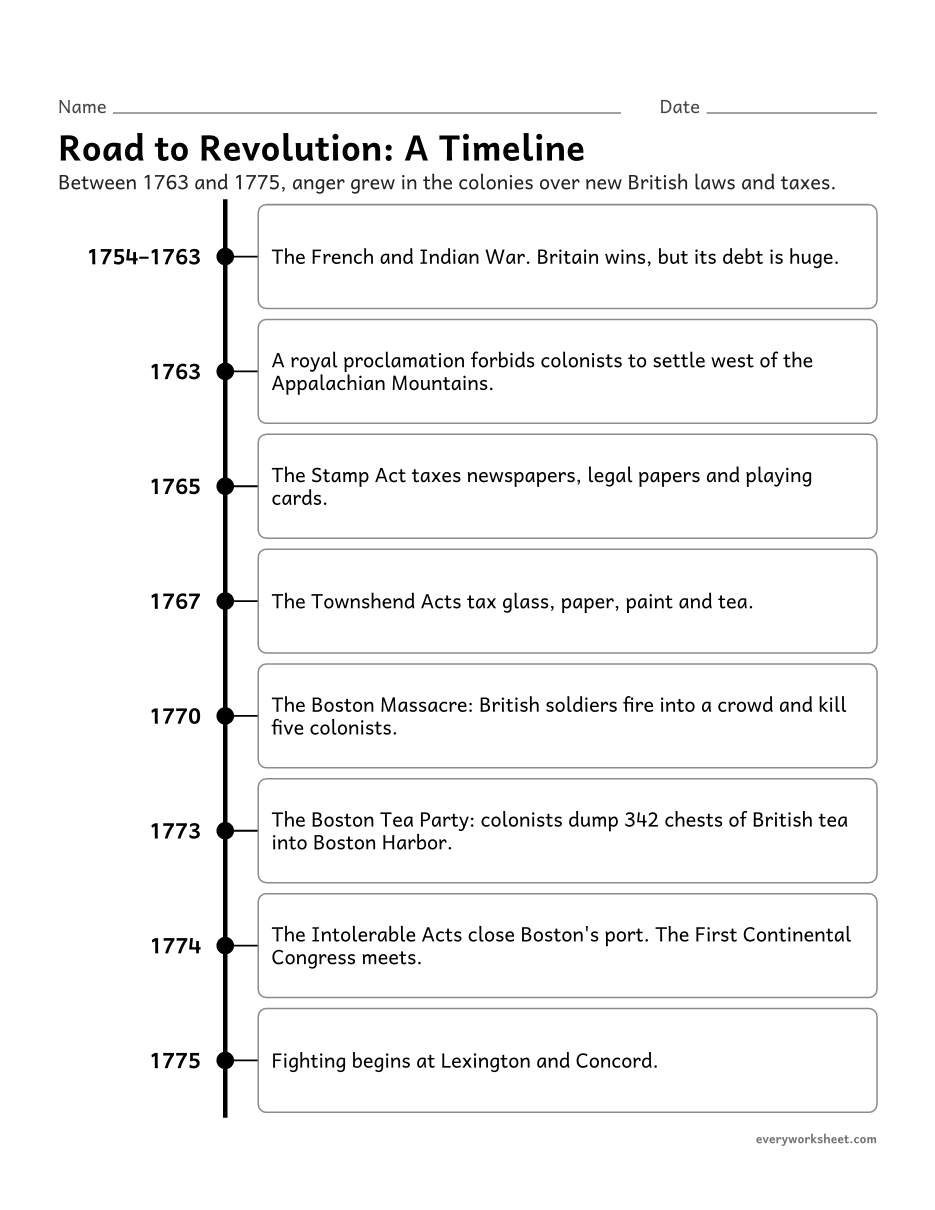
Causes of the american revolution timeline
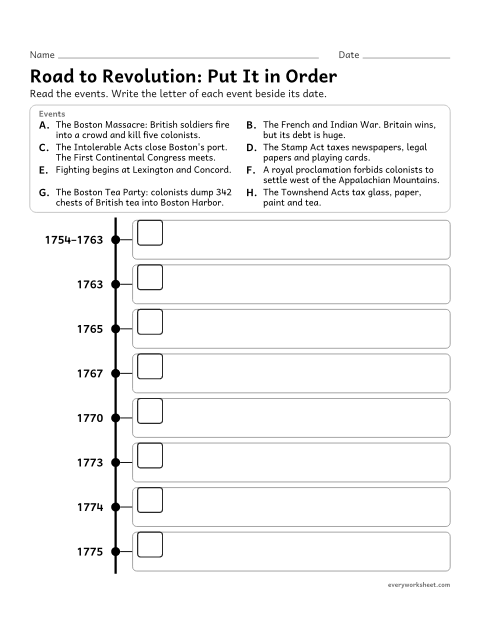
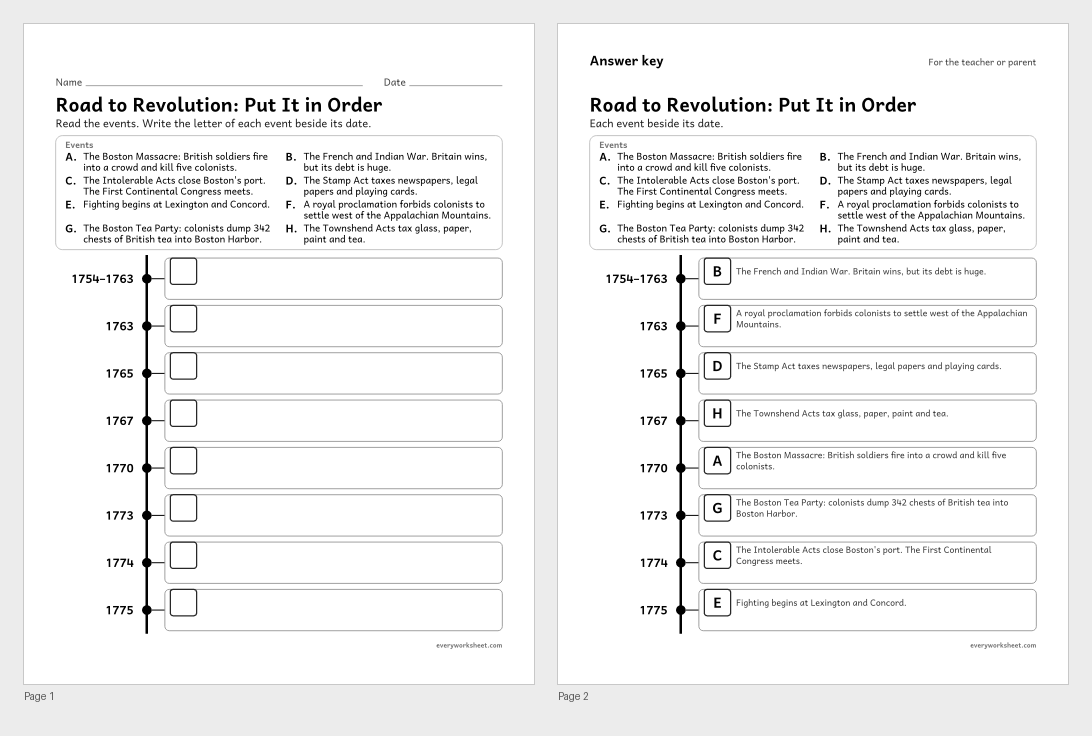
Sequencing the events that led to the American Revolution
1 page29 KB
The causes of the American Revolution, the road to war, Patriots and Loyalists, the major events of the war, key people, and African Americans in the Revolution.
View largerSequencing the events that led to the American Revolution
1 page29 KB
 View all 2 pages
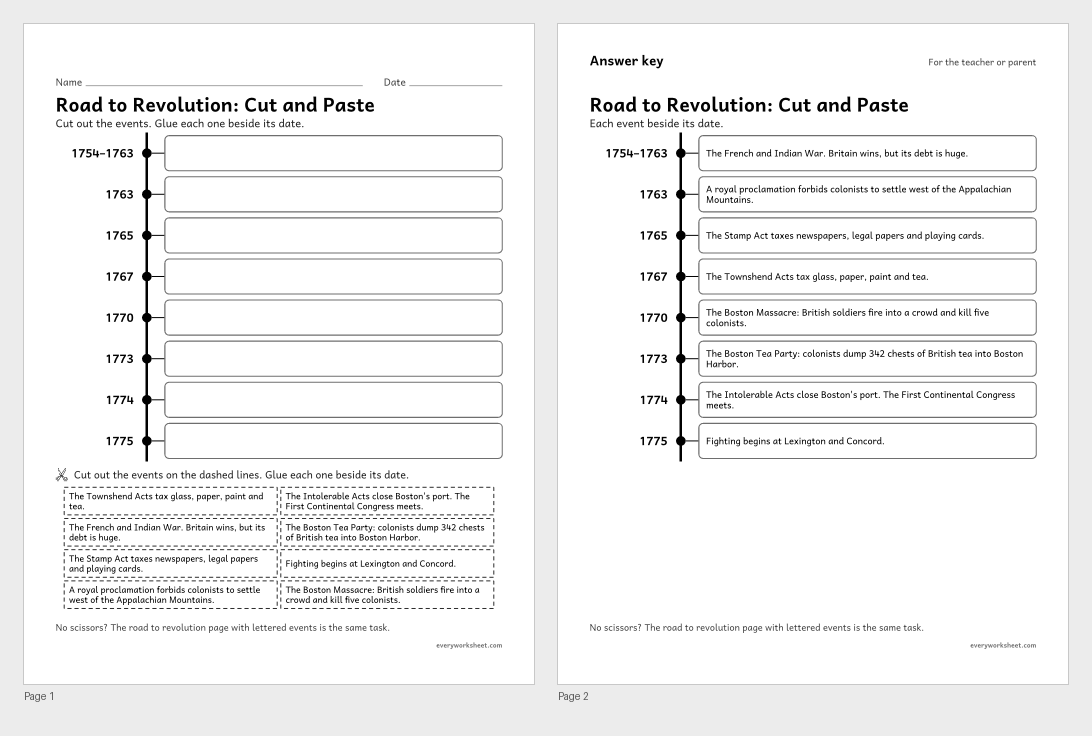
Sequencing the events that led to the American Revolution
Answer key on page 2
2 pages52 KB
 View all 2 pages
Sequencing the events that led to the American Revolution
Answer key on page 2
2 pages61 KB
 View all 2 pages
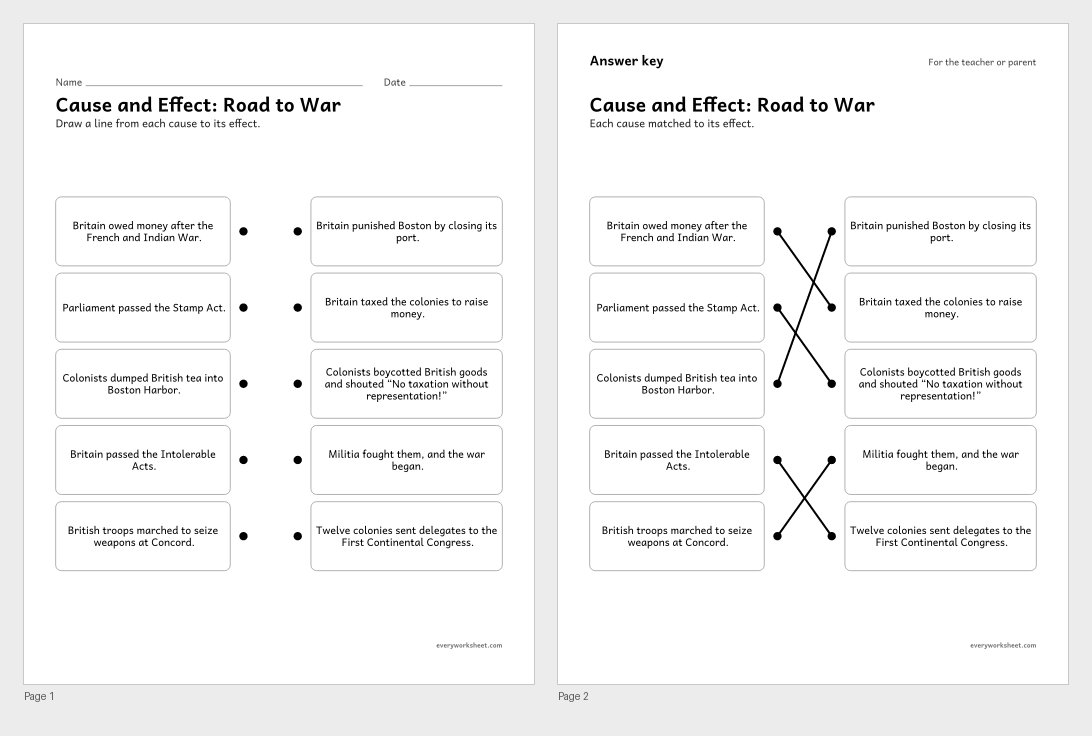
Explaining causes and effects of events before the American Revolution
Answer key on page 2
2 pages31 KB
 View all 2 pages
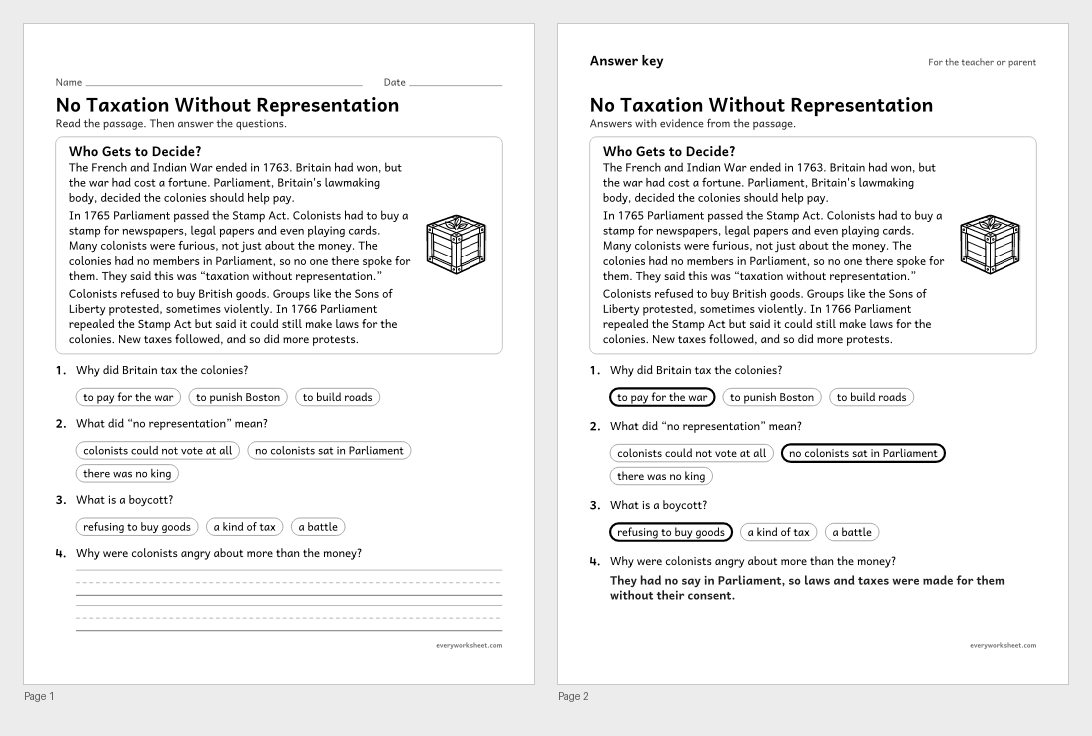
Explaining why colonists objected to British taxes
Answer key on page 2
2 pages159 KB
 View all 2 pages
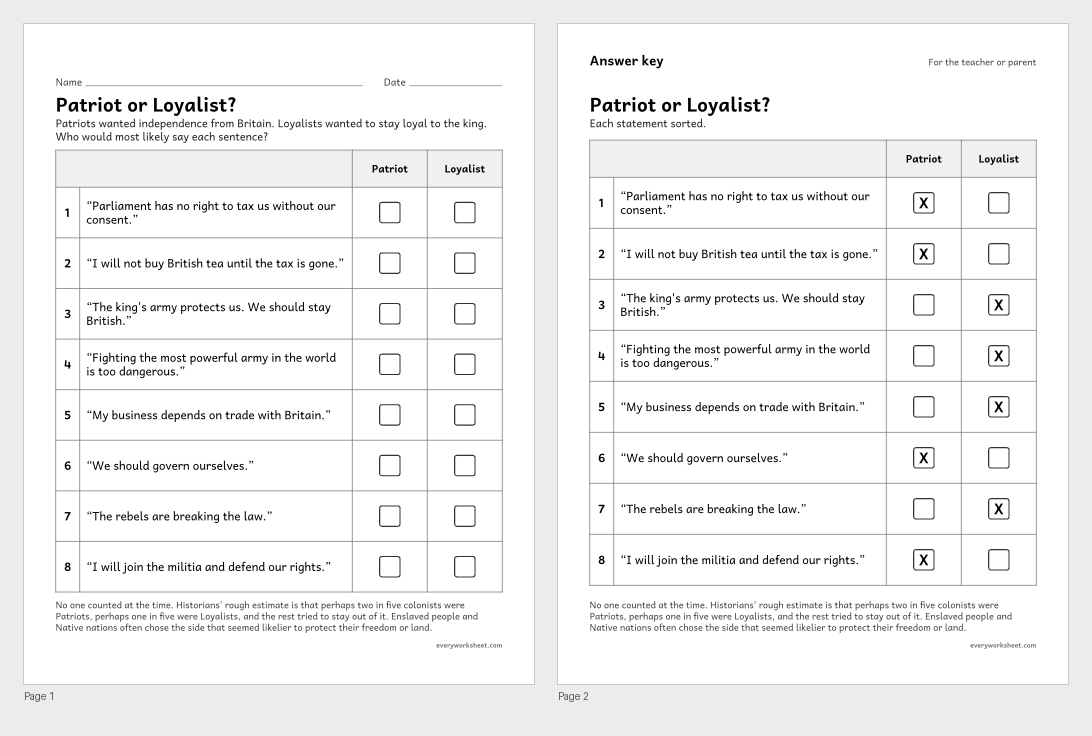
Comparing the perspectives of Patriots and Loyalists
Answer key on page 2
2 pages44 KB
 View all 2 pages
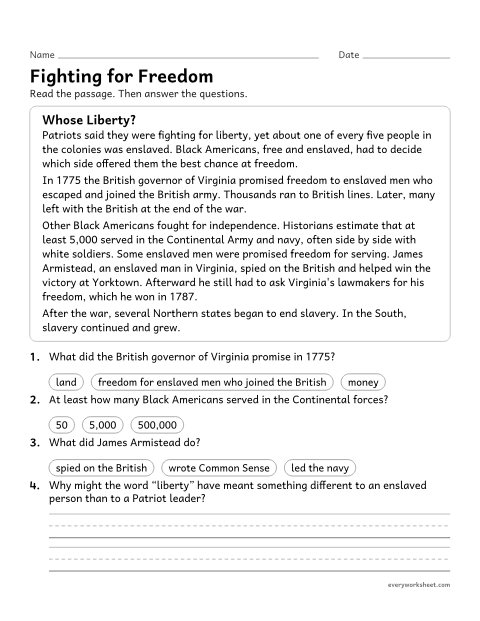
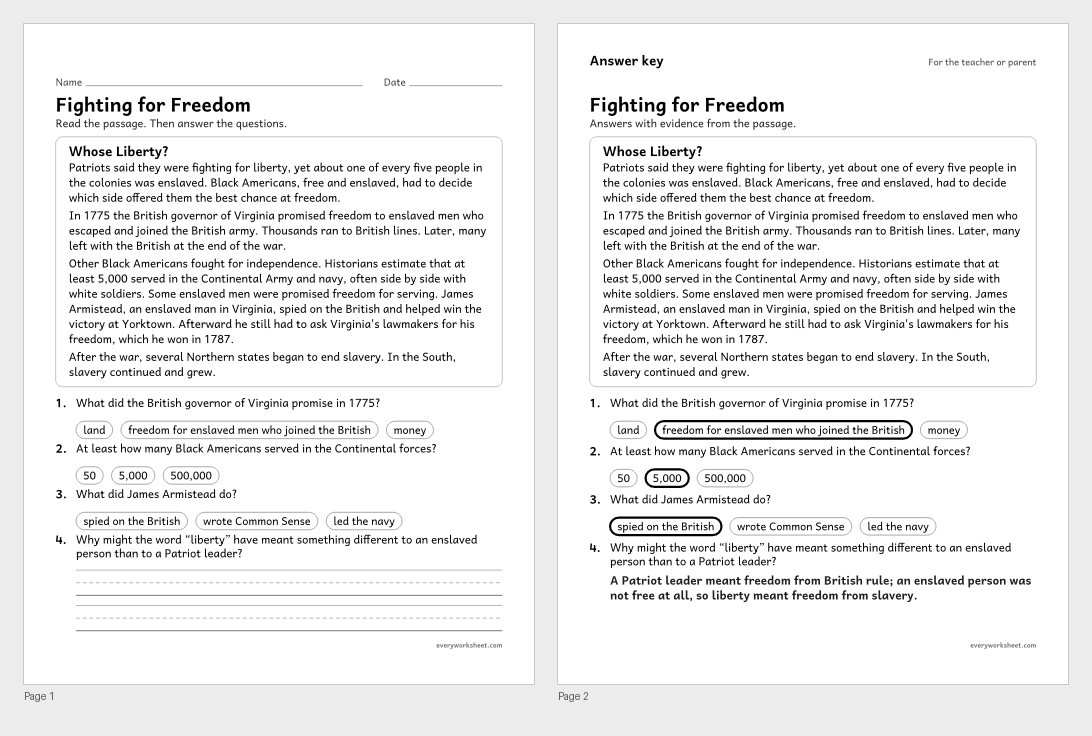
Describing the roles and choices of African Americans in the Revolution
Answer key on page 2
2 pages41 KB
 View larger
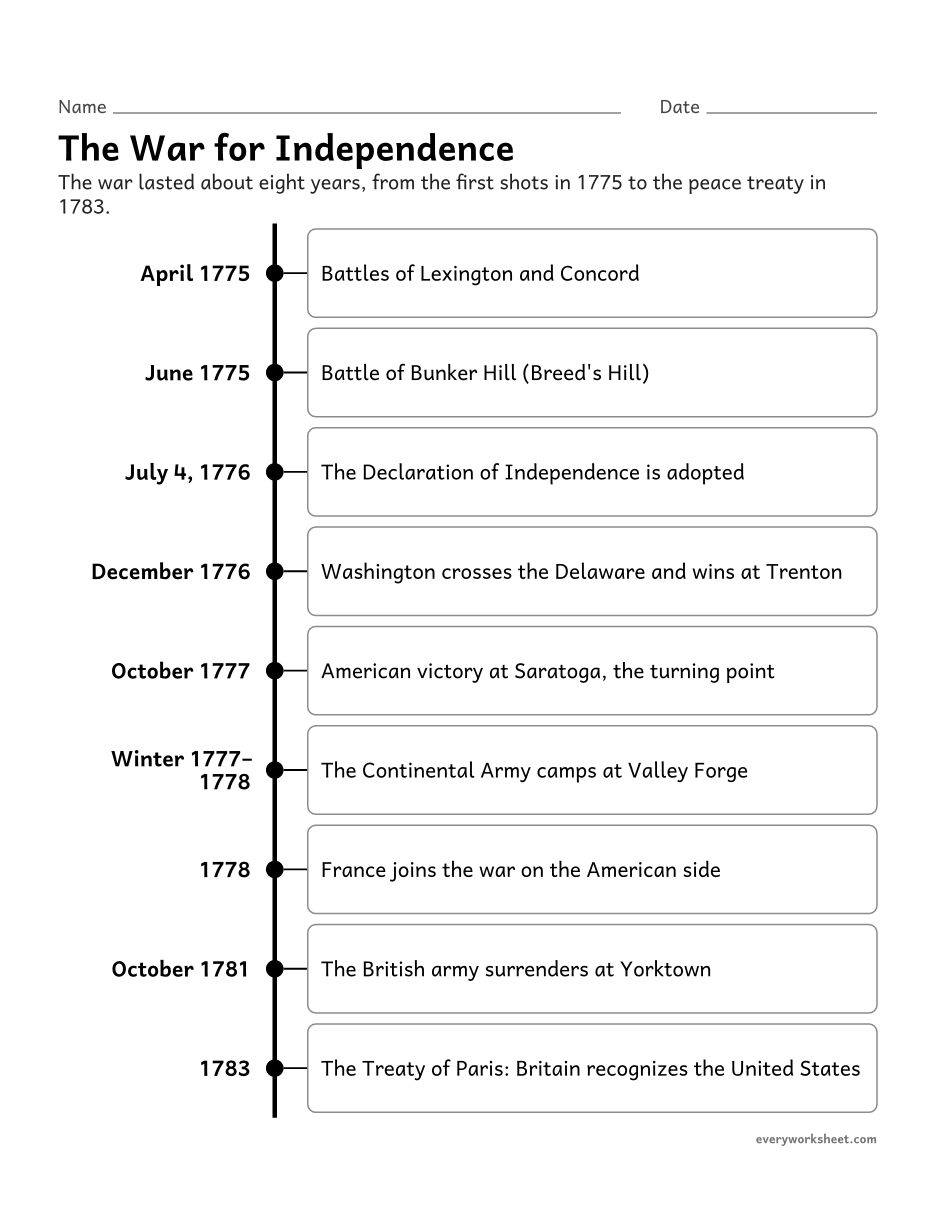
Sequencing the major events of the American Revolution
1 page31 KB
 View all 2 pages
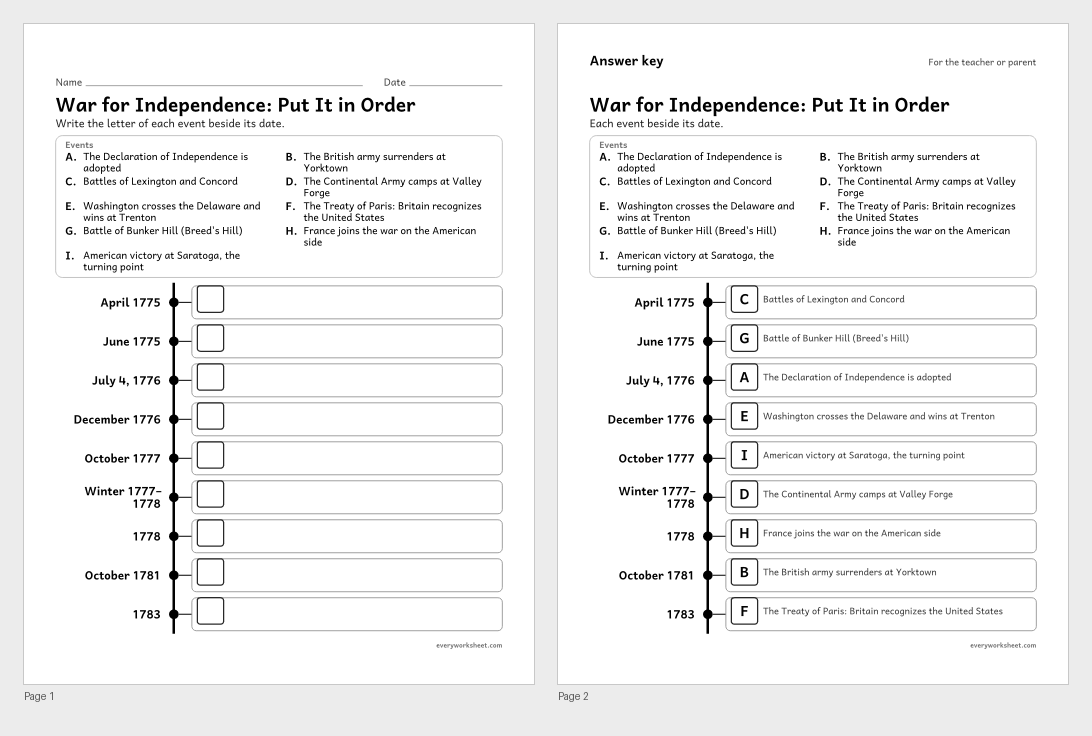
Sequencing the major events of the American Revolution
Answer key on page 2
2 pages55 KB
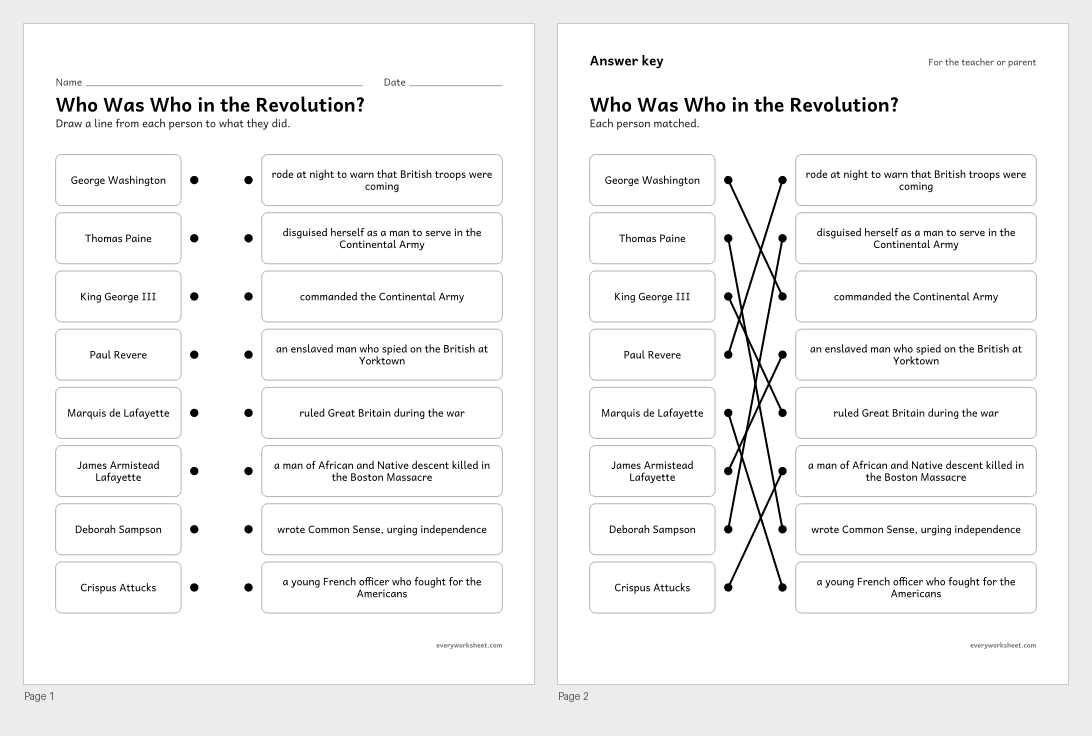 View all 2 pages
Identifying people of the American Revolution and their roles
Answer key on page 2
2 pages31 KB
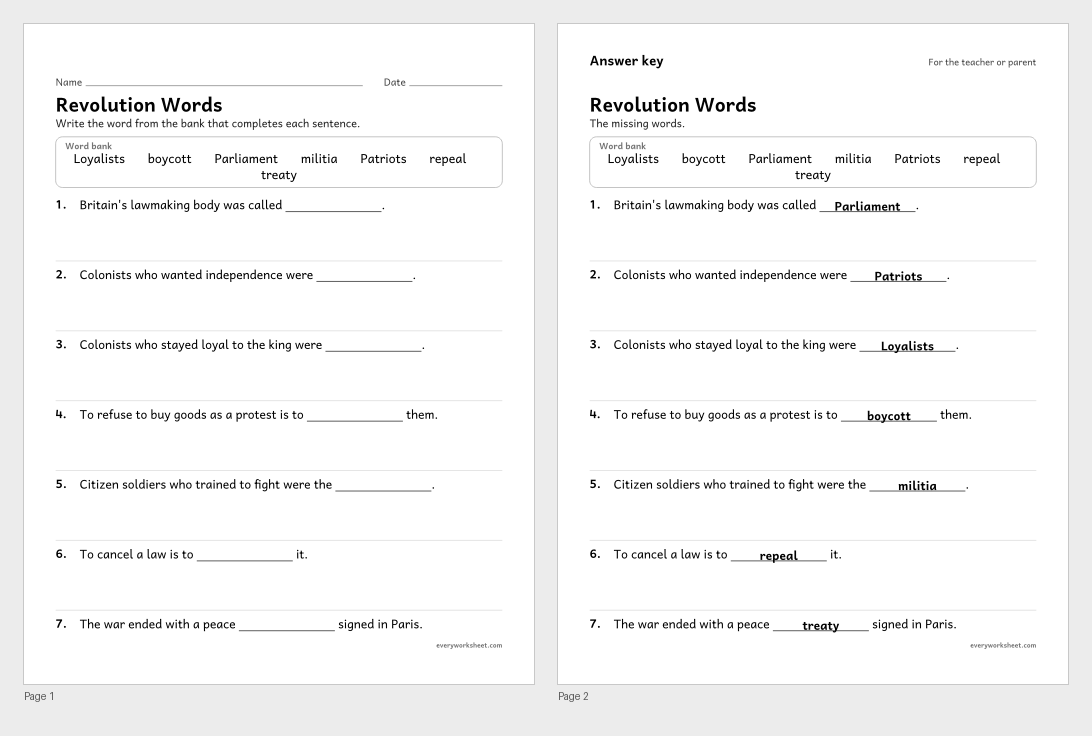 View all 2 pages
Using vocabulary about the American Revolution
Answer key on page 2
2 pages38 KB
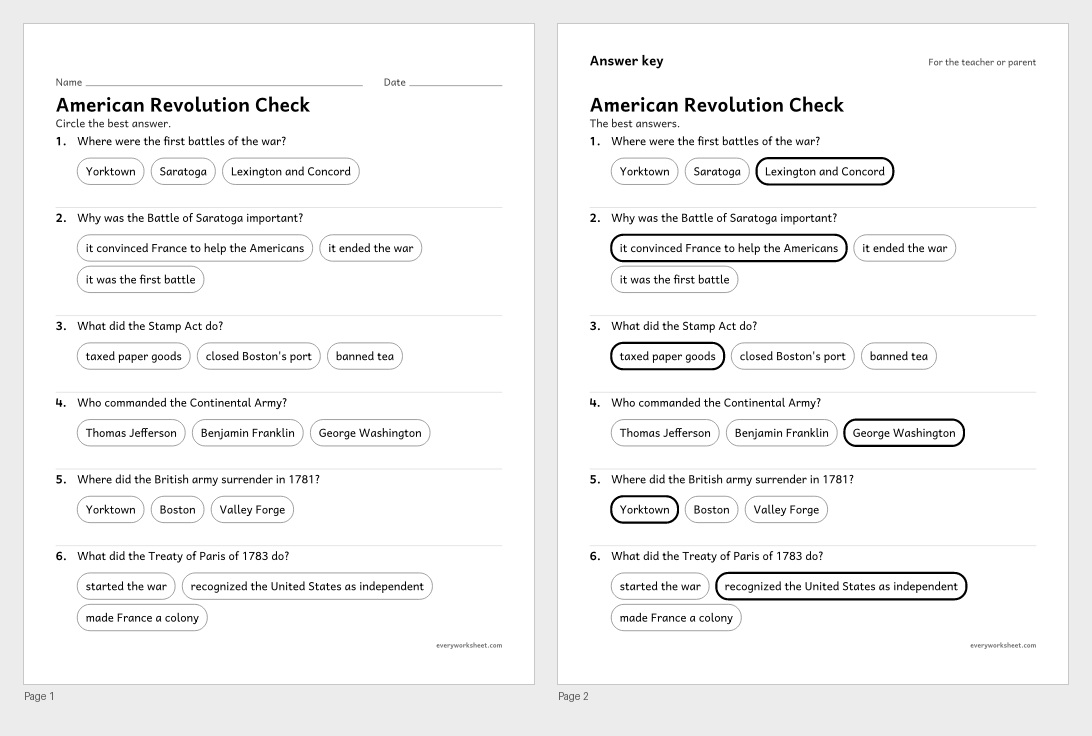 View all 2 pages
Reviewing the causes, events and people of the American Revolution
Answer key on page 2
2 pages41 KB
Print at 100% (actual size) for the cleanest tracing lines.
After the French and Indian War, Britain taxed the colonies to pay its debts. Colonists had no representatives in Parliament, and anger grew through the Stamp Act, the Boston Massacre, the Boston Tea Party and the Intolerable Acts. In 1775 fighting began at Lexington and Concord, and in 1783 Britain recognized the United States.
These American Revolution worksheets start with the causes of the American Revolution: a timeline, a put-it-in-order page and a cut and paste twin, cause and effect, and a reading on taxation without representation. Children compare Patriot and Loyalist points of view, sequence the war's events, match key people and read about African Americans who fought on both sides.
Every page is black and white, prints on US Letter or A4, and every page with right answers has an answer key on page 2.
C3 D2.His.1.3-5Create and use a chronological sequence of related events to compare developments that happened at the same time.C3 D2.His.14.3-5Explain probable causes and effects of events and developments.C3 D2.His.4.3-5Explain why individuals and groups during the same historical period differed in their perspectives.C3 D2.His.3.3-5Generate questions about individuals and groups who have shaped significant historical changes and continuities.British taxes such as the Stamp Act and Townshend Acts passed without colonial representation, the Proclamation of 1763, the Boston Massacre, the Boston Tea Party and the Intolerable Acts, which together turned protest into war.
Fighting began at Lexington and Concord in April 1775. The British surrendered at Yorktown in 1781, and the Treaty of Paris ended the war in 1783.
Yes, on both sides. Historians estimate that at least 5,000 served in the Continental forces, and thousands of enslaved people joined the British, who promised freedom.