 View all 2 pages
How to multiply decimals
Multiplying decimals with the written method
Answer key on page 2
2 pages49 KB
Multiply decimals by whole numbers and by decimals: area models, basic facts, the written method with counting decimal places, and word problems.
View all 2 pagesMultiplying decimals with the written method
Answer key on page 2
2 pages49 KB
 View all 2 pages
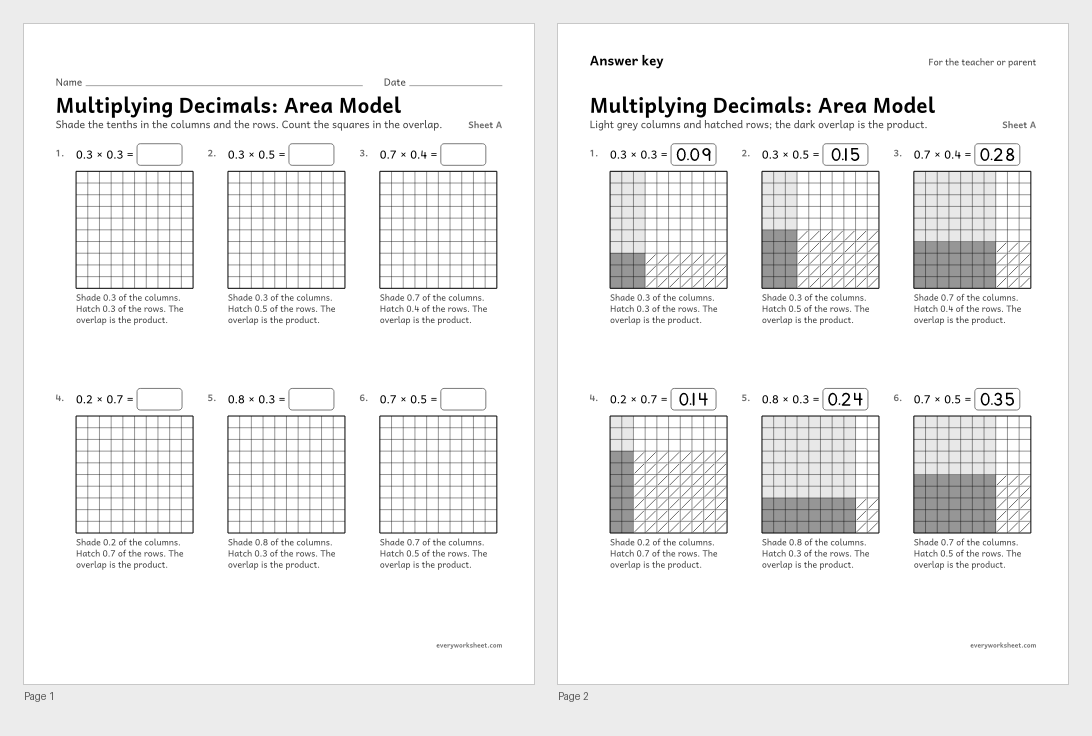
Multiplying tenths by tenths with an area model
Answer key on page 2
2 pages55 KB
 View all 2 pages
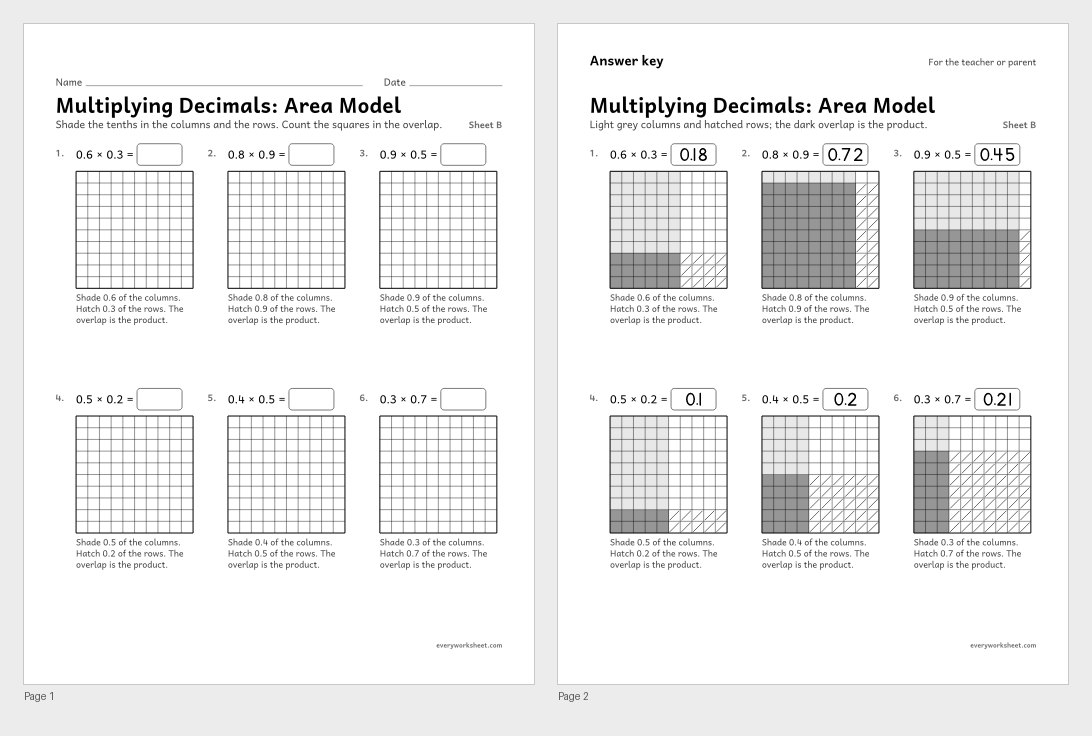
Multiplying tenths by tenths with an area model
Answer key on page 2
2 pages56 KB
 View all 2 pages
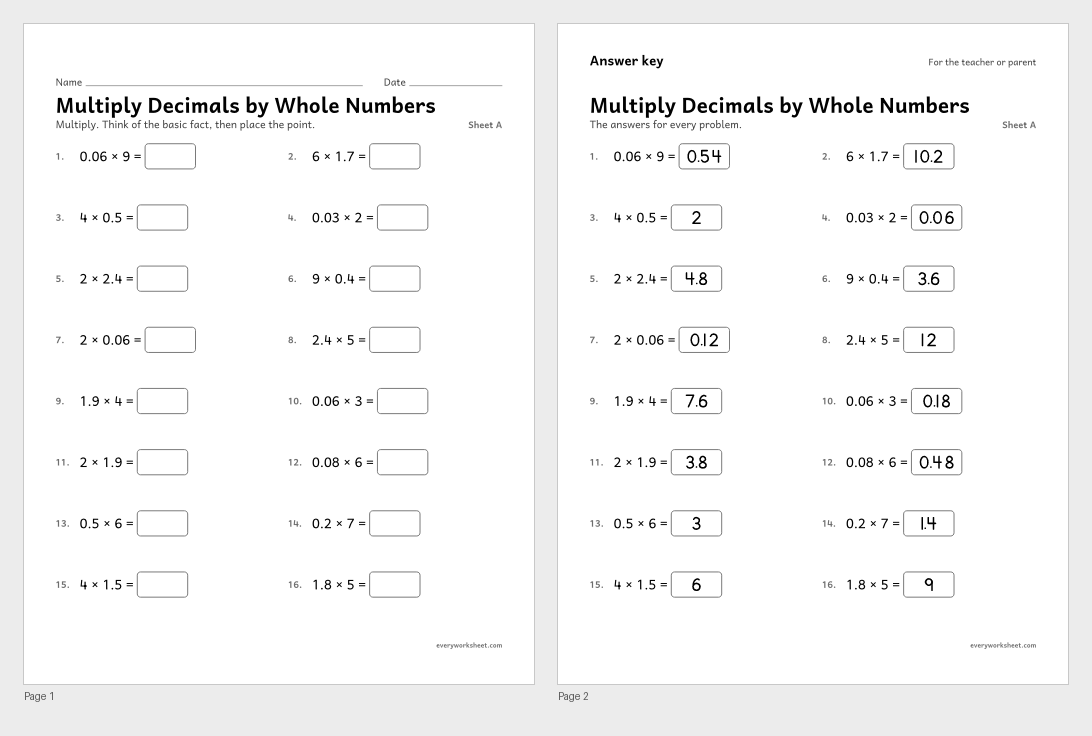
Multiplying a decimal by a whole number
Answer key on page 2
2 pages83 KB
 View all 2 pages
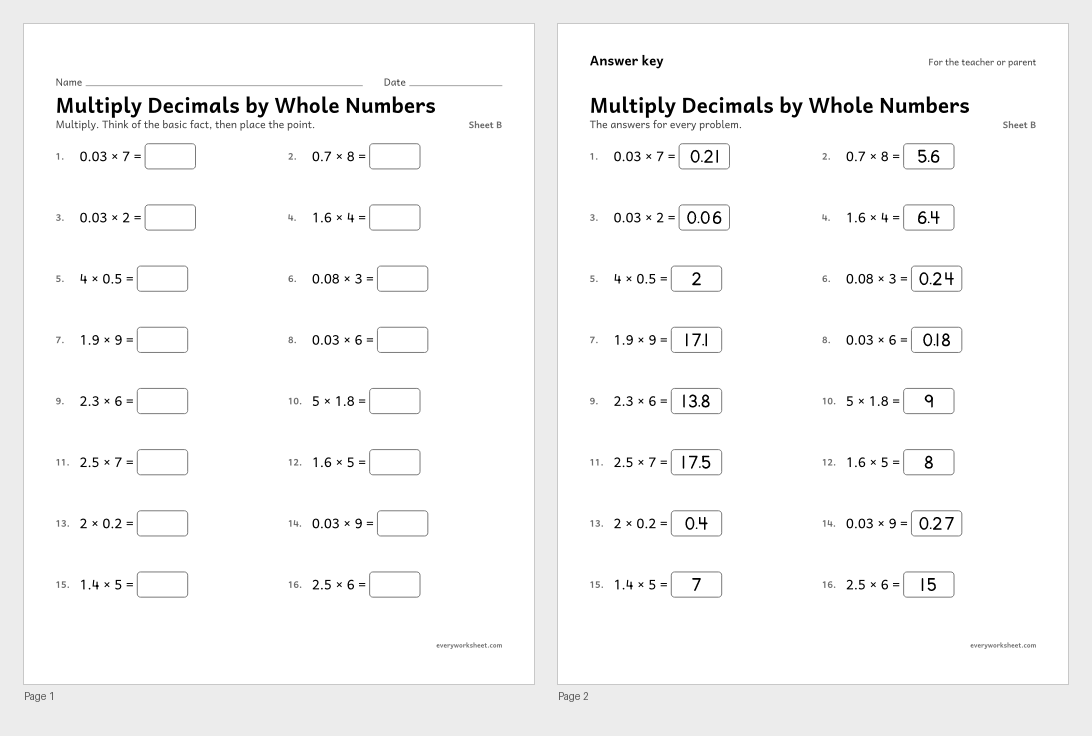
Multiplying a decimal by a whole number
Answer key on page 2
2 pages83 KB
 View all 2 pages
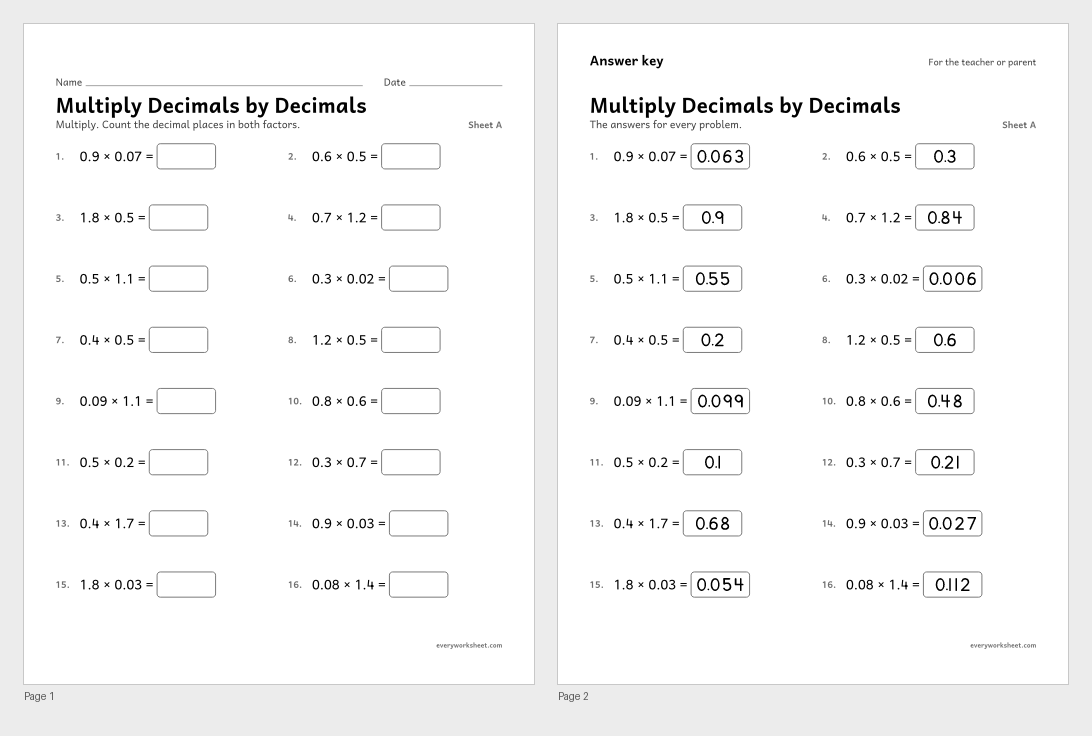
Multiplying a decimal by a decimal
Answer key on page 2
2 pages83 KB
 View all 2 pages
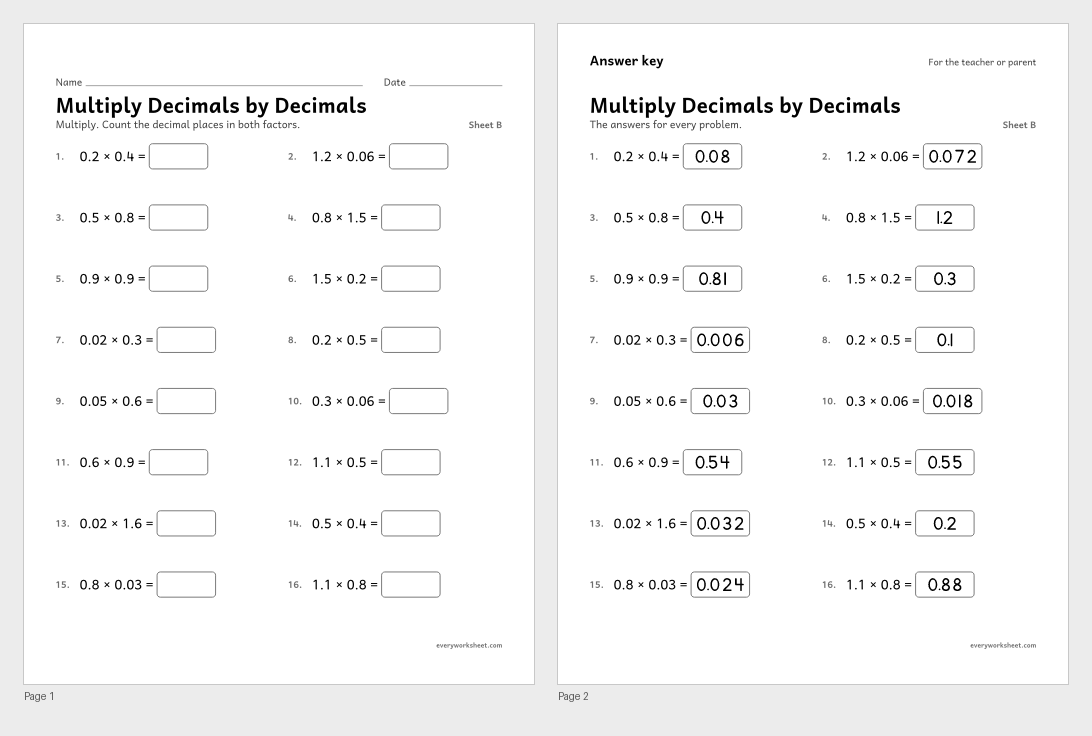
Multiplying a decimal by a decimal
Answer key on page 2
2 pages83 KB
 View all 2 pages
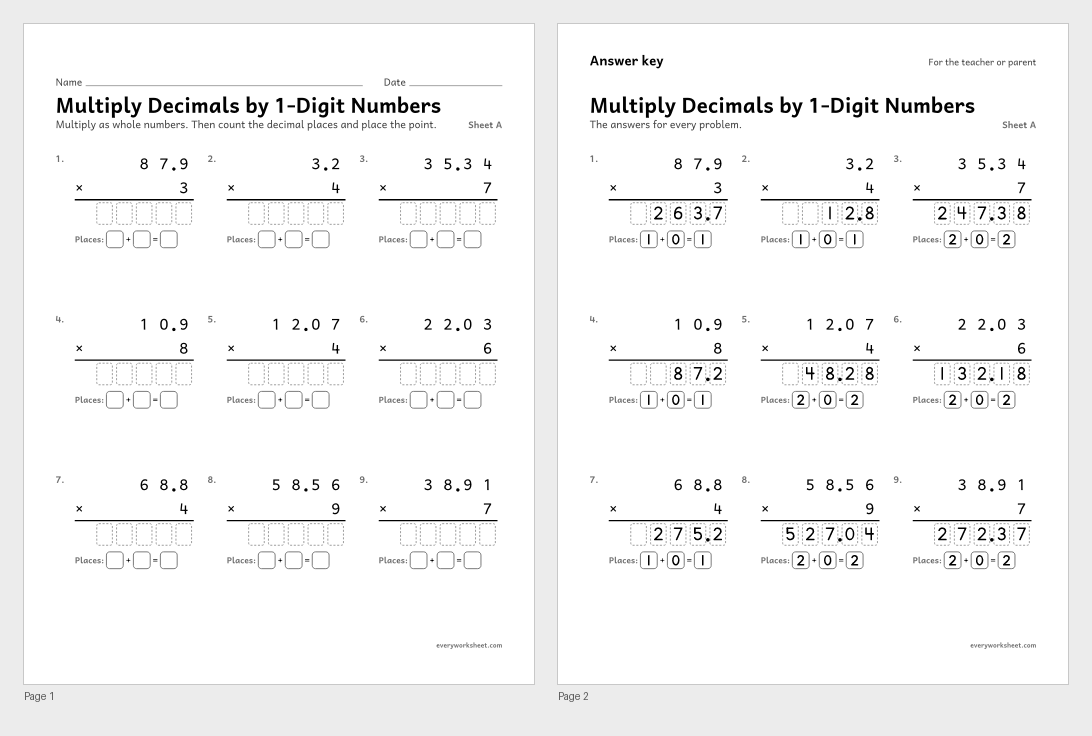
Multiplying decimals by 1-digit whole numbers
Answer key on page 2
2 pages65 KB
 View all 2 pages
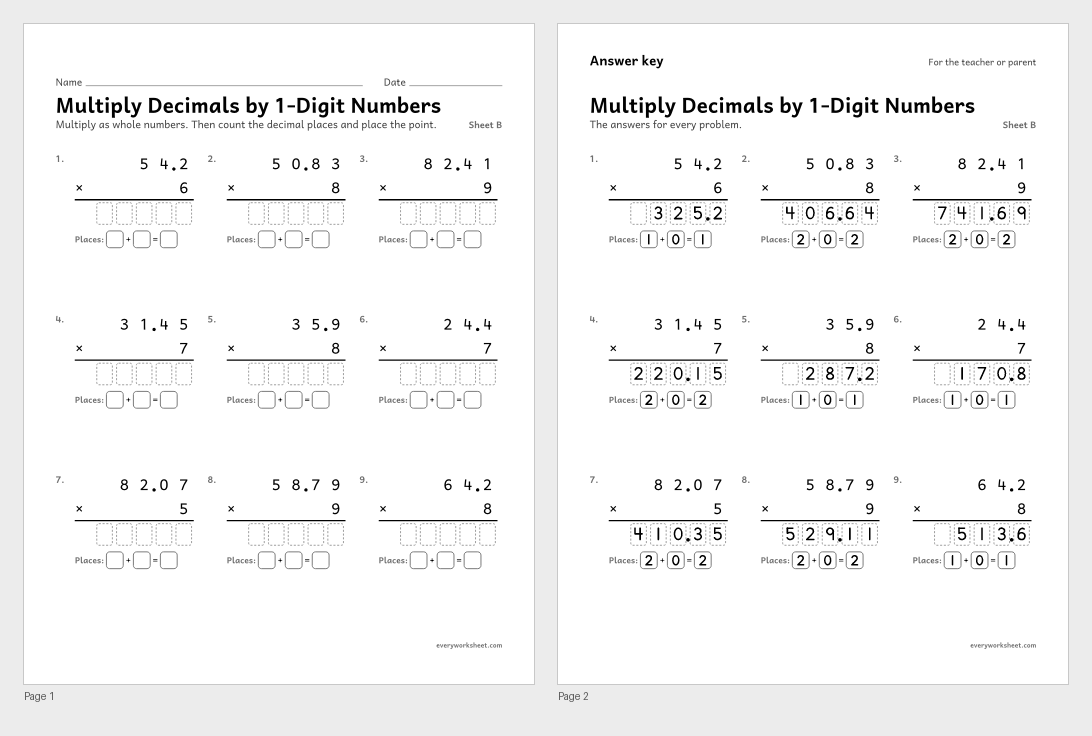
Multiplying decimals by 1-digit whole numbers
Answer key on page 2
2 pages66 KB
 View all 2 pages
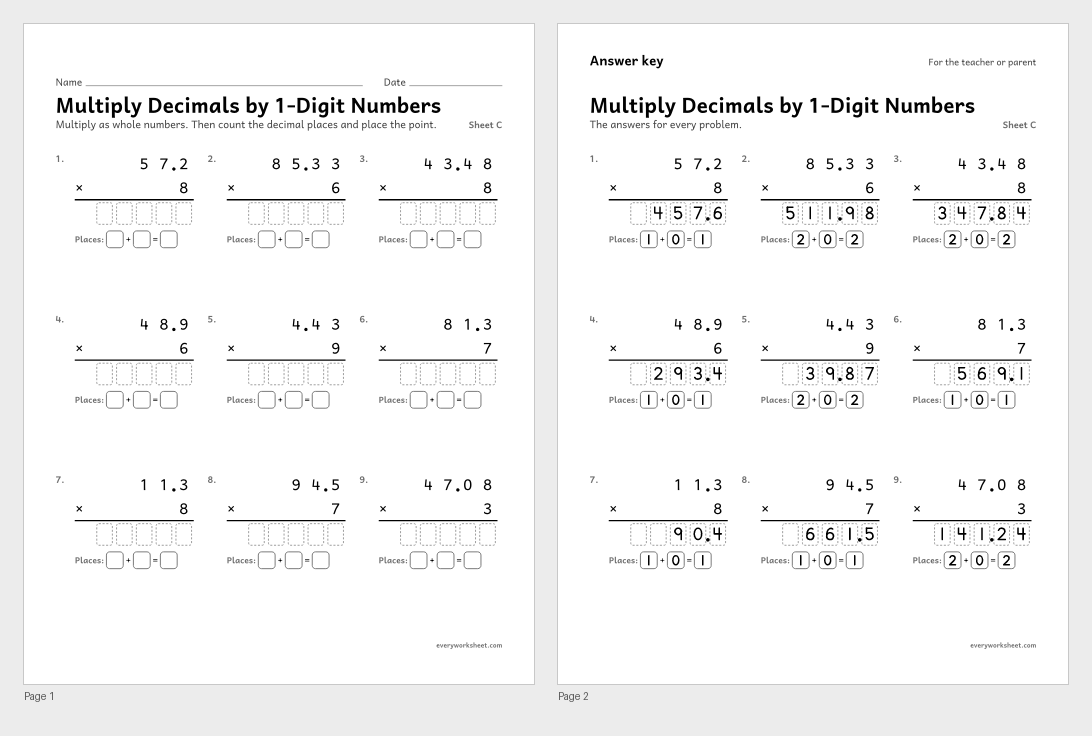
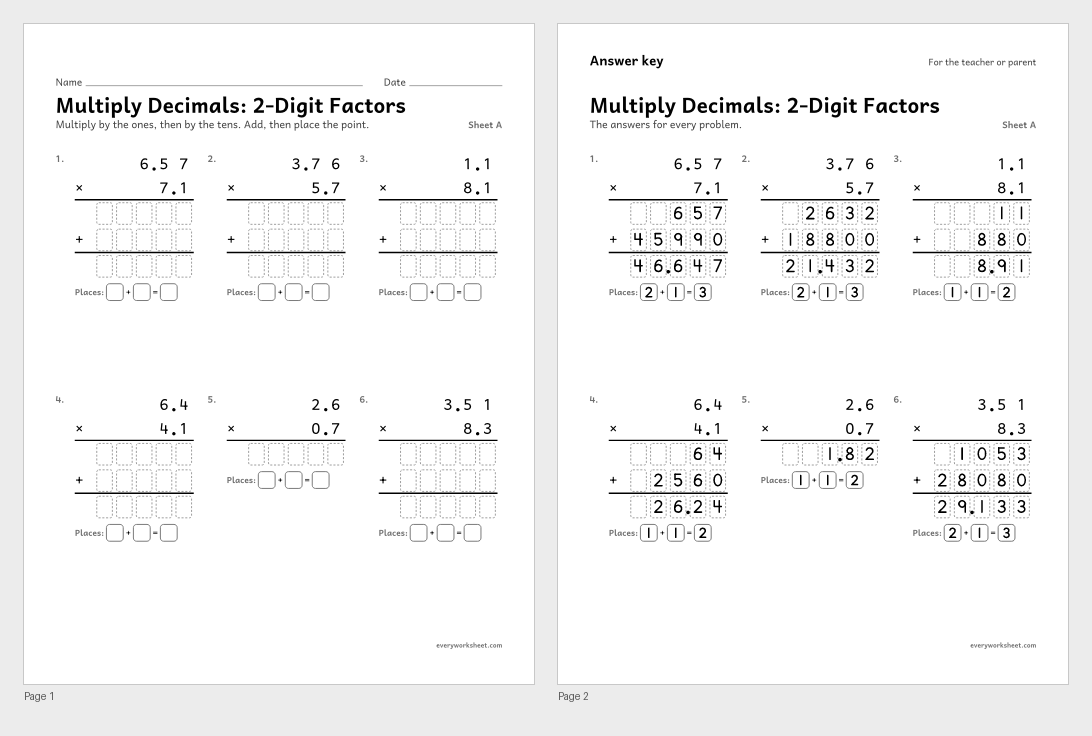
Multiplying decimals by 1-digit whole numbers
Answer key on page 2
2 pages66 KB
 View all 2 pages
Multiplying decimals with 2-digit factors
Answer key on page 2
2 pages56 KB
 View all 2 pages
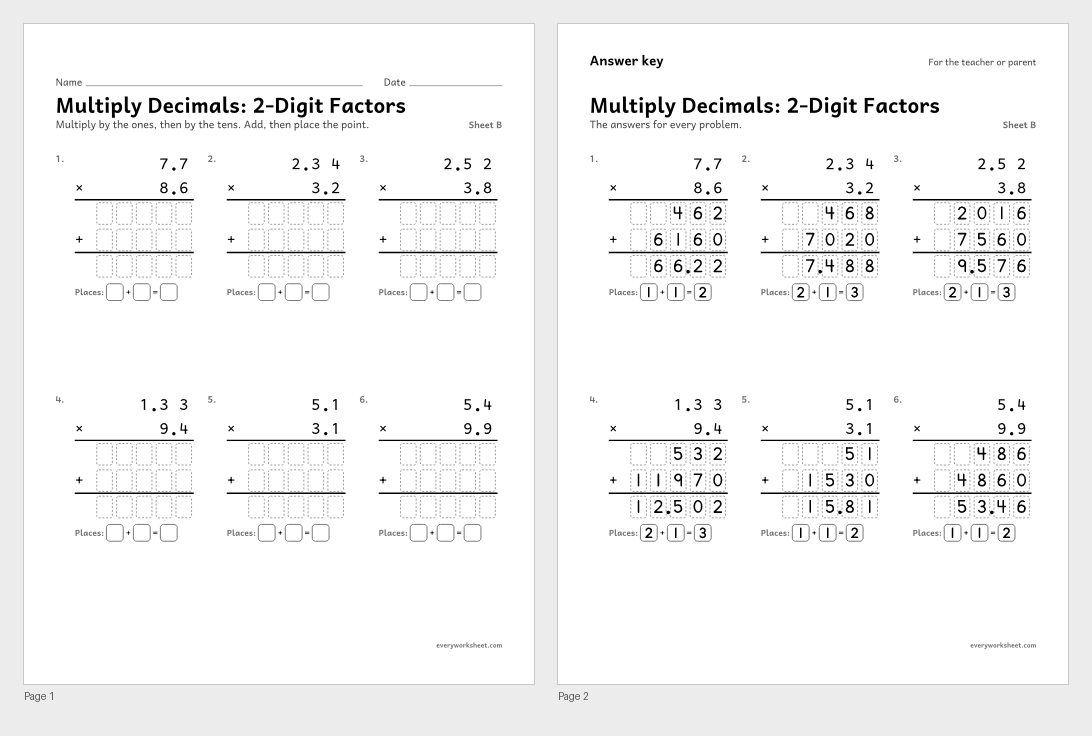
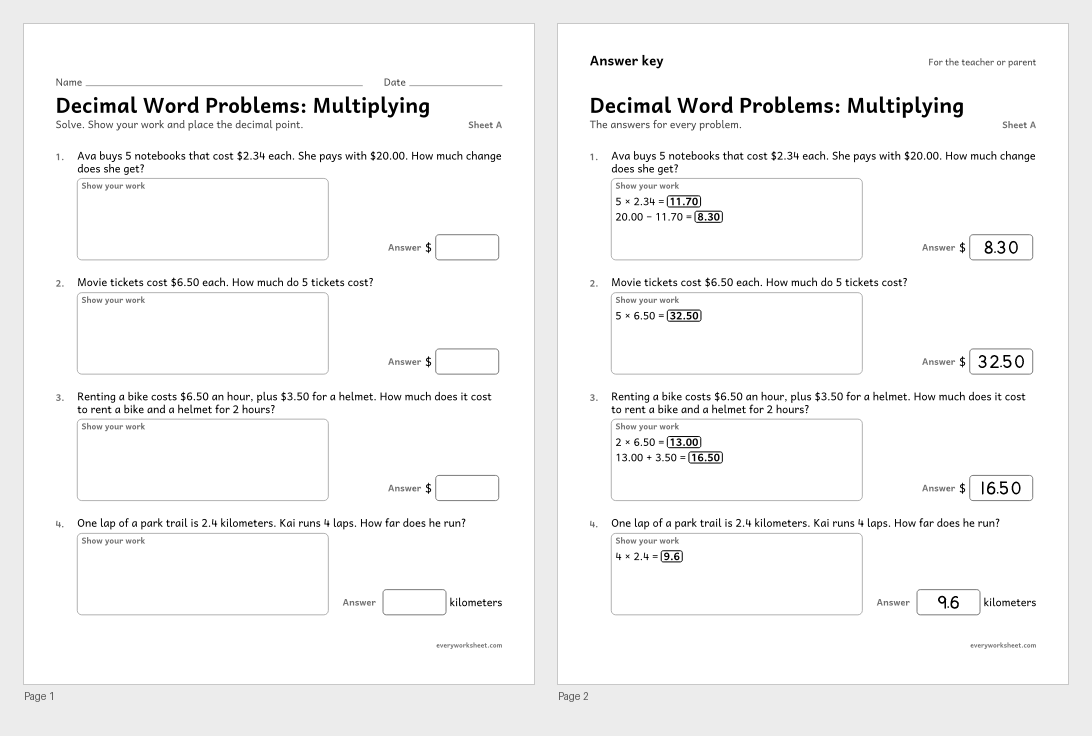
Multiplying decimals with 2-digit factors
Answer key on page 2
2 pages56 KB
 View all 2 pages
Solving word problems by multiplying decimals
Answer key on page 2
2 pages55 KB
 View all 2 pages
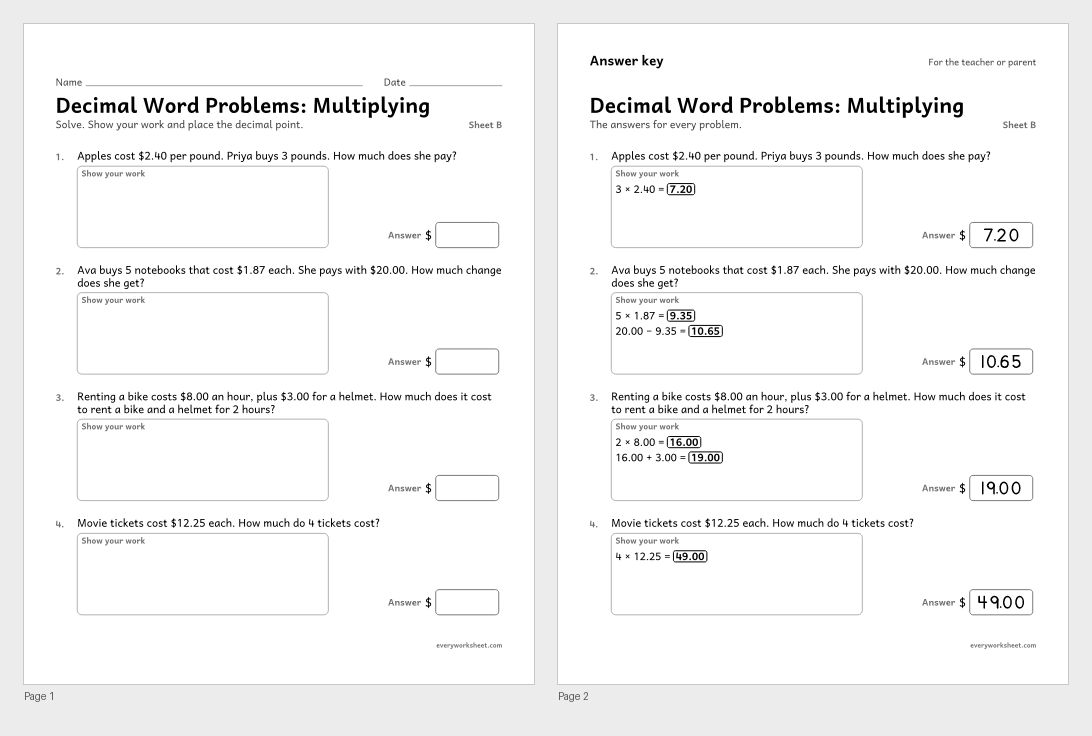
Solving word problems by multiplying decimals
Answer key on page 2
2 pages54 KB
 View all 2 pages
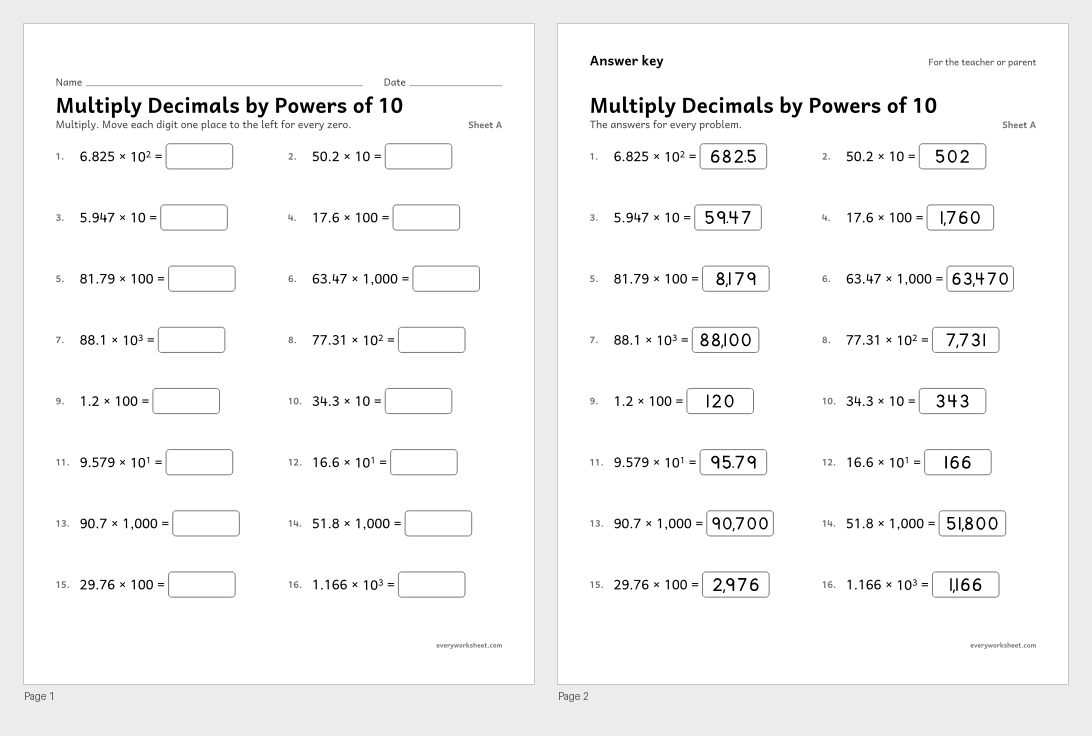
Multiplying decimals by powers of 10
Answer key on page 2
2 pages85 KB
 View all 2 pages
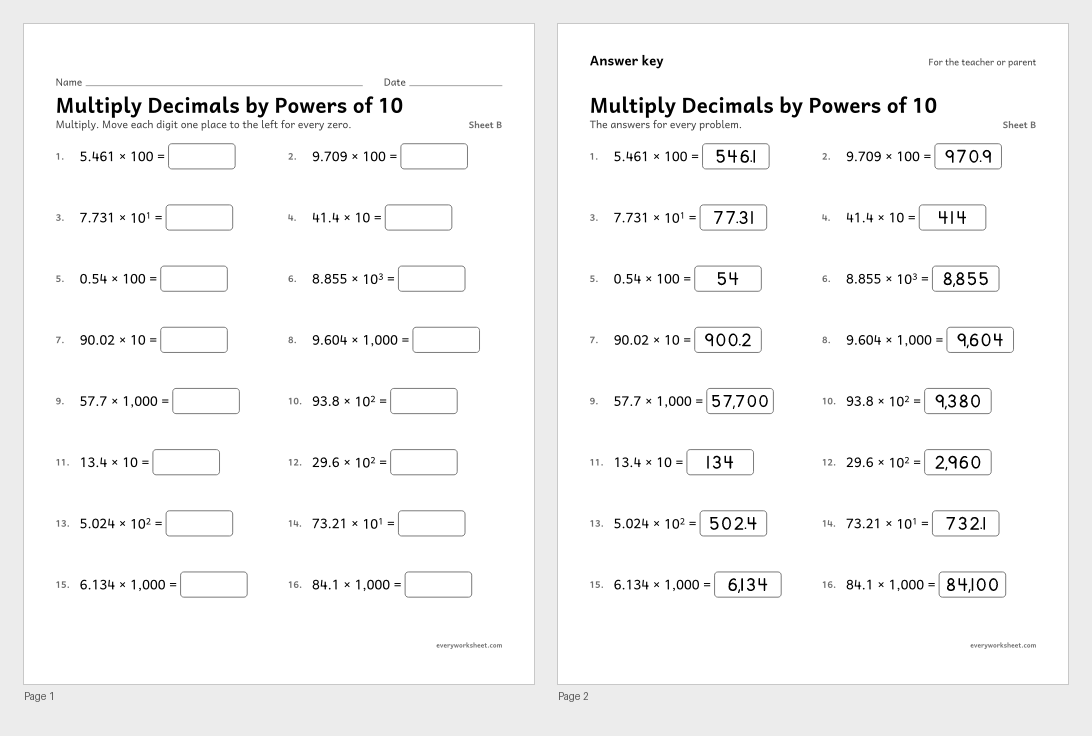
Multiplying decimals by powers of 10
Answer key on page 2
2 pages85 KB
 View all 2 pages
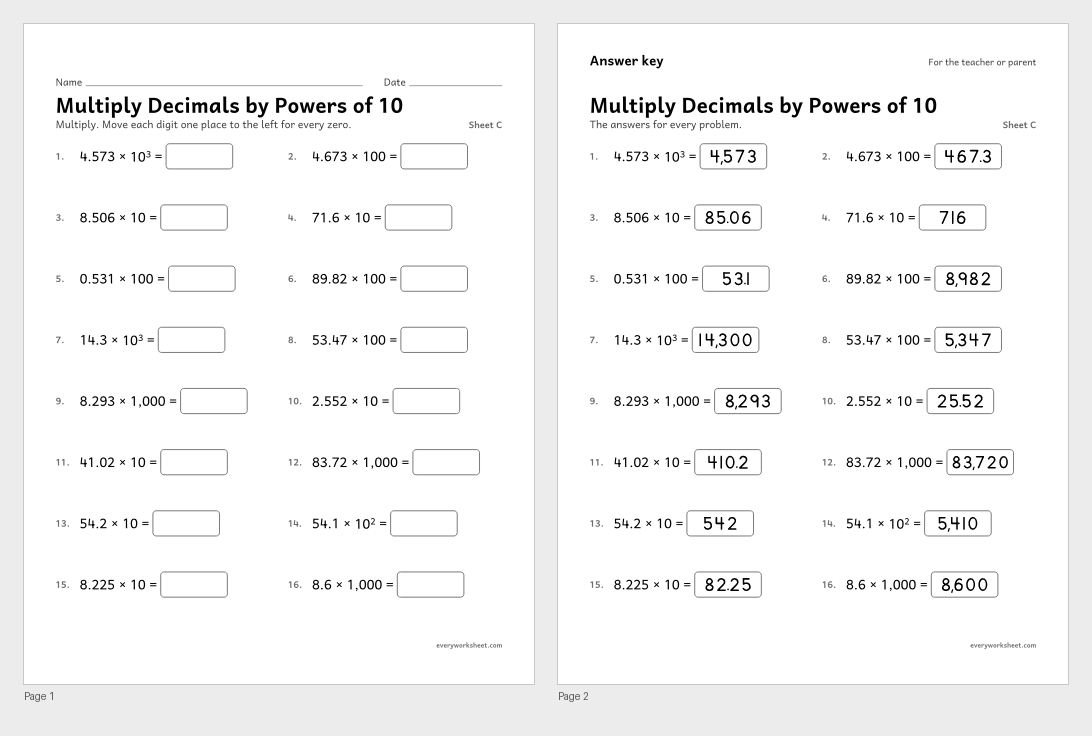
Multiplying decimals by powers of 10
Answer key on page 2
2 pages85 KB
Print at 100% (actual size) for the cleanest tracing lines.
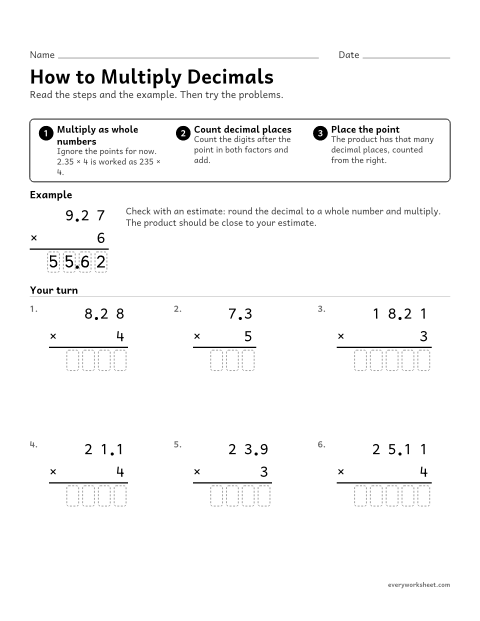
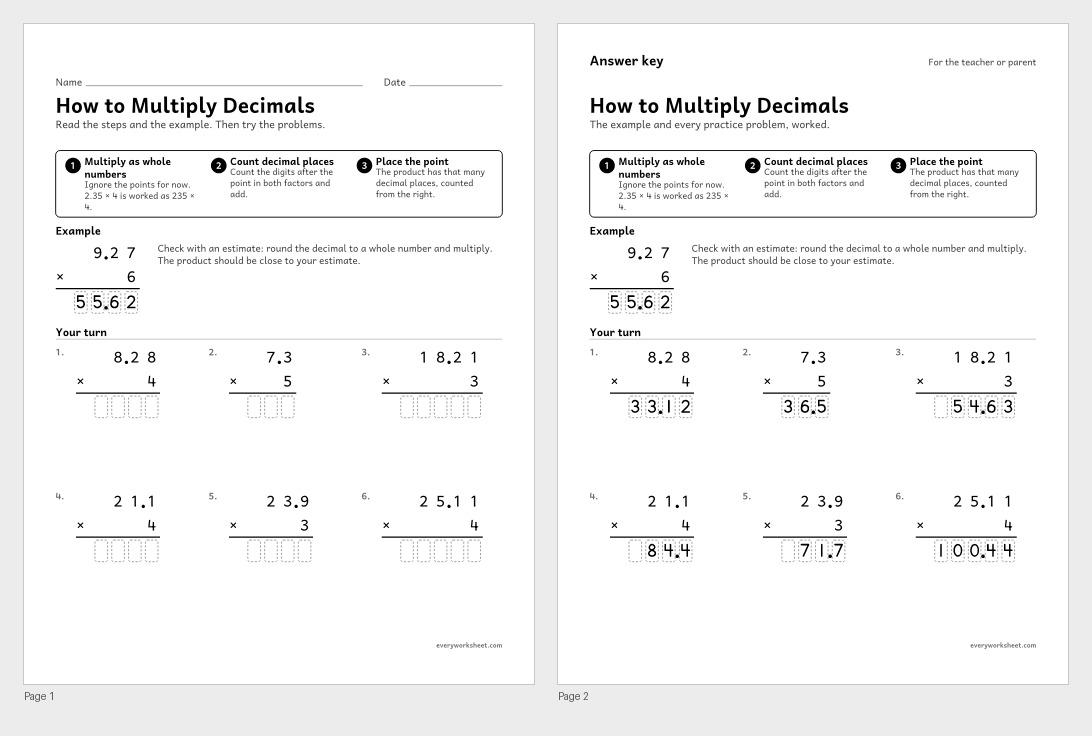
To multiply decimals, multiply as if there were no decimal points, then place the point. The product has as many decimal places as both factors together: 2.35 × 4 has two decimal places, so 235 × 4 = 940 becomes 9.40.
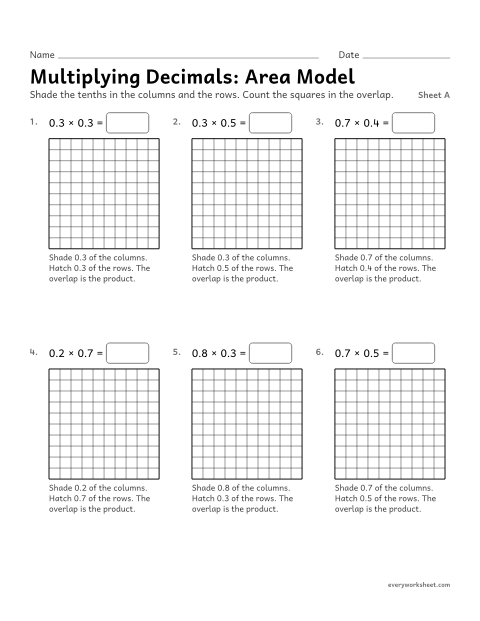
An area model shows why. On a hundredths grid, 0.3 × 0.4 is 3 tenths of the columns and 4 tenths of the rows, and the overlap is 12 squares out of 100, or 0.12. That is why tenths times tenths gives hundredths.
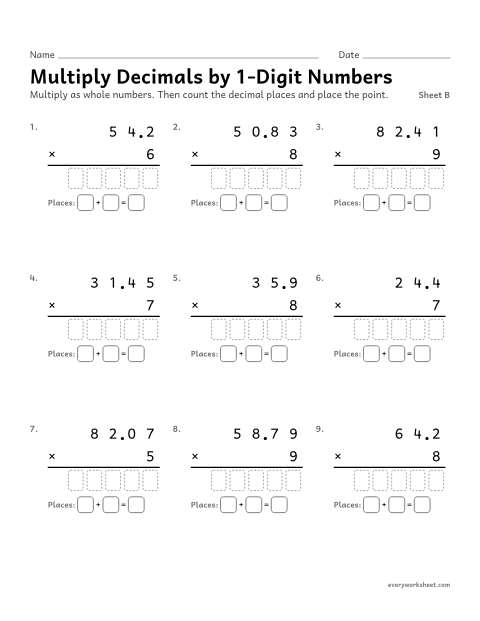
These pages start with a how-to page and area models, then basic facts with decimals, the written method by 1-digit numbers and by 2-digit factors, and word problems. A small line under each column problem asks children to count the decimal places. Every page has an answer key on page 2.
CCSS.MATH.CONTENT.5.NBT.B.7Add, subtract, multiply, and divide decimals to hundredths, using concrete models or drawings and strategies based on place value, properties of operations, and/or the relationship between addition and subtraction; relate the strategy to a written method and explain the reasoning used.CCSS.MATH.CONTENT.5.NBT.A.2Explain patterns in the number of zeros of the product when multiplying a number by powers of 10, and explain patterns in the placement of the decimal point when a decimal is multiplied or divided by a power of 10. Use whole-number exponents to denote powers of 10.Multiply as whole numbers, count the decimal places in both factors, and give the product that many decimal places.
No. That is only for adding and subtracting. For multiplying, line the numbers up on the right.
3 tenths of 4 tenths is 12 hundredths. On a hundredths grid, the overlap of 3 columns and 4 rows is 12 squares out of 100.