 View larger
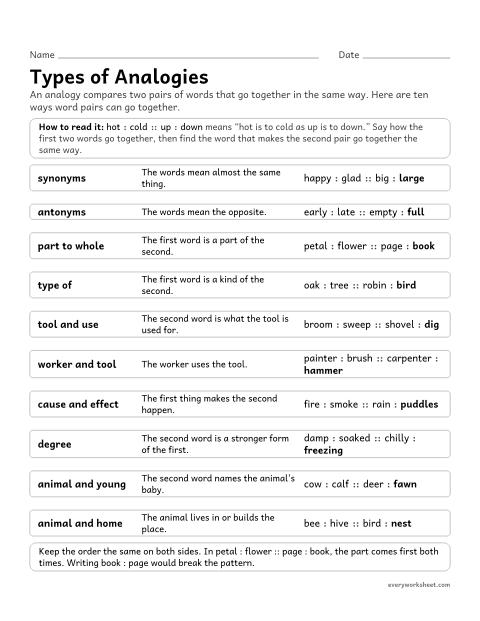
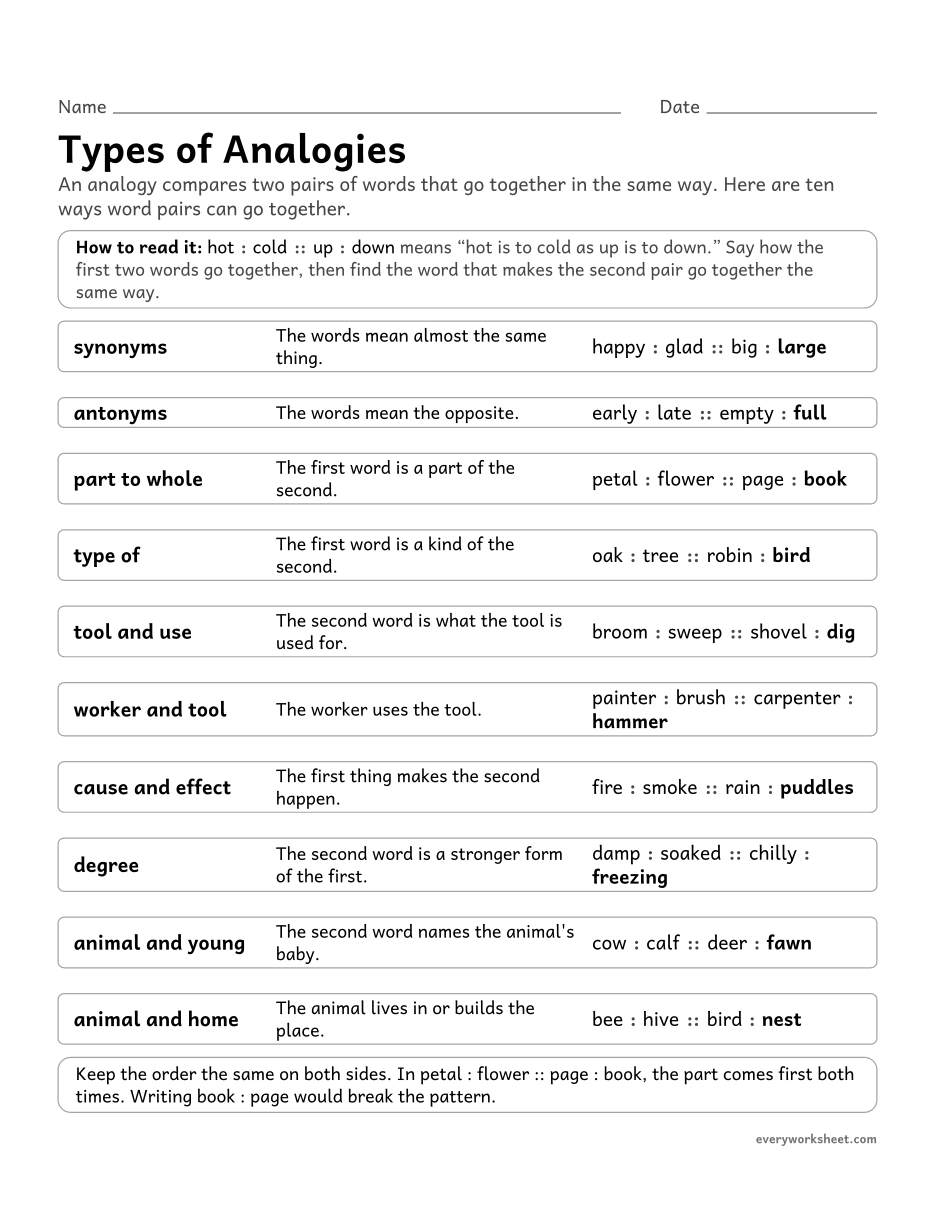
Types of analogies chart
Learning ten kinds of word relationships used in analogies, with an example of each
1 page38 KB
A chart of ten kinds of analogies, then multiple-choice analogies by type, mixed reviews, name the relationship, finish the analogy from a word box, and write your own.
View largerLearning ten kinds of word relationships used in analogies, with an example of each
1 page38 KB
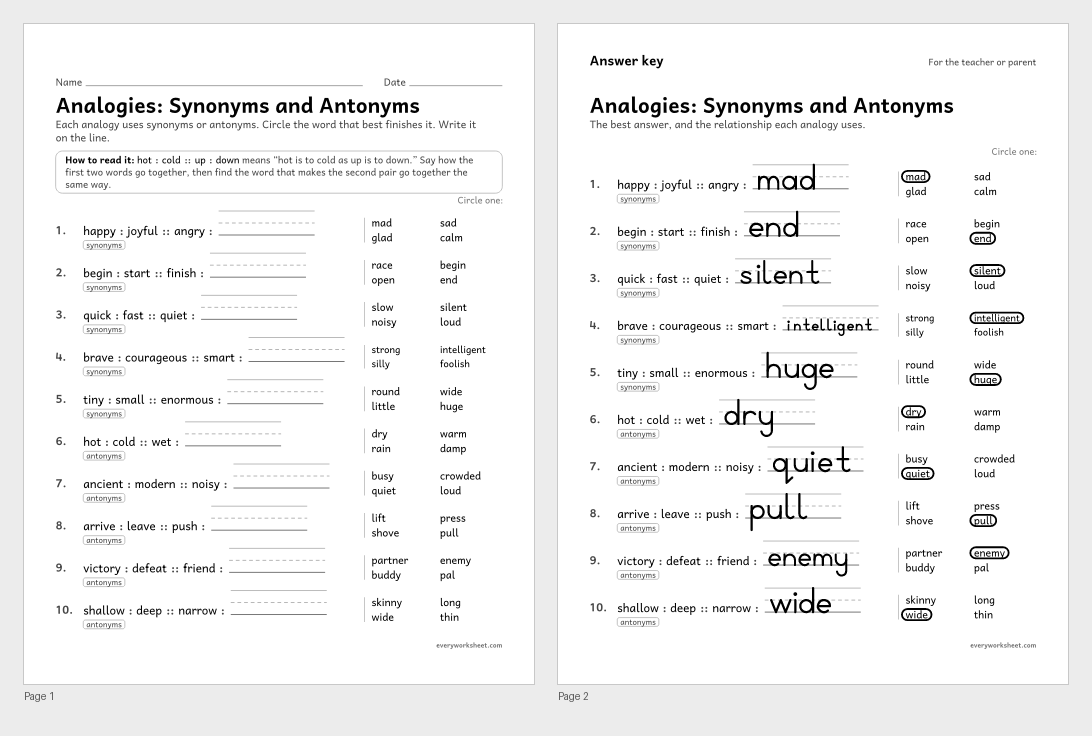 View all 2 pages
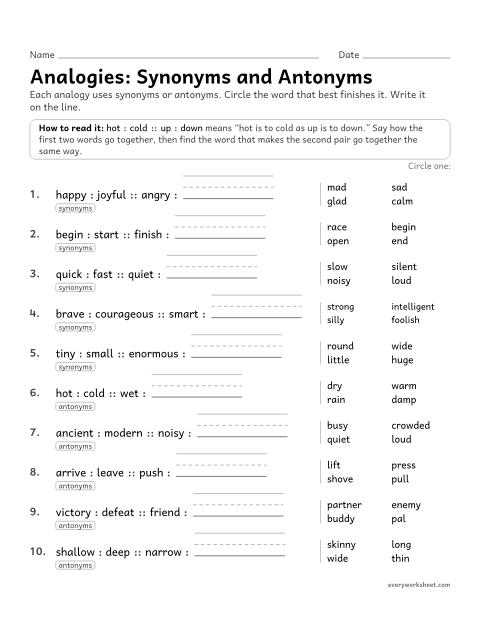
Finishing analogies built on synonyms and antonyms
Answer key on page 2
2 pages76 KB
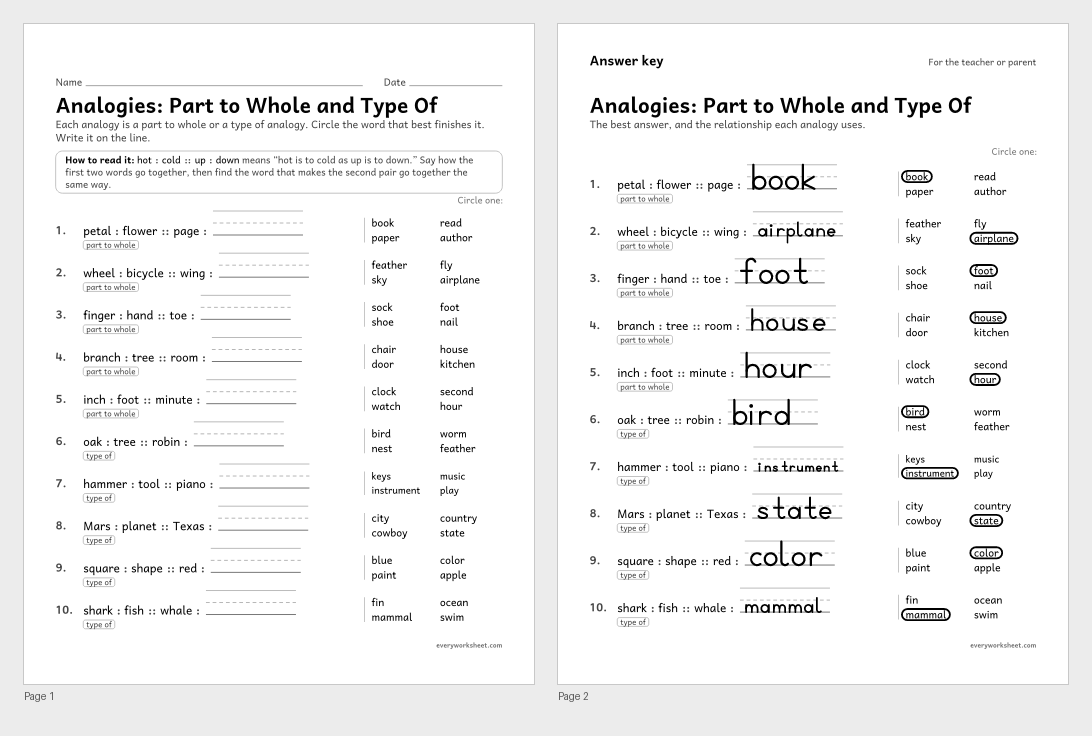 View all 2 pages
Finishing part to whole and type of analogies
Answer key on page 2
2 pages78 KB
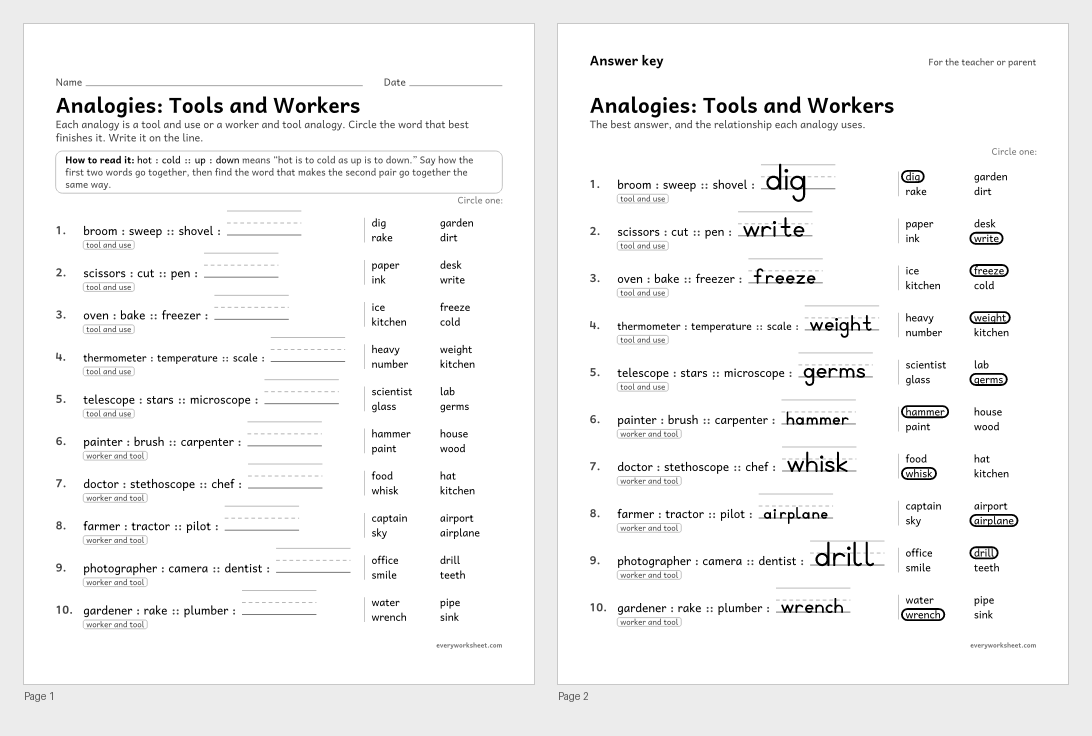 View all 2 pages
Finishing tool and use and worker and tool analogies
Answer key on page 2
2 pages78 KB
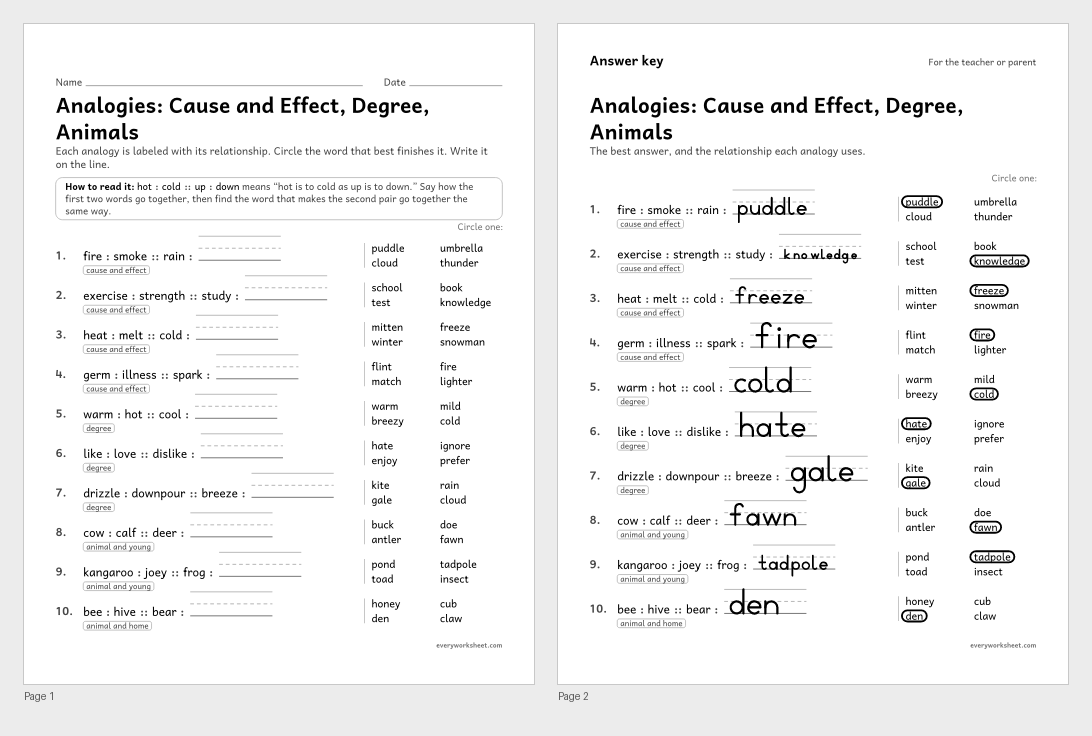 View all 2 pages
Finishing cause and effect, degree, animal and young, and animal and home analogies
Answer key on page 2
2 pages78 KB
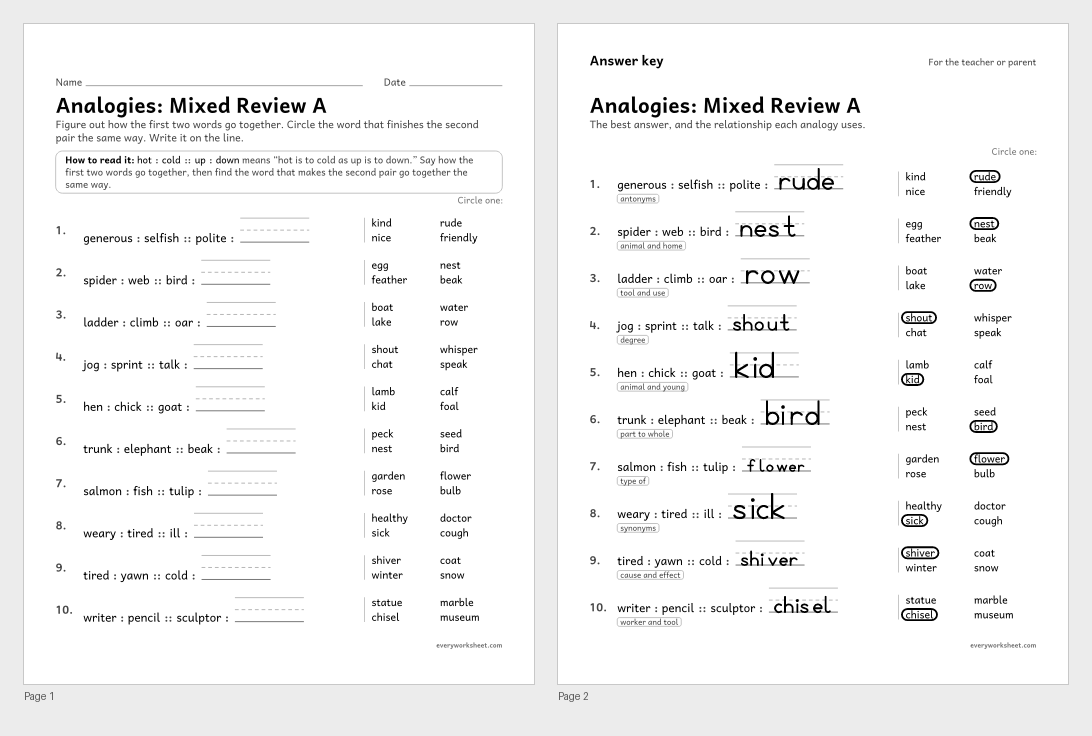 View all 2 pages
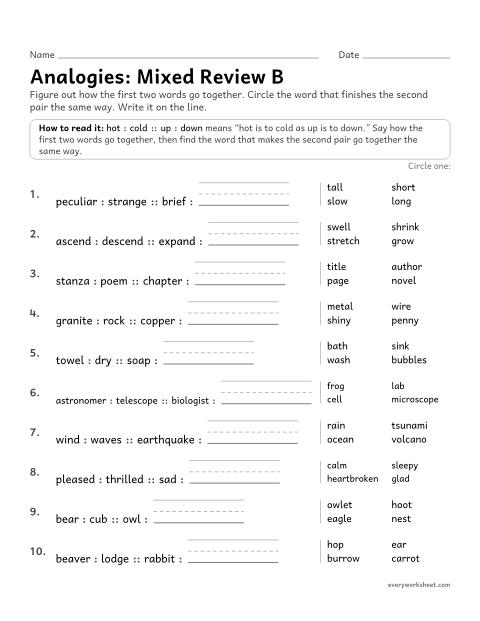
Figuring out the relationship and finishing mixed analogies
Answer key on page 2
2 pages77 KB
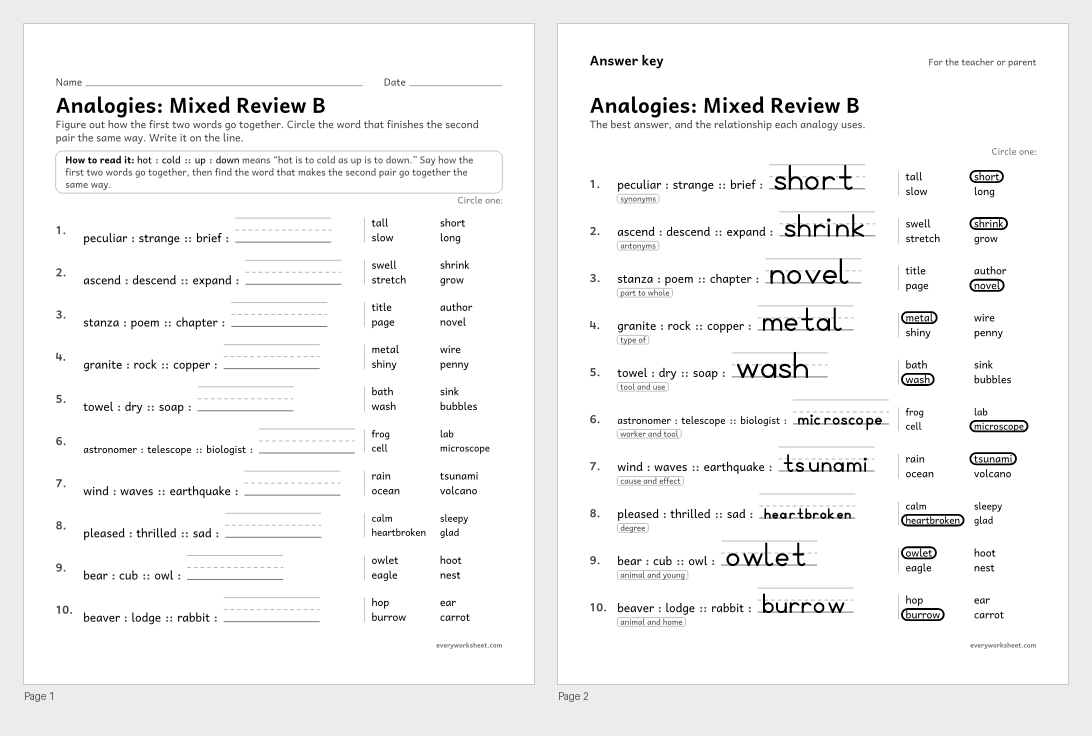 View all 2 pages
Figuring out the relationship and finishing mixed analogies
Answer key on page 2
2 pages79 KB
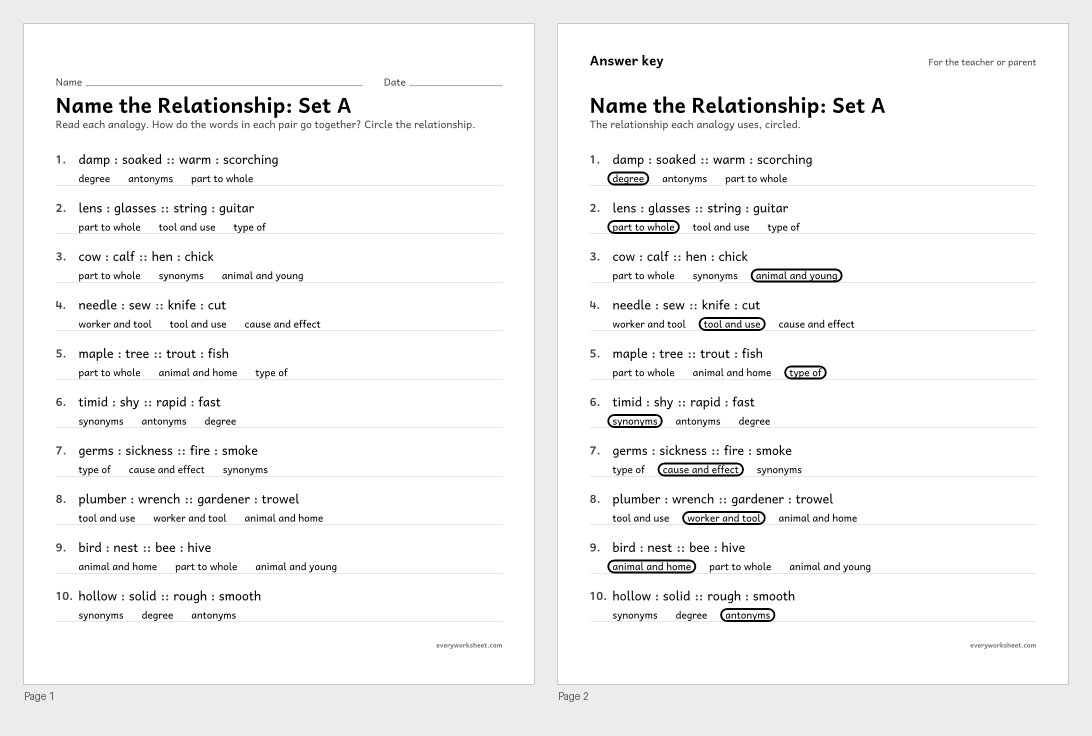 View all 2 pages
Naming the relationship an analogy uses
Answer key on page 2
2 pages51 KB
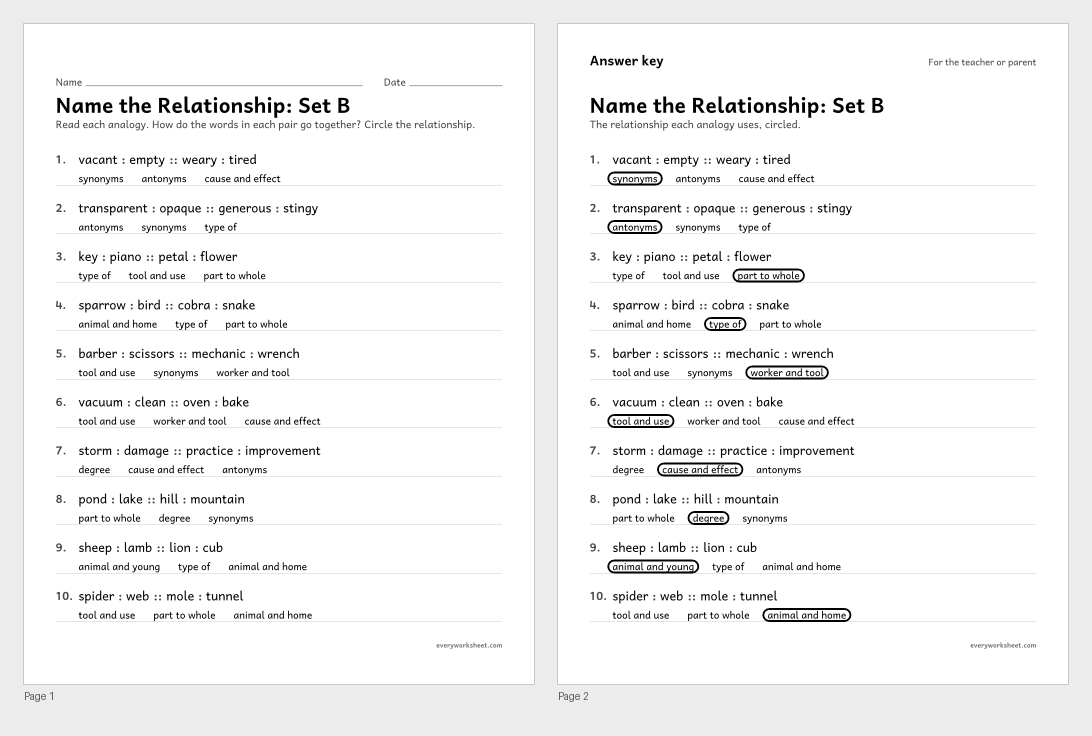 View all 2 pages
Naming the relationship an analogy uses
Answer key on page 2
2 pages52 KB
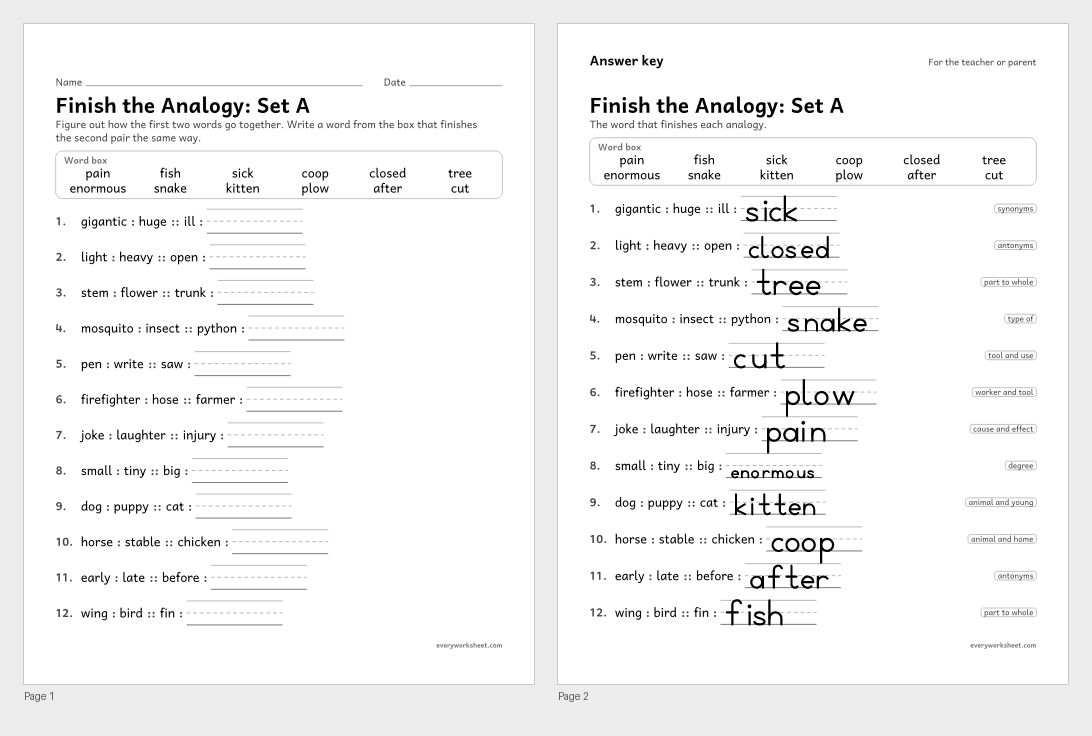 View all 2 pages
Finishing analogies with words from a word box
Answer key on page 2
2 pages68 KB
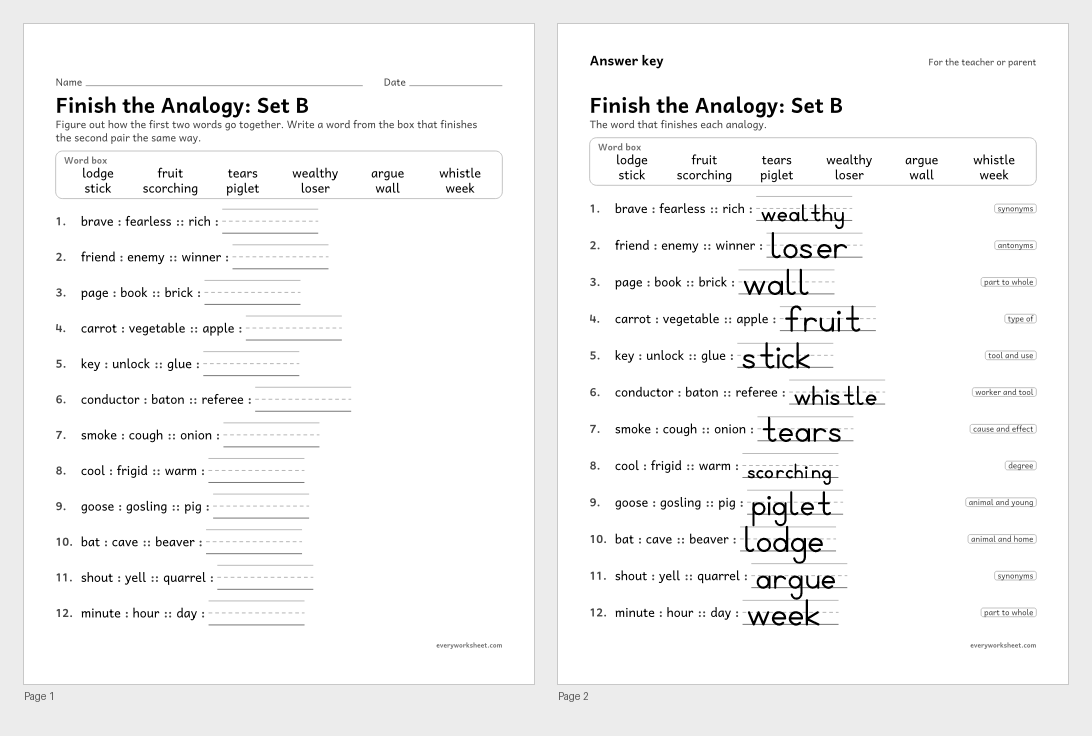 View all 2 pages
Finishing analogies with words from a word box
Answer key on page 2
2 pages70 KB
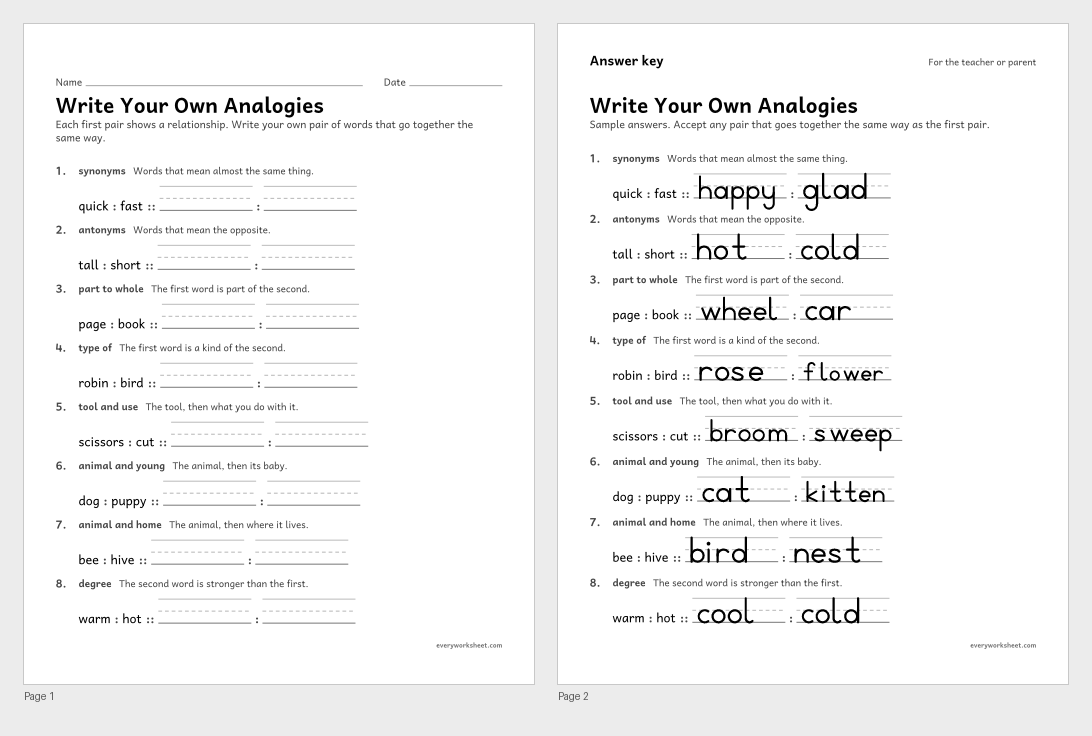 View all 2 pages
Writing a word pair that follows the same relationship as a given pair
Answer key on page 2
2 pages59 KB
Print at 100% (actual size) for the cleanest tracing lines.
An analogy compares two pairs of words that go together in the same way. It is written like this: hot : cold :: up : down, and read as "hot is to cold as up is to down." Hot and cold are opposites, and so are up and down. To solve an analogy, figure out how the first two words are related, then find the word that makes the second pair related the same way.
Most analogies use one of a few relationships: synonyms (happy : glad), antonyms (early : late), part to whole (petal : flower), type of (oak : tree), tool and use (broom : sweep), worker and tool (painter : brush), cause and effect (fire : smoke), degree (damp : soaked), animal and young (cow : calf) and animal and home (bee : hive). Keep the order the same on both sides: petal : flower :: page : book works, but petal : flower :: book : page does not.
These analogies worksheets start with a chart of all ten types with an example of each. Four practice pages teach two or three types at a time, with each analogy labeled; two mixed reviews hide the labels; two pages ask children to name the relationship; two pages use a word box; and the last page asks children to write their own. Every analogy has exactly one best answer, and the keys name the relationship.
CCSS.ELA-LITERACY.L.5.5.CUse the relationship between particular words (e.g., synonyms, antonyms, homographs) to better understand each of the words.CCSS.ELA-LITERACY.L.5.6Acquire and use accurately grade-appropriate general academic and domain-specific words and phrases, including those that signal contrast, addition, and other logical relationships (e.g., however, although, nevertheless, similarly, moreover, in addition).An analogy shows that two pairs of words go together in the same way. Puppy : dog :: kitten : cat means a puppy is a young dog in the same way a kitten is a young cat.
A single colon (:) means "is to" and a double colon (::) means "as." So hot : cold :: up : down is read "hot is to cold as up is to down."
Children can solve simple analogies in 2nd and 3rd grade. In 4th and 5th grade, analogies are a good way to practice the word relationships in the standards, such as synonyms, antonyms and part to whole.
Yes. Every page has an answer key on page 2 that also names each analogy's relationship. The write-your-own page has sample answers.