 View larger
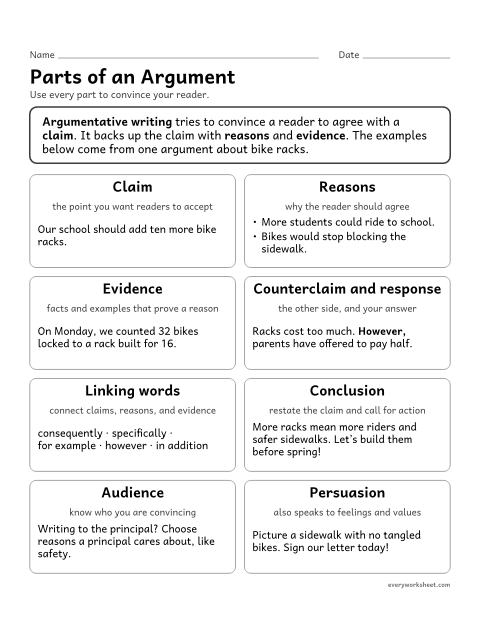
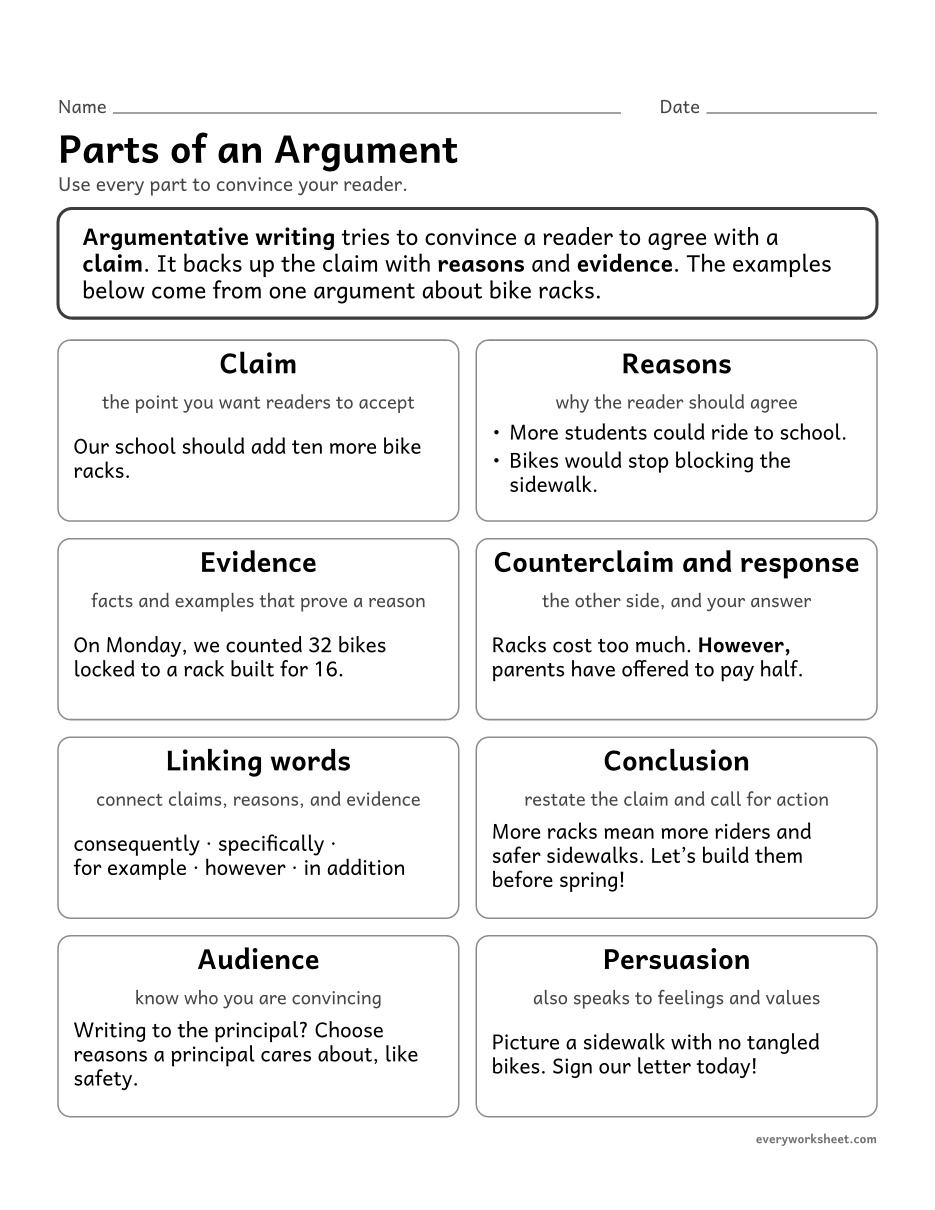
Parts of an argument
Learning the parts of an argument: claim, reasons, evidence, a counterclaim with a response, linking words, and a conclusion
1 page35 KB
Learn the parts of an argument, practice claims, evidence, and counterclaims, then plan and write essays and persuasive letters.
View largerLearning the parts of an argument: claim, reasons, evidence, a counterclaim with a response, linking words, and a conclusion
1 page35 KB
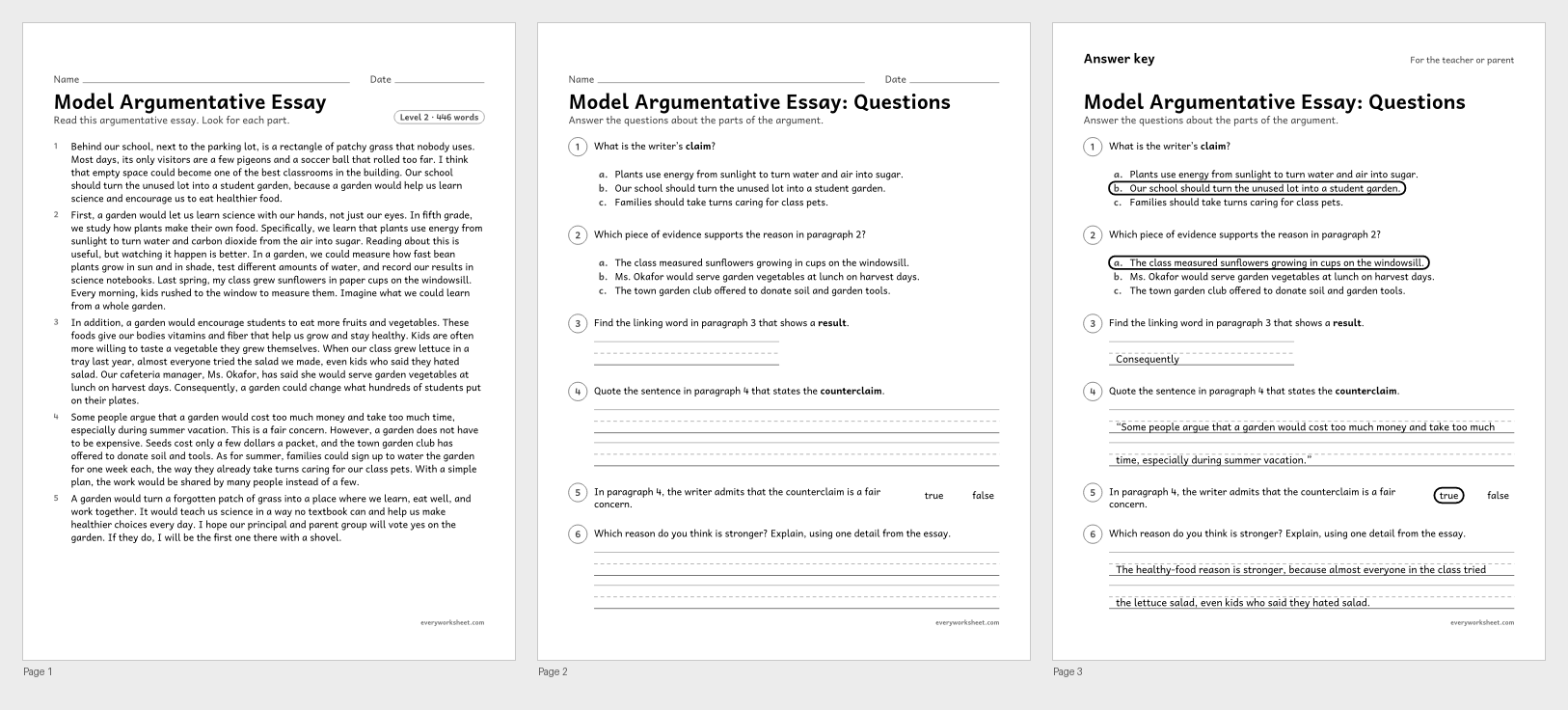 3 pagesView all 3 pages
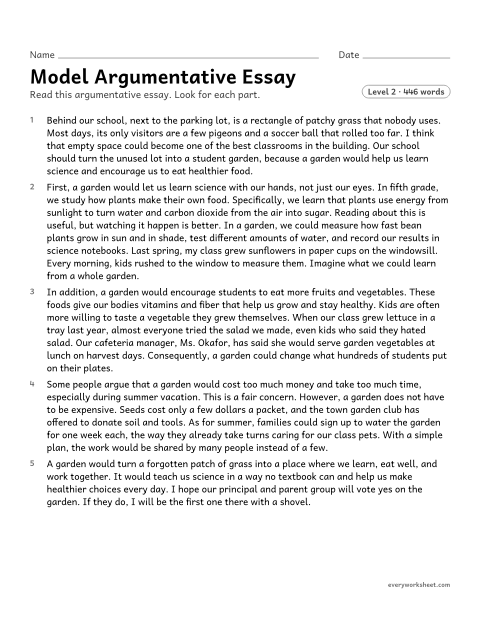
Finding the claim, reasons, evidence, counterclaim, response, and linking words in a model argumentative essay
Answer key on page 3
3 pages56 KB
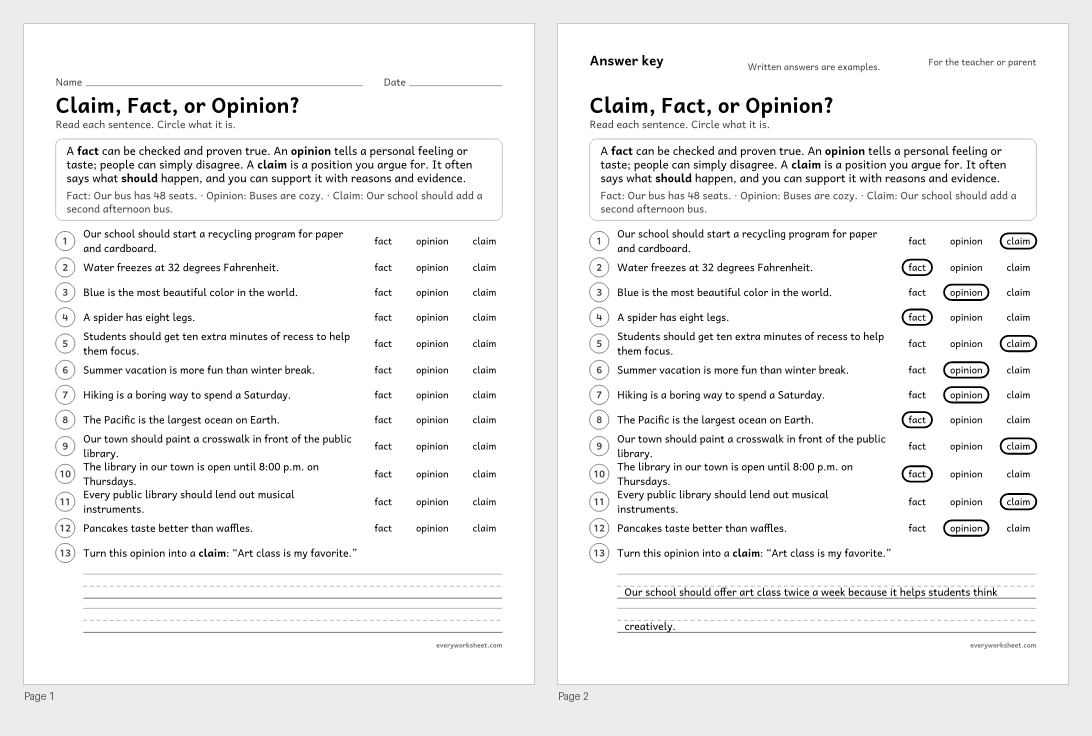 View all 2 pages
Telling a claim apart from a fact and a personal opinion
Answer key on page 2
2 pages62 KB
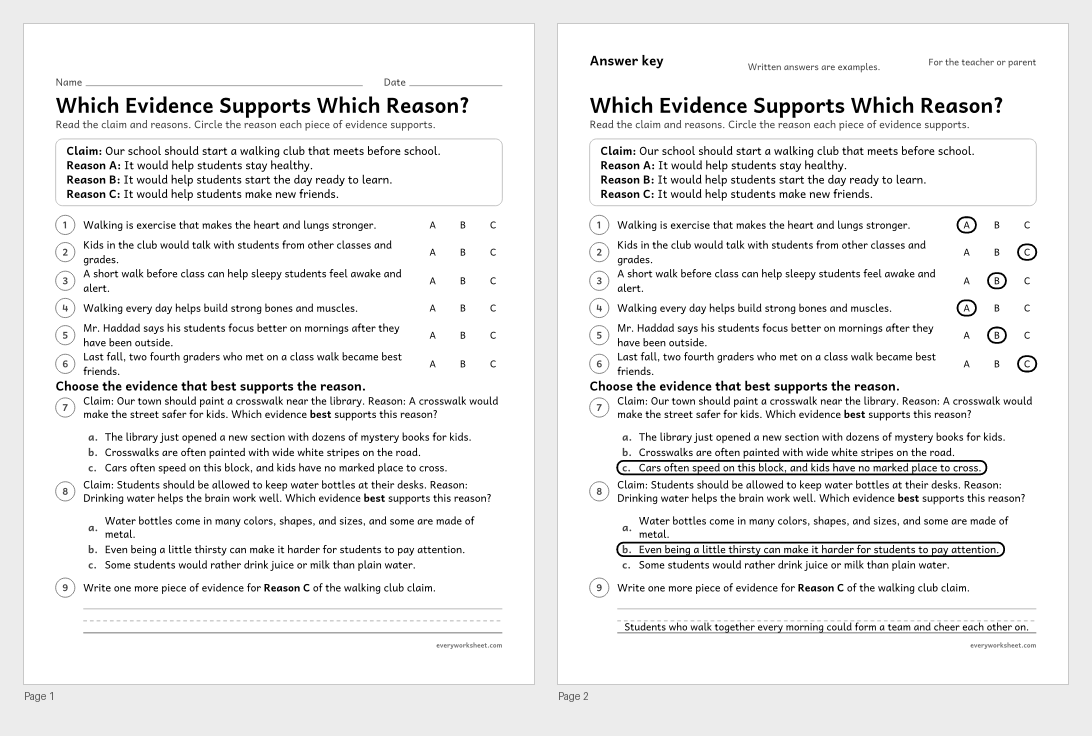 View all 2 pages
Identifying which evidence supports which reason in an argument
Answer key on page 2
2 pages61 KB
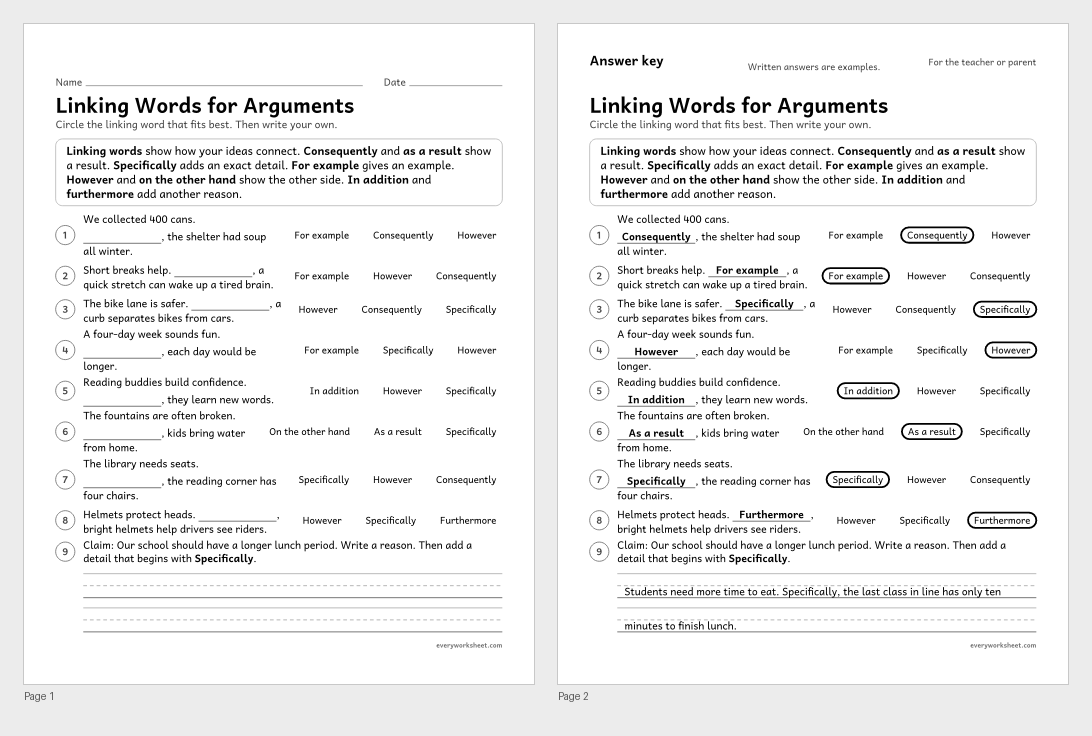 View all 2 pages
Linking an opinion, reasons, and evidence with words and phrases such as consequently, specifically, for example, and however
Answer key on page 2
2 pages58 KB
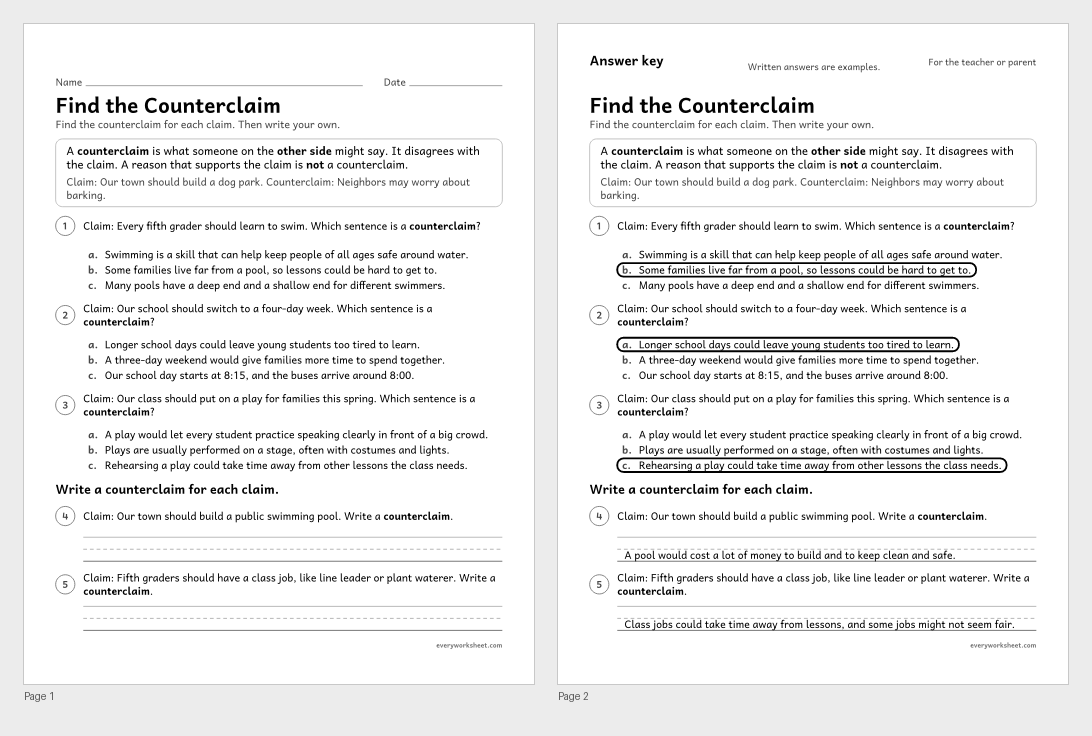 View all 2 pages
Recognizing and writing counterclaims: what someone on the other side of an argument might say
Answer key on page 2
2 pages54 KB
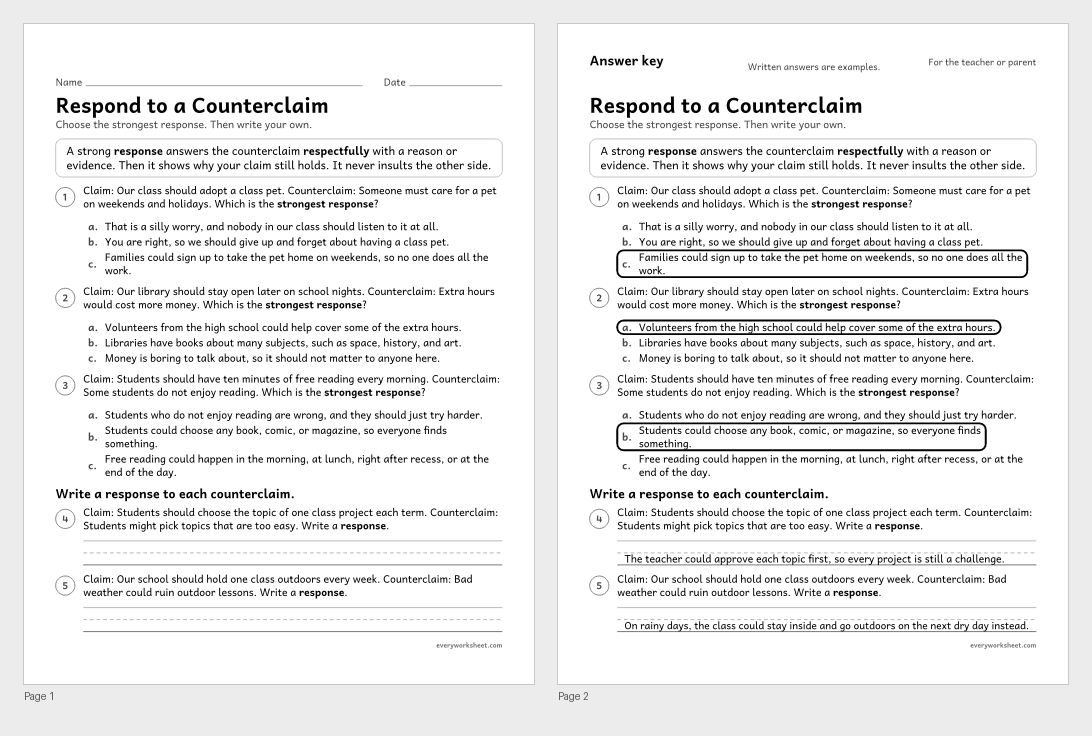 View all 2 pages
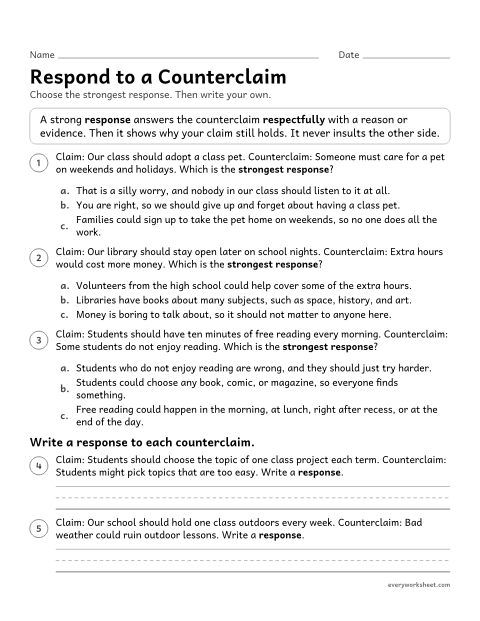
Choosing and writing respectful responses to counterclaims that keep the claim strong
Answer key on page 2
2 pages54 KB
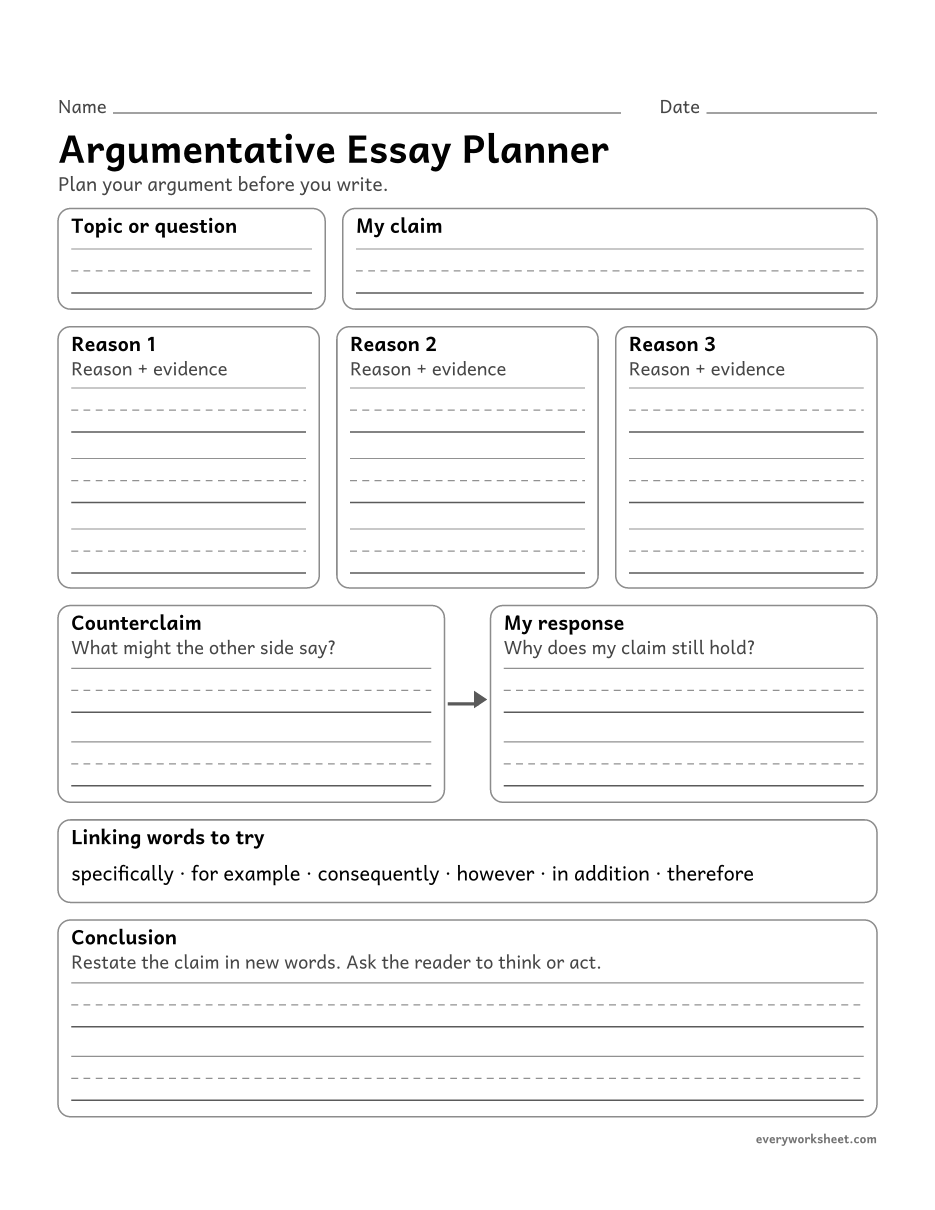 View larger
Planning an argument: claim, reasons with evidence, a counterclaim with a response, and a conclusion
1 page31 KB
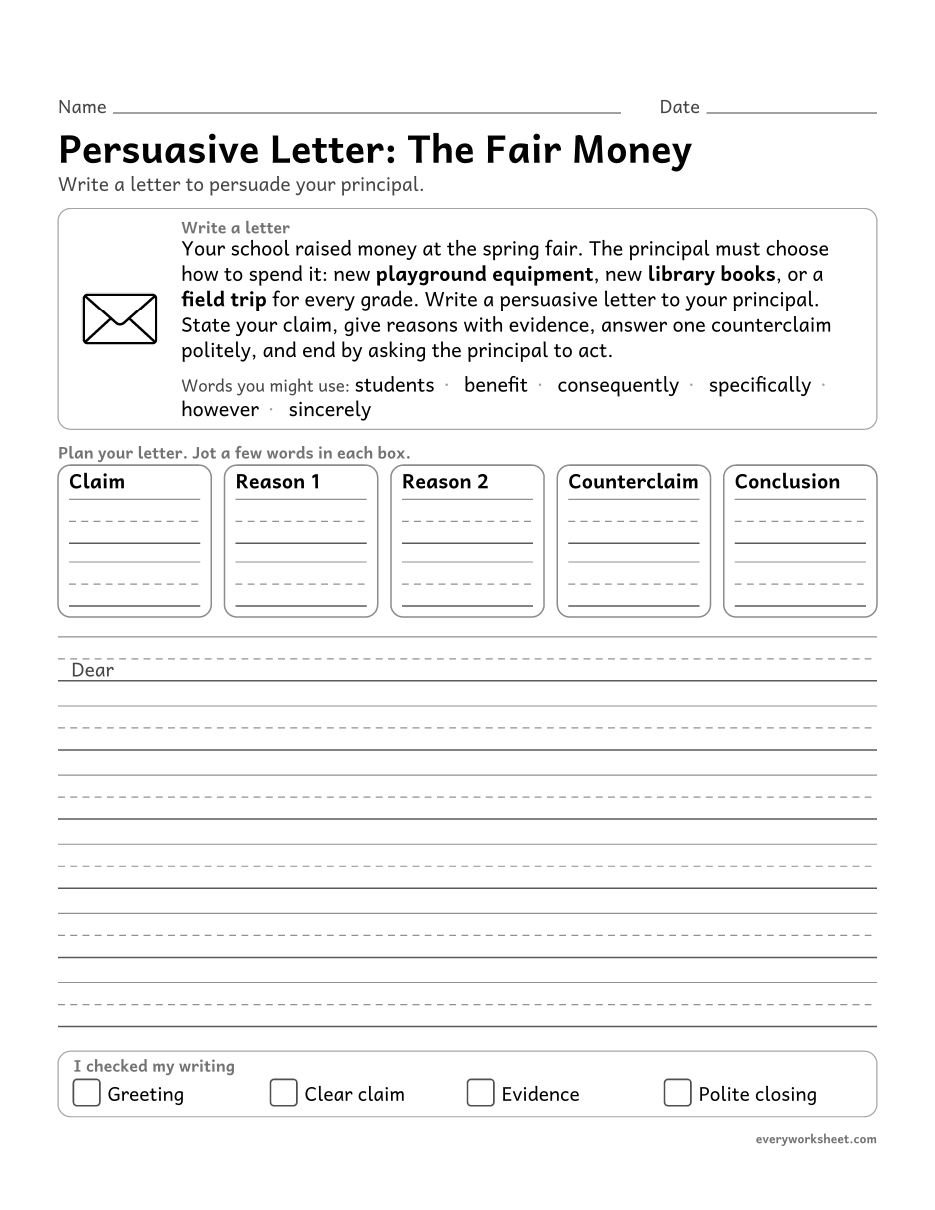 View larger
Writing a persuasive letter with a claim, reasons, evidence, and a respectful response to a counterclaim
1 page39 KB
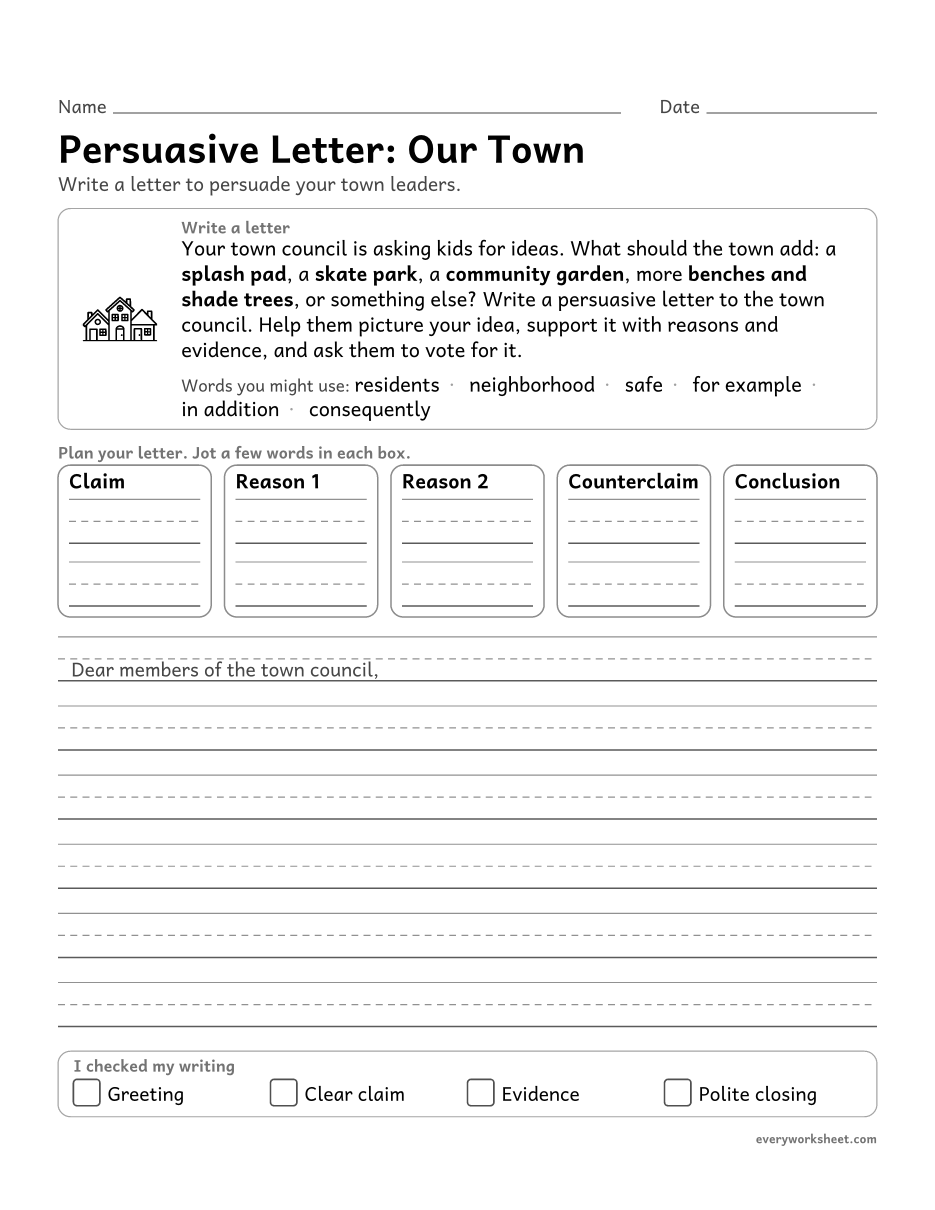 View larger
Writing a persuasive letter with logically ordered reasons supported by facts and details
1 page41 KB
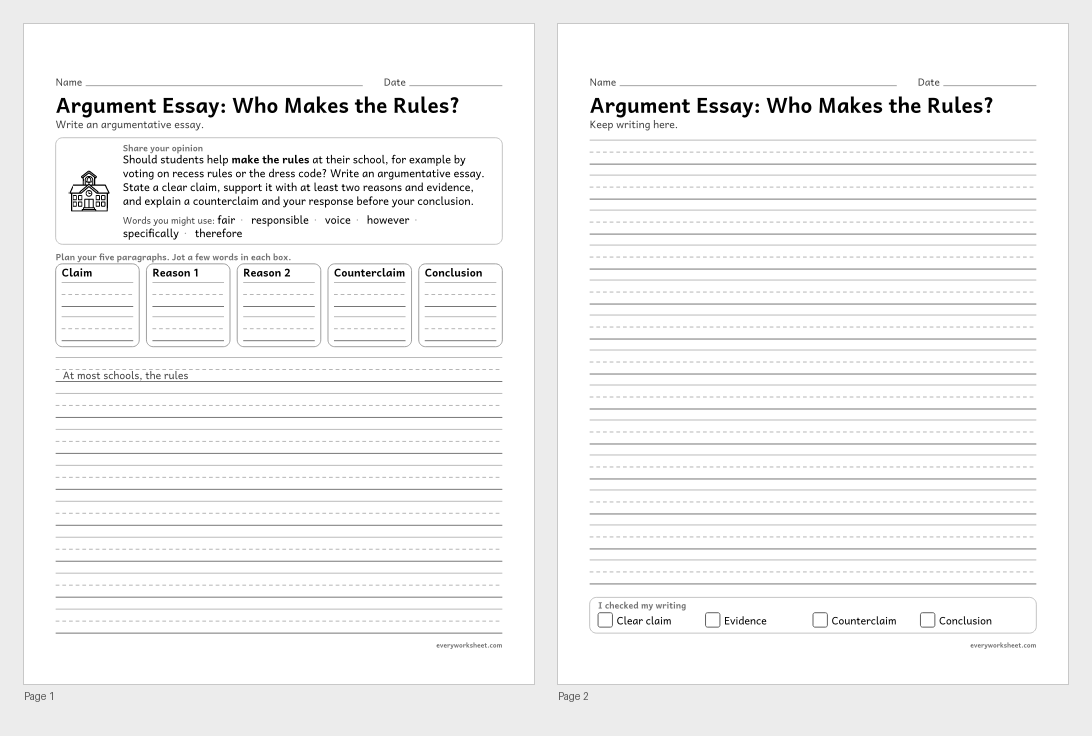 View all 2 pages
Writing an argumentative essay with a claim, reasons, evidence, and a counterclaim with a response
2 pages52 KB
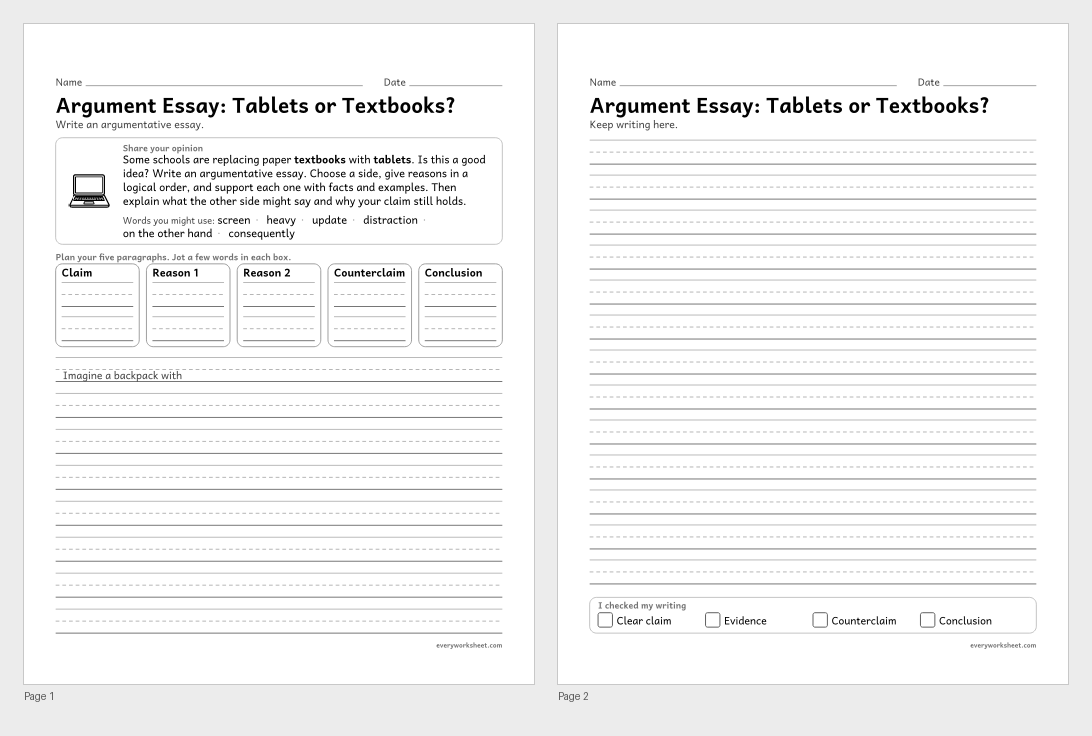 View all 2 pages
Writing an argumentative essay with logically ordered reasons supported by facts and details
2 pages44 KB
Print at 100% (actual size) for the cleanest tracing lines.
**Argumentative writing** tries to convince a reader to agree with a **claim**, the main point the writer wants readers to accept, such as "Our school should add ten more bike racks." The writer backs up the claim with **reasons** (why the reader should agree) and **evidence** (facts, examples, and quotations that prove each reason). A strong argument also names a **counterclaim**, what someone on the other side might say, and gives a respectful **response**. It ends with a **conclusion** that restates the claim and asks the reader to think or act.
**Persuasive writing** uses the same parts, plus language that speaks to the reader's feelings and values: helping the reader picture the change, or asking them directly to act ("Sign our letter today!"). The difference is mostly one of emphasis. An argument leans on reasons and evidence; persuasion adds an appeal to the heart. These pages teach both.
Start with the anchor chart and an original model essay, then practice one skill at a time: telling a claim from a fact or an opinion, matching evidence to the reason it supports, choosing linking words like **consequently**, **specifically**, **for example**, and **however**, and finding and answering counterclaims. When the parts make sense, an essay planner, two persuasive letter prompts, and two argumentative essay prompts bring it all together.
CCSS.ELA-LITERACY.W.5.1Write opinion pieces on topics or texts, supporting a point of view with reasons and information.CCSS.ELA-LITERACY.W.5.1.AIntroduce a topic or text clearly, state an opinion, and create an organizational structure in which ideas are logically grouped to support the writer's purpose.CCSS.ELA-LITERACY.W.5.1.BProvide logically ordered reasons that are supported by facts and details.CCSS.ELA-LITERACY.W.5.1.CLink opinion and reasons using words, phrases, and clauses (e.g., consequently, specifically).Both try to convince a reader. Argumentative writing relies mainly on reasons and evidence and addresses the other side. Persuasive writing uses those too, but also appeals to the reader's feelings and values and often ends with a direct call to action.
A counterclaim is what someone who disagrees might say. Writers state it fairly and then respond with a reason or evidence that shows why their own claim still holds.
An opinion tells a personal feeling or taste, like "Pancakes taste better than waffles." A claim is a position you argue for with reasons and evidence, often about what should happen, like "Our town should paint a crosswalk near the library."
Children write opinion pieces from the early grades. In 4th and 5th grade they begin ordering reasons, backing them with facts and details, and linking ideas with words like consequently and specifically, which is the foundation for full argumentative essays in middle school.