 View larger
Bill of rights for Kids: the 10 amendments poster
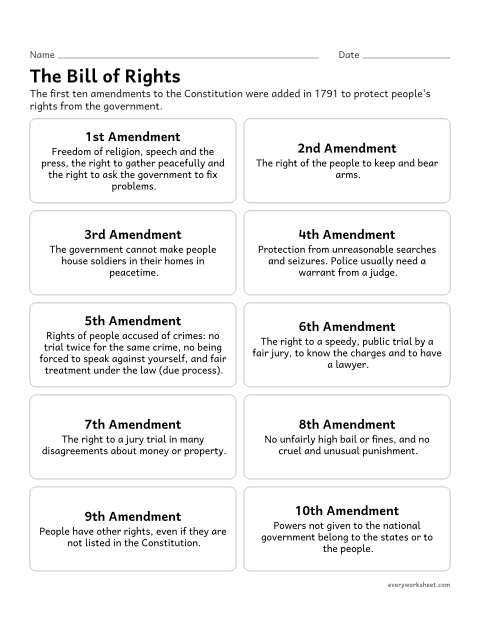
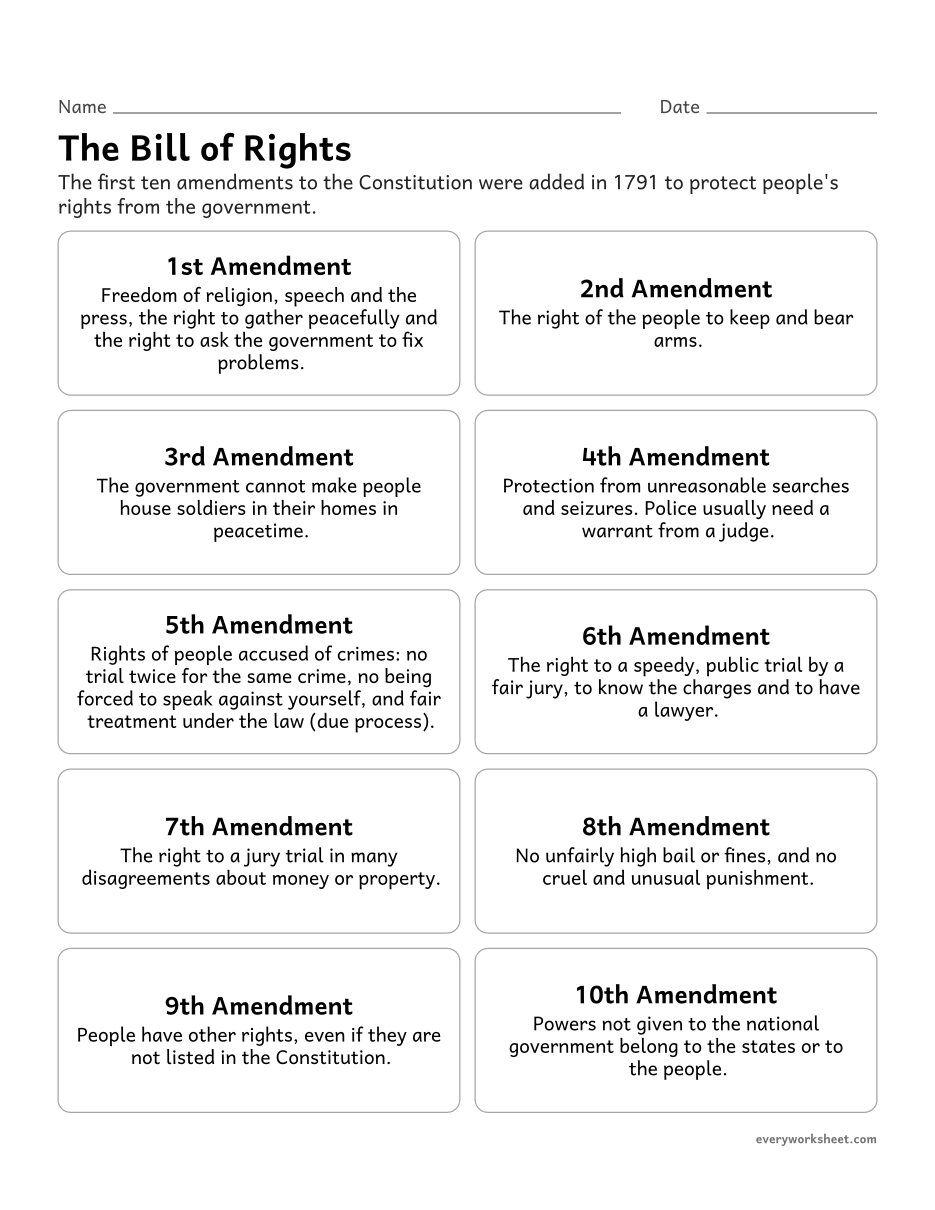
Describing the first ten amendments to the Constitution in plain words
1 page31 KB
The first ten amendments in plain, accurate language, the First and Fourth Amendments as primary sources, which amendment protects what, and later amendments that expanded rights.
View largerDescribing the first ten amendments to the Constitution in plain words
1 page31 KB
 View all 2 pages
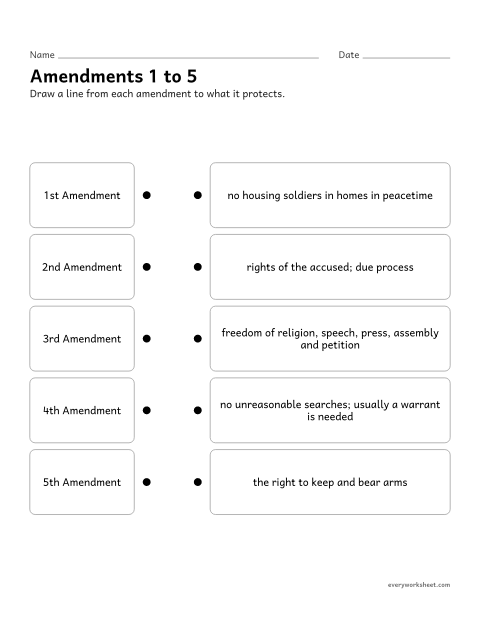
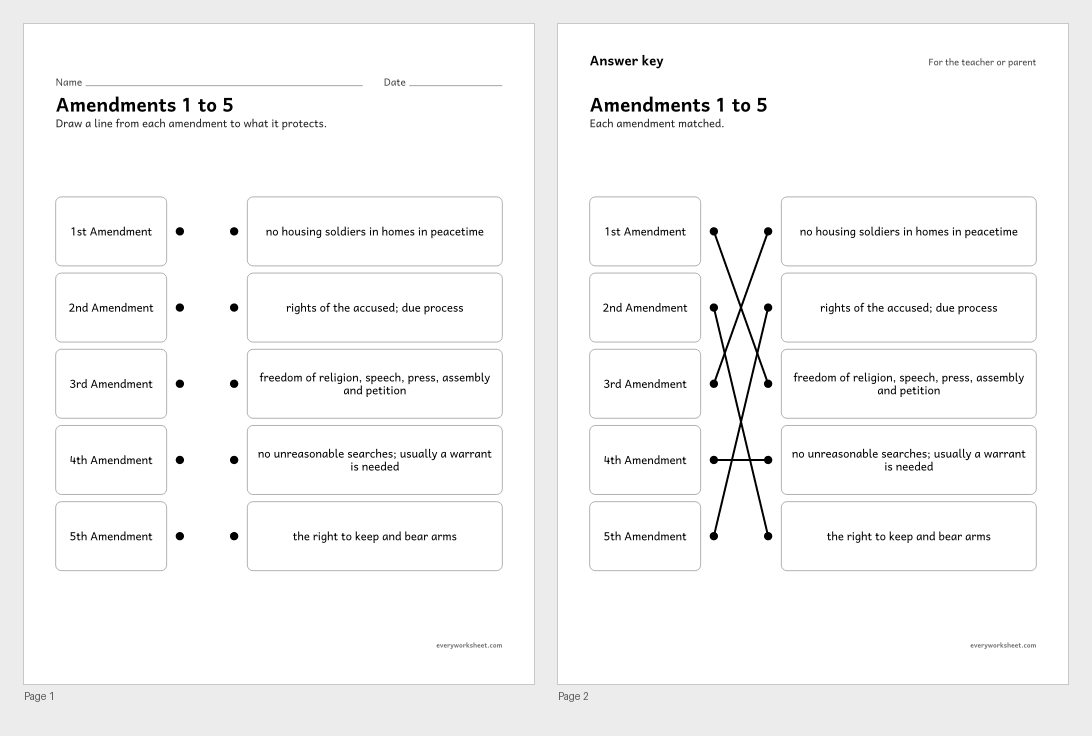
Matching the first five amendments to their meanings
Answer key on page 2
2 pages27 KB
 View all 2 pages
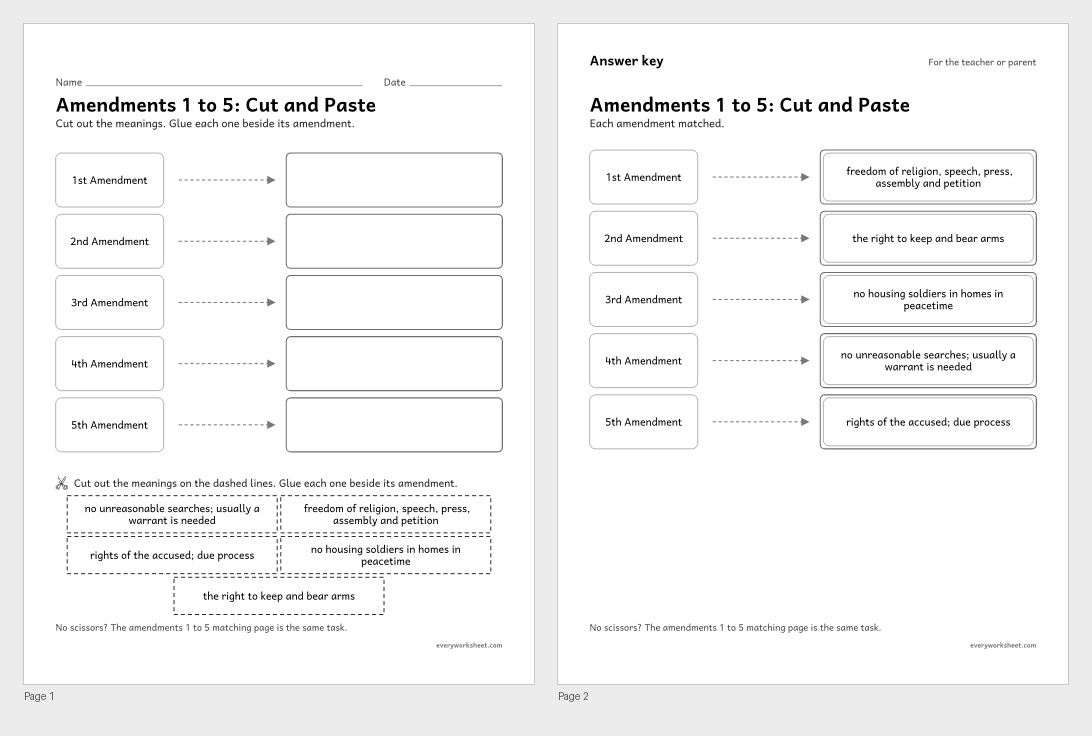
Matching the first five amendments to their meanings
Answer key on page 2
2 pages58 KB
 View all 2 pages
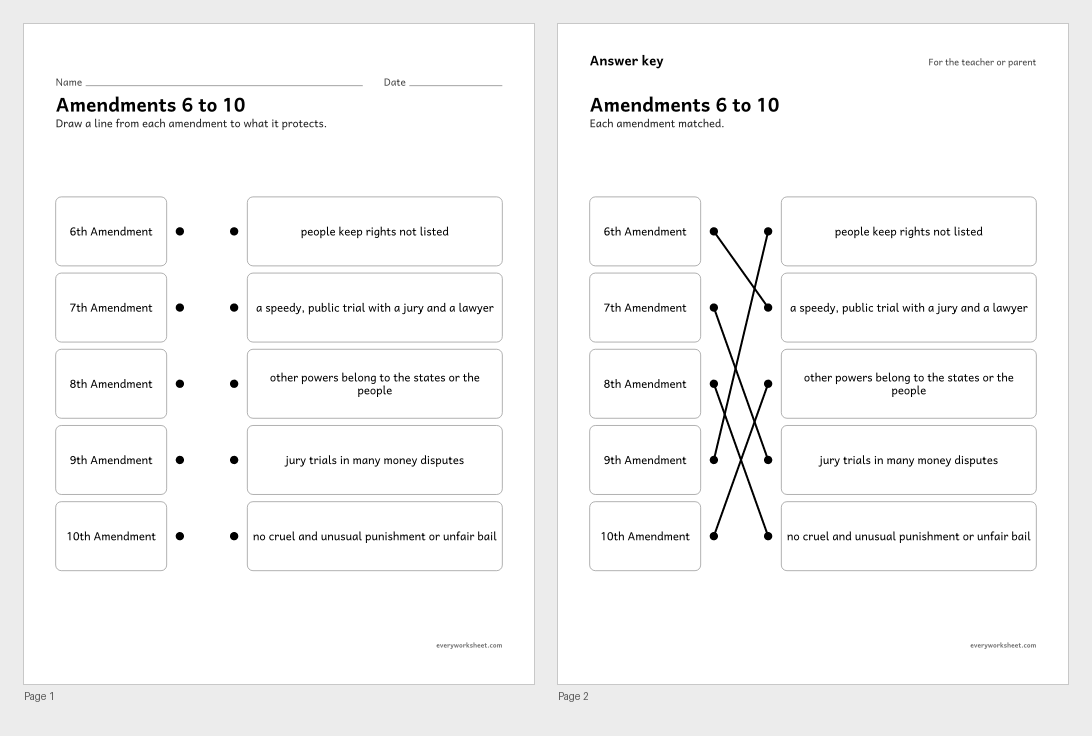
Matching amendments six to ten to their meanings
Answer key on page 2
2 pages28 KB
 View all 2 pages
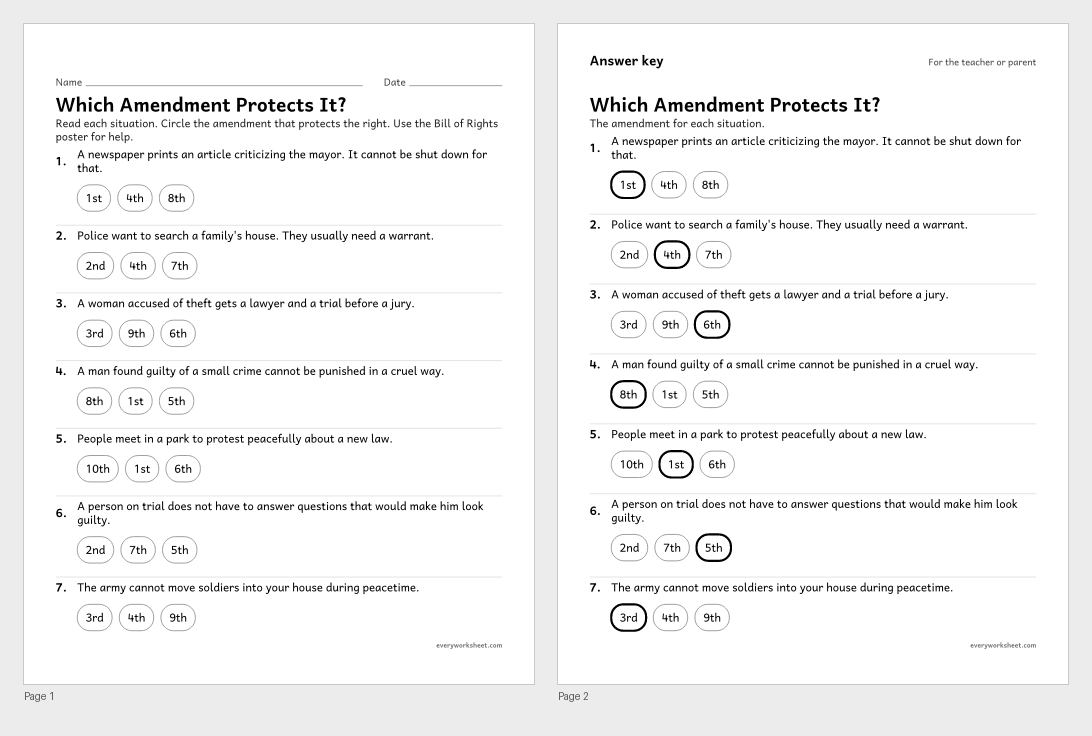
Applying the Bill of Rights to everyday situations
Answer key on page 2
2 pages42 KB
 View all 2 pages
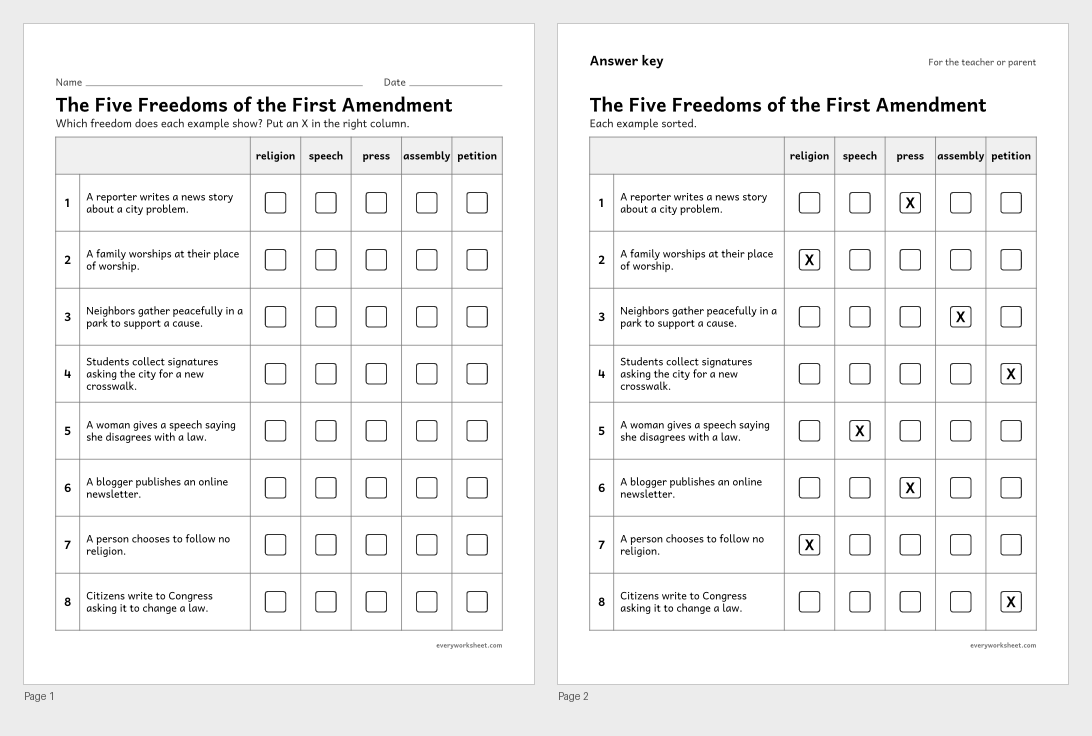
Identifying the five freedoms protected by the First Amendment
Answer key on page 2
2 pages52 KB
 View all 2 pages
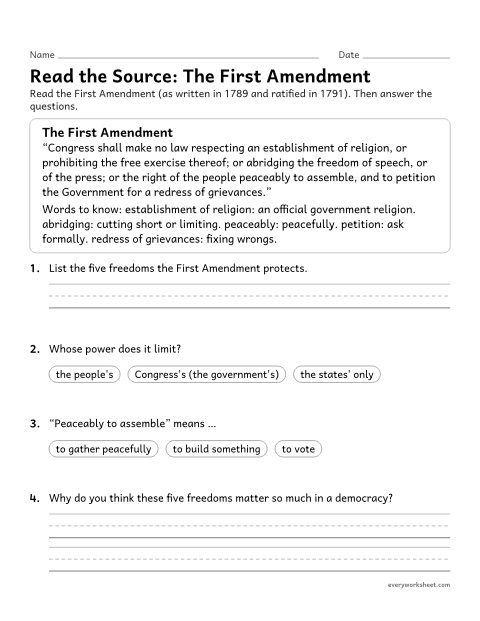
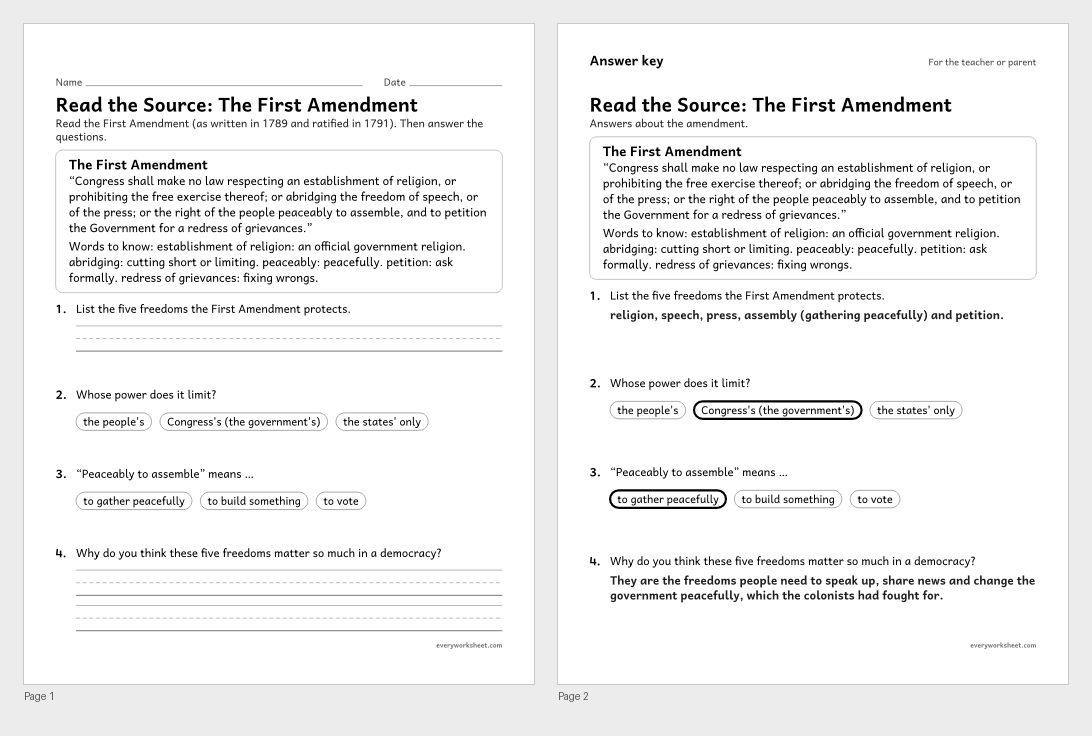
Analyzing the text of the First Amendment
Answer key on page 2
2 pages39 KB
 View all 2 pages
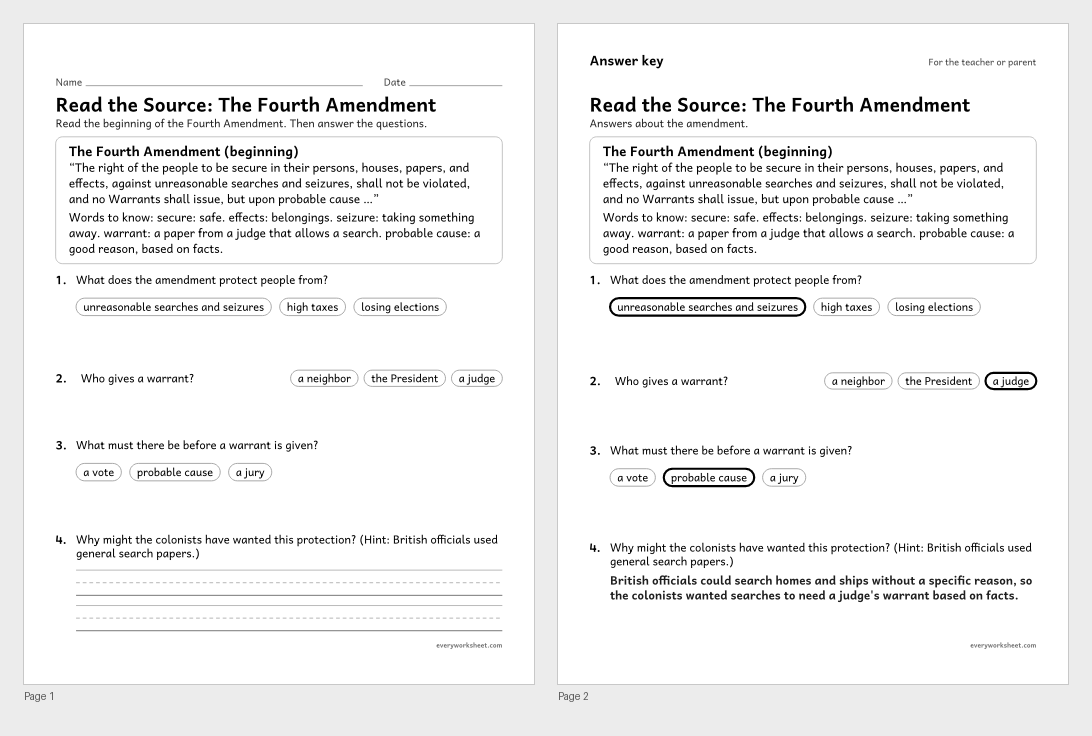
Analyzing the text of the Fourth Amendment
Answer key on page 2
2 pages40 KB
 View all 2 pages
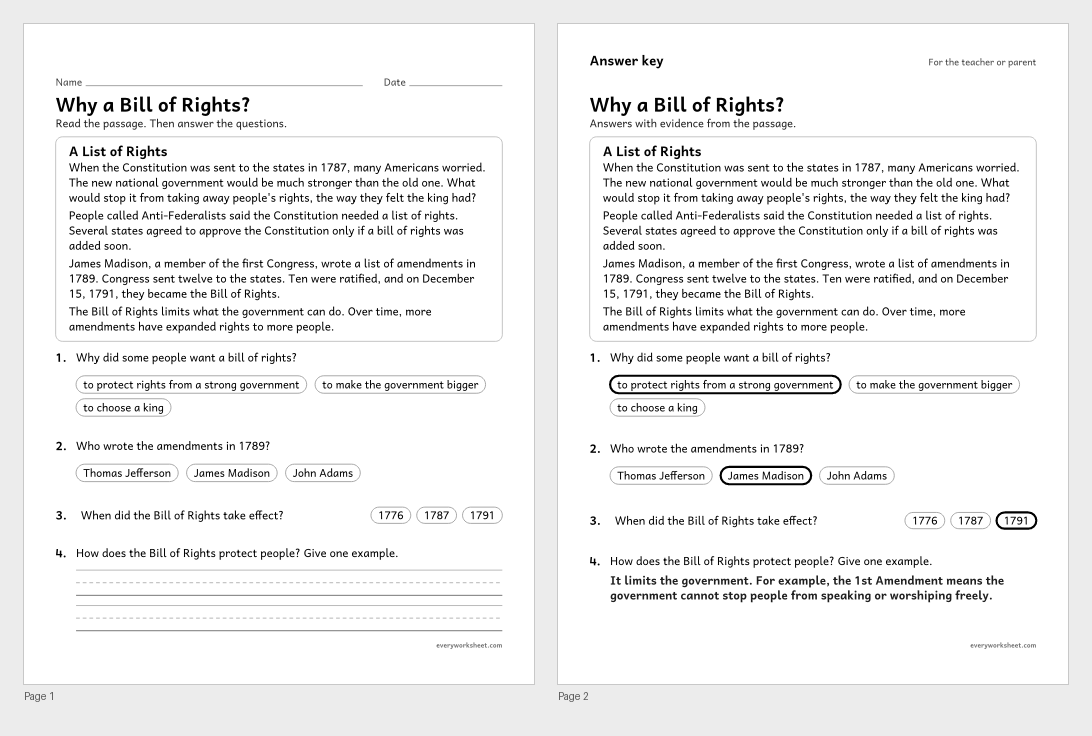
Explaining why the Bill of Rights was added to the Constitution
Answer key on page 2
2 pages41 KB
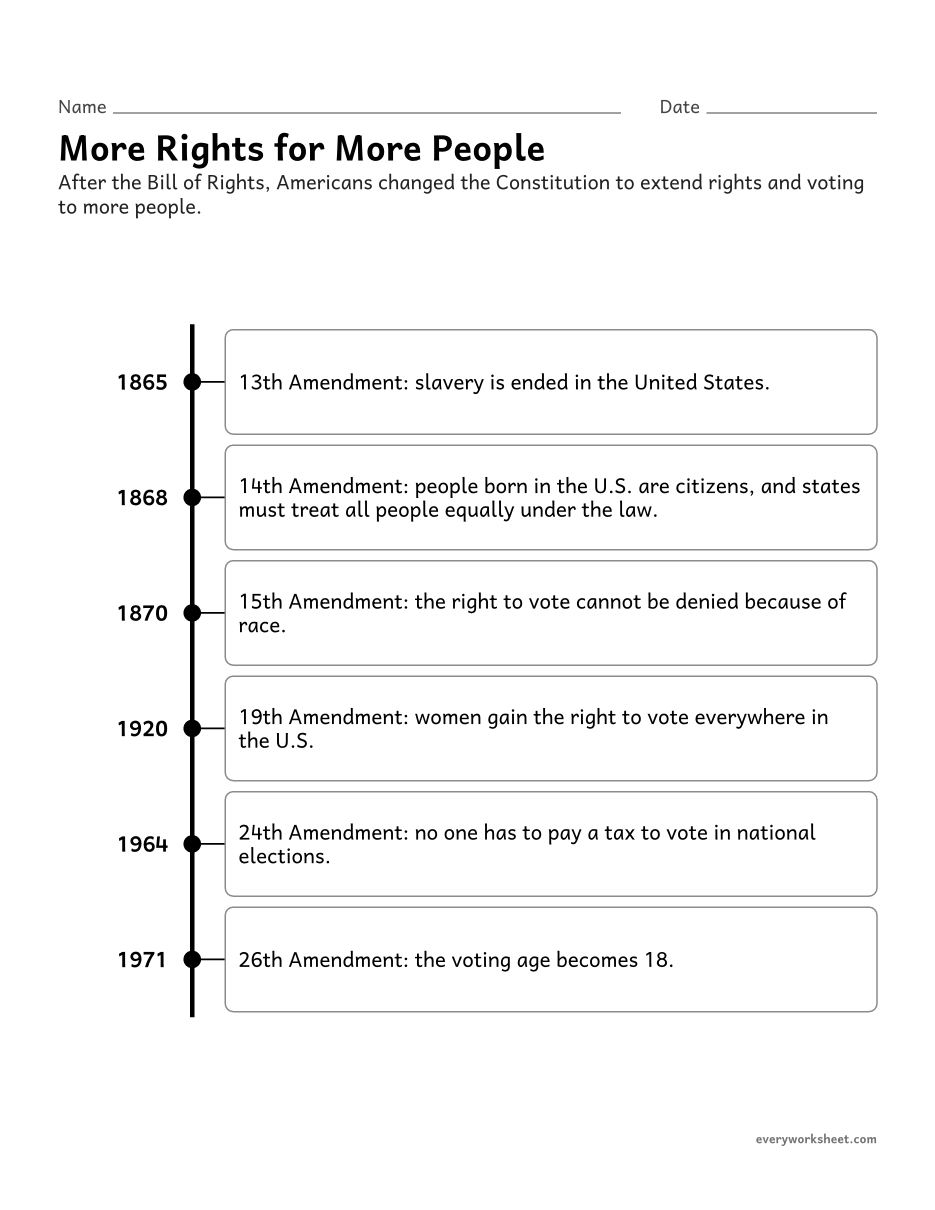 View larger
Describing amendments that expanded rights after the Bill of Rights
1 page28 KB
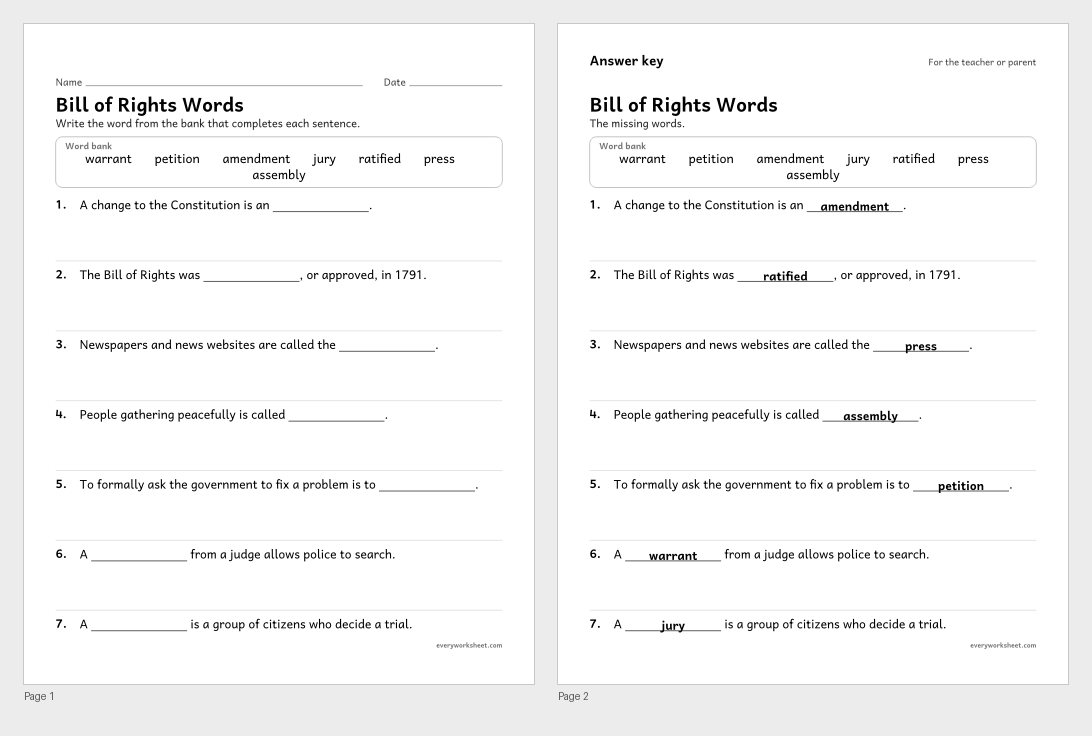 View all 2 pages
Using vocabulary about the Bill of Rights
Answer key on page 2
2 pages39 KB
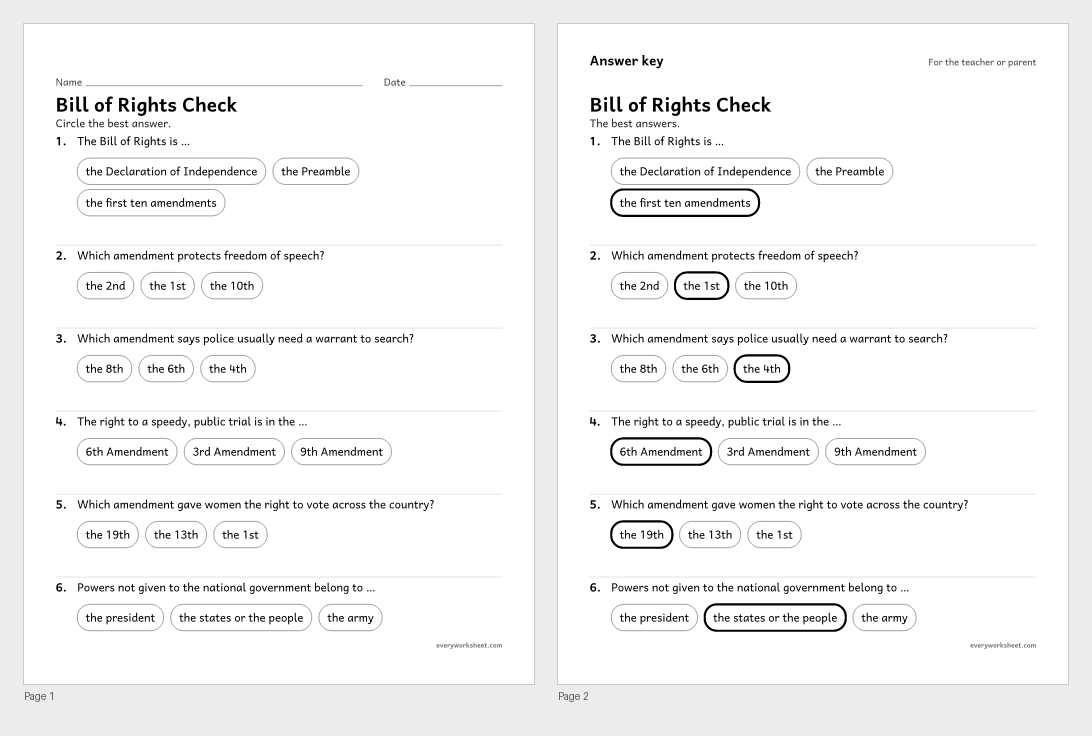 View all 2 pages
Reviewing the Bill of Rights
Answer key on page 2
2 pages40 KB
Print at 100% (actual size) for the cleanest tracing lines.
The Bill of Rights is the first ten amendments to the Constitution, added in 1791 to protect people's rights from the government. It includes freedom of religion, speech, the press, assembly and petition, protection from unreasonable searches, and the right to a fair trial.
These Bill of Rights worksheets include a poster of all ten amendments in plain words, matching pages for amendments 1 to 5 (with a cut and paste version) and 6 to 10, real-life scenarios, the five freedoms of the First Amendment, primary-source pages on the First and Fourth Amendments, a reading on why the Bill of Rights was added, a timeline of later amendments that expanded rights, vocabulary and a quiz.
Every page is black and white, prints on US Letter or A4, and every page with right answers has an answer key on page 2.
C3 D2.Civ.3.3-5Examine the origins and purposes of rules, laws, and key U.S. constitutional provisions.C3 D2.Civ.12.3-5Explain how rules and laws change society and how people change rules and laws.CCSS.ELA-LITERACY.RI.5.4Determine the meaning of general academic and domain-specific words and phrases in a text relevant to a grade 5 topic or subject area.C3 D2.His.10.3-5Compare information provided by different historical sources about the past.1: freedom of religion, speech, press, assembly and petition. 2: the right to keep and bear arms. 3: no housing soldiers in peacetime. 4: no unreasonable searches. 5: rights of the accused. 6: a speedy, public jury trial. 7: jury trials in many money cases. 8: no cruel and unusual punishment. 9: people keep rights not listed. 10: other powers belong to the states or the people.
December 15, 1791. James Madison wrote the amendments in 1789.
Many Americans worried the new, stronger government might take away their rights, so several states approved the Constitution only on the promise that a bill of rights would be added.