 View larger
Comma rules
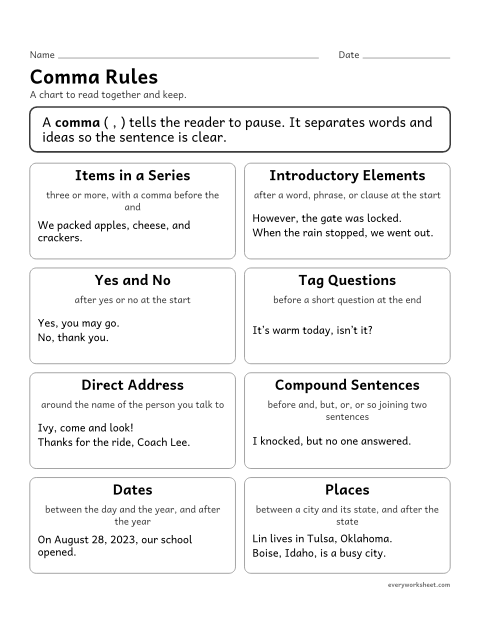
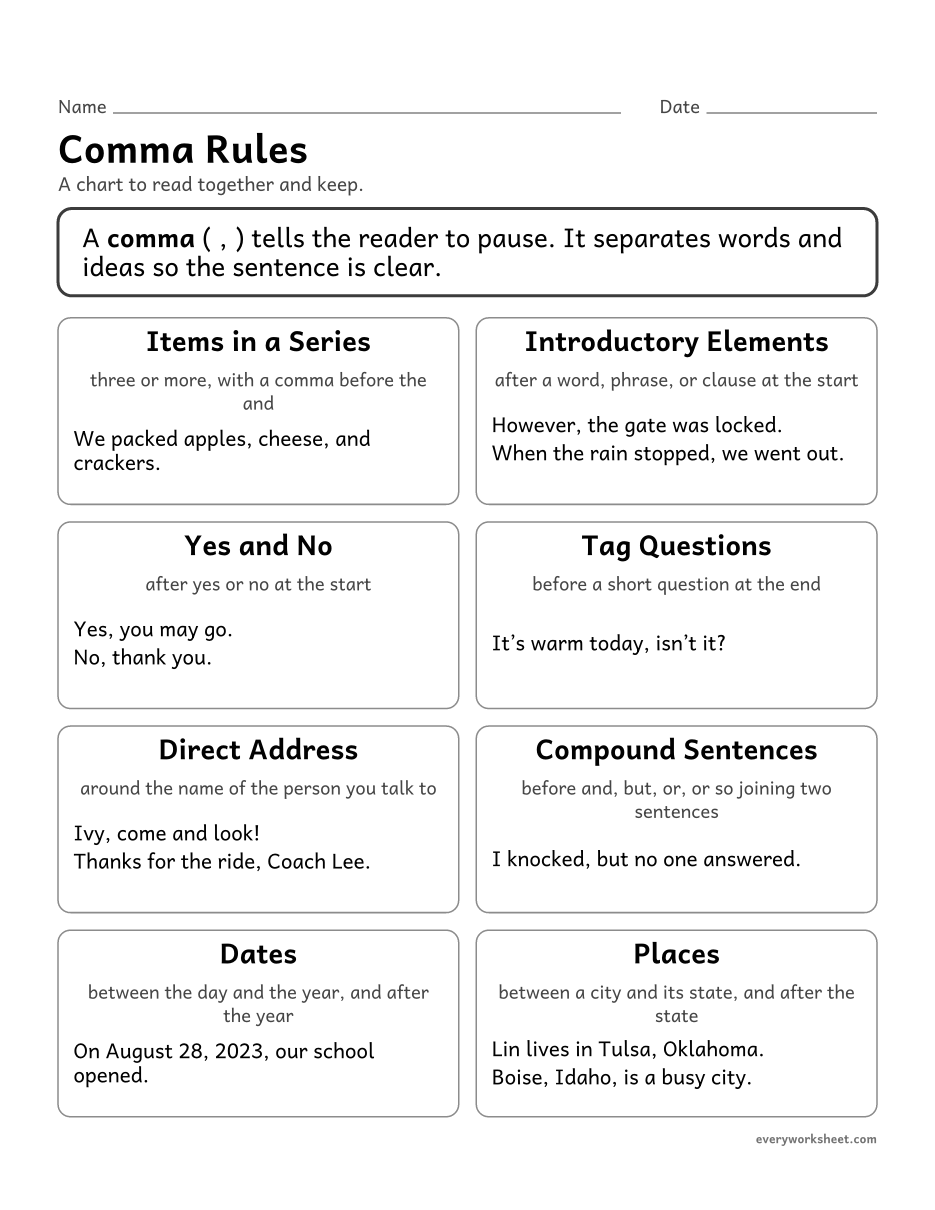
Knowing the main comma rules: series, introductory elements, yes and no, tag questions, direct address, compound sentences, dates, and places
1 page34 KB
The main comma rules with a chart, add-the-comma practice, and proofreading pages, all with keys.
View largerKnowing the main comma rules: series, introductory elements, yes and no, tag questions, direct address, compound sentences, dates, and places
1 page34 KB
 View all 2 pages
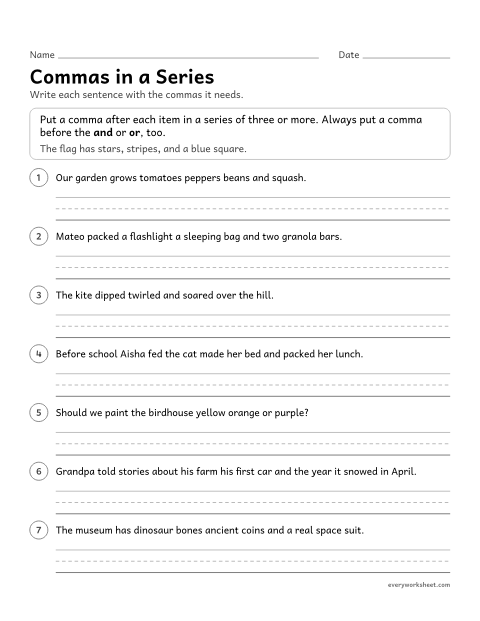
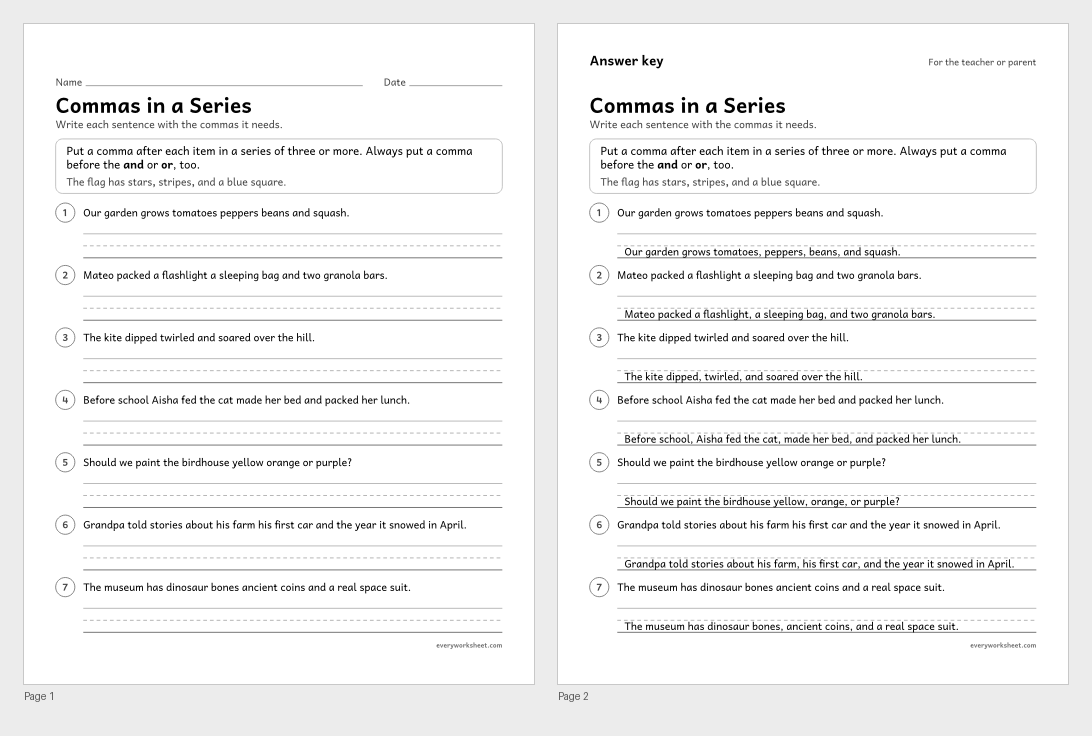
Using commas to separate three or more items in a series
Answer key on page 2
2 pages41 KB
 View all 2 pages
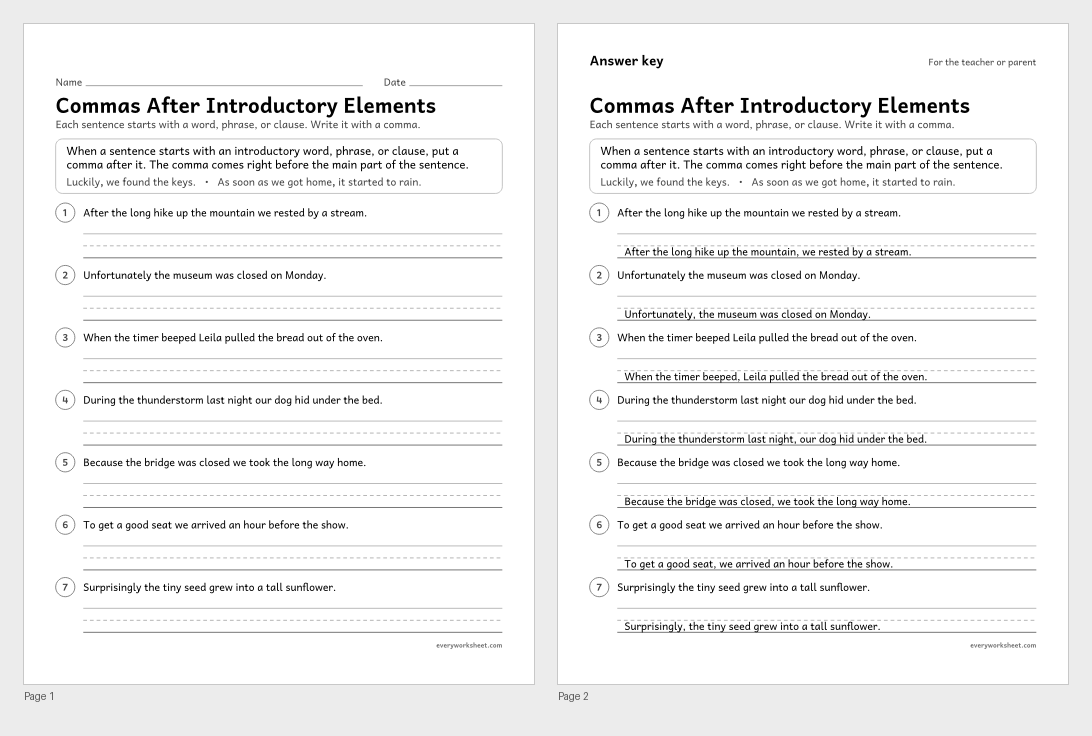
Using a comma to separate an introductory word, phrase, or clause from the rest of the sentence
Answer key on page 2
2 pages41 KB
 View all 2 pages
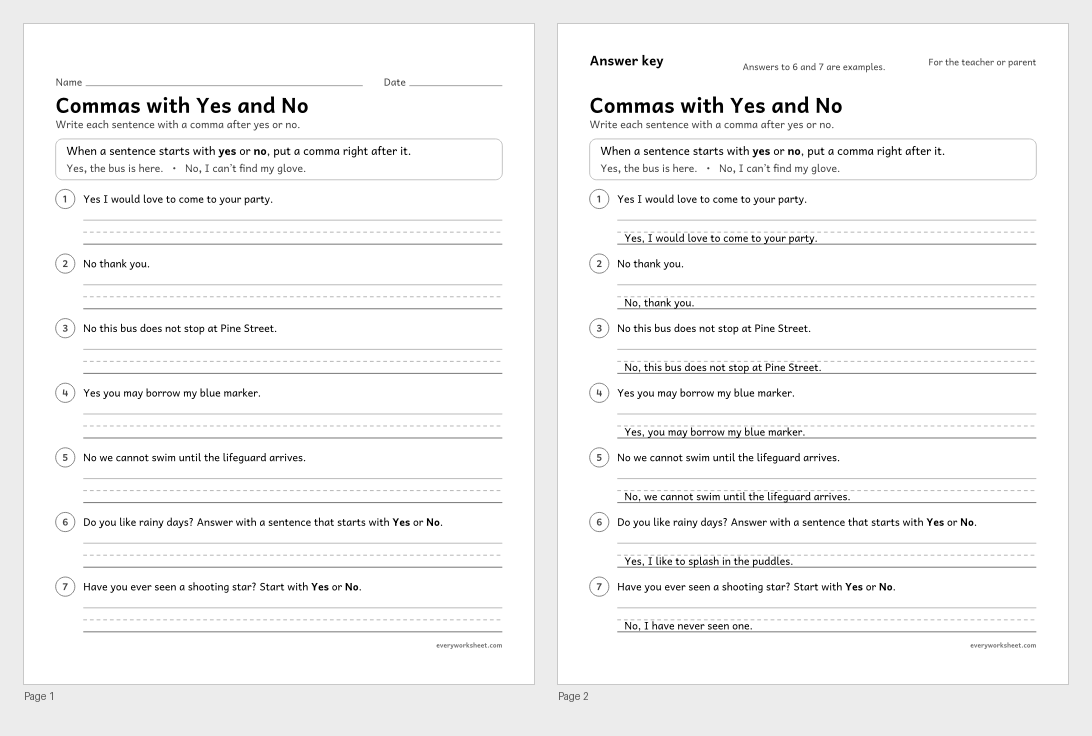
Using a comma to set off the words yes and no
Answer key on page 2
2 pages43 KB
 View all 2 pages
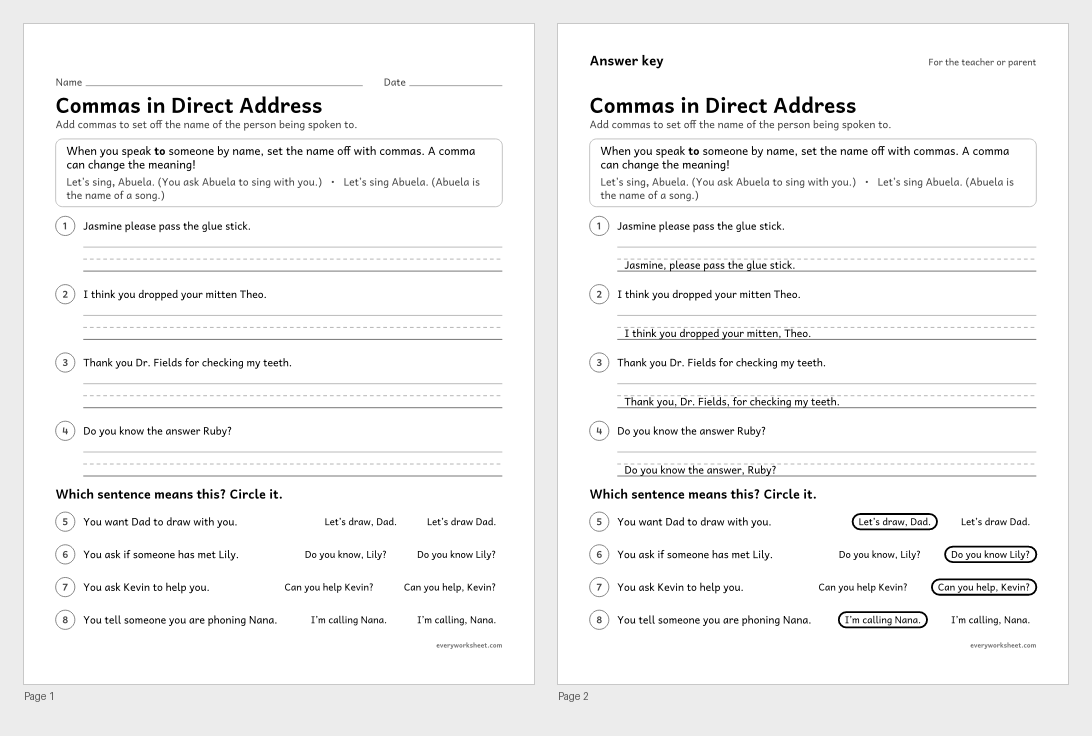
Using commas to indicate direct address
Answer key on page 2
2 pages46 KB
 View all 2 pages
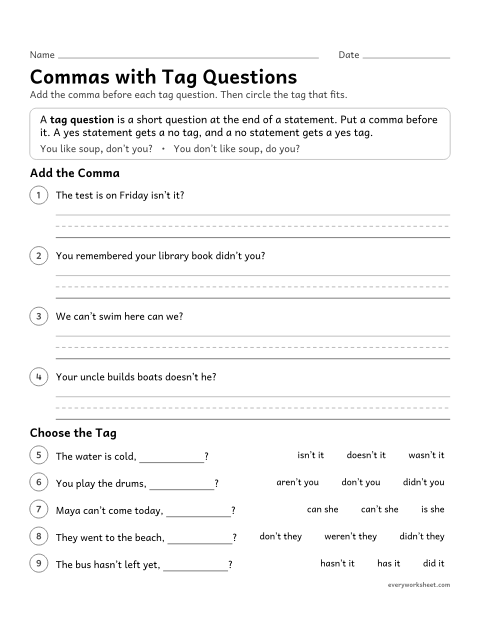
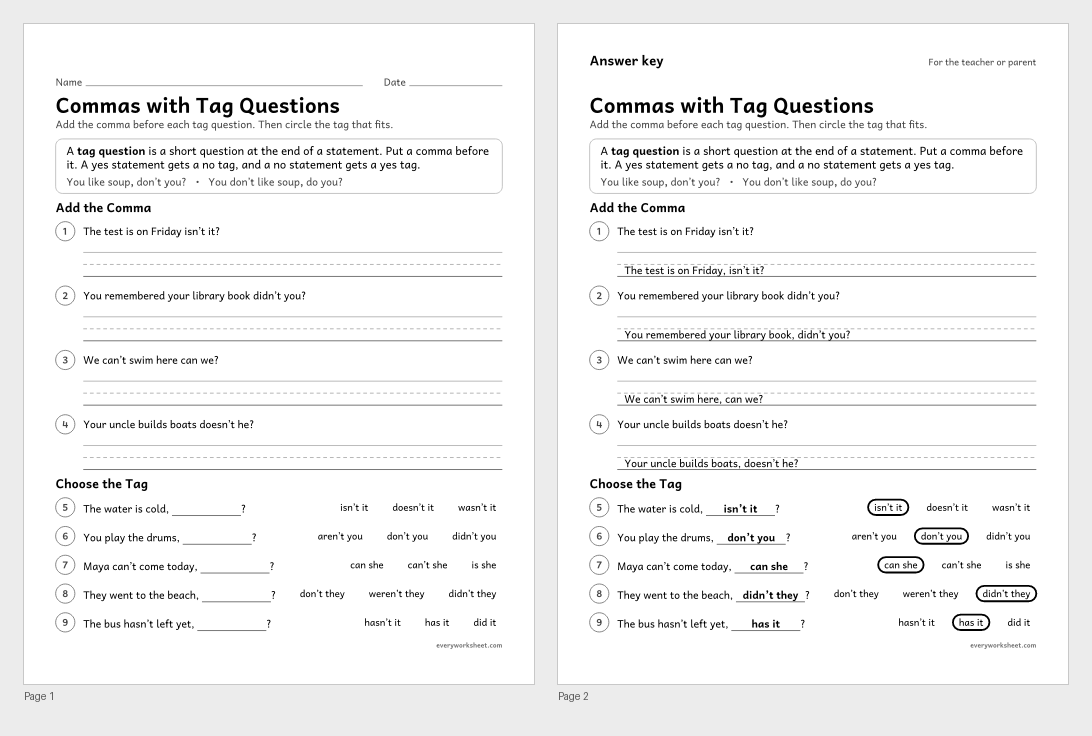
Using a comma to set off a tag question from the rest of the sentence
Answer key on page 2
2 pages48 KB
 View all 2 pages
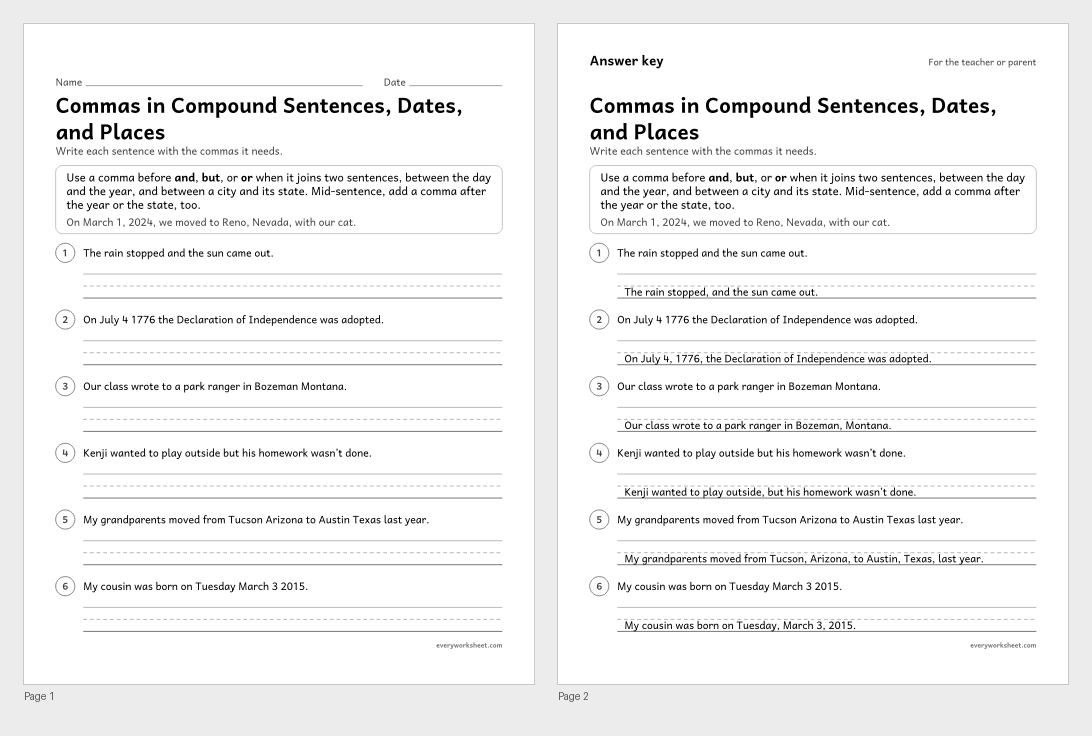
Using commas in compound sentences, dates, and place names
Answer key on page 2
2 pages42 KB
 View all 2 pages
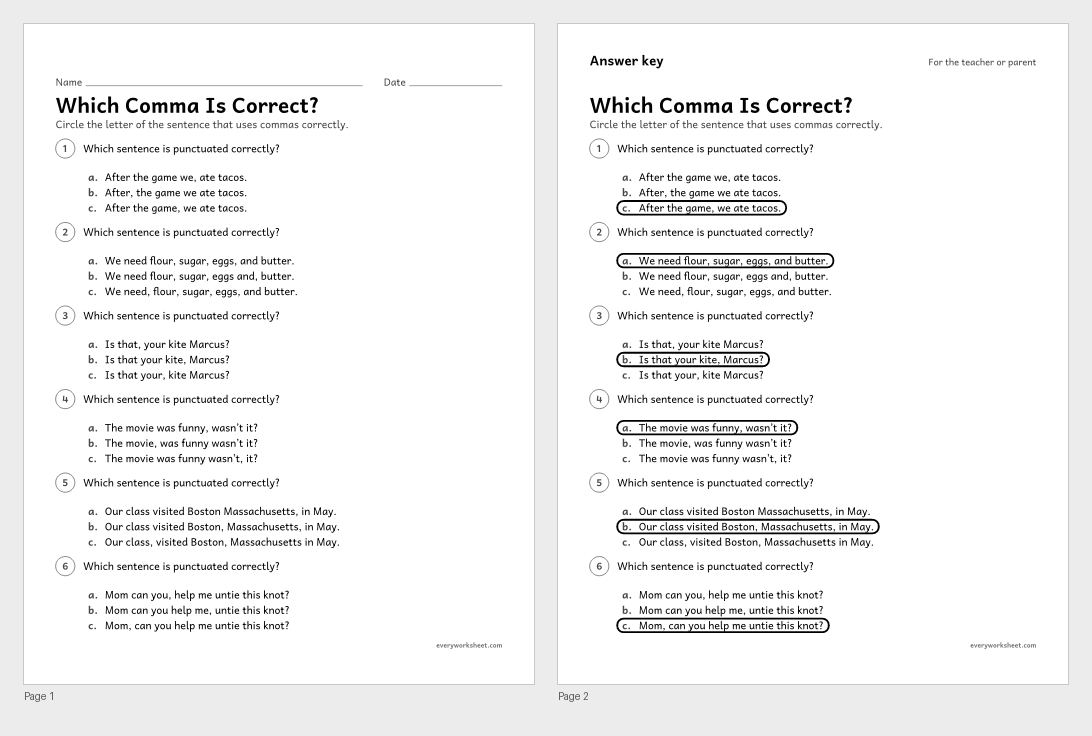
Choosing the sentence with correct comma use (mixed comma rules)
Answer key on page 2
2 pages56 KB
 View all 2 pages
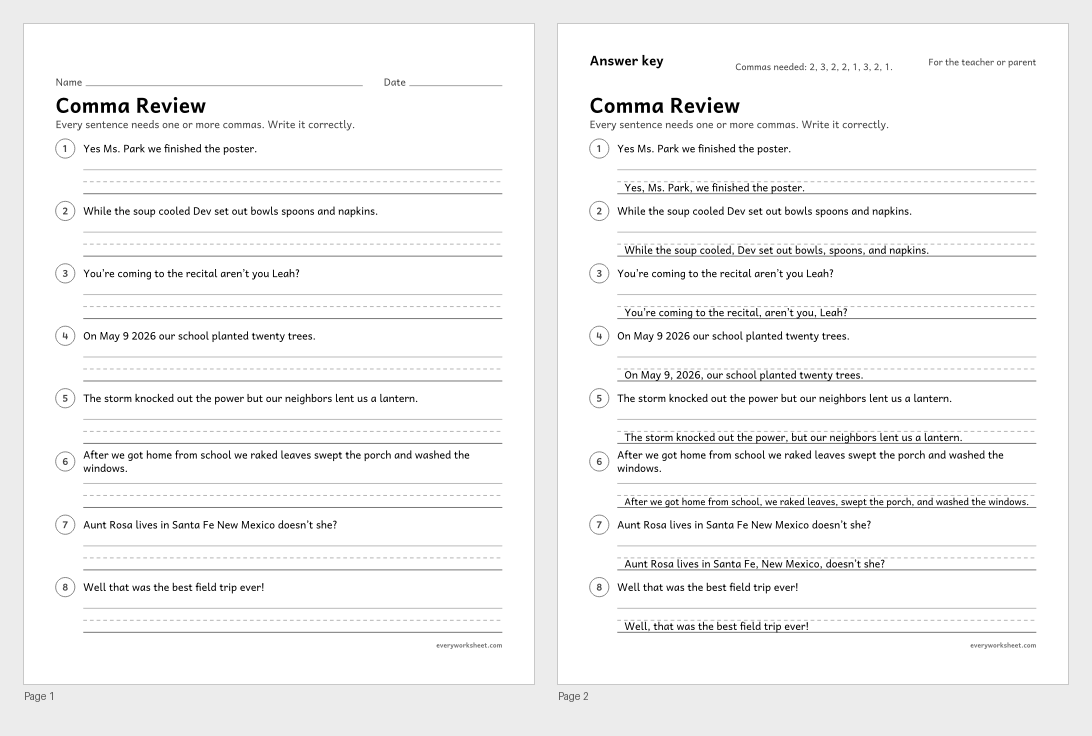
Using commas for series, introductory elements, yes and no, tag questions, direct address, compound sentences, dates, and places
Answer key on page 2
2 pages41 KB
 View all 2 pages
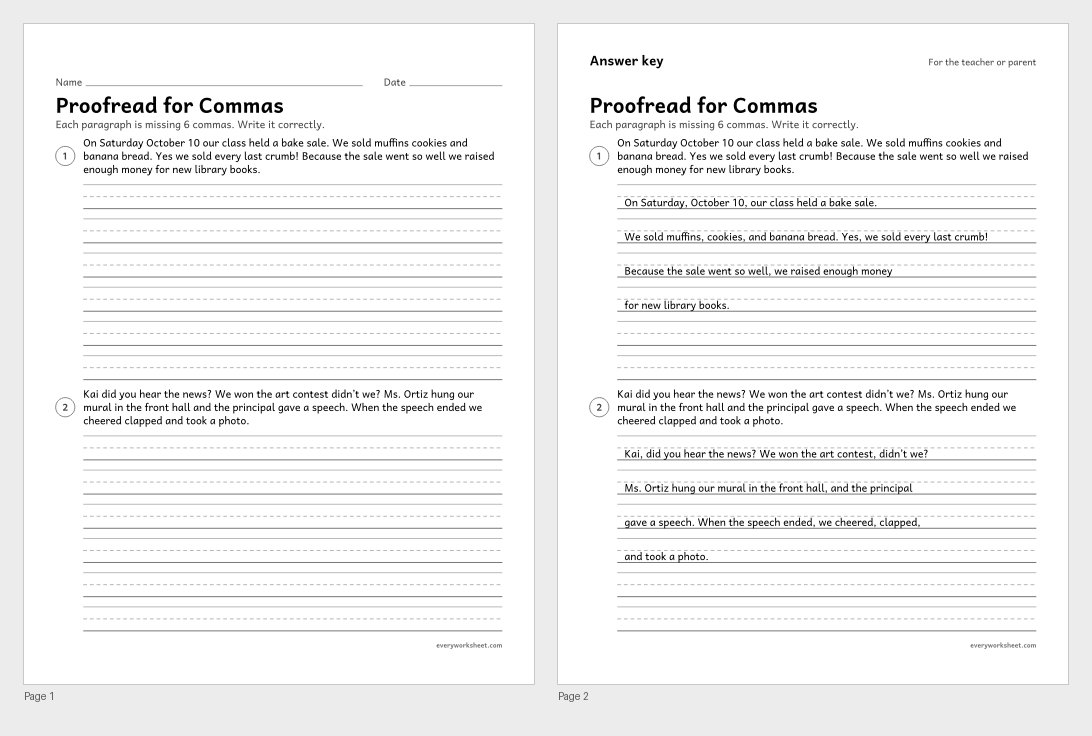
Editing a paragraph for commas (mixed comma rules)
Answer key on page 2
2 pages33 KB
Print at 100% (actual size) for the cleanest tracing lines.
A comma tells the reader to pause, and it keeps words and ideas from running together. Most commas follow a handful of rules. Use commas between three or more items in a series, with one before the and: "We packed apples, cheese, and crackers." Put a comma after an introductory word, phrase, or clause: "However, the gate was locked." "When the rain stopped, we went outside."
Commas also set off words that are not part of the main sentence. Put a comma after yes or no at the start ("Yes, you may go"), before a tag question at the end ("It's warm today, isn't it?"), and around the name of someone you are speaking to ("Ivy, come and look!"). A comma in direct address can change the meaning: "Let's draw, Dad" asks Dad to draw with you, while "Let's draw Dad" means you will draw a picture of him.
A few more rules round out the list: a comma before and, but, or, or so when it joins two sentences ("I knocked, but no one answered"), between the day and the year in a date ("August 28, 2023"), and between a city and its state ("Tulsa, Oklahoma").
These printable worksheets begin with a comma rules chart, then give practice for each rule with sentences shown without their commas. Review pages ask children to pick the correctly punctuated sentence, add commas for mixed rules, and proofread paragraphs. Every practice page has an answer key.
CCSS.ELA-LITERACY.L.5.2Demonstrate command of the conventions of standard English capitalization, punctuation, and spelling when writing.CCSS.ELA-LITERACY.L.5.2.AUse punctuation to separate items in a series.CCSS.ELA-LITERACY.L.5.2.BUse a comma to separate an introductory element from the rest of the sentence.CCSS.ELA-LITERACY.L.5.2.CUse a comma to set off the words yes and no (e.g., Yes, thank you), to set off a tag question from the rest of the sentence (e.g., It's true, isn't it?), and to indicate direct address (e.g., Is that you, Steve?).Use commas between items in a series, after an introductory word, phrase, or clause, after yes and no, before a tag question, around a name in direct address, before a conjunction that joins two sentences, in dates, and between a city and a state.
Direct address is speaking to someone by name, as in "Ruby, please sit down" or "Thank you, Dr. Fields, for your help." The name is set off with commas.
A short question added to the end of a statement, such as "isn't it?" or "can we?" A comma goes before it: "The test is on Friday, isn't it?"
Commas in a series, after introductory elements, with yes and no, with tag questions, and in direct address are 5th grade skills. Younger children can start with the chart and the series page.
Yes. Every practice page has a key.