 View larger
Comparing fractions chart
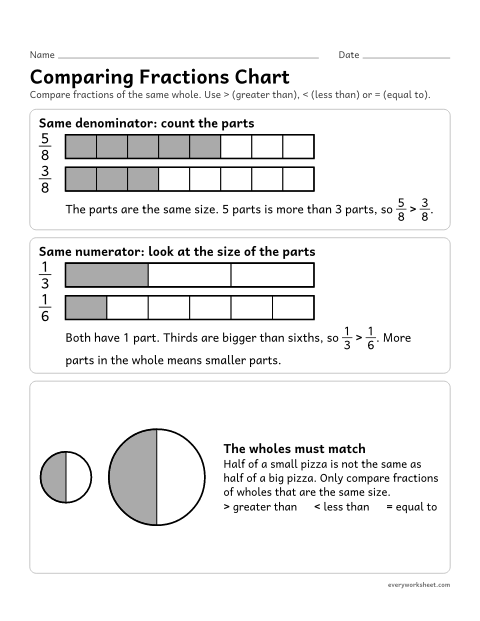
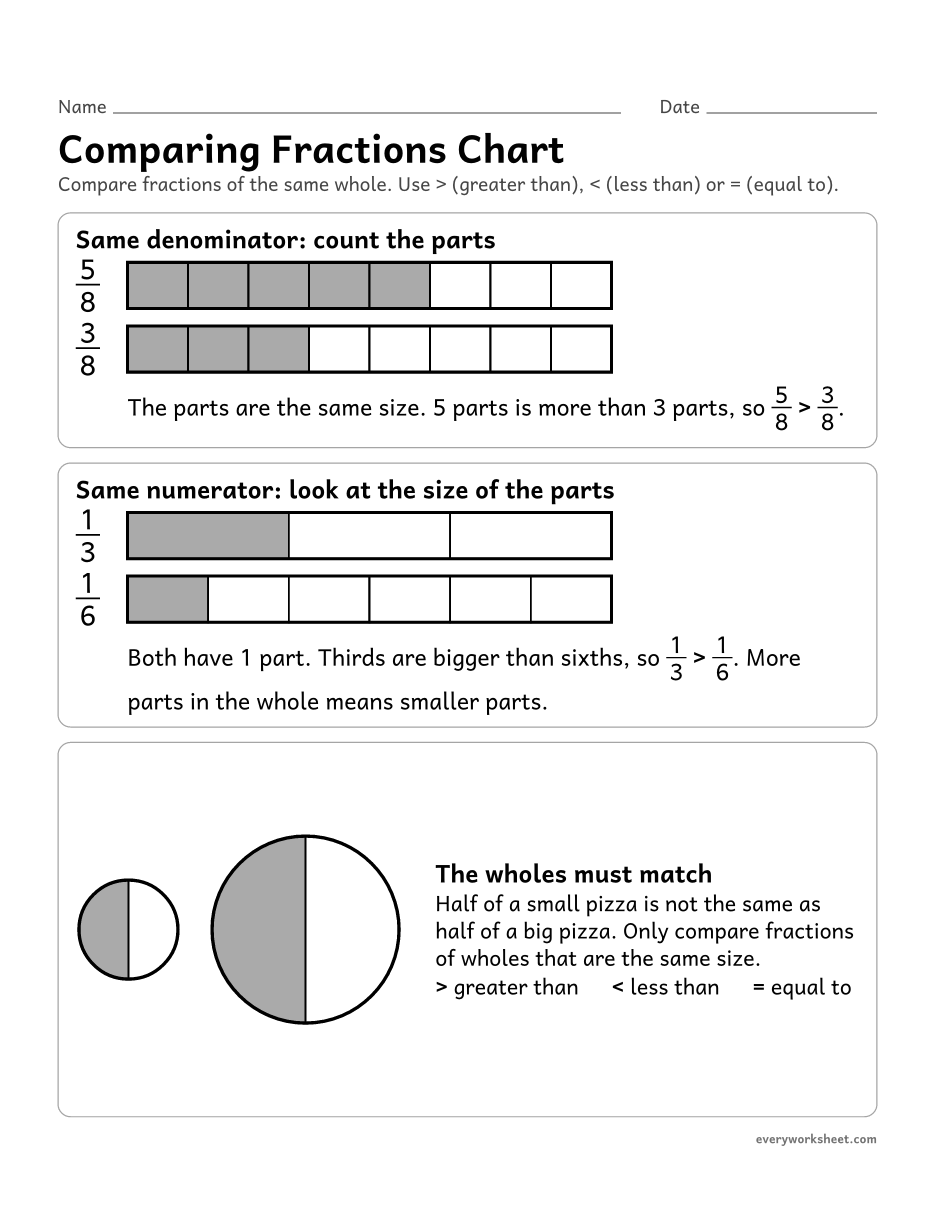
Two ways to compare: the same denominator and the same numerator, and why the wholes must match
1 page34 KB
Compare fractions with the same denominator or the same numerator, on a number line, in order and in word problems, using >, < and =. With answer keys.
View largerTwo ways to compare: the same denominator and the same numerator, and why the wholes must match
1 page34 KB
 View all 2 pages
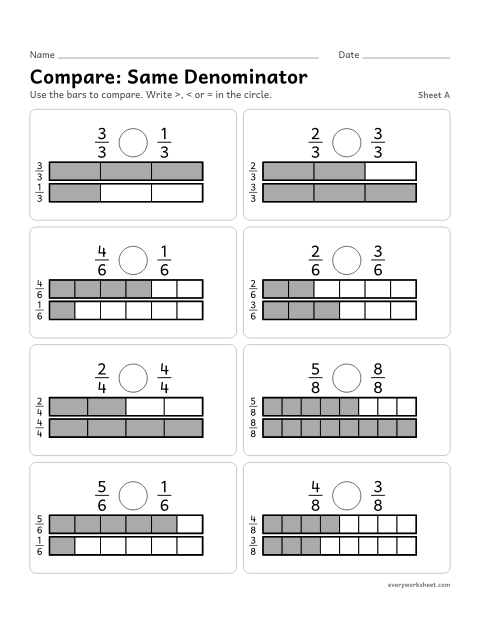
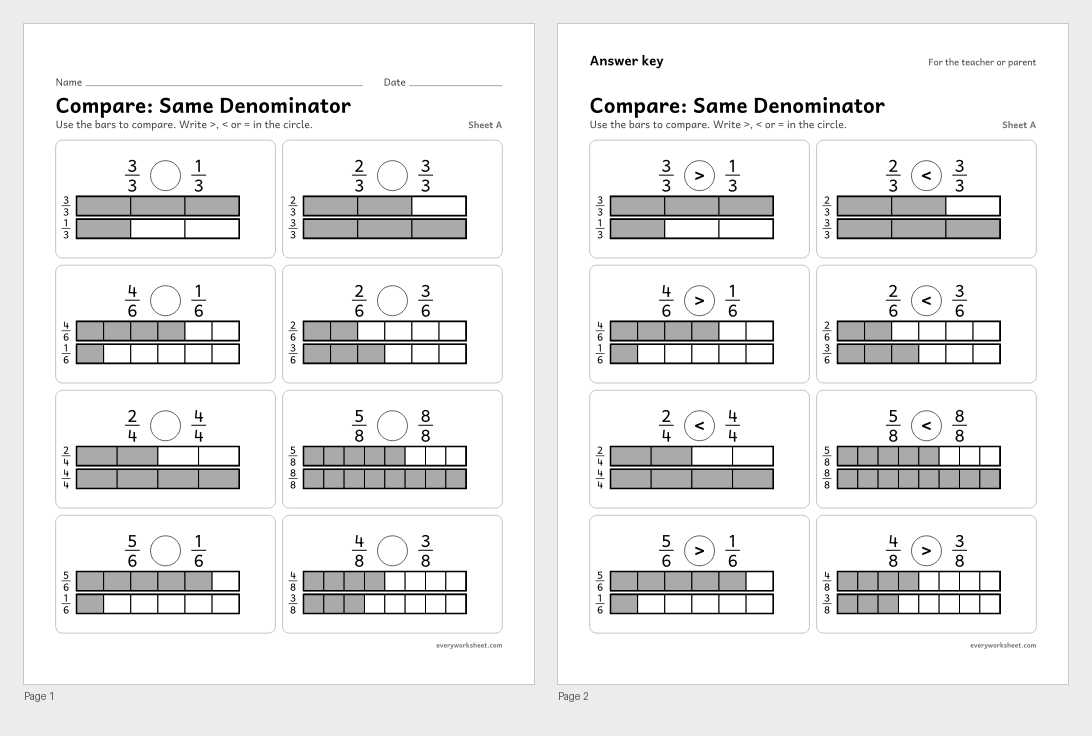
Comparing fractions with the same denominator using bar models and >, < or =
Answer key on page 2
2 pages46 KB
 View all 2 pages
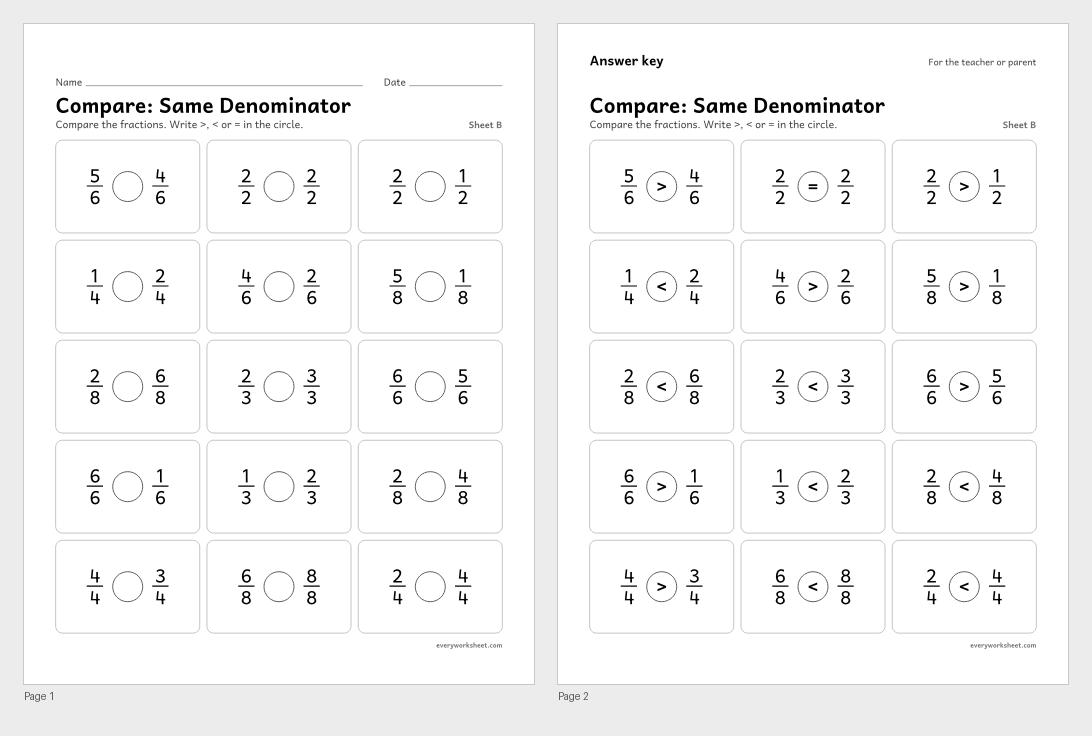
Comparing fractions with the same denominator by reasoning about the number of parts
Answer key on page 2
2 pages37 KB
 View all 2 pages
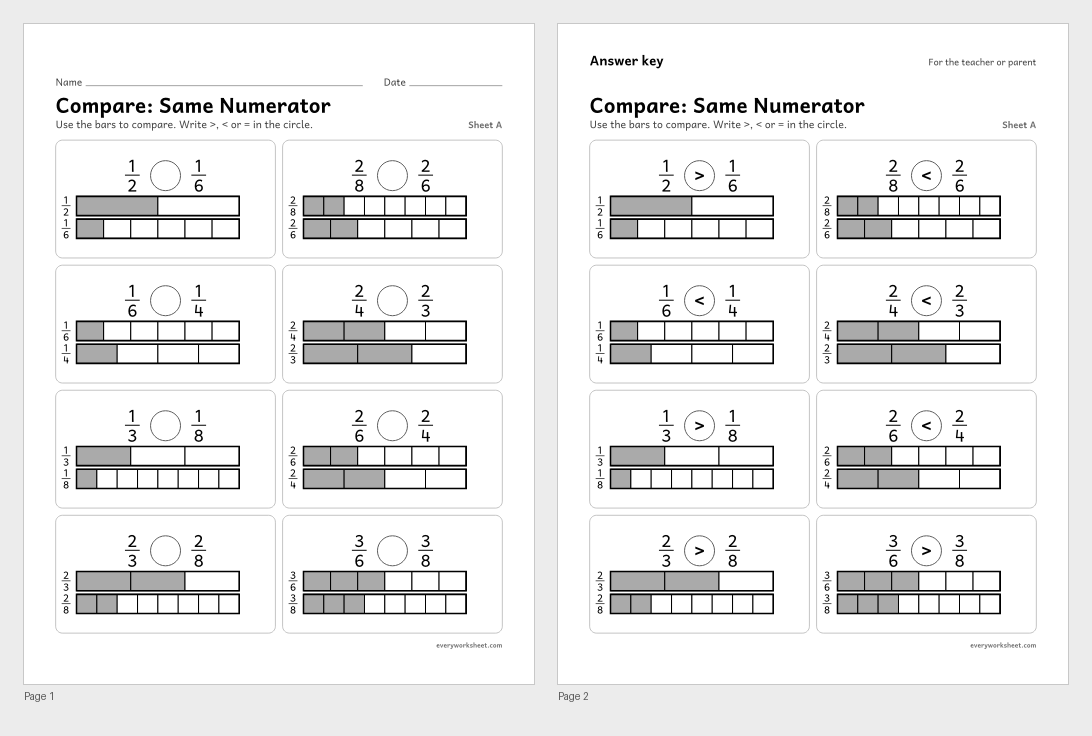
Comparing fractions with the same numerator using bar models: more parts means smaller parts
Answer key on page 2
2 pages46 KB
 View all 2 pages
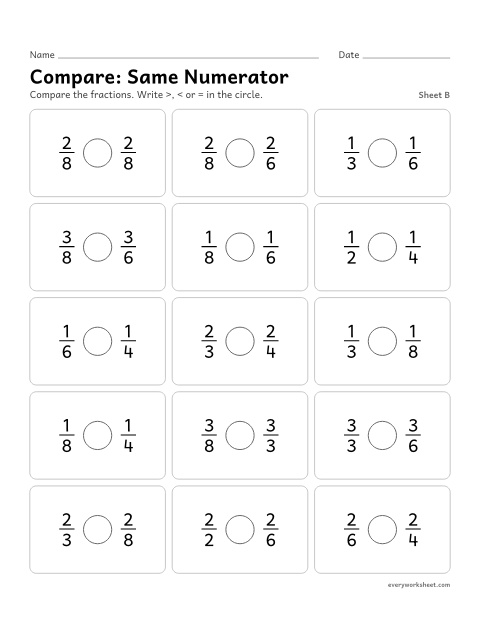
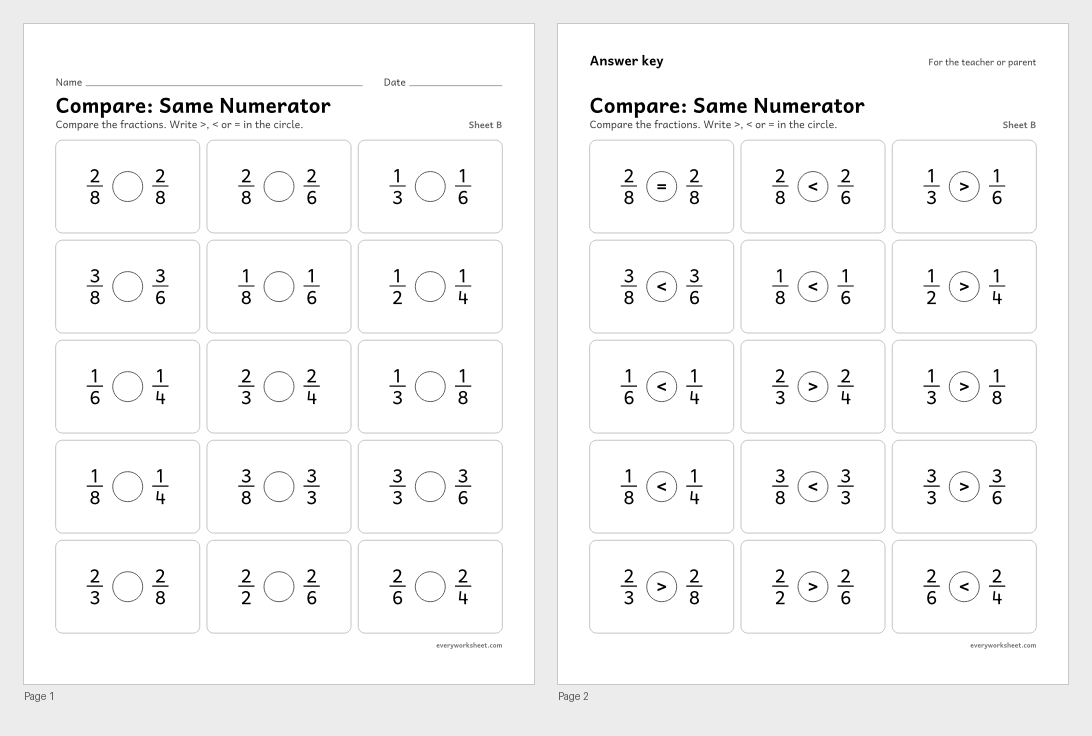
Comparing fractions with the same numerator by reasoning about the size of the parts
Answer key on page 2
2 pages37 KB
 View all 2 pages
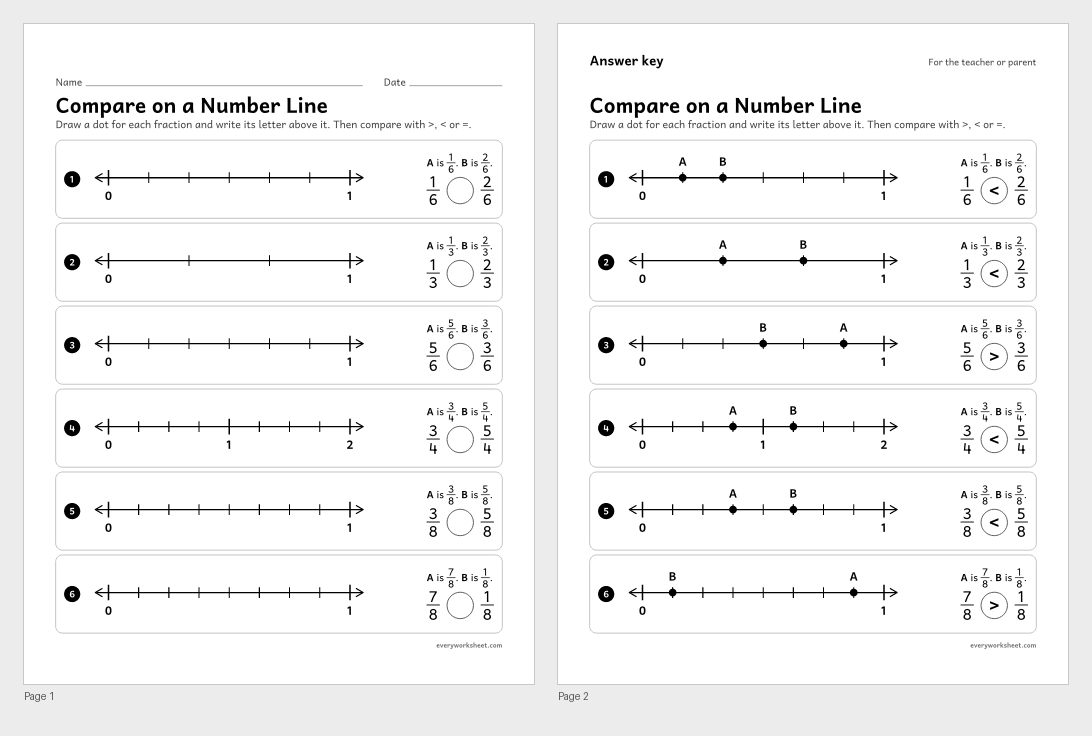
Marking two fractions on a number line and comparing them: the one farther right is greater
Answer key on page 2
2 pages48 KB
 View all 2 pages
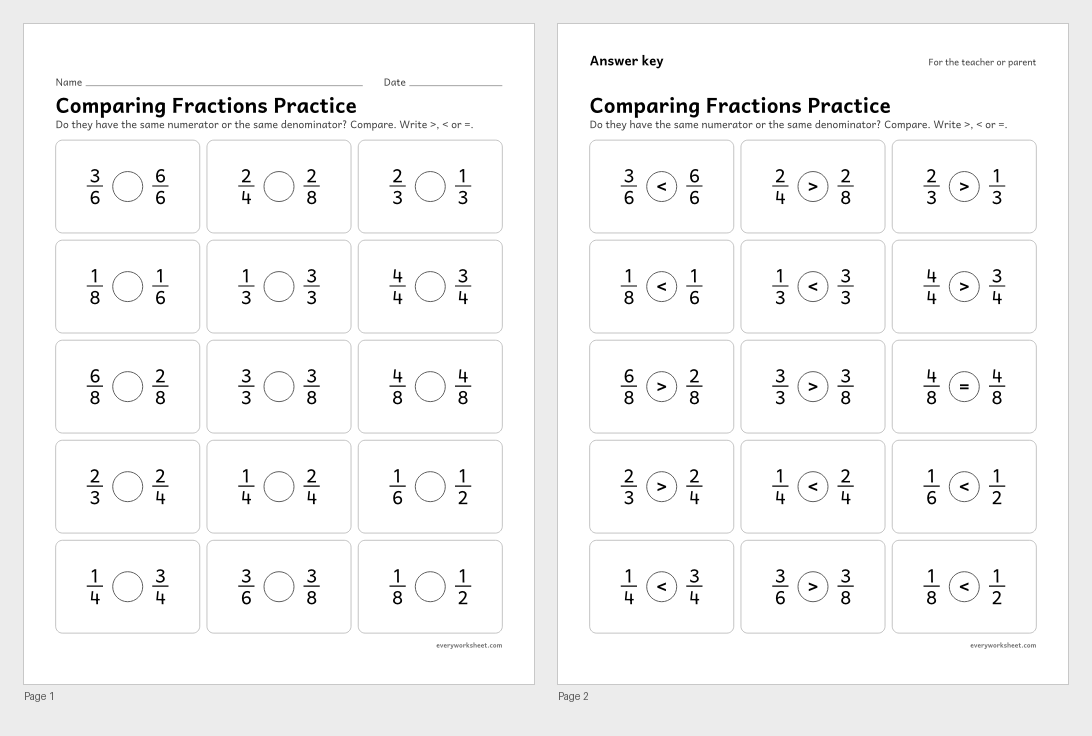
Deciding whether two fractions share a numerator or a denominator, then comparing with >, < or =
Answer key on page 2
2 pages37 KB
 View all 2 pages
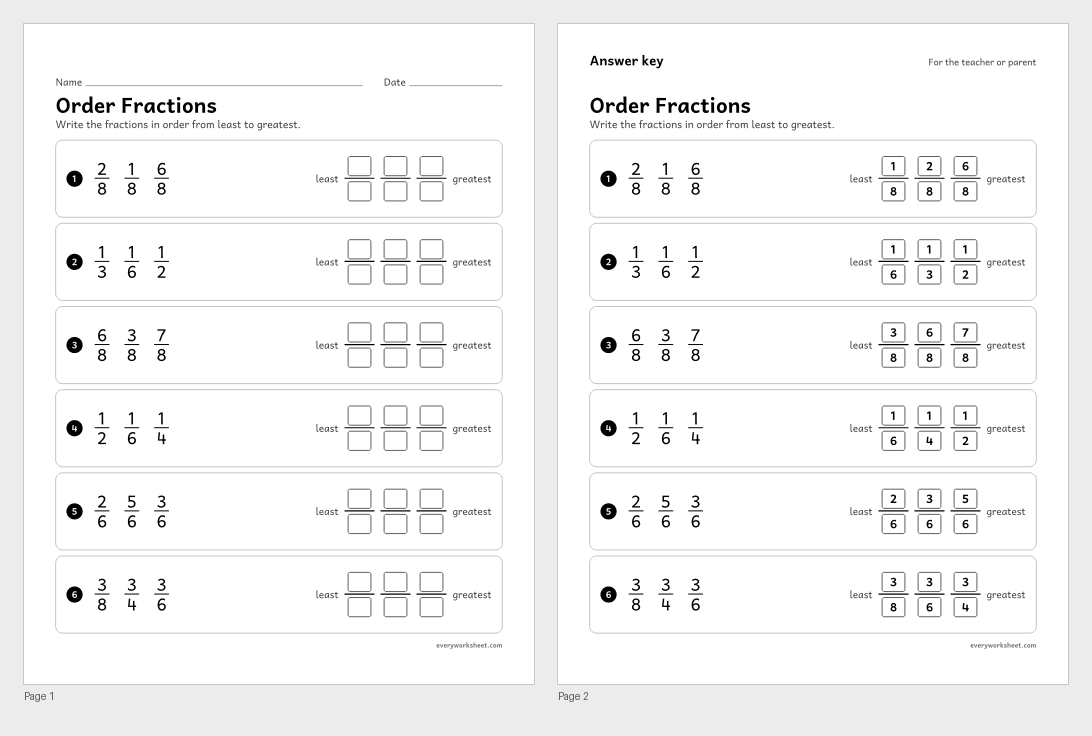
Ordering three fractions with the same numerator or the same denominator from least to greatest
Answer key on page 2
2 pages40 KB
 View all 2 pages
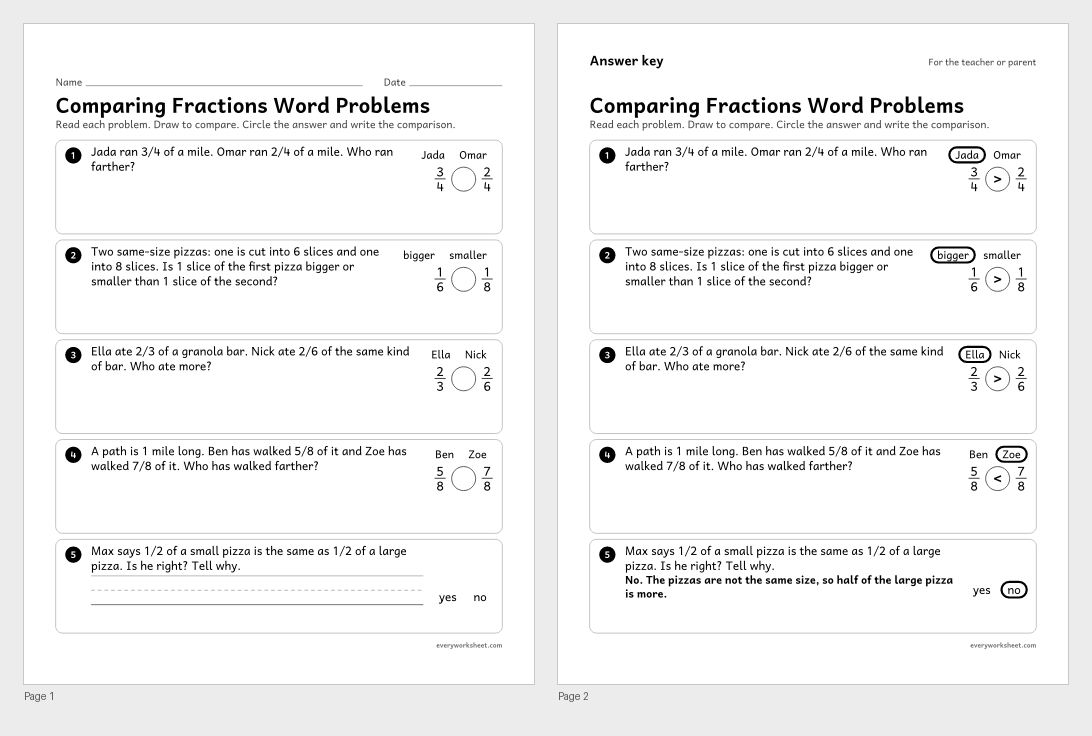
Comparing fractions in word problems and seeing that the wholes must be the same size
Answer key on page 2
2 pages42 KB
Print at 100% (actual size) for the cleanest tracing lines.
Third graders compare two fractions when they have the same denominator or the same numerator. With the same denominator the parts are the same size, so more parts means a bigger fraction: 5/8 > 3/8. With the same numerator there are the same number of parts, so the bigger parts win: 1/3 > 1/6.
These worksheets teach both ideas with a chart and bar models, then take the models away. Children also compare on a number line, put three fractions in order, and solve word problems, including one about why half of a small pizza is not the same as half of a big one.
Sheets with bar models draw both fractions on bars of exactly the same length, so the comparison is fair. Every practice page has an answer key on page 2.
CCSS.MATH.CONTENT.3.NF.A.3.DCompare two fractions with the same numerator or the same denominator by reasoning about their size. Recognize that comparisons are valid only when the two fractions refer to the same whole. Record the results of comparisons with the symbols >, =, or <, and justify the conclusions, e.g., by using a visual fraction model.The parts are the same size, so compare the numerators. The fraction with more parts is greater: 5/6 > 2/6.
There are the same number of parts, so compare the size of the parts. The smaller denominator means bigger parts, so 2/3 > 2/8.
Half of a small pizza is less pizza than half of a big pizza. Comparing fractions only works when both fractions are parts of the same size whole.