 View larger
Fractions chart
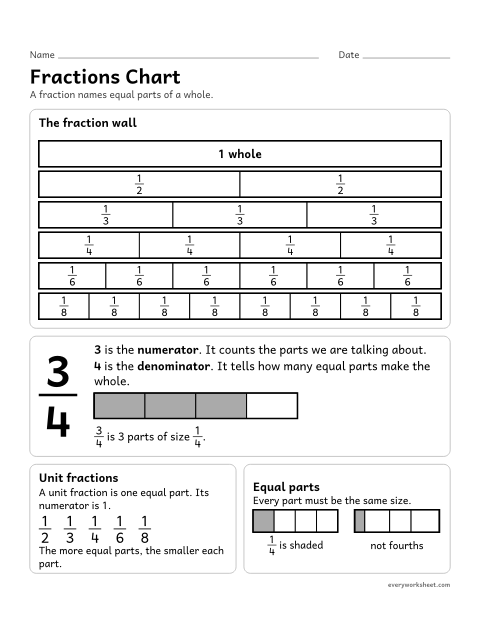
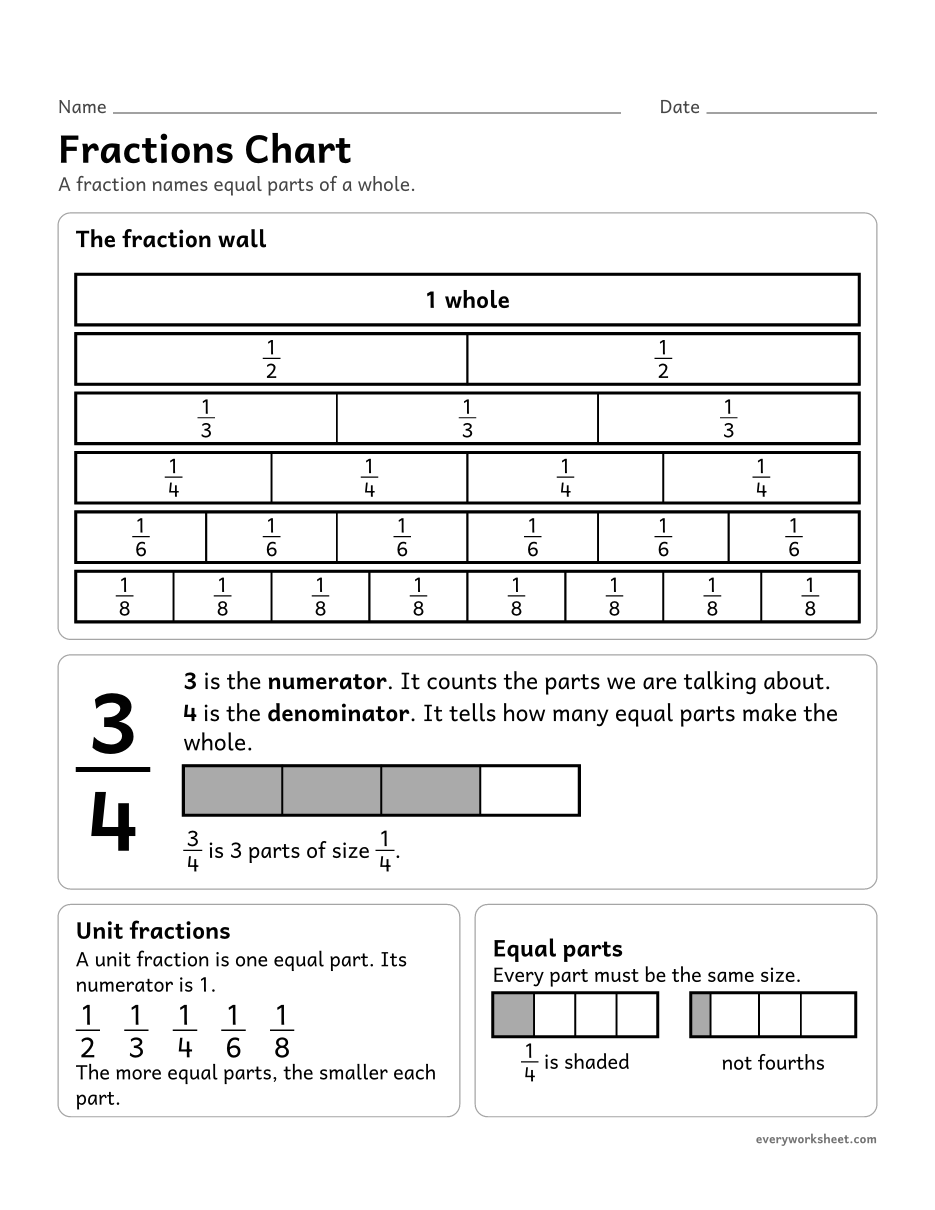
Unit fractions, numerator and denominator, and how fractions name parts of a whole
1 page32 KB
Fraction charts and strips, naming and coloring fractions, unit fractions, equal parts and equal areas, and fraction word problems. Every practice page has a key.
View largerUnit fractions, numerator and denominator, and how fractions name parts of a whole
1 page32 KB
 View larger
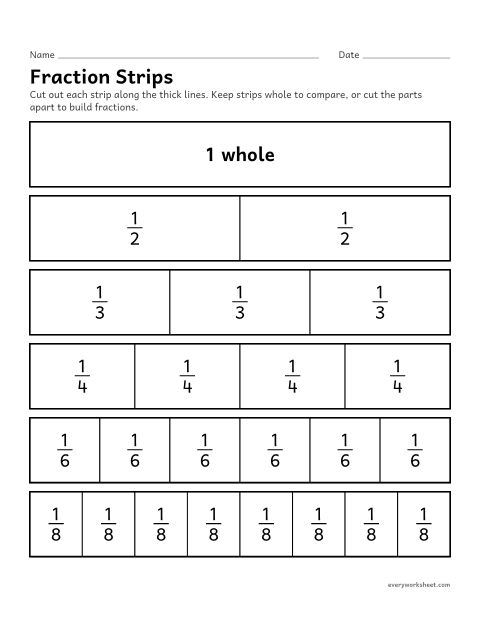
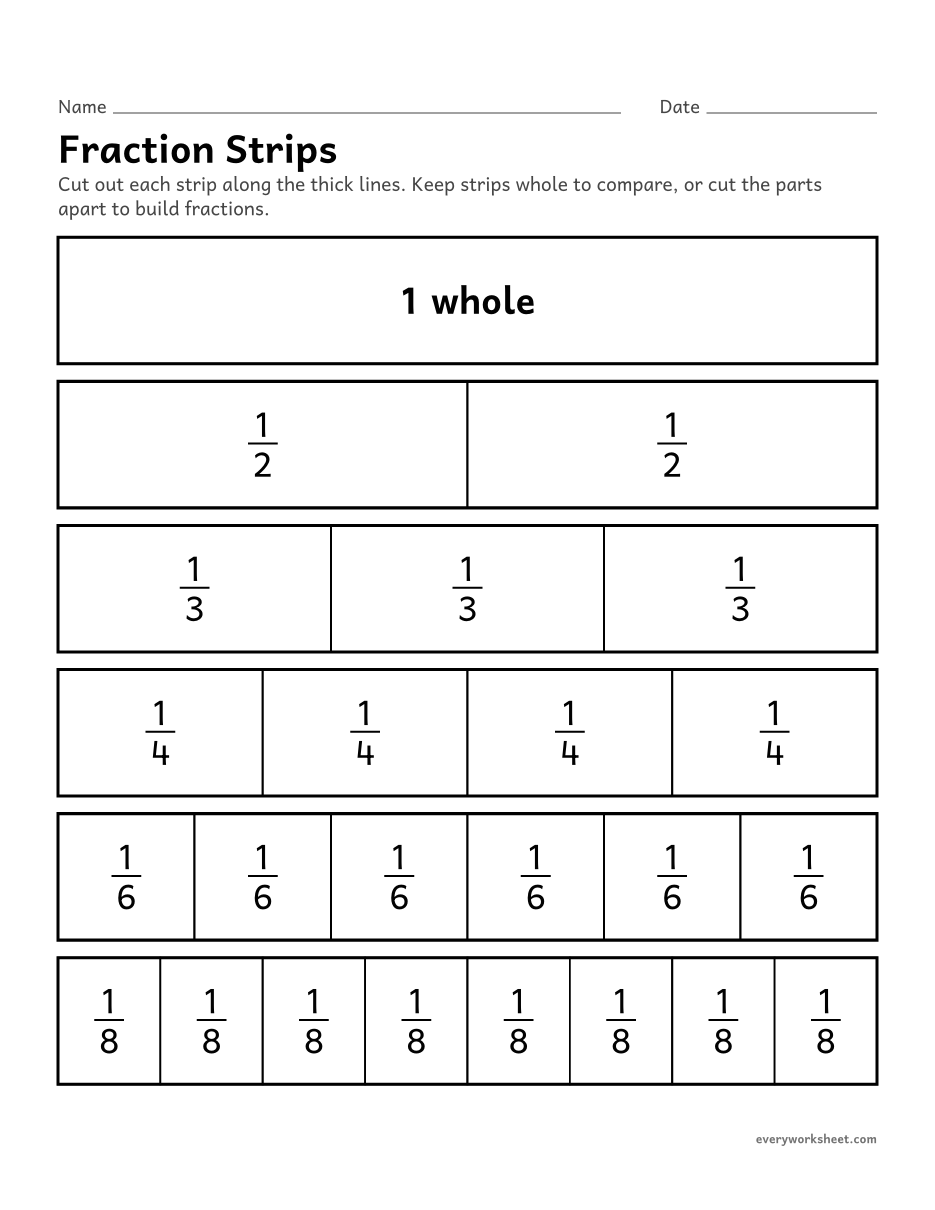
Cutting out fraction strips for halves, thirds, fourths, sixths and eighths to compare and build fractions
1 page26 KB
 View all 2 pages
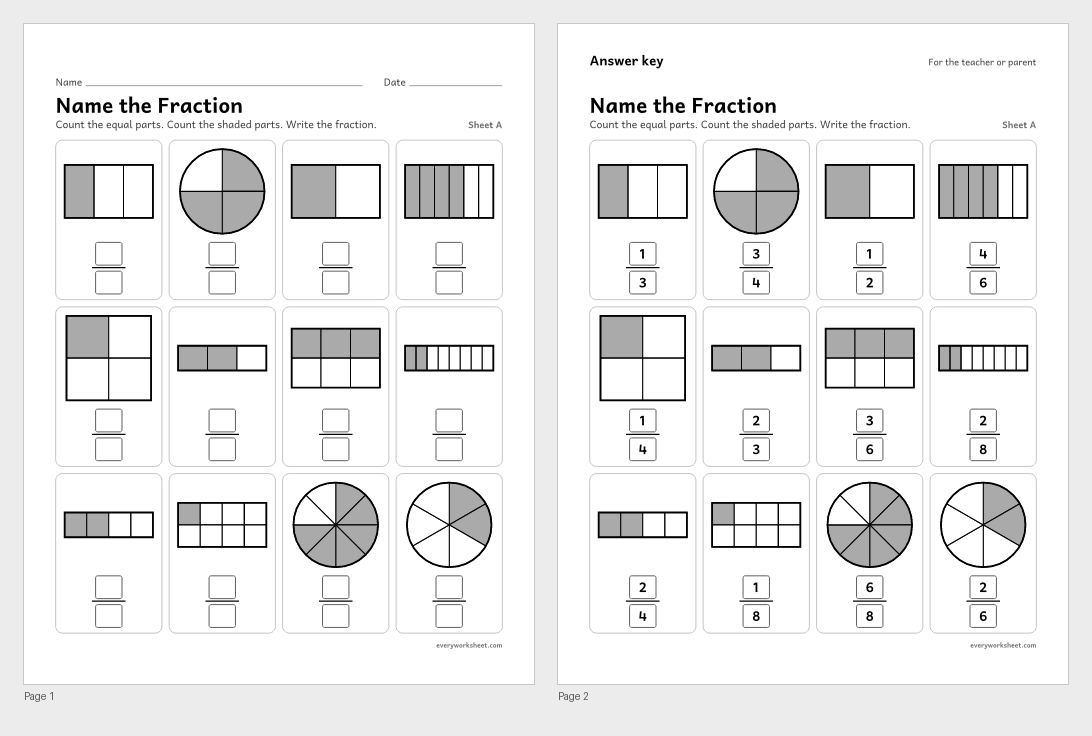
Writing the fraction shaded in bars, rectangles, grids and circles
Answer key on page 2
2 pages34 KB
 View all 2 pages
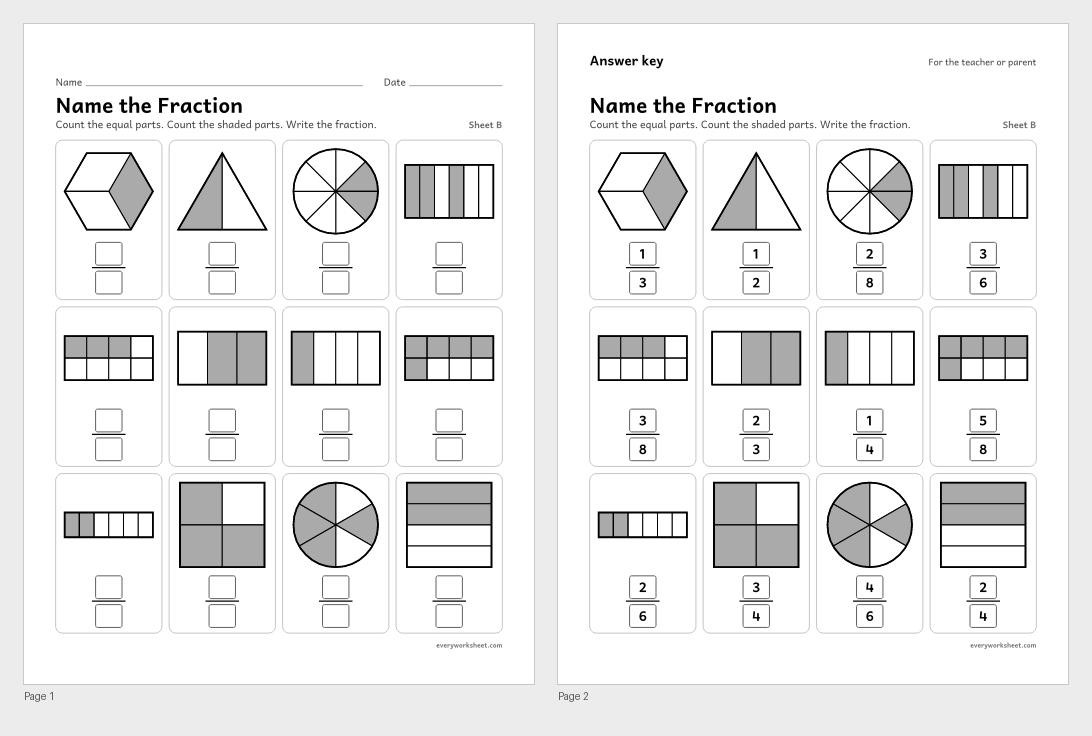
Writing the fraction shaded in hexagons, triangles, grids and circles with scattered parts
Answer key on page 2
2 pages35 KB
 View all 2 pages
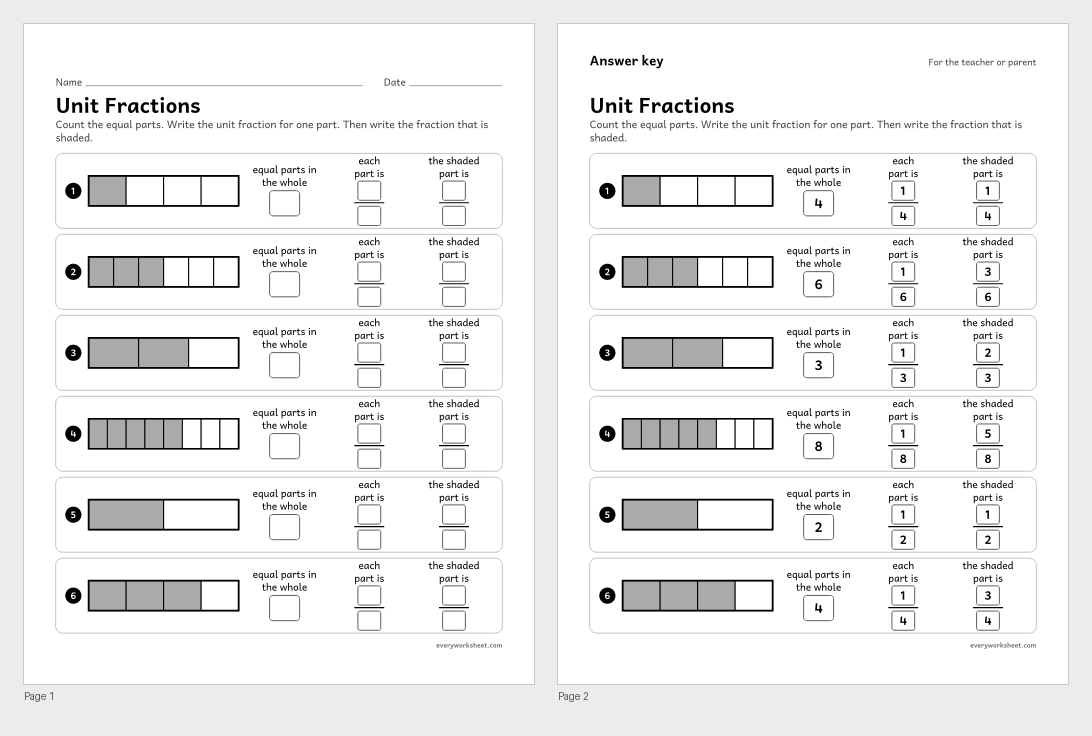
Seeing each equal part as a unit fraction 1/b and a/b as a parts of size 1/b
Answer key on page 2
2 pages43 KB
 View all 2 pages
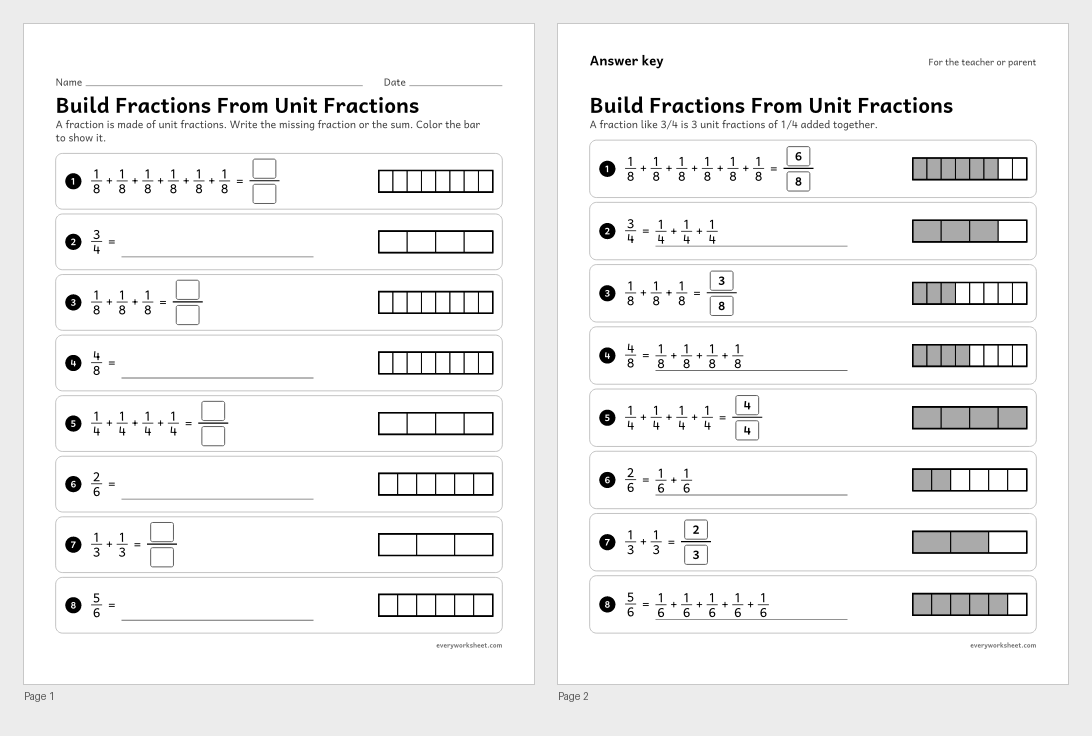
Writing a/b as a sum of unit fractions and naming the fraction a sum of unit fractions makes
Answer key on page 2
2 pages44 KB
 View all 2 pages
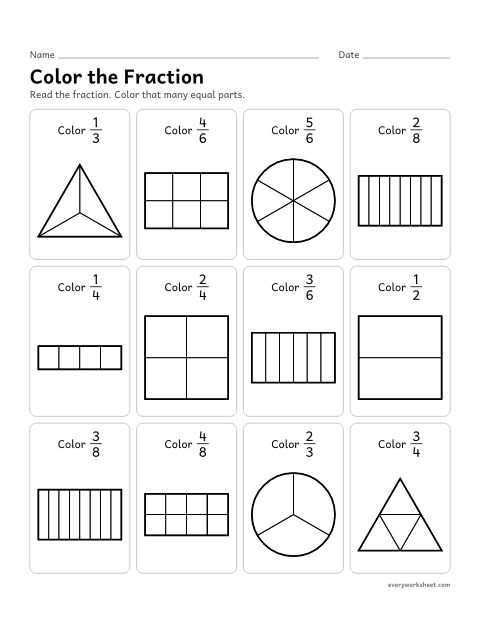
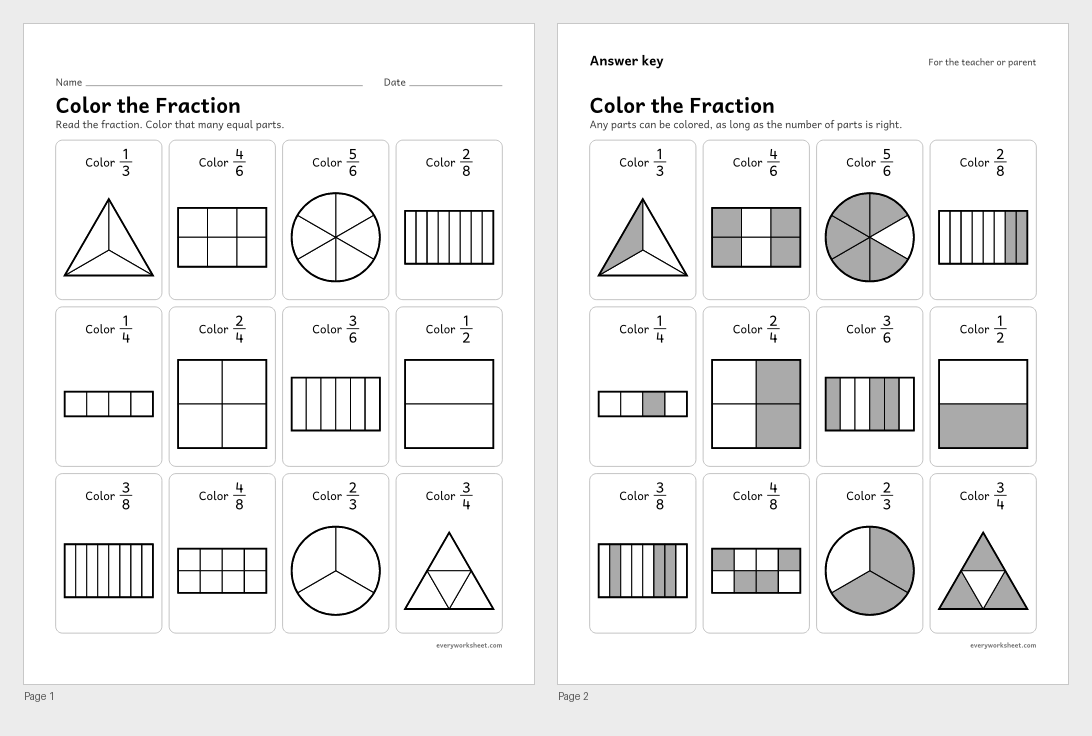
Shading a fraction of a whole cut into halves, thirds, fourths, sixths or eighths
Answer key on page 2
2 pages37 KB
 View all 2 pages
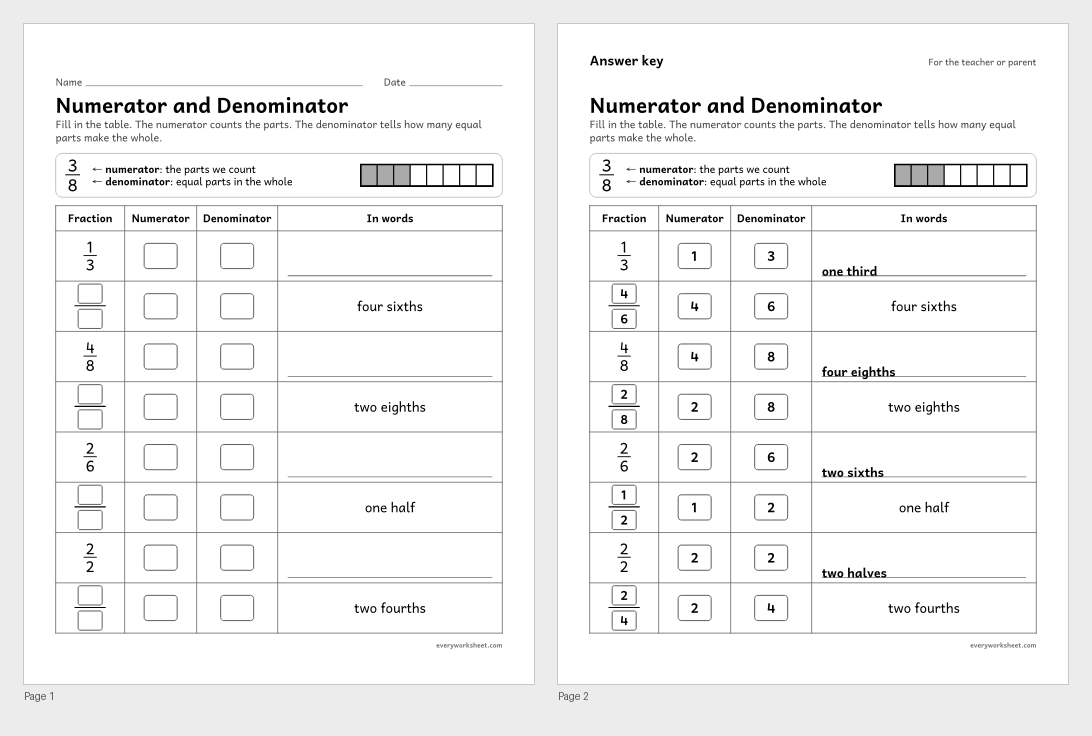
Naming the numerator and denominator and reading and writing fractions in words
Answer key on page 2
2 pages48 KB
 View all 2 pages
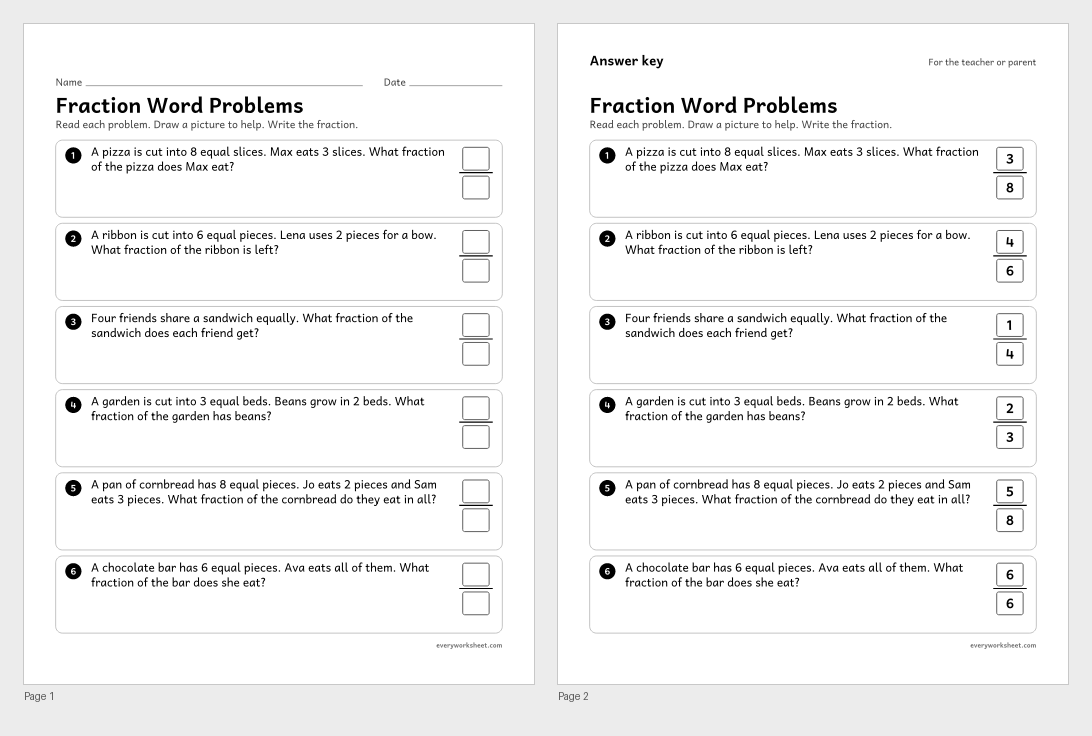
Solving word problems about equal parts of a whole and writing the fraction
Answer key on page 2
2 pages40 KB
 View all 2 pages
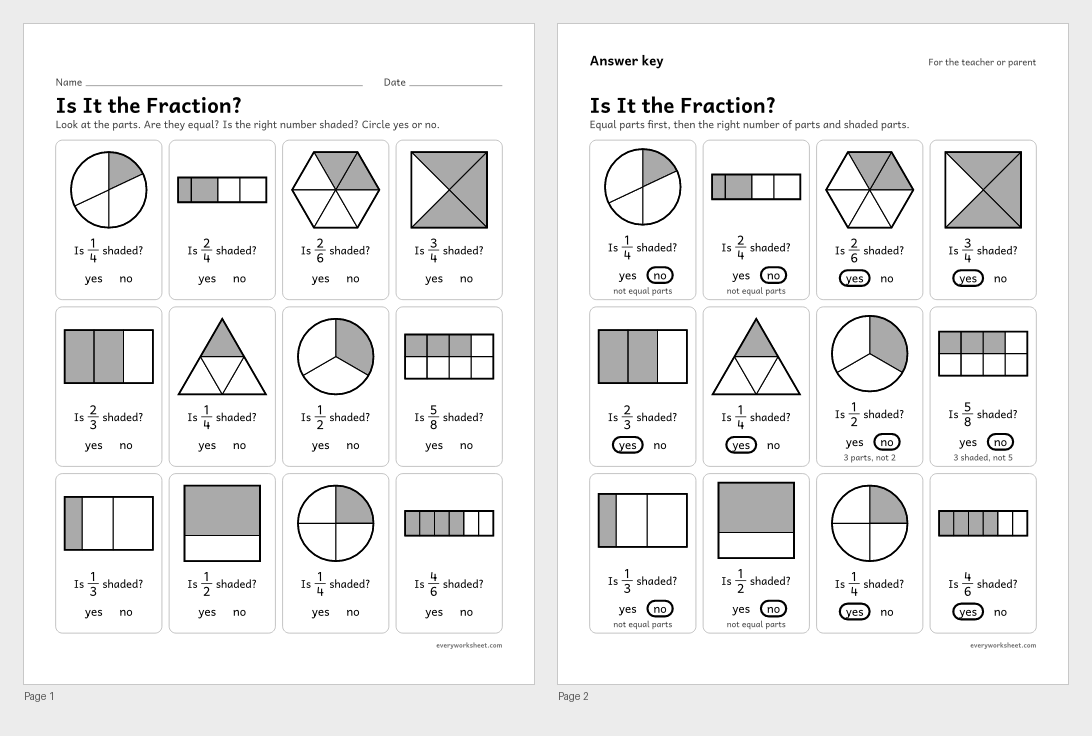
Checking that a picture shows a fraction: equal parts, the right number of parts and the right number shaded
Answer key on page 2
2 pages40 KB
 View all 2 pages
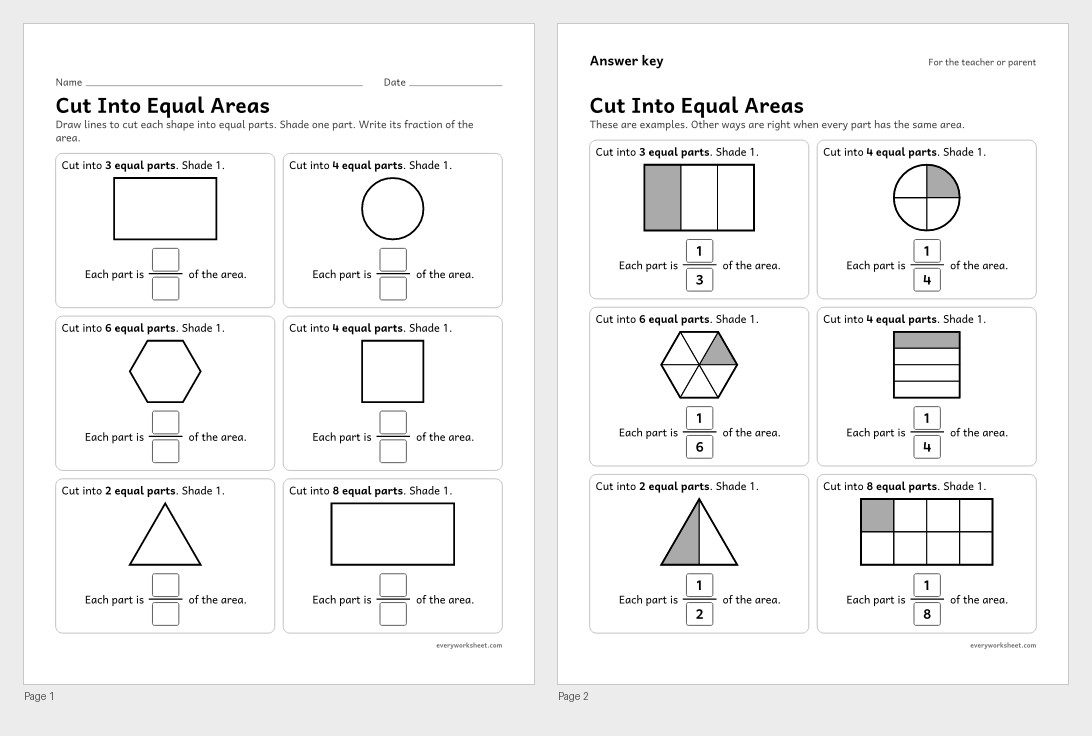
Drawing lines to cut shapes into parts with equal areas and naming each part as a unit fraction
Answer key on page 2
2 pages37 KB
 View all 2 pages
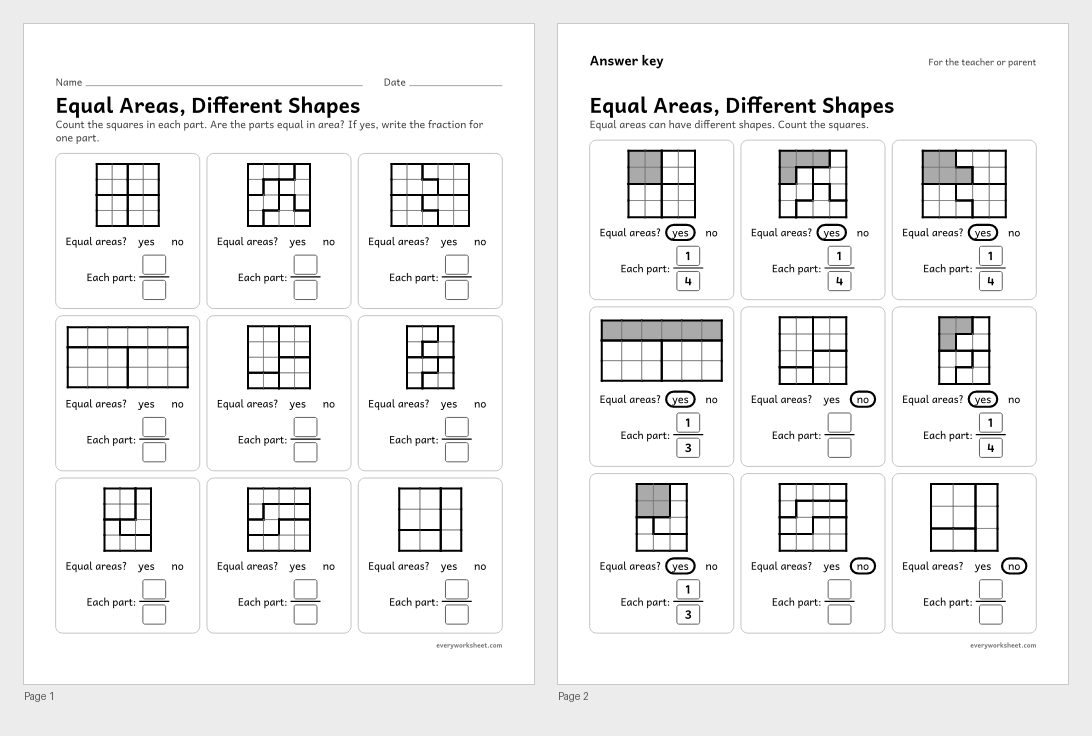
Counting squares to see whether parts have equal areas and naming each equal part as a unit fraction
Answer key on page 2
2 pages40 KB
Print at 100% (actual size) for the cleanest tracing lines.
A fraction is a number that names equal parts of a whole. In 3rd grade children learn that 1/4 is one part when a whole is cut into 4 equal parts, and that 3/4 is three of those parts. The bottom number, the denominator, tells how many equal parts make the whole. The top number, the numerator, counts the parts.
These worksheets start with a fraction wall chart and cut-out fraction strips, then move to naming shaded parts of bars, circles, grids, hexagons and triangles, building fractions from unit fractions, and coloring a given fraction. Equal parts come first, so there are pages that ask whether the parts are really equal, and pages where children cut shapes into parts with equal areas.
Every picture is drawn exactly, so parts that should be equal are equal. Practice pages have an answer key on page 2, and everything prints in black and white on US Letter or A4. For number lines, equivalent fractions and comparing, see the linked pages below.
CCSS.MATH.CONTENT.3.G.A.2Partition shapes into parts with equal areas. Express the area of each part as a unit fraction of the whole. For example, partition a shape into 4 parts with equal area, and describe the area of each part as 1/4 of the area of the shape.CCSS.MATH.CONTENT.3.NF.A.1Understand a fraction 1/b as the quantity formed by 1 part when a whole is partitioned into b equal parts; understand a fraction a/b as the quantity formed by a parts of size 1/b.Halves, thirds, fourths, sixths and eighths. Children learn unit fractions like 1/4, fractions like 3/4 made of unit fractions, fractions on a number line, simple equivalent fractions and comparing fractions.
A unit fraction has a numerator of 1, like 1/2, 1/3 or 1/8. It is one equal part of a whole. Every other fraction is made of unit fractions: 3/8 is 1/8 + 1/8 + 1/8.
A fraction names equal parts. If a circle is cut into 4 pieces of different sizes, one piece is not 1/4 of it. Our Is It the Fraction? page practices spotting this.