 View larger
Conjunctions Worksheets
Learn the three kinds of conjunctions and what they show, then build complex sentences with keyed practice.
Download the conjunctions worksheets
Learn Conjunctions
 View larger
 View all 2 pages
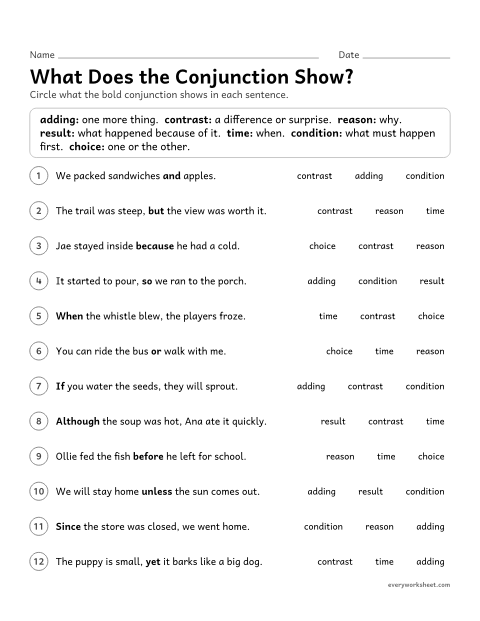
What does the conjunction Show?
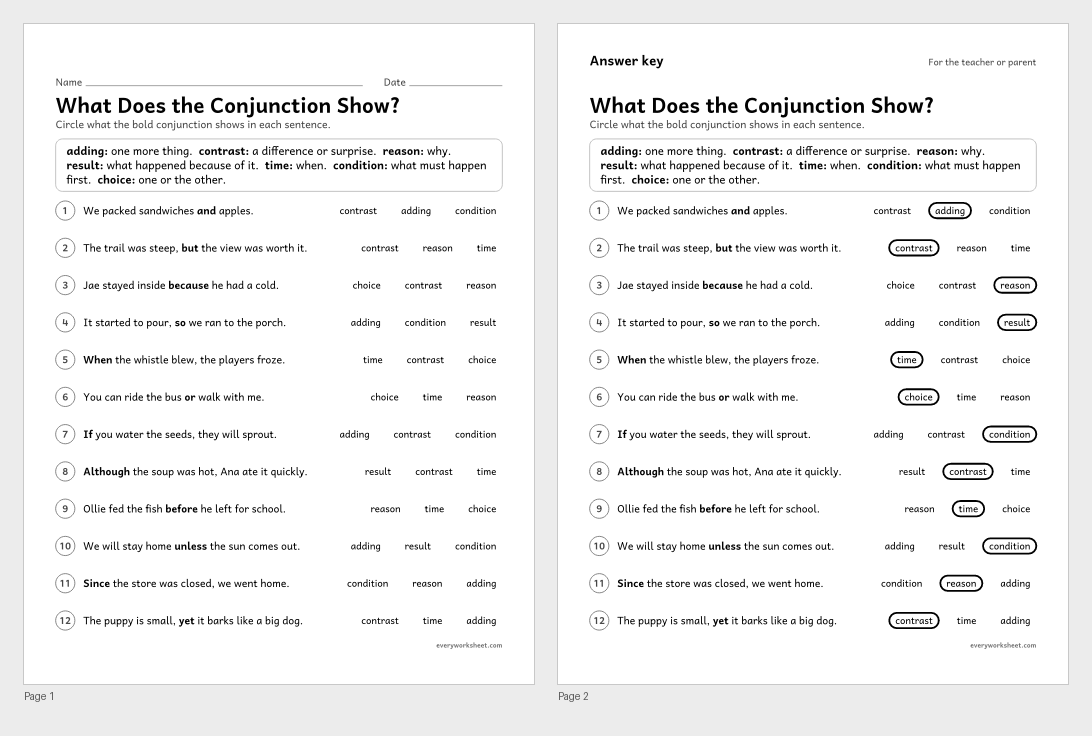
Explaining the function of a conjunction in a particular sentence
Answer key on page 2
2 pages64 KB
Subordinating Conjunctions
 View all 2 pages
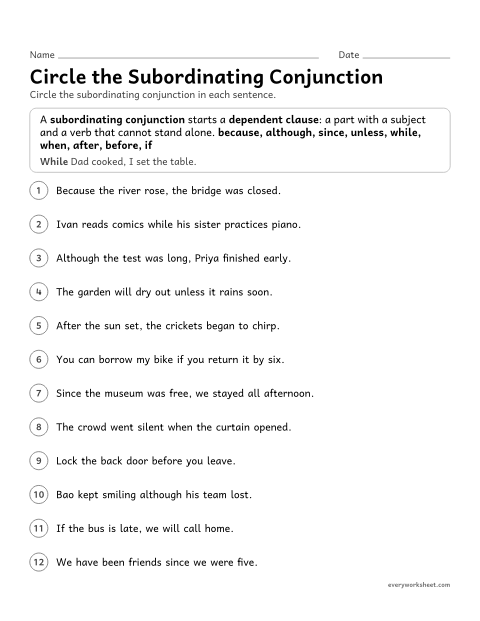
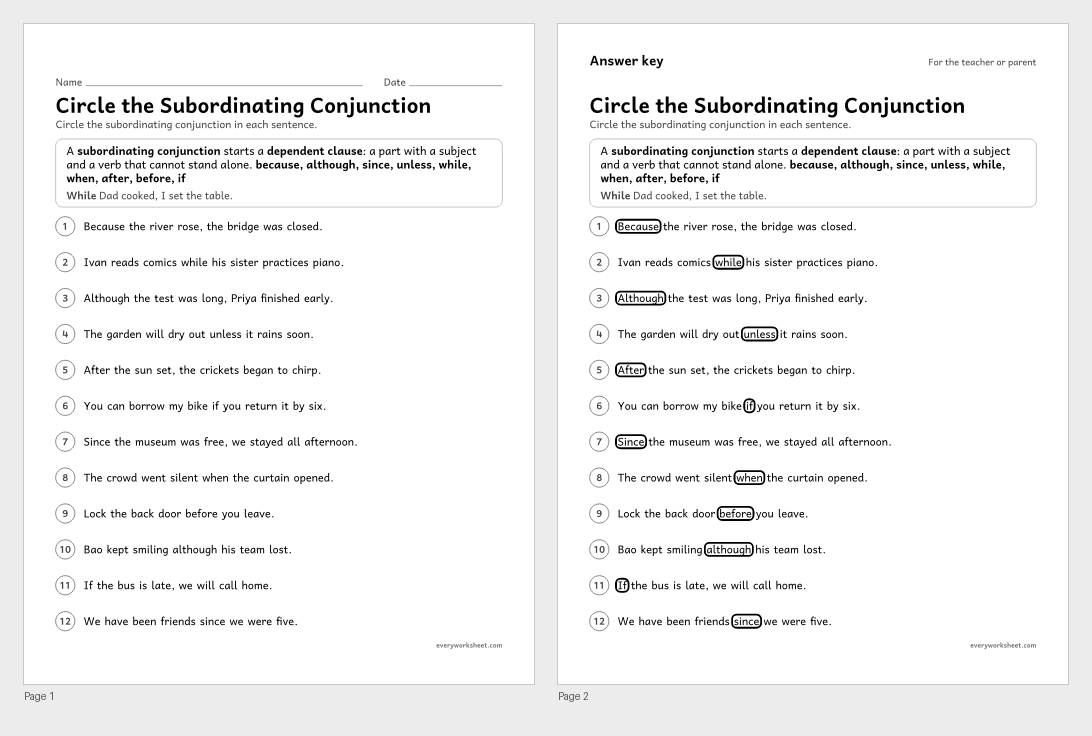
Circle the subordinating conjunction
Finding subordinating conjunctions in sentences
Answer key on page 2
2 pages57 KB
 View all 2 pages
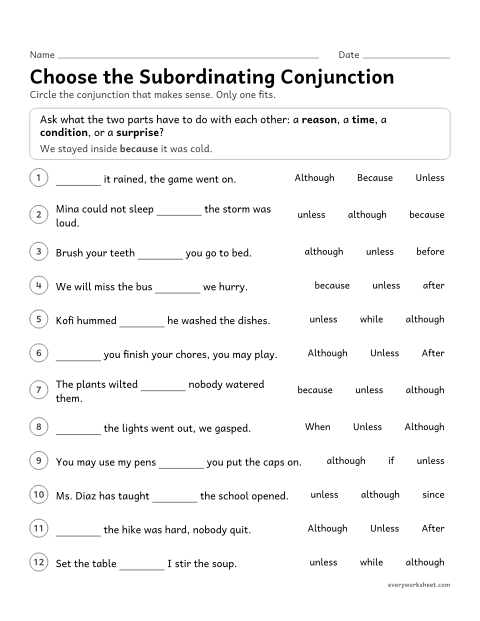
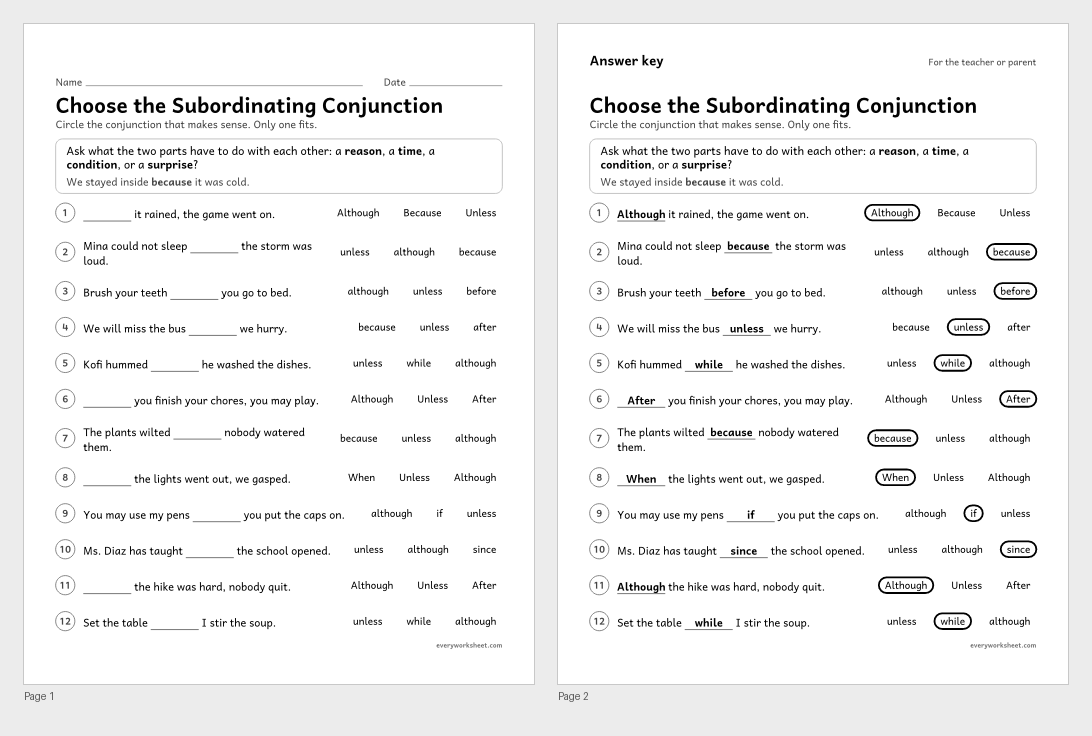
Choose the subordinating conjunction
Choosing a subordinating conjunction that fits the meaning of a sentence
Answer key on page 2
2 pages59 KB
 View all 2 pages
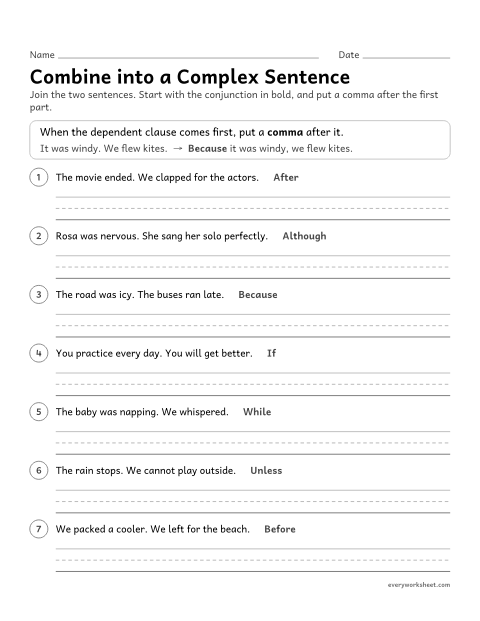
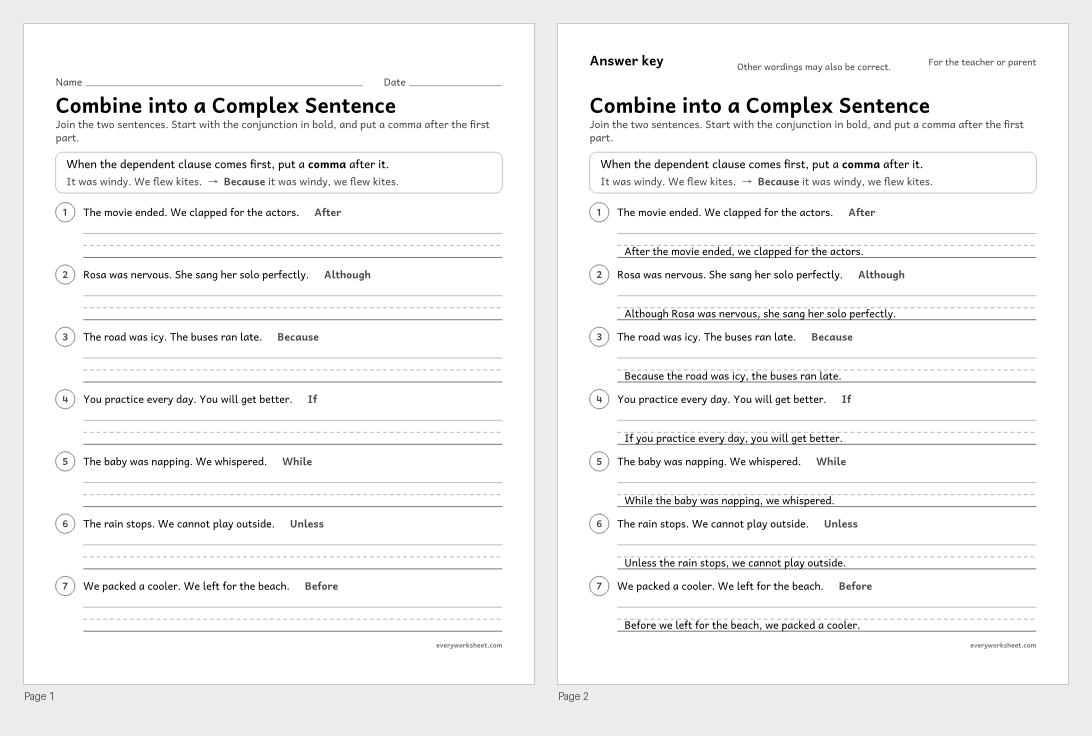
Combine into a complex sentence
Combining sentences into complex sentences with a comma after an introductory dependent clause
Answer key on page 2
2 pages45 KB
Sort, Review, and Write
 View all 2 pages
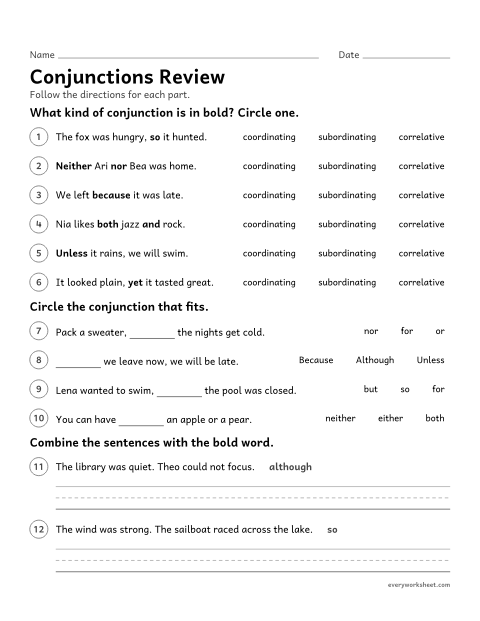
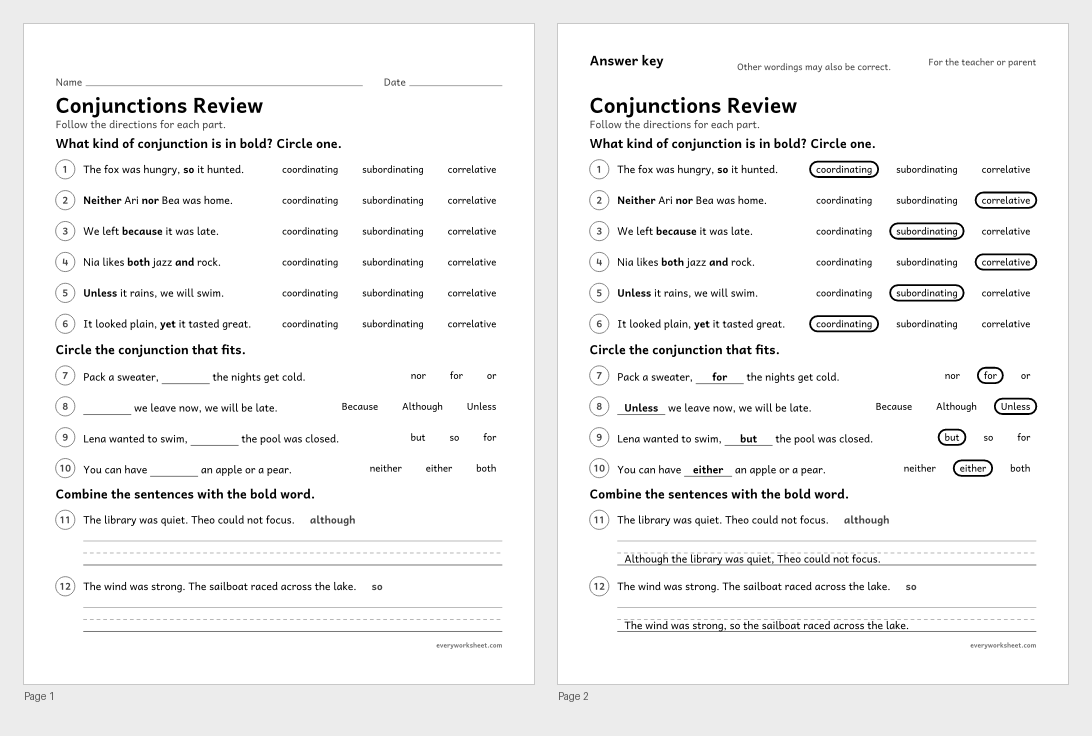
Conjunctions review
Reviewing coordinating, subordinating, and correlative conjunctions
Answer key on page 2
2 pages59 KB
 View all 2 pages
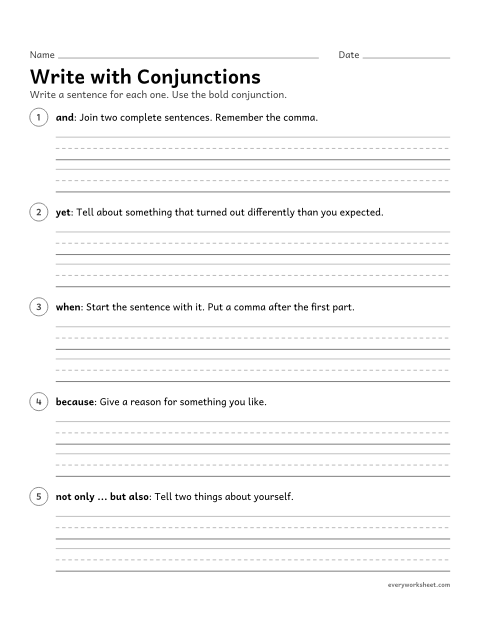
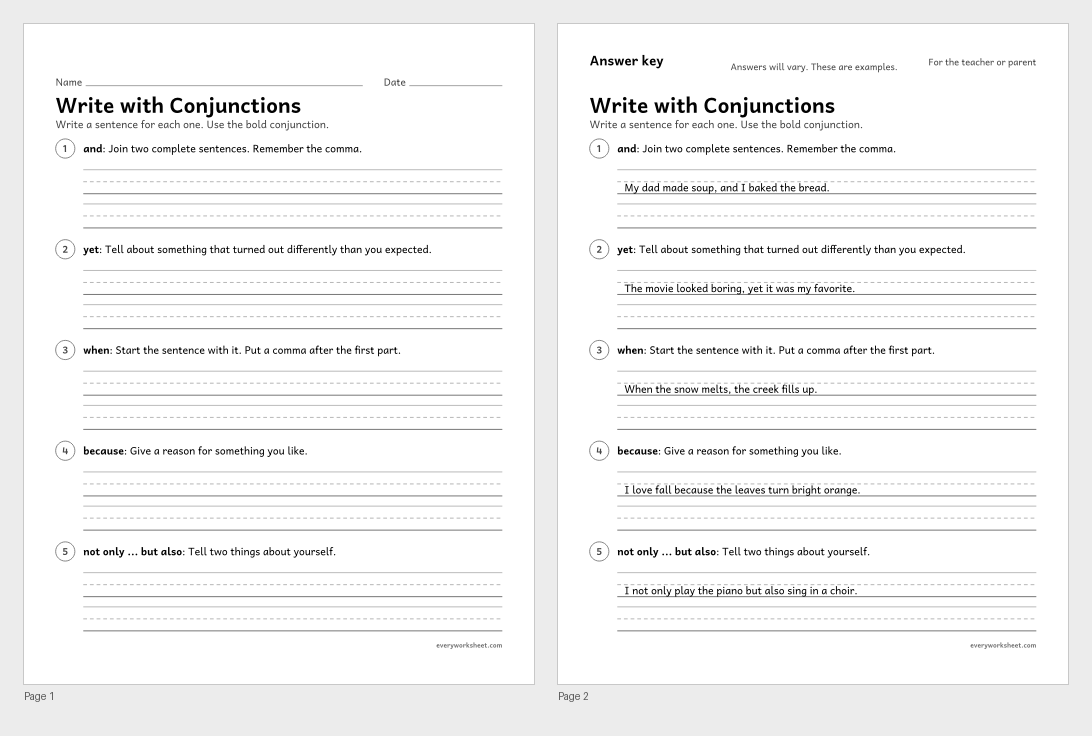
Write with conjunctions
Writing sentences with coordinating, subordinating, and correlative conjunctions
Answer key on page 2
2 pages39 KB
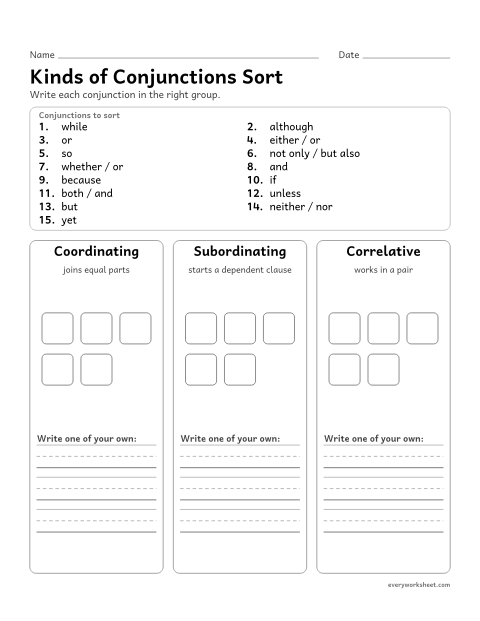 View all 2 pages
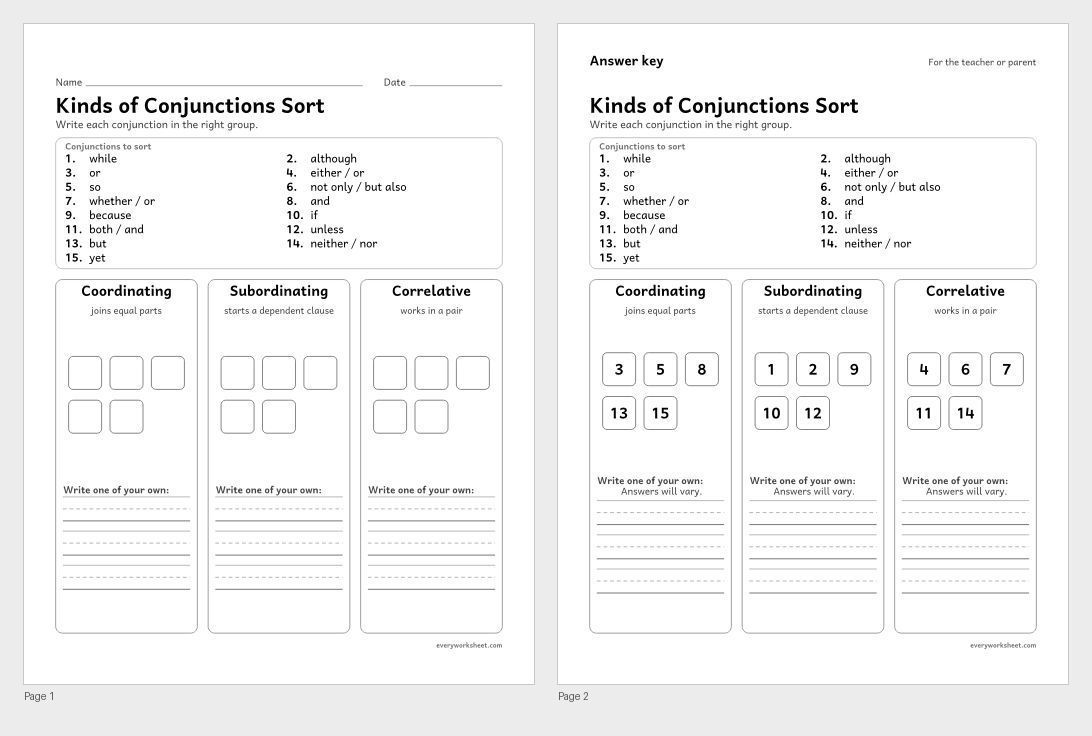
Kinds of conjunctions sort
Sorting conjunctions as coordinating, subordinating, or correlative
Answer key on page 2
2 pages58 KB
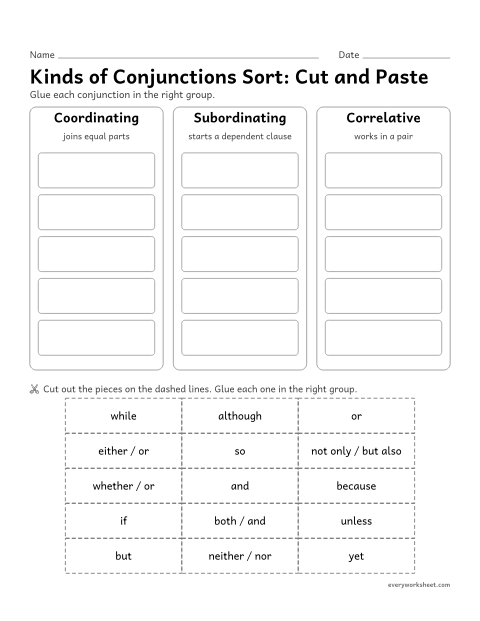 View all 2 pages
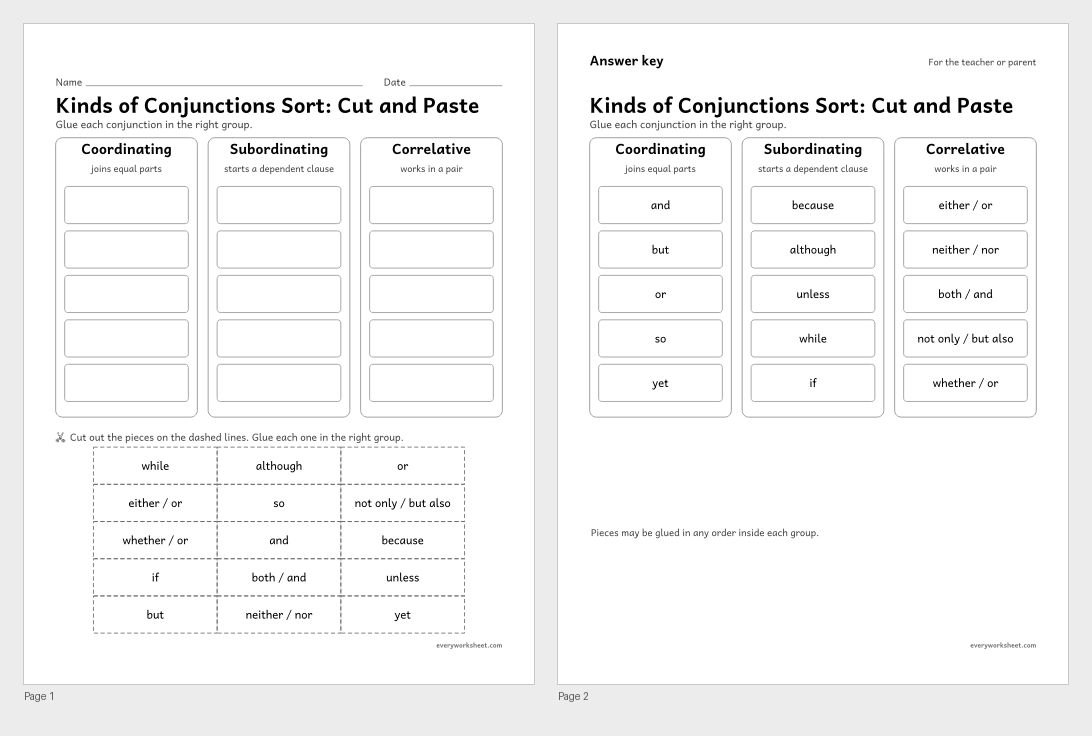
Kinds of conjunctions Sort: cut and paste
Sorting conjunctions as coordinating, subordinating, or correlative (cut and paste)
Answer key on page 2
2 pages69 KB
Print at 100% (actual size) for the cleanest tracing lines.
More conjunctions worksheets
About these conjunctions worksheets
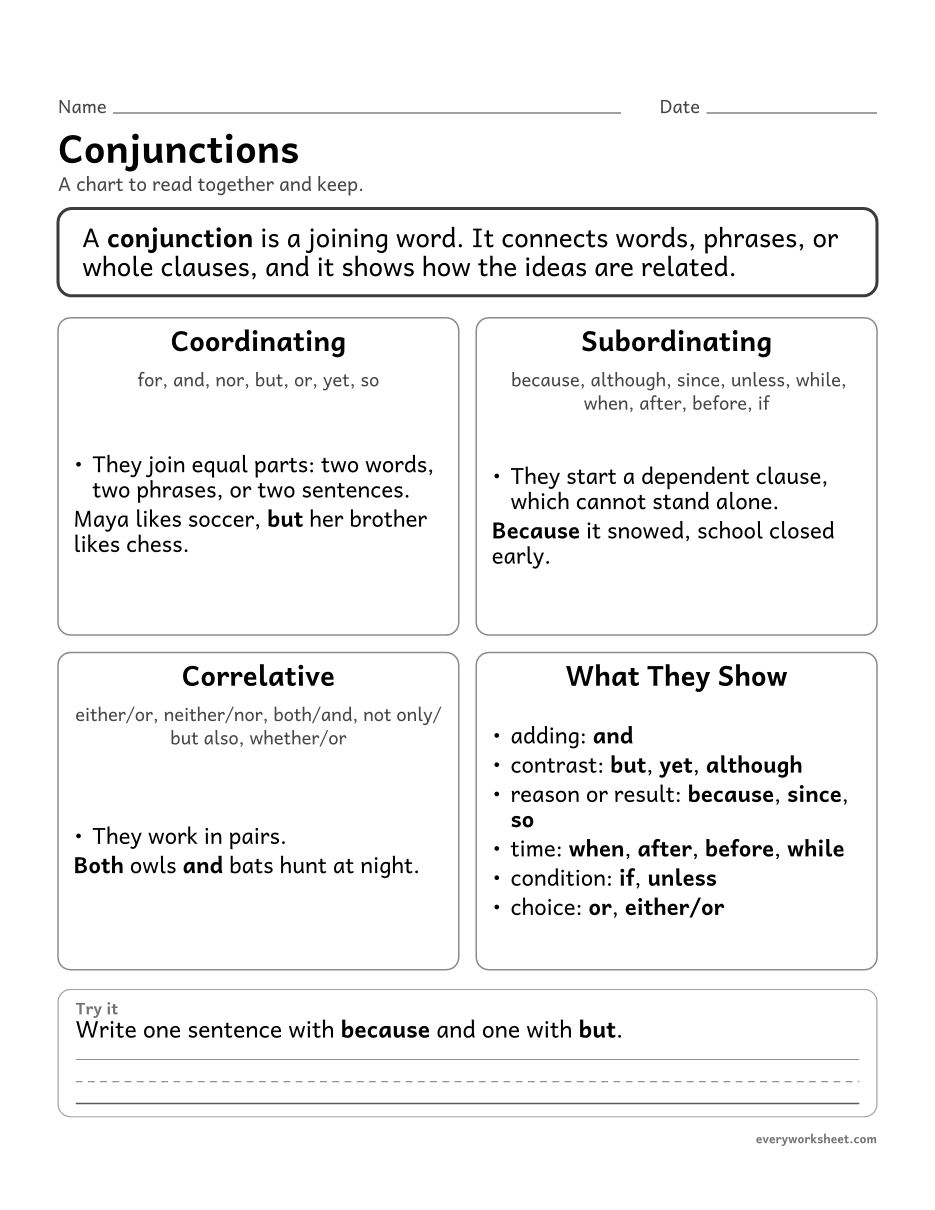
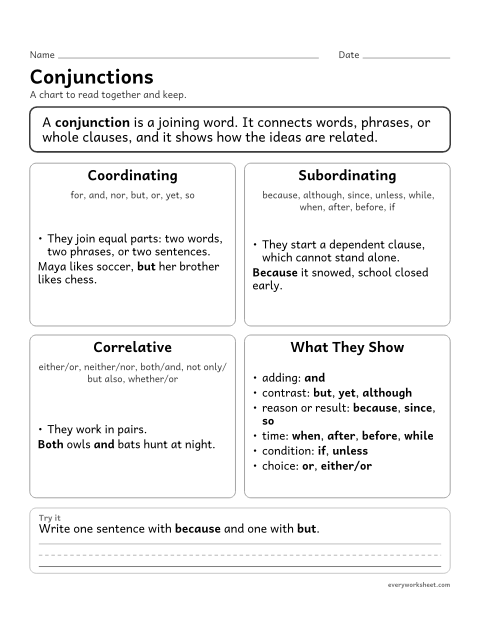
A conjunction is a joining word. It connects words, phrases, or whole clauses, and it shows how the ideas are related. In "The trail was steep, but the view was worth it," but joins two sentences and shows a contrast. Conjunctions can show adding (and), contrast (but, yet, although), a reason or result (because, since, so), time (when, after, before, while), a condition (if, unless), or a choice (or).
There are three kinds. Coordinating conjunctions (for, and, nor, but, or, yet, so) join equal parts. Subordinating conjunctions (because, although, since, unless, while, when, after, before, if) start a dependent clause that cannot stand alone: "Because it snowed, school closed early." Correlative conjunctions work in pairs, like either/or and neither/nor.
These printable worksheets begin with a conjunctions chart. Children name what a conjunction shows, find and choose subordinating conjunctions, combine two sentences into a complex sentence with a comma after the opening clause, sort conjunctions by kind, and try a mixed review. Every practice page has an answer key.
Standards
CCSS.ELA-LITERACY.L.5.1.AExplain the function of conjunctions, prepositions, and interjections in general and their function in particular sentences.CCSS.ELA-LITERACY.L.5.3.AExpand, combine, and reduce sentences for meaning, reader/listener interest, and style.
How to use them
- Read the chart together and talk about what each kind of conjunction does.
- Use What Does the Conjunction Show? to connect each word to its meaning.
- Practice subordinating conjunctions: circle them, choose the one that fits, then combine sentences.
- Sort the three kinds, try the review page, and finish with sentences of their own.
Teaching tips
- When a dependent clause comes first, put a comma after it: "When the bell rang, we lined up."
- When the dependent clause comes last, you usually do not need a comma: "We lined up when the bell rang."
- Read the sentence with each choice. Only one conjunction will make the meaning sensible.
- A dependent clause has a subject and a verb but cannot stand alone as a sentence.
Questions teachers and parents ask
What is a conjunction?
A joining word that connects words, phrases, or clauses and shows how the ideas are related, such as and, but, because, and either/or.
What are the three types of conjunctions?
Coordinating conjunctions join equal parts, subordinating conjunctions start a dependent clause, and correlative conjunctions work in pairs.
What are subordinating conjunctions?
Words like because, although, since, unless, while, when, after, before, and if. They begin a clause that depends on the rest of the sentence.
Do the worksheets include answer keys?
Yes. Practice pages have keys, and writing pages show example answers.