Declaration of Independence Worksheets

13 free PDFsUS Letter PDFsAnswer key includedNo login

Who wrote the Declaration of Independence and why, its four parts and famous words, a primary-source excerpt, who was left out in 1776, and why it still matters.

Download the declaration of independence worksheets

The Declaration and its writers

A reading passage, a timeline of summer 1776 and key people.

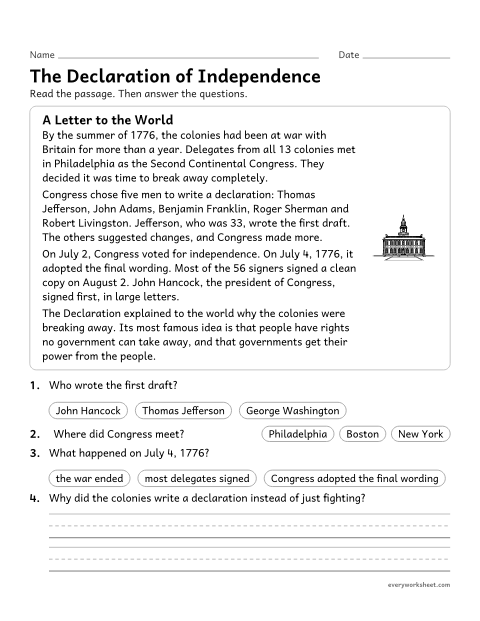
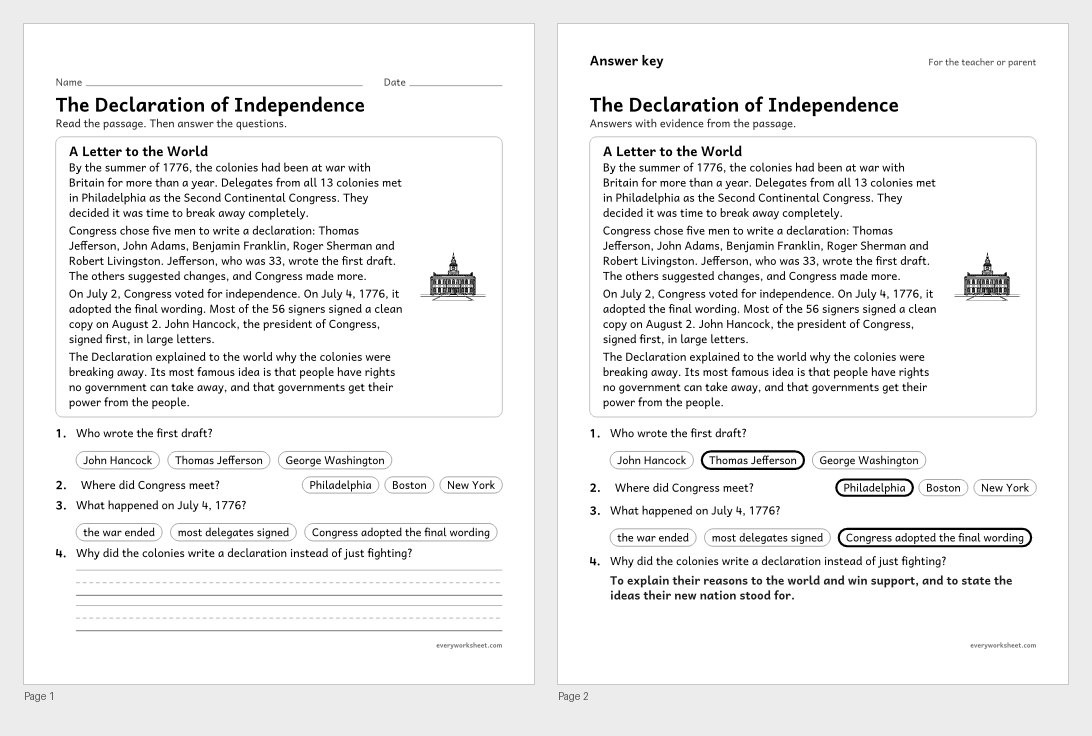
  • Preview of the printable “Declaration of independence reading passage for kids” worksheet: explaining how and why the Declaration of Independence was writtenView all 2 pages

    Declaration of independence reading passage for kids

    Explaining how and why the Declaration of Independence was written

    Answer key on page 2

    2 pages118 KB
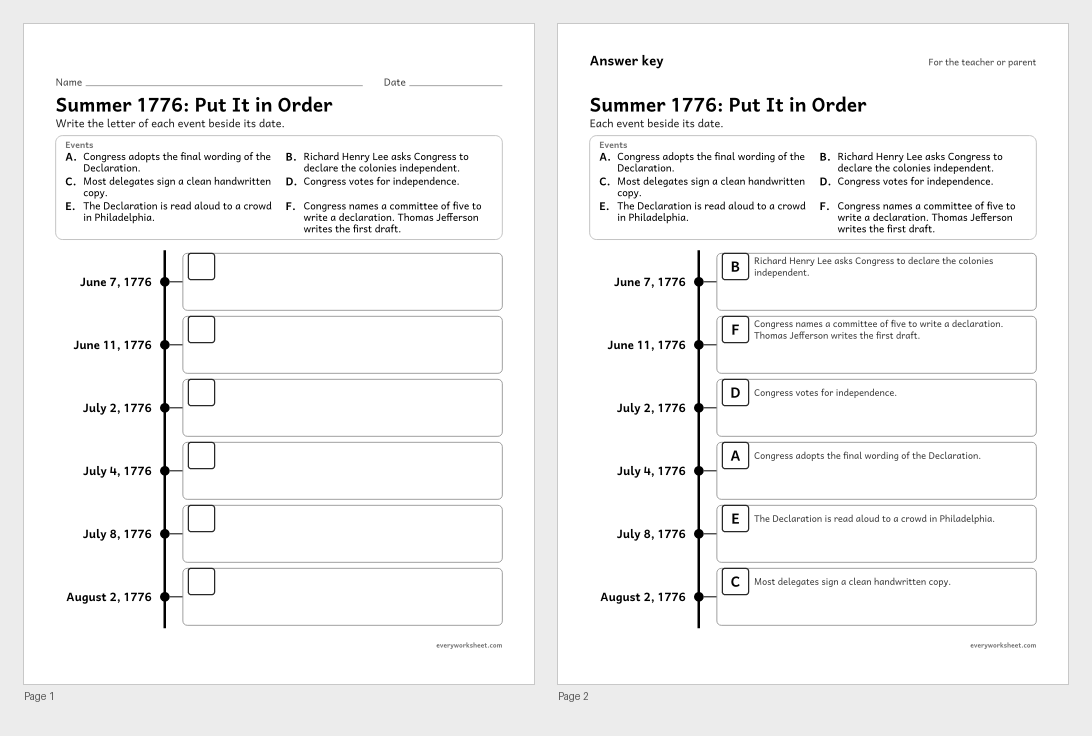
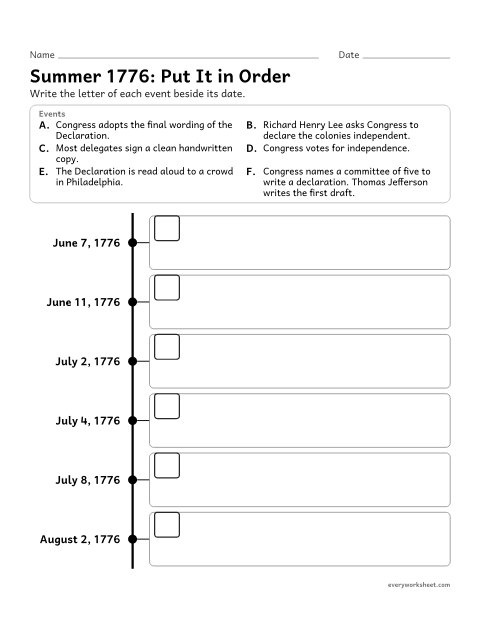
  • Preview of the printable “Declaration of independence Timeline: summer 1776” worksheet: sequencing the events of the summer of 1776View all 2 pages

    Declaration of independence Timeline: summer 1776

    Sequencing the events of the summer of 1776

    Answer key on page 2

    2 pages45 KB
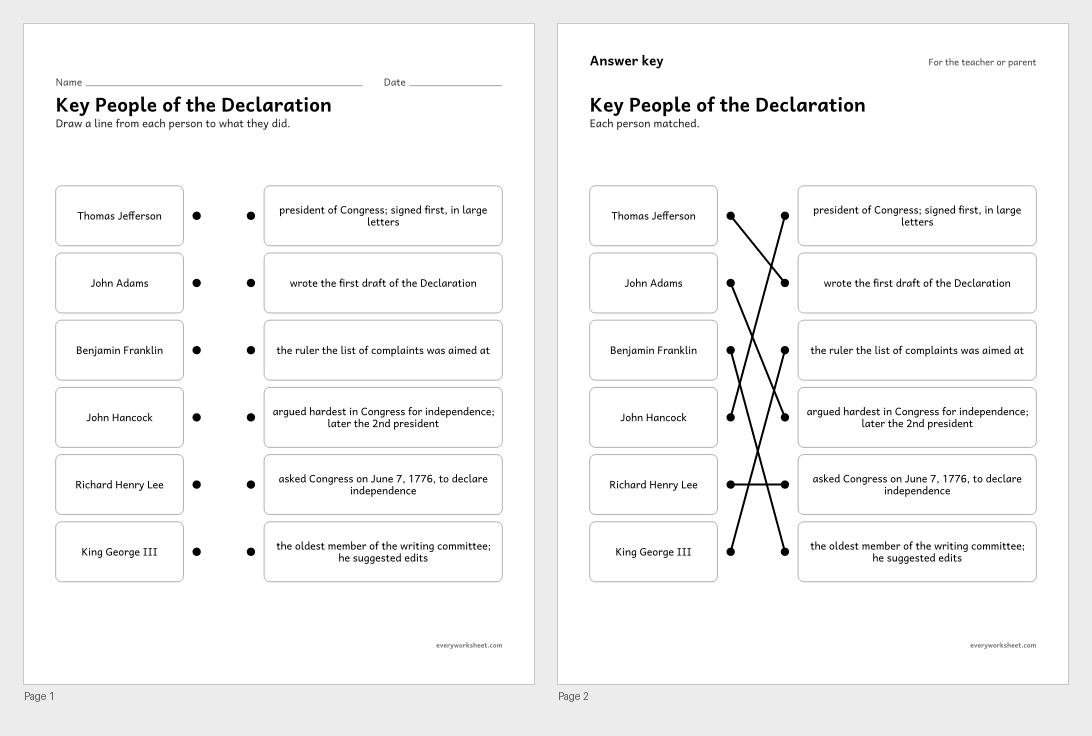
  • Preview of the printable “Declaration of independence key people worksheet” worksheet: identifying key people connected with the Declaration of IndependenceView all 2 pages

    Declaration of independence key people worksheet

    Identifying key people connected with the Declaration of Independence

    Answer key on page 2

    2 pages30 KB
Inside the Declaration

A primary-source excerpt, the four parts, famous words, complaints against the king and vocabulary.

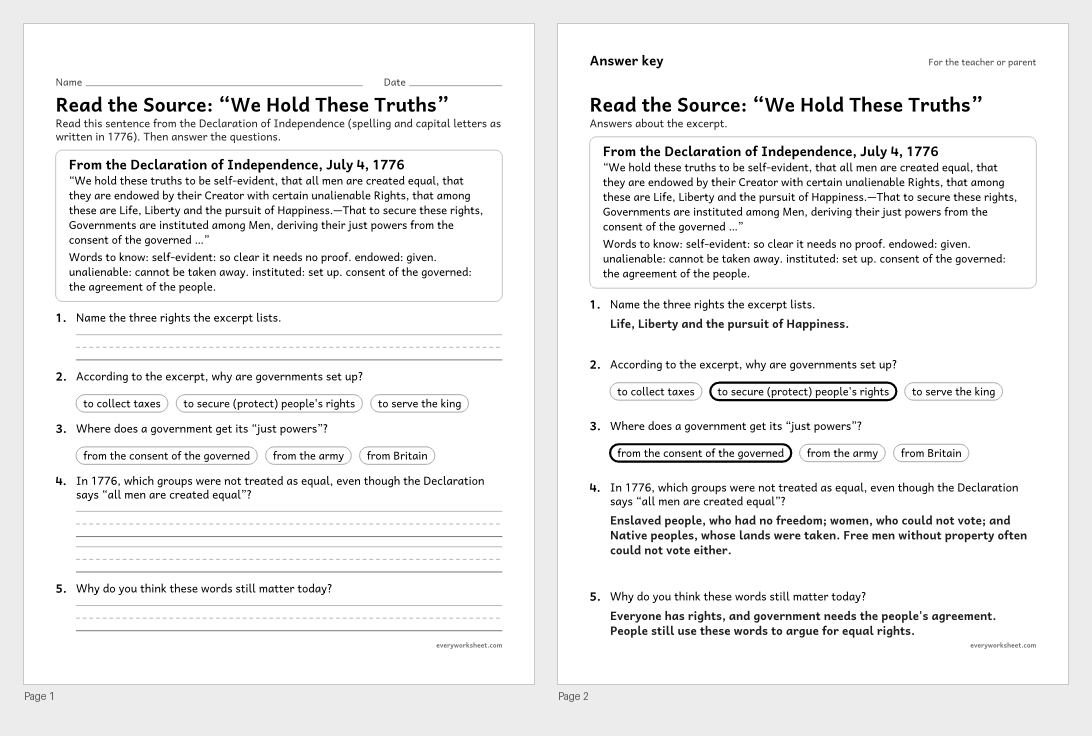
  • Preview of the printable “Declaration of independence primary source excerpt worksheet” worksheet: analyzing a short primary-source excerpt from the Declaration of IndependenceView all 2 pages

    Declaration of independence primary source excerpt worksheet

    Analyzing a short primary-source excerpt from the Declaration of Independence

    Answer key on page 2

    2 pages43 KB
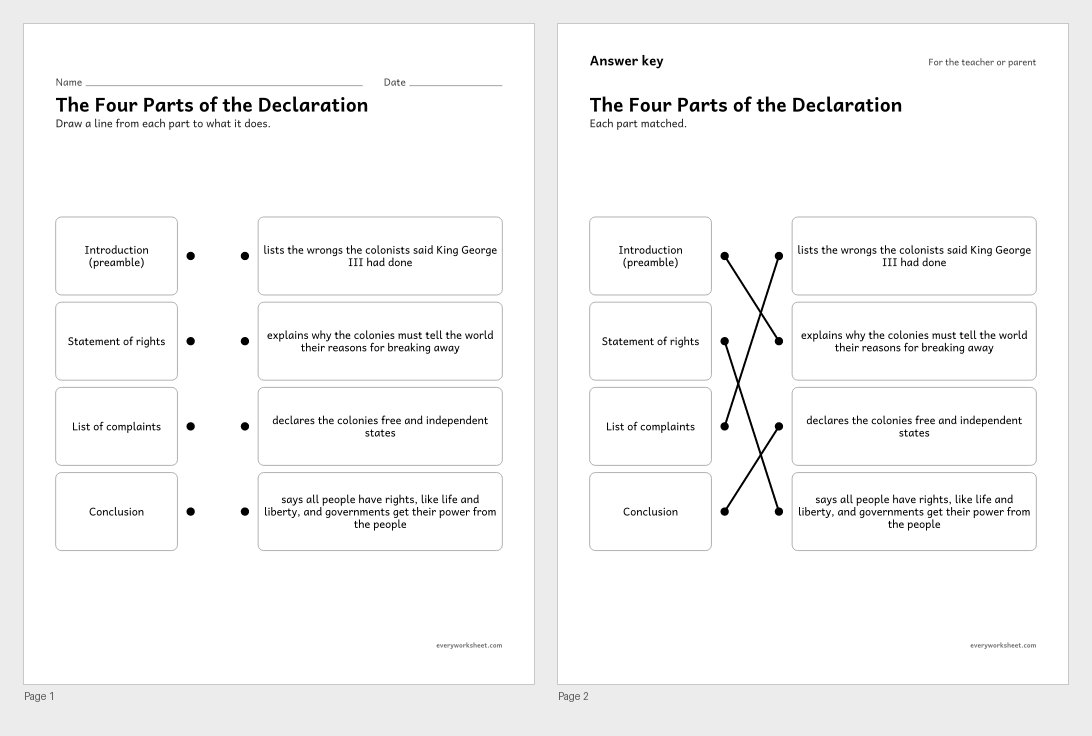
  • Preview of the printable “Parts of the declaration of independence worksheet” worksheet: identifying the parts of the Declaration of Independence and their purposesView all 2 pages

    Parts of the declaration of independence worksheet

    Identifying the parts of the Declaration of Independence and their purposes

    Answer key on page 2

    2 pages29 KB
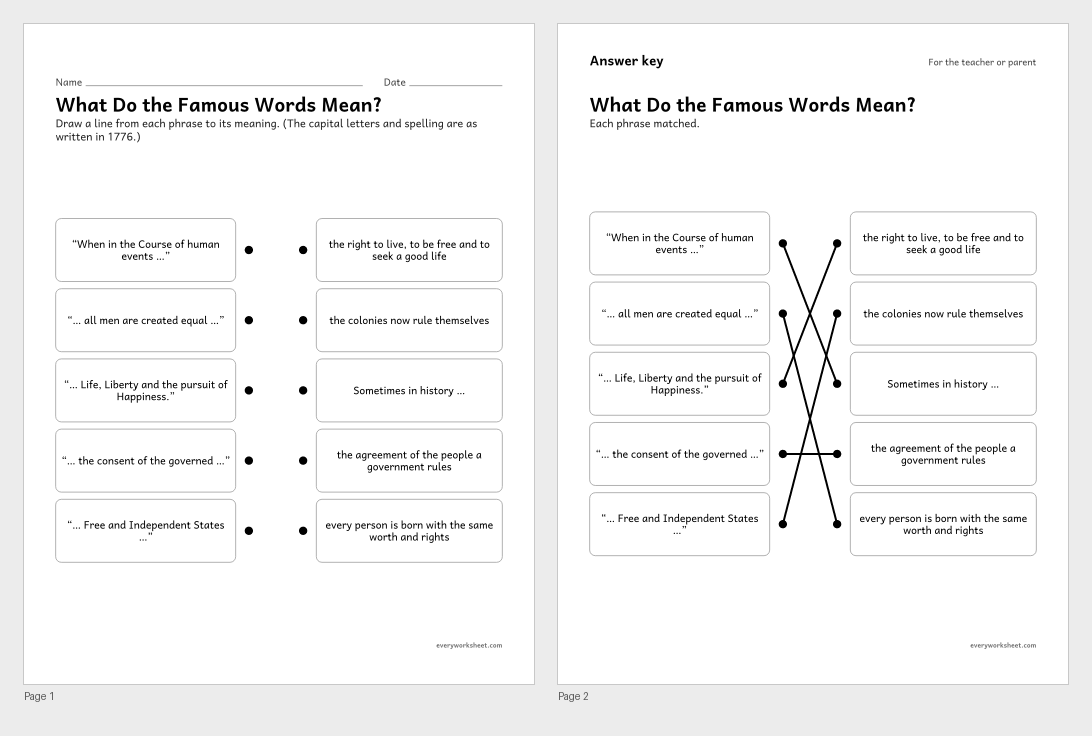
  • Preview of the printable “Declaration of independence famous words worksheet” worksheet: explaining famous phrases of the Declaration of Independence in plain wordsView all 2 pages

    Declaration of independence famous words worksheet

    Explaining famous phrases of the Declaration of Independence in plain words

    Answer key on page 2

    2 pages30 KB
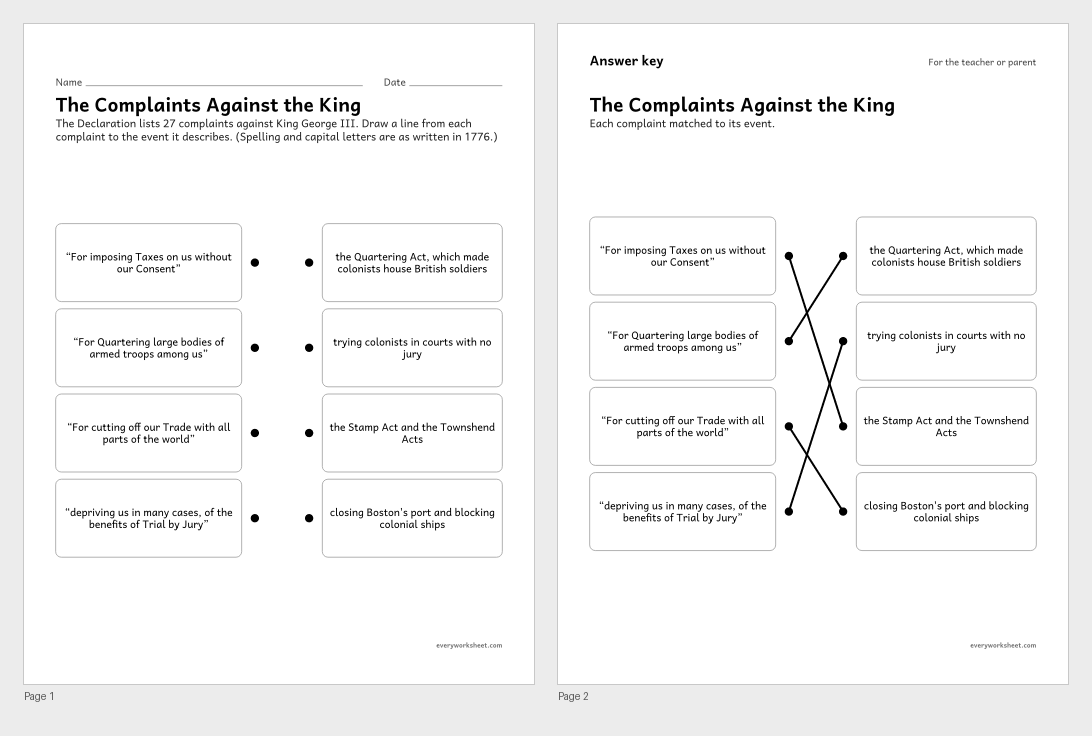
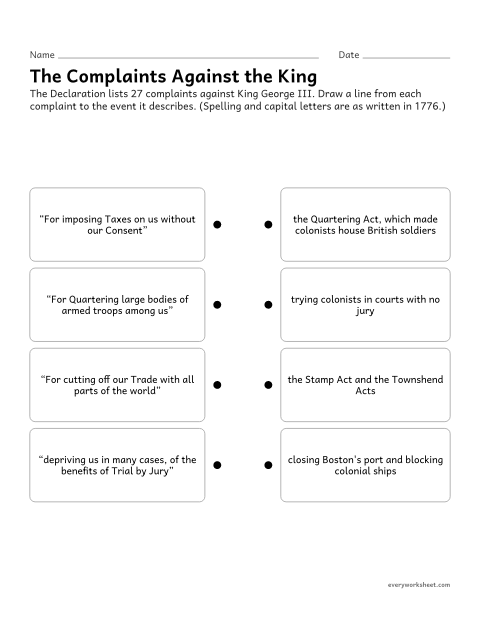
  • Preview of the printable “Declaration of independence grievances worksheet” worksheet: connecting the Declaration's complaints to earlier eventsView all 2 pages

    Declaration of independence grievances worksheet

    Connecting the Declaration's complaints to earlier events

    Answer key on page 2

    2 pages31 KB
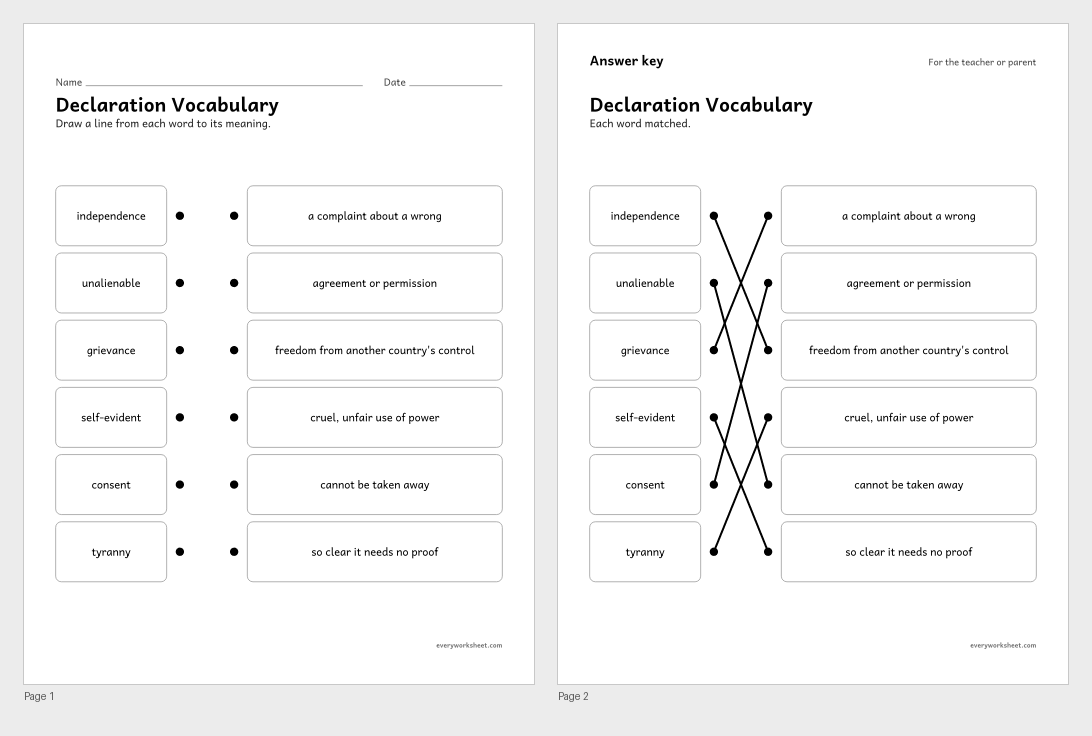
  • Preview of the printable “Declaration of independence vocabulary worksheet” worksheet: determining the meaning of words used in and about the Declaration of IndependenceView all 2 pages

    Declaration of independence vocabulary worksheet

    Determining the meaning of words used in and about the Declaration of Independence

    Answer key on page 2

    2 pages27 KB
Then and now

Who was left out in 1776, and why the Declaration still matters.

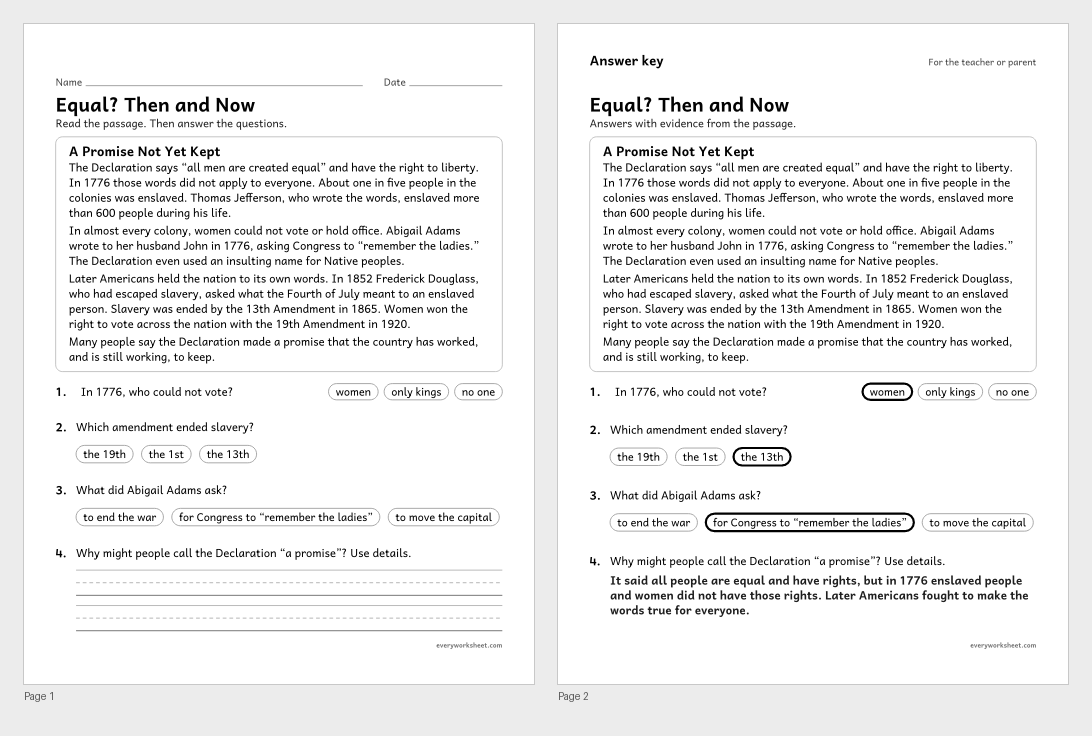
  • Preview of the printable ““All men are created Equal”: then and now reading” worksheet: comparing the Declaration's ideals with the realities of 1776 and later changesView all 2 pages

    “All men are created Equal”: then and now reading

    Comparing the Declaration's ideals with the realities of 1776 and later changes

    Answer key on page 2

    2 pages42 KB
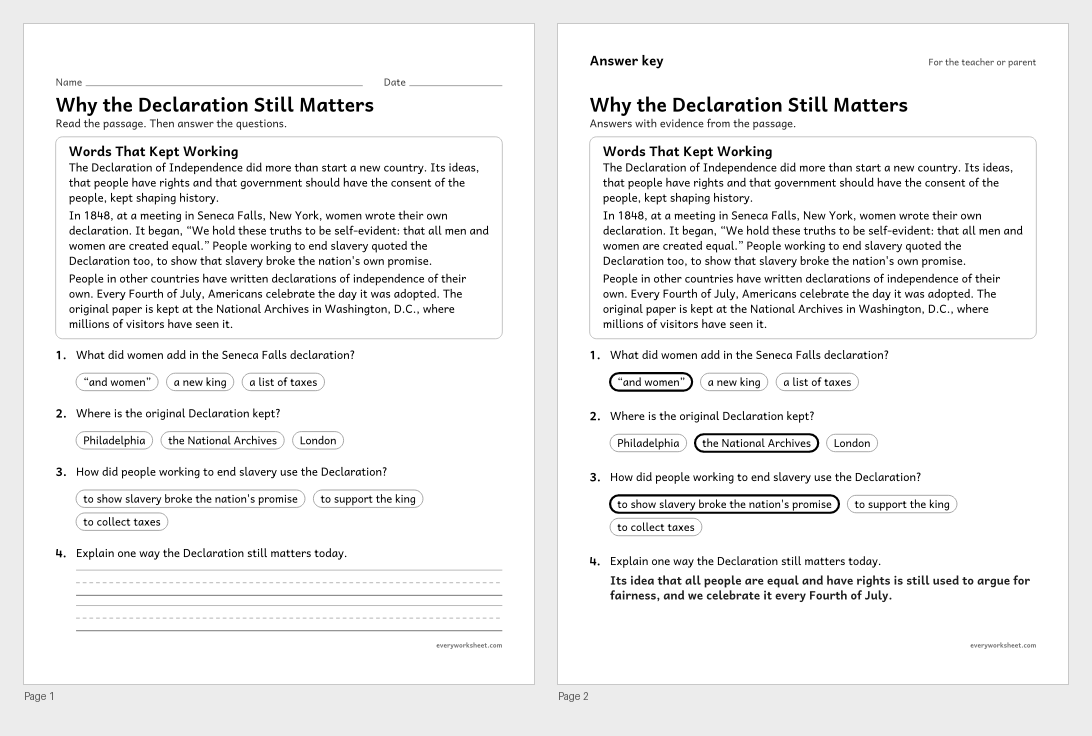
  • Preview of the printable “Why the declaration of independence matters reading” worksheet: explaining the lasting importance of the Declaration of IndependenceView all 2 pages

    Why the declaration of independence matters reading

    Explaining the lasting importance of the Declaration of Independence

    Answer key on page 2

    2 pages40 KB
Review and write

Vocabulary, a quiz and a classroom declaration.

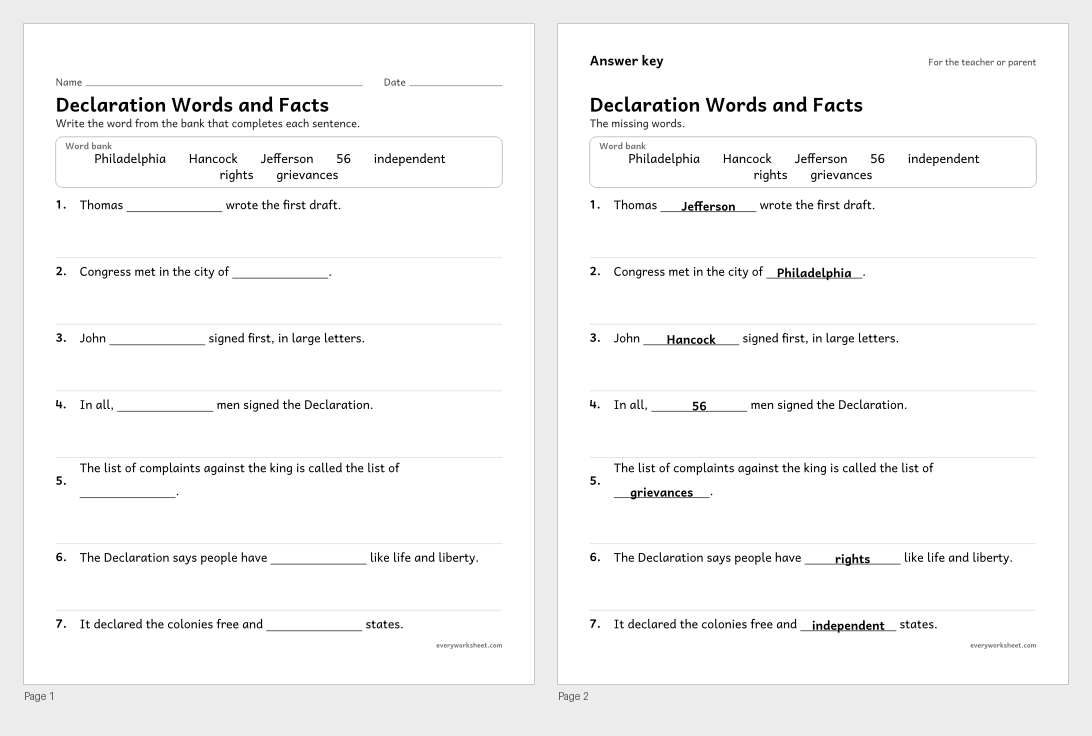
  • Preview of the printable “Declaration of independence fill in the blank” worksheet: recalling key facts about the Declaration of IndependenceView all 2 pages

    Declaration of independence fill in the blank

    Recalling key facts about the Declaration of Independence

    Answer key on page 2

    2 pages39 KB
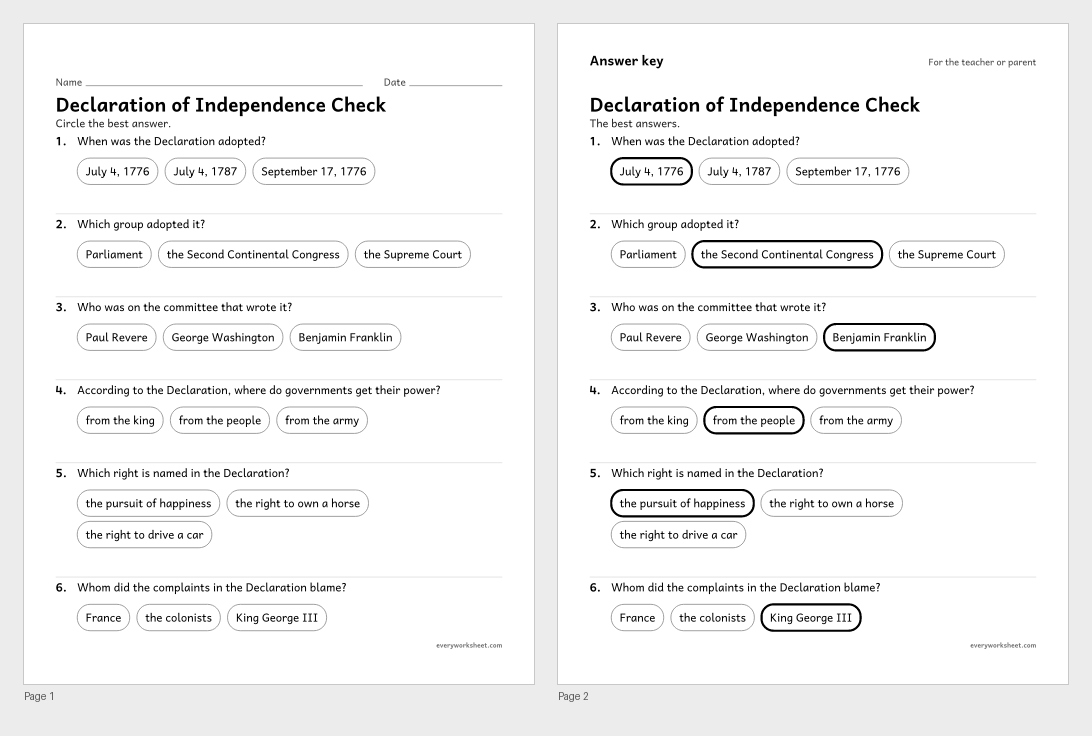
  • Preview of the printable “Declaration of independence quiz for kids” worksheet: reviewing the Declaration of IndependenceView all 2 pages

    Declaration of independence quiz for kids

    Reviewing the Declaration of Independence

    Answer key on page 2

    2 pages41 KB
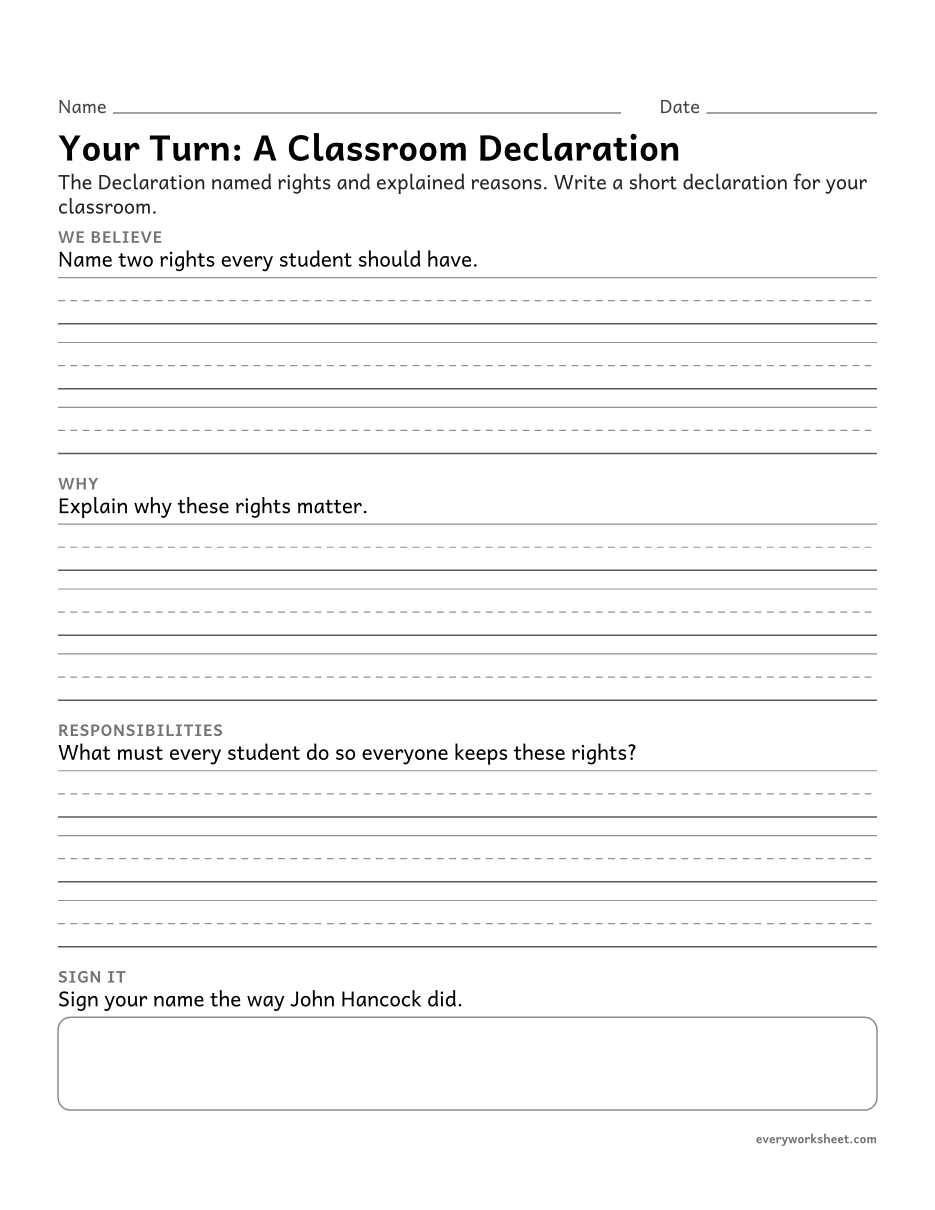
  • Preview of the printable “Declaration of independence writing activity” worksheet: writing about rights and responsibilities, modeled on the DeclarationView larger

    Declaration of independence writing activity

    Writing about rights and responsibilities, modeled on the Declaration

    1 page27 KB

About these declaration of independence worksheets

On July 4, 1776, the Second Continental Congress adopted the Declaration of Independence. Written mostly by Thomas Jefferson, it told the world why the colonies were breaking away from Britain and stated that people have rights no government can take away.

These Declaration of Independence worksheets include a reading passage, a summer of 1776 timeline, key people, the four parts of the Declaration, its famous words in plain language and a primary-source excerpt to analyze. Children connect the complaints against the king to earlier events, read factually about who was left out of “all men are created equal” in 1776, learn why the Declaration still matters, and write a classroom declaration.

Every page is black and white, prints on US Letter or A4, and every page with right answers has an answer key on page 2.

Standards

  • C3 D2.Civ.3.3-5Examine the origins and purposes of rules, laws, and key U.S. constitutional provisions.
  • C3 D2.His.1.3-5Create and use a chronological sequence of related events to compare developments that happened at the same time.
  • C3 D2.His.3.3-5Generate questions about individuals and groups who have shaped significant historical changes and continuities.
  • C3 D2.His.10.3-5Compare information provided by different historical sources about the past.
  • C3 D2.Civ.8.3-5Identify core civic virtues and democratic principles that guide government, society, and communities.
  • C3 D2.His.14.3-5Explain probable causes and effects of events and developments.
  • CCSS.ELA-LITERACY.RI.5.4Determine the meaning of general academic and domain-specific words and phrases in a text relevant to a grade 5 topic or subject area.
  • C3 D2.His.4.3-5Explain why individuals and groups during the same historical period differed in their perspectives.

How to use them

  1. Read the excerpt aloud and talk through the words to know.
  2. Use the four parts page with a copy of the full text from the National Archives.
  3. Connect the complaints page to the causes of the American Revolution pages.
  4. Finish with the classroom declaration.

Teaching tips

  • Quotations keep their 1776 spelling and capital letters and are kept short.
  • Most signers signed on August 2, 1776, not on July 4.
  • Discuss plainly that in 1776 enslaved people, women and Native peoples did not share the rights the Declaration named, and how Americans later worked to change that.

Questions teachers and parents ask

Who wrote the Declaration of Independence?

Thomas Jefferson wrote the first draft. John Adams, Benjamin Franklin, Roger Sherman and Robert Livingston were on the committee, and Congress made changes before adopting it.

When was the Declaration of Independence signed?

Congress adopted it on July 4, 1776. Most of the 56 signers signed the clean copy on August 2, 1776.

What are the four parts of the Declaration?

The introduction (preamble), the statement of rights, the list of complaints against King George III, and the conclusion declaring independence.