 View larger
Equivalent fractions chart
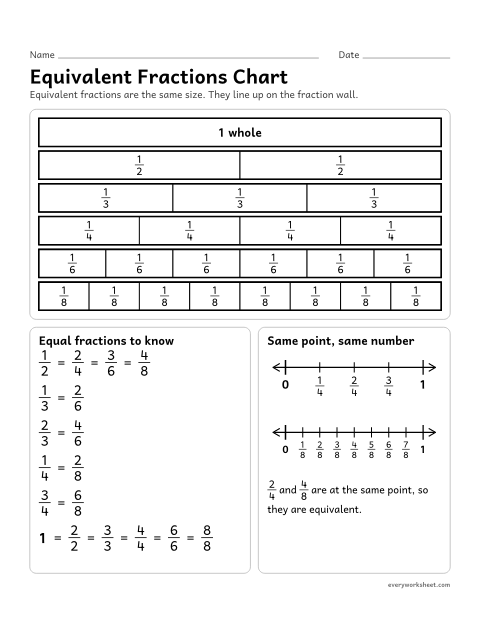
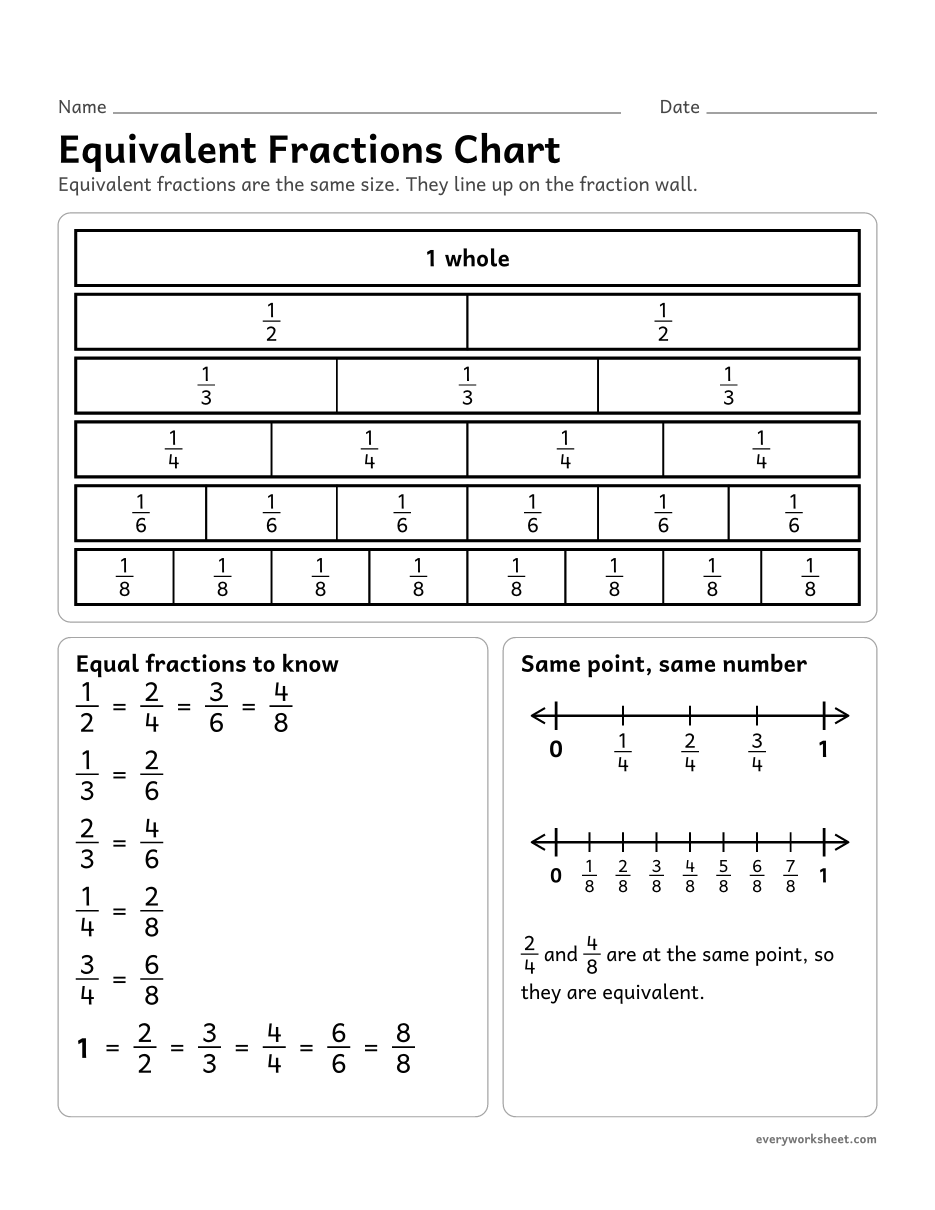
Using a fraction wall to see which fractions are equal
1 page31 KB
A fraction wall chart, fraction bars and number lines to find equal fractions, missing numerators and denominators, whole numbers as fractions, and word problems.
View largerUsing a fraction wall to see which fractions are equal
1 page31 KB
 View all 2 pages
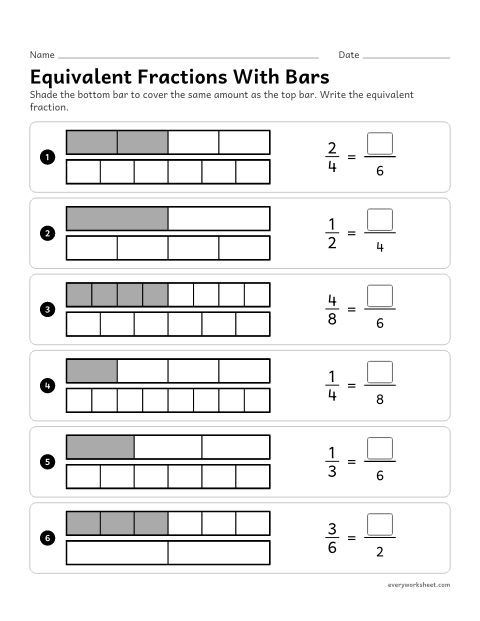
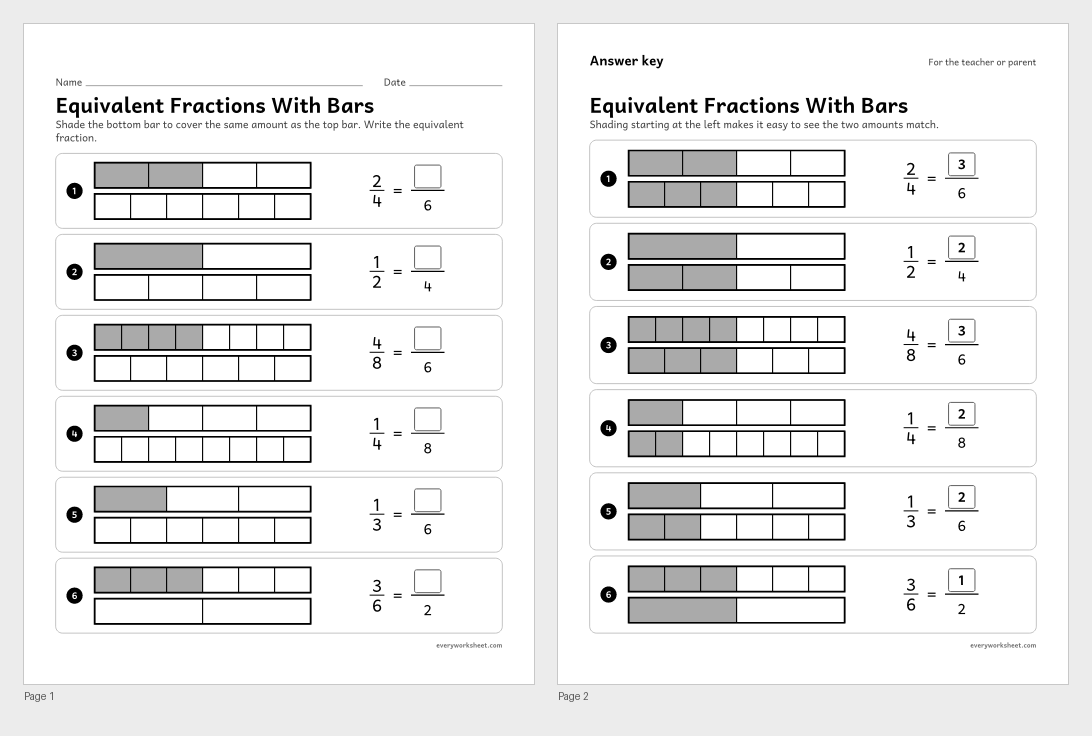
Shading a second bar to match the first and writing the equivalent fraction
Answer key on page 2
2 pages39 KB
 View all 2 pages
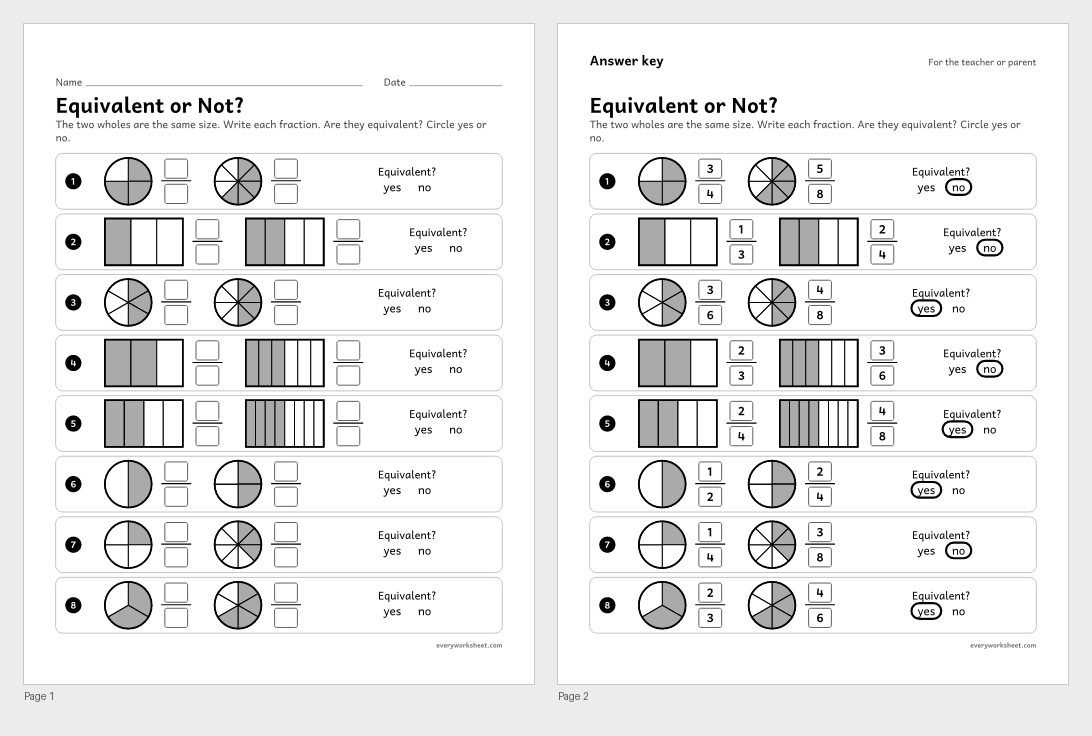
Writing the fraction for each of two same-size wholes and deciding whether they are equivalent
Answer key on page 2
2 pages47 KB
 View all 2 pages
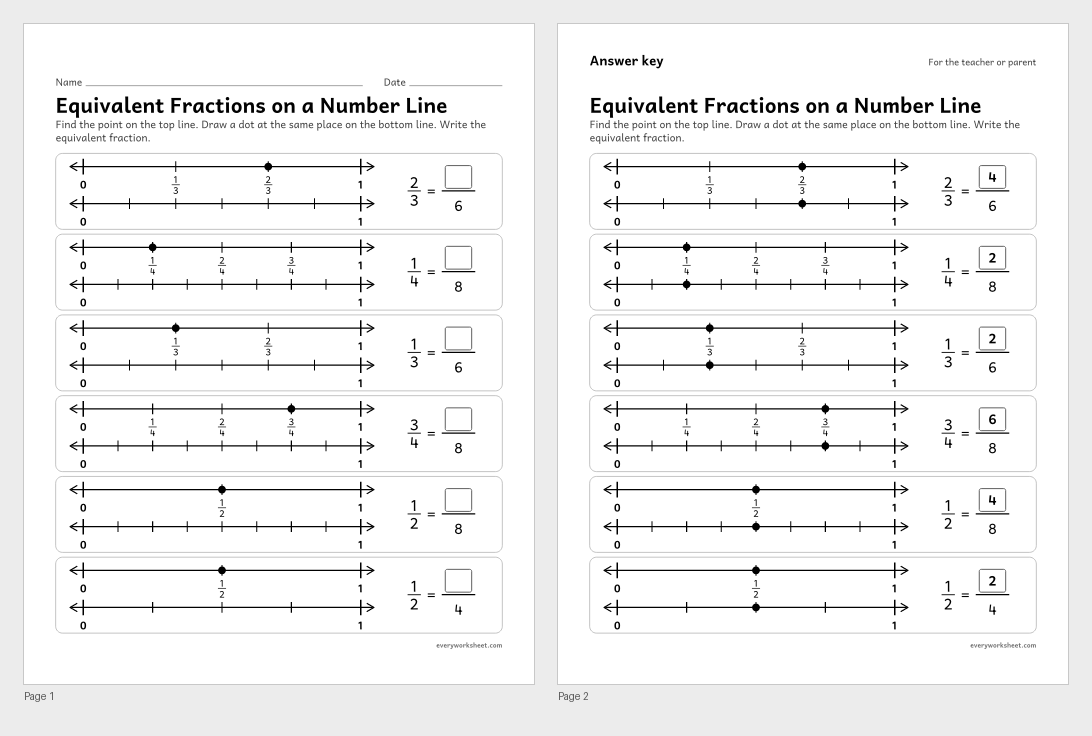
Finding the point on a second number line at the same place and naming the equivalent fraction
Answer key on page 2
2 pages40 KB
 View all 2 pages
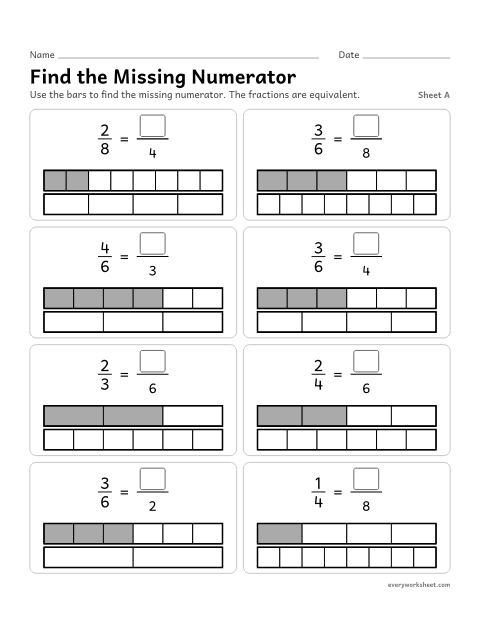
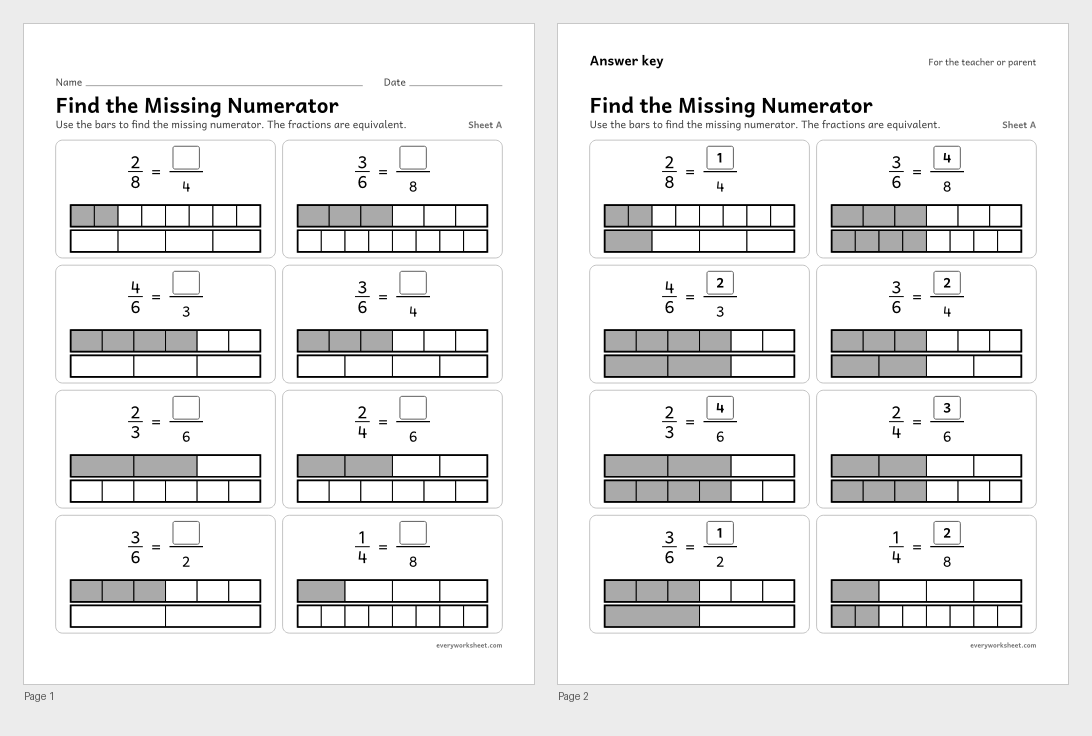
Using bar models to find the missing numerator in a pair of equivalent fractions
Answer key on page 2
2 pages35 KB
 View all 2 pages
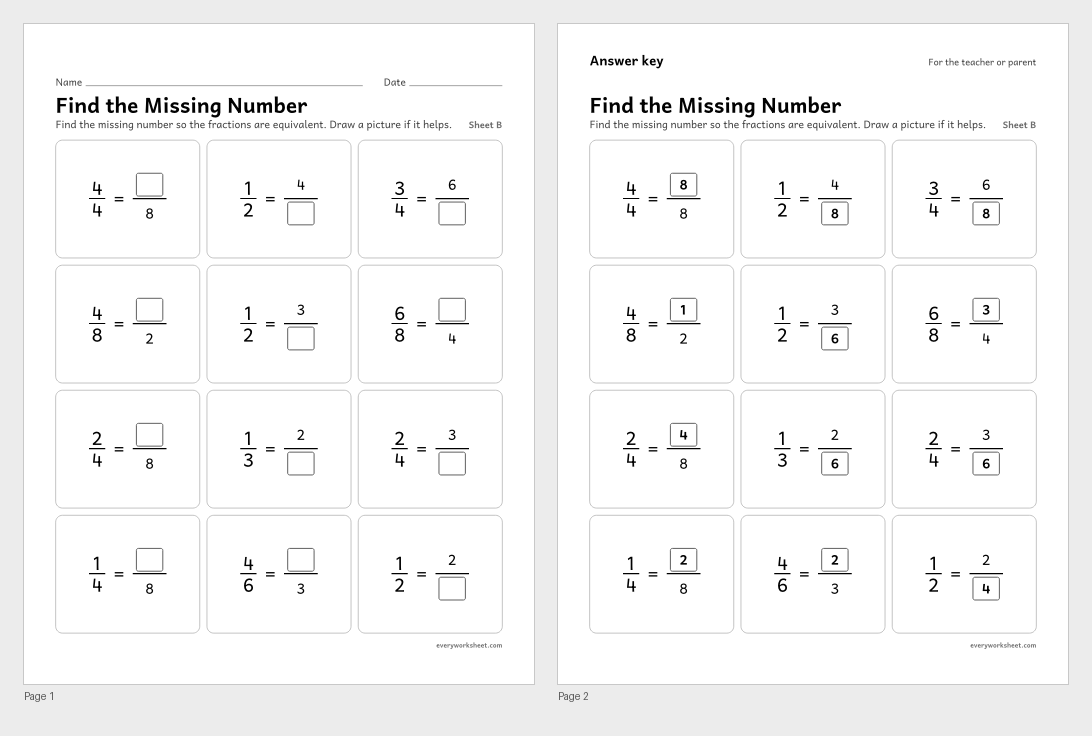
Finding the missing numerator or denominator in equivalent fractions
Answer key on page 2
2 pages37 KB
 View all 2 pages
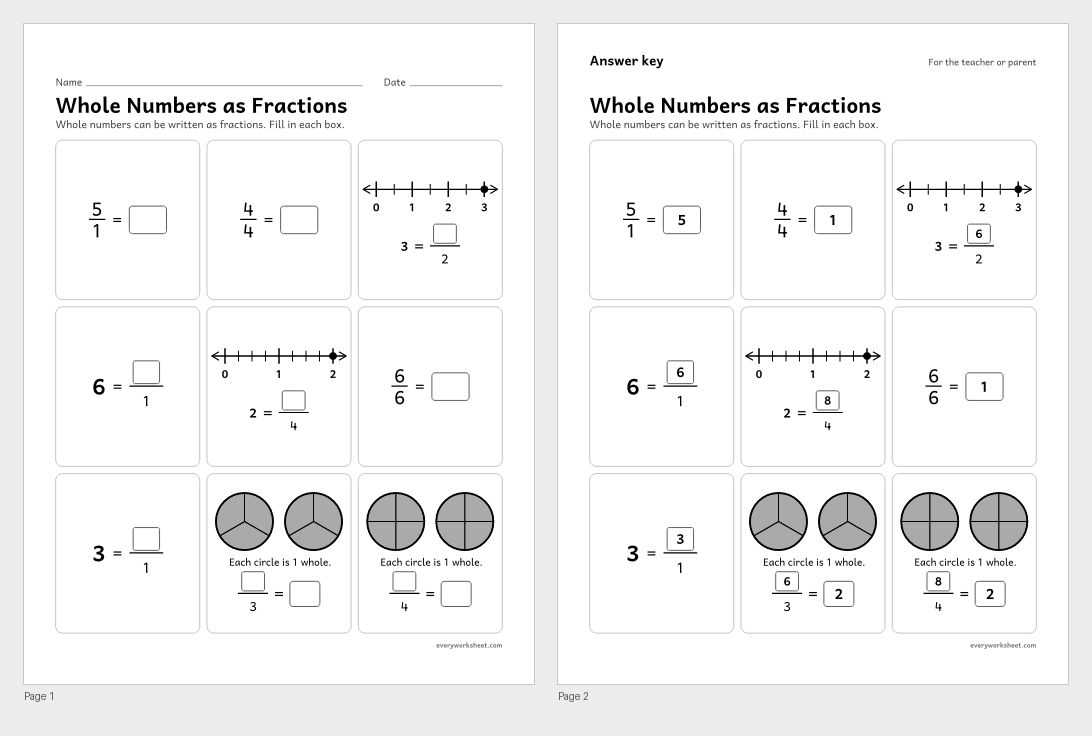
Writing whole numbers as fractions, such as 3 = 3/1, 4/4 = 1 and 8/4 = 2
Answer key on page 2
2 pages37 KB
 View all 2 pages
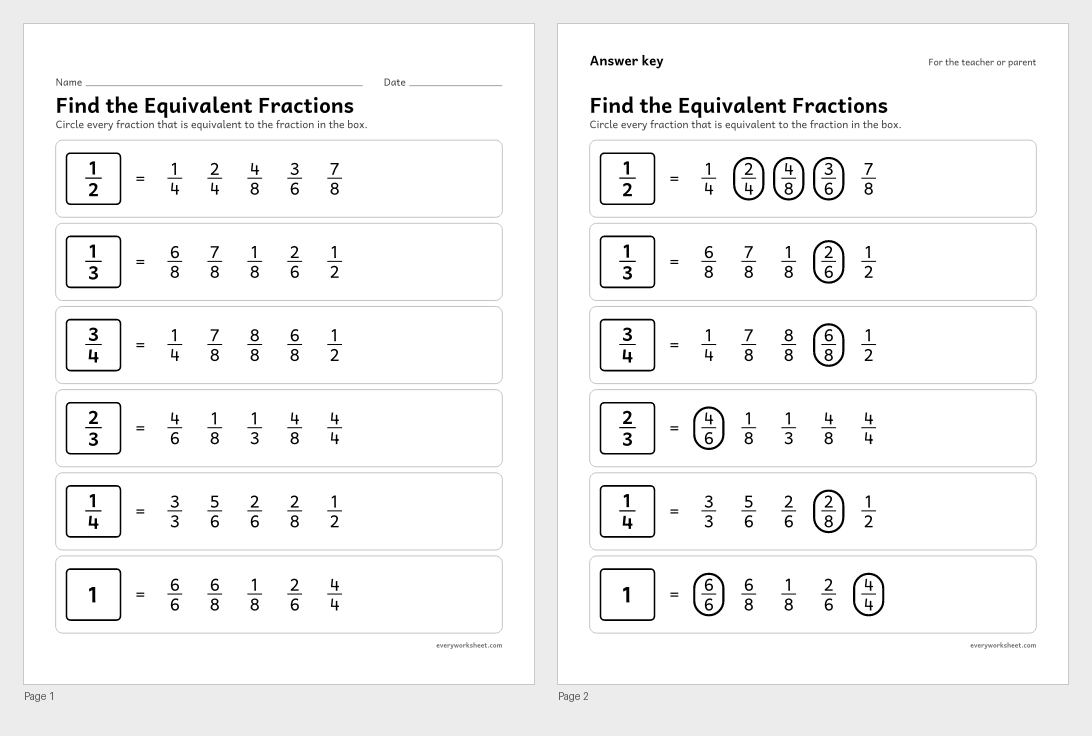
Circling every fraction equal to a given fraction, including fractions equal to 1
Answer key on page 2
2 pages40 KB
 View all 2 pages
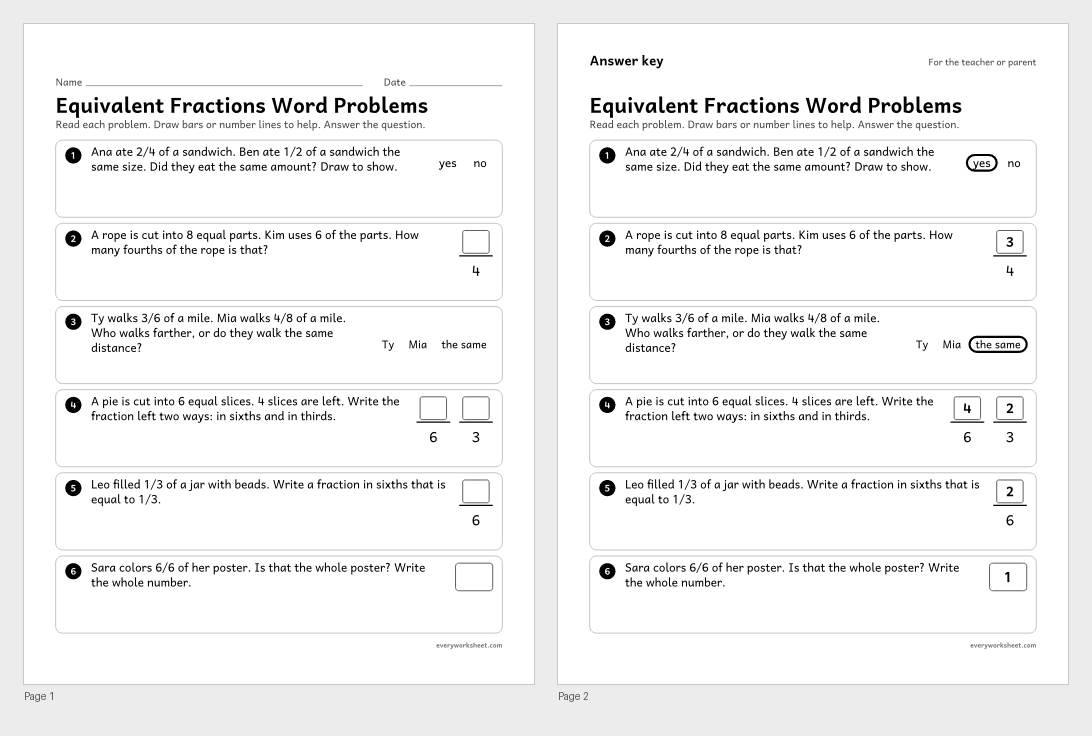
Solving word problems with equivalent fractions using drawings
Answer key on page 2
2 pages42 KB
Print at 100% (actual size) for the cleanest tracing lines.
Equivalent fractions are fractions that name the same amount, like 1/2 and 2/4. In 3rd grade children see this with pictures: two bars the same size shaded the same amount, or two number lines where the fractions land on the same point.
These worksheets start with a fraction wall chart and a list of the equal fractions 3rd graders meet: halves, fourths and eighths; thirds and sixths. Children shade bars to match, compare circles and rectangles, line up two number lines, find the missing number, and write whole numbers as fractions such as 3 = 3/1 and 8/4 = 2.
The models are drawn exactly, so equal fractions line up exactly. Every practice page has an answer key on page 2 and prints on US Letter or A4.
CCSS.MATH.CONTENT.3.NF.A.3.AUnderstand two fractions as equivalent (equal) if they are the same size, or the same point on a number line.CCSS.MATH.CONTENT.3.NF.A.3.BRecognize and generate simple equivalent fractions, e.g., 1/2 = 2/4, 4/6 = 2/3. Explain why the fractions are equivalent, e.g., by using a visual fraction model.CCSS.MATH.CONTENT.3.NF.A.3.CExpress whole numbers as fractions, and recognize fractions that are equivalent to whole numbers. Examples: Express 3 in the form 3 = 3/1; recognize that 6/1 = 6; locate 4/4 and 1 at the same point of a number line diagram.Fractions that are the same size, like 1/2, 2/4, 3/6 and 4/8. They cover the same part of a whole and sit at the same point on a number line.
Simple ones with denominators 2, 3, 4, 6 and 8, such as 1/2 = 2/4, 2/3 = 4/6 and 3/4 = 6/8, plus whole numbers as fractions like 3 = 3/1 and 4/4 = 1.
Not yet. In 3rd grade children find them with pictures, fraction strips and number lines. Multiplying the top and bottom comes in 4th grade.