 View larger
The Five-Paragraph essay
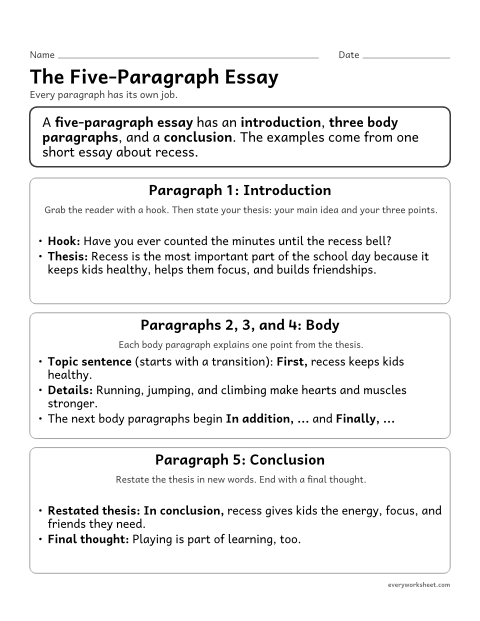
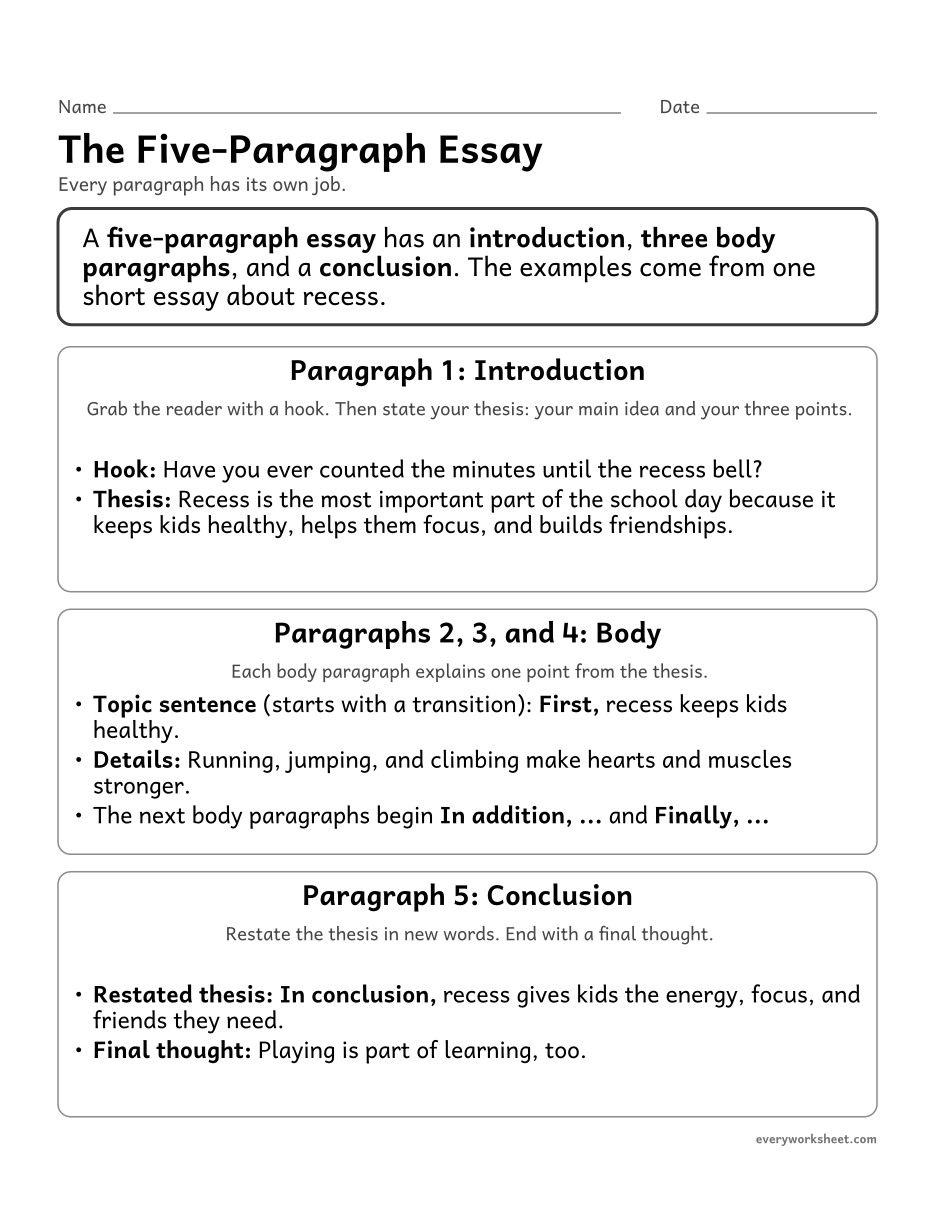
Learning the parts of a five-paragraph essay: introduction, three body paragraphs, and conclusion
1 page36 KB
Learn the parts of a five-paragraph essay, practice each one, then plan and write a full essay.
View largerLearning the parts of a five-paragraph essay: introduction, three body paragraphs, and conclusion
1 page36 KB
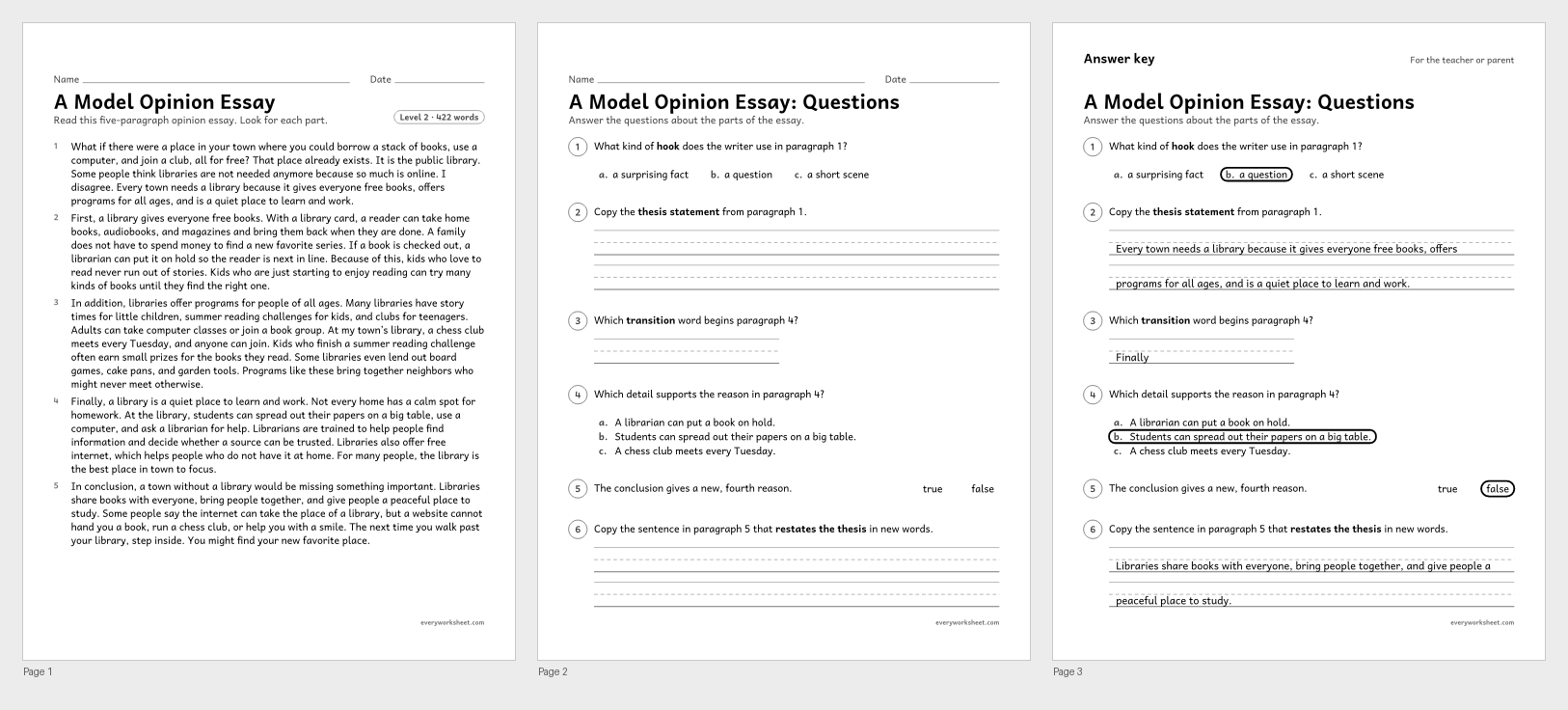 3 pagesView all 3 pages
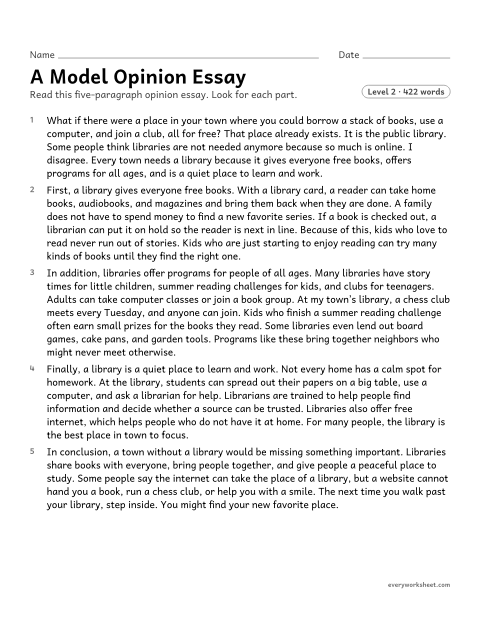
Finding the hook, thesis, topic sentences, transitions, and conclusion in a model five-paragraph essay
Answer key on page 3
3 pages52 KB
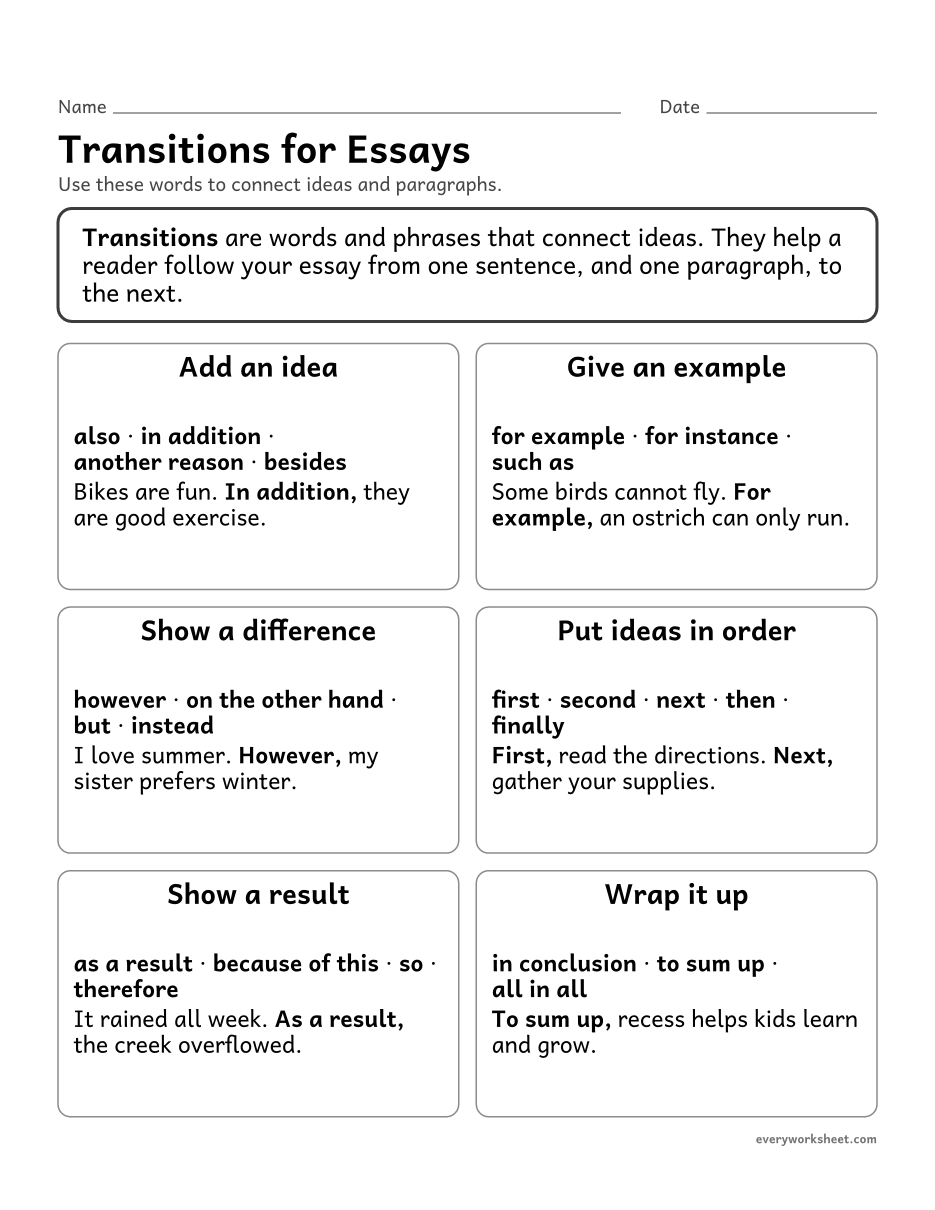 View larger
Learning transition words and phrases by their job: add, give an example, contrast, order, result, and conclude
1 page35 KB
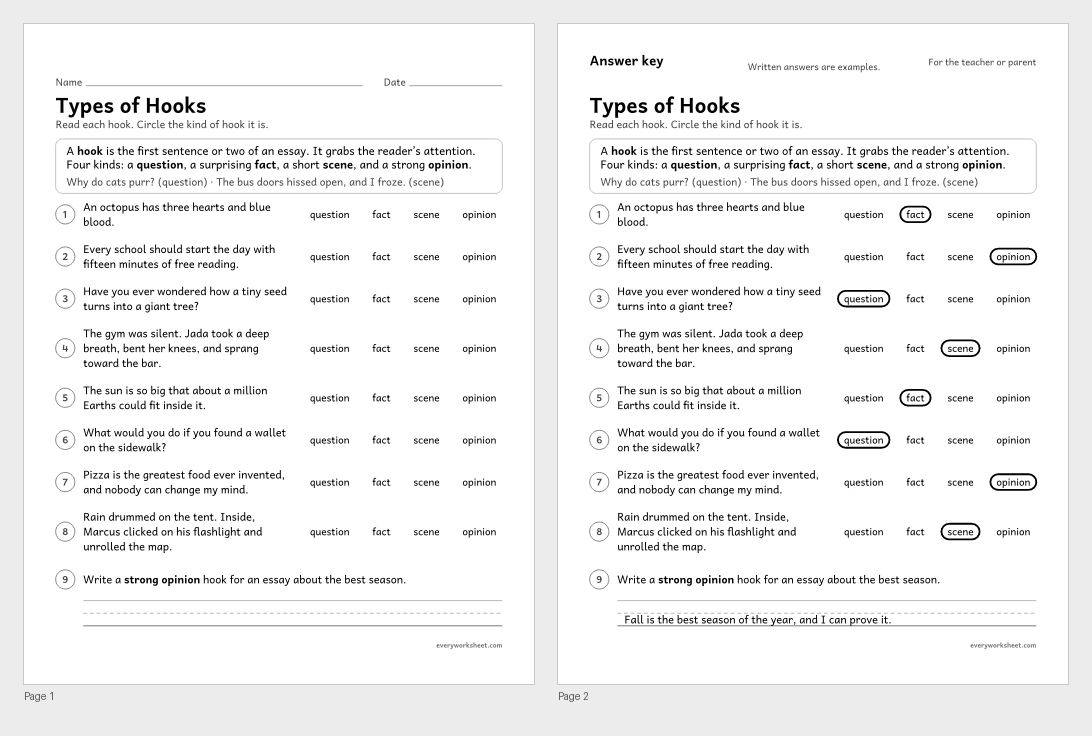 View all 2 pages
Recognizing and writing hooks for an essay introduction: question, surprising fact, short scene, and strong opinion
Answer key on page 2
2 pages53 KB
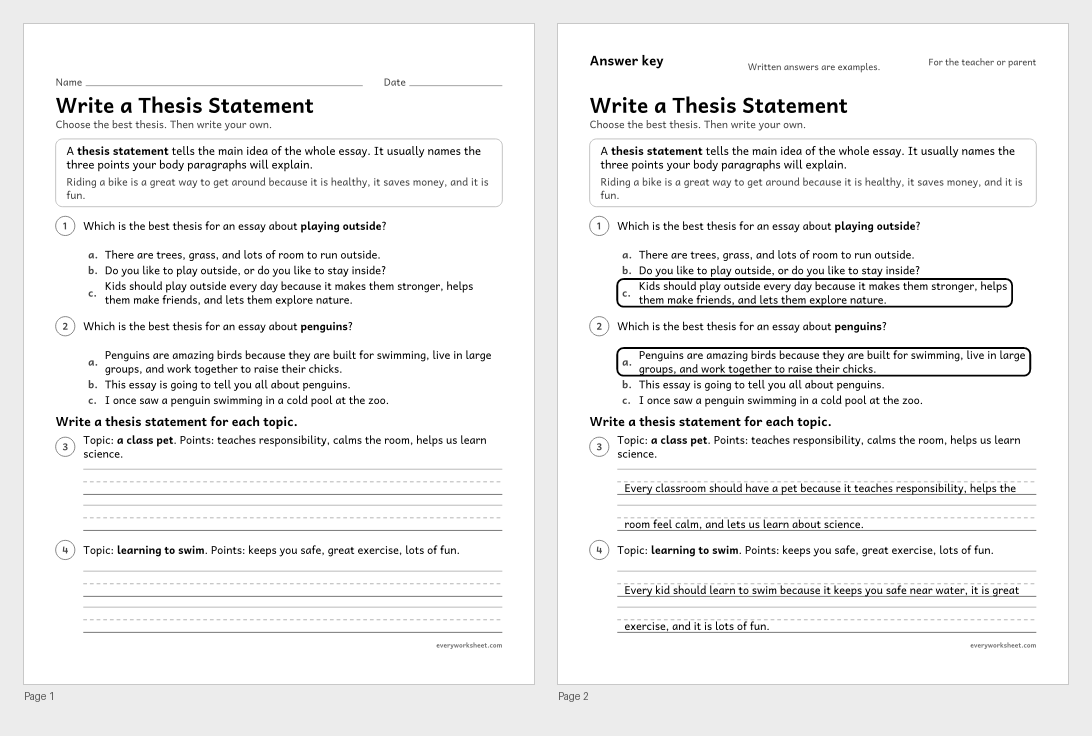 View all 2 pages
Choosing and writing thesis statements that name the topic, the main idea, and three points
Answer key on page 2
2 pages47 KB
 View all 2 pages
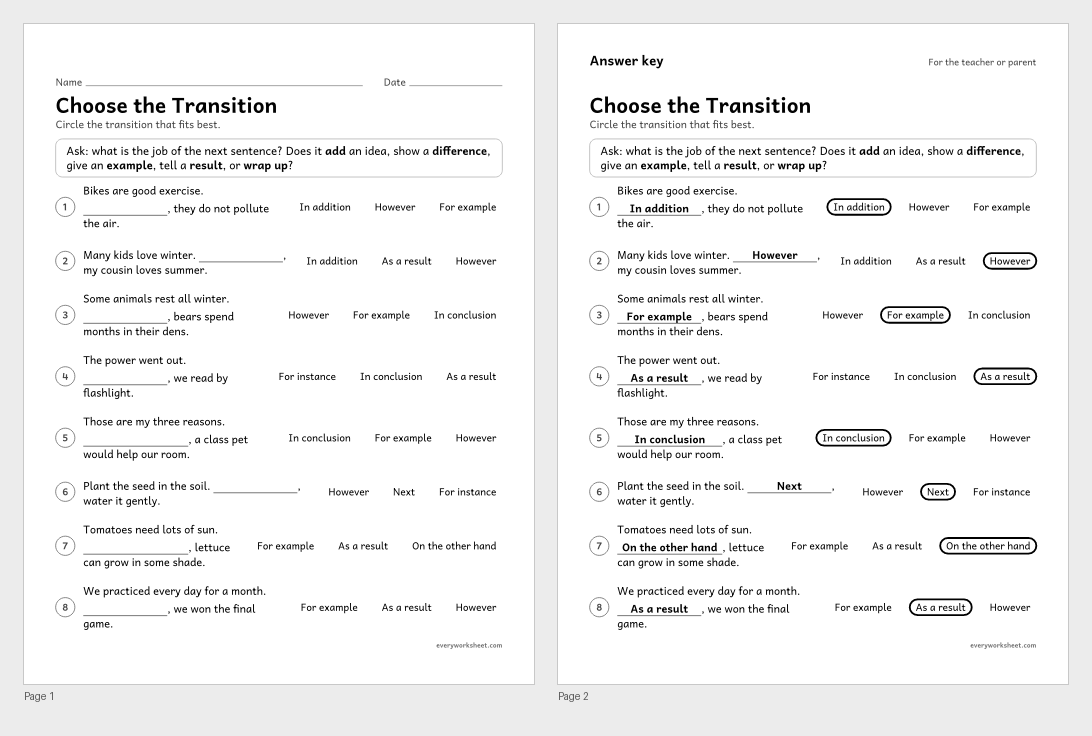
Choosing transitions that add, contrast, give an example, show a result, put steps in order, or conclude
Answer key on page 2
2 pages53 KB
 View all 2 pages
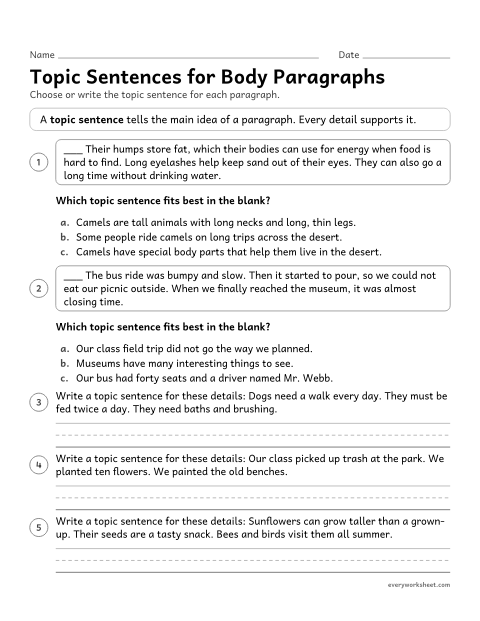
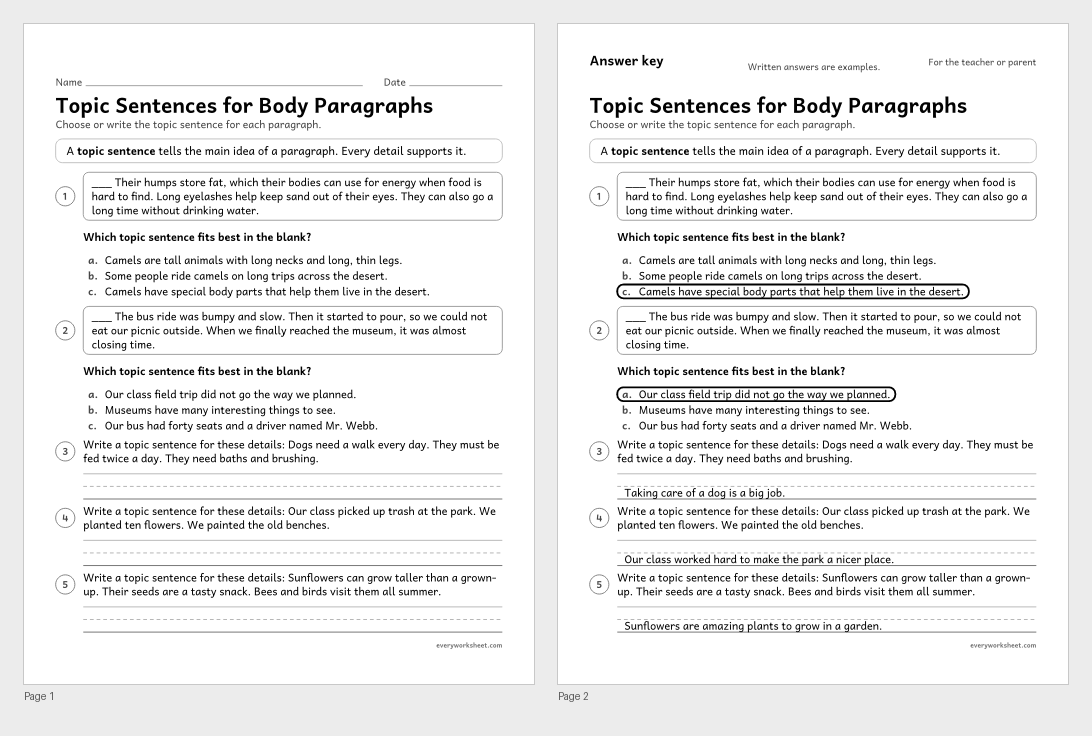
Choosing and writing topic sentences that tell the main idea of a body paragraph
Answer key on page 2
2 pages48 KB
 View all 2 pages
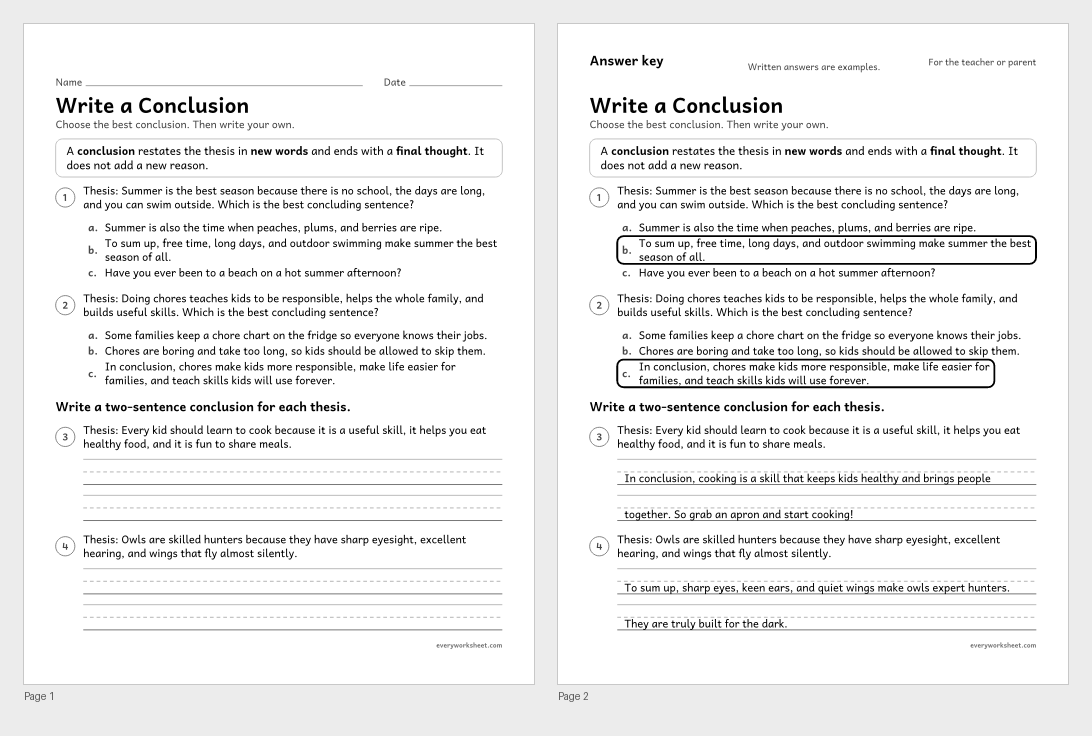
Choosing and writing a conclusion that restates the thesis in new words and ends with a final thought
Answer key on page 2
2 pages47 KB
 View larger
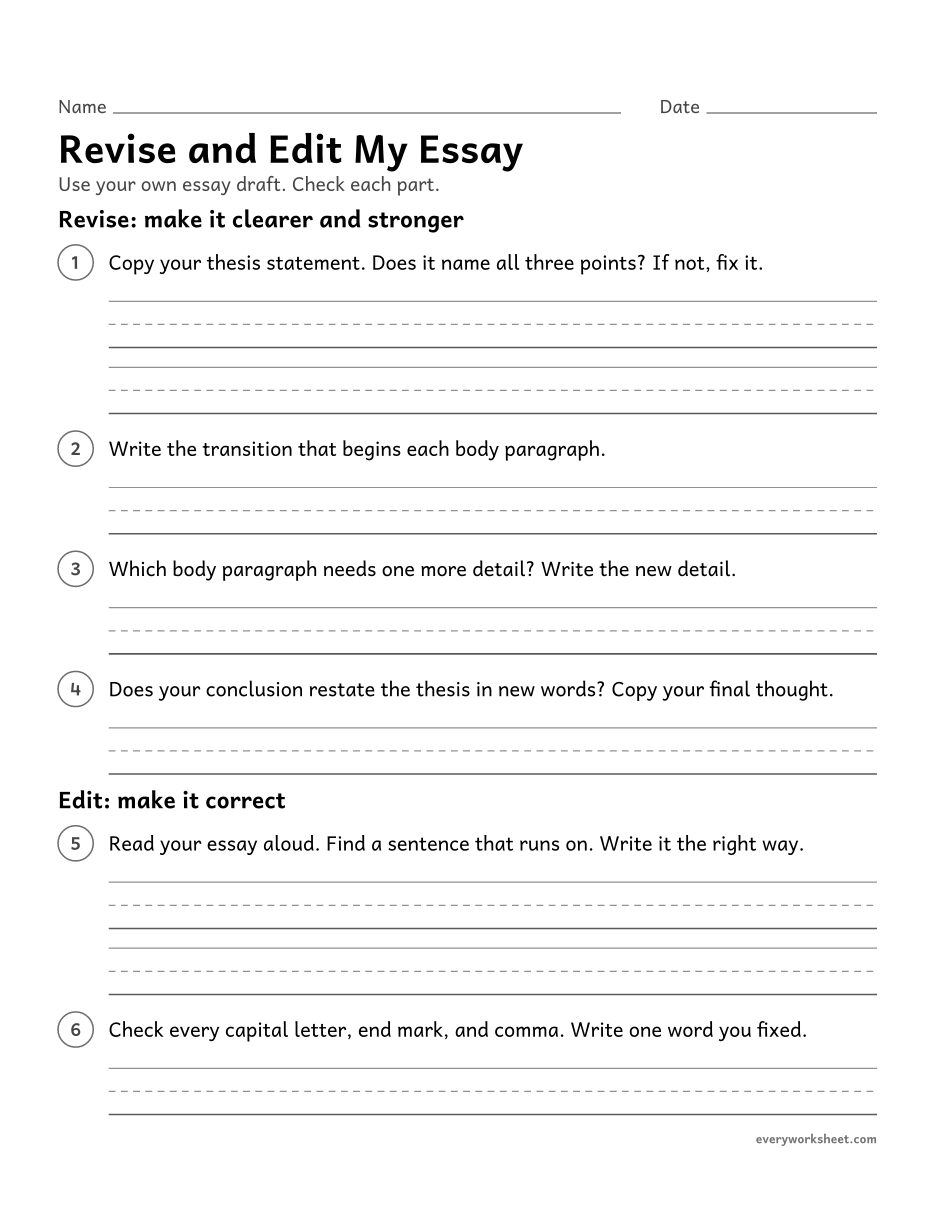
Revising and editing a five-paragraph essay draft with a checklist
1 page30 KB
 View larger
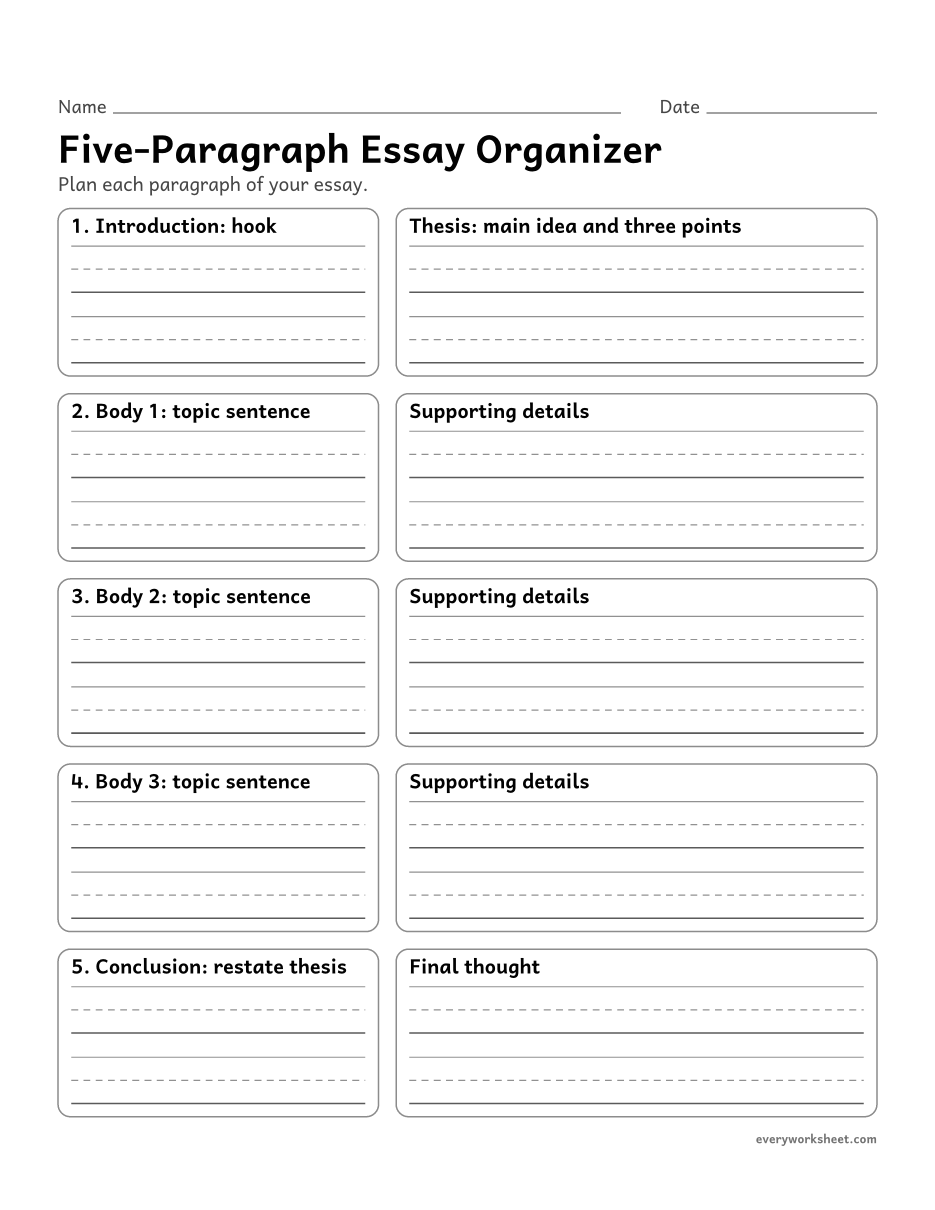
Planning a five-paragraph essay: hook, thesis, three body paragraphs, and conclusion
1 page29 KB
 View larger
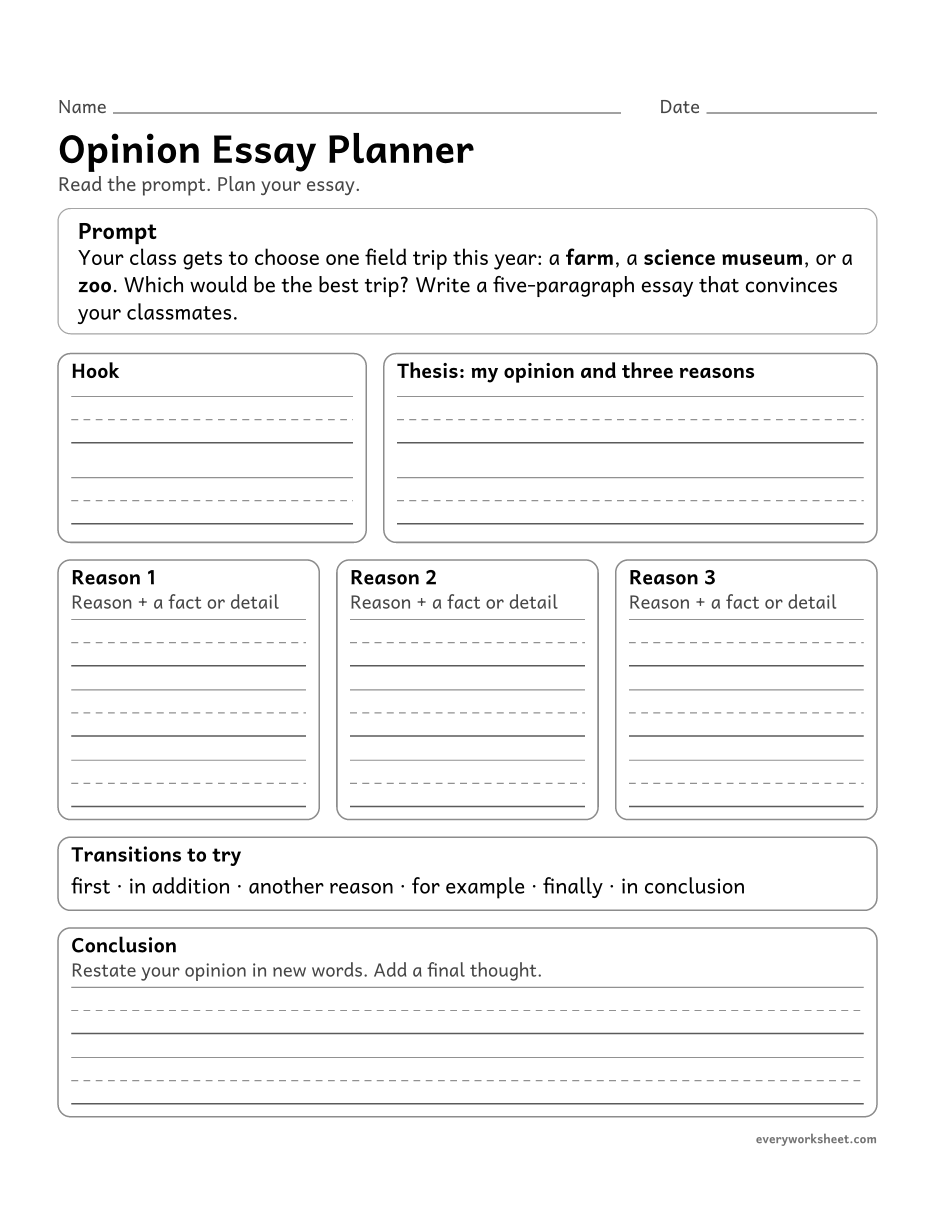
Planning a five-paragraph opinion essay with reasons supported by facts and details
1 page31 KB
 View larger
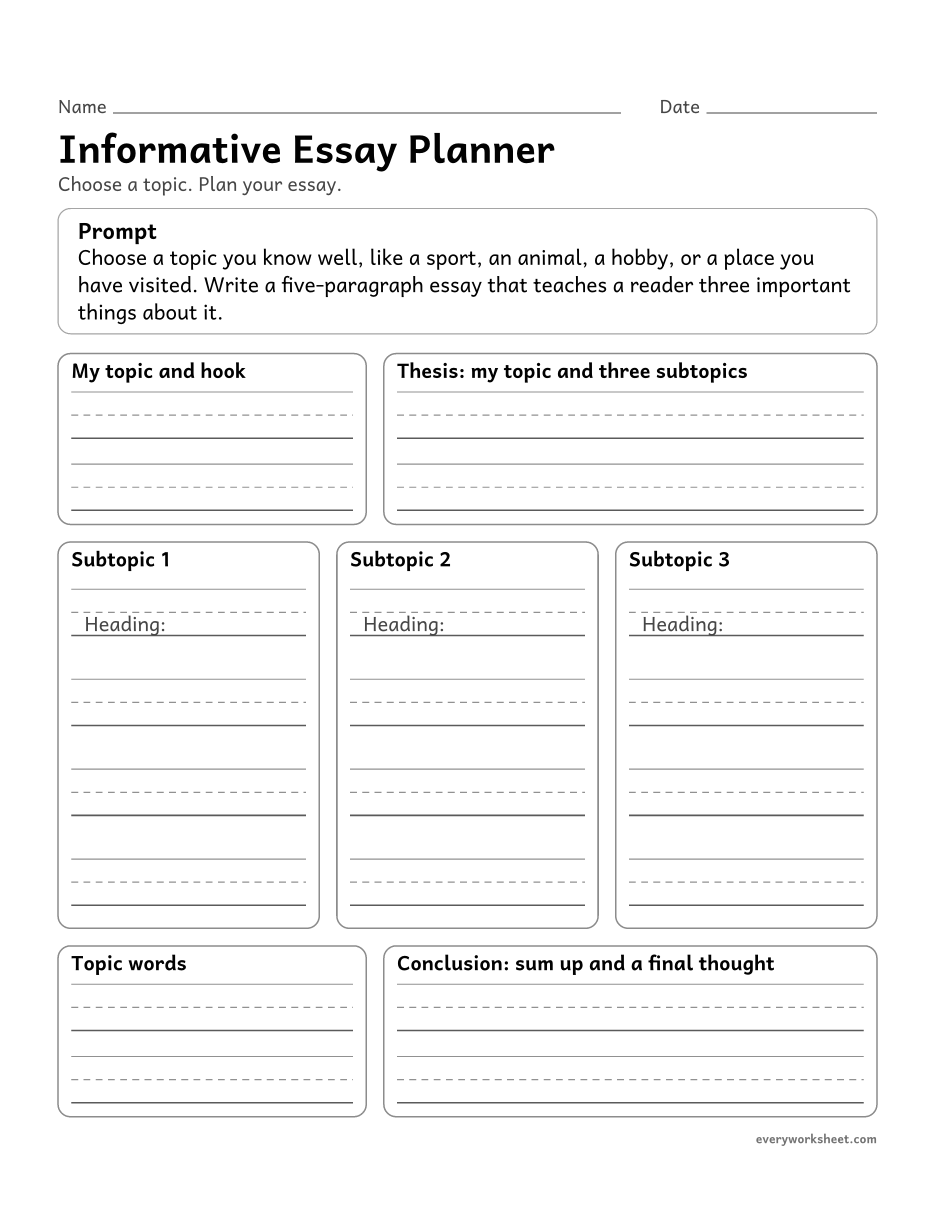
Planning a five-paragraph informative essay with three subtopics, facts, and topic words
1 page30 KB
Print at 100% (actual size) for the cleanest tracing lines.
A **five-paragraph essay** is a simple, sturdy shape for organized writing. Paragraph 1 is the **introduction**: it opens with a **hook** that grabs the reader and ends with a **thesis statement** that tells the main idea and names three points. Paragraphs 2, 3, and 4 are **body paragraphs**: each one explains one point, starting with a transition and a topic sentence ("First, recess keeps kids healthy.") and adding details. Paragraph 5 is the **conclusion**: it restates the thesis in new words and ends with a final thought.
These worksheets teach the essay one part at a time. Children read an anchor chart and an original model essay, then practice the trickiest pieces on their own: naming kinds of hooks, writing thesis statements, choosing transitions, writing topic sentences, and writing conclusions that do not add new reasons.
When the parts make sense, the planning pages bring them together: a full five-paragraph graphic organizer, an opinion essay planner, an informative essay planner, and a revise and edit page for checking a finished draft.
CCSS.ELA-LITERACY.W.4.1.AIntroduce a topic or text clearly, state an opinion, and create an organizational structure in which related ideas are grouped to support the writer's purpose.CCSS.ELA-LITERACY.W.4.1.CLink opinion and reasons using words and phrases (e.g., for instance, in order to, in addition).CCSS.ELA-LITERACY.W.4.1.DProvide a concluding statement or section related to the opinion presented.CCSS.ELA-LITERACY.W.4.2.AIntroduce a topic clearly and group related information in paragraphs and sections; include formatting (e.g., headings), illustrations, and multimedia when useful to aiding comprehension.CCSS.ELA-LITERACY.W.4.4Produce clear and coherent writing in which the development and organization are appropriate to task, purpose, and audience.CCSS.ELA-LITERACY.W.4.5With guidance and support from peers and adults, develop and strengthen writing as needed by planning, revising, and editing.An introduction with a hook and a thesis, three body paragraphs that each explain one point, and a conclusion that restates the thesis and ends with a final thought.
It is the sentence that tells the main idea of the whole essay, usually at the end of the introduction. It often names the three points the body paragraphs will explain.
Many children meet it in 4th or 5th grade, once they can write a solid single paragraph with a topic sentence, details, and a closing.
First, in addition, another reason, for example, however, as a result, and in conclusion are a strong starting set. Each one tells the reader how the next idea connects.