 View larger
Fractions on a number line
Seeing halves, thirds, fourths, sixths and eighths as points on number lines from 0 to 1
1 page35 KB
Number lines in halves, thirds, fourths, sixths and eighths: label the marks, find and mark fractions, jump from 0, and work past 1. With answer keys.
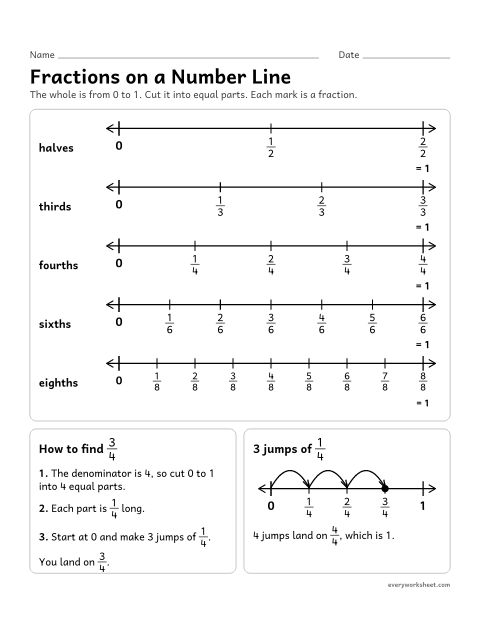
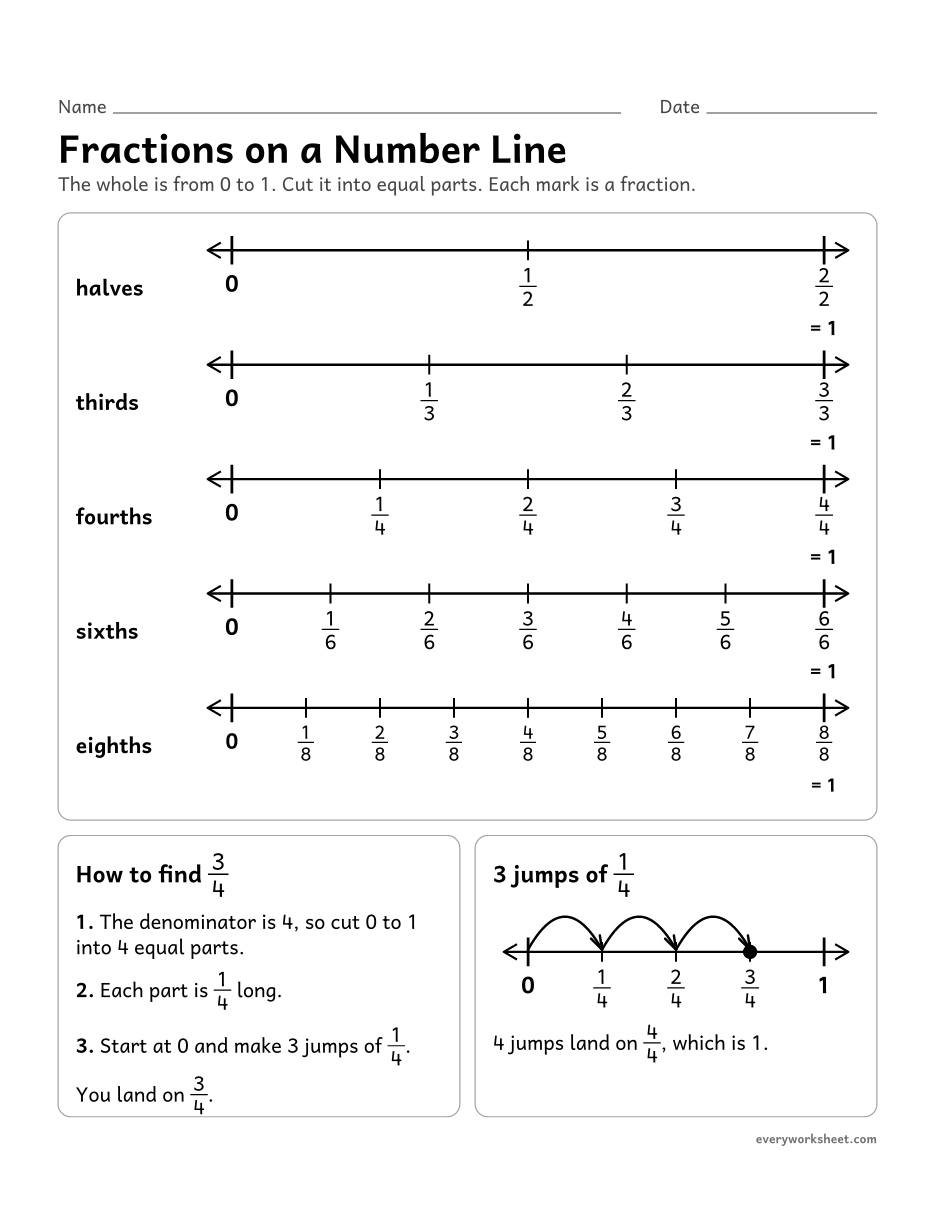
View largerSeeing halves, thirds, fourths, sixths and eighths as points on number lines from 0 to 1
1 page35 KB
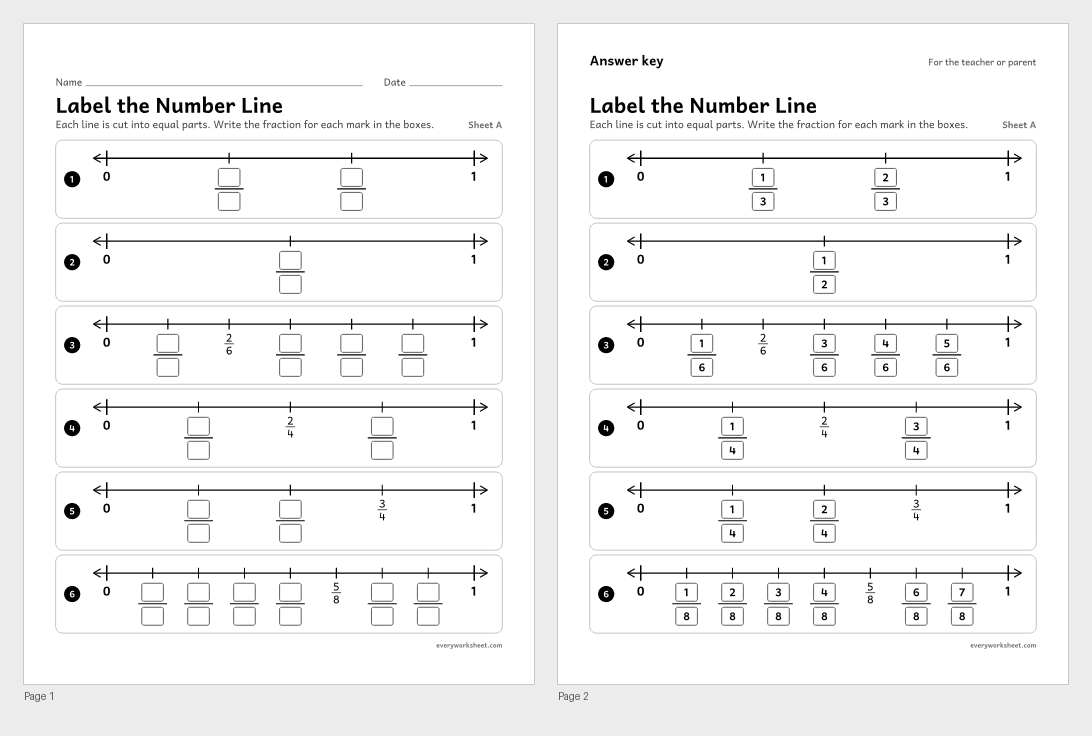 View all 2 pages
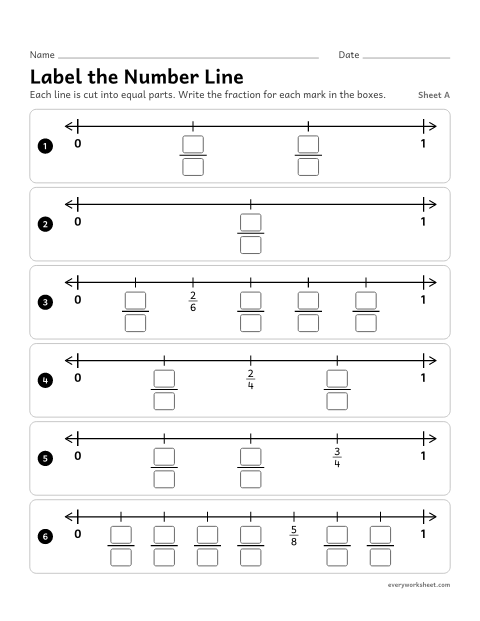
Writing the fraction for each mark on number lines from 0 to 1
Answer key on page 2
2 pages38 KB
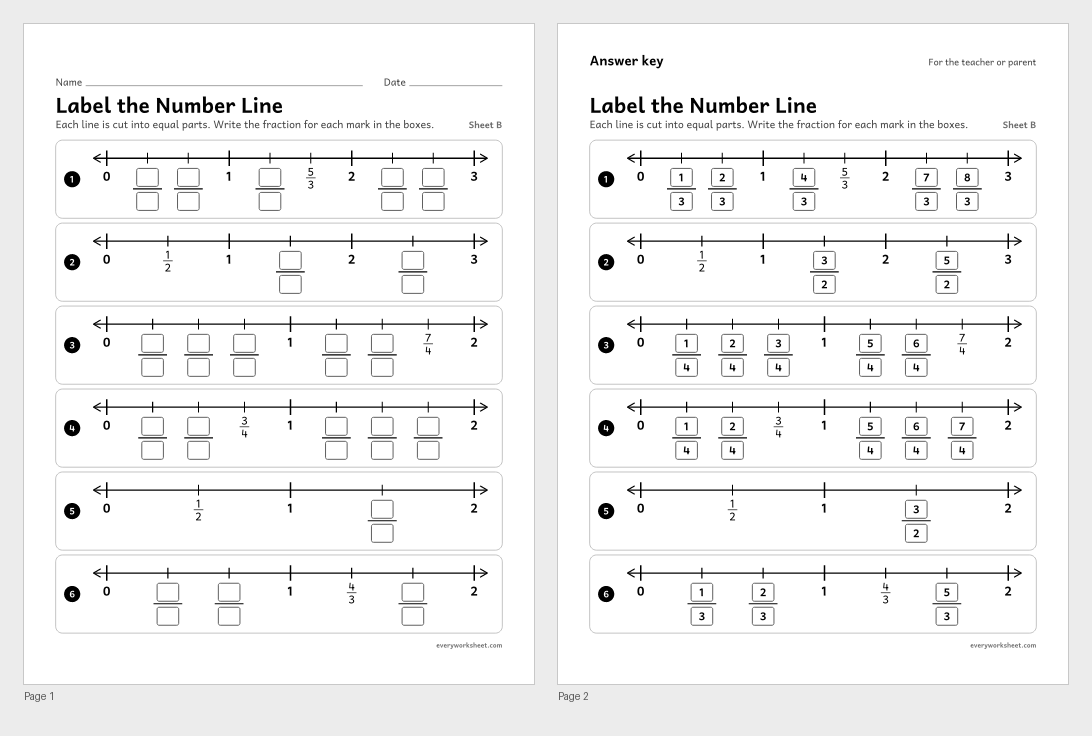 View all 2 pages
Writing fractions greater than 1 on number lines from 0 to 2 and 0 to 3
Answer key on page 2
2 pages40 KB
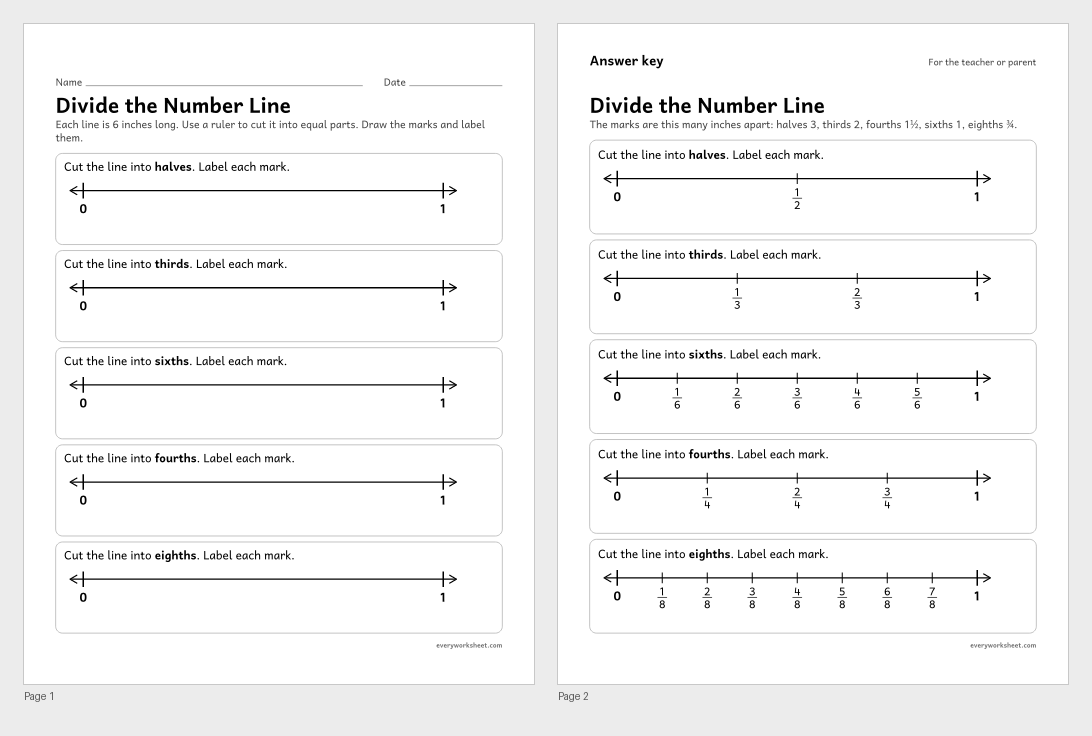 View all 2 pages
Using a ruler to cut 0 to 1 into equal parts and label each mark as a fraction
Answer key on page 2
2 pages35 KB
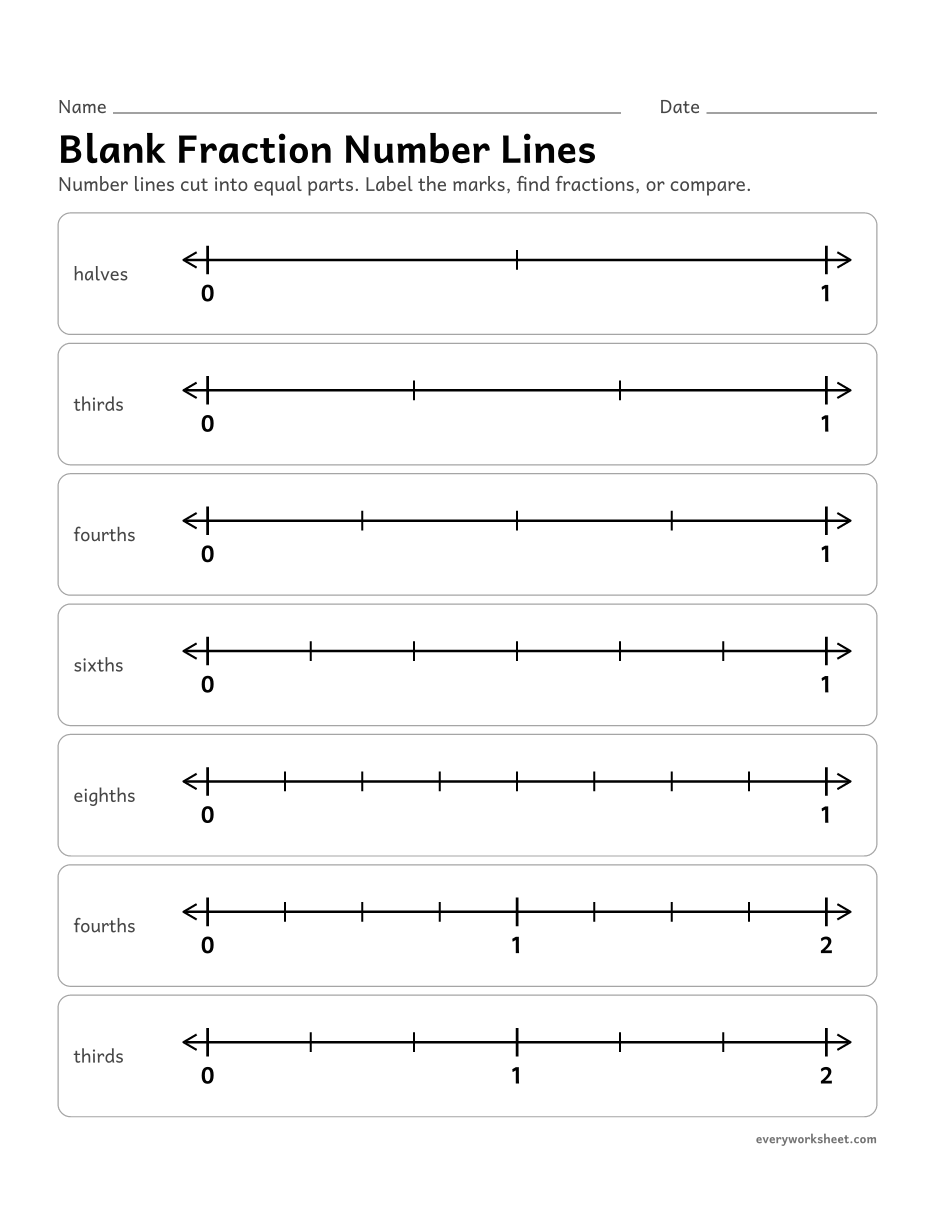 View larger
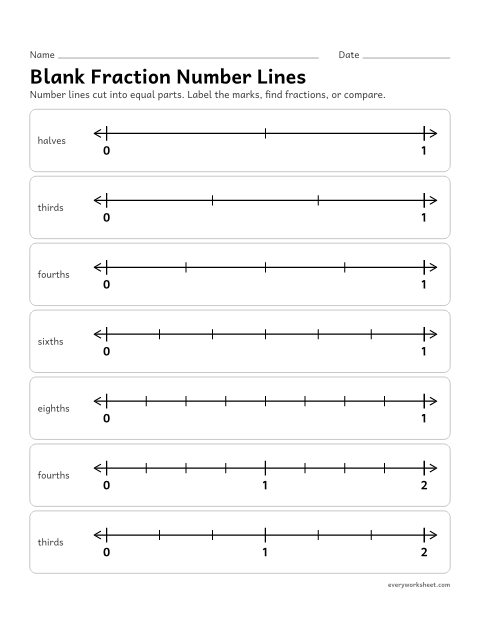
Blank number lines from 0 to 1 and 0 to 2 marked in halves, thirds, fourths, sixths and eighths
1 page29 KB
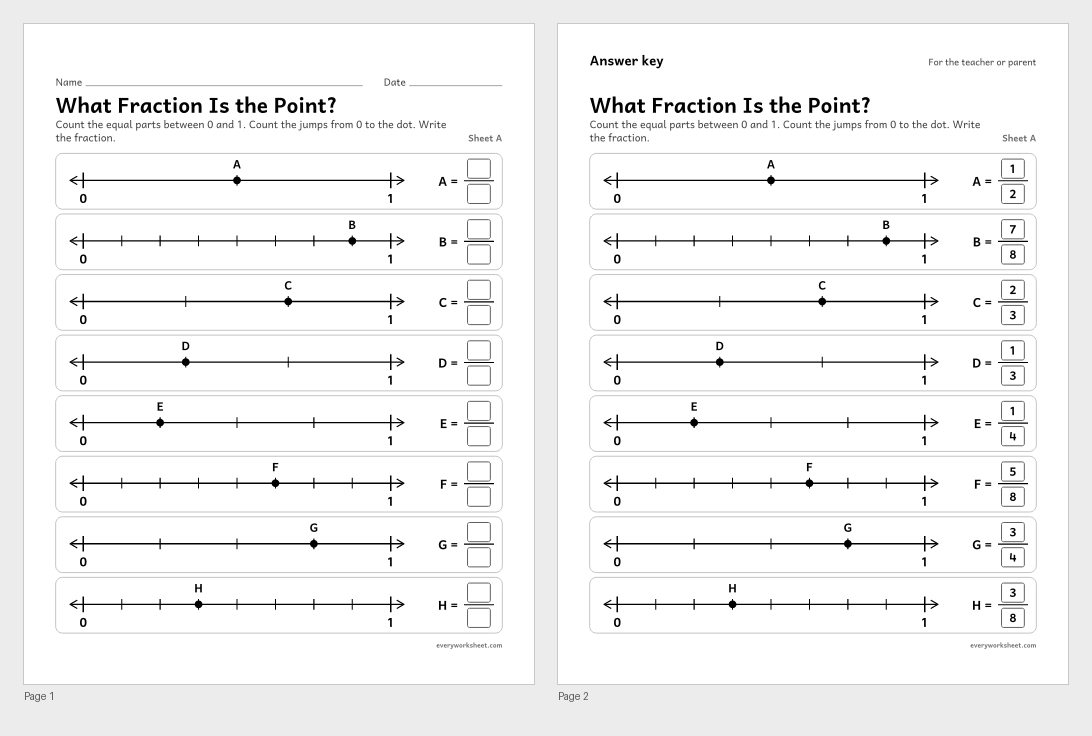 View all 2 pages
Naming the fraction at a point on a number line from 0 to 1
Answer key on page 2
2 pages41 KB
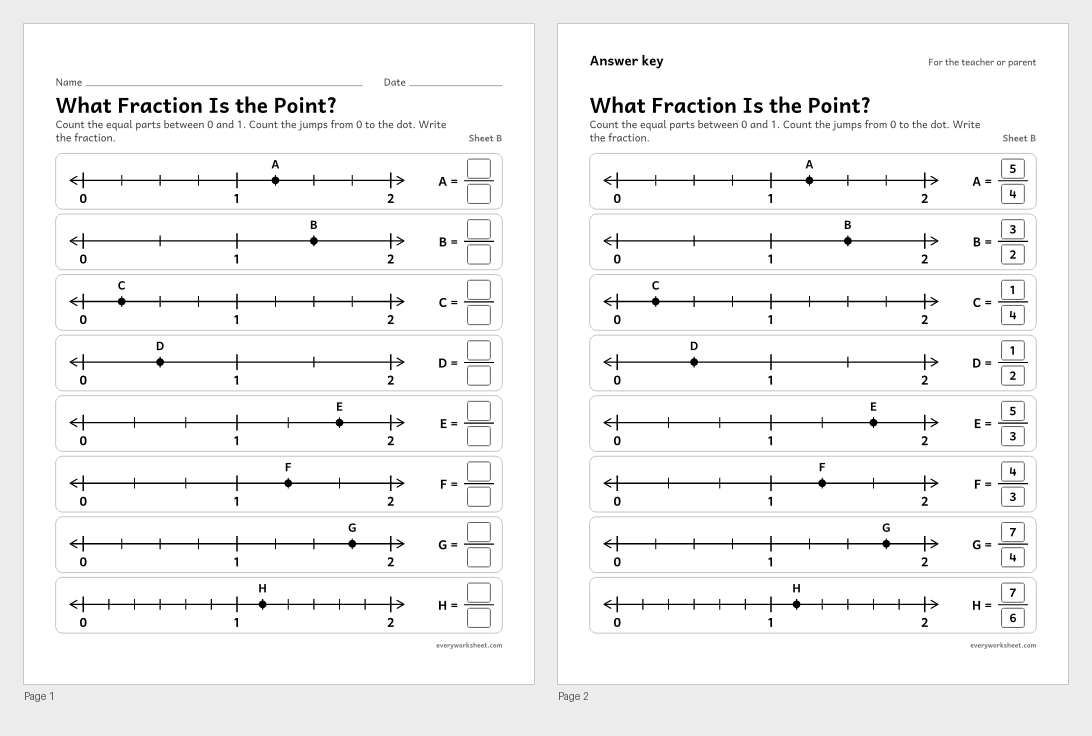 View all 2 pages
Naming fractions at points on a number line from 0 to 2, including fractions greater than 1
Answer key on page 2
2 pages41 KB
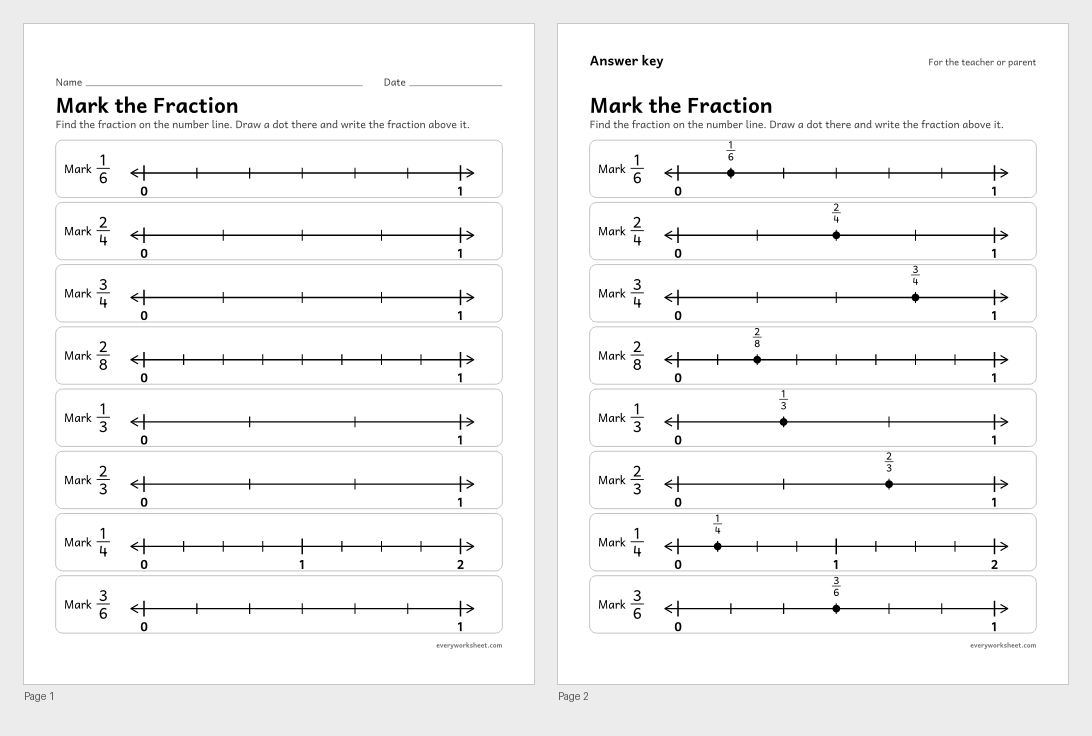 View all 2 pages
Counting jumps of 1/b from 0 to find and mark a fraction on a number line
Answer key on page 2
2 pages38 KB
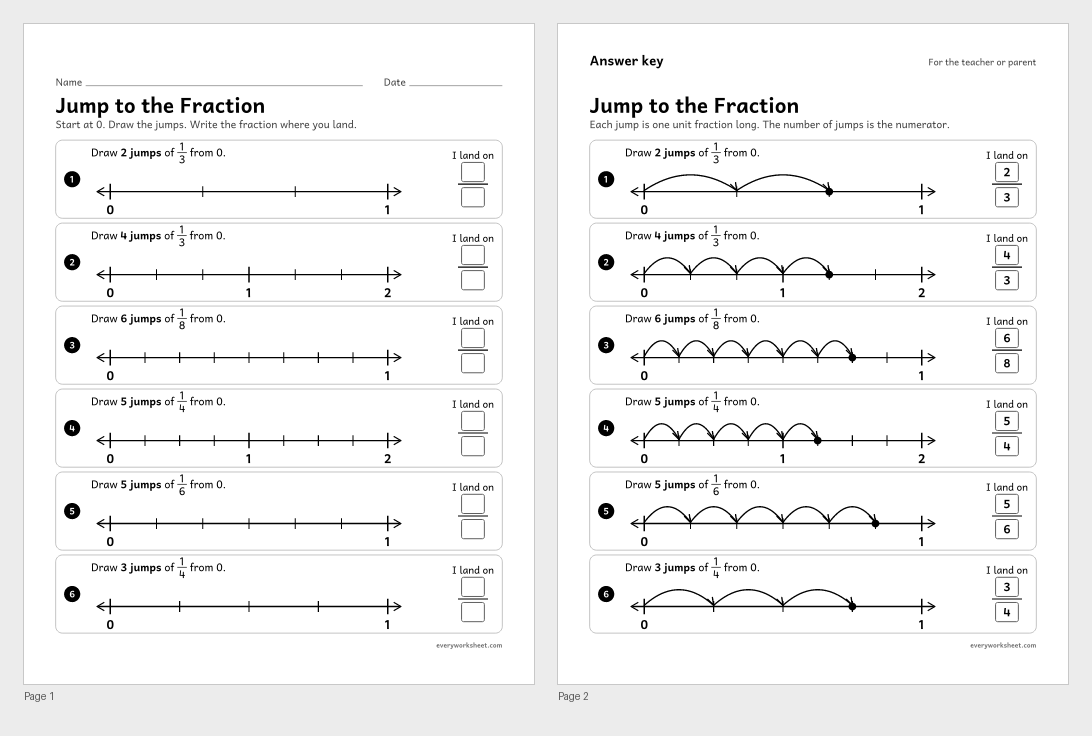 View all 2 pages
Showing a/b by drawing a jumps of 1/b from 0 on a number line
Answer key on page 2
2 pages48 KB
Print at 100% (actual size) for the cleanest tracing lines.
On a number line a fraction is a point, just like a whole number. The whole is the distance from 0 to 1. Cut it into 4 equal parts and each part is 1/4 long. Start at 0 and make 3 jumps of 1/4, and you land on 3/4.
These worksheets build that idea step by step: a chart of number lines lined up from halves to eighths, labeling every mark, naming the fraction at a point, marking a fraction yourself and drawing the jumps. Later pages go from 0 to 2 and 0 to 3, so children meet fractions like 5/4 and see that 4/4 sits at the same point as 1.
Every mark is placed by exact measurement, so the parts are truly equal. On Divide the Number Line each line is exactly 6 inches long, and children use a ruler to make halves, thirds, fourths, sixths and eighths. Practice pages have keys on page 2.
CCSS.MATH.CONTENT.3.NF.A.2Understand a fraction as a number on the number line; represent fractions on a number line diagram.CCSS.MATH.CONTENT.3.NF.A.2.ARepresent a fraction 1/b on a number line diagram by defining the interval from 0 to 1 as the whole and partitioning it into b equal parts. Recognize that each part has size 1/b and that the endpoint of the part based at 0 locates the number 1/b on the number line.CCSS.MATH.CONTENT.3.NF.A.2.BRepresent a fraction a/b on a number line diagram by marking off a lengths 1/b from 0. Recognize that the resulting interval has size a/b and that its endpoint locates the number a/b on the number line.Cut the space from 0 to 1 into as many equal parts as the denominator. Then start at 0 and count that many parts as the numerator. For 2/3, cut 0 to 1 into 3 equal parts and count 2 of them.
Four jumps of 1/4 from 0 land exactly on 1. On a number line 4/4 and 1 are the same point, so they are the same number.
Yes. Every mark is placed by exact measurement. On Divide the Number Line the lines are exactly 6 inches long when printed at 100%, so children can measure the parts with a ruler.