 View larger
What is a Haiku?
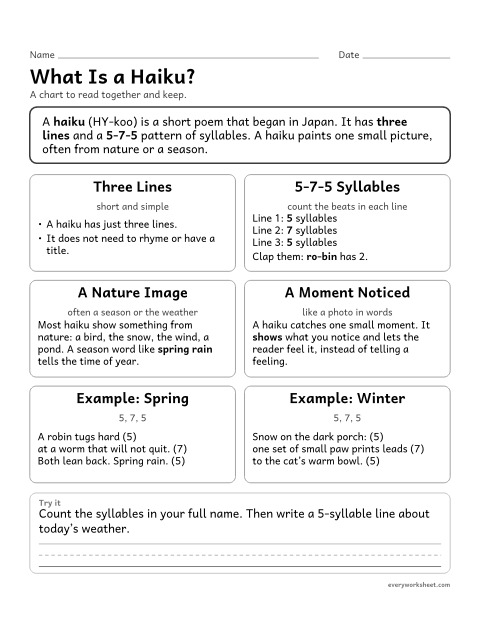
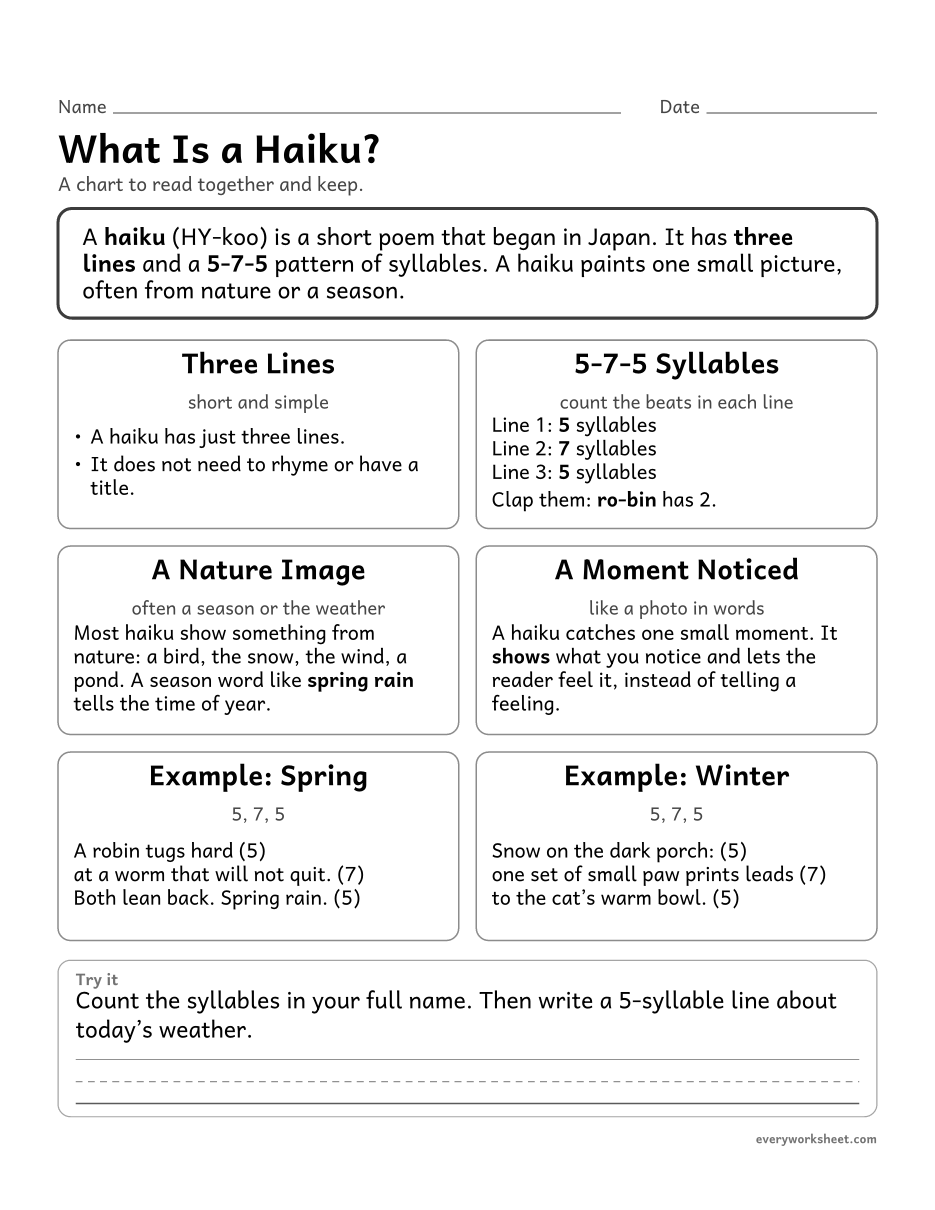
Knowing the haiku form: three lines, 5-7-5 syllables, an image from nature or a season, and one moment noticed
1 page36 KB
Learn the 5-7-5 haiku form, count syllables, read original haiku, and write your own.
View largerKnowing the haiku form: three lines, 5-7-5 syllables, an image from nature or a season, and one moment noticed
1 page36 KB
 View all 2 pages
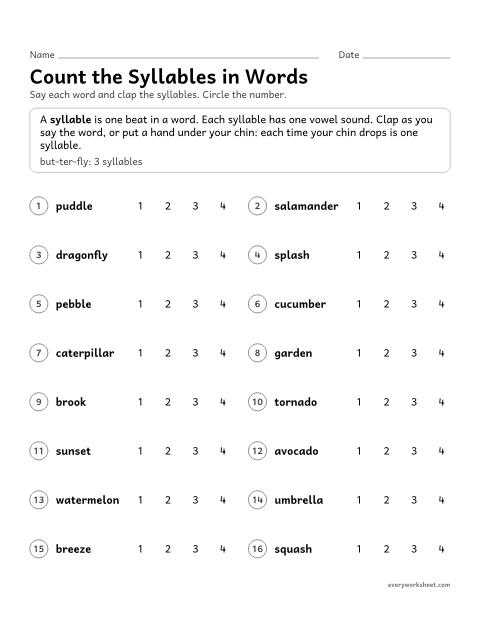
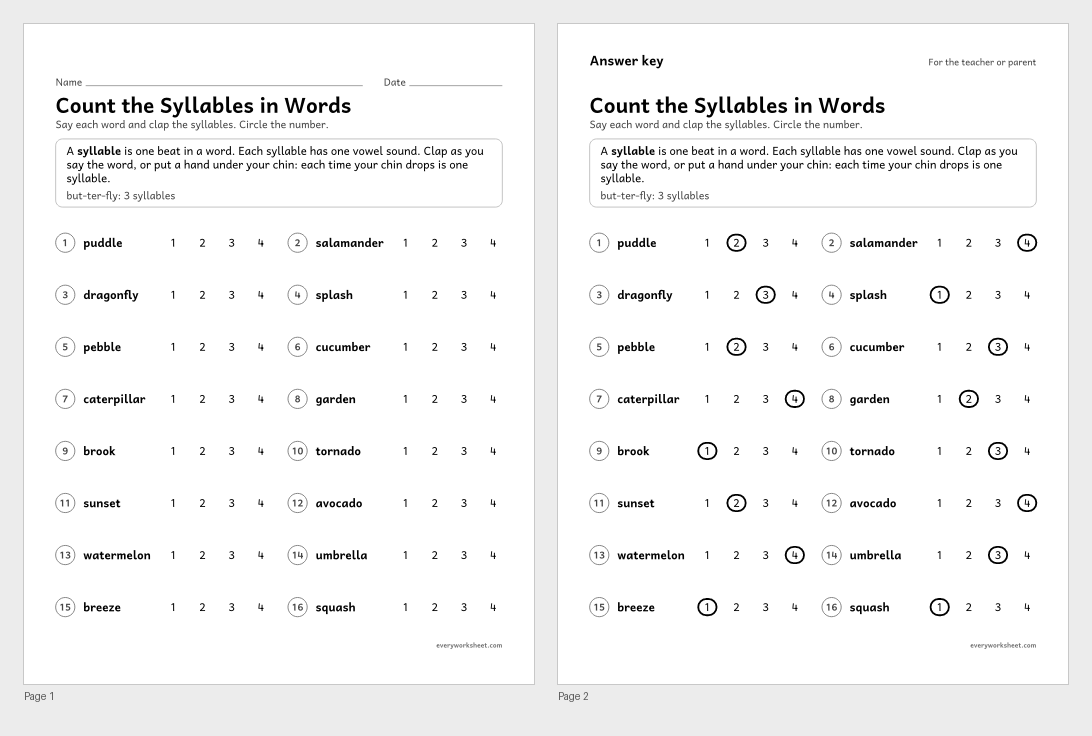
Counting syllables in one- to four-syllable words, the first skill for writing haiku
Answer key on page 2
2 pages68 KB
 View all 2 pages
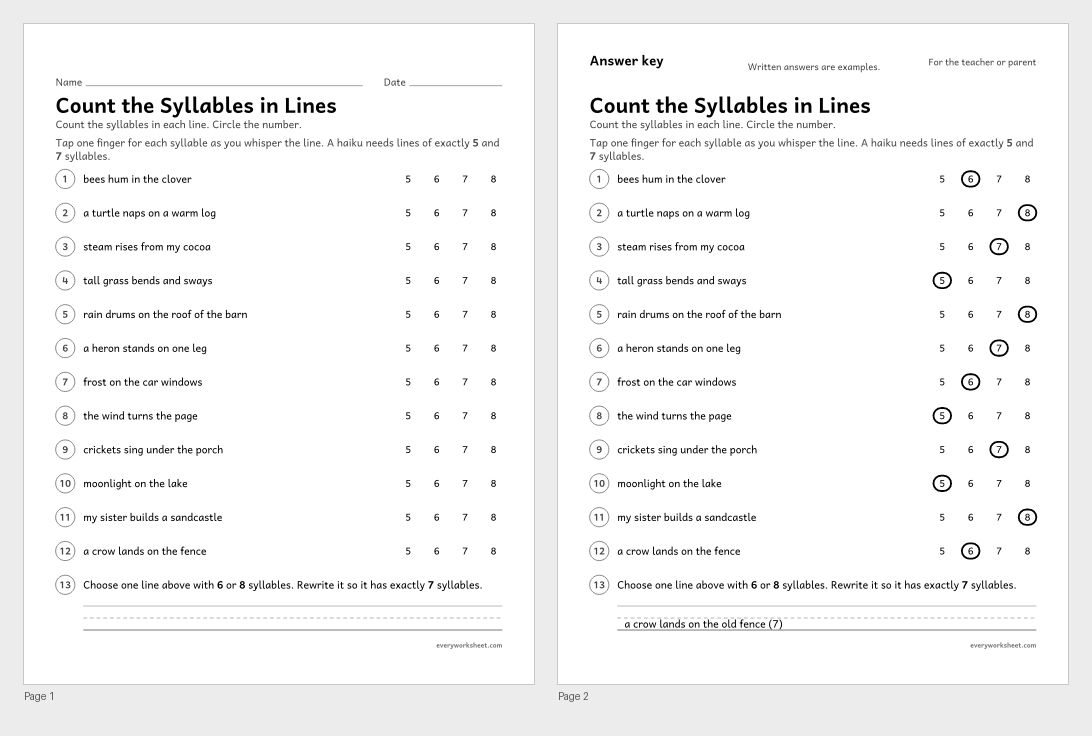
Counting the syllables in whole lines of poetry, as haiku poets do
Answer key on page 2
2 pages59 KB
 View all 2 pages
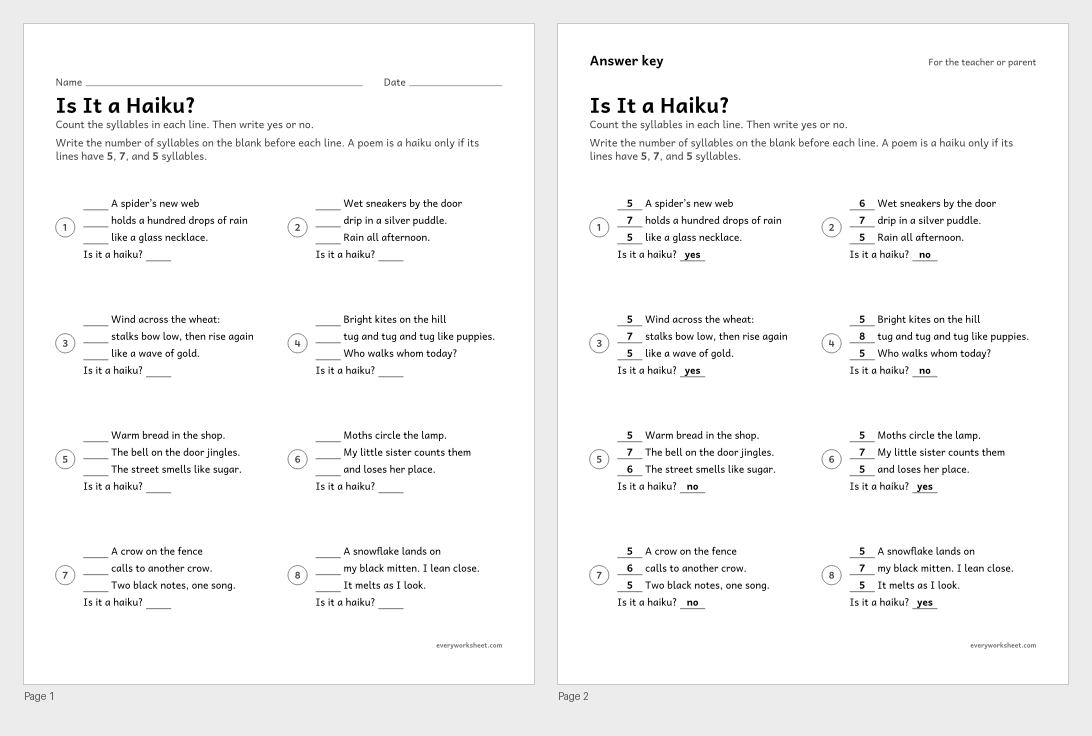
Checking poems for the 5-7-5 haiku pattern by counting the syllables in each line
Answer key on page 2
2 pages46 KB
 View all 2 pages
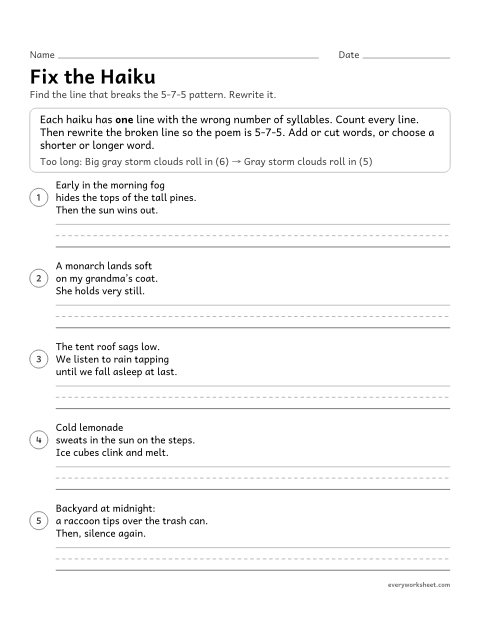
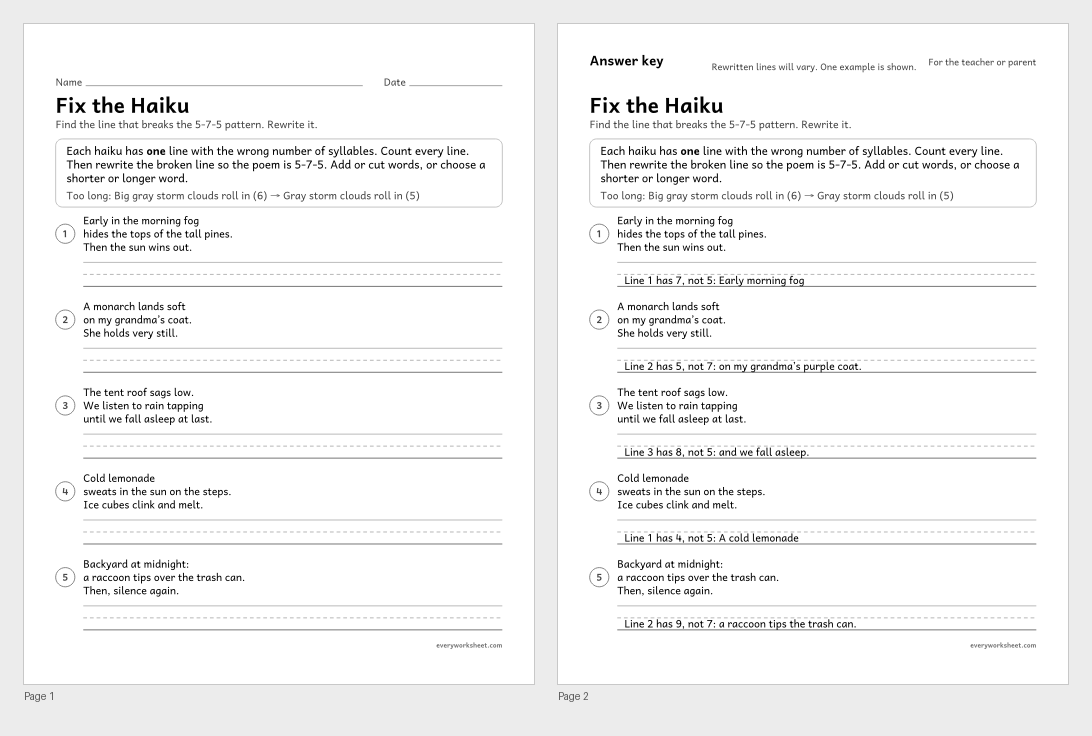
Revising a haiku by adding or cutting syllables so its lines follow the 5-7-5 pattern
Answer key on page 2
2 pages40 KB
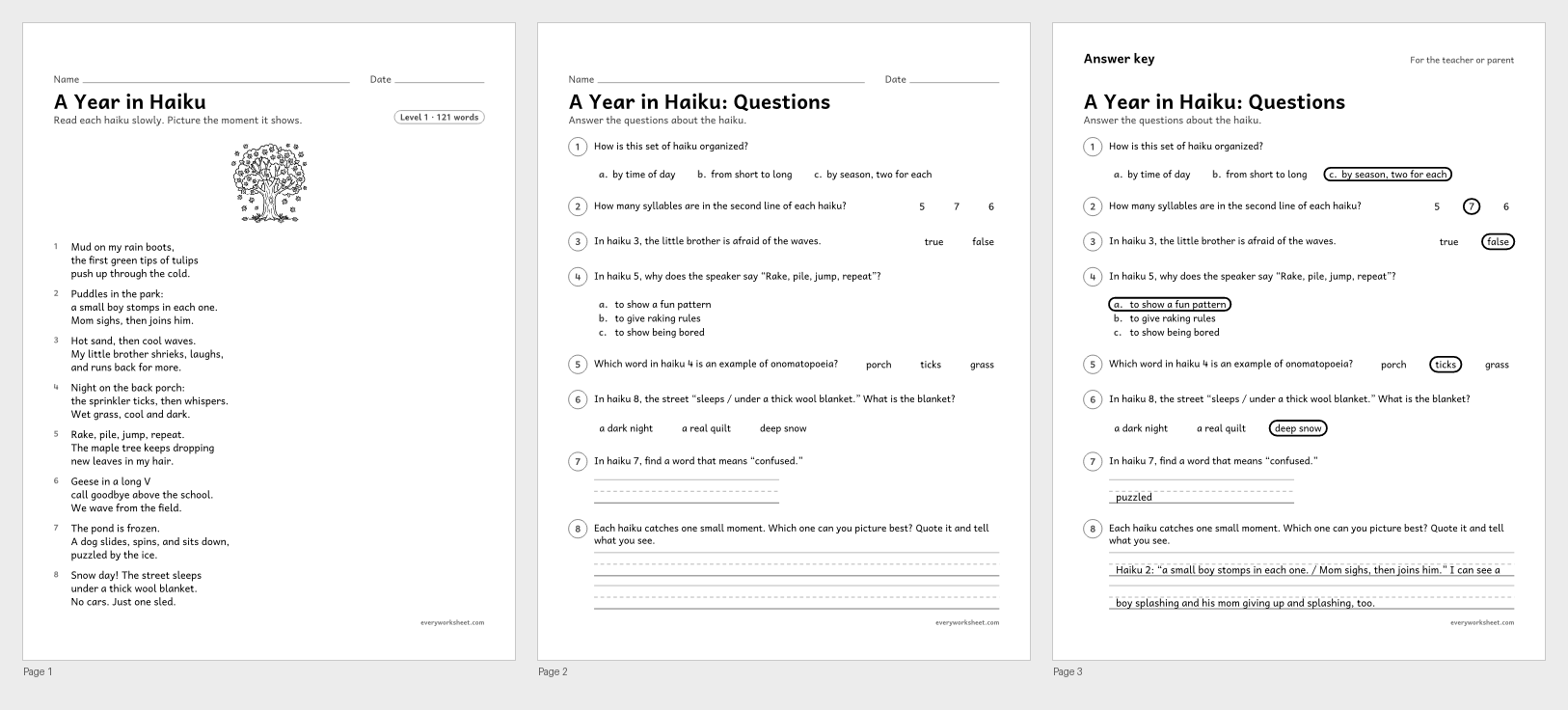 3 pagesView all 3 pages
Explaining how a set of haiku fits together and what images and figurative language each one uses
Answer key on page 3
3 pages131 KB
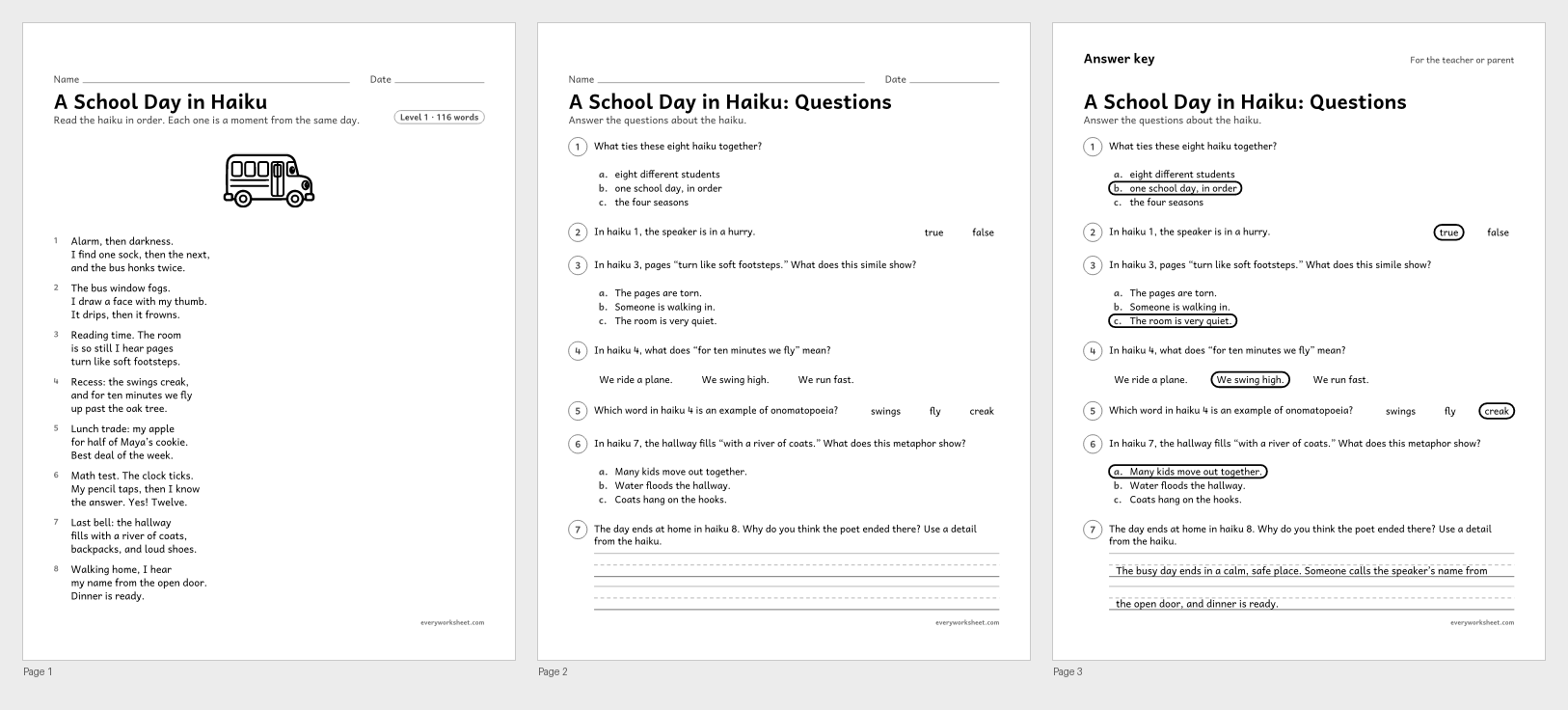 3 pagesView all 3 pages
Reading a sequence of haiku that tells one day, and explaining its similes, metaphors, and other images
Answer key on page 3
3 pages73 KB
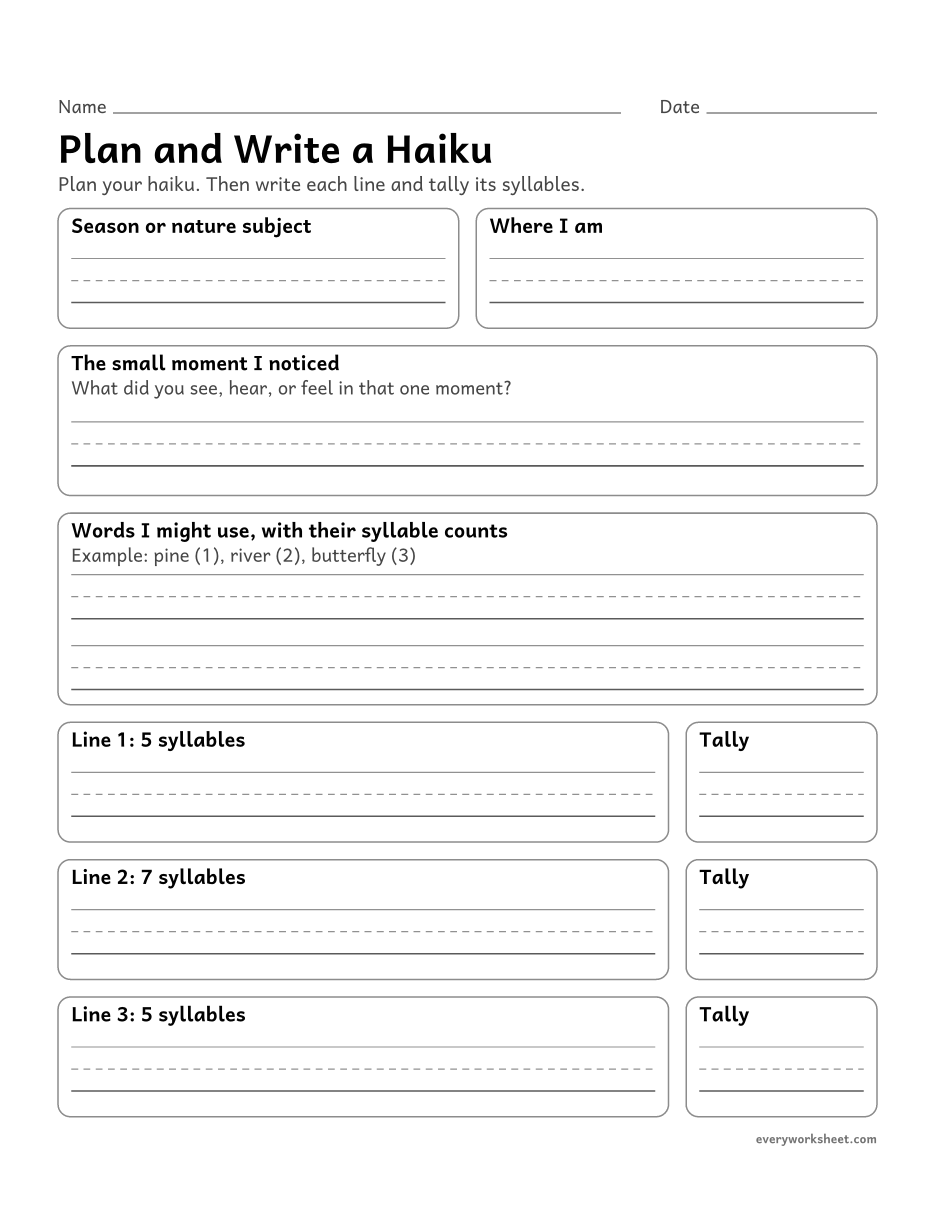 View larger
Planning a haiku from a nature image and a moment noticed, and writing it in 5-7-5 lines
1 page31 KB
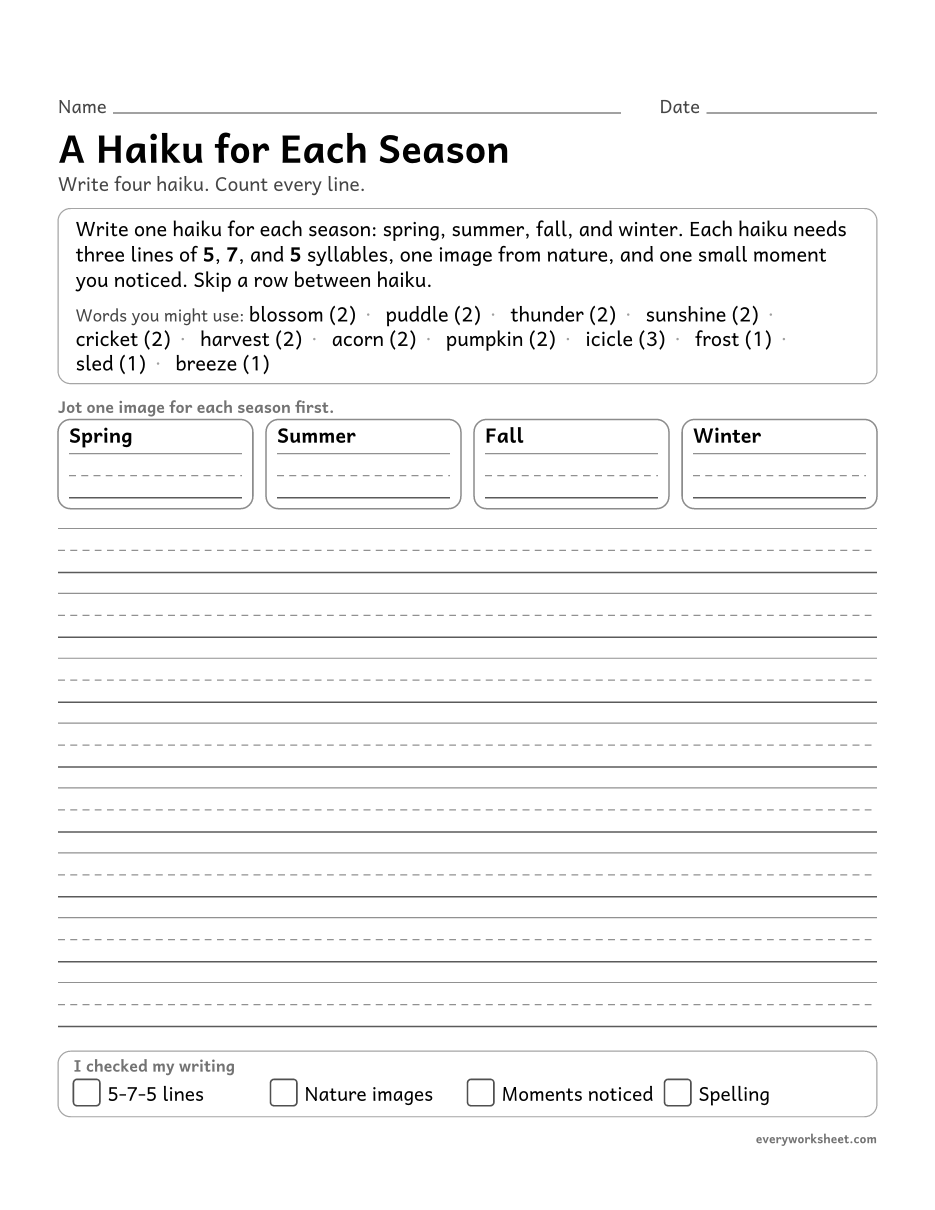 View larger
Writing a set of four haiku, one for each season, in the 5-7-5 pattern
1 page32 KB
Print at 100% (actual size) for the cleanest tracing lines.
A haiku (HY-koo) is a short poem that began in Japan. It has three lines and a 5-7-5 pattern of syllables: 5 syllables in the first line, 7 in the second, and 5 in the third. A haiku does not need to rhyme. It paints one small picture, often from nature or a season, and catches a single moment, like a photo in words. Here is an example: "A robin tugs hard (5) / at a worm that will not quit. (7) / Both lean back. Spring rain. (5)"
Writing a haiku starts with counting syllables. A syllable is one beat in a word, and each syllable has one vowel sound: pond has 1, puddle has 2, and butterfly has 3. Children clap the beats, or rest a hand under the chin and count each time the chin drops.
These haiku worksheets are written for 5th graders. A chart explains the form. Practice pages count the syllables in words and then in whole lines, check whether short poems are really haiku, and fix haiku that break the pattern. Two sets of original haiku, a year of seasons and one school day, come with questions about images, similes, metaphors, and how the poems fit together. Every syllable count in the answer keys has been checked line by line.
Planning pages help children choose a nature image and a moment, tally each line, and write their own haiku, including one for each season.
CCSS.ELA-LITERACY.RL.5.4Determine the meaning of words and phrases as they are used in a text, including figurative language such as metaphors and similes.CCSS.ELA-LITERACY.RL.5.5Explain how a series of chapters, scenes, or stanzas fits together to provide the overall structure of a particular story, drama, or poem.CCSS.ELA-LITERACY.RF.5.3.AUse combined knowledge of all letter-sound correspondences, syllabication patterns, and morphology (e.g., roots and affixes) to read accurately unfamiliar multisyllabic words in context and out of context.CCSS.ELA-LITERACY.W.5.3.DUse concrete words and phrases and sensory details to convey experiences and events precisely.CCSS.ELA-LITERACY.W.5.10Write routinely over extended time frames (time for research, reflection, and revision) and shorter time frames (a single sitting or a day or two) for a range of discipline-specific tasks, purposes, and audiences.CCSS.ELA-LITERACY.L.5.3Use knowledge of language and its conventions when writing, speaking, reading, or listening.A haiku has three lines. The first line has 5 syllables, the second has 7, and the third has 5, for 17 syllables in all.
No. A haiku does not need to rhyme or have a title. Its pattern comes from the number of syllables in each line.
Most haiku show one picture from nature or a season, such as rain, snow, a bird, or falling leaves, and one small moment the poet noticed.
Say the word slowly and clap each beat, or put a hand under your chin and count each time your chin drops. Each syllable has one vowel sound.
Yes. Every haiku on these worksheets was written for this site, and every line has been checked for its syllable count.