 View larger
Poetic Devices: sound
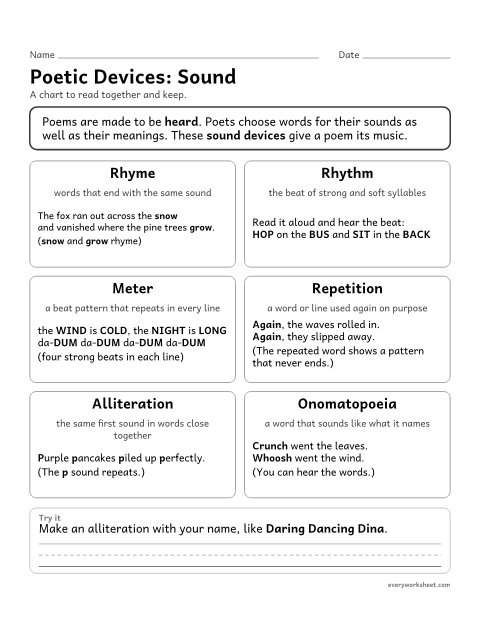
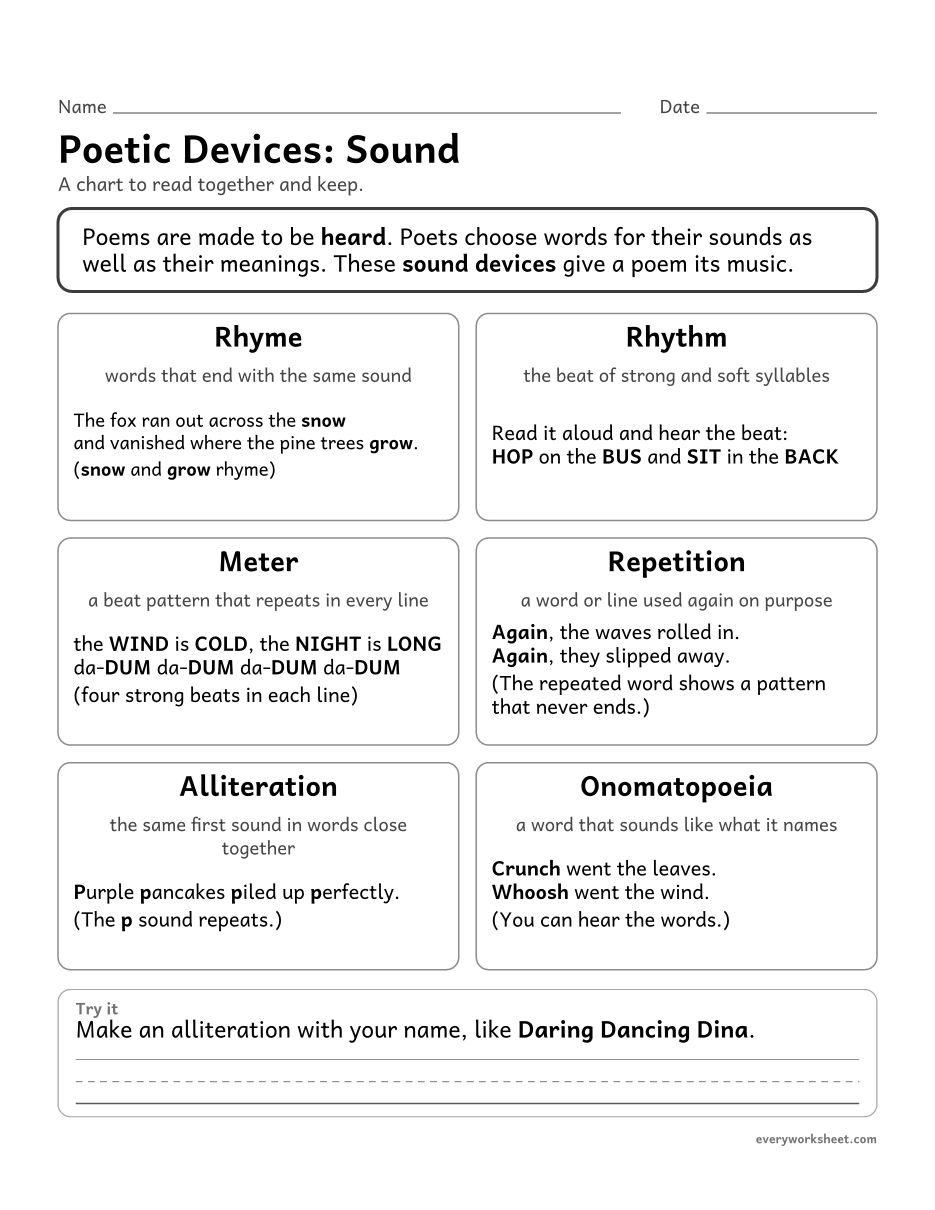
Knowing six sound devices poets use: rhyme, rhythm, meter, repetition, alliteration, and onomatopoeia
1 page37 KB
Poetic devices, original poems with questions, free verse, and planning pages for writing poems.
View largerKnowing six sound devices poets use: rhyme, rhythm, meter, repetition, alliteration, and onomatopoeia
1 page37 KB
 View larger
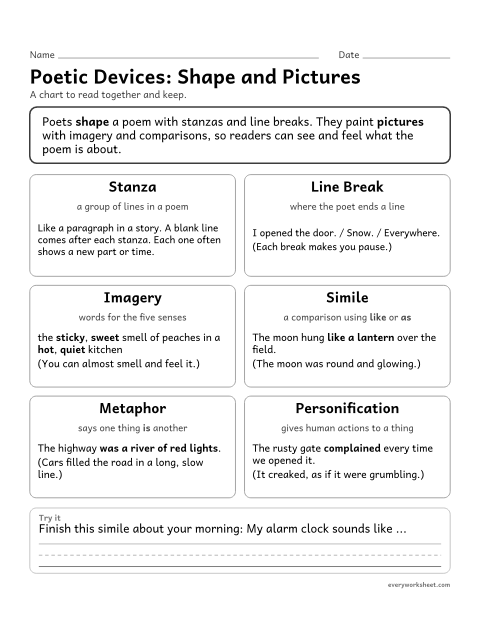
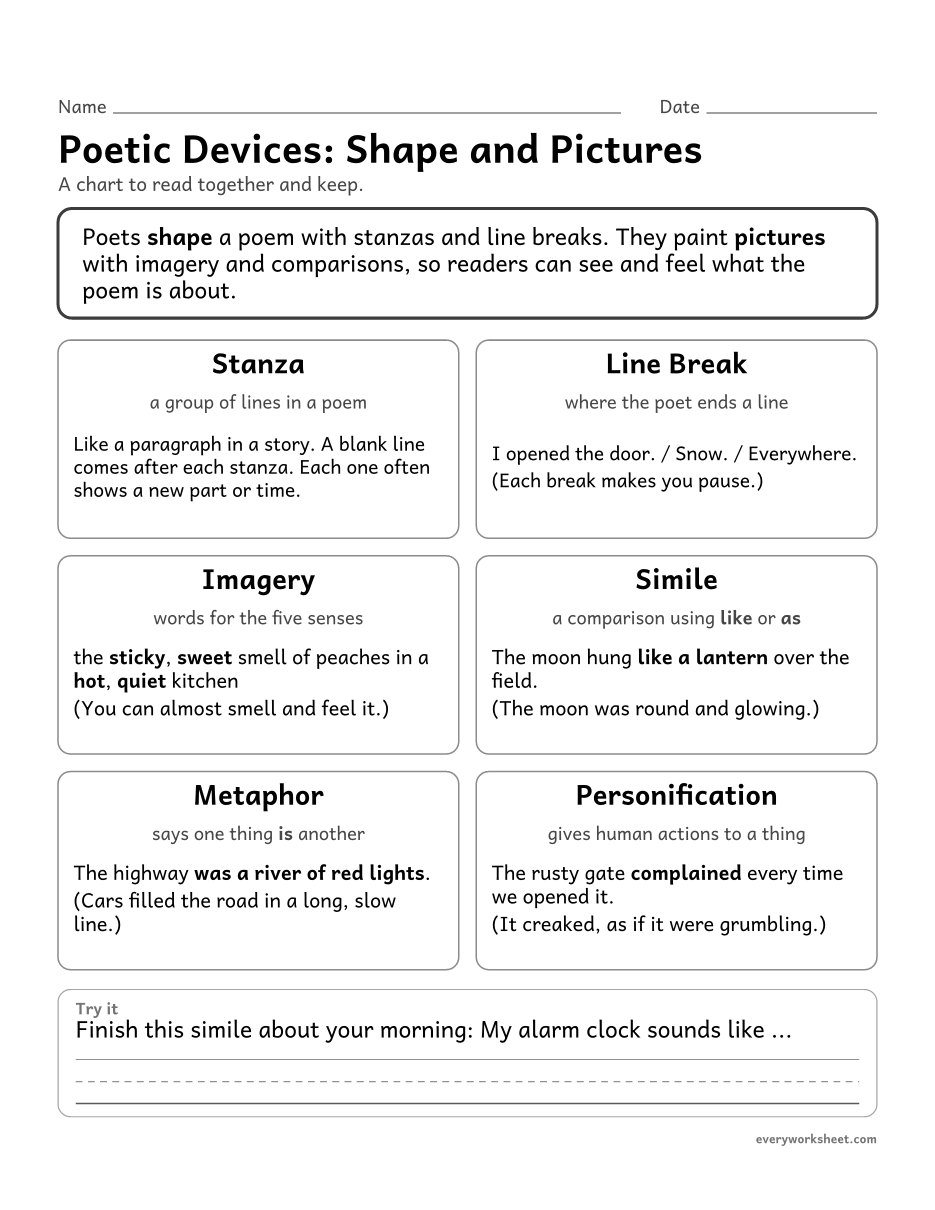
Knowing how poets use stanzas, line breaks, imagery, similes, metaphors, and personification
1 page34 KB
 View all 2 pages
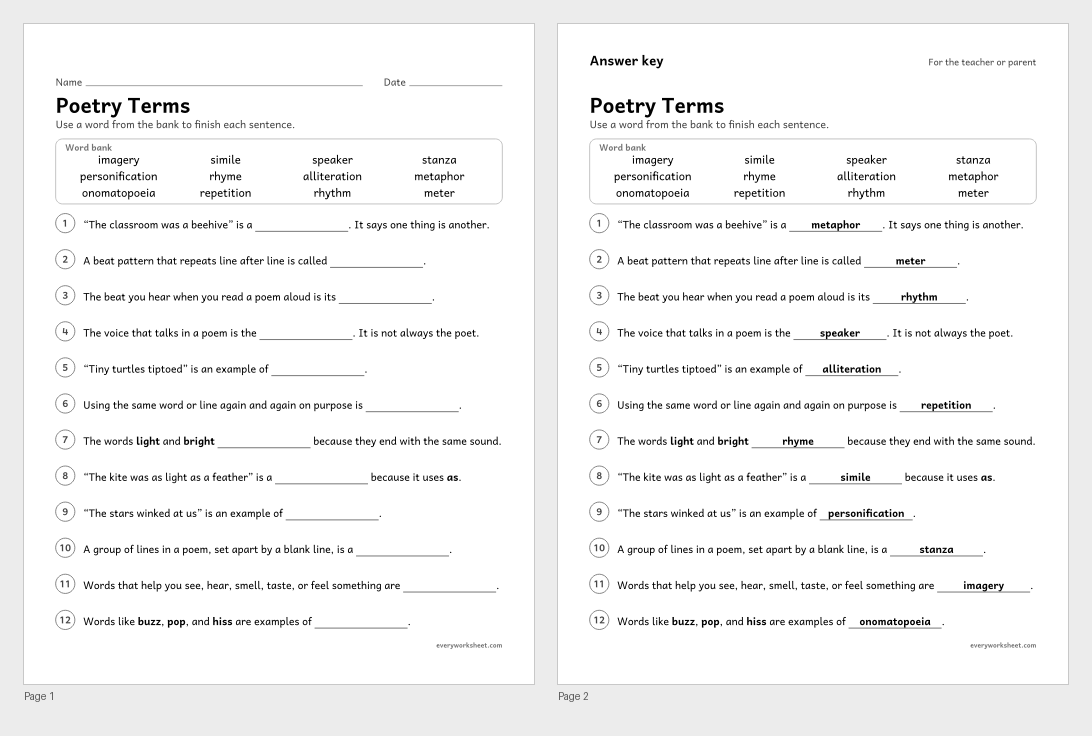
Using the terms stanza, rhyme, rhythm, meter, speaker, and the names of poetic devices correctly
Answer key on page 2
2 pages57 KB
 View all 2 pages
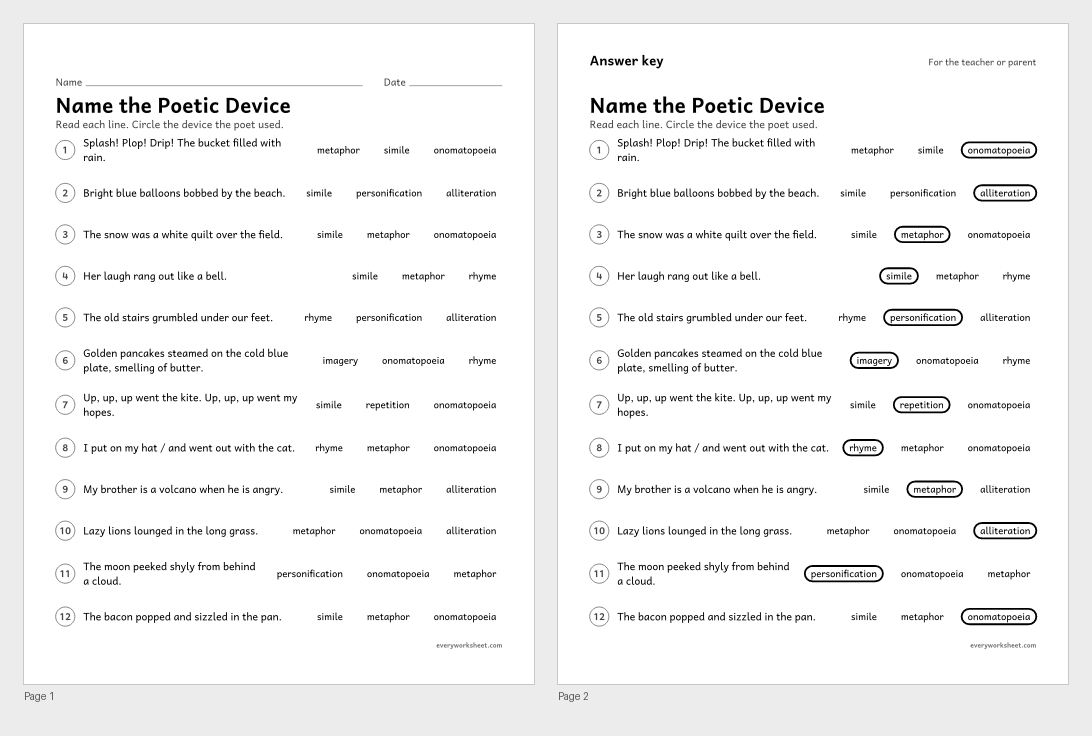
Identifying similes, metaphors, personification, alliteration, onomatopoeia, imagery, rhyme, and repetition in lines of poetry
Answer key on page 2
2 pages54 KB
 3 pagesView all 3 pages
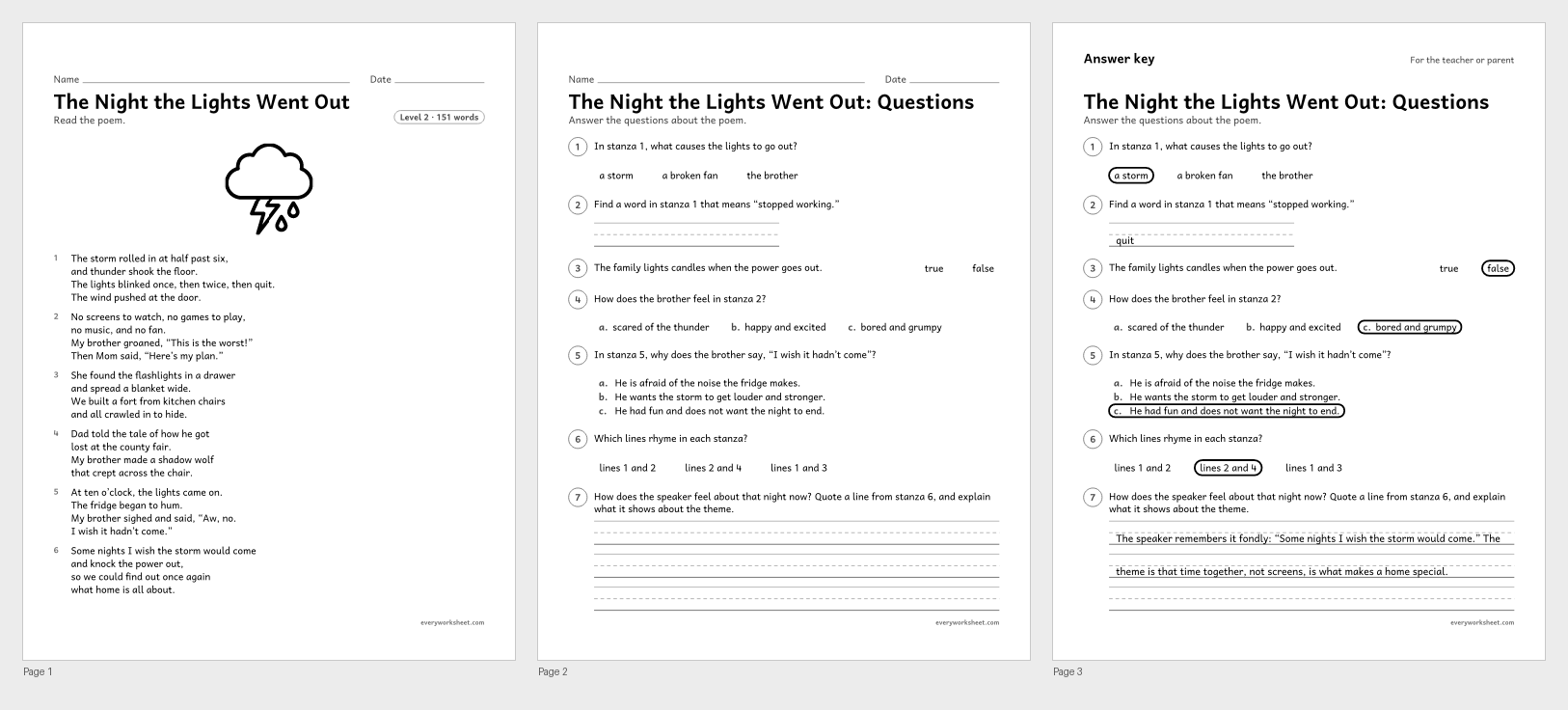
Explaining how the speaker of a rhyming poem reflects on a memory, and stating the theme
Answer key on page 3
3 pages55 KB
 3 pagesView all 3 pages
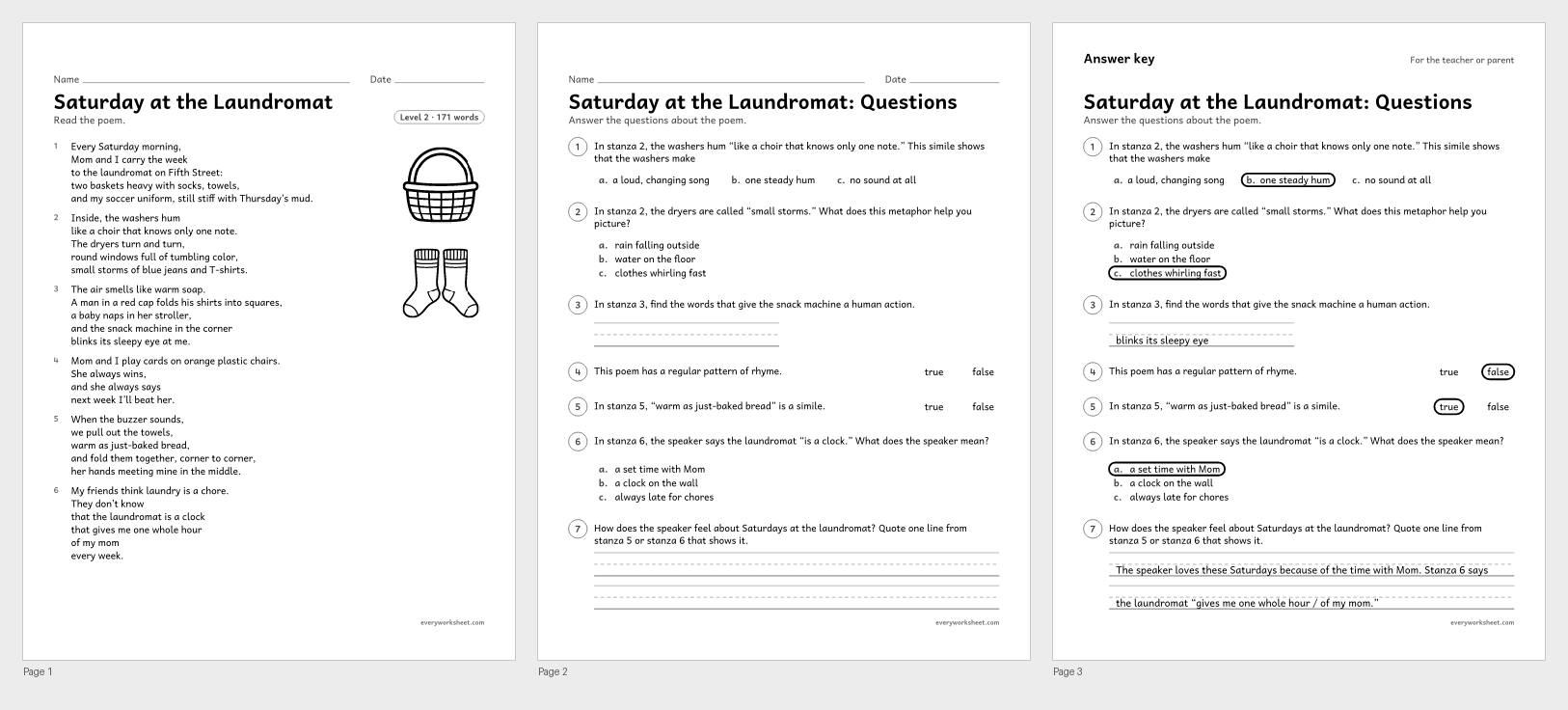
Explaining what the similes, metaphors, and personification in a free verse poem mean
Answer key on page 3
3 pages83 KB
 3 pagesView all 3 pages
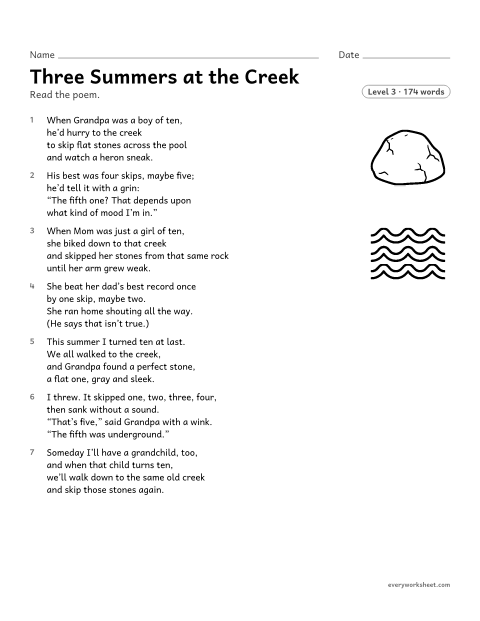
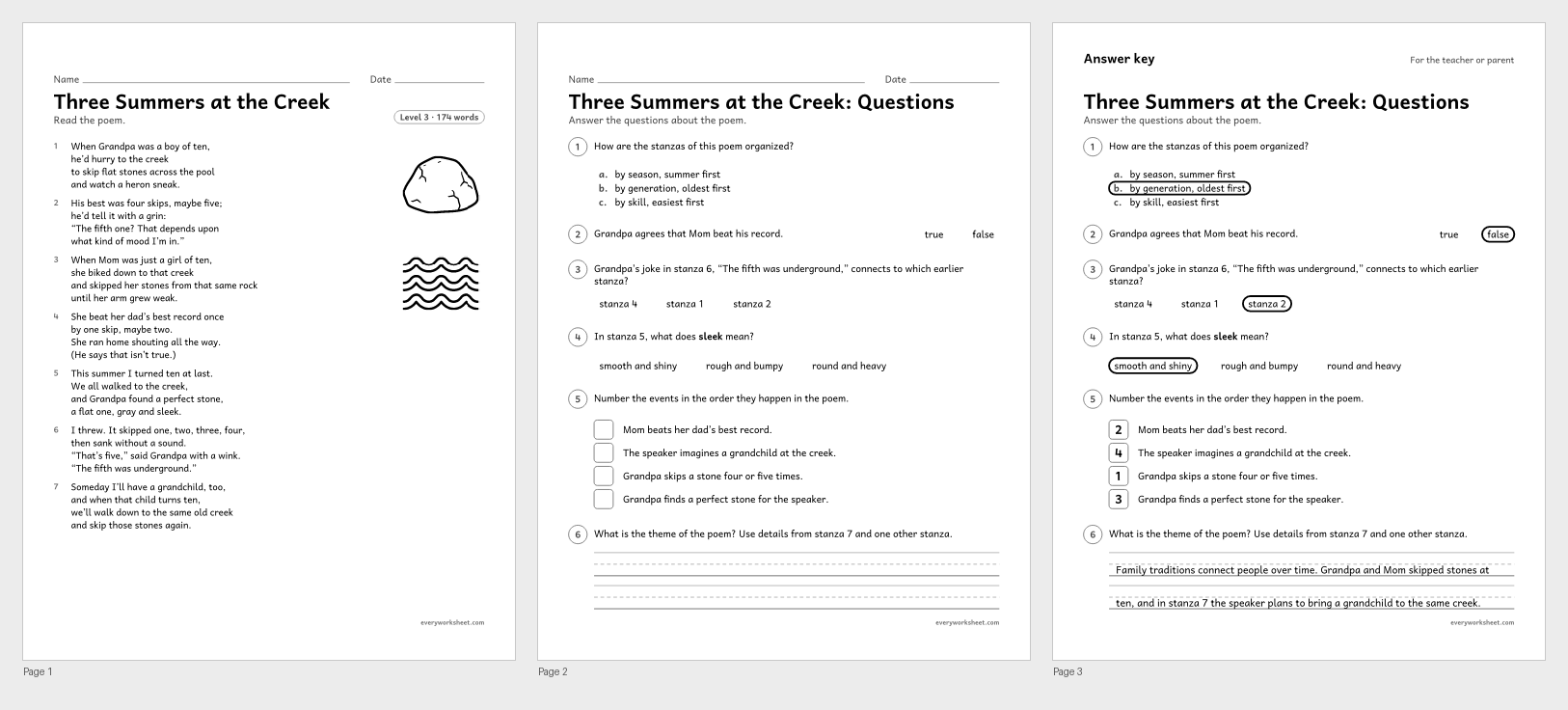
Explaining how the stanzas of a poem fit together to show three generations, and finding the theme
Answer key on page 3
3 pages76 KB
 3 pagesView all 3 pages
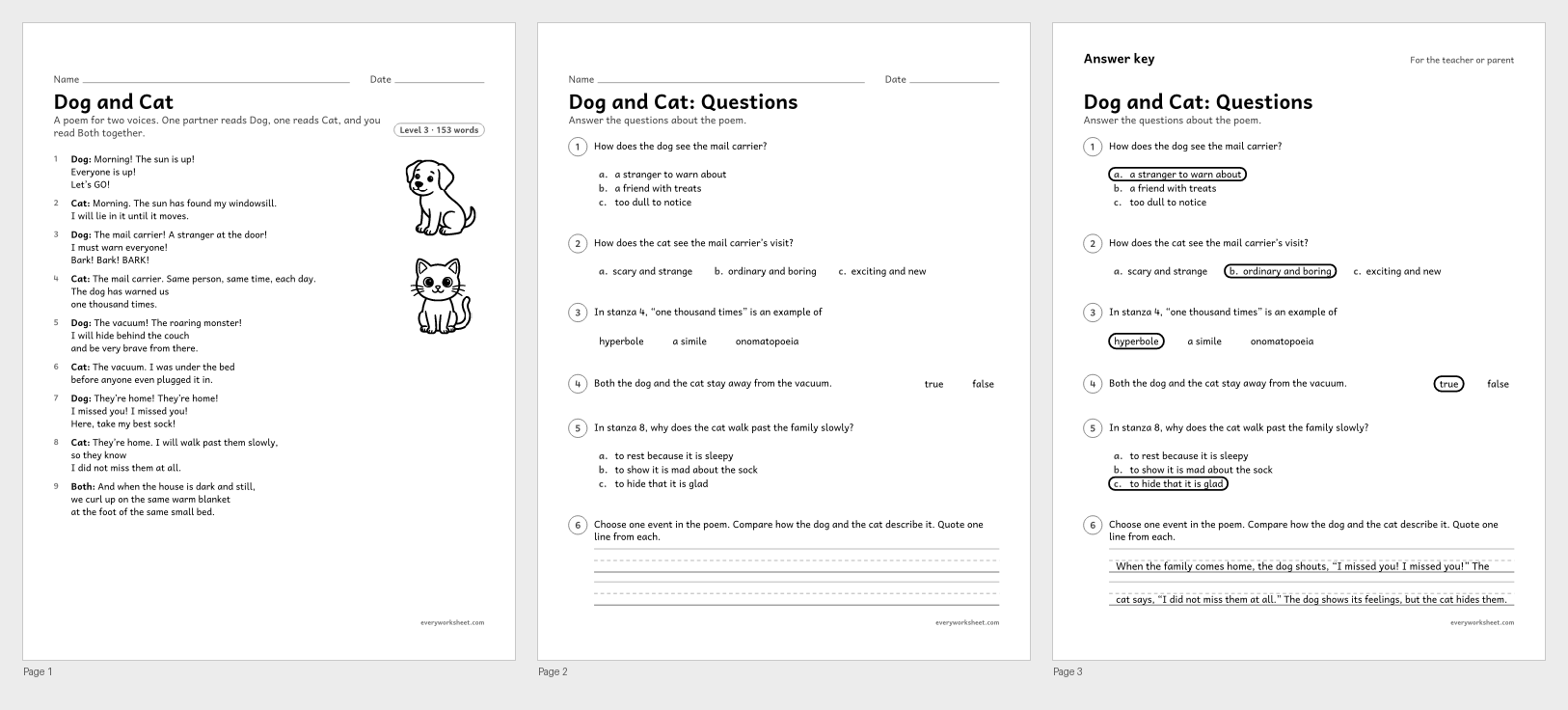
Explaining how each speaker's point of view shapes how the same events are described
Answer key on page 3
3 pages96 KB
 View all 2 pages
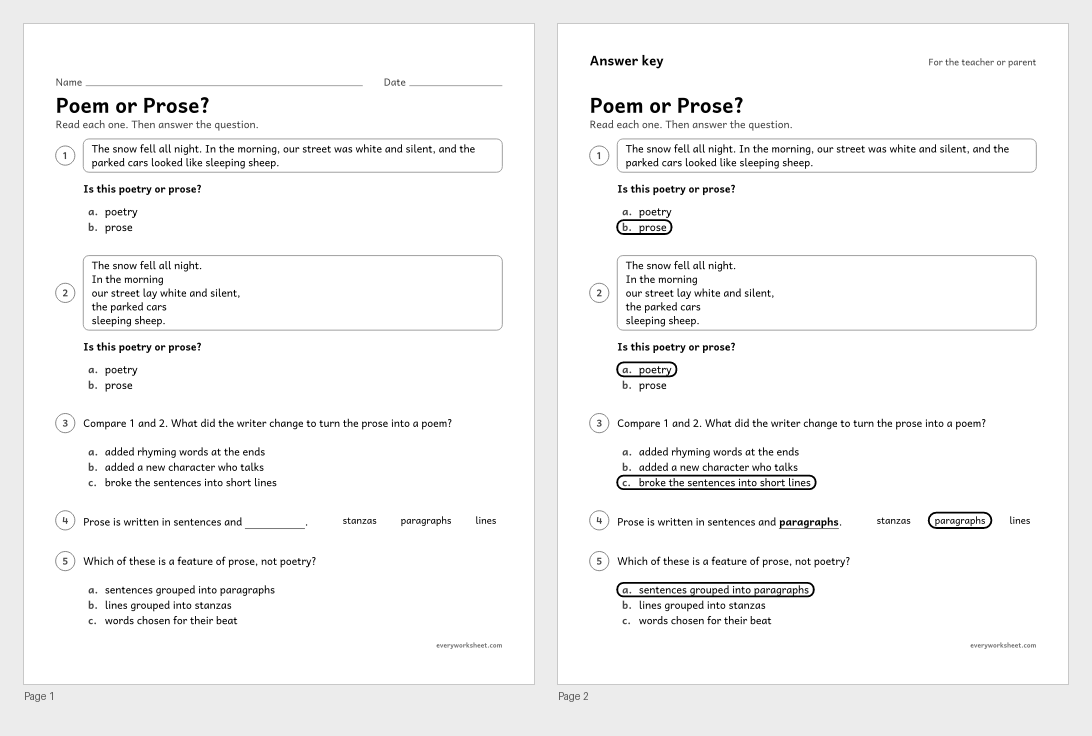
Telling poetry from prose by its structure (lines and stanzas versus sentences and paragraphs) and explaining how a poem is built
Answer key on page 2
2 pages48 KB
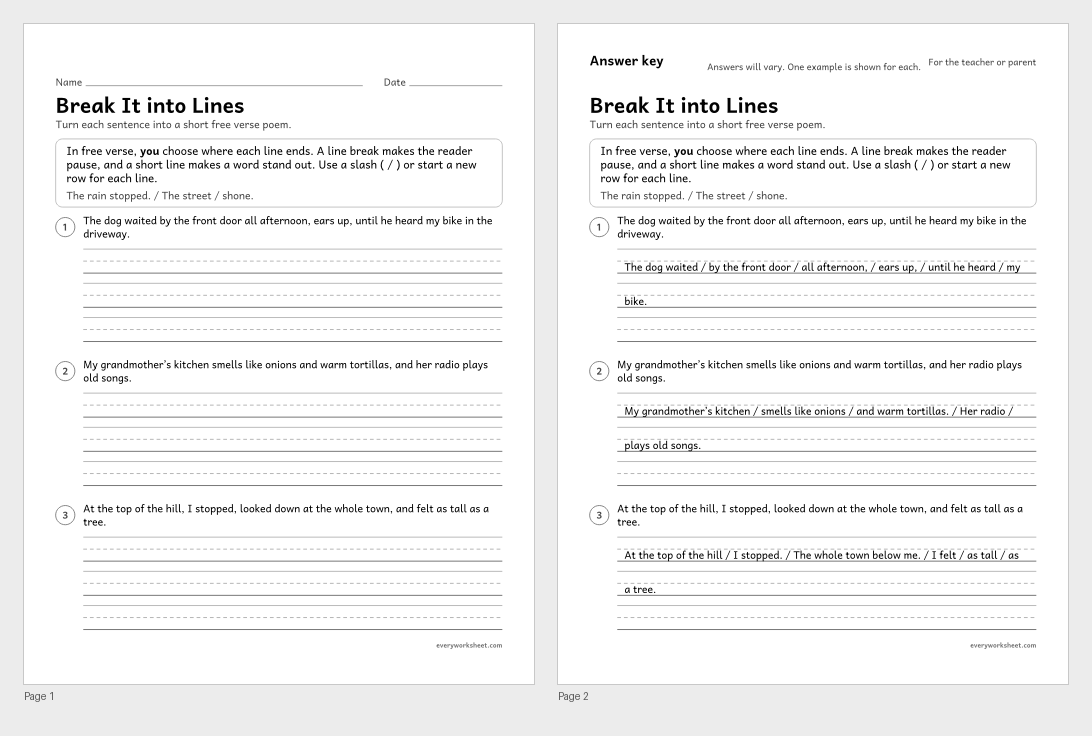 View all 2 pages
Turning prose into free verse by choosing line breaks that create pauses and make key words stand out
Answer key on page 2
2 pages34 KB
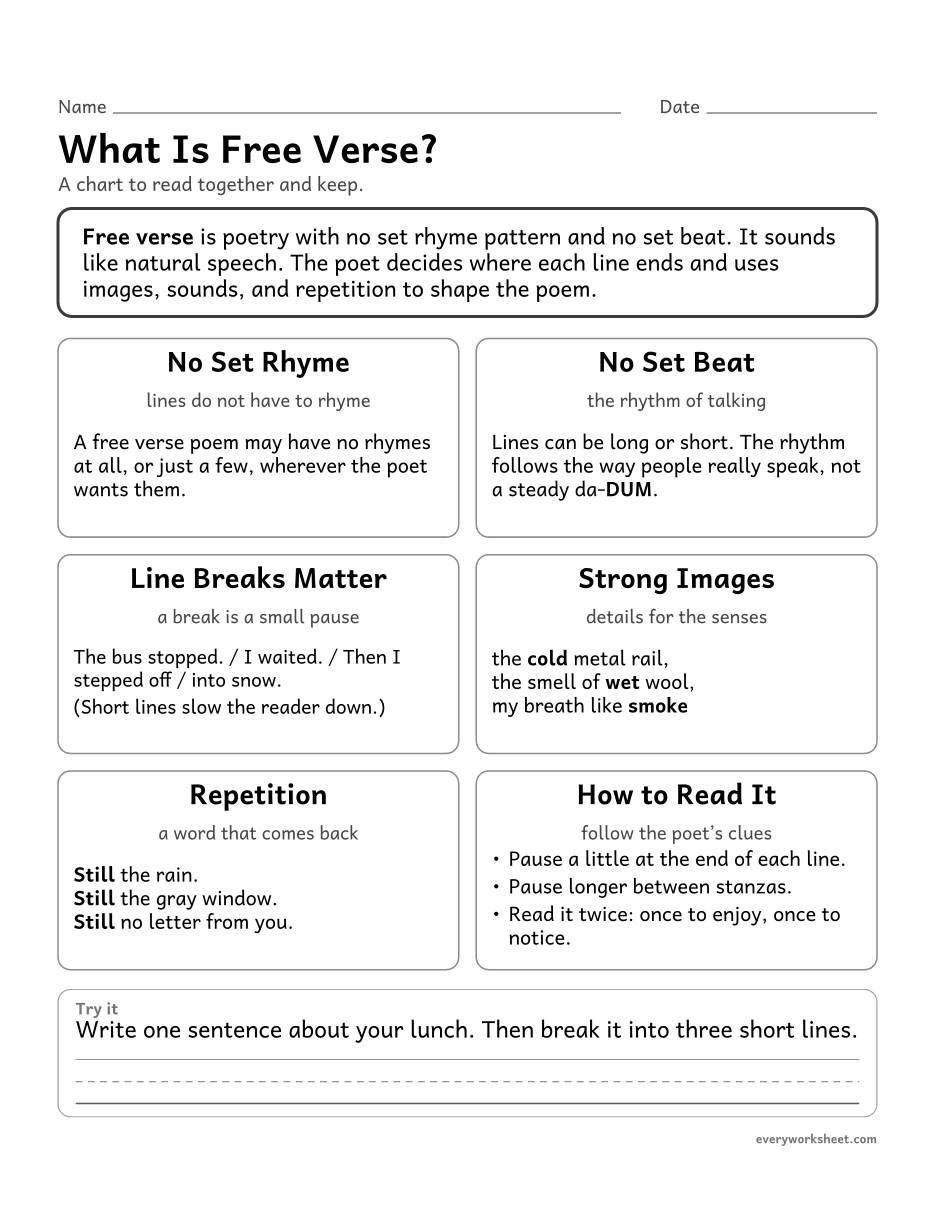 View larger
Understanding free verse: no set rhyme or meter, purposeful line breaks, strong images, and repetition
1 page35 KB
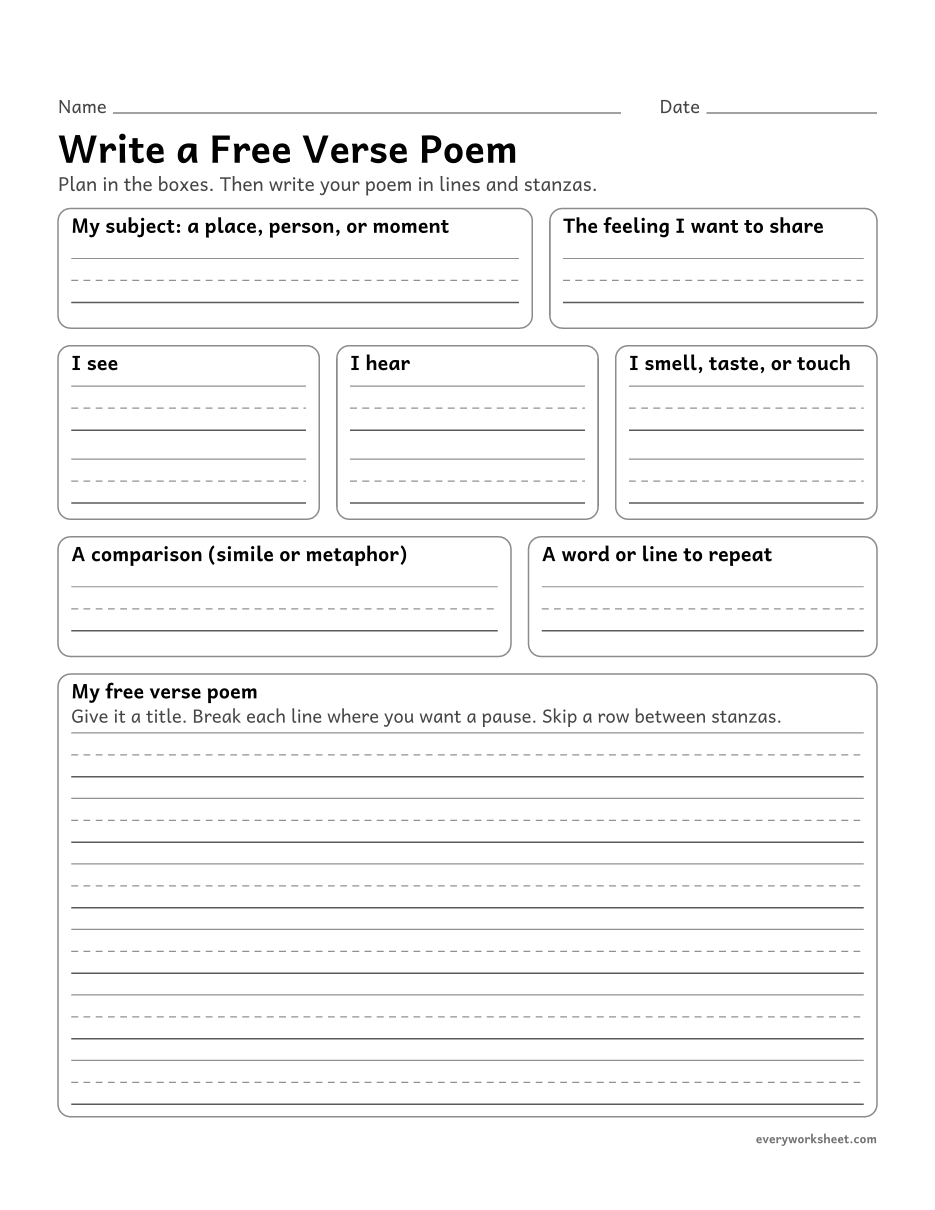 View larger
Planning and writing a free verse poem with sensory details, a comparison, and purposeful line breaks
1 page30 KB
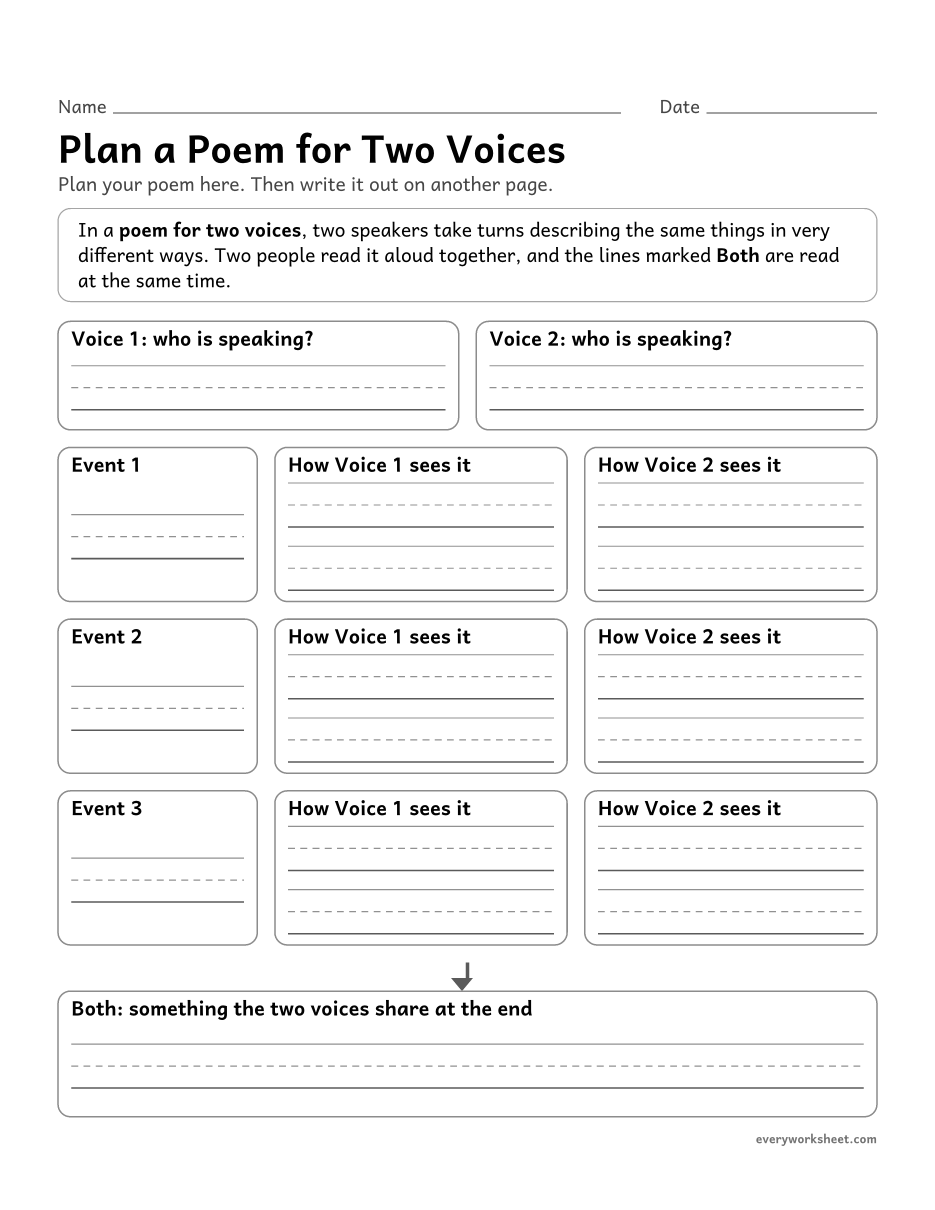 View larger
Planning a poem for two voices that shows two points of view on the same events
1 page31 KB
Print at 100% (actual size) for the cleanest tracing lines.
Poetry is writing arranged in lines instead of paragraphs. Poets choose every word for its meaning and its sound. They group lines into stanzas, the way a story groups sentences into paragraphs. Many poems use rhyme (snow and grow), rhythm (the beat you hear when you read aloud), and meter (a beat that repeats in a pattern, like da-DUM da-DUM). Poets also paint pictures with imagery, words for the five senses, and with comparisons: a simile uses like or as (the moon hung like a lantern), a metaphor says one thing is another (the highway was a river of red lights), and personification gives human actions to a thing (the rusty gate complained).
Not every poem rhymes. Free verse has no set rhyme pattern and no set beat. It sounds like natural speech, and the poet decides where each line ends. A line break makes the reader pause, so a short line can make one word stand out.
These poetry worksheets are written for 5th graders, ages 10 and 11. Two anchor charts explain twelve poetic devices with examples. Practice pages ask children to name the device in a line. Every poem is original: a rhyming poem about a family night without power, a free verse poem set in a laundromat, a poem about three generations skipping stones at the same creek, and a funny poem for two voices, a dog and a cat. Questions ask children to explain figurative language, tell how the stanzas fit together, find the theme, and compare points of view, quoting lines as evidence.
Planning pages help children write a free verse poem and a poem for two voices. For short forms with strict rules, see the haiku and limerick pages.
CCSS.ELA-LITERACY.RL.5.2Determine a theme of a story, drama, or poem from details in the text, including how characters in a story or drama respond to challenges or how the speaker in a poem reflects upon a topic; summarize the text.CCSS.ELA-LITERACY.RL.5.4Determine the meaning of words and phrases as they are used in a text, including figurative language such as metaphors and similes.CCSS.ELA-LITERACY.RL.5.5Explain how a series of chapters, scenes, or stanzas fits together to provide the overall structure of a particular story, drama, or poem.CCSS.ELA-LITERACY.RL.5.6Describe how a narrator's or speaker's point of view influences how events are described.CCSS.ELA-LITERACY.W.5.3.BUse narrative techniques, such as dialogue, description, and pacing, to develop experiences and events or show the responses of characters to situations.CCSS.ELA-LITERACY.W.5.3.DUse concrete words and phrases and sensory details to convey experiences and events precisely.CCSS.ELA-LITERACY.L.5.5.AInterpret figurative language, including similes and metaphors, in context.Rhyme, rhythm, meter, stanza, repetition, alliteration, onomatopoeia, imagery, simile, metaphor, and personification. Line breaks and the speaker of a poem are useful to know, too.
Rhythm is the beat of strong and soft syllables you hear when you read a poem aloud. Meter is a rhythm that repeats in a regular pattern, such as four strong beats in every line.
Free verse is poetry with no set rhyme pattern and no set beat. It still uses lines and stanzas, and poets use line breaks, images, and repetition to shape it.
It is a poem written for two readers. Each voice describes the same things from its own point of view, and lines marked Both are read together.
Yes. Every poem was written for this site, so you can print and copy them for your class or family.