 View larger
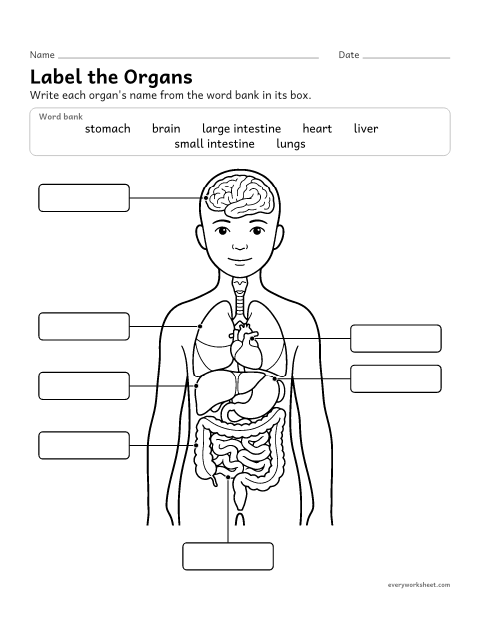
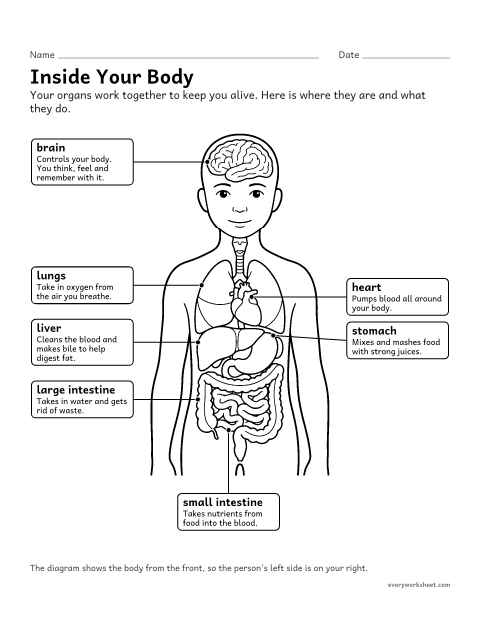
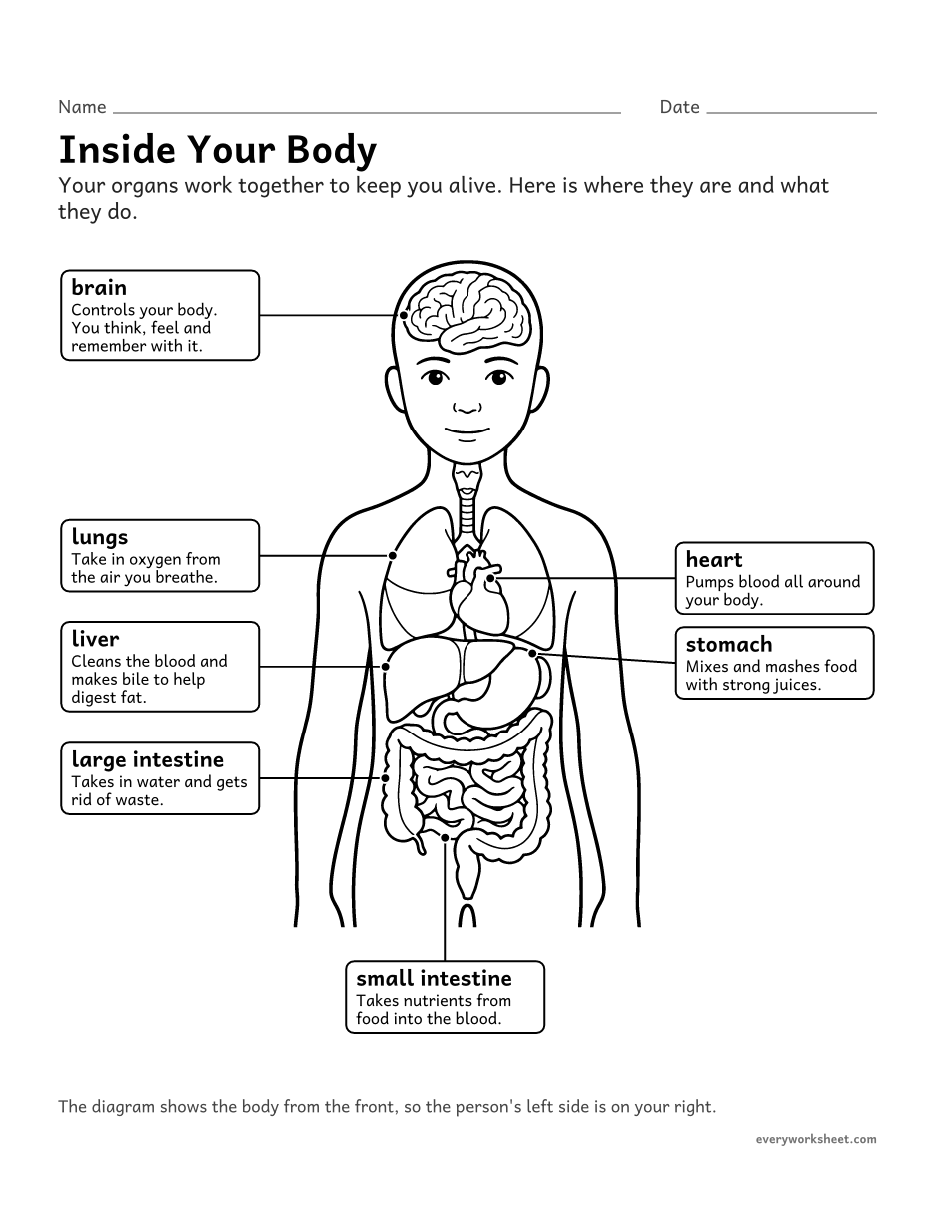
Human body organs diagram for kids (Labeled)
Naming the major organs and what each one does
1 page65 KB
Organs, bones, muscles and the body systems, with labeled and blank diagrams, sorts, readings and data pages.
View largerNaming the major organs and what each one does
1 page65 KB
 View all 2 pages
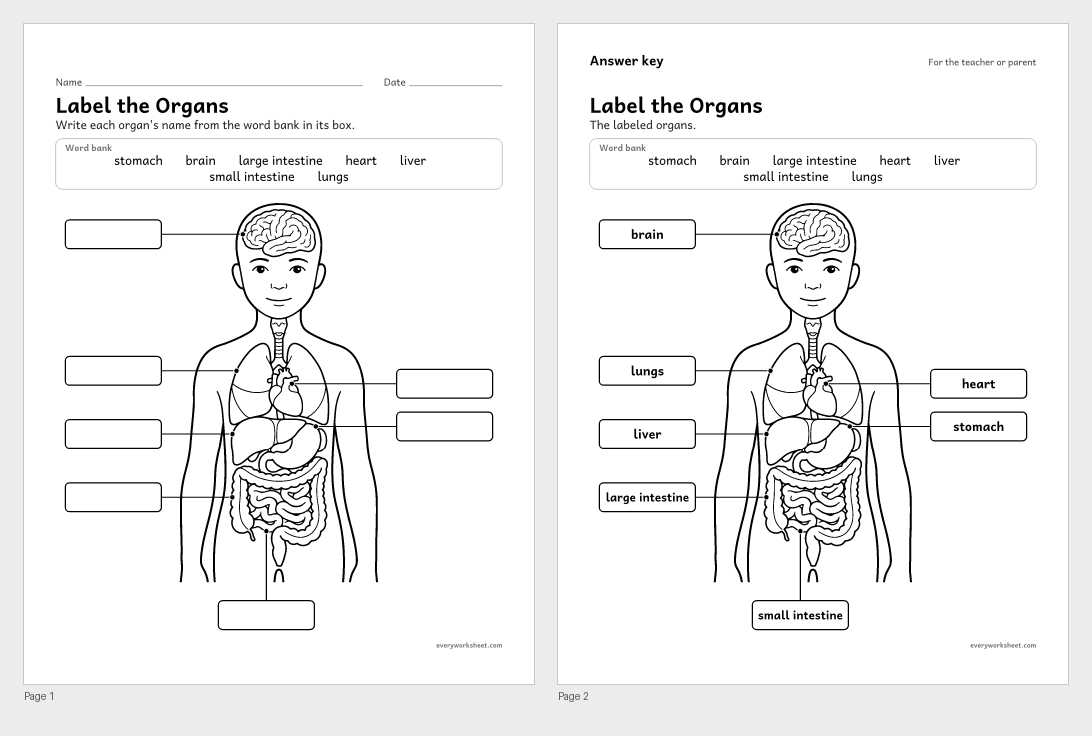
Naming the major organs of the human body
Answer key on page 2
2 pages101 KB
 View all 2 pages
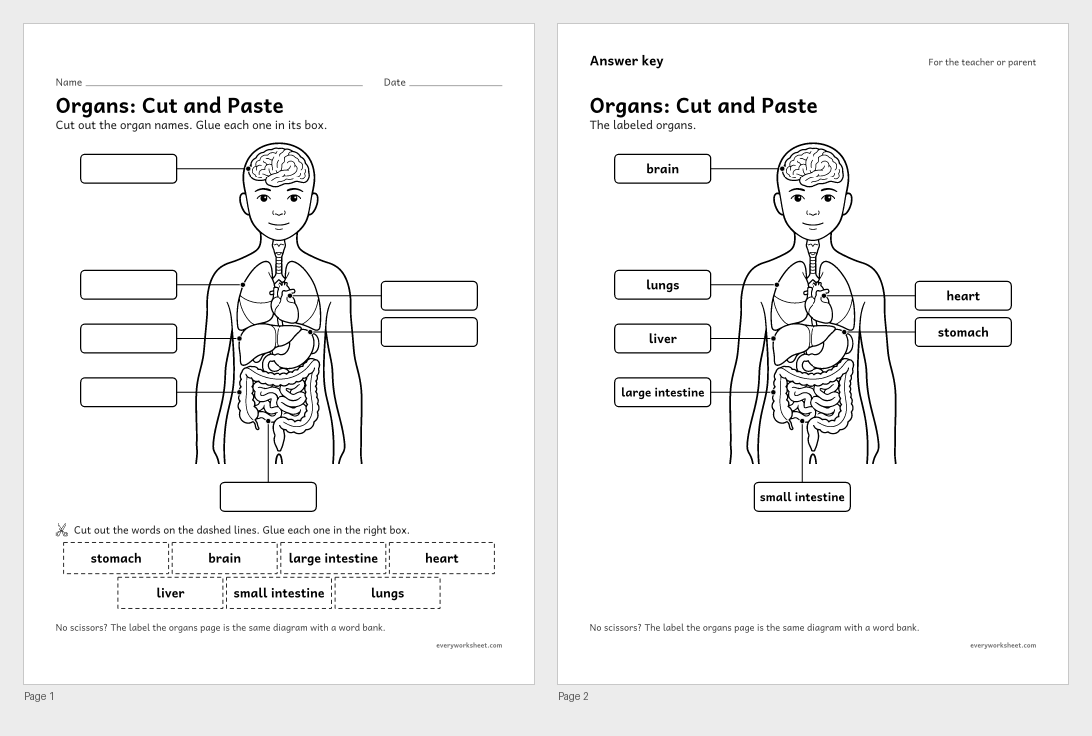
Naming the major organs of the human body
Answer key on page 2
2 pages129 KB
 View all 2 pages
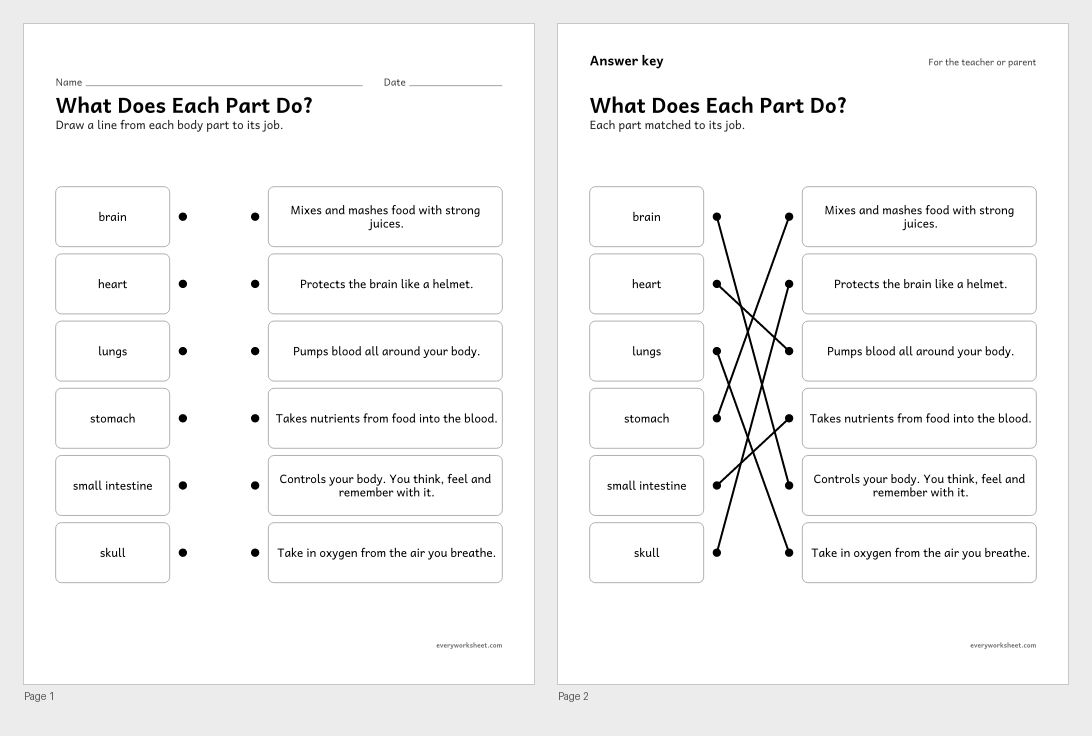
Matching body parts to their jobs
Answer key on page 2
2 pages28 KB
 View all 2 pages
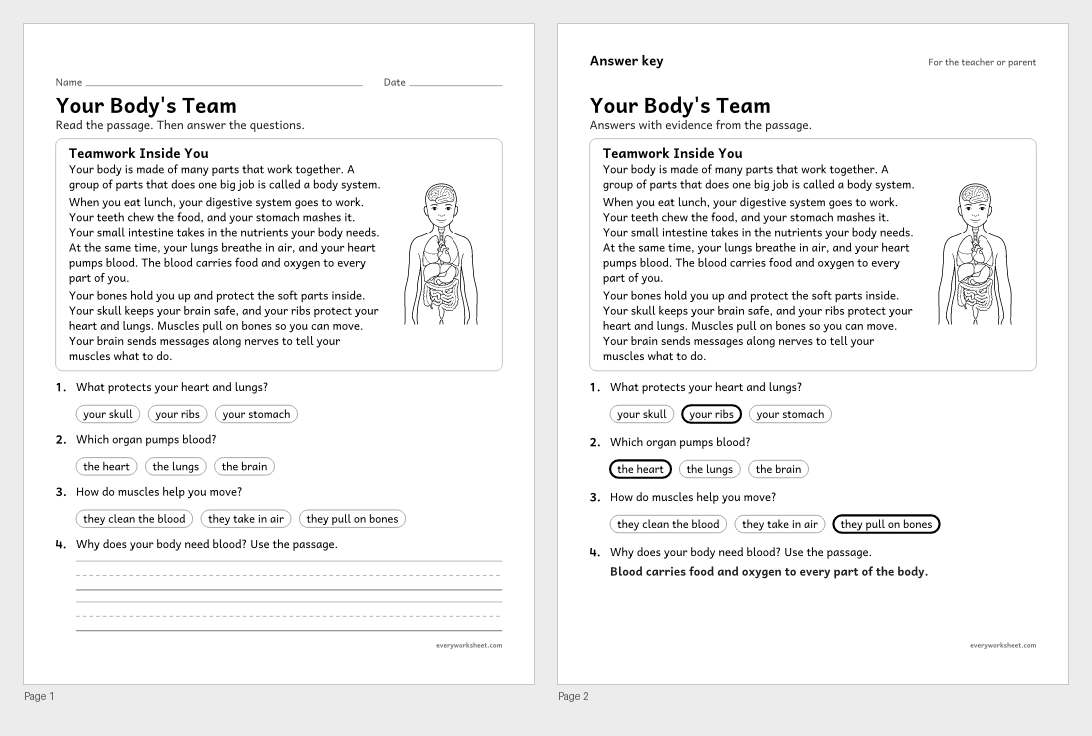
Describing how body parts work together from a nonfiction text
Answer key on page 2
2 pages113 KB
 View larger
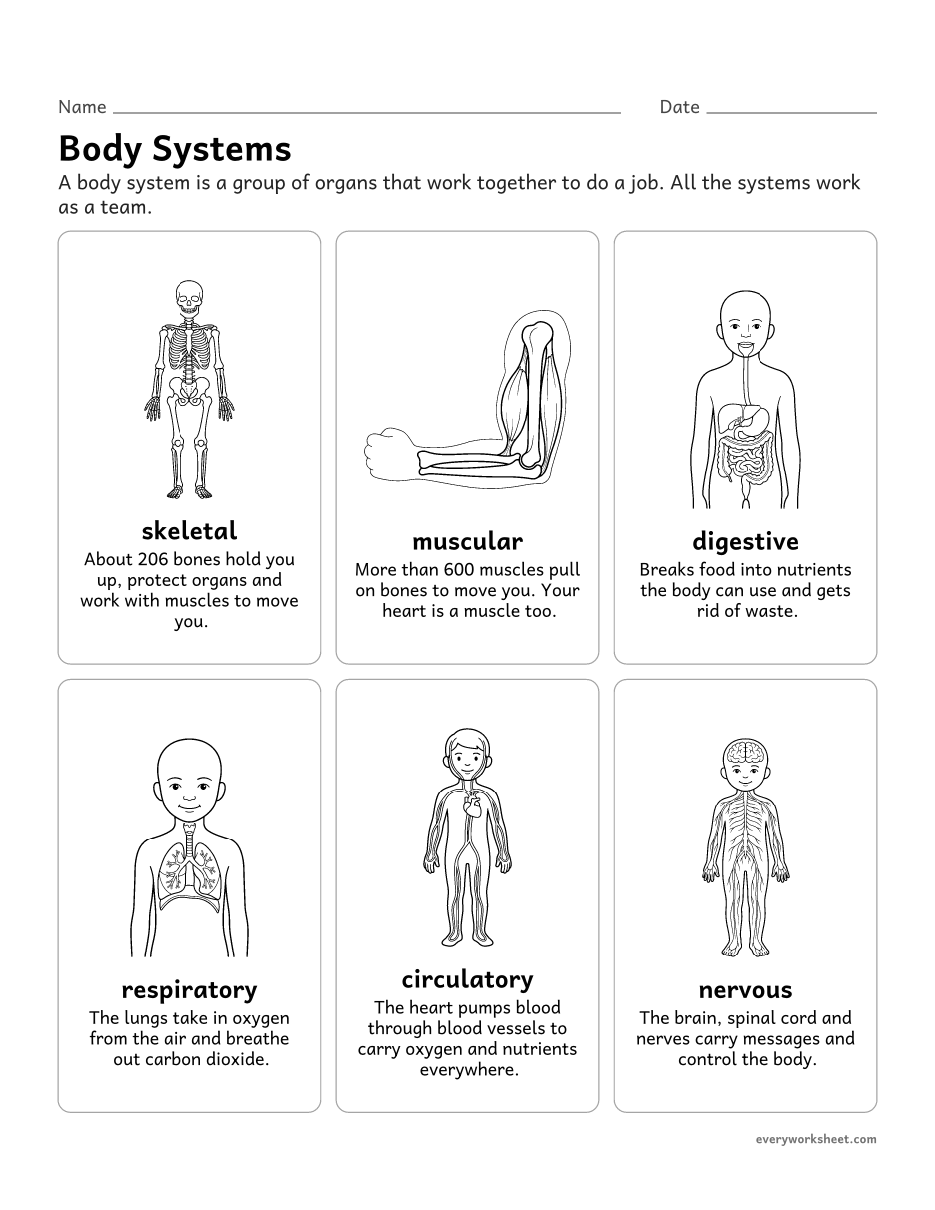
Describing the main systems of the human body
1 page231 KB
 View larger
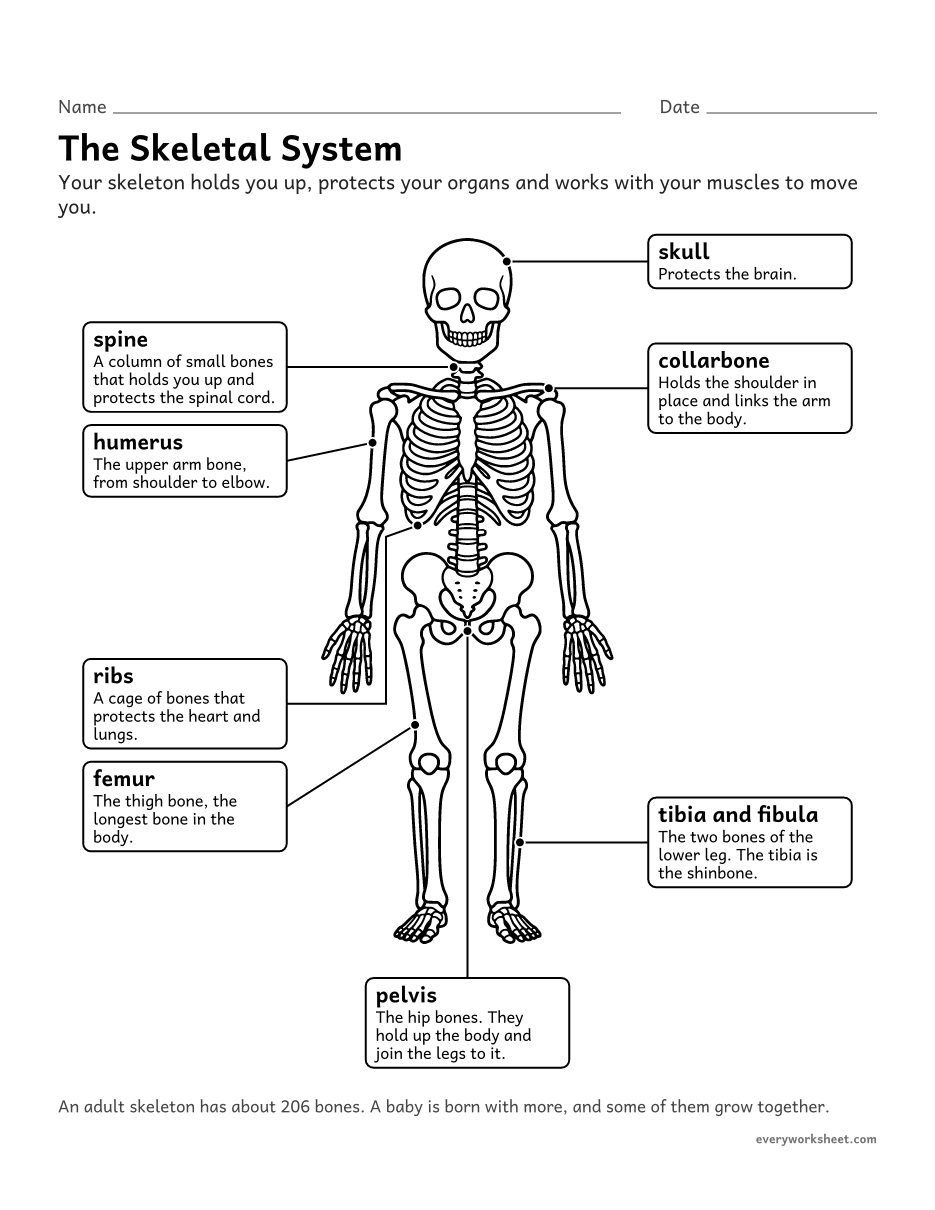
Naming major bones and what they do
1 page75 KB
 View all 2 pages
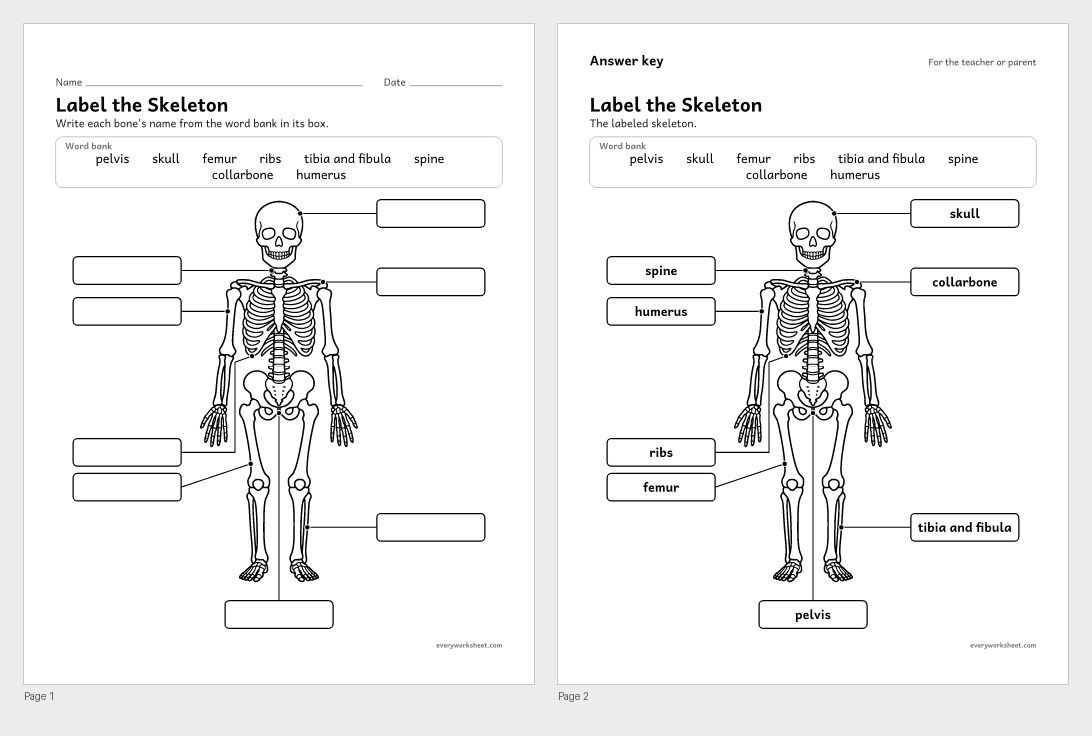
Naming major bones of the human skeleton
Answer key on page 2
2 pages121 KB
 View all 2 pages
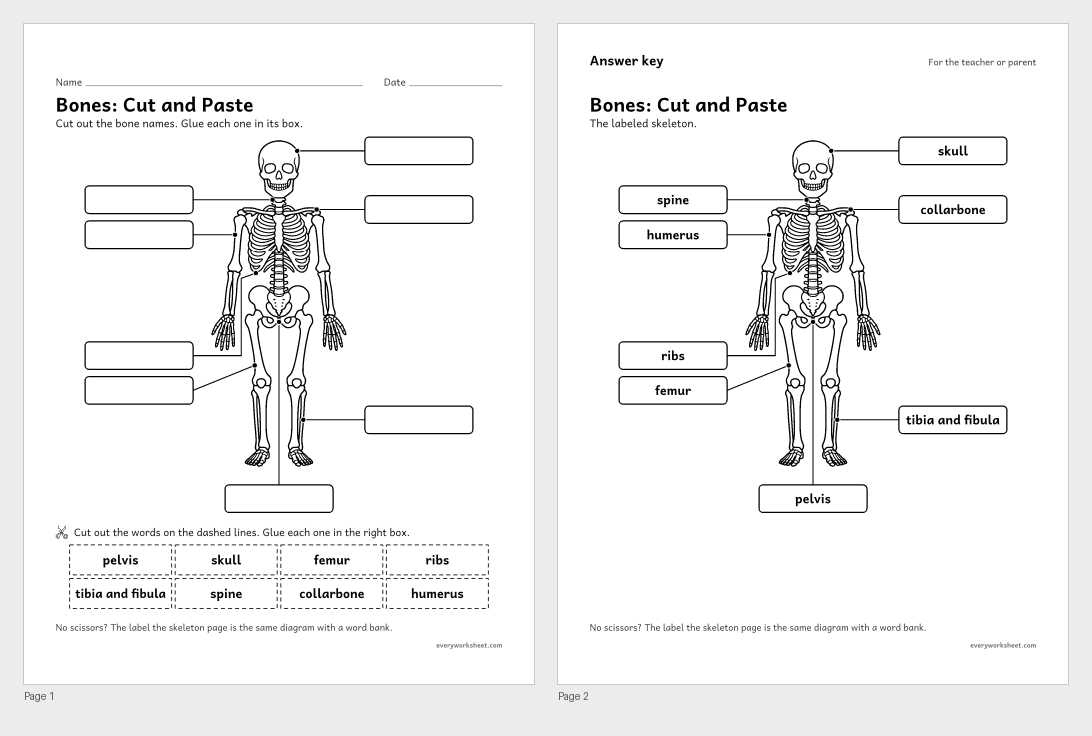
Naming major bones of the human skeleton
Answer key on page 2
2 pages149 KB
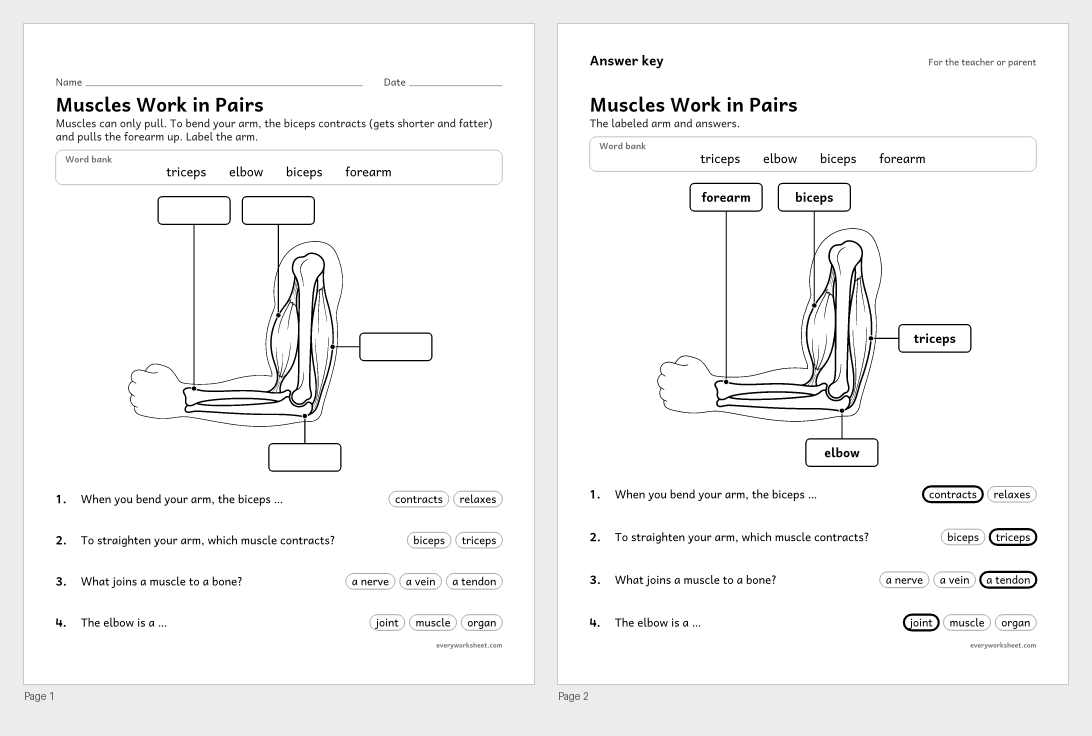 View all 2 pages
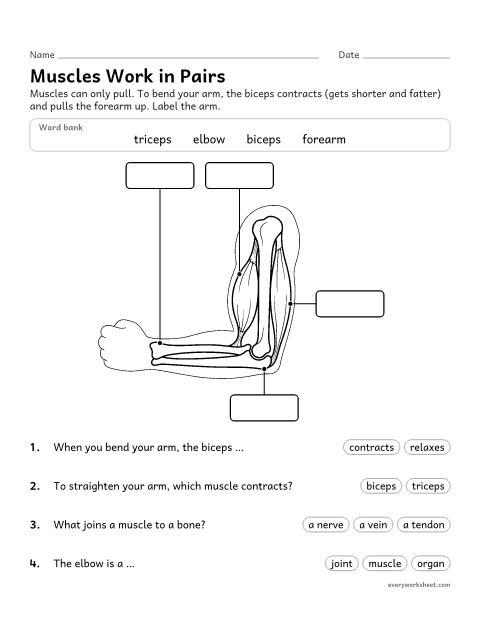
Explaining how a pair of muscles moves a bone
Answer key on page 2
2 pages114 KB
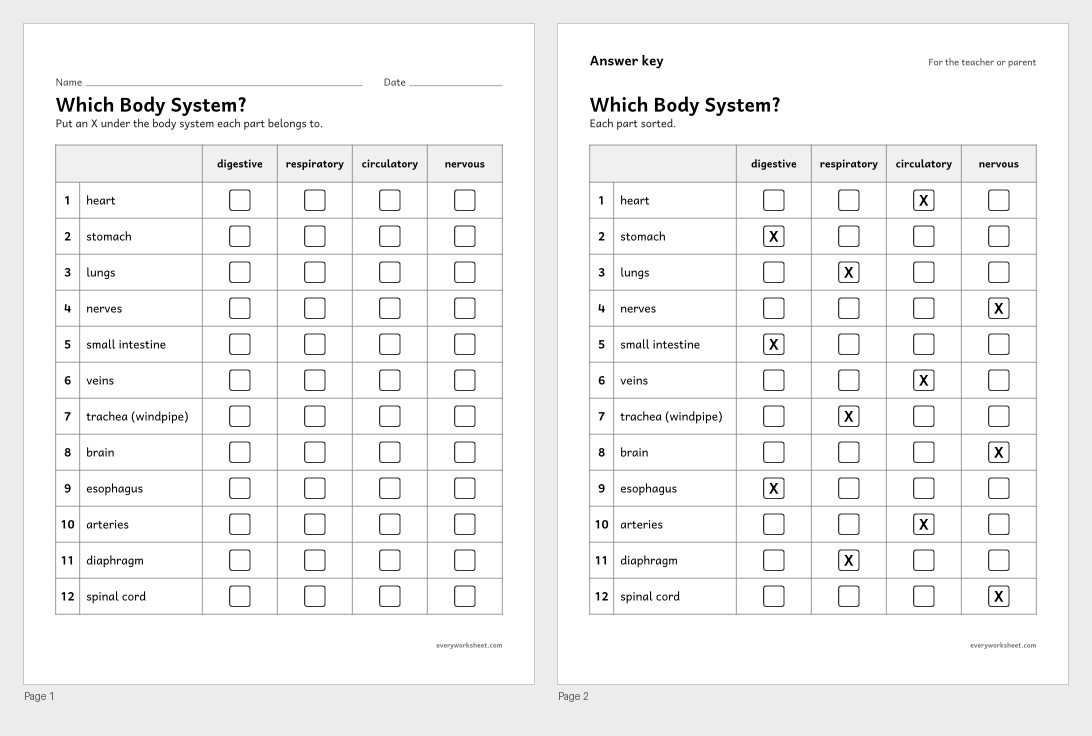 View all 2 pages
Classifying organs and body parts by body system
Answer key on page 2
2 pages56 KB
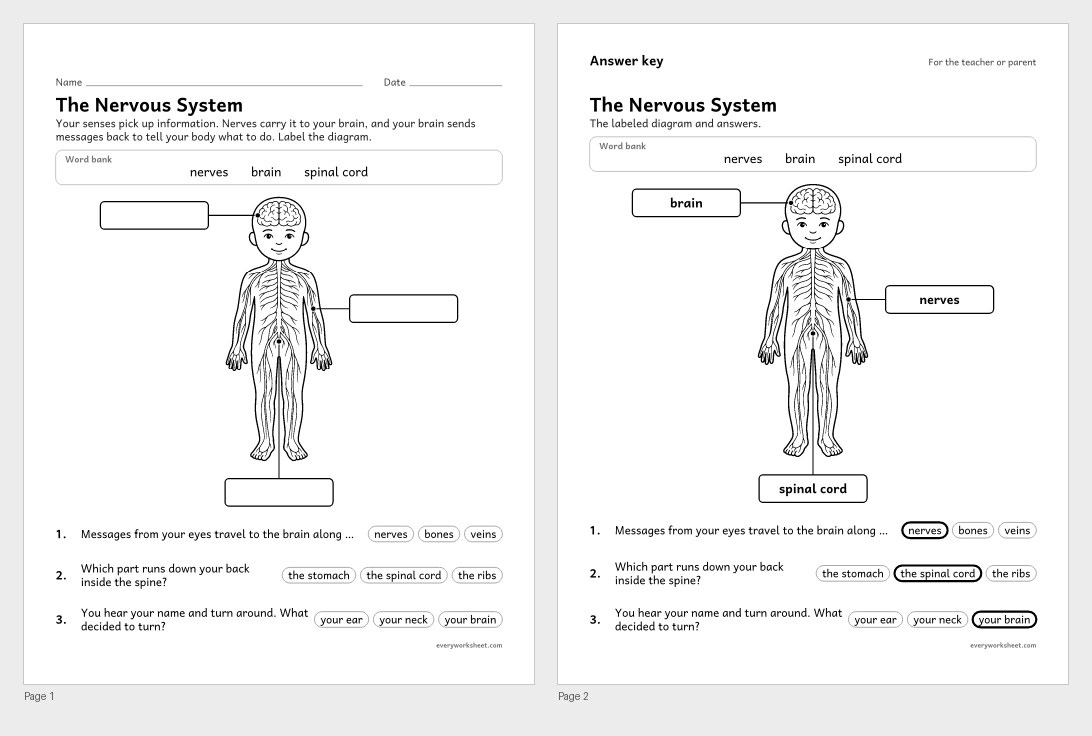 View all 2 pages
Describing how the senses, nerves and brain work together
Answer key on page 2
2 pages113 KB
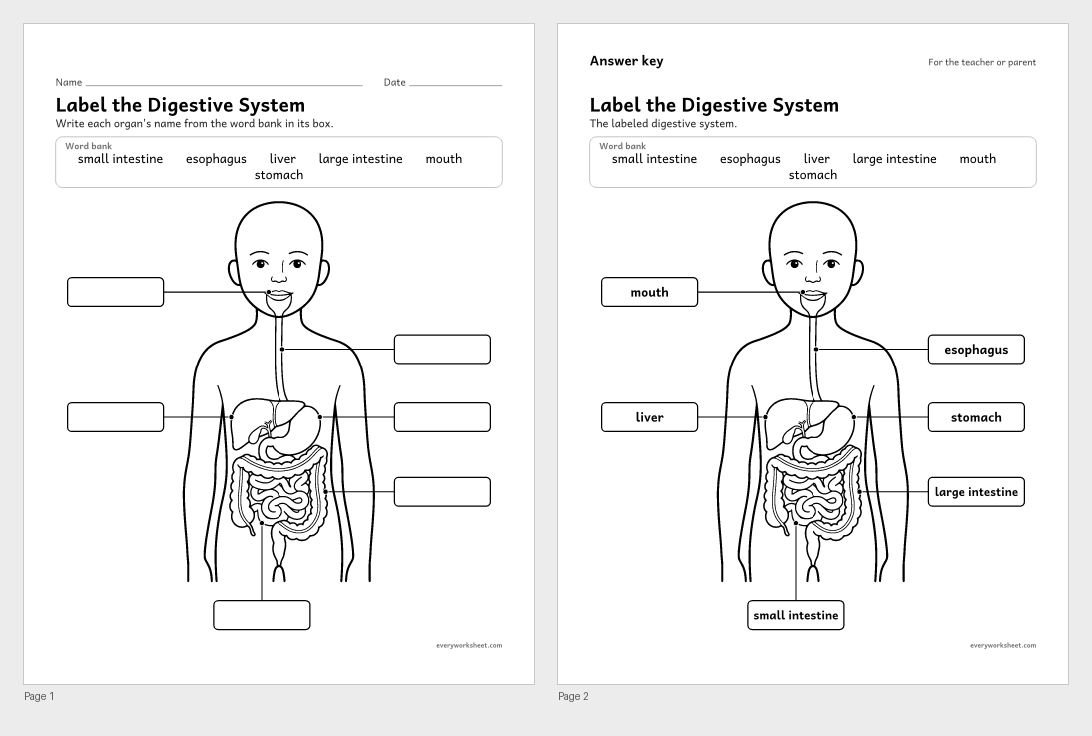 View all 2 pages
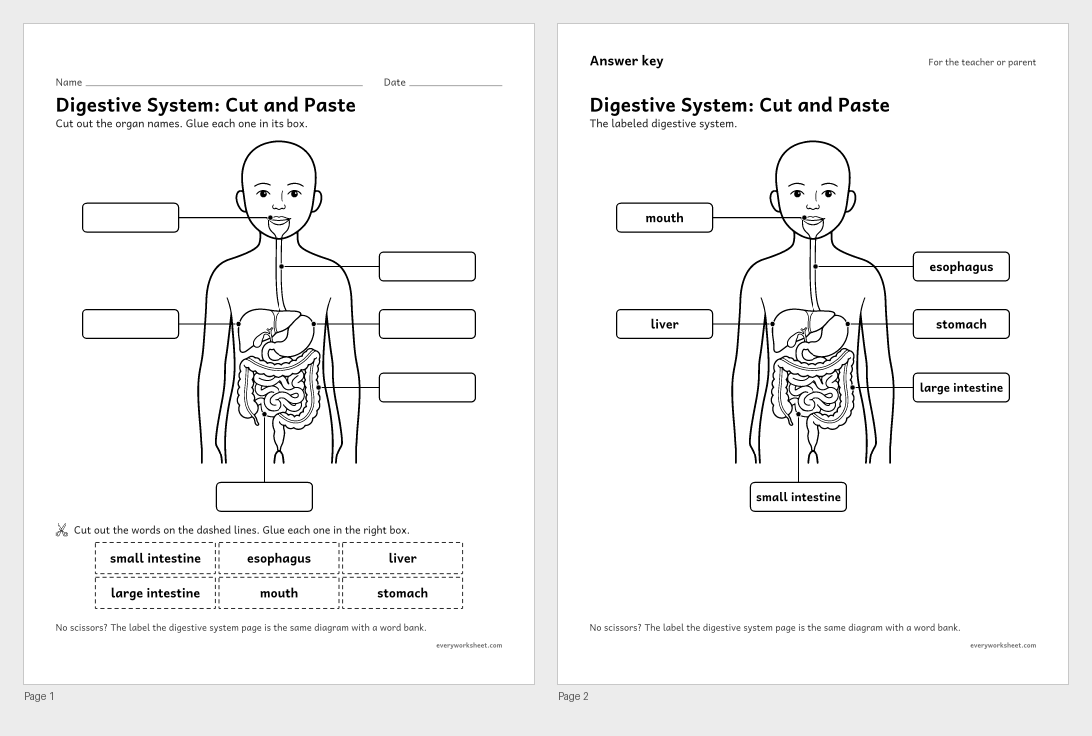
Naming the organs of the digestive system
Answer key on page 2
2 pages86 KB
 View all 2 pages
Naming the organs of the digestive system
Answer key on page 2
2 pages113 KB
 View all 2 pages
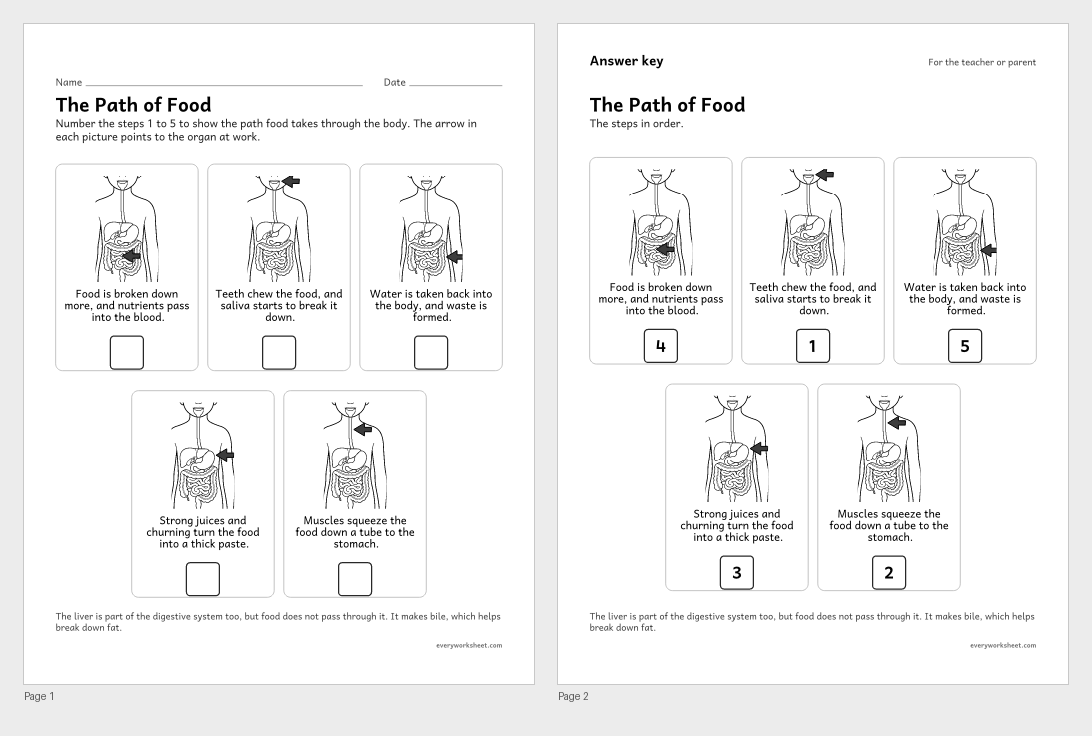
Sequencing the steps of digestion
Answer key on page 2
2 pages315 KB
 View all 2 pages
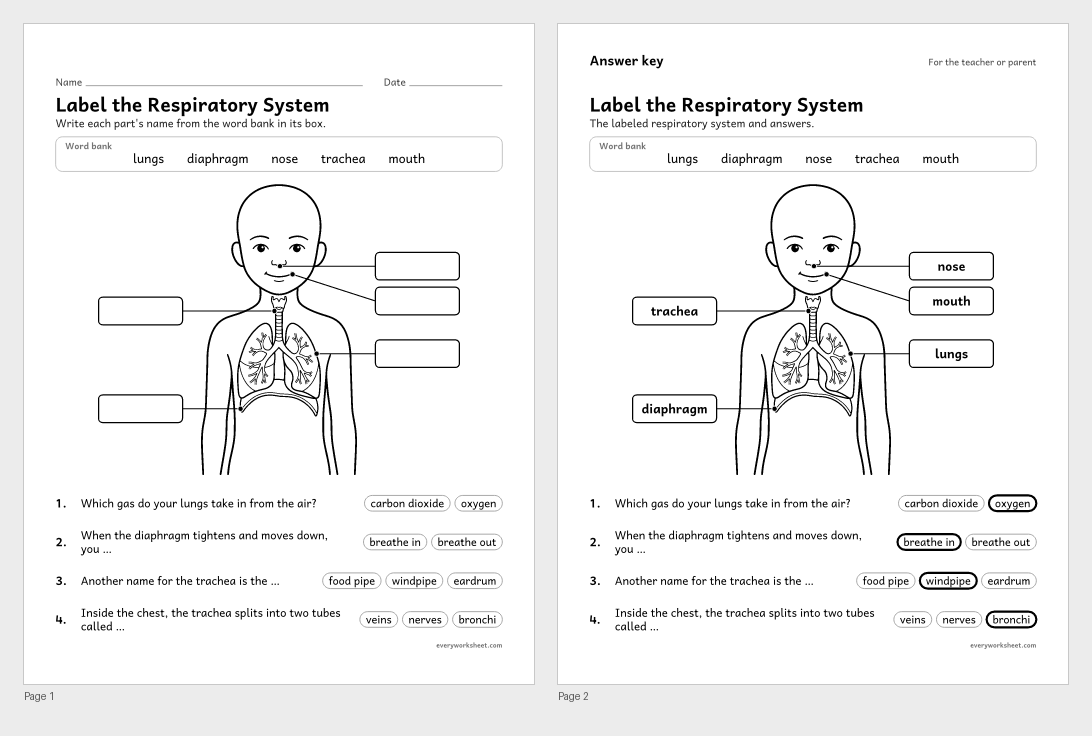
Naming the parts of the respiratory system and how breathing works
Answer key on page 2
2 pages90 KB
 View all 2 pages
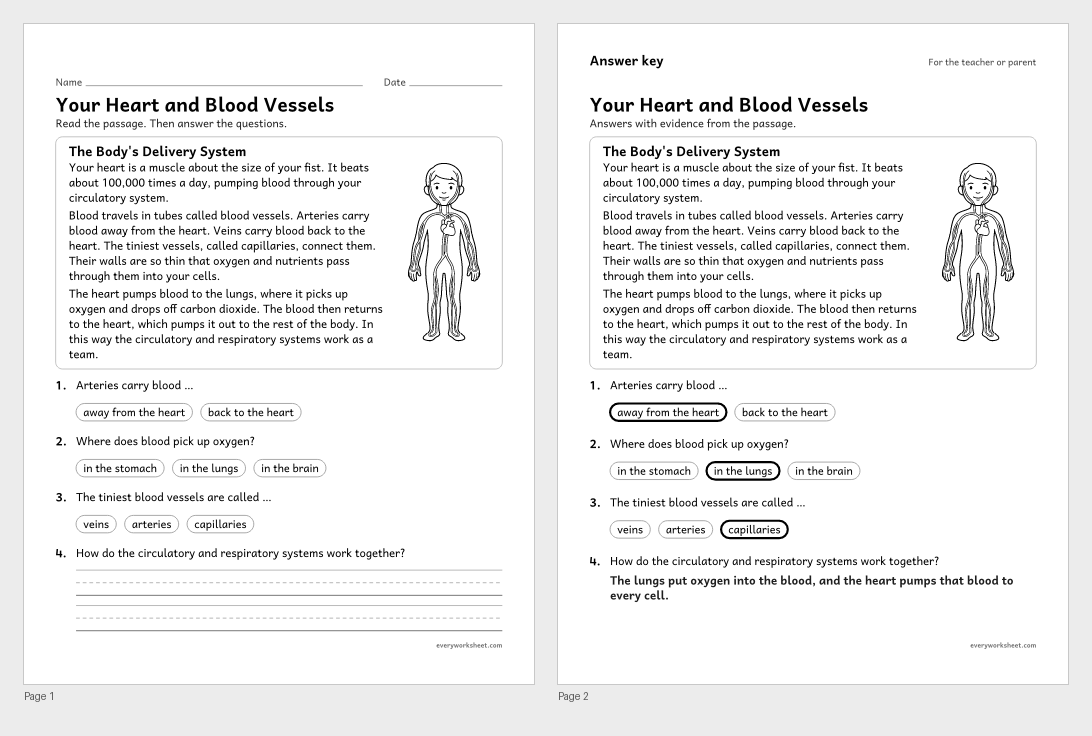
Explaining how the circulatory system carries oxygen and nutrients
Answer key on page 2
2 pages96 KB
 View all 2 pages
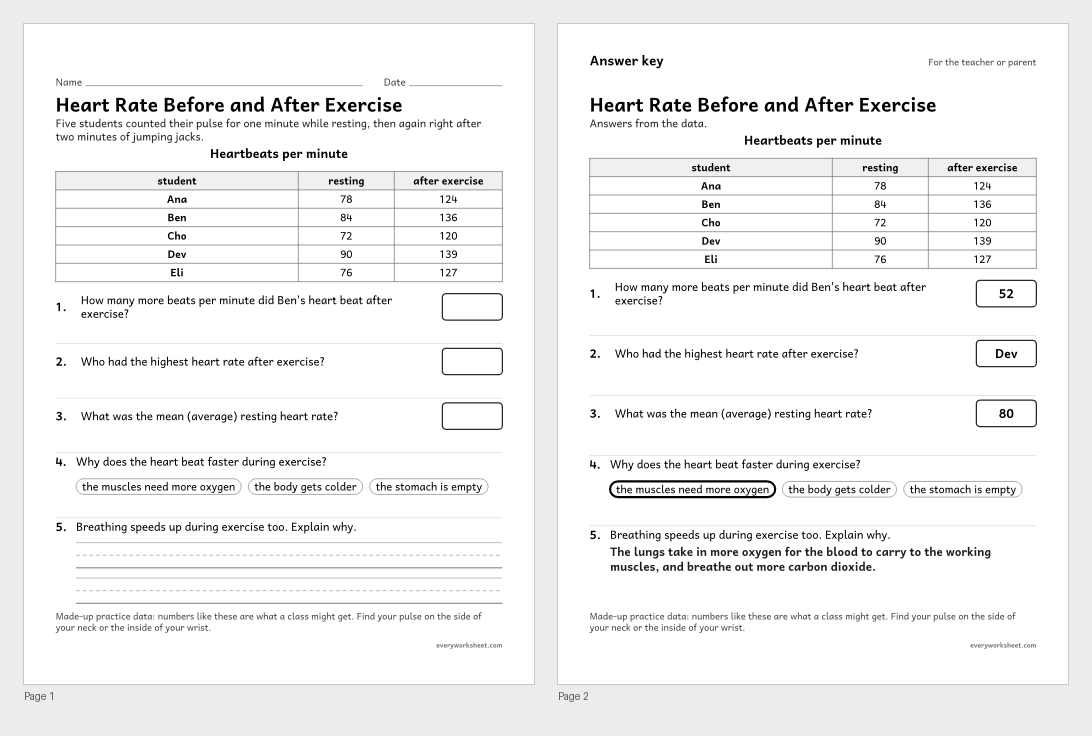
Using data to explain how the body responds to exercise
Answer key on page 2
2 pages48 KB
 View all 2 pages
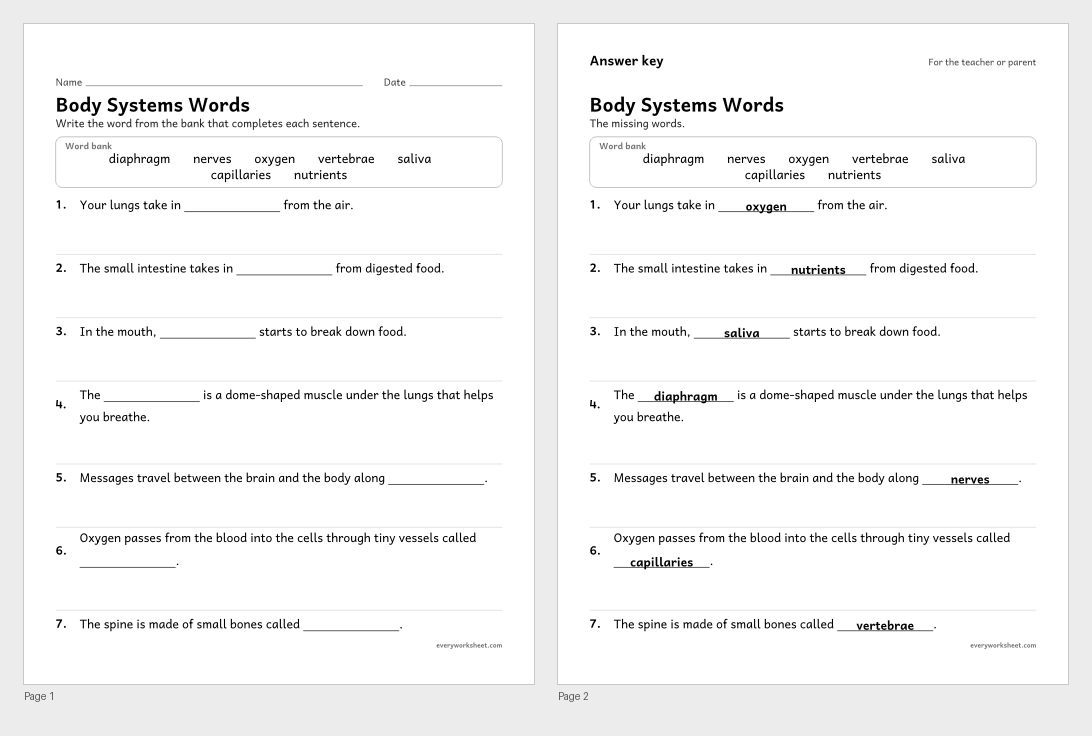
Using vocabulary for the human body systems
Answer key on page 2
2 pages38 KB
Print at 100% (actual size) for the cleanest tracing lines.
Your body is a team of systems. Bones hold you up, muscles pull on them to move you, the lungs bring in oxygen, the heart pumps it around in the blood, the digestive system turns food into nutrients, and the brain and nerves run the whole show.
These human body worksheets build up by grade. Third graders meet the main organs and what they do. Fourth graders label the skeleton, see how muscles work in pairs, sort organs into body systems and trace messages through the nervous system. Fifth graders label the digestive and respiratory systems, follow the path of food, read about the heart and blood vessels and use pulse data to see how the body responds to exercise.
Every diagram is drawn from the front, in black and white, with a labeled version, a version with a word bank and, for the big diagrams, a cut and paste version with a no-scissors twin. Pages with right answers have an answer key on page 2.
NGSS 4-LS1-1Construct an argument that plants and animals have internal and external structures that function to support survival, growth, behavior, and reproduction.NGSS 4-LS1-2Use a model to describe that animals receive different types of information through their senses, process the information in their brain, and respond to the information in different ways.CCSS.ELA-LITERACY.RI.3.7Use information gained from illustrations (e.g., maps, photographs) and the words in a text to demonstrate understanding of the text (e.g., where, when, why, and how key events occur).CCSS.ELA-LITERACY.RI.5.3Explain the relationships or interactions between two or more individuals, events, ideas, or concepts in a historical, scientific, or technical text based on specific information in the text.CCSS.ELA-LITERACY.RI.5.4Determine the meaning of general academic and domain-specific words and phrases in a text relevant to a grade 5 topic or subject area.Kids usually learn six: skeletal (bones), muscular (muscles), digestive (food), respiratory (breathing), circulatory (heart and blood) and nervous (brain and nerves). They all work together.
An adult has about 206 bones. Babies are born with more, and some of them grow together as they get older. The femur, or thigh bone, is the longest.
A muscle can only pull, not push. To bend your elbow the biceps contracts; to straighten it the triceps contracts. One muscle in the pair relaxes while the other pulls.
Mouth, esophagus, stomach, small intestine and large intestine. Nutrients pass into the blood in the small intestine, and the large intestine takes back water.