 View larger
Interjections Worksheets
Learn what interjections are and how to punctuate them, then use them in dialogue, with keyed practice.
Download the interjections worksheets
Learn Interjections
 View larger
 View all 2 pages
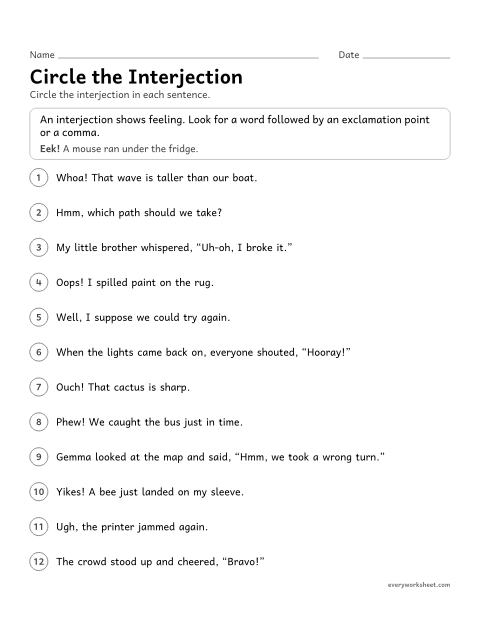
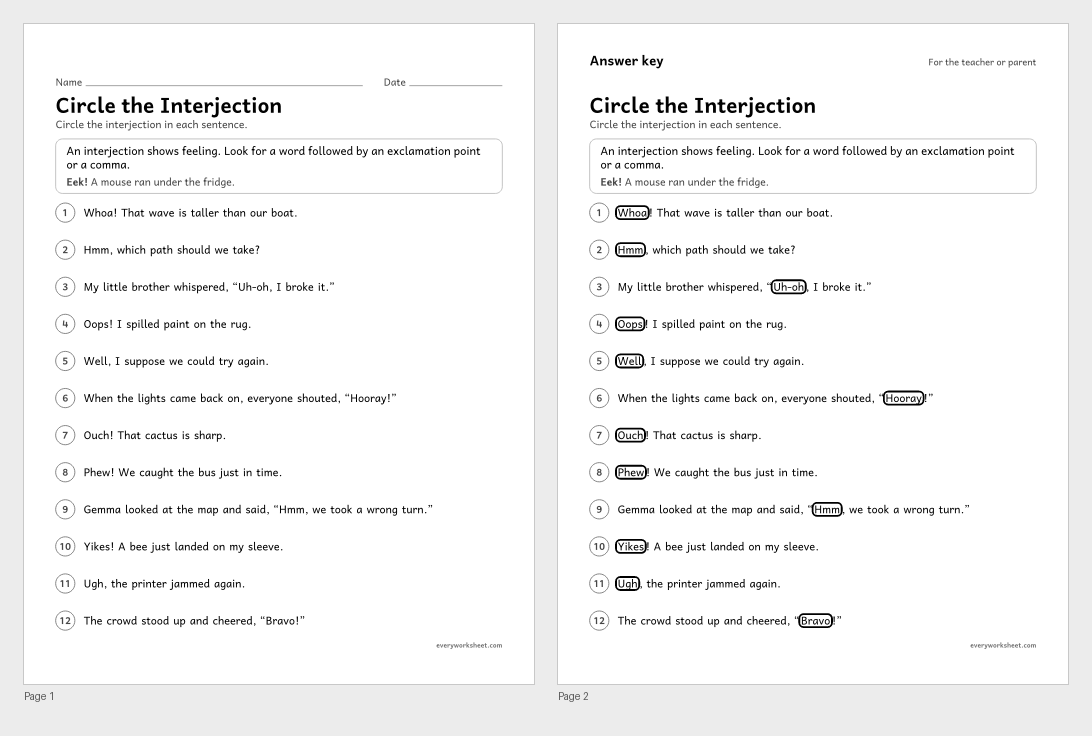
Circle the interjection
Finding interjections in sentences
Answer key on page 2
2 pages55 KB
Choose, Name the Feeling, and Punctuate
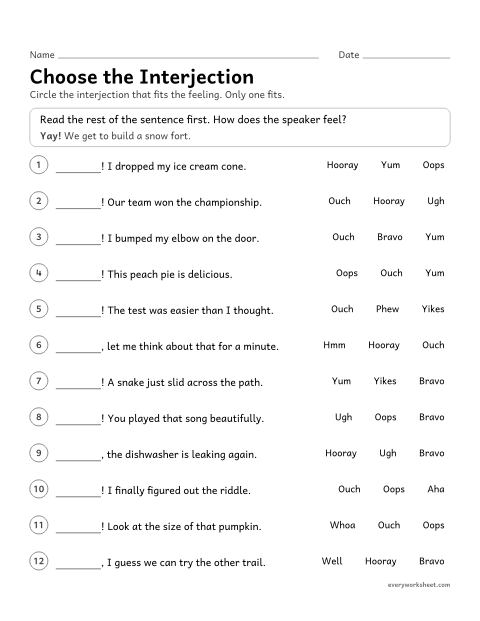 View all 2 pages
Choose the interjection
Choosing an interjection that fits the feeling in a sentence
Answer key on page 2
2 pages58 KB
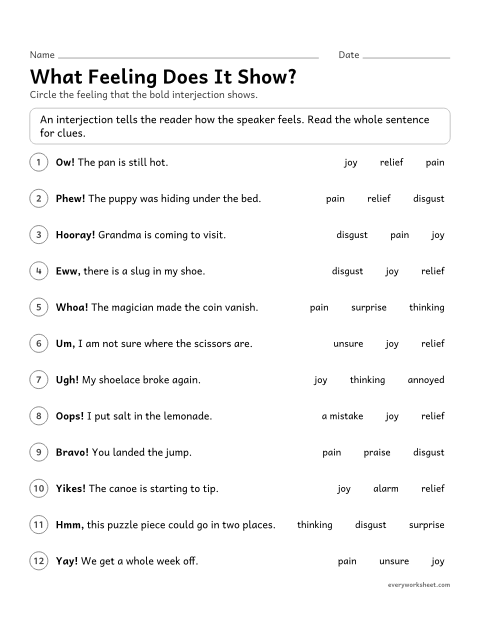 View all 2 pages
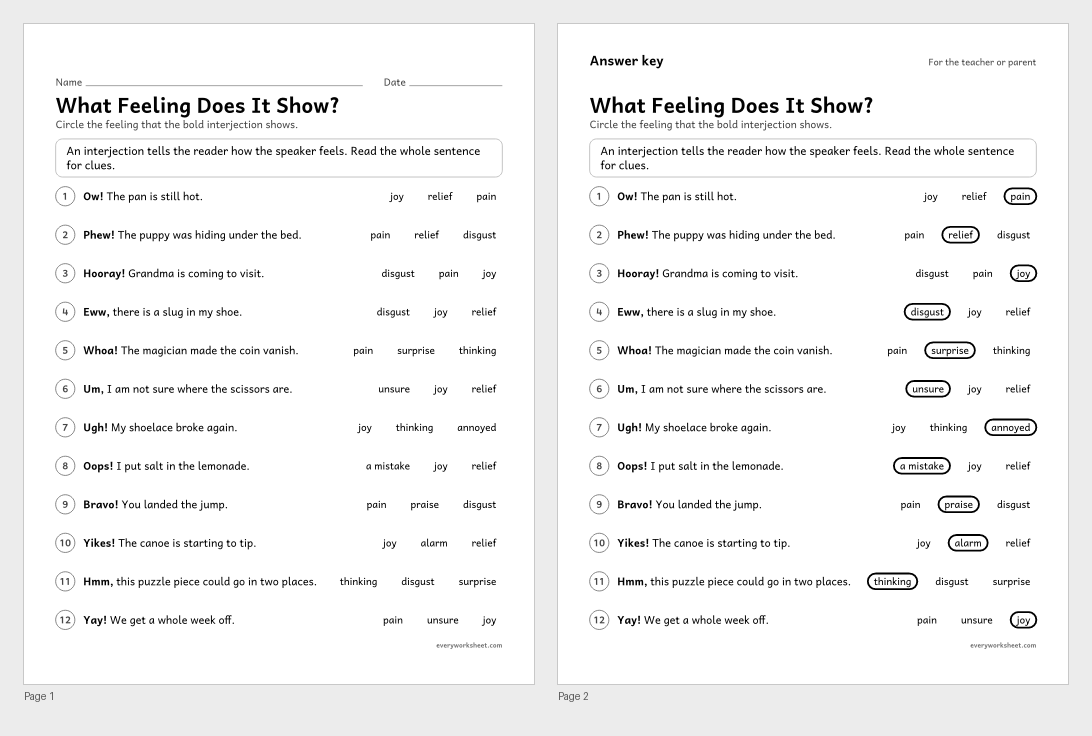
What feeling does it Show?
Explaining the feeling an interjection shows in a sentence
Answer key on page 2
2 pages60 KB
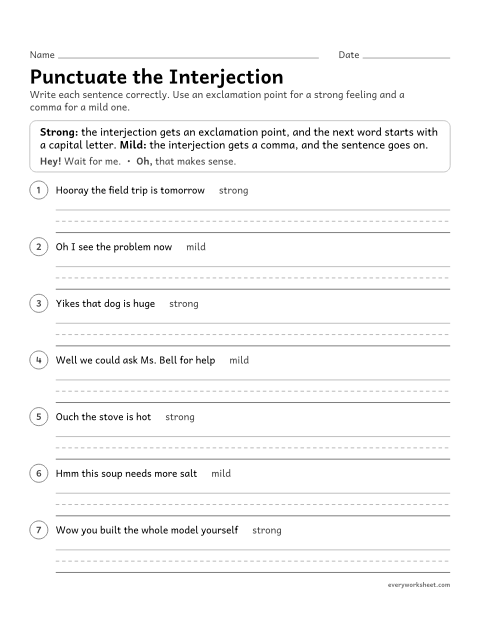 View all 2 pages
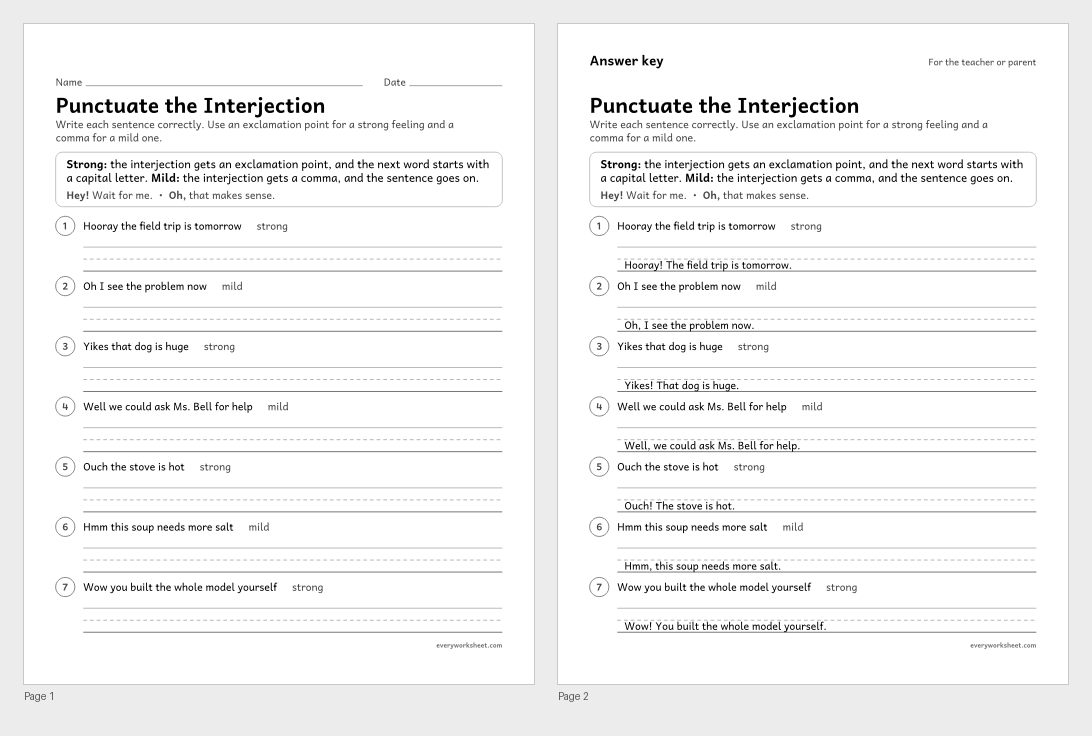
Punctuate the interjection
Punctuating interjections with an exclamation point or a comma
Answer key on page 2
2 pages43 KB
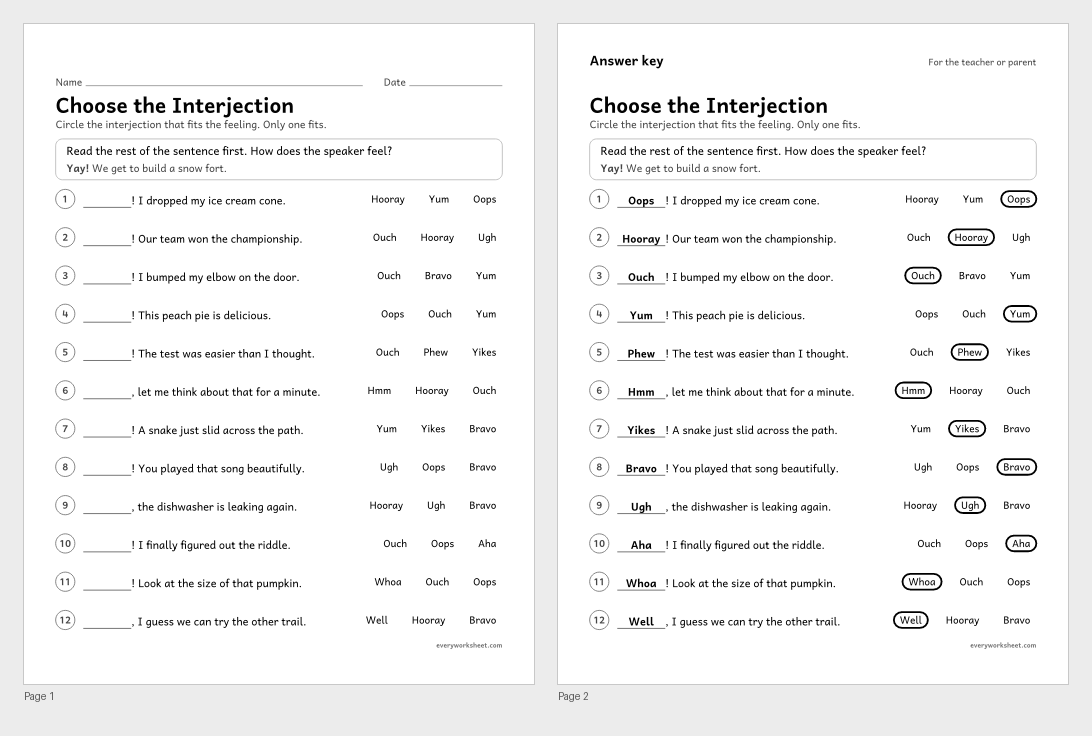
Write Dialogue with Interjections
 View all 2 pages
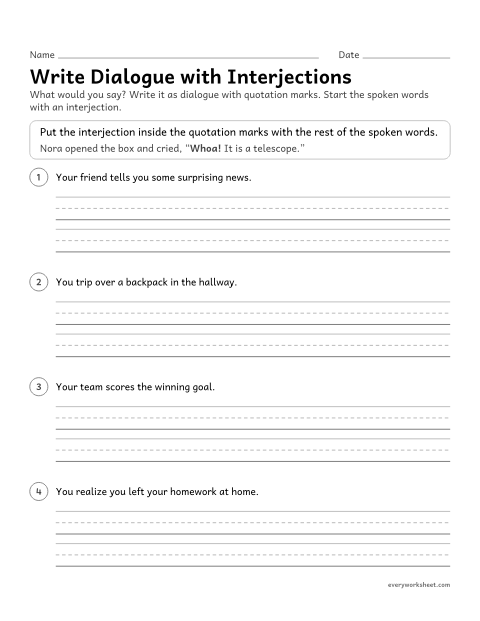
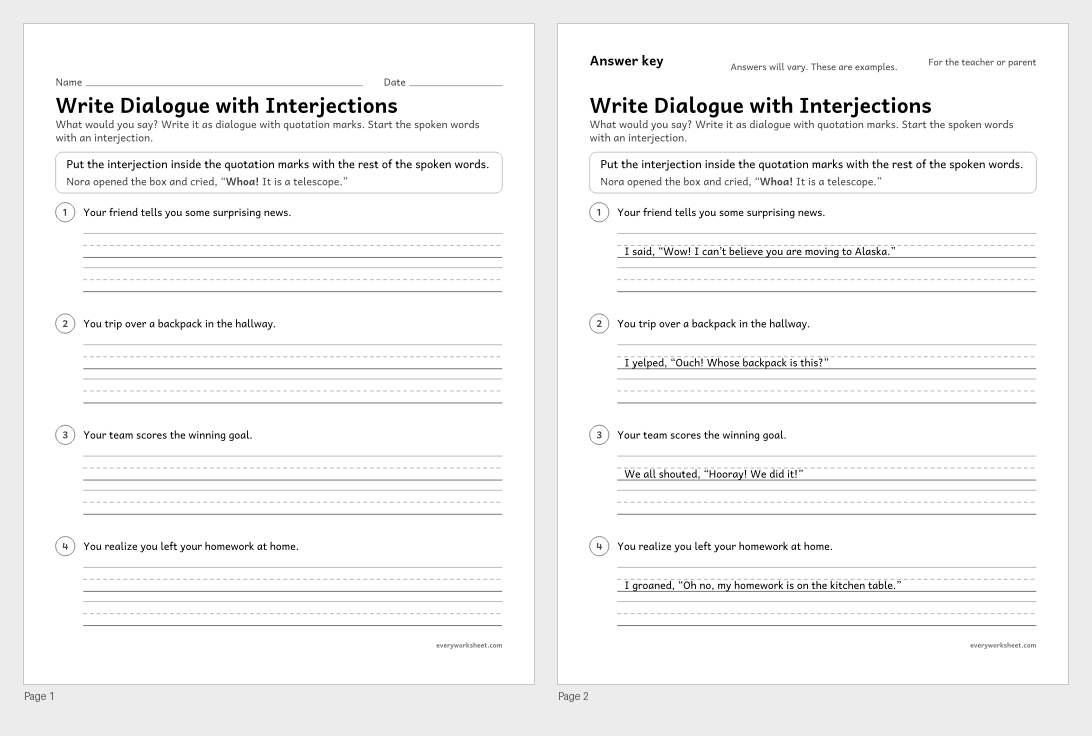
Write dialogue with interjections
Writing dialogue that uses interjections to show feeling
Answer key on page 2
2 pages37 KB
Print at 100% (actual size) for the cleanest tracing lines.
About these interjections worksheets
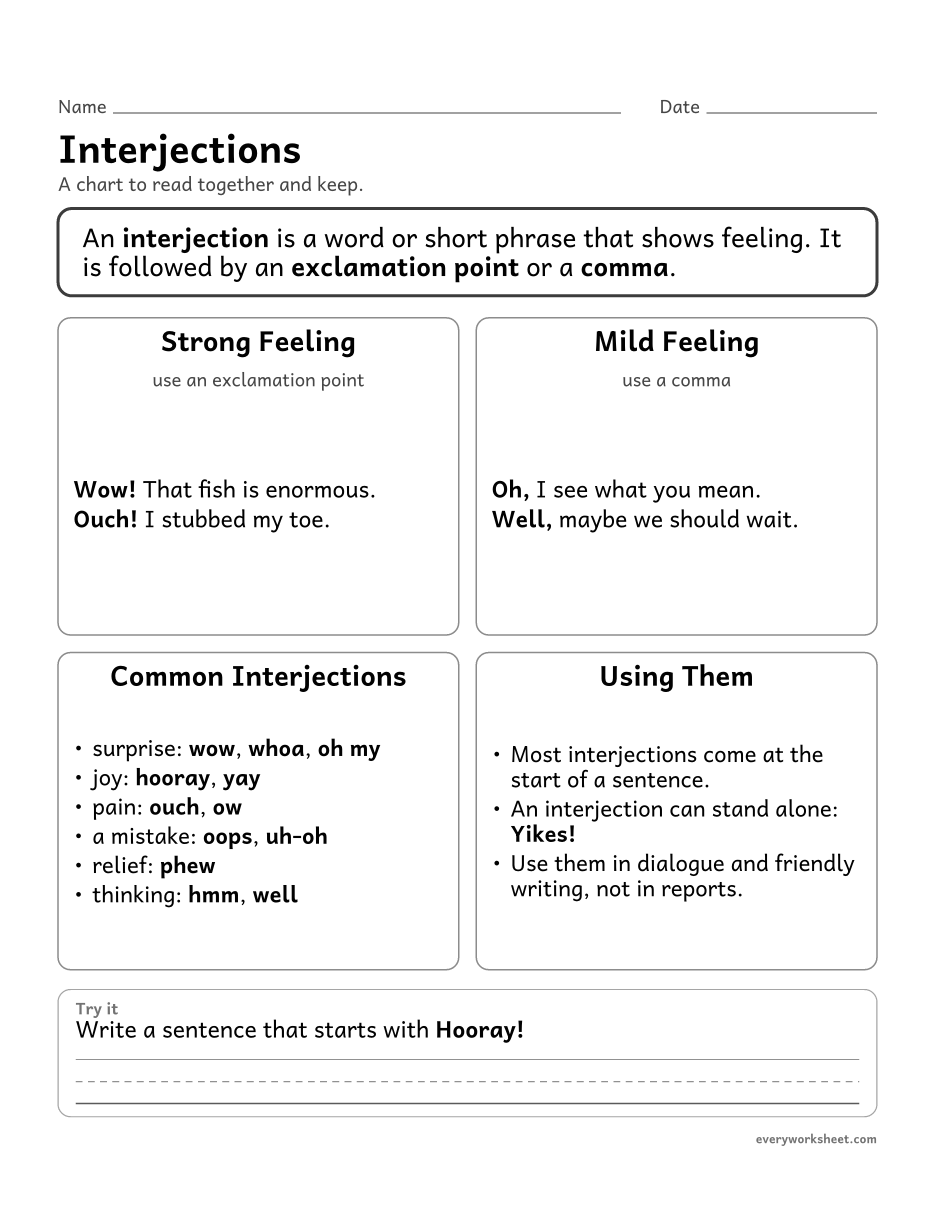
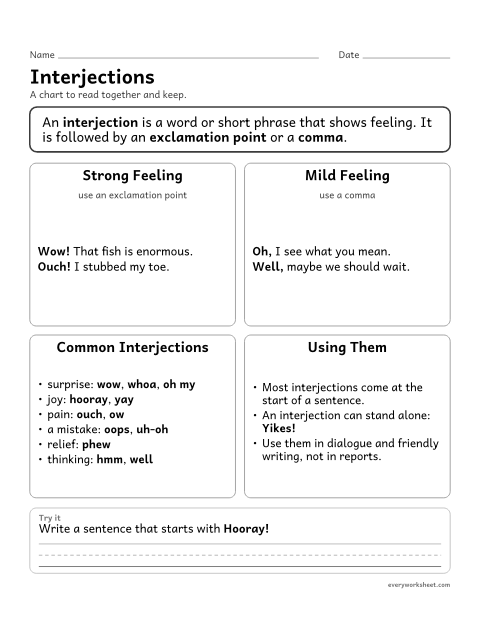
An interjection is a word or short phrase that shows feeling. It is followed by an exclamation point or a comma. A strong feeling gets an exclamation point: "Ouch! I stubbed my toe." A mild feeling gets a comma: "Oh, I see what you mean." Common interjections include wow, whoa, hooray, ouch, oops, uh-oh, phew, yikes, hmm, and well.
Interjections usually come at the start of a sentence, and an interjection can even stand alone: "Yikes!" They make dialogue and friendly writing lively, but they do not belong in reports.
These printable worksheets begin with an interjections chart. Children circle interjections, choose the one that fits a feeling, name the feeling an interjection shows, punctuate strong and mild interjections, and write dialogue of their own. Every practice page has an answer key.
Standards
CCSS.ELA-LITERACY.L.5.1.AExplain the function of conjunctions, prepositions, and interjections in general and their function in particular sentences.CCSS.ELA-LITERACY.L.5.2Demonstrate command of the conventions of standard English capitalization, punctuation, and spelling when writing.
How to use them
- Read the chart together and act out a few interjections with feeling.
- Use Circle the Interjection, then Choose the Interjection.
- Practice What Feeling Does It Show? and Punctuate the Interjection.
- Finish by writing dialogue for everyday moments.
Teaching tips
- After an exclamation point, start the next word with a capital letter.
- After a comma, the sentence keeps going with a lowercase word.
- In dialogue, keep the interjection inside the quotation marks.
- Use interjections sparingly so each one stands out.
Questions teachers and parents ask
What is an interjection?
A word or short phrase that shows feeling, like wow, ouch, or hmm. It is followed by an exclamation point or a comma.
When do you use a comma after an interjection?
Use a comma for a mild feeling ("Well, maybe we should wait") and an exclamation point for a strong one ("Wow! That fish is enormous.").
What grade learns interjections?
Explaining what interjections do in sentences is a 5th grade grammar skill.
Do the worksheets include answer keys?
Yes. Practice pages have keys, and the writing page shows example answers.