 View all 2 pages
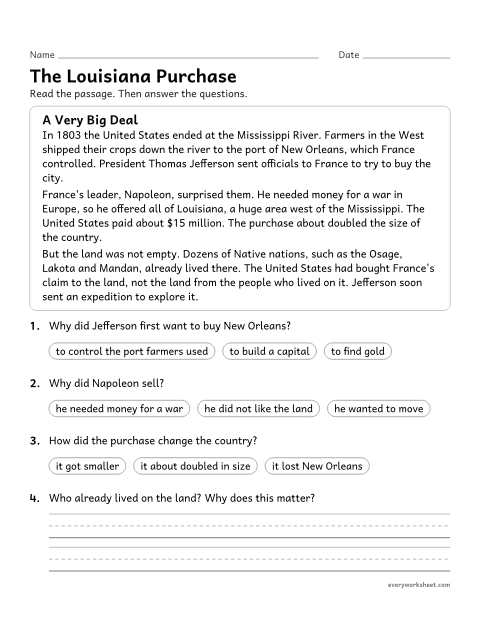
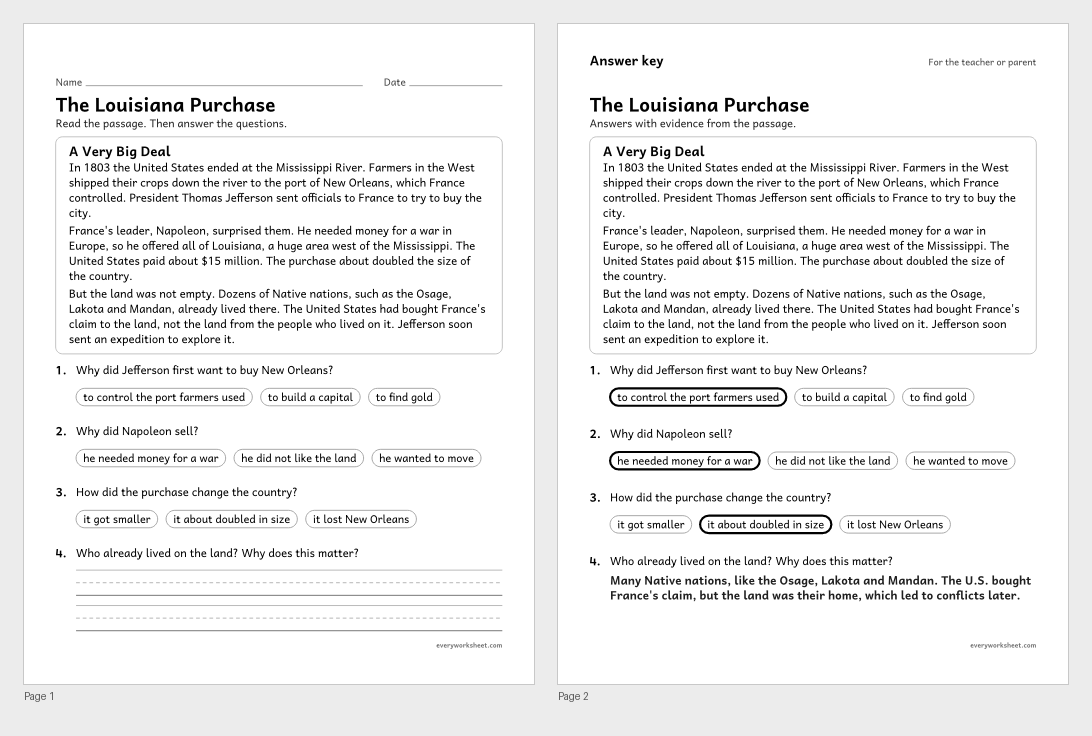
Louisiana purchase reading passage for 5th grade
Explaining the Louisiana Purchase and its effects
Answer key on page 2
2 pages42 KB
The Louisiana Purchase, the Lewis and Clark expedition, Sacagawea and York, early westward expansion, and its effects on Native nations.
View all 2 pagesExplaining the Louisiana Purchase and its effects
Answer key on page 2
2 pages42 KB
 View larger
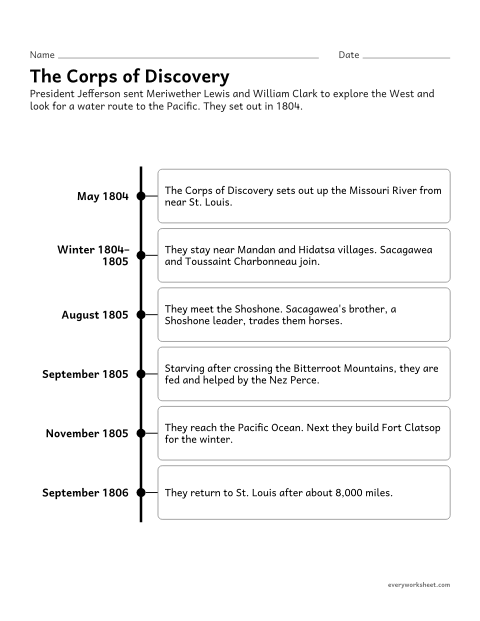
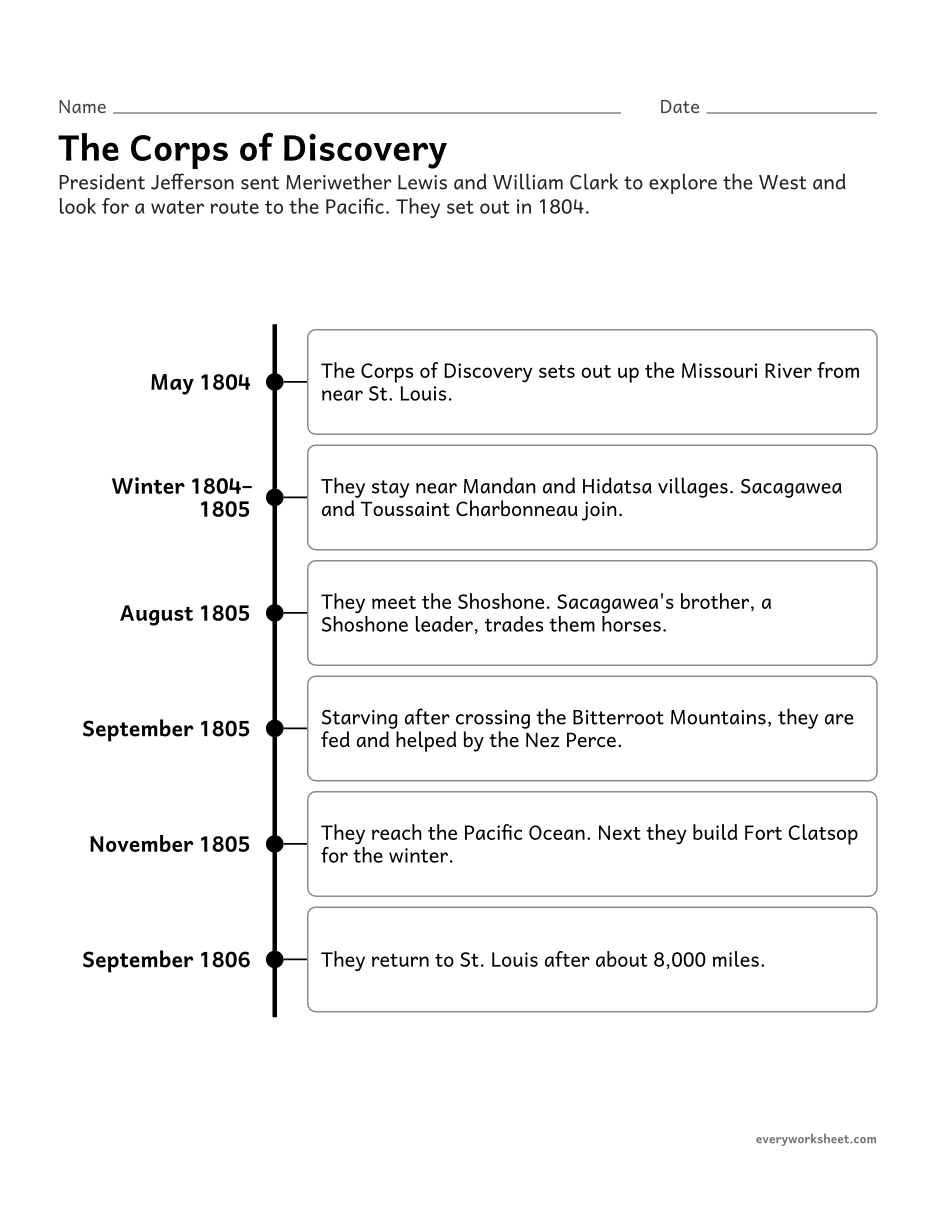
Sequencing the main events of the Lewis and Clark expedition
1 page30 KB
 View all 2 pages
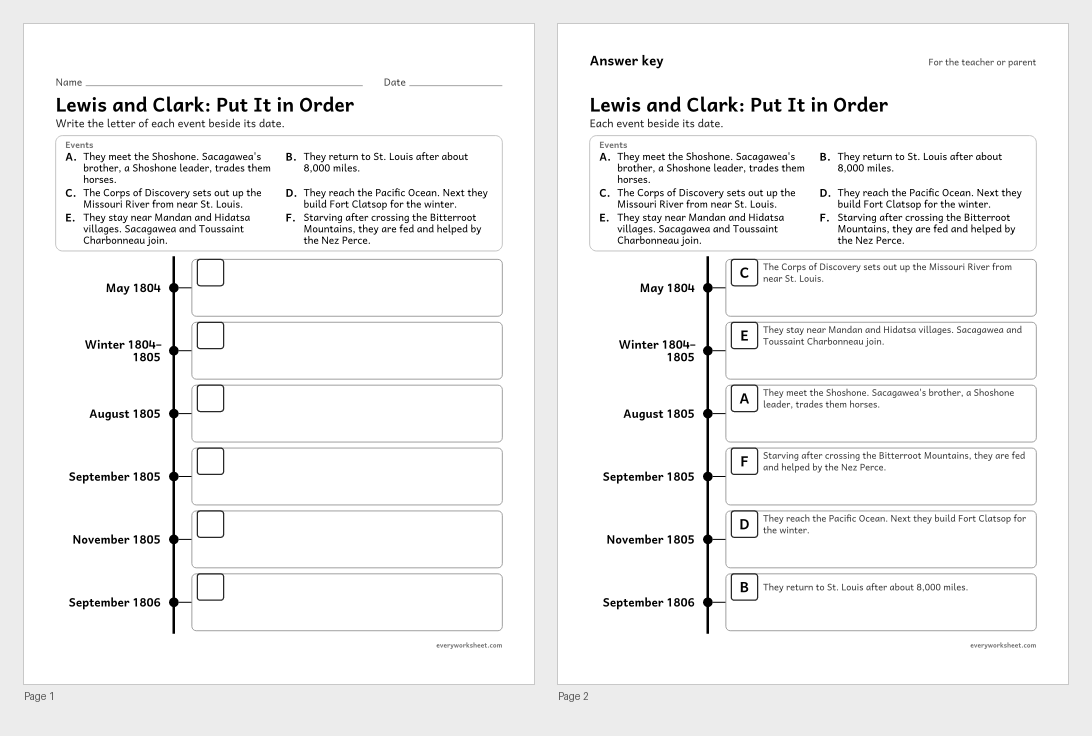
Sequencing the main events of the Lewis and Clark expedition
Answer key on page 2
2 pages48 KB
 View all 2 pages
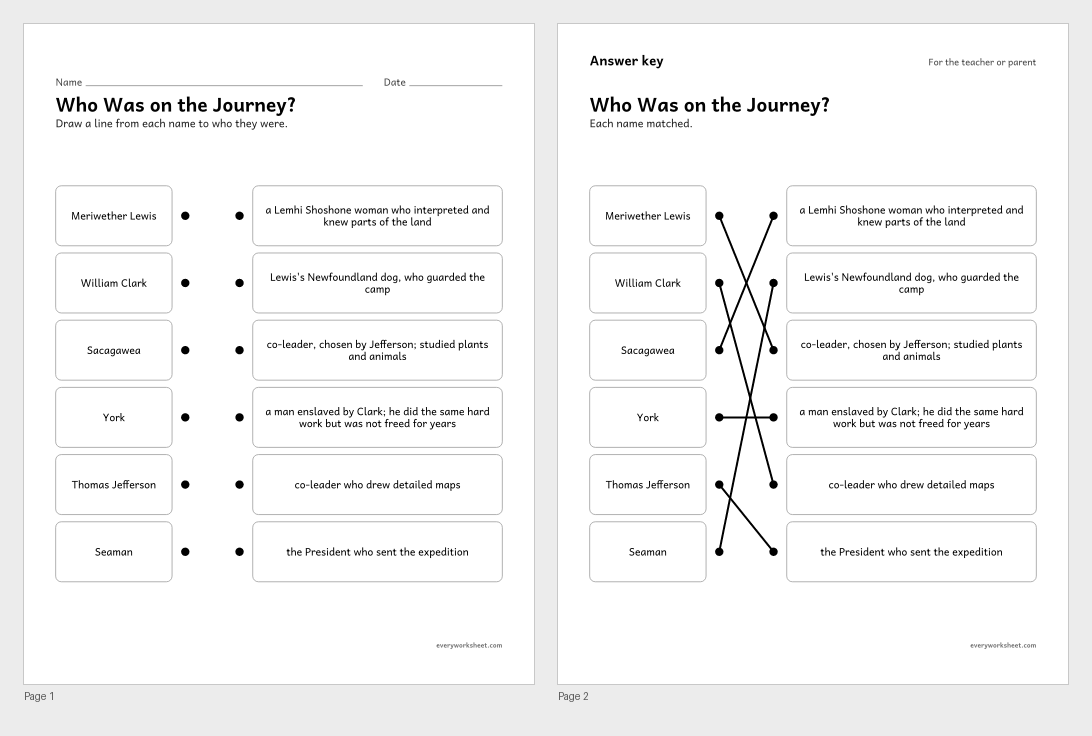
Identifying members of the Lewis and Clark expedition and their roles
Answer key on page 2
2 pages29 KB
 View all 2 pages
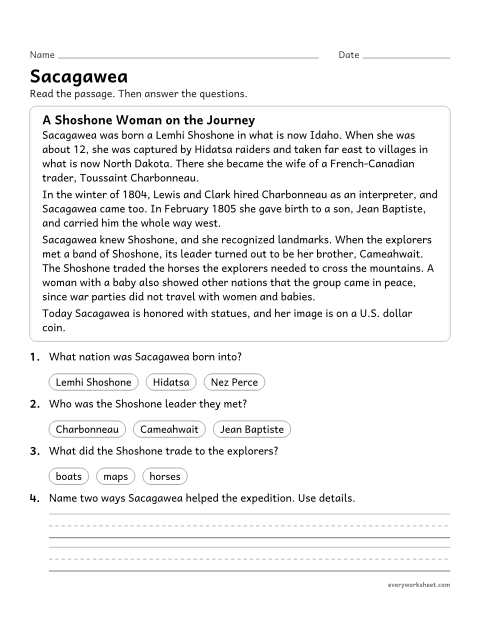
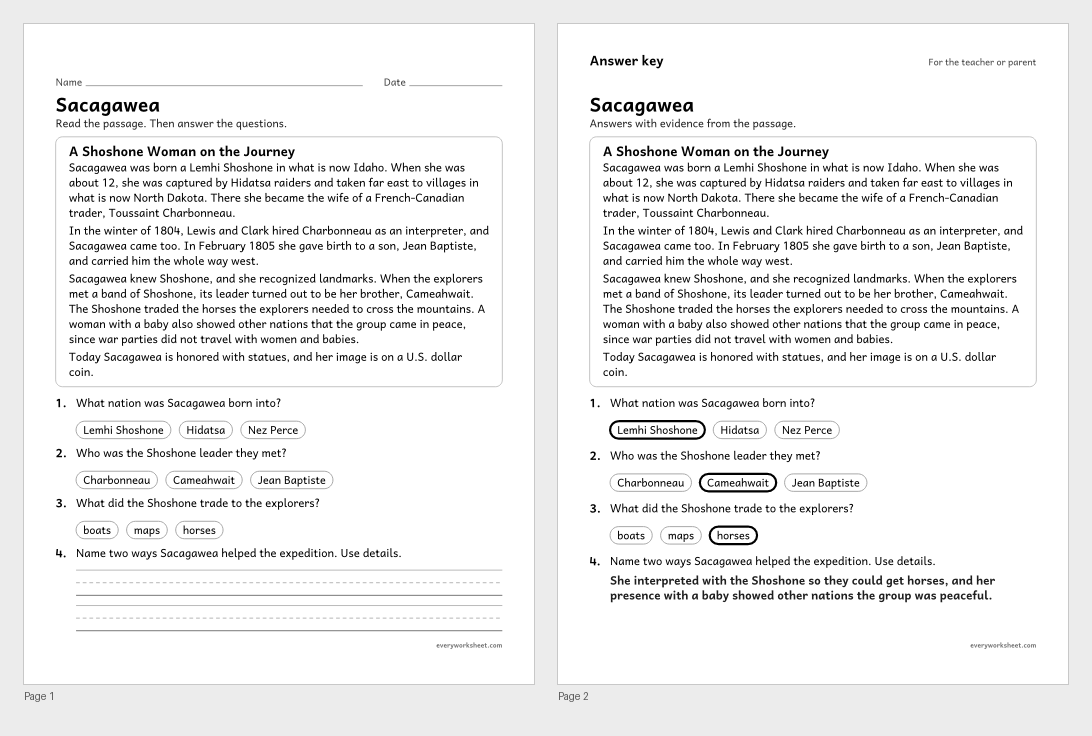
Describing Sacagawea's role in the Lewis and Clark expedition
Answer key on page 2
2 pages40 KB
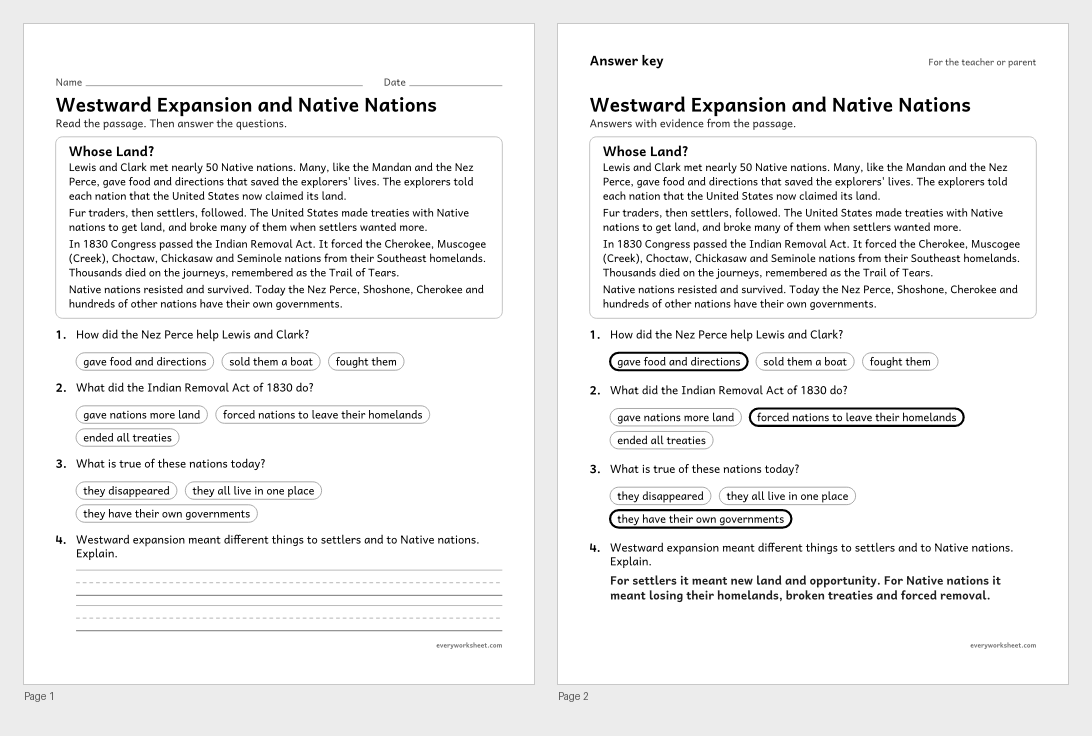 View all 2 pages
Explaining the effects of westward expansion on Native nations
Answer key on page 2
2 pages41 KB
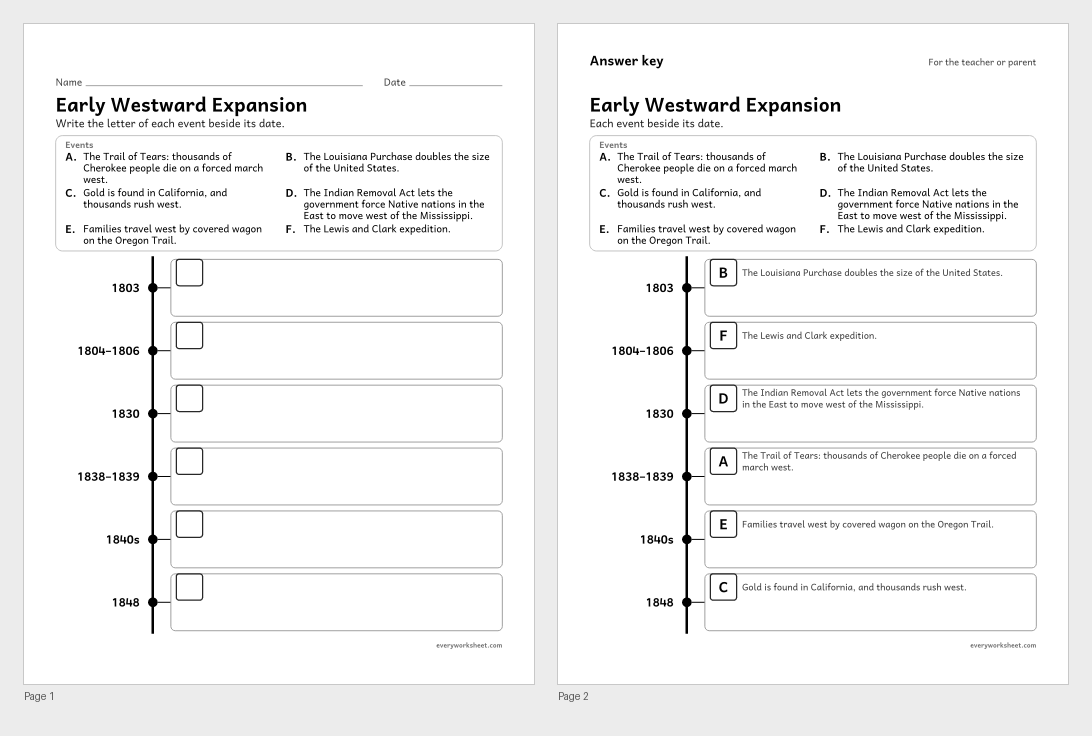 View all 2 pages
Sequencing events of early westward expansion
Answer key on page 2
2 pages46 KB
 View larger
Writing a narrative journal entry from the point of view of an expedition member
1 page56 KB
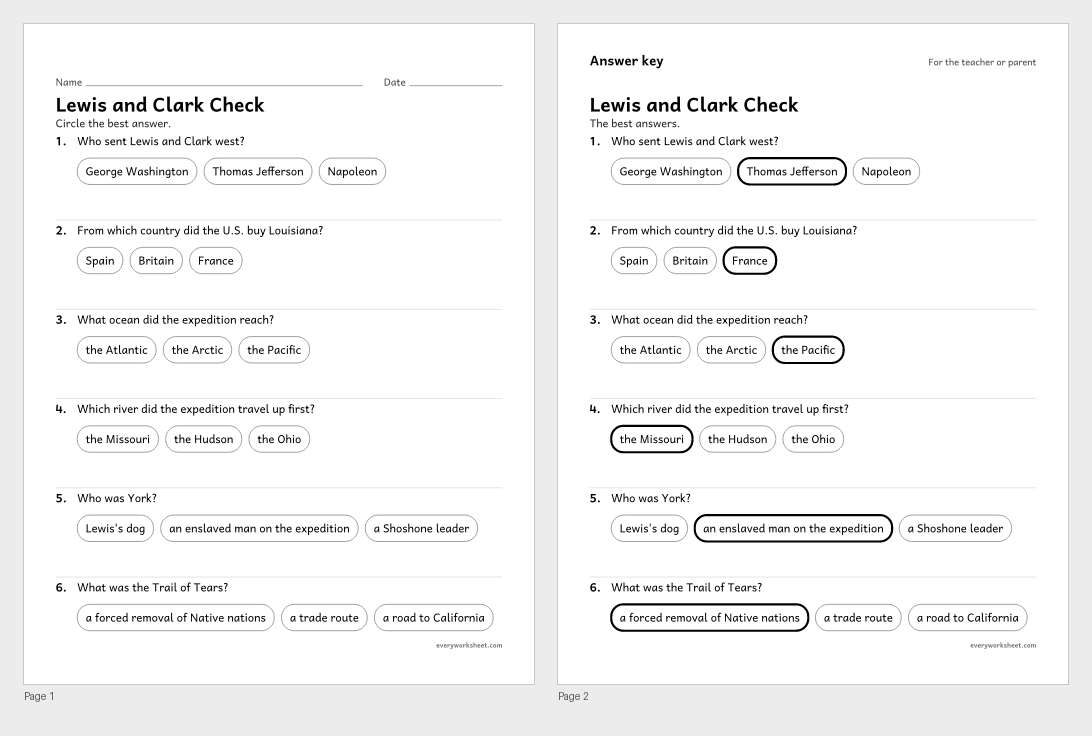 View all 2 pages
Reviewing the Louisiana Purchase, Lewis and Clark and early westward expansion
Answer key on page 2
2 pages40 KB
Print at 100% (actual size) for the cleanest tracing lines.
In 1803 the United States bought France's claim to Louisiana, about doubling the country's size. President Jefferson sent Meriwether Lewis and William Clark to explore it. With the help of Sacagawea and many Native nations, the Corps of Discovery reached the Pacific in 1805 and returned in 1806.
These Lewis and Clark worksheets include a Louisiana Purchase reading, an expedition timeline and a put-it-in-order page, a matching page on who was on the journey, a Sacagawea reading, a reading on westward expansion and Native nations, an early westward expansion timeline, a journal writing page and a quiz.
Every page is black and white, prints on US Letter or A4, and every page with right answers has an answer key on page 2.
C3 D2.His.14.3-5Explain probable causes and effects of events and developments.C3 D2.His.1.3-5Create and use a chronological sequence of related events to compare developments that happened at the same time.C3 D2.His.3.3-5Generate questions about individuals and groups who have shaped significant historical changes and continuities.C3 D2.His.4.3-5Explain why individuals and groups during the same historical period differed in their perspectives.CCSS.ELA-LITERACY.W.5.3Write narratives to develop real or imagined experiences or events using effective technique, descriptive details, and clear event sequences.C3 D2.Geo.6.3-5Explain how the cultural and environmental characteristics of places change over time.Meriwether Lewis and William Clark led the Corps of Discovery, sent by President Thomas Jefferson in 1804 to explore the Louisiana Purchase and find a route to the Pacific.
She interpreted with the Shoshone, whose leader was her brother, so the explorers could get horses, and her presence with a baby showed other nations the group was peaceful.
Settlers moved onto Native lands, many treaties were broken, and laws like the Indian Removal Act of 1830 forced nations from their homelands. Native nations resisted and have their own governments today.