 View larger
Lines of symmetry chart
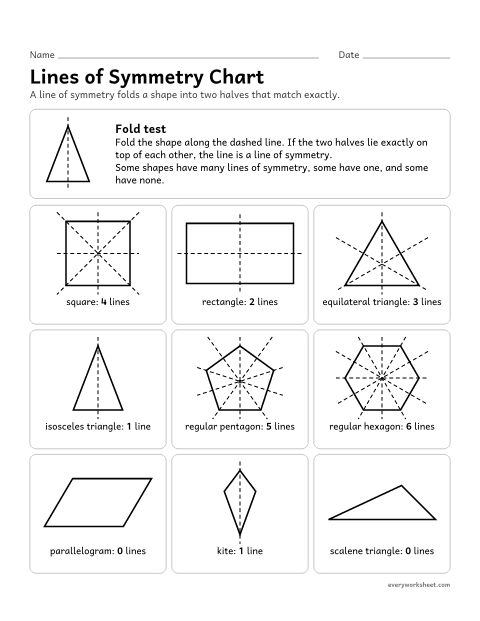
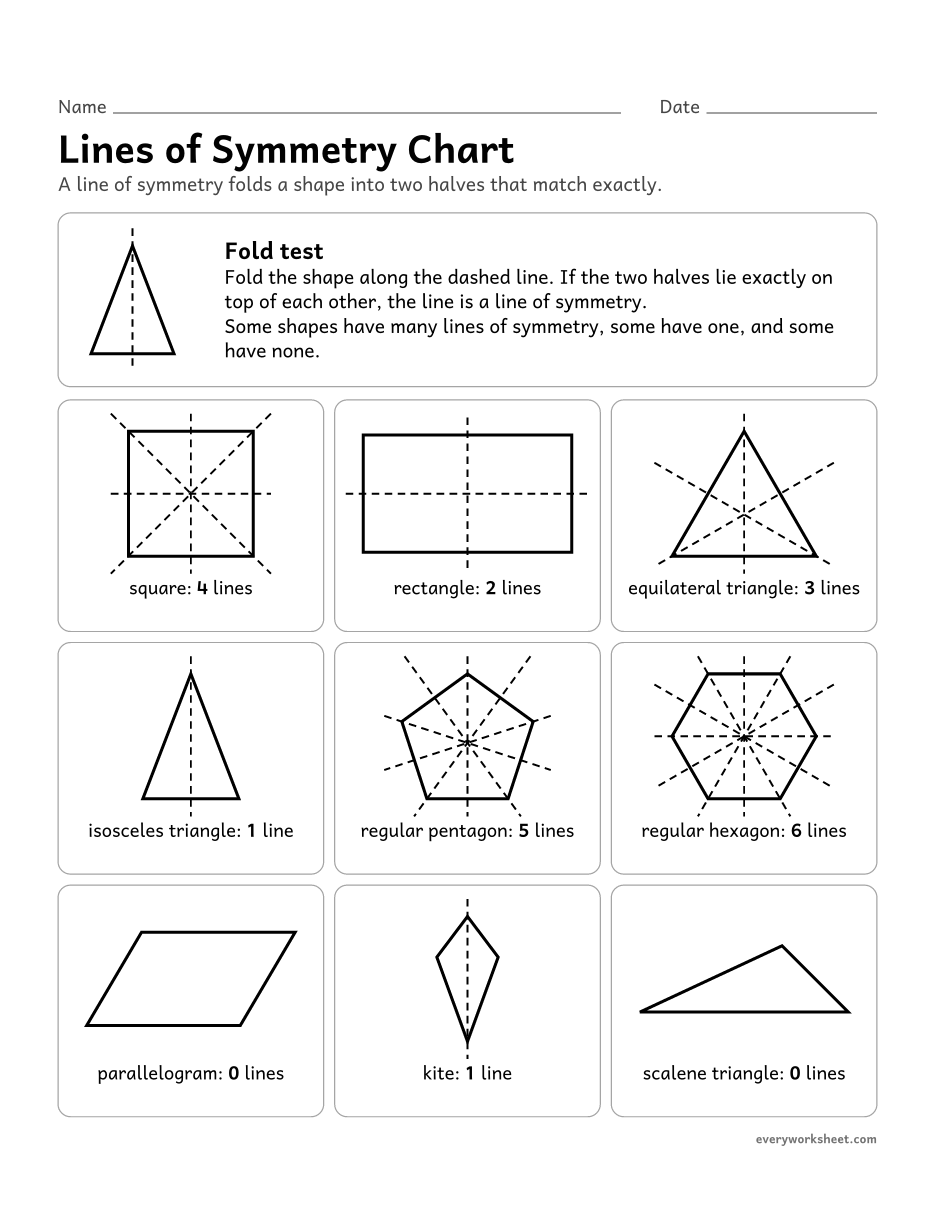
What a line of symmetry is, with the number of lines of symmetry in common shapes
1 page32 KB
A lines of symmetry chart, checking dashed lines, drawing every line of symmetry on shapes, letters and regular polygons, and completing figures.
View largerWhat a line of symmetry is, with the number of lines of symmetry in common shapes
1 page32 KB
 View all 2 pages
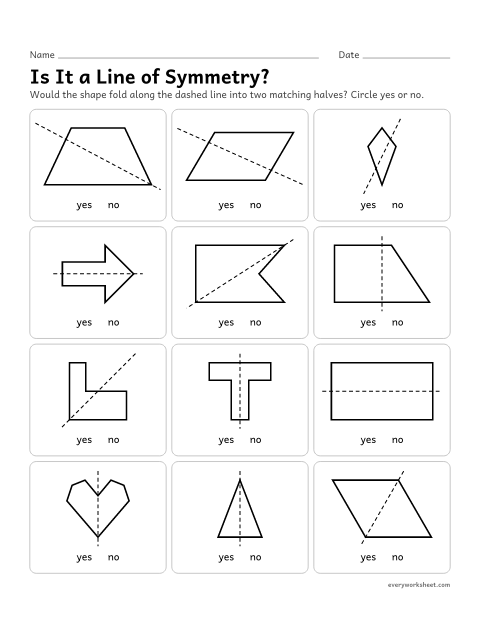
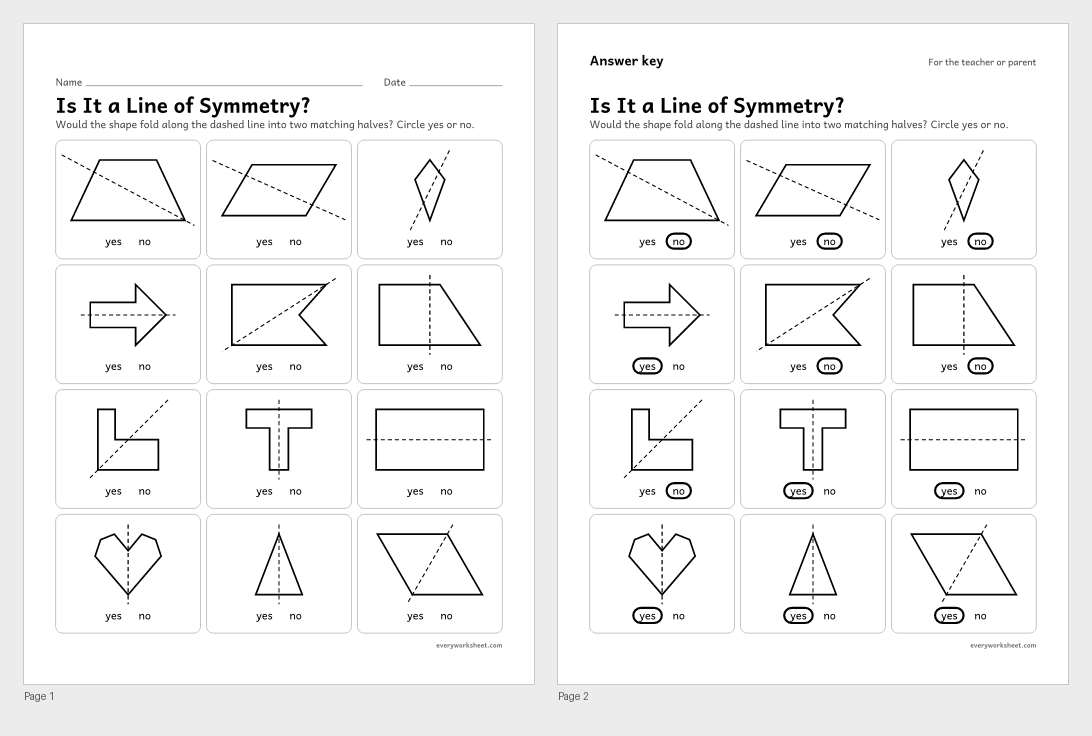
Deciding whether a dashed line folds a shape into two matching parts
Answer key on page 2
2 pages34 KB
 View all 2 pages
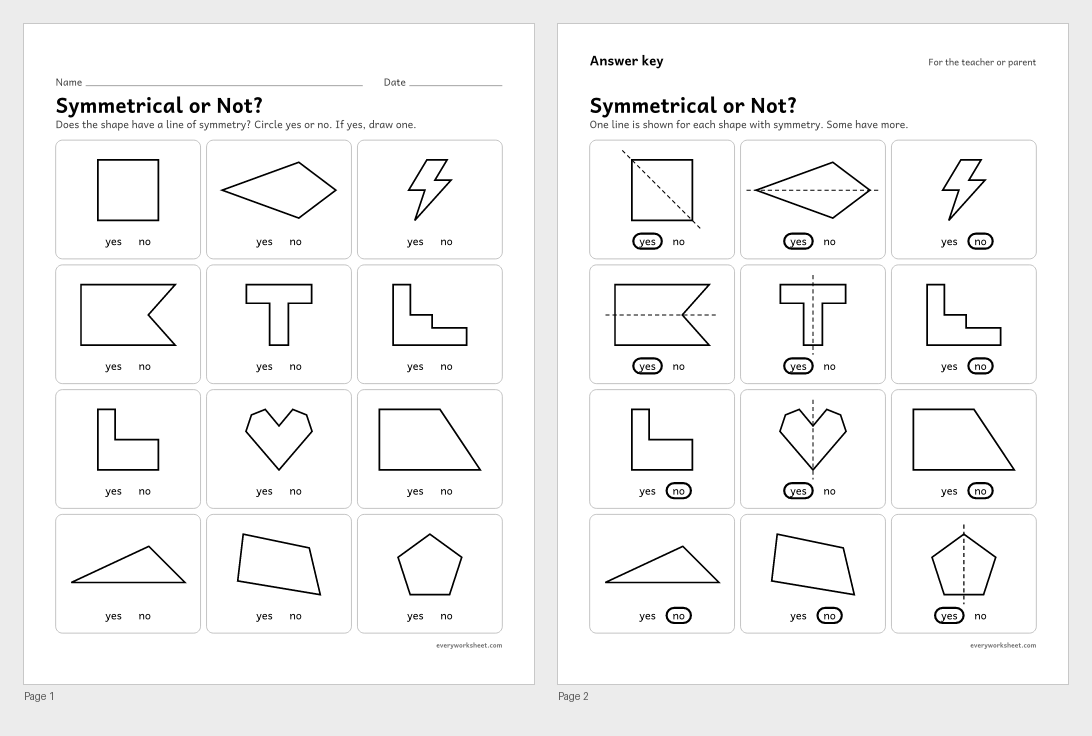
Deciding whether a shape has a line of symmetry and drawing one when it does
Answer key on page 2
2 pages33 KB
 View all 2 pages
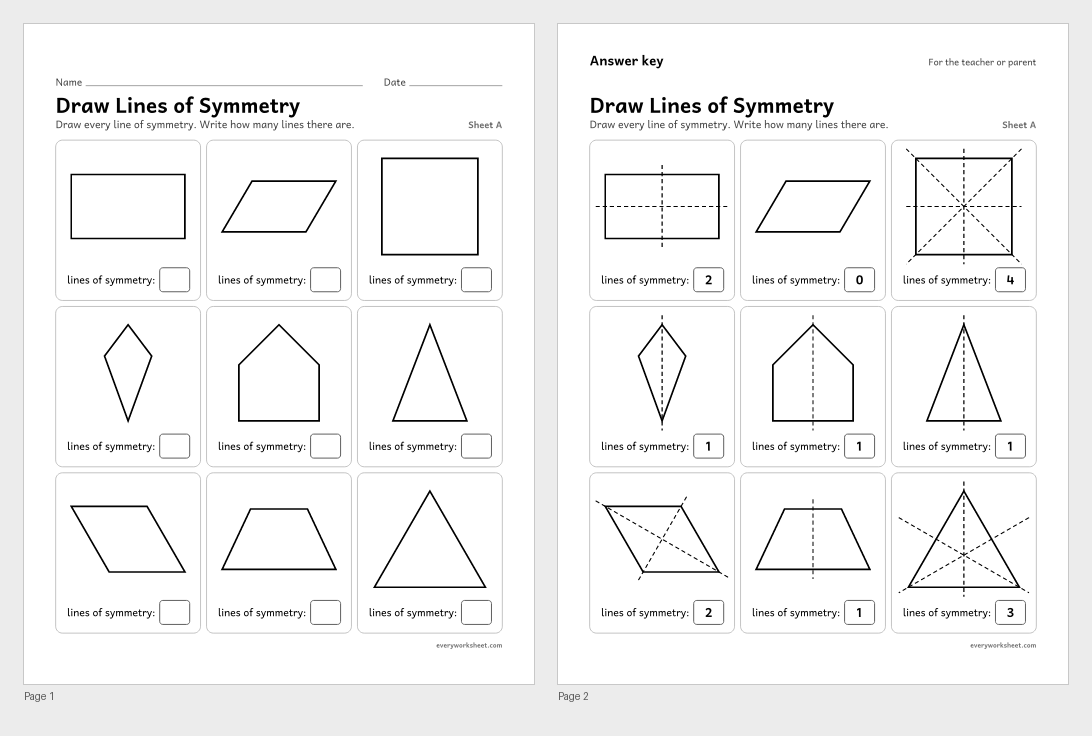
Drawing every line of symmetry on squares, rectangles, triangles, kites and other shapes
Answer key on page 2
2 pages32 KB
 View all 2 pages
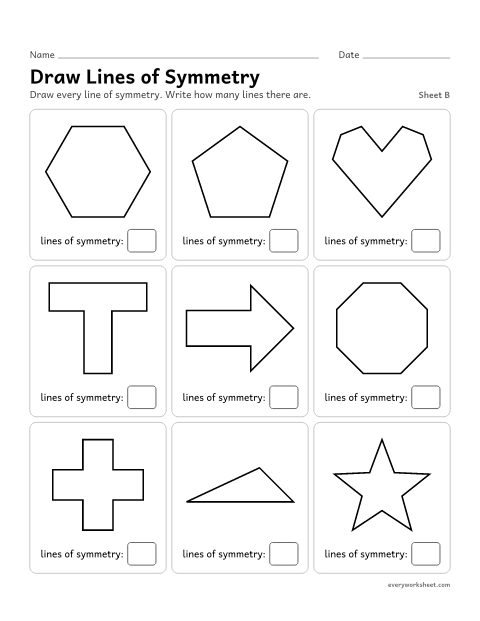
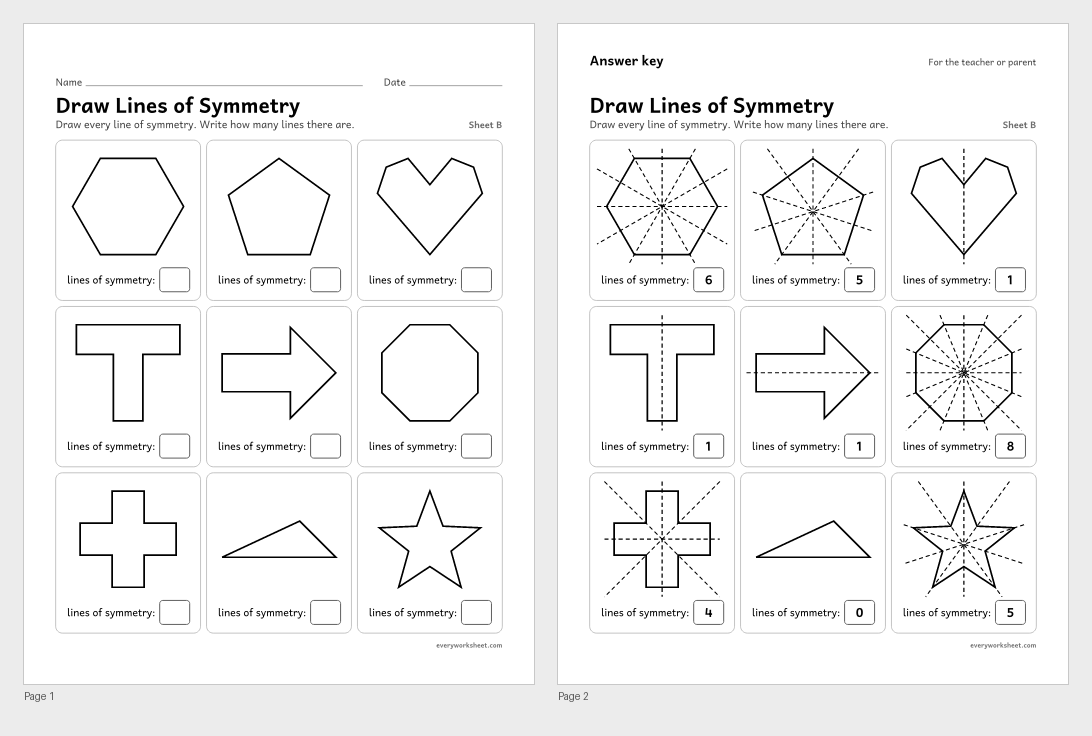
Drawing every line of symmetry on regular polygons, stars, crosses and arrows
Answer key on page 2
2 pages33 KB
 View all 2 pages
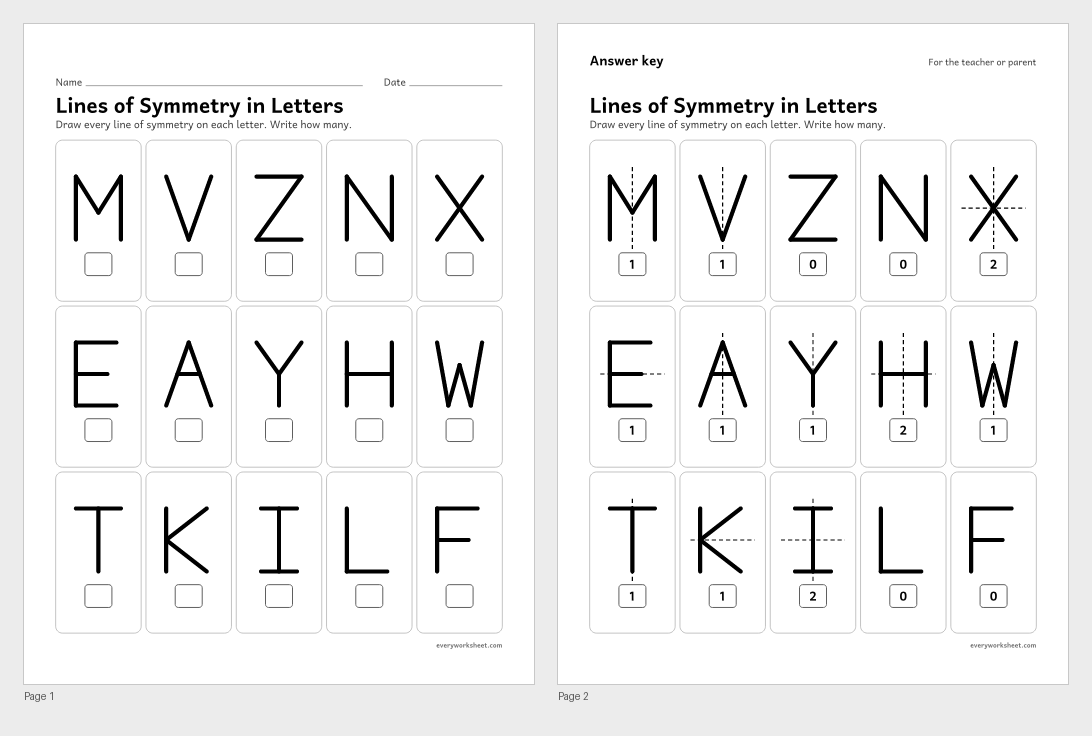
Drawing lines of symmetry on capital letters and finding letters with none, one or two
Answer key on page 2
2 pages31 KB
 View all 2 pages
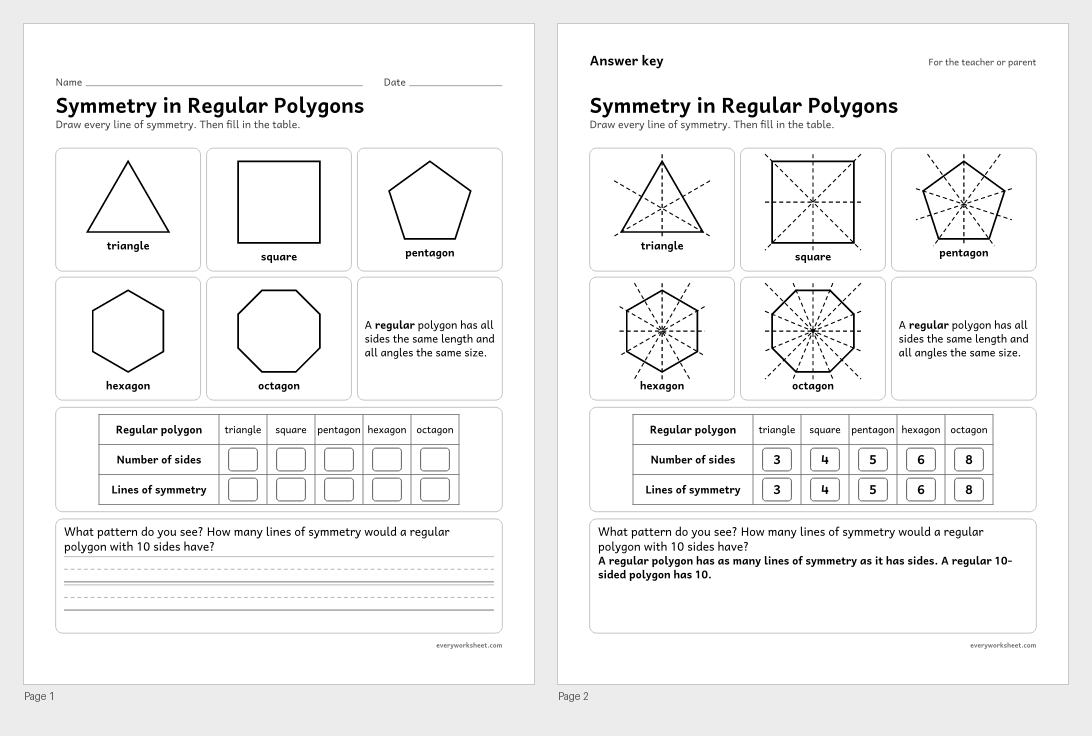
Drawing the lines of symmetry of regular polygons and finding the pattern: as many lines as sides
Answer key on page 2
2 pages43 KB
 View all 2 pages
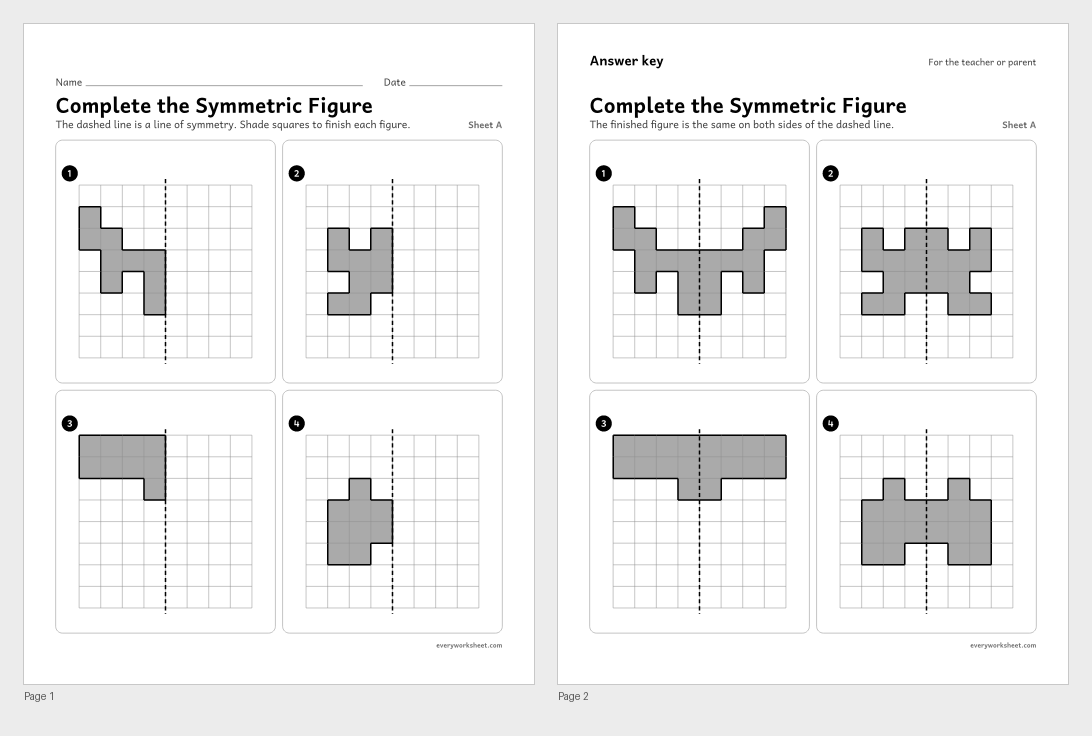
Shading squares to complete figures that are symmetric about a vertical line
Answer key on page 2
2 pages32 KB
 View all 2 pages
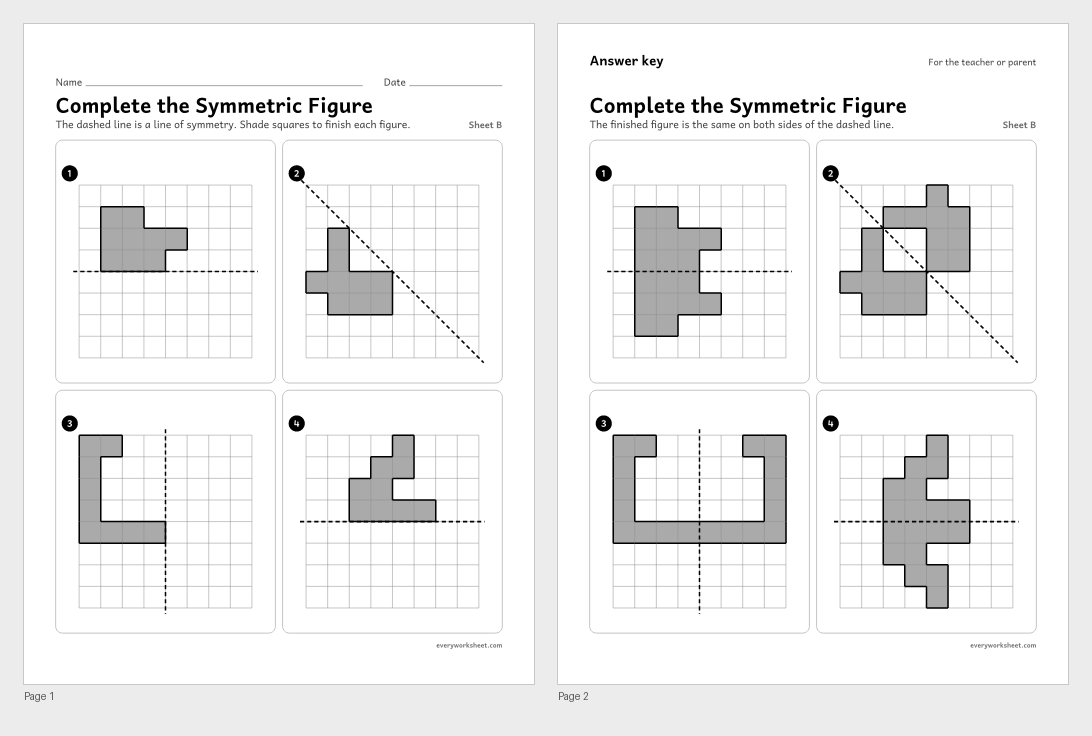
Completing figures that are symmetric about horizontal and diagonal lines of symmetry
Answer key on page 2
2 pages32 KB
Print at 100% (actual size) for the cleanest tracing lines.
A line of symmetry is a line across a shape so that the shape folds along it into two matching halves. A square has 4 lines of symmetry, a rectangle has 2, an isosceles triangle has 1, and a parallelogram that is not a rectangle or rhombus has none.
A regular polygon has as many lines of symmetry as it has sides: an equilateral triangle has 3, a regular hexagon has 6. Capital letters work too: A has one line, H has two, and Z, N and S have none, even though they look the same upside down.
Every line of symmetry in these answer keys was found by reflecting the drawing and checking that it matches itself exactly, so the symmetric shapes are truly symmetric and the others are not. Practice pages have keys on page 2.
CCSS.MATH.CONTENT.4.G.A.3Recognize a line of symmetry for a two-dimensional figure as a line across the figure such that the figure can be folded along the line into matching parts. Identify line-symmetric figures and draw lines of symmetry.2: one across the middle each way. The diagonals are not lines of symmetry unless the rectangle is a square.
Infinitely many. Any line through the center folds a circle into matching halves.
In the block letters on our sheets, F, L, N and Z have none. N and Z look the same turned halfway around, but that is a different kind of symmetry.