 View larger
Modal Verbs Worksheets
Can, could, may, might, must, should, will, would, and shall, with a chart, sorts, and keyed practice.
Download the modal verbs worksheets
Learn Modal Verbs
 View larger
 View all 2 pages
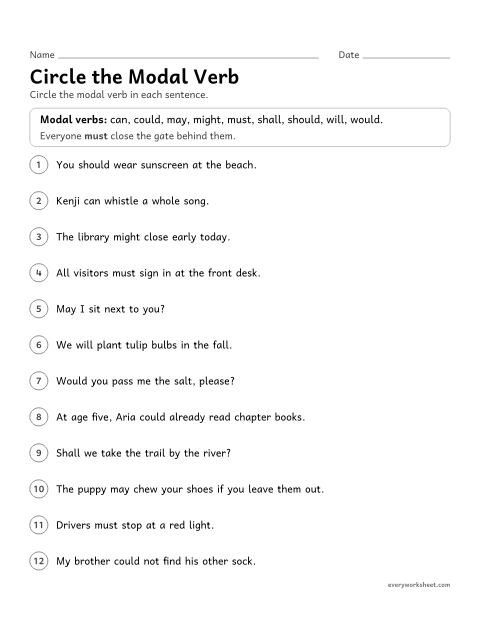
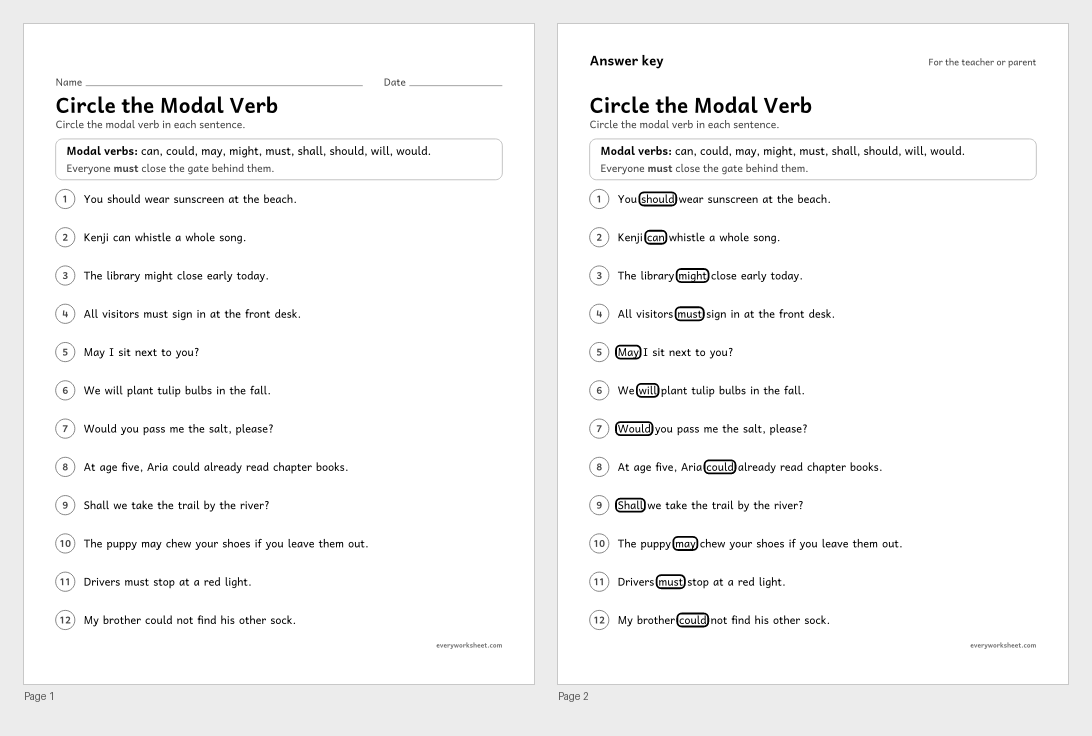
Circle the modal verb
Finding modal verbs in sentences
Answer key on page 2
2 pages54 KB
Choose, Sort, and Add Modal Verbs
 View all 2 pages
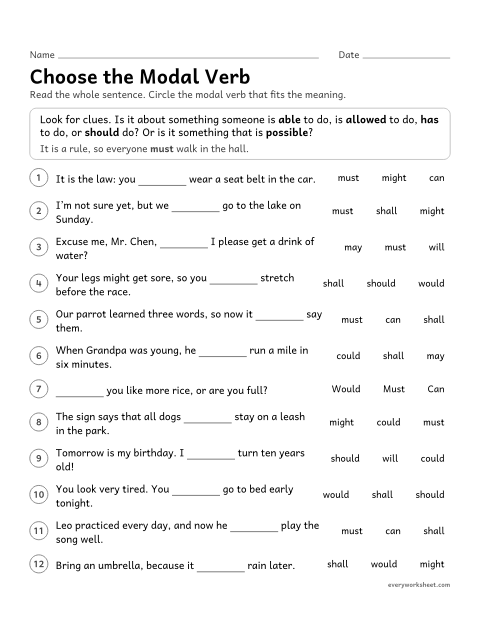
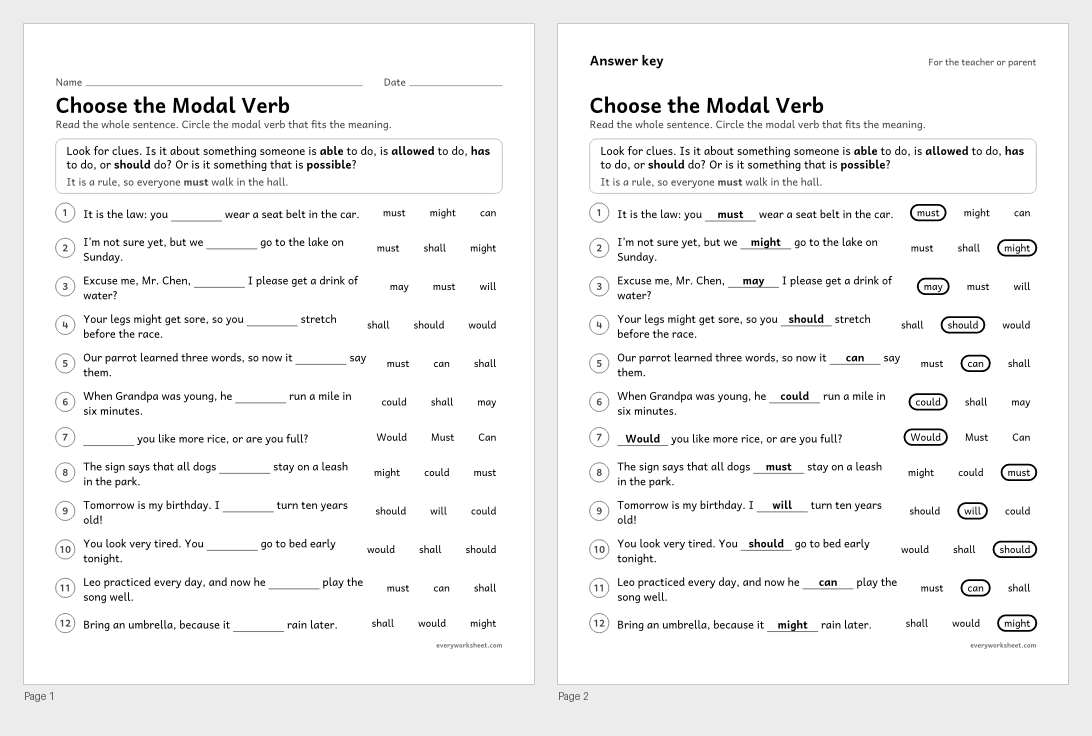
Choose the modal verb
Choosing the modal verb that fits the meaning of a sentence
Answer key on page 2
2 pages61 KB
 View all 2 pages
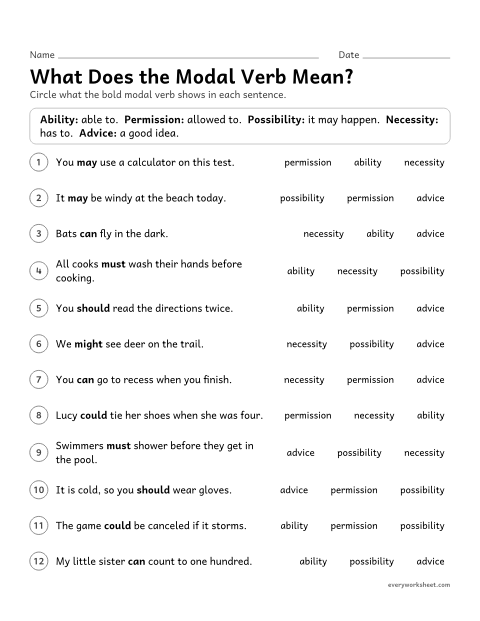
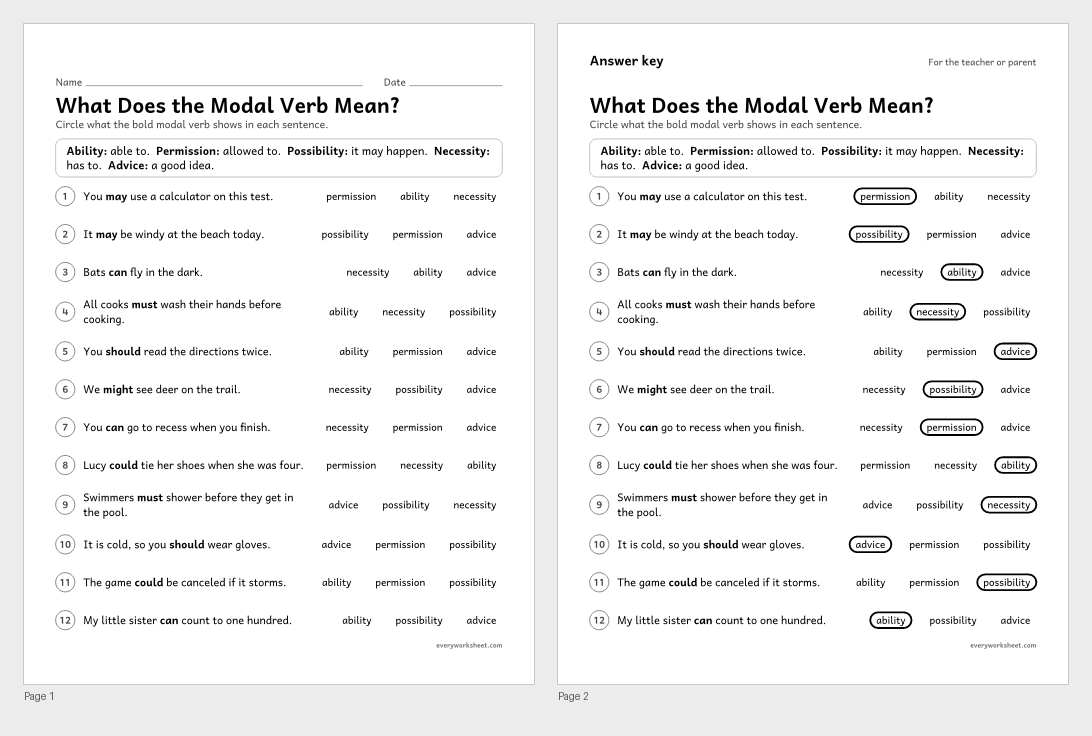
What does the modal verb Mean?
Telling whether a modal verb shows ability, permission, possibility, necessity, or advice
Answer key on page 2
2 pages62 KB
 View all 2 pages
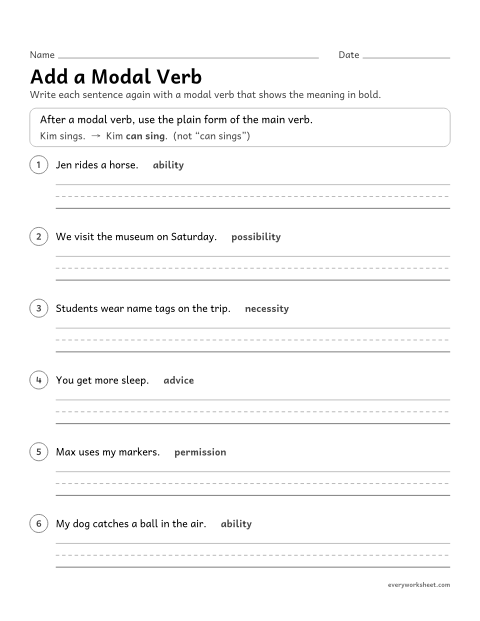
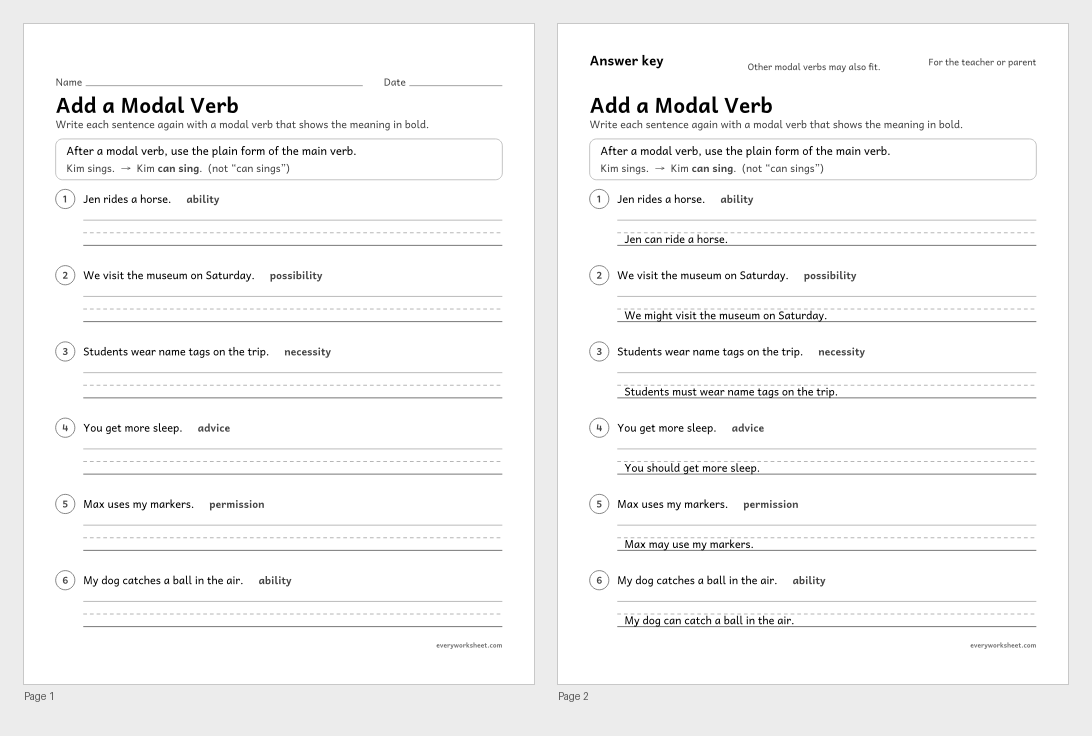
Add a modal verb
Rewriting sentences with a modal verb to show ability, permission, possibility, necessity, or advice
Answer key on page 2
2 pages41 KB
 View all 2 pages
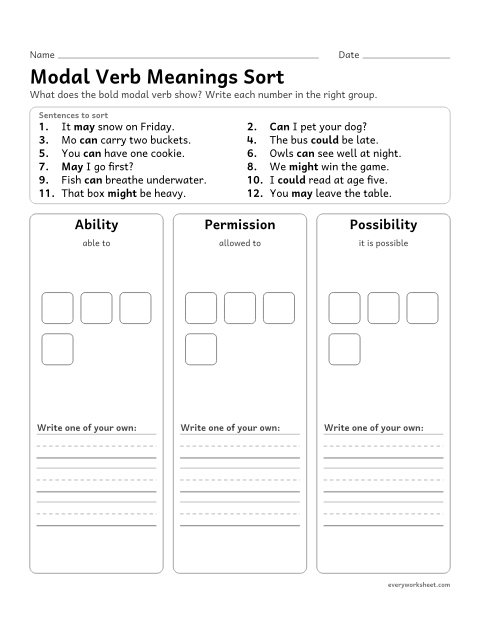
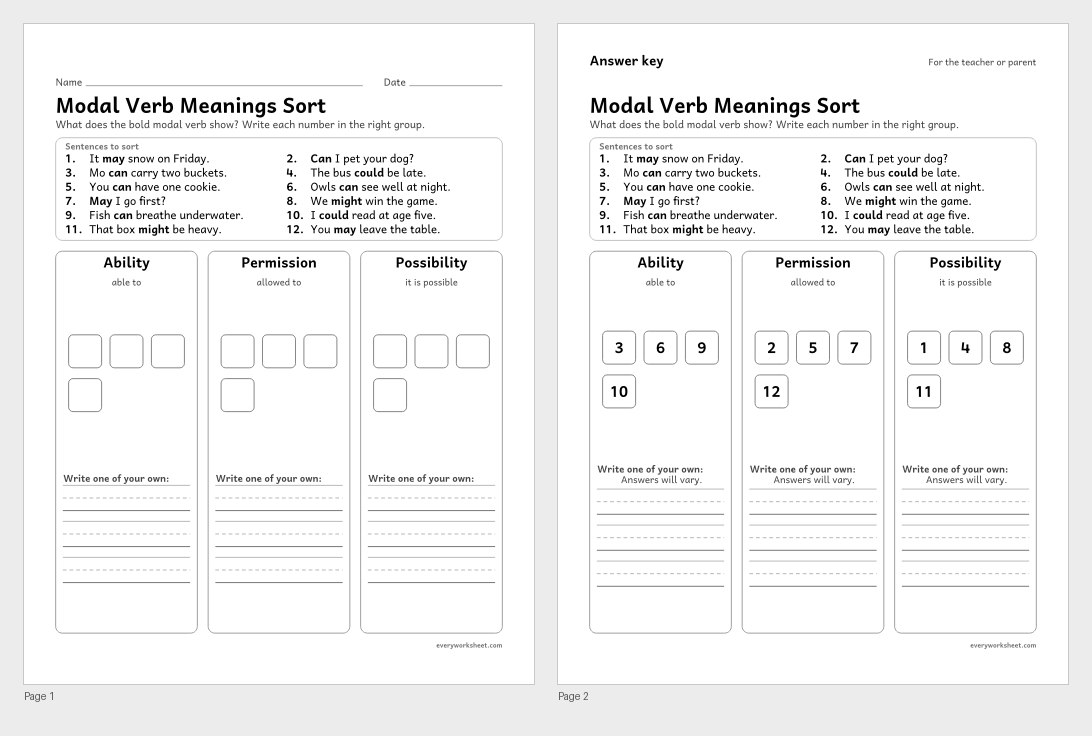
Modal verb meanings sort
Sorting sentences by the meaning of the modal verb
Answer key on page 2
2 pages58 KB
 View all 2 pages
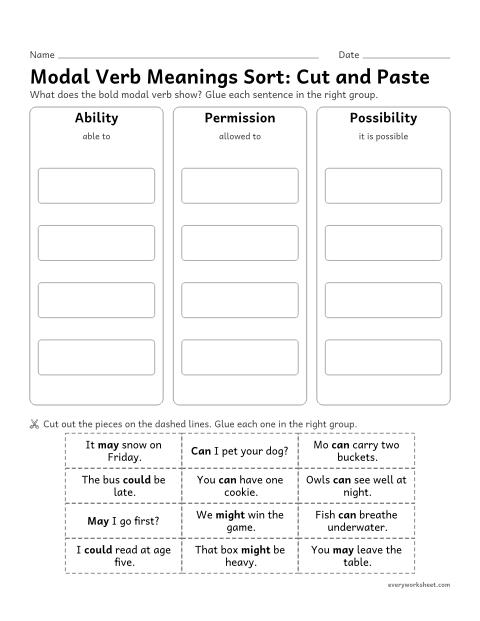
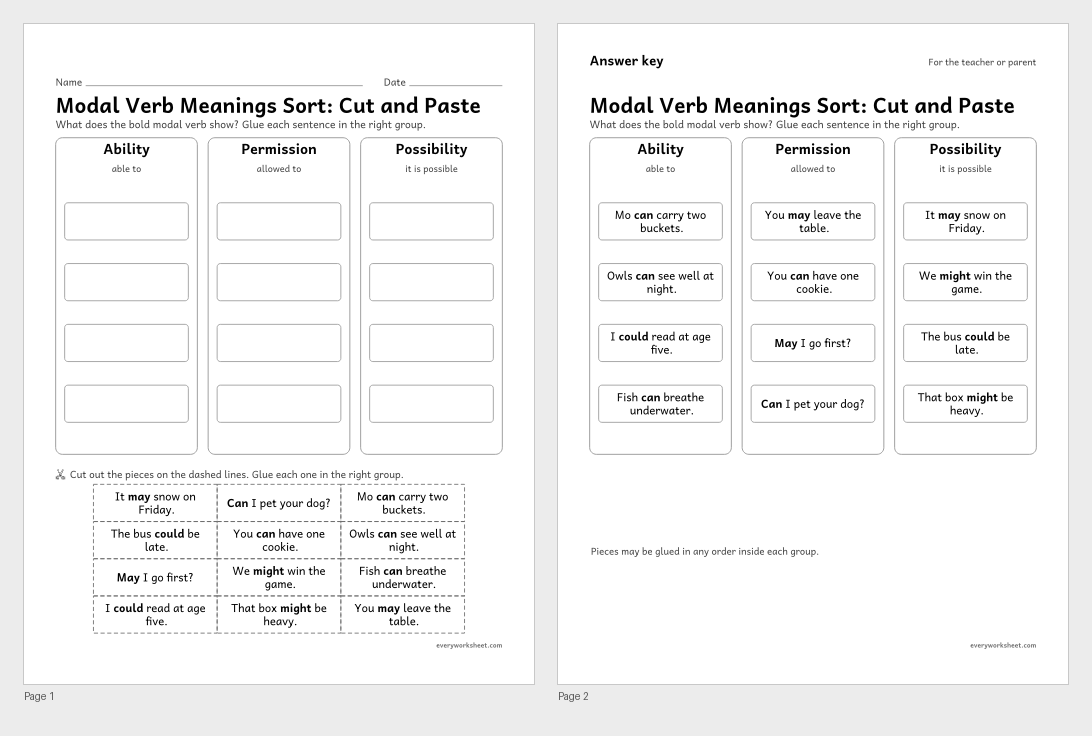
Modal verb meanings Sort: cut and paste
Sorting sentences by the meaning of the modal verb (cut and paste)
Answer key on page 2
2 pages72 KB
Write with Modal Verbs
 View all 2 pages
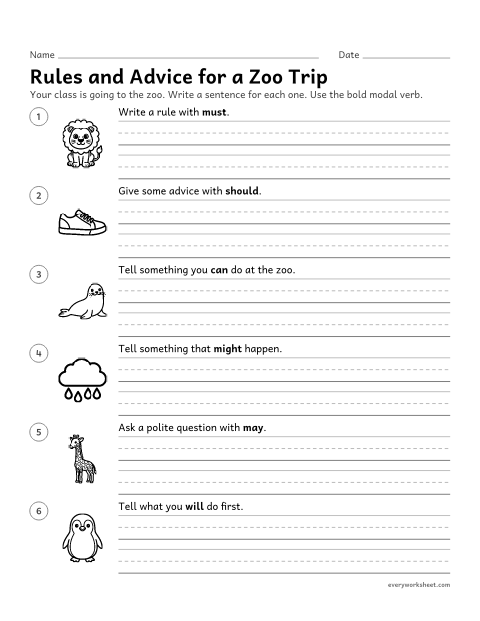
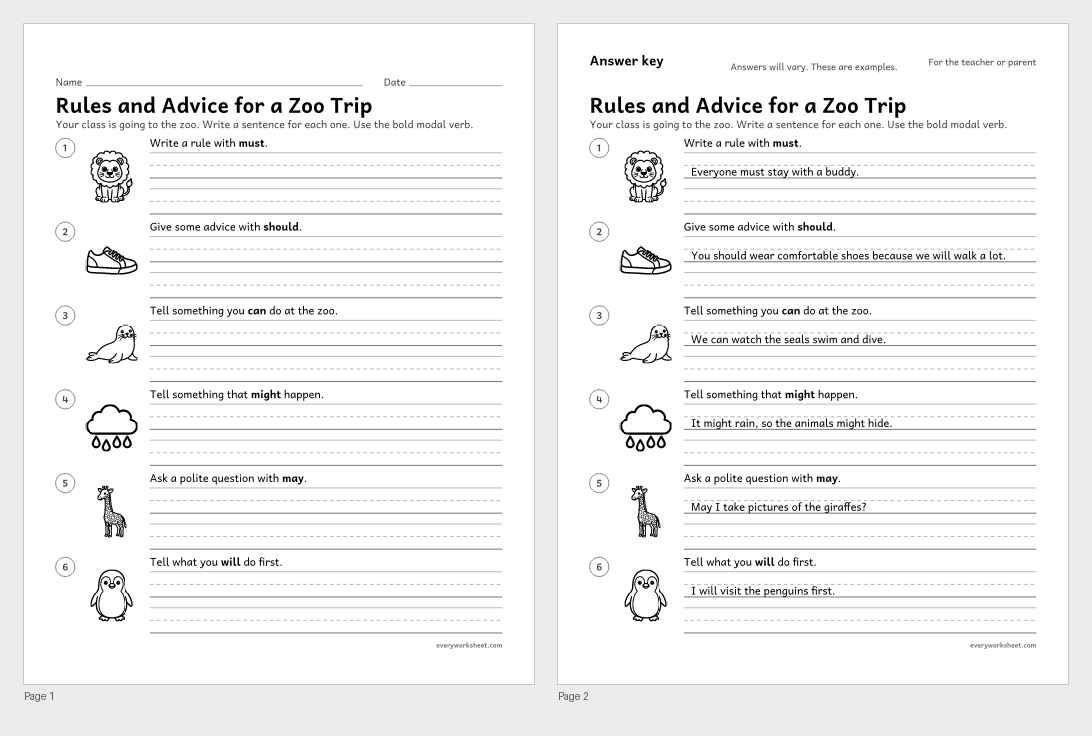
Rules and advice for a zoo trip
Writing sentences with modal verbs for ability, permission, possibility, necessity, and advice
Answer key on page 2
2 pages251 KB
Print at 100% (actual size) for the cleanest tracing lines.
About these modal verbs worksheets
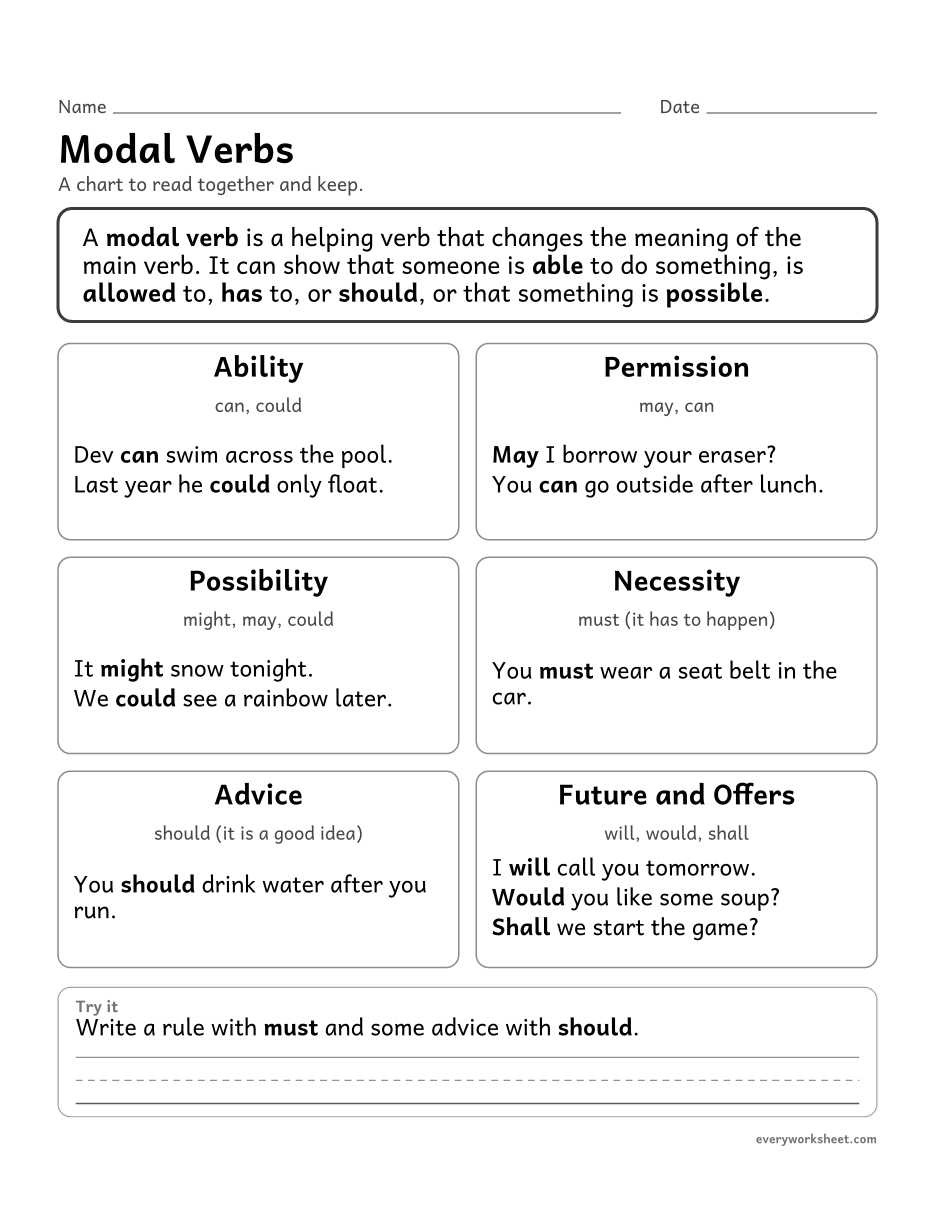
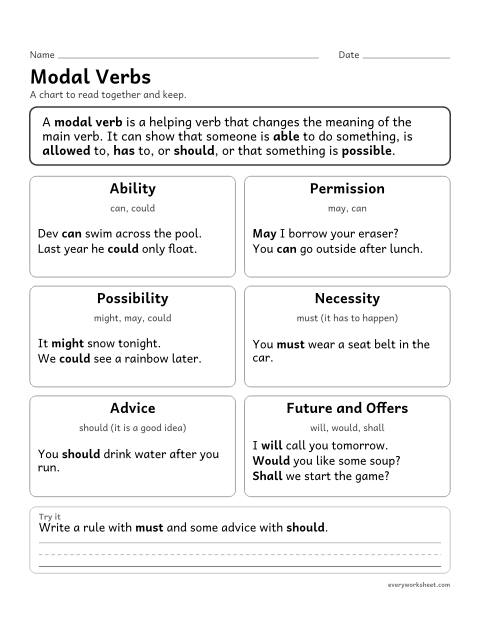
A modal verb is a helping verb that changes the meaning of the main verb. The modal verbs are can, could, may, might, must, shall, should, will, and would. Each one adds a different meaning. "Dev can swim" shows ability. "You may go outside" gives permission. "It might snow" shows possibility. "You must wear a seat belt" shows necessity, and "You should drink water" gives advice. Will, would, and shall talk about the future, make offers, and ask polite questions: "Would you like some soup?"
A modal verb is always followed by the plain form of the main verb. We say "Kim can sing," not "Kim can sings."
These printable worksheets begin with an anchor chart of meanings and examples. Children find modal verbs, choose the one that fits a sentence, name the meaning a modal shows, sort sentences by meaning, and add modals to sentences. A zoo-trip writing page puts it all to use. Practice pages come with answer keys.
Standards
CCSS.ELA-LITERACY.L.4.1.CUse modal auxiliaries (e.g., can, may, must) to convey various conditions.
How to use them
- Read the chart together. Act out a few examples, such as "I can hop" and "You may sit down."
- Use Circle the Modal Verb first, then Choose the Modal Verb and What Does the Modal Verb Mean?
- Try the meaning sort as cut and paste or as the write-in version.
- Finish with Add a Modal Verb and the Rules and Advice for a Zoo Trip writing page.
Teaching tips
- Look for clue words: "it is the law" points to must, "I'm not sure" points to might, and "good idea" points to should.
- The same modal can mean different things. "You may leave" is permission, but "It may rain" is possibility.
- Check the main verb after a modal: no -s and no -ed.
- Talk about polite questions: "May I ...?" and "Would you ...?"
Questions teachers and parents ask
What are modal verbs?
Modal verbs are helping verbs that show ability, permission, possibility, necessity, or advice: can, could, may, might, must, shall, should, will, and would.
What grade learns modal verbs?
Modal auxiliaries like can, may, and must are part of 4th grade grammar.
What is the difference between can and may?
Can usually tells what someone is able to do. May asks for or gives permission, or says something is possible. In everyday talk, can is also used for permission.
Are there answer keys?
Yes. Every practice page has an answer key, and the writing page shows example answers.