 View larger
Elements of a narrative
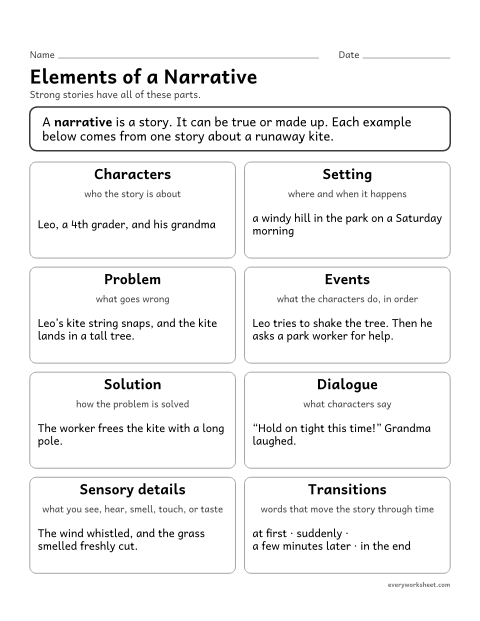
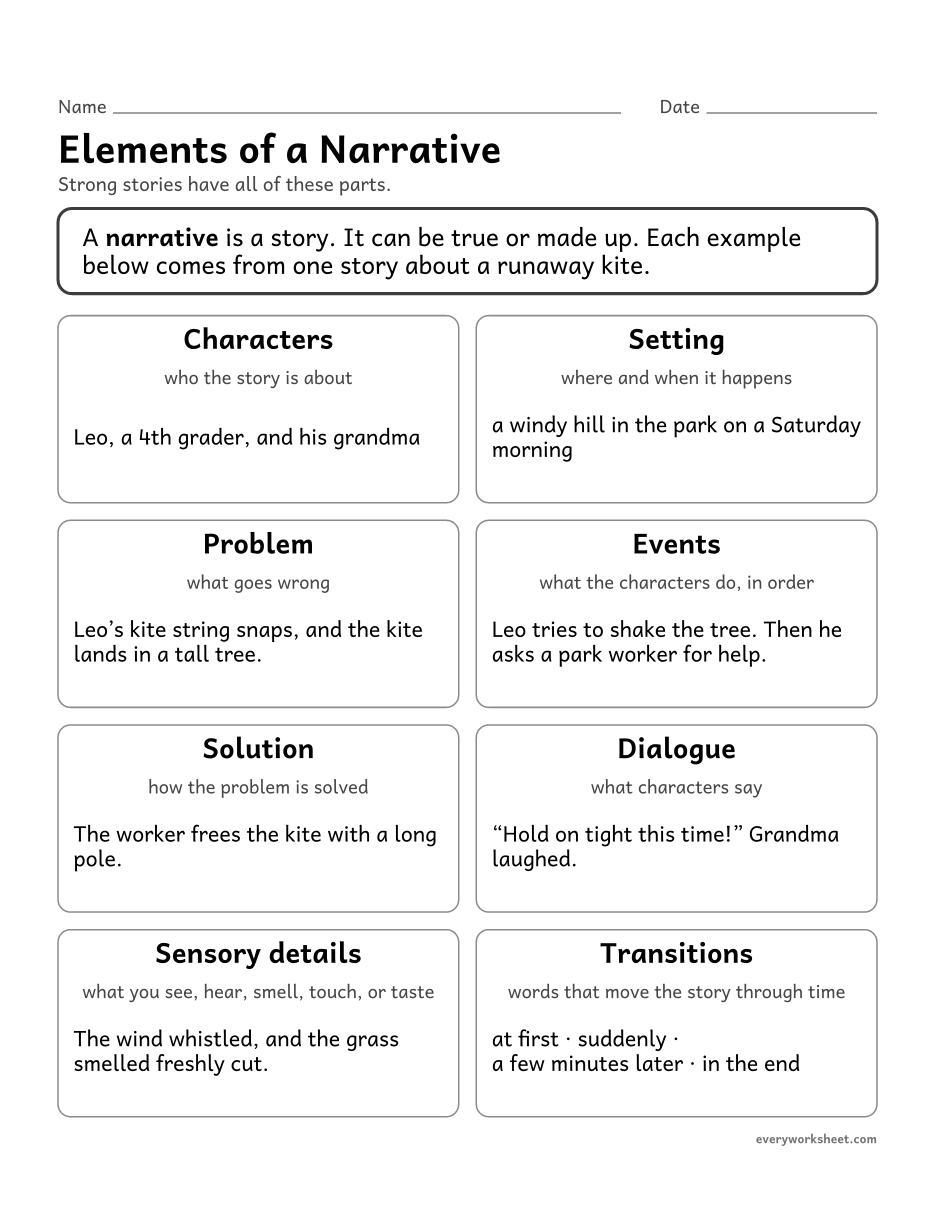
Learning the elements of a narrative: characters, setting, problem, events, solution, dialogue, sensory details, and transitions
1 page32 KB
Learn the elements of a story, practice the craft, then plan and write short stories.
View largerLearning the elements of a narrative: characters, setting, problem, events, solution, dialogue, sensory details, and transitions
1 page32 KB
 View all 2 pages
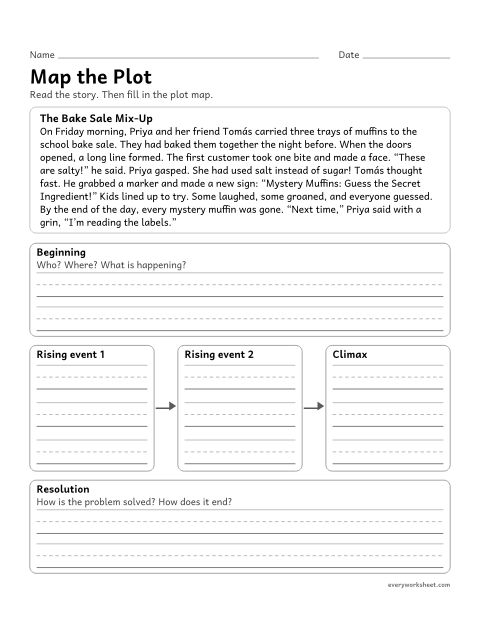
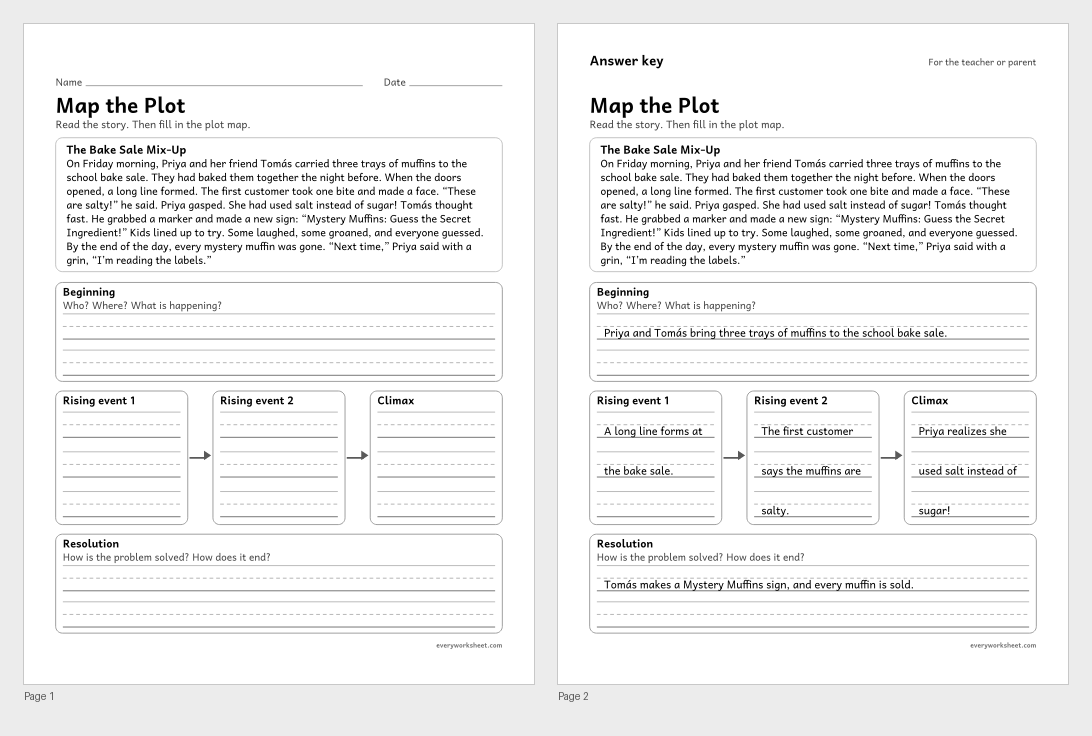
Mapping a story's plot: beginning, rising events, climax, and resolution
Answer key on page 2
2 pages38 KB
 View all 2 pages
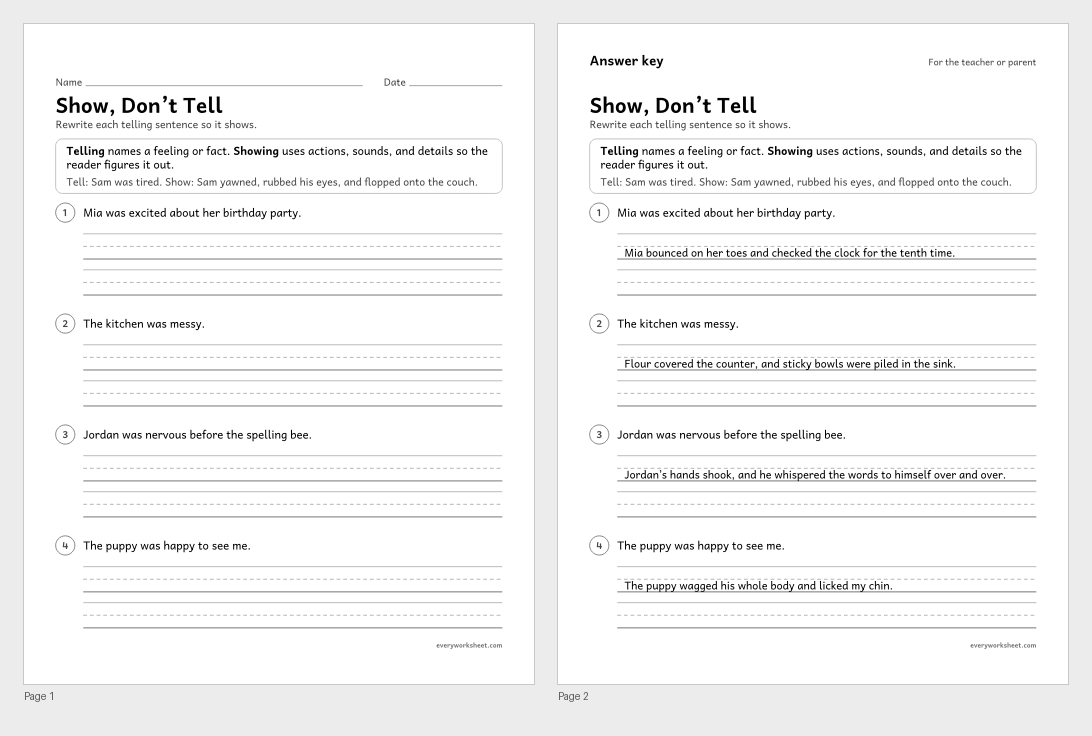
Rewriting telling sentences with concrete actions and sensory details that show
Answer key on page 2
2 pages36 KB
 View all 2 pages
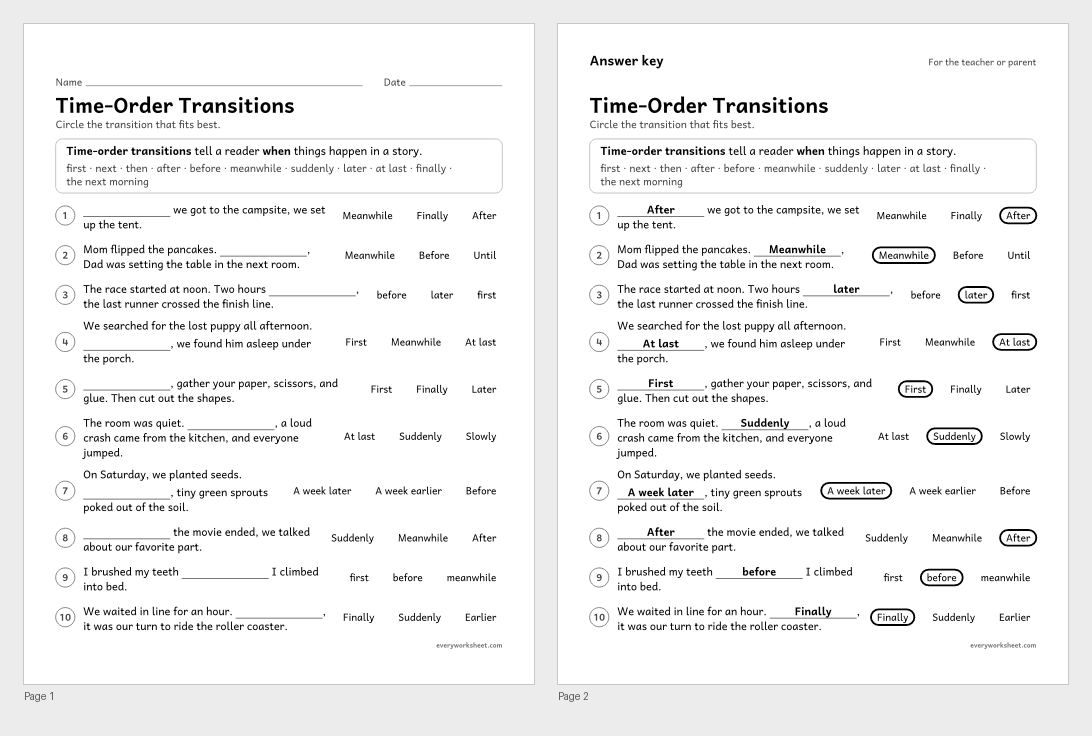
Choosing transitional words and phrases that show the order of events in a story
Answer key on page 2
2 pages55 KB
 View all 2 pages
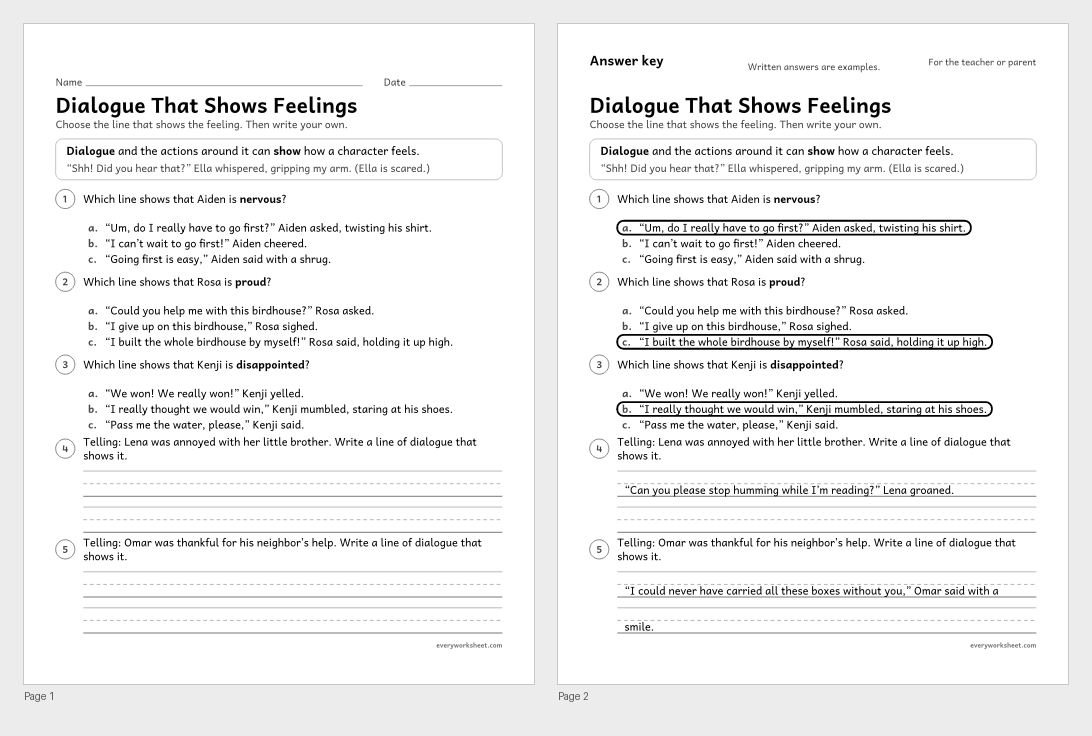
Using dialogue and actions to show how characters feel
Answer key on page 2
2 pages52 KB
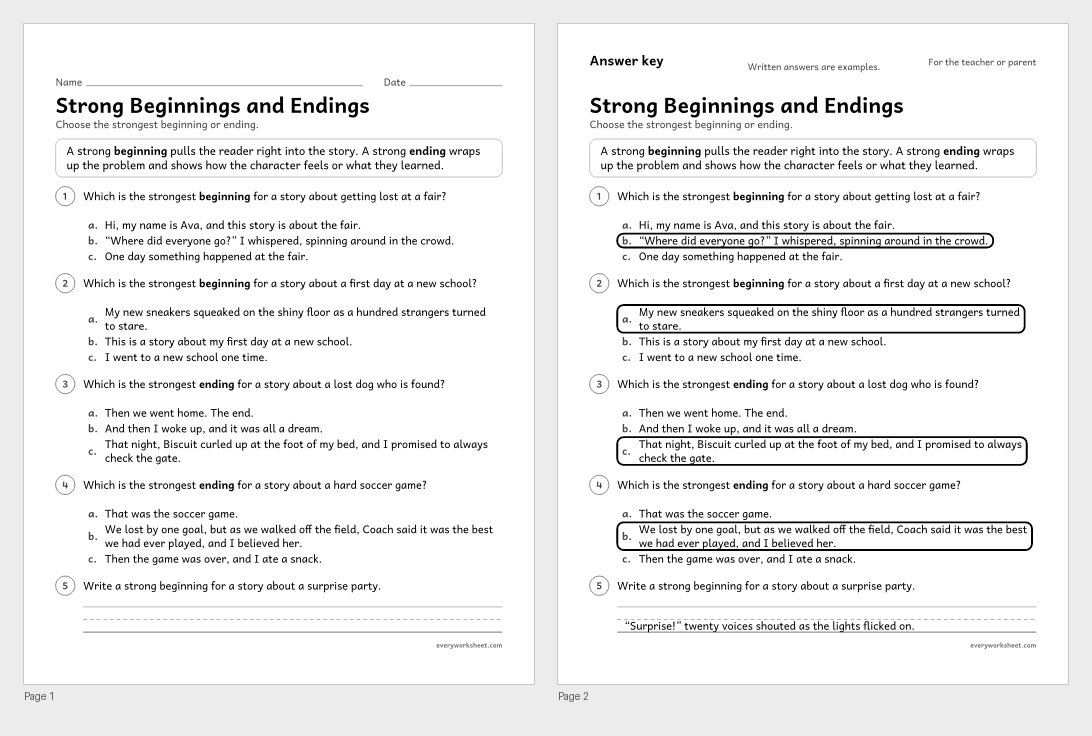 View all 2 pages
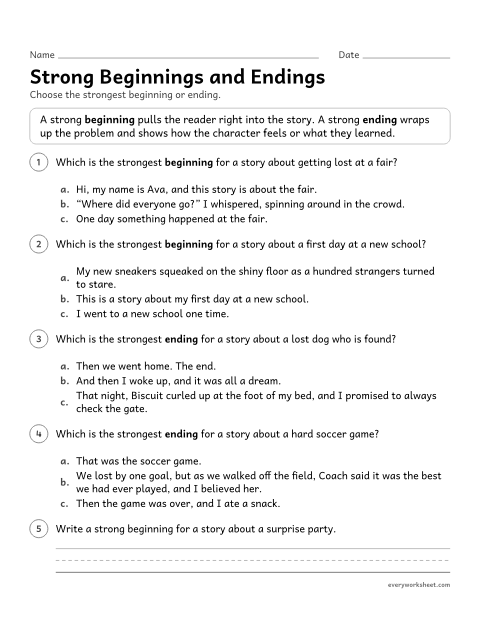
Recognizing strong story beginnings that hook a reader and endings that follow from the events
Answer key on page 2
2 pages55 KB
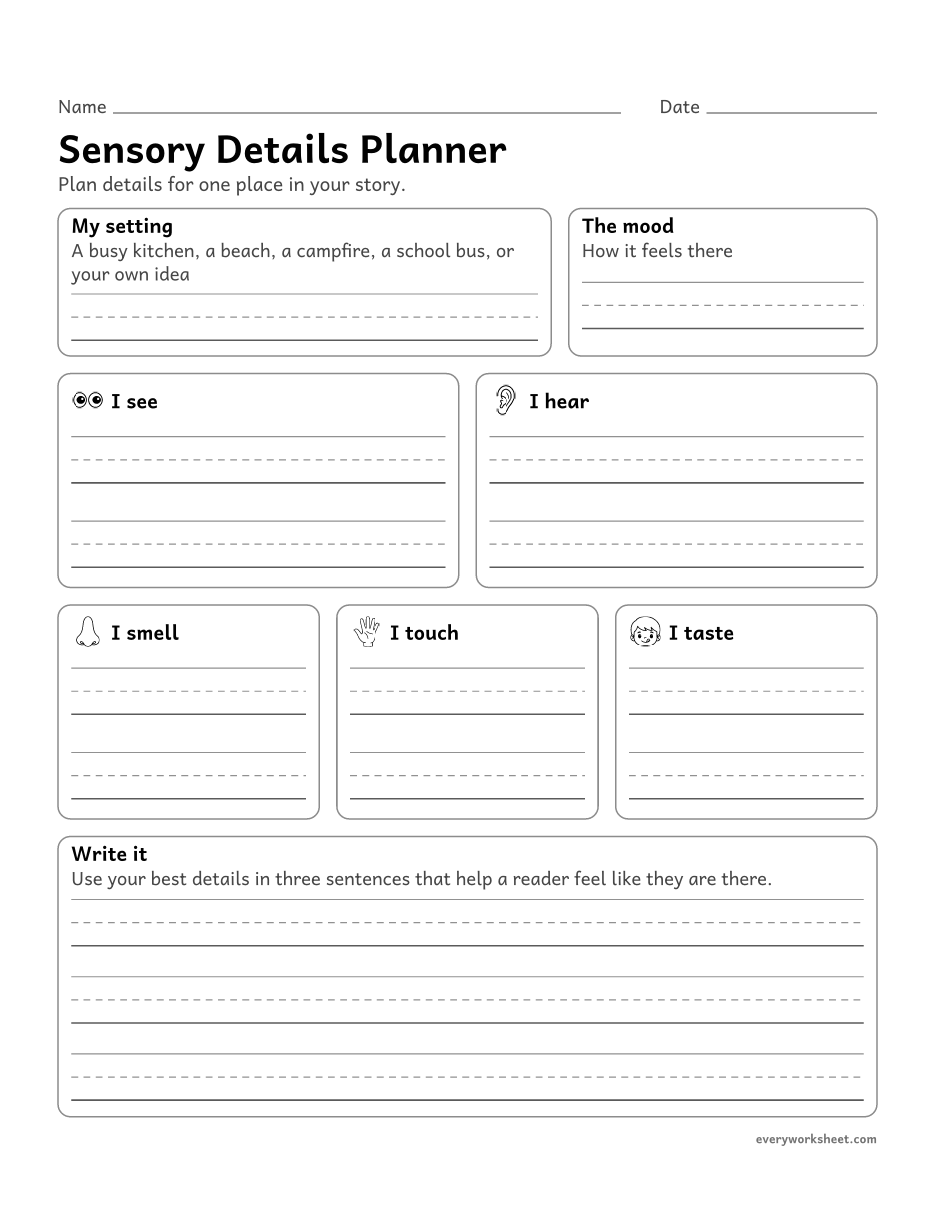 View larger
Brainstorming sensory details for a story setting, then using them in sentences
1 page71 KB
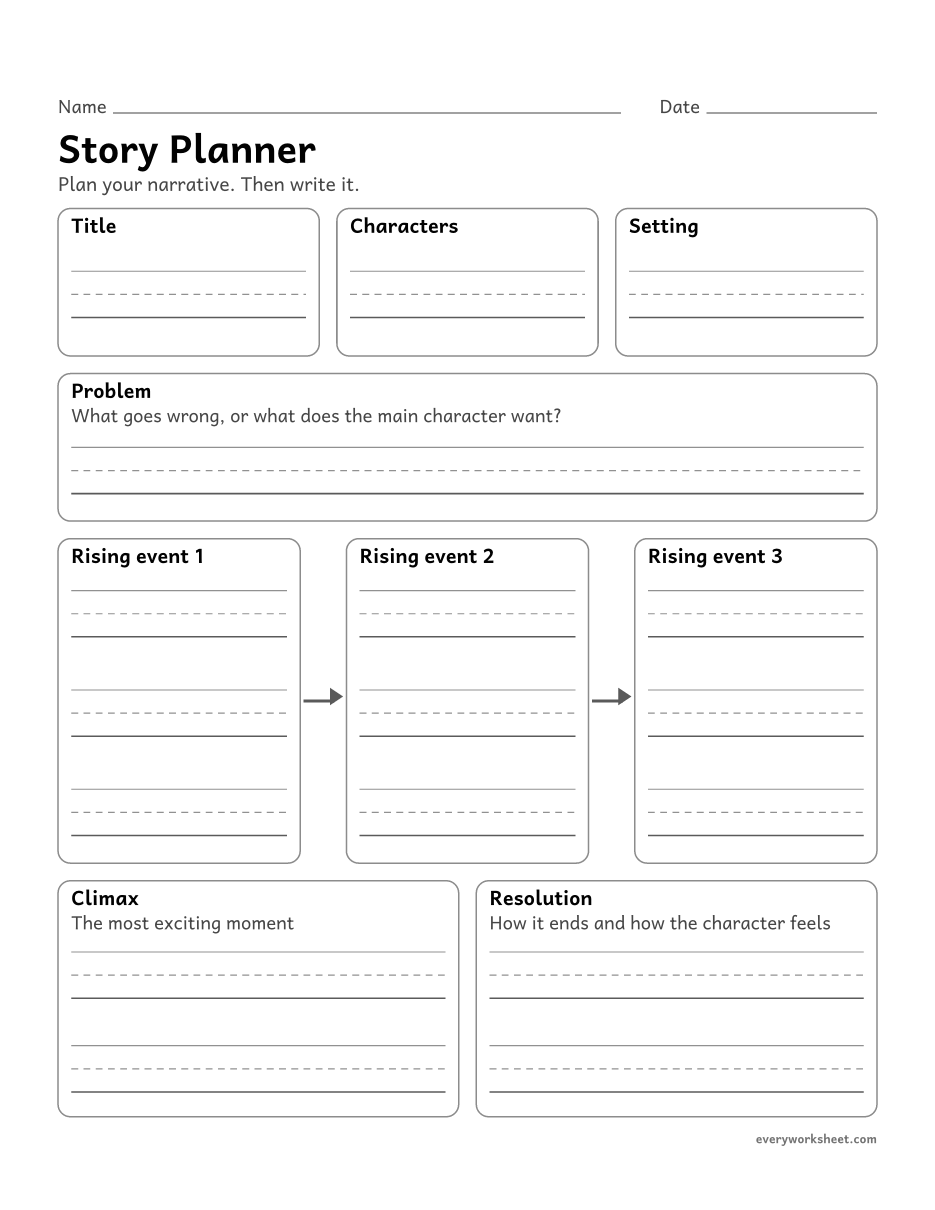 View larger
Planning a narrative: characters, setting, problem, rising events, climax, and resolution
1 page29 KB
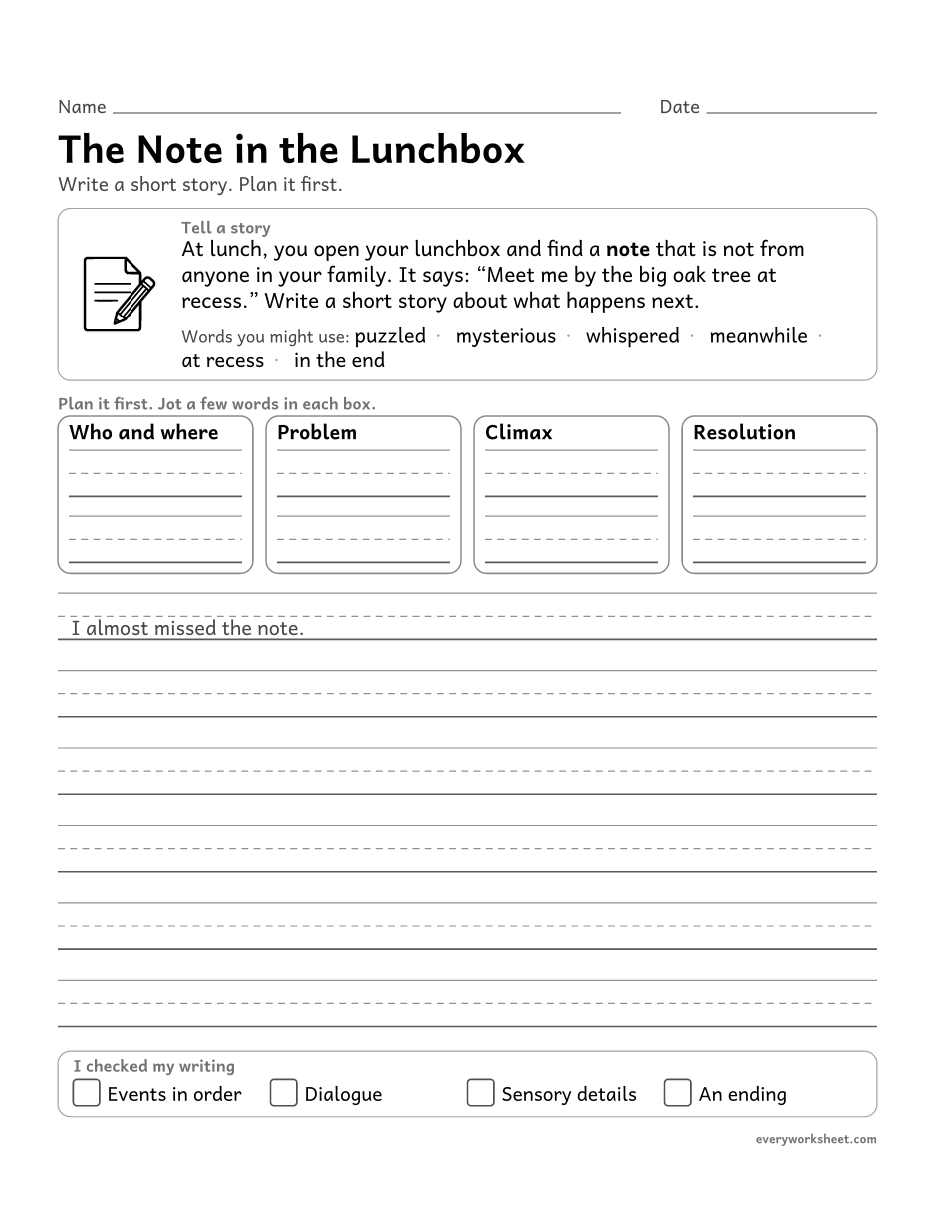 View larger
Writing a short story with a clear situation and a natural sequence of events
1 page43 KB
 View larger
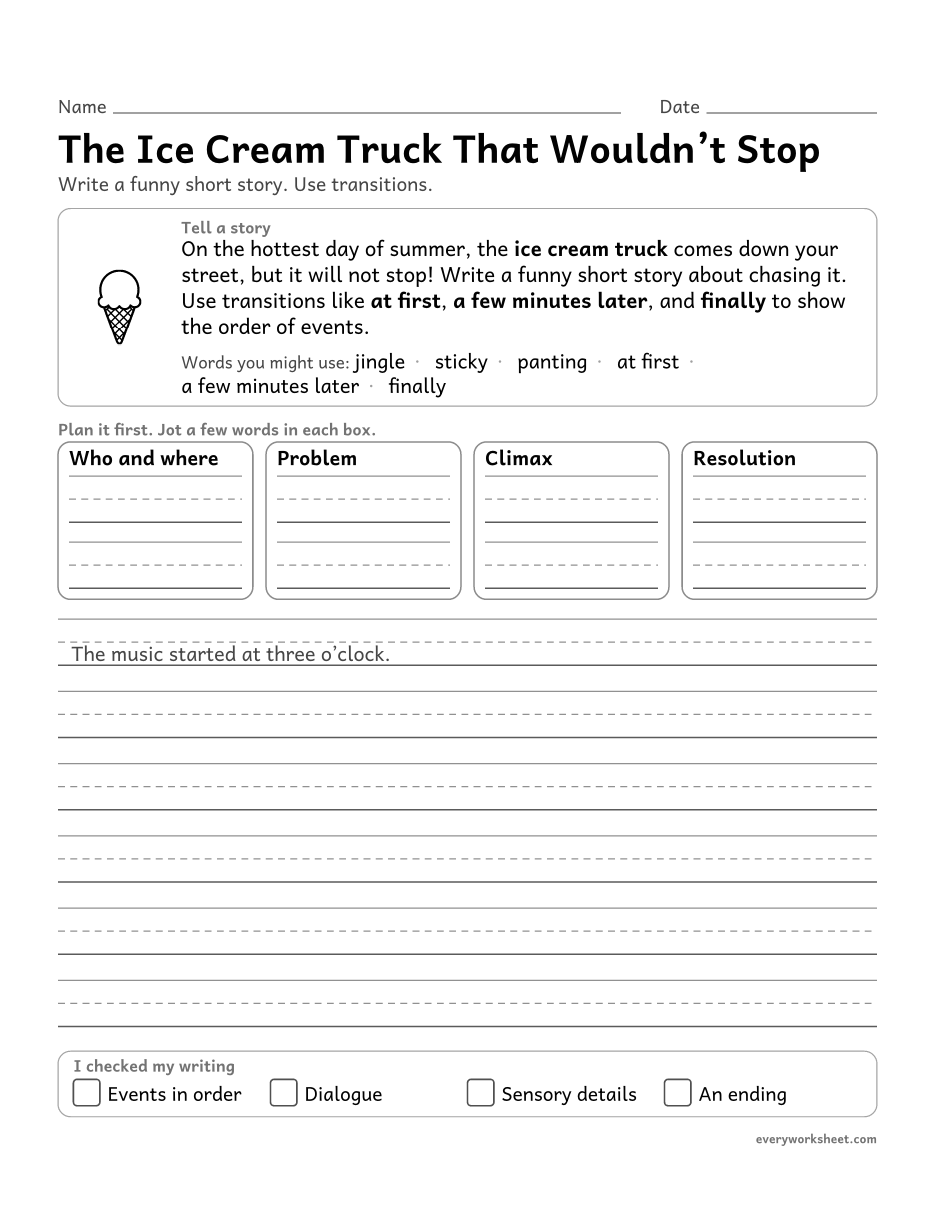
Using transitional words and phrases to manage the sequence of events in a short story
1 page46 KB
 View larger
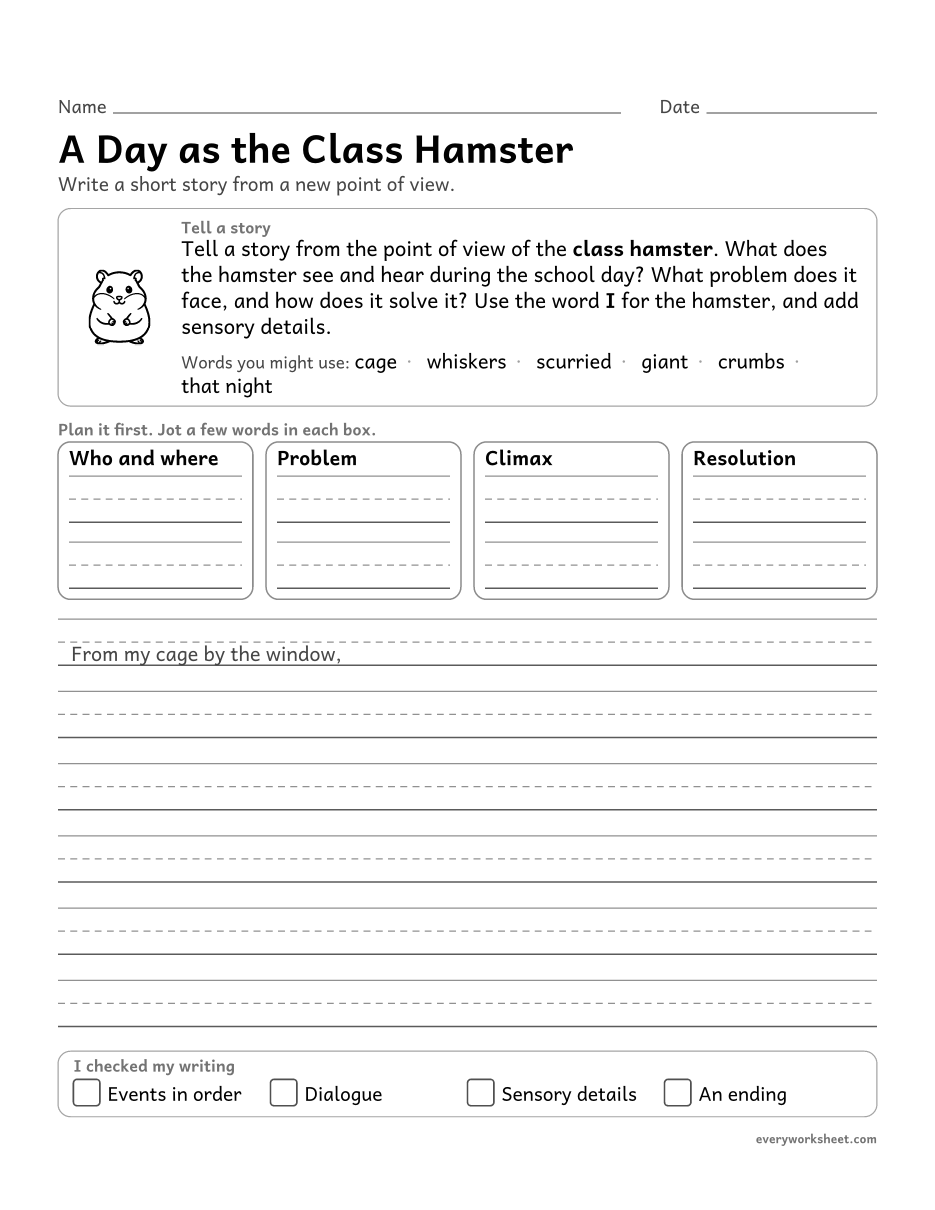
Writing a first-person short story with sensory details from an imagined point of view
1 page55 KB
Print at 100% (actual size) for the cleanest tracing lines.
A **narrative** is a story, true or made up. Strong narratives have **characters**, a **setting**, a **problem**, a series of **events** that build to a **climax**, and a **resolution**. Writers bring them to life with **dialogue** (what characters say), **sensory details** (what you see, hear, smell, touch, and taste), and **transitions** like "a few minutes later" that move the story through time.
These narrative writing worksheets teach those tools one at a time. Children map the plot of an original short story, turn telling sentences into showing sentences ("Sam was tired" becomes "Sam yawned and flopped onto the couch"), plan sensory details, choose time-order transitions, use dialogue to show feelings, and pick strong beginnings and endings.
Then it is time to write. A story planner and three short story prompts give children a fun starting point, plan boxes, and plenty of lines.
CCSS.ELA-LITERACY.W.4.3Write narratives to develop real or imagined experiences or events using effective technique, descriptive details, and clear event sequences.CCSS.ELA-LITERACY.W.4.3.AOrient the reader by establishing a situation and introducing a narrator and/or characters; organize an event sequence that unfolds naturally.CCSS.ELA-LITERACY.W.4.3.BUse dialogue and description to develop experiences and events or show the responses of characters to situations.CCSS.ELA-LITERACY.W.4.3.CUse a variety of transitional words and phrases to manage the sequence of events.CCSS.ELA-LITERACY.W.4.3.DUse concrete words and phrases and sensory details to convey experiences and events precisely.CCSS.ELA-LITERACY.W.4.3.EProvide a conclusion that follows from the narrated experiences or events.Characters, setting, a problem, events in order, a climax, and a resolution, told with dialogue, sensory details, and transitions.
Instead of naming a feeling ("She was nervous"), the writer shows it with actions and details ("Her hands shook as she reached for the microphone"), so the reader figures it out.
One to two pages is plenty. A focused story with a clear problem and ending is better than a long one.