 View larger
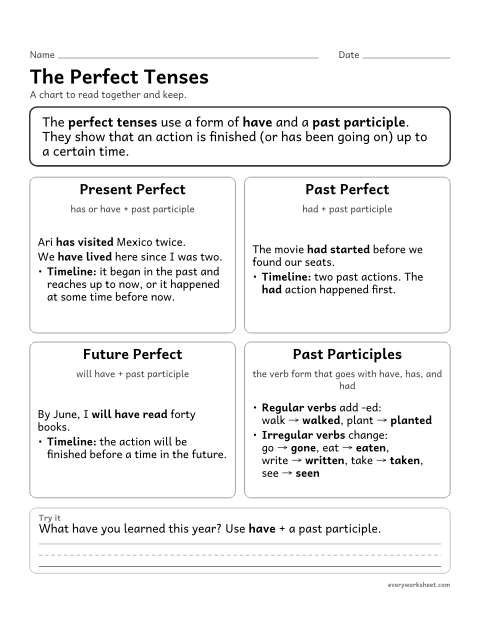
The perfect tenses
Forming the past, present, and future perfect tenses and knowing when to use each
1 page36 KB
The past, present, and future perfect tenses, with a chart, irregular participles, and keyed practice.
View largerForming the past, present, and future perfect tenses and knowing when to use each
1 page36 KB
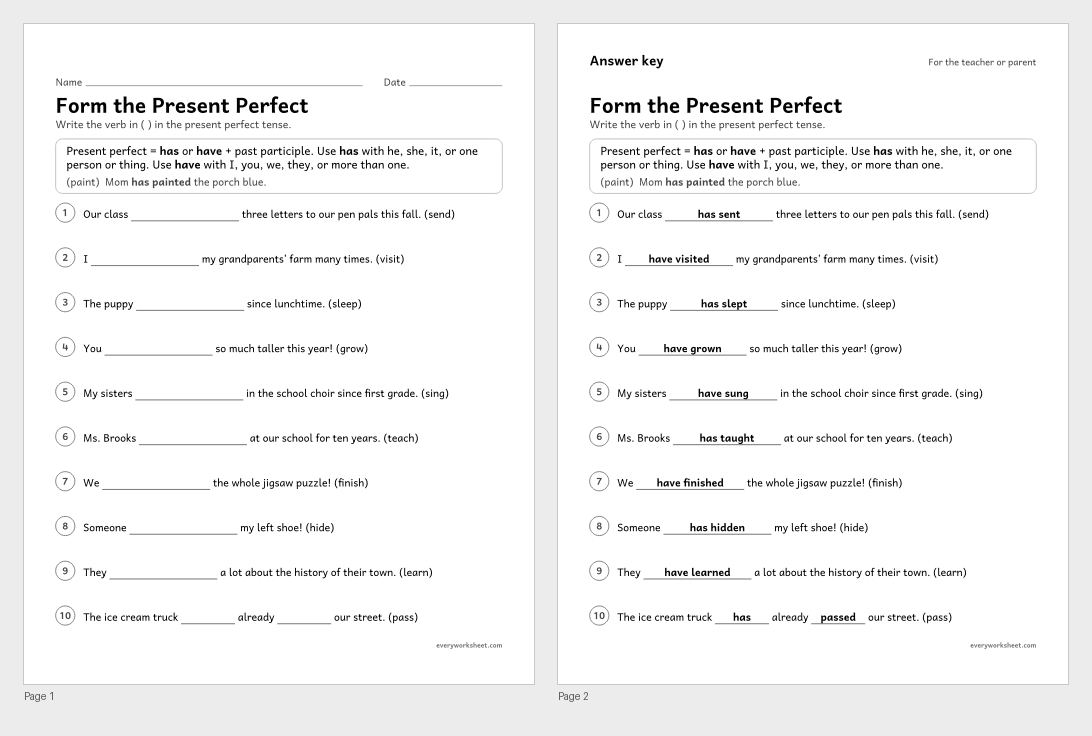 View all 2 pages
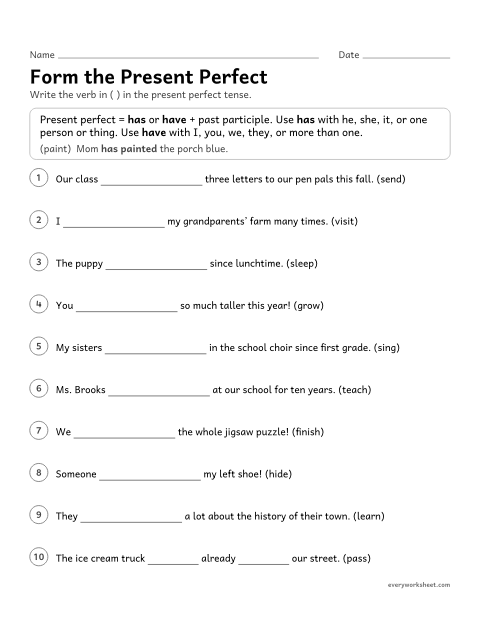
Forming the present perfect tense with has or have and a past participle
Answer key on page 2
2 pages49 KB
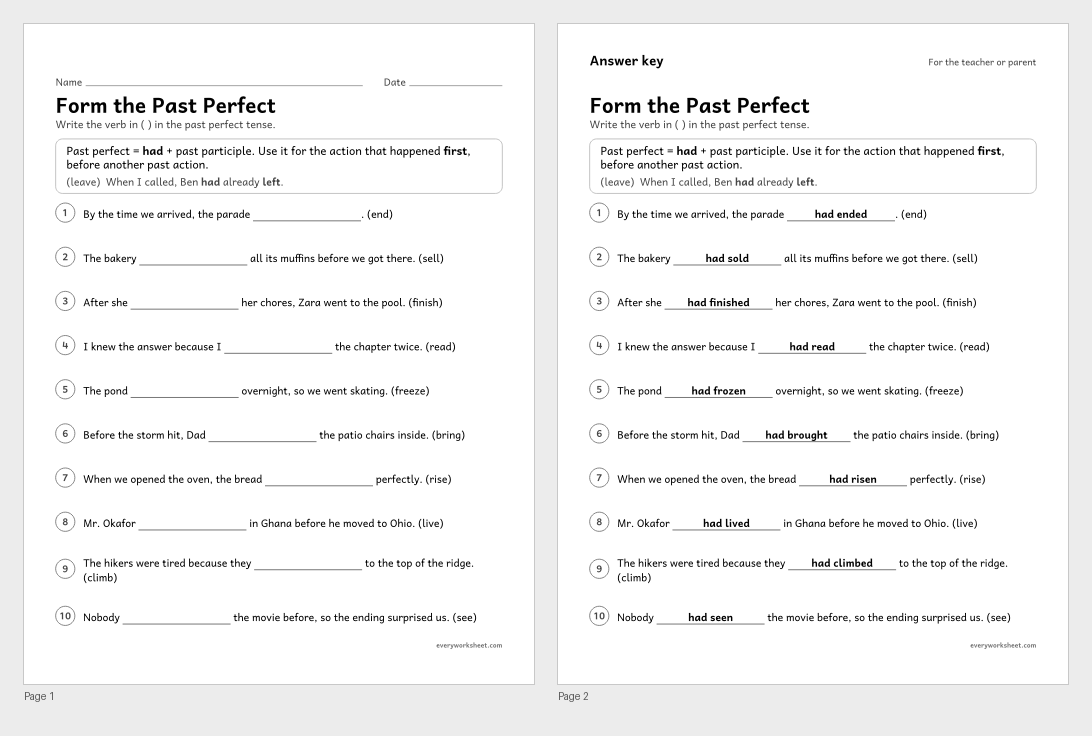 View all 2 pages
Forming the past perfect tense with had and a past participle
Answer key on page 2
2 pages49 KB
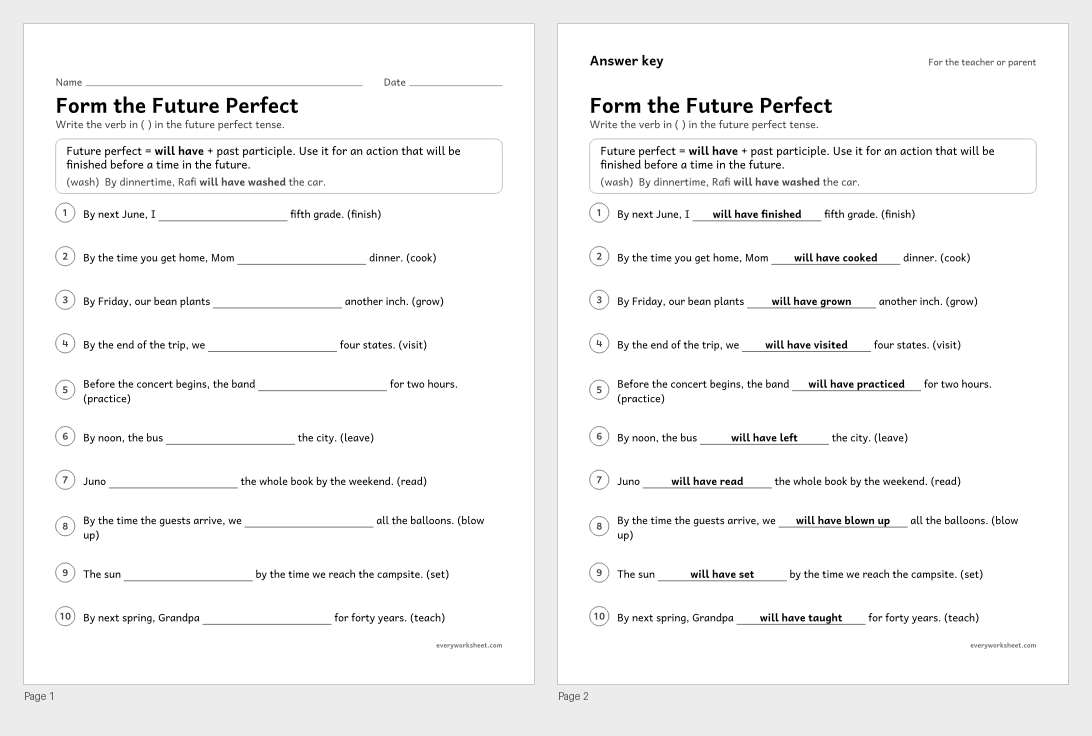 View all 2 pages
Forming the future perfect tense with will have and a past participle
Answer key on page 2
2 pages48 KB
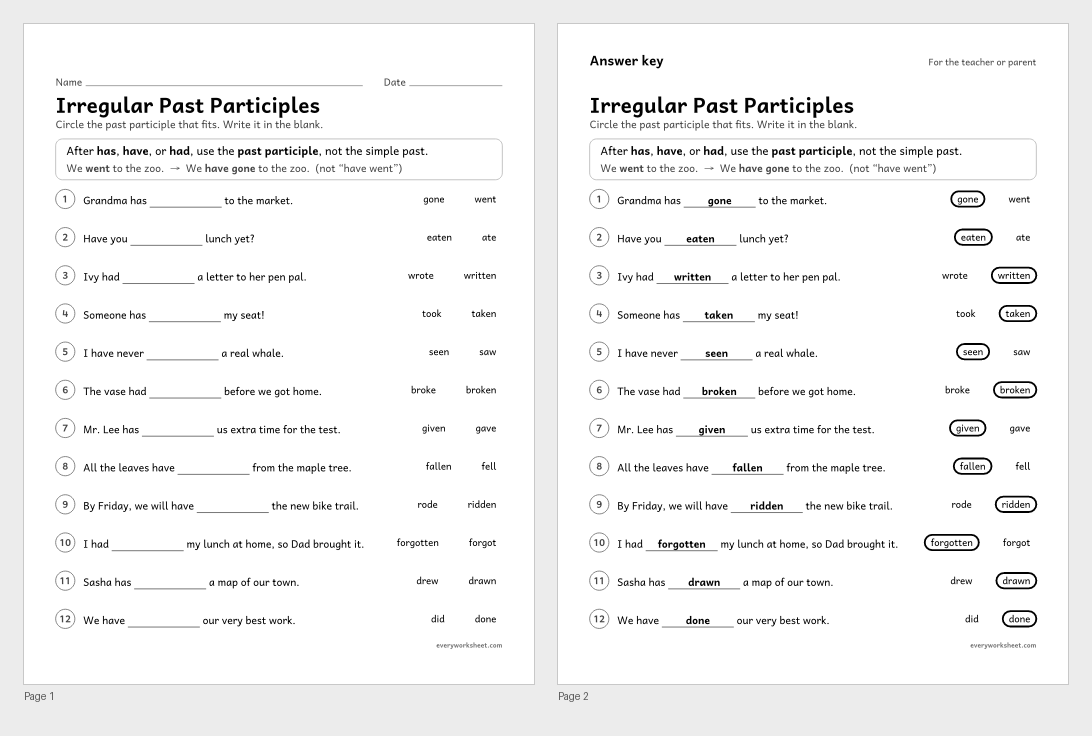 View all 2 pages
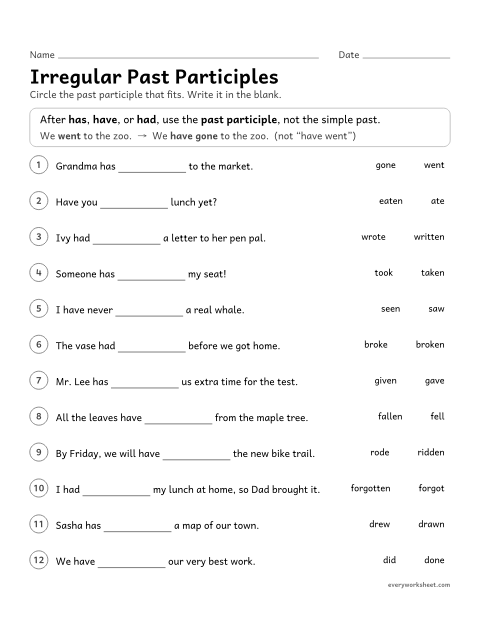
Choosing irregular past participles (gone, eaten, written, taken, seen) after has, have, and had
Answer key on page 2
2 pages59 KB
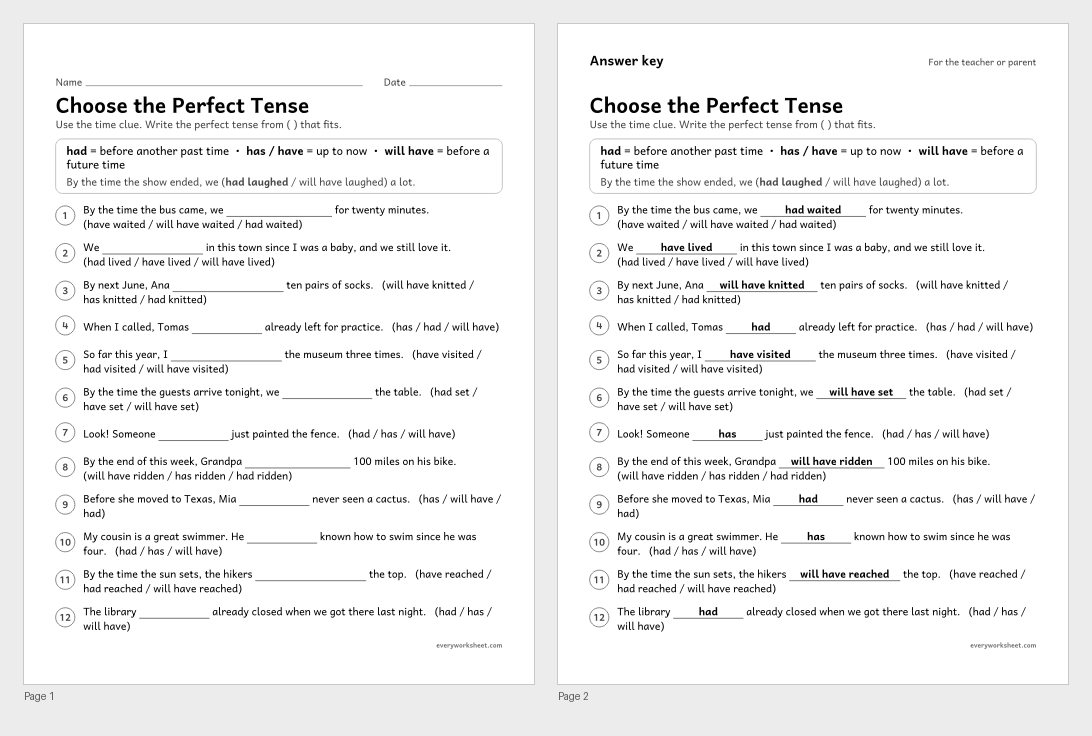 View all 2 pages
Choosing the past, present, or future perfect tense from time clues
Answer key on page 2
2 pages53 KB
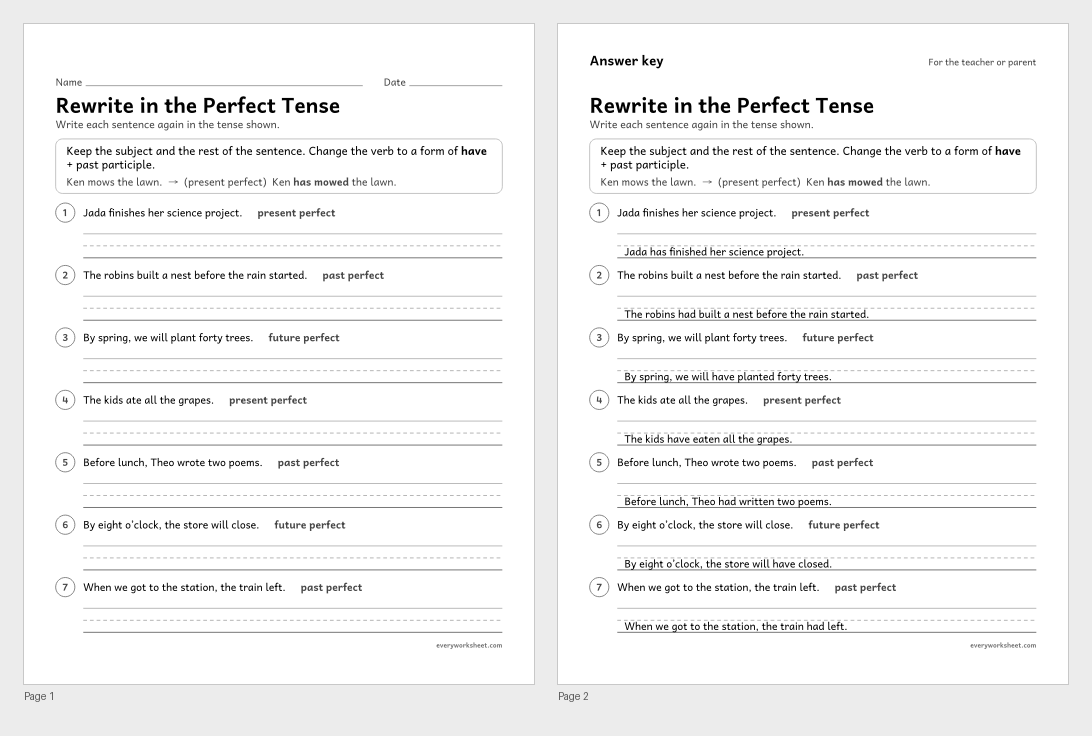 View all 2 pages
Rewriting sentences in the present, past, and future perfect tenses
Answer key on page 2
2 pages43 KB
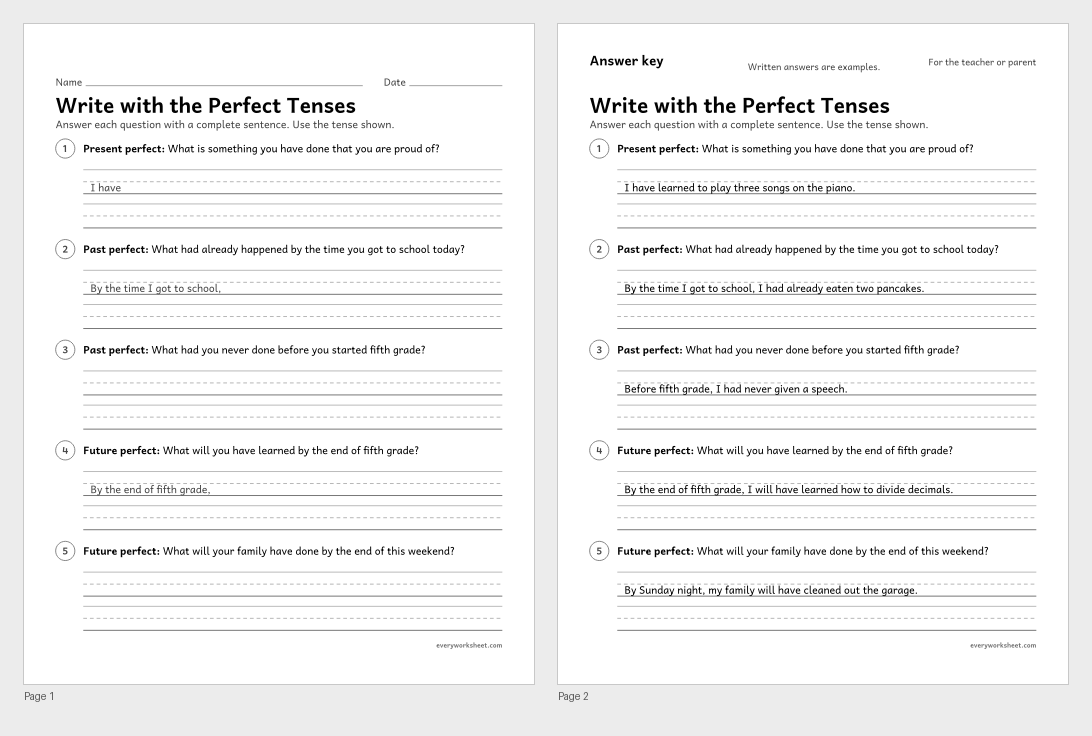 View all 2 pages
Writing sentences in the present, past, and future perfect tenses
Answer key on page 2
2 pages38 KB
Print at 100% (actual size) for the cleanest tracing lines.
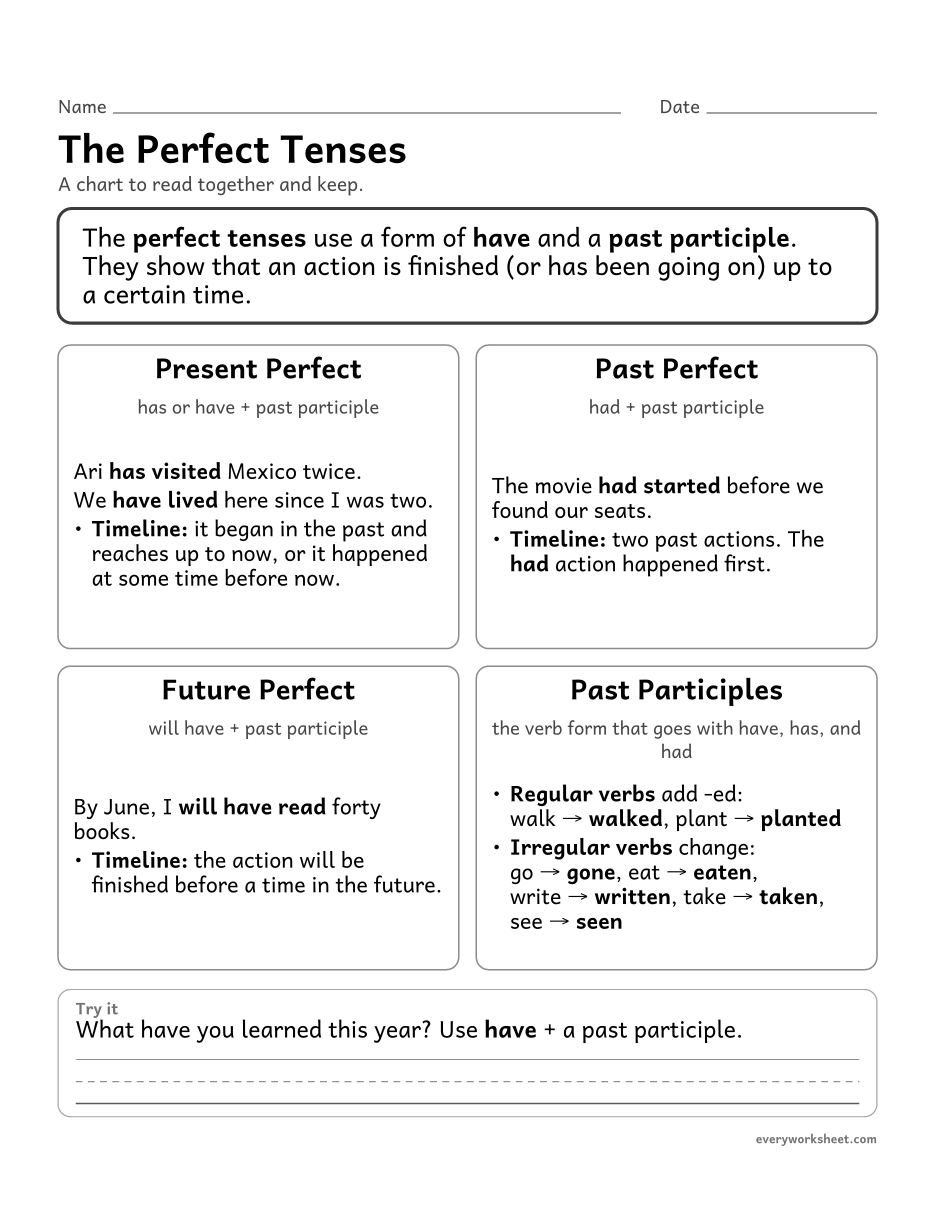
The perfect tenses use a form of the helping verb have with a past participle. They show that an action is finished, or has been going on, up to a certain time. The present perfect uses has or have: "Ari has visited Mexico twice." The past perfect uses had: "The movie had started before we found our seats." The future perfect uses will have: "By June, I will have read forty books."
Each perfect tense is tied to a time. The present perfect reaches from the past up to now. The past perfect tells which of two past actions happened first; the had action came first. The future perfect tells about an action that will be finished before a time in the future. Time clues such as since, already, by the time, and by next June help you choose.
The past participle is the verb form that goes with have, has, and had. Regular verbs add -ed (walked, planted), but irregular verbs change: gone, eaten, written, taken, and seen. A common mistake is to use the simple past instead: we say "have gone," not "have went."
These printable worksheets start with a perfect tense chart, then practice forming each tense, choosing irregular participles, using time clues, rewriting sentences, and writing about your own life. Practice pages have answer keys.
CCSS.ELA-LITERACY.L.5.1.BForm and use the perfect (e.g., I had walked; I have walked; I will have walked) verb tenses.It is a verb tense made with has, have, had, or will have plus a past participle, such as has walked, had walked, or will have walked. It shows an action finished before, or continuing up to, a certain time.
The present perfect (has or have walked) connects the past to now. The past perfect (had walked) shows that one past action happened before another past action.
Forming and using the perfect tenses is a 5th grade grammar skill.
Yes. Every practice page has a key, and the writing page has sample answers.