 View larger
The nine verb tenses
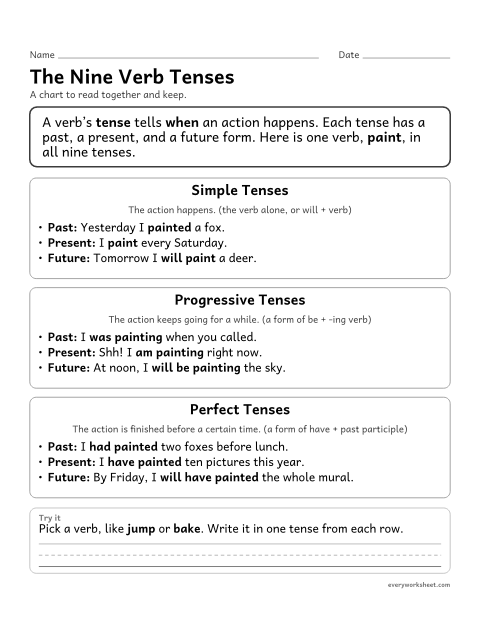
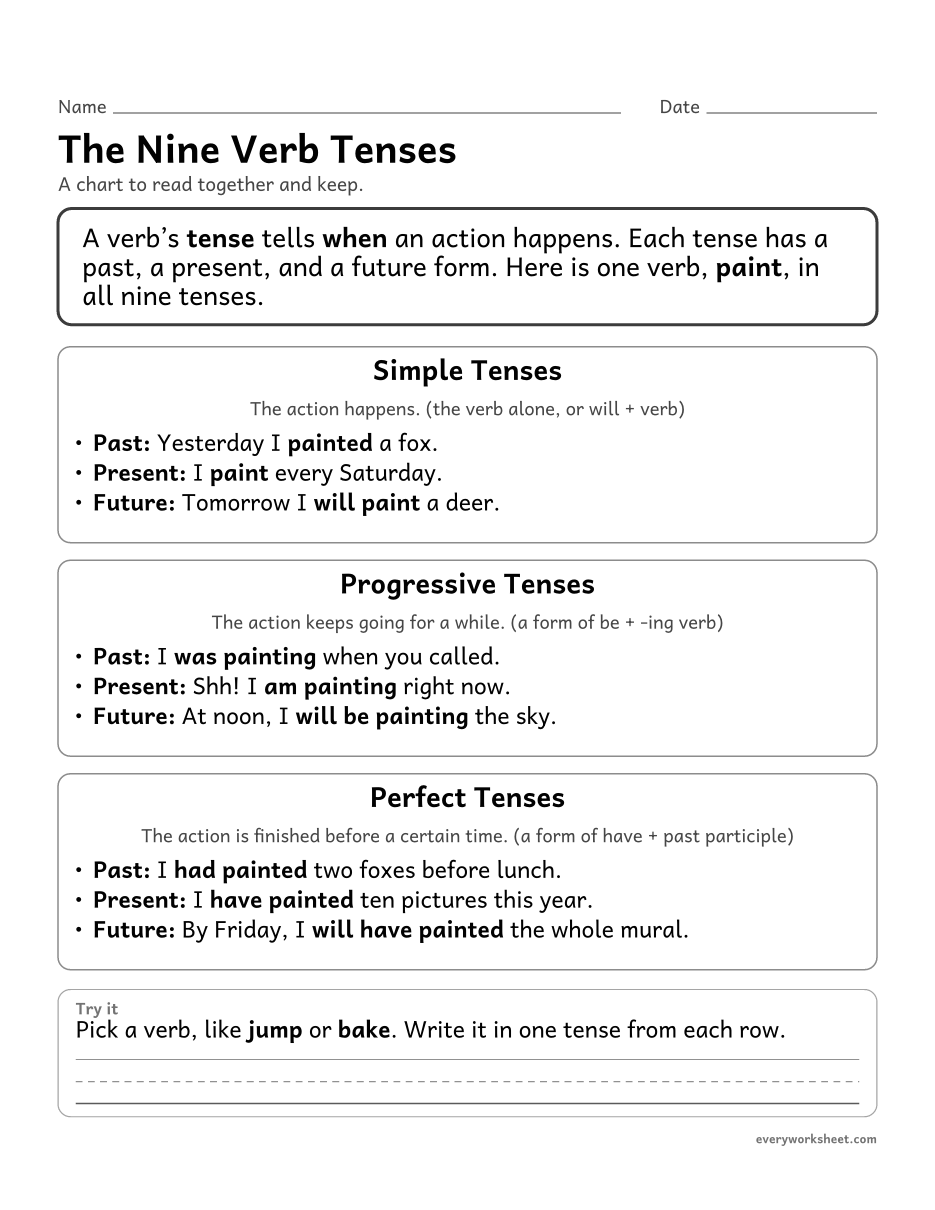
Knowing the simple, progressive, and perfect tenses in the past, present, and future
1 page38 KB
All nine verb tenses, time clues, irregular verbs, and fixing tense shifts, with a chart and keyed practice.
View largerKnowing the simple, progressive, and perfect tenses in the past, present, and future
1 page38 KB
 View all 2 pages
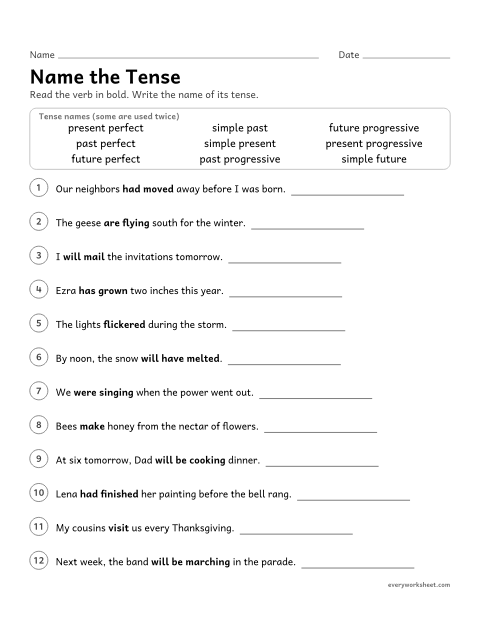
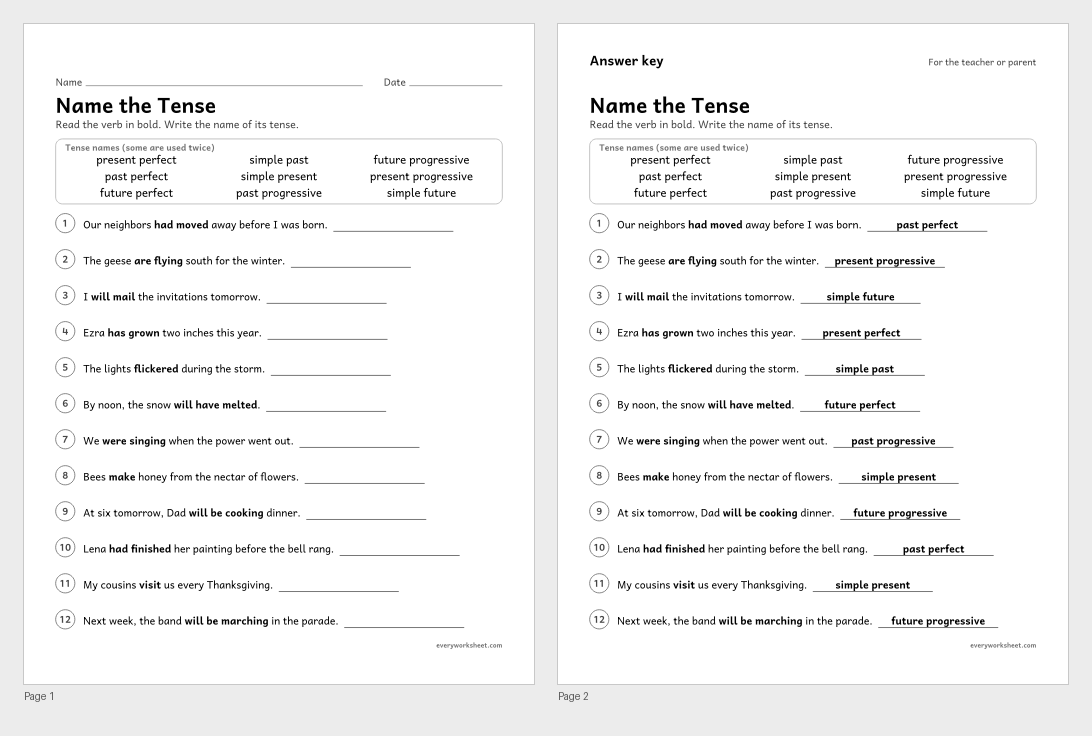
Identifying the nine simple, progressive, and perfect verb tenses
Answer key on page 2
2 pages57 KB
 View all 2 pages
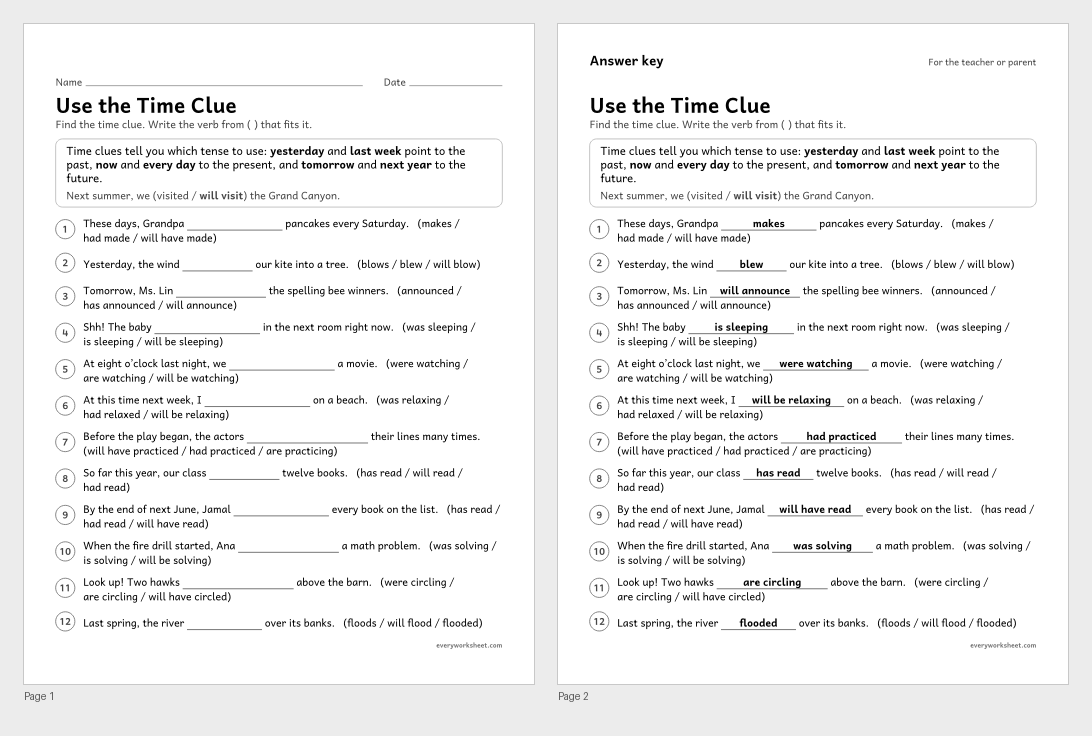
Choosing the verb tense that fits a time clue
Answer key on page 2
2 pages54 KB
 View all 2 pages
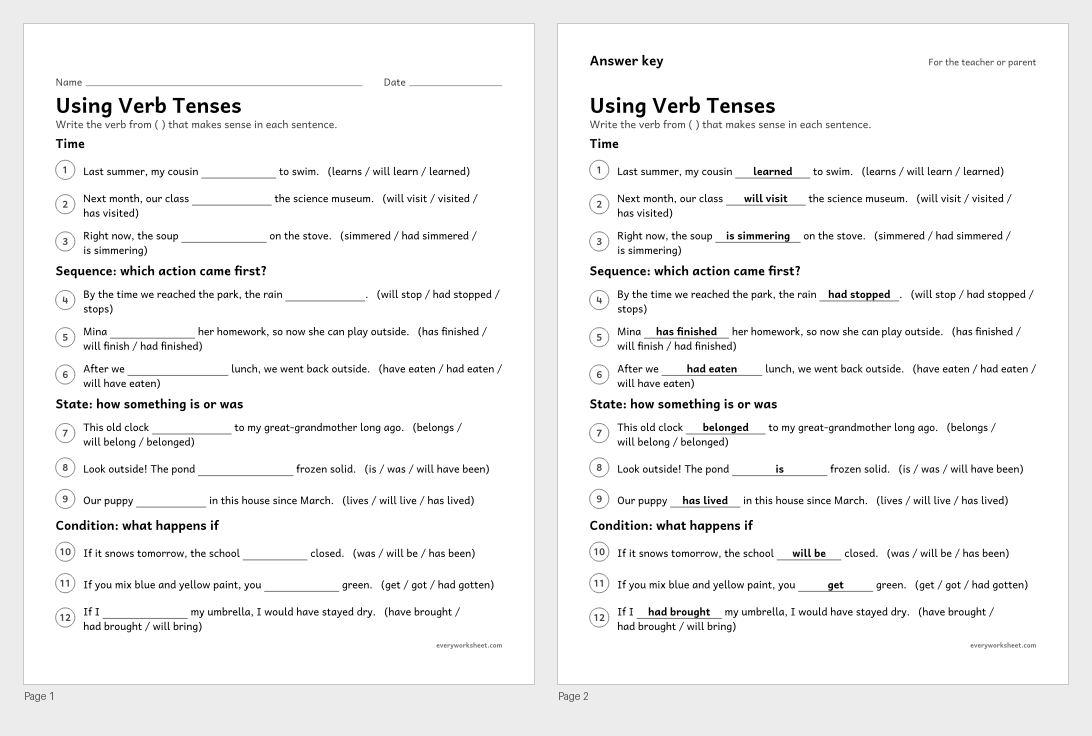
Using verb tense to show time, sequence, state, and condition
Answer key on page 2
2 pages52 KB
 View all 2 pages
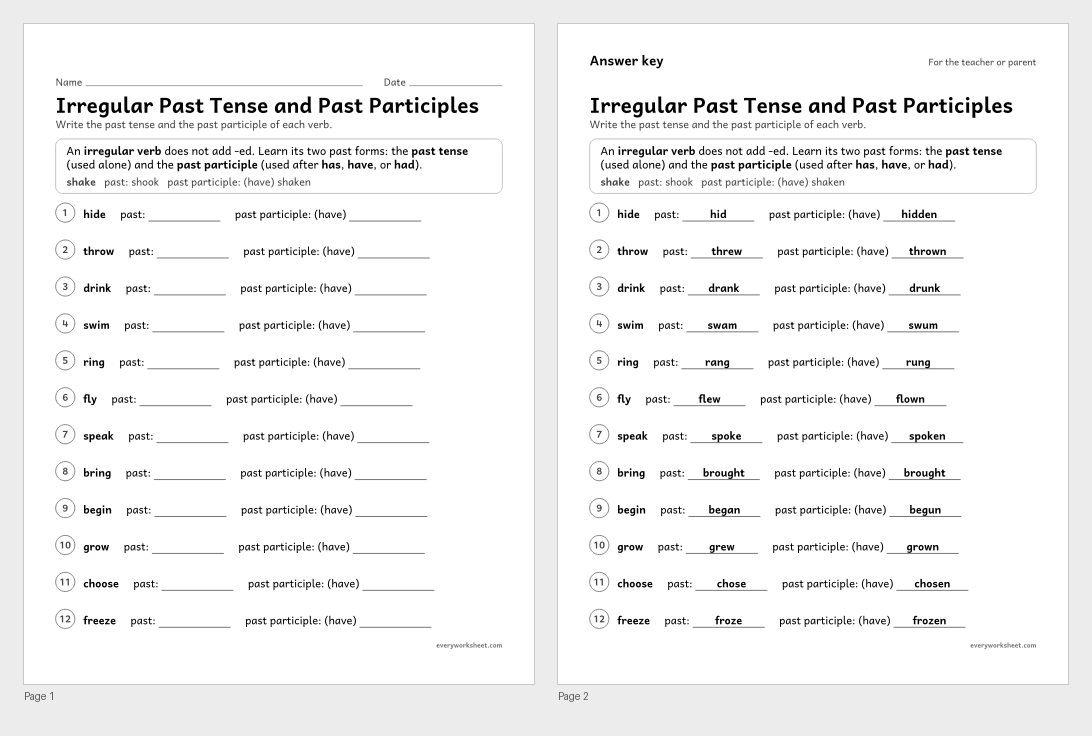
Forming the past tense and the past participle of irregular verbs
Answer key on page 2
2 pages53 KB
 View all 2 pages
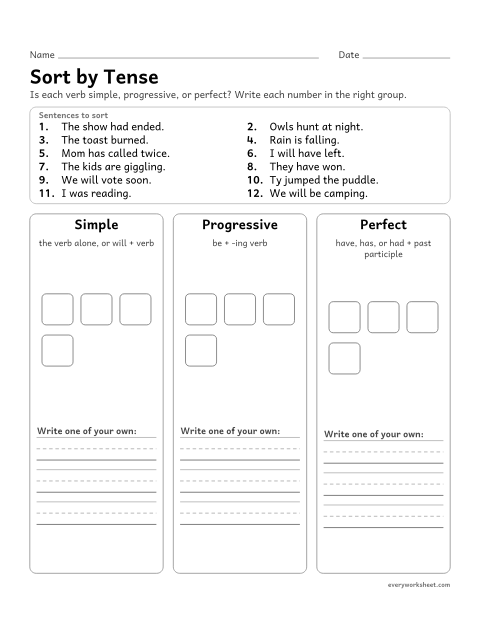
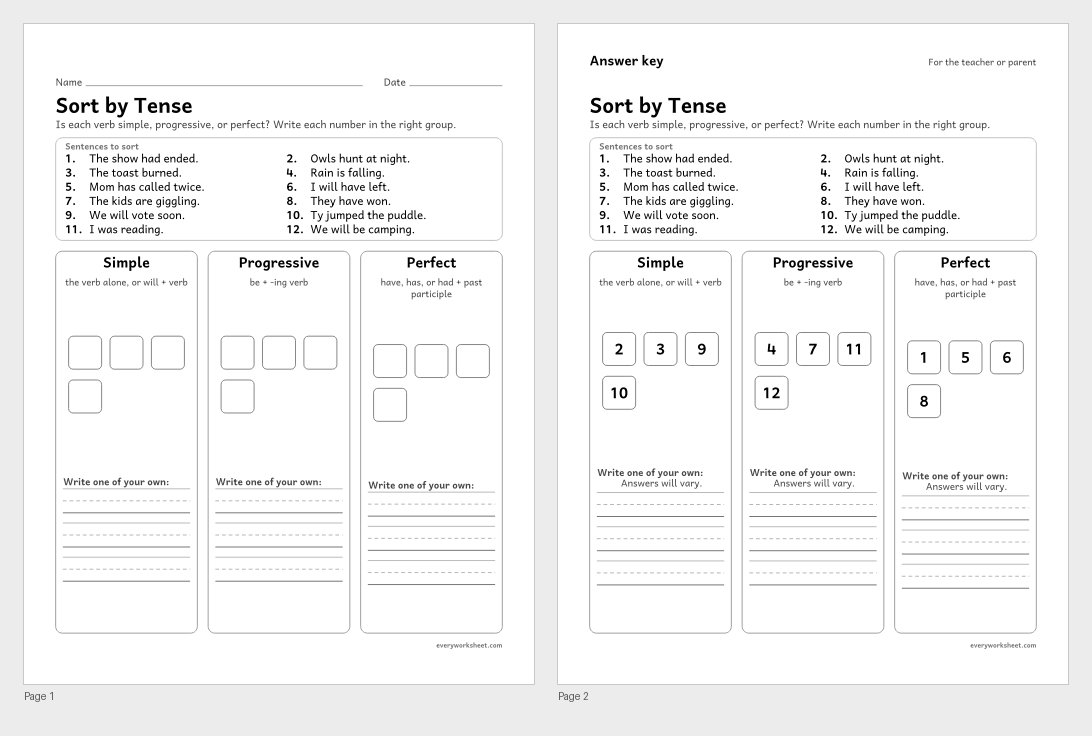
Sorting sentences by simple, progressive, and perfect tense
Answer key on page 2
2 pages55 KB
 View all 2 pages
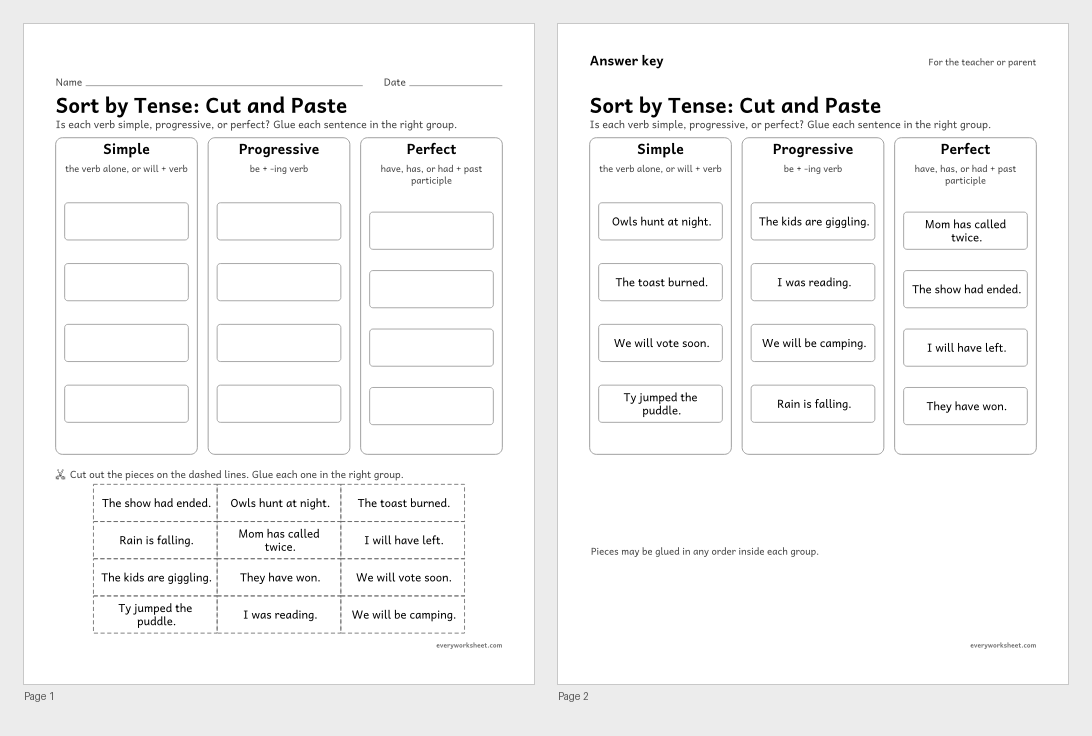
Sorting sentences by simple, progressive, and perfect tense (cut and paste)
Answer key on page 2
2 pages69 KB
 View all 2 pages
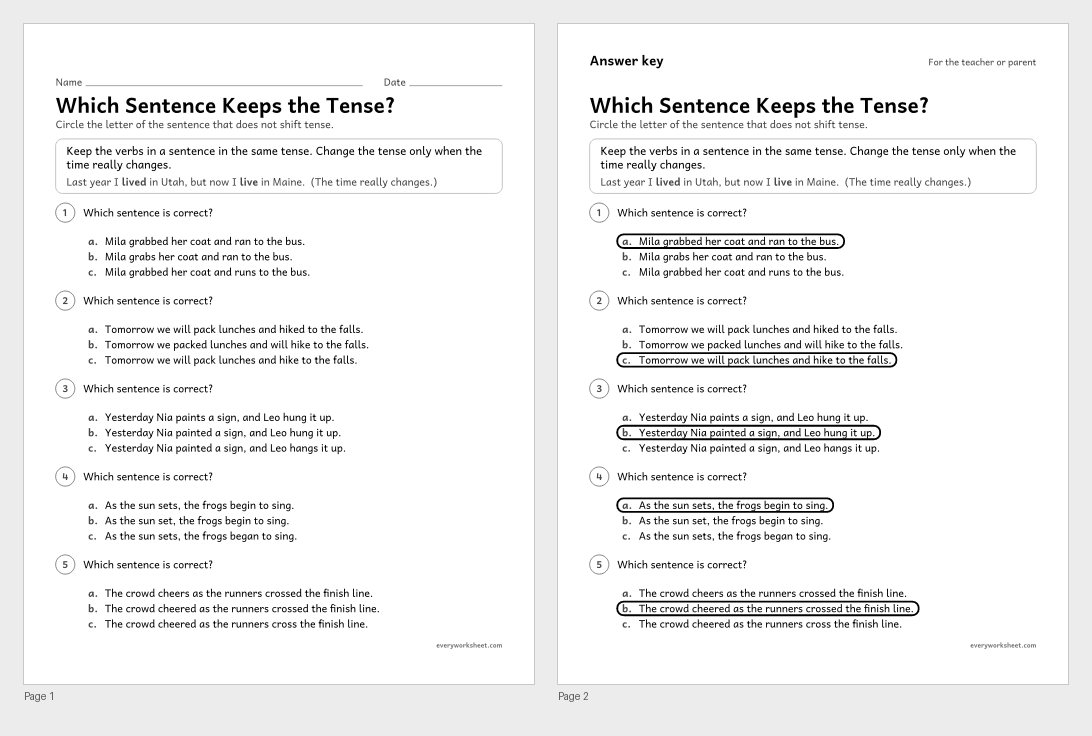
Recognizing inappropriate shifts in verb tense
Answer key on page 2
2 pages54 KB
 View all 2 pages
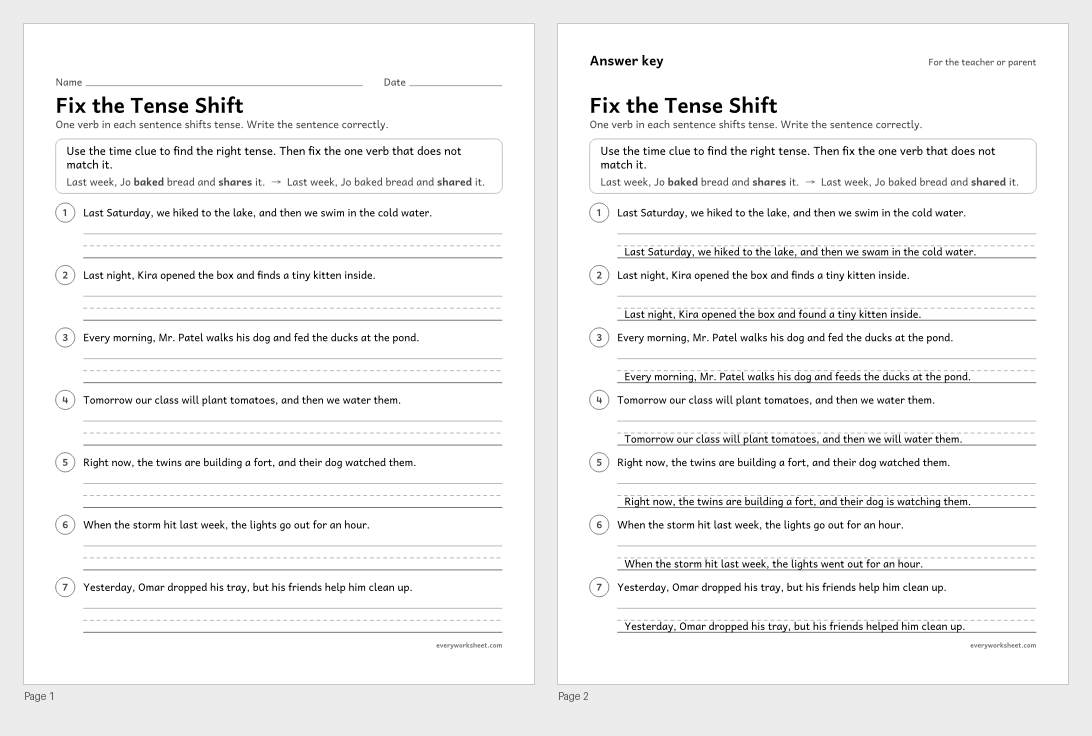
Correcting inappropriate shifts in verb tense in sentences
Answer key on page 2
2 pages42 KB
 View all 2 pages
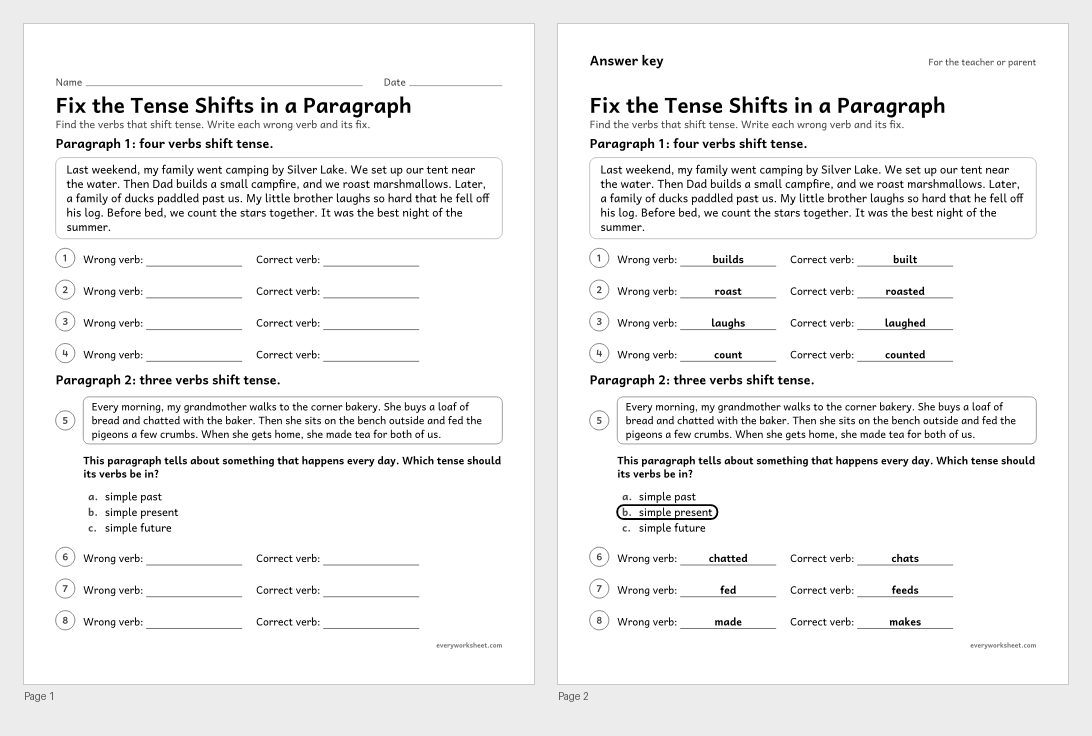
Finding and correcting inappropriate shifts in verb tense in a paragraph
Answer key on page 2
2 pages49 KB
Print at 100% (actual size) for the cleanest tracing lines.
A verb's tense tells when an action happens. English has three simple tenses (past, present, and future), and each one also has a progressive form and a perfect form, so there are nine tenses in all. Take the verb paint. Simple: "I painted," "I paint," "I will paint." Progressive, for an action that keeps going: "I was painting," "I am painting," "I will be painting." Perfect, for an action finished before a certain time: "I had painted," "I have painted," "I will have painted."
Fifth graders learn to choose the tense that fits the meaning. Time clues like yesterday, right now, by the time, and next June point to the right tense. Tense can also show sequence ("By the time we arrived, the rain had stopped"), a state ("This clock belonged to my great-grandmother"), or a condition ("If it snows tomorrow, school will be closed").
A tense shift happens when a writer switches tense for no reason: "Last night, Kira opened the box and finds a kitten." The fix is to keep the verbs in the same tense unless the time really changes: "Last night, Kira opened the box and found a kitten."
These printable worksheets start with a chart that shows one verb in all nine tenses, then move to naming tenses, using time clues, irregular past forms, sorting, and fixing tense shifts in sentences and paragraphs. Every practice page has an answer key.
CCSS.ELA-LITERACY.L.5.1.BForm and use the perfect (e.g., I had walked; I have walked; I will have walked) verb tenses.CCSS.ELA-LITERACY.L.5.1.CUse verb tense to convey various times, sequences, states, and conditions.CCSS.ELA-LITERACY.L.5.1.DRecognize and correct inappropriate shifts in verb tense.Simple past, present, and future; past, present, and future progressive; and past, present, and future perfect. For example: walked, walk, will walk; was walking, am walking, will be walking; had walked, have walked, will have walked.
It is a change in verb tense that does not match a change in time, such as "Yesterday we hiked to the lake and swim in the water." Both verbs should be in the past: hiked and swam.
Children meet past, present, and future in the early grades, the progressive tenses in 4th grade, and the perfect tenses and fixing tense shifts in 5th grade.
Yes. Every practice page has an answer key.