 View larger
Probability words chart
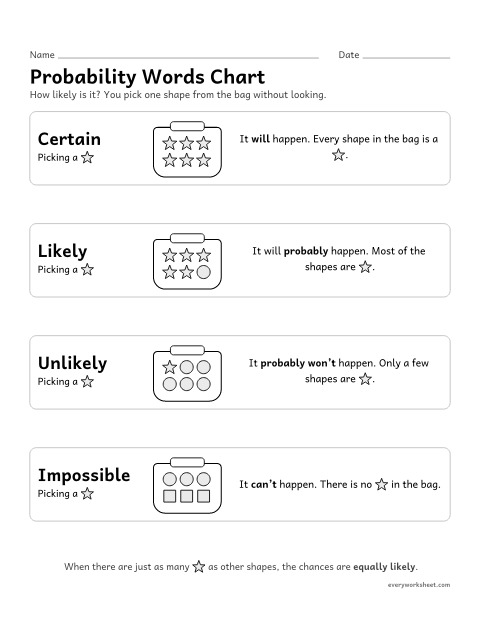
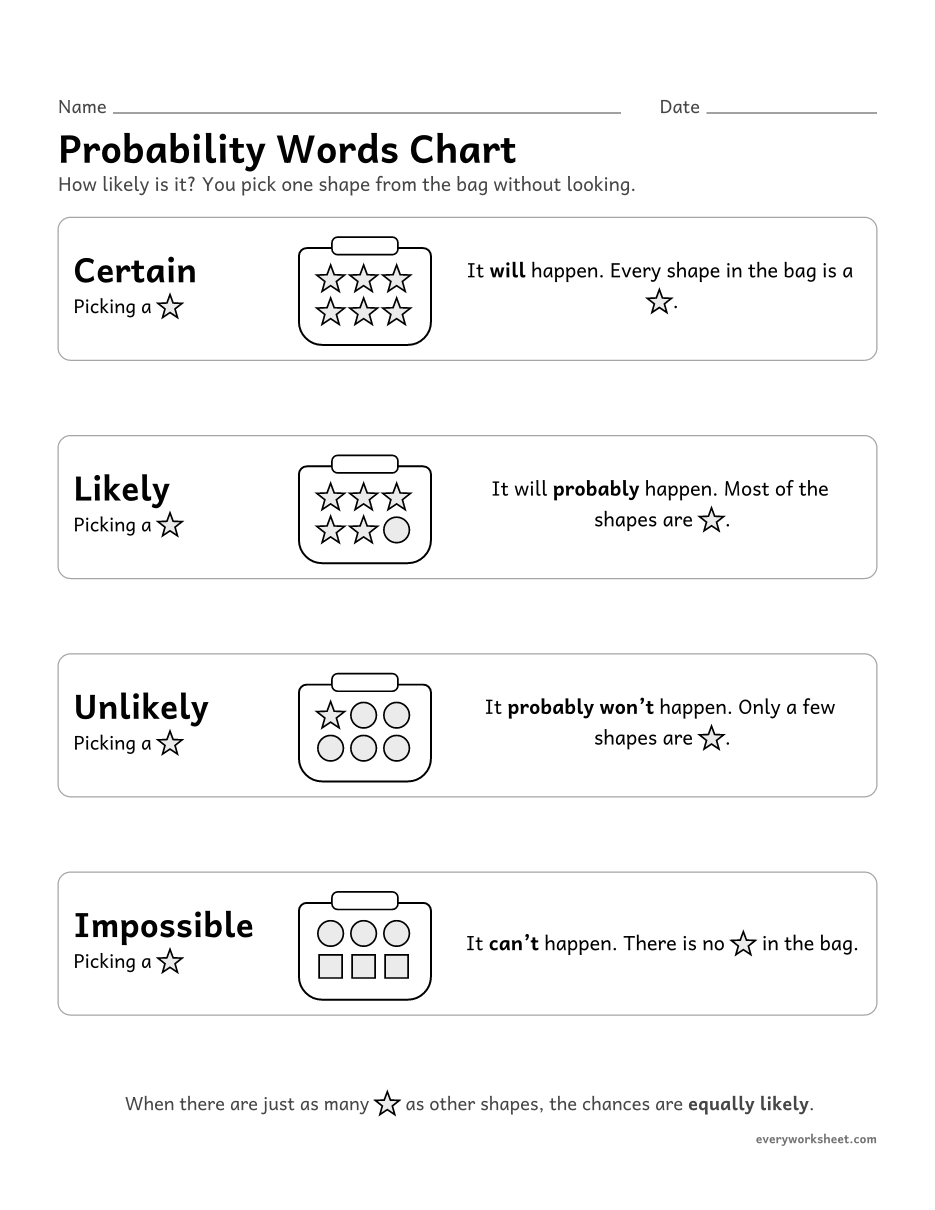
Describing chance with the words certain, likely, unlikely and impossible
1 page32 KB
Chance in simple words, then spinners, coins and probability as a fraction, for 3rd to 5th grade with answer keys.
View largerDescribing chance with the words certain, likely, unlikely and impossible
1 page32 KB
 View all 2 pages
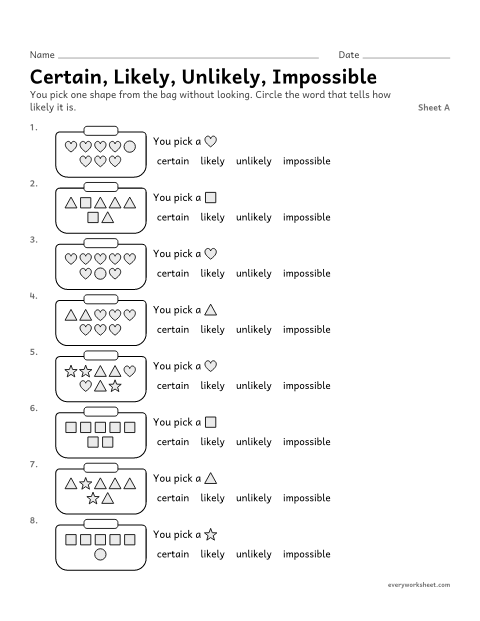
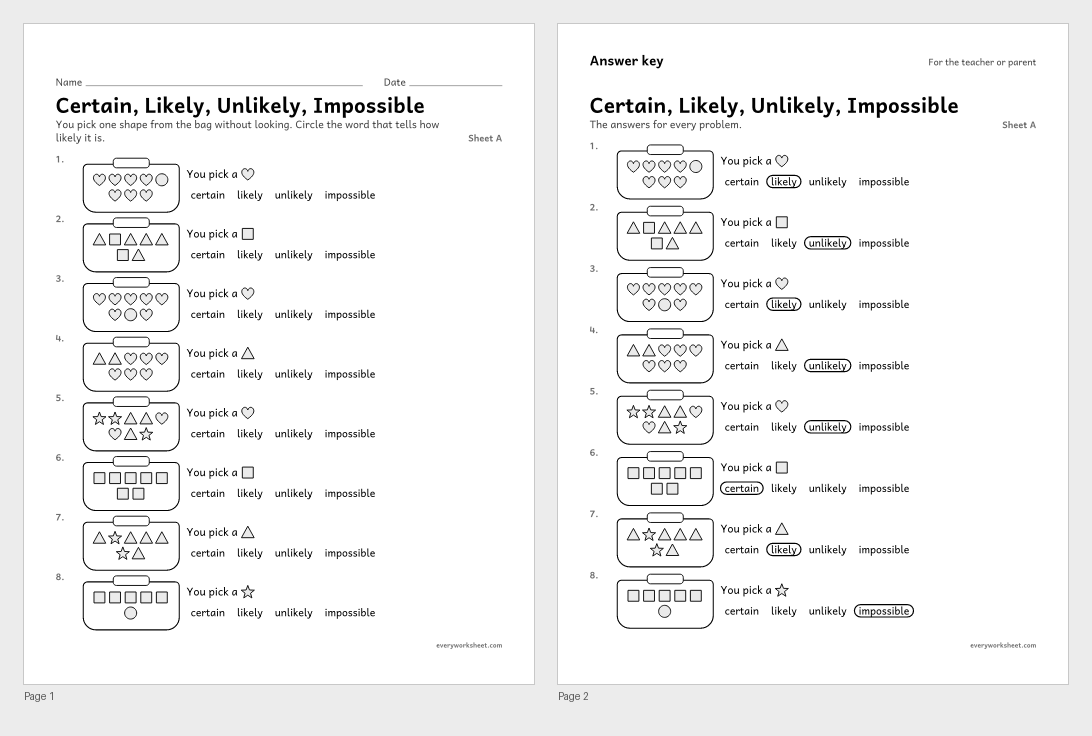
Deciding if picking a shape from a bag is certain, likely, unlikely or impossible
Answer key on page 2
2 pages43 KB
 View all 2 pages
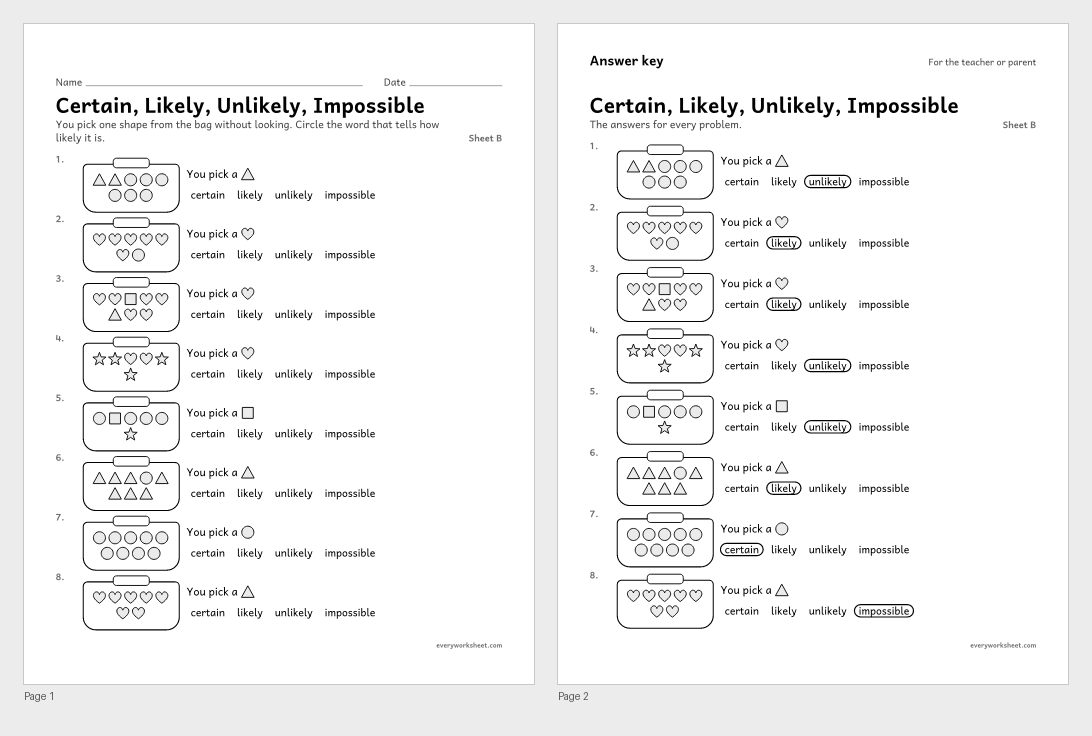
Deciding if picking a shape from a bag is certain, likely, unlikely or impossible
Answer key on page 2
2 pages43 KB
 View all 2 pages
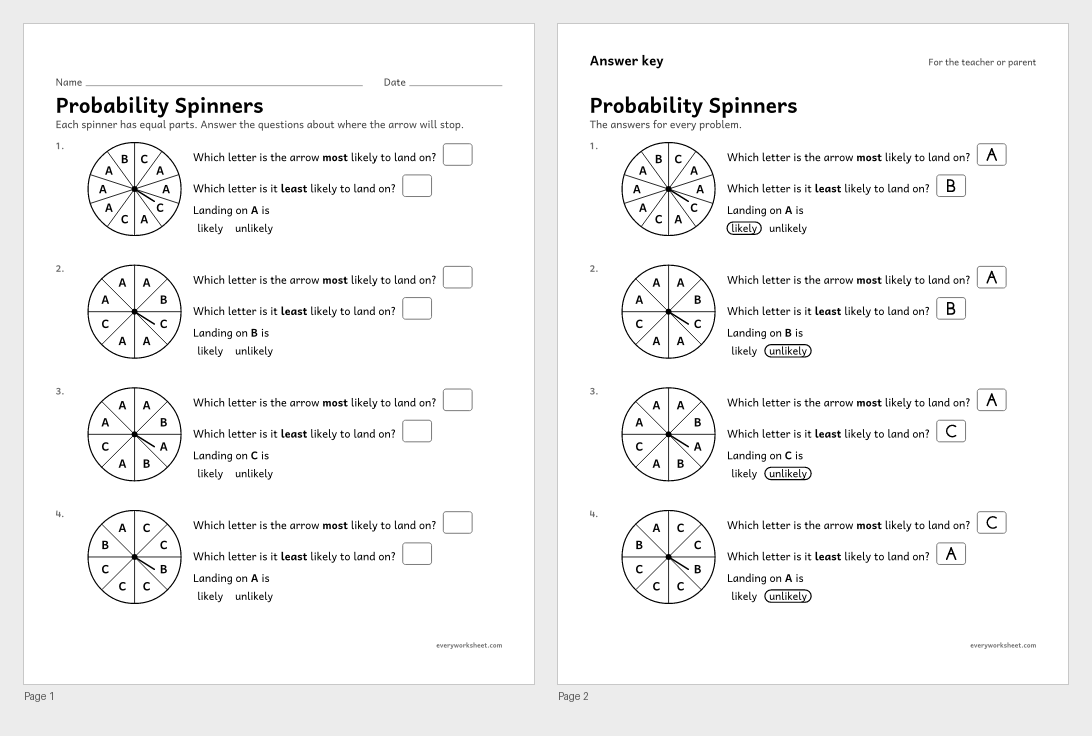
Finding the most and least likely result on a spinner
Answer key on page 2
2 pages45 KB
 View all 2 pages
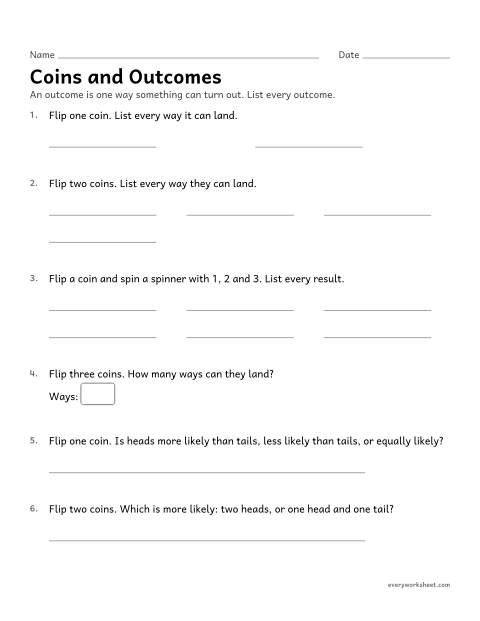
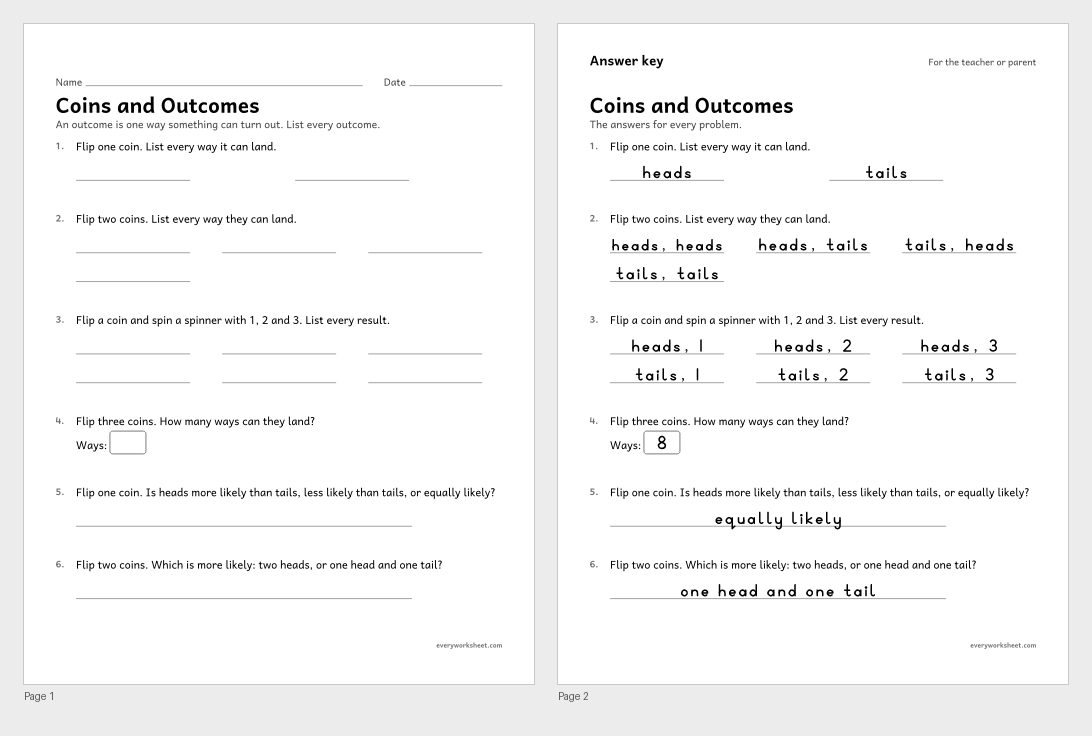
Listing the outcomes of flipping coins and spinning a spinner
Answer key on page 2
2 pages44 KB
 View all 2 pages
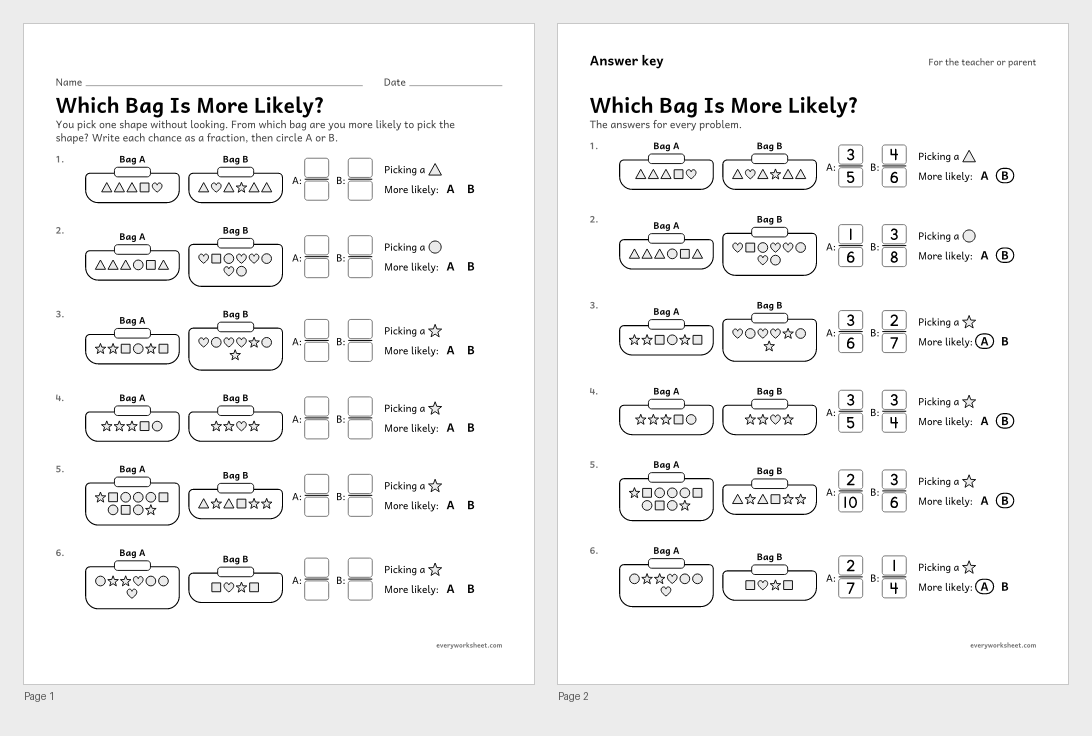
Comparing chances as fractions to pick the better bag
Answer key on page 2
2 pages53 KB
 View all 2 pages
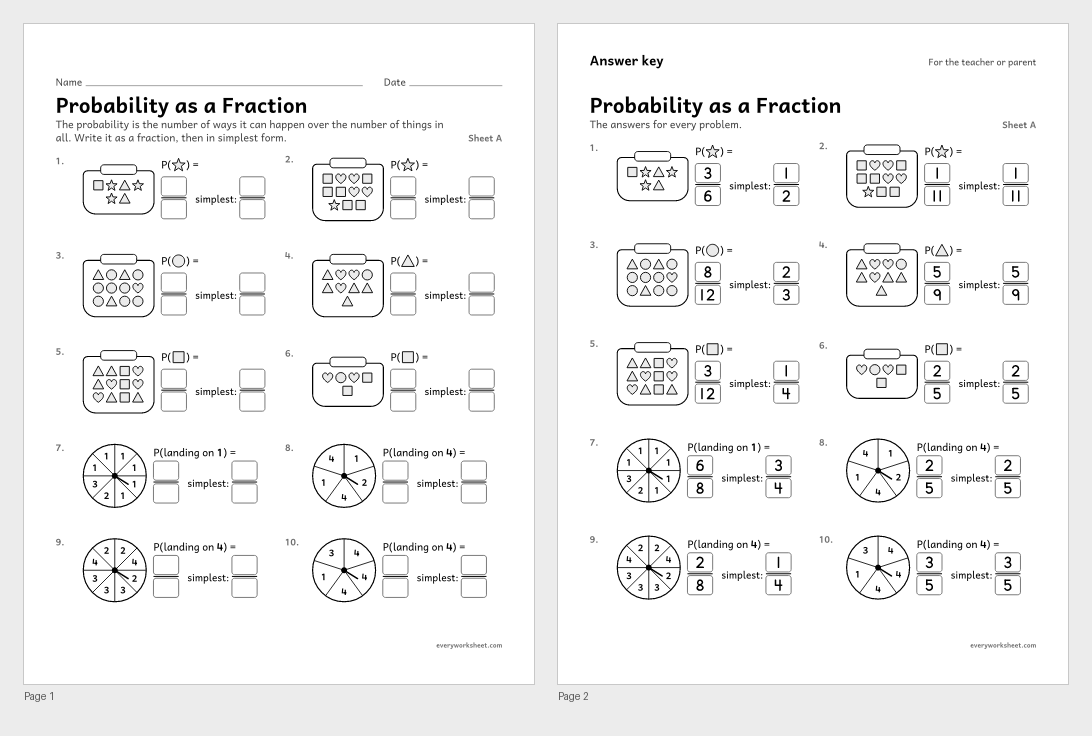
Writing the chance of an event as a fraction in simplest form
Answer key on page 2
2 pages55 KB
 View all 2 pages
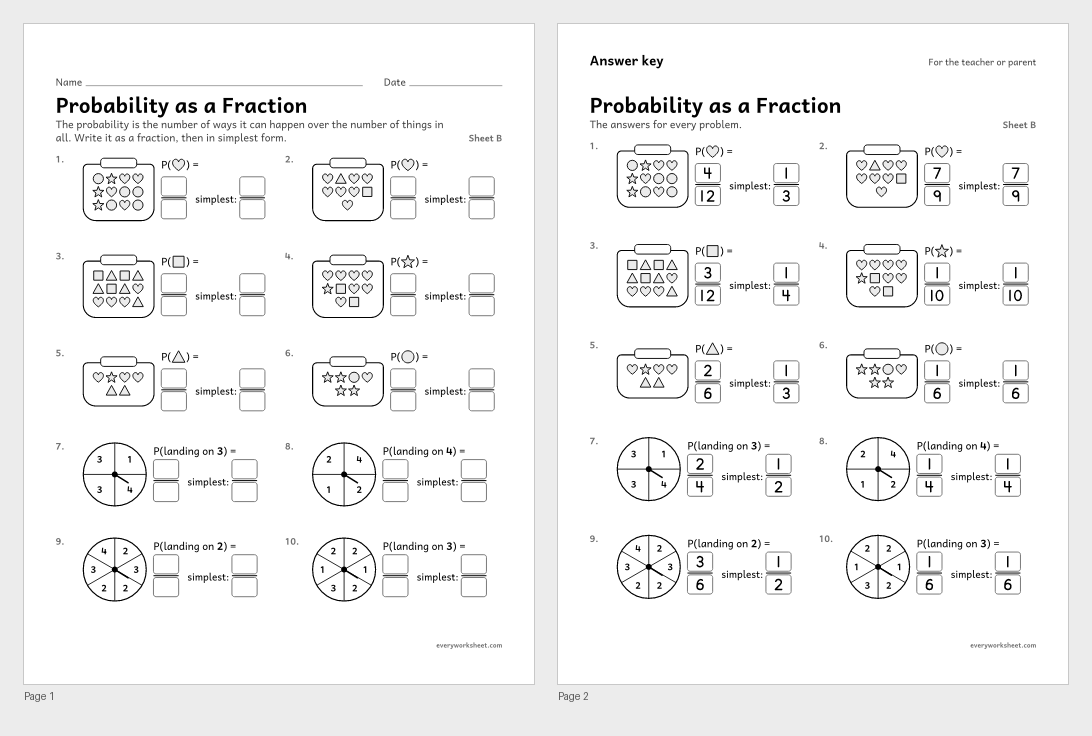
Writing the chance of an event as a fraction in simplest form
Answer key on page 2
2 pages55 KB
 View all 2 pages
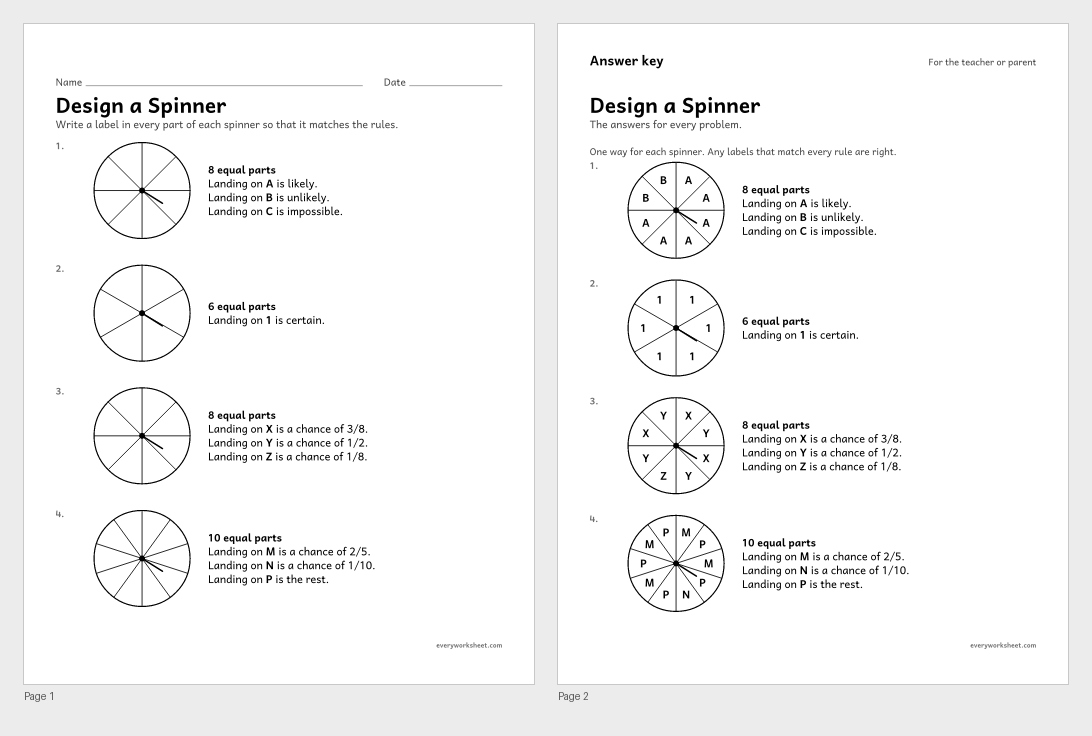
Labeling spinner sections so each result has a given chance
Answer key on page 2
2 pages44 KB
Print at 100% (actual size) for the cleanest tracing lines.
Probability is how likely something is to happen. These worksheets start with words children already use (certain, likely, unlikely, impossible) and move toward writing a chance as a fraction.
The pictures are bags of shapes and spinners with equal parts, drawn in black and white, so every chance can be counted right on the page. Every answer is worked out from the counts.
Probability is formally taught in middle school, but the ideas fit well with 3rd grade data, 4th grade fraction comparing and 5th grade fractions.
CCSS.MATH.CONTENT.7.SP.C.5Understand that the probability of a chance event is a number between 0 and 1 that expresses the likelihood of the event occurring. Larger numbers indicate greater likelihood. A probability near 0 indicates an unlikely event, a probability around 1/2 indicates an event that is neither unlikely nor likely, and a probability near 1 indicates a likely event.CCSS.MATH.CONTENT.4.NF.A.2Compare two fractions with different numerators and different denominators, e.g., by creating common denominators or numerators, or by comparing to a benchmark fraction such as 1/2. Recognize that comparisons are valid only when the two fractions refer to the same whole. Record the results of comparisons with symbols >, =, or <, and justify the conclusions, e.g., by using a visual fraction model.The Common Core standards place probability in 7th grade, but younger children can describe chance with words like likely and unlikely. These sheets use counting and fractions children already know.
A coin has two sides that are equally likely, so the chance of heads is 1 out of 2, or 1/2.
Put the number of ways the thing can happen over the number of things in all. A bag with 3 stars and 9 shapes in all gives a 3/9 chance of a star, which is 1/3 in simplest form.