 3 pagesView all 3 pages
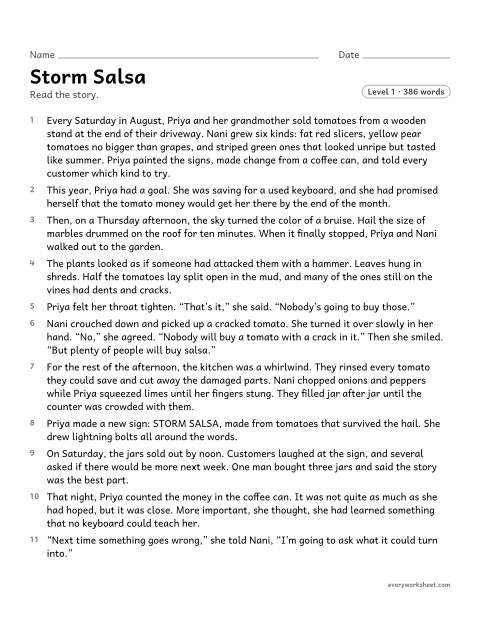
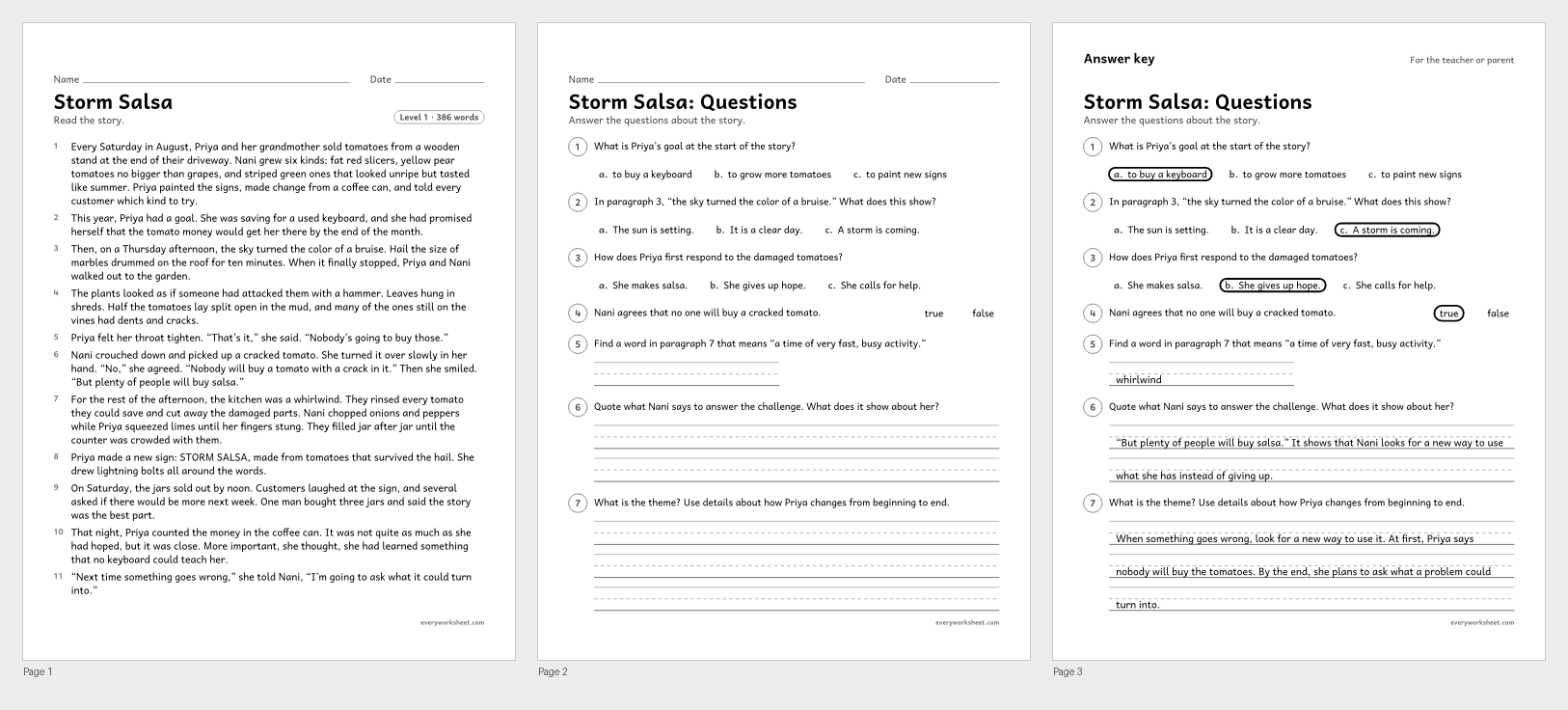
Storm salsa
Finding the theme of a story from how a character responds to a challenge
Answer key on page 3
3 pages54 KB
Original stories, poems, a play, and nonfiction at three levels, plus two-page reads, with evidence questions and answer keys.
3 pagesView all 3 pagesFinding the theme of a story from how a character responds to a challenge
Answer key on page 3
3 pages54 KB
 3 pagesView all 3 pages
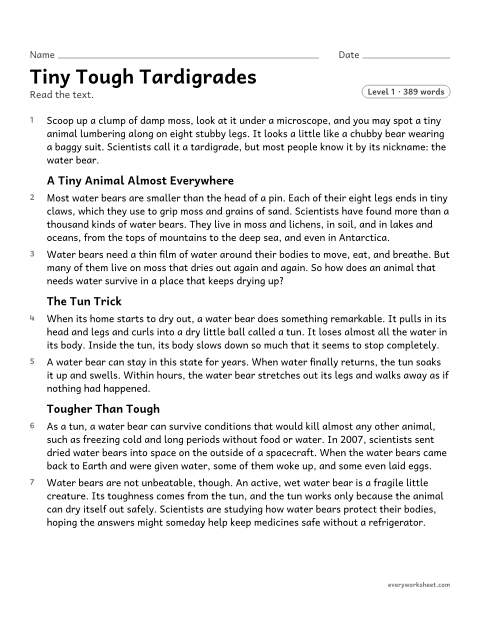
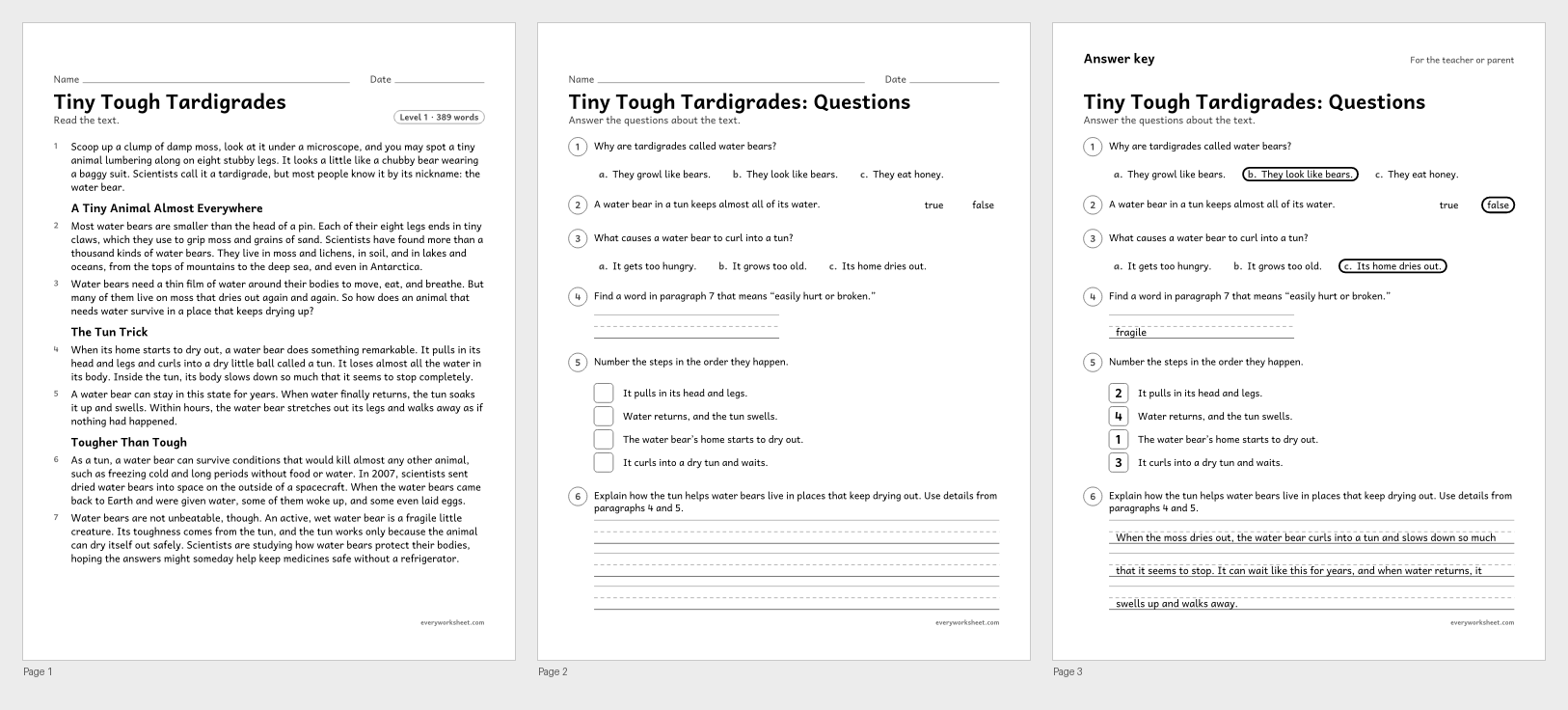
Explaining causes and effects in a science text: how and why an animal survives drying out
Answer key on page 3
3 pages54 KB
 3 pagesView all 3 pages
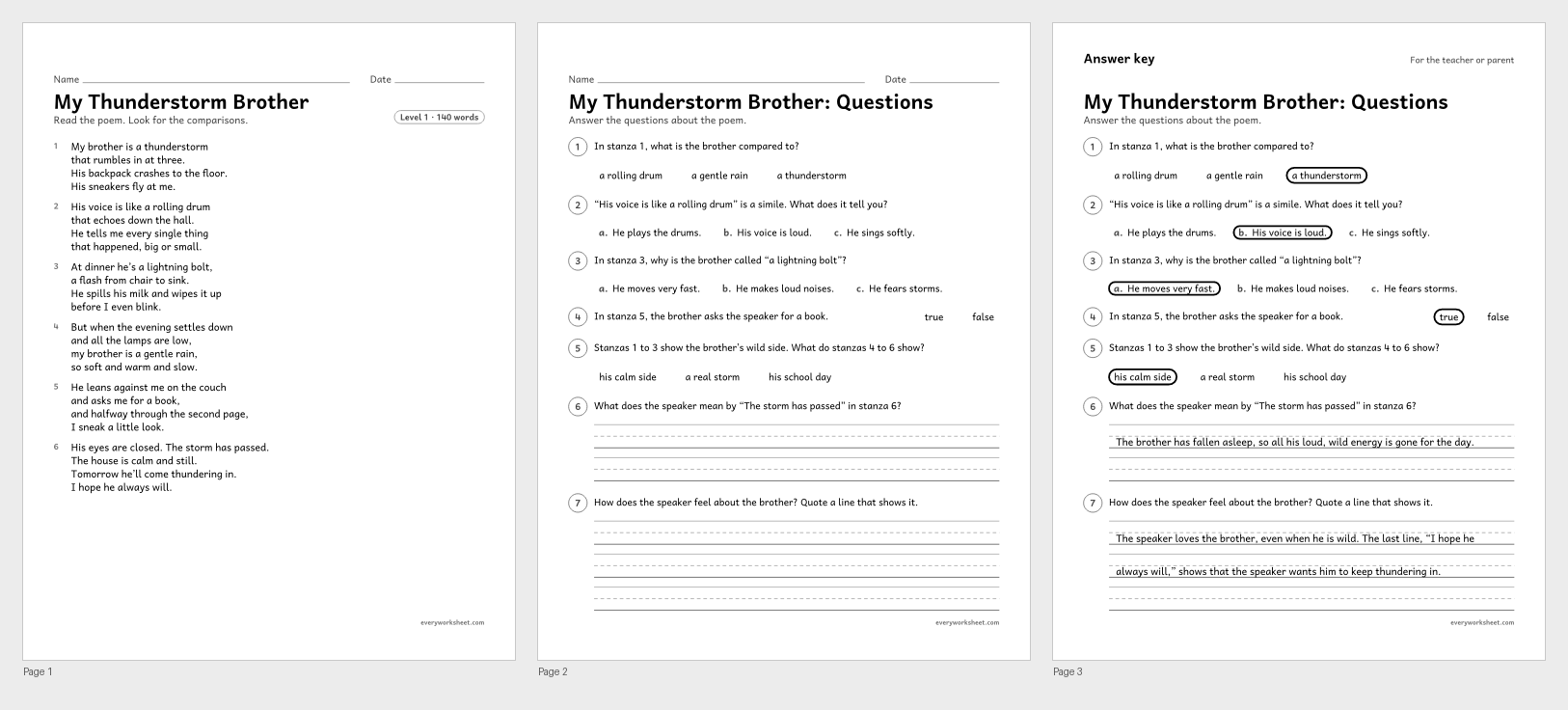
Explaining what metaphors and similes mean in a poem
Answer key on page 3
3 pages49 KB
 3 pagesView all 3 pages
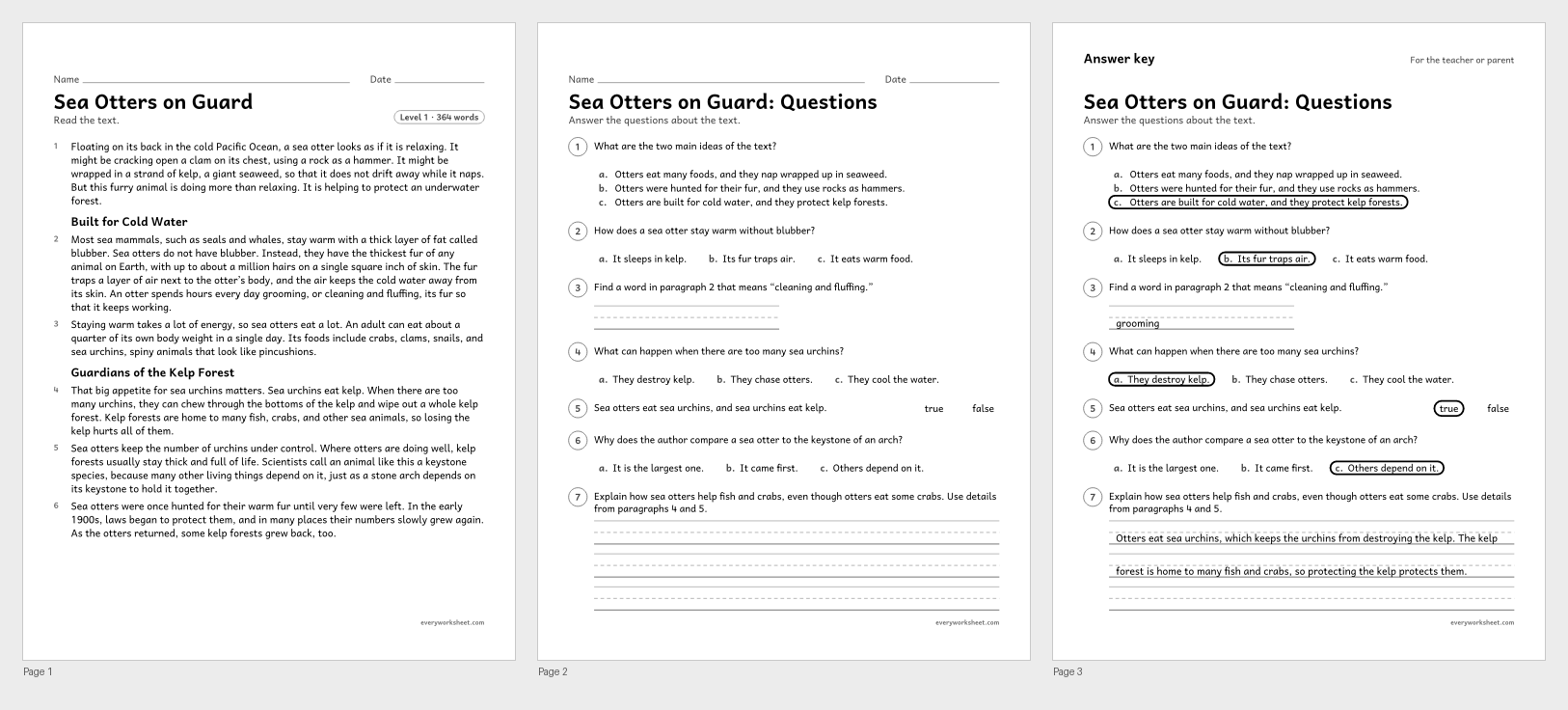
Finding two main ideas in a science text and the key details that support each one
Answer key on page 3
3 pages56 KB
 3 pagesView all 3 pages
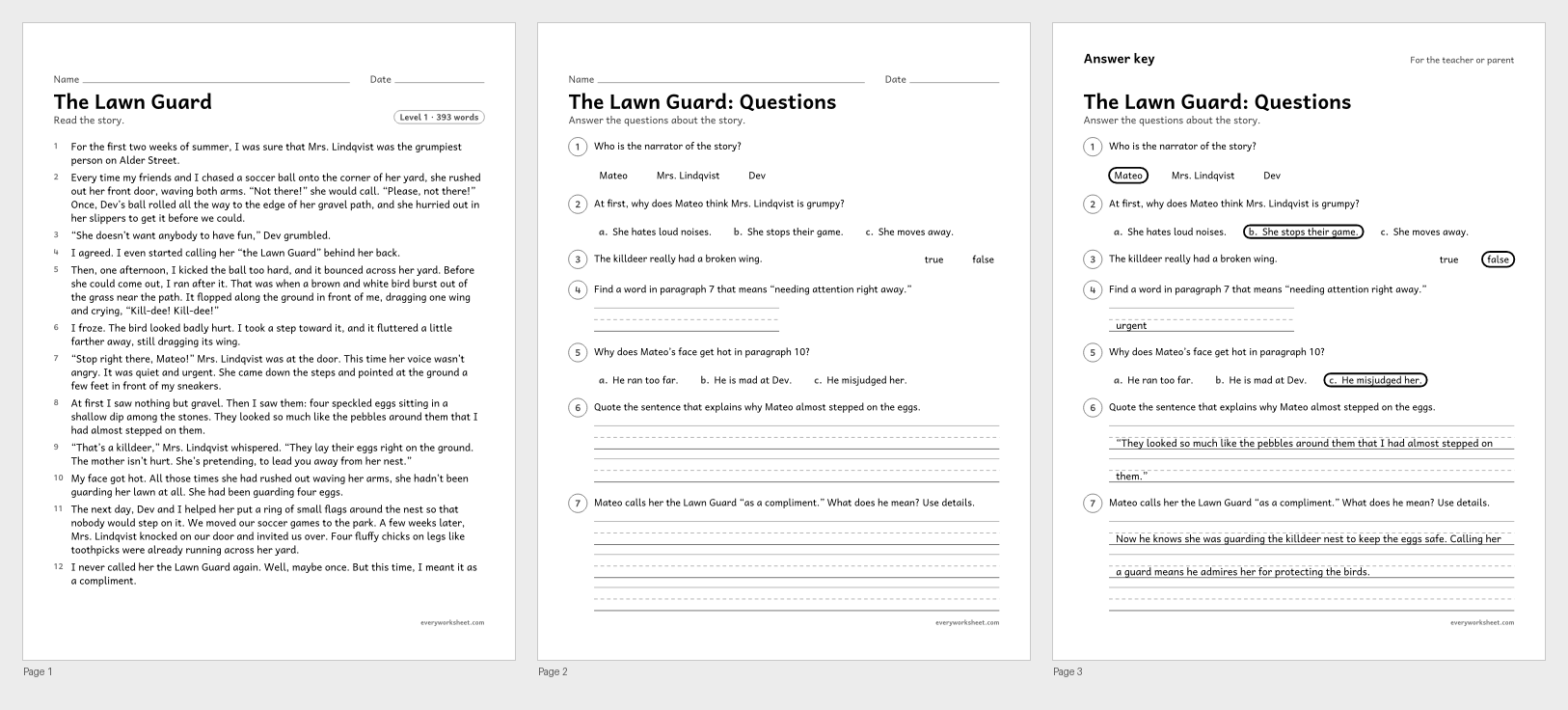
Quoting accurately from a story to explain what happens and to make inferences
Answer key on page 3
3 pages55 KB
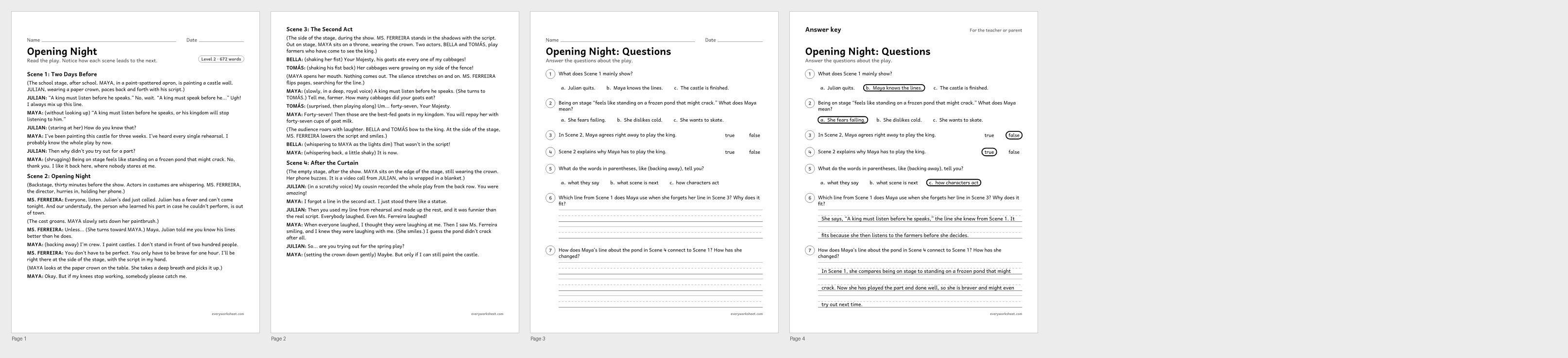 4 pagesView all 4 pages
Explaining how the scenes of a play fit together to tell the whole story
Answer key on page 4
4 pages61 KB
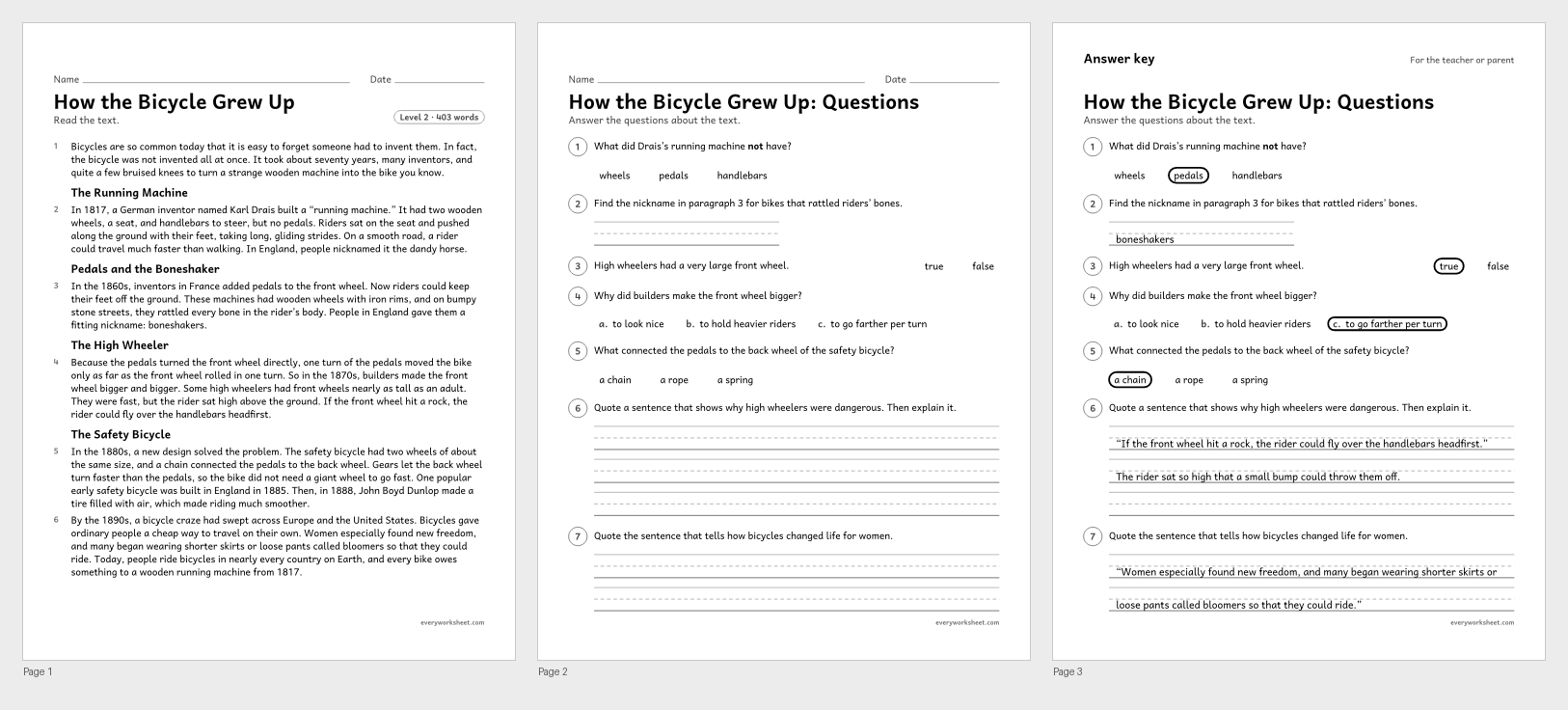 3 pagesView all 3 pages
Quoting accurately from a history text to explain how and why an invention changed
Answer key on page 3
3 pages54 KB
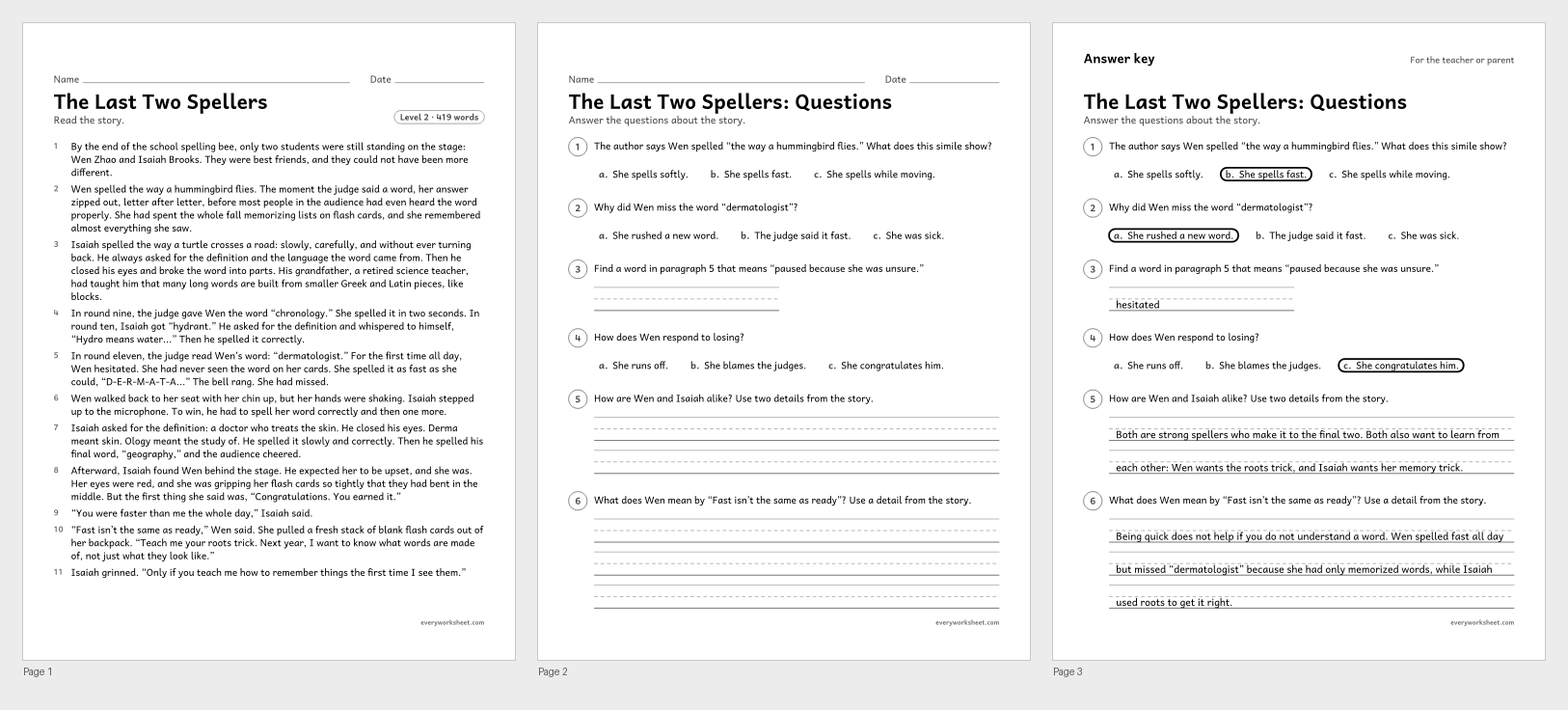 3 pagesView all 3 pages
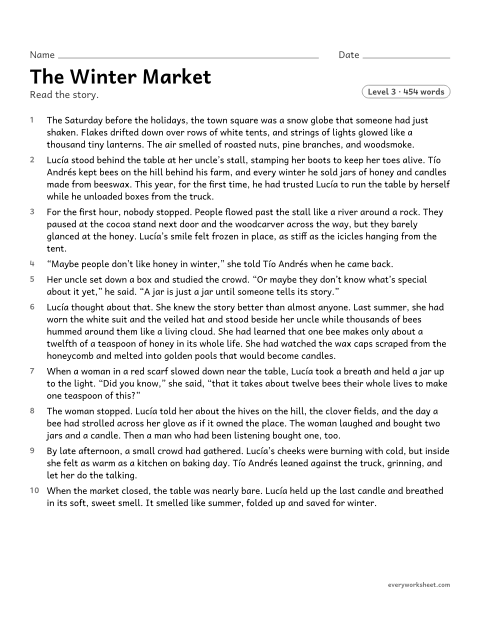
Comparing and contrasting two characters, using specific details from the story
Answer key on page 3
3 pages53 KB
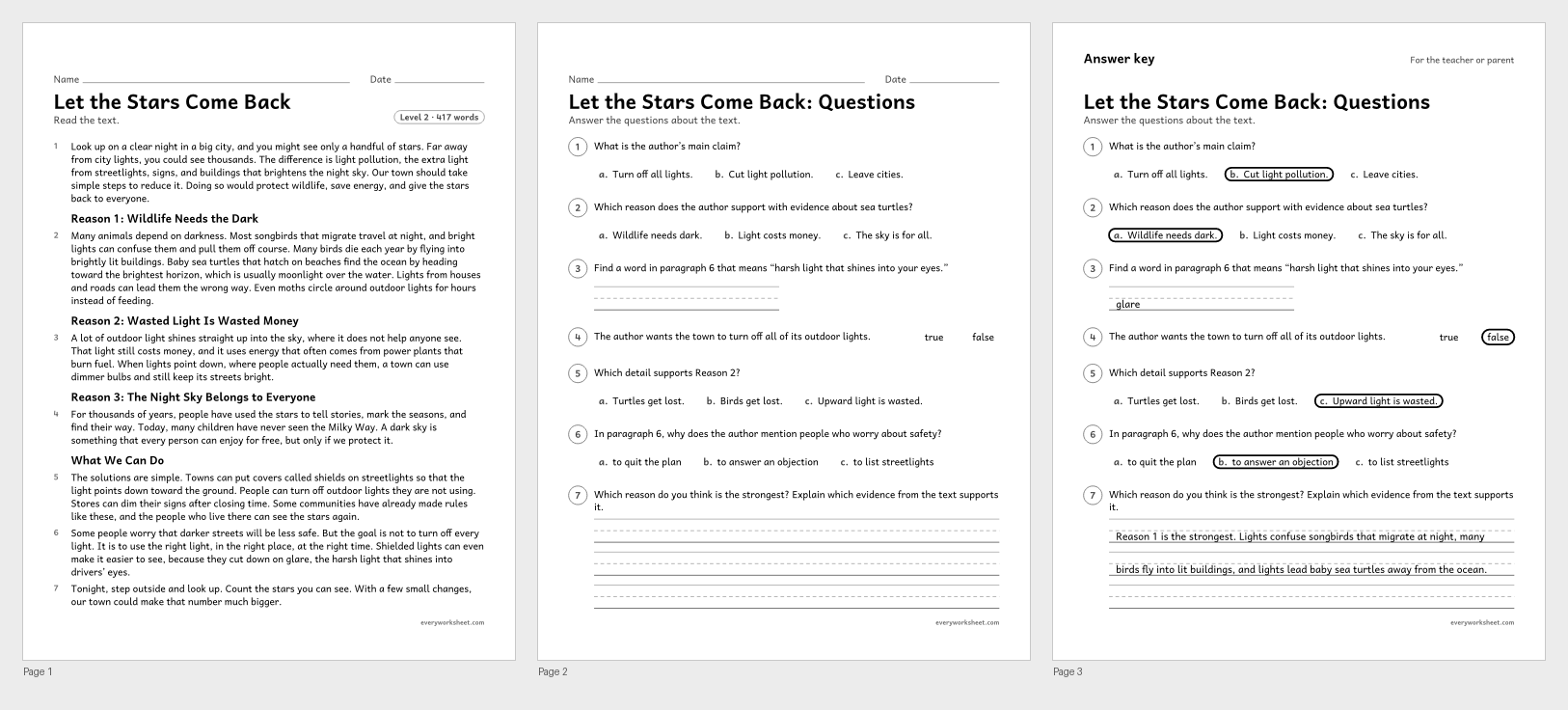 3 pagesView all 3 pages
Explaining how an author uses reasons and evidence to support each point in an argument
Answer key on page 3
3 pages54 KB
 3 pagesView all 3 pages
Finding the theme of a poem from how the speaker reflects on a topic
Answer key on page 3
3 pages50 KB
 3 pagesView all 3 pages
Explaining what metaphors and similes mean and how they show a character's feelings
Answer key on page 3
3 pages53 KB
 3 pagesView all 3 pages
Working out the meanings of science words about the skeleton, using context and definitions in the text
Answer key on page 3
3 pages52 KB
 3 pagesView all 3 pages
Explaining the causes and effects that connect events in a history text
Answer key on page 3
3 pages56 KB
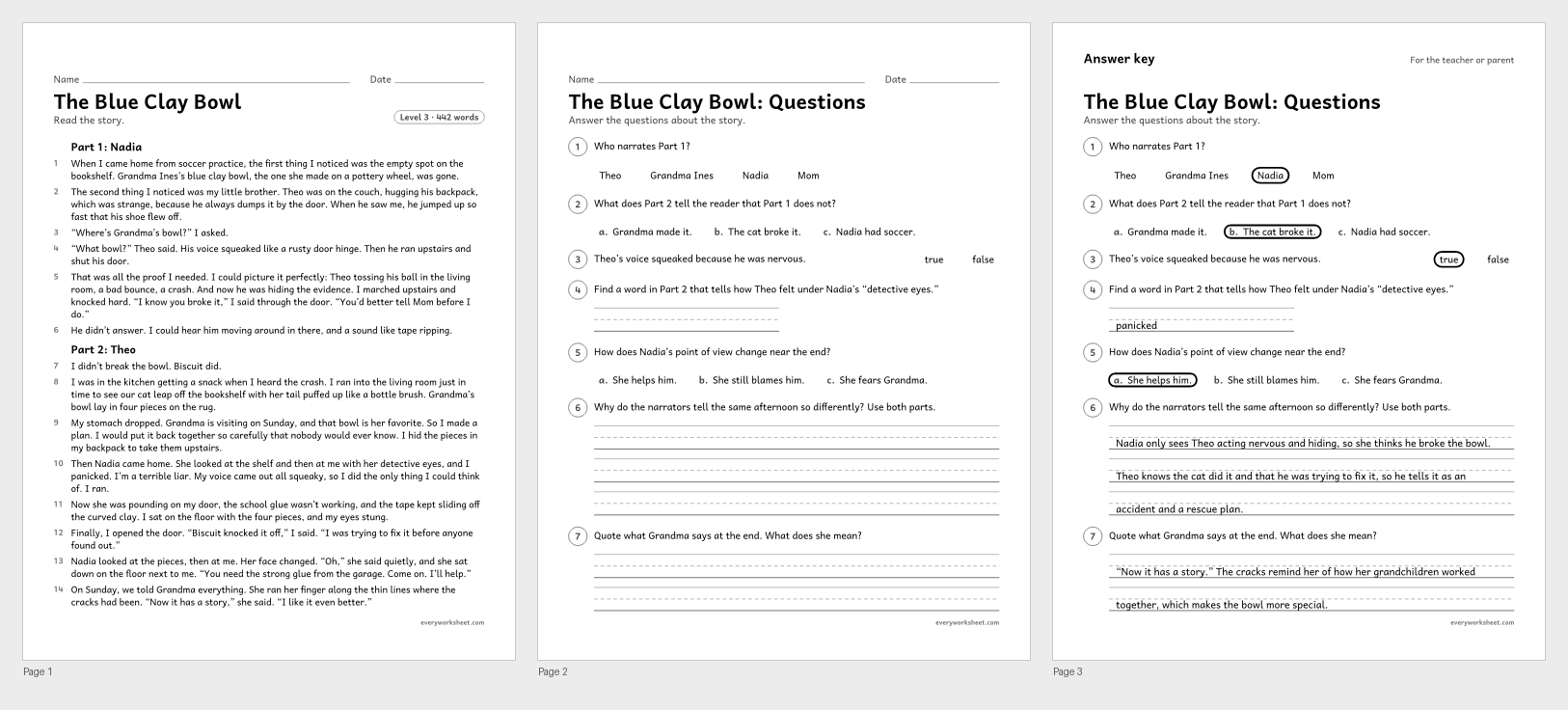 3 pagesView all 3 pages
Describing how each narrator's point of view shapes how the same events are told
Answer key on page 3
3 pages57 KB
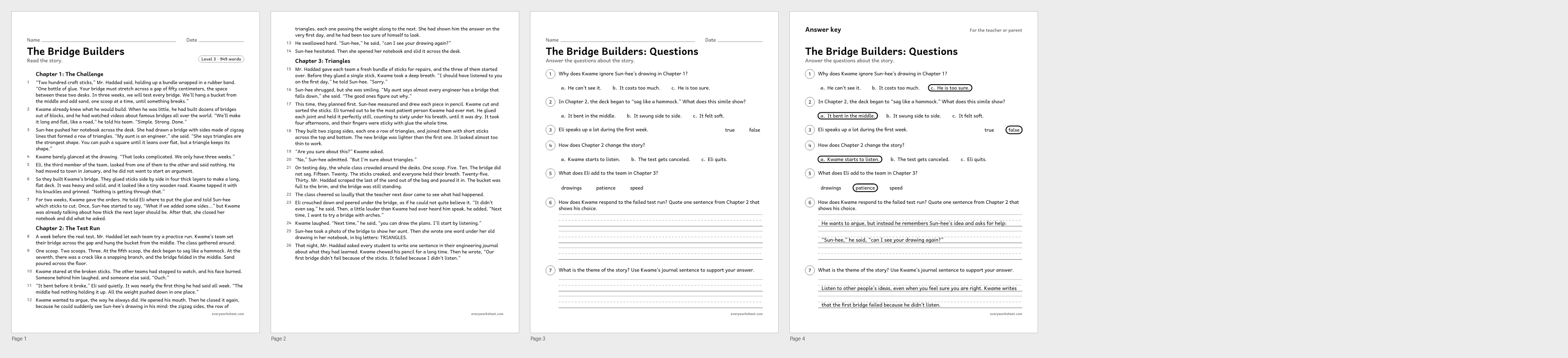 4 pagesView all 4 pages
Finding the theme of a chapter story from how characters respond to a challenge, and how the chapters build it
Answer key on page 4
4 pages68 KB
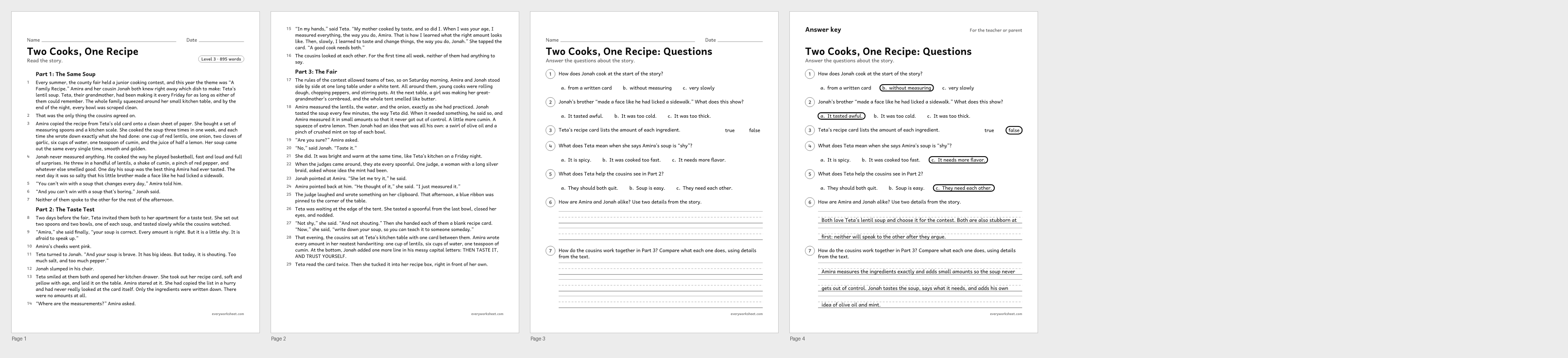 4 pagesView all 4 pages
Comparing and contrasting two characters in a chapter story, using specific details from the text
Answer key on page 4
4 pages69 KB
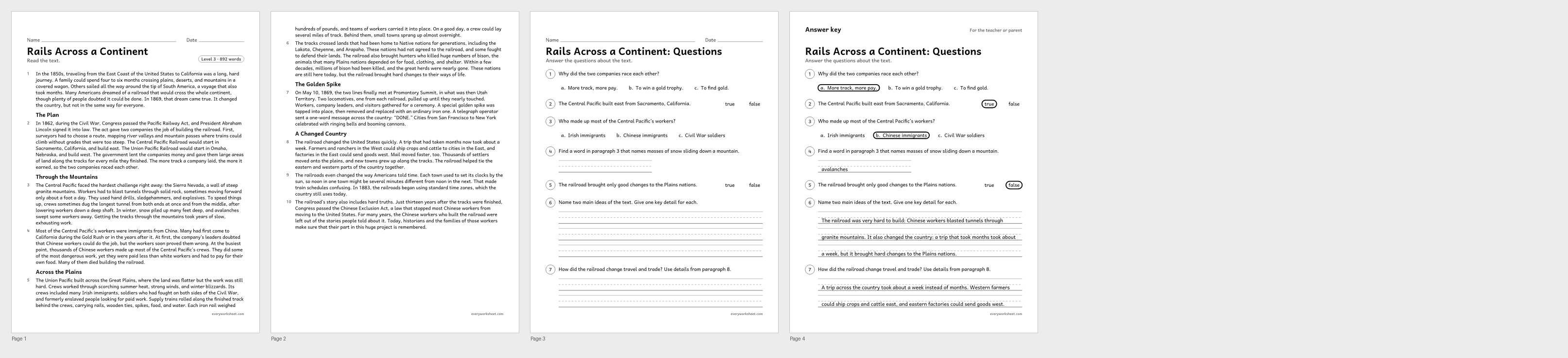 4 pagesView all 4 pages
Finding two or more main ideas in a history text and summarizing it with key details
Answer key on page 4
4 pages61 KB
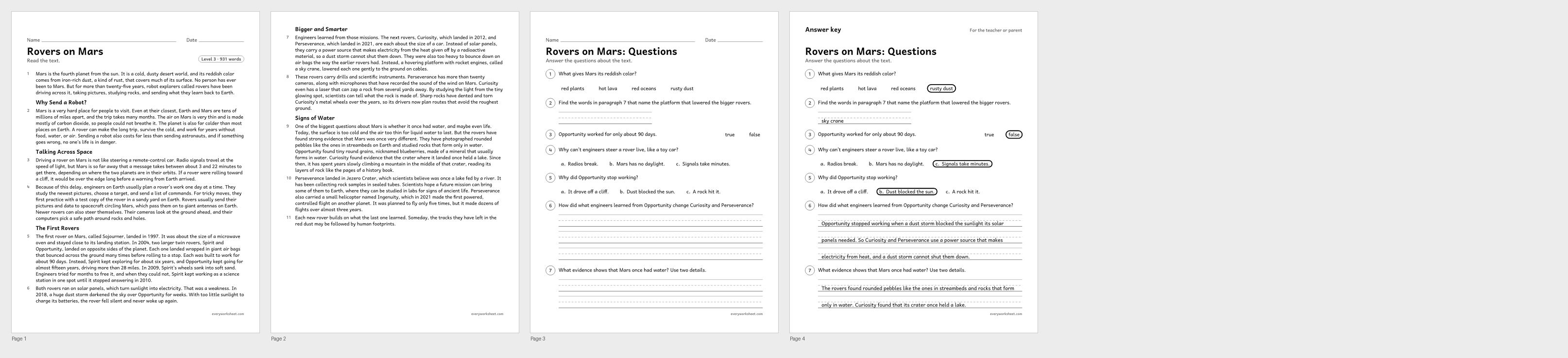 4 pagesView all 4 pages
Explaining the relationships between problems, ideas, and inventions in a science text
Answer key on page 4
4 pages61 KB
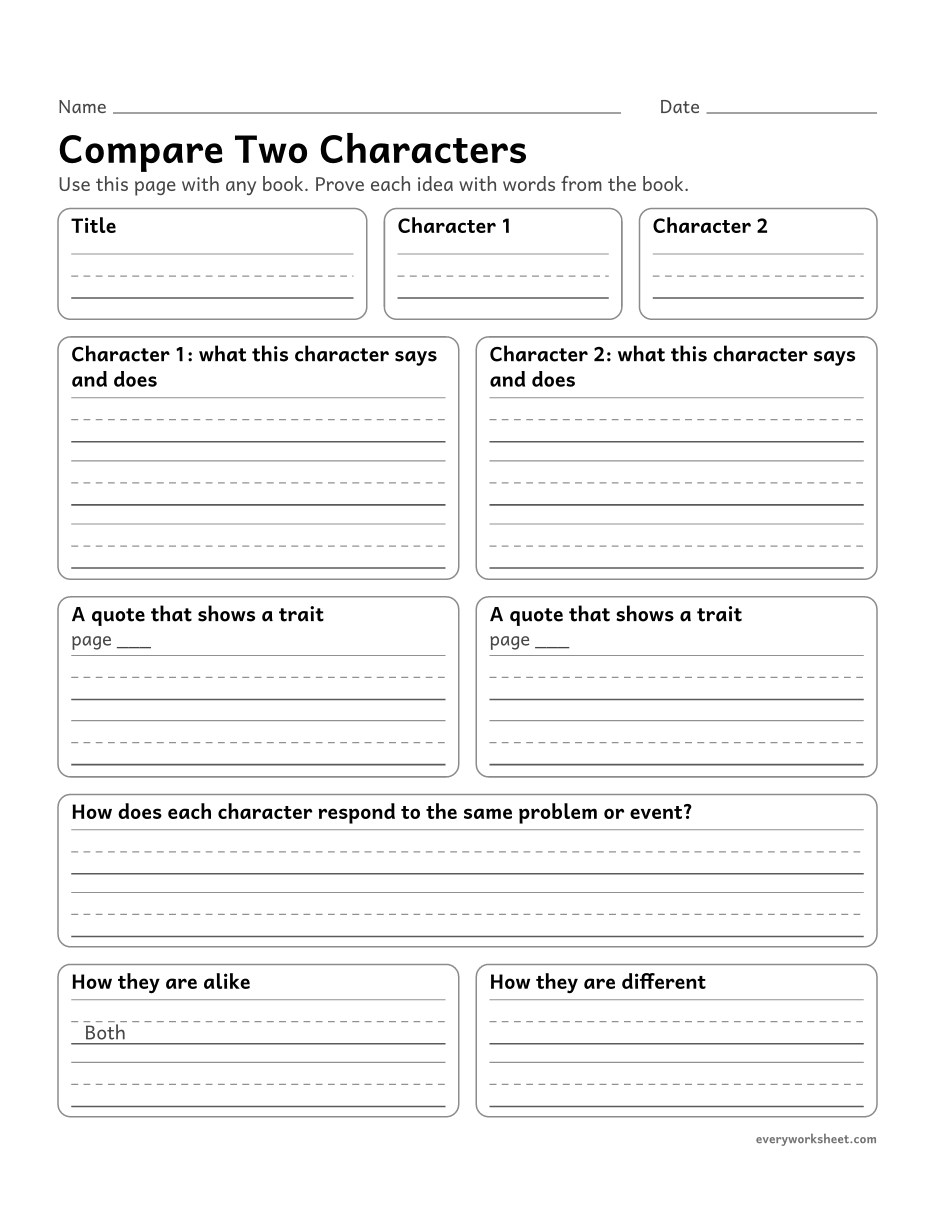 View larger
Comparing and contrasting two characters in any book, with quotations as evidence
1 page30 KB
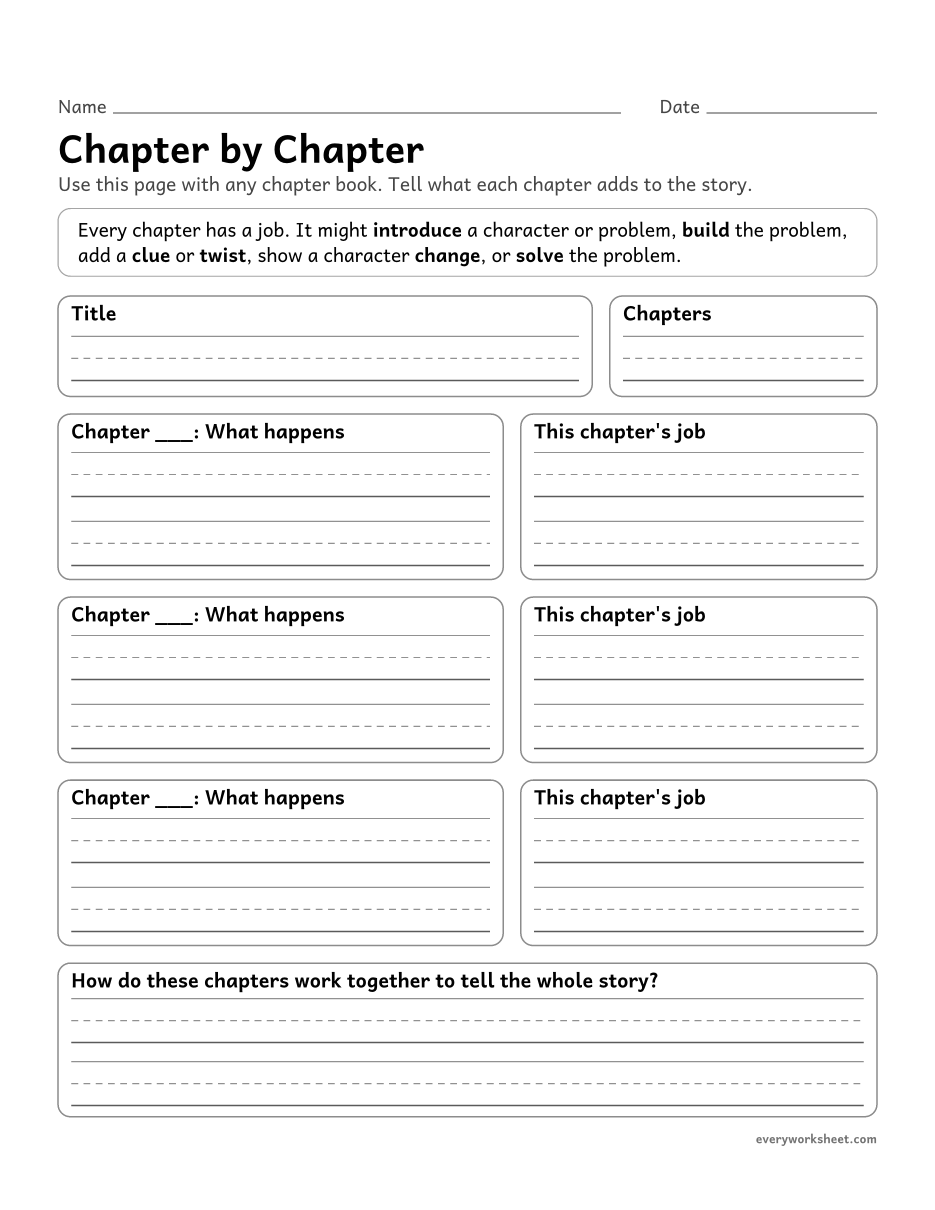 View larger
Explaining how a series of chapters fits together to give the overall structure of any story
1 page31 KB
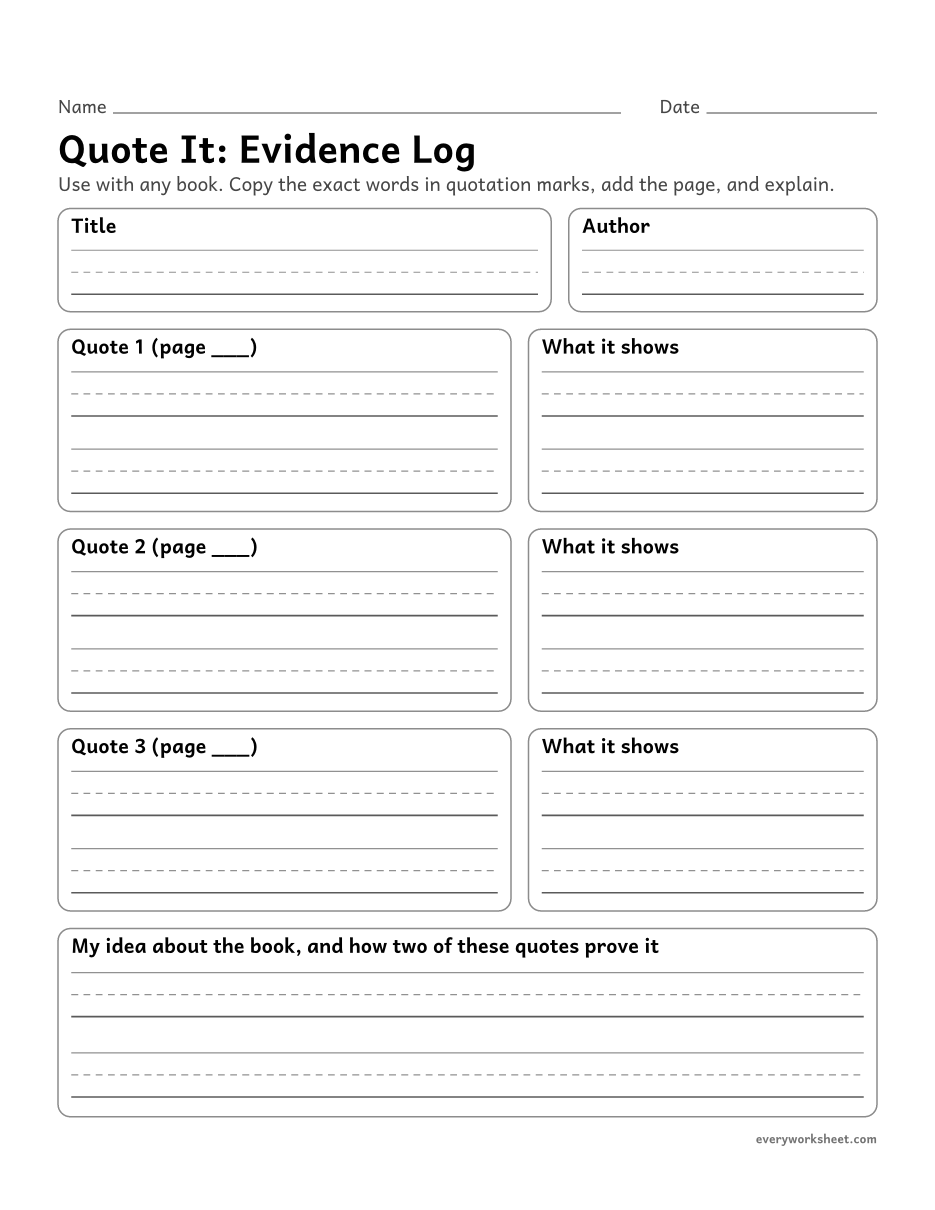 View larger
Quoting accurately from any text to support ideas and inferences
1 page30 KB
Print at 100% (actual size) for the cleanest tracing lines.
Reading comprehension means understanding what you read well enough to explain it, prove it, and think beyond it. In 5th grade, the big new step is quoting accurately. Instead of writing "Nani doesn't give up," a 5th grader copies the exact words that prove it, "But plenty of people will buy salsa," and then explains what those words show. Children also compare two characters, work out what a metaphor or simile means in its sentence, explain how the scenes of a play or the stanzas of a poem fit together, and notice how the narrator's point of view shapes the way a story is told.
Every passage here is original and written for 10 and 11 year olds: a girl who turns hail-damaged tomatoes into Storm Salsa, two best friends in the final round of a spelling bee, a stagehand who has to play the king on opening night, a brother and sister who tell the same afternoon two different ways, and nonfiction about tiny water bears that survive drying out, how the bicycle was invented, the bones of the human skeleton, and how the printing press changed the world. Paragraphs and stanzas are numbered, so a question can say "Reread paragraph 7" and children can find their evidence quickly.
The passages come in three levels. Level 1 texts are shorter, with plainer words. Level 2 adds a play in four scenes, an argument piece with reasons and evidence, and a poem about the last day of 5th grade. Level 3 texts use richer vocabulary, headings, and two narrators. The longer reads run across two full pages: two chapter stories and two nonfiction texts, one on building the transcontinental railroad and one on the rovers exploring Mars.
Each sheet mixes question types: multiple choice, true or false, numbering events in order, finding a word in the text, and written answers that ask for a quotation or two details. A full answer key with sample answers is on the last page.
CCSS.ELA-LITERACY.RL.5.1Quote accurately from a text when explaining what the text says explicitly and when drawing inferences from the text.CCSS.ELA-LITERACY.RL.5.2Determine a theme of a story, drama, or poem from details in the text, including how characters in a story or drama respond to challenges or how the speaker in a poem reflects upon a topic; summarize the text.CCSS.ELA-LITERACY.RL.5.3Compare and contrast two or more characters, settings, or events in a story or drama, drawing on specific details in the text (e.g., how characters interact).CCSS.ELA-LITERACY.RL.5.4Determine the meaning of words and phrases as they are used in a text, including figurative language such as metaphors and similes.CCSS.ELA-LITERACY.RL.5.5Explain how a series of chapters, scenes, or stanzas fits together to provide the overall structure of a particular story, drama, or poem.CCSS.ELA-LITERACY.RL.5.6Describe how a narrator's or speaker's point of view influences how events are described.CCSS.ELA-LITERACY.RI.5.1Quote accurately from a text when explaining what the text says explicitly and when drawing inferences from the text.CCSS.ELA-LITERACY.RI.5.2Determine two or more main ideas of a text and explain how they are supported by key details; summarize the text.CCSS.ELA-LITERACY.RI.5.3Explain the relationships or interactions between two or more individuals, events, ideas, or concepts in a historical, scientific, or technical text based on specific information in the text.CCSS.ELA-LITERACY.RI.5.4Determine the meaning of general academic and domain-specific words and phrases in a text relevant to a grade 5 topic or subject area.CCSS.ELA-LITERACY.RI.5.8Explain how an author uses reasons and evidence to support particular points in a text, identifying which reasons and evidence support which point(s).They are written for 5th grade. Level 1 is early 5th grade, Level 2 is the middle of the year, and Level 3 is late 5th grade. Each sheet shows its level and word count at the top.
Yes. The longer reads are 850 to 950 word texts that fill two pages: two chapter stories and two nonfiction texts, about building the transcontinental railroad and about the rovers exploring Mars, each with an answer key.
Yes. There are two poems, one full of metaphors and similes and one about the last day of 5th grade, and a short play in four scenes, so children can practice how stanzas and scenes build a whole text.
It means copying the author's exact words, in quotation marks, to support an answer, and then explaining what those words show. Many questions here ask for exactly that.
Yes. Every story, poem, play, and nonfiction text was written for this site, so you can print and copy them freely for your class or family.
Yes. Every passage has an answer key on its last page, with sample answers for the written questions.