 3 pagesView all 3 pages
Matter is made of particles
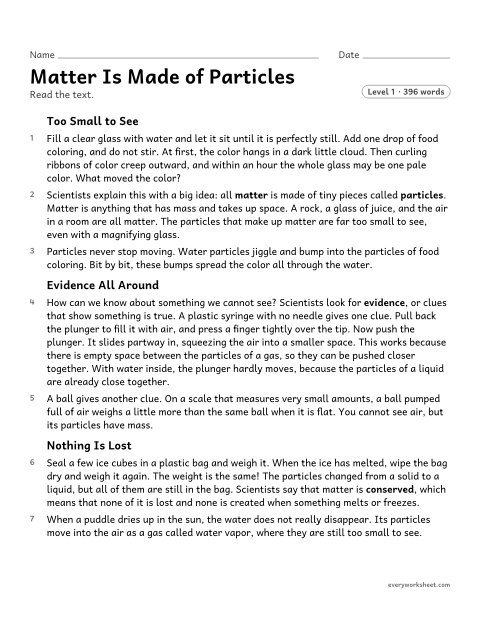
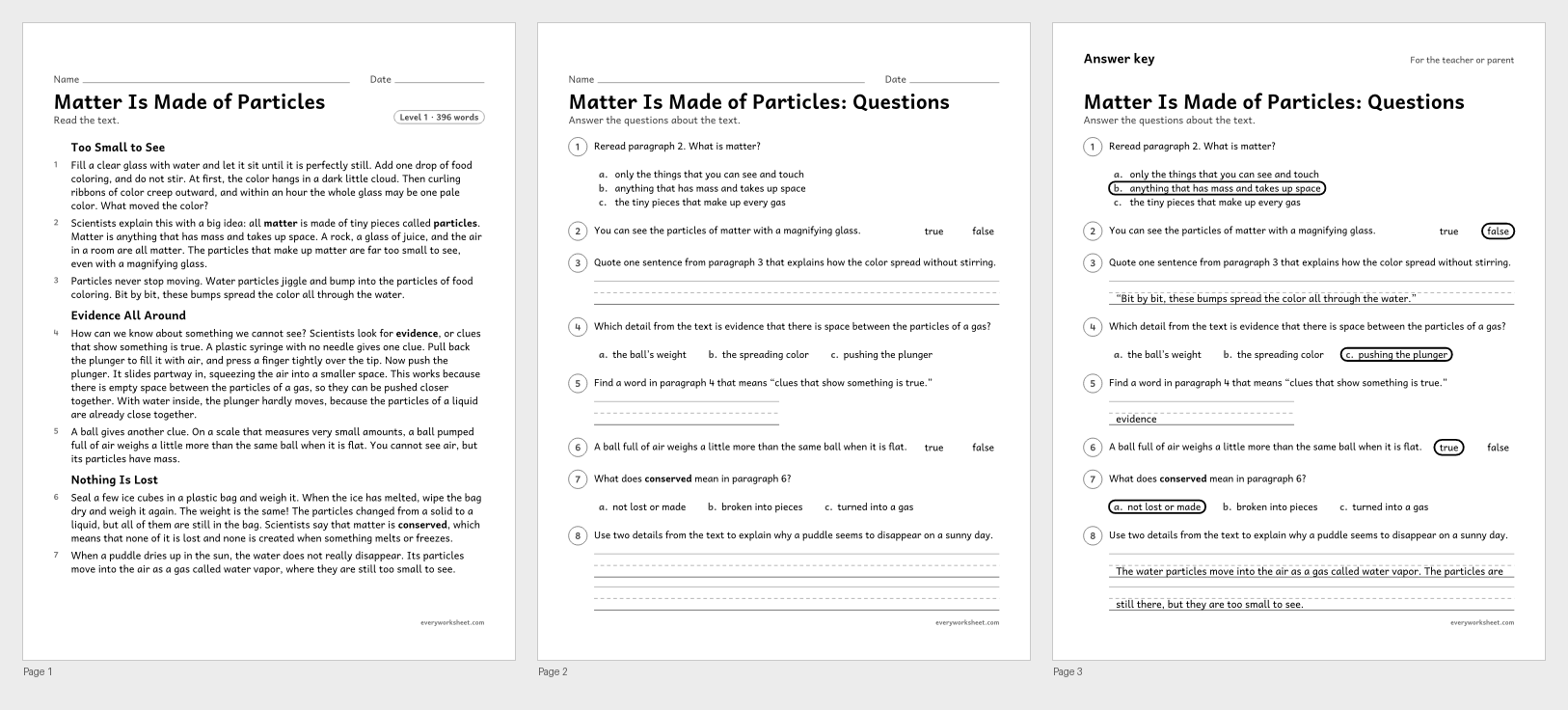
Quoting accurately from a science text to explain that matter is made of particles too small to see
Answer key on page 3
3 pages60 KB
Science and US history passages, paired texts, and two accounts of the same event, each with questions and an answer key.
3 pagesView all 3 pagesQuoting accurately from a science text to explain that matter is made of particles too small to see
Answer key on page 3
3 pages60 KB
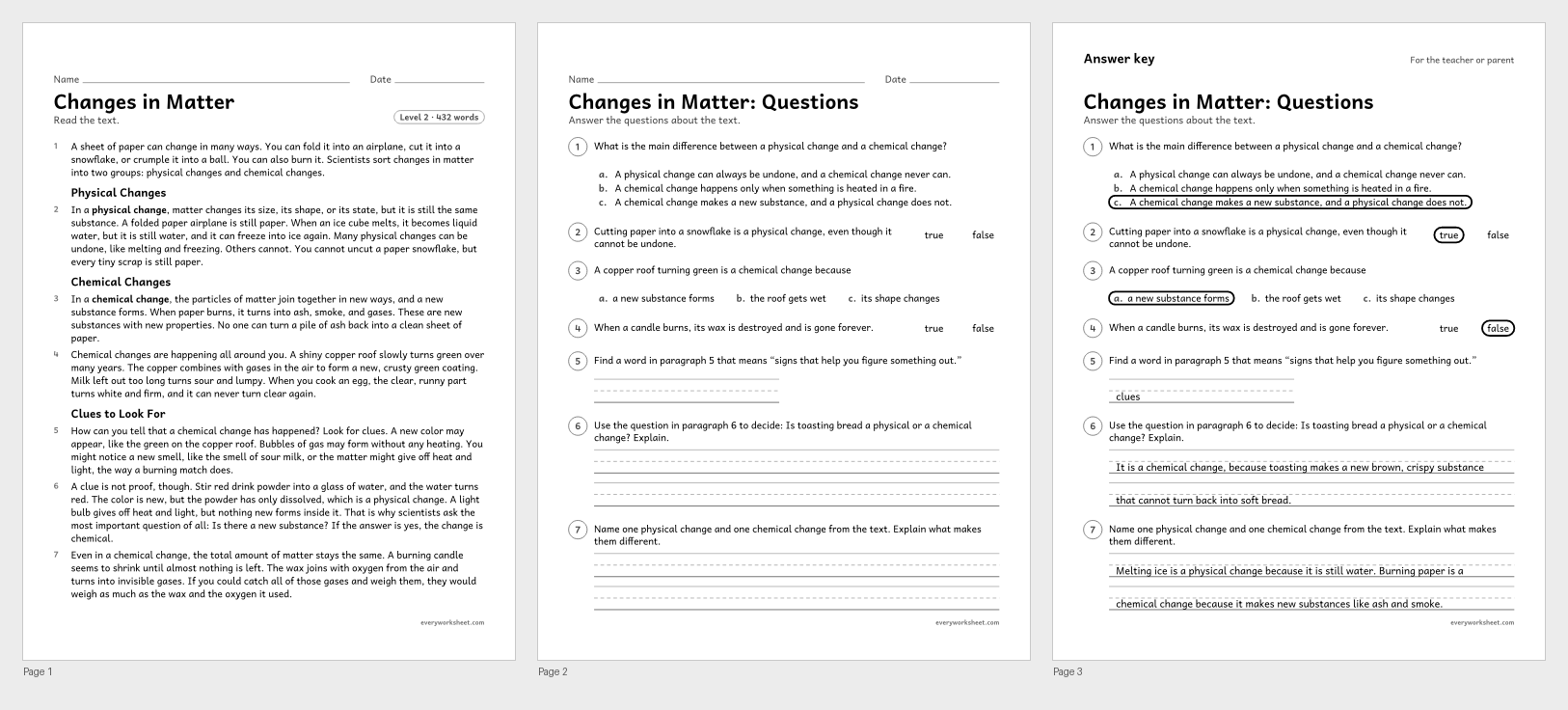 3 pagesView all 3 pages
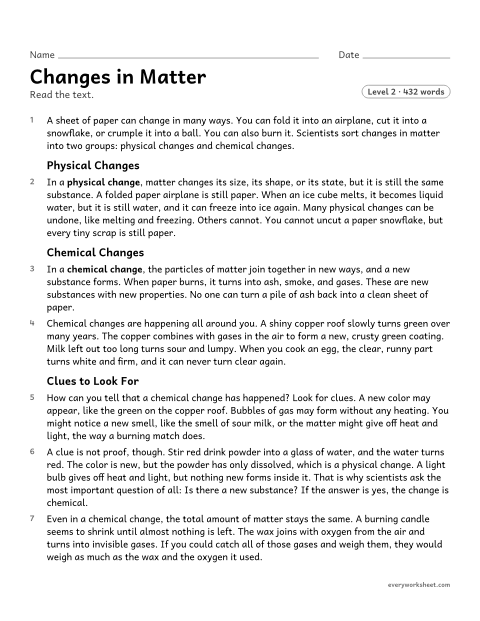
Explaining the relationship between physical and chemical changes and the clues that show a new substance has formed
Answer key on page 3
3 pages56 KB
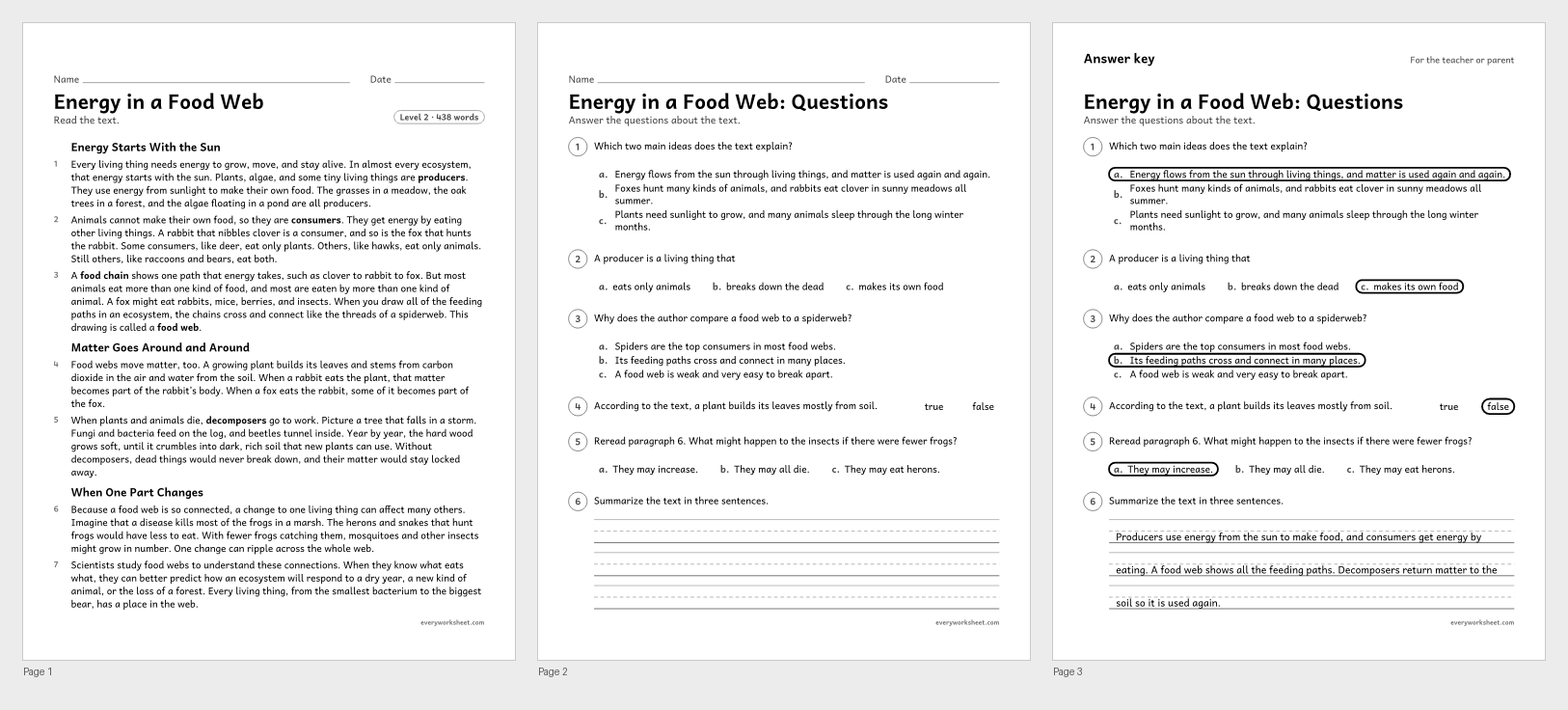 3 pagesView all 3 pages
Determining two main ideas of a text about food webs, explaining the key details that support them, and summarizing
Answer key on page 3
3 pages59 KB
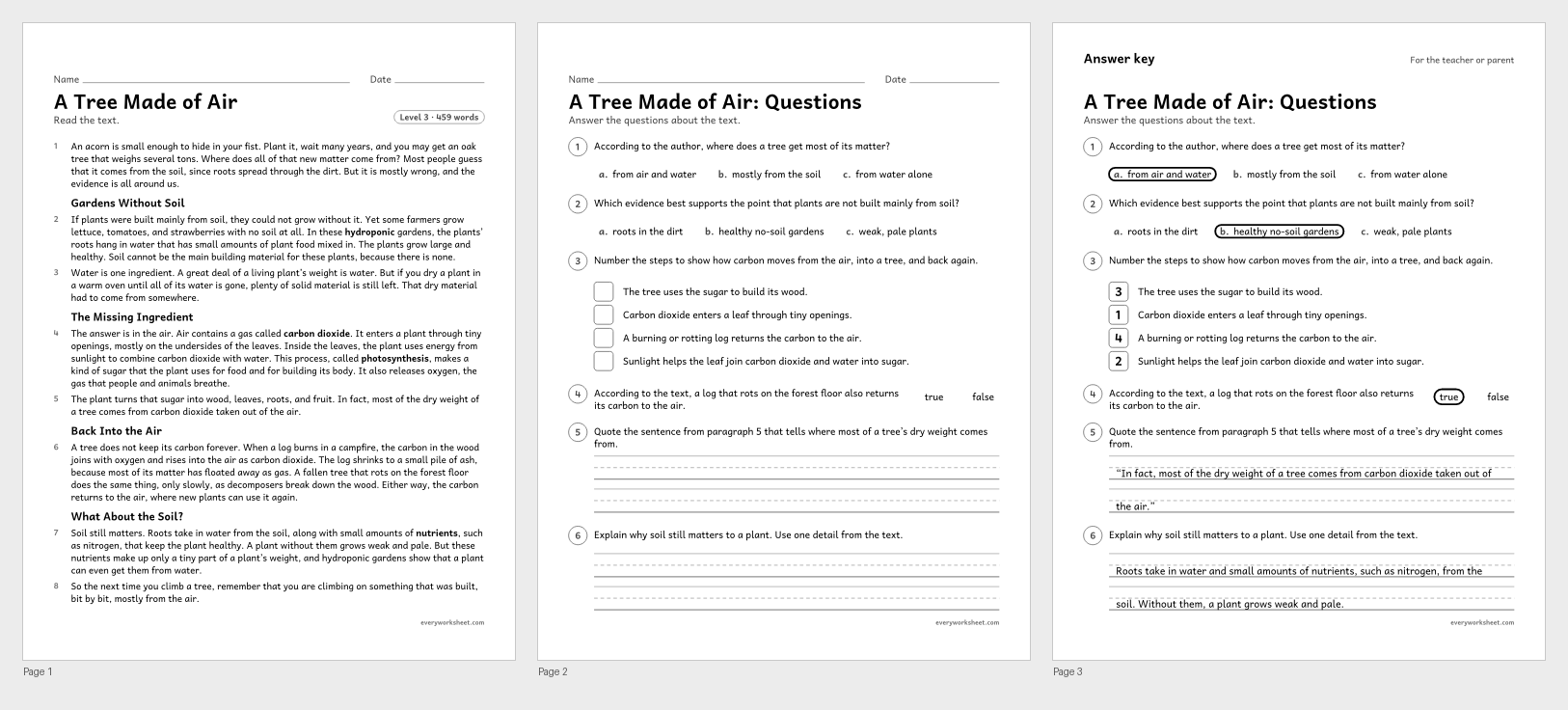 3 pagesView all 3 pages
Explaining how an author uses evidence to support the point that plants get most of their matter from air and water
Answer key on page 3
3 pages58 KB
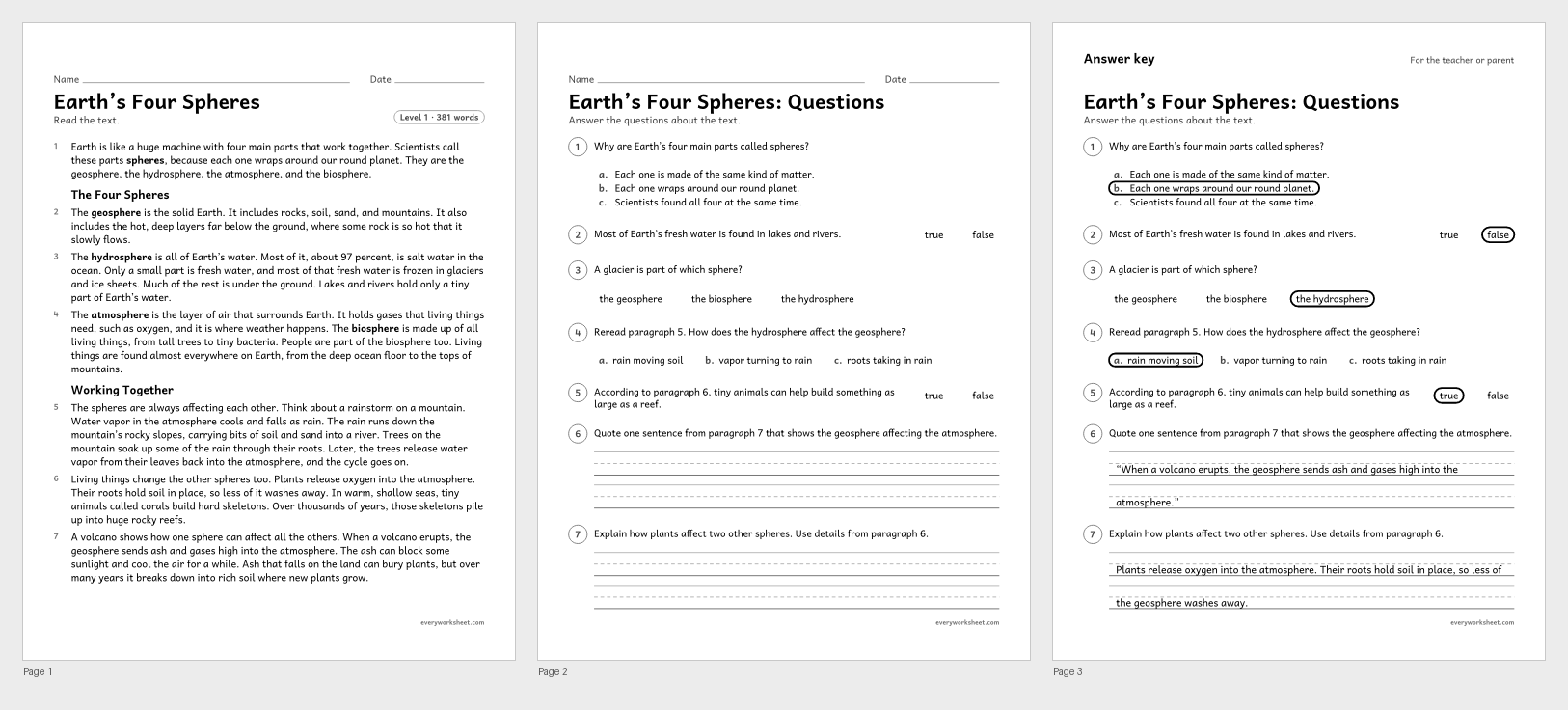 3 pagesView all 3 pages
Explaining how Earth's geosphere, hydrosphere, atmosphere, and biosphere interact, using details from the text
Answer key on page 3
3 pages57 KB
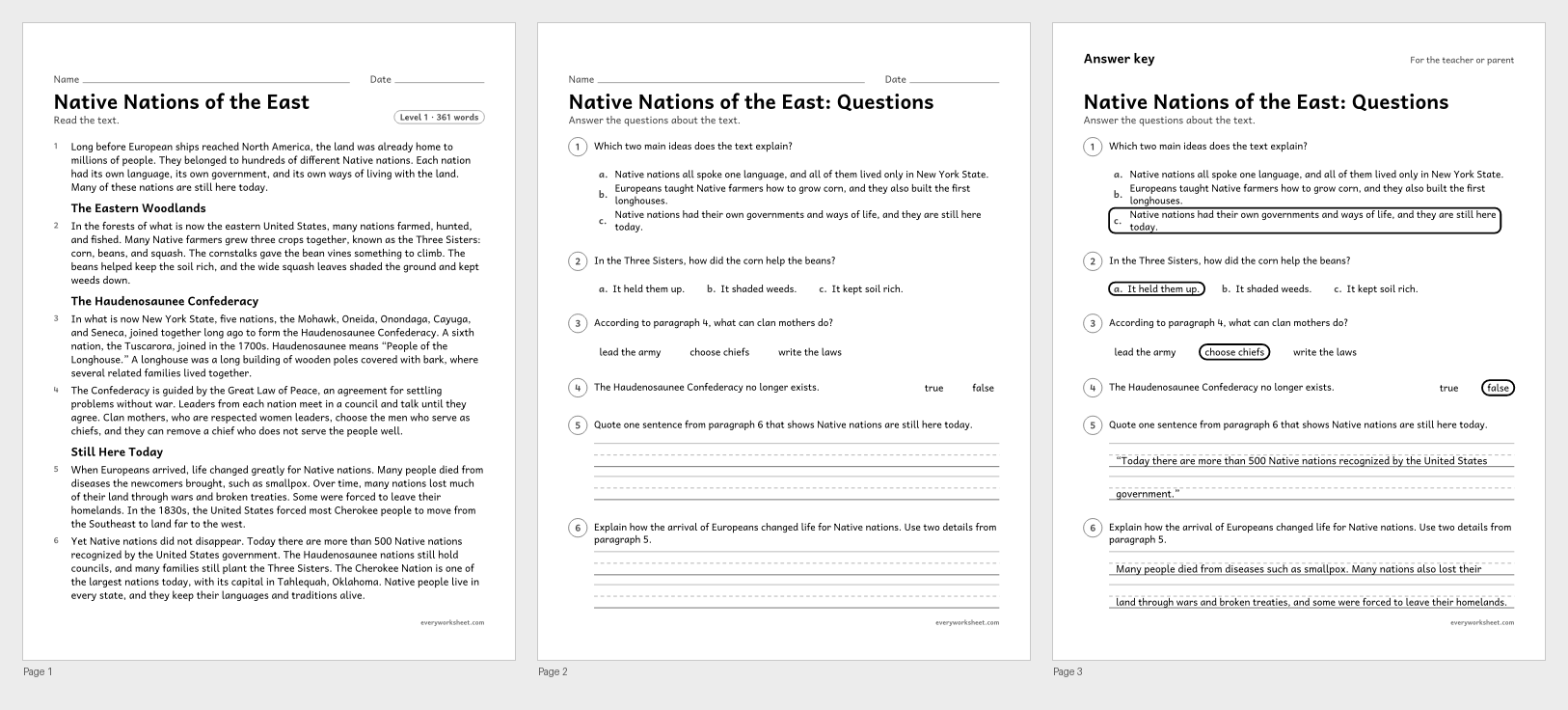 3 pagesView all 3 pages
Determining two main ideas of a text about Native nations of the Eastern Woodlands, past and present, and the details that support them
Answer key on page 3
3 pages55 KB
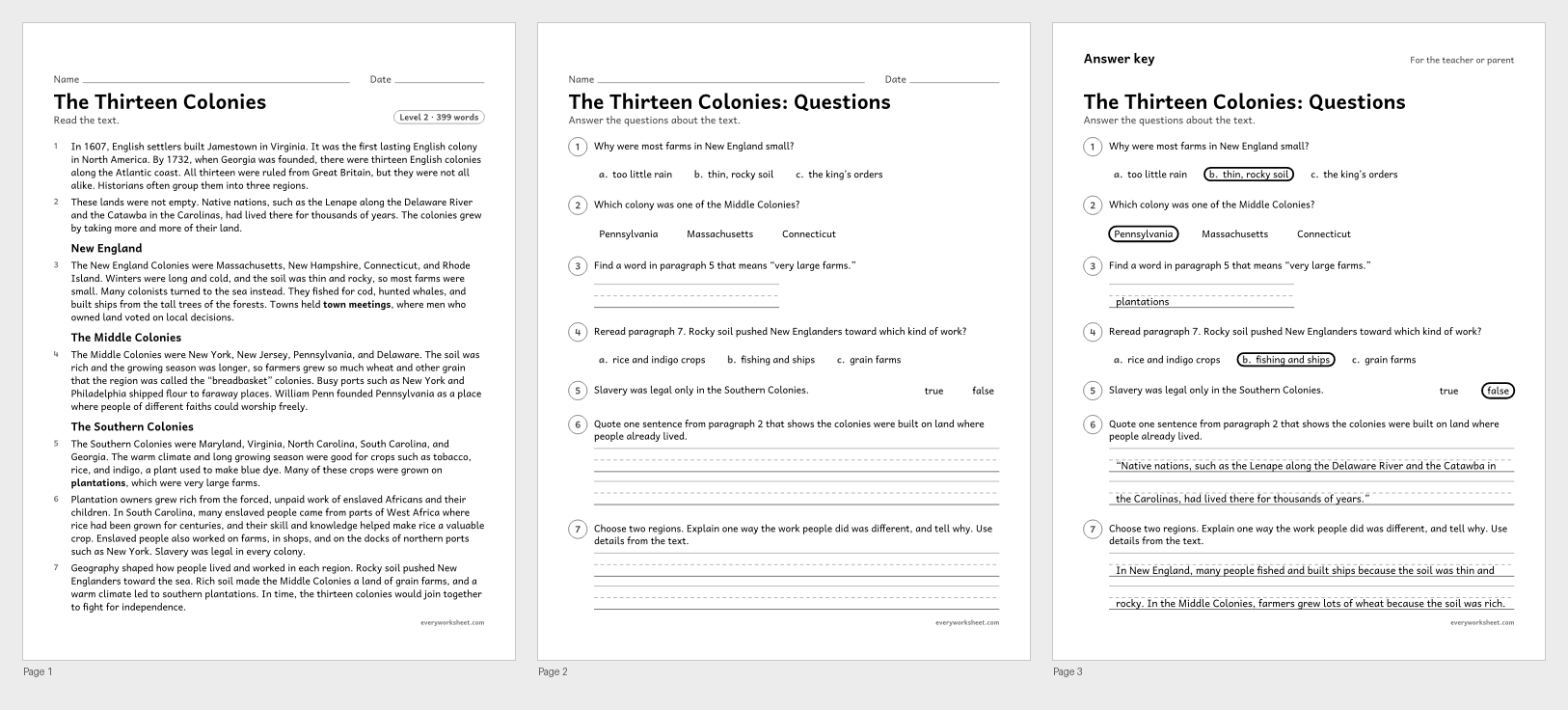 3 pagesView all 3 pages
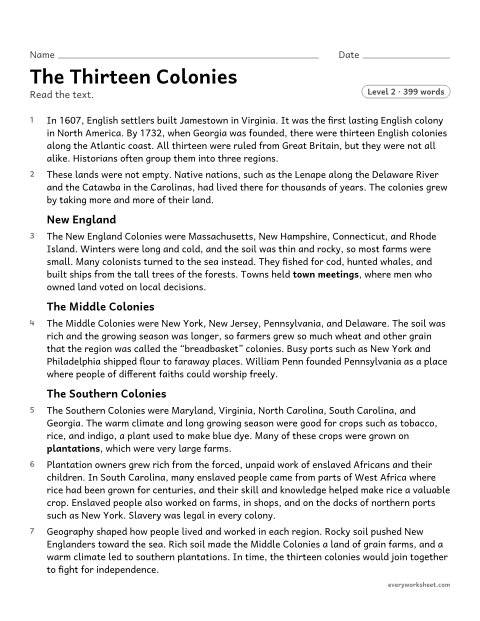
Explaining how geography shaped work and life in the New England, Middle, and Southern Colonies
Answer key on page 3
3 pages55 KB
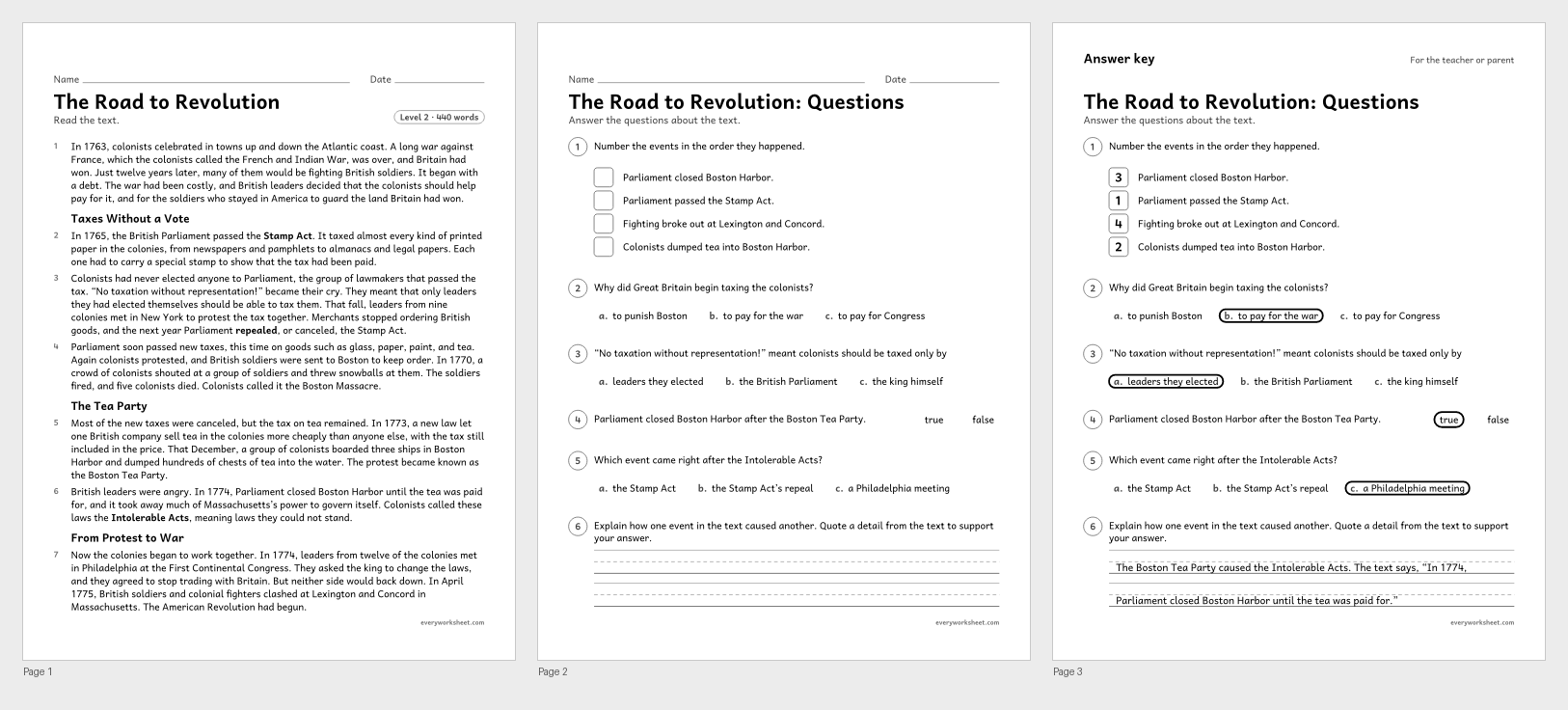 3 pagesView all 3 pages
Explaining how a chain of events, from new taxes to the fighting at Lexington and Concord, led to the American Revolution
Answer key on page 3
3 pages57 KB
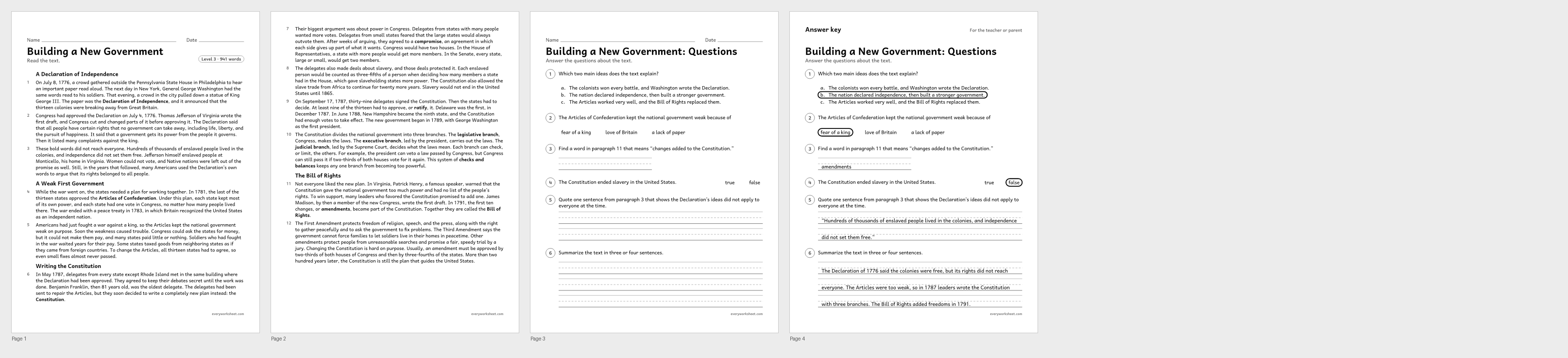 4 pagesView all 4 pages
Determining the main ideas of a longer history text about the Declaration of Independence, the Constitution, and the Bill of Rights, and summarizing it
Answer key on page 4
4 pages67 KB
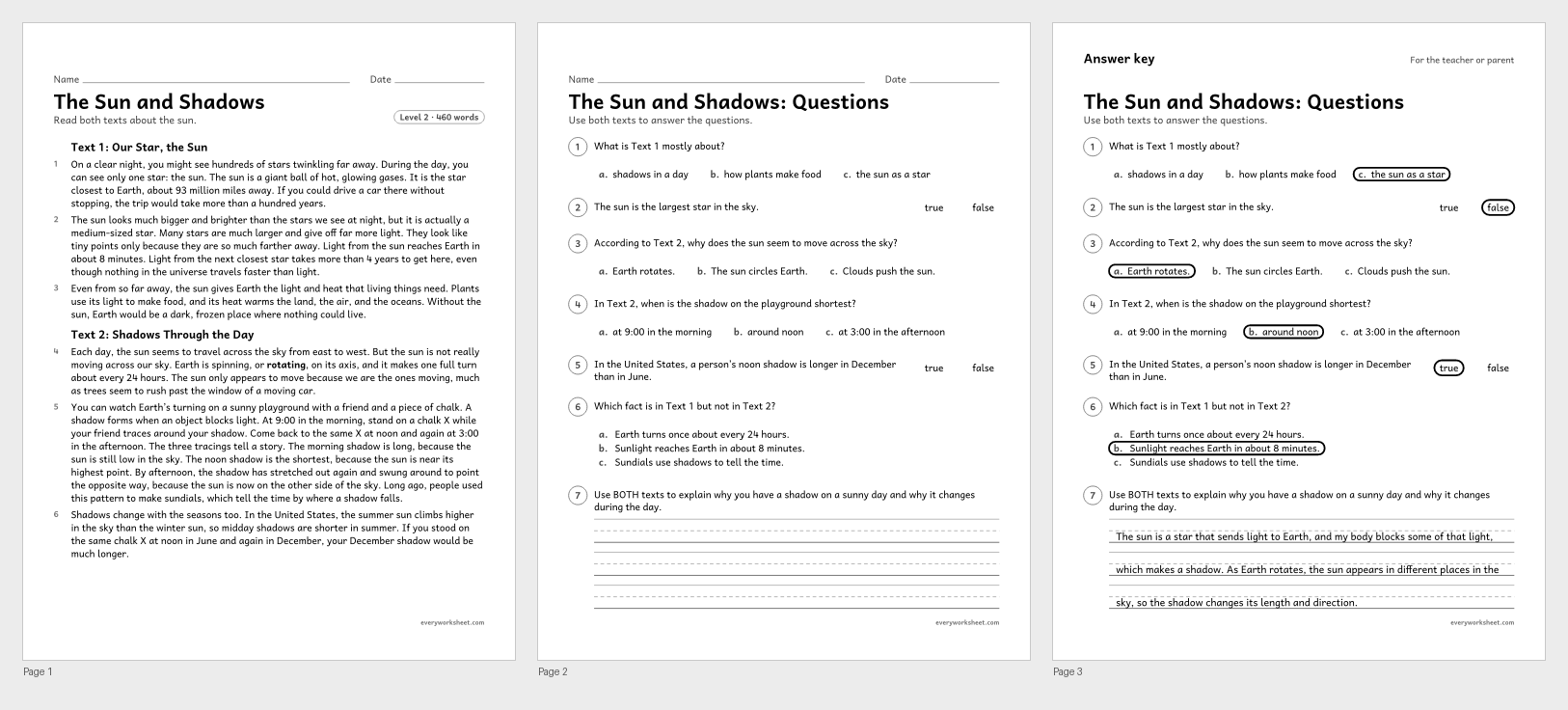 3 pagesView all 3 pages
Integrating information from two science texts to explain why shadows change during the day and across the seasons
Answer key on page 3
3 pages57 KB
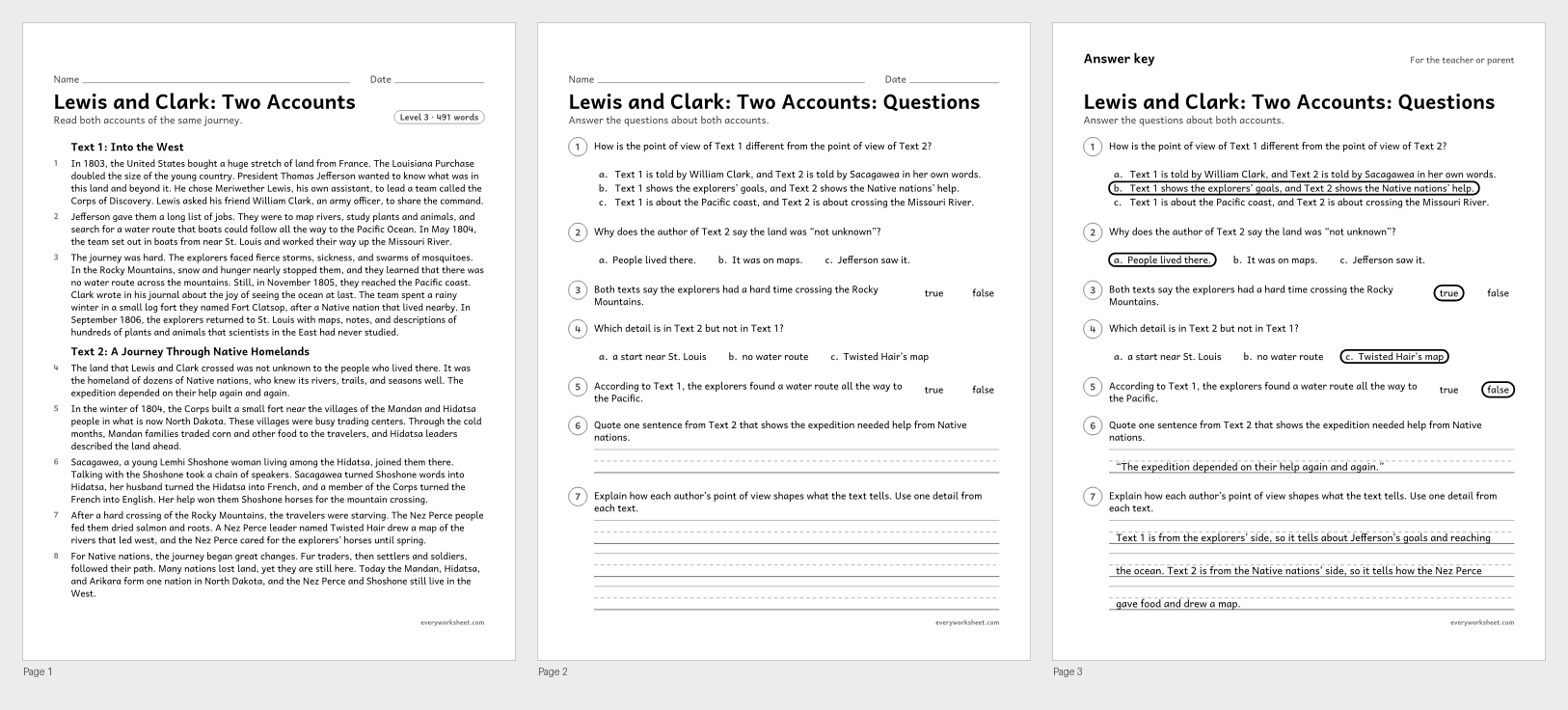 3 pagesView all 3 pages
Analyzing two accounts of the Lewis and Clark expedition and the different points of view they represent
Answer key on page 3
3 pages59 KB
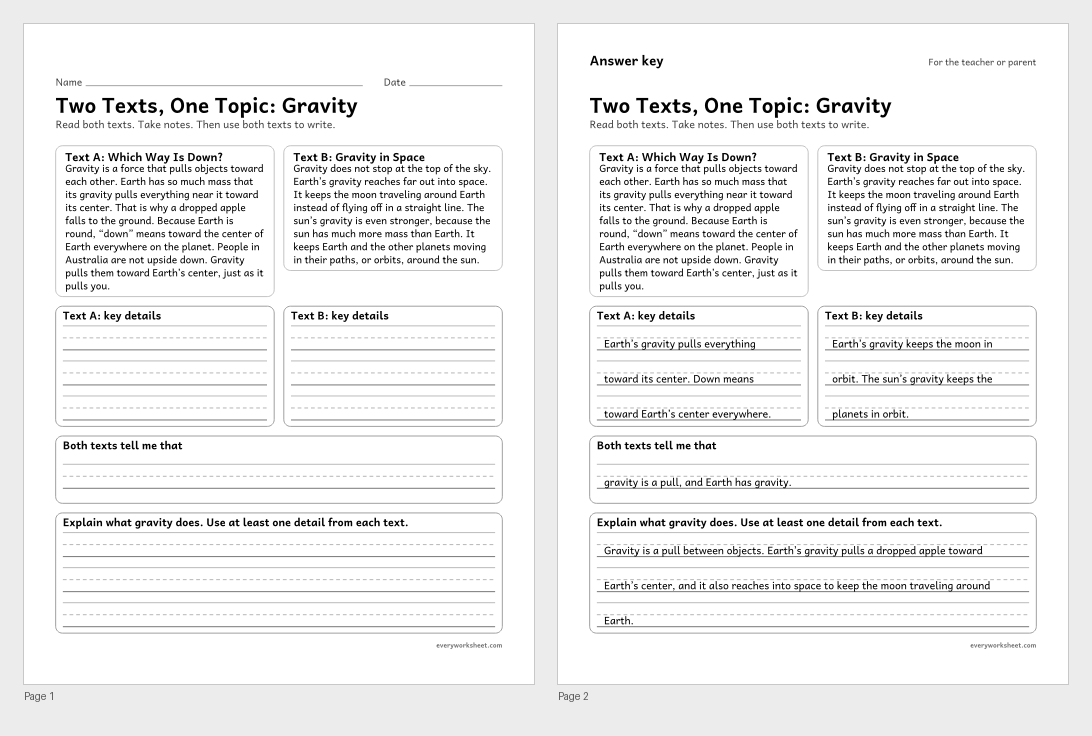 View all 2 pages
Taking notes on two science texts about gravity and integrating them to write about the topic
Answer key on page 2
2 pages38 KB
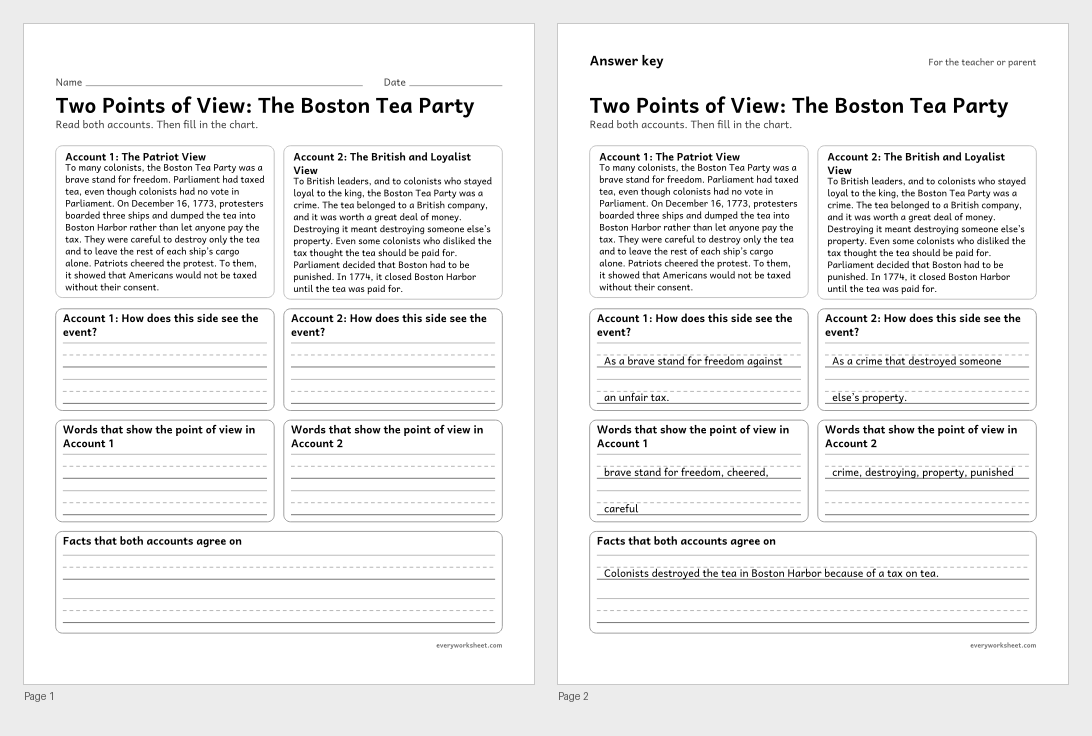 View all 2 pages
Comparing two accounts of the Boston Tea Party and the different points of view they represent
Answer key on page 2
2 pages40 KB
Print at 100% (actual size) for the cleanest tracing lines.
Fifth graders read to learn in every subject, so these reading passages for 5th graders are built around what they study in science and social studies. Science texts explain that matter is made of particles too small to see, how physical and chemical changes differ, how energy and matter move through a food web, where a tree really gets its mass, and how Earth's four spheres work together. History texts cover Native nations of the East, the thirteen colonies, the road to the American Revolution, and the Declaration of Independence, the Constitution, and the Bill of Rights.
Fifth grade questions ask for more than the right fact. Children quote the exact sentence that proves an answer ("Quote one sentence from paragraph 3 that shows..."), name two main ideas and summarize, explain how one event caused another, and tell which piece of evidence best supports an author's point. Paragraphs are numbered, so a question can send a reader straight back to the spot that matters.
Paired passages put two texts side by side. Some ask children to combine what they learned, like why a flagpole's shadow changes during the day. Others give two accounts of the same event from different points of view, such as the Lewis and Clark journey told from the explorers' side and from the side of the Native nations whose homelands they crossed, or the Boston Tea Party seen by Patriots and by Loyalists. Every text is original, and every page with questions has an answer key.
CCSS.ELA-LITERACY.RI.5.1Quote accurately from a text when explaining what the text says explicitly and when drawing inferences from the text.CCSS.ELA-LITERACY.RI.5.2Determine two or more main ideas of a text and explain how they are supported by key details; summarize the text.CCSS.ELA-LITERACY.RI.5.3Explain the relationships or interactions between two or more individuals, events, ideas, or concepts in a historical, scientific, or technical text based on specific information in the text.CCSS.ELA-LITERACY.RI.5.6Analyze multiple accounts of the same event or topic, noting important similarities and differences in the point of view they represent.CCSS.ELA-LITERACY.RI.5.8Explain how an author uses reasons and evidence to support particular points in a text, identifying which reasons and evidence support which point(s).CCSS.ELA-LITERACY.RI.5.9Integrate information from several texts on the same topic in order to write or speak about the subject knowledgeably.They are written for 5th graders reading on their own. Level 1 passages fit early 5th grade (about 350 to 400 words), Level 2 fit the middle of the year (about 400 to 450 words), and Level 3 fit late 5th grade, with harder science and history words and one longer two-page read.
Two people can describe the same event very differently. Fifth graders read two accounts, notice what each one focuses on, and explain how the writer's point of view shapes what they tell, such as the Boston Tea Party described as a brave protest or as the destruction of property.
They state facts plainly and respectfully. Slavery is described honestly, and Native nations are written about as nations with their own governments, many of which are still here today.
Yes. Every passage and organizer has an answer key. Written answers show an example, and children's wording will vary.