 View larger
Relative pronouns and adverbs
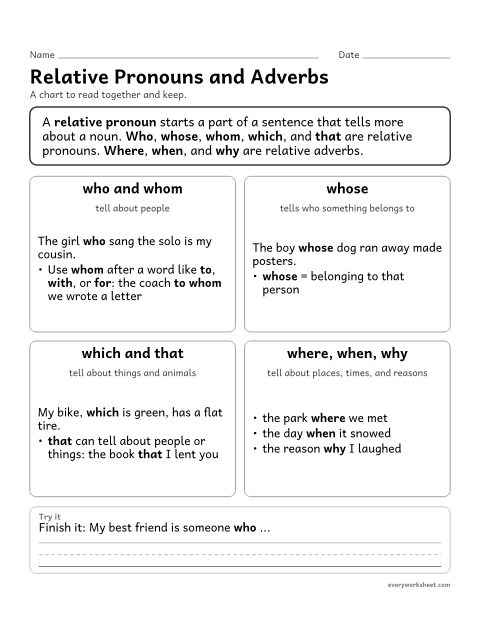
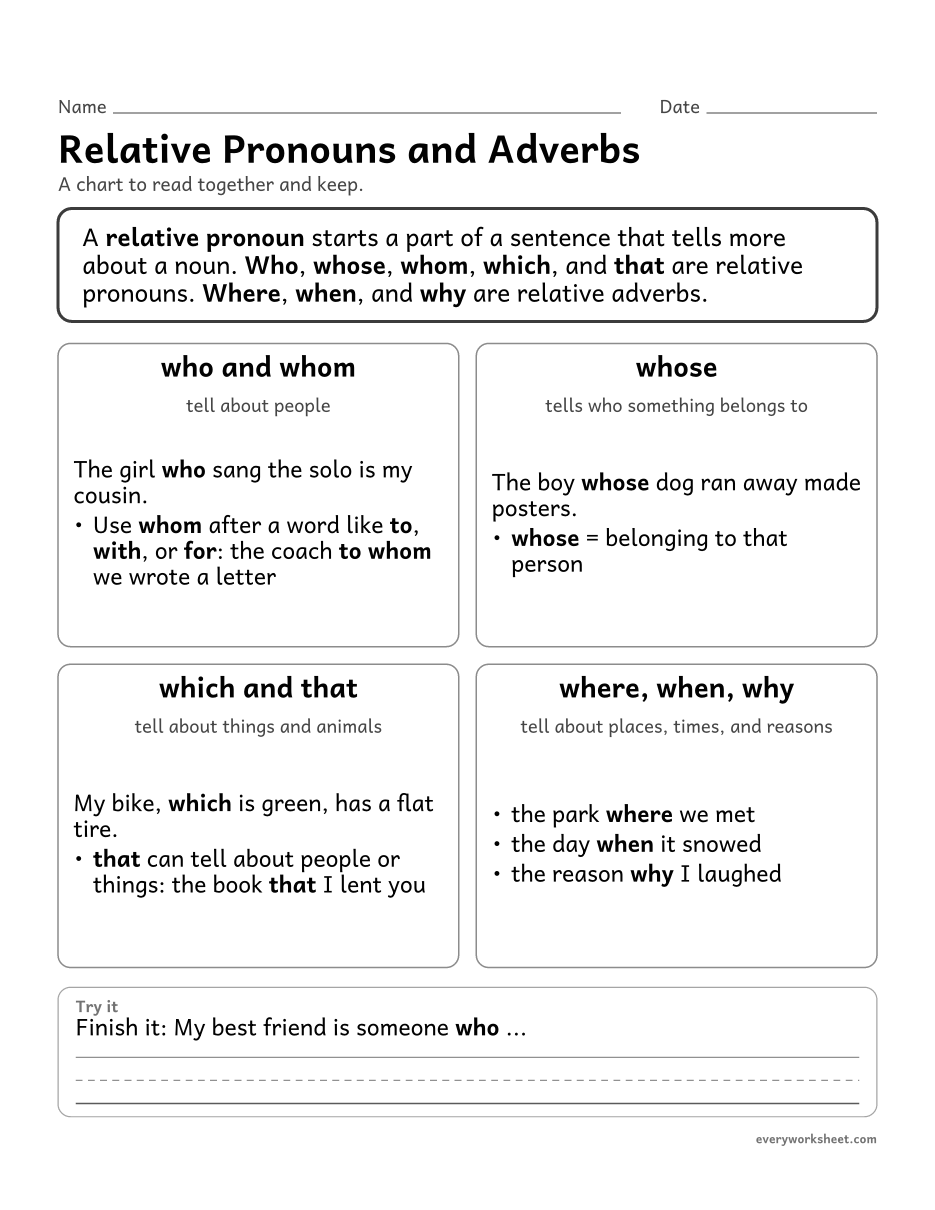
Knowing the relative pronouns and relative adverbs and what each one tells about
1 page37 KB
Who, whose, whom, which, and that, plus where, when, and why, with a chart and keyed practice.
View largerKnowing the relative pronouns and relative adverbs and what each one tells about
1 page37 KB
 View all 2 pages
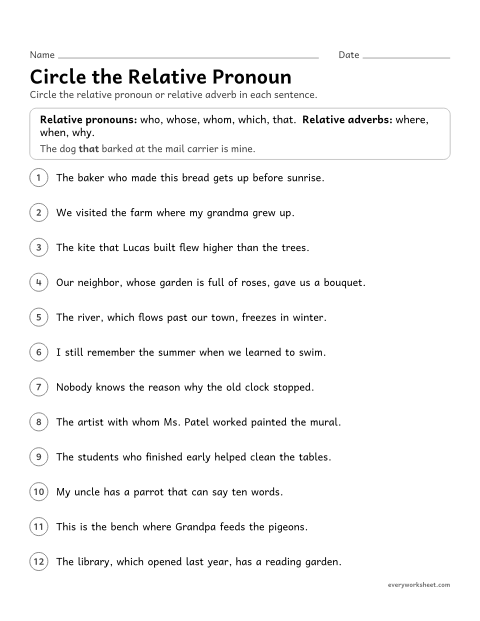
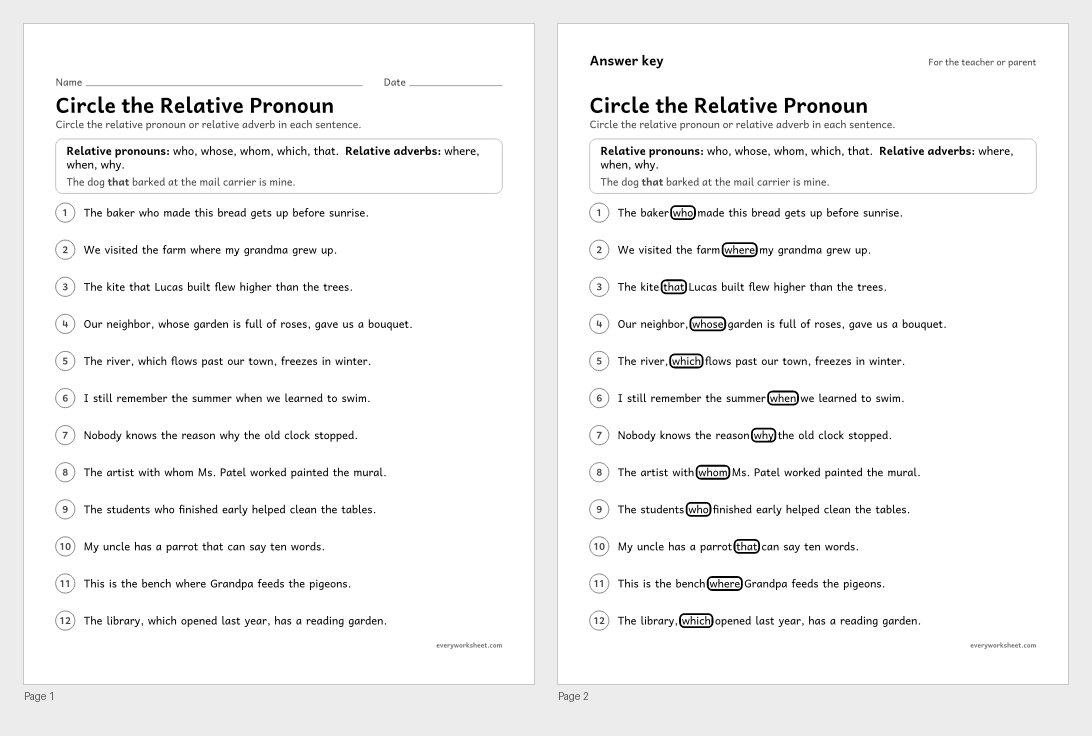
Finding relative pronouns and relative adverbs in sentences
Answer key on page 2
2 pages56 KB
 View all 2 pages
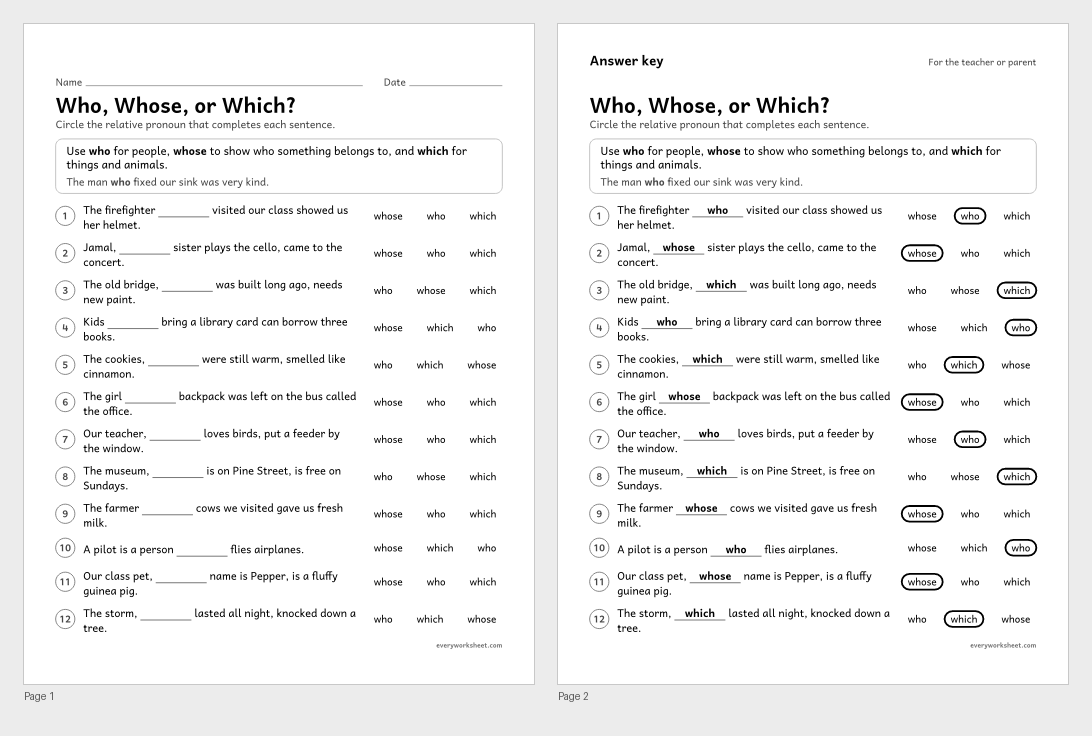
Choosing who, whose, or which to fit the noun
Answer key on page 2
2 pages58 KB
 View all 2 pages
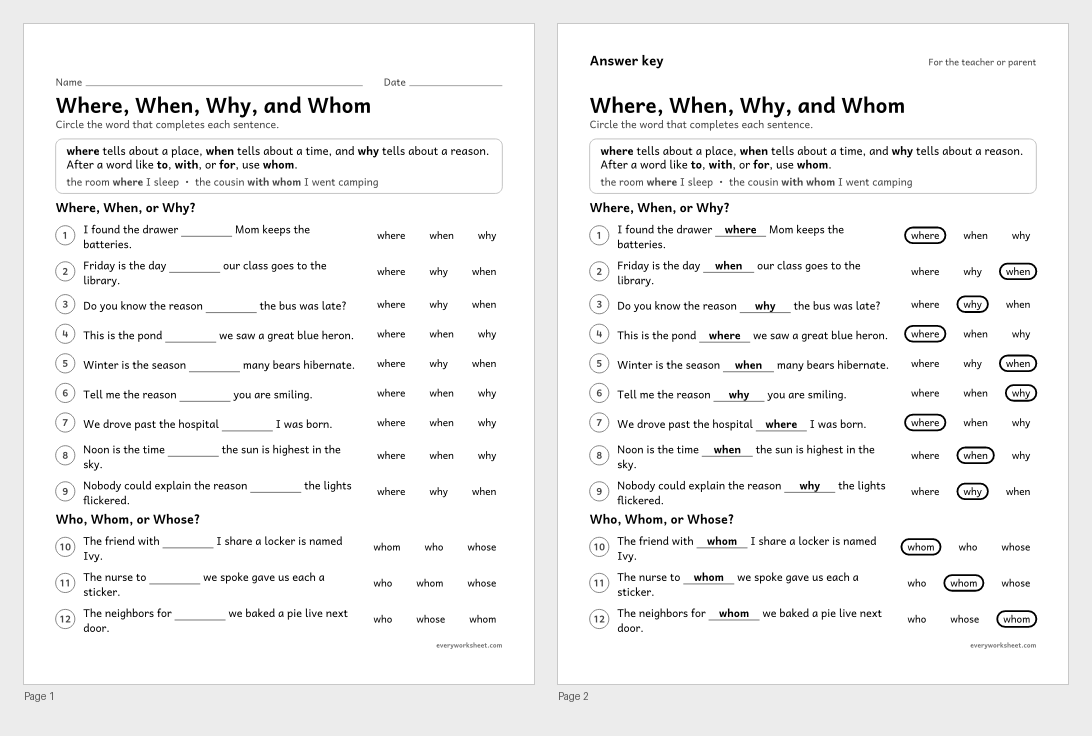
Choosing the relative adverbs where, when, and why, and using whom after a preposition
Answer key on page 2
2 pages59 KB
 View all 2 pages
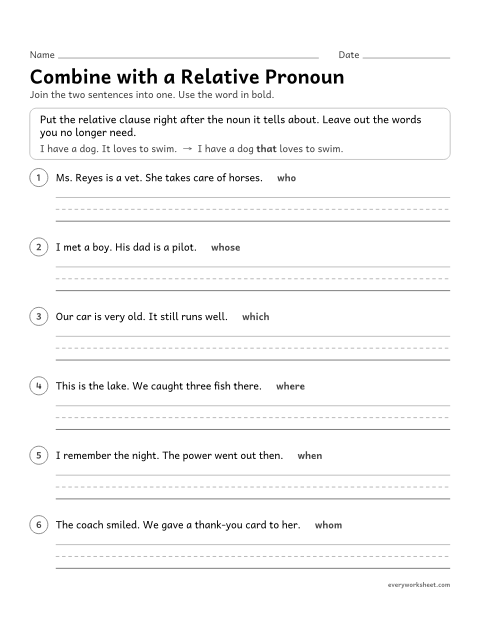
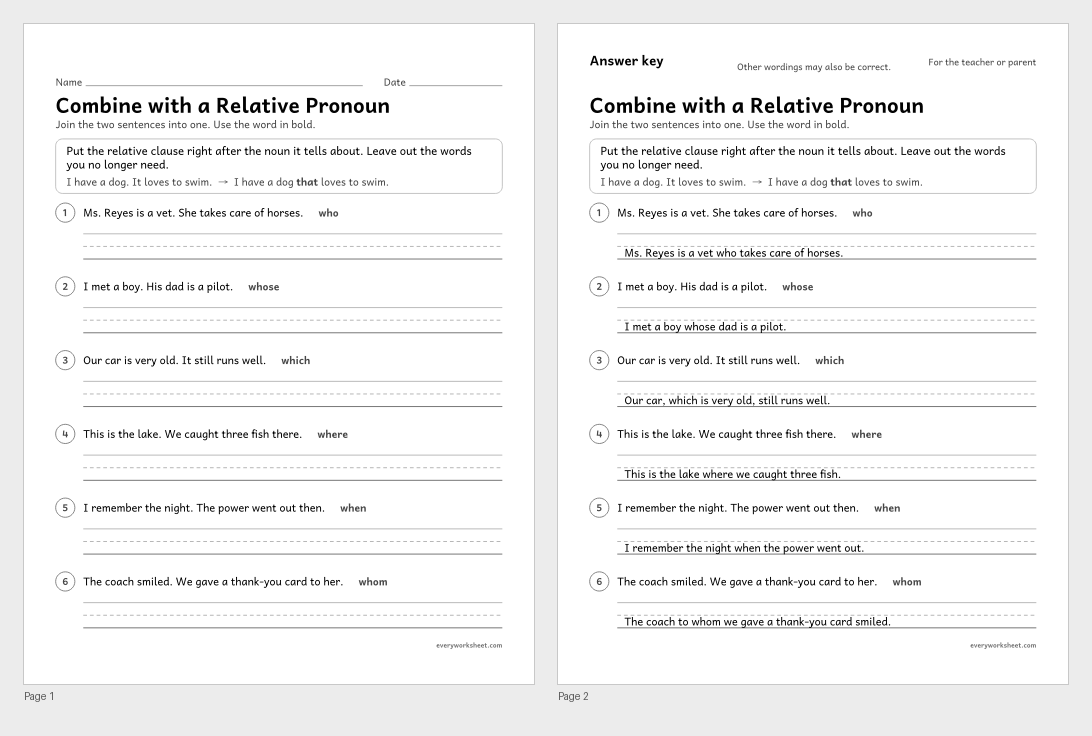
Combining two sentences with a relative pronoun or relative adverb
Answer key on page 2
2 pages41 KB
 View all 2 pages
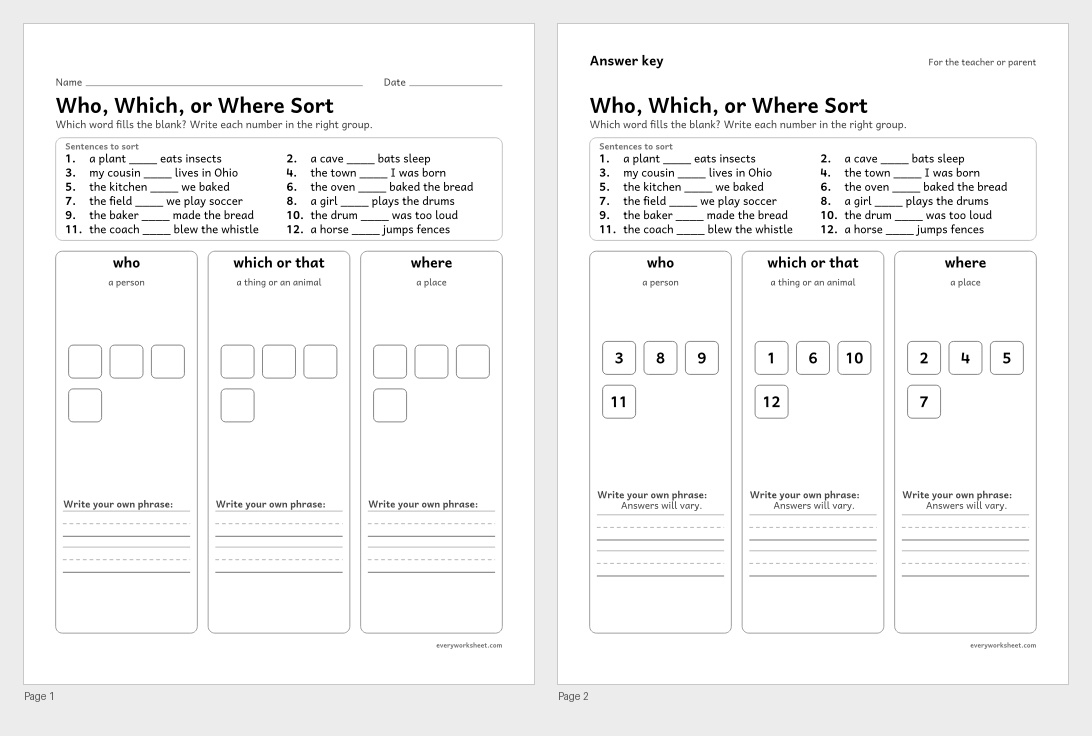
Sorting phrases by the relative pronoun or adverb that fits
Answer key on page 2
2 pages53 KB
 View all 2 pages
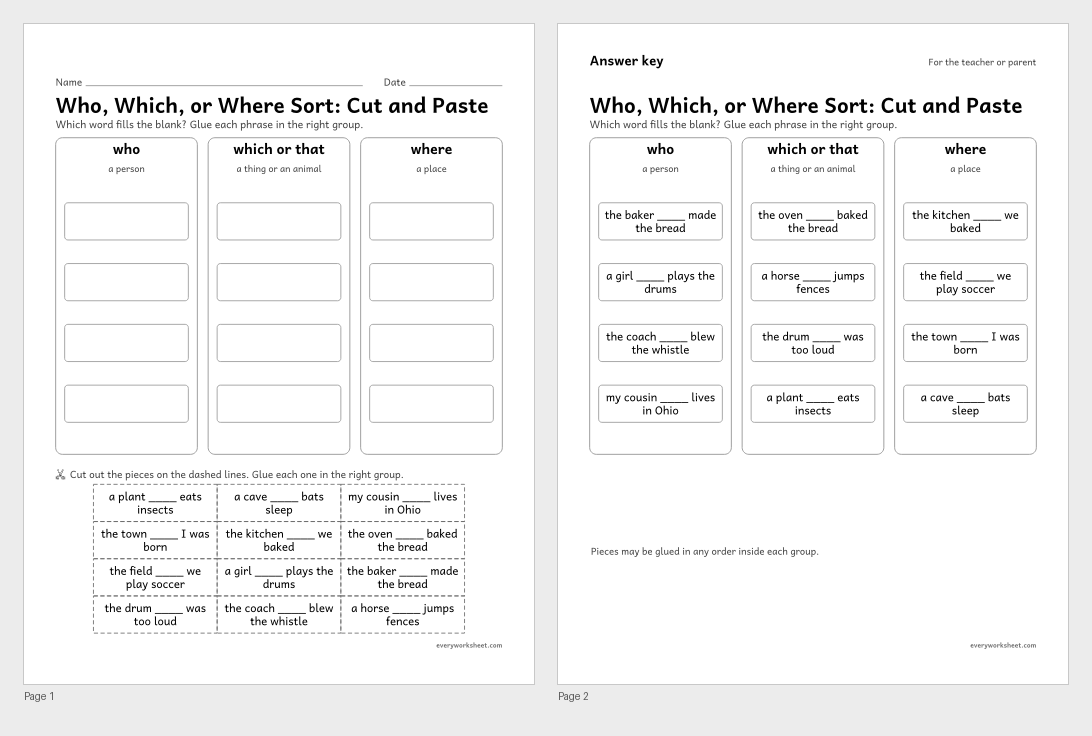
Sorting phrases by the relative pronoun or adverb that fits (cut and paste)
Answer key on page 2
2 pages68 KB
 View all 2 pages
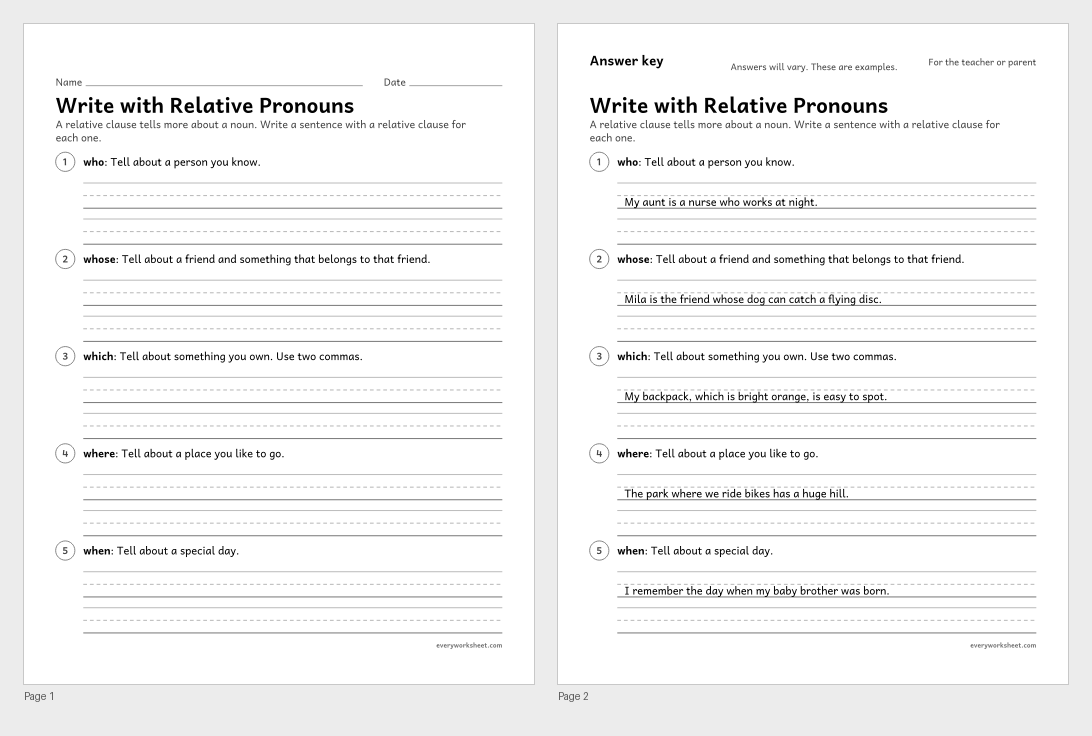
Writing sentences with relative clauses
Answer key on page 2
2 pages37 KB
Print at 100% (actual size) for the cleanest tracing lines.
A relative pronoun starts a part of a sentence that tells more about a noun. The five relative pronouns are who, whose, whom, which, and that. In "The girl who sang the solo is my cousin," the word who starts the part that tells which girl. Use who for people, whose to show who something belongs to ("the boy whose dog ran away"), which for things and animals ("my bike, which is green"), and that for people or things ("the book that I lent you"). Whom comes after a word like to, with, or for: "the coach to whom we wrote."
Where, when, and why do the same job for places, times, and reasons, so they are called relative adverbs: "the park where we met," "the day when it snowed," and "the reason why I laughed." The part of the sentence they begin is called a relative clause.
These printable worksheets start with an anchor chart, then move from finding relative pronouns, to choosing the right one, to sorting phrases, to joining two short sentences into one longer one. The last page asks children to write their own sentences with relative clauses. Every practice page has an answer key.
CCSS.ELA-LITERACY.L.4.1.AUse relative pronouns (who, whose, whom, which, that) and relative adverbs (where, when, why).Who, whose, whom, which, and that. Where, when, and why work the same way for places, times, and reasons and are called relative adverbs.
Relative pronouns and relative adverbs are usually taught in 4th grade, once children can write longer sentences.
Who does the action ("the girl who sang"). Whom receives it, and children most often meet it after a word like to, with, or for ("the friend with whom I walk").
Yes. Every practice page has a key, and writing pages show example answers.