 View larger
Choose a topic and ask questions
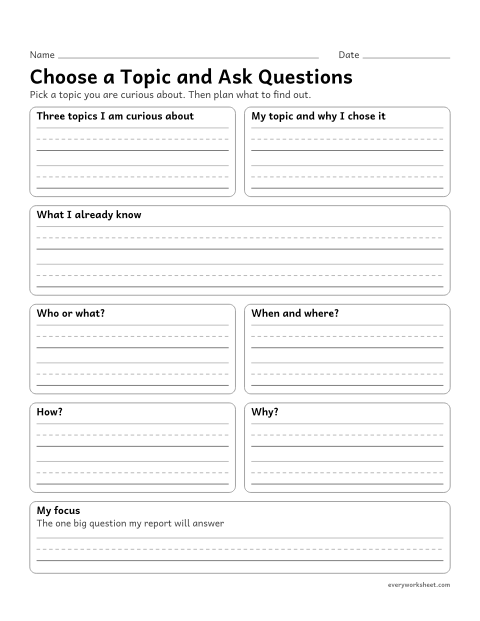
Choosing a research topic and writing research questions about different aspects of it
1 page29 KB
Templates for every step of a research report, from choosing a topic to checking the final draft.
View largerChoosing a research topic and writing research questions about different aspects of it
1 page29 KB
 View larger
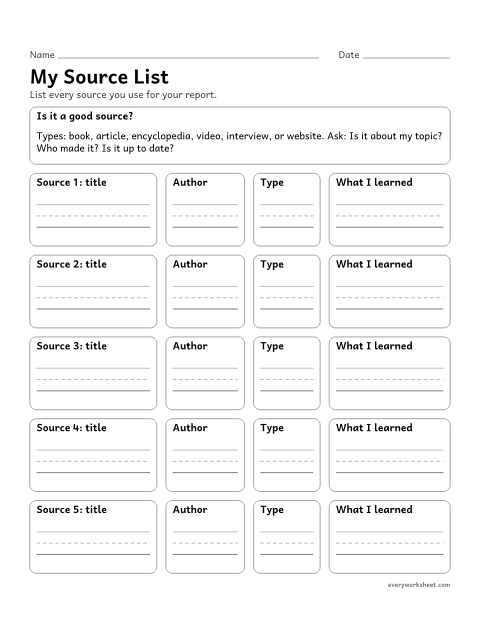
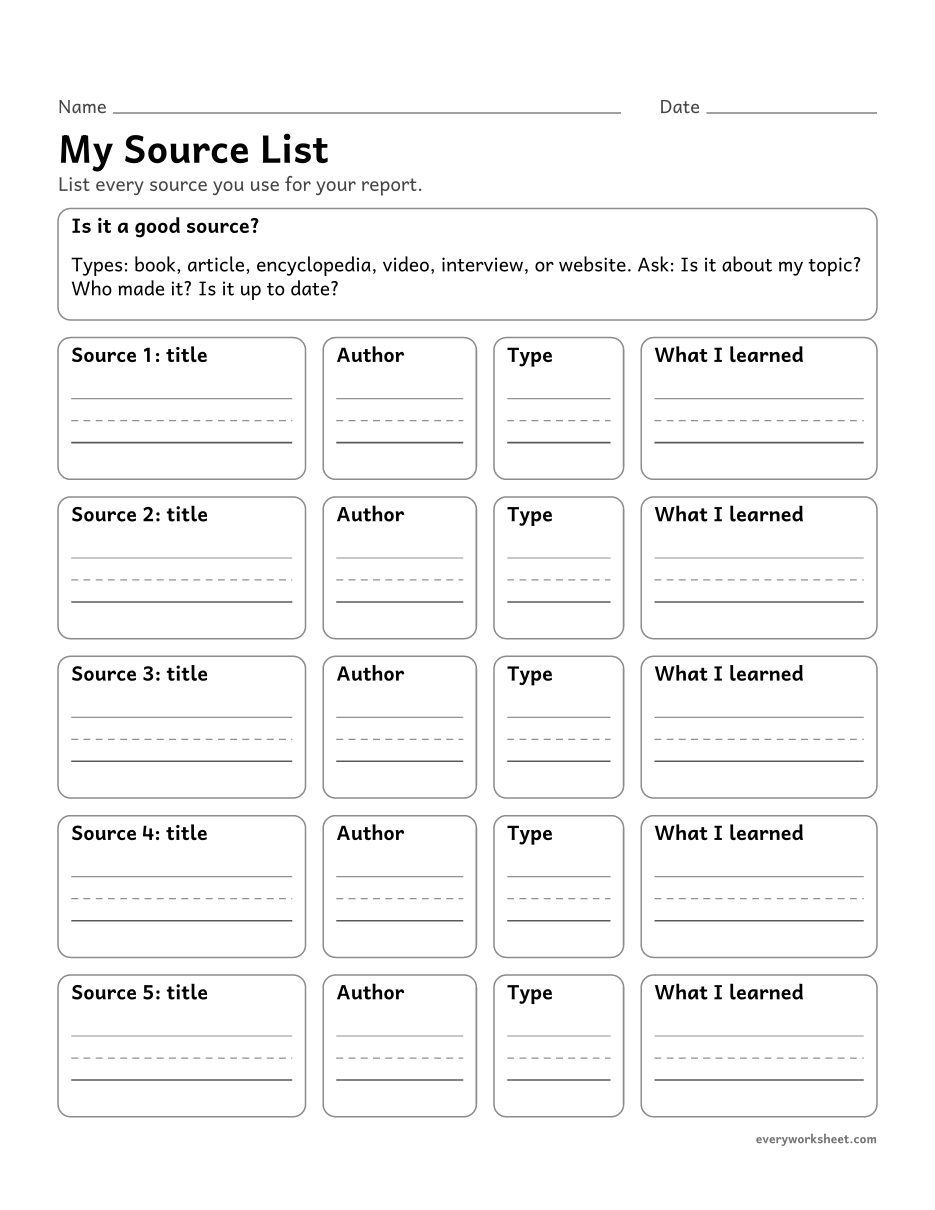
Keeping a list of print and digital sources with title, author, and type
1 page34 KB
 View all 2 pages
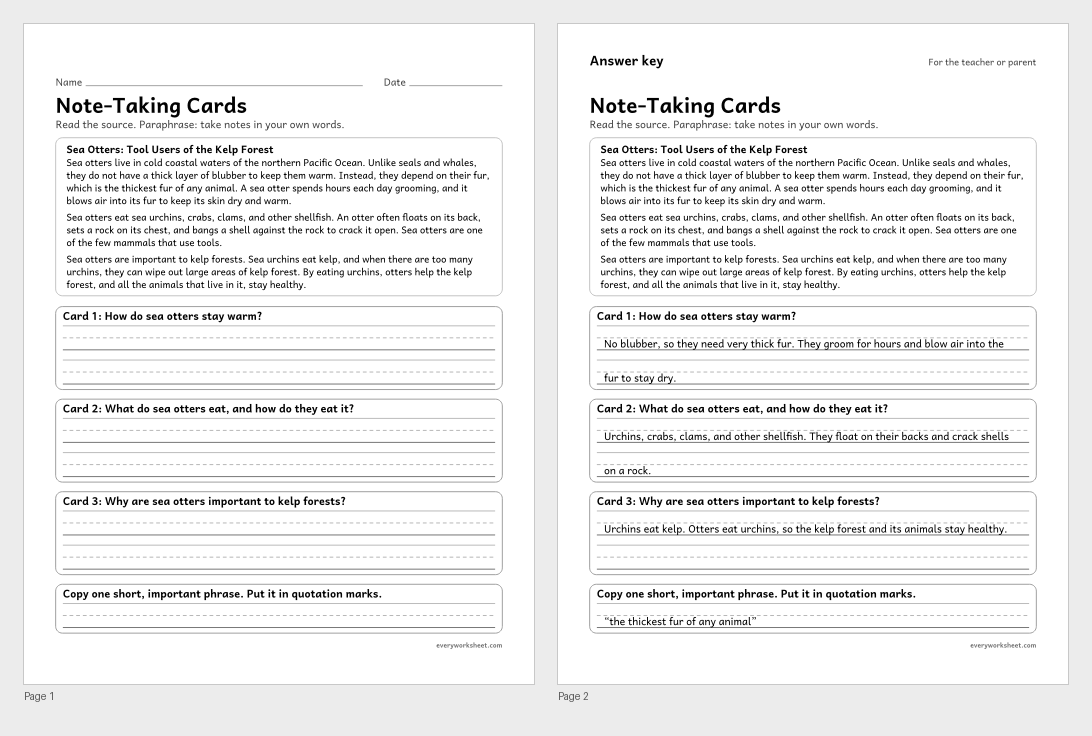
Paraphrasing information from a source in notes and recording the source
Answer key on page 2
2 pages37 KB
 View larger
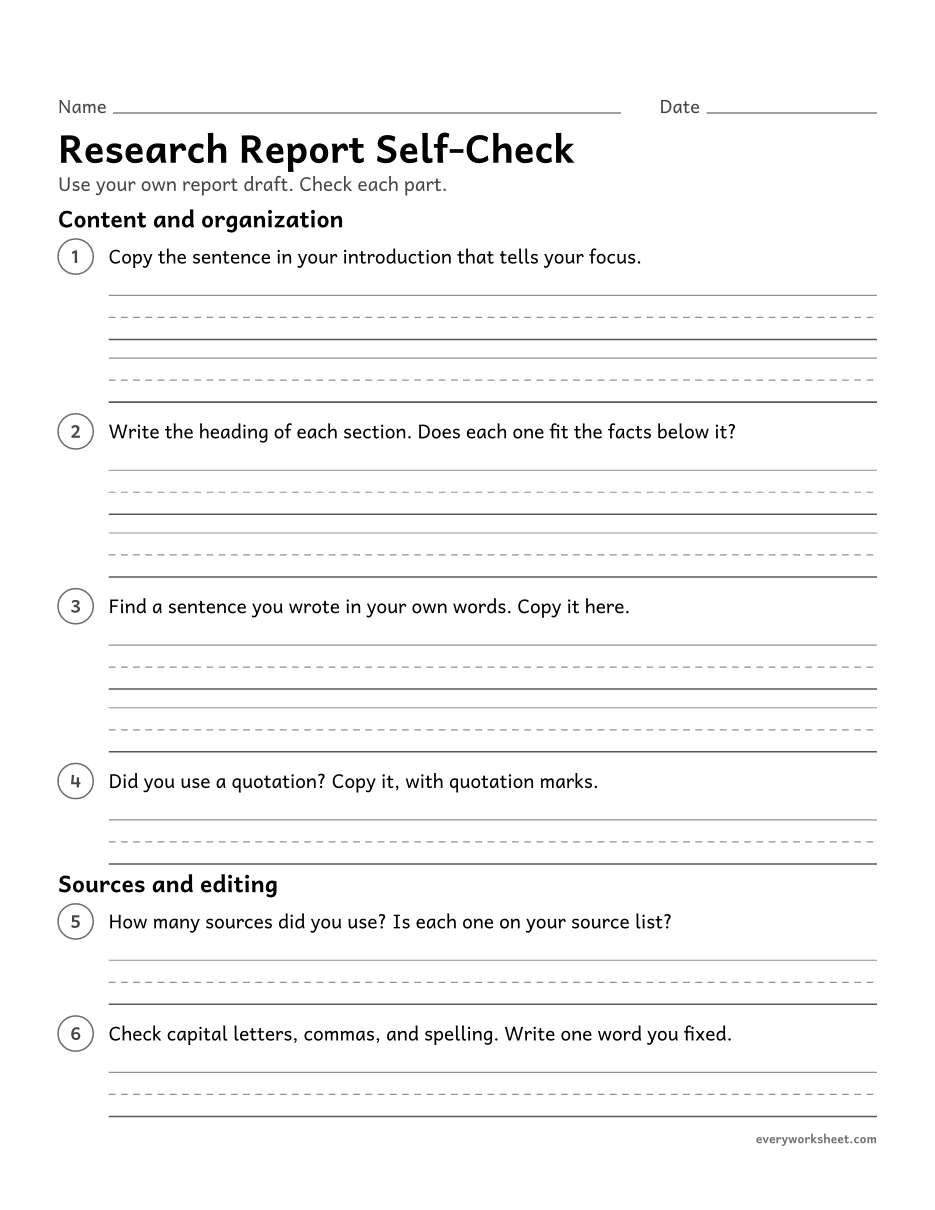
Revising and editing a research report draft with a checklist
1 page31 KB
 View larger
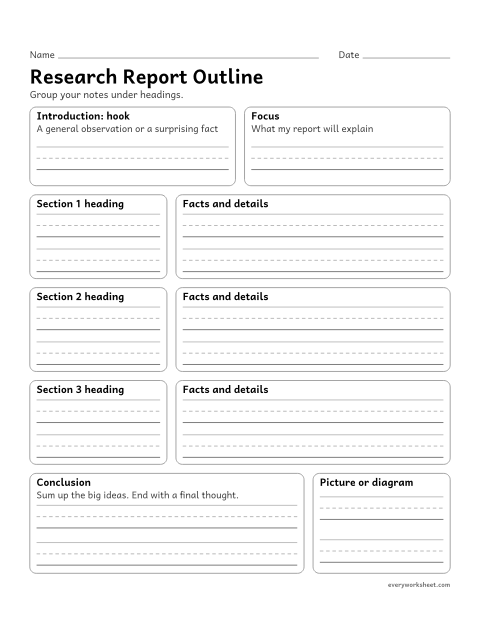
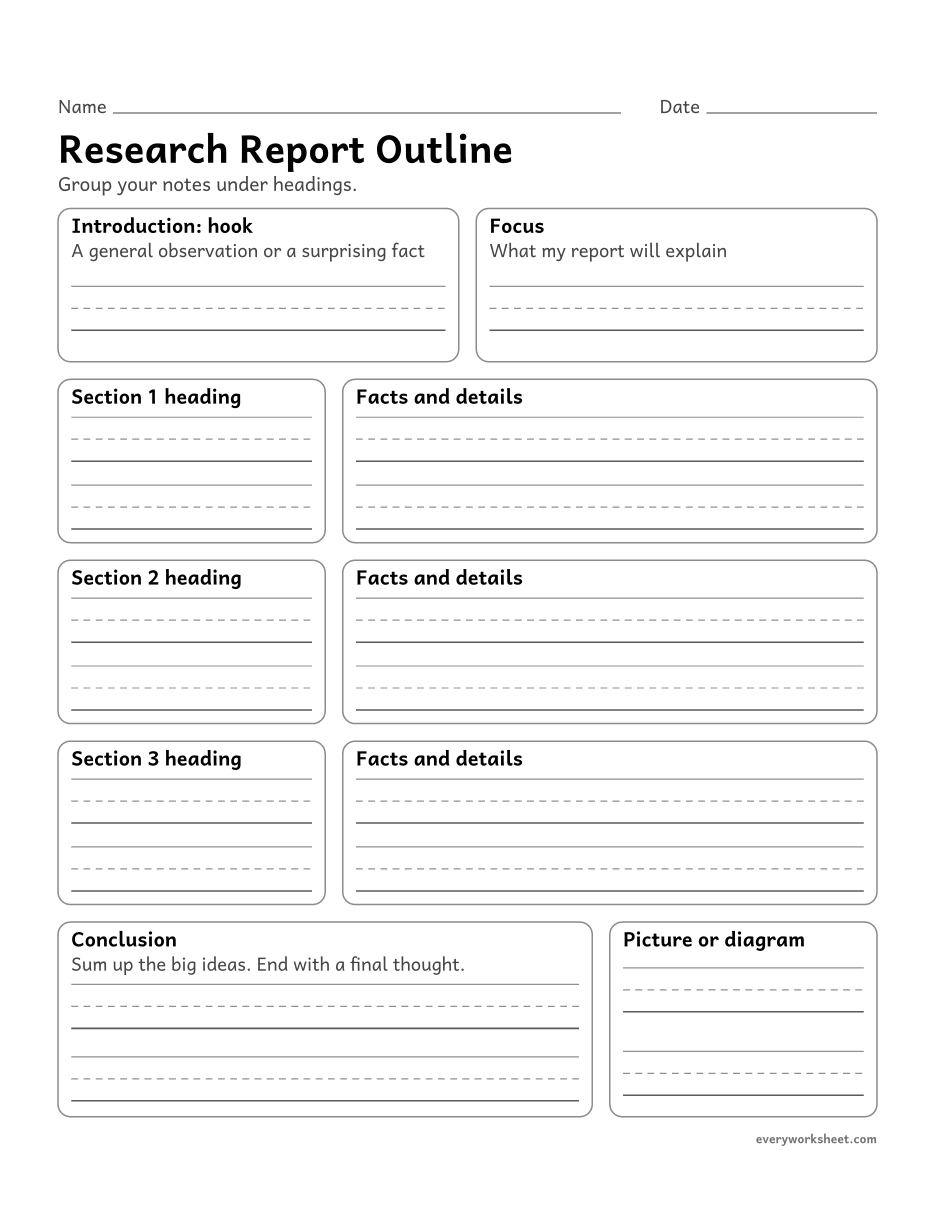
Outlining a report: a general observation and focus, sections with headings, and a conclusion
1 page30 KB
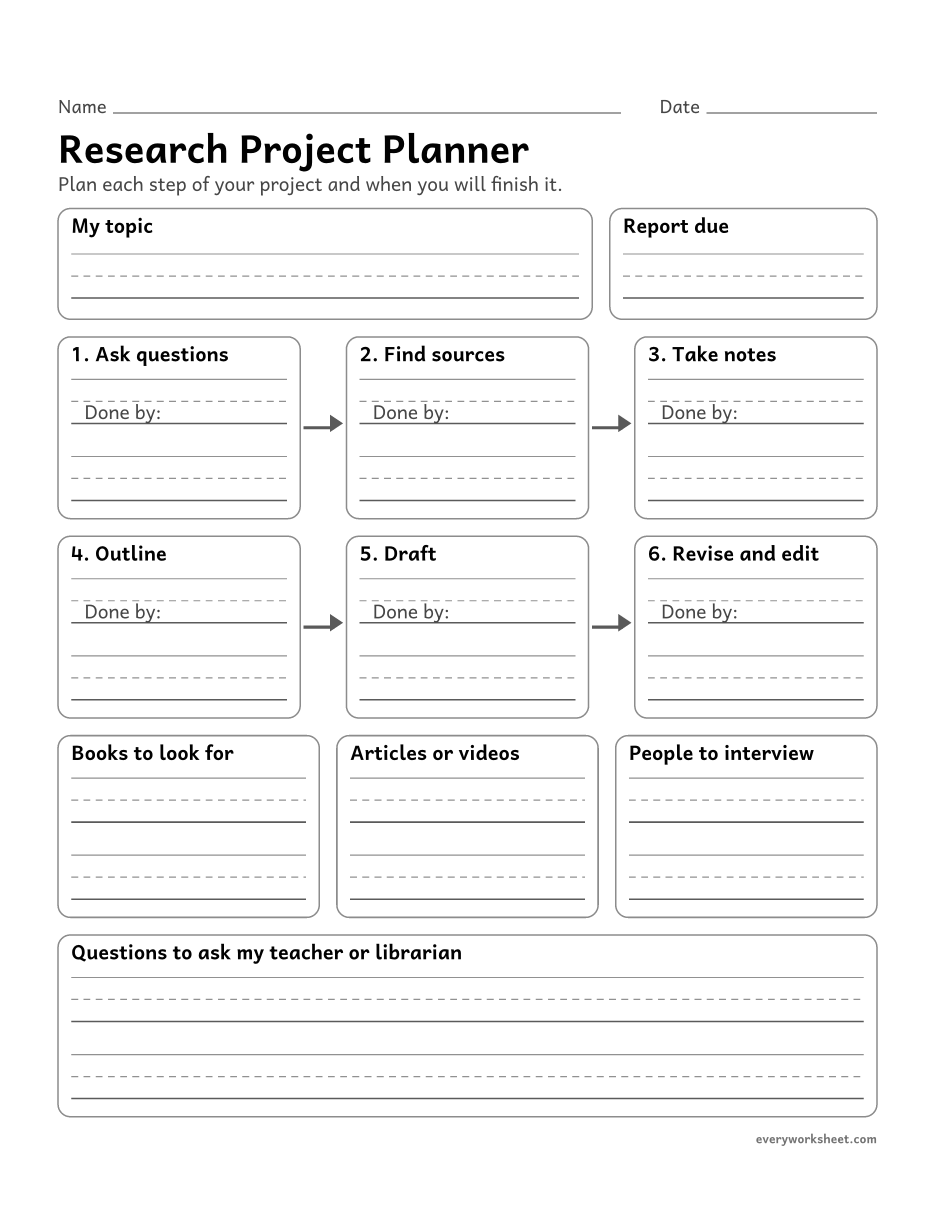 View larger
Planning a short research project step by step, with sources to search and due dates
1 page32 KB
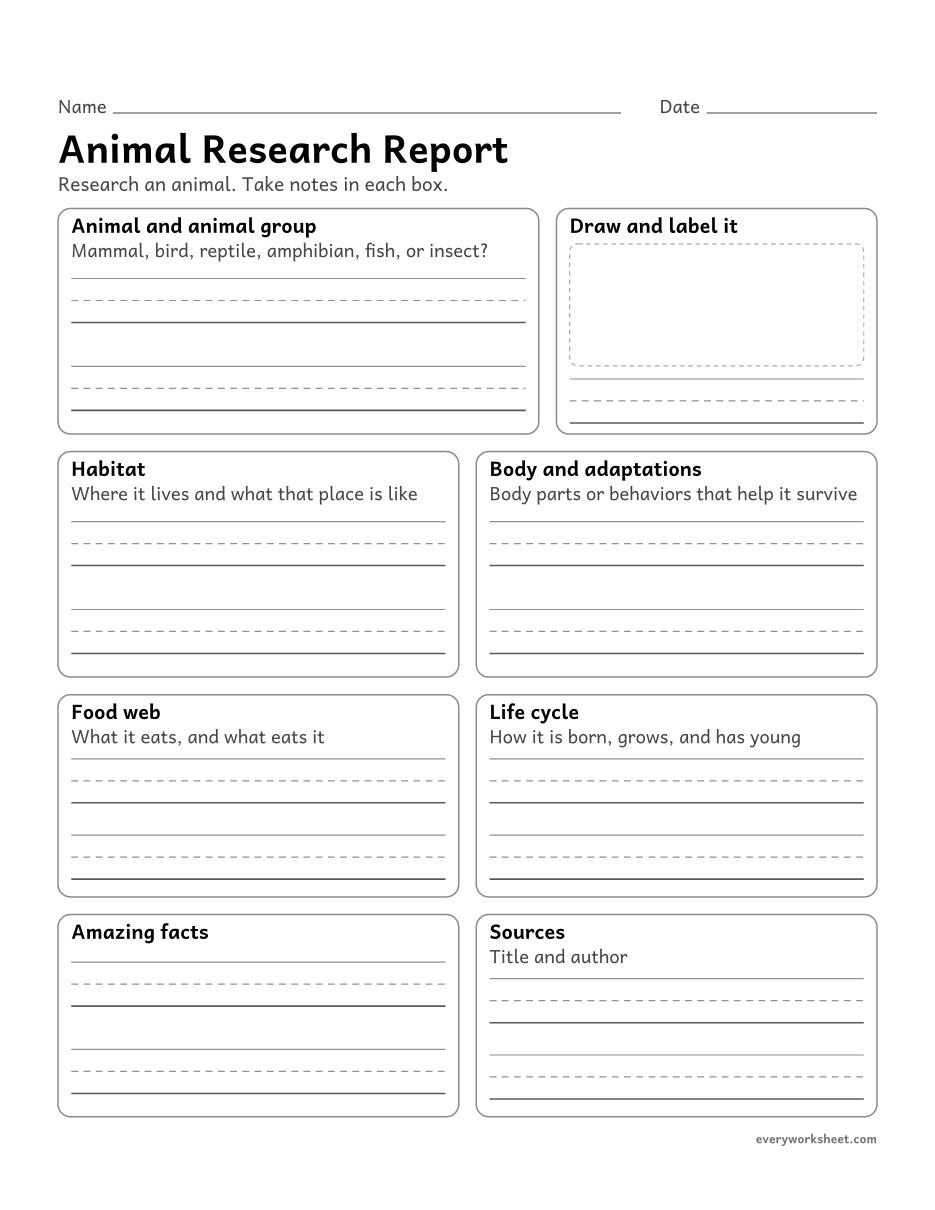 View larger
Researching an animal and organizing notes about its habitat, adaptations, food web, and life cycle
1 page30 KB
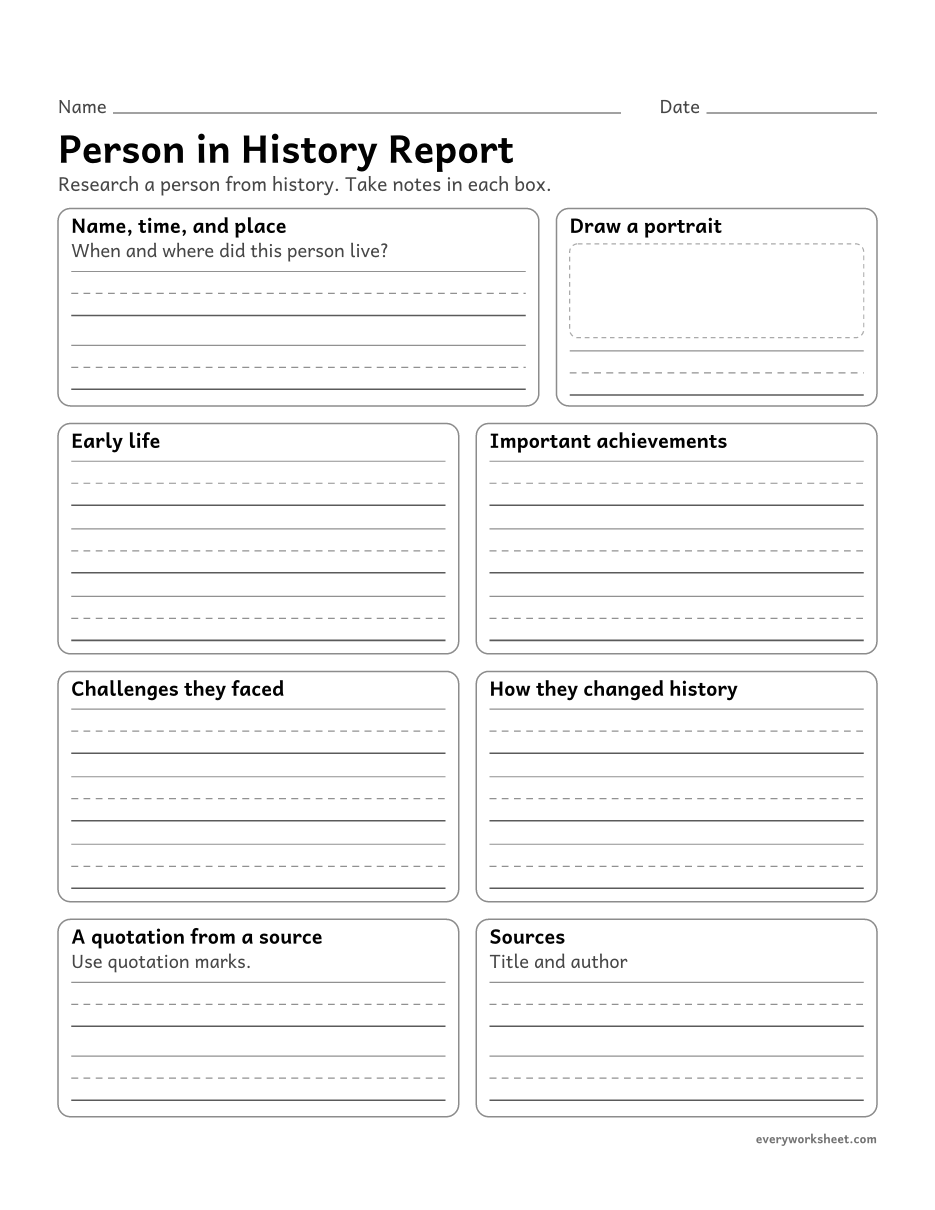 View larger
Researching a person from history and organizing notes about their life, achievements, and impact
1 page30 KB
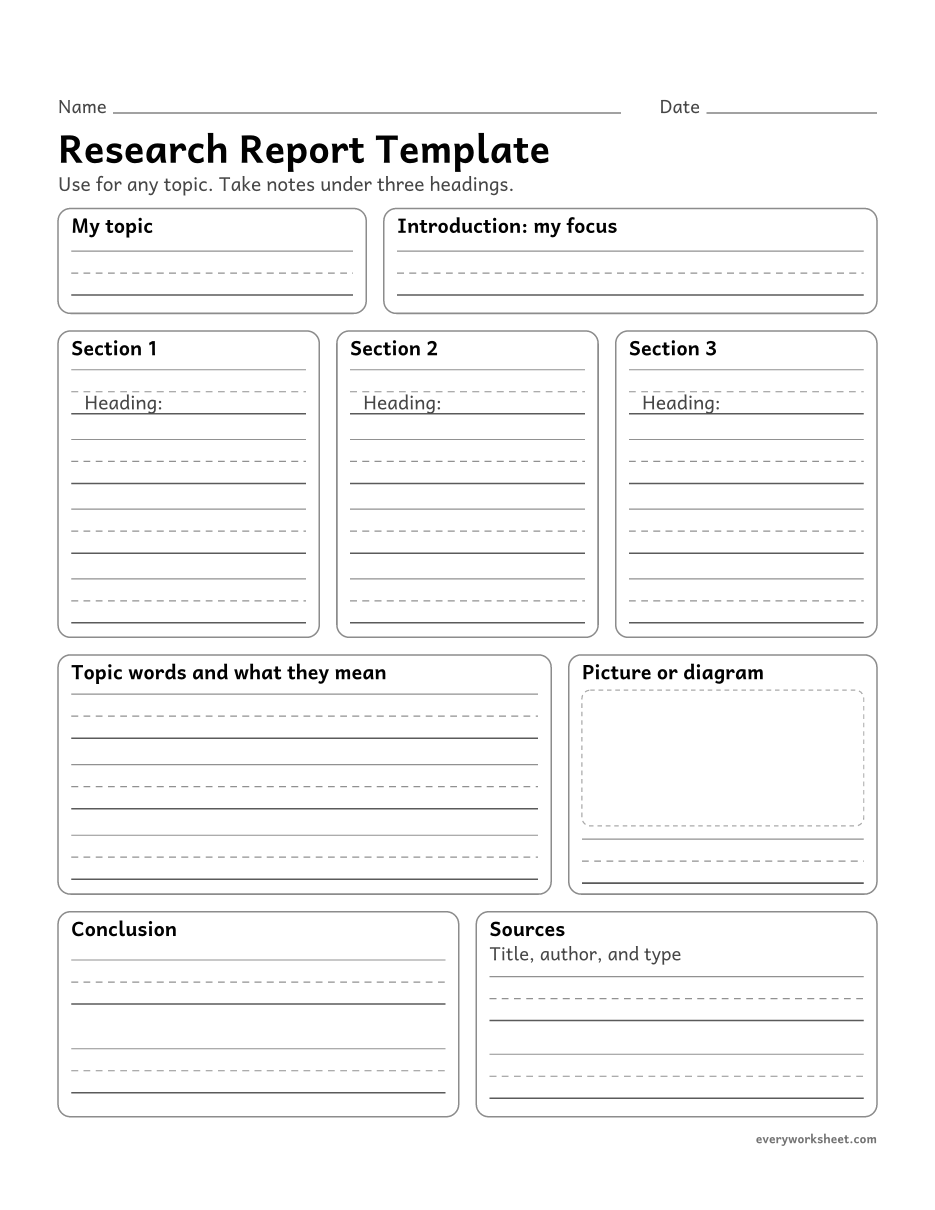 View larger
Organizing research on any topic into an introduction, three headed sections, topic words, and a conclusion
1 page30 KB
Print at 100% (actual size) for the cleanest tracing lines.
A **research report** teaches a reader about a topic using facts the writer gathered from several **sources**, such as books, articles, videos, and interviews. The writer asks questions, takes notes in their own words (**paraphrasing**), organizes the notes into sections with **headings**, and lists every source at the end. For example, a report on sea otters might have sections called "Staying Warm," "Using Tools," and "Helping the Kelp Forest."
These research report worksheets walk through the whole project. Children choose a topic and write research questions, keep a source list with title, author, and type, practice note-taking cards with a short original text, and learn when to paraphrase and when to copy a short phrase in quotation marks.
Then the writing templates help them organize: an outline with headings, a project planner with due dates, an animal report, a person in history report, a template for any topic, and a self-check for the finished draft.
CCSS.ELA-LITERACY.W.5.2Write informative/explanatory texts to examine a topic and convey ideas and information clearly.CCSS.ELA-LITERACY.W.5.2.AIntroduce a topic clearly, provide a general observation and focus, and group related information logically; include formatting (e.g., headings), illustrations, and multimedia when useful to aiding comprehension.CCSS.ELA-LITERACY.W.5.5With guidance and support from peers and adults, develop and strengthen writing as needed by planning, revising, editing, rewriting, or trying a new approach. (Editing for conventions should demonstrate command of Language standards 1–3 up to and including grade 5 here.)CCSS.ELA-LITERACY.W.5.7Conduct short research projects that use several sources to build knowledge through investigation of different aspects of a topic.CCSS.ELA-LITERACY.W.5.8Recall relevant information from experiences or gather relevant information from print and digital sources; summarize or paraphrase information in notes and finished work, and provide a list of sources.An introduction that hooks the reader and states the focus, body sections with headings that each cover one part of the topic, a conclusion that sums up the big ideas, and a list of sources.
To paraphrase is to explain an idea from a source in your own words. If a writer wants to use the source's exact words, they copy only a short phrase and put it in quotation marks.
Three or more is a good goal: for example, a book, an article, and an interview or video.
Yes. There are templates for animals and people in history, plus a general research report template that works for any topic.