 View larger
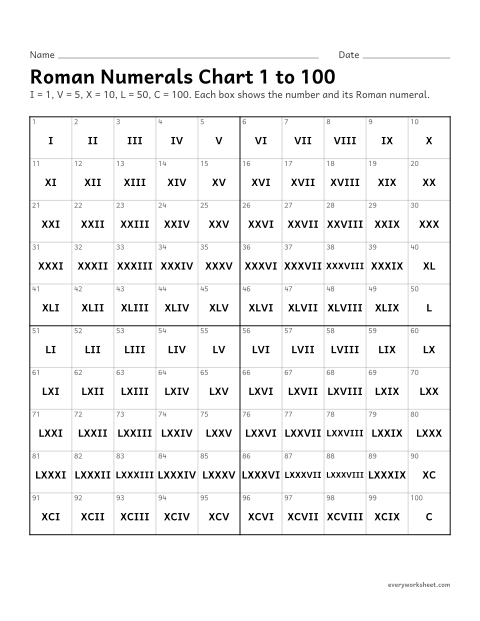
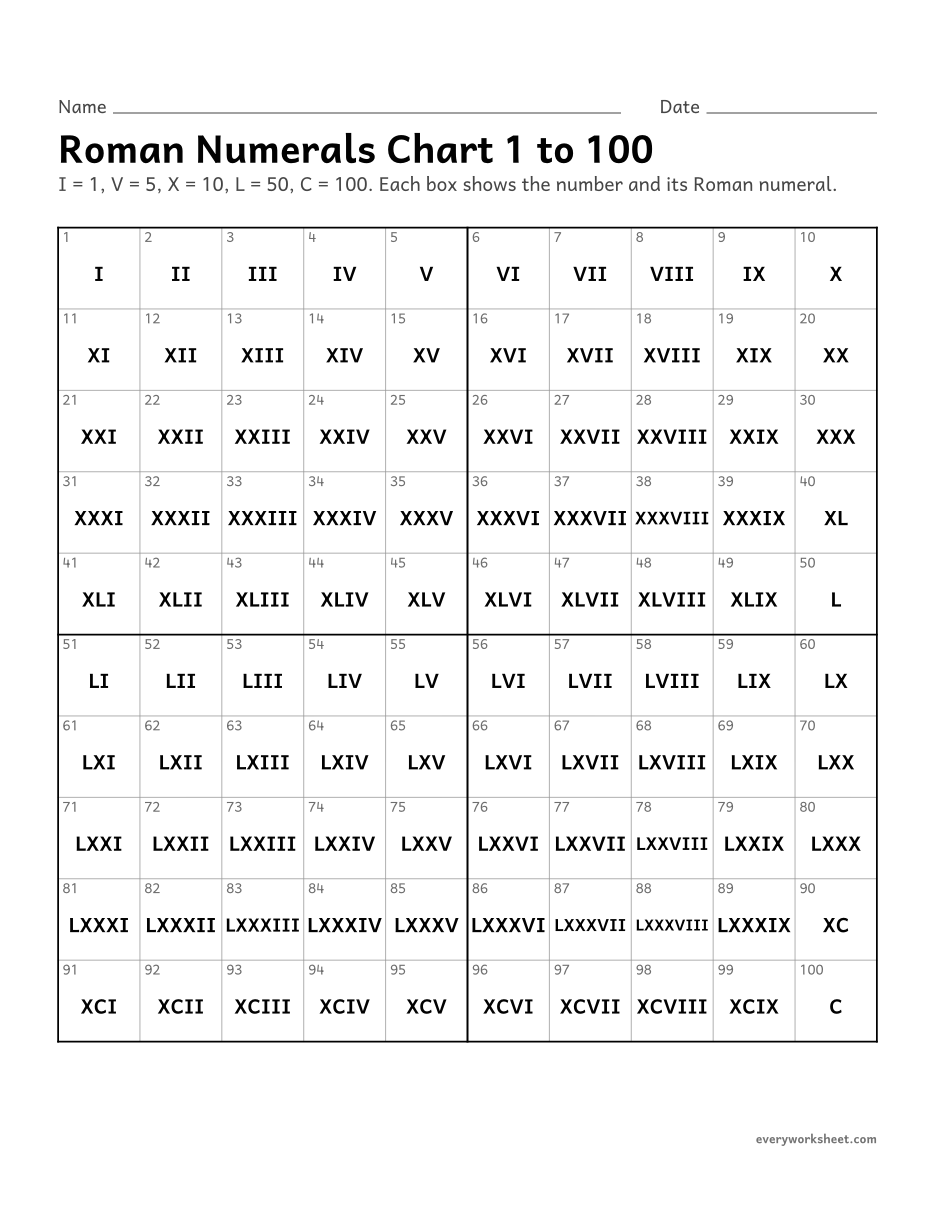
Roman numerals chart 1 to 100
Reading Roman numerals from 1 to 100 (I to C)
1 page51 KB
Roman numeral charts to 100 (C) and 1,000 (M), converting both ways, comparing, clock faces and years, for 3rd to 5th grade with answer keys.
View largerReading Roman numerals from 1 to 100 (I to C)
1 page51 KB
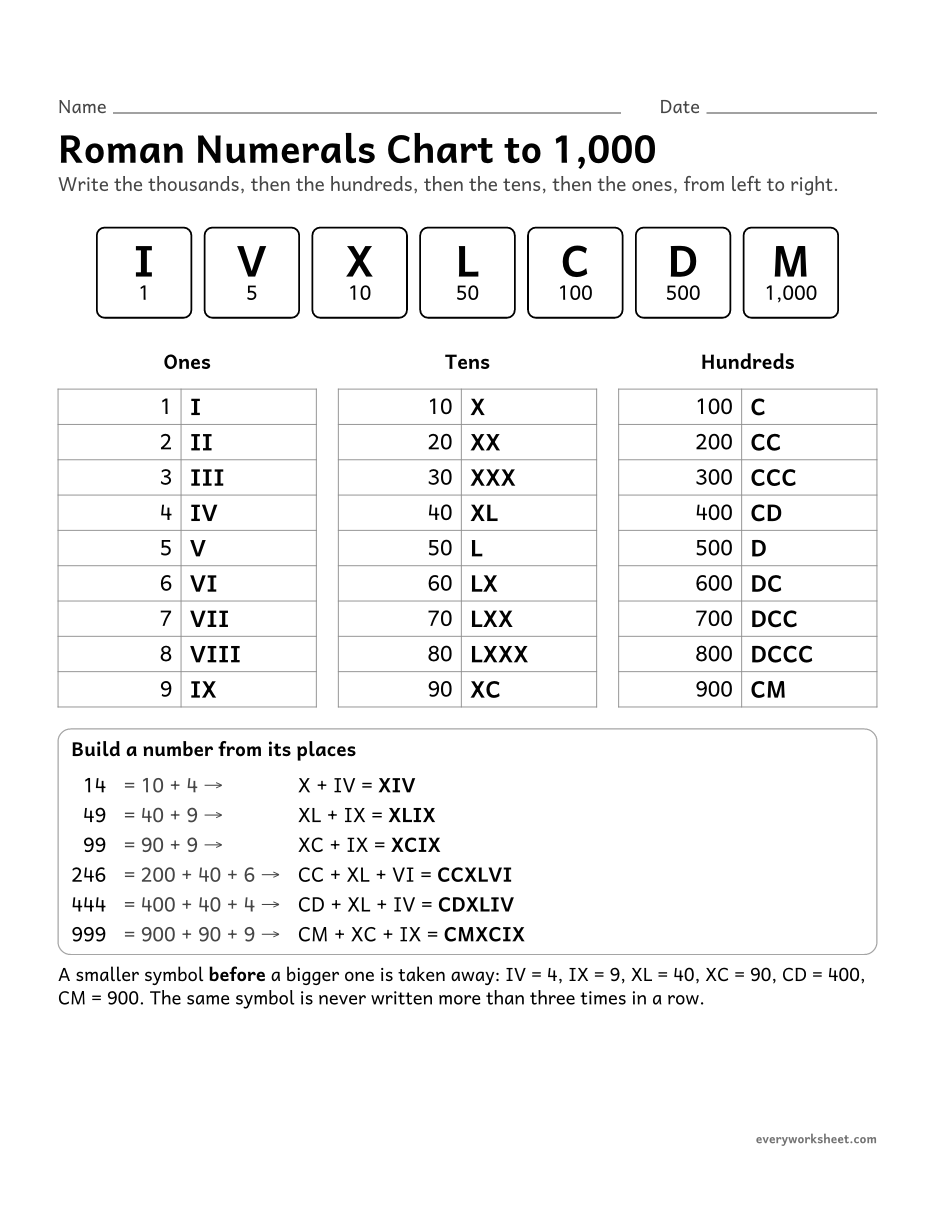 View larger
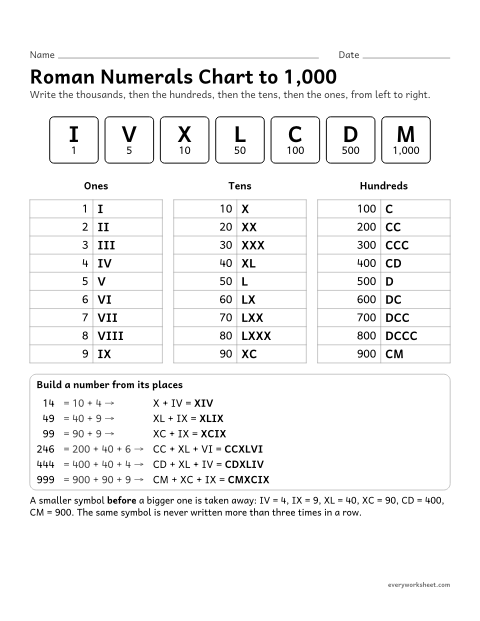
Reading Roman numerals for ones, tens and hundreds up to 1,000 (M)
1 page50 KB
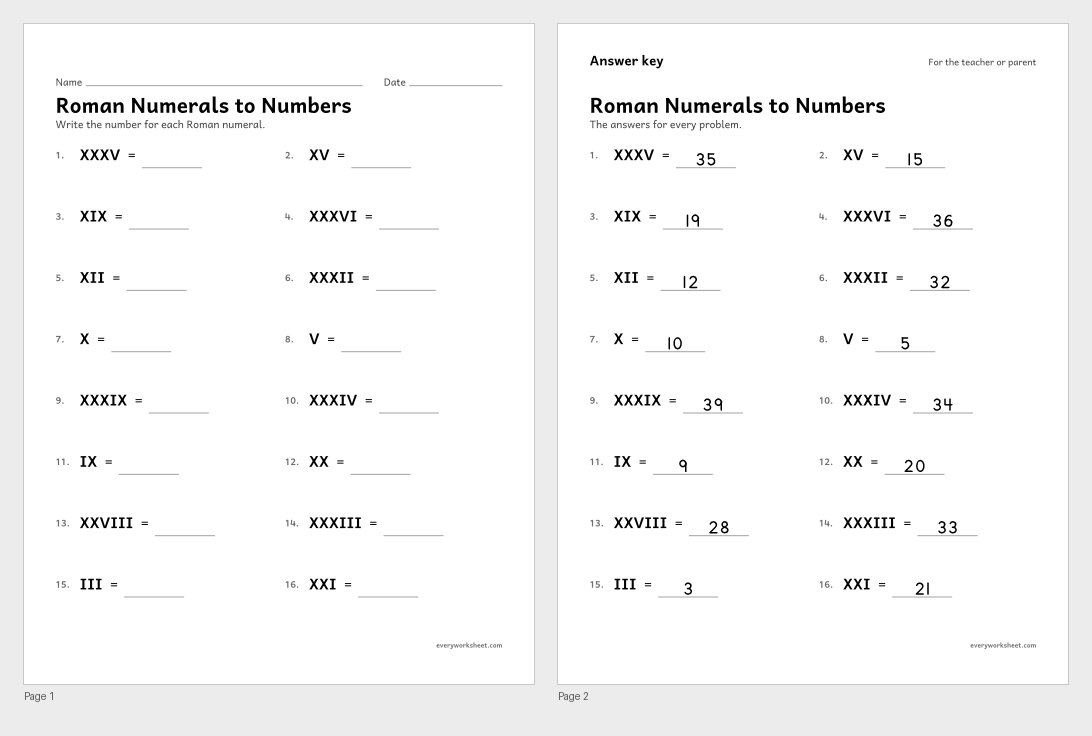 View all 2 pages
Writing the number for Roman numerals from I to XXXIX
Answer key on page 2
2 pages52 KB
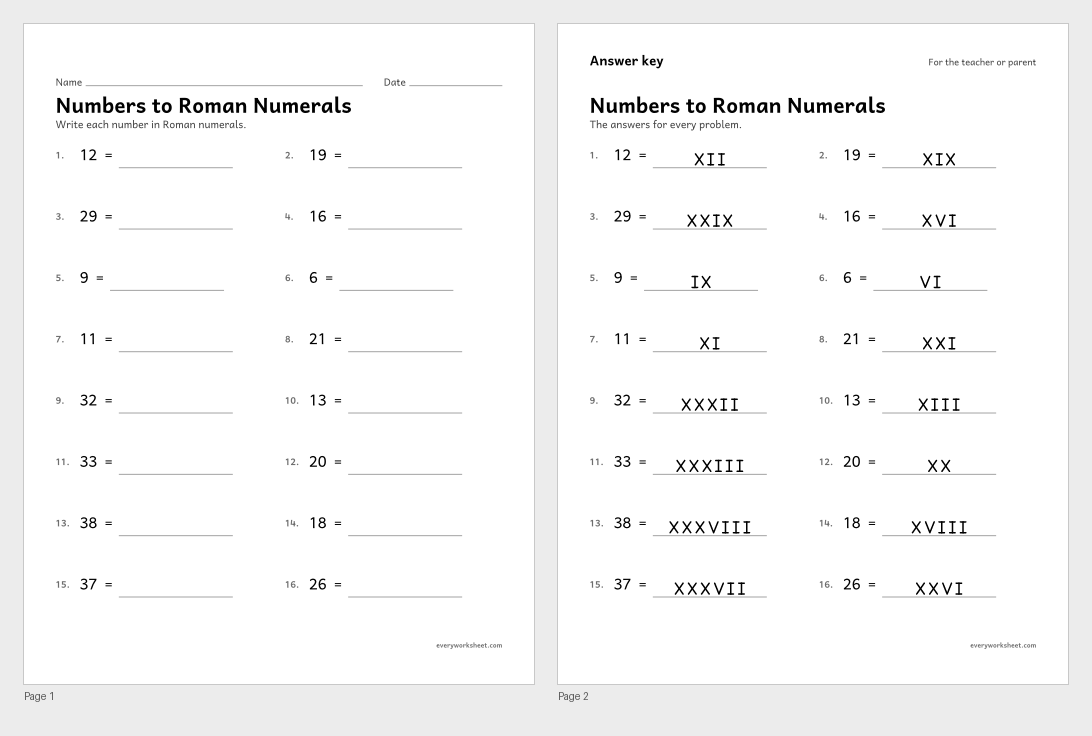 View all 2 pages
Writing Roman numerals for numbers from 1 to 39
Answer key on page 2
2 pages52 KB
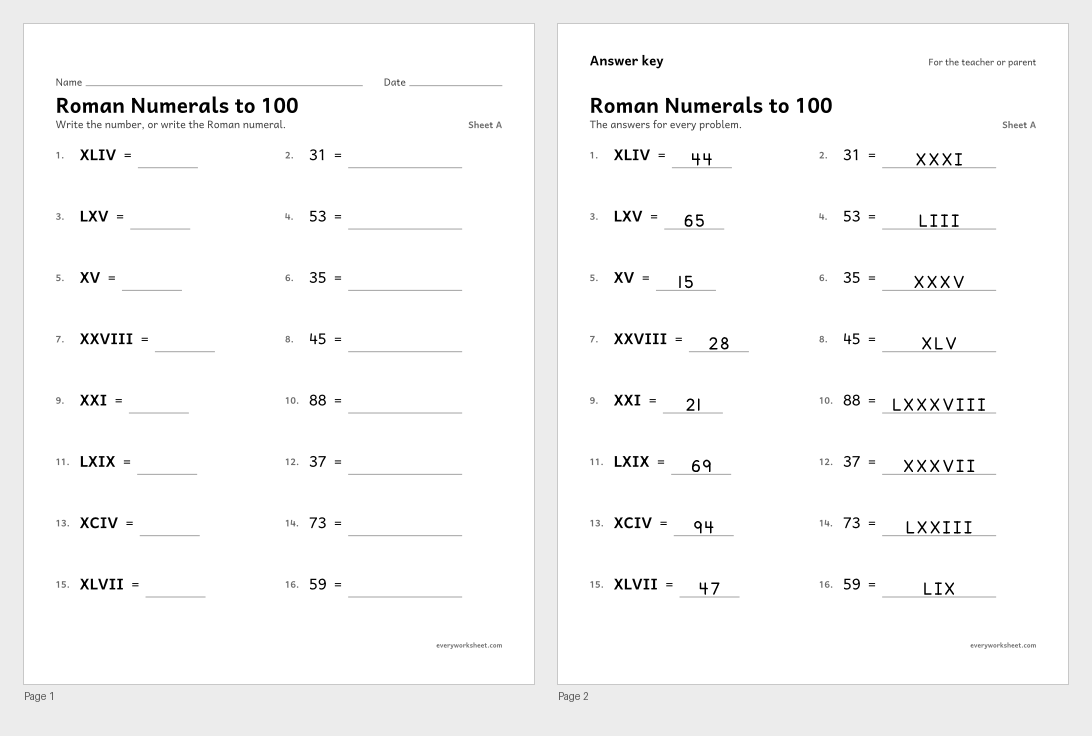 View all 2 pages
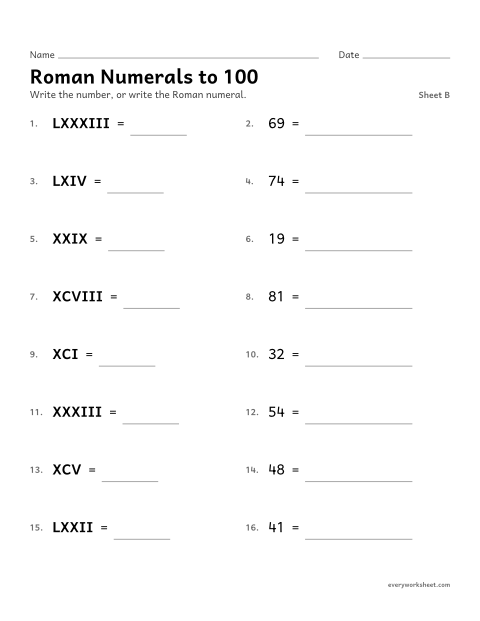
Converting between numbers and Roman numerals up to 100
Answer key on page 2
2 pages54 KB
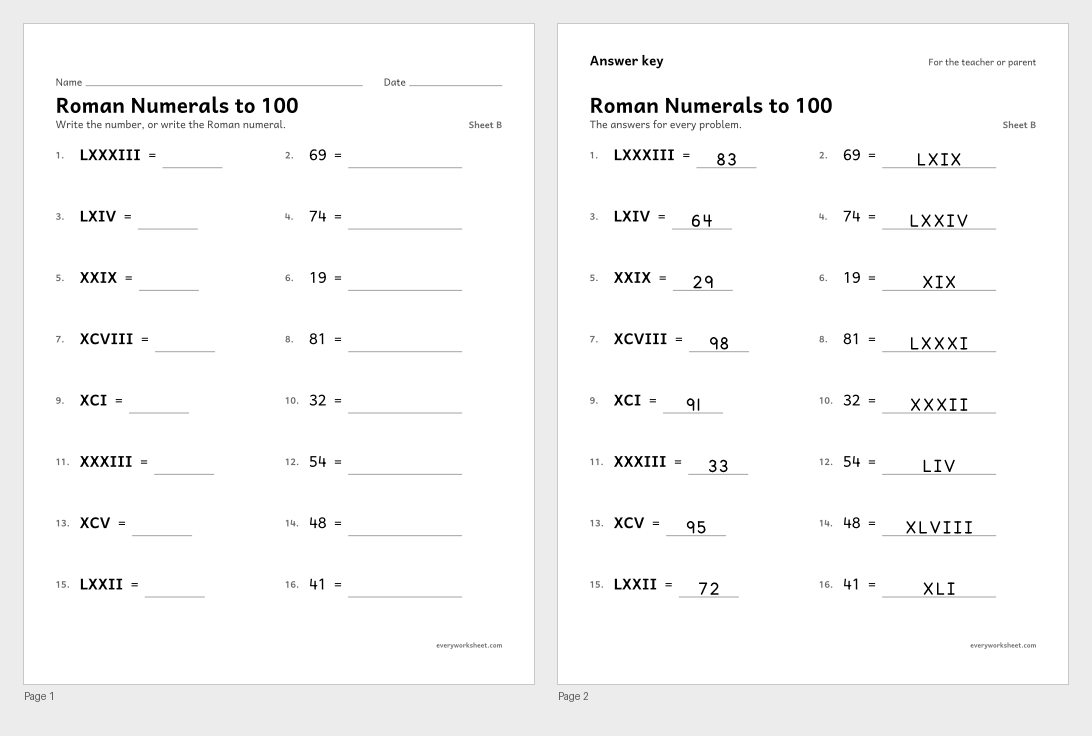 View all 2 pages
Converting between numbers and Roman numerals up to 100
Answer key on page 2
2 pages55 KB
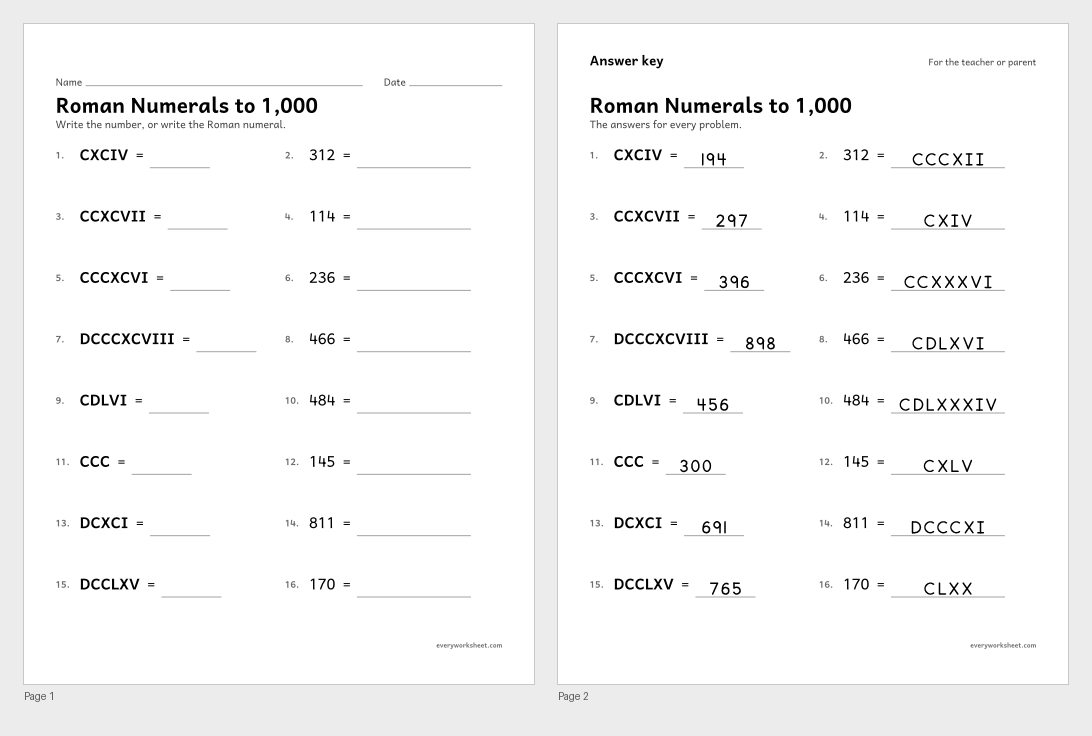 View all 2 pages
Converting between numbers and Roman numerals up to 1,000
Answer key on page 2
2 pages55 KB
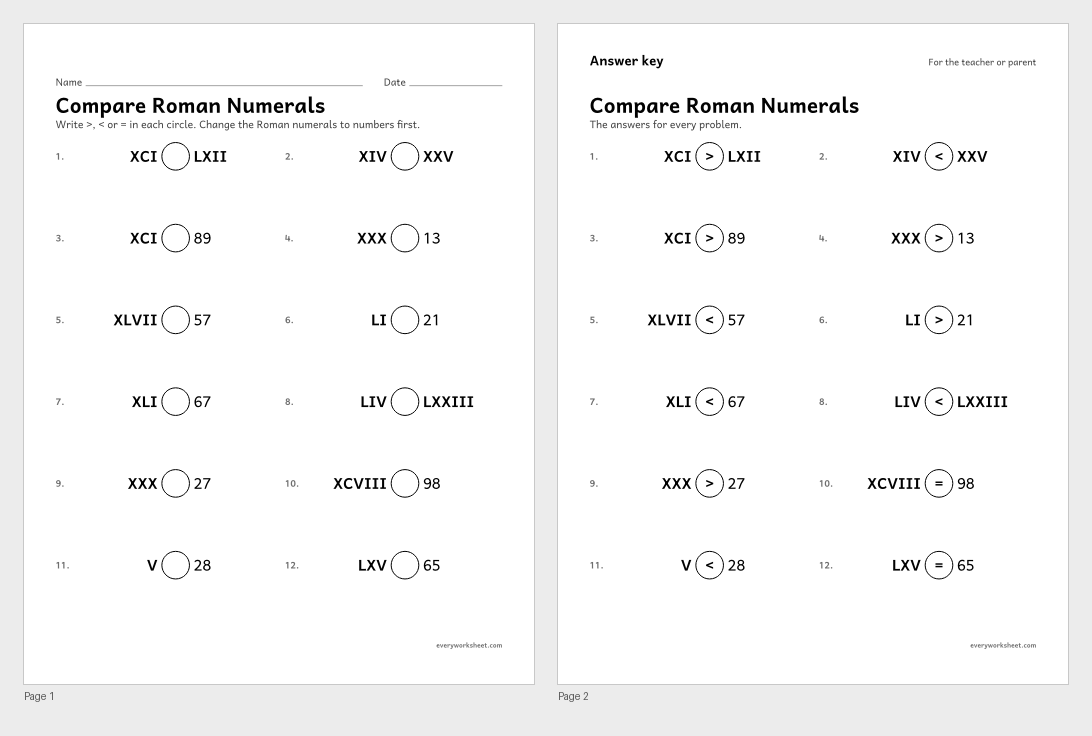 View all 2 pages
Comparing Roman numerals and numbers with >, < and =
Answer key on page 2
2 pages55 KB
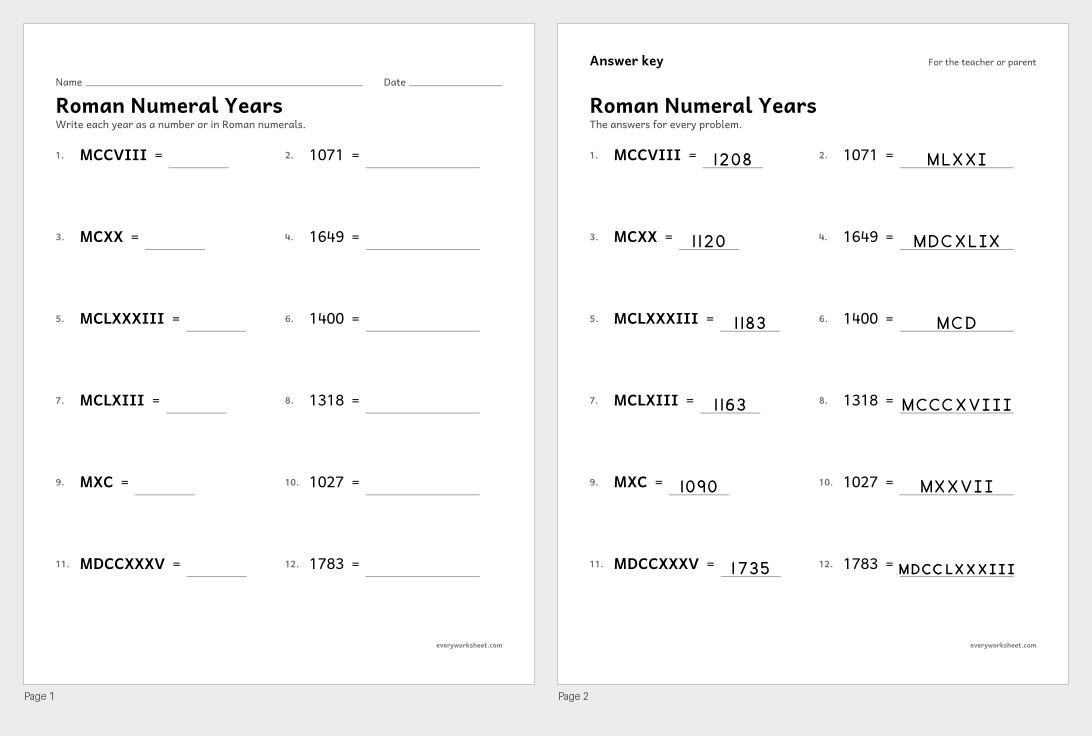 View all 2 pages
Reading and writing years from 1000 to 2099 in Roman numerals
Answer key on page 2
2 pages49 KB
 View all 2 pages
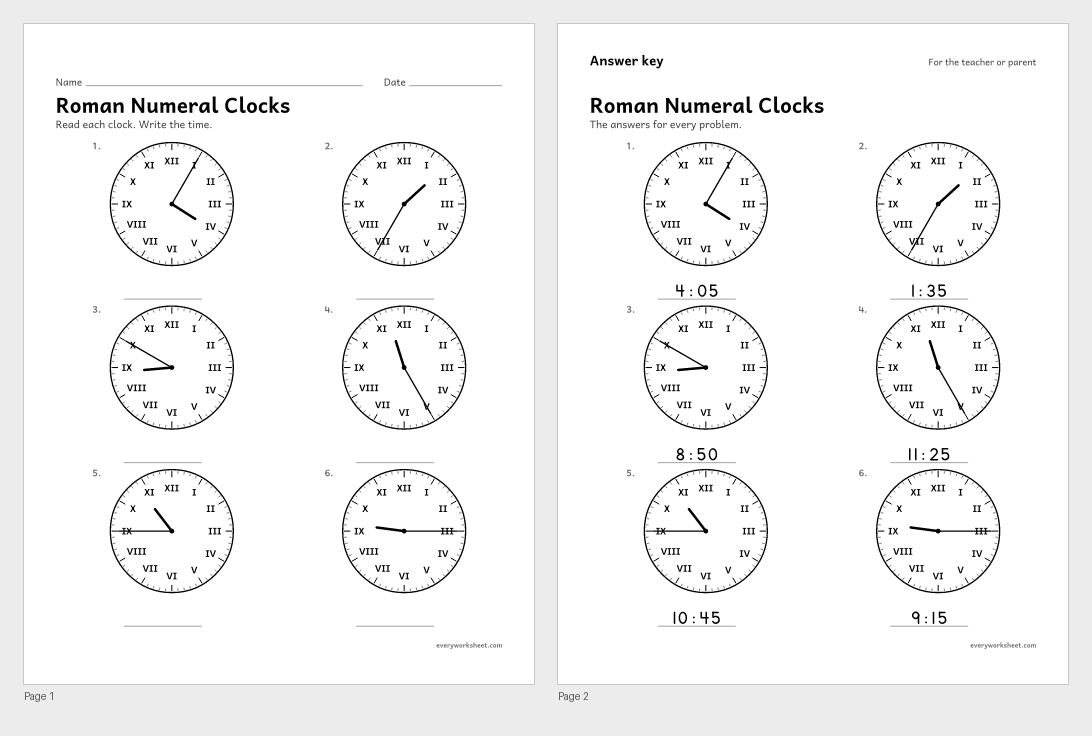
Telling time to five minutes on clocks with Roman numerals
Answer key on page 2
2 pages46 KB
 View all 2 pages
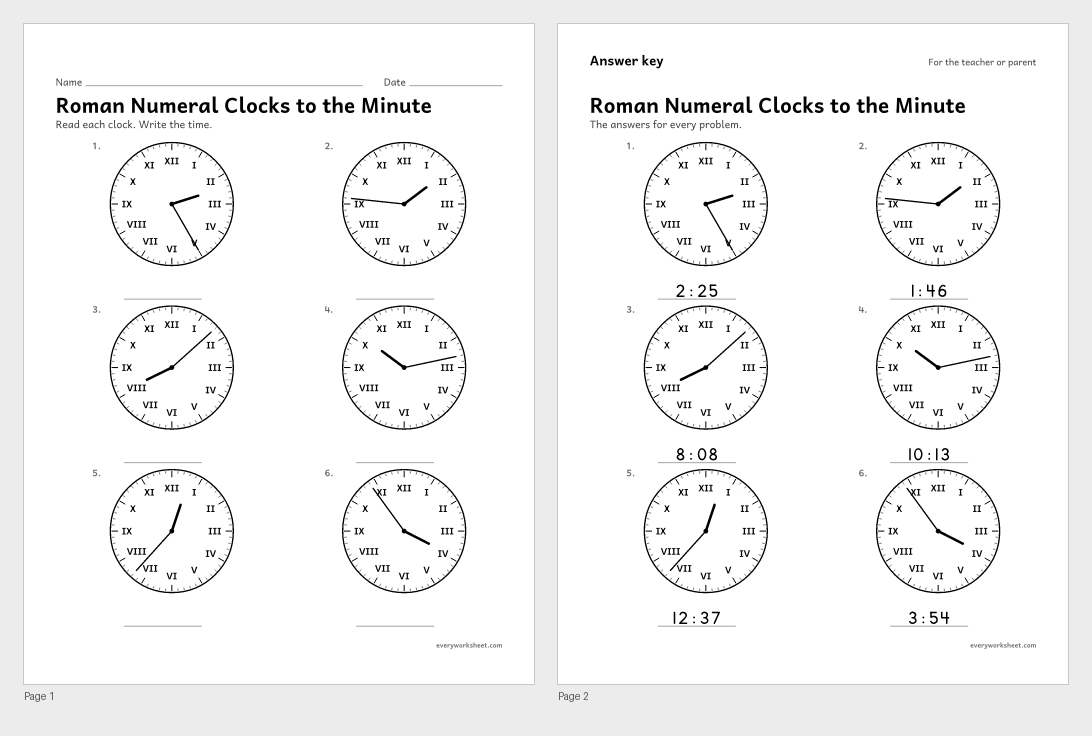
Telling time to the minute on clocks with Roman numerals
Answer key on page 2
2 pages47 KB
Print at 100% (actual size) for the cleanest tracing lines.
Roman numerals use seven letters: I = 1, V = 5, X = 10, L = 50, C = 100, D = 500 and M = 1,000. Children still meet them on clock faces, in book chapters, in movie credits and on buildings.
Start with the chart to 100 and the conversions to 39, which only need I, V and X. Then move to numbers up to 100, comparing, and finally numbers up to 1,000 and years.
Every answer is worked out from the rules, and each practice sheet has an answer key on page 2.
CCSS.MATH.CONTENT.4.NBT.A.2Read and write multi-digit whole numbers using base-ten numerals, number names, and expanded form. Compare two multi-digit numbers based on meanings of the digits in each place, using >, =, and < symbols to record the results of comparisons.CCSS.MATH.CONTENT.3.MD.A.1Tell and write time to the nearest minute and measure time intervals in minutes. Solve word problems involving addition and subtraction of time intervals in minutes, e.g., by representing the problem on a number line diagram.Roman numerals are not part of the Common Core standards, so schools teach them at different times, most often in 3rd or 4th grade. They make a good extension of place value, because each place is written on its own.
1,000 is M. 500 is D and 100 is C, so 900 is CM and 1,999 is MCMXCIX.
2026 is 2,000 + 20 + 6, which is MM + XX + VI, so 2026 = MMXXVI.