 View larger
Simple, Compound, and complex sentences
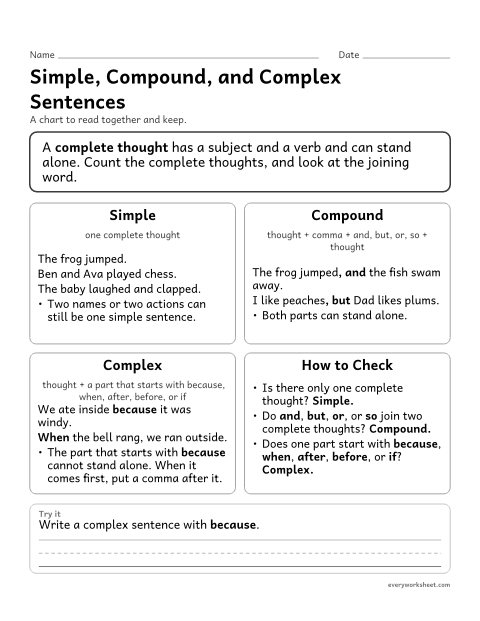
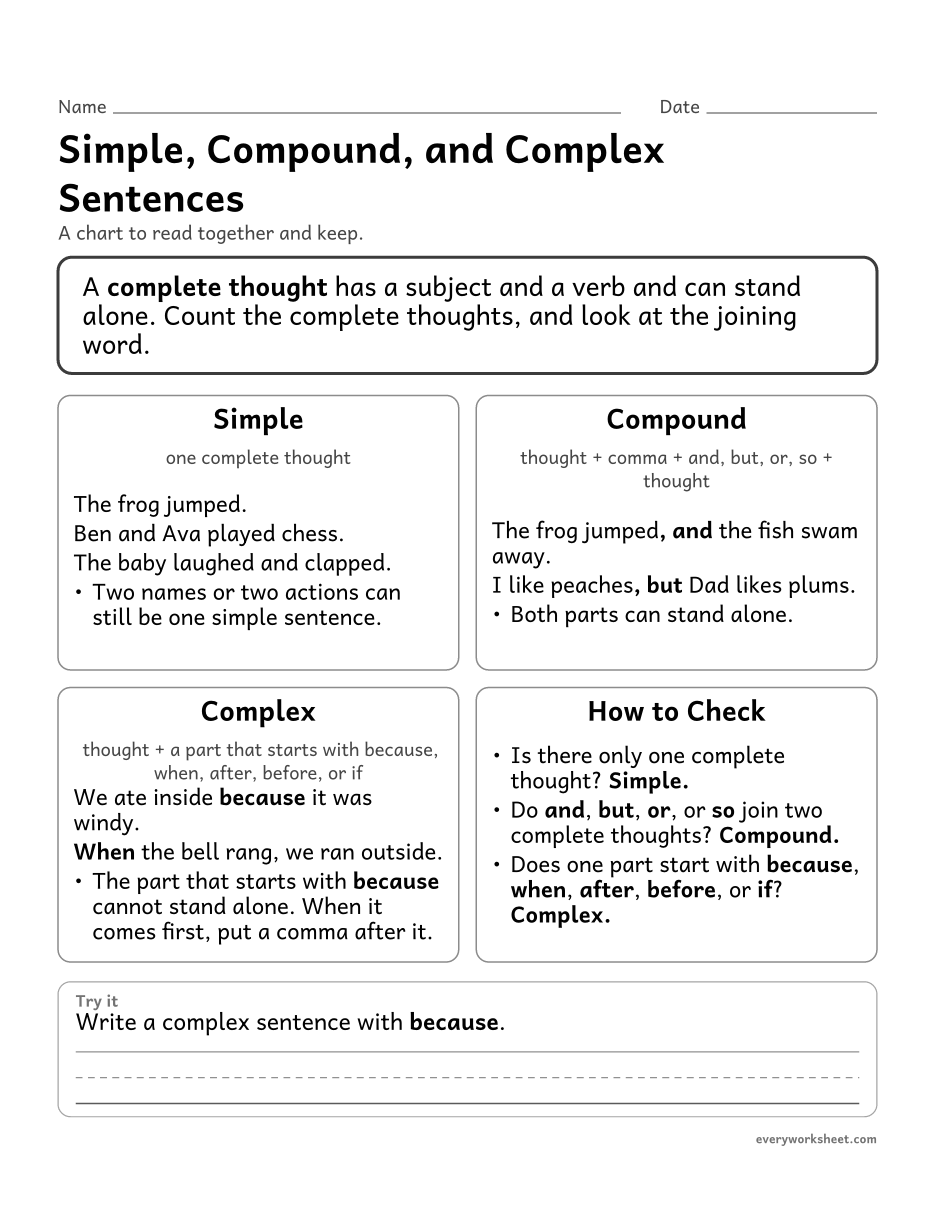
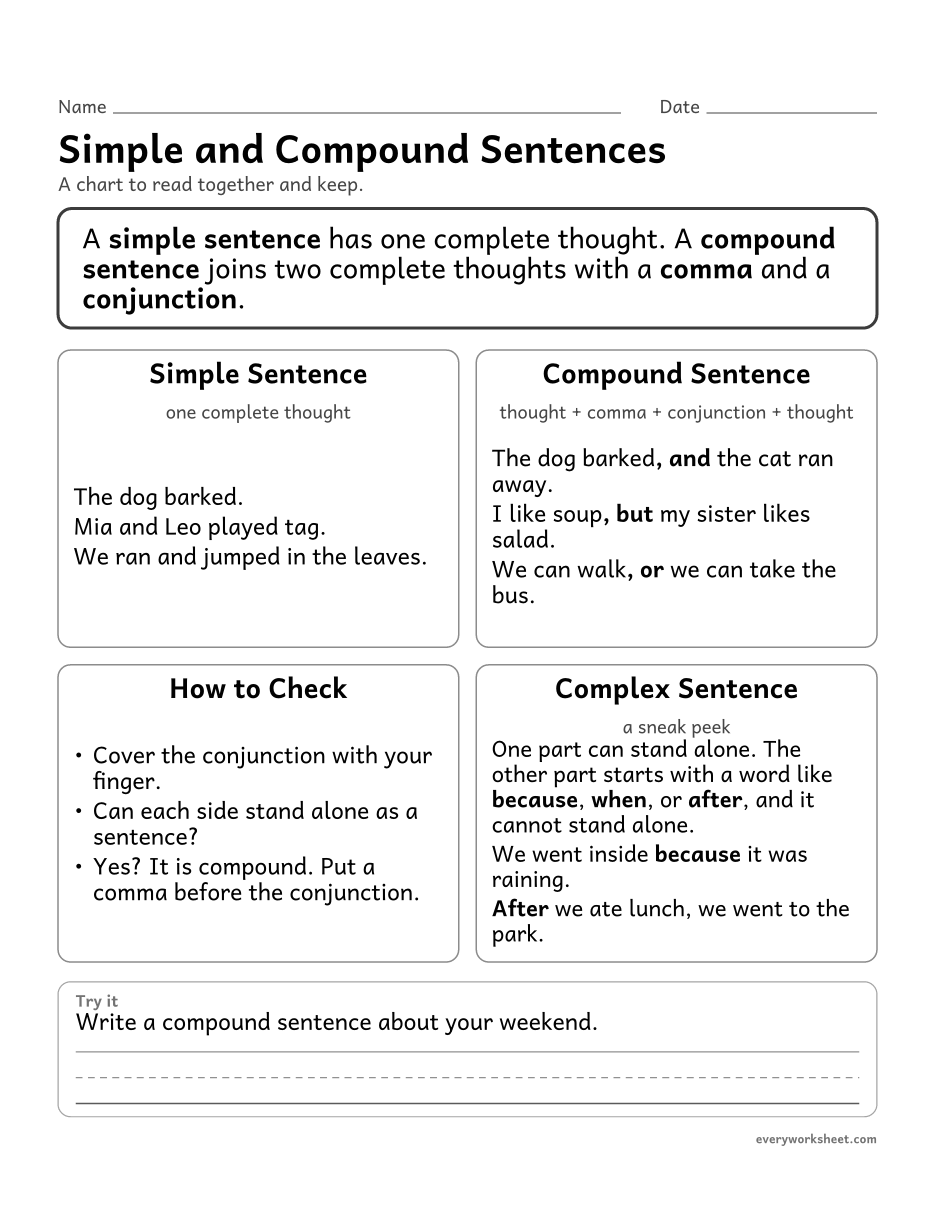
Knowing the three kinds of sentences: simple, compound, and complex
1 page36 KB
Learn the three kinds of sentences, find independent and dependent clauses, and build and fix sentences of each kind.
View largerKnowing the three kinds of sentences: simple, compound, and complex
1 page36 KB
 View all 2 pages
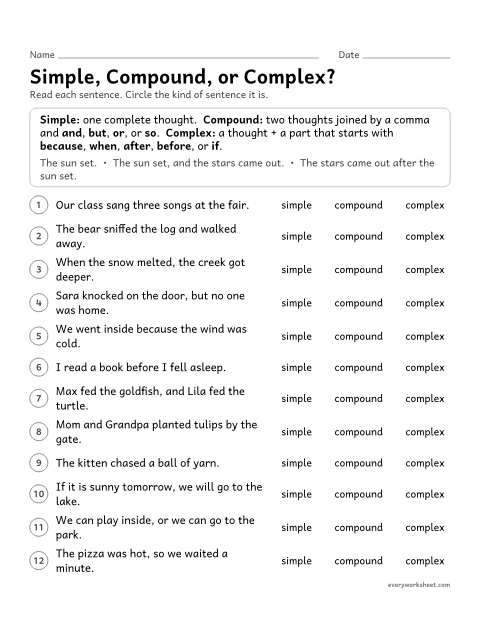
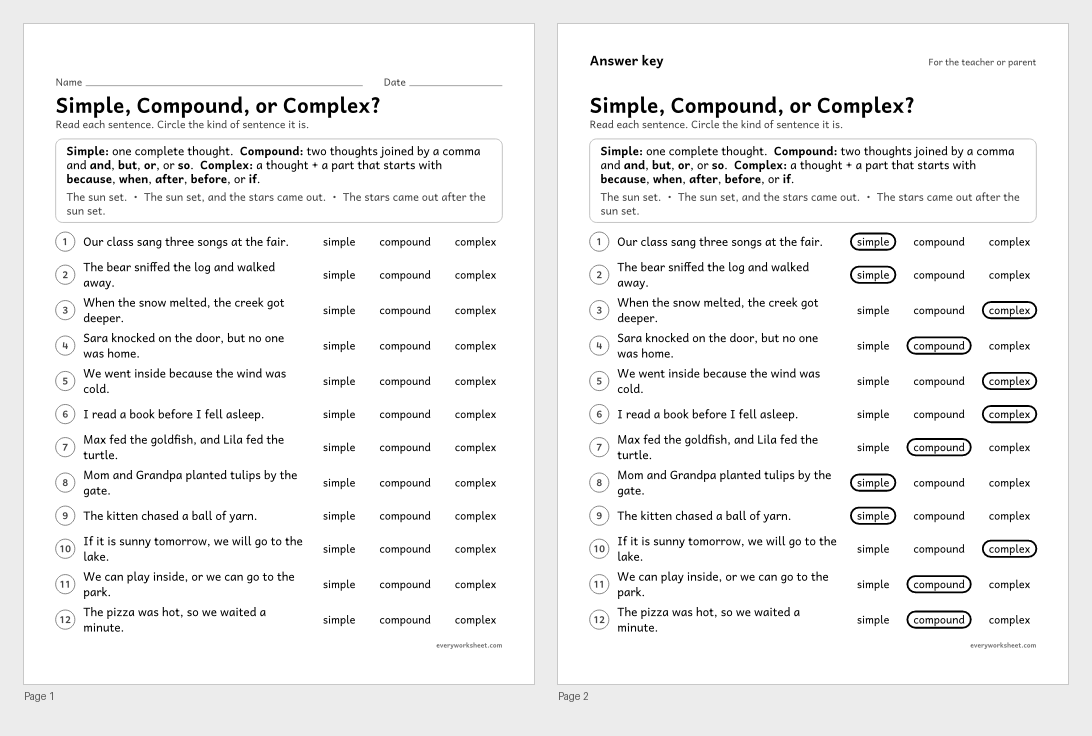
Telling simple, compound, and complex sentences apart
Answer key on page 2
2 pages60 KB
 View all 2 pages
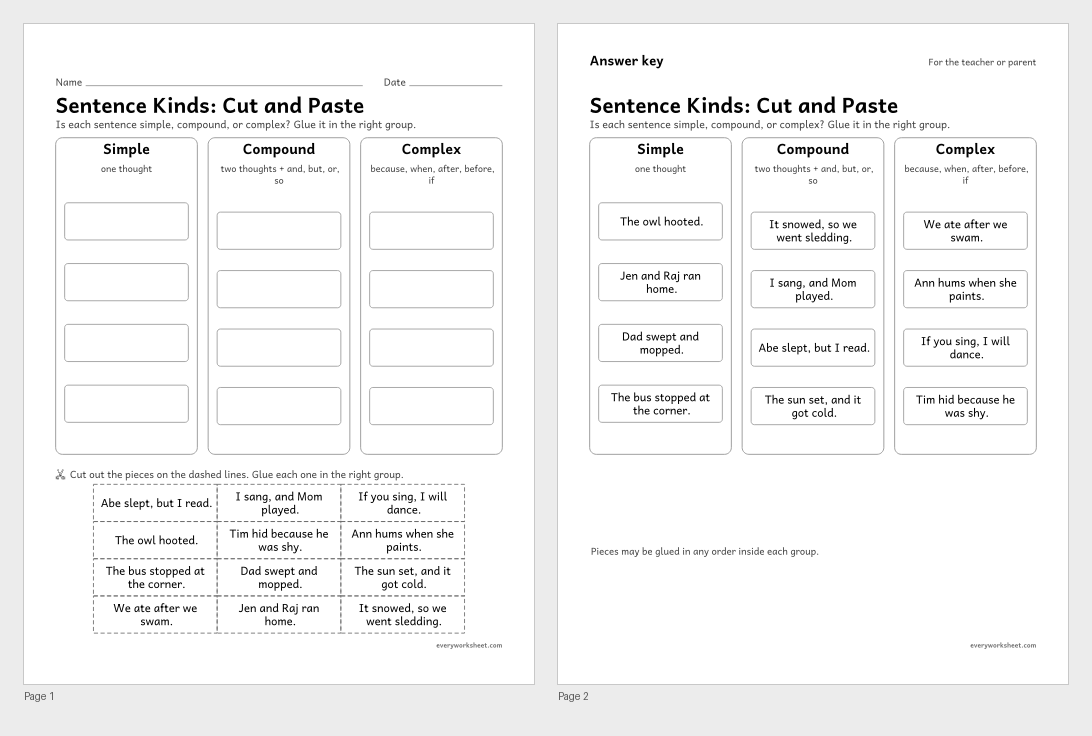
Sorting simple, compound, and complex sentences (cut and paste)
Answer key on page 2
2 pages69 KB
 View all 2 pages
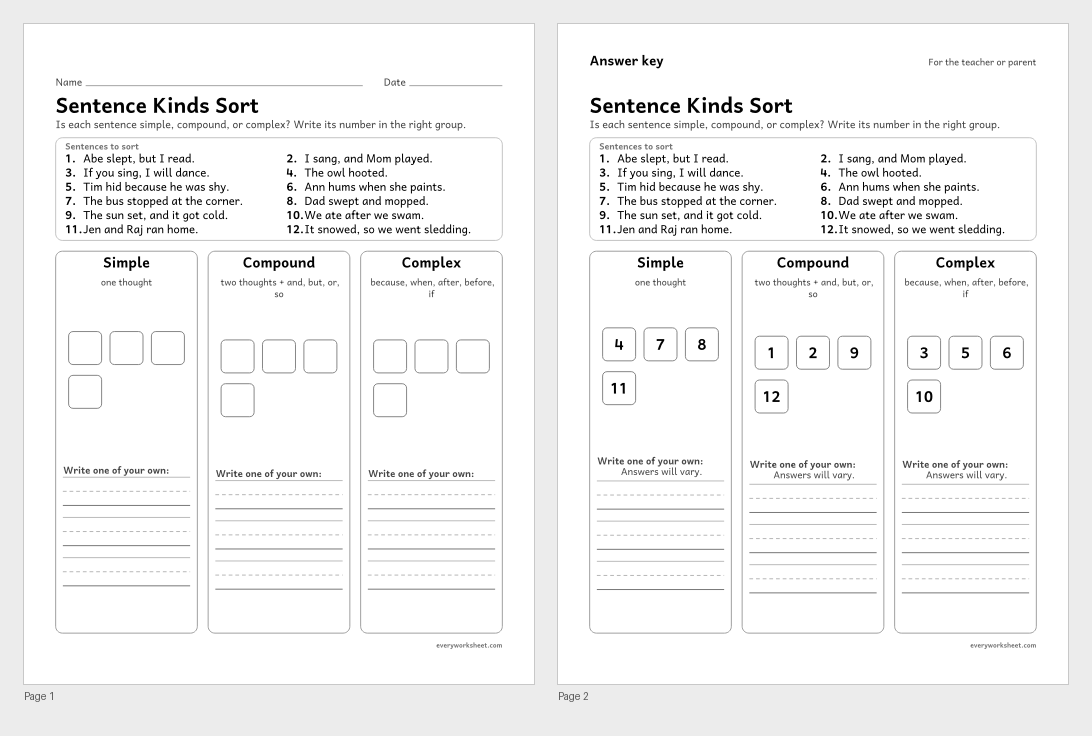
Sorting simple, compound, and complex sentences
Answer key on page 2
2 pages55 KB
 View larger
Telling simple, compound, and complex sentences apart
1 page35 KB
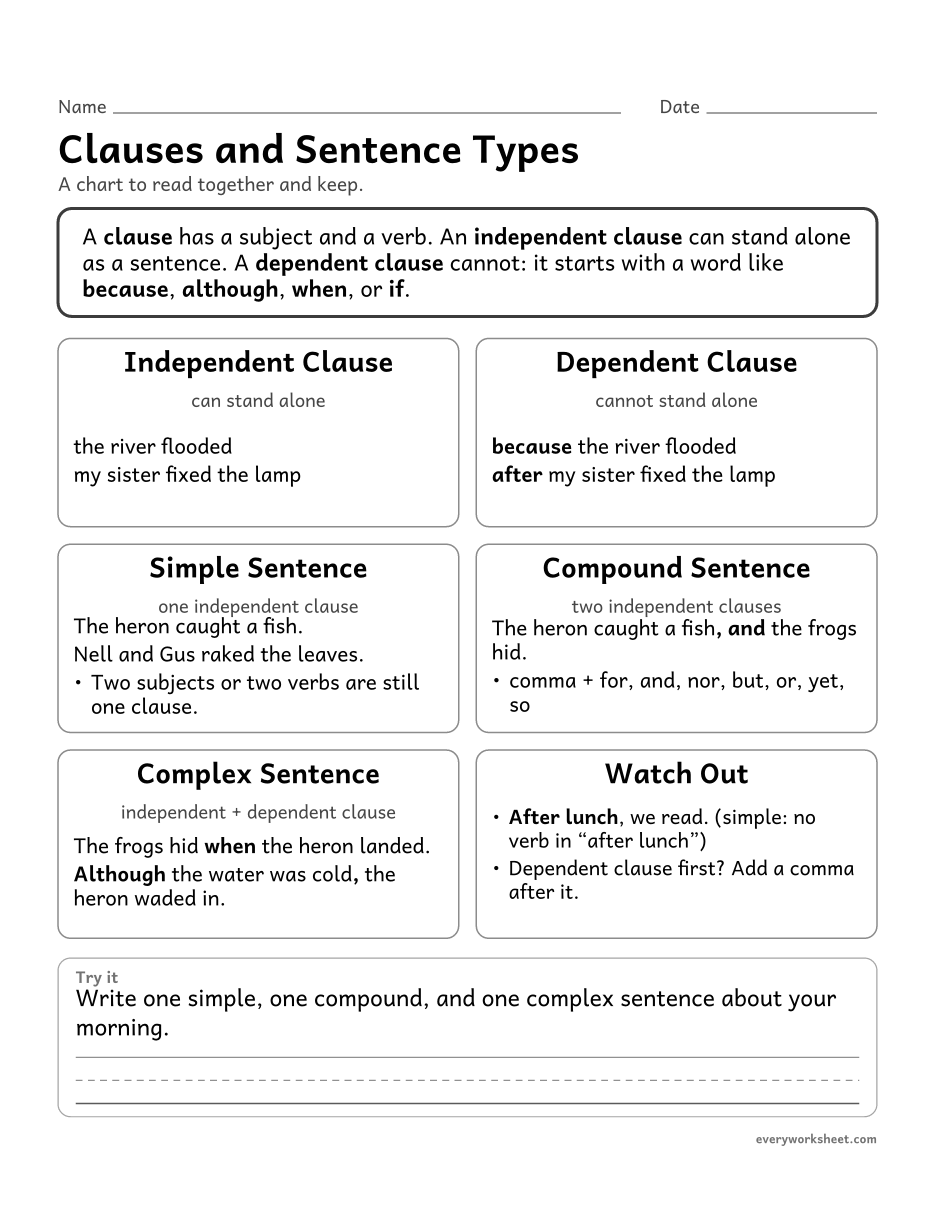 View larger
Knowing independent and dependent clauses and how they build simple, compound, and complex sentences
1 page36 KB
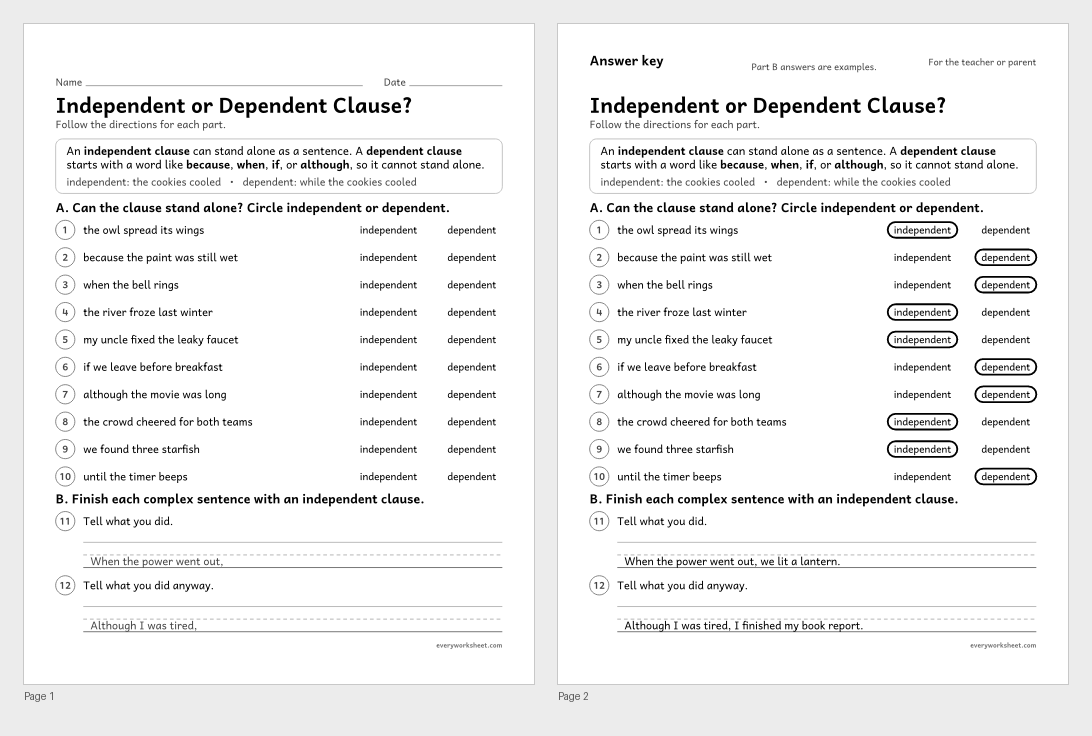 View all 2 pages
Telling independent clauses from dependent clauses and completing complex sentences
Answer key on page 2
2 pages57 KB
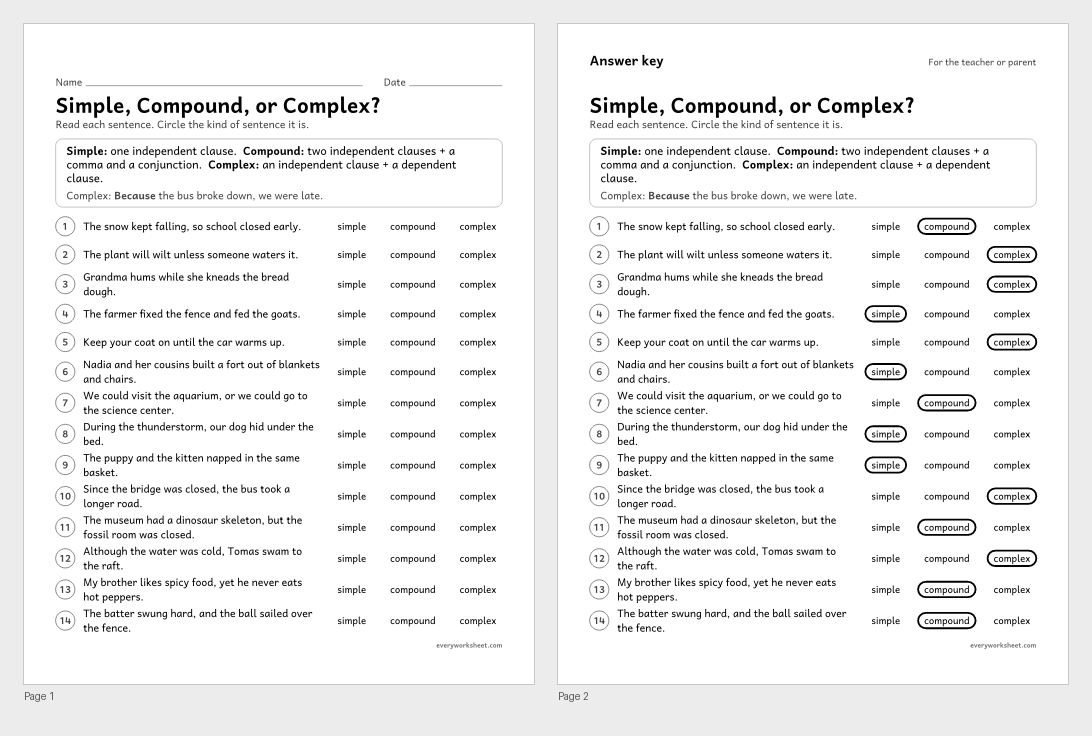 View all 2 pages
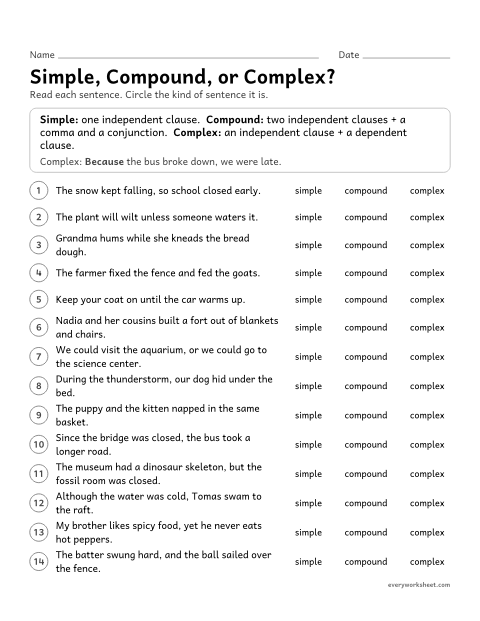
Identifying simple, compound, and complex sentences, including dependent clauses that come first
Answer key on page 2
2 pages62 KB
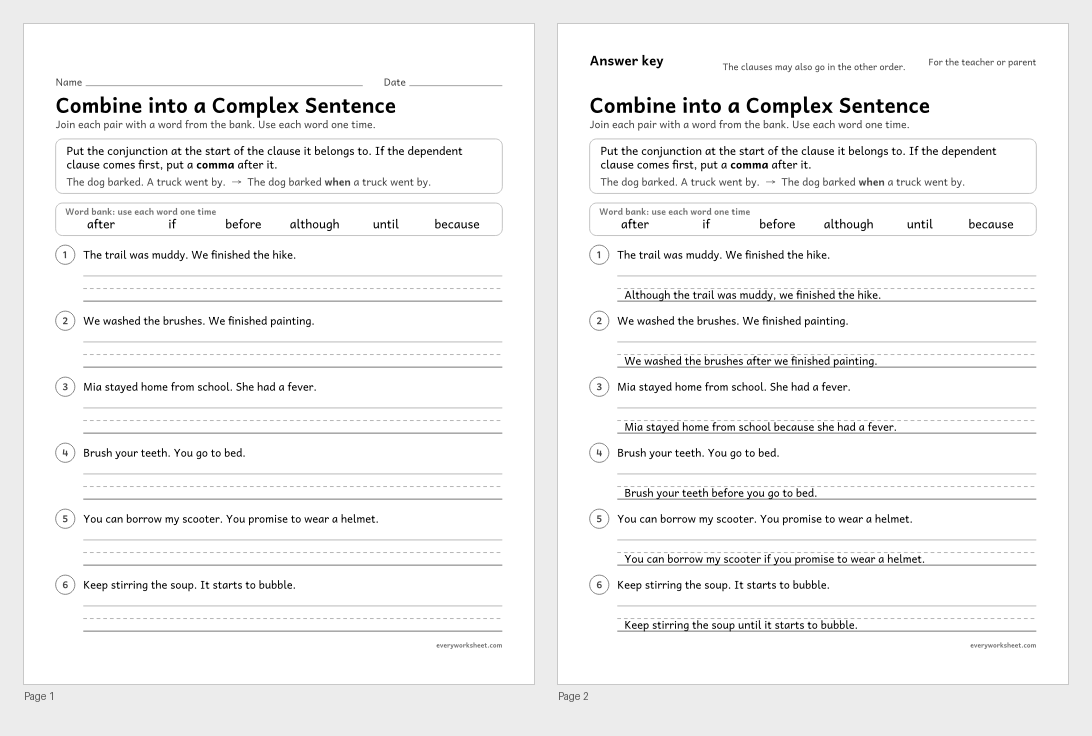 View all 2 pages
Combining two sentences into a complex sentence with a subordinating conjunction
Answer key on page 2
2 pages44 KB
 View all 2 pages
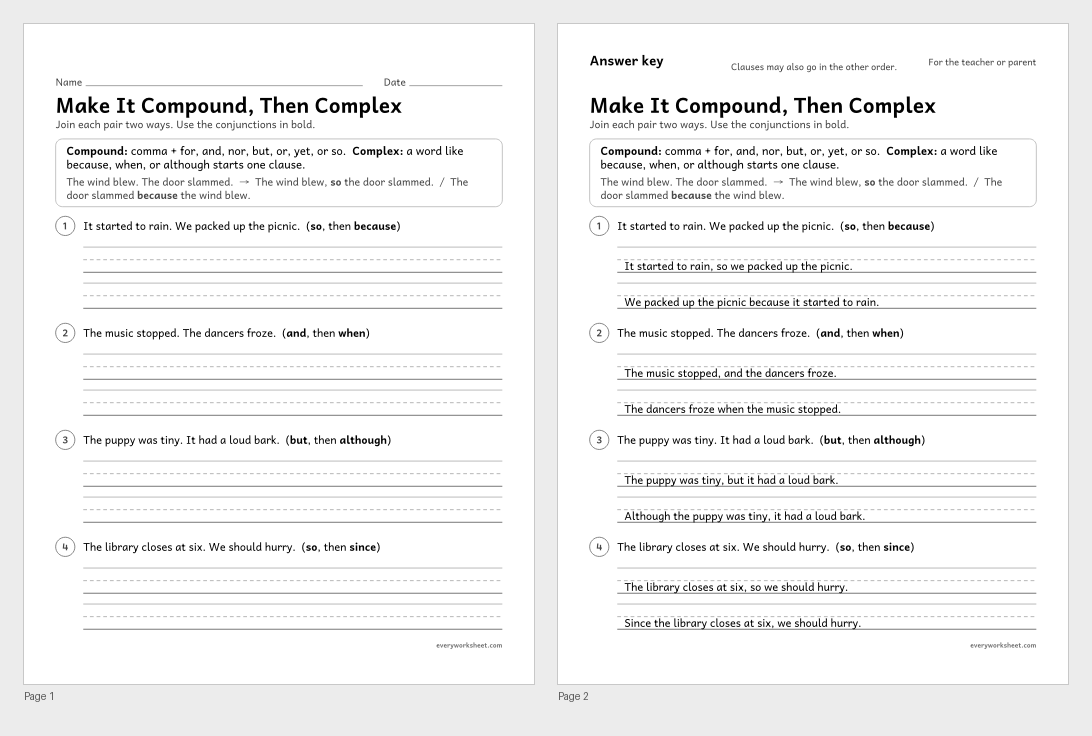
Turning two simple sentences into a compound sentence and a complex sentence
Answer key on page 2
2 pages43 KB
 View all 2 pages
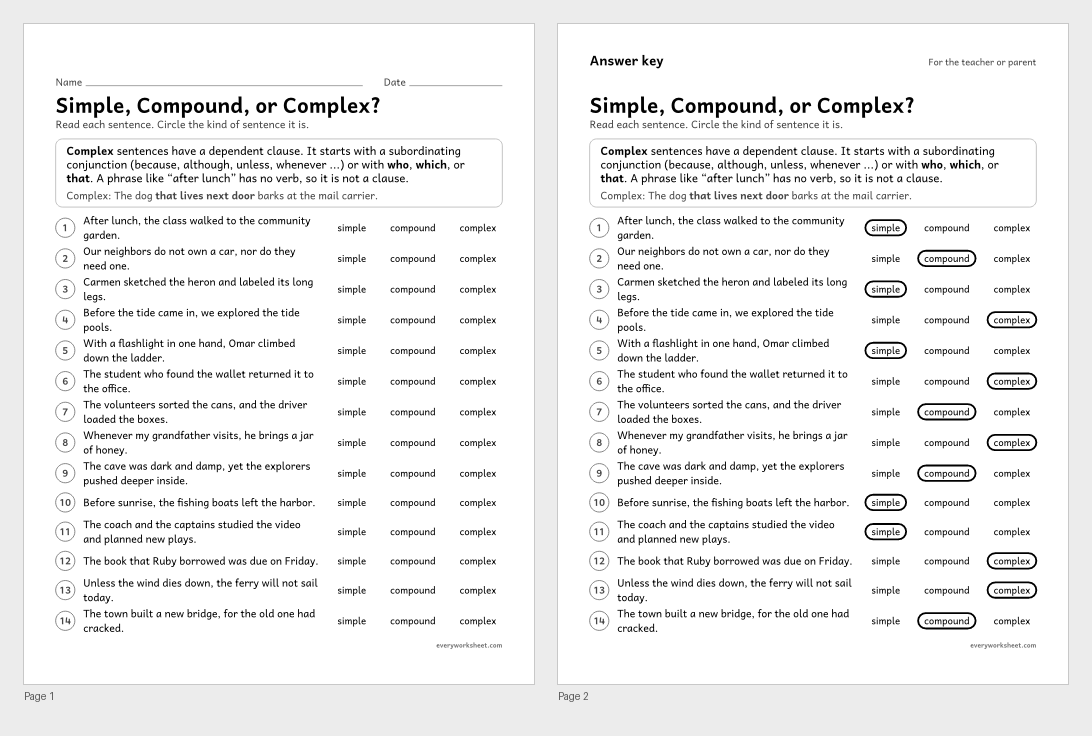
Identifying sentence types, including relative clauses, introductory phrases, and dependent clauses that come first
Answer key on page 2
2 pages63 KB
 View all 2 pages
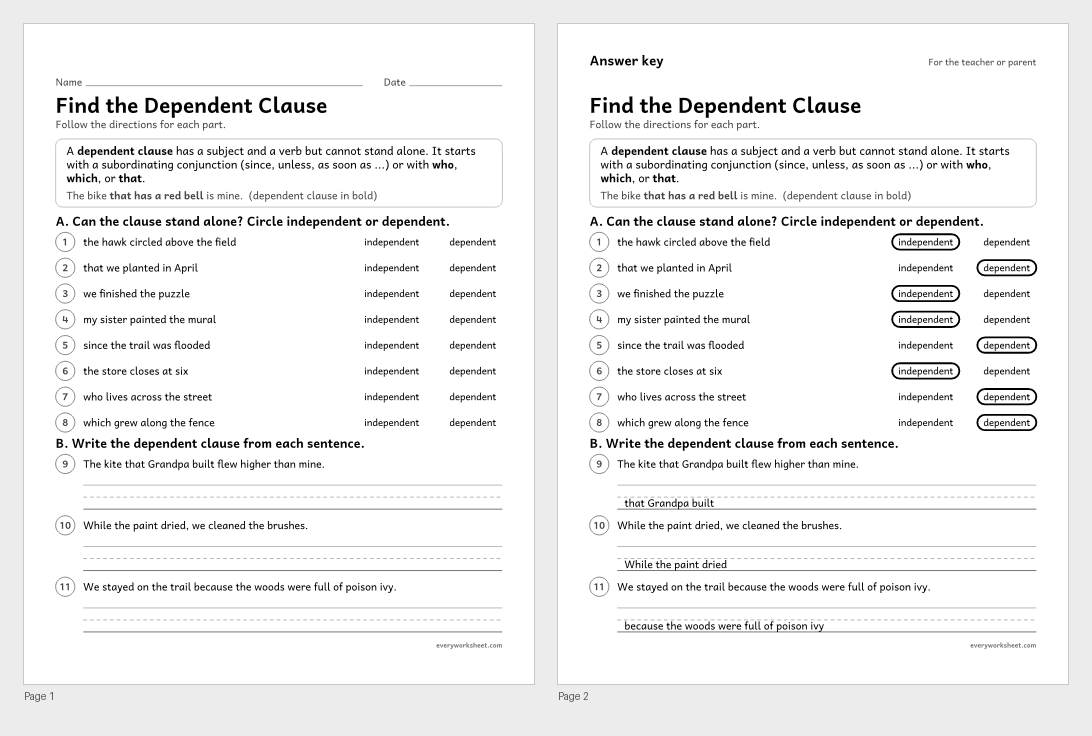
Telling independent from dependent clauses, including relative clauses, and finding the dependent clause in a sentence
Answer key on page 2
2 pages54 KB
 View all 2 pages
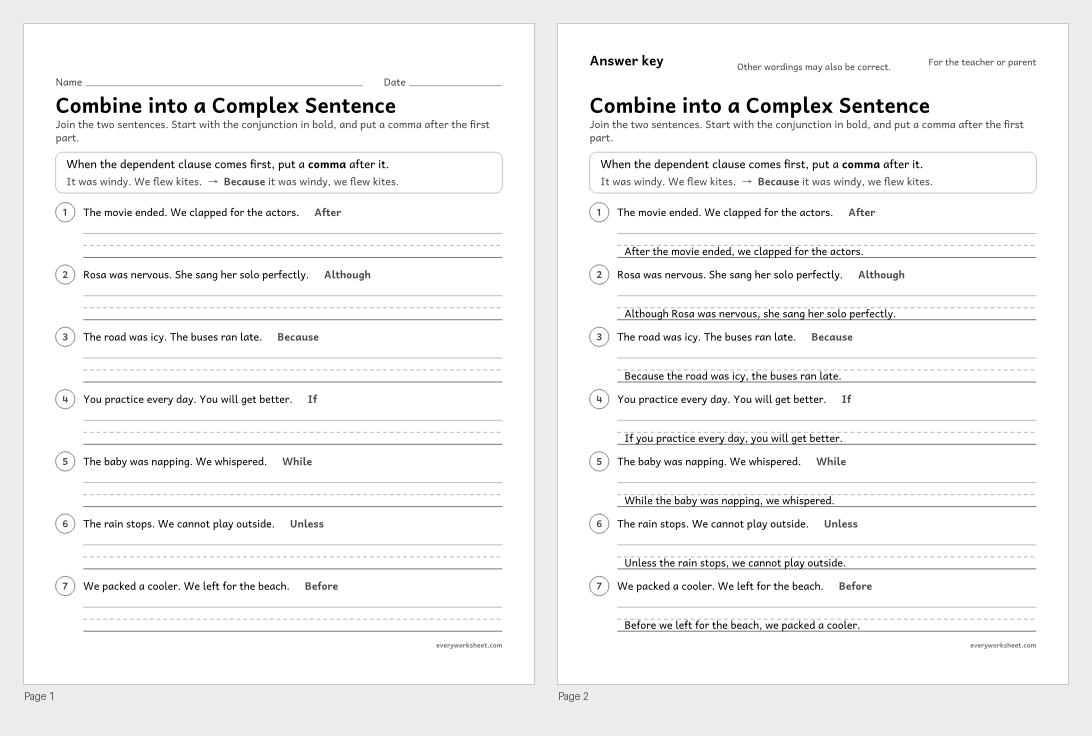
Combining sentences into complex sentences with a comma after an introductory dependent clause
Answer key on page 2
2 pages45 KB
 View all 2 pages
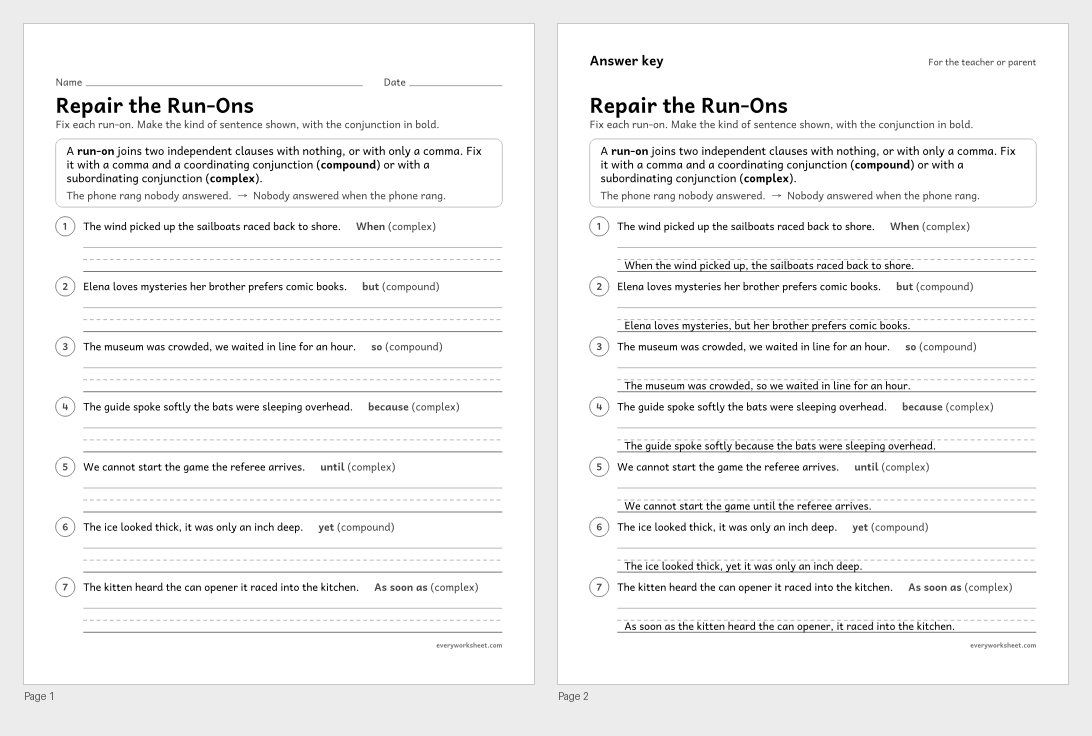
Fixing run-ons and comma splices by making compound or complex sentences
Answer key on page 2
2 pages46 KB
 View all 2 pages
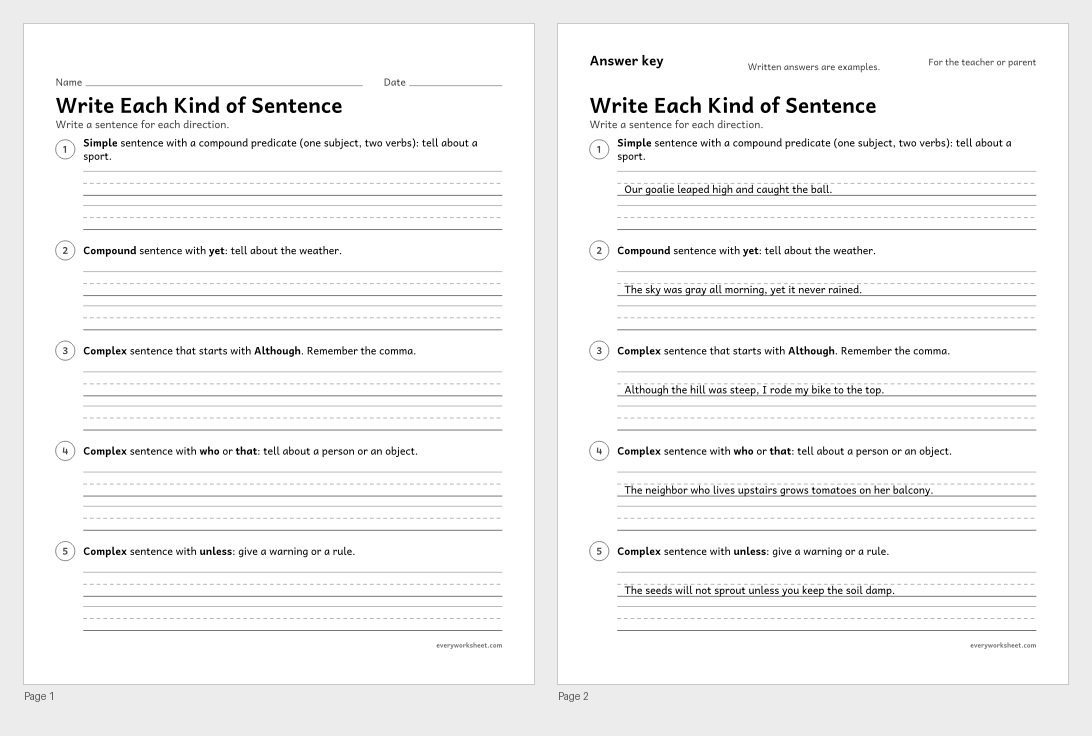
Writing simple, compound, and complex sentences for a purpose
Answer key on page 2
2 pages41 KB
Print at 100% (actual size) for the cleanest tracing lines.
Every sentence is built from clauses. A clause has a subject and a verb. An independent clause can stand alone as a sentence ("the river flooded"), and a dependent clause cannot, because it starts with a word like because, when, although, or if ("because the river flooded"). A simple sentence has one independent clause: "The heron caught a fish." A compound sentence joins two independent clauses with a comma and a conjunction such as and, but, or, or so: "The heron caught a fish, and the frogs hid." A complex sentence has an independent clause and a dependent clause: "The frogs hid when the heron landed."
Two common mix-ups trip children up. First, the word and does not always make a compound sentence: "Nell and Gus raked and bagged the leaves" has two subjects and two verbs, but it is still one clause, so it is simple. Second, a short phrase is not a clause: "After lunch, we read" is simple, while "After we ate lunch, we read" is complex, because "we ate" has its own subject and verb.
These worksheets grow with your child. In 3rd grade, children tell the three kinds apart using and, but, or, and so for compound sentences and because, when, after, before, and if for complex ones. In 4th grade, they learn the words independent and dependent clause, combine sentences with a word bank, and turn one pair of sentences into both a compound and a complex sentence. In 5th grade, they meet relative clauses with who, which, and that, find the dependent clause in a sentence, fix run-ons and comma splices, and write each kind of sentence on their own.
Every practice page has an answer key, and the cut-and-paste sort has a matching no-cut version for days without scissors and glue.
CCSS.ELA-LITERACY.L.3.1.IProduce simple, compound, and complex sentences.CCSS.ELA-LITERACY.L.4.1.FProduce complete sentences, recognizing and correcting inappropriate fragments and run-ons.CCSS.ELA-LITERACY.L.5.1.AExplain the function of conjunctions, prepositions, and interjections in general and their function in particular sentences.CCSS.ELA-LITERACY.L.5.3.AExpand, combine, and reduce sentences for meaning, reader/listener interest, and style.A simple sentence has one independent clause. A compound sentence has two independent clauses joined by a comma and a coordinating conjunction such as and, but, or, or so. A complex sentence has one independent clause and at least one dependent clause, which starts with a word like because, when, although, or who.
No. "Ty sang and danced" has one subject doing two things, so it is a simple sentence with a compound predicate. It is compound only when and joins two complete sentences, each with its own subject and verb: "Ty sang, and Kim danced."
A dependent clause has a subject and a verb, but it starts with a subordinating conjunction (because, although, when, if, until, unless) or a relative pronoun (who, which, that), so it cannot stand alone as a sentence.
They cover 3rd, 4th, and 5th grade. The 3rd grade pages keep to a few joining words, the 4th grade pages teach independent and dependent clauses, and the 5th grade pages add relative clauses, run-on fixes, and open writing.