 View larger
Subjects and predicates
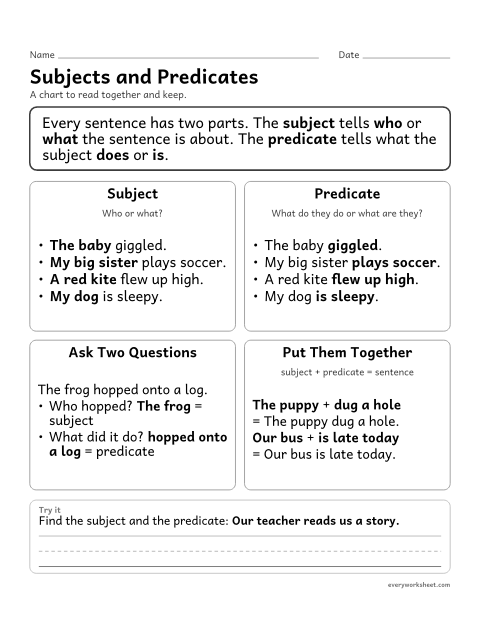
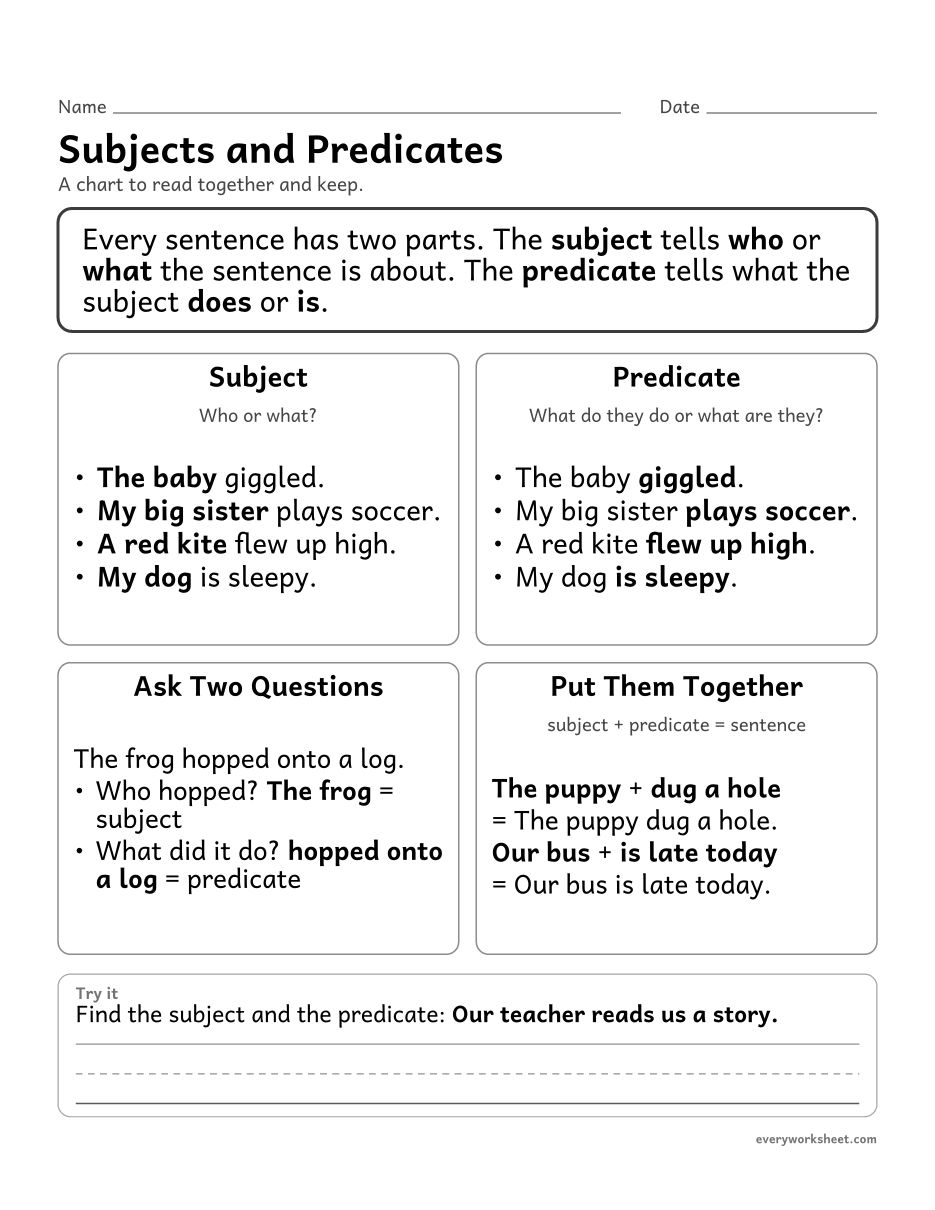
Knowing that a sentence has a subject (who or what) and a predicate (what they do or are)
1 page38 KB
Find, sort, and build the two parts of every sentence: who or what it is about, and what they do or are.
View largerKnowing that a sentence has a subject (who or what) and a predicate (what they do or are)
1 page38 KB
 View all 2 pages
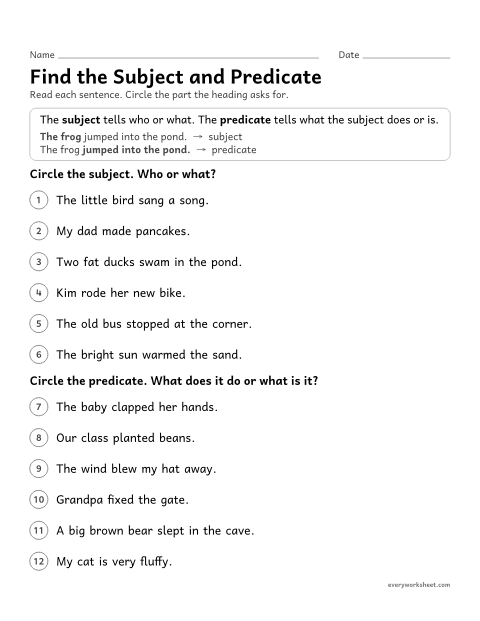
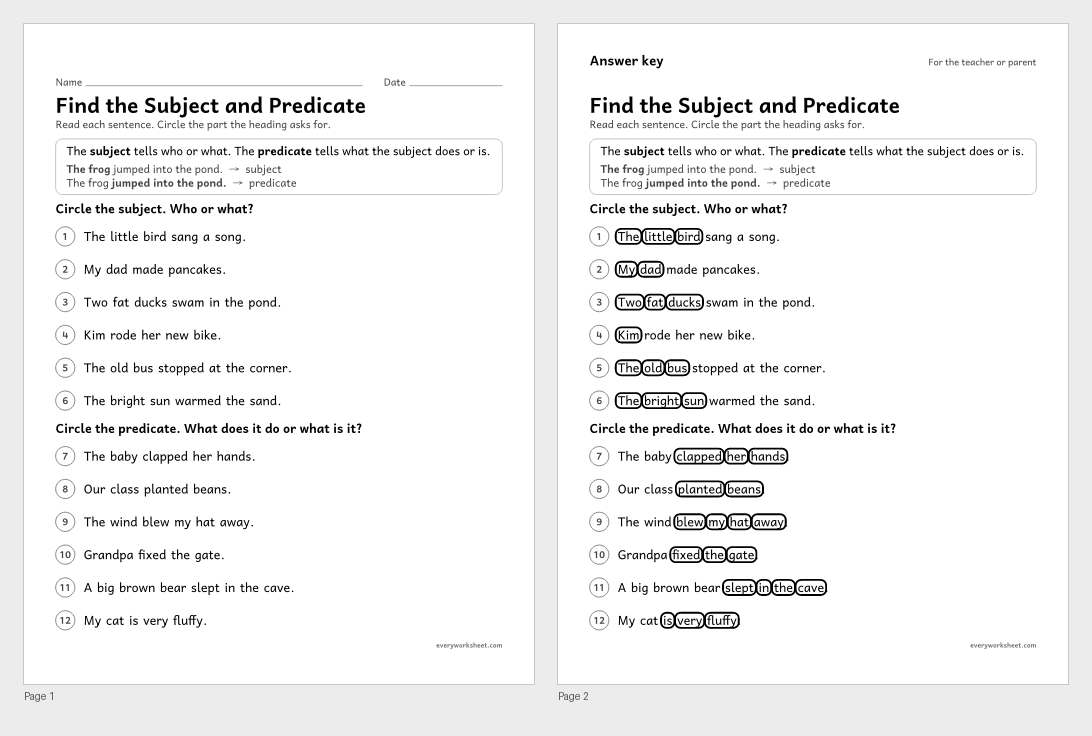
Finding the subject (who or what) and the predicate (what they do or are) in a sentence
Answer key on page 2
2 pages56 KB
 View all 2 pages
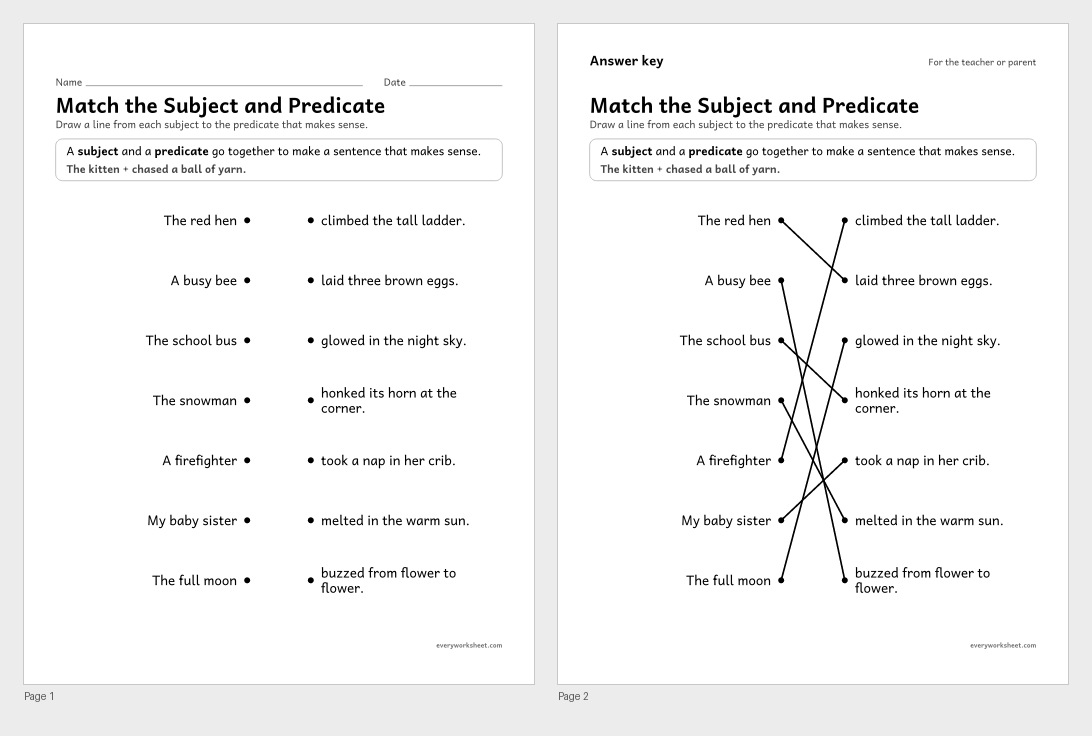
Joining a subject and a predicate to build a complete sentence
Answer key on page 2
2 pages39 KB
 View all 2 pages
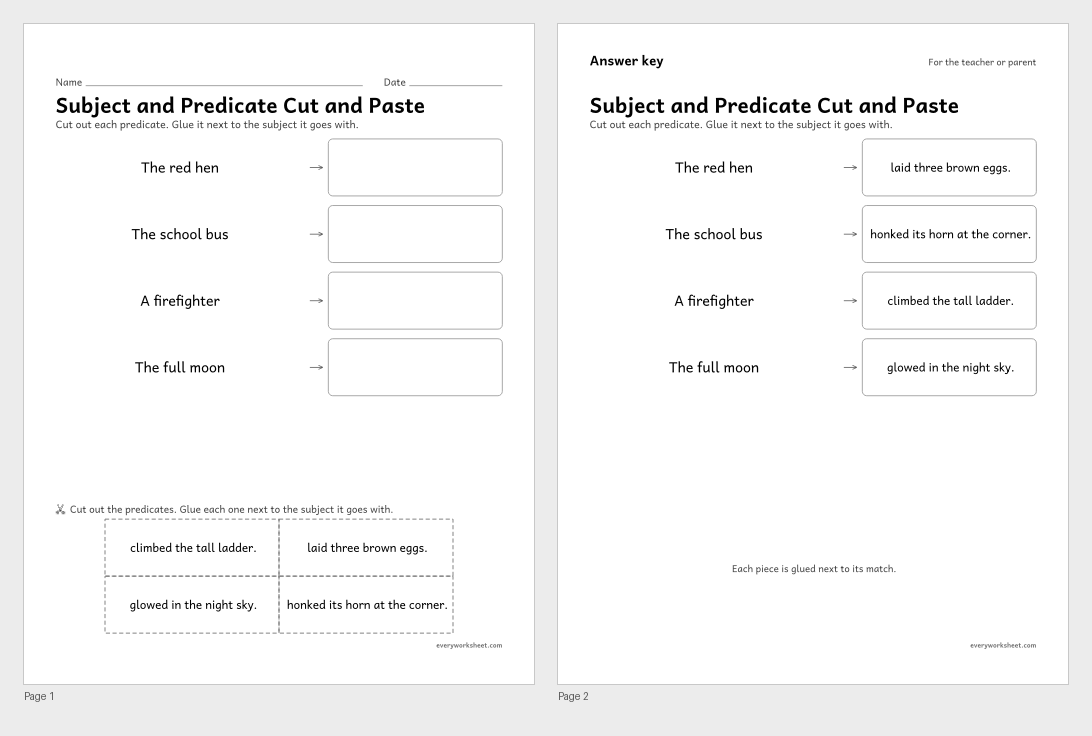
Joining a subject and a predicate to build a complete sentence (cut and paste)
Answer key on page 2
2 pages65 KB
 View all 2 pages
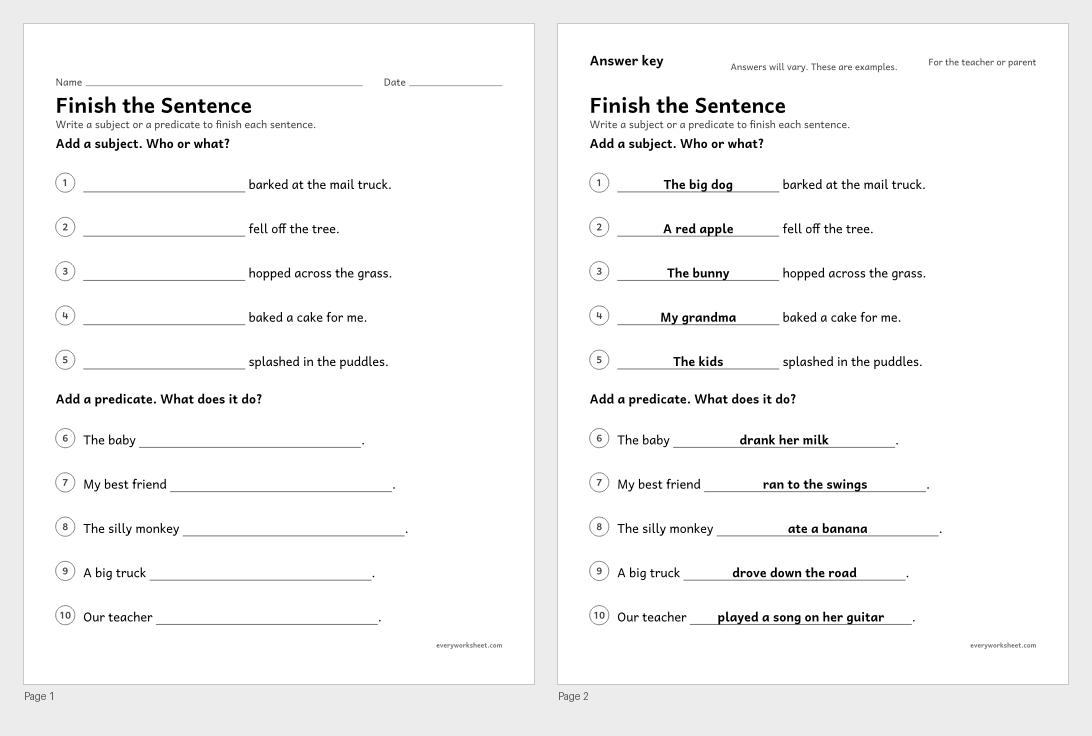
Adding a subject or a predicate to make a complete sentence
Answer key on page 2
2 pages46 KB
 View all 2 pages
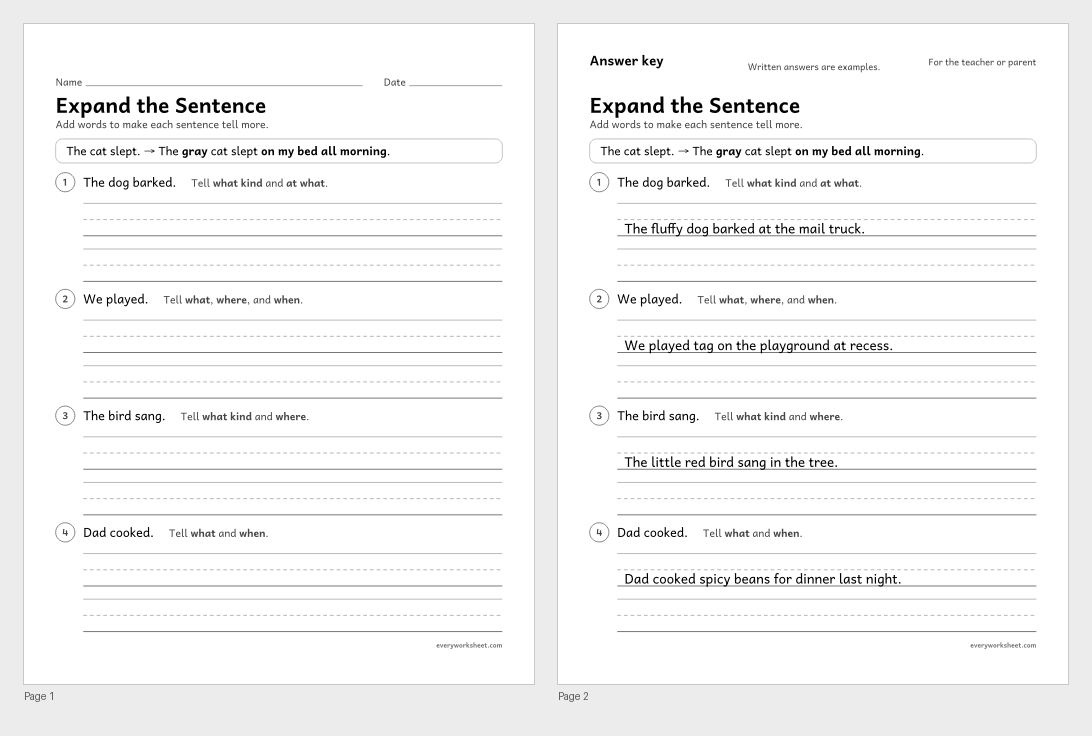
Expanding simple sentences with words that tell who, what kind, where and when
Answer key on page 2
2 pages42 KB
 View all 2 pages
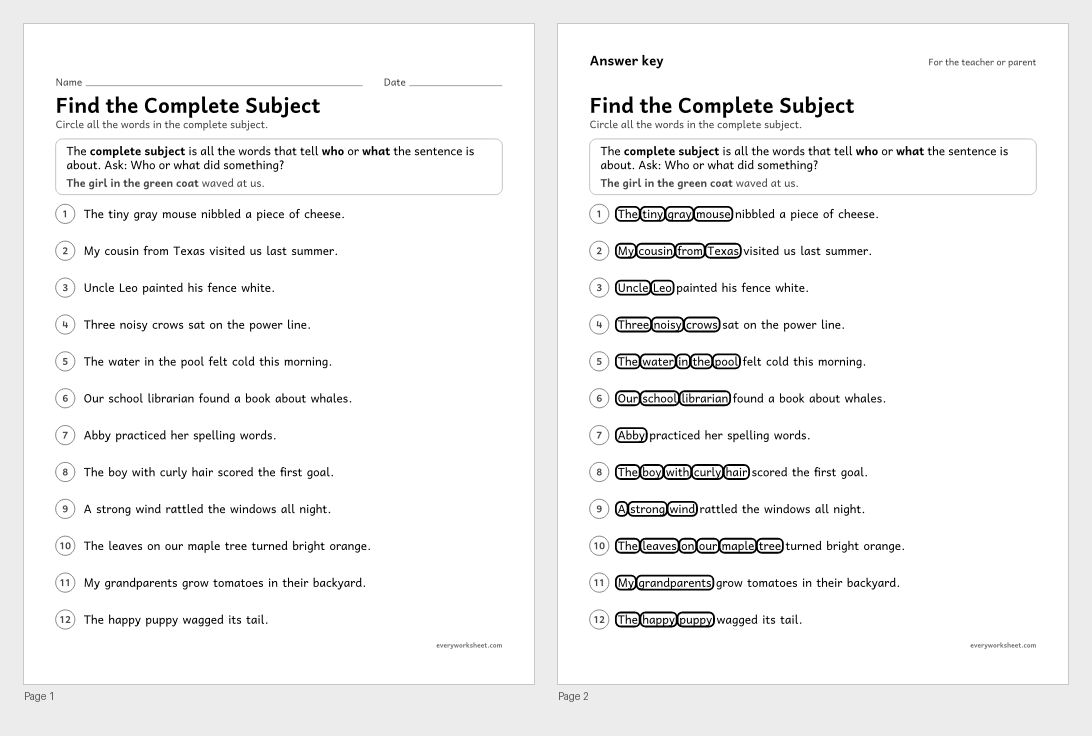
Finding the complete subject: all the words that tell who or what the sentence is about
Answer key on page 2
2 pages56 KB
 View all 2 pages
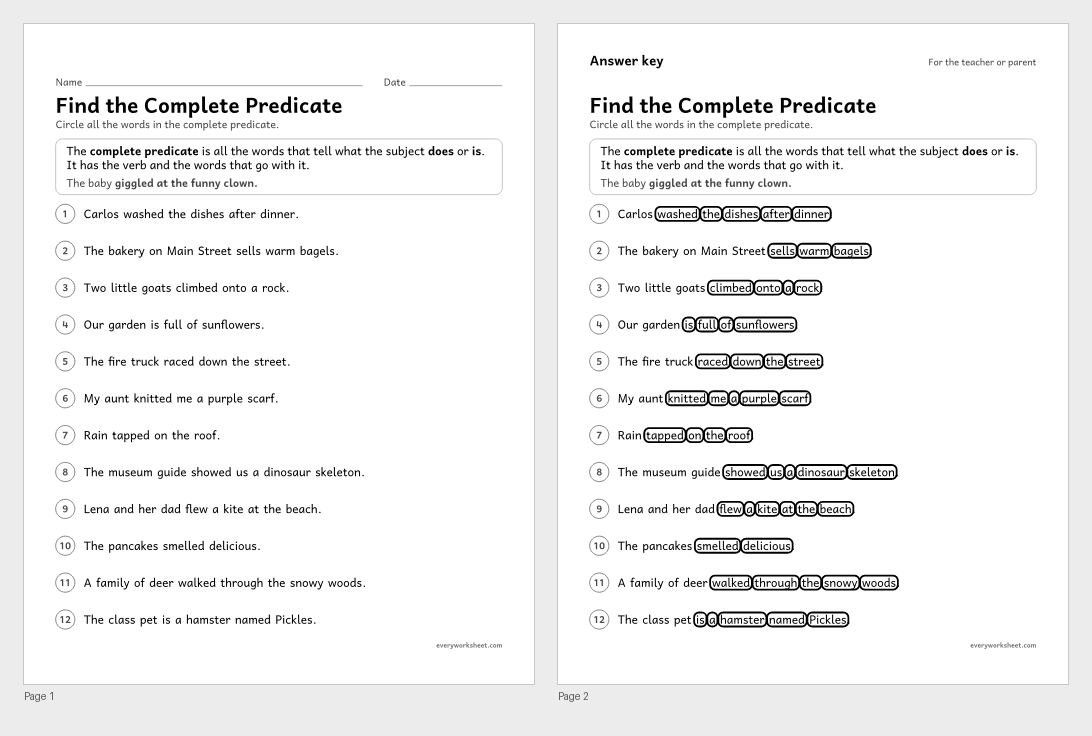
Finding the complete predicate: the verb and all the words that tell what the subject does or is
Answer key on page 2
2 pages56 KB
 View all 2 pages
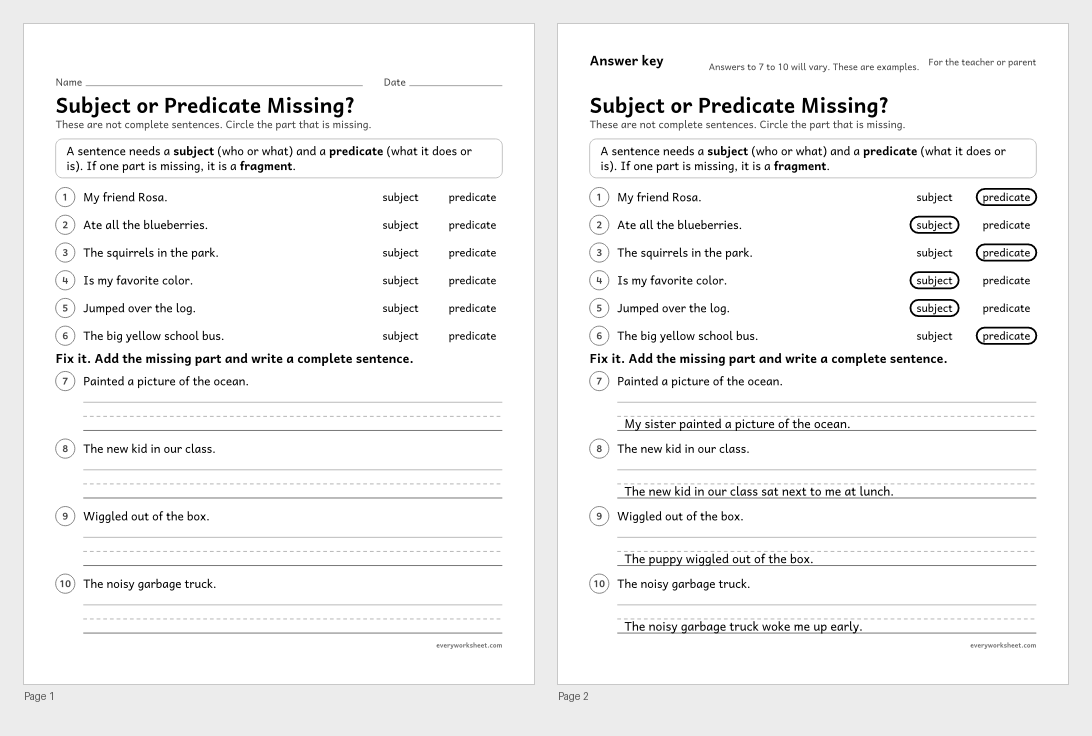
Telling whether a sentence fragment is missing its subject or its predicate, and fixing it
Answer key on page 2
2 pages52 KB
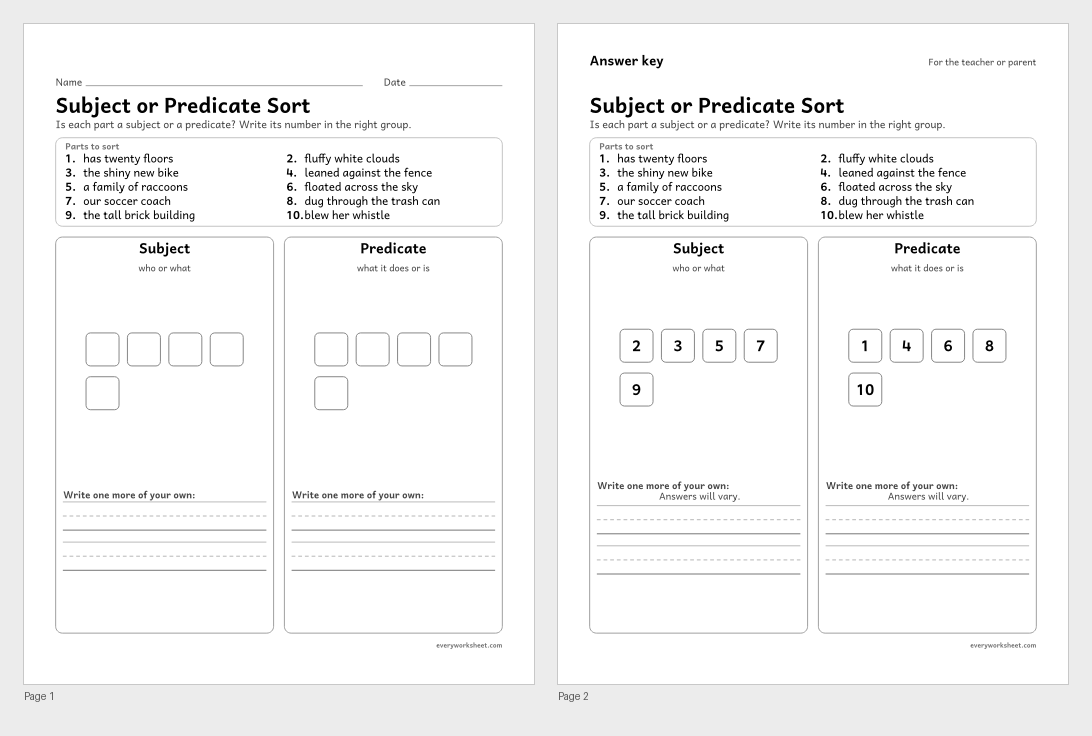 View all 2 pages
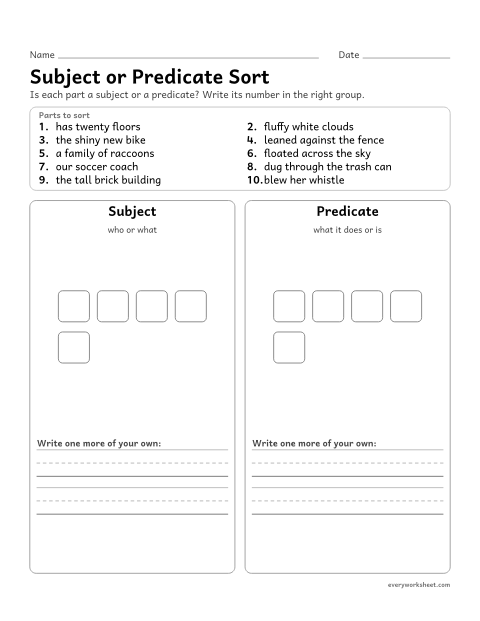
Sorting sentence parts into subjects and predicates
Answer key on page 2
2 pages49 KB
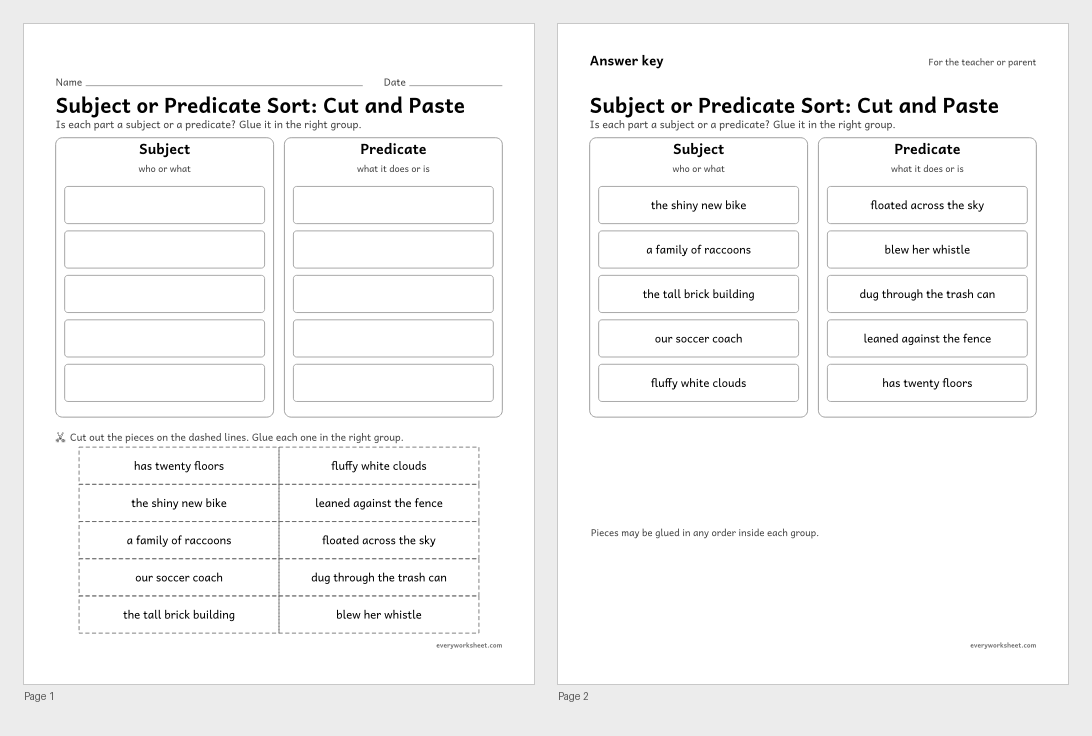 View all 2 pages
Sorting sentence parts into subjects and predicates (cut and paste)
Answer key on page 2
2 pages65 KB
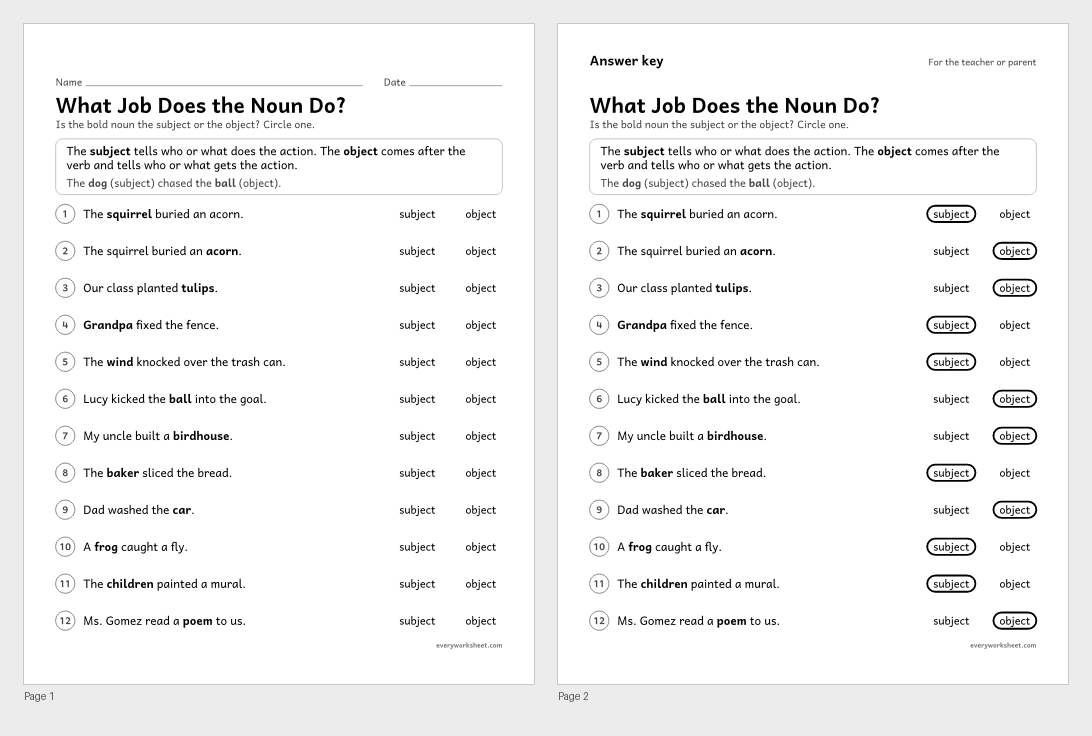 View all 2 pages
Explaining the job of a noun in a sentence: subject or object
Answer key on page 2
2 pages60 KB
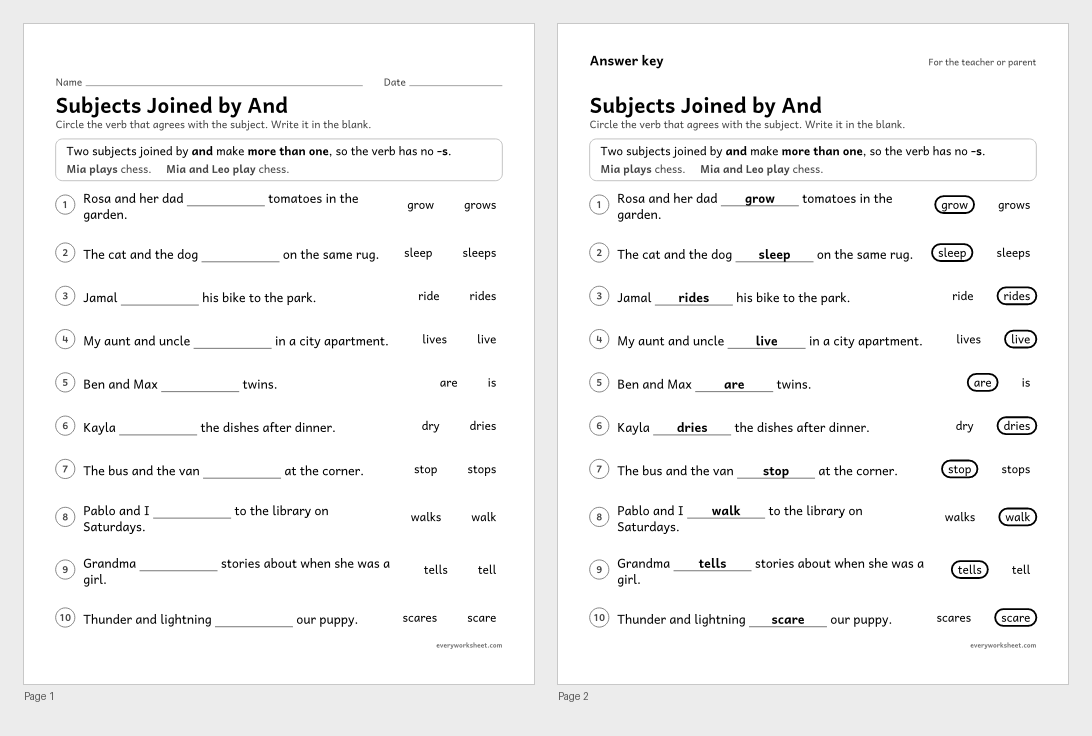 View all 2 pages
Making verbs agree with compound subjects joined by and
Answer key on page 2
2 pages54 KB
 View larger
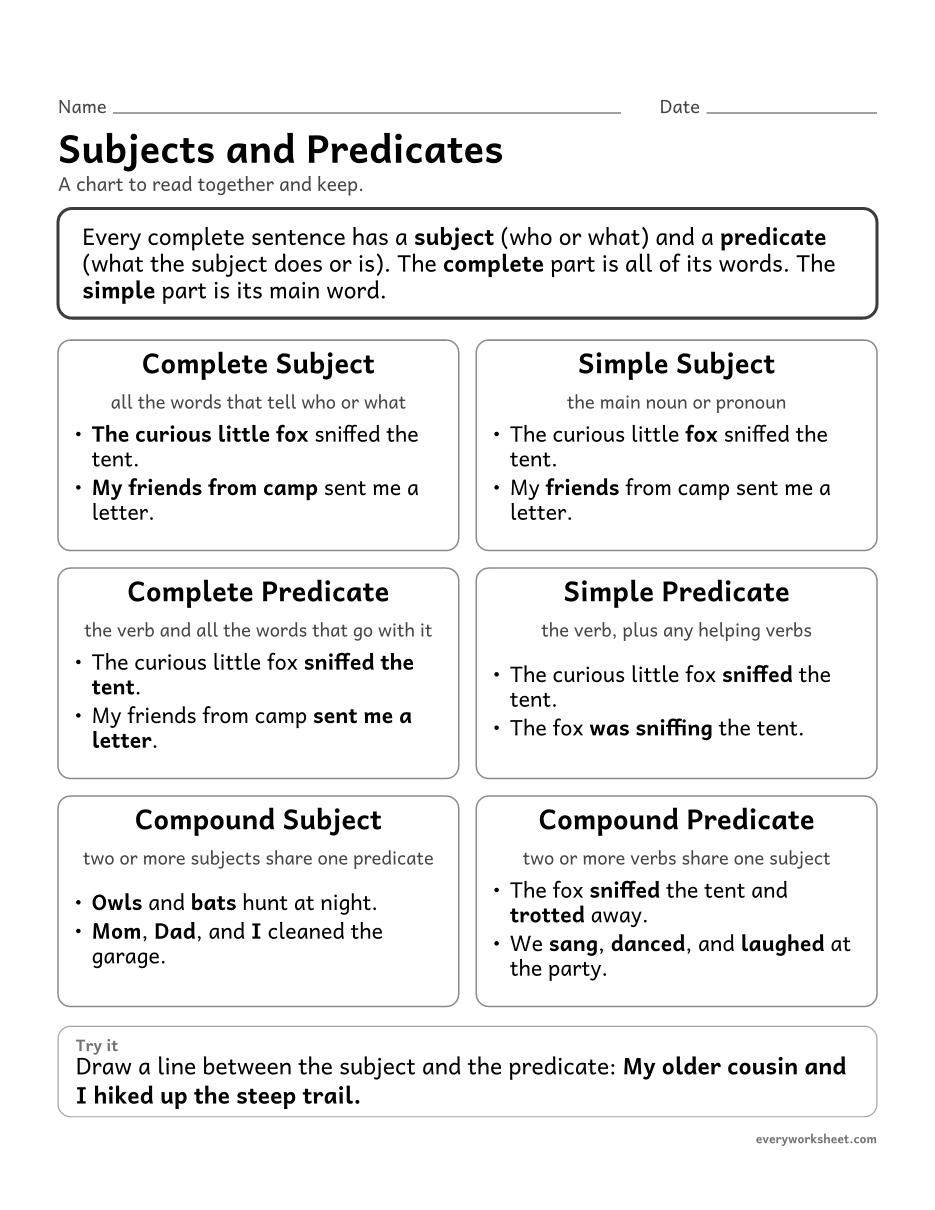
Knowing complete and simple subjects and predicates, and compound subjects and predicates
1 page41 KB
 View all 2 pages
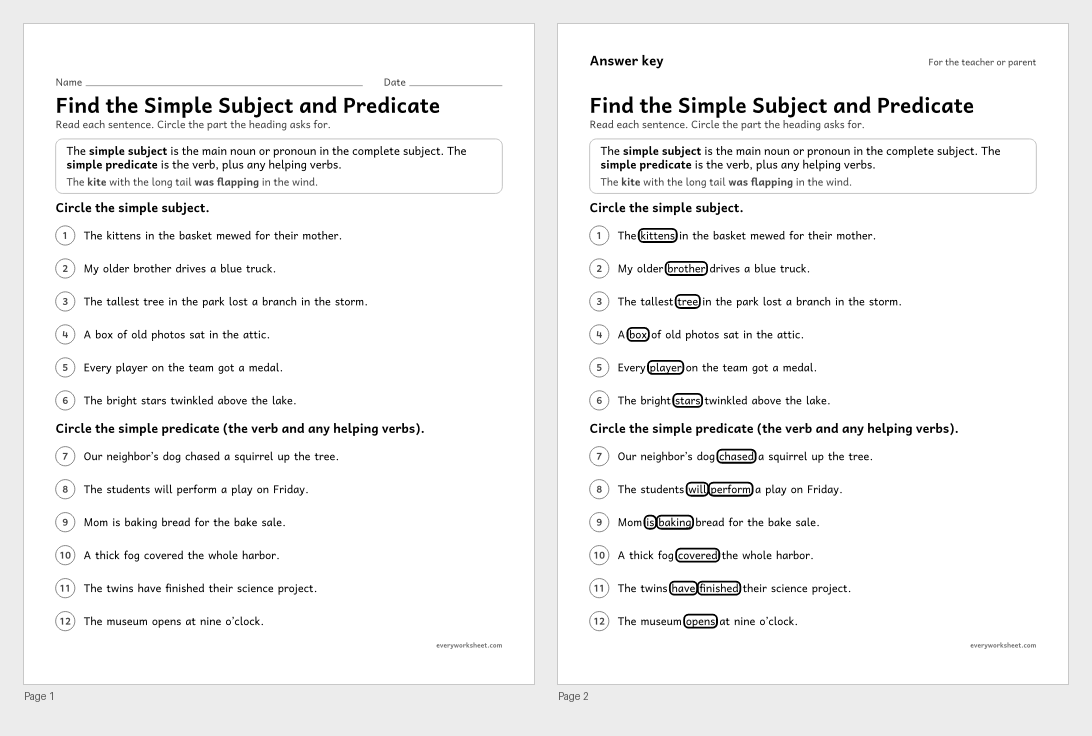
Finding the simple subject (the main noun) and the simple predicate (the verb and any helping verbs)
Answer key on page 2
2 pages57 KB
 View all 2 pages
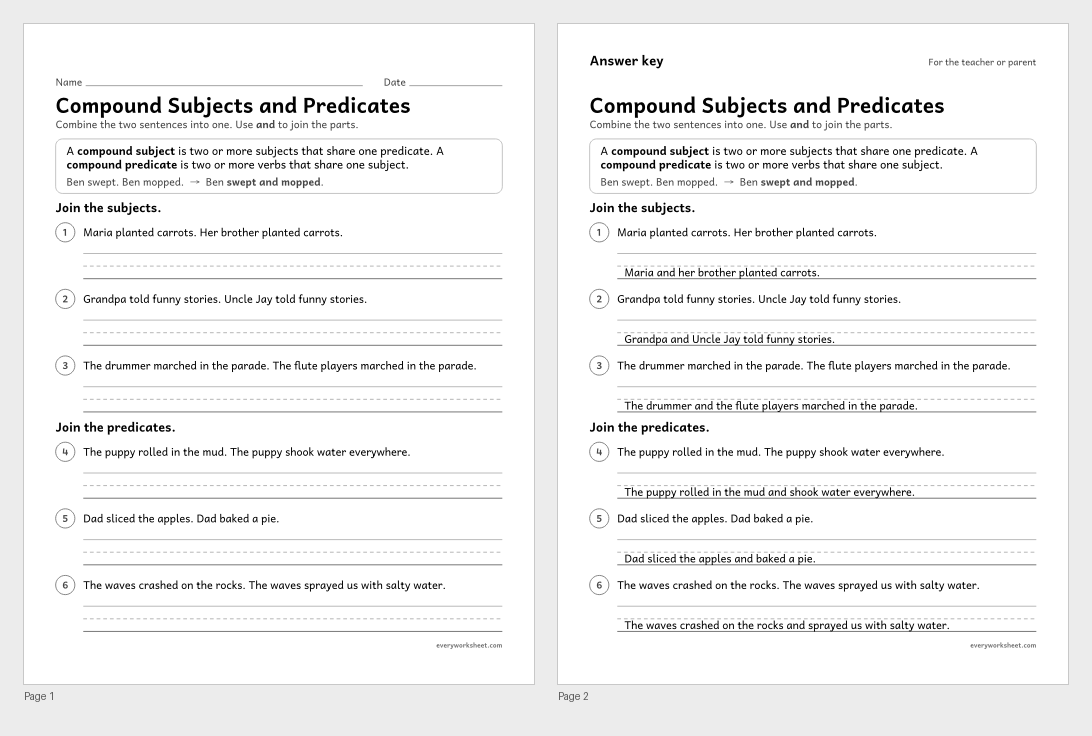
Combining sentences with a compound subject or a compound predicate
Answer key on page 2
2 pages41 KB
 View all 2 pages
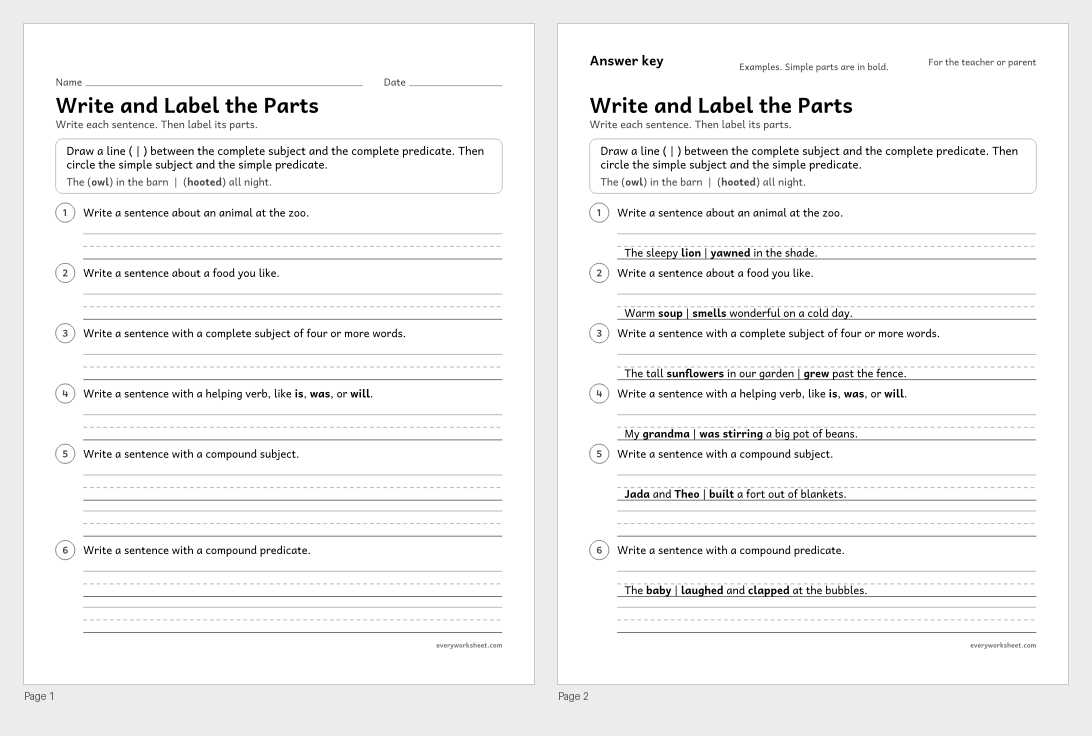
Writing complete sentences and labeling the subject, predicate, simple subject, and simple predicate
Answer key on page 2
2 pages46 KB
 View all 2 pages
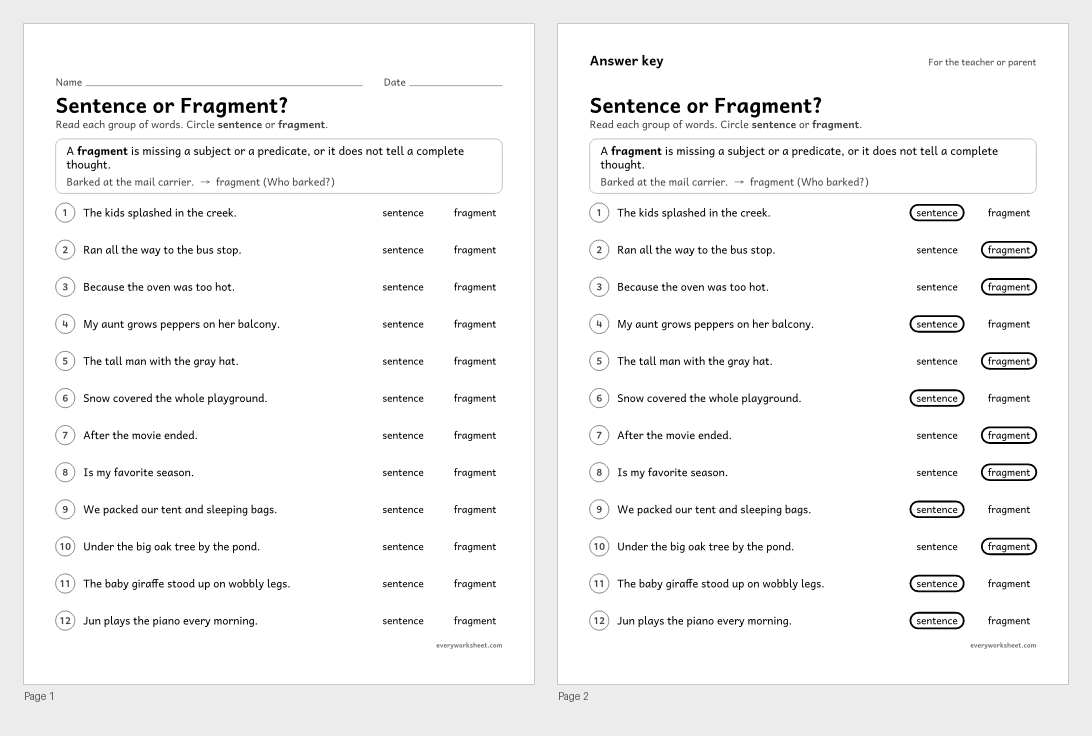
Telling complete sentences from sentence fragments
Answer key on page 2
2 pages56 KB
 View all 2 pages
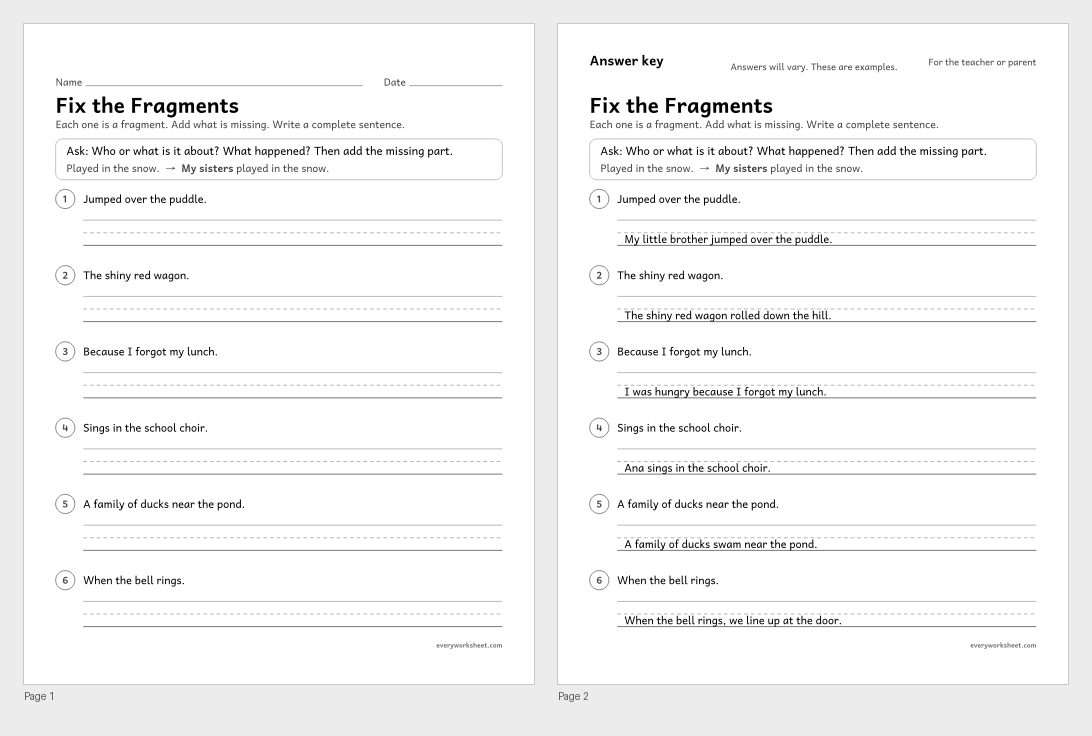
Correcting fragments by adding a subject, a predicate, or a complete thought
Answer key on page 2
2 pages39 KB
Print at 100% (actual size) for the cleanest tracing lines.
Every complete sentence has two parts. The subject tells who or what the sentence is about, and the predicate tells what the subject does or is. In "The little brown dog ran across the yard," the subject is "The little brown dog" and the predicate is "ran across the yard." In "My dog is sleepy," the subject is "My dog" and the predicate is "is sleepy." A quick trick: ask "Who or what?" to find the subject, then "What did it do?" or "What is it?" to find the predicate.
In 2nd grade, children learn to spot the two parts and put them together: they circle subjects and predicates, match a subject to the predicate that makes sense (with a cut-and-paste version), and finish sentences by adding the missing part.
In 3rd grade, they find the complete subject and the complete predicate, sort sentence parts into the right group, and see what happens when one part is missing: a fragment. They name the missing part and fix it.
In 4th grade, children go deeper: the simple subject is the main noun, the simple predicate is the verb with any helping verbs, and compound subjects and compound predicates let them join two short sentences into one smooth one. Every practice page comes with an answer key.
CCSS.ELA-LITERACY.L.2.1.FProduce, expand, and rearrange complete simple and compound sentences (e.g., The boy watched the movie; The little boy watched the movie; The action movie was watched by the little boy).CCSS.ELA-LITERACY.L.3.1.AExplain the function of nouns, pronouns, verbs, adjectives, and adverbs in general and their functions in particular sentences.CCSS.ELA-LITERACY.L.3.1.IProduce simple, compound, and complex sentences.CCSS.ELA-LITERACY.L.4.1.FProduce complete sentences, recognizing and correcting inappropriate fragments and run-ons.The subject tells who or what a sentence is about. The predicate tells what the subject does or is. In "Grandma planted roses," Grandma is the subject and "planted roses" is the predicate.
The complete subject is all the words that tell who or what: "The tiny brown hamster." The simple subject is just the main noun or pronoun in it: "hamster." In the same way, the complete predicate is the verb and all the words that go with it, and the simple predicate is the verb plus any helping verbs.
A compound subject is two or more subjects that share one predicate, like "Snow and ice covered the road." A compound predicate is two or more verbs that share one subject, like "Leo washed the car and dried it with a towel." Both help children join short, choppy sentences.
Children usually meet the idea of a complete sentence in 1st and 2nd grade, find complete subjects and predicates in 3rd grade, and work with simple and compound subjects and predicates in 4th grade, when they also fix fragments and run-ons.
Yes. Every practice page has an answer key on the second page. Pages where children write their own sentences show example answers.