 View all 2 pages
Winter things count and circle
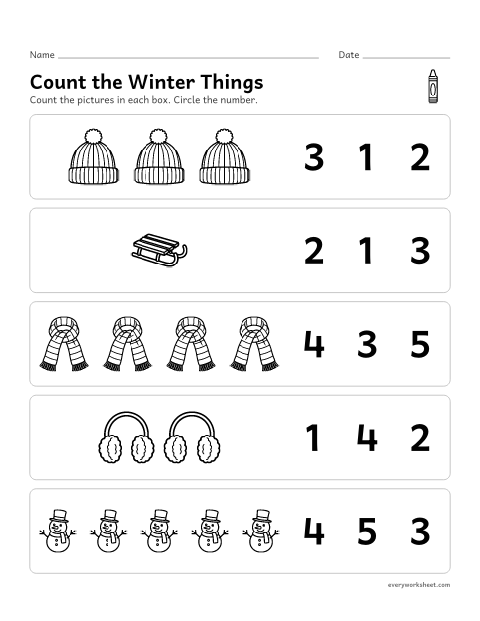
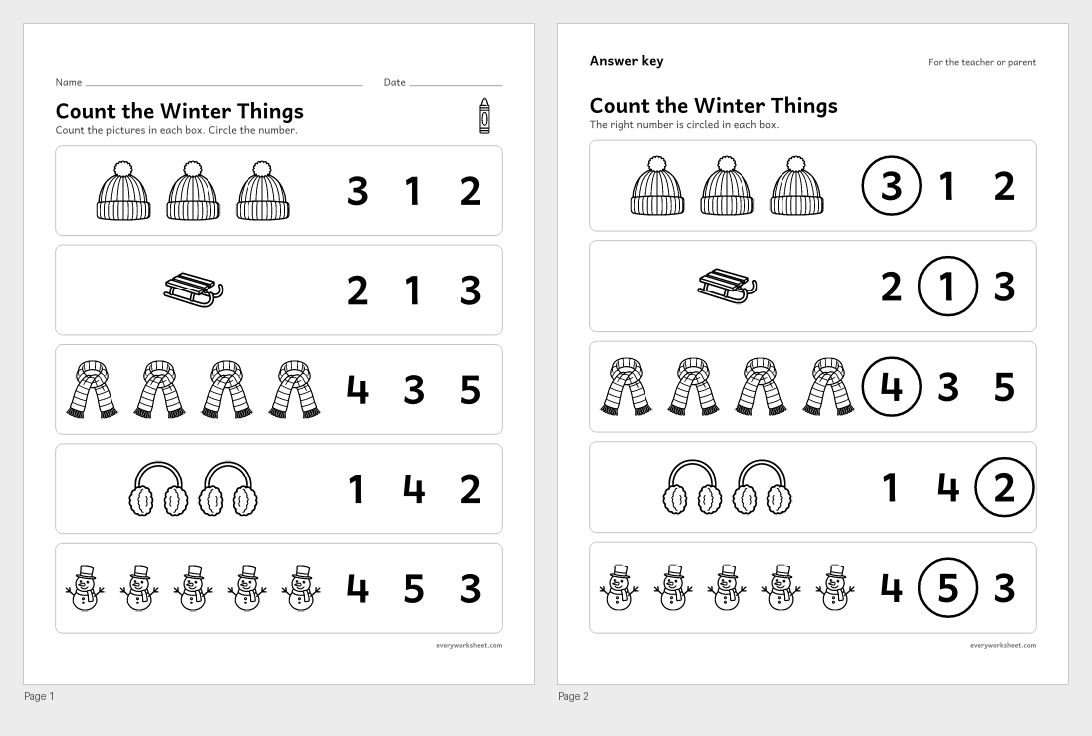
Counting up to 5 winter things and matching the number
Answer key on page 2
2 pages400 KB
Snowy counting, word problems, color by number, line plots, area, fractions and decimals from preschool to 5th grade, with answer keys.
View all 2 pagesCounting up to 5 winter things and matching the number
Answer key on page 2
2 pages400 KB
 View all 2 pages
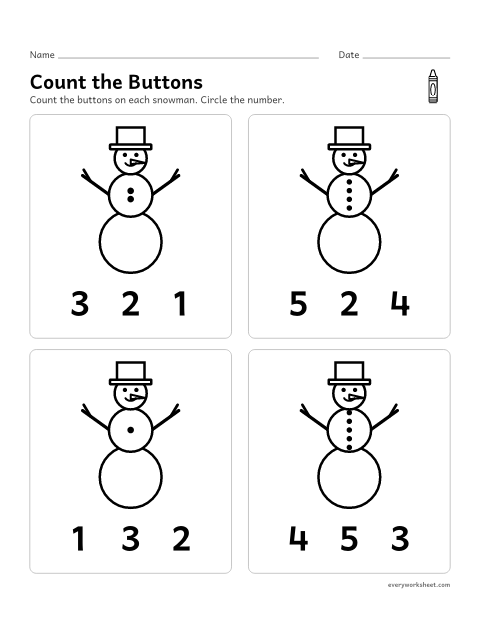
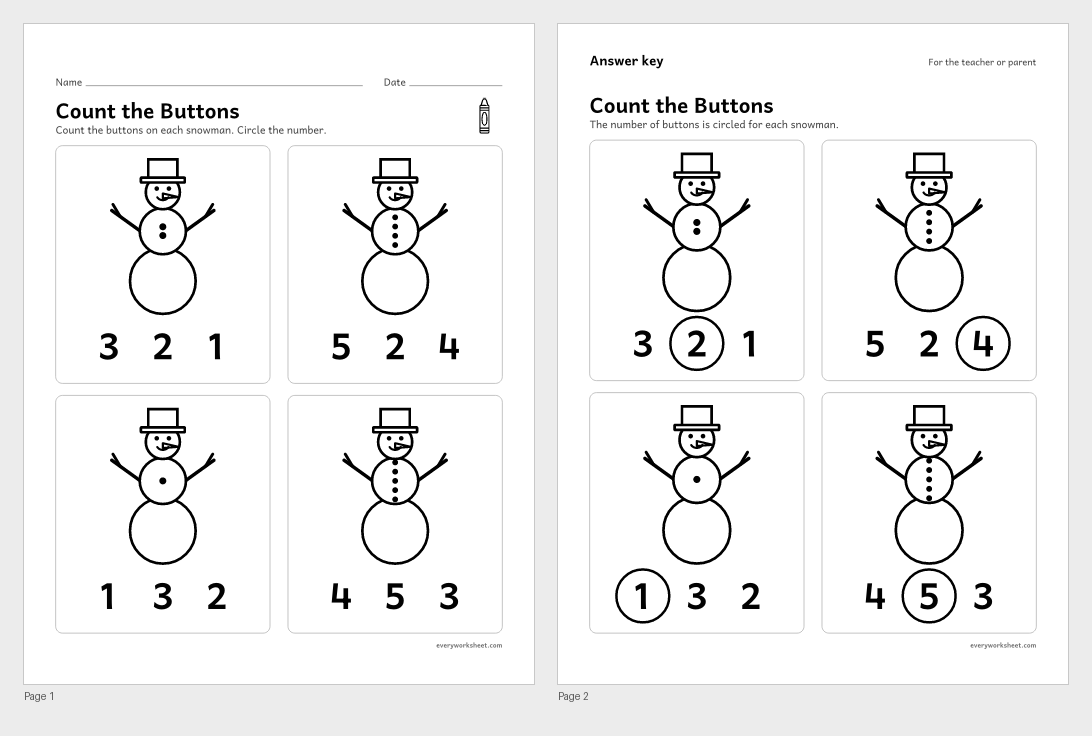
Counting buttons to 5 and matching the number
Answer key on page 2
2 pages36 KB
 View all 2 pages
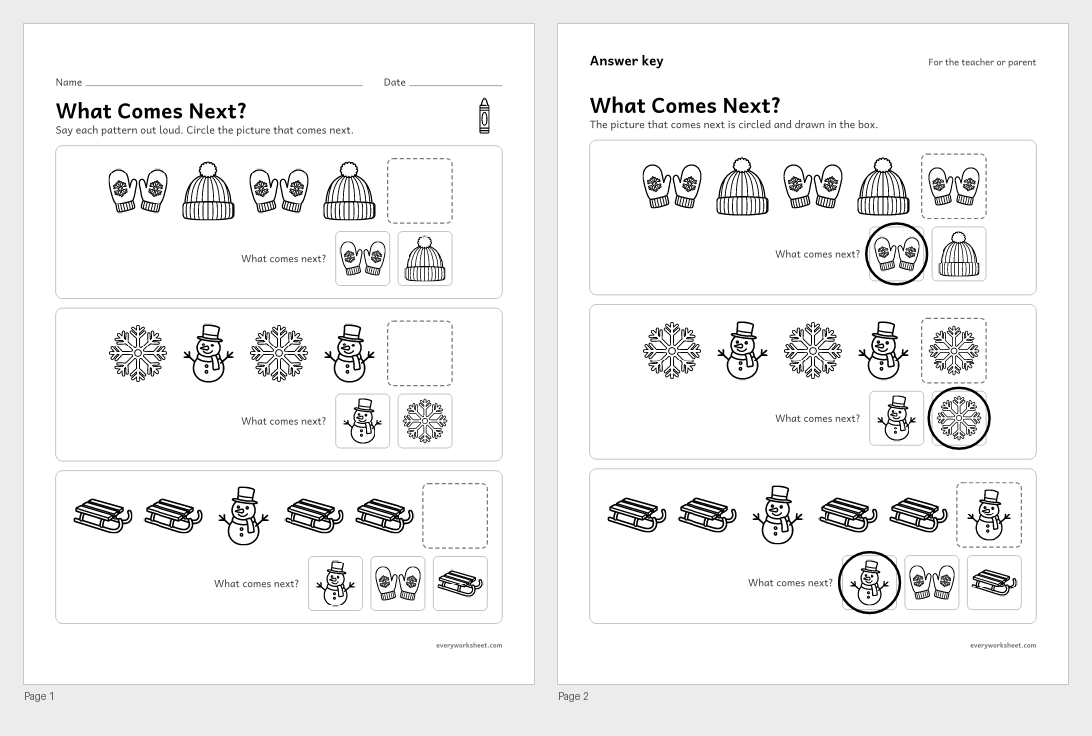
Finishing AB and ABB picture patterns
Answer key on page 2
2 pages703 KB
 View all 2 pages
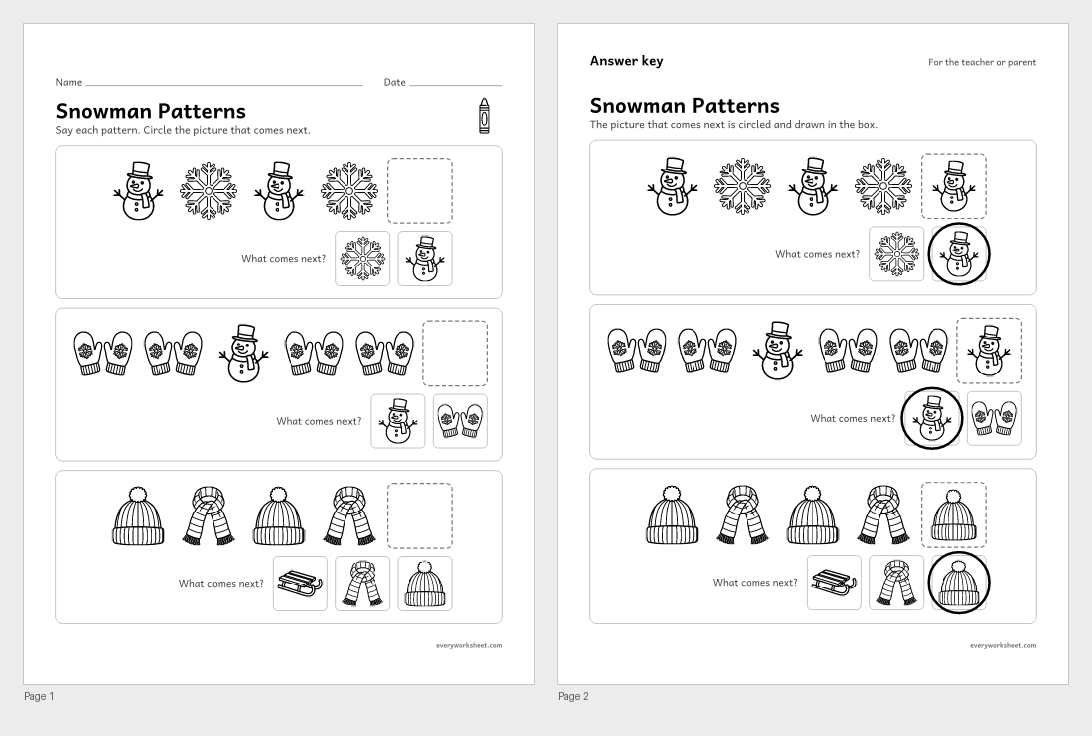
Finishing AB and AAB picture patterns
Answer key on page 2
2 pages518 KB
 View all 2 pages
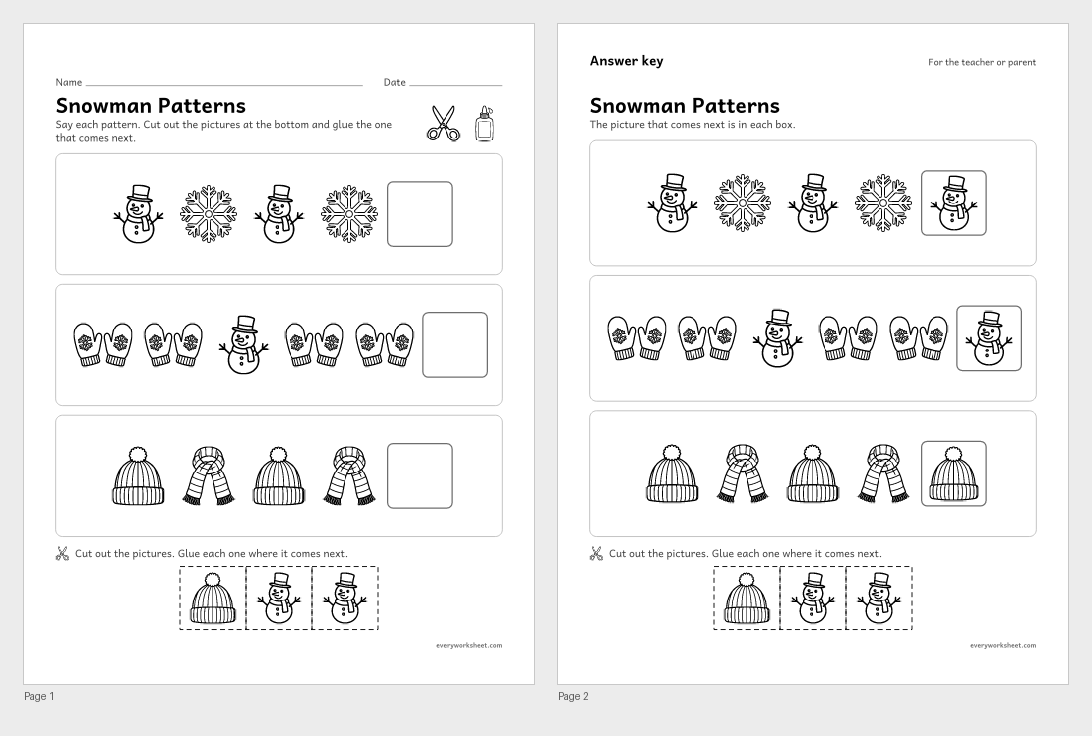
Finishing AB and AAB picture patterns
Answer key on page 2
2 pages495 KB
 View all 2 pages
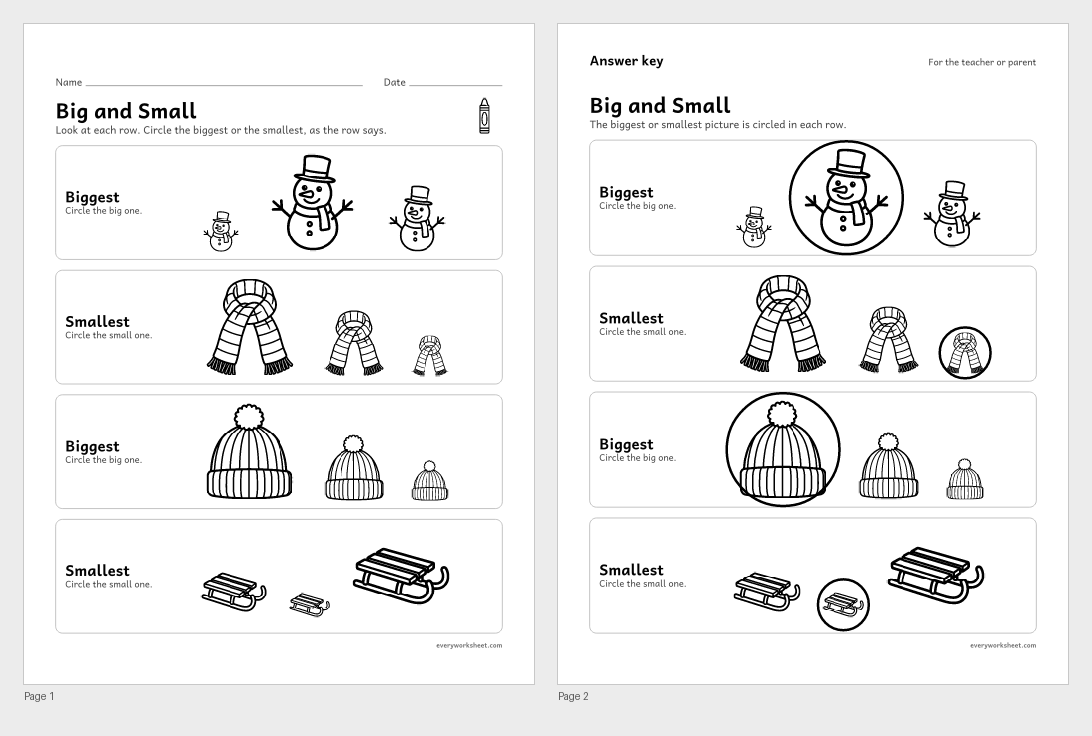
Comparing size: biggest and smallest
Answer key on page 2
2 pages357 KB
 View all 2 pages
 View all 2 pages
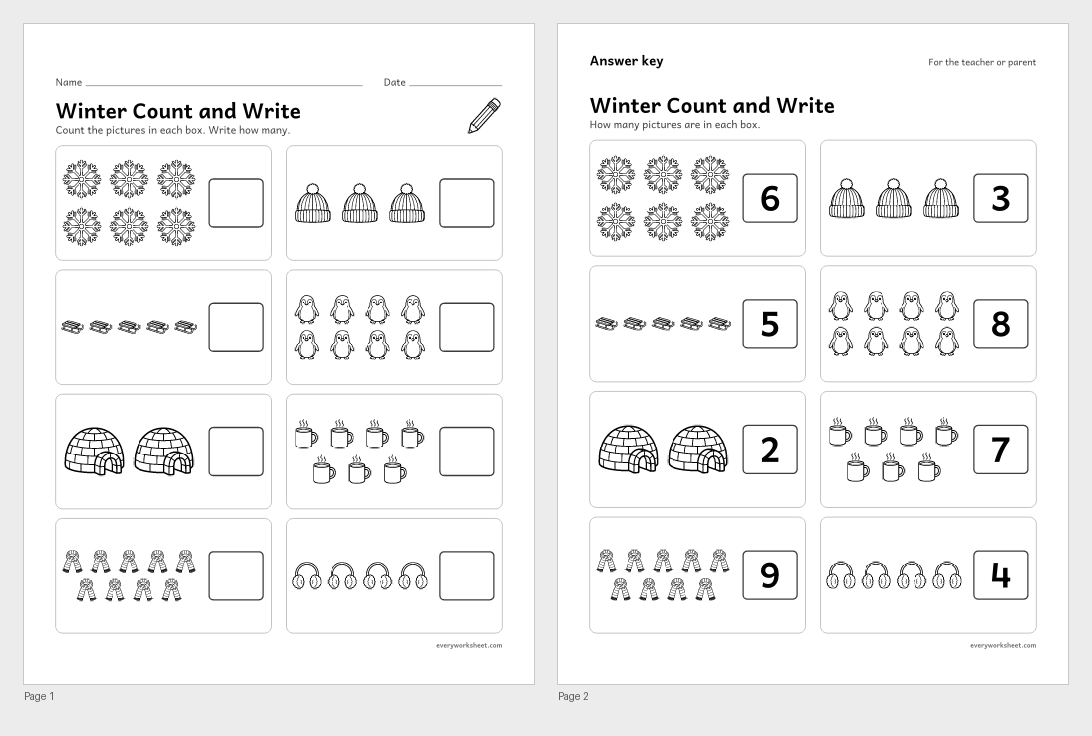
Counting up to 10 objects and writing the number
Answer key on page 2
2 pages1.0 MB
 View all 2 pages
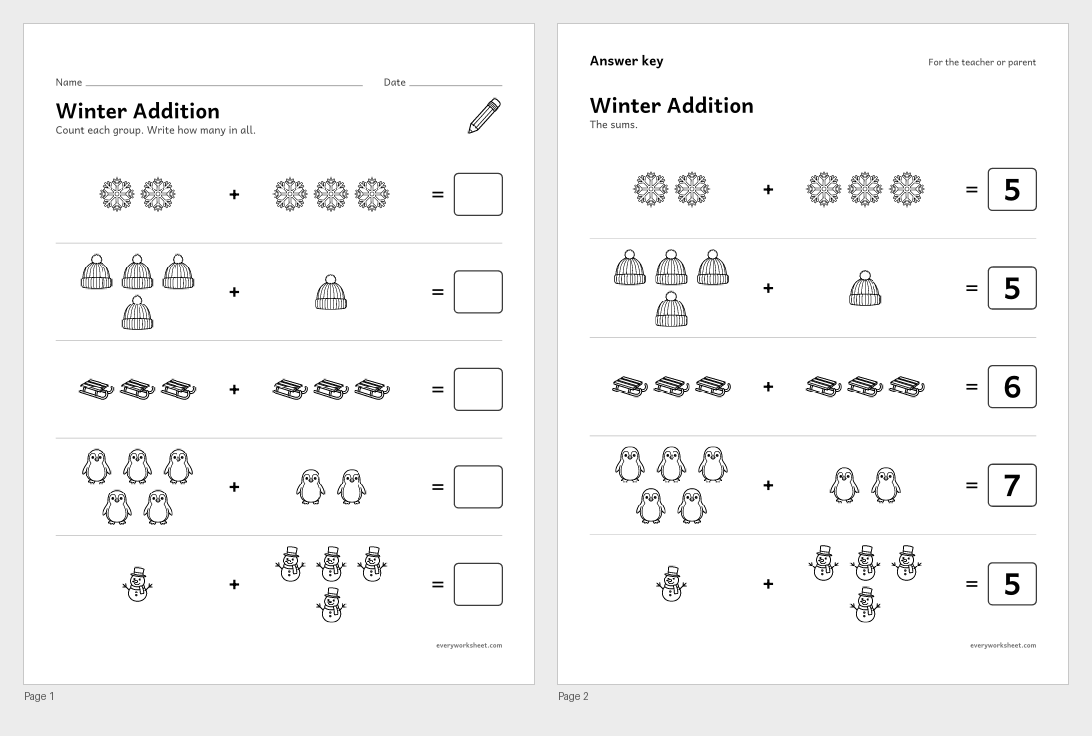
Adding within 10 with pictures
Answer key on page 2
2 pages907 KB
 View all 2 pages
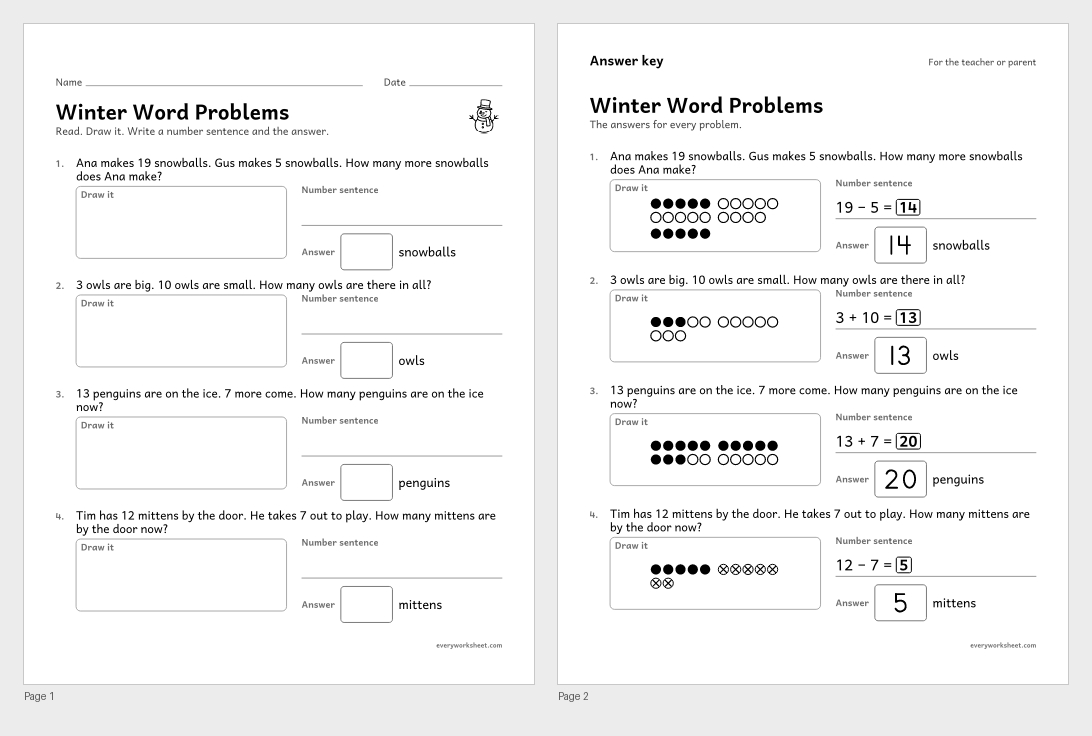
Solving winter add, take away and compare word problems within 20
Answer key on page 2
2 pages69 KB
 View all 2 pages
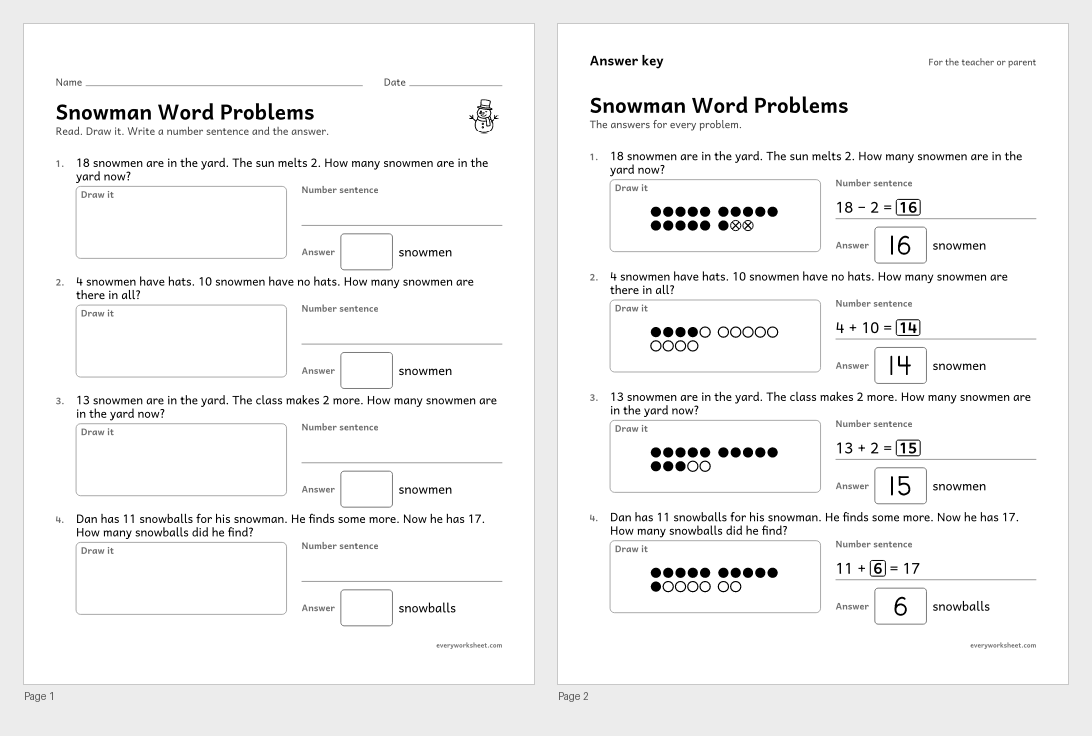
Solving snowman word problems with the result or the change unknown
Answer key on page 2
2 pages69 KB
 View all 2 pages
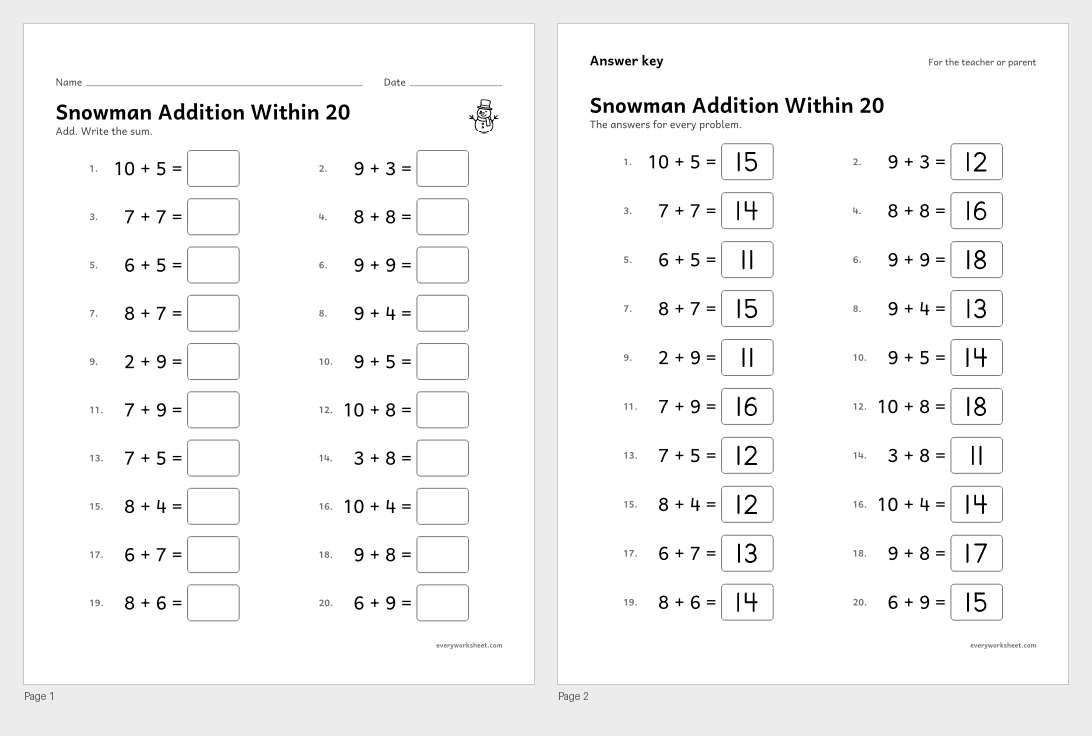
Adding within 20 (sums 11 to 20)
Answer key on page 2
2 pages114 KB
 View all 2 pages
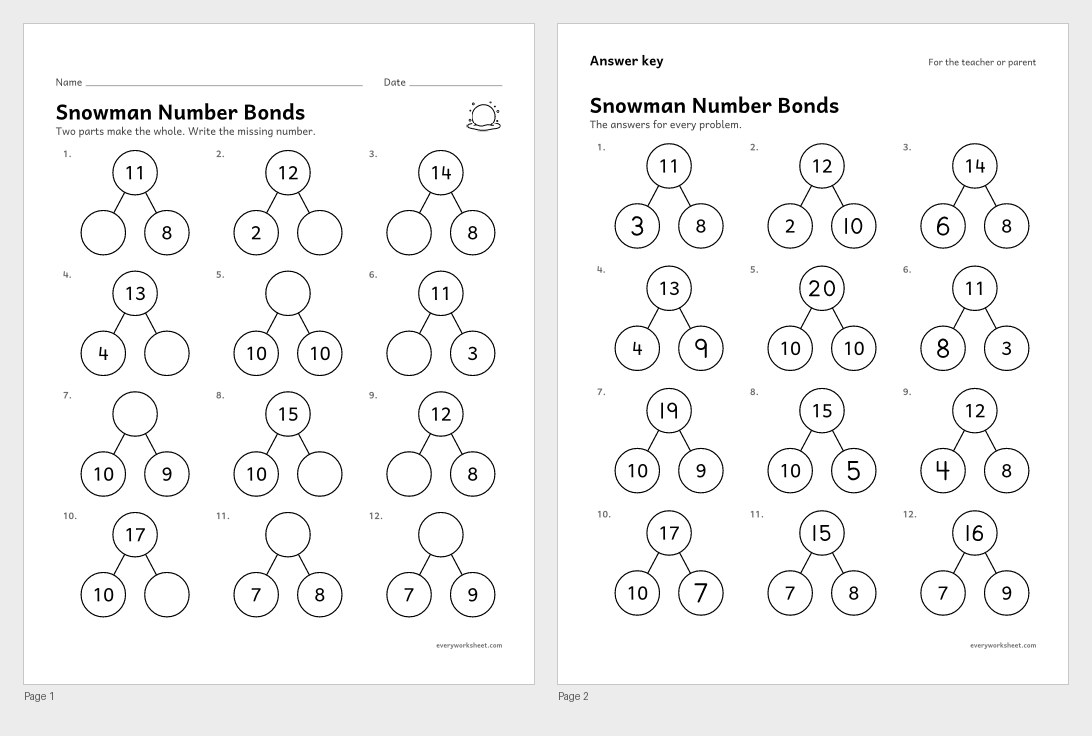
Finding a missing part or whole within 20
Answer key on page 2
2 pages62 KB
 View all 2 pages
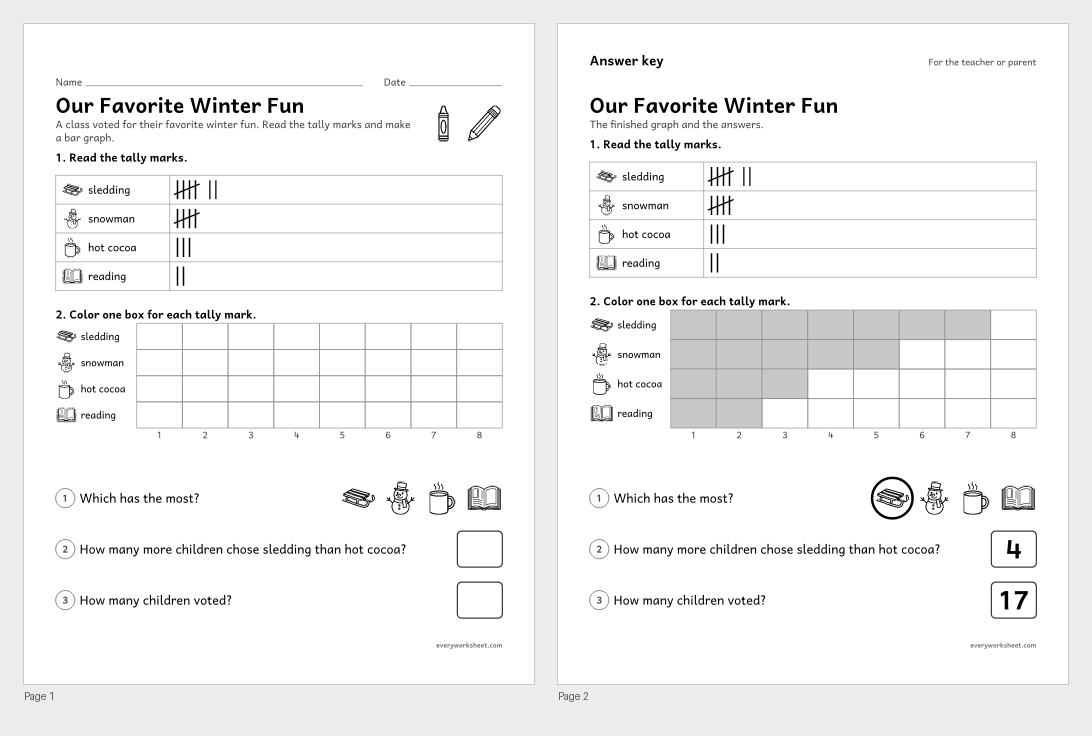
Reading tally marks, making a bar graph and comparing
Answer key on page 2
2 pages502 KB
 View all 2 pages
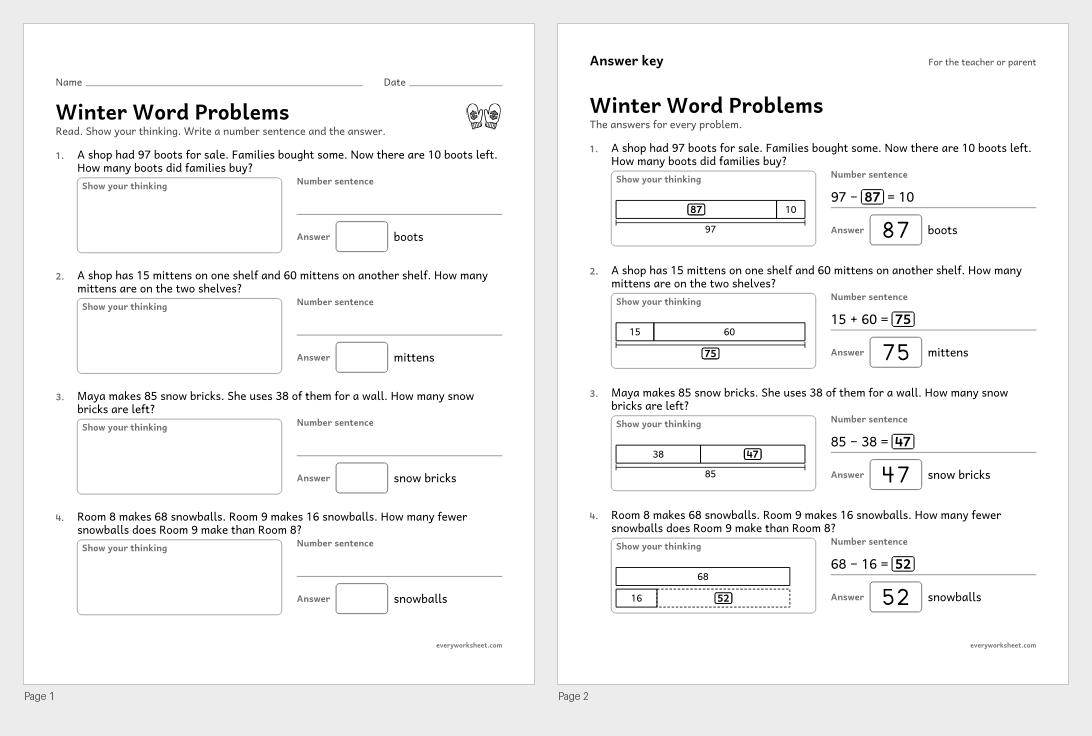
Solving winter add and subtract word problems within 100
Answer key on page 2
2 pages62 KB
 View all 2 pages
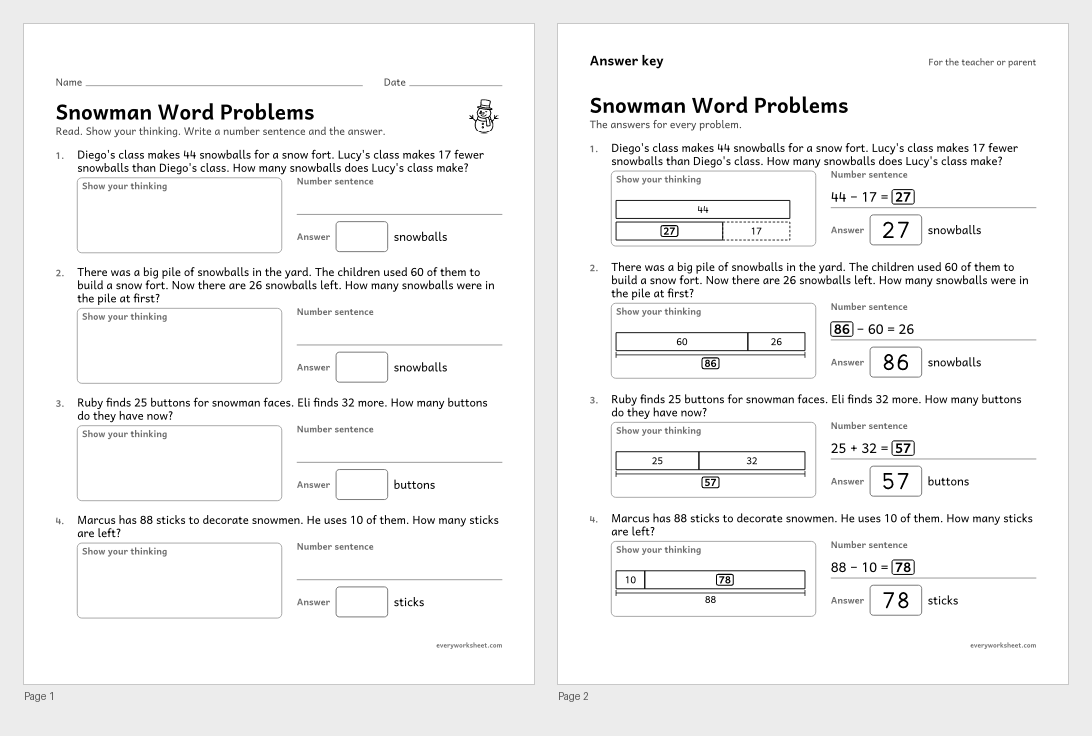
Solving snowman word problems with the unknown in all positions
Answer key on page 2
2 pages71 KB
 View all 2 pages
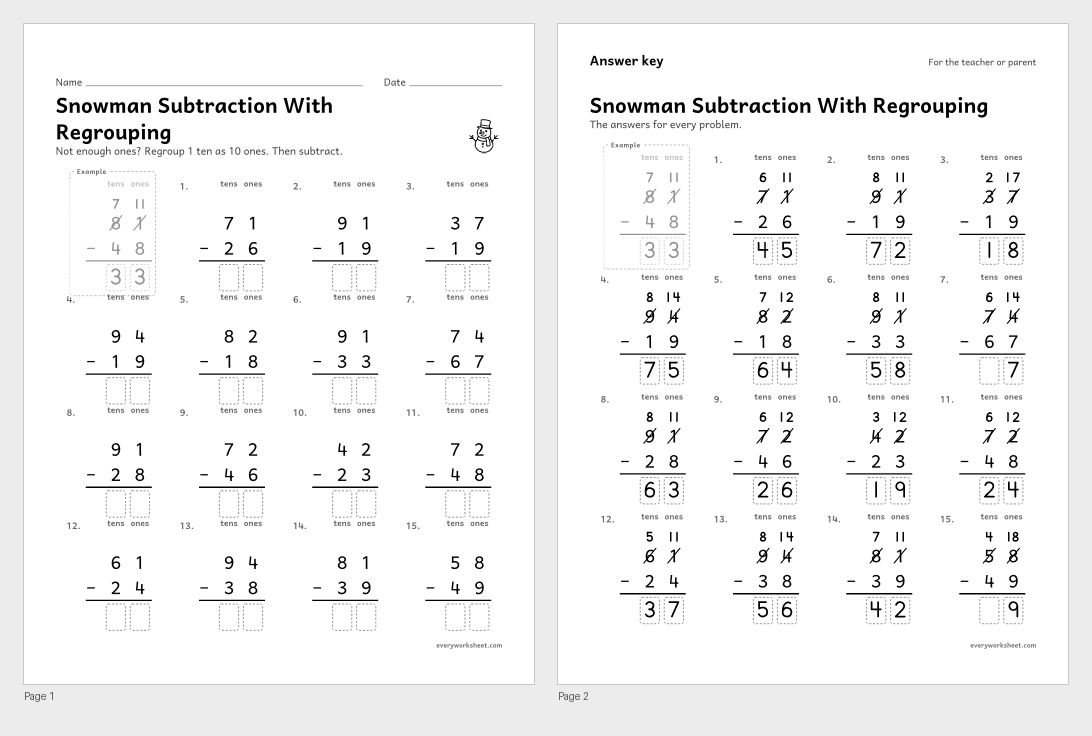
Subtracting two-digit numbers with regrouping
Answer key on page 2
2 pages77 KB
 View all 2 pages
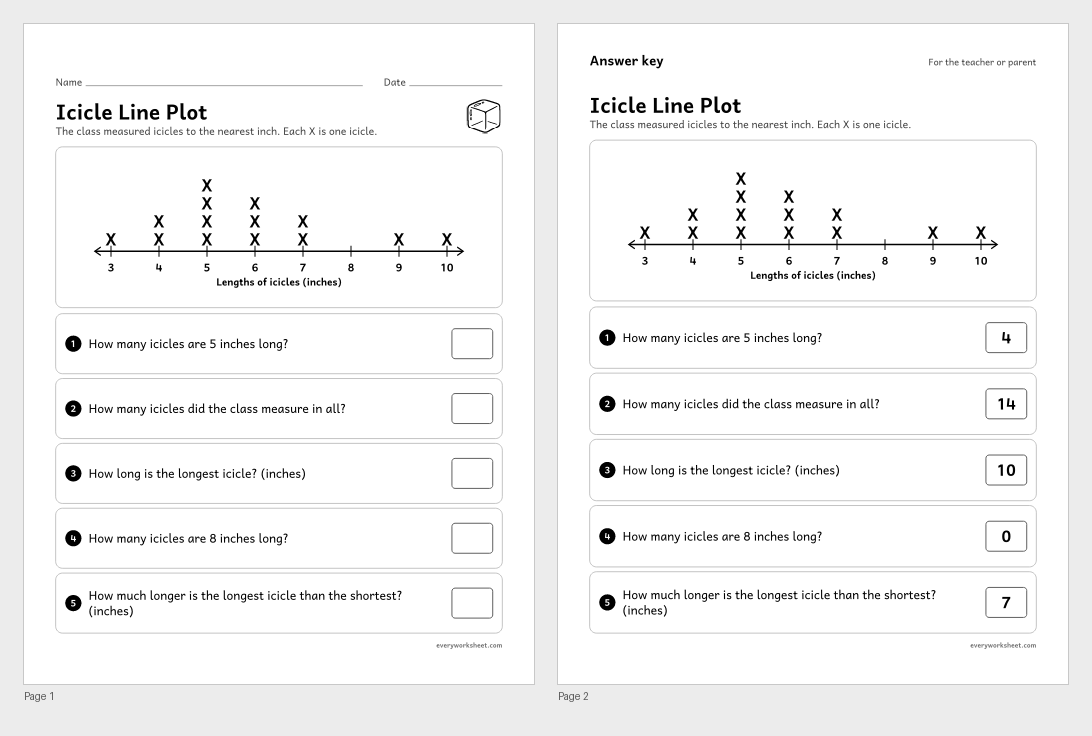
Reading a line plot of measured lengths in whole inches
Answer key on page 2
2 pages56 KB
 View all 2 pages
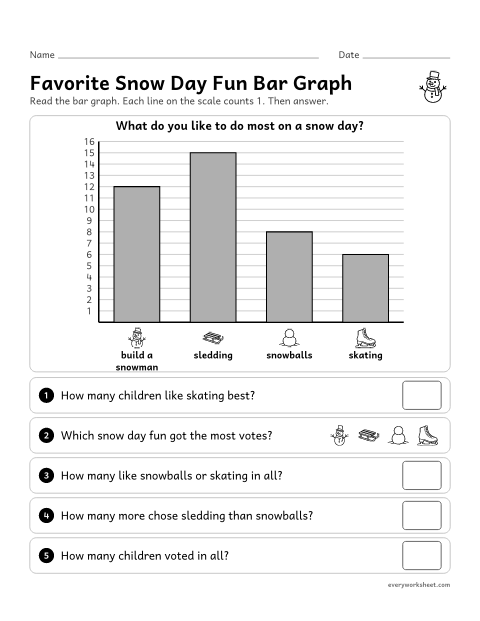
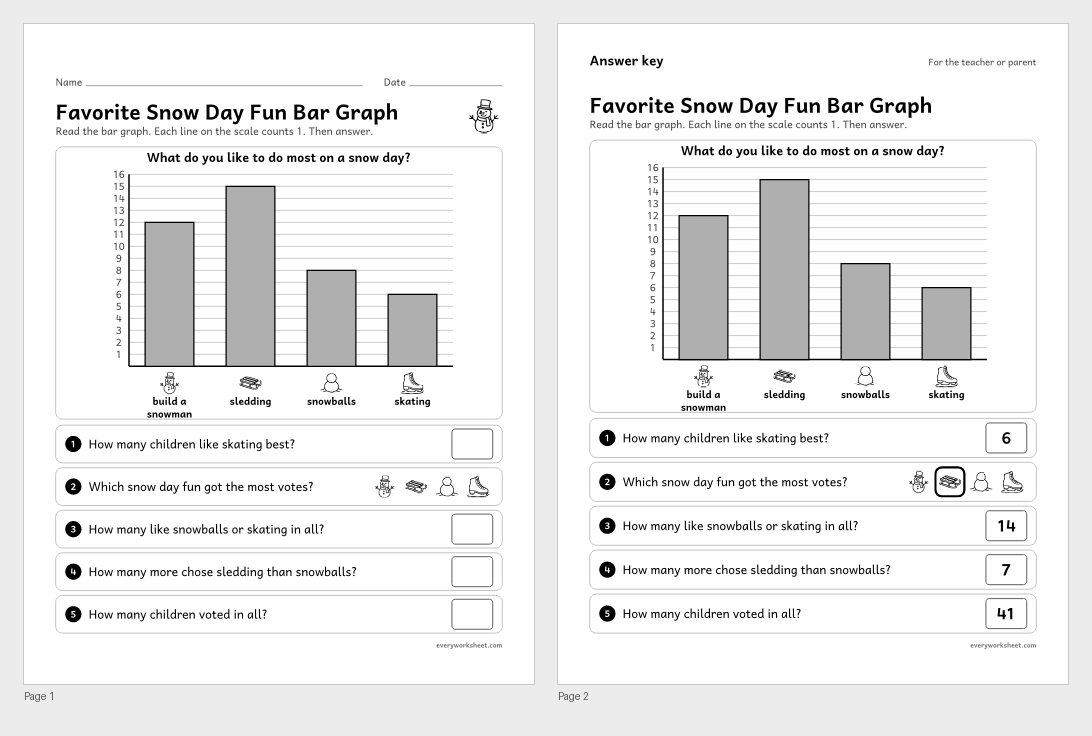
Reading a bar graph and solving put-together, take-apart and compare problems
Answer key on page 2
2 pages381 KB
 View all 2 pages
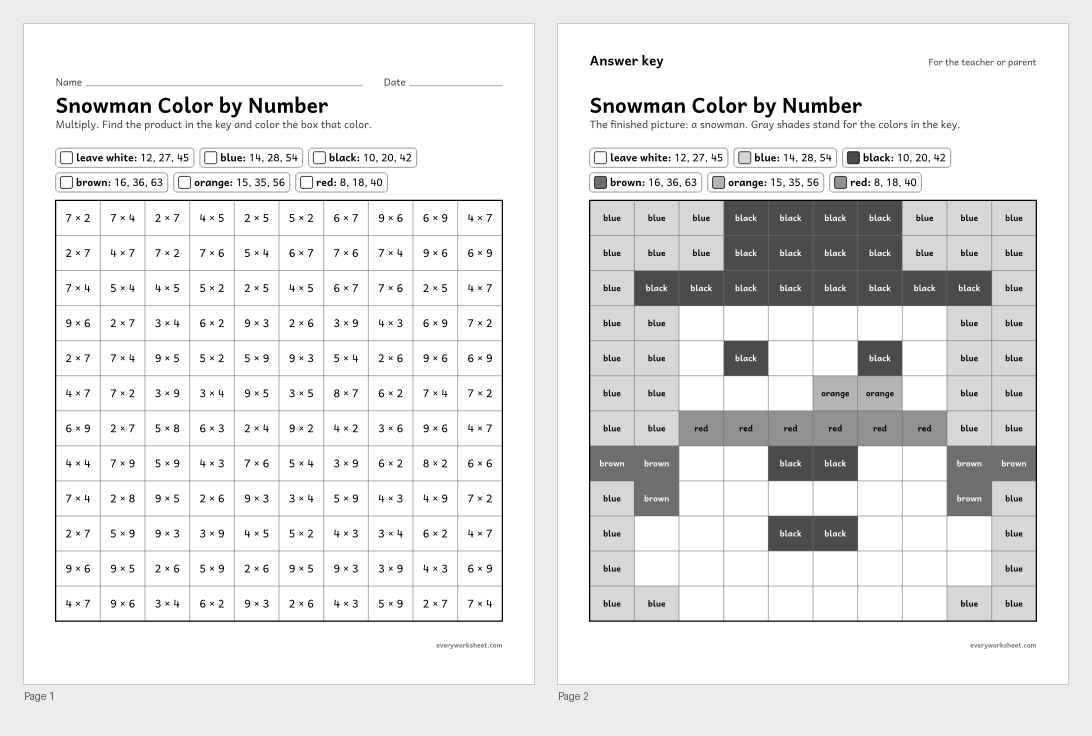
Multiplication facts within 100 (color by product)
Answer key on page 2
2 pages35 KB
 View all 2 pages
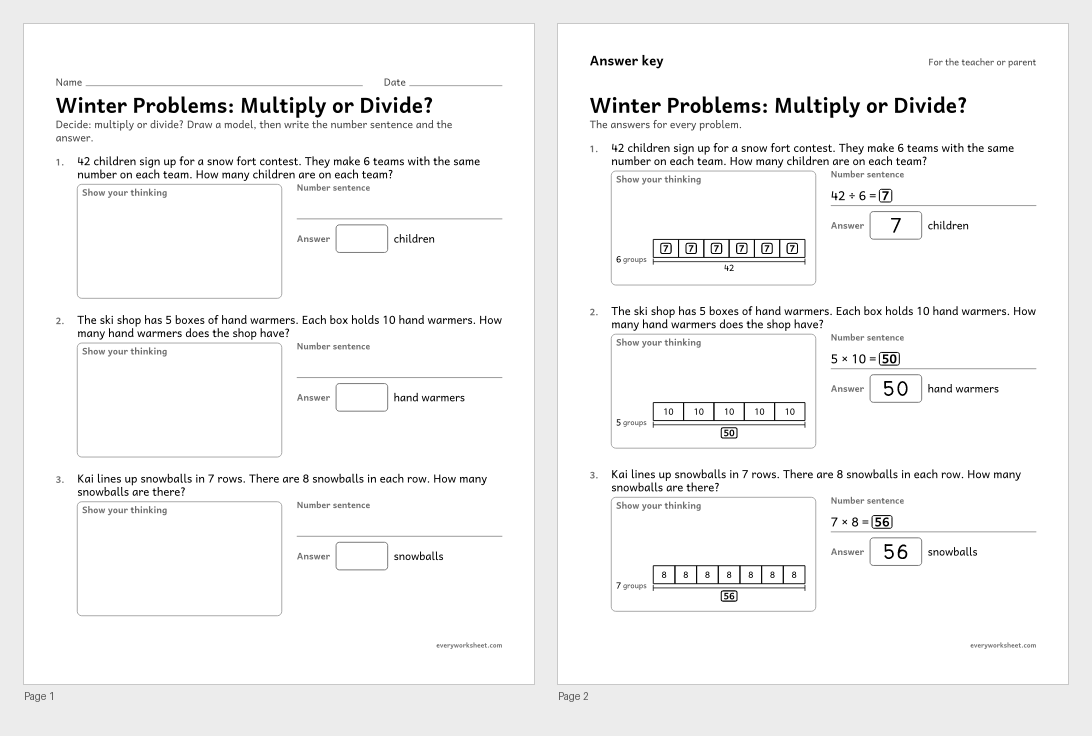
Choosing multiplication or division for a word problem
Answer key on page 2
2 pages49 KB
 View all 2 pages
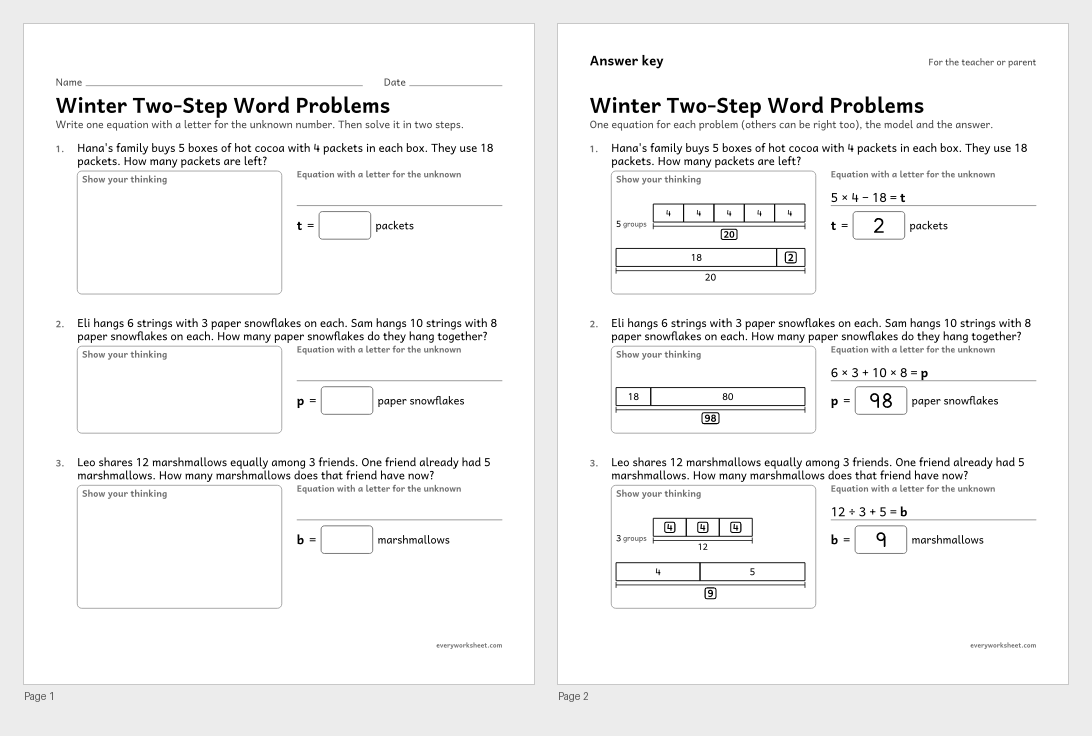
Solving two-step word problems and writing an equation with a letter for the unknown
Answer key on page 2
2 pages53 KB
 View all 2 pages
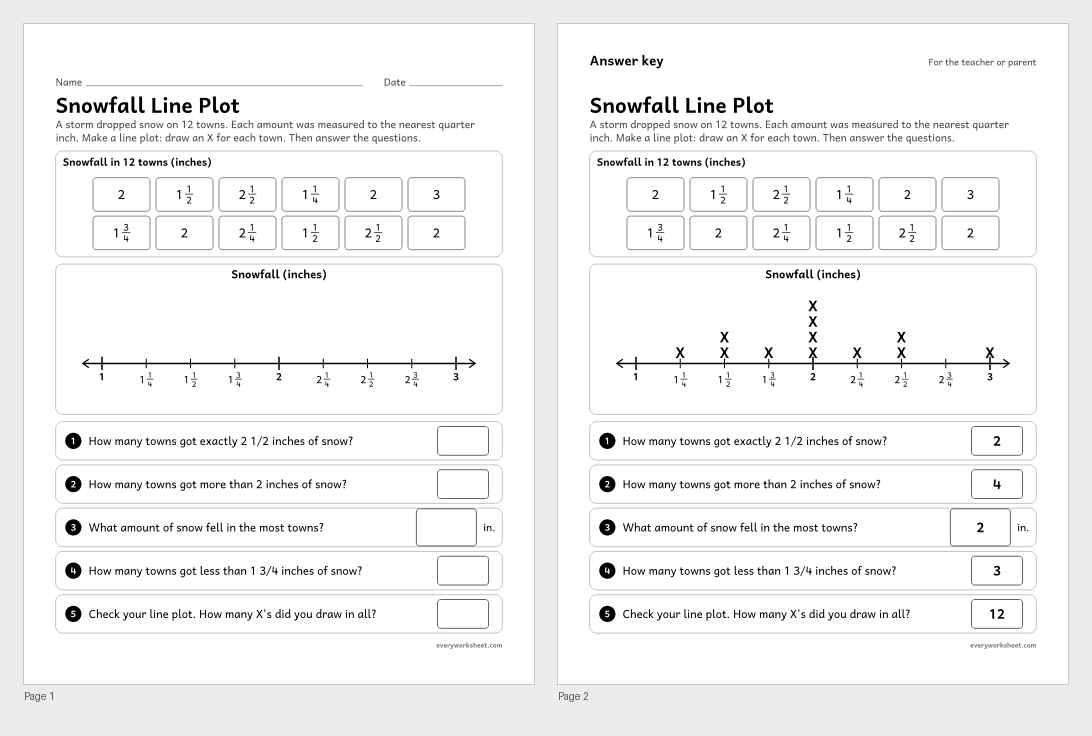
Making a line plot of measurements in halves and quarters of an inch
Answer key on page 2
2 pages46 KB
 View all 2 pages
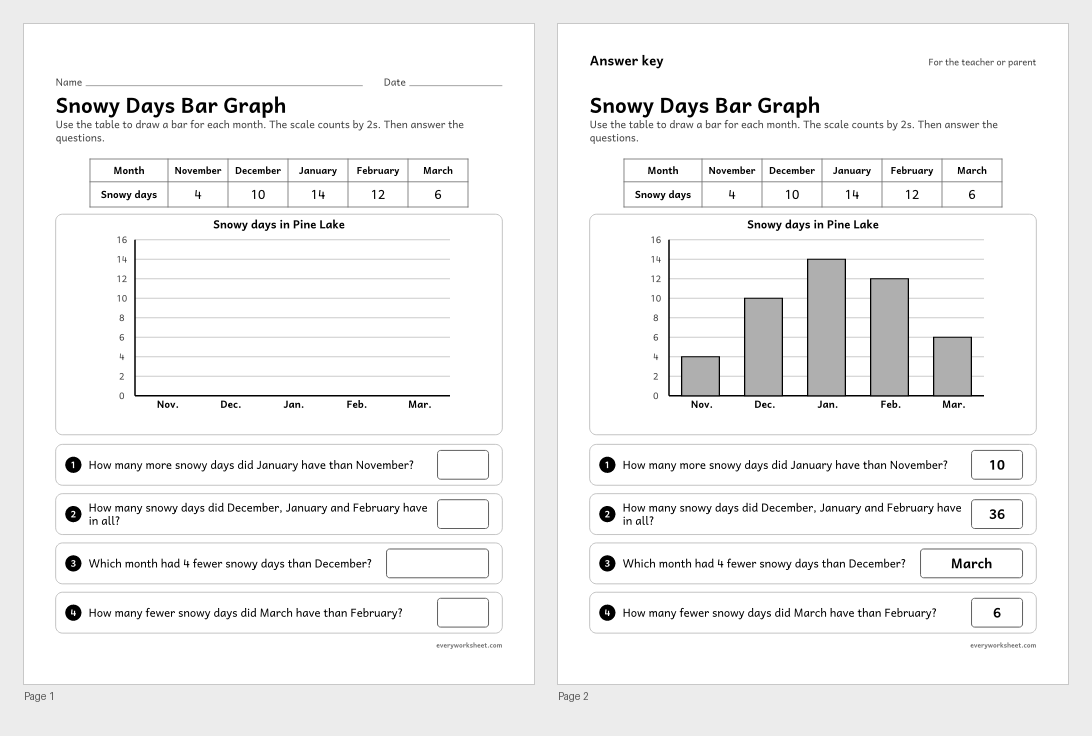
Drawing a scaled bar graph and solving one- and two-step how many more and how many fewer problems
Answer key on page 2
2 pages43 KB
 View all 2 pages
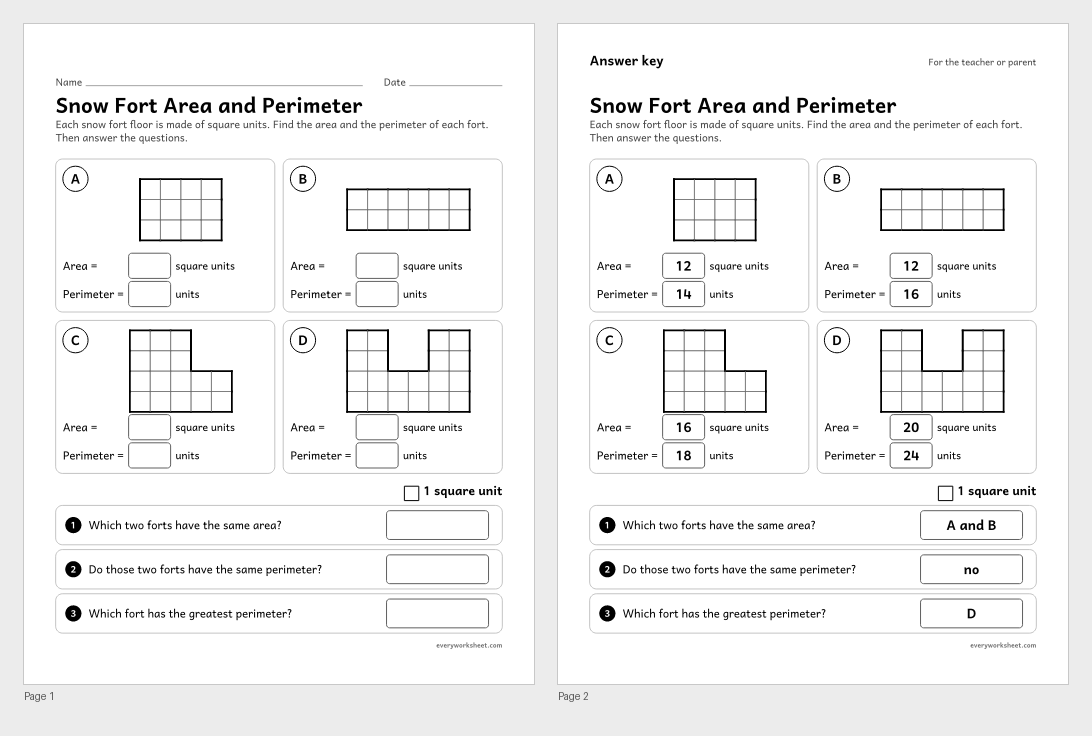
Finding the area and perimeter of rectilinear figures, and seeing that figures with the same area can have different perimeters
Answer key on page 2
2 pages52 KB
 View all 2 pages
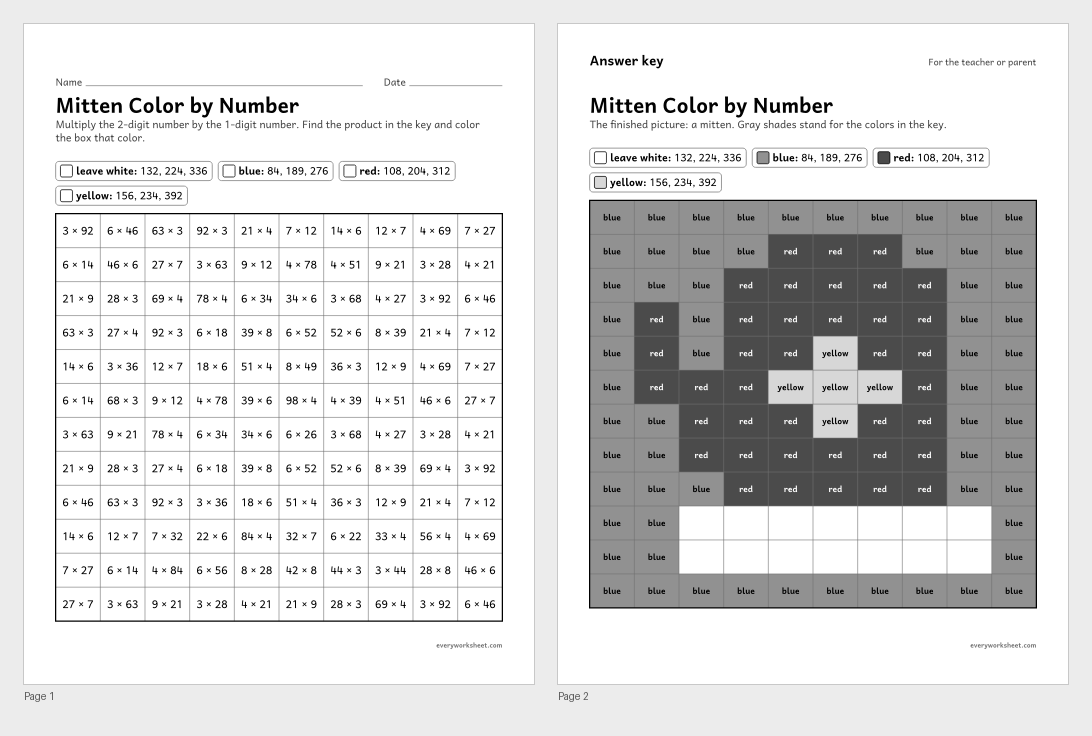
Multiplying 2-digit numbers by 1-digit numbers (color by product)
Answer key on page 2
2 pages35 KB
 View all 2 pages
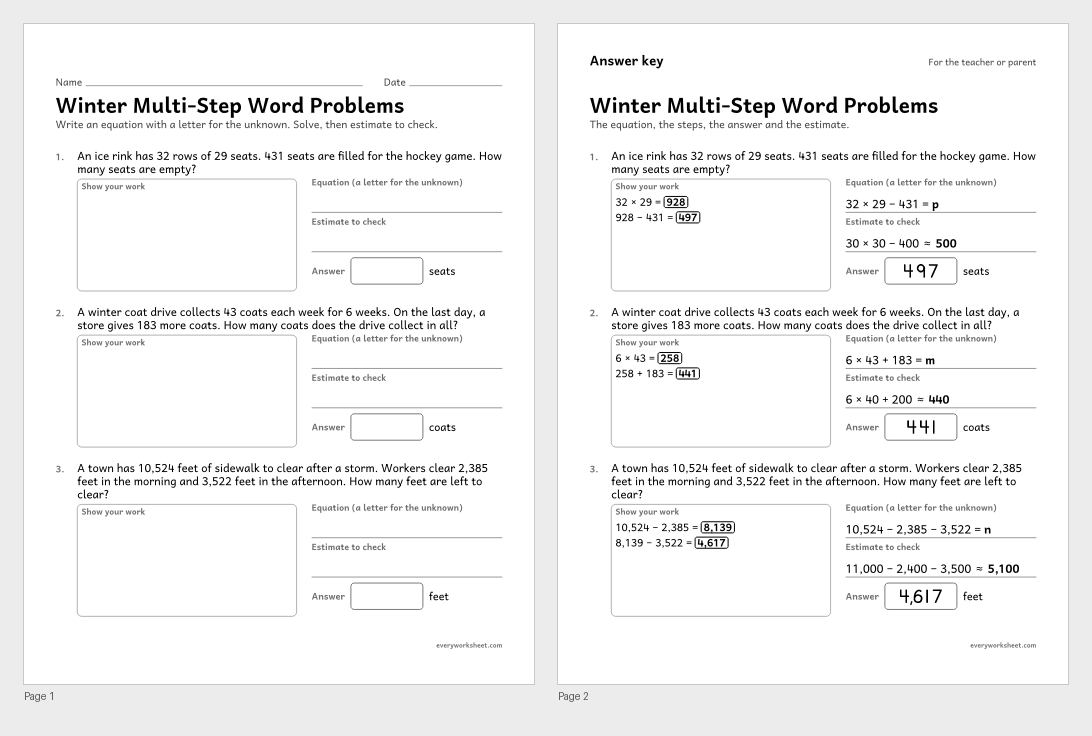
Multi-step word problems with an equation and an estimate
Answer key on page 2
2 pages63 KB
 View all 2 pages
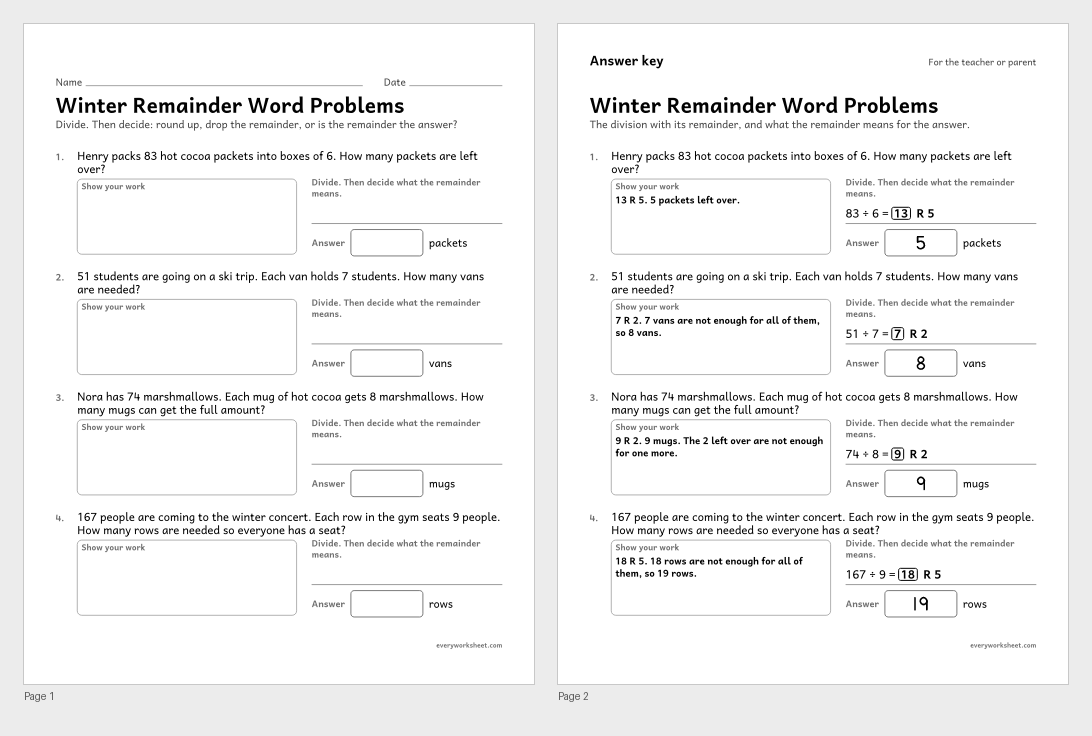
Interpreting remainders in word problems
Answer key on page 2
2 pages53 KB
 View all 2 pages
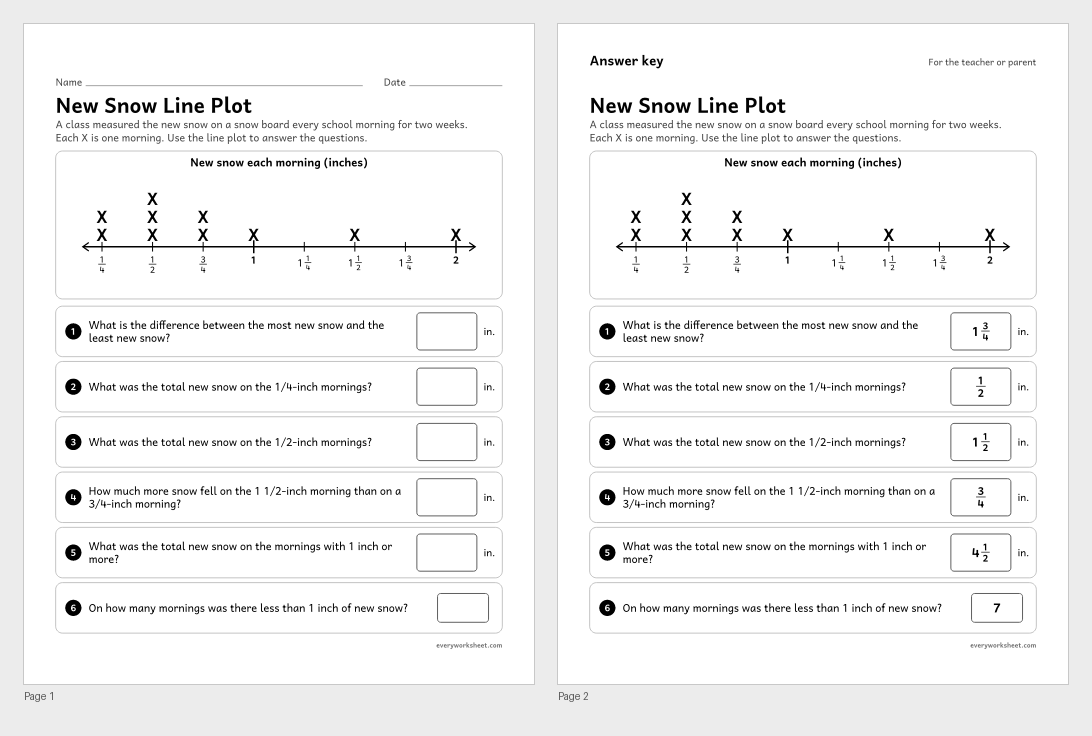
Solving problems by adding and subtracting fractions with data from a line plot
Answer key on page 2
2 pages42 KB
 View all 2 pages
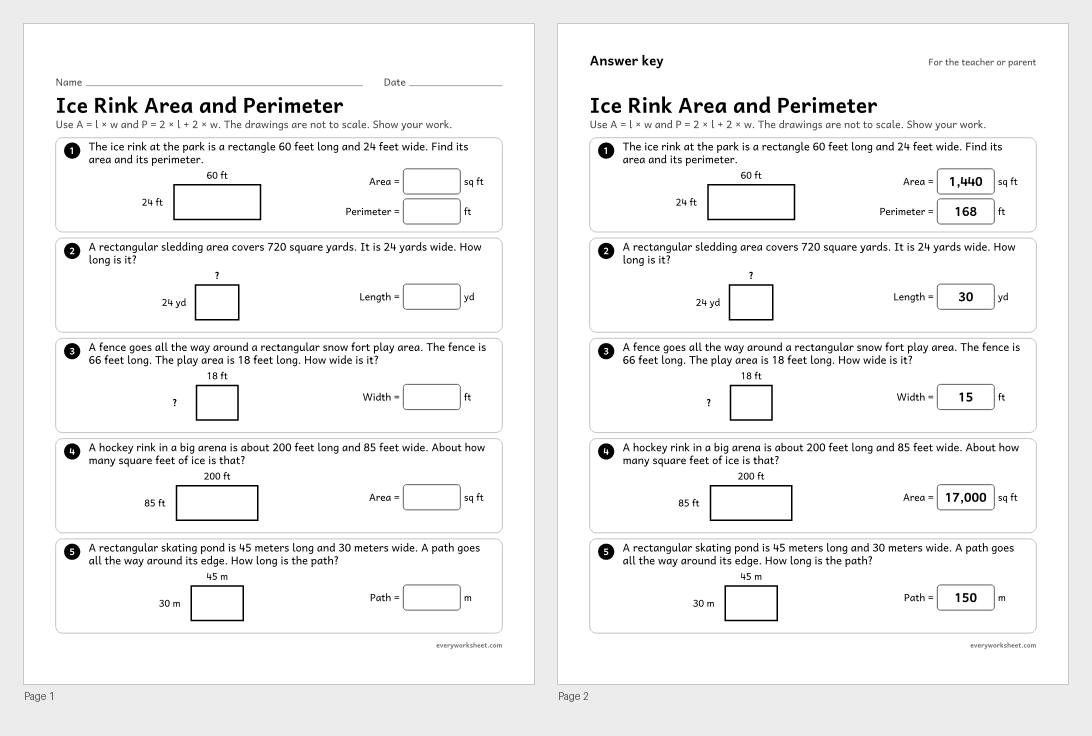
Using the area and perimeter formulas for rectangles, including finding an unknown side
Answer key on page 2
2 pages50 KB
 View all 2 pages
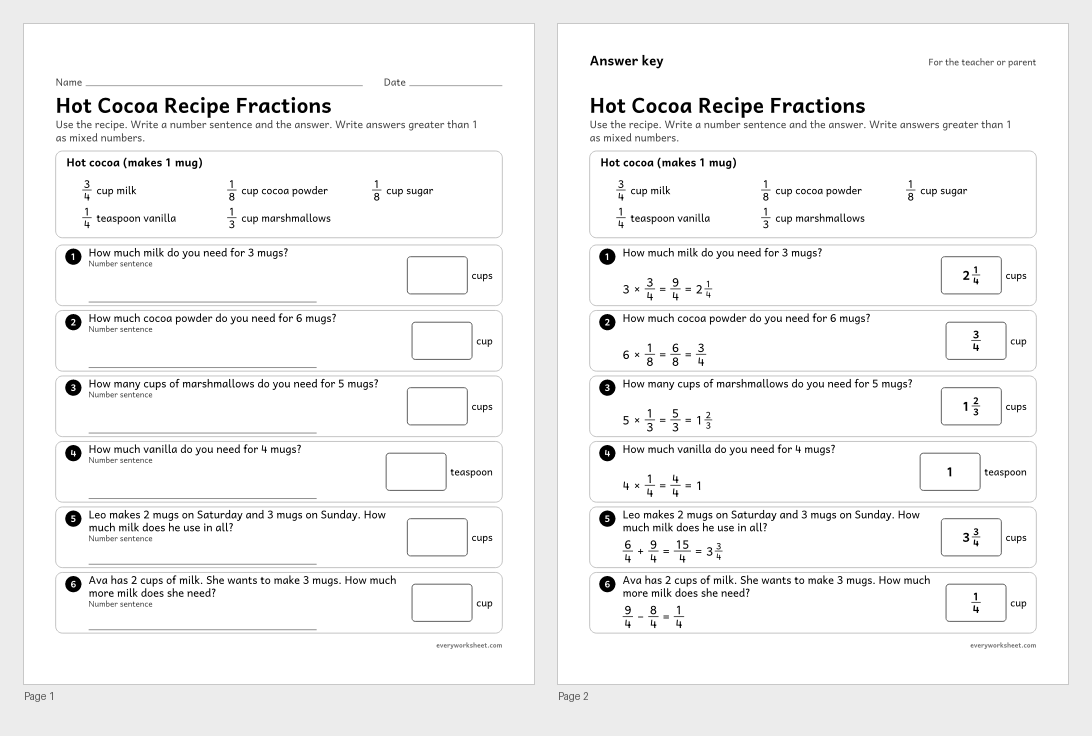
Multiplying a fraction by a whole number and adding and subtracting fractions with like denominators in a recipe
Answer key on page 2
2 pages47 KB
 View all 2 pages
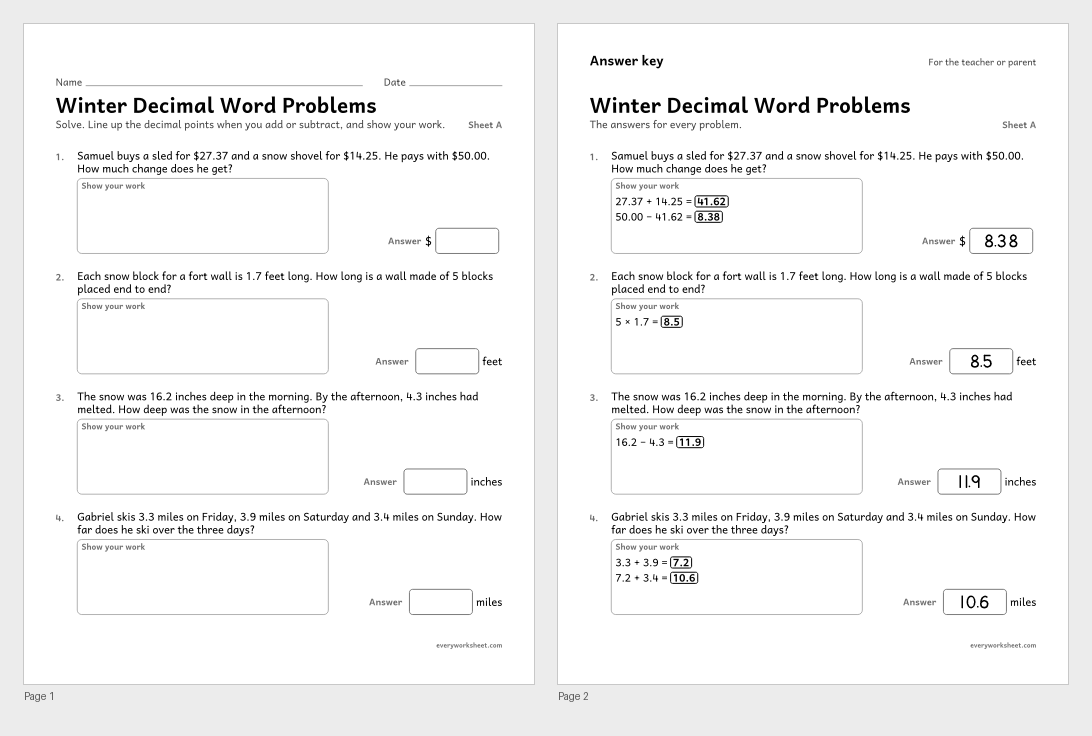
Solving word problems with decimals and money
Answer key on page 2
2 pages54 KB
 View all 2 pages
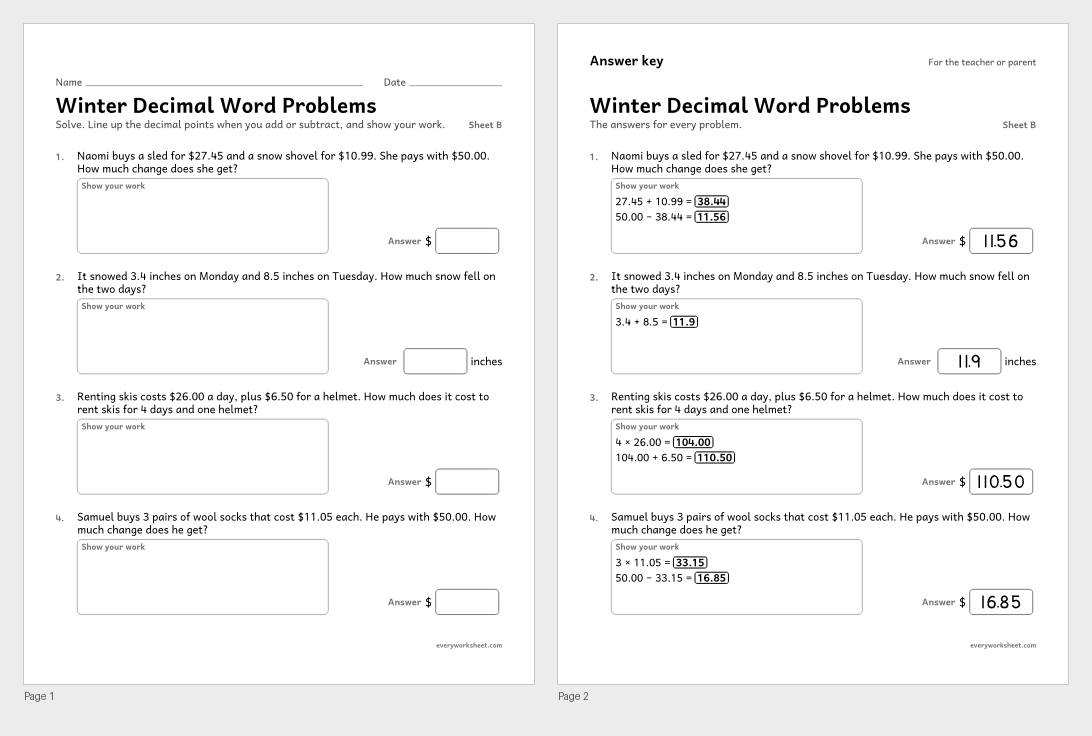
Solving word problems with decimals and money
Answer key on page 2
2 pages56 KB
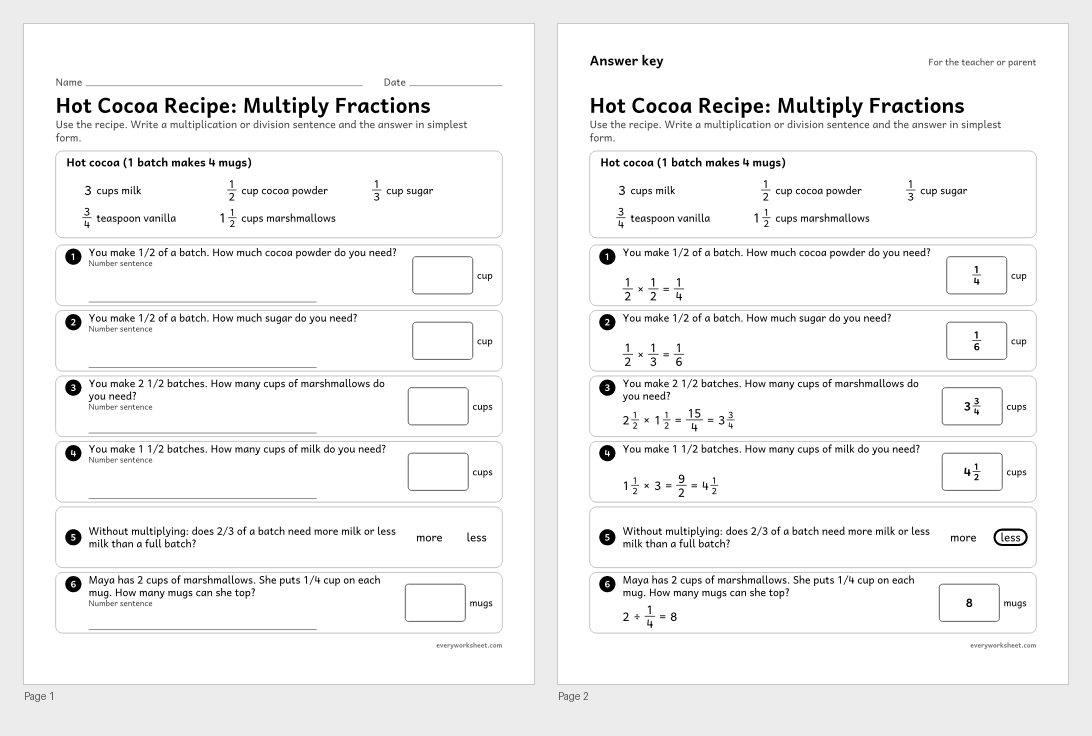 View all 2 pages
Multiplying fractions and mixed numbers to scale a recipe, and dividing a whole number by a unit fraction
Answer key on page 2
2 pages48 KB
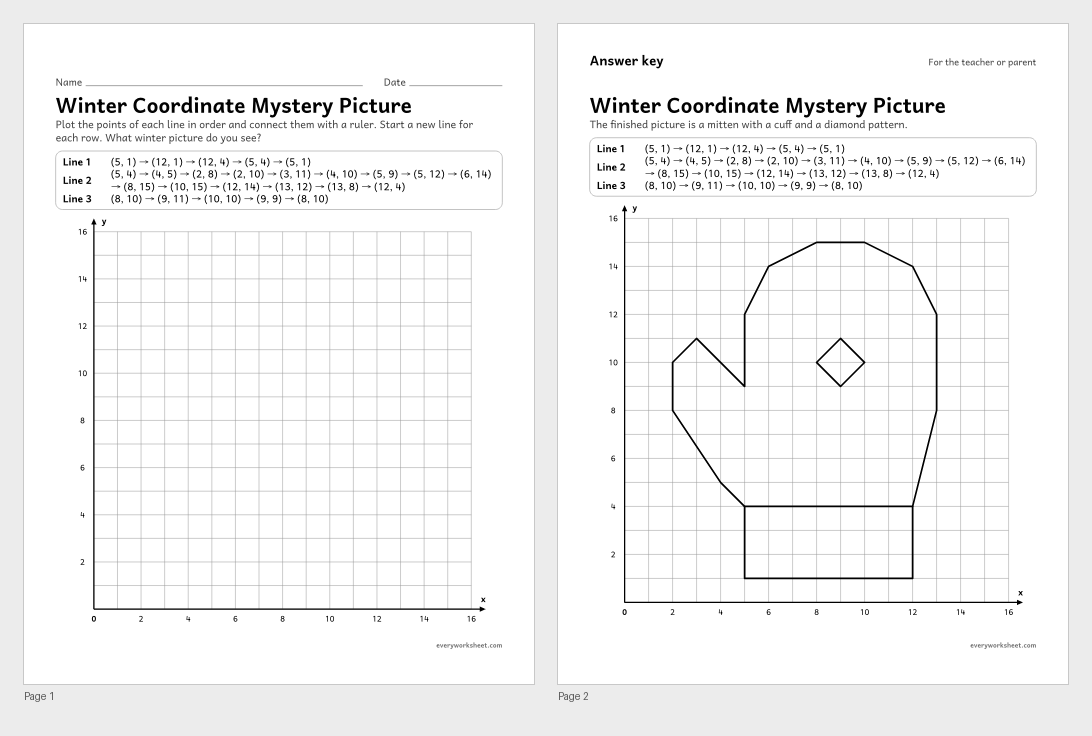 View all 2 pages
Plotting ordered pairs in the first quadrant and connecting them in order to draw a picture
Answer key on page 2
2 pages36 KB
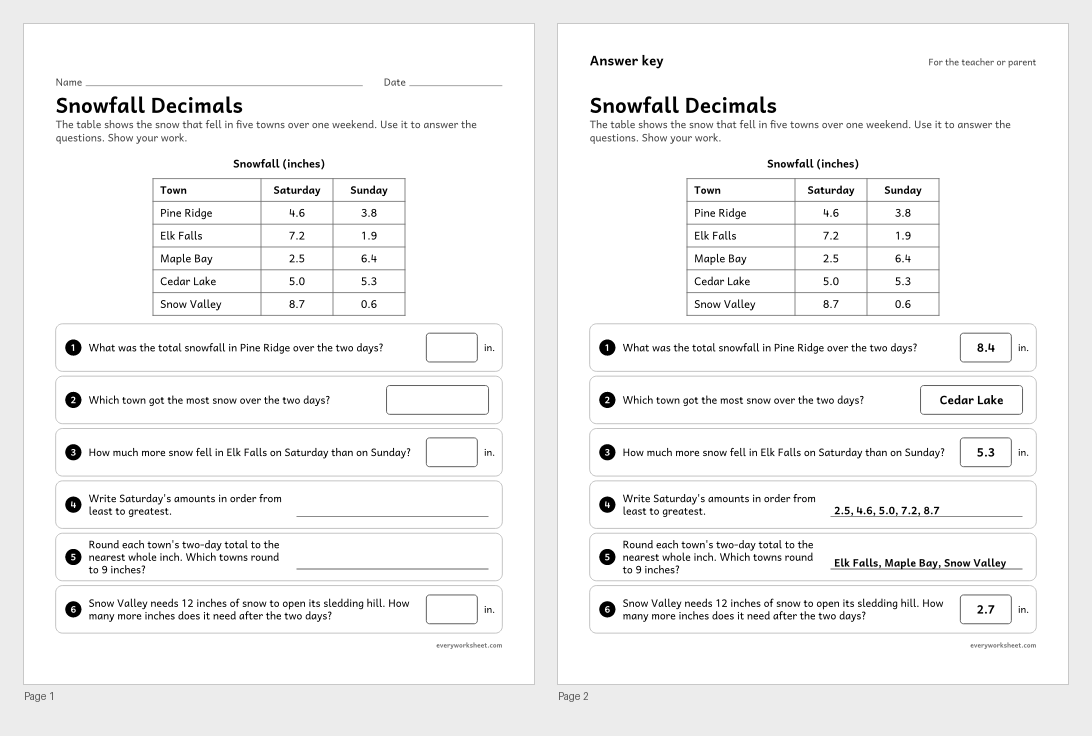 View all 2 pages
Adding, subtracting, comparing and rounding decimals to tenths using a data table
Answer key on page 2
2 pages51 KB
Print at 100% (actual size) for the cleanest tracing lines.
These winter math worksheets bring snow, mittens and hot cocoa into real math practice, from preschool to 5th grade. Little ones count winter clothes and snowman buttons and finish patterns. Kindergartners count and add with winter pictures. 1st and 2nd graders solve snowy word problems, regroup and read graphs.
Older children get their grade's big skills. 3rd graders color a snowman by multiplication facts, choose multiply or divide in winter stories, make a snowfall line plot in quarter inches and find the area and perimeter of snow forts. 4th graders color a mitten by multiplying 2-digit numbers by 1-digit numbers, solve multi-step and remainder problems, add fractions from a line plot and scale a hot cocoa recipe. 5th graders work with decimals in snowfall and money problems, multiply fractions and mixed numbers, and plot a coordinate grid mystery picture.
Every page prints in black and white on US Letter or A4, and every page has an answer key. For reading and writing pages, see the winter worksheets page and the snowman worksheets page.
CCSS.MATH.CONTENT.3.OA.C.7Fluently multiply and divide within 100, using strategies such as the relationship between multiplication and division (e.g., knowing that 8 × 5 = 40, one knows 40 ÷ 5 = 8) or properties of operations. By the end of Grade 3, know from memory all products of two one-digit numbers.CCSS.MATH.CONTENT.3.OA.A.3Use multiplication and division within 100 to solve word problems in situations involving equal groups, arrays, and measurement quantities, e.g., by using drawings and equations with a symbol for the unknown number to represent the problem.CCSS.MATH.CONTENT.3.OA.D.8Solve two-step word problems using the four operations. Represent these problems using equations with a letter standing for the unknown quantity. Assess the reasonableness of answers using mental computation and estimation strategies including rounding.CCSS.MATH.CONTENT.3.MD.B.3Draw a scaled picture graph and a scaled bar graph to represent a data set with several categories. Solve one- and two-step "how many more" and "how many less" problems using information presented in scaled bar graphs. For example, draw a bar graph in which each square in the bar graph might represent 5 pets.CCSS.MATH.CONTENT.3.MD.B.4Generate measurement data by measuring lengths using rulers marked with halves and fourths of an inch. Show the data by making a line plot, where the horizontal scale is marked off in appropriate units— whole numbers, halves, or quarters.CCSS.MATH.CONTENT.3.MD.D.8Solve real world and mathematical problems involving perimeters of polygons, including finding the perimeter given the side lengths, finding an unknown side length, and exhibiting rectangles with the same perimeter and different areas or with the same area and different perimeters.CCSS.MATH.CONTENT.4.NBT.B.5Multiply a whole number of up to four digits by a one-digit whole number, and multiply two two-digit numbers, using strategies based on place value and the properties of operations. Illustrate and explain the calculation by using equations, rectangular arrays, and/or area models.CCSS.MATH.CONTENT.4.OA.A.3Solve multistep word problems posed with whole numbers and having whole-number answers using the four operations, including problems in which remainders must be interpreted. Represent these problems using equations with a letter standing for the unknown quantity. Assess the reasonableness of answers using mental computation and estimation strategies including rounding.CCSS.MATH.CONTENT.4.MD.B.4Make a line plot to display a data set of measurements in fractions of a unit (1/2, 1/4, 1/8). Solve problems involving addition and subtraction of fractions by using information presented in line plots. For example, from a line plot find and interpret the difference in length between the longest and shortest specimens in an insect collection.CCSS.MATH.CONTENT.4.MD.A.3Apply the area and perimeter formulas for rectangles in real world and mathematical problems. For example, find the width of a rectangular room given the area of the flooring and the length, by viewing the area formula as a multiplication equation with an unknown factor.CCSS.MATH.CONTENT.4.NF.B.4.CSolve word problems involving multiplication of a fraction by a whole number, e.g., by using visual fraction models and equations to represent the problem. For example, if each person at a party will eat 3/8 of a pound of roast beef, and there will be 5 people at the party, how many pounds of roast beef will be needed? Between what two whole numbers does your answer lie?CCSS.MATH.CONTENT.5.NBT.B.7Add, subtract, multiply, and divide decimals to hundredths, using concrete models or drawings and strategies based on place value, properties of operations, and/or the relationship between addition and subtraction; relate the strategy to a written method and explain the reasoning used.CCSS.MATH.CONTENT.5.NF.B.6Solve real world problems involving multiplication of fractions and mixed numbers, e.g., by using visual fraction models or equations to represent the problem.CCSS.MATH.CONTENT.5.G.A.1Use a pair of perpendicular number lines, called axes, to define a coordinate system, with the intersection of the lines (the origin) arranged to coincide with the 0 on each line and a given point in the plane located by using an ordered pair of numbers, called its coordinates. Understand that the first number indicates how far to travel from the origin in the direction of one axis, and the second number indicates how far to travel in the direction of the second axis, with the convention that the names of the two axes and the coordinates correspond (e.g., x-axis and x-coordinate, y-axis and y-coordinate).CCSS.MATH.CONTENT.K.CC.B.5Count to answer "how many?" questions about as many as 20 things arranged in a line, a rectangular array, or a circle, or as many as 10 things in a scattered configuration; given a number from 1-20, count out that many objects.CCSS.MATH.CONTENT.K.OA.A.2Solve addition and subtraction word problems, and add and subtract within 10, e.g., by using objects or drawings to represent the problem.CCSS.MATH.CONTENT.1.OA.A.1Use addition and subtraction within 20 to solve word problems involving situations of adding to, taking from, putting together, taking apart, and comparing, with unknowns in all positions, e.g., by using objects, drawings, and equations with a symbol for the unknown number to represent the problem.CCSS.MATH.CONTENT.2.OA.A.1Use addition and subtraction within 100 to solve one- and two-step word problems involving situations of adding to, taking from, putting together, taking apart, and comparing, with unknowns in all positions, e.g., by using drawings and equations with a symbol for the unknown number to represent the problem.CCSS.MATH.CONTENT.2.MD.D.9Generate measurement data by measuring lengths of several objects to the nearest whole unit, or by making repeated measurements of the same object. Show the measurements by making a line plot, where the horizontal scale is marked off in whole-number units.Multiplication and division in winter stories, a snowman color by number for the facts, a snowfall line plot in quarter inches, a scaled bar graph of snowy days and snow fort area and perimeter.
Yes. 4th grade pages cover 2-digit by 1-digit multiplication, multi-step and remainder problems, fractions on a line plot, area and perimeter formulas and recipe fractions. 5th grade pages cover decimals, money, multiplying fractions and mixed numbers and the coordinate plane.
Yes. Every page has an answer key on the last page of the PDF, including the finished color by number pictures and the coordinate mystery picture.
No. The winter math pages are about snow, mittens, sledding and hot cocoa, so you can use them all season. Christmas math has its own page.