 View larger
Winter Writing Prompts
Winter writing prompts for K–5 on lined pages ruled for each grade, plus 24 prompt cards.
Download the winter writing prompts worksheets
K–2
 View larger
 View larger
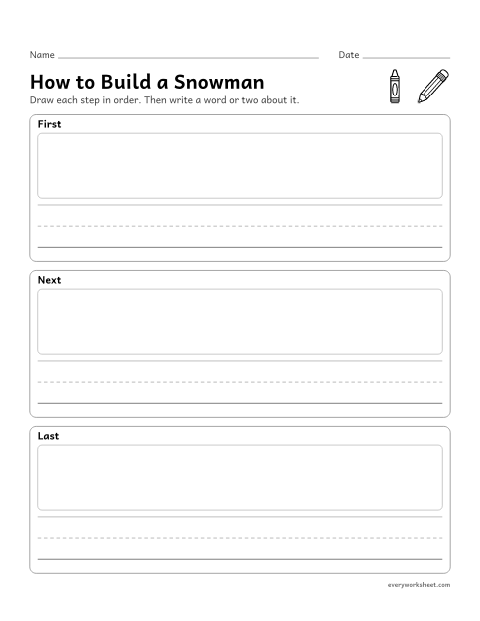
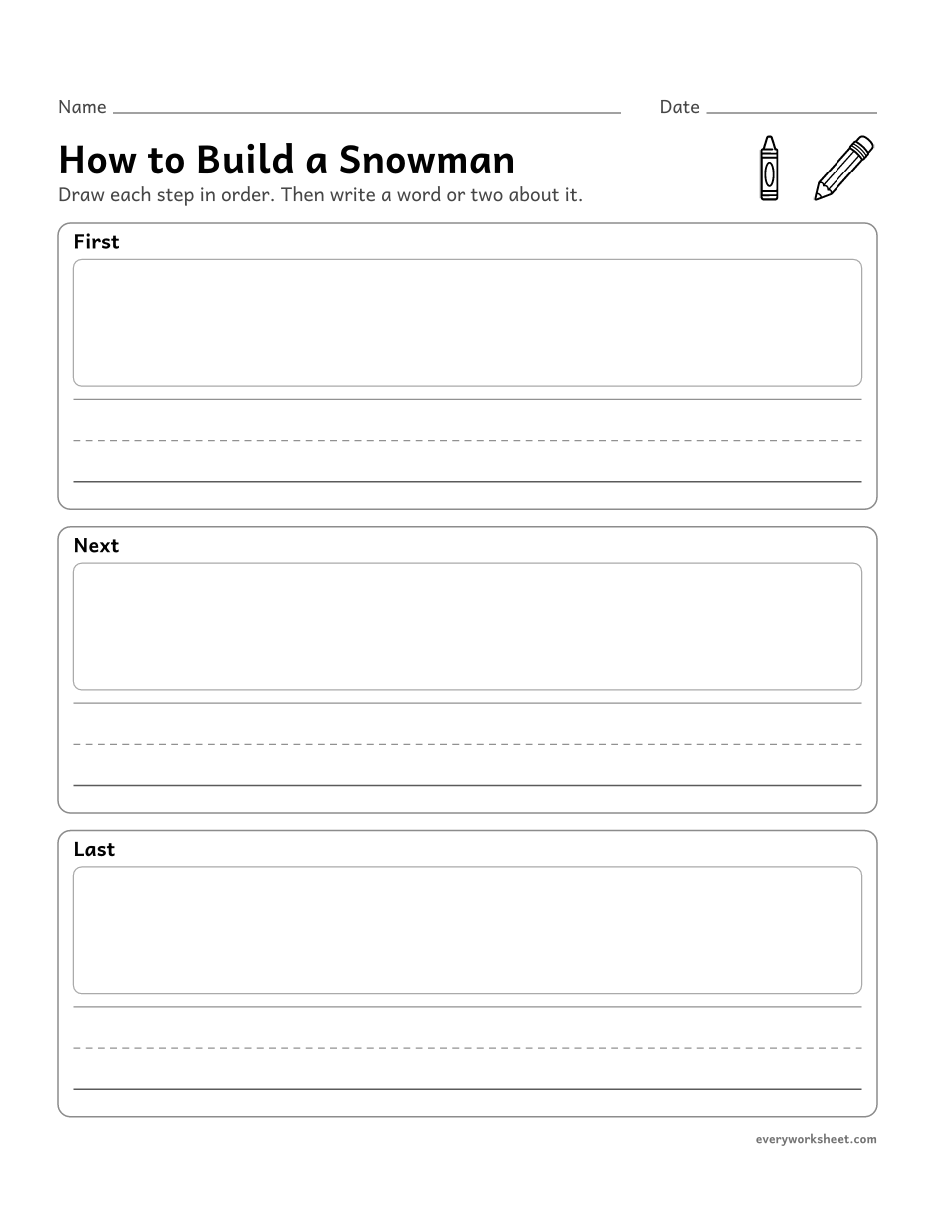
How to build a Snowman: kindergarten writing
Drawing and writing the steps of a how-to in order
1 page40 KB
 View larger
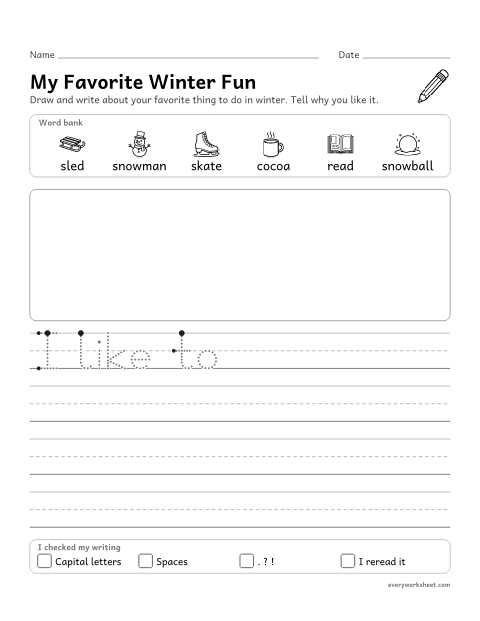
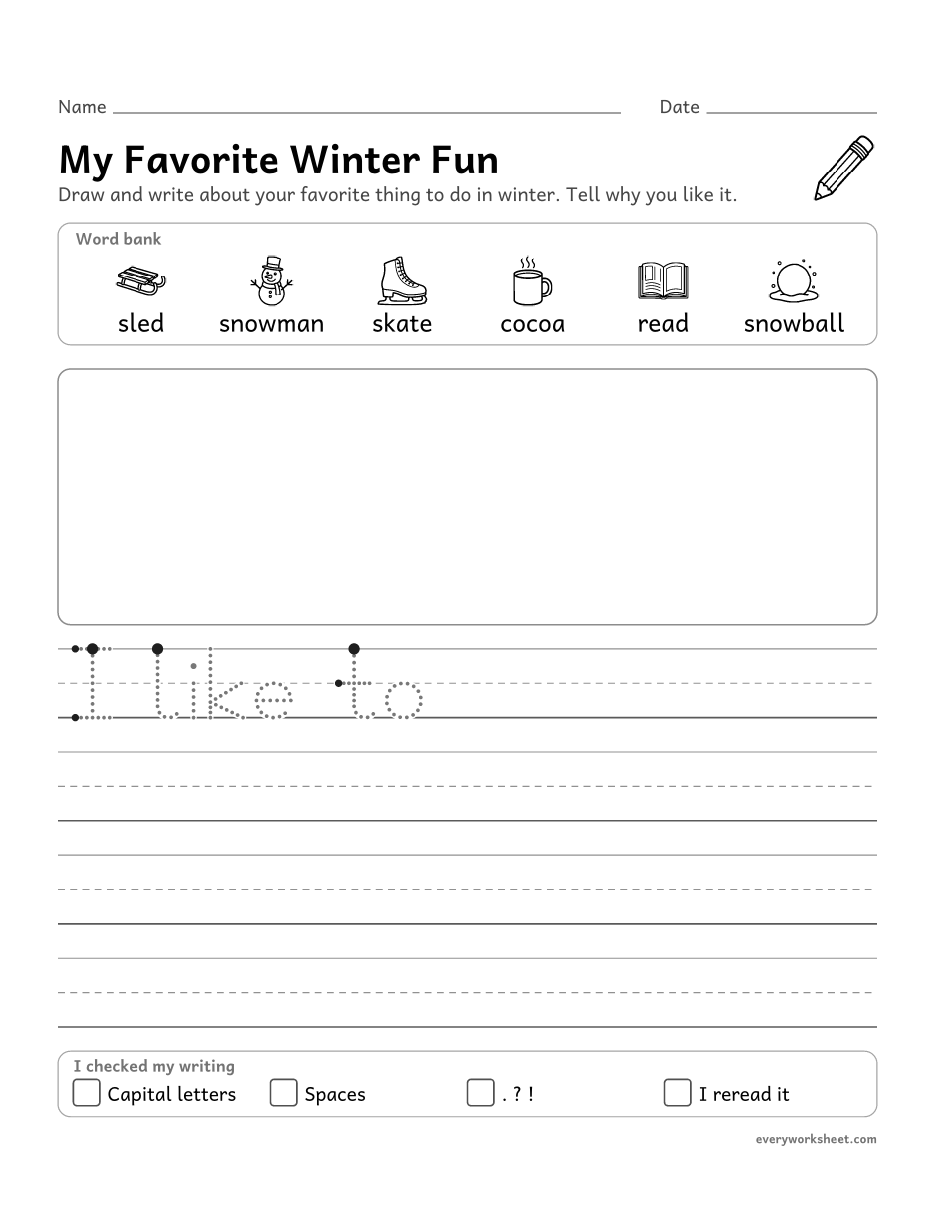
My favorite thing to do in Winter: writing prompt
Writing an opinion with a reason
1 page150 KB
 View larger
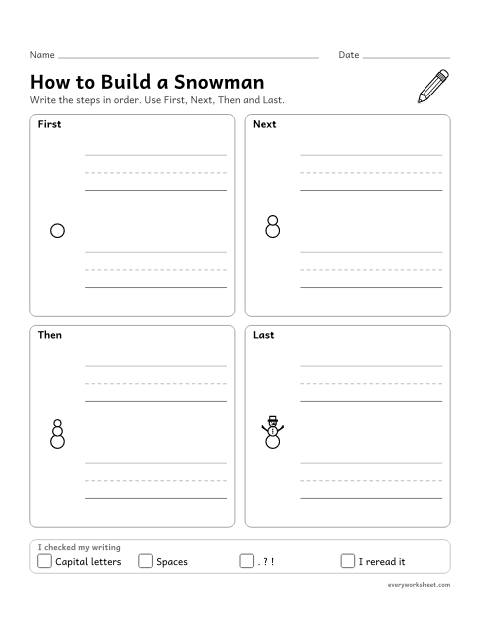
How to build a Snowman: How-To writing for 1st grade
Writing a how-to with steps in order and time-order words
1 page40 KB
 View larger
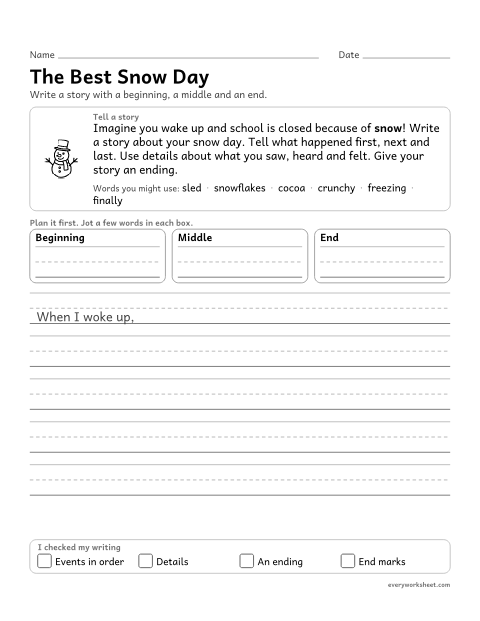
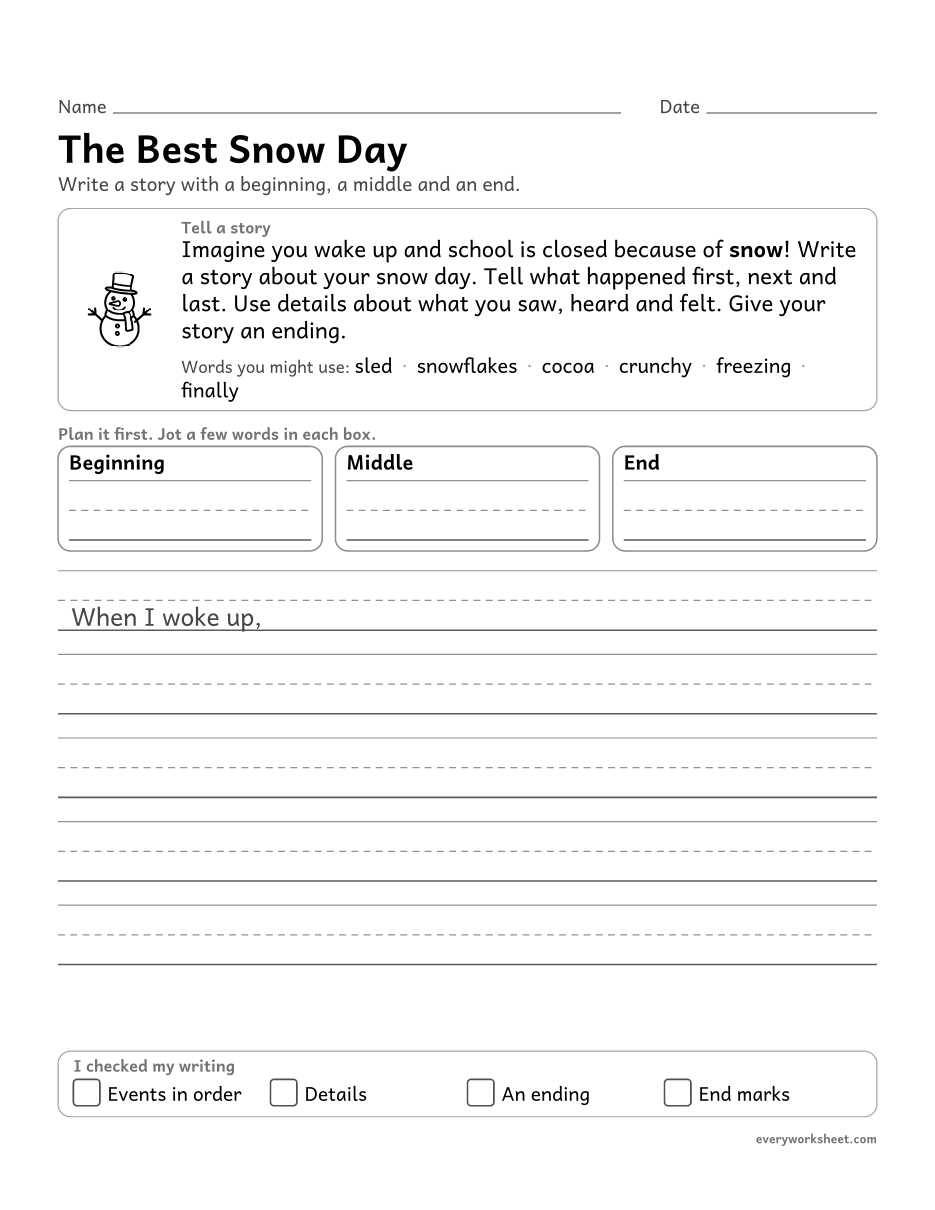
Winter narrative Writing: the best snow day
Writing a narrative with events in order, details and an ending
1 page50 KB
 View larger
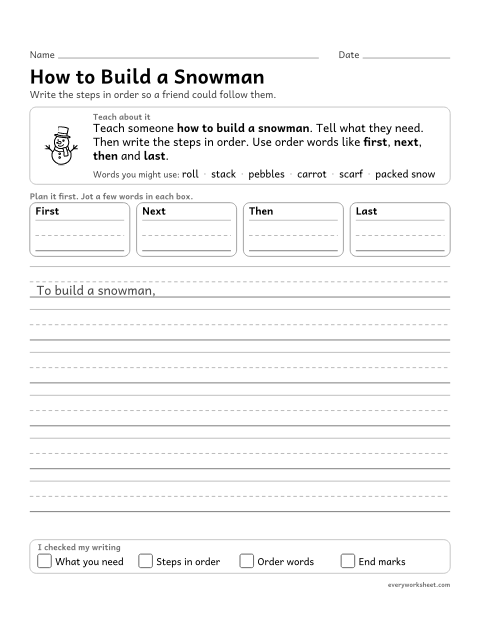
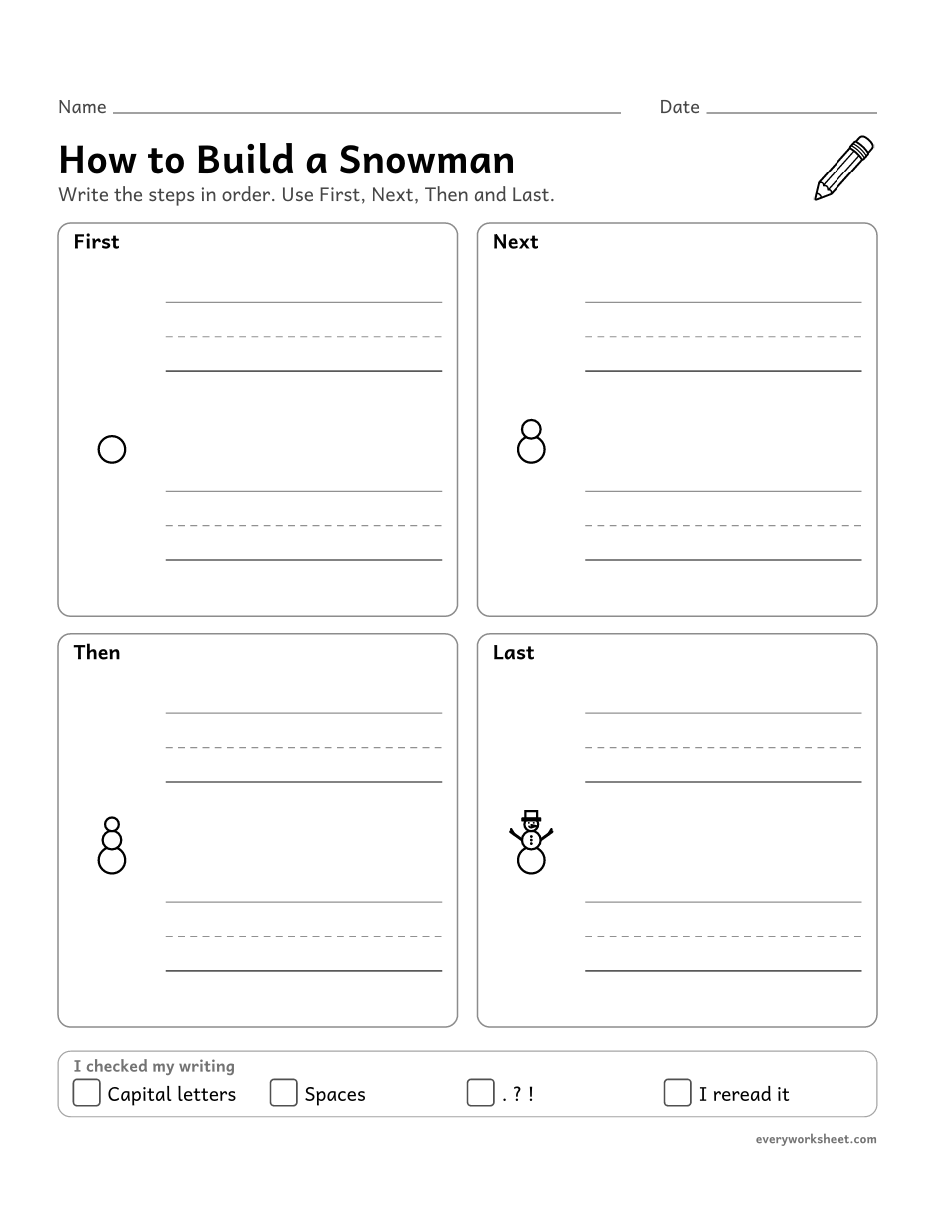
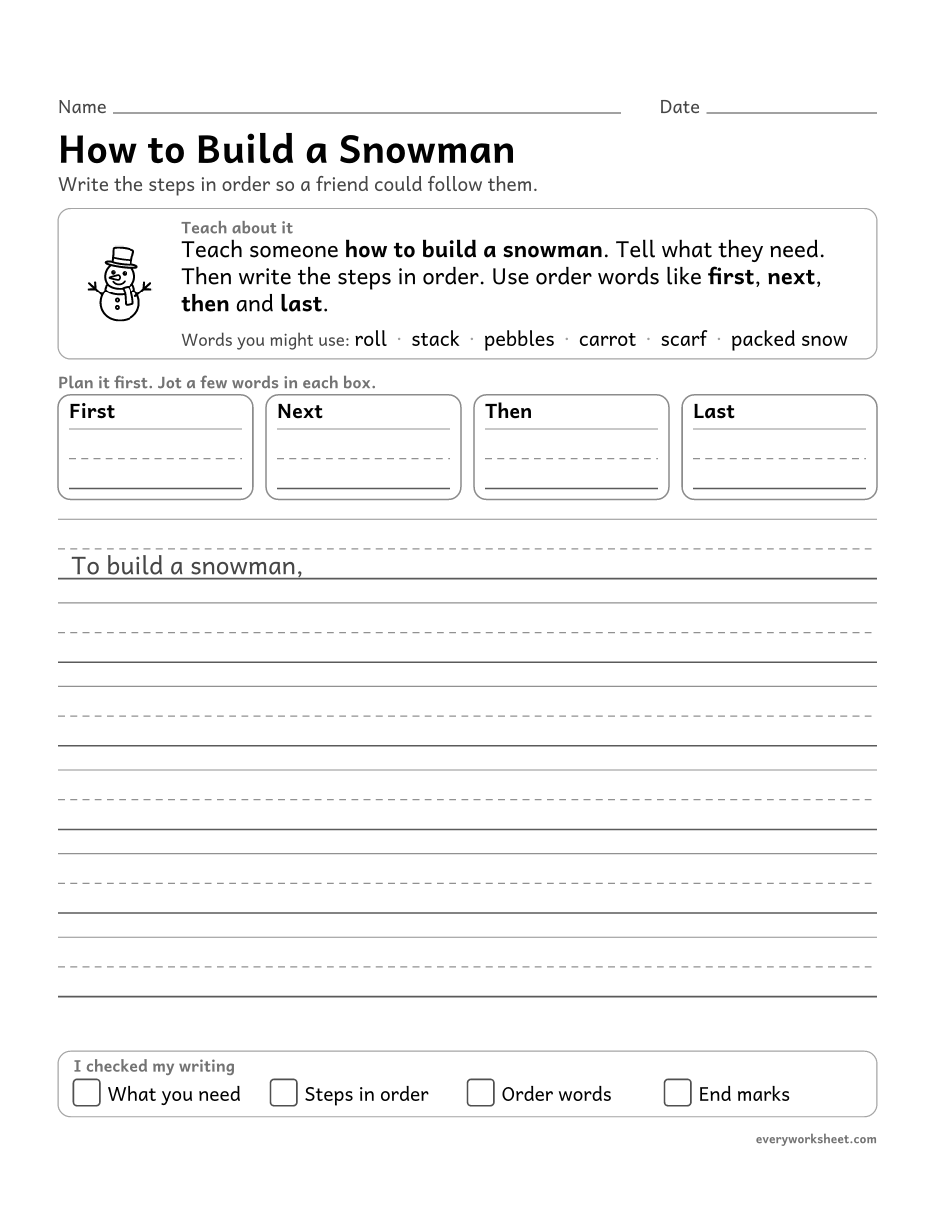
How to build a Snowman: How-To writing
Writing how-to steps in order with order words
1 page50 KB
 View larger
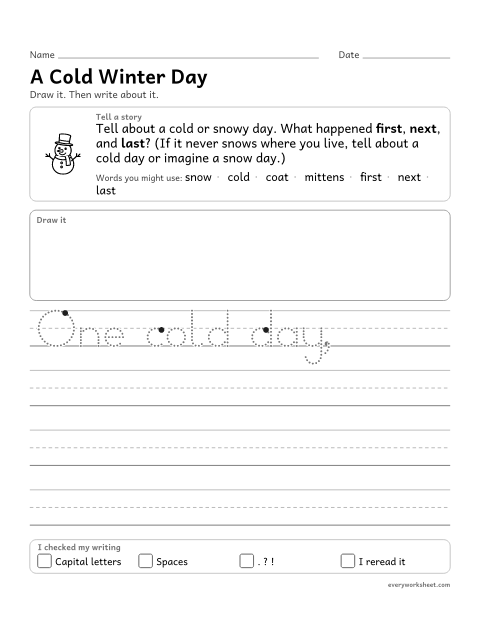
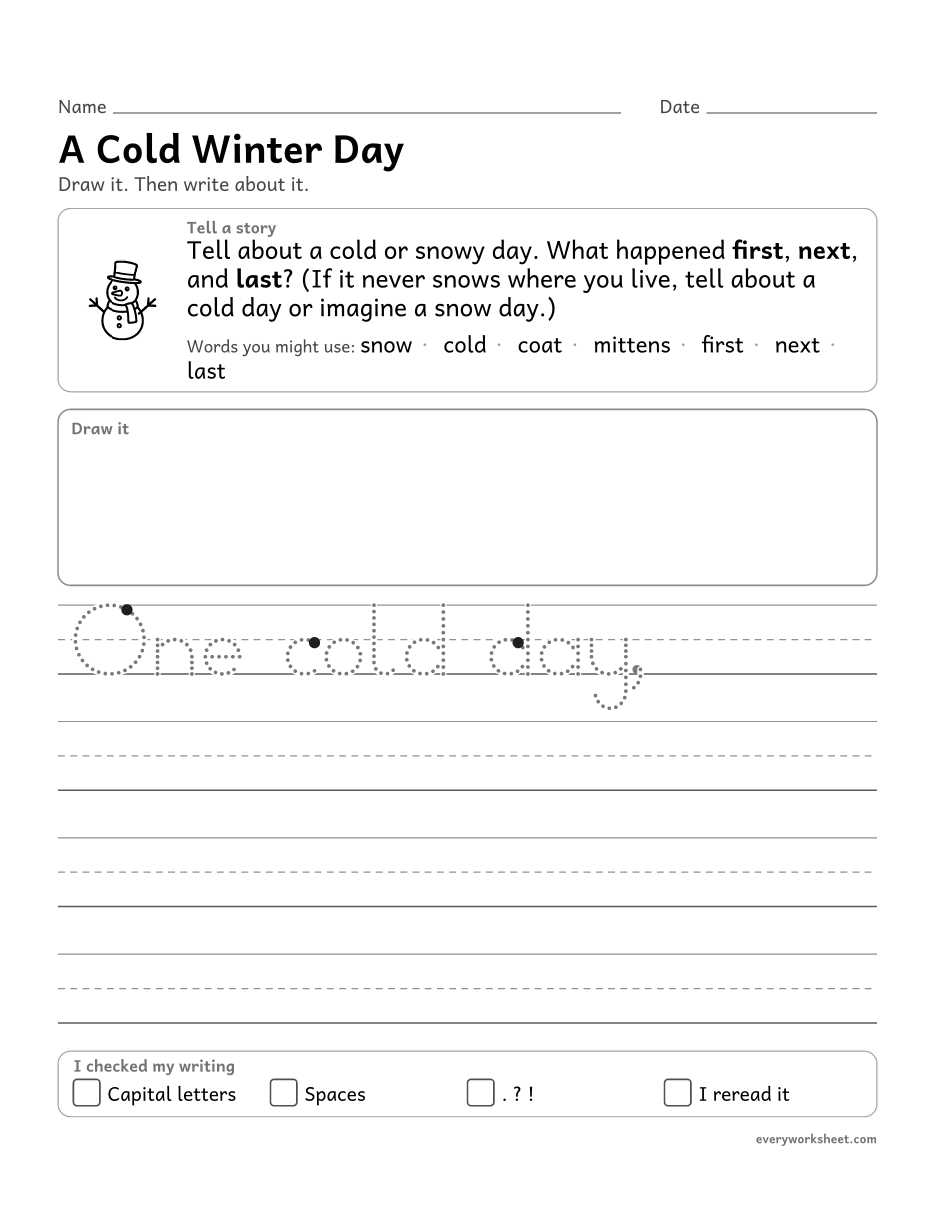
A cold winter Day: winter narrative writing prompt (1st Grade)
Writing a narrative about a winter day, with first, next and last
1 page51 KB
 View larger
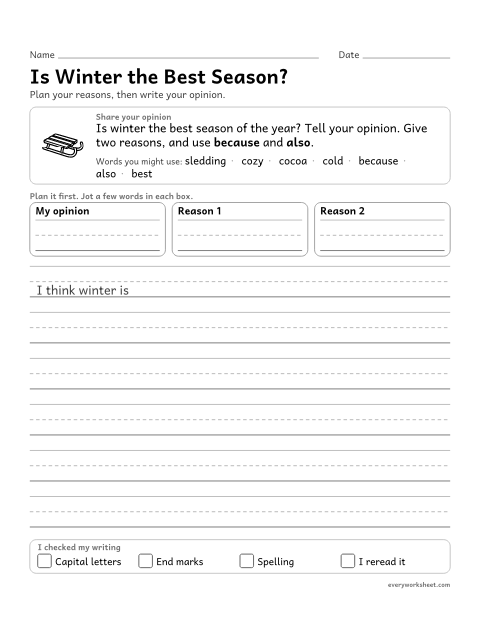
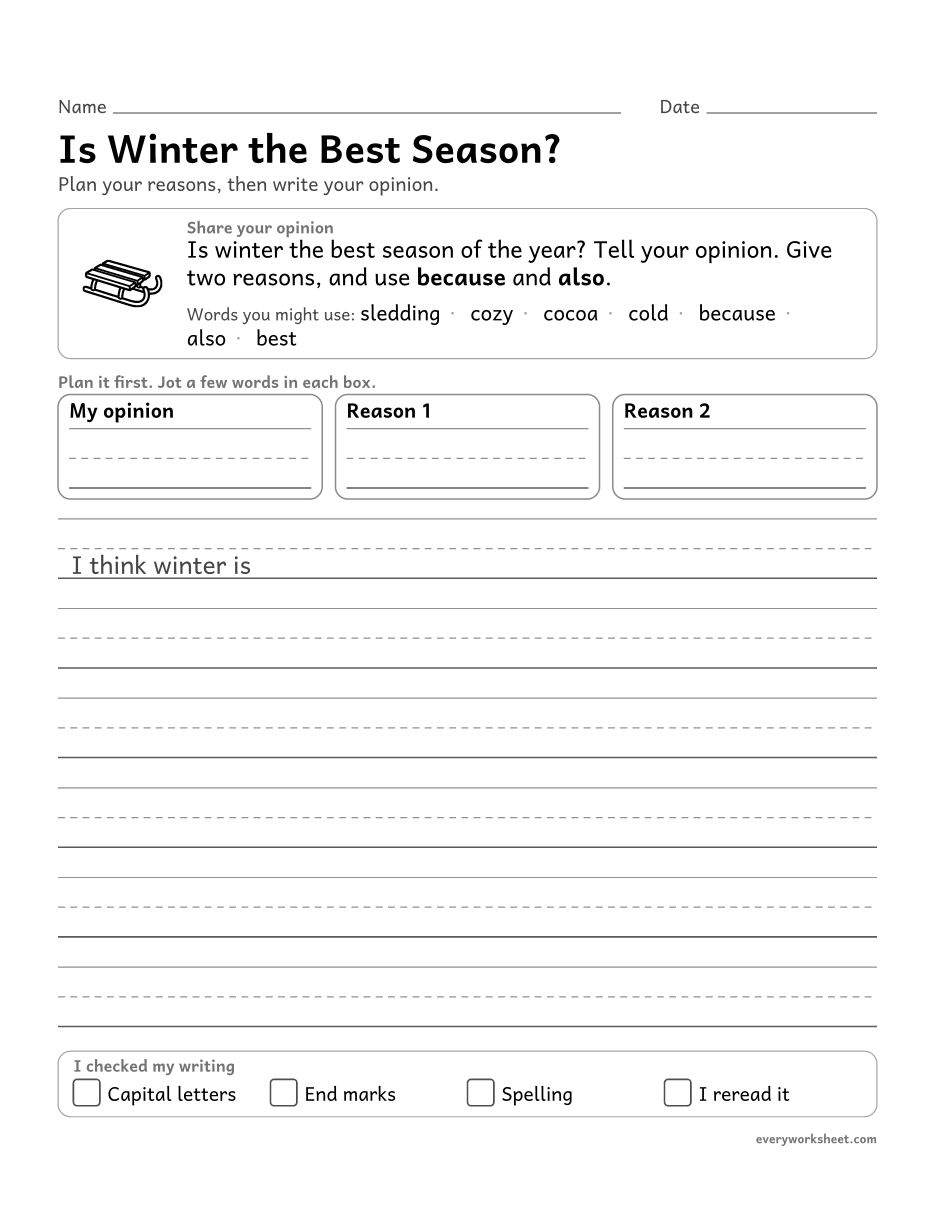
Is winter the best Season?: winter opinion writing prompt (2nd Grade)
Writing an opinion about winter, with two reasons, linking words and a closing
1 page62 KB
3rd–5th
 View larger
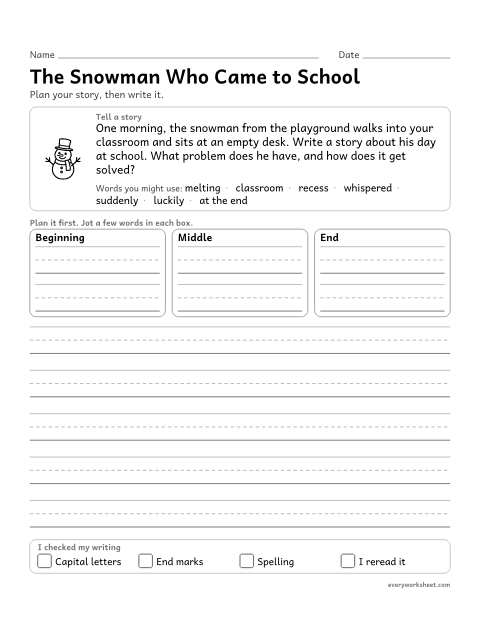
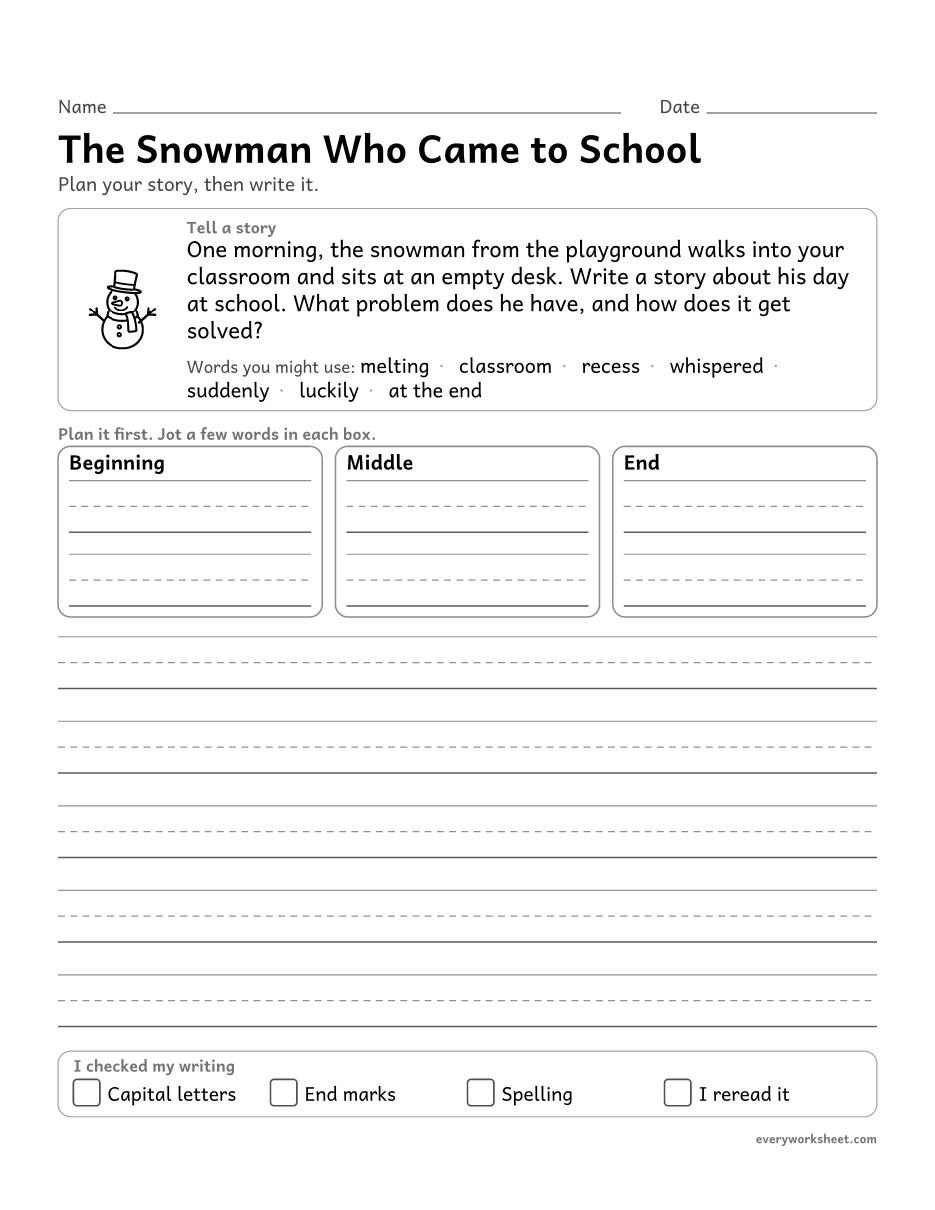
The snowman who came to School: winter narrative writing prompt (3rd Grade)
Writing a narrative with descriptive details, dialogue and a clear sequence of events
1 page50 KB
 View larger
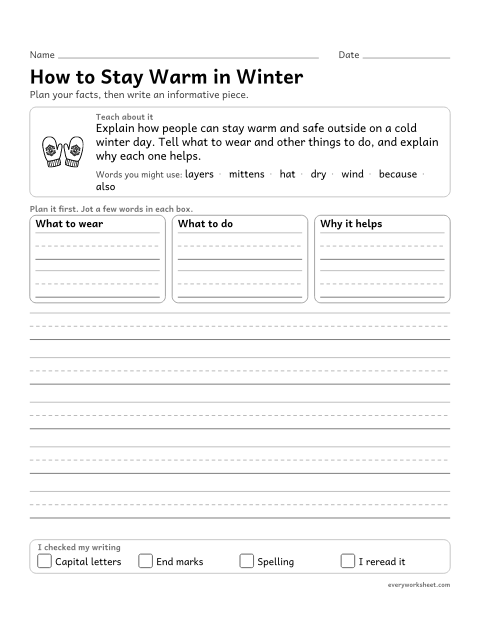
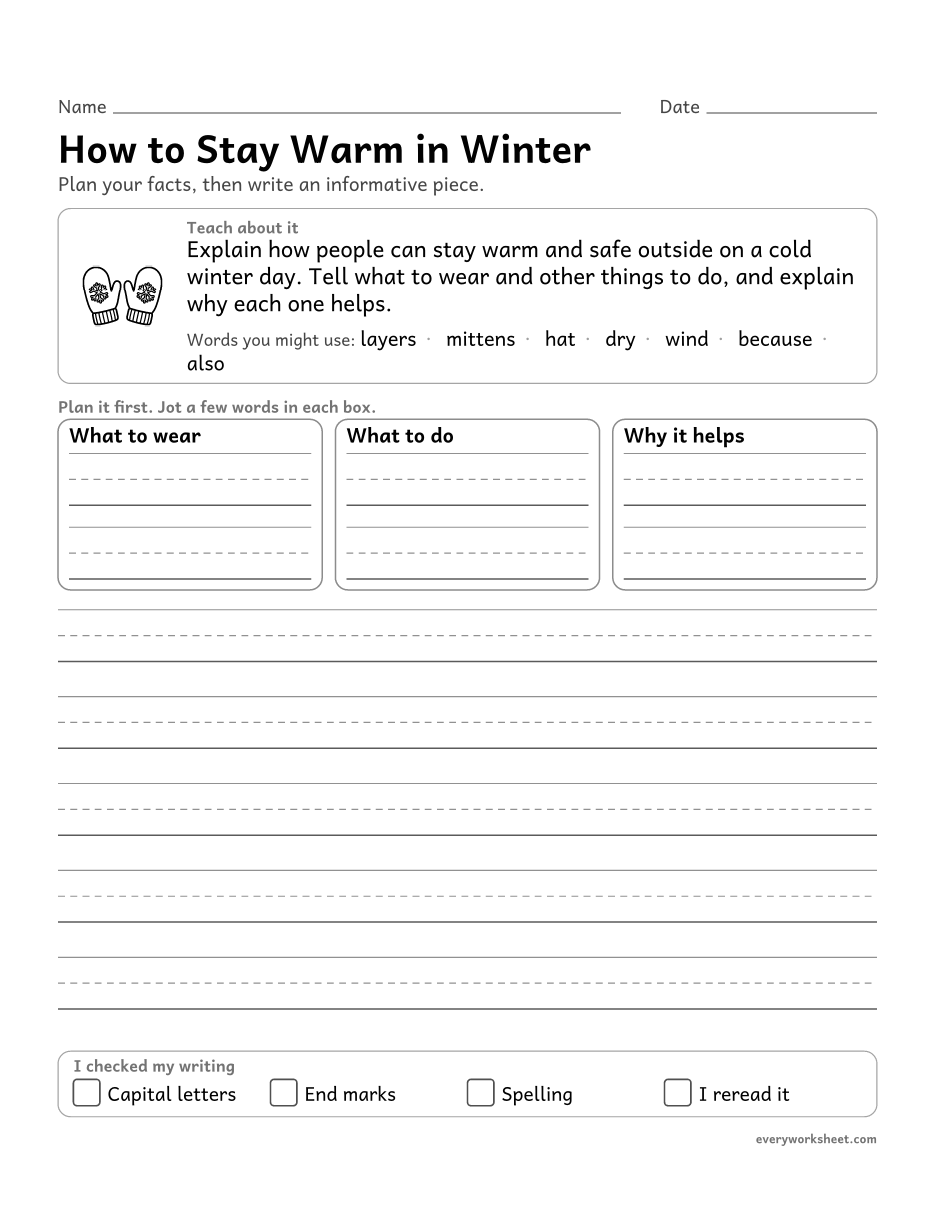
How to stay warm in Winter: winter informative writing prompt (3rd Grade)
Writing an informative piece that groups facts about staying warm, with linking words
1 page41 KB
 View larger
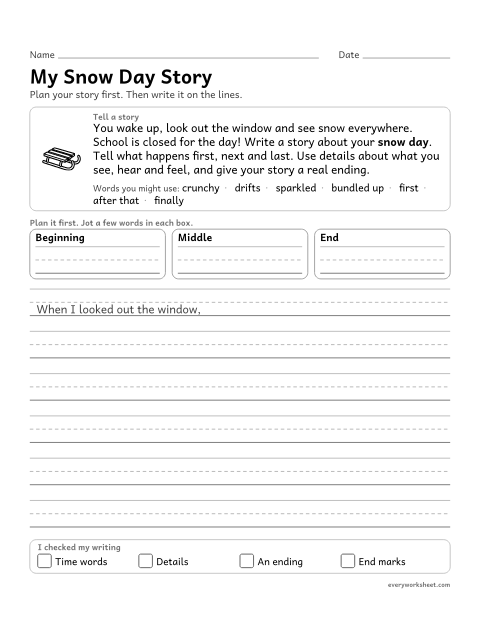
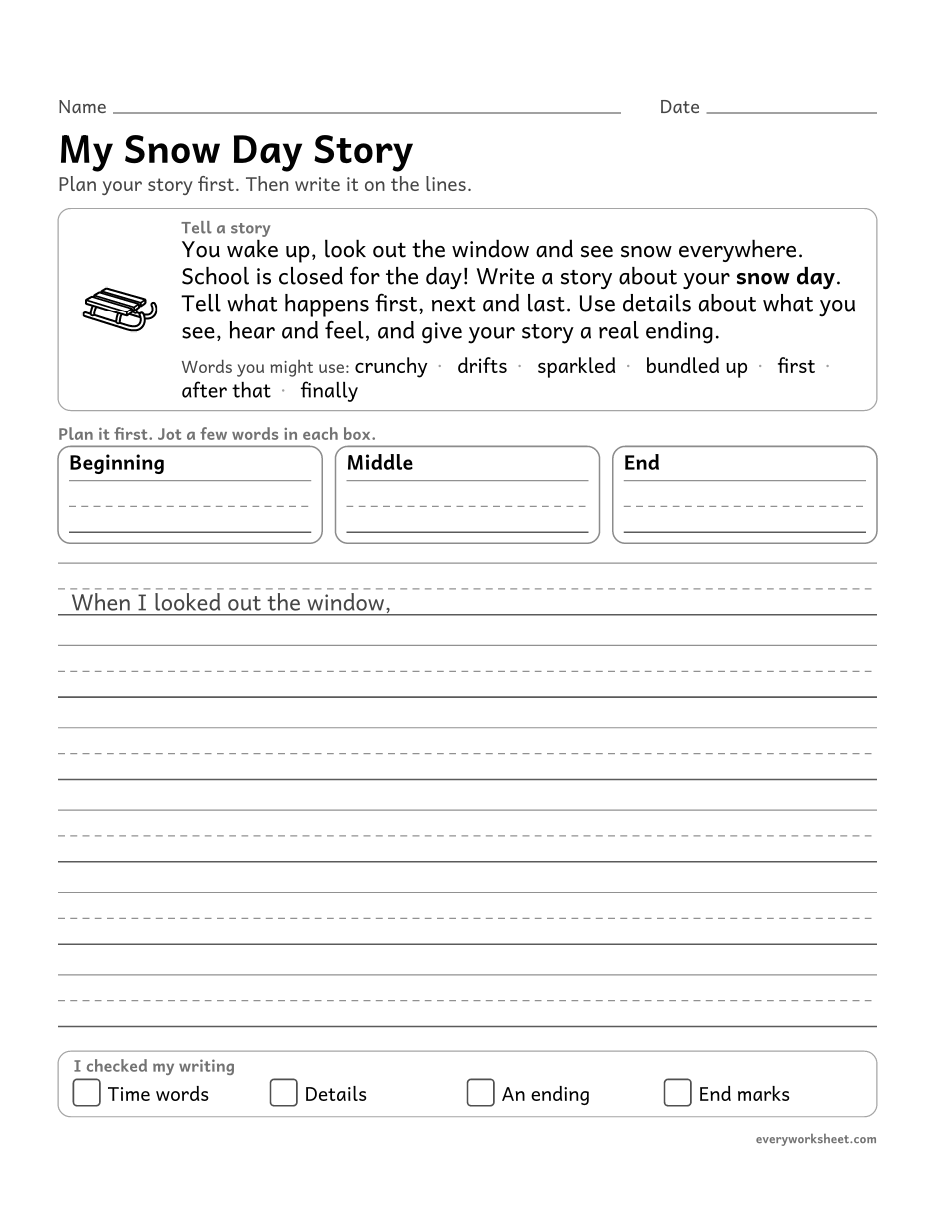
My snow day Story: winter narrative writing
Writing a narrative with a clear event sequence, descriptive details and an ending
1 page62 KB
 View larger
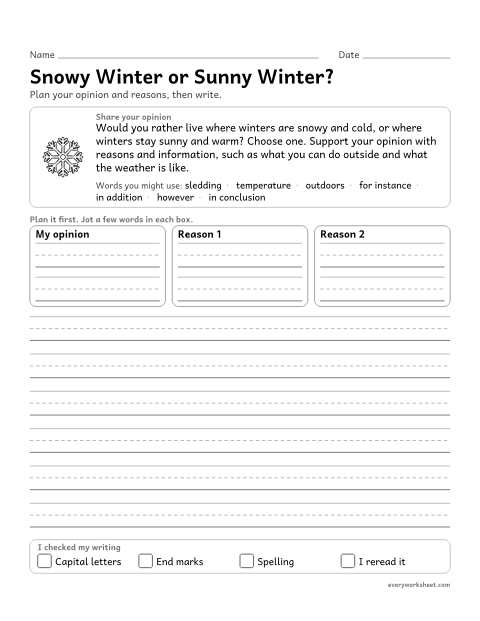
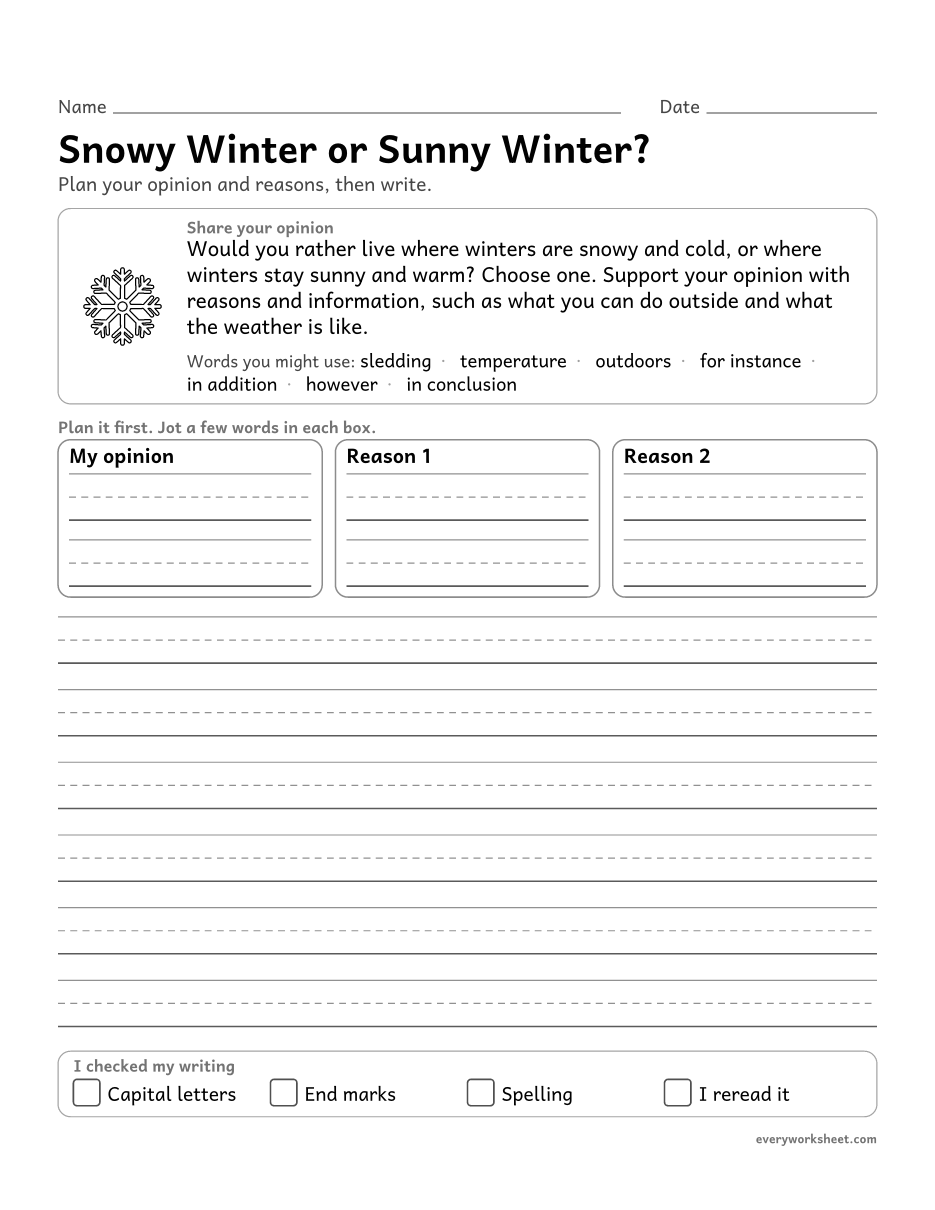
Snowy winter or sunny Winter?: winter opinion writing prompt (4th Grade)
Writing an opinion piece supported by reasons and information
1 page40 KB
 View larger
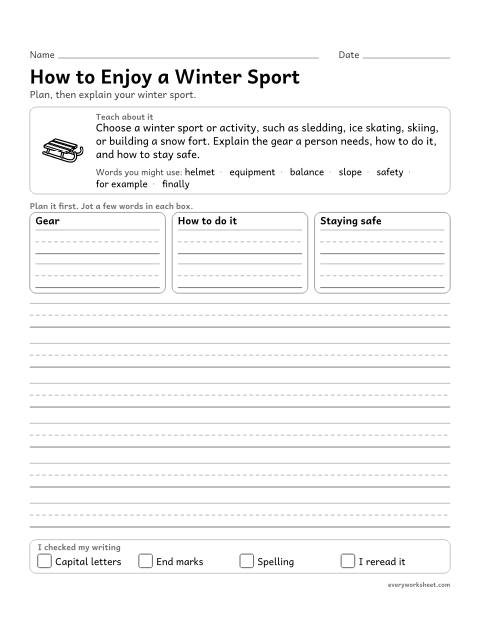
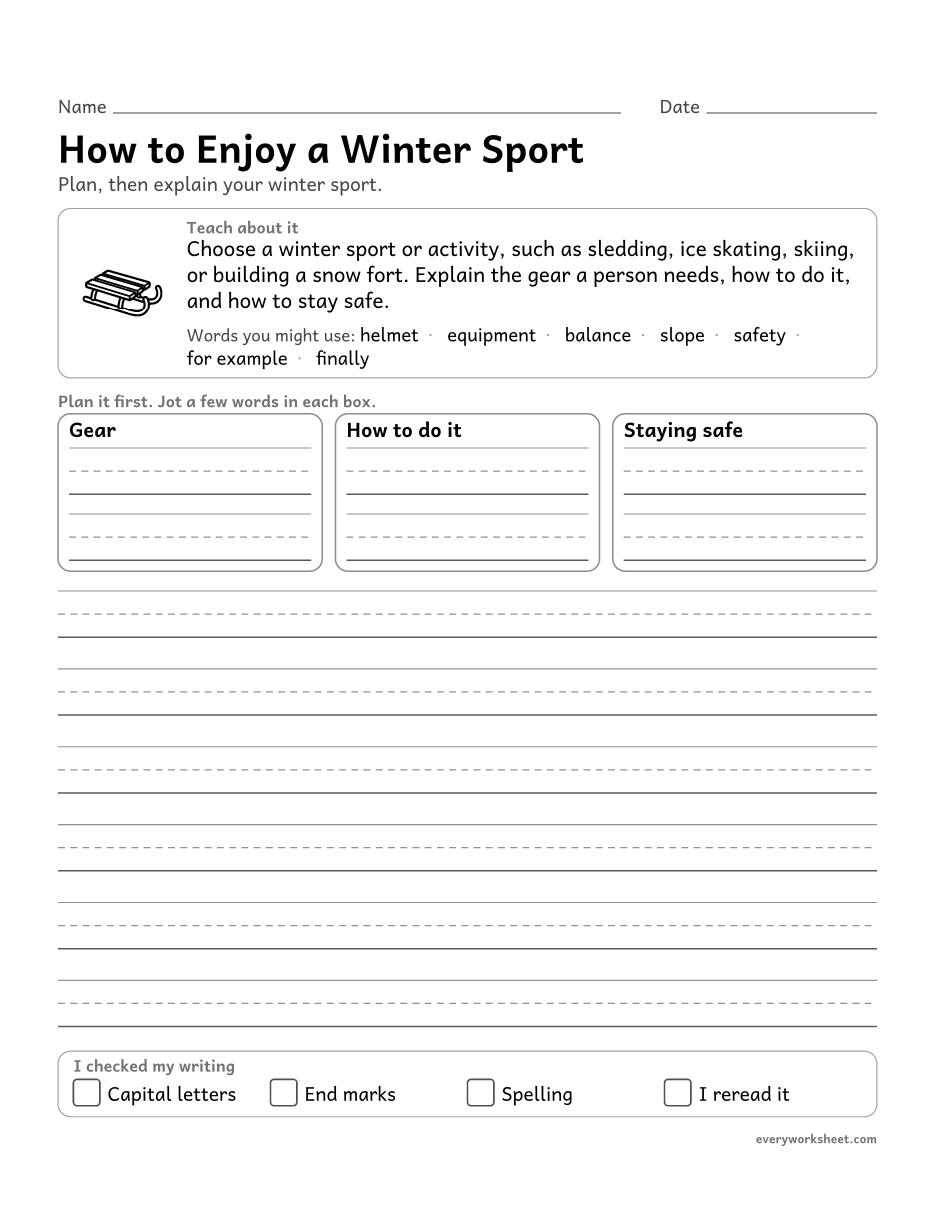
How to enjoy a winter Sport: winter informative writing prompt (4th Grade)
Writing an informative piece that explains a topic with facts, details and precise words
1 page62 KB
 View larger
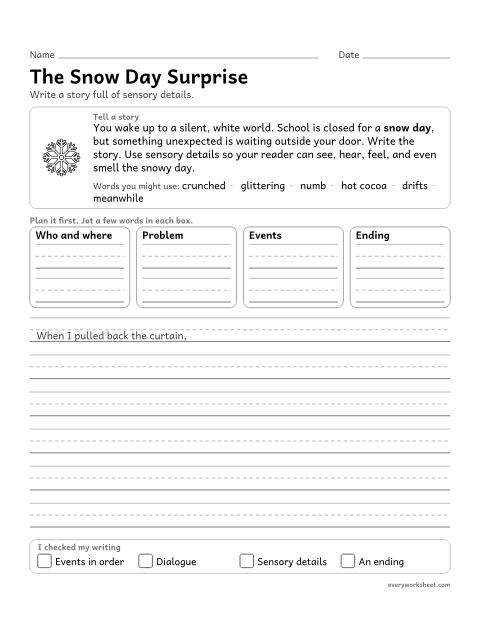
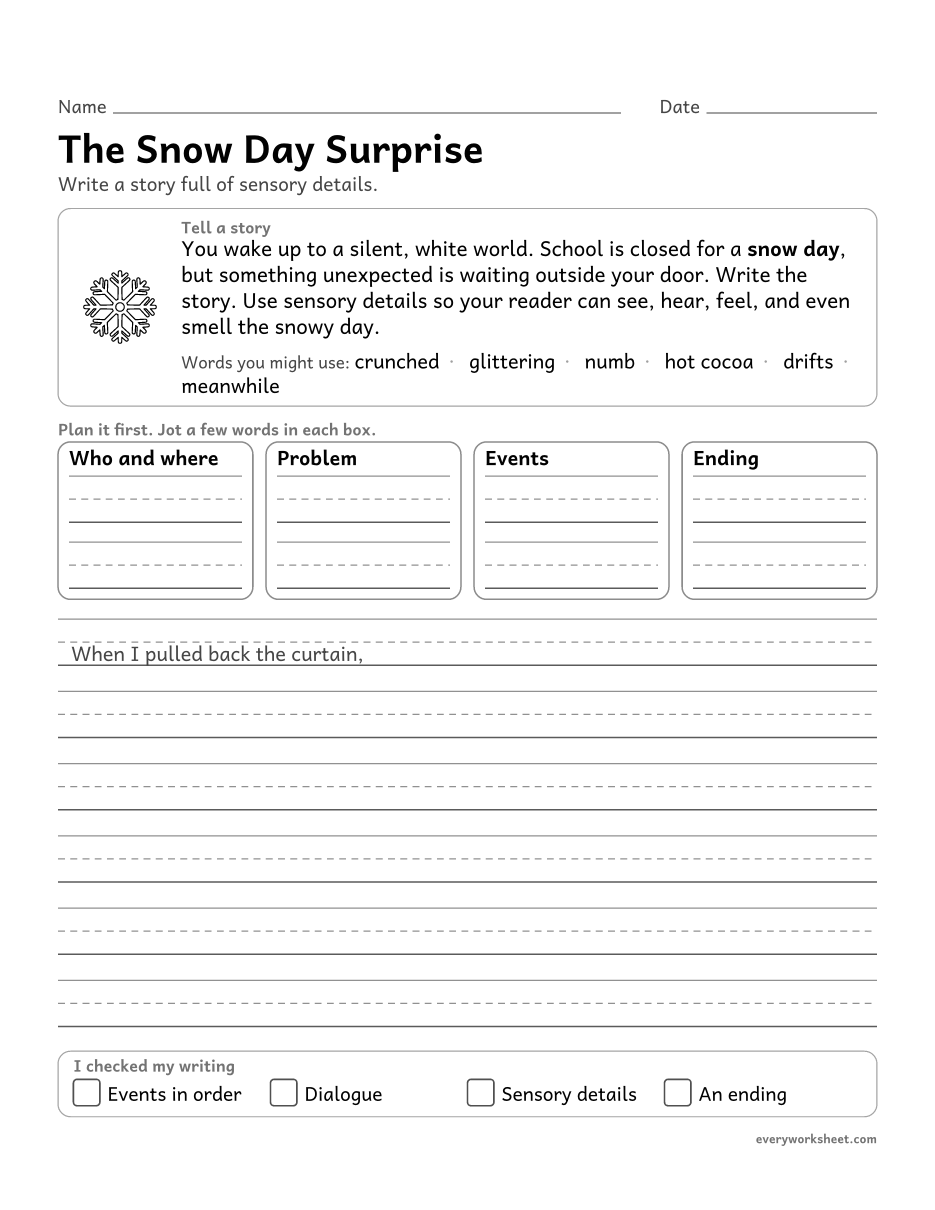
The snow day surprise
Using concrete words and sensory details to describe events in a narrative
1 page41 KB
 View all 2 pages
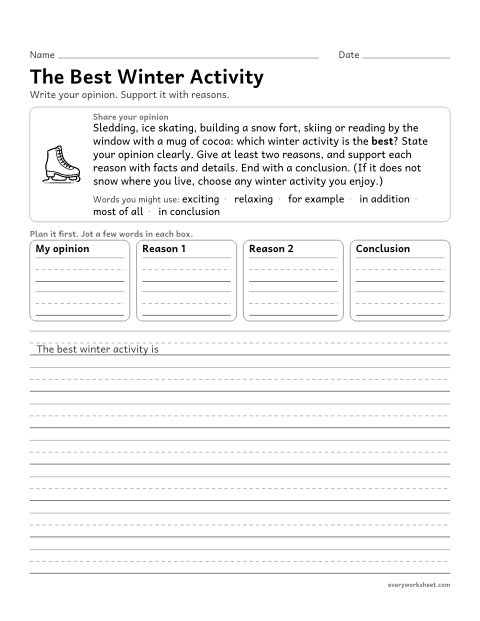
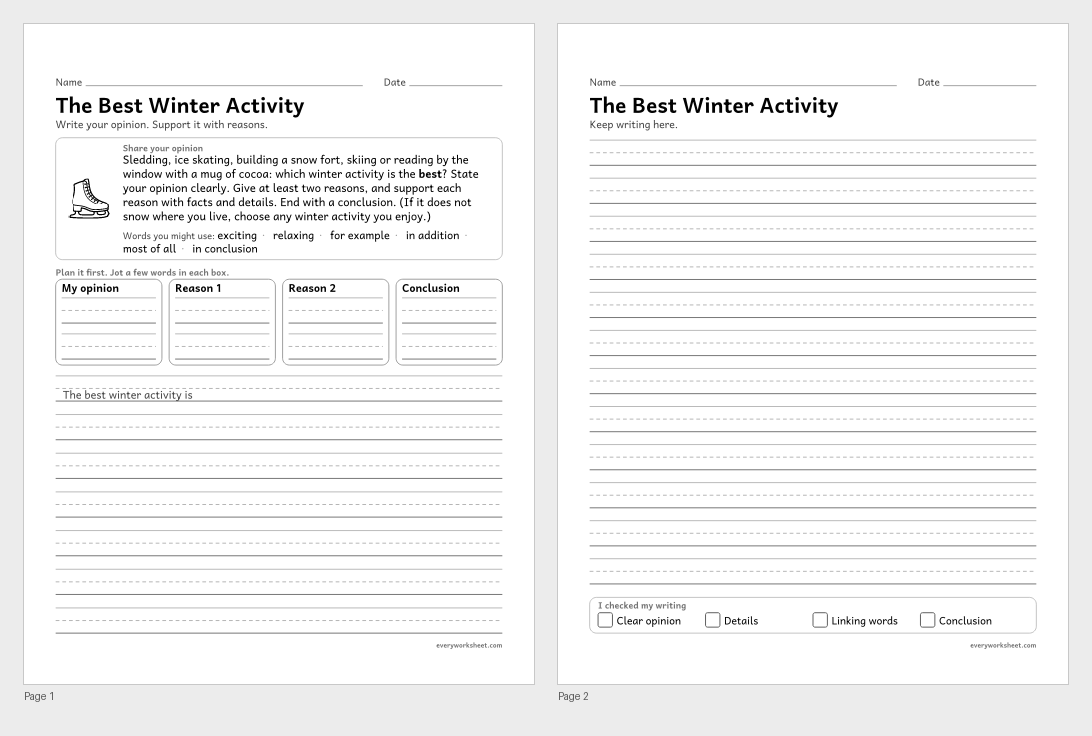
The best winter Activity: opinion writing
Writing an opinion piece supported by reasons and details
2 pages57 KB
 View larger
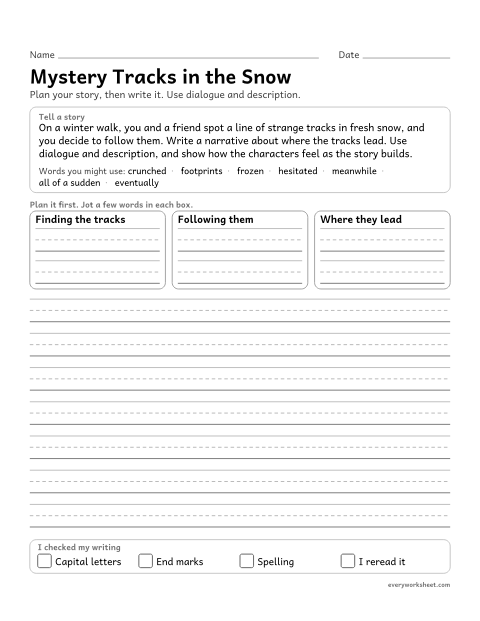
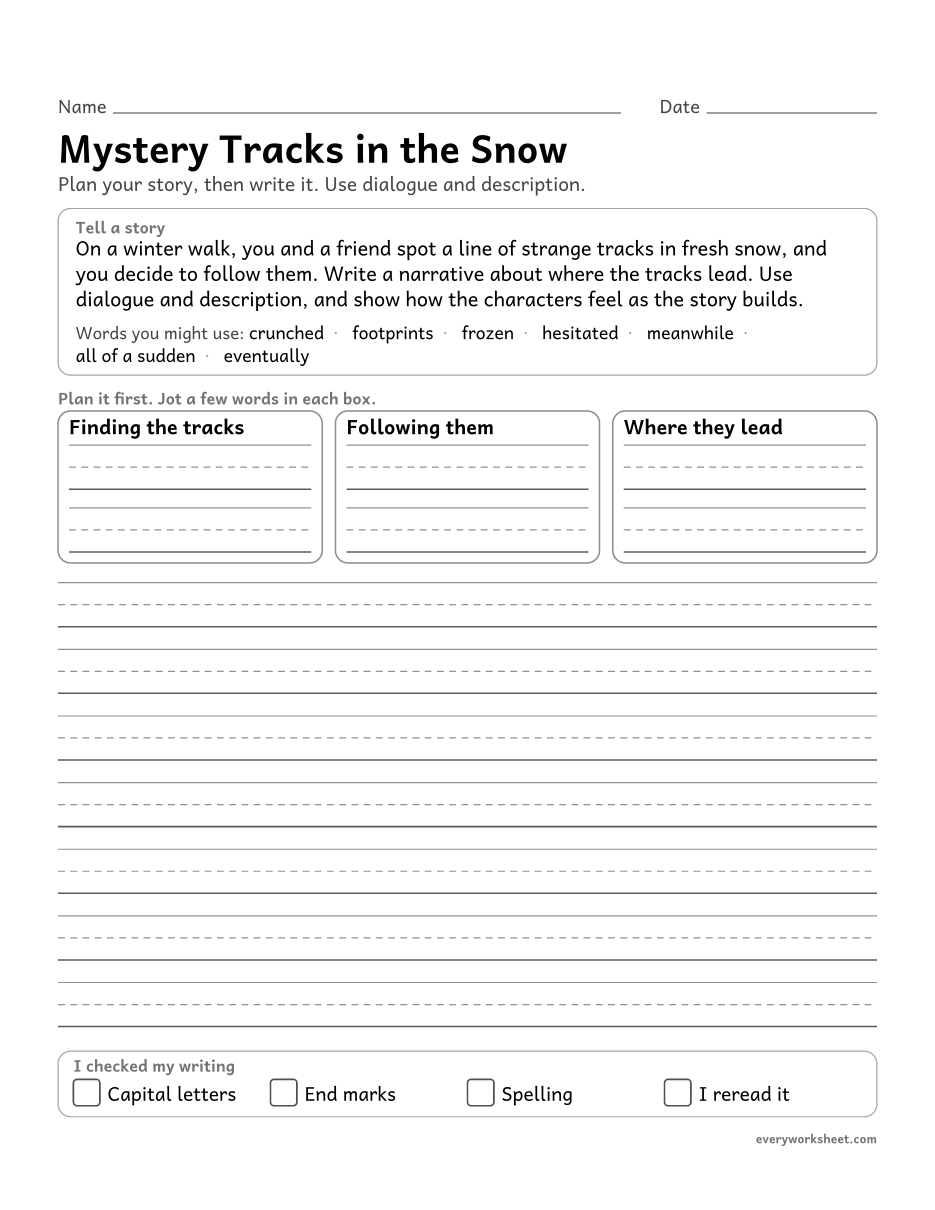
Mystery tracks in the Snow: winter narrative writing prompt (5th Grade)
Writing a narrative that uses dialogue, pacing and description to build suspense and resolve a mystery
1 page31 KB
 View larger
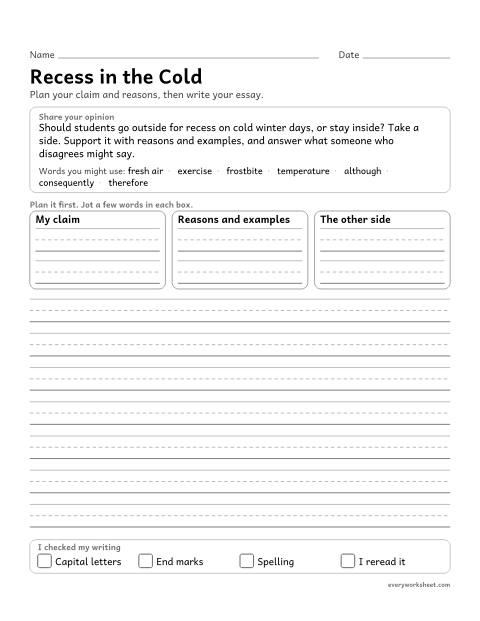
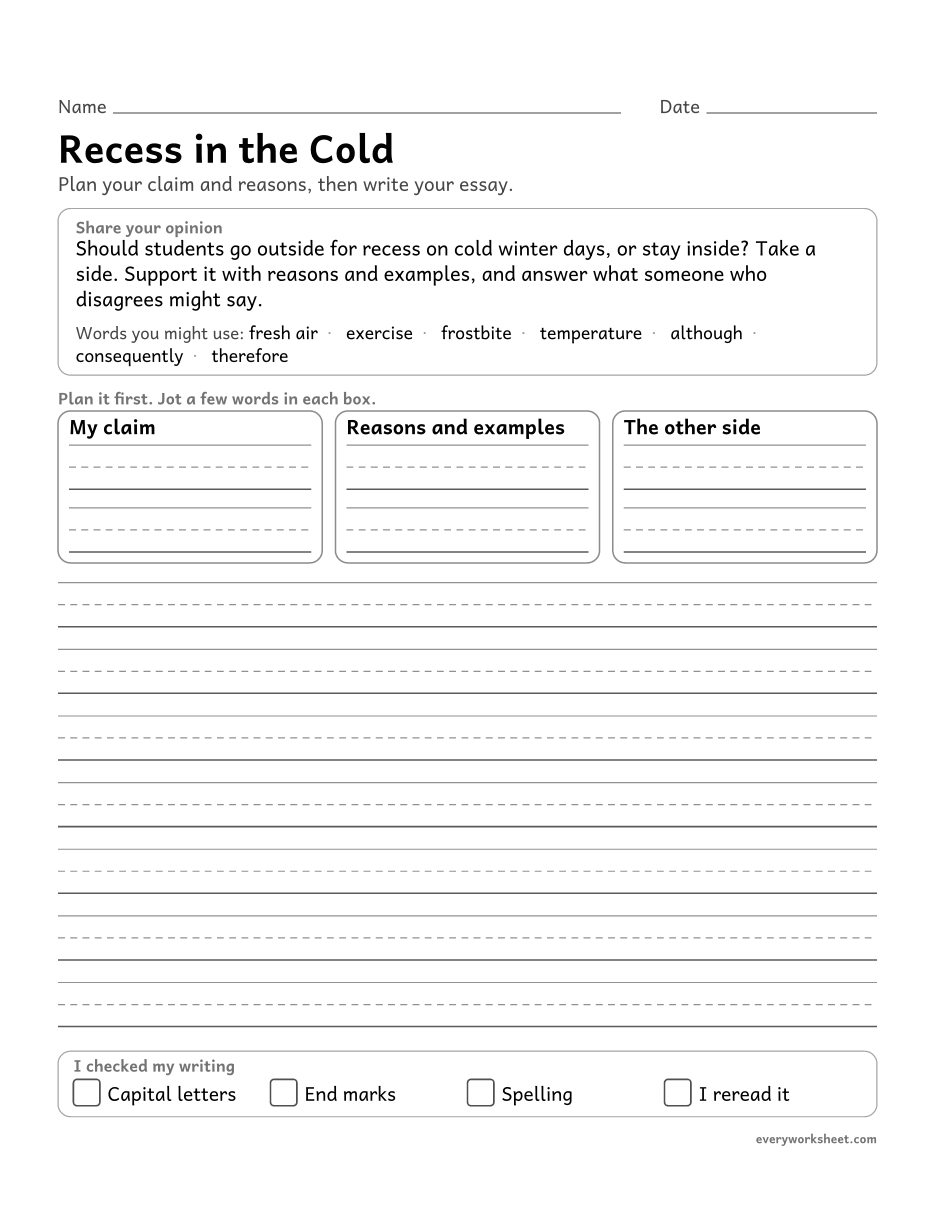
Recess in the Cold: winter opinion writing prompt (5th Grade)
Writing an opinion essay with logically ordered reasons, facts and examples, and a response to the other side
1 page31 KB
 View all 2 pages
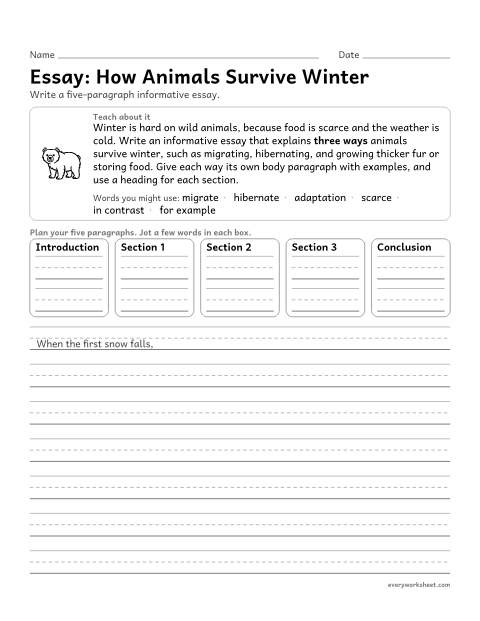
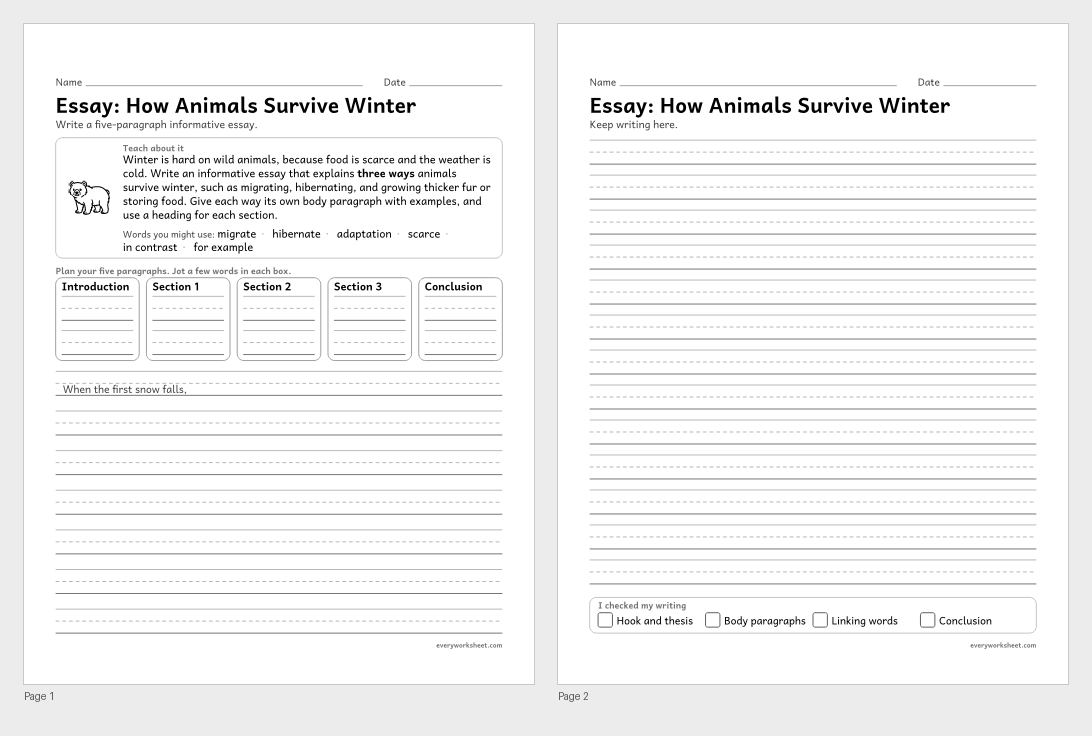
Essay: how animals survive winter
Planning and writing a multi-paragraph informative essay with grouped information and headings
2 pages48 KB
 View all 2 pages
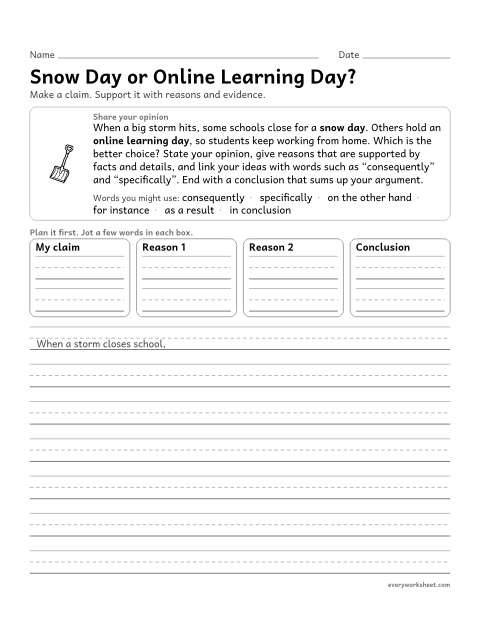
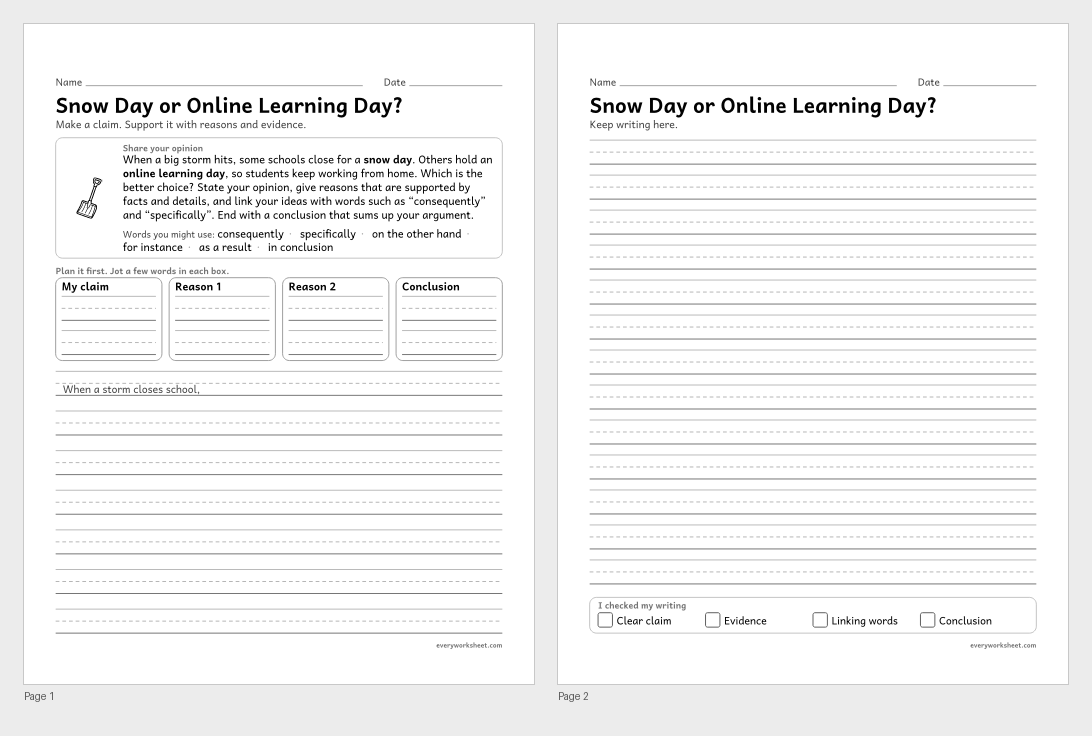
Snow day or online learning Day? opinion writing
Writing an opinion piece with logically ordered reasons supported by facts and details
2 pages62 KB
 View all 2 pages
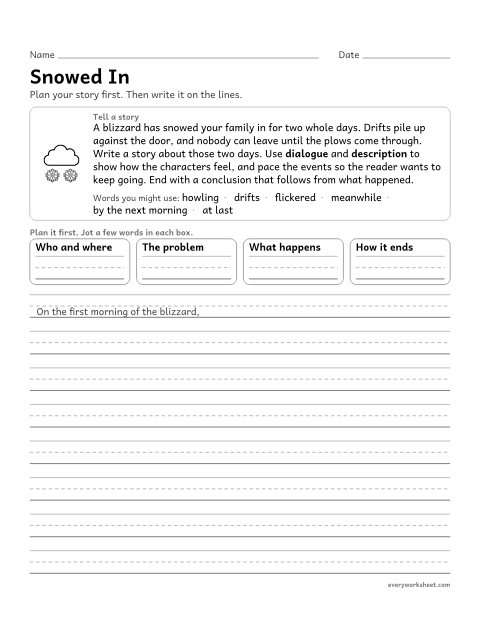
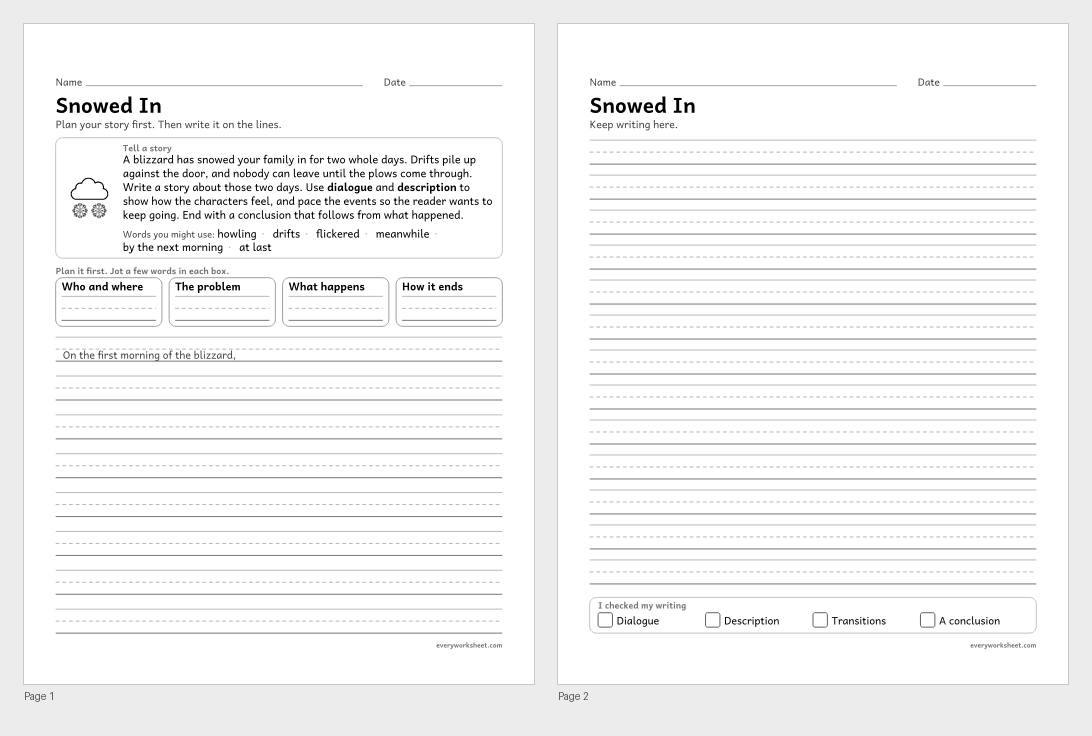
Snowed In: winter narrative writing
Writing a narrative with dialogue, description and pacing, and a conclusion that follows from the events
2 pages47 KB
 View all 2 pages
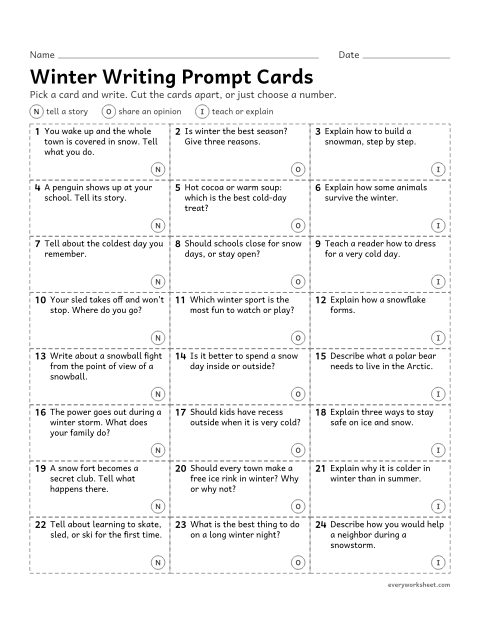
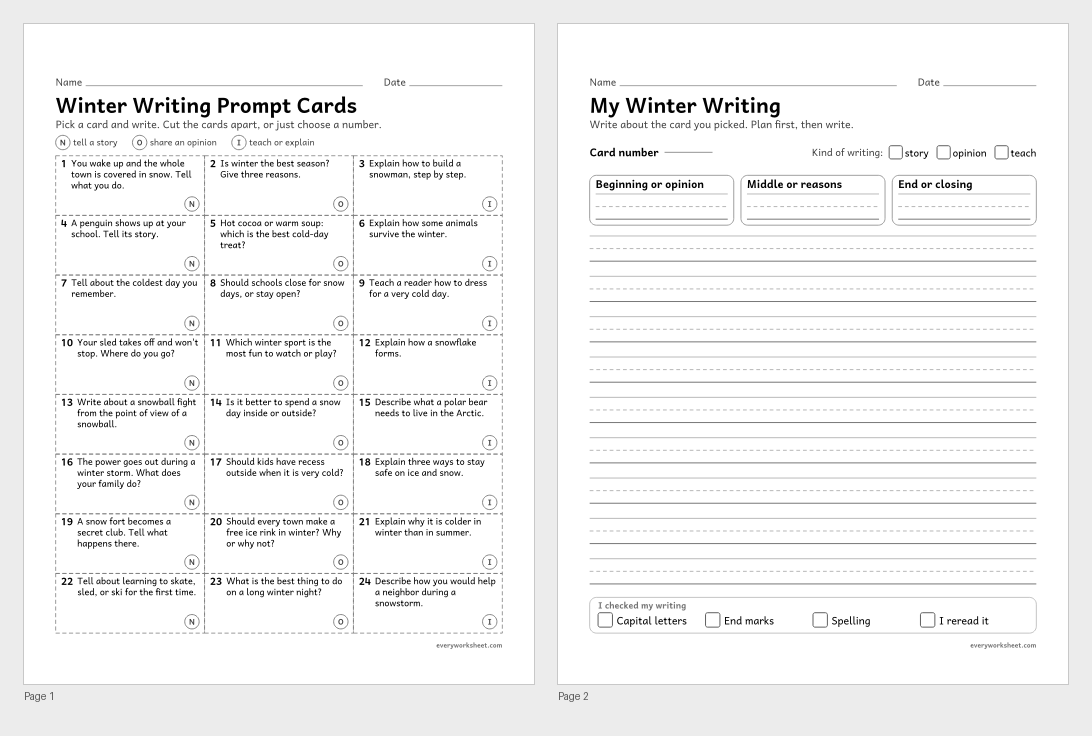
Winter writing prompt cards (24 Prompts)
Choosing from 24 winter prompts and writing a story, an opinion or an explanation
2 pages55 KB
Print at 100% (actual size) for the cleanest tracing lines.
About these winter writing prompts worksheets
These free winter writing prompts cover narrative, opinion and informative writing from kindergarten to 5th grade. Each prompt sits on its own page with lines sized for the grade: big lines and a drawing box for K–2, and smaller lines with plan boxes for 3rd to 5th grade.
Older writers get prompts such as a snowman who comes to school, mystery tracks in the snow, staying warm and snowy or sunny winters, with words they might use, a plan (beginning, middle and end, or claim, reasons and the other side) and a self-check strip. The prompt card page holds 24 short prompts marked story, opinion or explain, with a lined response page.
Winter prompts work for every family, whatever they celebrate. For Christmas or Thanksgiving writing, see those prompt pages.
Standards
CCSS.ELA-LITERACY.W.K.3Use a combination of drawing, dictating, and writing to narrate a single event or several loosely linked events, tell about the events in the order in which they occurred, and provide a reaction to what happened.CCSS.ELA-LITERACY.W.1.3Write narratives in which they recount two or more appropriately sequenced events, include some details regarding what happened, use temporal words to signal event order, and provide some sense of closure.CCSS.ELA-LITERACY.W.2.1Write opinion pieces in which they introduce the topic or book they are writing about, state an opinion, supply reasons that support the opinion, use linking words (e.g., because, and, also) to connect opinion and reasons, and provide a concluding statement or section.CCSS.ELA-LITERACY.W.2.2Write informative/explanatory texts in which they introduce a topic, use facts and definitions to develop points, and provide a concluding statement or section.CCSS.ELA-LITERACY.W.3.1Write opinion pieces on topics or texts, supporting a point of view with reasons.CCSS.ELA-LITERACY.W.3.2Write informative/explanatory texts to examine a topic and convey ideas and information clearly.CCSS.ELA-LITERACY.W.3.3Write narratives to develop real or imagined experiences or events using effective technique, descriptive details, and clear event sequences.CCSS.ELA-LITERACY.W.4.1Write opinion pieces on topics or texts, supporting a point of view with reasons and information.CCSS.ELA-LITERACY.W.4.2Write informative/explanatory texts to examine a topic and convey ideas and information clearly.CCSS.ELA-LITERACY.W.4.3Write narratives to develop real or imagined experiences or events using effective technique, descriptive details, and clear event sequences.CCSS.ELA-LITERACY.W.5.1Write opinion pieces on topics or texts, supporting a point of view with reasons and information.CCSS.ELA-LITERACY.W.5.2Write informative/explanatory texts to examine a topic and convey ideas and information clearly.CCSS.ELA-LITERACY.W.5.3Write narratives to develop real or imagined experiences or events using effective technique, descriptive details, and clear event sequences.CCSS.ELA-LITERACY.W.4.10Write routinely over extended time frames (time for research, reflection, and revision) and shorter time frames (a single sitting or a day or two) for a range of discipline-specific tasks, purposes, and audiences.
How to use them
- Read the prompt aloud and talk about ideas together before anyone writes.
- Have children fill in the plan boxes with a few words each, then write in full sentences.
- Cut the prompt cards apart for a writing center or a prompt jar, or use the uncut page as a numbered list.
Teaching tips
- For opinion prompts, ask for a reason children can explain with an example, not just "because I like it."
- For stories, remind writers to show feelings with actions and dialogue.
- Use the self-check strip at the bottom before children hand in their writing.
Questions teachers and parents ask
What grades are these winter writing prompts for?
Kindergarten to 5th grade. Each page is pitched at one grade, with writing lines sized for that grade.
What kinds of writing do the prompts cover?
Narrative (tell a story), opinion (share and support an opinion) and informative (teach or explain), the three kinds of writing taught in elementary school.
How do I use the prompt cards?
Cut the 24 cards apart for a writing center or a prompt jar, or keep the page whole and let children choose a number. Page 2 is a lined page for the response.